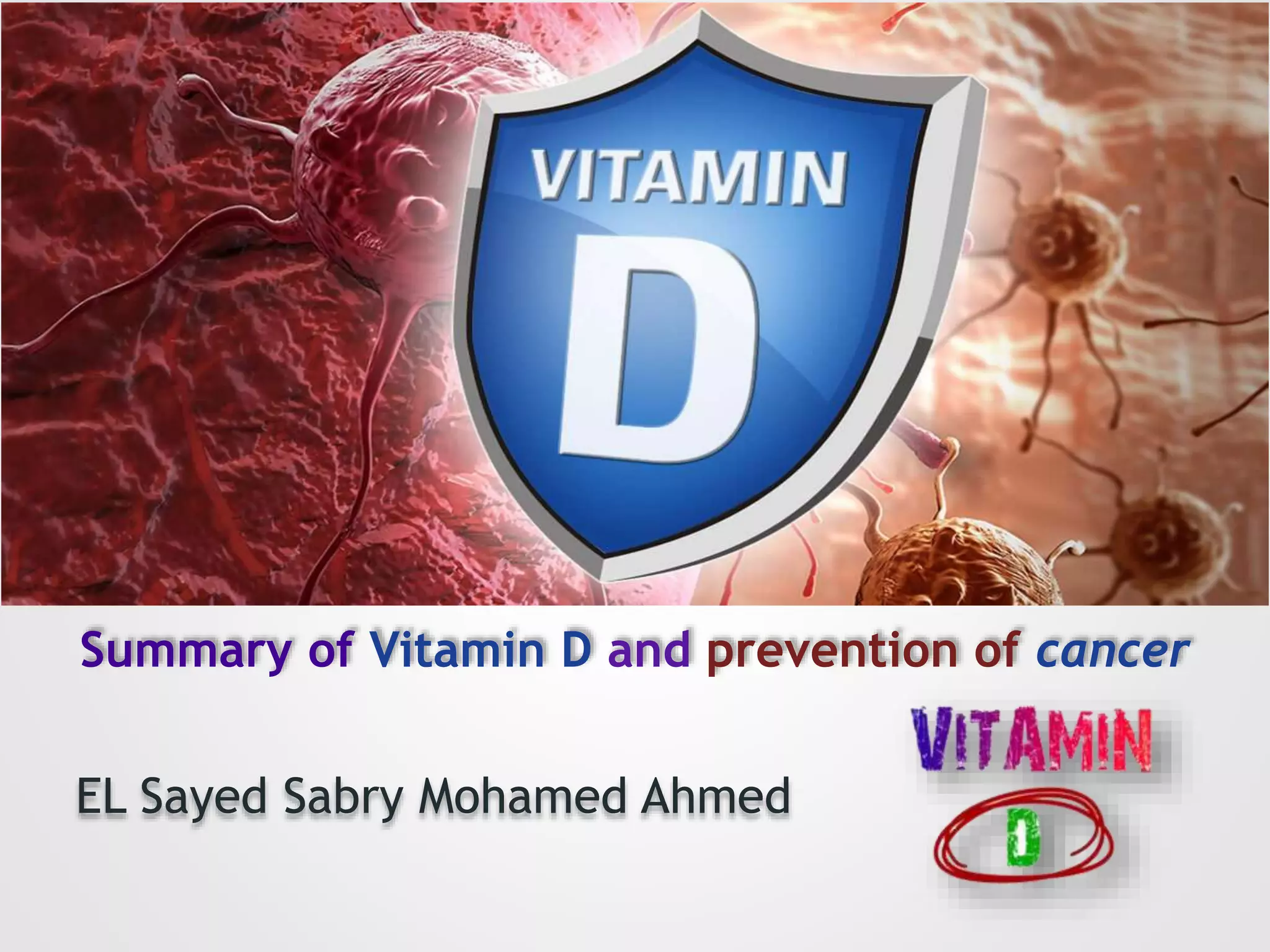


Summary of Vitamin D and prevention of cancer
EL Sayed Sabry Mohamed Ahmed
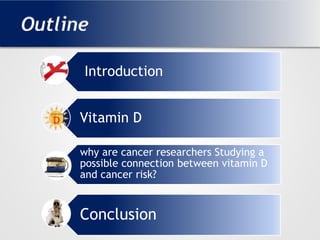
Outline
Introduction
Vitamin D
why are cancer researchers Studying a
possible connection between vitamin D
and cancer risk?
Conclusion
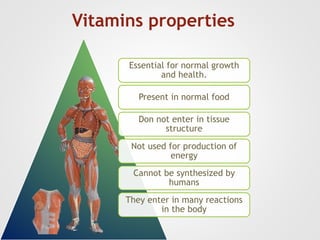
Vitamins properties
Essential for normal growth
and health.
Present in normal food
Don not enter in tissue
structure
Not used for production of
energy
Cannot be synthesized by
humans
They enter in many reactions
in the body
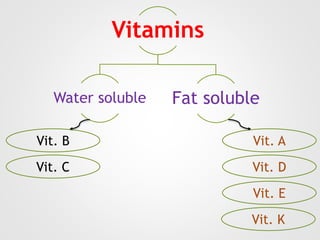
Vitamins
Water soluble Fat soluble
Vit. A
Vit. D
Vit. E
Vit. K
Vit. B
Vit. C
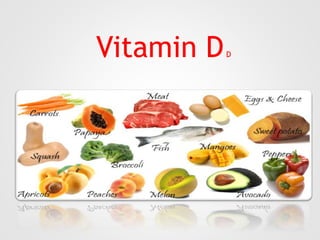
Vitamin DD
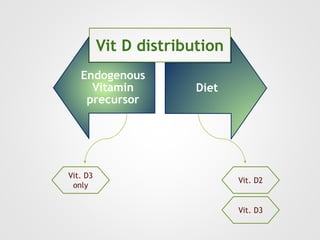
Endogenous
Vitamin
precursor
Diet
Vit D distribution
Vit. D2
Vit. D3
Vit. D3
only
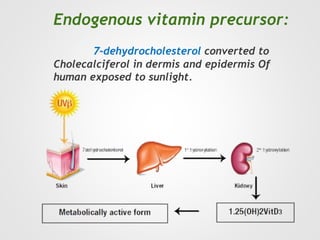
Endogenous vitamin precursor:
7-dehydrocholesterol converted to
Cholecalciferol in dermis and epidermis Of
human exposed to sunlight.
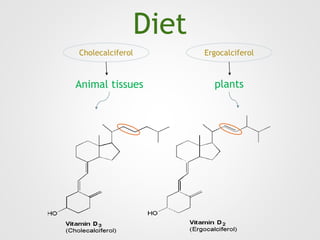
Diet
ErgocalciferolCholecalciferol
plantsAnimal tissues
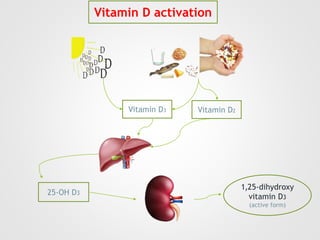
Vitamin D activation
Vitamin D3 Vitamin D2
25-OH D3
1,25-dihydroxy
vitamin D3
(active form)
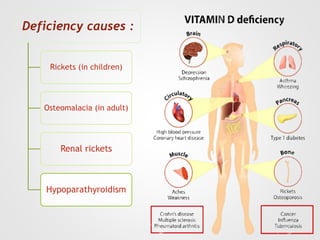
Deficiency causes :
Rickets (in children)
Osteomalacia (in adult)
Renal rickets
Hypoparathyroidism
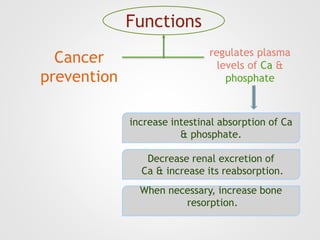
Functions
Cancer
prevention
regulates plasma
levels of Ca &
phosphate
increase intestinal absorption of Ca
& phosphate.
Decrease renal excretion of
Ca & increase its reabsorption.
When necessary, increase bone
resorption.
Why
Vi. D
Cancer
Among the diseases of modern times, the term
cancer has encircled the health sectors nowadays.
Because of the limited treatment modalities
available in medicine today, the emphasis is
shifting on finding a way or ways to prevent
cancers. In that relation, recent research results
and studies are pointing towards vitamin D as the
possible aid in preventing cancer.
Why are cancer researchers studying a possible
connection between vitamin D and cancer risk ?
 - Early epidemiologic research showed that incidence and death
rates for certain cancers were lower among individuals living in
southern latitudes, where levels of sunlight exposure are
relatively high, than among those living at northern latitudes.
Because exposure to ultraviolet light from sunlight leads to the
production of vitamin D.
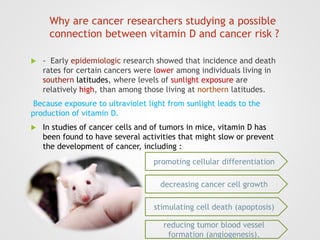
 In studies of cancer cells and of tumors in mice, vitamin D has
been found to have several activities that might slow or prevent
the development of cancer, including :
promoting cellular differentiation
decreasing cancer cell growth
stimulating cell death (apoptosis)
reducing tumor blood vessel
formation (angiogenesis).
*The vitamin D has been found to induce death of cancer cells.although the anti-
cancer activity of vitamin D is not fully understood, it is thought that these effects
are mediated through vitamin D receptors expressed in cancer cells , and may be
related to its immunomodulatory abilities .it is observed that vitamin D
supplementation might be beneficial in the treatment or prevention of some types of
cancer.
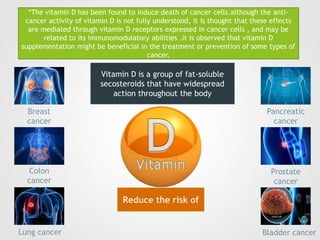
Vitamin D is a group of fat-soluble
secosteroids that have widespread
action throughout the body
Pancreatic
cancer
Prostate
cancer
Bladder cancerLung cancer
Colon
cancer
Breast
cancer
Reduce the risk of
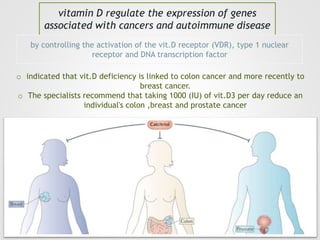
vitamin D regulate the expression of genes
associated with cancers and autoimmune disease
by controlling the activation of the vit.D receptor (VDR), type 1 nuclear
receptor and DNA transcription factor
o indicated that vit.D deficiency is linked to colon cancer and more recently to
breast cancer.
o The specialists recommend that taking 1000 (IU) of vit.D3 per day reduce an
individual's colon ,breast and prostate cancer
 A randomized intervention study involving 1,200 women, published in
June 2007, reports that vitamin D supplementation (1,100
international units (IU)/day) resulted in a 60% reduction in cancer
incidence
Studies
 A 2008 study using data on over 4 million cancer patients from 13
different countries showed a marked difference in cancer risk
between countries classified as sunny and countries classified as less–
sunny for a number of different cancers. Research has also suggested
that cancer patients who have surgery or treatment in the summer
therefore make more endogenous vitamin D and have a better chance
of surviving their cancer than those who undergo treatment in the
winter when they are exposed to less sunlight
conclusion
The promising results from
both observational and
laboratory studies should usher
in a new era of intervention
studies of vitamin D and cancer
risk. Because many public
health scientists are already
clamoring for higher levels of
vitamin D supplementation for
bone and other health,
randomized trials of vitamin D
and cancer risk should be
undertaken speedily
References
1.
1.Otten JJ, Hellwig JP, Meyers LD. Vitamin D. In: Dietary Reference Intakes: The Essential Guide to Nutrient Requirements.
Washington, DC: National Academies Press, 2006.
2.Institute of Medicine Committee to Review Dietary Reference Intakes for Vitamin D and Calcium. Dietary Reference
Intakes for Calcium and Vitamin D. Washington, DC: National Academies Press; 2011.
3.Thorne J, Campbell MJ. The vitamin D receptor in cancer. Proceedings of the Nutrition Society. 2008;67(2):115-127.
[PubMed Abstract]
4.Moreno J, Krishnan AV, Feldman D. Molecular mechanisms mediating the antiproliferative effects of vitamin D in prostate
cancer. Journal of Steroid Biochemistry and Molecular Biology 2005; 97(1–2):31–36.
[PubMed Abstract]
5.http://www.bioventix.com/vitamindantibody.htm
6.http://www.chromatographyonline.com/vitamin-d2-and-d3-separation-new-highly-hydrophobic-uhplchplc-phase
7.http://www.naturalproductsinsider.com/articles/2011/01/understanding-vitamin-d.aspx
8.http://ajprenal.physiology.org/content/297/6/F1502
9.http://www.mysmartd.com/press.php
10.http://www.nature.com/nrneph/journal/v5/n12/fig_tab/nrneph.2009.185_F1.html
11.http://www.rrnursingschool.biz/unity-companies/parathyroid-hormone.html
12.https://www.cancer.gov/about-cancer/causes-prevention/risk/diet/vitamin-d-fact-sheet
13.http://lpi.oregonstate.edu/mic/vitamins/vitamin-D
14.http://www.scielo.org.za/scielo.php?script=sci_arttext&pid=S1681-150X2011000200007
Thanks

Vitamin D and cancer prevention

  • 1.
    Summary of VitaminD and prevention of cancer EL Sayed Sabry Mohamed Ahmed
  • 2.
    Outline Introduction Vitamin D why arecancer researchers Studying a possible connection between vitamin D and cancer risk? Conclusion
  • 4.
    Vitamins properties Essential fornormal growth and health. Present in normal food Don not enter in tissue structure Not used for production of energy Cannot be synthesized by humans They enter in many reactions in the body
  • 5.
    Vitamins Water soluble Fatsoluble Vit. A Vit. D Vit. E Vit. K Vit. B Vit. C
  • 6.
  • 7.
  • 8.
    Endogenous vitamin precursor: 7-dehydrocholesterolconverted to Cholecalciferol in dermis and epidermis Of human exposed to sunlight.
  • 9.
  • 10.
    Vitamin D activation VitaminD3 Vitamin D2 25-OH D3 1,25-dihydroxy vitamin D3 (active form)
  • 11.
    Deficiency causes : Rickets(in children) Osteomalacia (in adult) Renal rickets Hypoparathyroidism
  • 12.
    Functions Cancer prevention regulates plasma levels ofCa & phosphate increase intestinal absorption of Ca & phosphate. Decrease renal excretion of Ca & increase its reabsorption. When necessary, increase bone resorption.
  • 13.
  • 14.
    Cancer Among the diseasesof modern times, the term cancer has encircled the health sectors nowadays. Because of the limited treatment modalities available in medicine today, the emphasis is shifting on finding a way or ways to prevent cancers. In that relation, recent research results and studies are pointing towards vitamin D as the possible aid in preventing cancer.
  • 15.
    Why are cancerresearchers studying a possible connection between vitamin D and cancer risk ?  - Early epidemiologic research showed that incidence and death rates for certain cancers were lower among individuals living in southern latitudes, where levels of sunlight exposure are relatively high, than among those living at northern latitudes. Because exposure to ultraviolet light from sunlight leads to the production of vitamin D.  In studies of cancer cells and of tumors in mice, vitamin D has been found to have several activities that might slow or prevent the development of cancer, including : promoting cellular differentiation decreasing cancer cell growth stimulating cell death (apoptosis) reducing tumor blood vessel formation (angiogenesis).
  • 16.
    *The vitamin Dhas been found to induce death of cancer cells.although the anti- cancer activity of vitamin D is not fully understood, it is thought that these effects are mediated through vitamin D receptors expressed in cancer cells , and may be related to its immunomodulatory abilities .it is observed that vitamin D supplementation might be beneficial in the treatment or prevention of some types of cancer. Vitamin D is a group of fat-soluble secosteroids that have widespread action throughout the body Pancreatic cancer Prostate cancer Bladder cancerLung cancer Colon cancer Breast cancer Reduce the risk of
  • 18.
    vitamin D regulatethe expression of genes associated with cancers and autoimmune disease by controlling the activation of the vit.D receptor (VDR), type 1 nuclear receptor and DNA transcription factor o indicated that vit.D deficiency is linked to colon cancer and more recently to breast cancer. o The specialists recommend that taking 1000 (IU) of vit.D3 per day reduce an individual's colon ,breast and prostate cancer
  • 19.
     A randomizedintervention study involving 1,200 women, published in June 2007, reports that vitamin D supplementation (1,100 international units (IU)/day) resulted in a 60% reduction in cancer incidence Studies  A 2008 study using data on over 4 million cancer patients from 13 different countries showed a marked difference in cancer risk between countries classified as sunny and countries classified as less– sunny for a number of different cancers. Research has also suggested that cancer patients who have surgery or treatment in the summer therefore make more endogenous vitamin D and have a better chance of surviving their cancer than those who undergo treatment in the winter when they are exposed to less sunlight
  • 20.
  • 21.
    The promising resultsfrom both observational and laboratory studies should usher in a new era of intervention studies of vitamin D and cancer risk. Because many public health scientists are already clamoring for higher levels of vitamin D supplementation for bone and other health, randomized trials of vitamin D and cancer risk should be undertaken speedily
  • 22.
    References 1. 1.Otten JJ, HellwigJP, Meyers LD. Vitamin D. In: Dietary Reference Intakes: The Essential Guide to Nutrient Requirements. Washington, DC: National Academies Press, 2006. 2.Institute of Medicine Committee to Review Dietary Reference Intakes for Vitamin D and Calcium. Dietary Reference Intakes for Calcium and Vitamin D. Washington, DC: National Academies Press; 2011. 3.Thorne J, Campbell MJ. The vitamin D receptor in cancer. Proceedings of the Nutrition Society. 2008;67(2):115-127. [PubMed Abstract] 4.Moreno J, Krishnan AV, Feldman D. Molecular mechanisms mediating the antiproliferative effects of vitamin D in prostate cancer. Journal of Steroid Biochemistry and Molecular Biology 2005; 97(1–2):31–36. [PubMed Abstract] 5.http://www.bioventix.com/vitamindantibody.htm 6.http://www.chromatographyonline.com/vitamin-d2-and-d3-separation-new-highly-hydrophobic-uhplchplc-phase 7.http://www.naturalproductsinsider.com/articles/2011/01/understanding-vitamin-d.aspx 8.http://ajprenal.physiology.org/content/297/6/F1502 9.http://www.mysmartd.com/press.php 10.http://www.nature.com/nrneph/journal/v5/n12/fig_tab/nrneph.2009.185_F1.html 11.http://www.rrnursingschool.biz/unity-companies/parathyroid-hormone.html 12.https://www.cancer.gov/about-cancer/causes-prevention/risk/diet/vitamin-d-fact-sheet 13.http://lpi.oregonstate.edu/mic/vitamins/vitamin-D 14.http://www.scielo.org.za/scielo.php?script=sci_arttext&pid=S1681-150X2011000200007
  • 23.