1. What is Vitamin D
2. Importance of Vitamin D
3. Types of Vitamin D
4. Sources of Vitamin D
5. Deficiency
6. Toxicity
7. Causes of Vitamin D deficiency
8. Prevalence of Vitamin D deficiency
Agenda
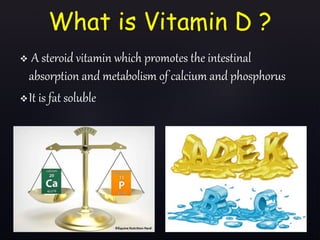
 A steroid vitamin which promotes the intestinal
absorption and metabolism of calcium and phosphorus
It is fat soluble
What is Vitamin D ?
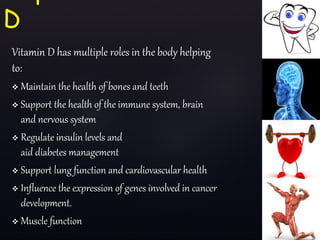
Vitamin D has multiple roles in the body helping
to:
 Maintain the health of bones and teeth
 Support the health of the immune system, brain
and nervous system
 Regulate insulin levels and
aid diabetes management
 Support lung function and cardiovascular health
 Influence the expression of genes involved in cancer
development.
 Muscle function
D
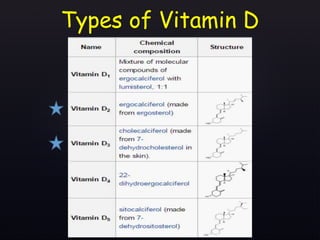
Types of Vitamin D
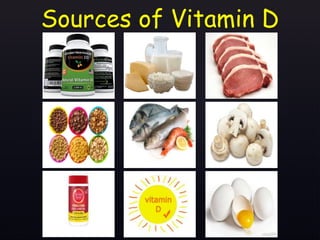
Sources of Vitamin D
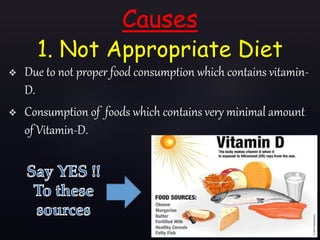
Causes
 Due to not proper food consumption which contains vitamin-
D.
 Consumption of foods which contains very minimal amount
of Vitamin-D.
1. Not Appropriate Diet
2.Your exposure to sunlight is
less or limited.
Avoid Tanning
Skin allergies and skin burns
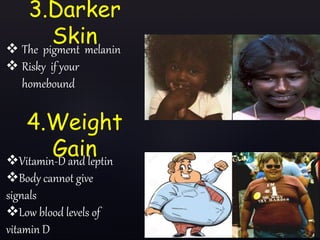
3.Darker
Skin The pigment melanin
 Risky if your
homebound
4.Weight
GainVitamin-D and leptin
Body cannot give
signals
Low blood levels of
vitamin D
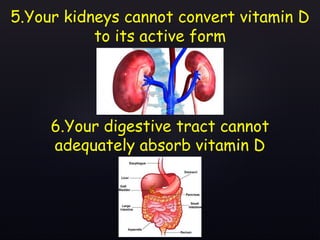
5.Your kidneys cannot convert vitamin D
to its active form
6.Your digestive tract cannot
adequately absorb vitamin D
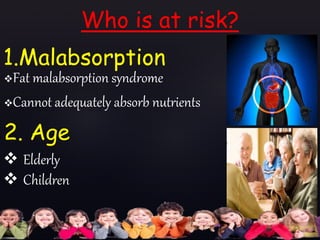
1.Malabsorption
Fat malabsorption syndrome
Cannot adequately absorb nutrients
Who is at risk?
2. Age
 Elderly
 Children
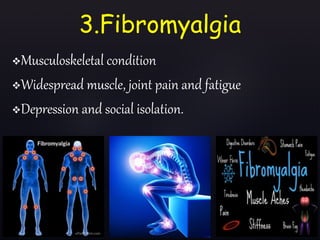
3.Fibromyalgia
Musculoskeletal condition
Widespread muscle, joint pain and fatigue
Depression and social isolation.
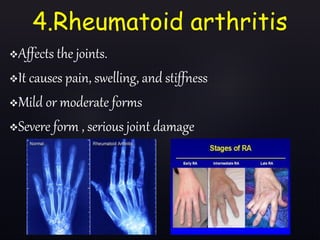
4.Rheumatoid arthritis
Affects the joints.
It causes pain, swelling, and stiffness
Mild or moderate forms
Severe form , serious joint damage
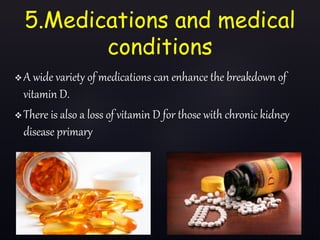
5.Medications and medical
conditions
 A wide variety of medications can enhance the breakdown of
vitamin D.
 There is also a loss of vitamin D for those with chronic kidney
disease primary
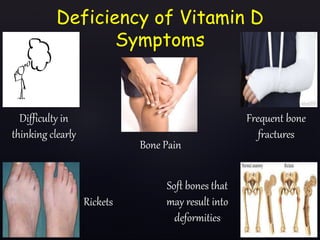
Deficiency of Vitamin D
Symptoms
Difficulty in
thinking clearly
Bone Pain
Frequent bone
fractures
Soft bones that
may result into
deformities
Rickets
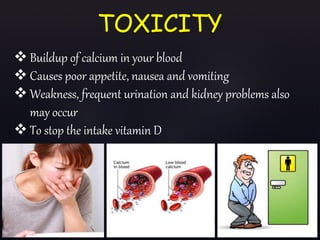
 Buildup of calcium in your blood
 Causes poor appetite, nausea and vomiting
 Weakness, frequent urination and kidney problems also
may occur
 To stop the intake vitamin D
TOXICITY
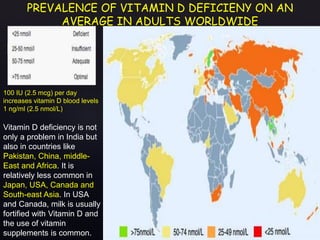
PREVALENCE OF VITAMIN D DEFICIENY ON AN
AVERAGE IN ADULTS WORLDWIDE
100 IU (2.5 mcg) per day
increases vitamin D blood levels
1 ng/ml (2.5 nmol/L)
Vitamin D deficiency is not
only a problem in India but
also in countries like
Pakistan, China, middle-
East and Africa. It is
relatively less common in
Japan, USA, Canada and
South-east Asia. In USA
and Canada, milk is usually
fortified with Vitamin D and
the use of vitamin
supplements is common.
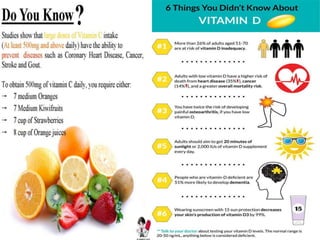
 As estimated, 1 billion people worldwide have Vitamin D deficiency or insufficiency
and is very common in India in all the age groups and both sexes across the country.
 Apart from low dietary intake, people suffering from calcium deficiencies, diabetes,
hepatic, renal, dermatological disorders, alcoholics and inflammatory
rheumatological conditions also mostly have Vit D deficiency.
 As per the report of International Osteoporosis Foundation, in Northern India, 96%
of noenates, 91% of healthy school girls, 78% of healthy hospital staff, and 84% of
pregnant women were found to have hypovitaminosis D. On the other hand,
prevalence of vitamin D deficiency in Southern India was estimated to be 40% among
males and 70% among females. There was also a significant rural urban variation in
the vitamin D deficiency status that was attributed to the diversity of occupation
which the people were involved in.
PREVALENCE OF VITAMIN D DEFICIENCY IN INDIA
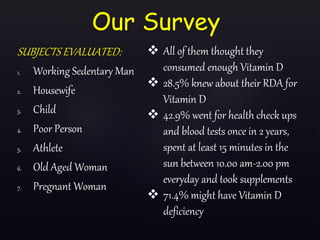
SUBJECTS EVALUATED:
1. Working Sedentary Man
2. Housewife
3. Child
4. Poor Person
5. Athlete
6. Old Aged Woman
7. Pregnant Woman
Our Survey
 All of them thought they
consumed enough Vitamin D
 28.5% knew about their RDA for
Vitamin D
 42.9% went for health check ups
and blood tests once in 2 years,
spent at least 15 minutes in the
sun between 10.00 am-2.00 pm
everyday and took supplements
 71.4% might have Vitamin D
deficiency
1. How many types of Vitamin D exist?
2. Dark green vegetables are a rich source of Vitamin D (True
or False)
3. List Any:
• 3 causes of Vitamin D deficiency
• 2 symptoms of Vitamin D deficiency
• 2 groups of people at risk of Vitamin D deficiency
Test Yourself
 https://en.wikipedia.org
 https://ods.od.nih.
 http://www.medicinenet.com
 https://www.vitamindcouncil.org
 http://www.healthline.com
 https://www.ncbi.nlm
 http://www.ijhas.in
 http://timesofindia.indiatimes.com
Bibliography
Presented by:
Sanjana Shah-166
Shreya Shah-167
Sarah Shaikh-169
Thank You

Vitamin d deficiency

  • 2.
    1. What isVitamin D 2. Importance of Vitamin D 3. Types of Vitamin D 4. Sources of Vitamin D 5. Deficiency 6. Toxicity 7. Causes of Vitamin D deficiency 8. Prevalence of Vitamin D deficiency Agenda
  • 3.
     A steroidvitamin which promotes the intestinal absorption and metabolism of calcium and phosphorus It is fat soluble What is Vitamin D ?
  • 4.
    Vitamin D hasmultiple roles in the body helping to:  Maintain the health of bones and teeth  Support the health of the immune system, brain and nervous system  Regulate insulin levels and aid diabetes management  Support lung function and cardiovascular health  Influence the expression of genes involved in cancer development.  Muscle function D
  • 5.
  • 6.
  • 7.
    Causes  Due tonot proper food consumption which contains vitamin- D.  Consumption of foods which contains very minimal amount of Vitamin-D. 1. Not Appropriate Diet
  • 8.
    2.Your exposure tosunlight is less or limited. Avoid Tanning Skin allergies and skin burns
  • 9.
    3.Darker Skin The pigmentmelanin  Risky if your homebound 4.Weight GainVitamin-D and leptin Body cannot give signals Low blood levels of vitamin D
  • 10.
    5.Your kidneys cannotconvert vitamin D to its active form 6.Your digestive tract cannot adequately absorb vitamin D
  • 11.
    1.Malabsorption Fat malabsorption syndrome Cannotadequately absorb nutrients Who is at risk? 2. Age  Elderly  Children
  • 12.
    3.Fibromyalgia Musculoskeletal condition Widespread muscle,joint pain and fatigue Depression and social isolation.
  • 13.
    4.Rheumatoid arthritis Affects thejoints. It causes pain, swelling, and stiffness Mild or moderate forms Severe form , serious joint damage
  • 14.
    5.Medications and medical conditions A wide variety of medications can enhance the breakdown of vitamin D.  There is also a loss of vitamin D for those with chronic kidney disease primary
  • 15.
    Deficiency of VitaminD Symptoms Difficulty in thinking clearly Bone Pain Frequent bone fractures Soft bones that may result into deformities Rickets
  • 16.
     Buildup ofcalcium in your blood  Causes poor appetite, nausea and vomiting  Weakness, frequent urination and kidney problems also may occur  To stop the intake vitamin D TOXICITY
  • 17.
    PREVALENCE OF VITAMIND DEFICIENY ON AN AVERAGE IN ADULTS WORLDWIDE 100 IU (2.5 mcg) per day increases vitamin D blood levels 1 ng/ml (2.5 nmol/L) Vitamin D deficiency is not only a problem in India but also in countries like Pakistan, China, middle- East and Africa. It is relatively less common in Japan, USA, Canada and South-east Asia. In USA and Canada, milk is usually fortified with Vitamin D and the use of vitamin supplements is common.
  • 18.
     As estimated,1 billion people worldwide have Vitamin D deficiency or insufficiency and is very common in India in all the age groups and both sexes across the country.  Apart from low dietary intake, people suffering from calcium deficiencies, diabetes, hepatic, renal, dermatological disorders, alcoholics and inflammatory rheumatological conditions also mostly have Vit D deficiency.  As per the report of International Osteoporosis Foundation, in Northern India, 96% of noenates, 91% of healthy school girls, 78% of healthy hospital staff, and 84% of pregnant women were found to have hypovitaminosis D. On the other hand, prevalence of vitamin D deficiency in Southern India was estimated to be 40% among males and 70% among females. There was also a significant rural urban variation in the vitamin D deficiency status that was attributed to the diversity of occupation which the people were involved in. PREVALENCE OF VITAMIN D DEFICIENCY IN INDIA
  • 20.
    SUBJECTS EVALUATED: 1. WorkingSedentary Man 2. Housewife 3. Child 4. Poor Person 5. Athlete 6. Old Aged Woman 7. Pregnant Woman Our Survey  All of them thought they consumed enough Vitamin D  28.5% knew about their RDA for Vitamin D  42.9% went for health check ups and blood tests once in 2 years, spent at least 15 minutes in the sun between 10.00 am-2.00 pm everyday and took supplements  71.4% might have Vitamin D deficiency
  • 21.
    1. How manytypes of Vitamin D exist? 2. Dark green vegetables are a rich source of Vitamin D (True or False) 3. List Any: • 3 causes of Vitamin D deficiency • 2 symptoms of Vitamin D deficiency • 2 groups of people at risk of Vitamin D deficiency Test Yourself
  • 22.
     https://en.wikipedia.org  https://ods.od.nih. http://www.medicinenet.com  https://www.vitamindcouncil.org  http://www.healthline.com  https://www.ncbi.nlm  http://www.ijhas.in  http://timesofindia.indiatimes.com Bibliography
  • 23.
    Presented by: Sanjana Shah-166 ShreyaShah-167 Sarah Shaikh-169 Thank You