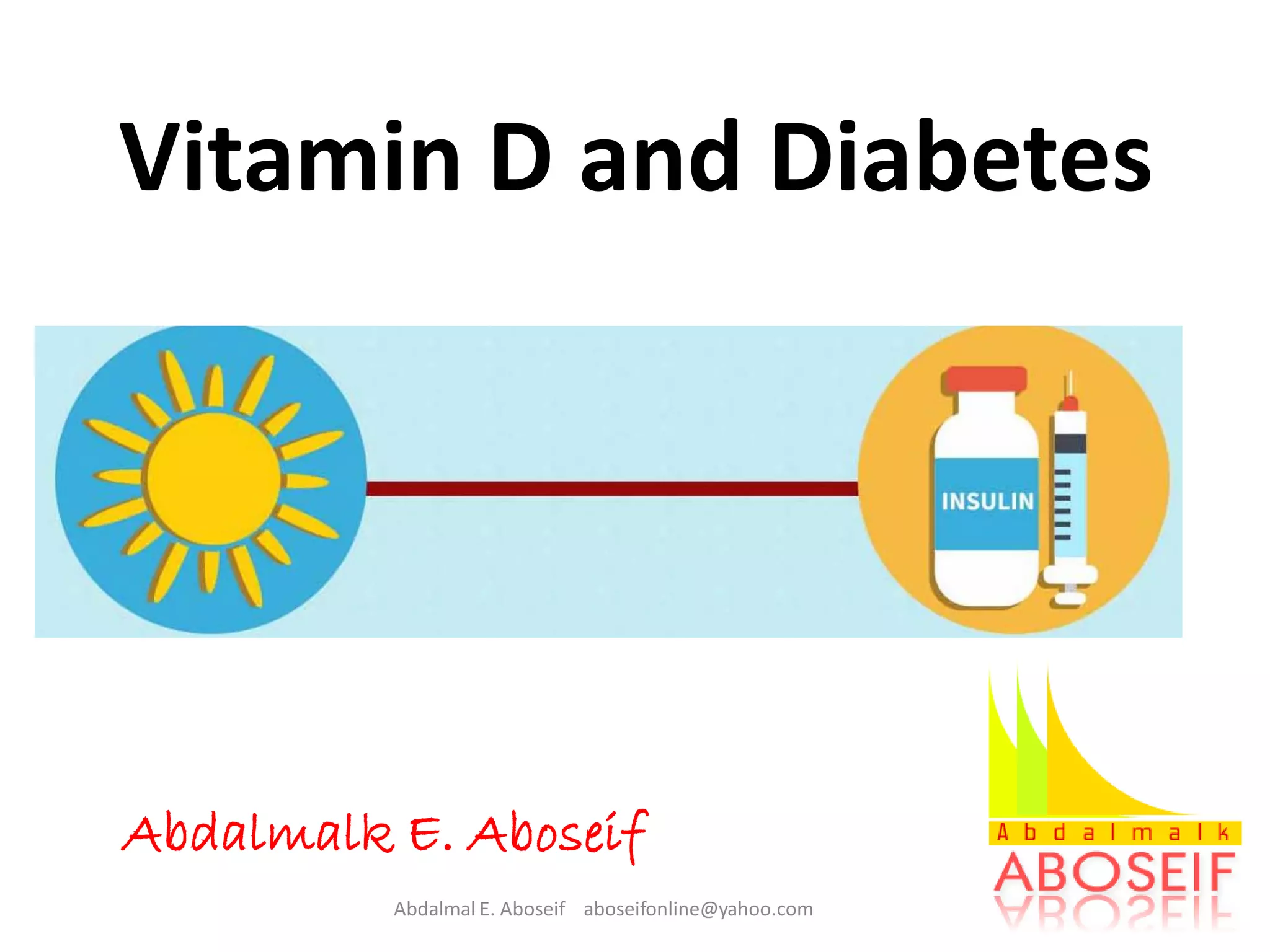
Vitamin D and Diabetes
Abdalmalk E. Aboseif
Abdalmal E. Aboseif aboseifonline@yahoo.com
Vitamin D is a fat-soluble vitamin that plays a
number of important roles in the body, including
maintaining the health of your bones,
teeth
and joints,
and assisting immune system function.
Abdalmal E. Aboseif
aboseifonline@yahoo.com
This underrated vitamin is found in certain foods
but is also produced by the body in response
to exposure to the sun.
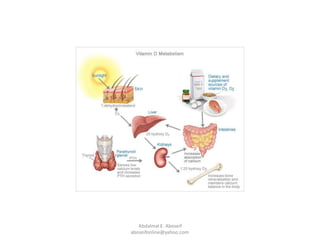
When the sun’s ultraviolet-B (UVB) rays are
exposed to bare skin, the body converts a
cholesterol derivative into Vitamin D. In fact,
it’s now known that every cell and tissue
within the body has a Vitamin D protein
receptor.
Abdalmal E. Aboseif
aboseifonline@yahoo.com
However, most of us in the UK and other
Western countries are deficient in Vitamin D,
including many patients with Type 2 diabetes,
due to limited sunlight exposure caused by a
number of factors, including more time spent at
home, in the office or the car, shorter days in
winter, sunscreen use in summer and fears of
skin cancer.
Abdalmal E. Aboseif
aboseifonline@yahoo.com
1,25 OH Vitamin D Effects
Increased calcium absorption in the gut
Increased PTH mediated bone resorption
Decreased renal calcium and phosphorus
excretion
Decreased PTH secretion
Increased bone calcification
Abdalmal E. Aboseif
aboseifonline@yahoo.com
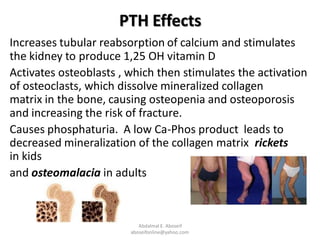
PTH Effects
Increases tubular reabsorption of calcium and stimulates
the kidney to produce 1,25 OH vitamin D
Activates osteoblasts , which then stimulates the activation
of osteoclasts, which dissolve mineralized collagen
matrix in the bone, causing osteopenia and osteoporosis
and increasing the risk of fracture.
Causes phosphaturia. A low Ca-Phos product leads to
decreased mineralization of the collagen matrix rickets
in kids
and osteomalacia in adults
Abdalmal E. Aboseif
aboseifonline@yahoo.com
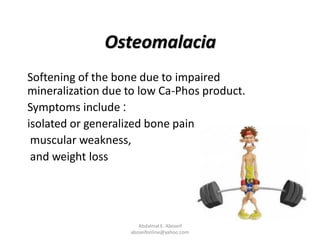
Osteomalacia
Softening of the bone due to impaired
mineralization due to low Ca-Phos product.
:Symptoms include
isolated or generalized bone pain
muscular weakness,
and weight loss
Abdalmal E. Aboseif
aboseifonline@yahoo.com
Non-classical Actions of Vitamin D
Suppress cell growth/proliferation
Regulate apoptosis
Modulate immune responses
Susceptibility to infections
Susceptibility to autoimmune disorders – MS, T1DM
Effects in transplantation immunity
Modulate keratinocyte differentiation and function
Key role in psoriasis therapy
Suppress renin-angiotensin system
Stimulate insulin secretion
Control neuromuscular function and the brain
Abdalmal E. Aboseif
aboseifonline@yahoo.com
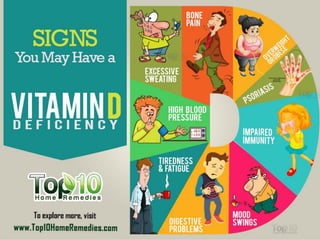
Vitamin D deficiency
The signs of Vitamin D deficiency can range from
bone pain and muscle weakness to depression and
weakened immune system, while longer-term
deficiency can result in obesity
high blood pressure
psoriasis
osteoporosis
chronic fatigue
Alzheimer’s disease
cancer
type 2 diabetes.
Abdalmal E. Aboseif
aboseifonline@yahoo.com
Abdalmal E. Aboseif
aboseifonline@yahoo.com
Exposing your skin to the sun for 15-20 minutes
each day can help increase your body’s own
production of vitamin D and thus reduce your risk
of diabetes and other serious medical conditions.
Alternatively, you can get your daily intake of
vitamin D through dietary supplements and foods
such as nuts, oily fish, eggs, powdered milk and
some fortified cereals.
Abdalmal E. Aboseif
aboseifonline@yahoo.com
If you shun the sun, suffer from milk allergies, or
adhere to a strict vegan diet, you may be at risk
for vitamin D deficiency. Known as the sunshine
vitamin, vitamin D is produced by the body in
response to skin being exposed to sunlight. It is also
occurs naturally in a few foods -- including some fish,
fish liver oils, and egg yolks -- and in fortified dairy
and grain products.
Abdalmal E. Aboseif
aboseifonline@yahoo.com
Vitamin D is essential for strong bones, because
it helps the body use calcium from the diet.
Traditionally, vitamin D deficiency has been
associated with rickets, a disease in which the
bone tissue doesn't properly mineralize,
leading to soft bones and skeletal deformities.
But increasingly, research is revealing the
importance of vitamin D in protecting against
a host of health problems.
Abdalmal E. Aboseif
aboseifonline@yahoo.com
Abdalmal E. Aboseif
aboseifonline@yahoo.com
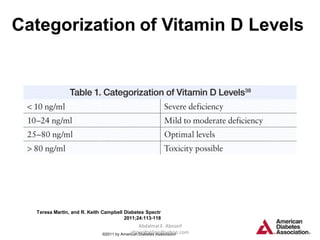
Categorization of Vitamin D Levels
Teresa Martin, and R. Keith Campbell Diabetes Spectr
2011;24:113-118
©2011 by American Diabetes Association
Abdalmal E. Aboseif
aboseifonline@yahoo.com
Causes of Vitamin D Deficiency
Vitamin D deficiency can occur for a number of reasons:
You don't consume the recommended levels of the vitamin over time. This is
likely if you follow a strict vegan diet, because most of the natural sources
are animal-based, including fish and fish oils, egg yolks, fortified milk, and
beef liver.
Your exposure to sunlight is limited. Because the body makes vitamin D when
your skin is exposed to sunlight, you may be at risk of deficiency if you are
homebound, live in northern latitudes, wear long robes or head coverings
for religious reasons, or have an occupation that prevents sun exposure.
You have dark skin. The pigment melanin reduces the skin's ability to make
vitamin D in response to sunlight exposure. Some studies show that older
adults with darker skin are at high risk of vitamin D deficiency.
Abdalmal E. Aboseif
aboseifonline@yahoo.com
Your kidneys cannot convert vitamin D to its active form. As people age,
their kidneys are less able to convert vitamin D to its active form, thus
increasing their risk of vitamin D deficiency.
Your digestive tract cannot adequately absorb vitamin D. Certain medical
problems, including Crohn's disease, cystic fibrosis, and celiac disease, can
affect your intestine's ability to absorb vitamin D from the food you eat.
You are obese. Vitamin D is extracted from the blood by fat cells, altering its
release into the circulation. People with a body mass index of 30 or
greater often have low blood levels of vitamin D.
Abdalmal E. Aboseif
aboseifonline@yahoo.com
Mechanisms of Vitamin D
Deficiency
Reduced skin synthesis
- Sunscreen use (SPF 15 reduces vitamin D3 synthesis by
99%)
- Skin pigmentation
- Aging (reduction of 7 dehydrocholesterol reduces vitamin
D3 synthesis by 75% in a 70 year old)
- Season, latitude and time of day
-Patients with skin grafts for burns
Abdalmal E. Aboseif
aboseifonline@yahoo.com
Impaired availability of vitamin D due to inadequate dietary intake,
malabsorptive disorders and obesity (sequestration of vitamin D in body
fat)
Impaired hydroxylation by the liver due to liver disease
Increased hepatic catabolism due to medications
Impaired renal production of 1,25 –OH vit. D in stage 4 and 5 CKD
Renal loss of vit. D and vit. D binding proteins in nephrotic syndrome
Abdalmal E. Aboseif
aboseifonline@yahoo.com
Abdalmal E. Aboseif
aboseifonline@yahoo.com
Medications That Increase Catabolism of
Vitamin D via P450 Enzyme Activity
Phenytoin
Phenobarbital
Carbamazepine
Isoniazid
Theophylline
Rifampin
Glucocorticoids
HAART
Symptoms and Health Risks of Vitamin D
Deficiency
Symptoms of bone pain and muscle weakness can mean you have a vitamin
D deficiency. However, for many people, the symptoms are subtle. Yet,
even without symptoms, too little vitamin D can pose health risks.
Low blood levels of the vitamin have been associated with the following:
Increased risk of death from cardiovascular disease
Cognitive impairment in older adults
Severe asthma in children
Cancer
Abdalmal E. Aboseif
aboseifonline@yahoo.com
Research suggests that vitamin D could play a role in the
prevention and treatment of a number of different
conditions, including
* type1 and type 2 diabetes
** hypertension
*** glucose intolerance
**** multiple sclerosis.
Abdalmal E. Aboseif
aboseifonline@yahoo.com
Types of vitamin D
There are two forms of this vitamin; vitamin D2 and vitamin D3.
Vitamin D2 is a synthetic version called ergocalciferol, which has a shorter
helf life, while vitamin D3 (also known as cholecalciferol) is the same as
the vitamin D that is produced by the body following exposure to UVB
rays.
more than three timesappears to be3Studies have shown that vitamin D
, but most products that include the words2vitamin Das effective as
“good source of vitamin D” or “fortified with vitamin D” on their labels
contain the hugely inferior vitamin D2.
So when shopping for vitamin D-rich foods or supplements, make sure you
check which ‘type’ of vitamin D each product contains.
Abdalmal E. Aboseif
aboseifonline@yahoo.com
Tests for Vitamin D Deficiency
The most accurate way to measure how much vitamin
D is in your body is the 25-hydroxy vitamin D blood
test. A level of 20 nanograms/milliliter to 50 ng/mL is
considered adequate for healthy people. A level less
than 12 ng/mL indicates vitamin D deficiency.
Abdalmal E. Aboseif
aboseifonline@yahoo.com
Who Should Be Screened for
Vitamin D Deficiency
Elderly
Home bound or institutionalized patients
Patients with known or suspected malabsorption
Patients with osteoporosis or osteopenia
CKD patients
Chronic liver disease patients
Patients with nonspecific musculoskeletal pain
Patients on medications that induce P-450 enzyme
activity
Obese
Abdalmal E. Aboseif
aboseifonline@yahoo.com
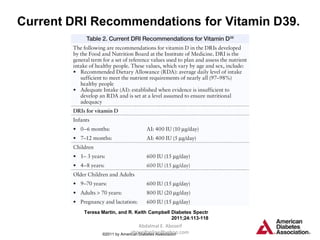
Current DRI Recommendations for Vitamin D39.
Teresa Martin, and R. Keith Campbell Diabetes Spectr
2011;24:113-118
©2011 by American Diabetes Association
Abdalmal E. Aboseif
aboseifonline@yahoo.com
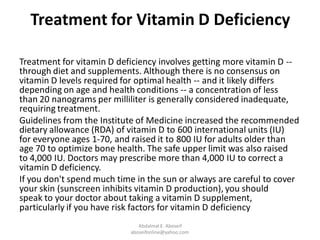
Treatment for Vitamin D Deficiency
Treatment for vitamin D deficiency involves getting more vitamin D --
through diet and supplements. Although there is no consensus on
vitamin D levels required for optimal health -- and it likely differs
depending on age and health conditions -- a concentration of less
than 20 nanograms per milliliter is generally considered inadequate,
requiring treatment.
Guidelines from the Institute of Medicine increased the recommended
dietary allowance (RDA) of vitamin D to 600 international units (IU)
for everyone ages 1-70, and raised it to 800 IU for adults older than
age 70 to optimize bone health. The safe upper limit was also raised
to 4,000 IU. Doctors may prescribe more than 4,000 IU to correct a
vitamin D deficiency.
If you don't spend much time in the sun or always are careful to cover
your skin (sunscreen inhibits vitamin D production), you should
speak to your doctor about taking a vitamin D supplement,
particularly if you have risk factors for vitamin D deficiency
Abdalmal E. Aboseif
aboseifonline@yahoo.com
Abdalmal E. Aboseif
aboseifonline@yahoo.com
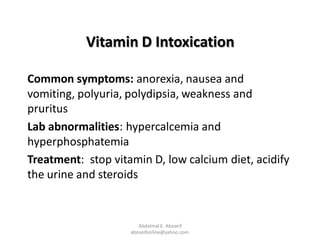
Vitamin D Intoxication
Common symptoms: anorexia, nausea and
vomiting, polyuria, polydipsia, weakness and
pruritus
Lab abnormalities: hypercalcemia and
hyperphosphatemia
Treatment: stop vitamin D, low calcium diet, acidify
the urine and steroids
Abdalmal E. Aboseif
aboseifonline@yahoo.com
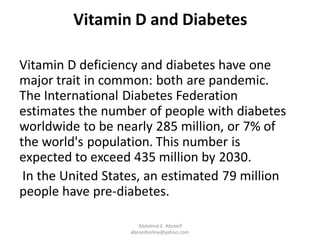
Vitamin D and Diabetes
Vitamin D deficiency and diabetes have one
major trait in common: both are pandemic.
The International Diabetes Federation
estimates the number of people with diabetes
worldwide to be nearly 285 million, or 7% of
the world's population. This number is
expected to exceed 435 million by 2030.
In the United States, an estimated 79 million
people have pre-diabetes.
Abdalmal E. Aboseif
aboseifonline@yahoo.com
Mechanisms of action
There is growing evidence that vitamin D deficiency could be a contributing
factor in the development of both type 1 and type 2 diabetes. First, the β-cell
in the pancreas that secretes insulin has been shown to contain VDRs as well
as the 1 alpha hydroxylase enzyme.Evidence indicates that vitamin D
treatment improves glucose tolerance and insulin resistance.Vitamin D
deficiency leads to reduced insulin secretion. Supplementation with vitamin
D has been shown to restore insulin secretion in animals. Researchers have
also found an indirect effect on insulin secretion, potentially by a calcium
effect on insulin secretion. Vitamin D contributes to normalization of
extracellular calcium, ensuring normal calcium flux through cell membranes;
therefore, low vitamin D may diminish calcium's ability to affect insulin
secretion.Other potential mechanisms associated with vitamin D and
diabetes include improving insulin action by stimulating expression of the
insulin receptor, enhancing insulin responsiveness for glucose transport,
having an indirect effect on insulin action potentially via a calcium effect on
insulin secretion, and improving systemic inflammation by a direct effect on
cytokines.
Abdalmal E. Aboseif
aboseifonline@yahoo.com
Effects on diabetes
Vitamin D is believed to help improve the body’s sensitivity to insulin –
the hormone responsible for regulating blood sugar levels – and thus
reduce the risk of insulin resistance, which is often a precursor to type
2 diabetes.
Some scientists also believe this vitamin may help regulate the production
of insulin in the pancreas.
Vitamin D levels should ideally be between 20-56 ng/ml (50-140 nmol/l),
with anything below 20 ng/ml considered deficient.
However, it is now known that raising the amount of vitamin D in your
body to around 60-80 ng/ml can help keep blood glucose levels under
control, which is vital for people with diabetes
Abdalmal E. Aboseif
aboseifonline@yahoo.com
As well as assisting glycemic control,
increasing your levels of vitamin D can
also:
Abdalmal E. Aboseif
aboseifonline@yahoo.com
Aid weight loss
Regulate appetite
Reduce belly fat
Aid weight loss
studies have shown that good vitamin D status helps to
reduce parathyroid hormone (PTH) levels, which in
the long-term may promote weight loss and reduce
risk of obesity, which is a major risk factor for type 2
diabetes.
Abdalmal E. Aboseif
aboseifonline@yahoo.com
Regulate appetite
vitamin D can increase your body’s levels of the
hormone leptin, which controls body fat storage and
triggers the sensation of satiety, giving the feeling of
having eaten enough and thus lowering hunger
levels.
Abdalmal E. Aboseif
aboseifonline@yahoo.com
Reduce belly fat
an increase in vitamin D can help lower levels of
cortisol, a stress hormone produced in the adrenal
glands. Cortisol is involved in a number of important
functions, including the body's response to stress
and regulation of blood pressure. But higher and
more prolonged levels of the hormone in the blood
can lead to increased abdominal (or visceral) fat,
which is linked to various health conditions including
diabetes type 2.
Abdalmal E. Aboseif
aboseifonline@yahoo.com
Where can I buy vitamin D supplements?
Single vitamin D supplements or vitamin drops containing vitamin D (for use
by young children) are available at most UK pharmacies, supermarkets and
health food retailers like Holland and Barrett.
Most multivitamins provide a daily dosage of 400 International Units (IU),
although some manufacturers have begun to offer products with 1,000,
2,000 and even 5,000 IU per day - considerably more than the UK
recommendations of 400 units.
*Note; before increasing your intake of vitamin D, consult with your doctor first to make sure the dose you
.diabetes medicationintend to take is safe and won’t interact with your standard
Abdalmal E. Aboseif
aboseifonline@yahoo.com
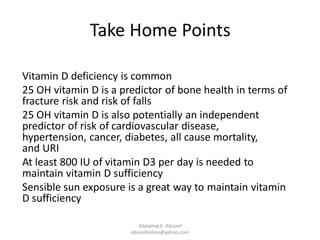
Take Home Points
Vitamin D deficiency is common
25 OH vitamin D is a predictor of bone health in terms of
fracture risk and risk of falls
25 OH vitamin D is also potentially an independent
predictor of risk of cardiovascular disease,
hypertension, cancer, diabetes, all cause mortality,
and URI
At least 800 IU of vitamin D3 per day is needed to
maintain vitamin D sufficiency
Sensible sun exposure is a great way to maintain vitamin
D sufficiency
Abdalmal E. Aboseif
aboseifonline@yahoo.com
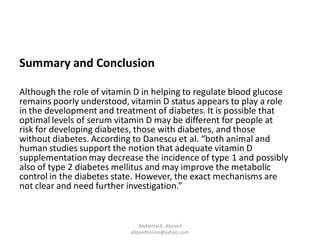
Summary and Conclusion
Although the role of vitamin D in helping to regulate blood glucose
remains poorly understood, vitamin D status appears to play a role
in the development and treatment of diabetes. It is possible that
optimal levels of serum vitamin D may be different for people at
risk for developing diabetes, those with diabetes, and those
without diabetes. According to Danescu et al. “both animal and
human studies support the notion that adequate vitamin D
supplementation may decrease the incidence of type 1 and possibly
also of type 2 diabetes mellitus and may improve the metabolic
control in the diabetes state. However, the exact mechanisms are
not clear and need further investigation.”
Abdalmal E. Aboseif
aboseifonline@yahoo.com
Abdalmal E. Aboseif
aboseifonline@yahoo.com

Vitamin d and diabetes

  • 1.
    Vitamin D andDiabetes Abdalmalk E. Aboseif Abdalmal E. Aboseif aboseifonline@yahoo.com
  • 2.
    Vitamin D isa fat-soluble vitamin that plays a number of important roles in the body, including maintaining the health of your bones, teeth and joints, and assisting immune system function. Abdalmal E. Aboseif aboseifonline@yahoo.com
  • 3.
    This underrated vitaminis found in certain foods but is also produced by the body in response to exposure to the sun. When the sun’s ultraviolet-B (UVB) rays are exposed to bare skin, the body converts a cholesterol derivative into Vitamin D. In fact, it’s now known that every cell and tissue within the body has a Vitamin D protein receptor. Abdalmal E. Aboseif aboseifonline@yahoo.com
  • 4.
    However, most ofus in the UK and other Western countries are deficient in Vitamin D, including many patients with Type 2 diabetes, due to limited sunlight exposure caused by a number of factors, including more time spent at home, in the office or the car, shorter days in winter, sunscreen use in summer and fears of skin cancer. Abdalmal E. Aboseif aboseifonline@yahoo.com
  • 5.
    1,25 OH VitaminD Effects Increased calcium absorption in the gut Increased PTH mediated bone resorption Decreased renal calcium and phosphorus excretion Decreased PTH secretion Increased bone calcification Abdalmal E. Aboseif aboseifonline@yahoo.com
  • 6.
    PTH Effects Increases tubularreabsorption of calcium and stimulates the kidney to produce 1,25 OH vitamin D Activates osteoblasts , which then stimulates the activation of osteoclasts, which dissolve mineralized collagen matrix in the bone, causing osteopenia and osteoporosis and increasing the risk of fracture. Causes phosphaturia. A low Ca-Phos product leads to decreased mineralization of the collagen matrix rickets in kids and osteomalacia in adults Abdalmal E. Aboseif aboseifonline@yahoo.com
  • 7.
    Osteomalacia Softening of thebone due to impaired mineralization due to low Ca-Phos product. :Symptoms include isolated or generalized bone pain muscular weakness, and weight loss Abdalmal E. Aboseif aboseifonline@yahoo.com
  • 8.
    Non-classical Actions ofVitamin D Suppress cell growth/proliferation Regulate apoptosis Modulate immune responses Susceptibility to infections Susceptibility to autoimmune disorders – MS, T1DM Effects in transplantation immunity Modulate keratinocyte differentiation and function Key role in psoriasis therapy Suppress renin-angiotensin system Stimulate insulin secretion Control neuromuscular function and the brain Abdalmal E. Aboseif aboseifonline@yahoo.com
  • 9.
    Vitamin D deficiency Thesigns of Vitamin D deficiency can range from bone pain and muscle weakness to depression and weakened immune system, while longer-term deficiency can result in obesity high blood pressure psoriasis osteoporosis chronic fatigue Alzheimer’s disease cancer type 2 diabetes. Abdalmal E. Aboseif aboseifonline@yahoo.com
  • 10.
  • 11.
    Exposing your skinto the sun for 15-20 minutes each day can help increase your body’s own production of vitamin D and thus reduce your risk of diabetes and other serious medical conditions. Alternatively, you can get your daily intake of vitamin D through dietary supplements and foods such as nuts, oily fish, eggs, powdered milk and some fortified cereals. Abdalmal E. Aboseif aboseifonline@yahoo.com
  • 12.
    If you shunthe sun, suffer from milk allergies, or adhere to a strict vegan diet, you may be at risk for vitamin D deficiency. Known as the sunshine vitamin, vitamin D is produced by the body in response to skin being exposed to sunlight. It is also occurs naturally in a few foods -- including some fish, fish liver oils, and egg yolks -- and in fortified dairy and grain products. Abdalmal E. Aboseif aboseifonline@yahoo.com
  • 13.
    Vitamin D isessential for strong bones, because it helps the body use calcium from the diet. Traditionally, vitamin D deficiency has been associated with rickets, a disease in which the bone tissue doesn't properly mineralize, leading to soft bones and skeletal deformities. But increasingly, research is revealing the importance of vitamin D in protecting against a host of health problems. Abdalmal E. Aboseif aboseifonline@yahoo.com
  • 14.
  • 15.
    Categorization of VitaminD Levels Teresa Martin, and R. Keith Campbell Diabetes Spectr 2011;24:113-118 ©2011 by American Diabetes Association Abdalmal E. Aboseif aboseifonline@yahoo.com
  • 16.
    Causes of VitaminD Deficiency Vitamin D deficiency can occur for a number of reasons: You don't consume the recommended levels of the vitamin over time. This is likely if you follow a strict vegan diet, because most of the natural sources are animal-based, including fish and fish oils, egg yolks, fortified milk, and beef liver. Your exposure to sunlight is limited. Because the body makes vitamin D when your skin is exposed to sunlight, you may be at risk of deficiency if you are homebound, live in northern latitudes, wear long robes or head coverings for religious reasons, or have an occupation that prevents sun exposure. You have dark skin. The pigment melanin reduces the skin's ability to make vitamin D in response to sunlight exposure. Some studies show that older adults with darker skin are at high risk of vitamin D deficiency. Abdalmal E. Aboseif aboseifonline@yahoo.com
  • 17.
    Your kidneys cannotconvert vitamin D to its active form. As people age, their kidneys are less able to convert vitamin D to its active form, thus increasing their risk of vitamin D deficiency. Your digestive tract cannot adequately absorb vitamin D. Certain medical problems, including Crohn's disease, cystic fibrosis, and celiac disease, can affect your intestine's ability to absorb vitamin D from the food you eat. You are obese. Vitamin D is extracted from the blood by fat cells, altering its release into the circulation. People with a body mass index of 30 or greater often have low blood levels of vitamin D. Abdalmal E. Aboseif aboseifonline@yahoo.com
  • 18.
    Mechanisms of VitaminD Deficiency Reduced skin synthesis - Sunscreen use (SPF 15 reduces vitamin D3 synthesis by 99%) - Skin pigmentation - Aging (reduction of 7 dehydrocholesterol reduces vitamin D3 synthesis by 75% in a 70 year old) - Season, latitude and time of day -Patients with skin grafts for burns Abdalmal E. Aboseif aboseifonline@yahoo.com
  • 19.
    Impaired availability ofvitamin D due to inadequate dietary intake, malabsorptive disorders and obesity (sequestration of vitamin D in body fat) Impaired hydroxylation by the liver due to liver disease Increased hepatic catabolism due to medications Impaired renal production of 1,25 –OH vit. D in stage 4 and 5 CKD Renal loss of vit. D and vit. D binding proteins in nephrotic syndrome Abdalmal E. Aboseif aboseifonline@yahoo.com
  • 20.
    Abdalmal E. Aboseif aboseifonline@yahoo.com MedicationsThat Increase Catabolism of Vitamin D via P450 Enzyme Activity Phenytoin Phenobarbital Carbamazepine Isoniazid Theophylline Rifampin Glucocorticoids HAART
  • 21.
    Symptoms and HealthRisks of Vitamin D Deficiency Symptoms of bone pain and muscle weakness can mean you have a vitamin D deficiency. However, for many people, the symptoms are subtle. Yet, even without symptoms, too little vitamin D can pose health risks. Low blood levels of the vitamin have been associated with the following: Increased risk of death from cardiovascular disease Cognitive impairment in older adults Severe asthma in children Cancer Abdalmal E. Aboseif aboseifonline@yahoo.com
  • 22.
    Research suggests thatvitamin D could play a role in the prevention and treatment of a number of different conditions, including * type1 and type 2 diabetes ** hypertension *** glucose intolerance **** multiple sclerosis. Abdalmal E. Aboseif aboseifonline@yahoo.com
  • 23.
    Types of vitaminD There are two forms of this vitamin; vitamin D2 and vitamin D3. Vitamin D2 is a synthetic version called ergocalciferol, which has a shorter helf life, while vitamin D3 (also known as cholecalciferol) is the same as the vitamin D that is produced by the body following exposure to UVB rays. more than three timesappears to be3Studies have shown that vitamin D , but most products that include the words2vitamin Das effective as “good source of vitamin D” or “fortified with vitamin D” on their labels contain the hugely inferior vitamin D2. So when shopping for vitamin D-rich foods or supplements, make sure you check which ‘type’ of vitamin D each product contains. Abdalmal E. Aboseif aboseifonline@yahoo.com
  • 24.
    Tests for VitaminD Deficiency The most accurate way to measure how much vitamin D is in your body is the 25-hydroxy vitamin D blood test. A level of 20 nanograms/milliliter to 50 ng/mL is considered adequate for healthy people. A level less than 12 ng/mL indicates vitamin D deficiency. Abdalmal E. Aboseif aboseifonline@yahoo.com
  • 25.
    Who Should BeScreened for Vitamin D Deficiency Elderly Home bound or institutionalized patients Patients with known or suspected malabsorption Patients with osteoporosis or osteopenia CKD patients Chronic liver disease patients Patients with nonspecific musculoskeletal pain Patients on medications that induce P-450 enzyme activity Obese Abdalmal E. Aboseif aboseifonline@yahoo.com
  • 26.
    Current DRI Recommendationsfor Vitamin D39. Teresa Martin, and R. Keith Campbell Diabetes Spectr 2011;24:113-118 ©2011 by American Diabetes Association Abdalmal E. Aboseif aboseifonline@yahoo.com
  • 27.
    Treatment for VitaminD Deficiency Treatment for vitamin D deficiency involves getting more vitamin D -- through diet and supplements. Although there is no consensus on vitamin D levels required for optimal health -- and it likely differs depending on age and health conditions -- a concentration of less than 20 nanograms per milliliter is generally considered inadequate, requiring treatment. Guidelines from the Institute of Medicine increased the recommended dietary allowance (RDA) of vitamin D to 600 international units (IU) for everyone ages 1-70, and raised it to 800 IU for adults older than age 70 to optimize bone health. The safe upper limit was also raised to 4,000 IU. Doctors may prescribe more than 4,000 IU to correct a vitamin D deficiency. If you don't spend much time in the sun or always are careful to cover your skin (sunscreen inhibits vitamin D production), you should speak to your doctor about taking a vitamin D supplement, particularly if you have risk factors for vitamin D deficiency Abdalmal E. Aboseif aboseifonline@yahoo.com
  • 28.
  • 29.
    Vitamin D Intoxication Commonsymptoms: anorexia, nausea and vomiting, polyuria, polydipsia, weakness and pruritus Lab abnormalities: hypercalcemia and hyperphosphatemia Treatment: stop vitamin D, low calcium diet, acidify the urine and steroids Abdalmal E. Aboseif aboseifonline@yahoo.com
  • 30.
    Vitamin D andDiabetes Vitamin D deficiency and diabetes have one major trait in common: both are pandemic. The International Diabetes Federation estimates the number of people with diabetes worldwide to be nearly 285 million, or 7% of the world's population. This number is expected to exceed 435 million by 2030. In the United States, an estimated 79 million people have pre-diabetes. Abdalmal E. Aboseif aboseifonline@yahoo.com
  • 31.
    Mechanisms of action Thereis growing evidence that vitamin D deficiency could be a contributing factor in the development of both type 1 and type 2 diabetes. First, the β-cell in the pancreas that secretes insulin has been shown to contain VDRs as well as the 1 alpha hydroxylase enzyme.Evidence indicates that vitamin D treatment improves glucose tolerance and insulin resistance.Vitamin D deficiency leads to reduced insulin secretion. Supplementation with vitamin D has been shown to restore insulin secretion in animals. Researchers have also found an indirect effect on insulin secretion, potentially by a calcium effect on insulin secretion. Vitamin D contributes to normalization of extracellular calcium, ensuring normal calcium flux through cell membranes; therefore, low vitamin D may diminish calcium's ability to affect insulin secretion.Other potential mechanisms associated with vitamin D and diabetes include improving insulin action by stimulating expression of the insulin receptor, enhancing insulin responsiveness for glucose transport, having an indirect effect on insulin action potentially via a calcium effect on insulin secretion, and improving systemic inflammation by a direct effect on cytokines. Abdalmal E. Aboseif aboseifonline@yahoo.com
  • 32.
    Effects on diabetes VitaminD is believed to help improve the body’s sensitivity to insulin – the hormone responsible for regulating blood sugar levels – and thus reduce the risk of insulin resistance, which is often a precursor to type 2 diabetes. Some scientists also believe this vitamin may help regulate the production of insulin in the pancreas. Vitamin D levels should ideally be between 20-56 ng/ml (50-140 nmol/l), with anything below 20 ng/ml considered deficient. However, it is now known that raising the amount of vitamin D in your body to around 60-80 ng/ml can help keep blood glucose levels under control, which is vital for people with diabetes Abdalmal E. Aboseif aboseifonline@yahoo.com
  • 33.
    As well asassisting glycemic control, increasing your levels of vitamin D can also: Abdalmal E. Aboseif aboseifonline@yahoo.com Aid weight loss Regulate appetite Reduce belly fat
  • 34.
    Aid weight loss studieshave shown that good vitamin D status helps to reduce parathyroid hormone (PTH) levels, which in the long-term may promote weight loss and reduce risk of obesity, which is a major risk factor for type 2 diabetes. Abdalmal E. Aboseif aboseifonline@yahoo.com
  • 35.
    Regulate appetite vitamin Dcan increase your body’s levels of the hormone leptin, which controls body fat storage and triggers the sensation of satiety, giving the feeling of having eaten enough and thus lowering hunger levels. Abdalmal E. Aboseif aboseifonline@yahoo.com
  • 36.
    Reduce belly fat anincrease in vitamin D can help lower levels of cortisol, a stress hormone produced in the adrenal glands. Cortisol is involved in a number of important functions, including the body's response to stress and regulation of blood pressure. But higher and more prolonged levels of the hormone in the blood can lead to increased abdominal (or visceral) fat, which is linked to various health conditions including diabetes type 2. Abdalmal E. Aboseif aboseifonline@yahoo.com
  • 37.
    Where can Ibuy vitamin D supplements? Single vitamin D supplements or vitamin drops containing vitamin D (for use by young children) are available at most UK pharmacies, supermarkets and health food retailers like Holland and Barrett. Most multivitamins provide a daily dosage of 400 International Units (IU), although some manufacturers have begun to offer products with 1,000, 2,000 and even 5,000 IU per day - considerably more than the UK recommendations of 400 units. *Note; before increasing your intake of vitamin D, consult with your doctor first to make sure the dose you .diabetes medicationintend to take is safe and won’t interact with your standard Abdalmal E. Aboseif aboseifonline@yahoo.com
  • 38.
    Take Home Points VitaminD deficiency is common 25 OH vitamin D is a predictor of bone health in terms of fracture risk and risk of falls 25 OH vitamin D is also potentially an independent predictor of risk of cardiovascular disease, hypertension, cancer, diabetes, all cause mortality, and URI At least 800 IU of vitamin D3 per day is needed to maintain vitamin D sufficiency Sensible sun exposure is a great way to maintain vitamin D sufficiency Abdalmal E. Aboseif aboseifonline@yahoo.com
  • 39.
    Summary and Conclusion Althoughthe role of vitamin D in helping to regulate blood glucose remains poorly understood, vitamin D status appears to play a role in the development and treatment of diabetes. It is possible that optimal levels of serum vitamin D may be different for people at risk for developing diabetes, those with diabetes, and those without diabetes. According to Danescu et al. “both animal and human studies support the notion that adequate vitamin D supplementation may decrease the incidence of type 1 and possibly also of type 2 diabetes mellitus and may improve the metabolic control in the diabetes state. However, the exact mechanisms are not clear and need further investigation.” Abdalmal E. Aboseif aboseifonline@yahoo.com
  • 40.