James Neill,  2011 Visualisation of quantitative information
Overview Visualisation
Approaching data
Levels of measurement
Principals of graphing
Univariate graphs
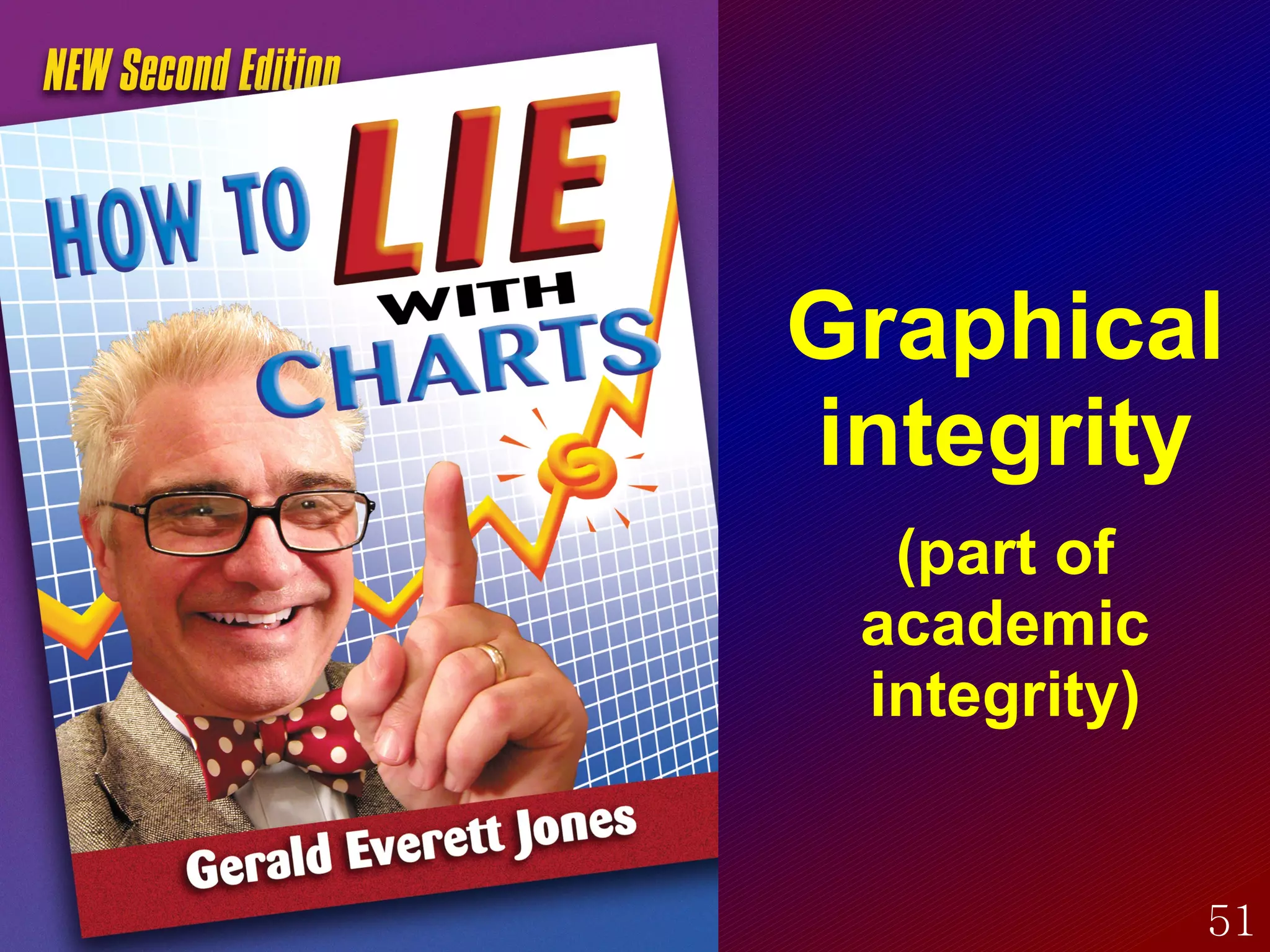
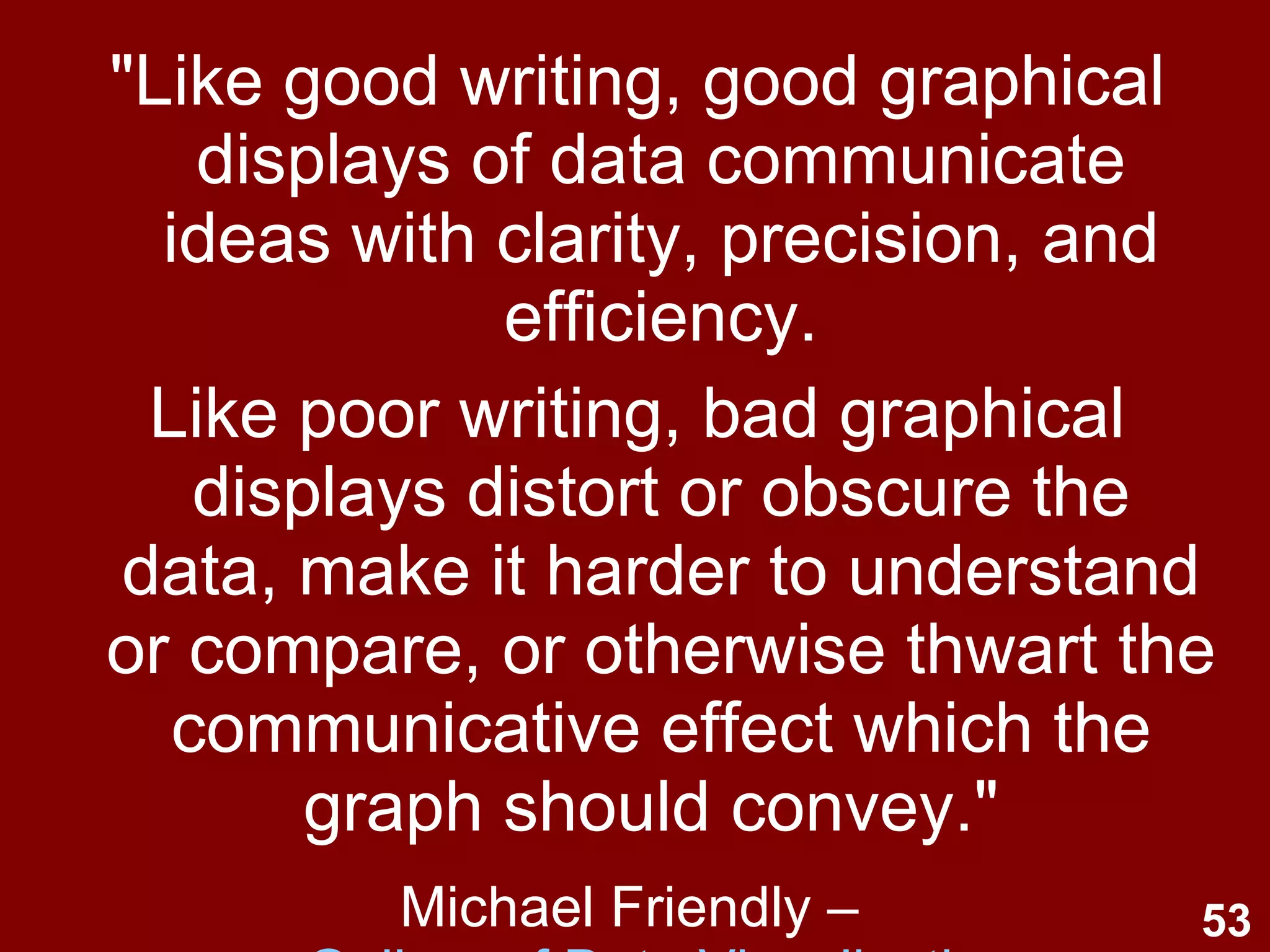
Graphical integrity
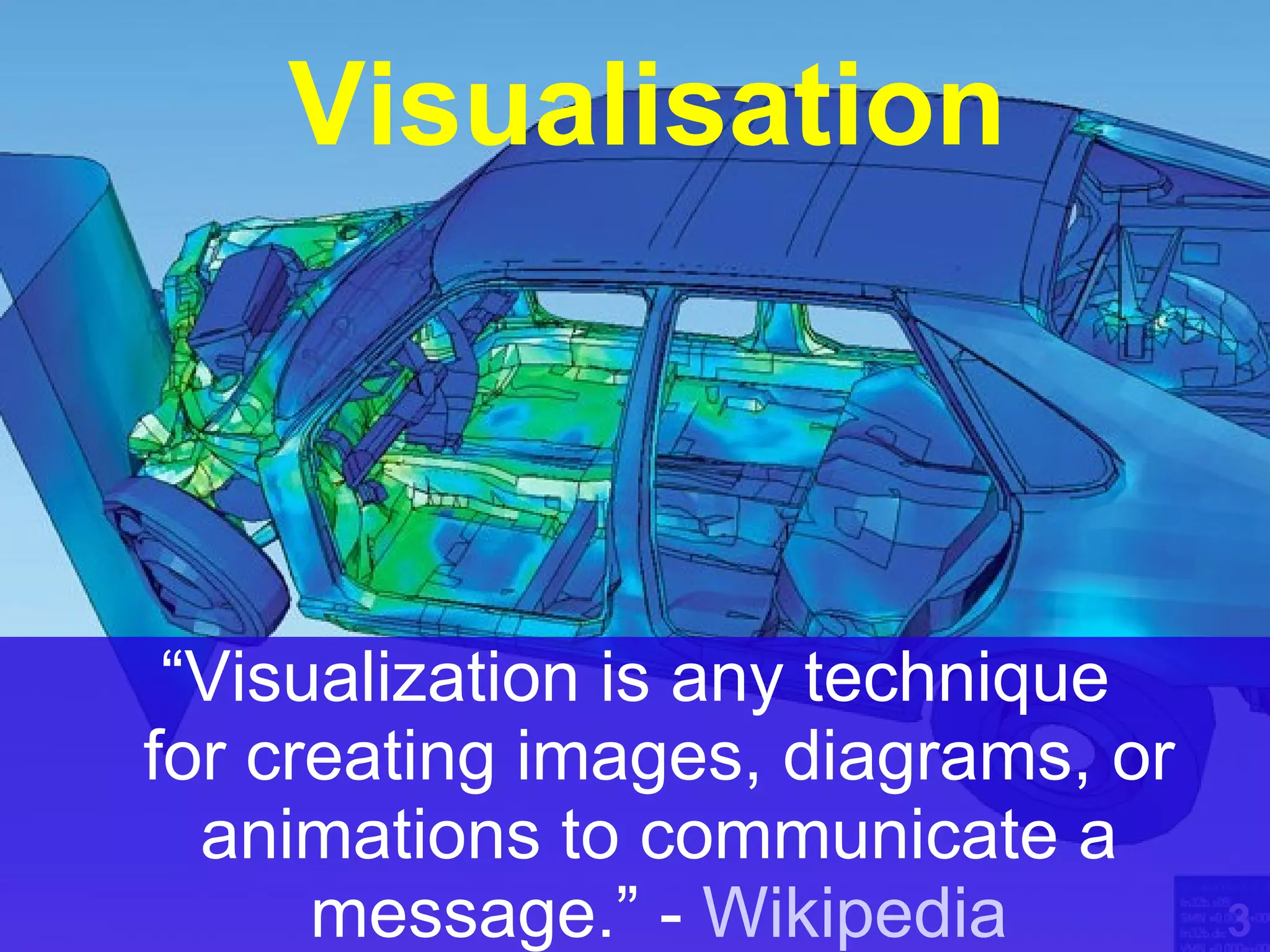
Visualisation “ Visualization is any technique for creating images, diagrams, or animations to communicate a message.” -  Wikipedia
Is Pivot a turning point for web exploration? (Gary Flake) ( TED talk  - 6 min. )
Approaching data
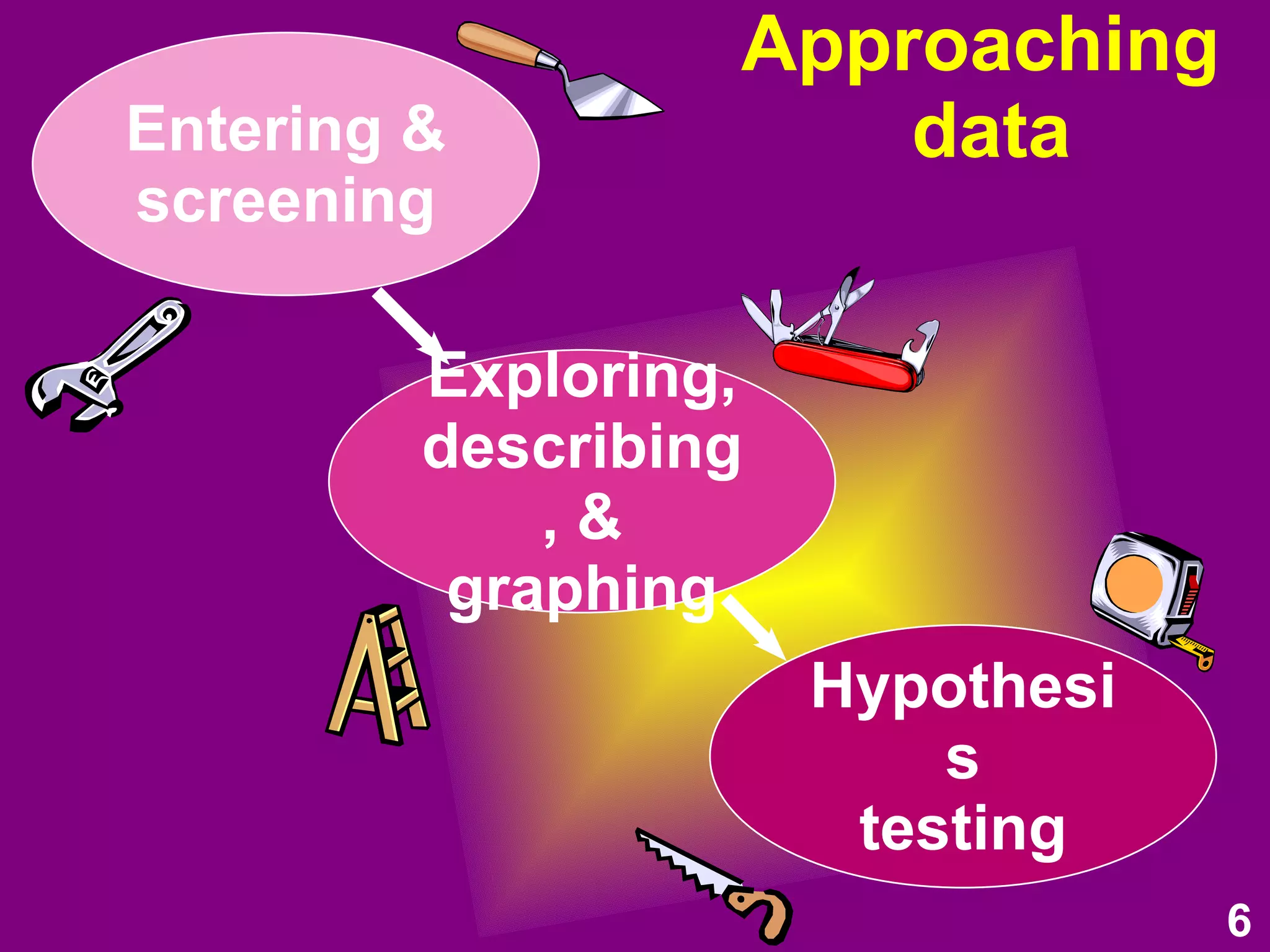
Approaching  data Entering & screening Exploring, describing, & graphing Hypothesis testing
Describing & graphing data THE CHALLENGE: to find a meaningful, accurate way to depict the ‘ true story’ of the data
Get your fingers dirty with data
Get intimate with your data
Clearly report the data's main features
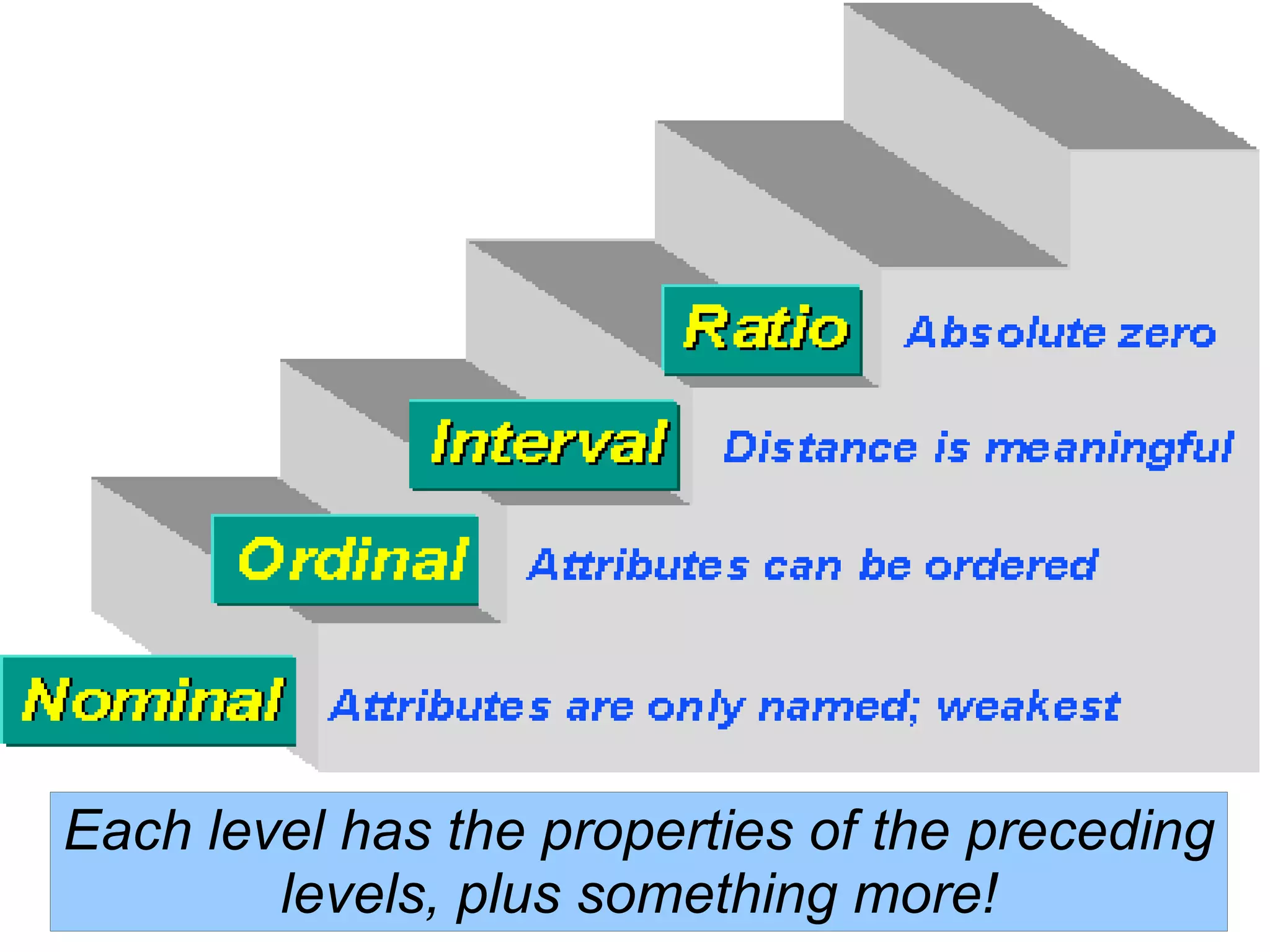
Levels of Measurement = Type of Data Stevens (1946)
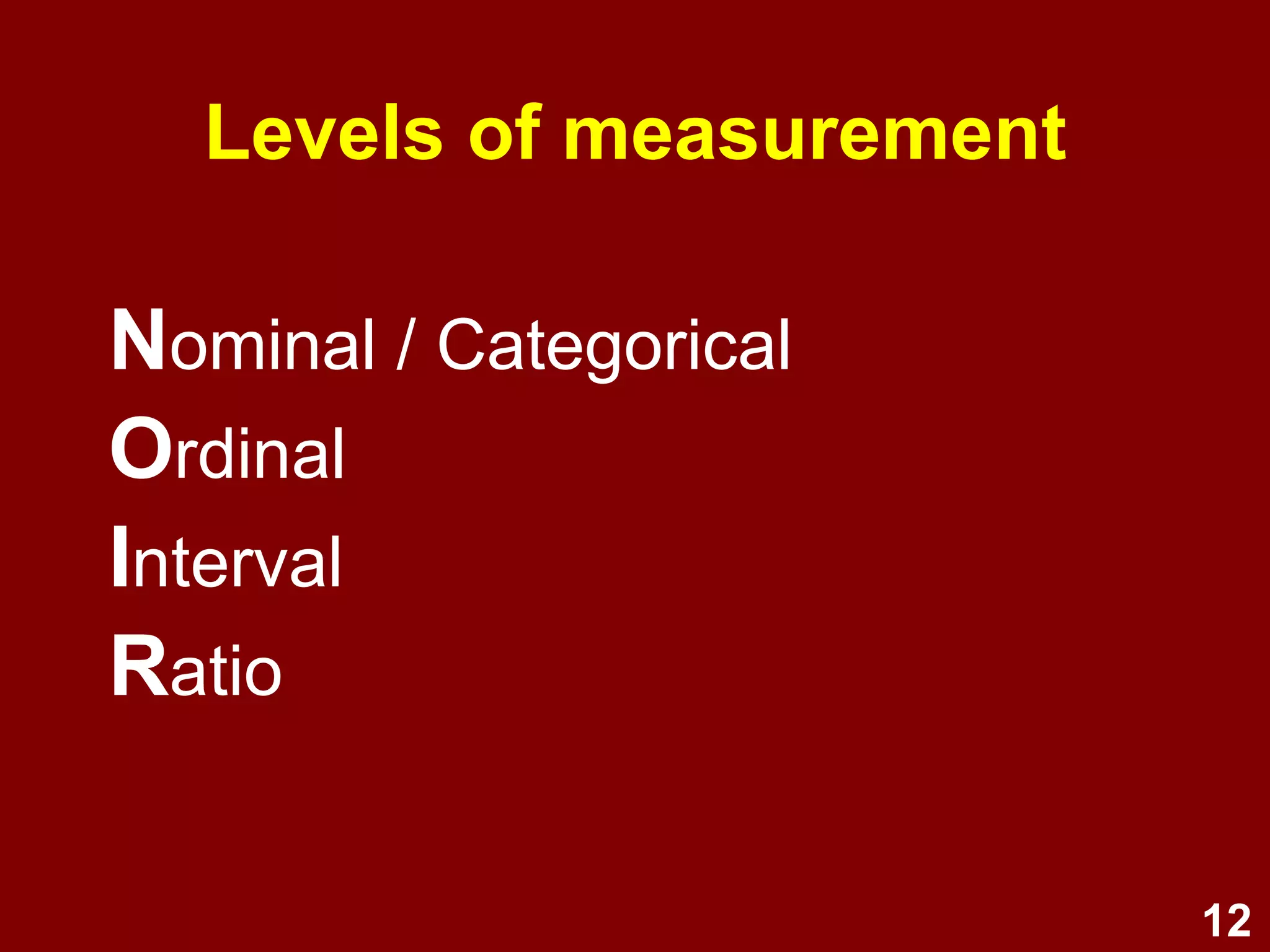
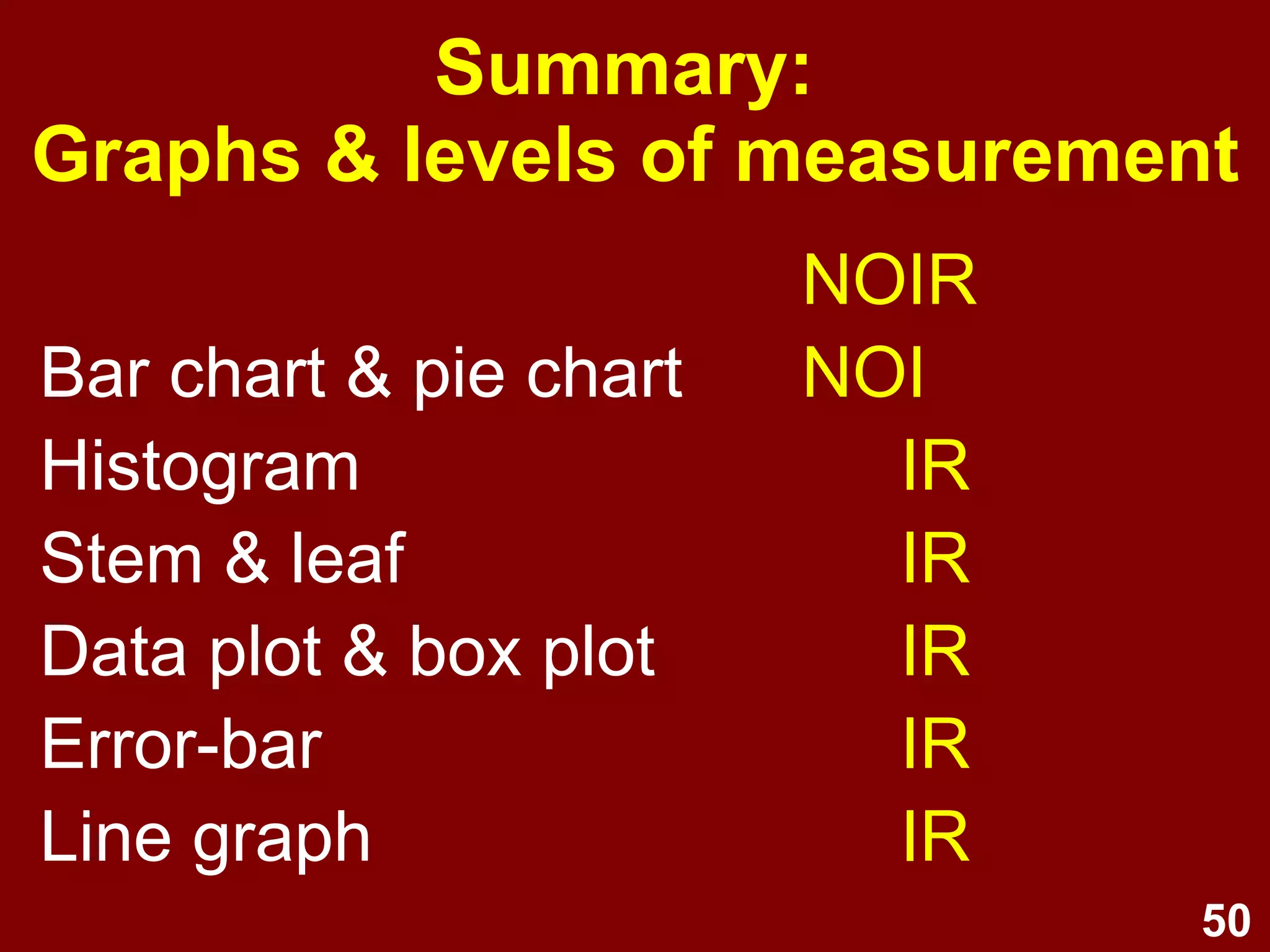
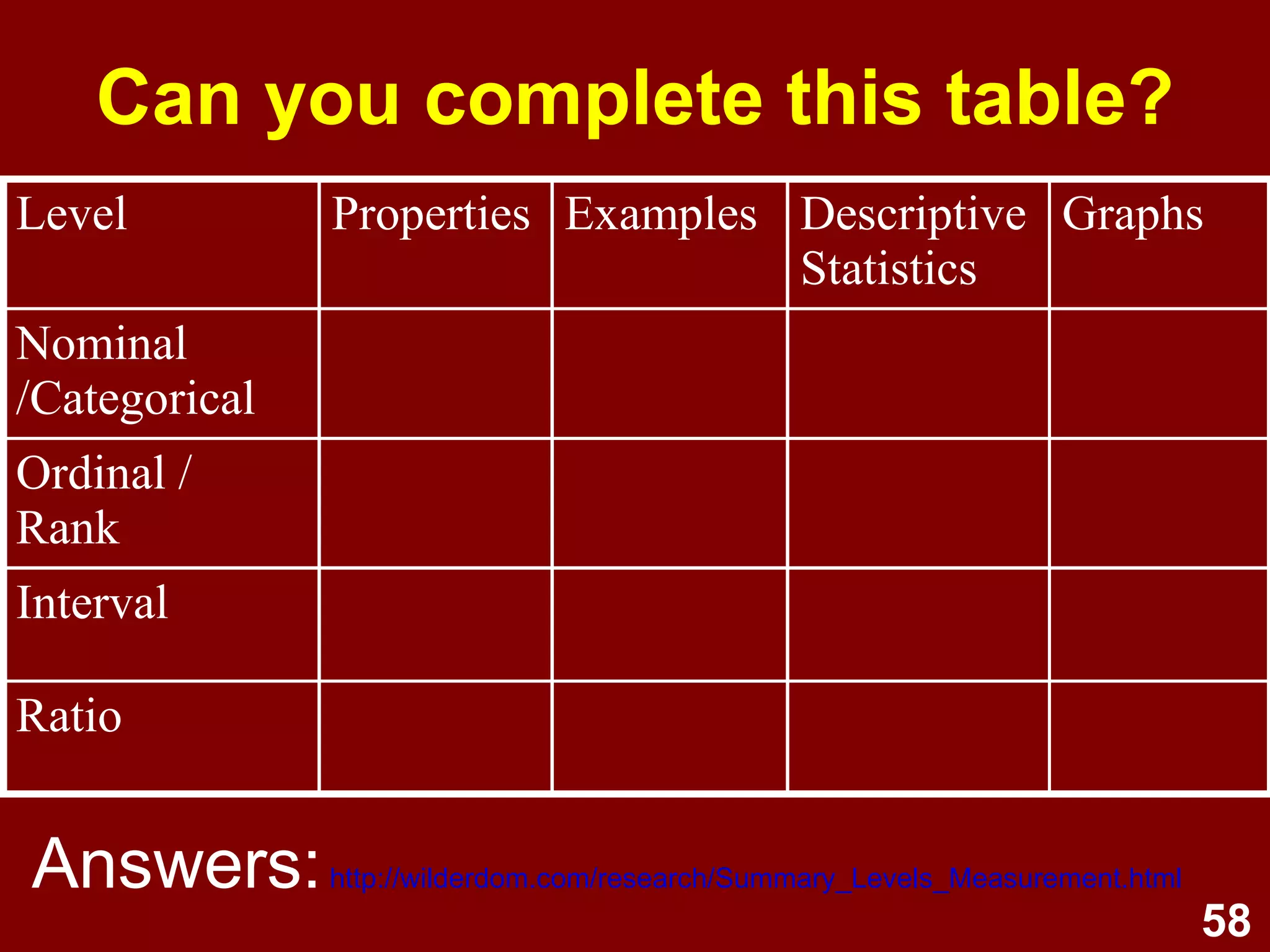
Levels of measurement N ominal / Categorical
O rdinal
I nterval
R atio
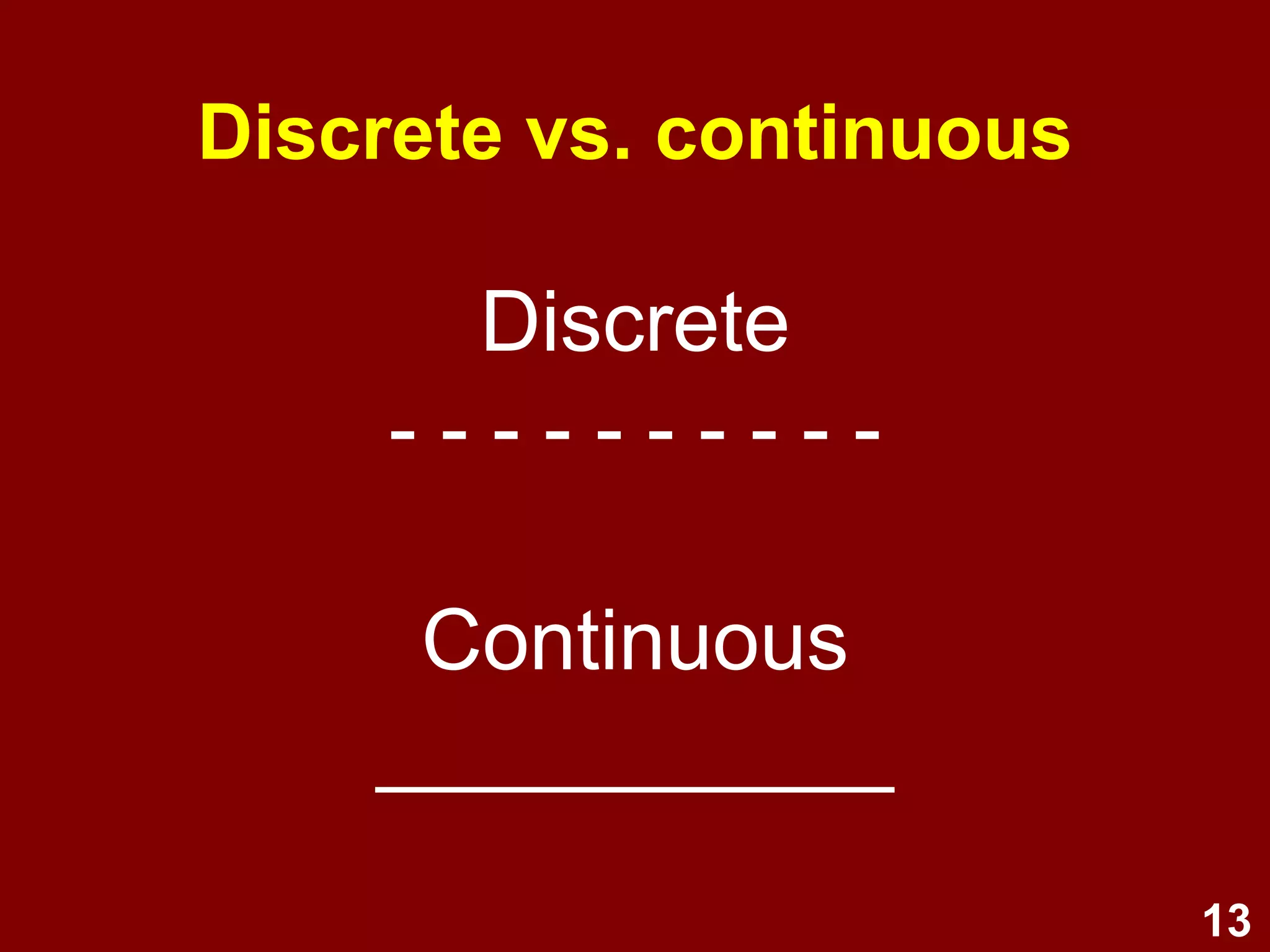
Discrete vs. continuous Discrete - - - - - - - - - - Continuous ___________
Each level has the properties of the preceding levels, plus something more!
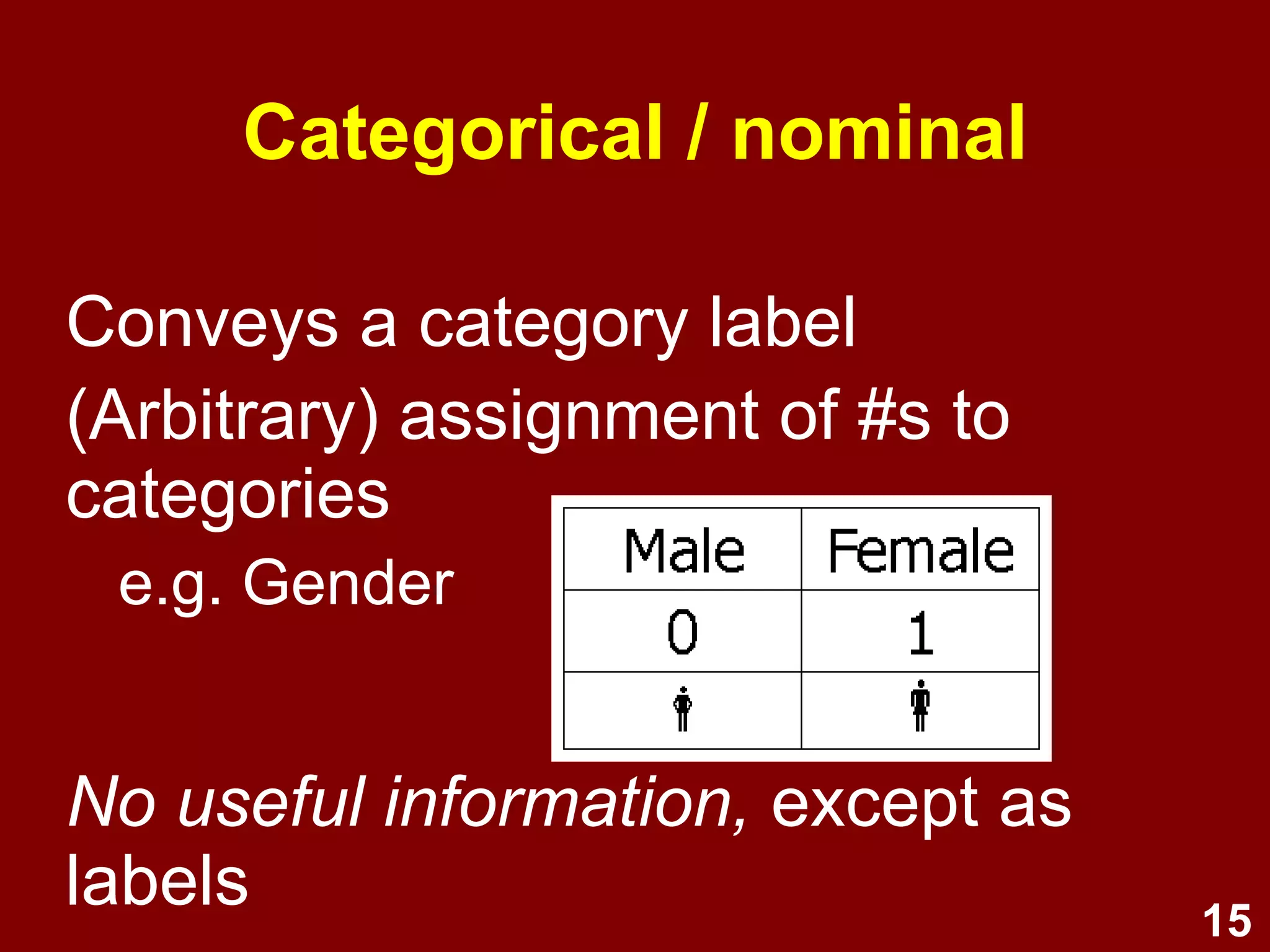
Categorical / nominal Conveys a category label
(Arbitrary) assignment of #s to categories e.g. Gender No useful information,  except as labels
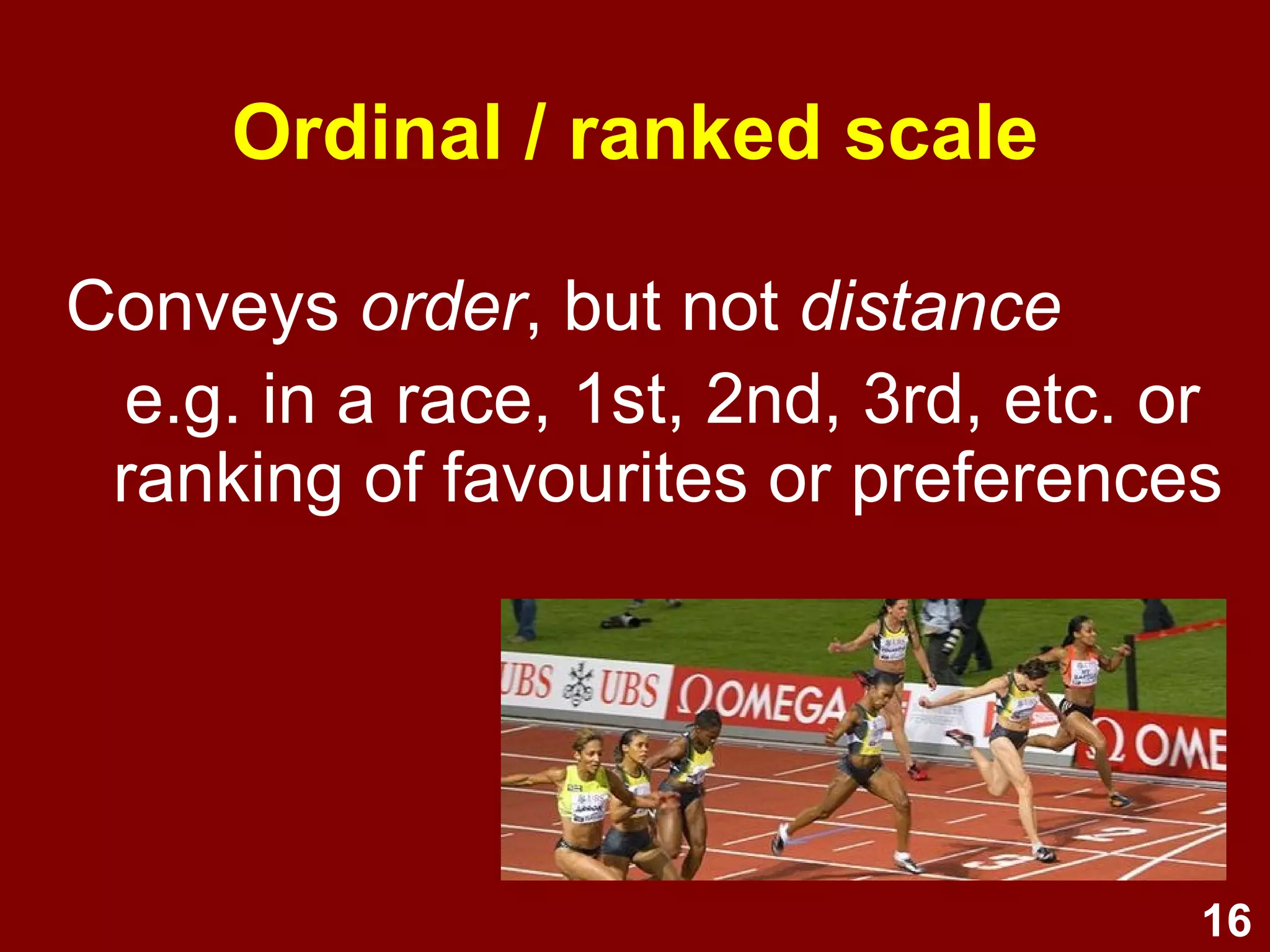
Ordinal / ranked scale Conveys  order , but not  distance e.g. in a race, 1st, 2nd, 3rd, etc. or ranking of favourites or preferences
Ordinal / ranked example:  Ranked importance Rank the following aspects of the university according to what is most important to you (1 = most important through to 5 = least important) __   Quality of the teaching and education __   Quality of the social life __   Quality of the campus __   Quality of the administration __   Quality of the university's reputation
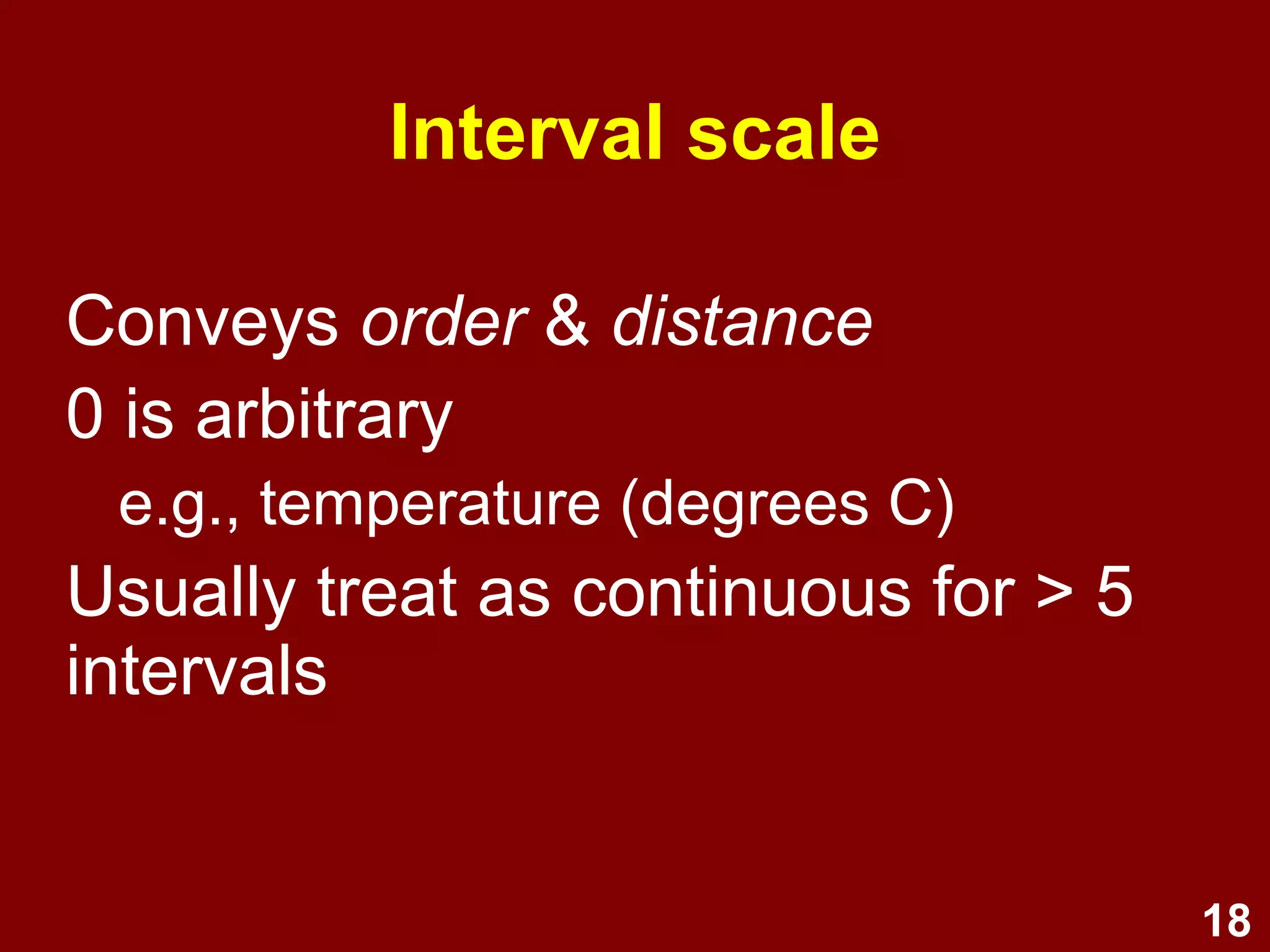
Interval scale Conveys  order  &  distance
0 is arbitrary e.g., temperature (degrees C) Usually treat as continuous for > 5 intervals
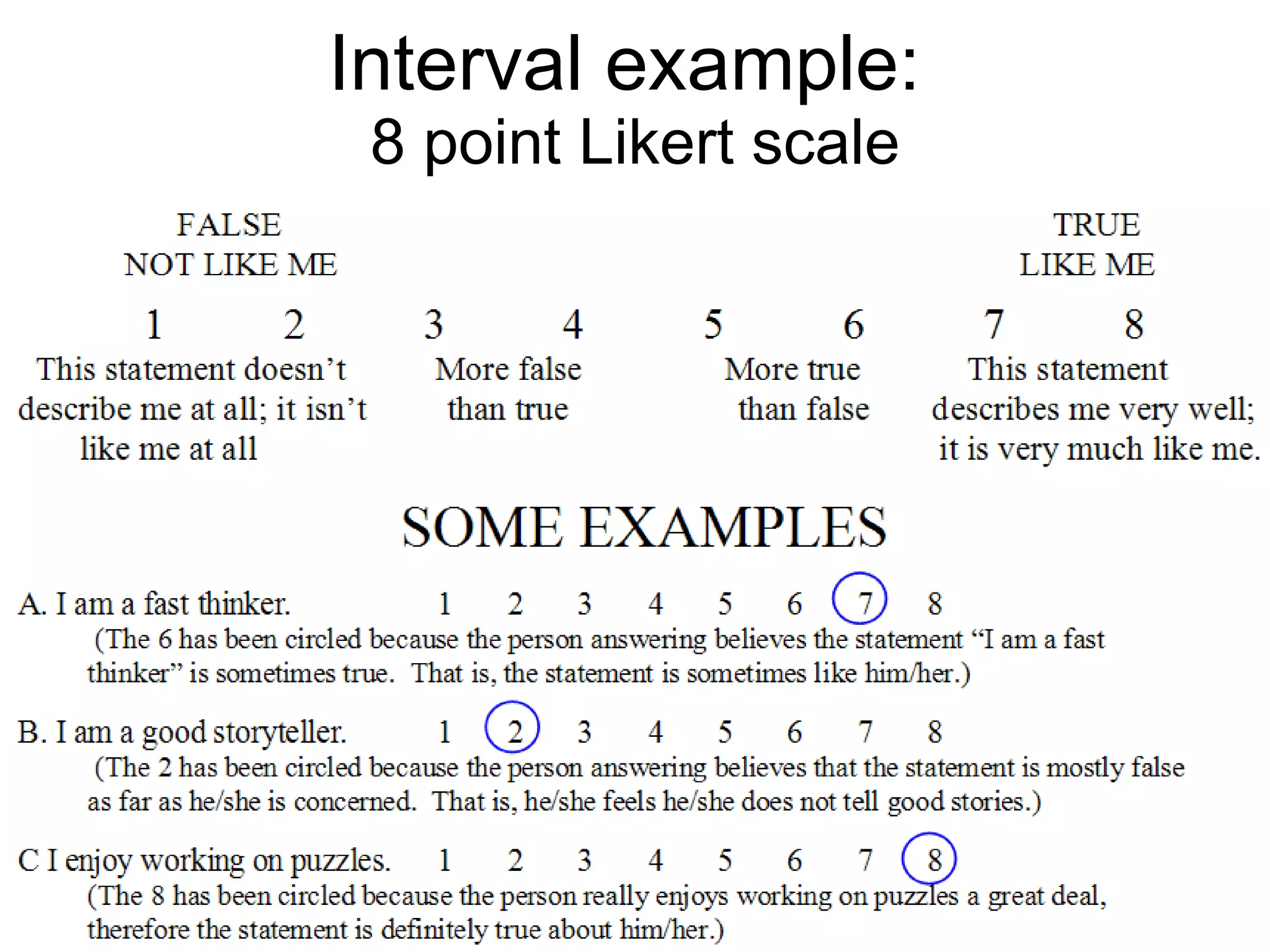
Interval example:  8 point Likert scale
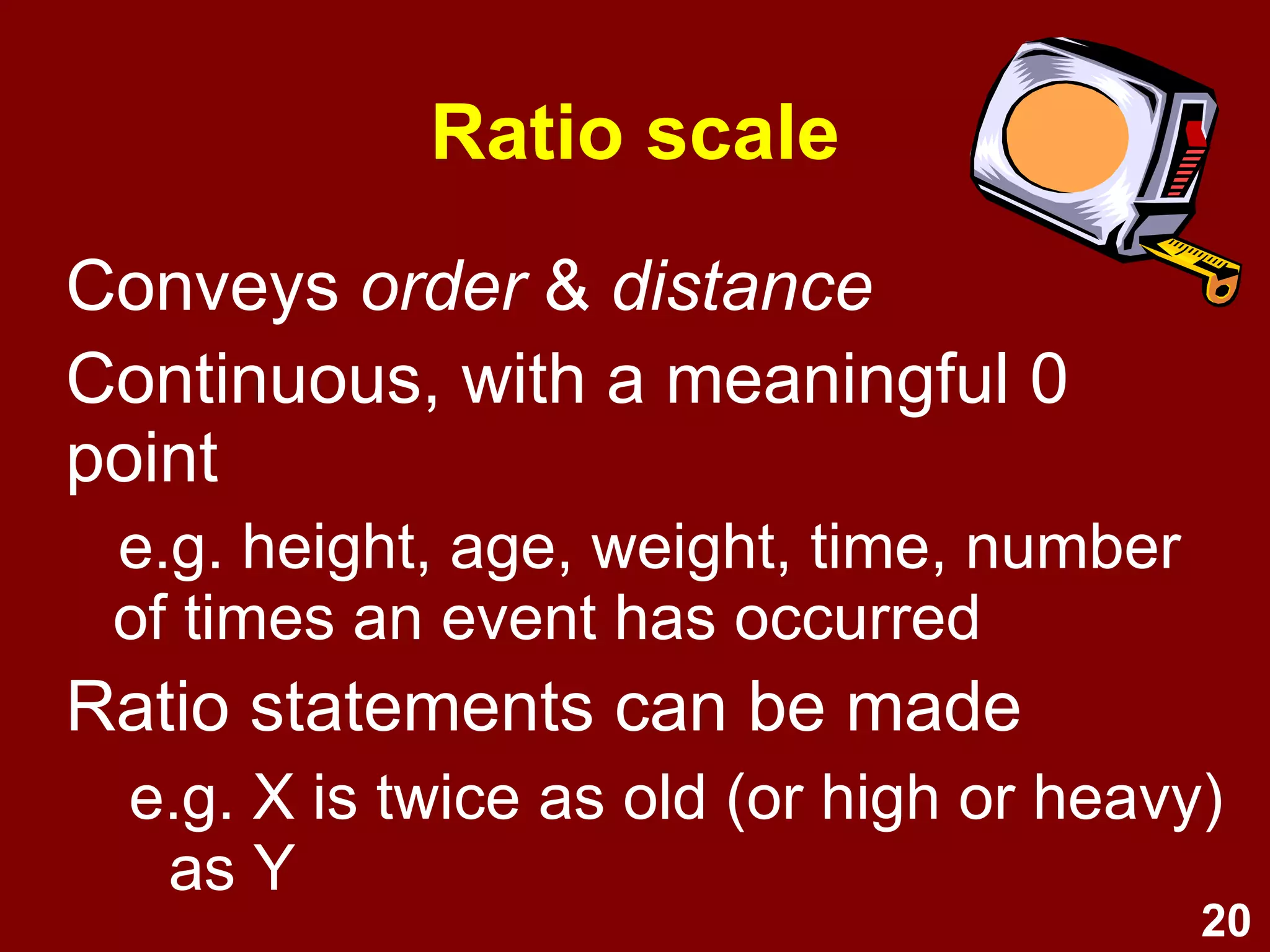
Ratio scale Conveys  order  &  distance
Continuous, with a meaningful 0 point e.g. height, age, weight, time, number of times an event has occurred Ratio statements can be made e.g. X is twice as old (or high or heavy) as Y
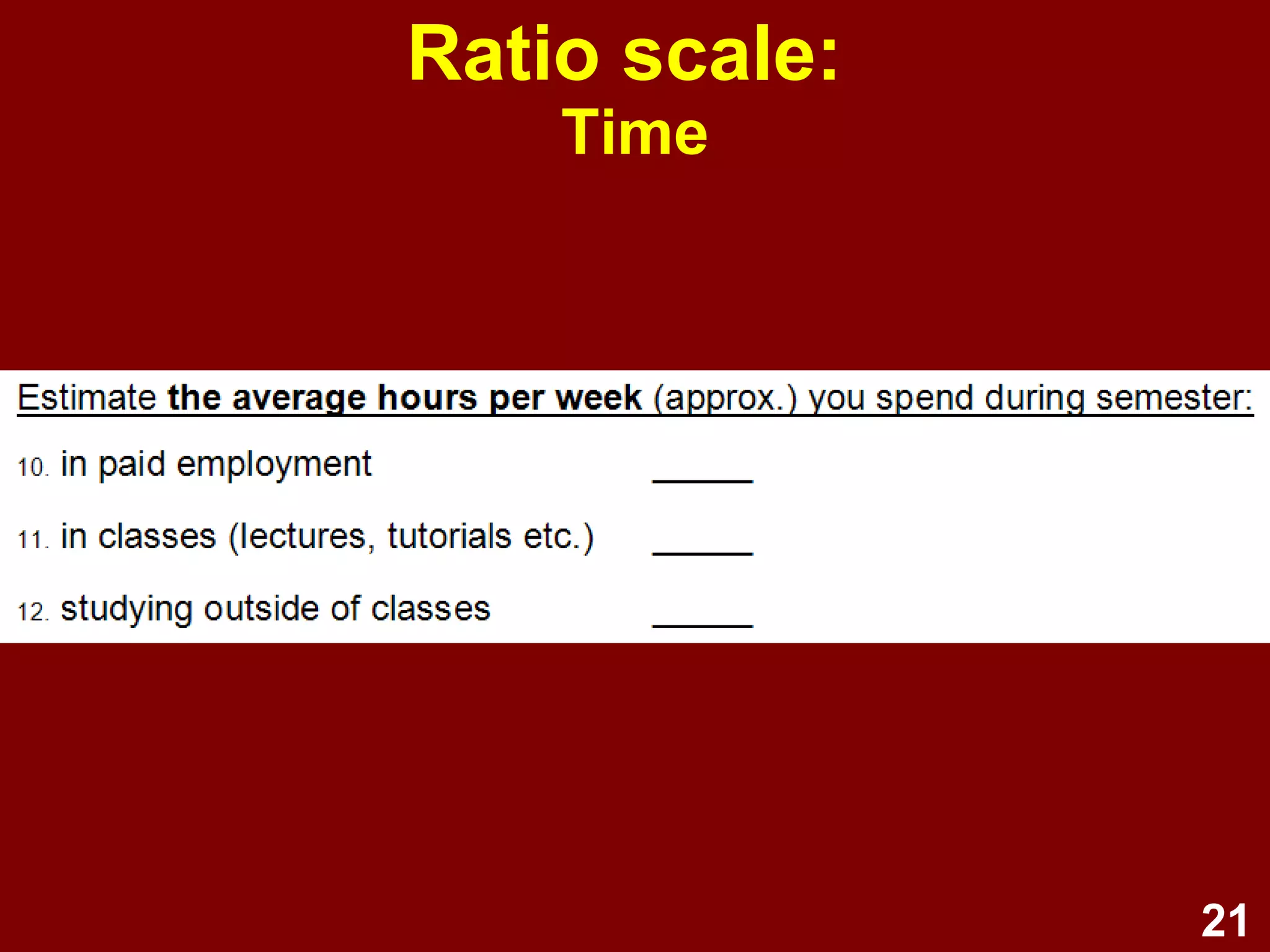
Ratio scale:  Time
Why do levels of measurement matter? Different analytical procedures are used for different  levels of data. More powerful statistics can be applied to higher levels
Principles of graphing
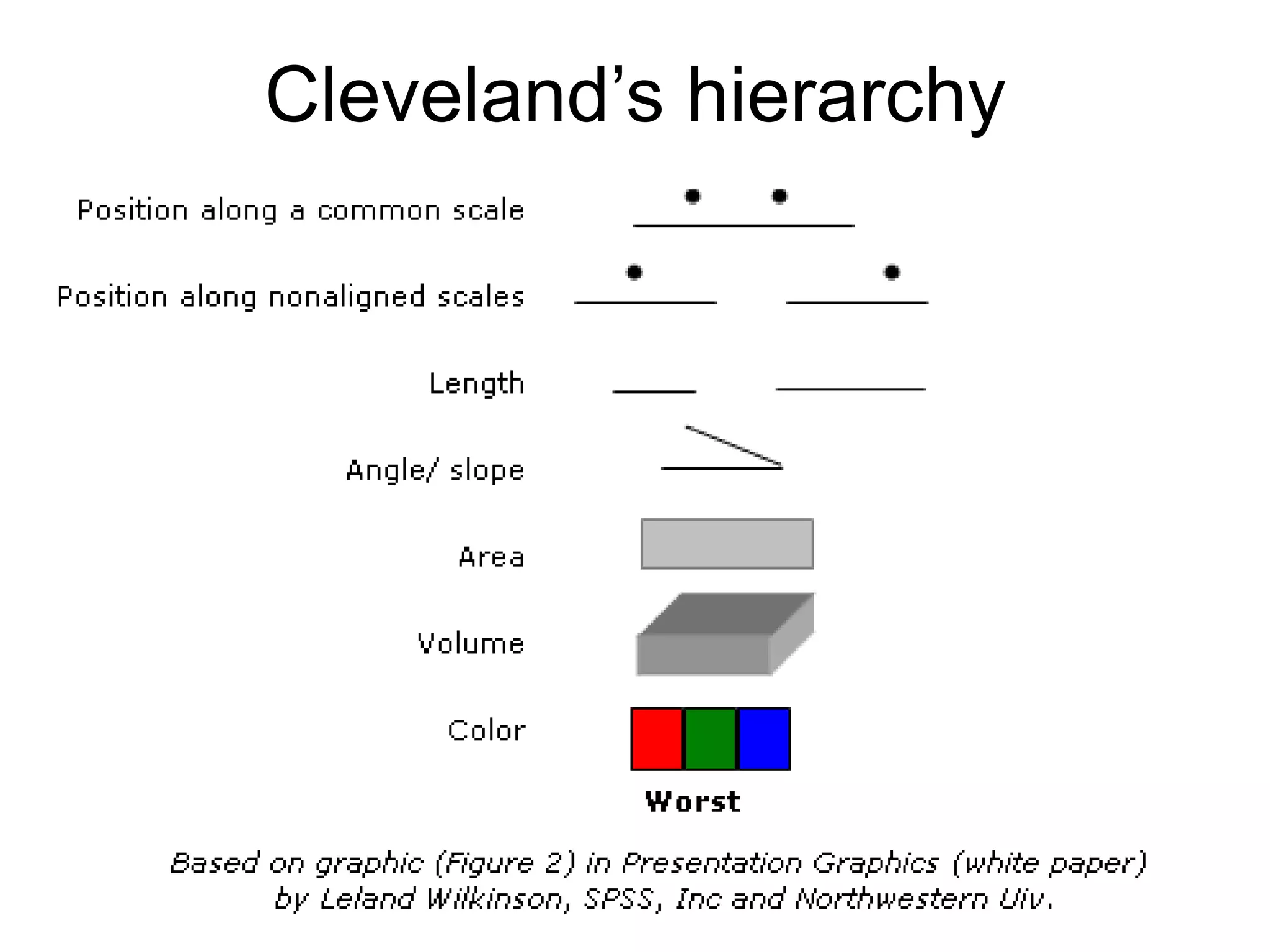
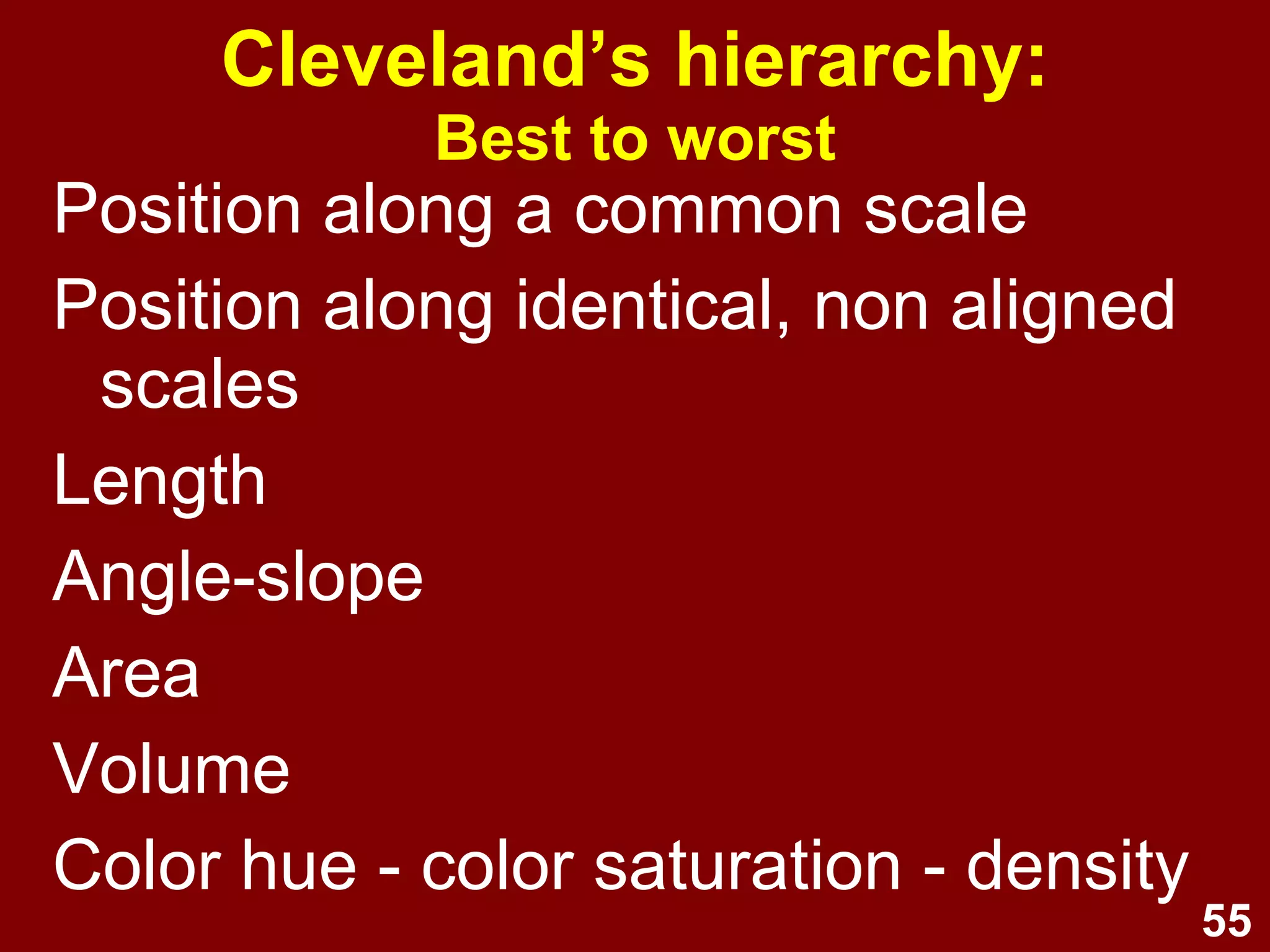
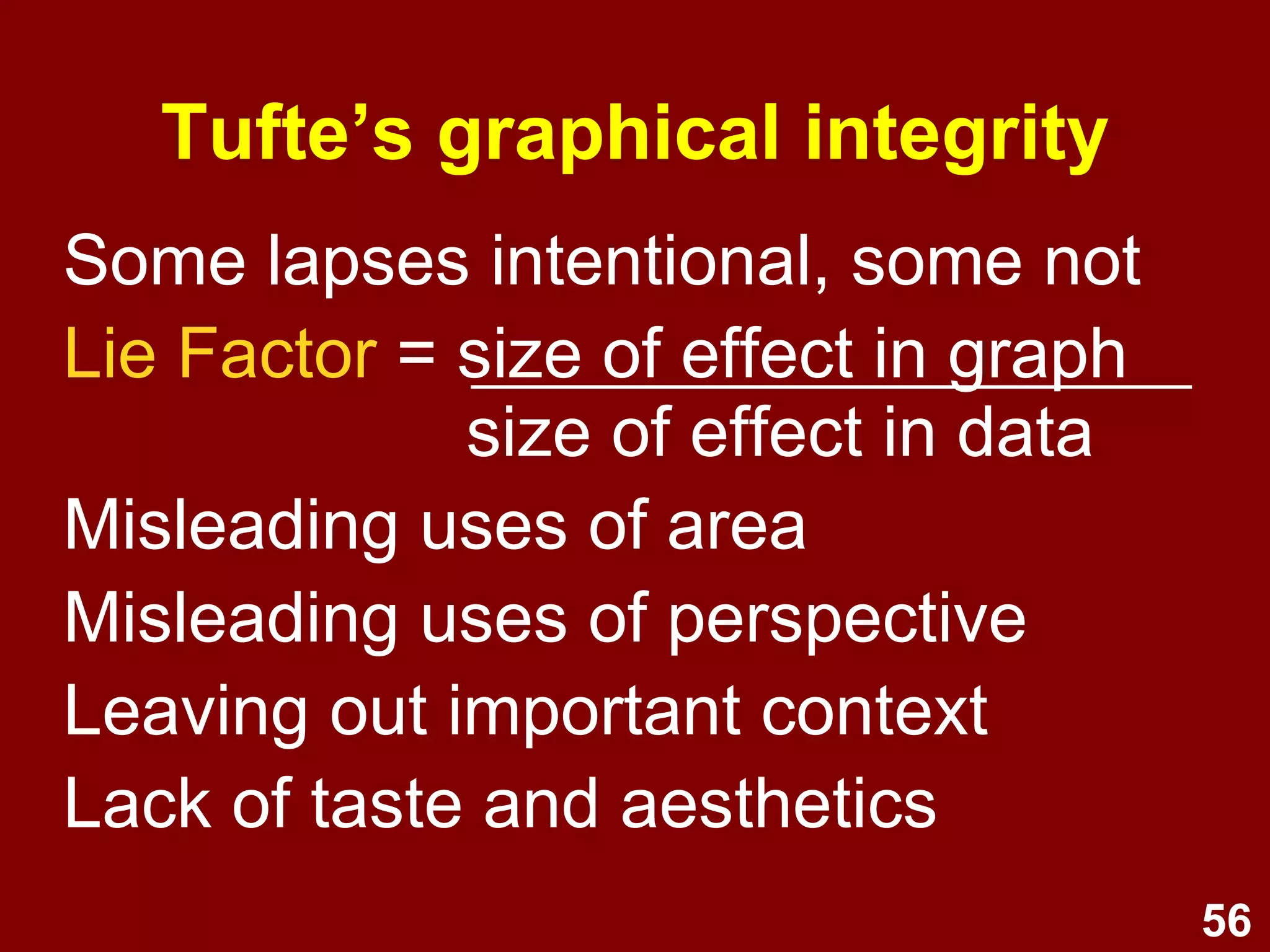
Graphs (Edward Tufte) Visualise data
Reveal data  Describe
Explore
Tabulate
Decorate Communicate complex ideas with clarity, precision, and efficiency
Tufte's graphing guidelines Show the data
Avoid distortion
Focus on substance rather than method
Present many numbers in a small space
Make large data sets coherent
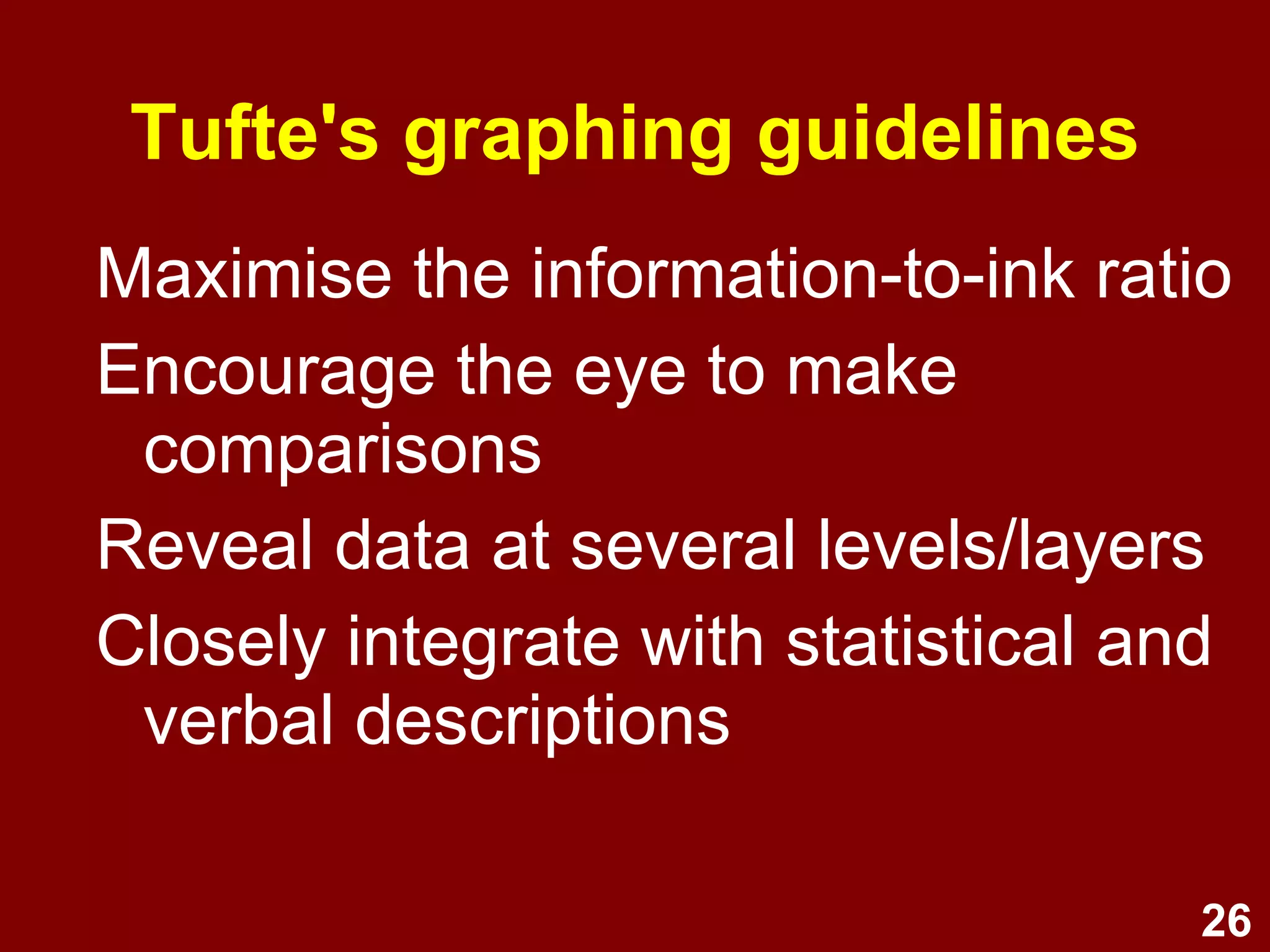
Tufte's graphing guidelines Maximise the information-to-ink ratio
Encourage the eye to make comparisons
Reveal data at several levels/layers
Closely integrate with statistical and verbal descriptions
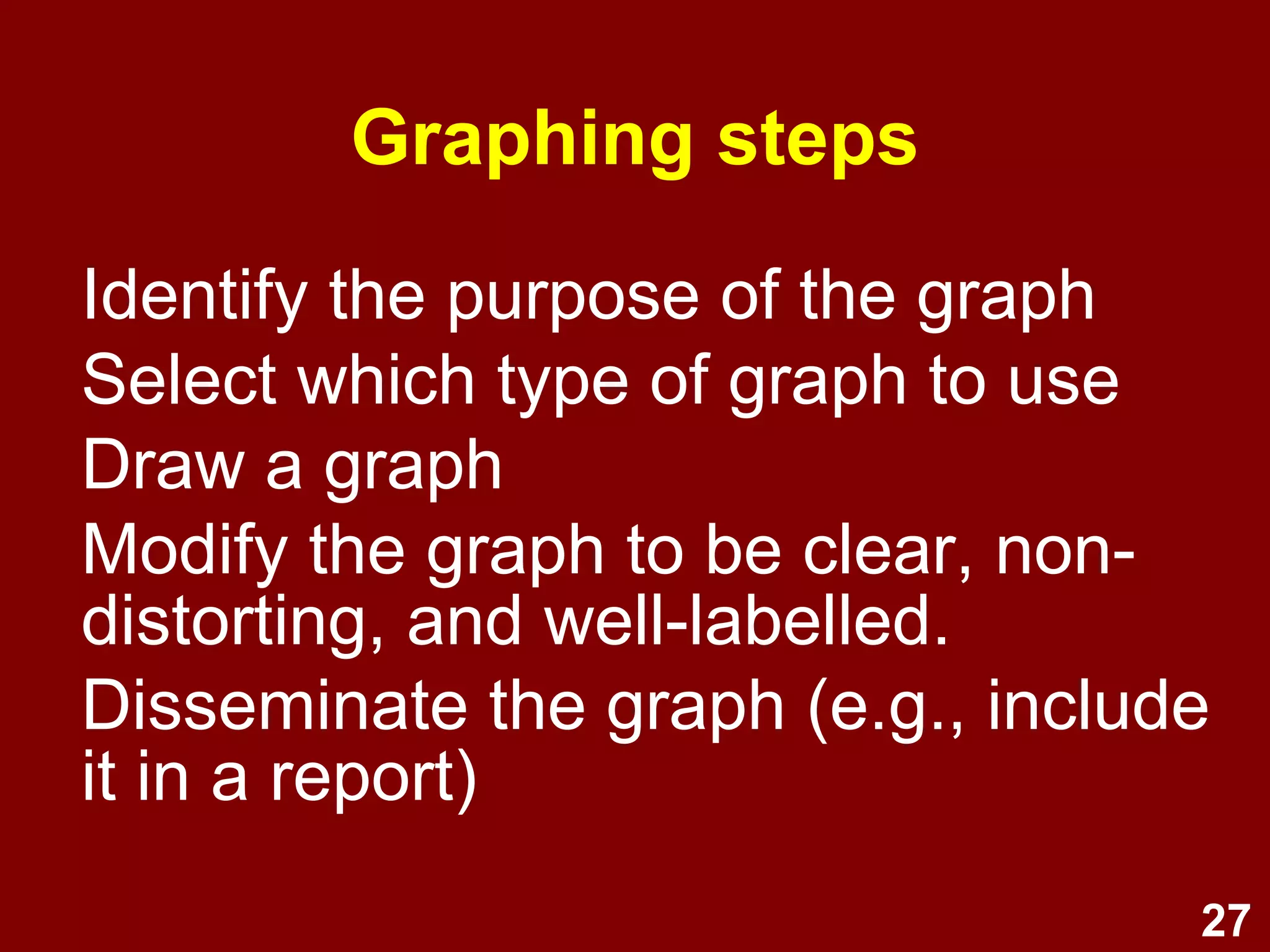
Graphing steps Identify the purpose of the graph
Select which type of graph to use
Draw a graph
Modify the graph to be clear, non-distorting, and well-labelled.
Disseminate the graph (e.g., include it in a report)
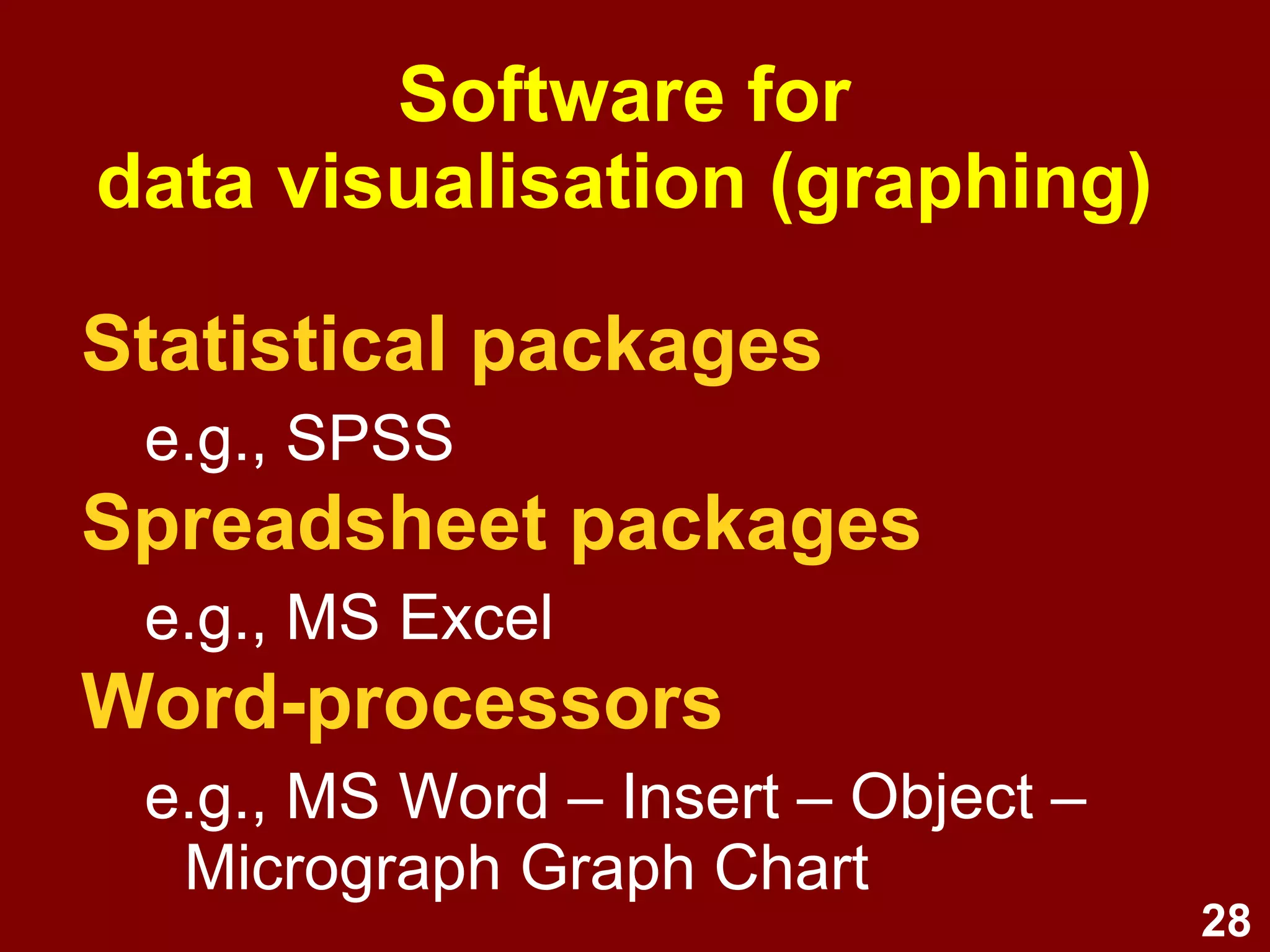
Software for  data visualisation (graphing)  Statistical packages  e.g., SPSS Spreadsheet packages e.g., MS Excel Word-processors e.g., MS Word – Insert – Object – Micrograph Graph Chart
Univariate graphs
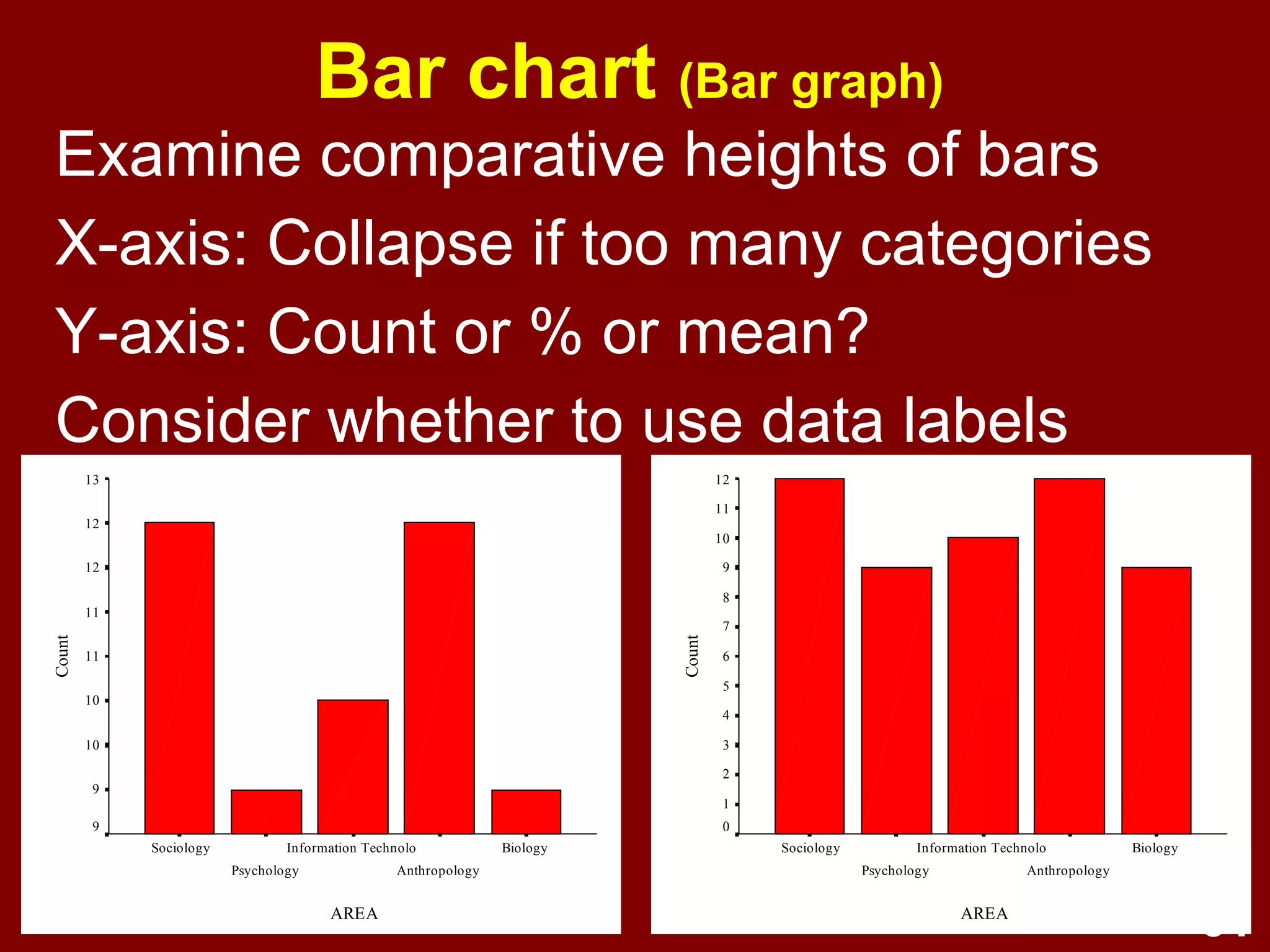
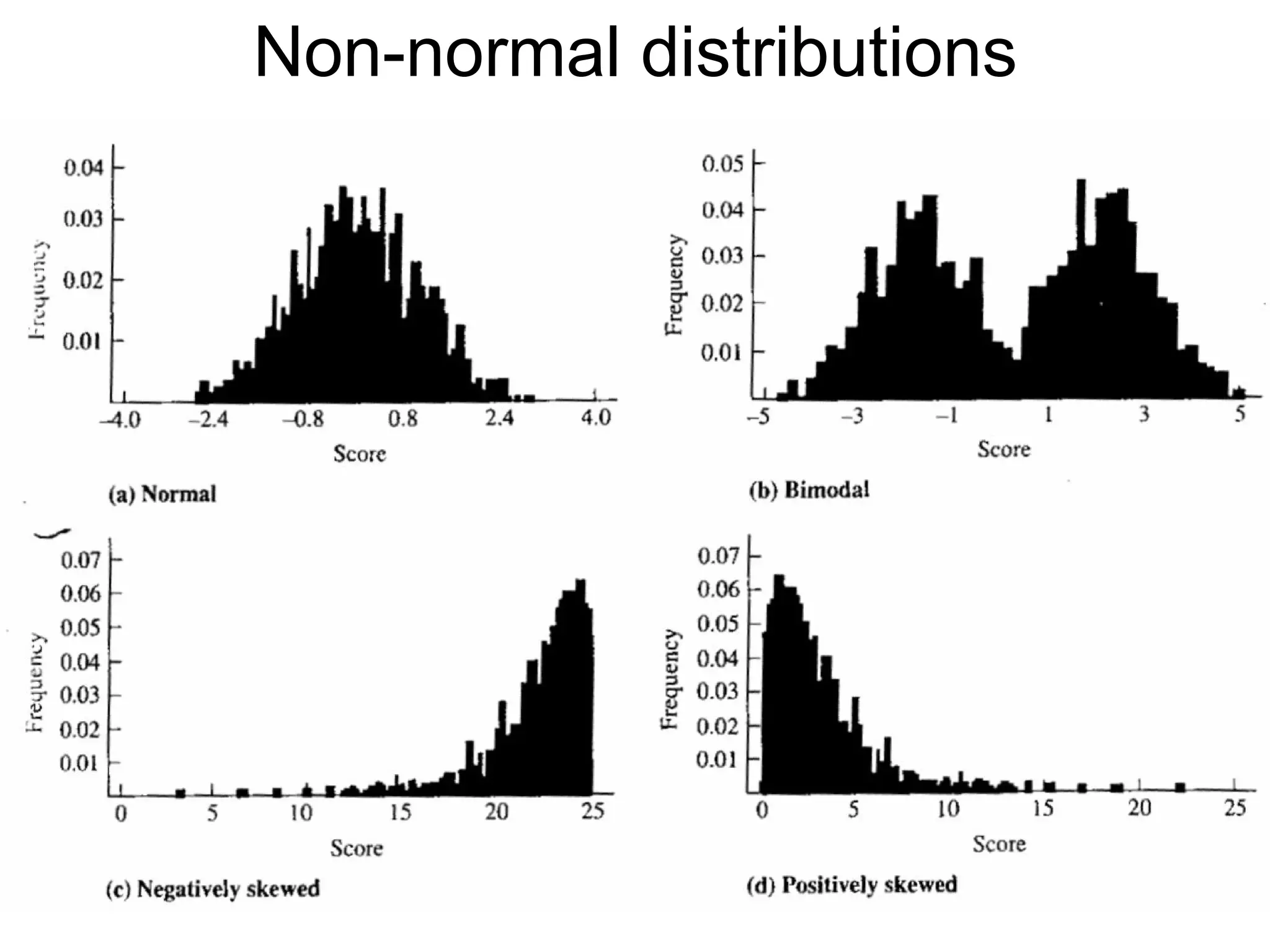
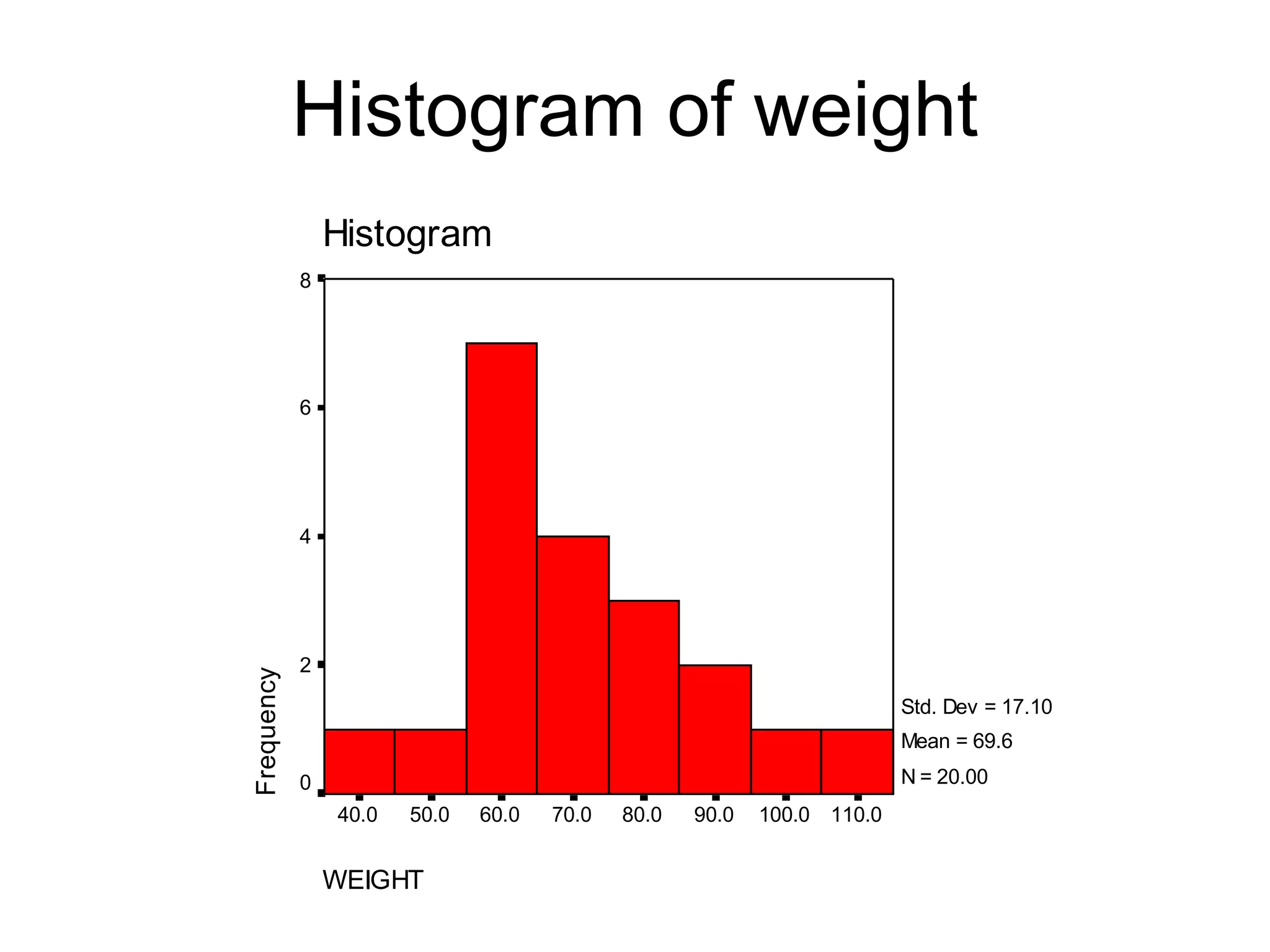
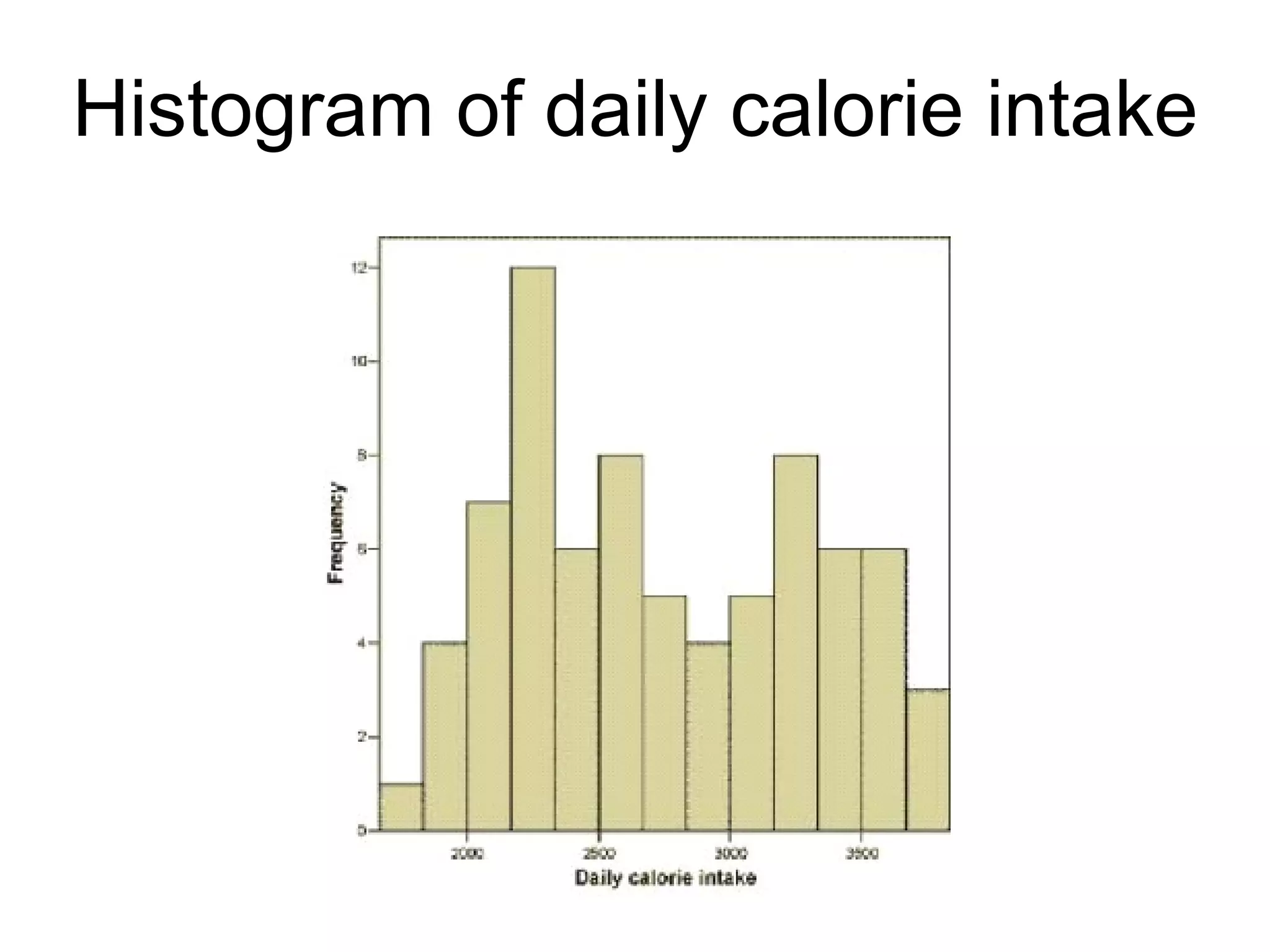
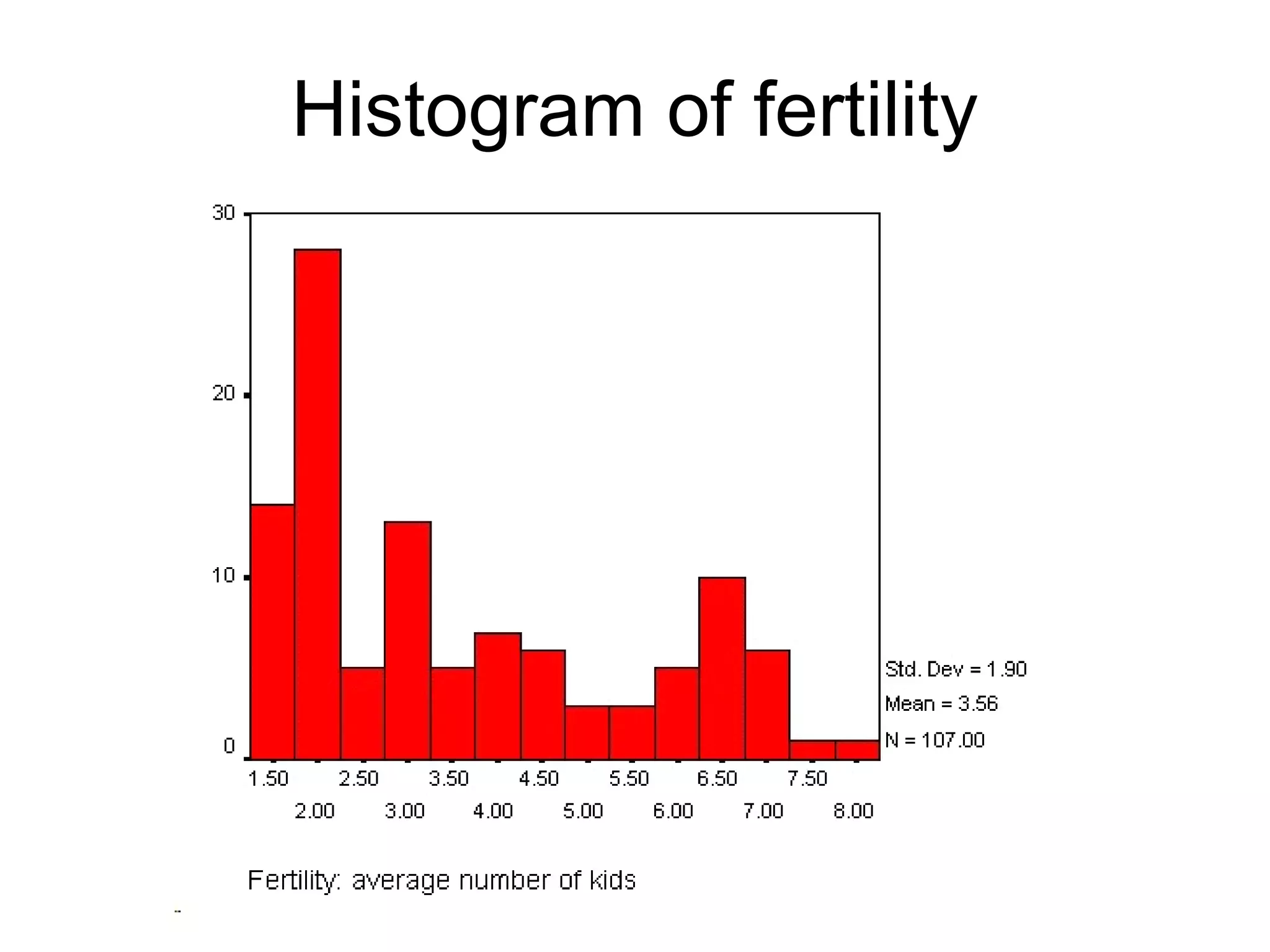
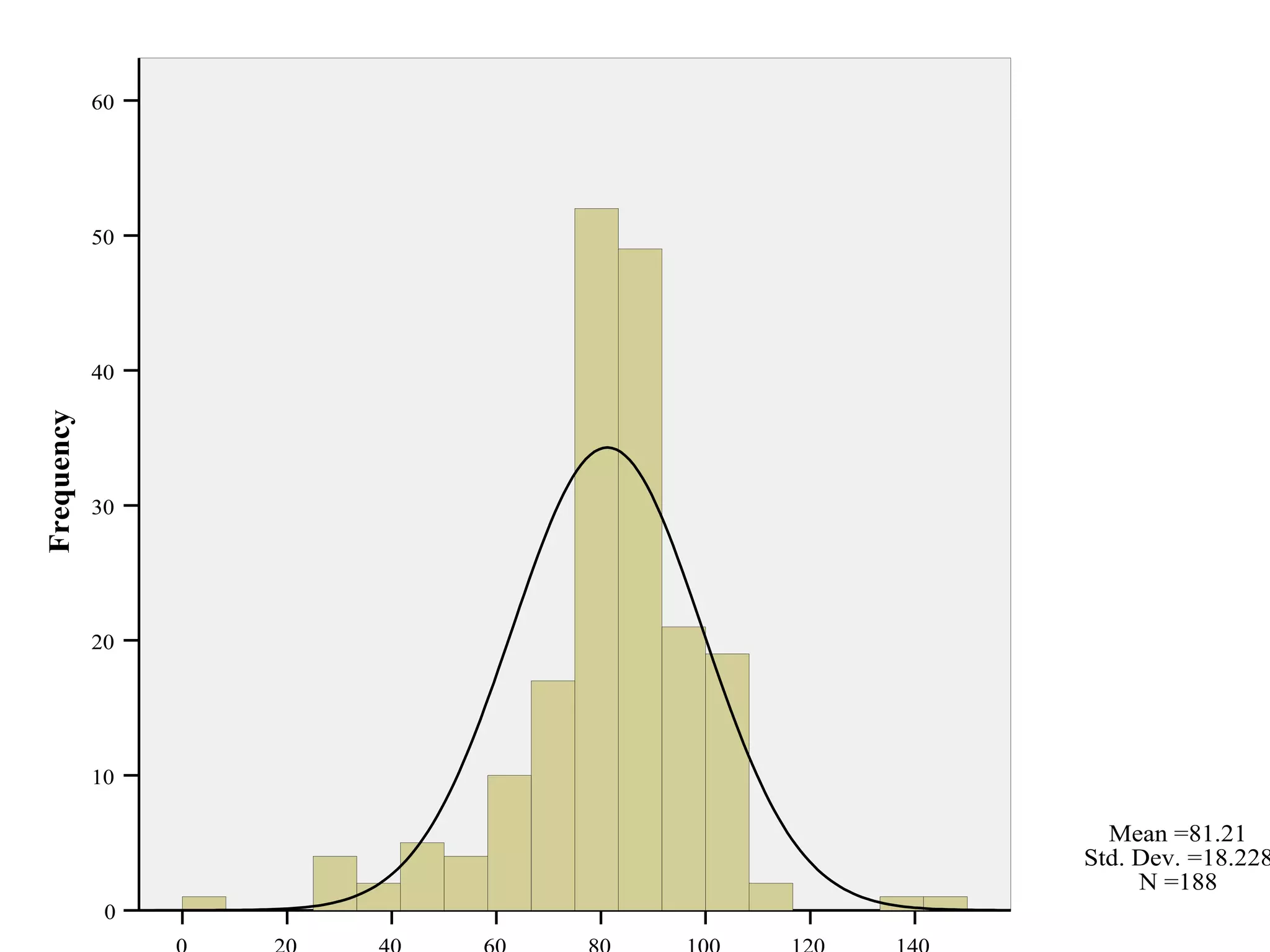
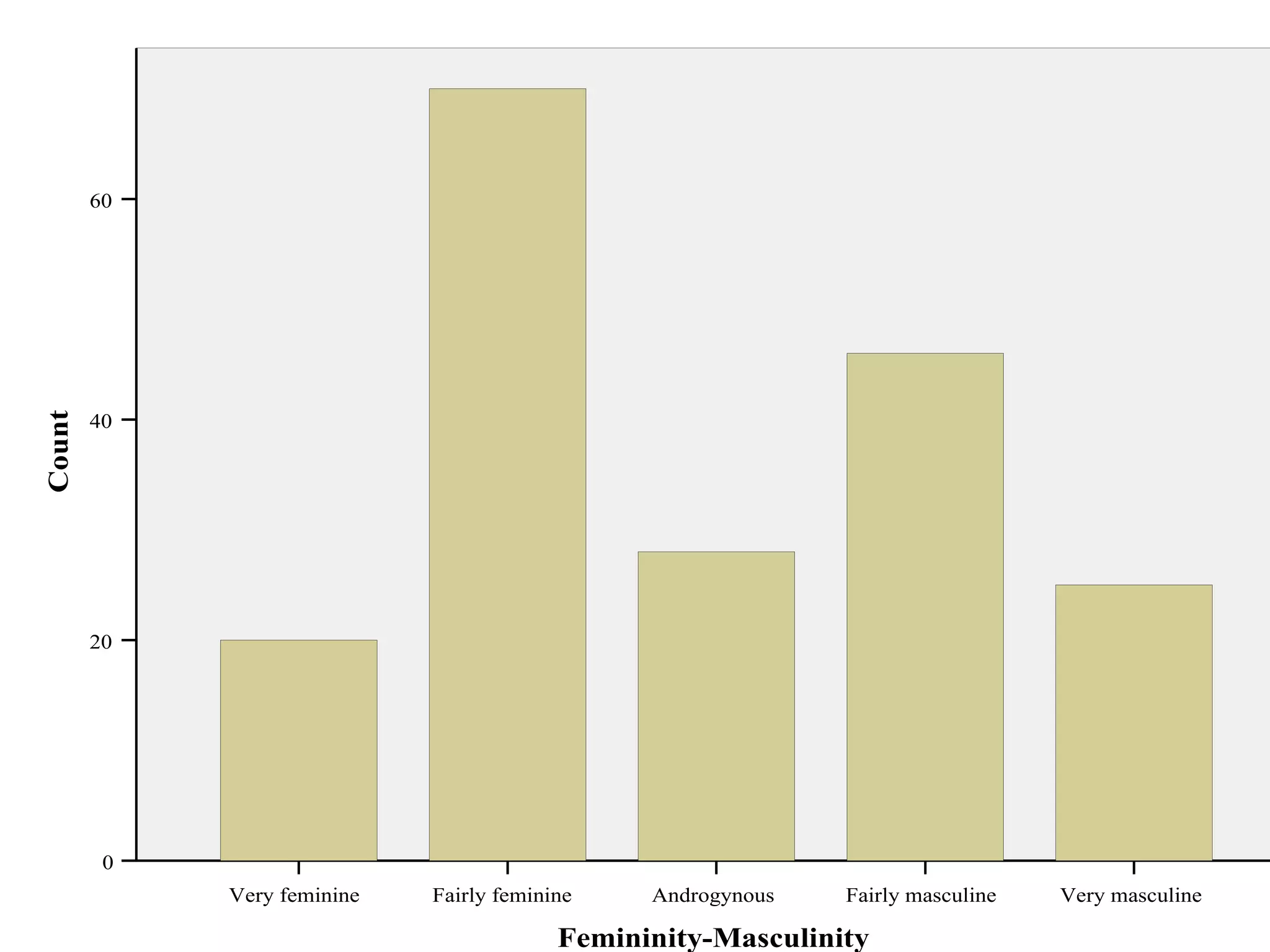
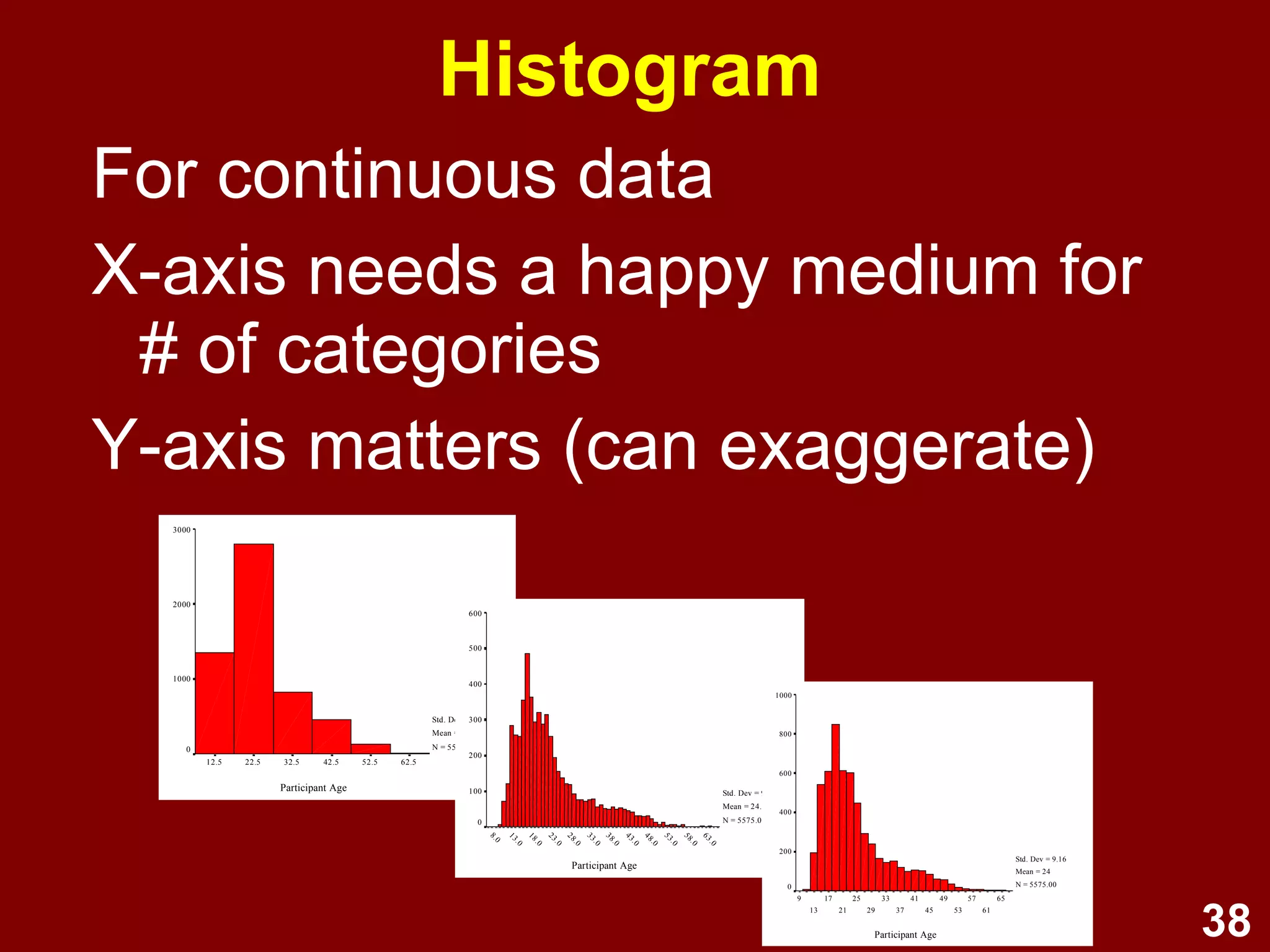
Univariate graphs Bar graph
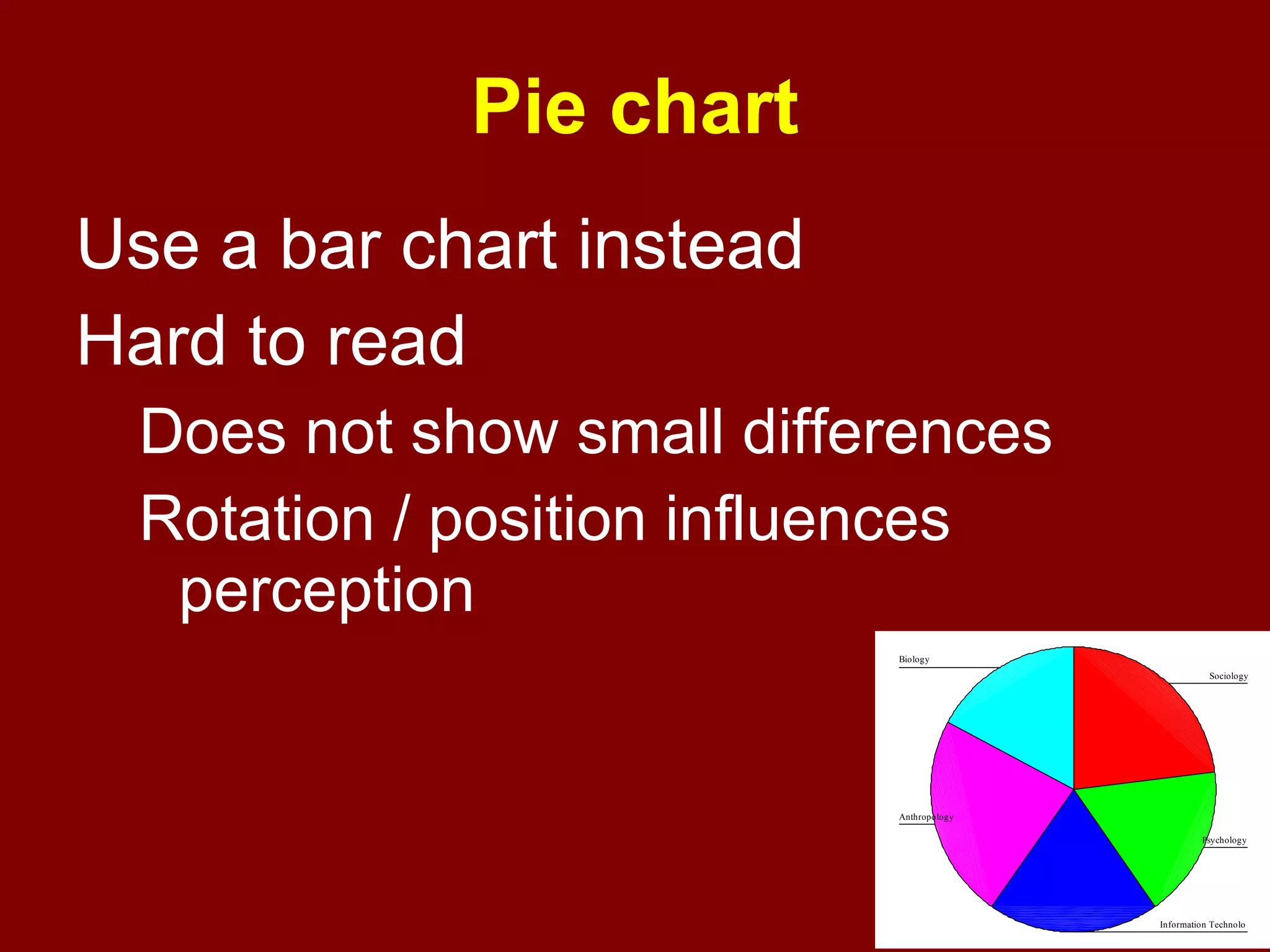
Pie chart
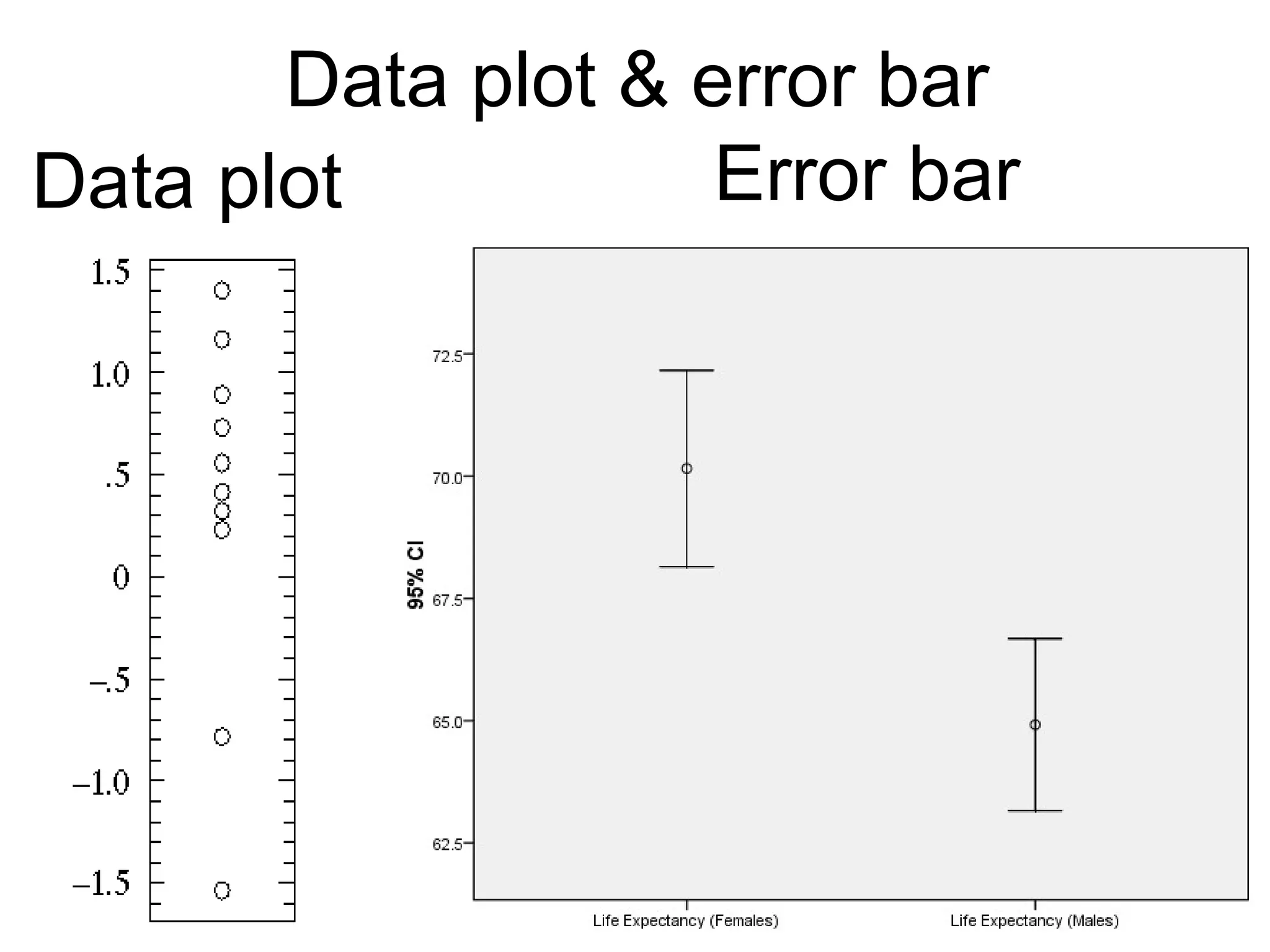
Data plot
Error bar
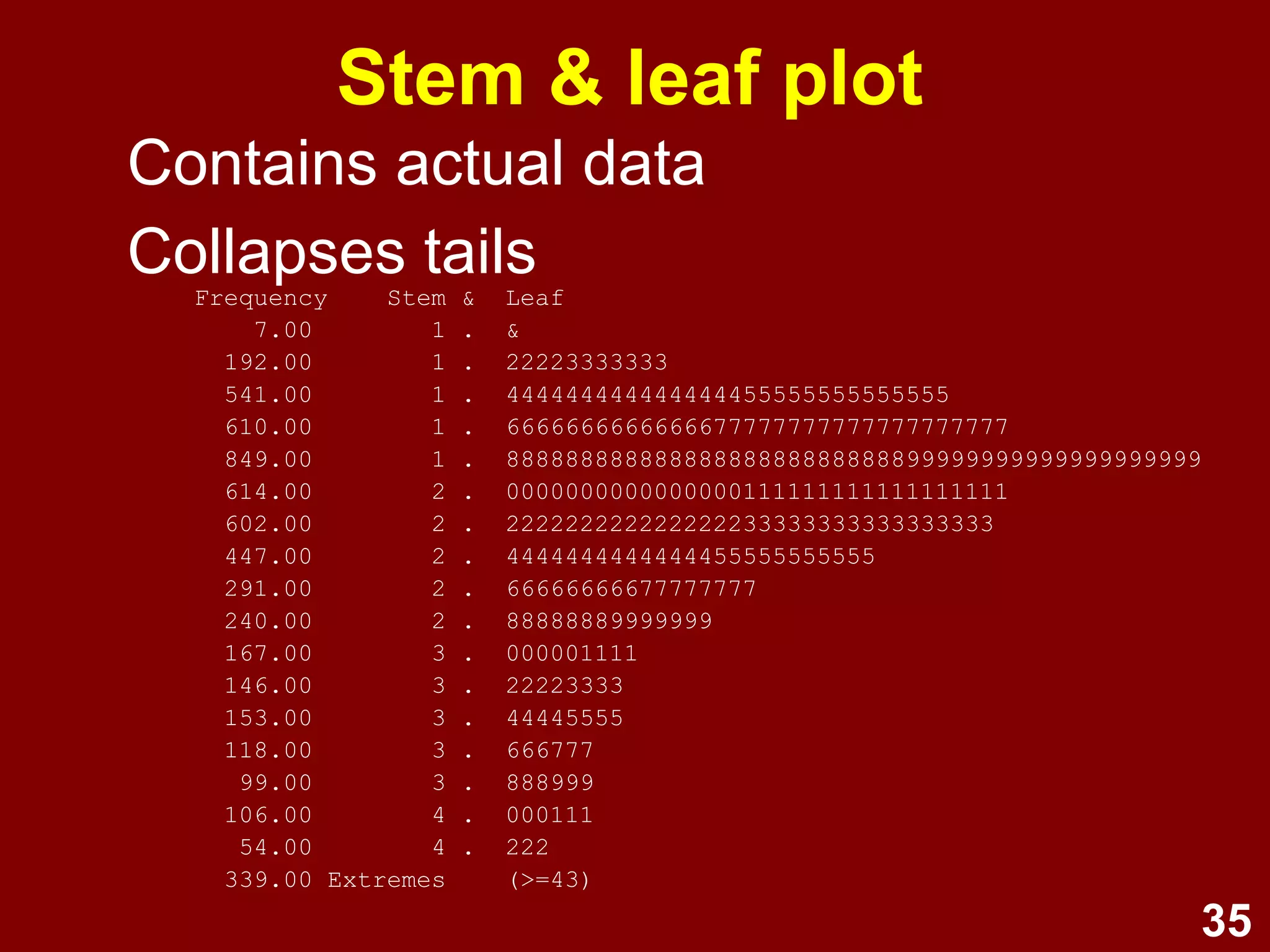
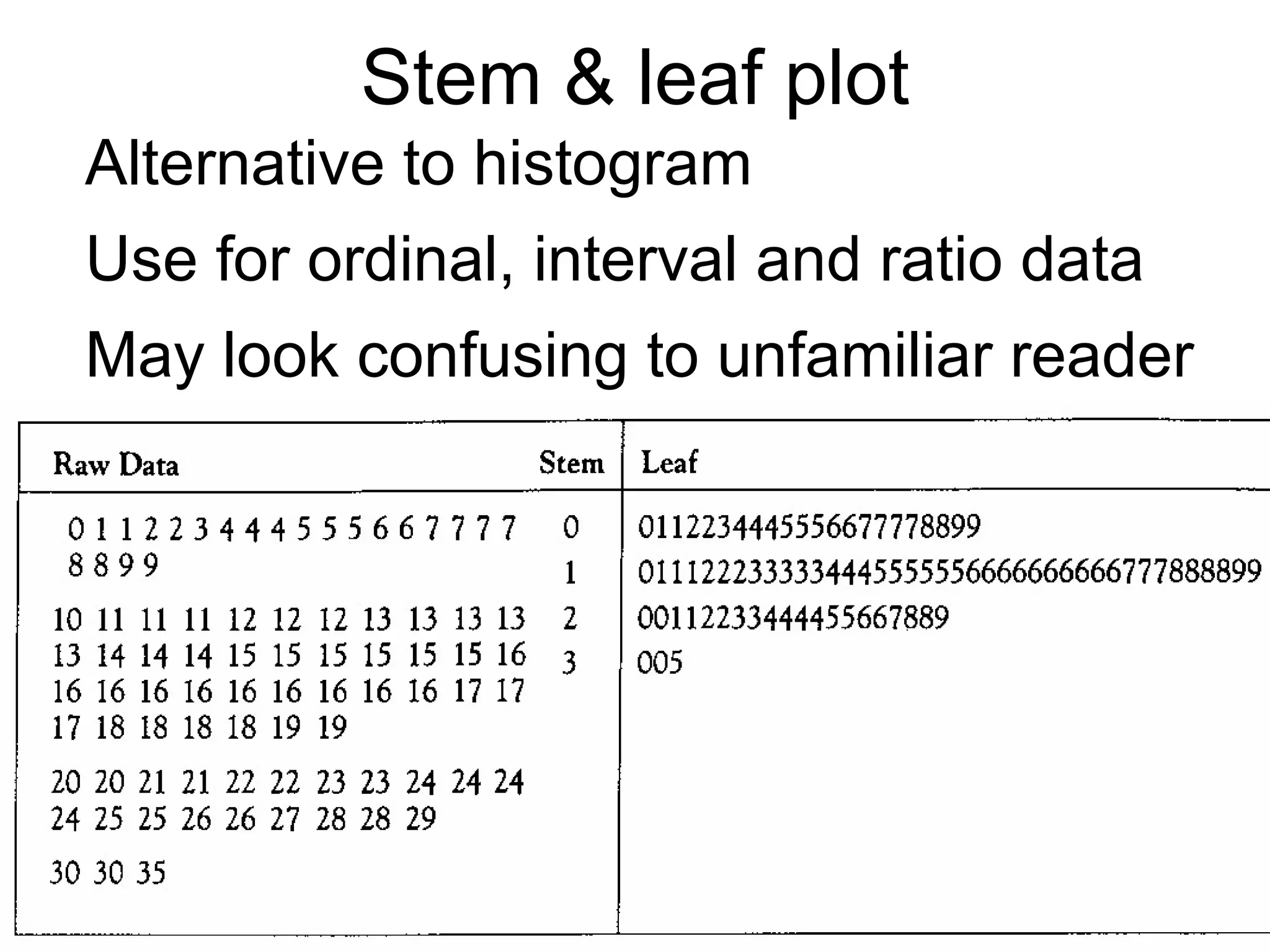
Stem & leaf plot
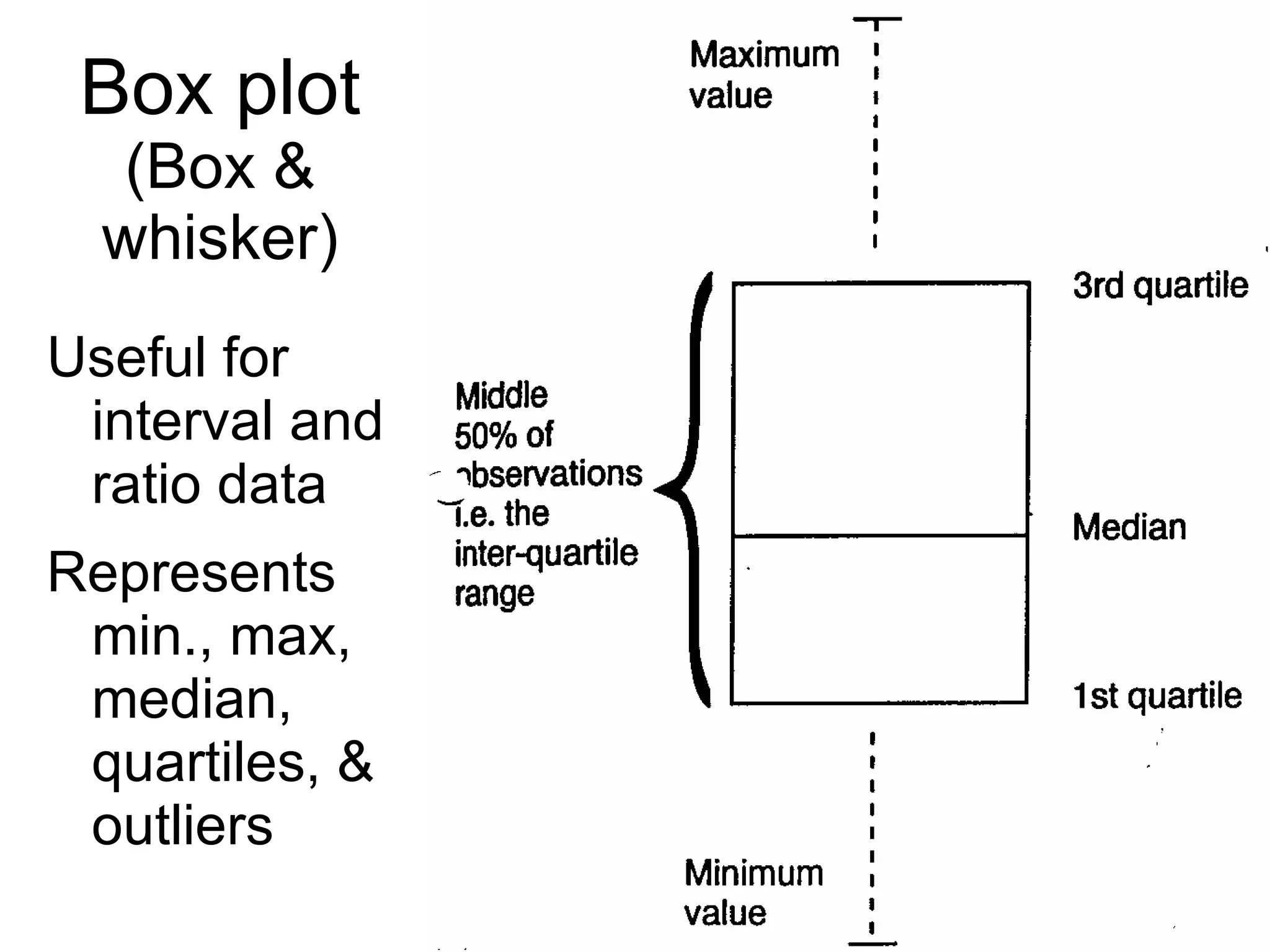
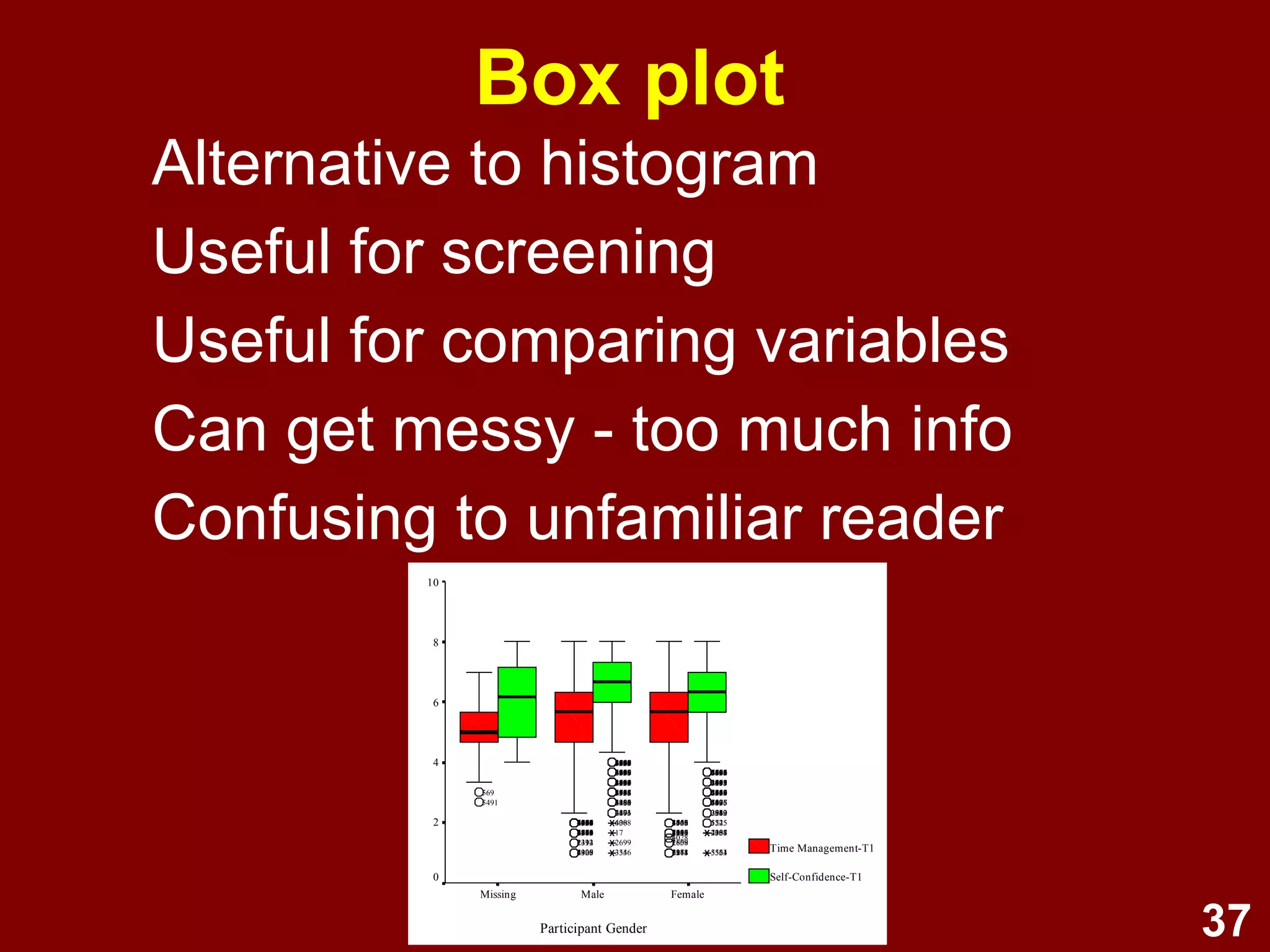
Box plot (Box & whisker)

Visualiation of quantitative information