Kelly Isaiah Ogbebor
Josep Ma Giménez Sentis
   1. Loves reading
   2. Focus and attentive
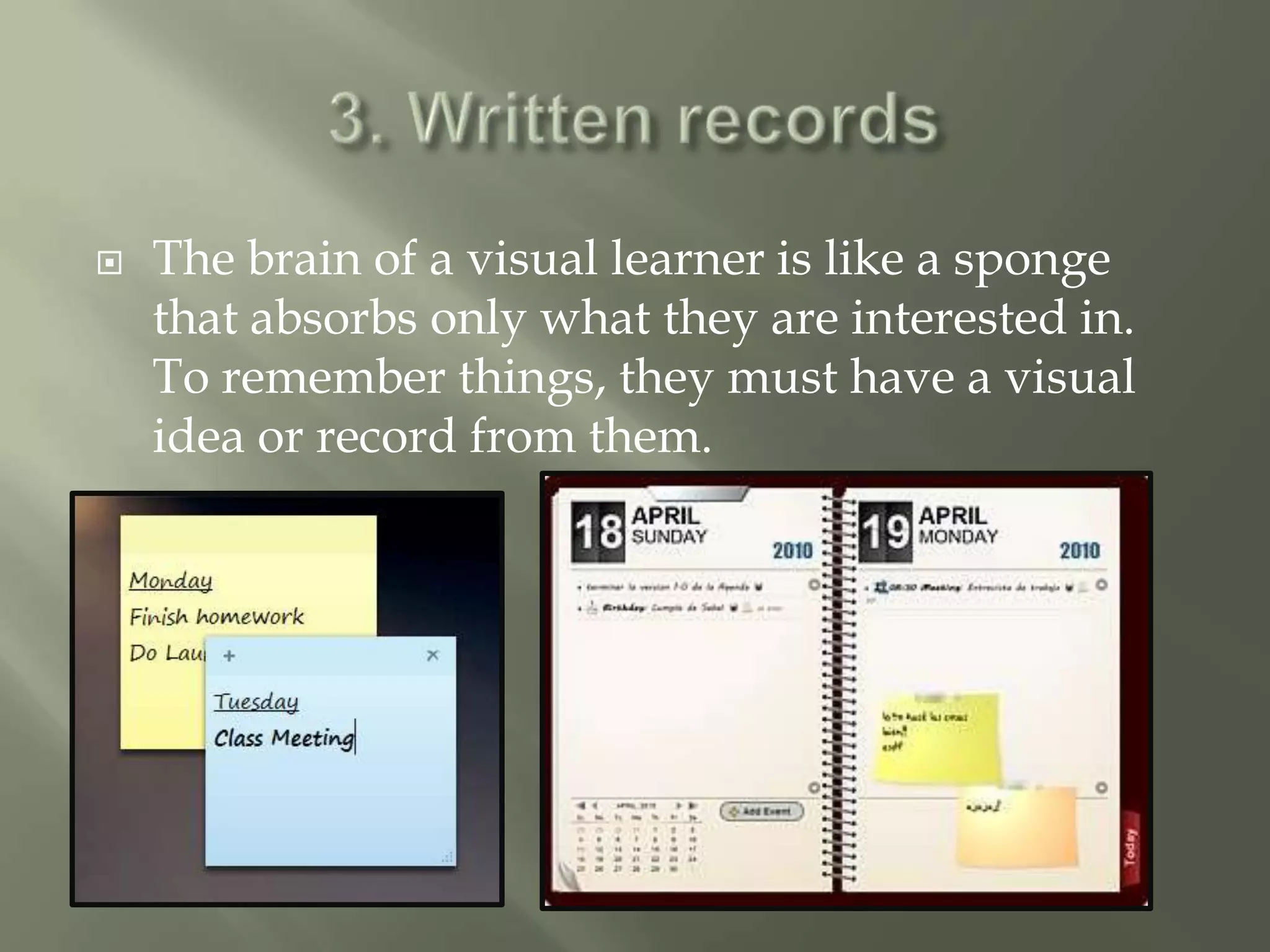
   3. Written records
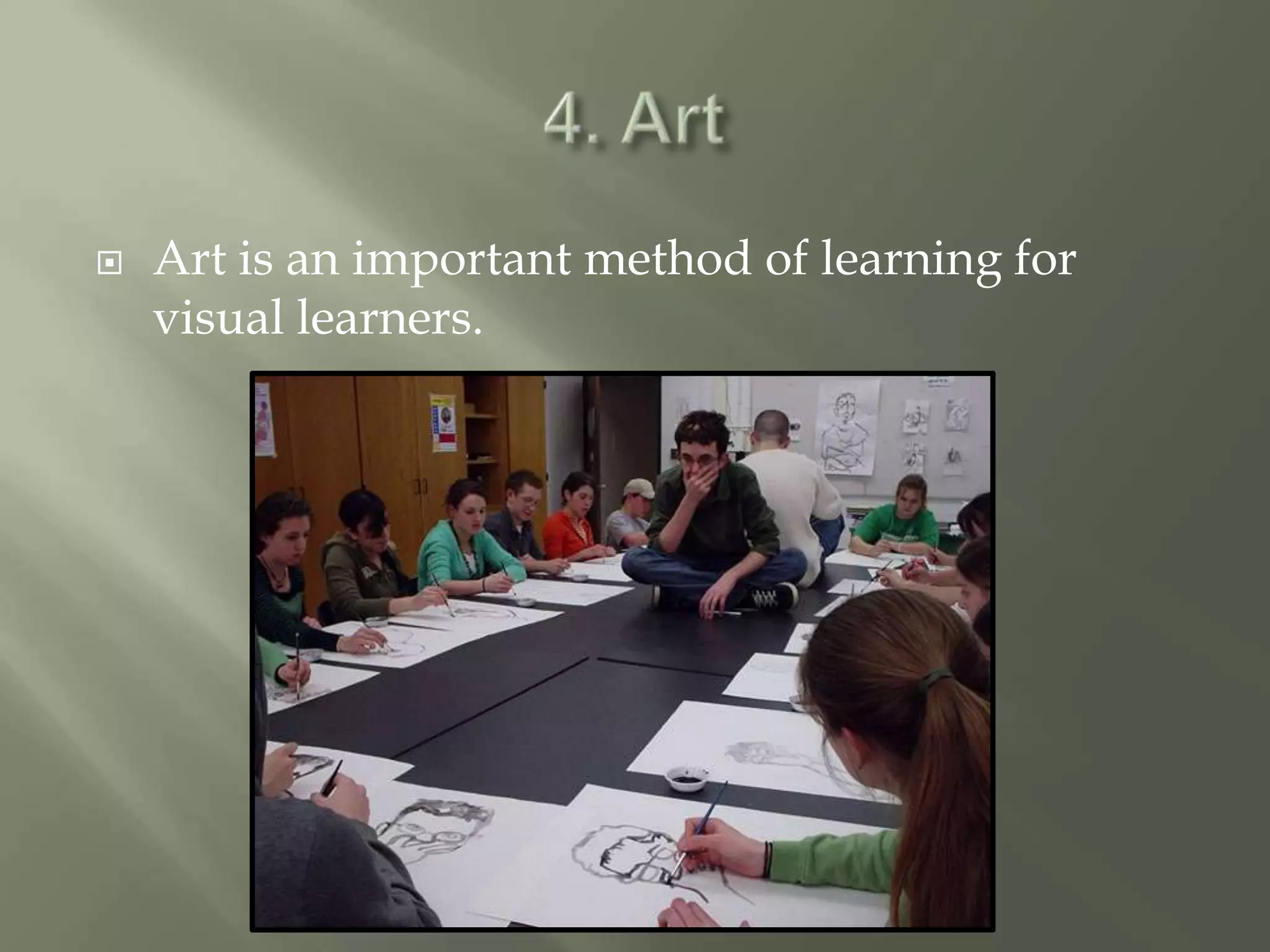
   4. Art
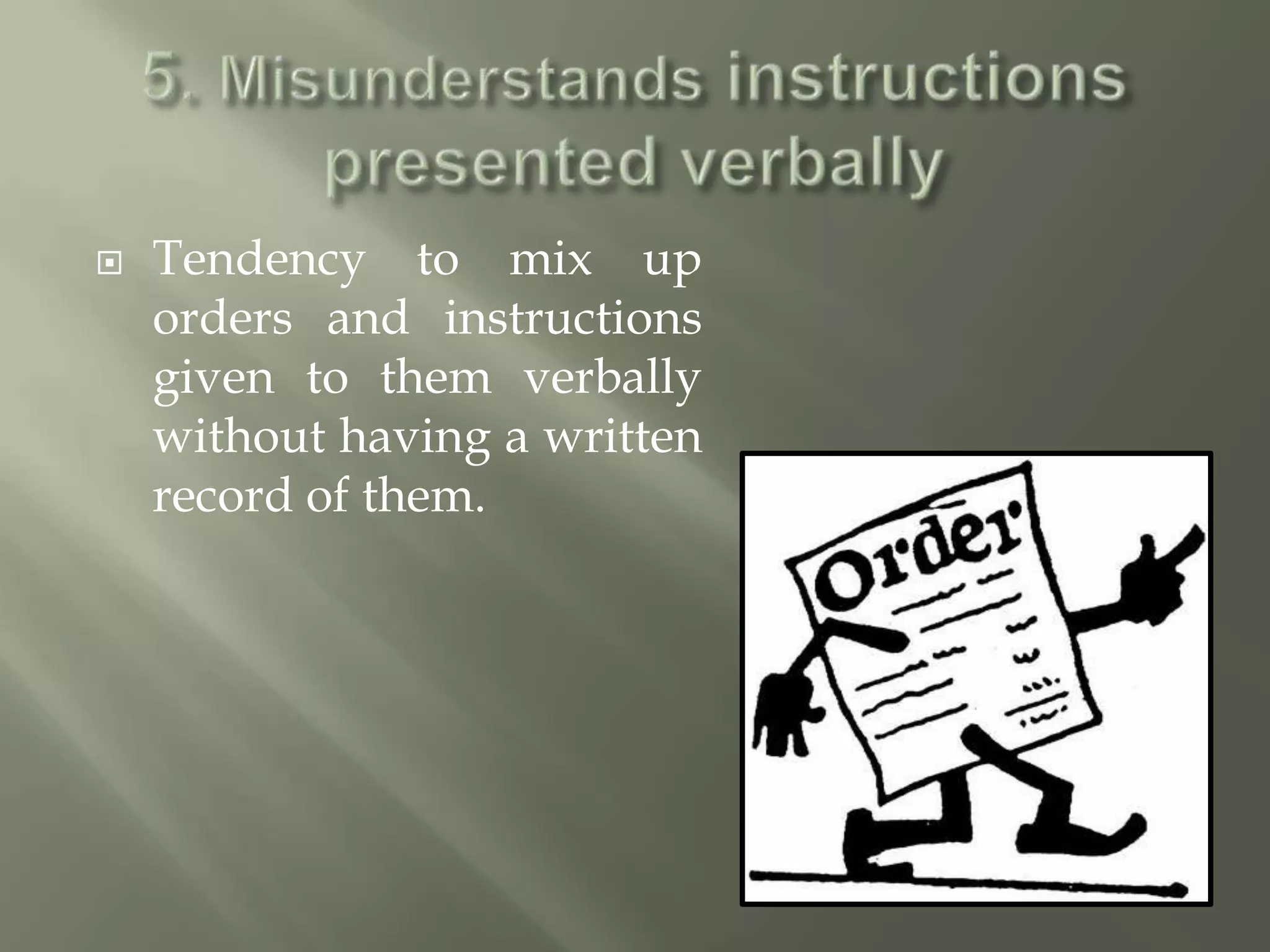
   5. Misunderstands instructions presented verbally
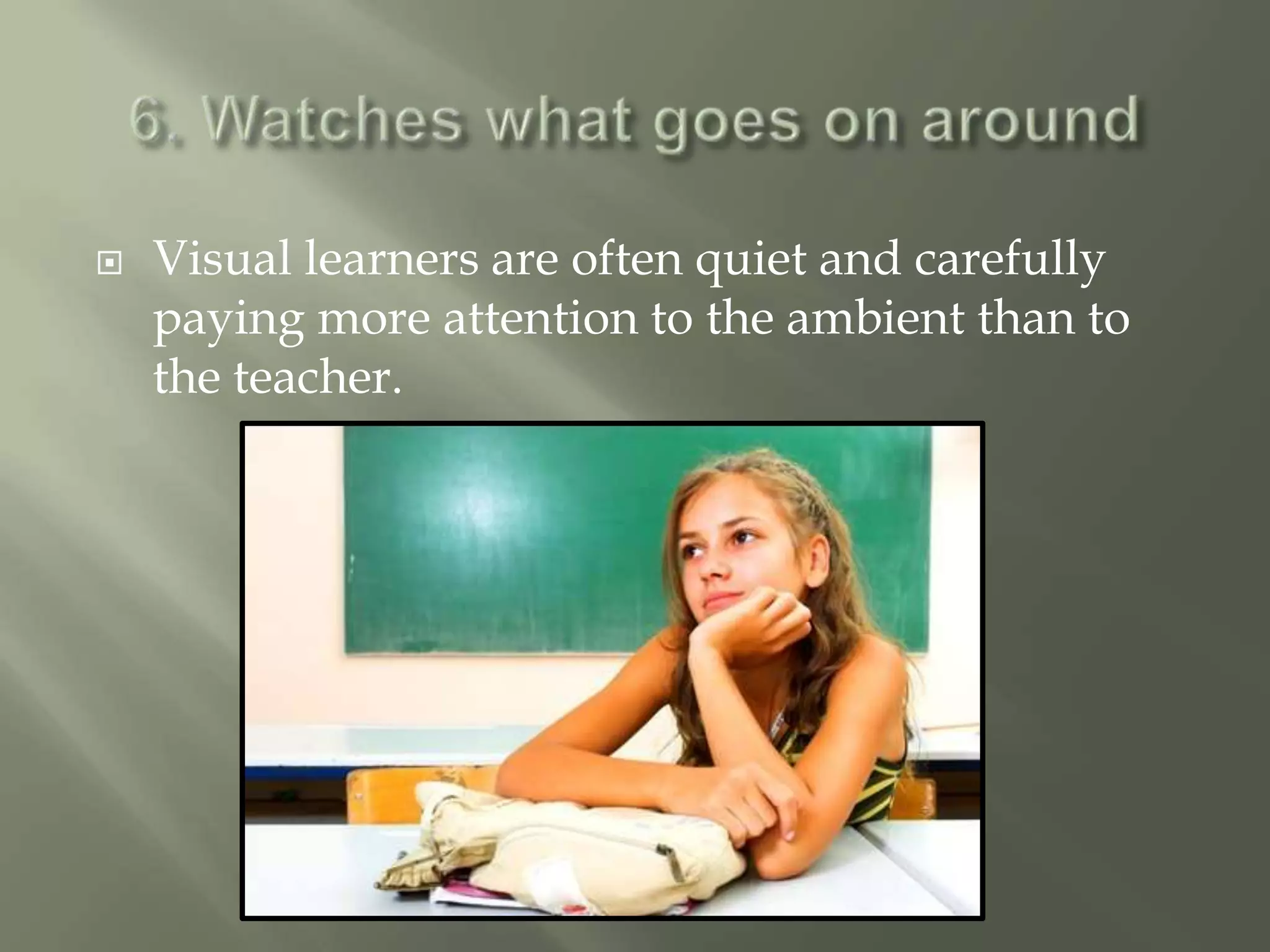
   6. Watches what goes on around
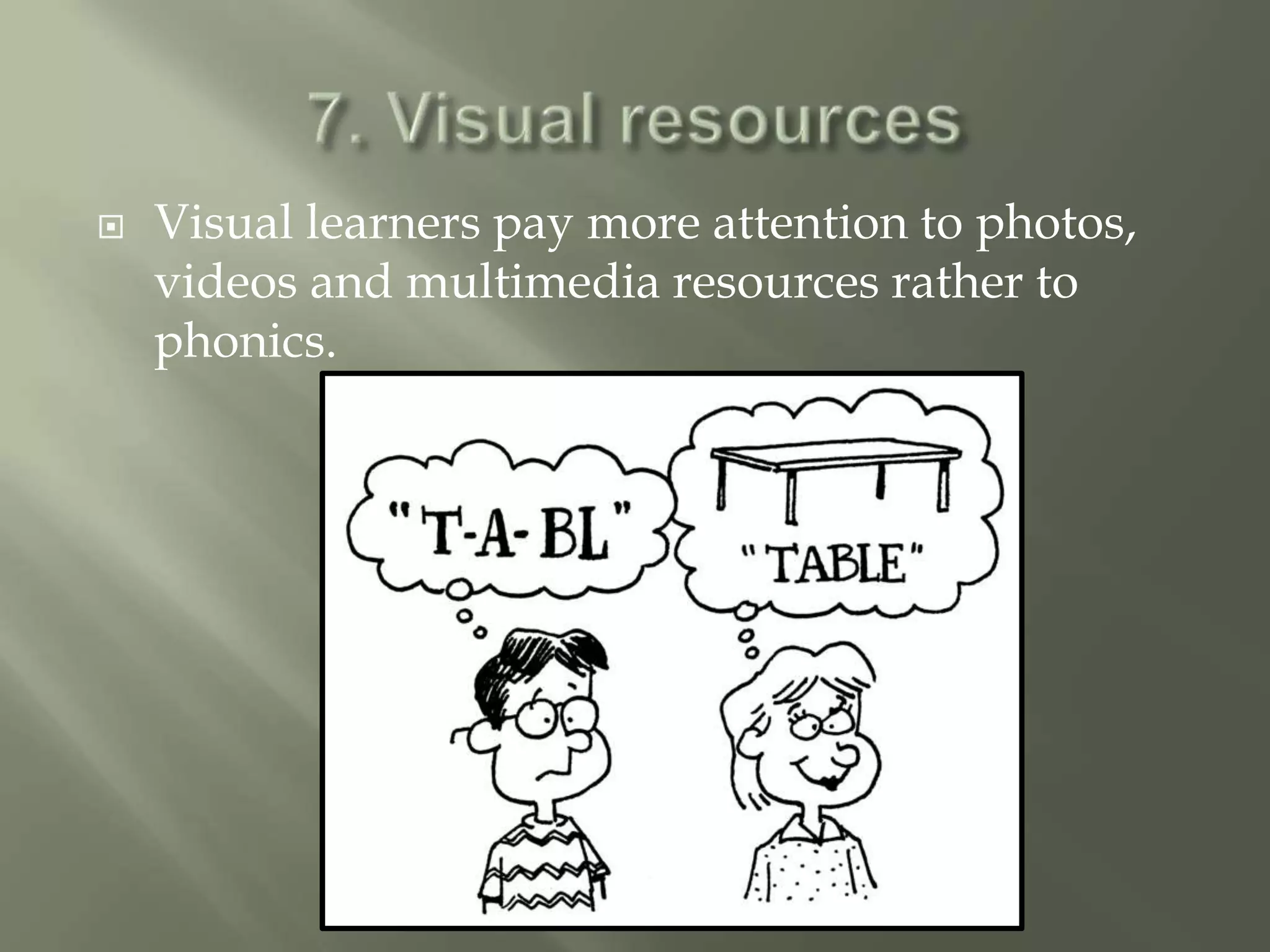
   7. Visual resources
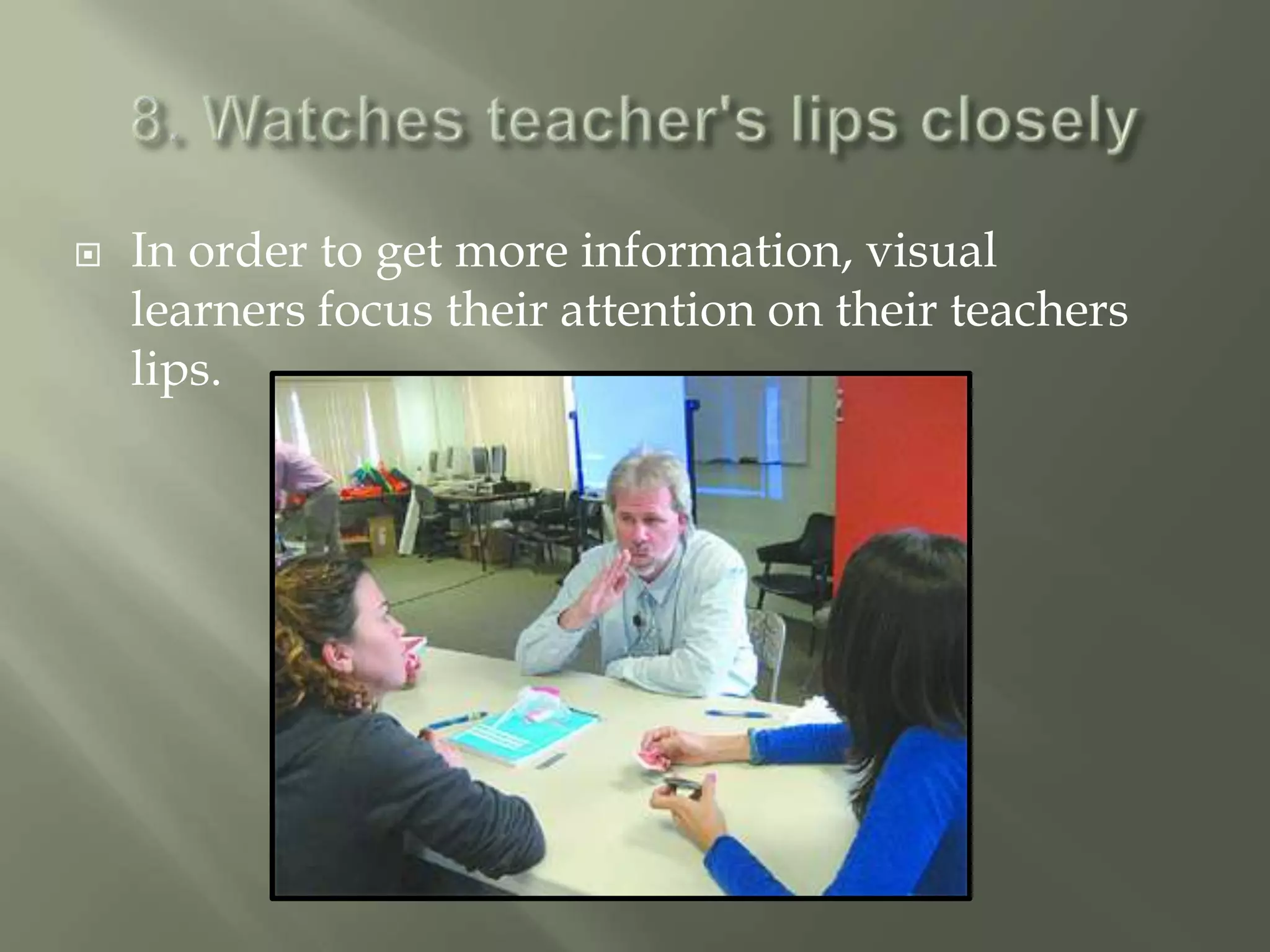
   8. Watches teacher's lips closely
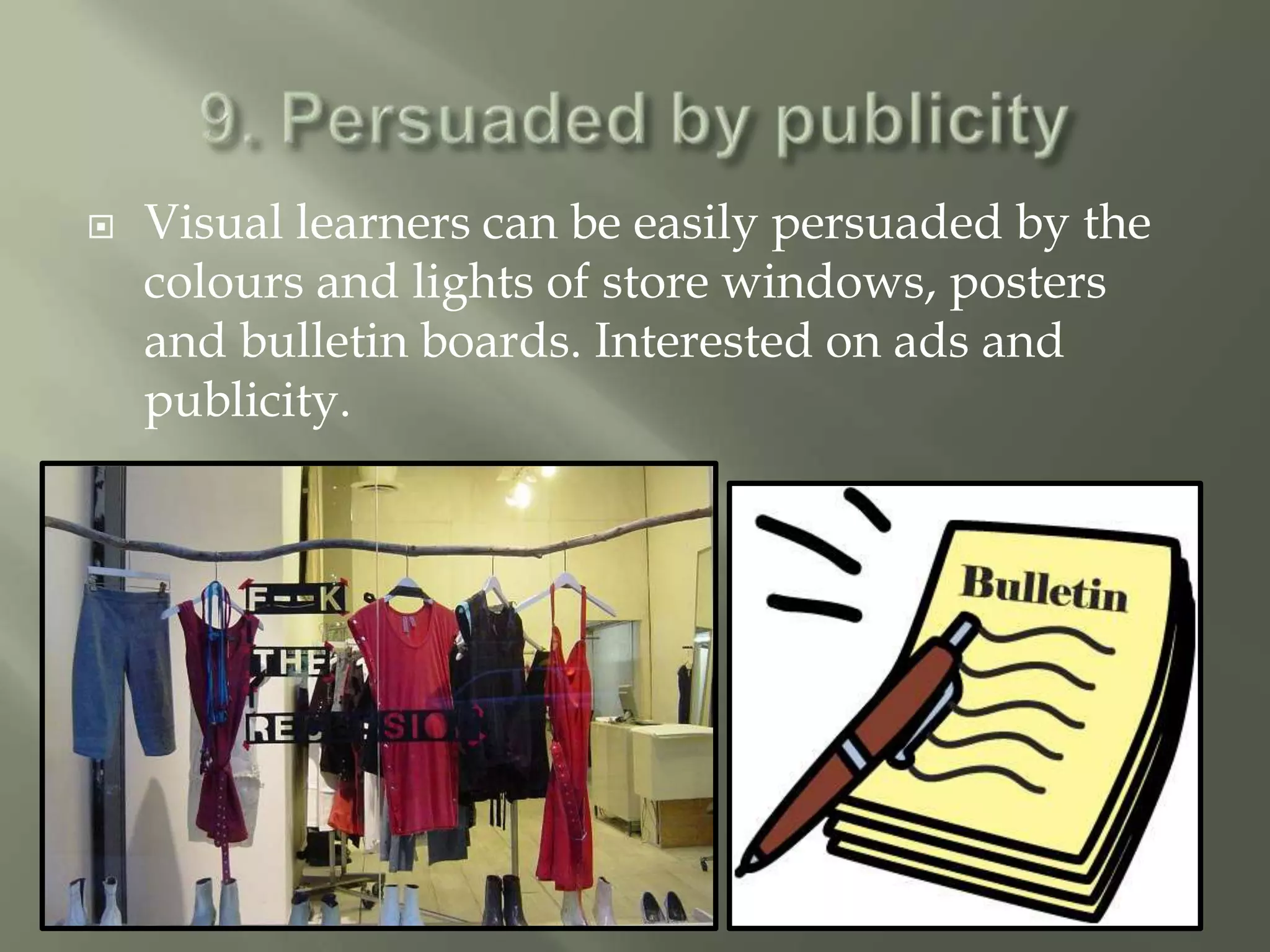
   9. Persuaded by publicity
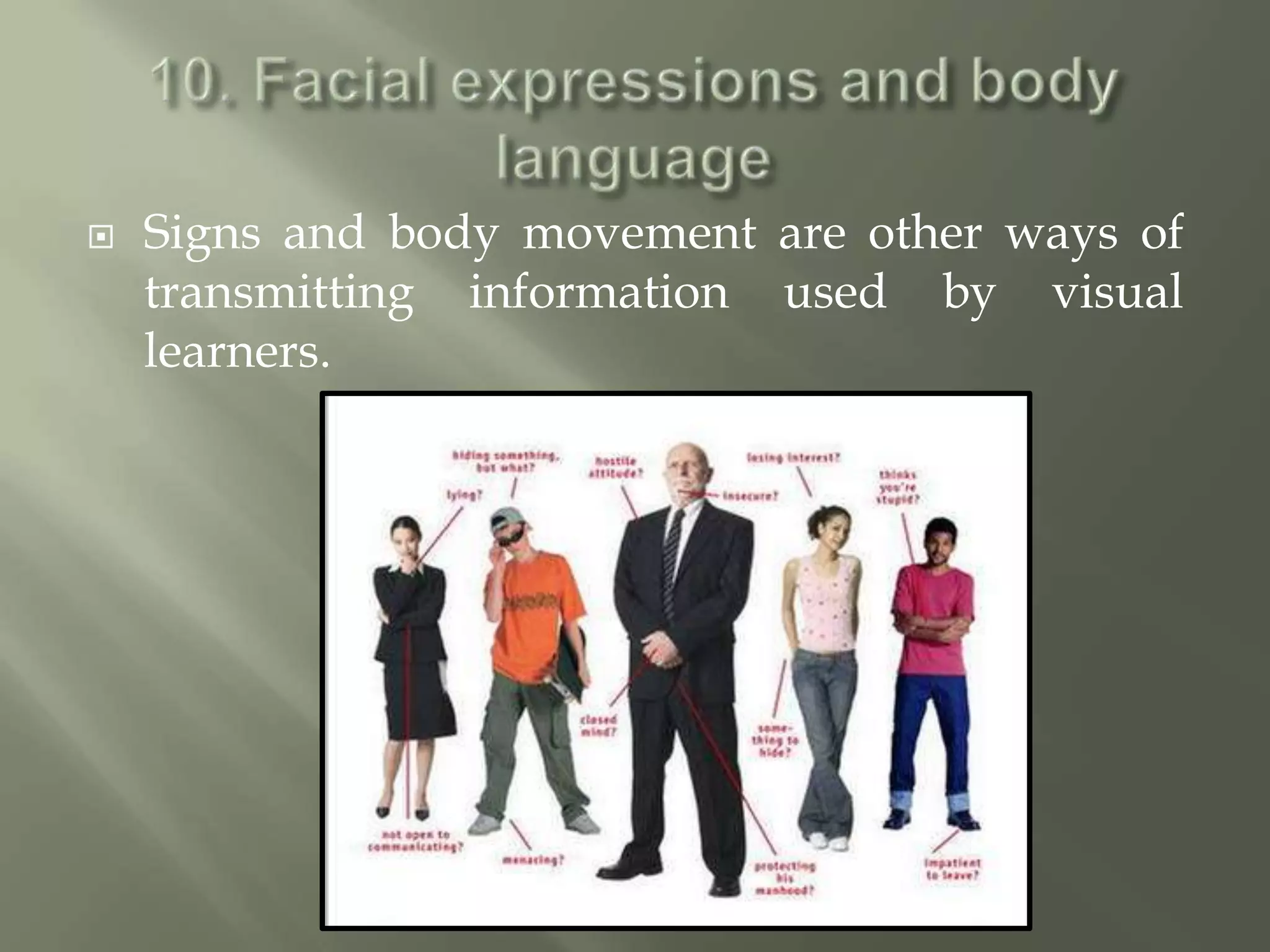
   10. Facial expressions and body language
   11. Dislikes speaking on public
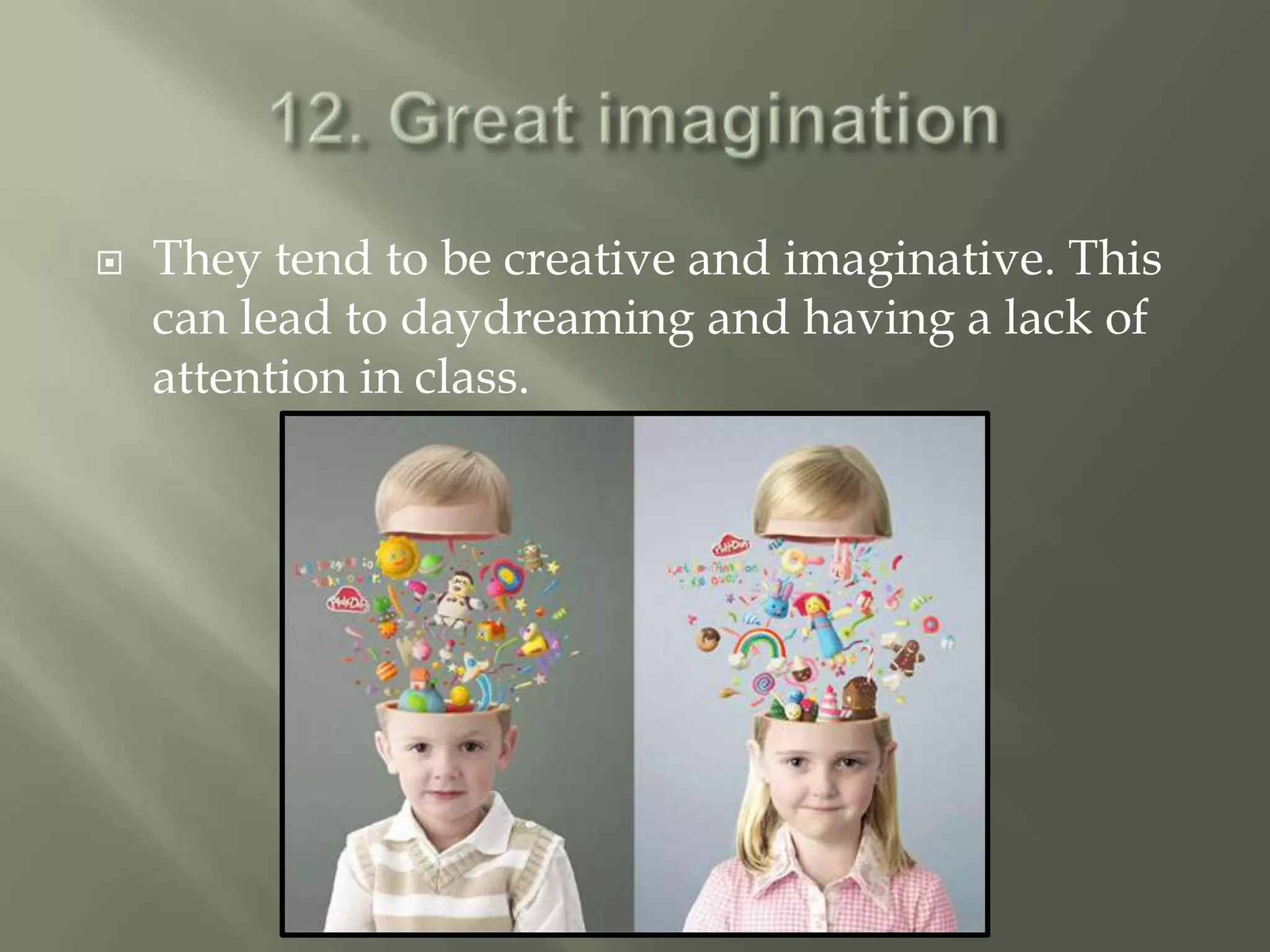
   12. Great imagination
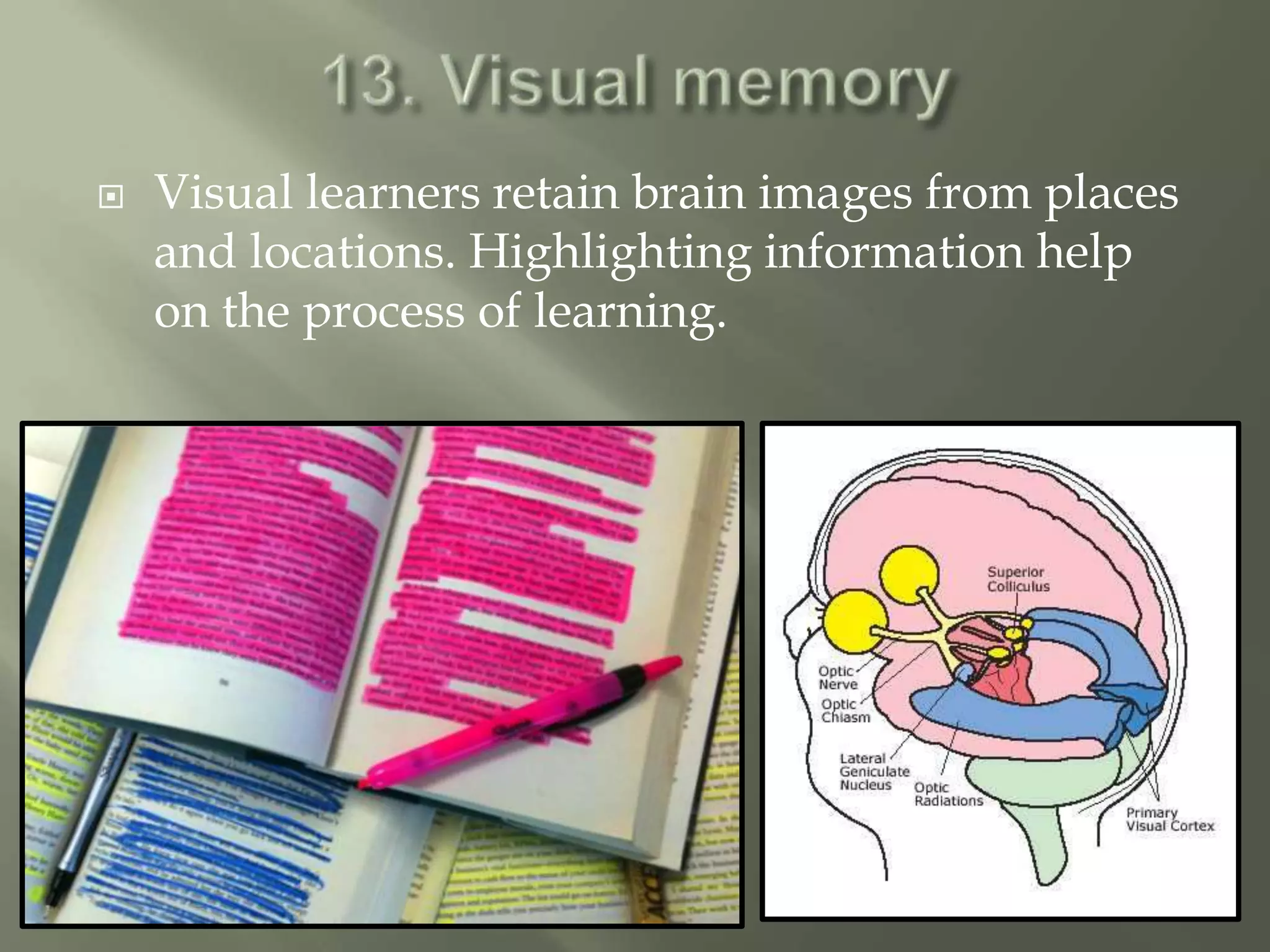
   13. Visual memory
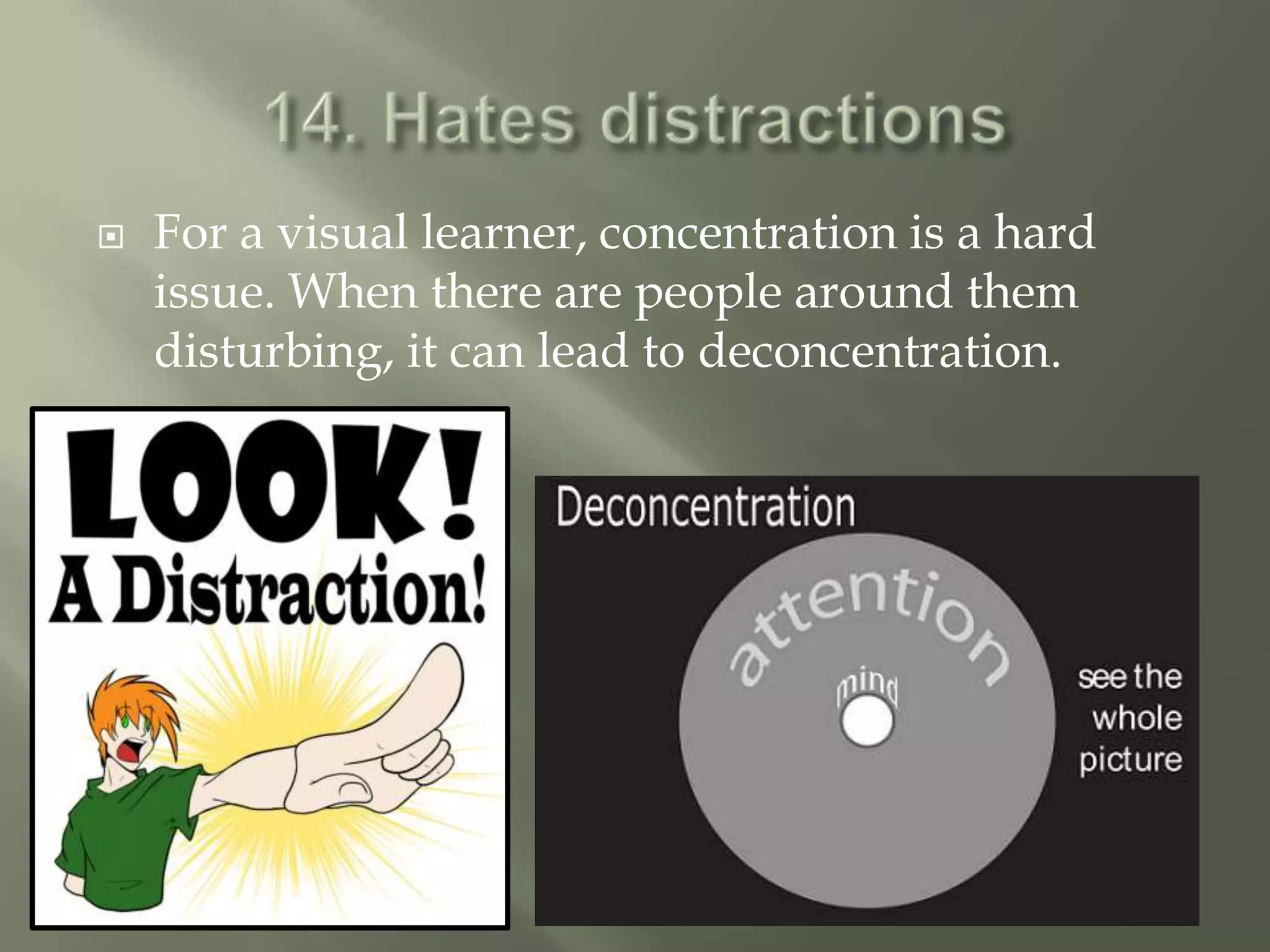
   14. Hates distractions
   15. Poor in phonics and expressions
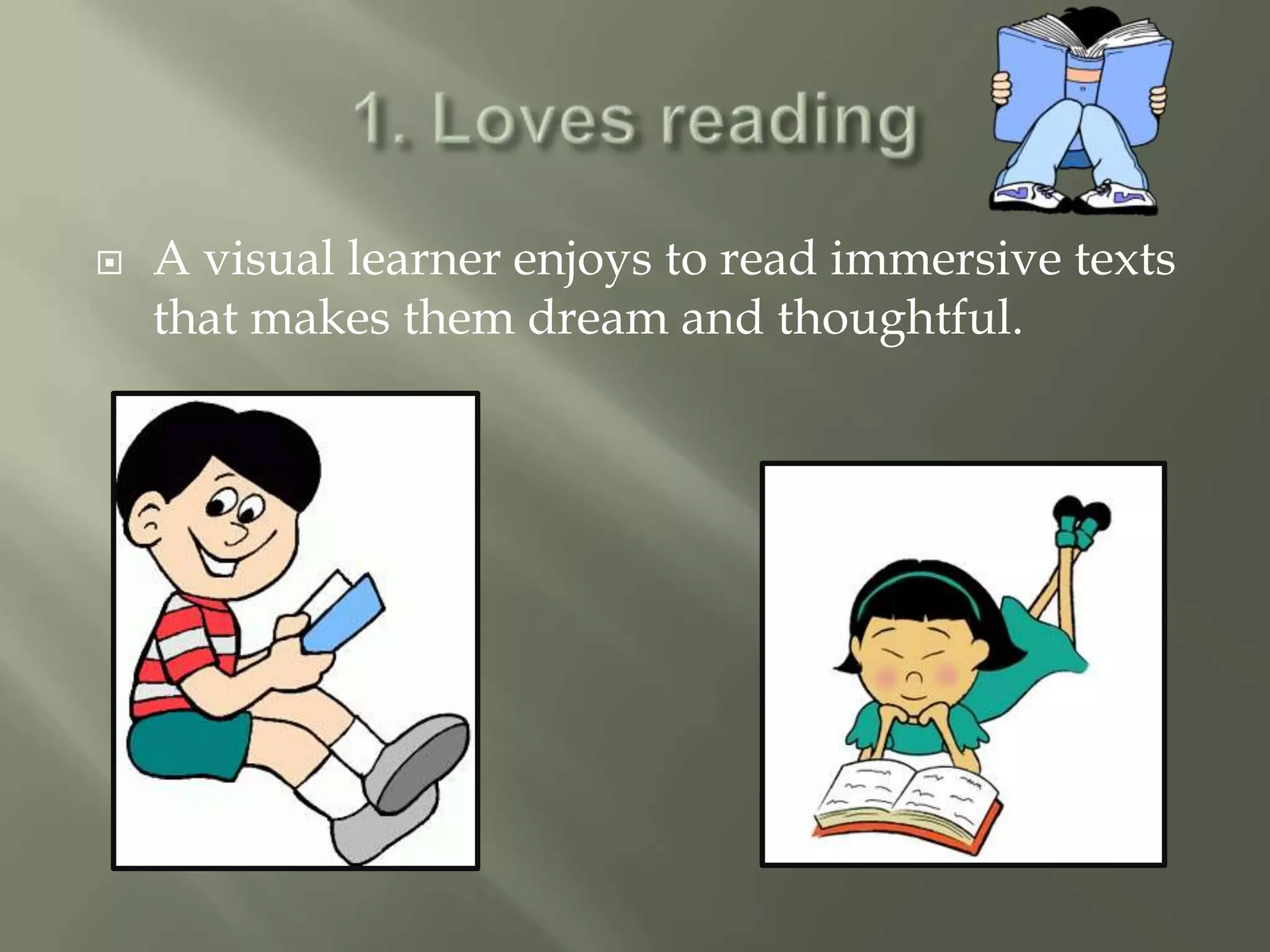
   A visual learner enjoys to read immersive texts
    that makes them dream and thoughtful.
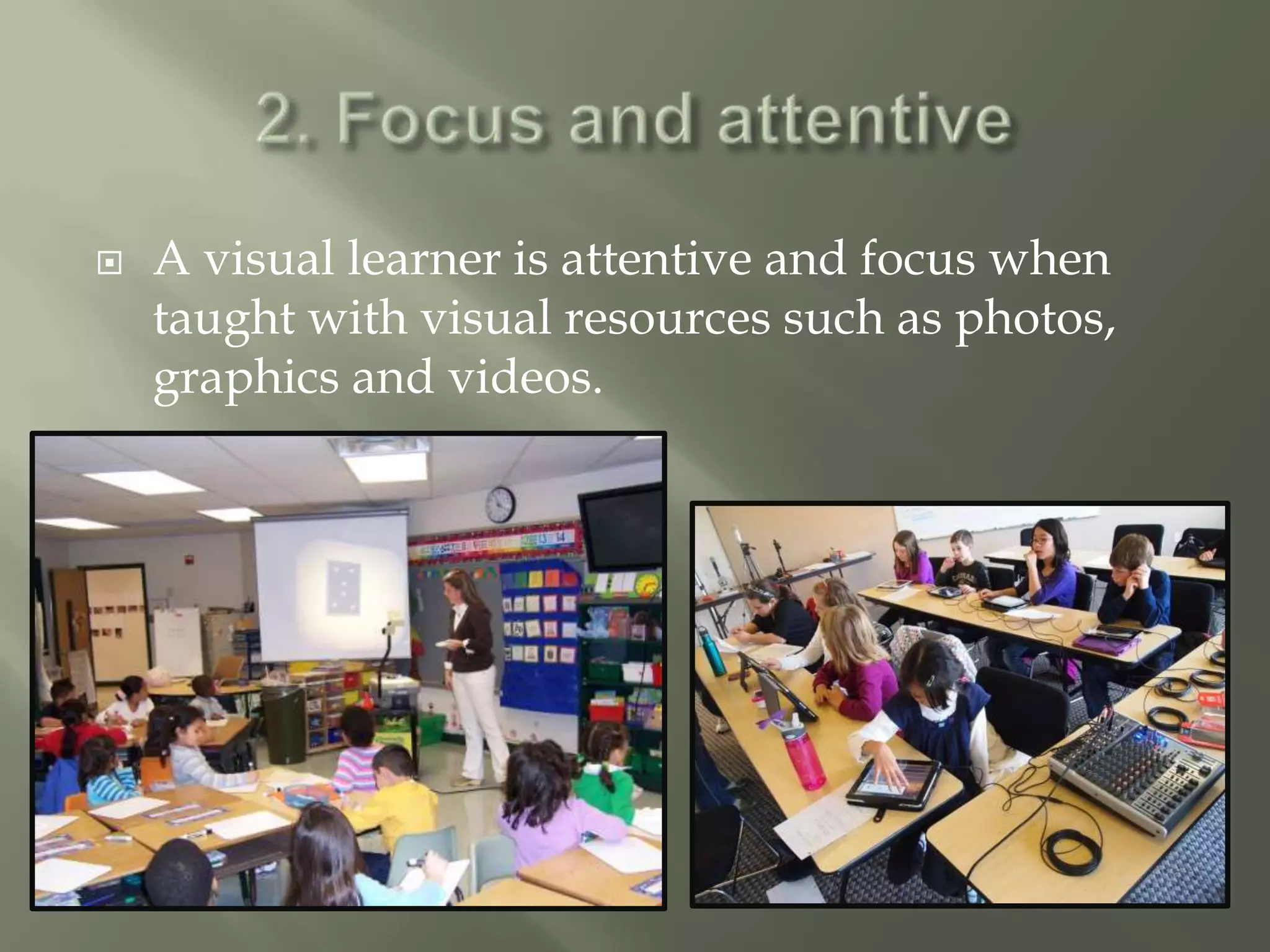
   A visual learner is attentive and focus when
    taught with visual resources such as photos,
    graphics and videos.
   The brain of a visual learner is like a sponge
    that absorbs only what they are interested in.
    To remember things, they must have a visual
    idea or record from them.
   Art is an important method of learning for
    visual learners.
   Tendency to mix up
    orders and instructions
    given to them verbally
    without having a written
    record of them.
   Visual learners are often quiet and carefully
    paying more attention to the ambient than to
    the teacher.
   Visual learners pay more attention to photos,
    videos and multimedia resources rather to
    phonics.
   In order to get more information, visual
    learners focus their attention on their teachers
    lips.
   Visual learners can be easily persuaded by the
    colours and lights of store windows, posters
    and bulletin boards. Interested on ads and
    publicity.
   Signs and body movement are other ways of
    transmitting information used by visual
    learners.
   Visual learners dislike doing oral presentations
    or activities that involve talking in public.
   They tend to be creative and imaginative. This
    can lead to daydreaming and having a lack of
    attention in class.
   Visual learners retain brain images from places
    and locations. Highlighting information help
    on the process of learning.
   For a visual learner, concentration is a hard
    issue. When there are people around them
    disturbing, it can lead to deconcentration.
   They find it difficult to express how they feel
    and difficult to transmit their ideas.

Visual learning characteristics

  • 1.
    Kelly Isaiah Ogbebor JosepMa Giménez Sentis
  • 2.
    1. Loves reading  2. Focus and attentive  3. Written records  4. Art  5. Misunderstands instructions presented verbally  6. Watches what goes on around  7. Visual resources  8. Watches teacher's lips closely  9. Persuaded by publicity  10. Facial expressions and body language  11. Dislikes speaking on public  12. Great imagination  13. Visual memory  14. Hates distractions  15. Poor in phonics and expressions
  • 3.
    A visual learner enjoys to read immersive texts that makes them dream and thoughtful.
  • 4.
    A visual learner is attentive and focus when taught with visual resources such as photos, graphics and videos.
  • 5.
    The brain of a visual learner is like a sponge that absorbs only what they are interested in. To remember things, they must have a visual idea or record from them.
  • 6.
    Art is an important method of learning for visual learners.
  • 7.
    Tendency to mix up orders and instructions given to them verbally without having a written record of them.
  • 8.
    Visual learners are often quiet and carefully paying more attention to the ambient than to the teacher.
  • 9.
    Visual learners pay more attention to photos, videos and multimedia resources rather to phonics.
  • 10.
    In order to get more information, visual learners focus their attention on their teachers lips.
  • 11.
    Visual learners can be easily persuaded by the colours and lights of store windows, posters and bulletin boards. Interested on ads and publicity.
  • 12.
    Signs and body movement are other ways of transmitting information used by visual learners.
  • 13.
    Visual learners dislike doing oral presentations or activities that involve talking in public.
  • 14.
    They tend to be creative and imaginative. This can lead to daydreaming and having a lack of attention in class.
  • 15.
    Visual learners retain brain images from places and locations. Highlighting information help on the process of learning.
  • 16.
    For a visual learner, concentration is a hard issue. When there are people around them disturbing, it can lead to deconcentration.
  • 17.
    They find it difficult to express how they feel and difficult to transmit their ideas.