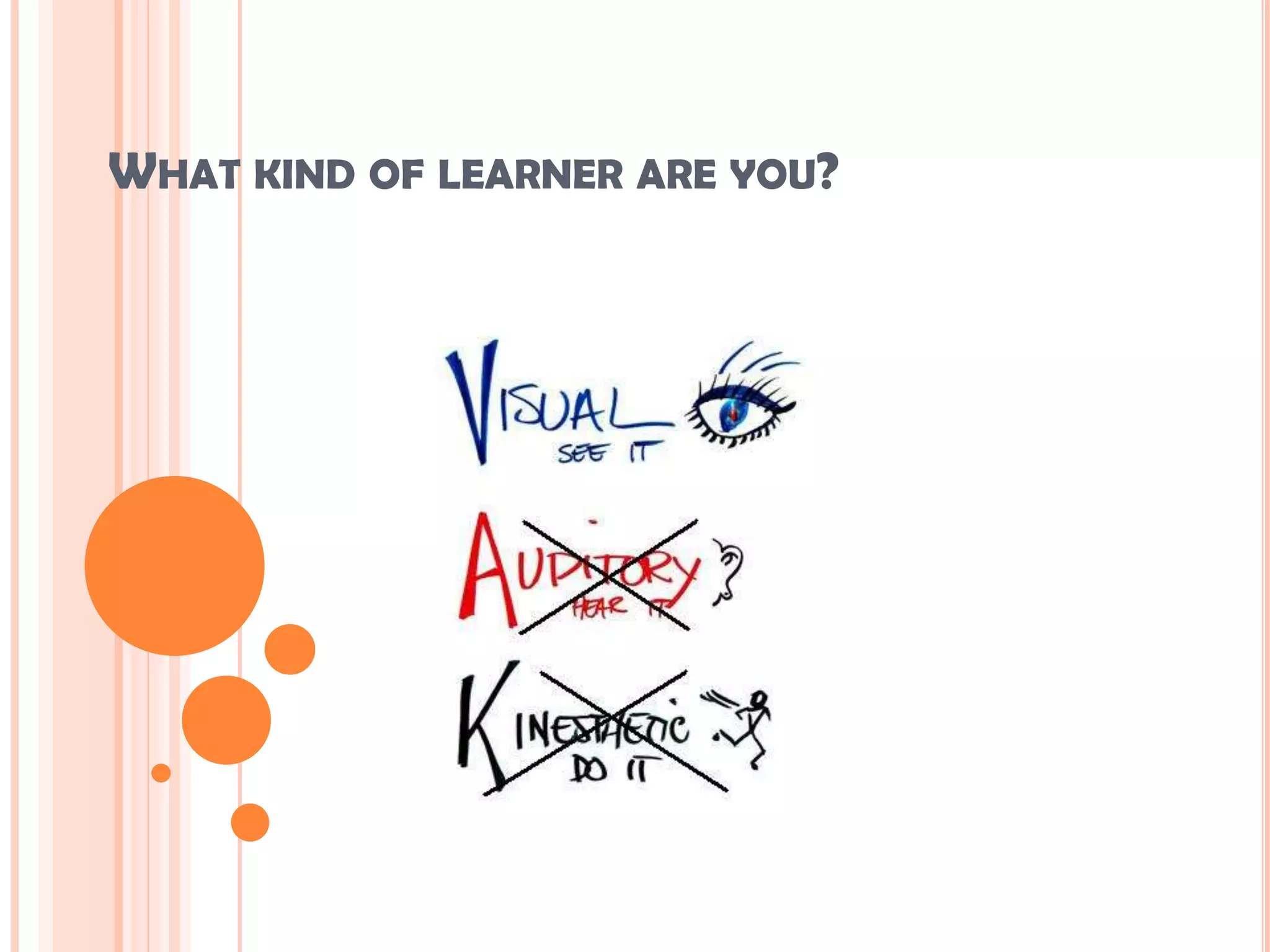

WHAT KIND OF LEARNER ARE YOU?
CHARACTERISTICS OF VISUAL LEARNERS
 Scans everything; wants to see things.
 Enjoys maps, pictures, diagrams, and color.

 Needs to see the teacher’s body, the language or
  the facial expression to understand.
 Visual learners have strong visualization skills.
  They can look up (often up to the left) an "see" the
  information invisibly written or drawn.
 Answer with short and incomplete sentences.
 Doodle in a class instruction and tend to be a daydream.

 Tends to prefer sitting at the front of the classroom to
  avoid visual obstructions.
 Is an reader and an observer.

 Finds something to watch if they are bored.
MATERIALS TO BE USED WITH VISUAL LEARNERS

   For visual learners, movies are very important because
    you can learn English watching videos and hear the
    language. You can also translate a movie, and while you
    see the movie in English you have the translation in your
    own language.
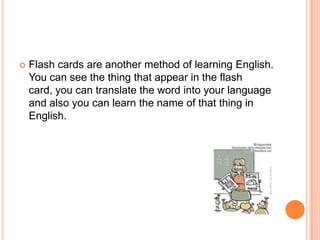
   Flash cards are another method of learning English.
    You can see the thing that appear in the flash
    card, you can translate the word into your language
    and also you can learn the name of that thing in
    English.
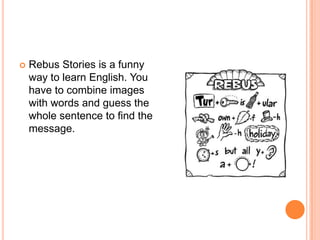
   Rebus Stories is a funny
    way to learn English. You
    have to combine images
    with words and guess the
    whole sentence to find the
    message.
TEACHING STRATEGIES FOR VISUAL LEARNERS

   The Visual Learner must look at what he has to learn. For
    him, the eyes are very important because he has to see
    the pictures or the teacher when talk to learn English. He
    has to use visual materials like graphs, charts or tables.
   To learn English you have to read more silently because
    you are concentrate and you can retaining the words.
    When you are reading orally you pay more attention at
    the words as they sound and not how are writing.
   The student have to learn also how to take notes.
    Whit the notes, the student when have an exam he
    can remember the information of he’s notes. Some
    people have photographic memory, and they can
    remember everything.
STUDENT TIPS FOR VISUAL
             LEARNERS

   The visual learners use their eyes to learn new
    information. They had easy way to make mind pictures
    because their ability to see and imagine is special. When
    they take notes, they underline the main words and the
    idea.
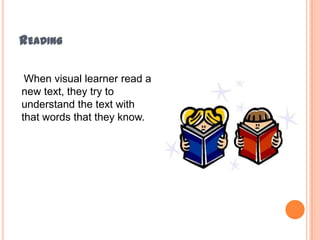
READING

 When visual learner read a
new text, they try to
understand the text with
that words that they know.
WRITING
 They outline ideas before writing for the main idea.
  When they had to write, they use computers
 They also make a draft and recopy, when this is good.
  And they are in
  a test underline the main
  idea in the question.
SPELLING

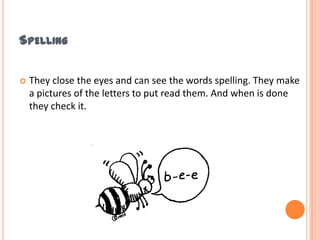
   They close the eyes and can see the words spelling. They make
    a pictures of the letters to put read them. And when is done
    they check it.
MATH
   They visualize the problem, but they have to make
    pictures of that on a scratch paper. When it’s finish and
    understand what happen, they write the problem.
CREDITS

 Oana Petcu
 Ioana Rosca

How to learn english

  • 1.
    WHAT KIND OFLEARNER ARE YOU?
  • 2.
    CHARACTERISTICS OF VISUALLEARNERS  Scans everything; wants to see things.  Enjoys maps, pictures, diagrams, and color.  Needs to see the teacher’s body, the language or the facial expression to understand.  Visual learners have strong visualization skills. They can look up (often up to the left) an "see" the information invisibly written or drawn.
  • 3.
     Answer withshort and incomplete sentences.  Doodle in a class instruction and tend to be a daydream.  Tends to prefer sitting at the front of the classroom to avoid visual obstructions.  Is an reader and an observer.  Finds something to watch if they are bored.
  • 4.
    MATERIALS TO BEUSED WITH VISUAL LEARNERS  For visual learners, movies are very important because you can learn English watching videos and hear the language. You can also translate a movie, and while you see the movie in English you have the translation in your own language.
  • 5.
    Flash cards are another method of learning English. You can see the thing that appear in the flash card, you can translate the word into your language and also you can learn the name of that thing in English.
  • 6.
    Rebus Stories is a funny way to learn English. You have to combine images with words and guess the whole sentence to find the message.
  • 7.
    TEACHING STRATEGIES FORVISUAL LEARNERS  The Visual Learner must look at what he has to learn. For him, the eyes are very important because he has to see the pictures or the teacher when talk to learn English. He has to use visual materials like graphs, charts or tables.
  • 8.
    To learn English you have to read more silently because you are concentrate and you can retaining the words. When you are reading orally you pay more attention at the words as they sound and not how are writing.
  • 9.
    The student have to learn also how to take notes. Whit the notes, the student when have an exam he can remember the information of he’s notes. Some people have photographic memory, and they can remember everything.
  • 10.
    STUDENT TIPS FORVISUAL LEARNERS  The visual learners use their eyes to learn new information. They had easy way to make mind pictures because their ability to see and imagine is special. When they take notes, they underline the main words and the idea.
  • 11.
    READING When visuallearner read a new text, they try to understand the text with that words that they know.
  • 12.
    WRITING  They outlineideas before writing for the main idea. When they had to write, they use computers  They also make a draft and recopy, when this is good. And they are in a test underline the main idea in the question.
  • 13.
    SPELLING  They close the eyes and can see the words spelling. They make a pictures of the letters to put read them. And when is done they check it.
  • 14.
    MATH  They visualize the problem, but they have to make pictures of that on a scratch paper. When it’s finish and understand what happen, they write the problem.
  • 15.