MSS SP-55 & ASME BPVC SEC. VIII DIV 1 UF-45 & UF-46
VISUAL INSPECTION
28/12/2023
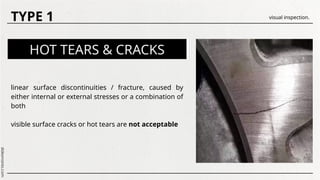
HOT TEARS & CRACKS
linear surface discontinuities / fracture, caused by
either internal or external stresses or a combination of
both
visible surface cracks or hot tears are not acceptable
TYPE 1 visual inspection.
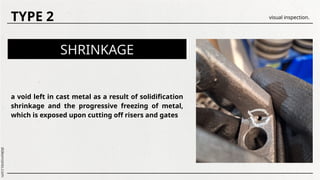
SHRINKAGE
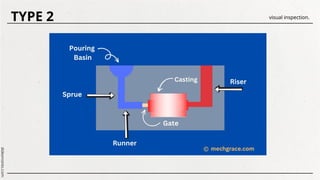
a void left in cast metal as a result of solidification
shrinkage and the progressive freezing of metal,
which is exposed upon cutting off risers and gates
TYPE 2 visual inspection.
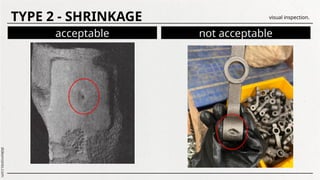
acceptable
TYPE 2 - SHRINKAGE visual inspection.
not acceptable
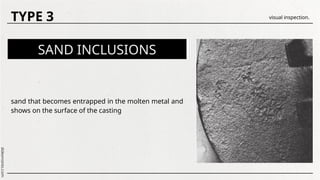
SAND INCLUSIONS
sand that becomes entrapped in the molten metal and
shows on the surface of the casting
TYPE 3 visual inspection.
acceptable
TYPE 3 - SAND INCLUSIONS visual inspection.
not acceptable
GAS POROSITY
voids in cast metal caused by entrapment of gas
during solidification
TYPE 4 visual inspection.
acceptable
TYPE 4 - GAS POROSITY visual inspection.
not acceptable
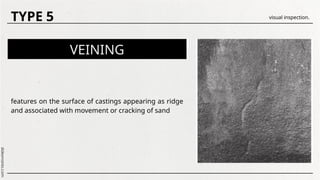
VEINING
features on the surface of castings appearing as ridge
and associated with movement or cracking of sand
TYPE 5 visual inspection.
acceptable
TYPE 5 - VEINING visual inspection.
not acceptable
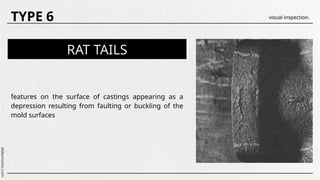
RAT TAILS
features on the surface of castings appearing as a
depression resulting from faulting or buckling of the
mold surfaces
TYPE 6 visual inspection.
acceptable
TYPE 6 - RAT TAILS visual inspection.
not acceptable
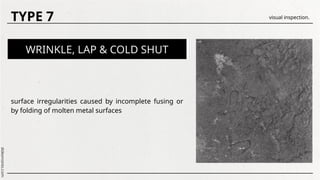
WRINKLE, LAP & COLD SHUT
surface irregularities caused by incomplete fusing or
by folding of molten metal surfaces
TYPE 7 visual inspection.
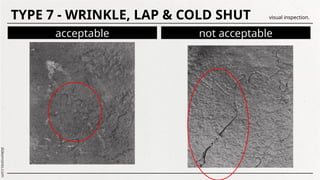
acceptable
TYPE 7 - WRINKLE, LAP & COLD SHUT visual inspection.
not acceptable
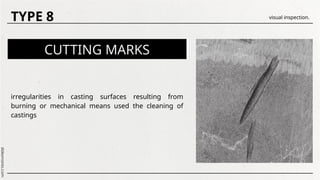
CUTTING MARKS
irregularities in casting surfaces resulting from
burning or mechanical means used the cleaning of
castings
TYPE 8 visual inspection.
acceptable
TYPE 8 - CUTTING MARKS visual inspection.
not acceptable
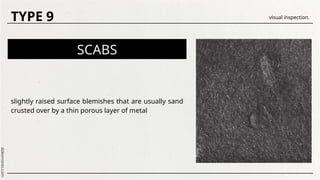
SCABS
slightly raised surface blemishes that are usually sand
crusted over by a thin porous layer of metal
TYPE 9 visual inspection.
acceptable
TYPE 9 - SCABS visual inspection.
not acceptable
CHAPLETS
evidence of chaplets on surface of casting disclosing
incomplete fusion
TYPE 10 visual inspection.
acceptable
TYPE 10 - CHAPLETS visual inspection.
not acceptable
TYPE 10 - CHAPLETS visual inspection.
WELD REPAIR AREAS
evidence of improper surface preparation after
welding
TYPE 11 visual inspection.
acceptable
TYPE 11 - WELD REPAIR AREAS visual inspection.
not acceptable
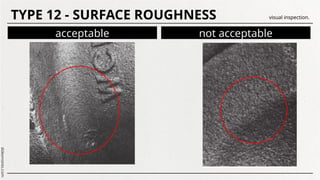
SURFACE ROUGHNESS
surface texture due to design, pattern, gating, and
sand condition
TYPE 12 visual inspection.
SURFACE ROUGHNESS
TYPE 12 visual inspection.
acceptable
TYPE 12 - SURFACE ROUGHNESS visual inspection.
not acceptable
THESE RULES SHALL BE USED SPECIFICALLY TO THE INSPECTION AND TESTING OF FORGED
VESSELS AND THEIR COMPONENT PARTS
ASME BPVC SEC. VIII
DIV 1 UF-45 & UF-46
VISUAL INSPECTION FOR FORGING
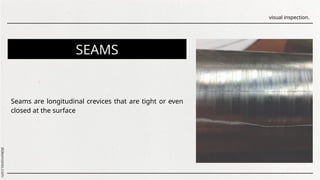
SEAMS
Seams are longitudinal crevices that are tight or even
closed at the surface
visual inspection.
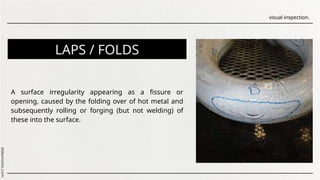
LAPS / FOLDS
A surface irregularity appearing as a fissure or
opening, caused by the folding over of hot metal and
subsequently rolling or forging (but not welding) of
these into the surface.
visual inspection.
UNDERCUT
In welding, undercutting is when the weld reduces the
cross-sectional thickness of the base metal
visual inspection.
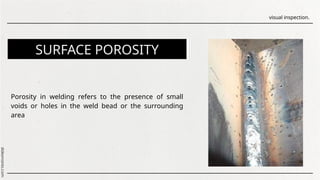
SURFACE POROSITY
Porosity in welding refers to the presence of small
voids or holes in the weld bead or the surrounding
area
visual inspection.

VISUAL INSPECTION CASTING AND FORGING.pptx

  • 1.
    MSS SP-55 &ASME BPVC SEC. VIII DIV 1 UF-45 & UF-46 VISUAL INSPECTION 28/12/2023
  • 2.
    HOT TEARS &CRACKS linear surface discontinuities / fracture, caused by either internal or external stresses or a combination of both visible surface cracks or hot tears are not acceptable TYPE 1 visual inspection.
  • 3.
    SHRINKAGE a void leftin cast metal as a result of solidification shrinkage and the progressive freezing of metal, which is exposed upon cutting off risers and gates TYPE 2 visual inspection.
  • 4.
    TYPE 2 visualinspection.
  • 5.
    acceptable TYPE 2 -SHRINKAGE visual inspection. not acceptable
  • 6.
    SAND INCLUSIONS sand thatbecomes entrapped in the molten metal and shows on the surface of the casting TYPE 3 visual inspection.
  • 7.
    acceptable TYPE 3 -SAND INCLUSIONS visual inspection. not acceptable
  • 8.
    GAS POROSITY voids incast metal caused by entrapment of gas during solidification TYPE 4 visual inspection.
  • 9.
    acceptable TYPE 4 -GAS POROSITY visual inspection. not acceptable
  • 10.
    VEINING features on thesurface of castings appearing as ridge and associated with movement or cracking of sand TYPE 5 visual inspection.
  • 11.
    acceptable TYPE 5 -VEINING visual inspection. not acceptable
  • 12.
    RAT TAILS features onthe surface of castings appearing as a depression resulting from faulting or buckling of the mold surfaces TYPE 6 visual inspection.
  • 13.
    acceptable TYPE 6 -RAT TAILS visual inspection. not acceptable
  • 14.
    WRINKLE, LAP &COLD SHUT surface irregularities caused by incomplete fusing or by folding of molten metal surfaces TYPE 7 visual inspection.
  • 15.
    acceptable TYPE 7 -WRINKLE, LAP & COLD SHUT visual inspection. not acceptable
  • 16.
    CUTTING MARKS irregularities incasting surfaces resulting from burning or mechanical means used the cleaning of castings TYPE 8 visual inspection.
  • 17.
    acceptable TYPE 8 -CUTTING MARKS visual inspection. not acceptable
  • 18.
    SCABS slightly raised surfaceblemishes that are usually sand crusted over by a thin porous layer of metal TYPE 9 visual inspection.
  • 19.
    acceptable TYPE 9 -SCABS visual inspection. not acceptable
  • 20.
    CHAPLETS evidence of chapletson surface of casting disclosing incomplete fusion TYPE 10 visual inspection.
  • 21.
    acceptable TYPE 10 -CHAPLETS visual inspection. not acceptable
  • 22.
    TYPE 10 -CHAPLETS visual inspection.
  • 23.
    WELD REPAIR AREAS evidenceof improper surface preparation after welding TYPE 11 visual inspection.
  • 24.
    acceptable TYPE 11 -WELD REPAIR AREAS visual inspection. not acceptable
  • 25.
    SURFACE ROUGHNESS surface texturedue to design, pattern, gating, and sand condition TYPE 12 visual inspection.
  • 26.
    SURFACE ROUGHNESS TYPE 12visual inspection.
  • 27.
    acceptable TYPE 12 -SURFACE ROUGHNESS visual inspection. not acceptable
  • 28.
    THESE RULES SHALLBE USED SPECIFICALLY TO THE INSPECTION AND TESTING OF FORGED VESSELS AND THEIR COMPONENT PARTS ASME BPVC SEC. VIII DIV 1 UF-45 & UF-46 VISUAL INSPECTION FOR FORGING
  • 29.
    SEAMS Seams are longitudinalcrevices that are tight or even closed at the surface visual inspection.
  • 30.
    LAPS / FOLDS Asurface irregularity appearing as a fissure or opening, caused by the folding over of hot metal and subsequently rolling or forging (but not welding) of these into the surface. visual inspection.
  • 31.
    UNDERCUT In welding, undercuttingis when the weld reduces the cross-sectional thickness of the base metal visual inspection.
  • 32.
    SURFACE POROSITY Porosity inwelding refers to the presence of small voids or holes in the weld bead or the surrounding area visual inspection.