Visual DictionaryJeff BrockMaterials, Methods, and Equipment ISpring 2010
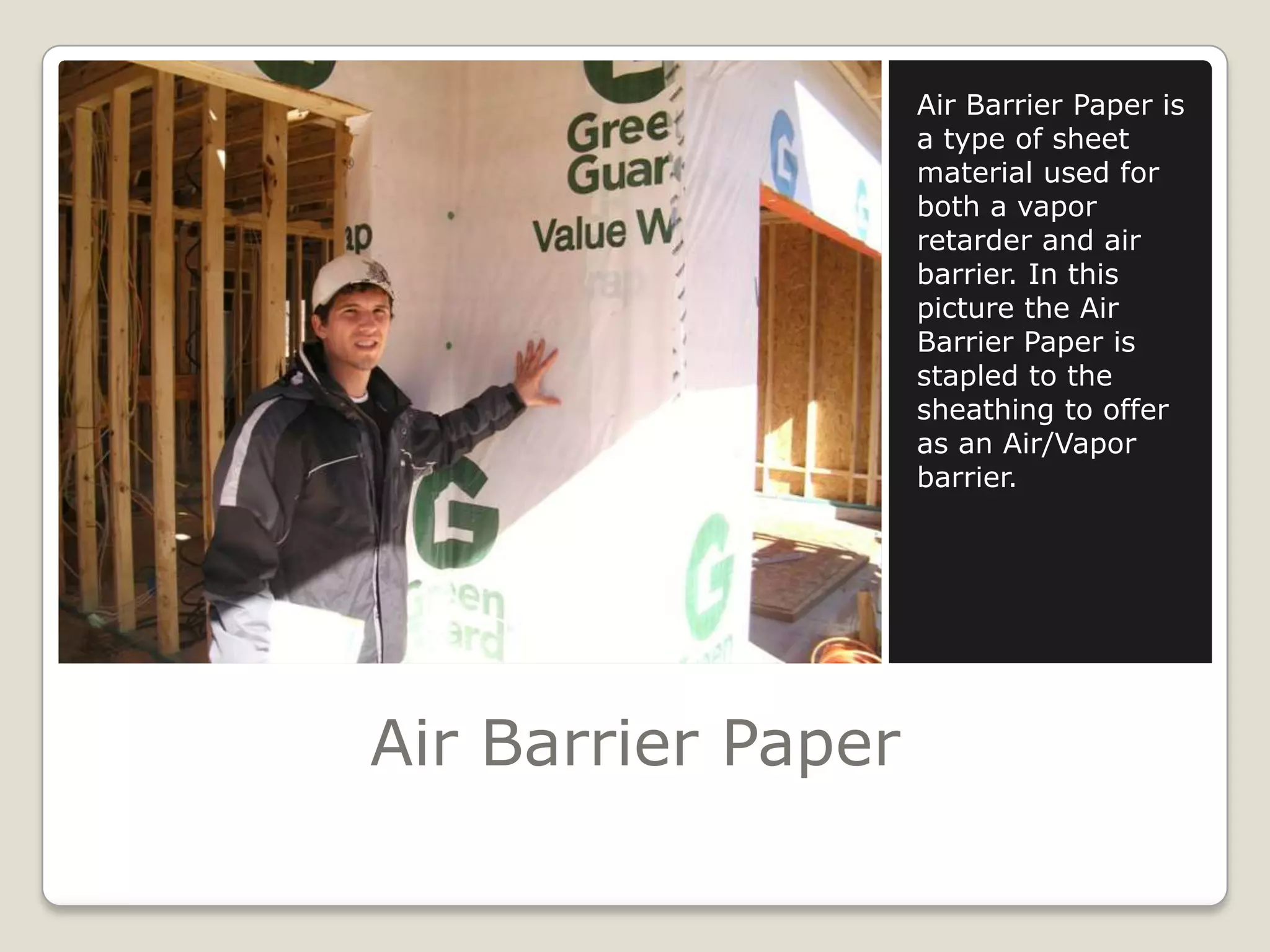
Air Barrier PaperAir Barrier Paper is a type of sheet material used for both a vapor retarder and air barrier. In this picture the Air Barrier Paper is stapled to the sheathing to offer as an Air/Vapor barrier.
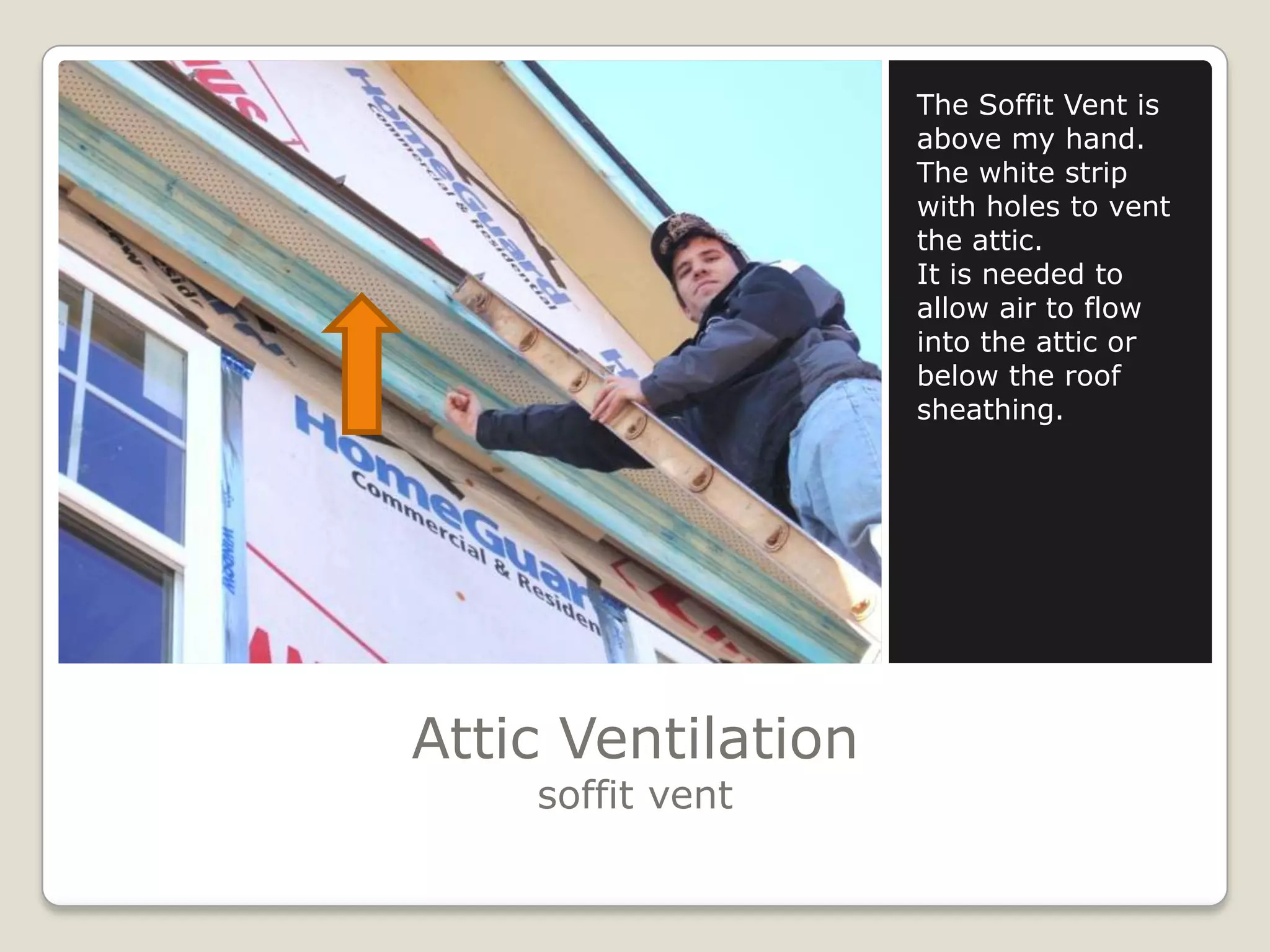
Attic Ventilationsoffit ventThe Soffit Vent is above my hand. The white strip with holes to vent the attic.It is needed to allow air to flow into the attic or below the roof sheathing.
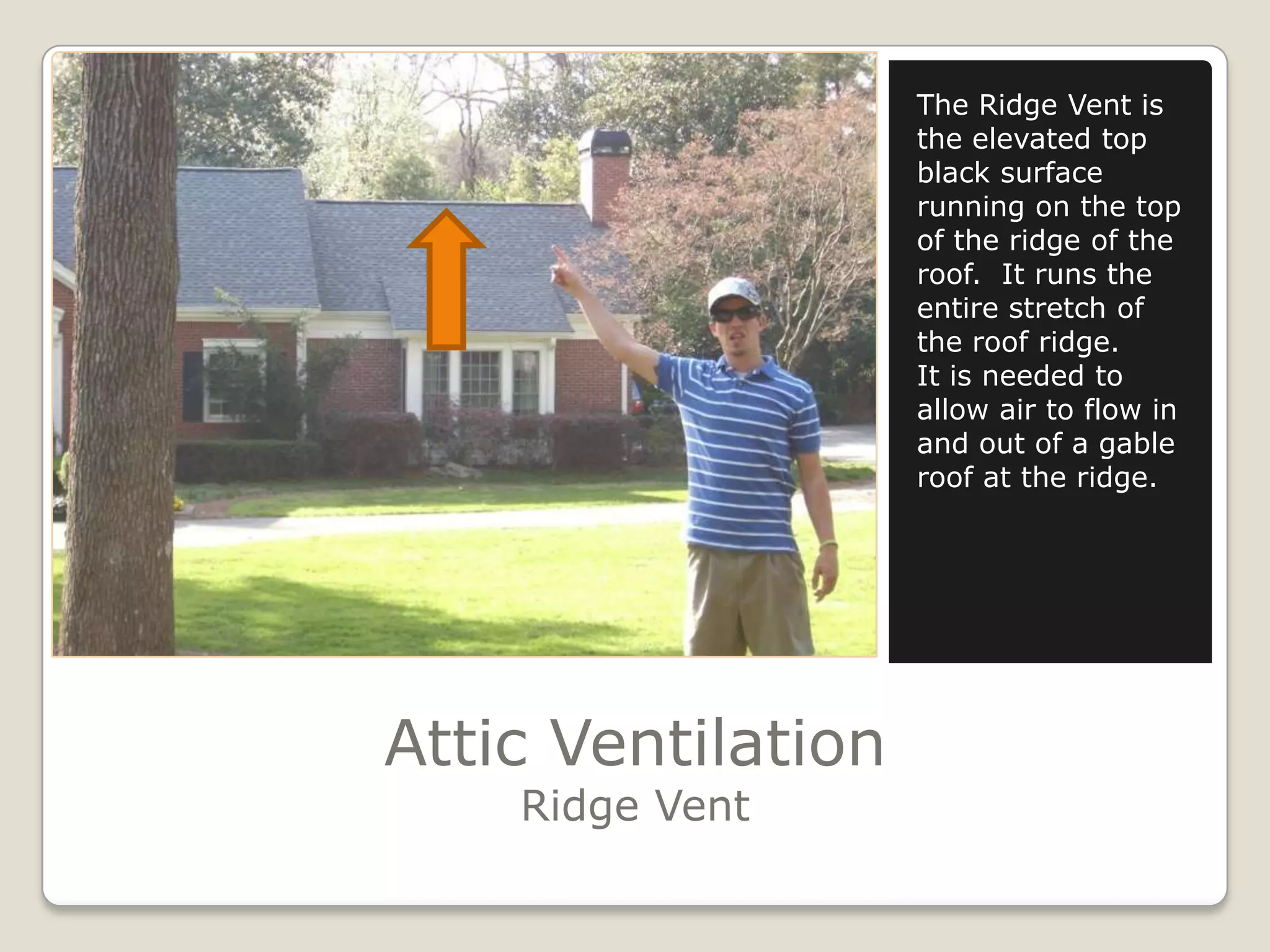
Attic VentilationRidge VentThe Ridge Vent is the elevated top black surface running on the top of the ridge of the roof.  It runs the entire stretch of the roof ridge.It is needed to allow air to flow in and out of a gable roof at the ridge.
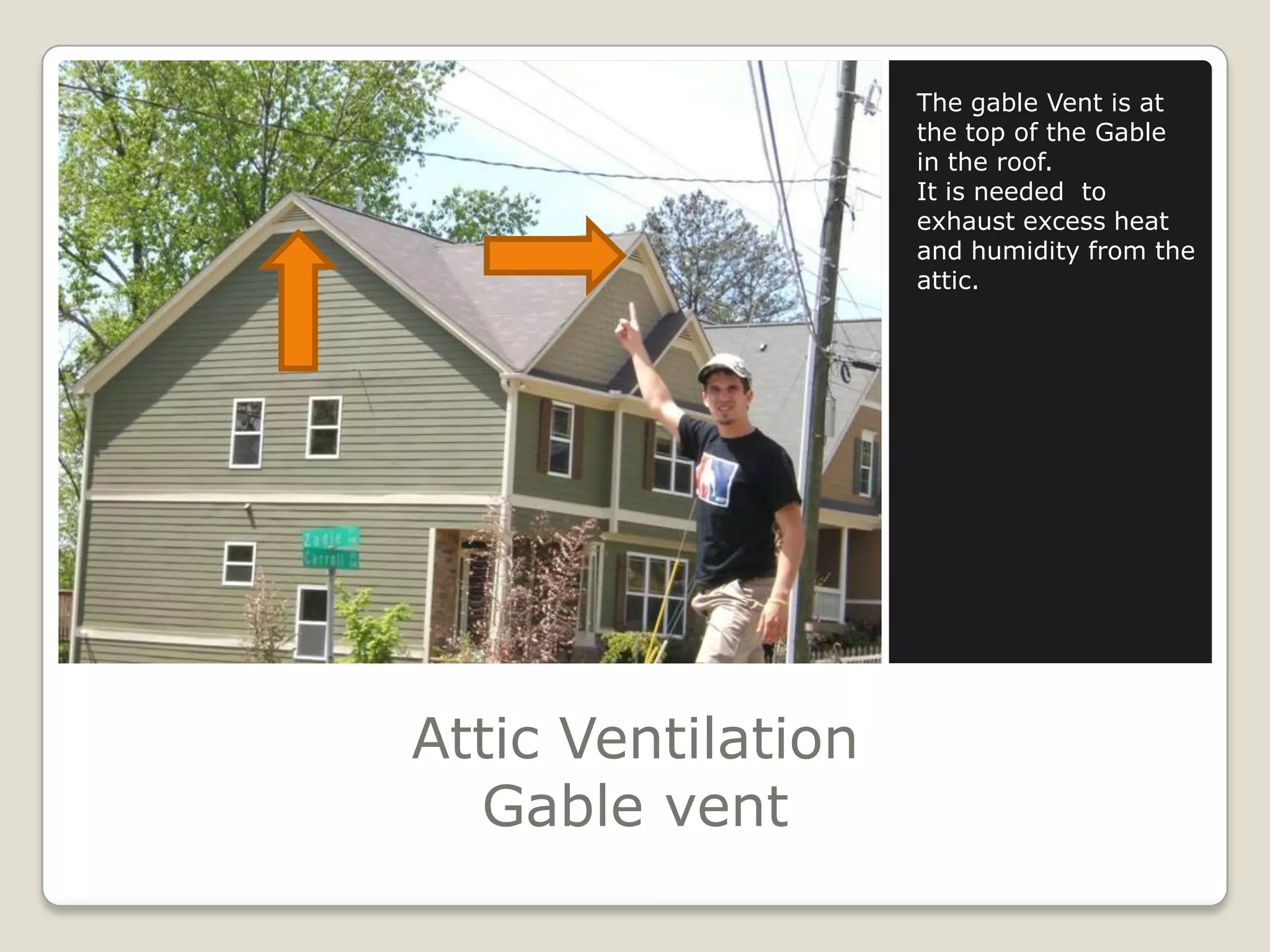
Attic VentilationGable ventThe gable Vent is at the top of the Gable in the roof.It is needed  to exhaust excess heat and humidity from the attic.
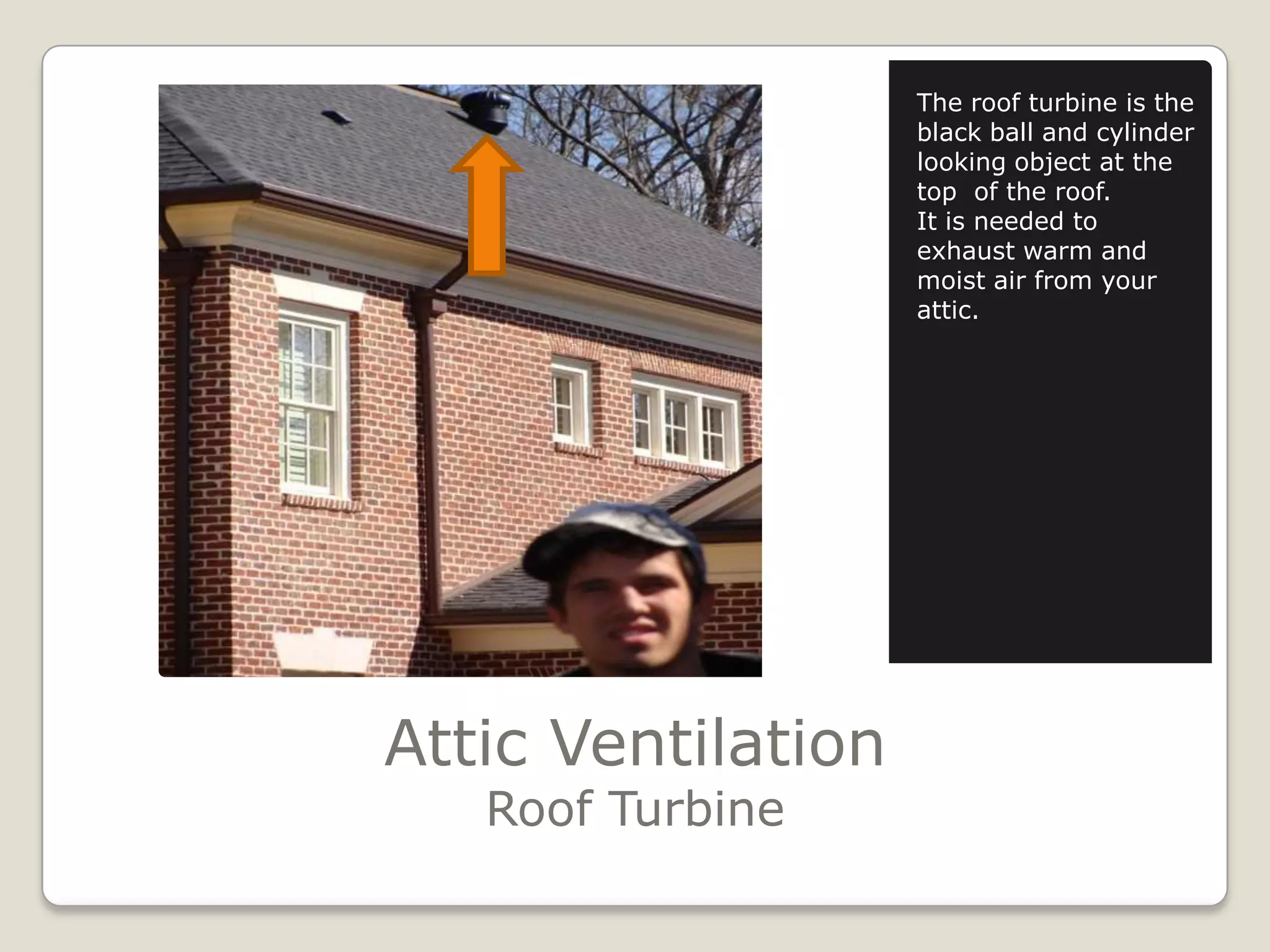
Attic VentilationRoof TurbineThe roof turbine is the black ball and cylinder looking object at the top  of the roof. It is needed to exhaust warm and moist air from your attic.
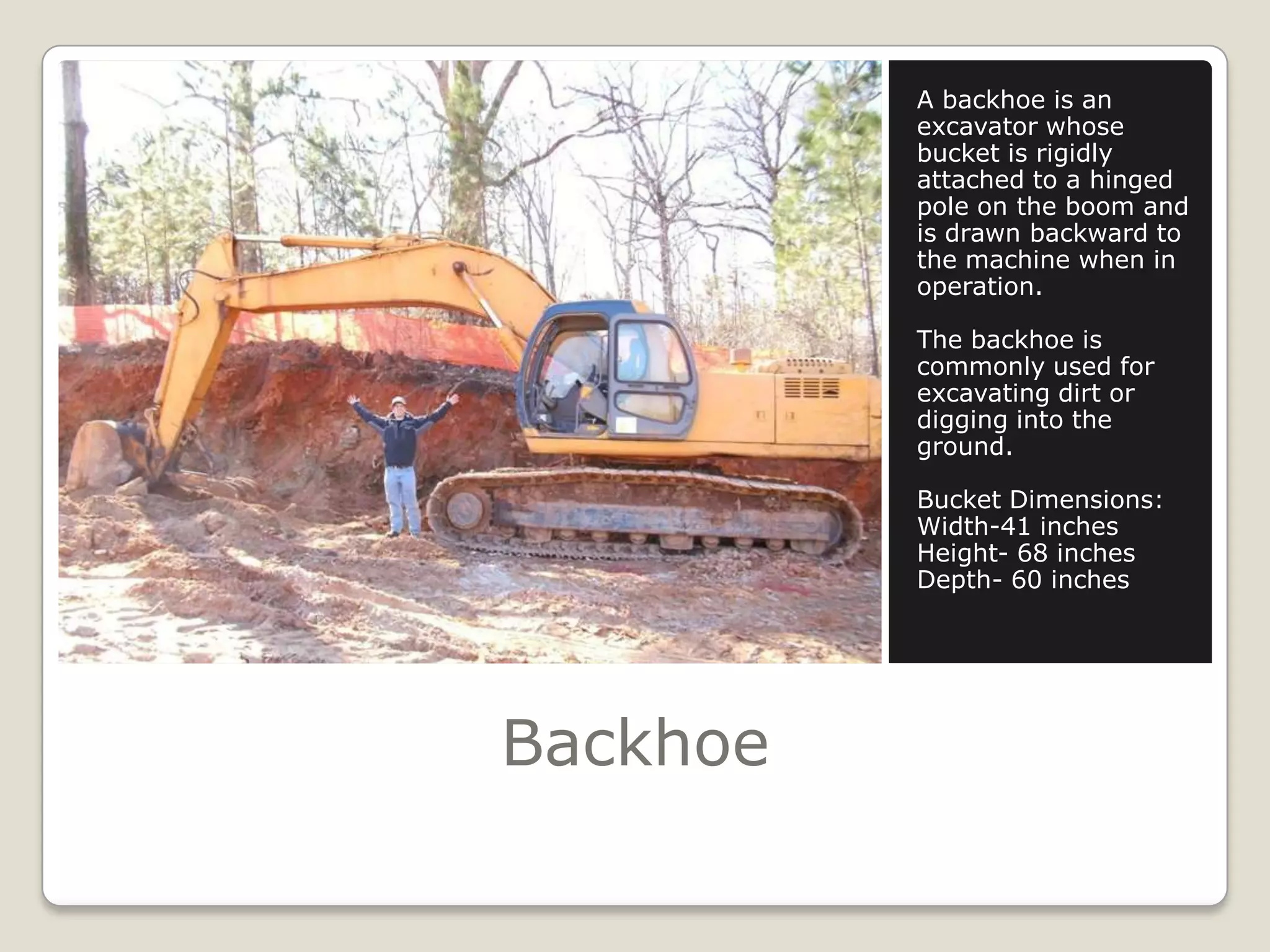
BackhoeA backhoe is an excavator whose bucket is rigidly attached to a hinged pole on the boom and is drawn backward to the machine when in operation.The backhoe is commonly used for excavating dirt or digging into the ground.Bucket Dimensions:Width-41 inchesHeight- 68 inchesDepth- 60 inches
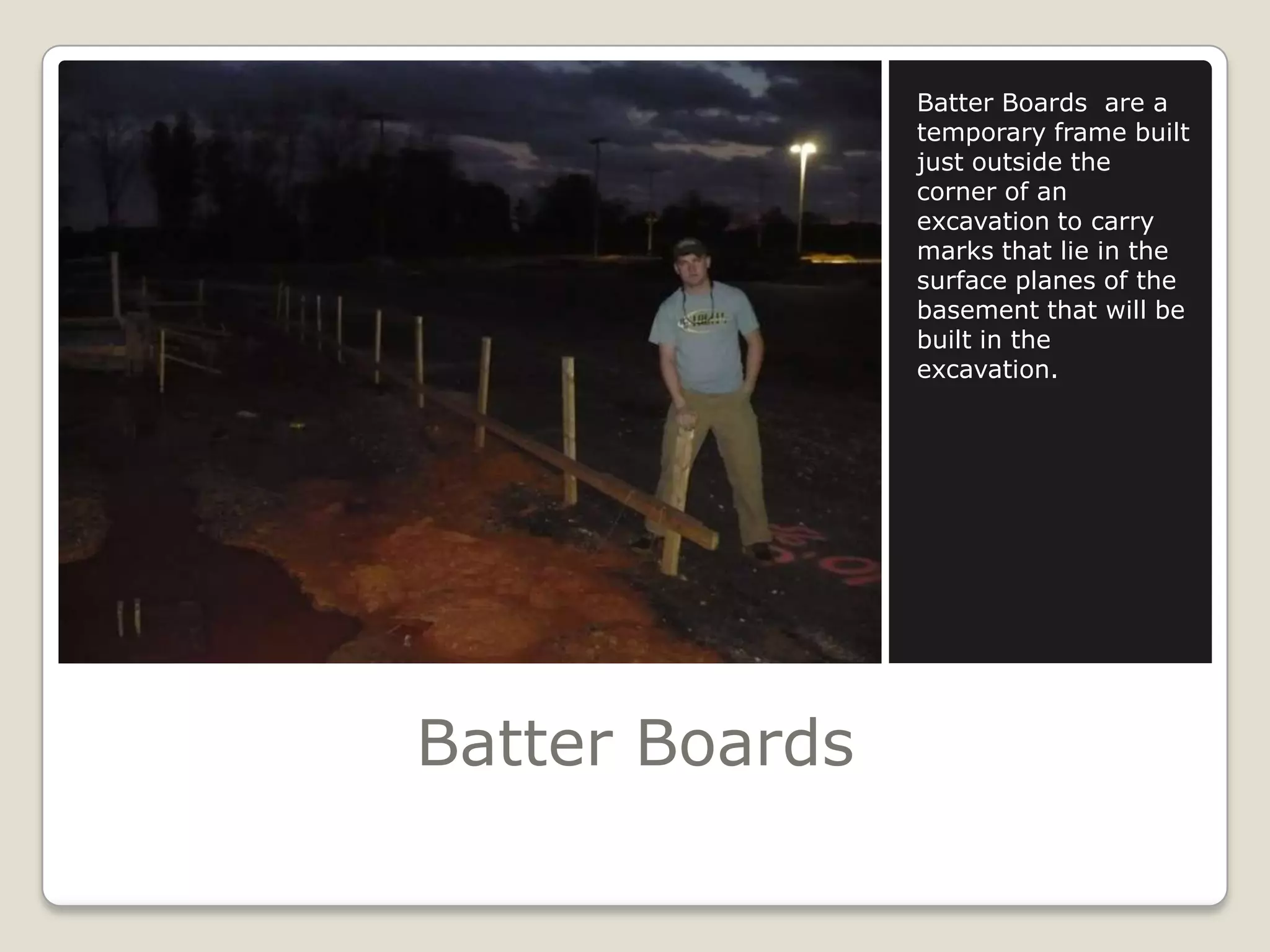
Batter BoardsBatter Boards  are a temporary frame built just outside the corner of an excavation to carry marks that lie in the surface planes of the basement that will be built in the excavation.
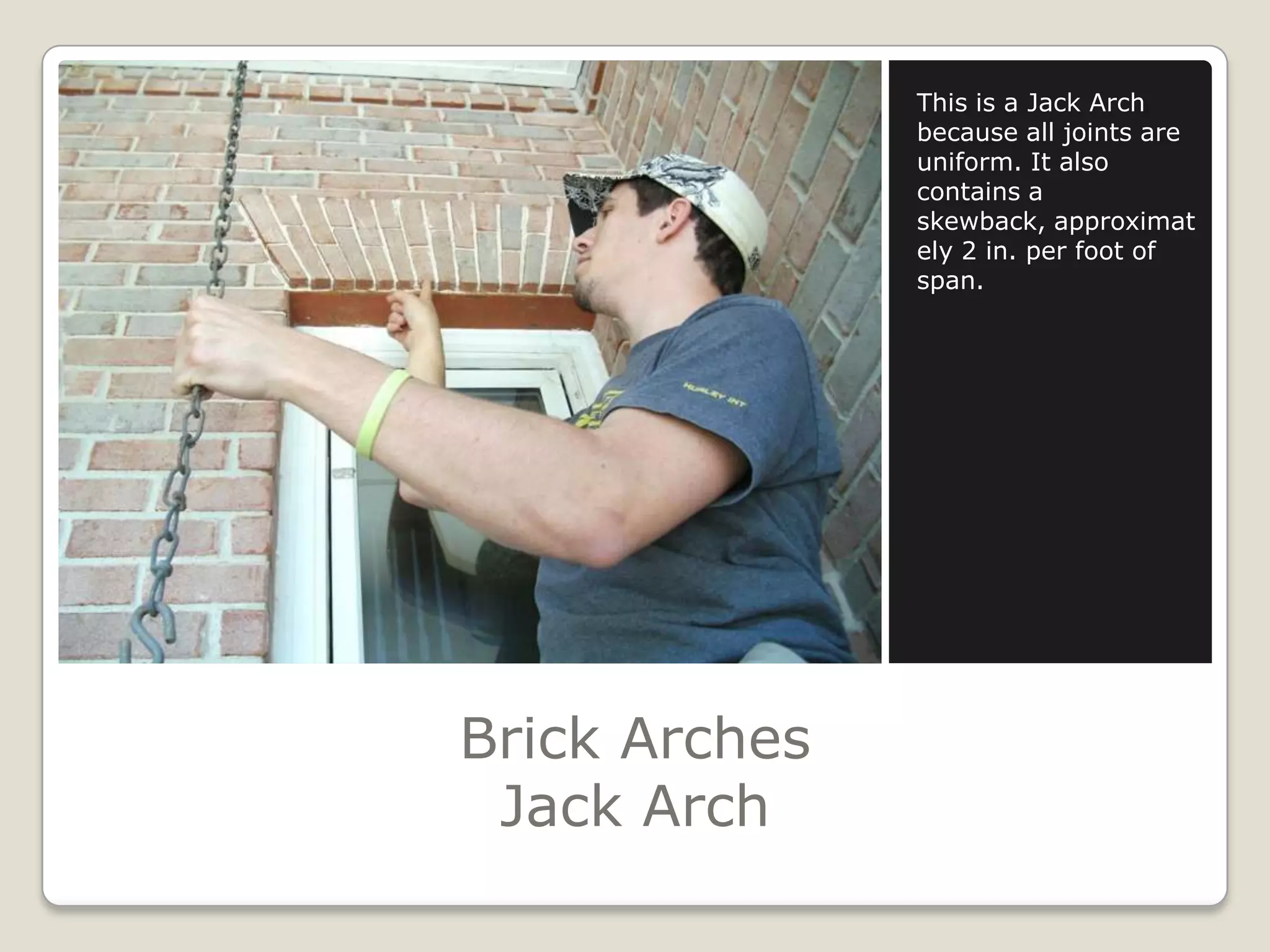
Brick ArchesJack ArchThis is a Jack Arch because all joints are uniform. It also contains a skewback, approximately 2 in. per foot of span.
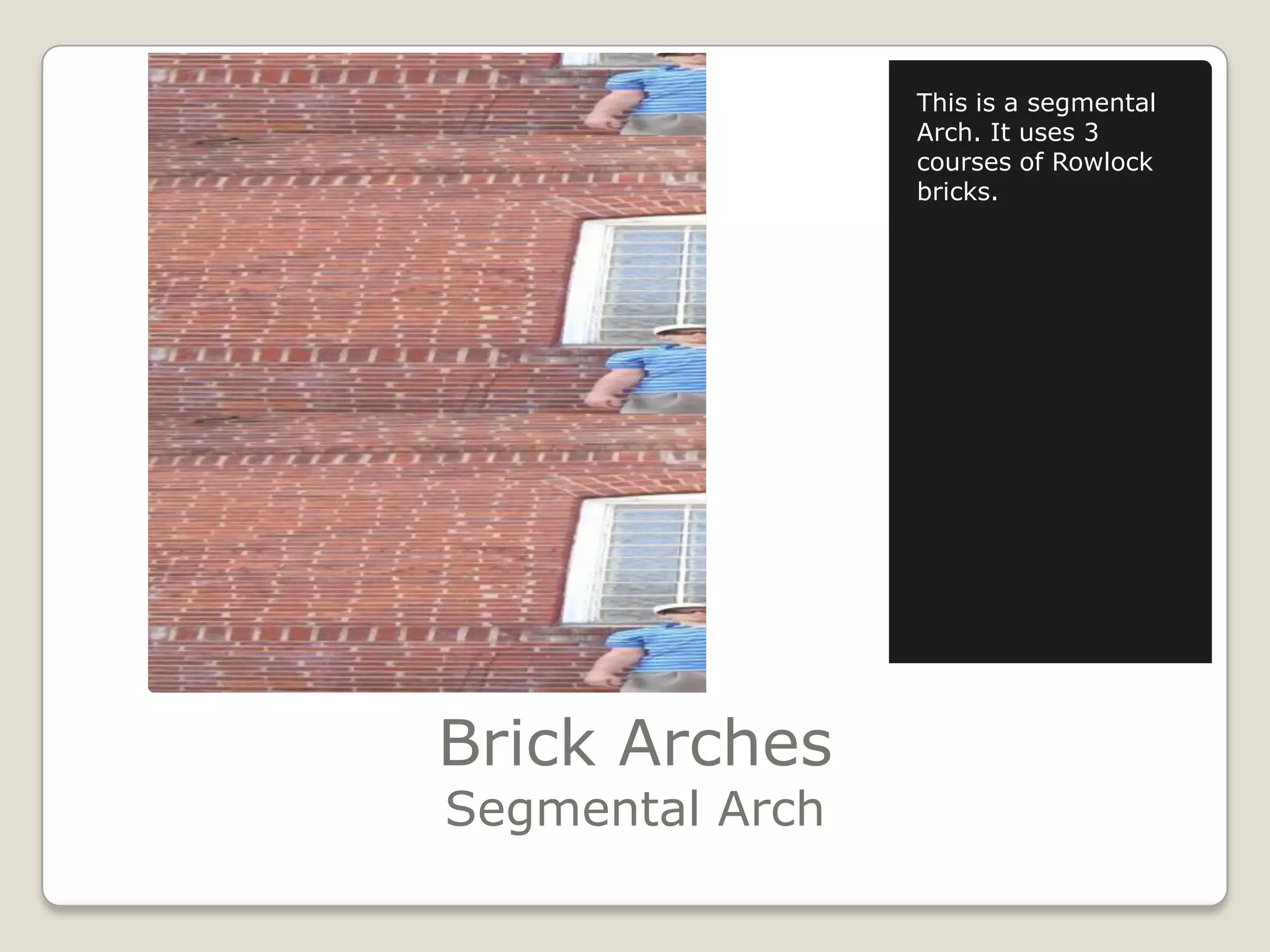
Brick ArchesSegmental ArchThis is a segmental Arch. It uses 3 courses of Rowlock bricks.
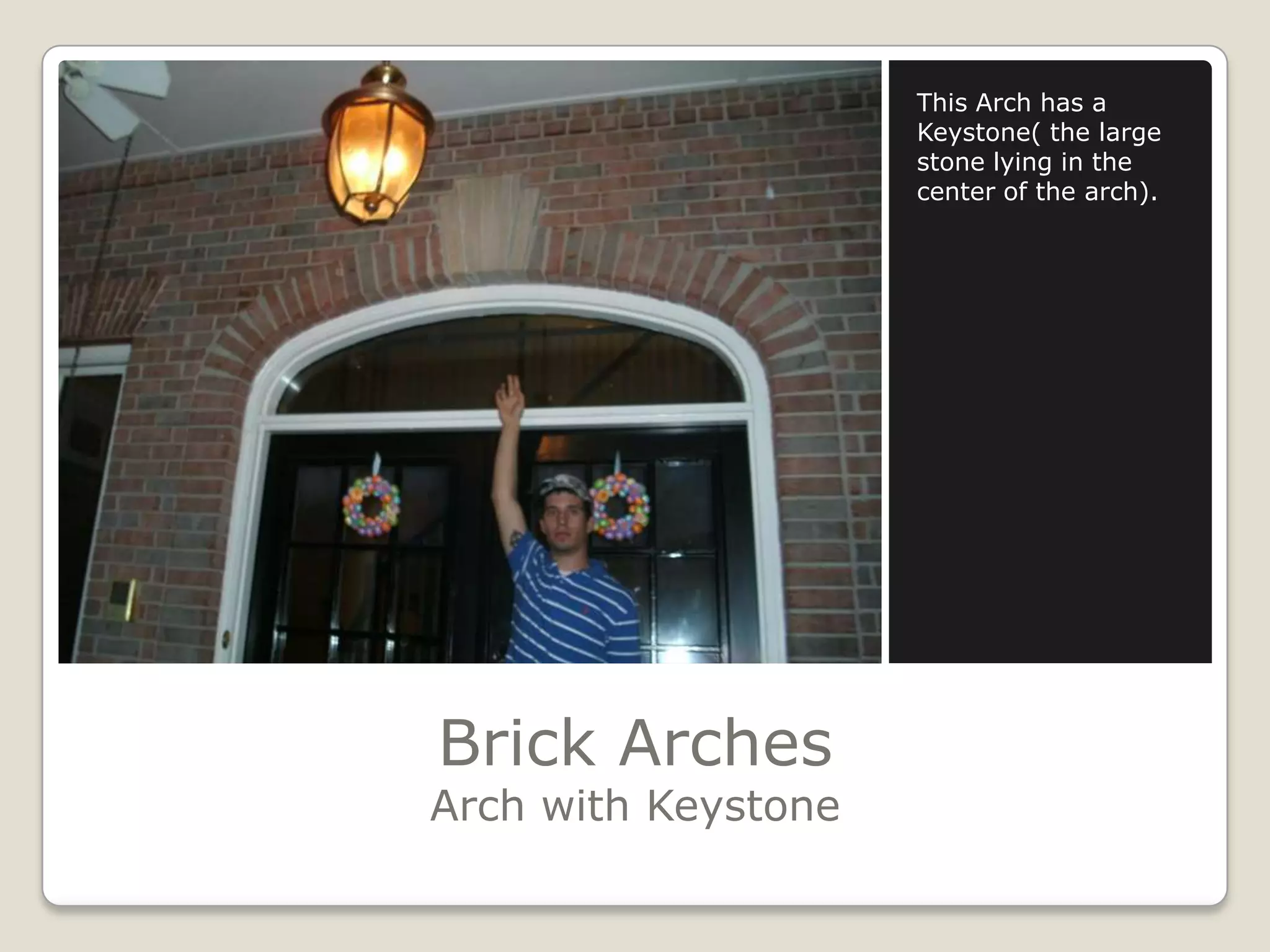
Brick ArchesArch with KeystoneThis Arch has a Keystone( the large stone lying in the center of the arch).
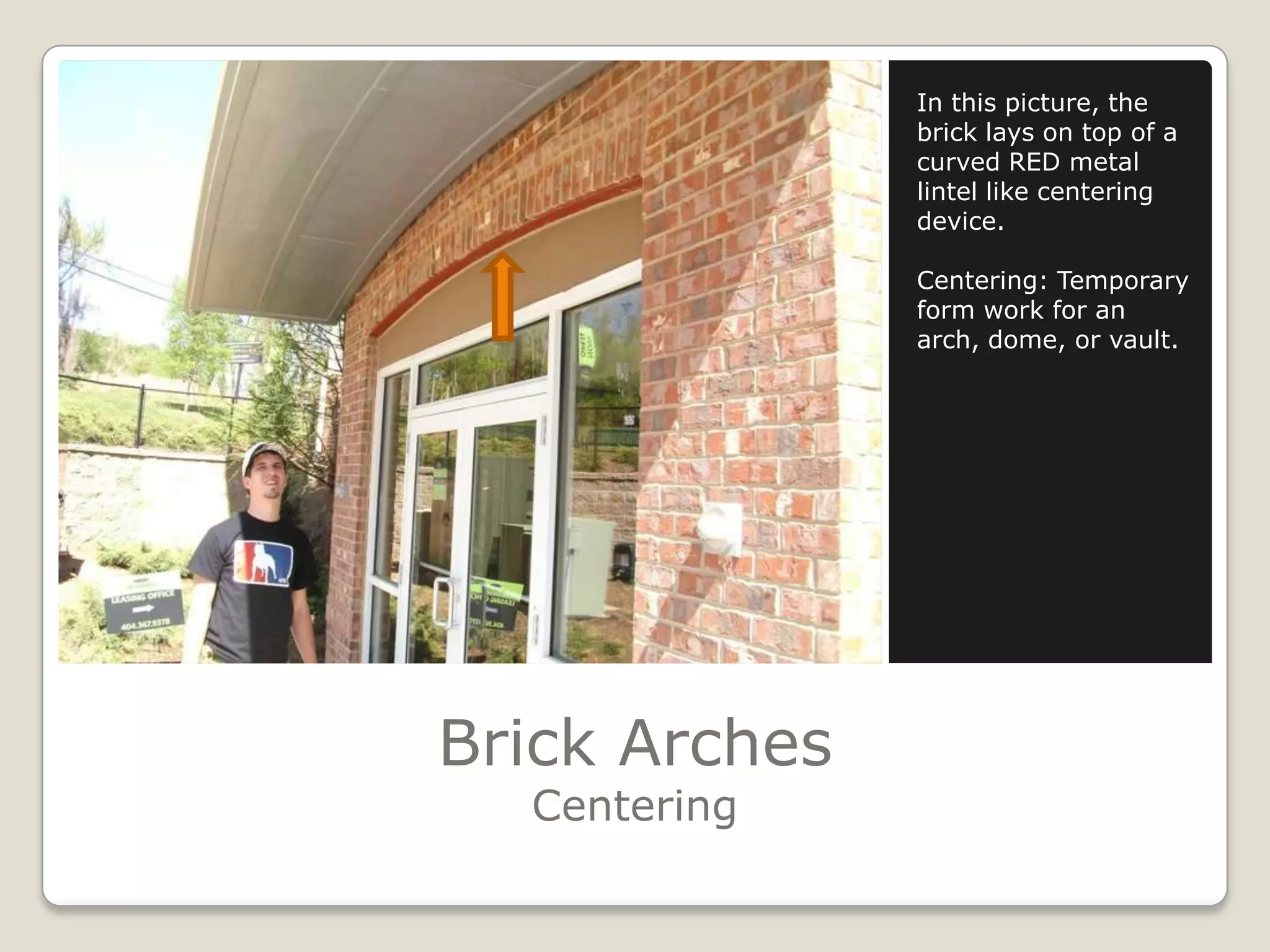
Brick ArchesCenteringIn this picture, the brick lays on top of a curved RED metal lintel like centering device.Centering: Temporary form work for an arch, dome, or vault.
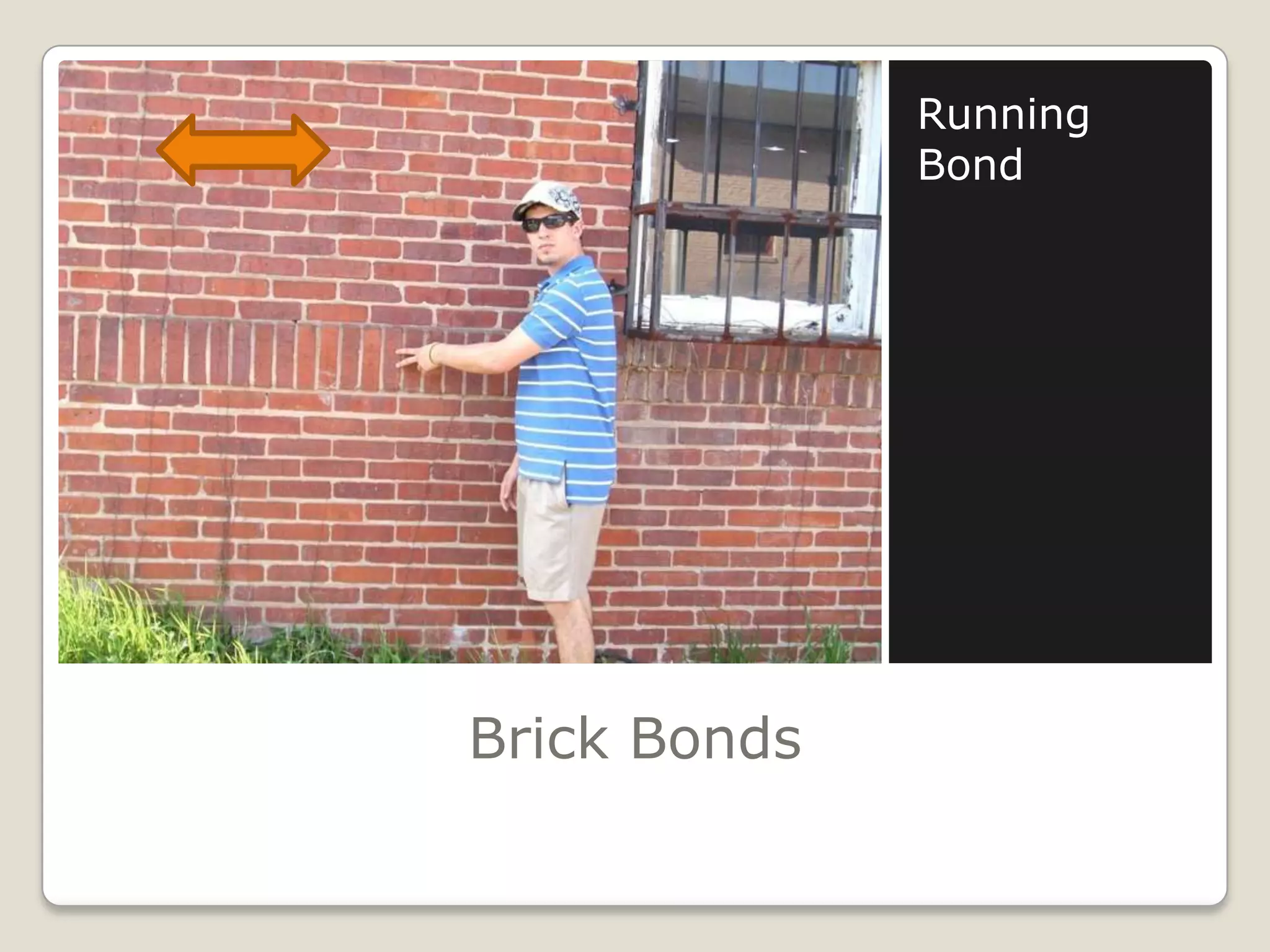
Brick BondsRunning Bond
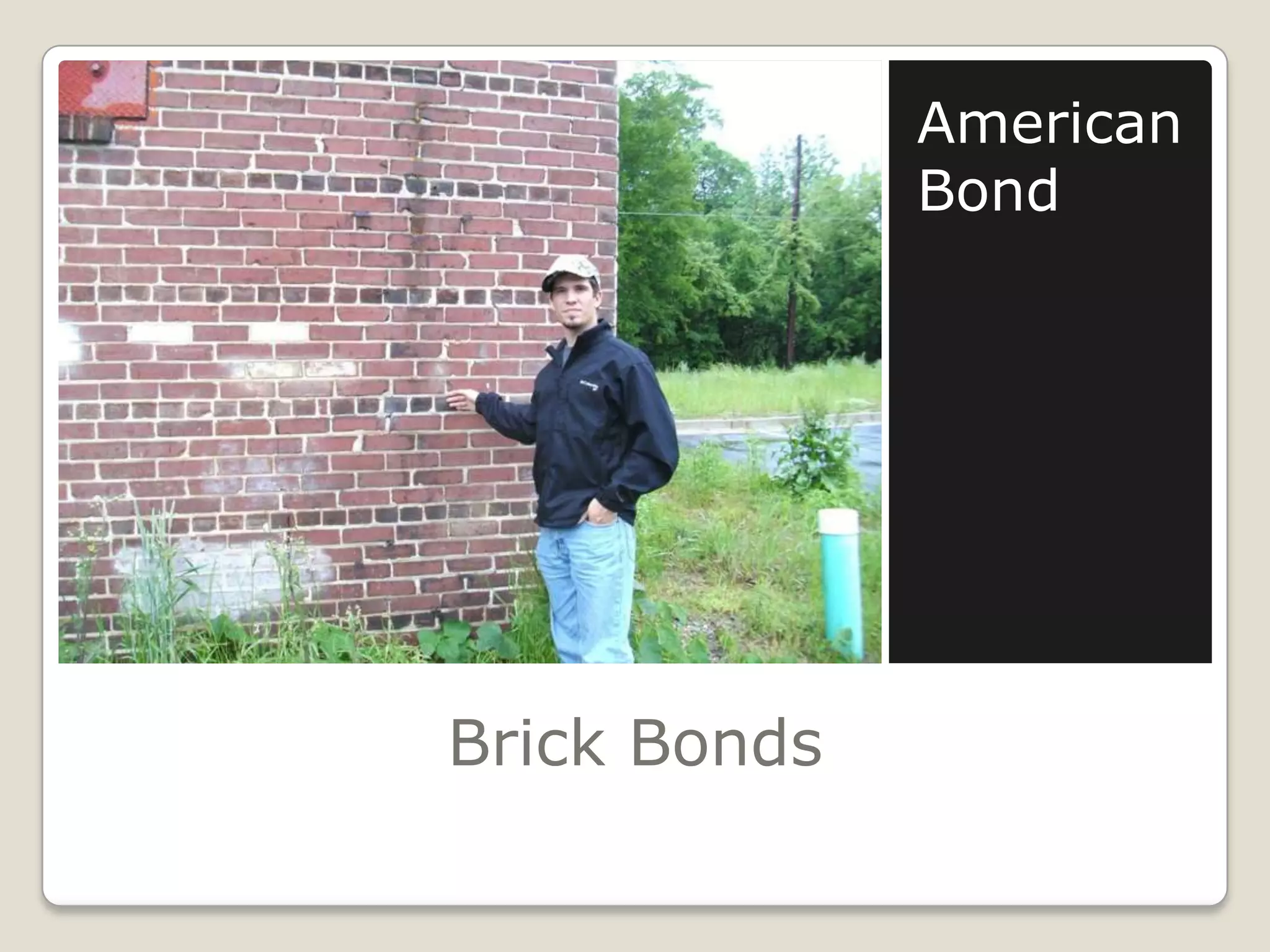
Brick BondsAmericanBond
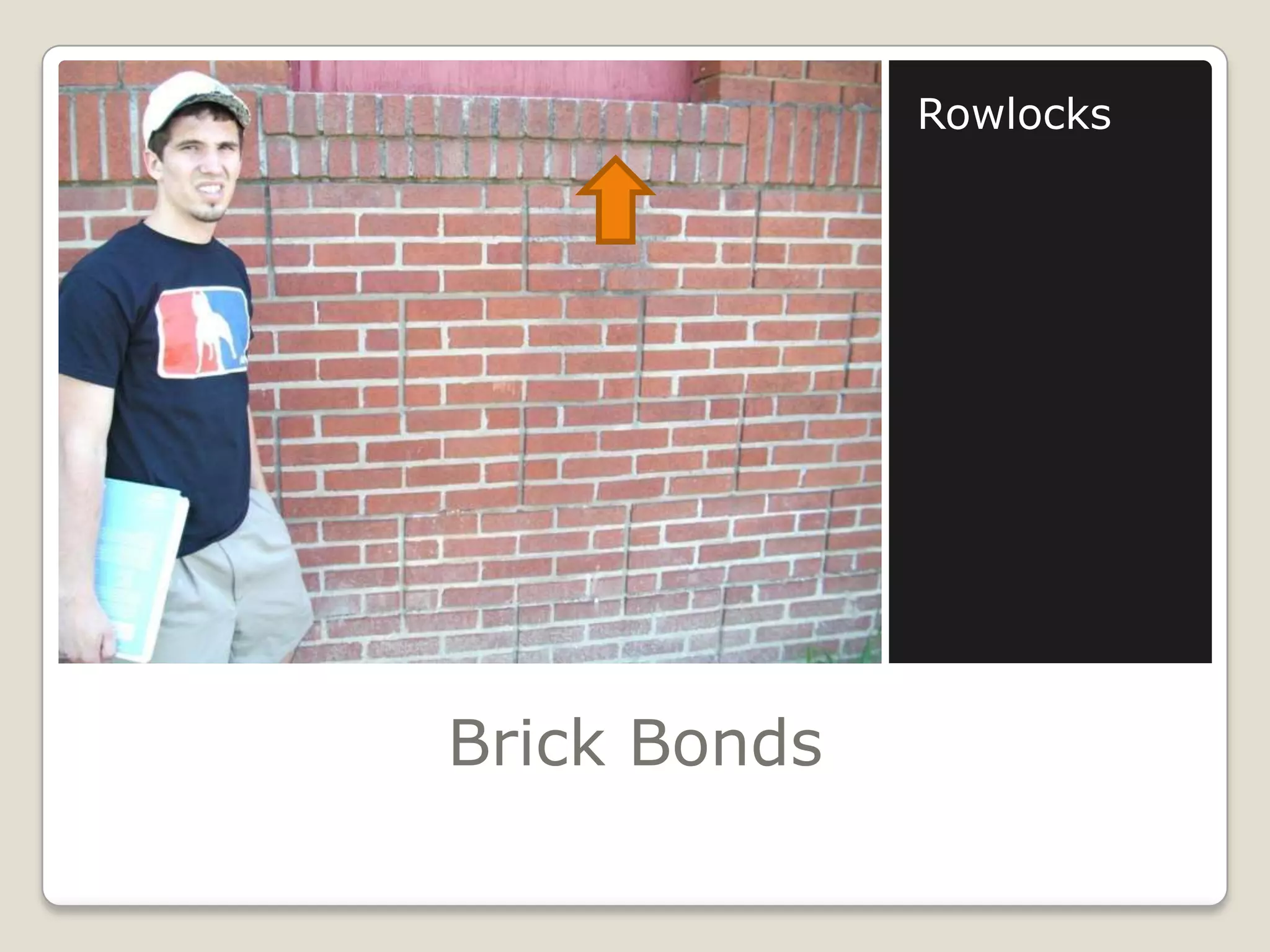
Brick BondsRowlocks
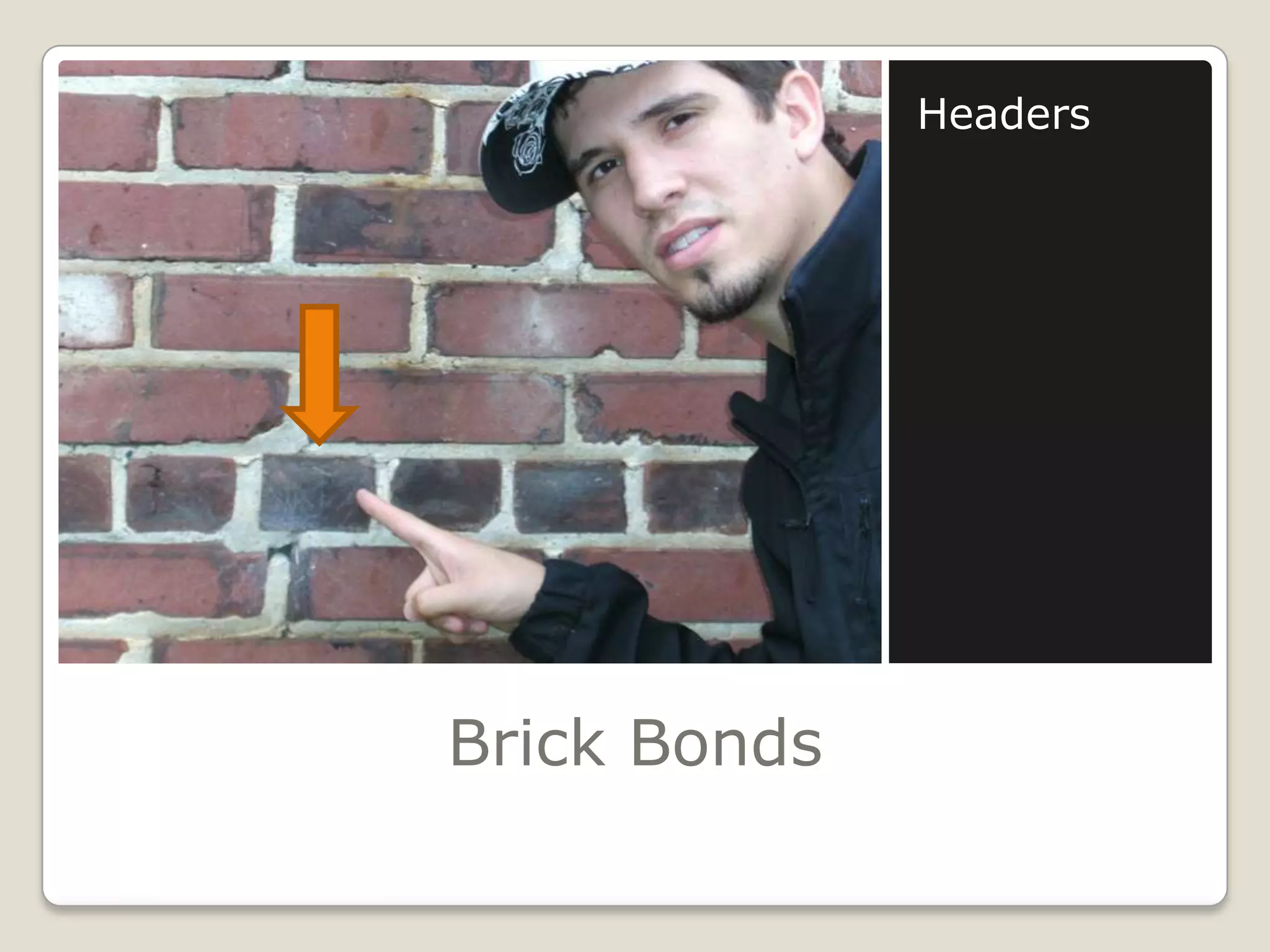
Brick BondsHeaders
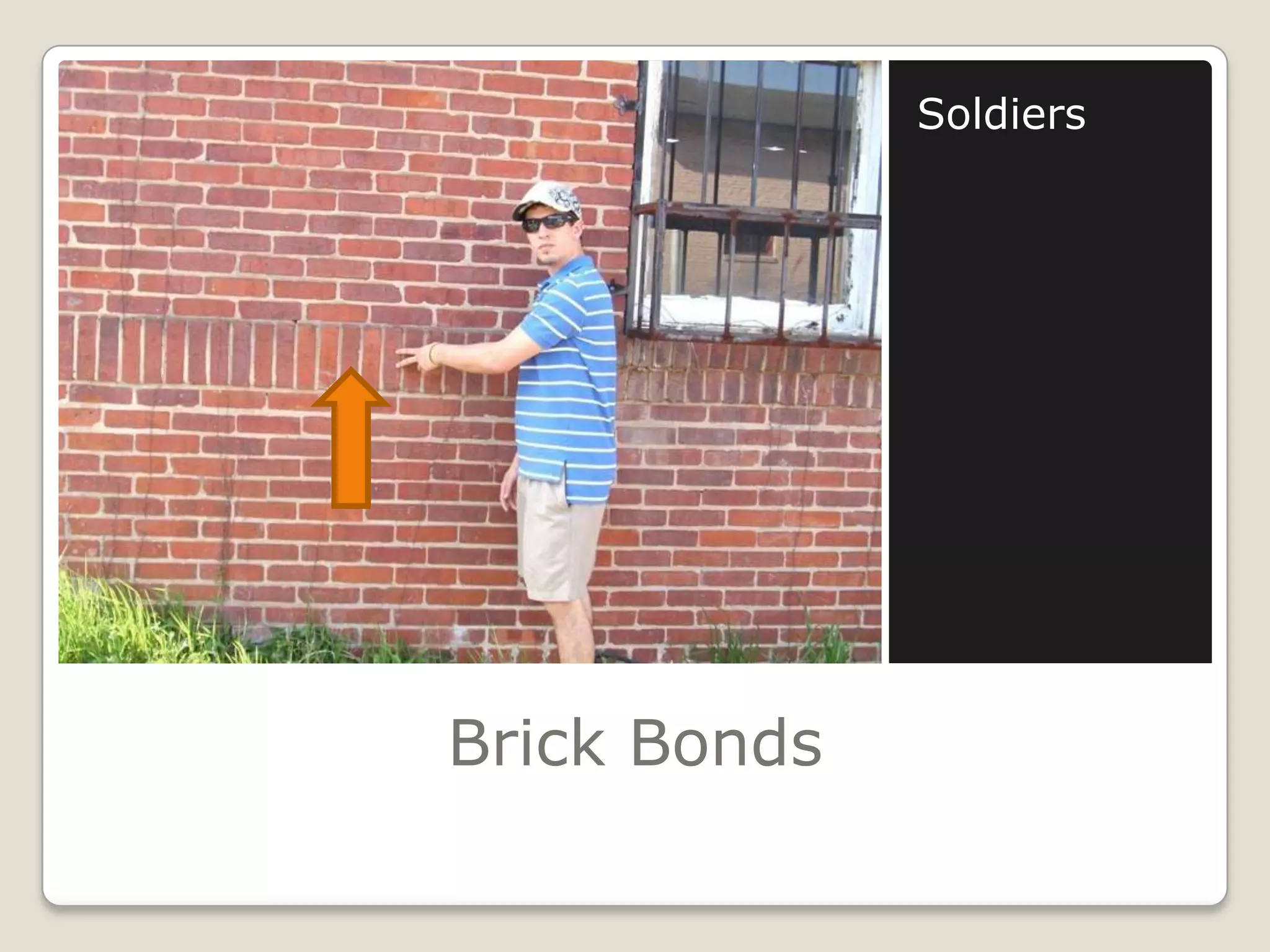
Brick BondsSoldiers
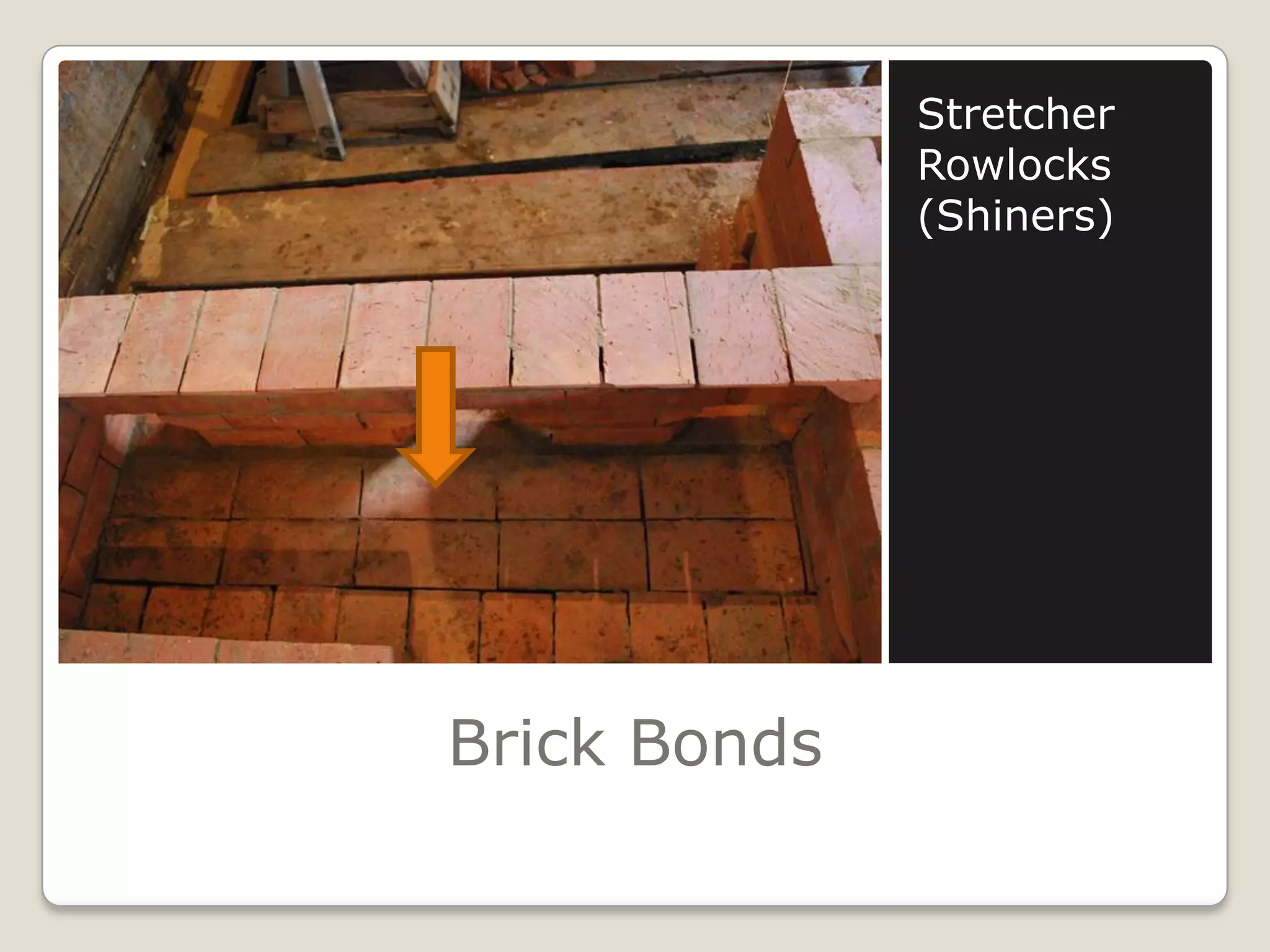
Brick BondsStretcher Rowlocks (Shiners)
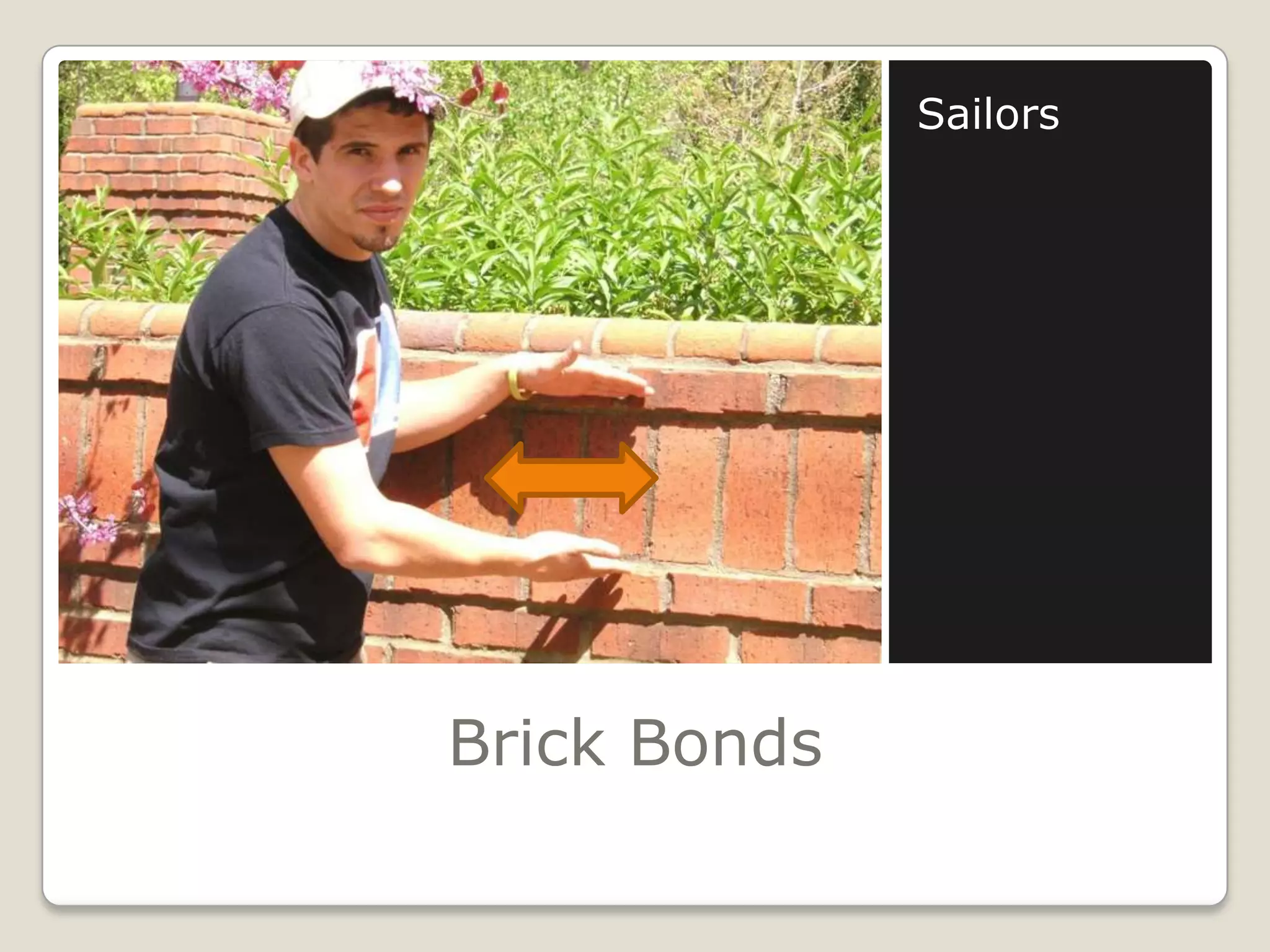
Brick BondsSailors
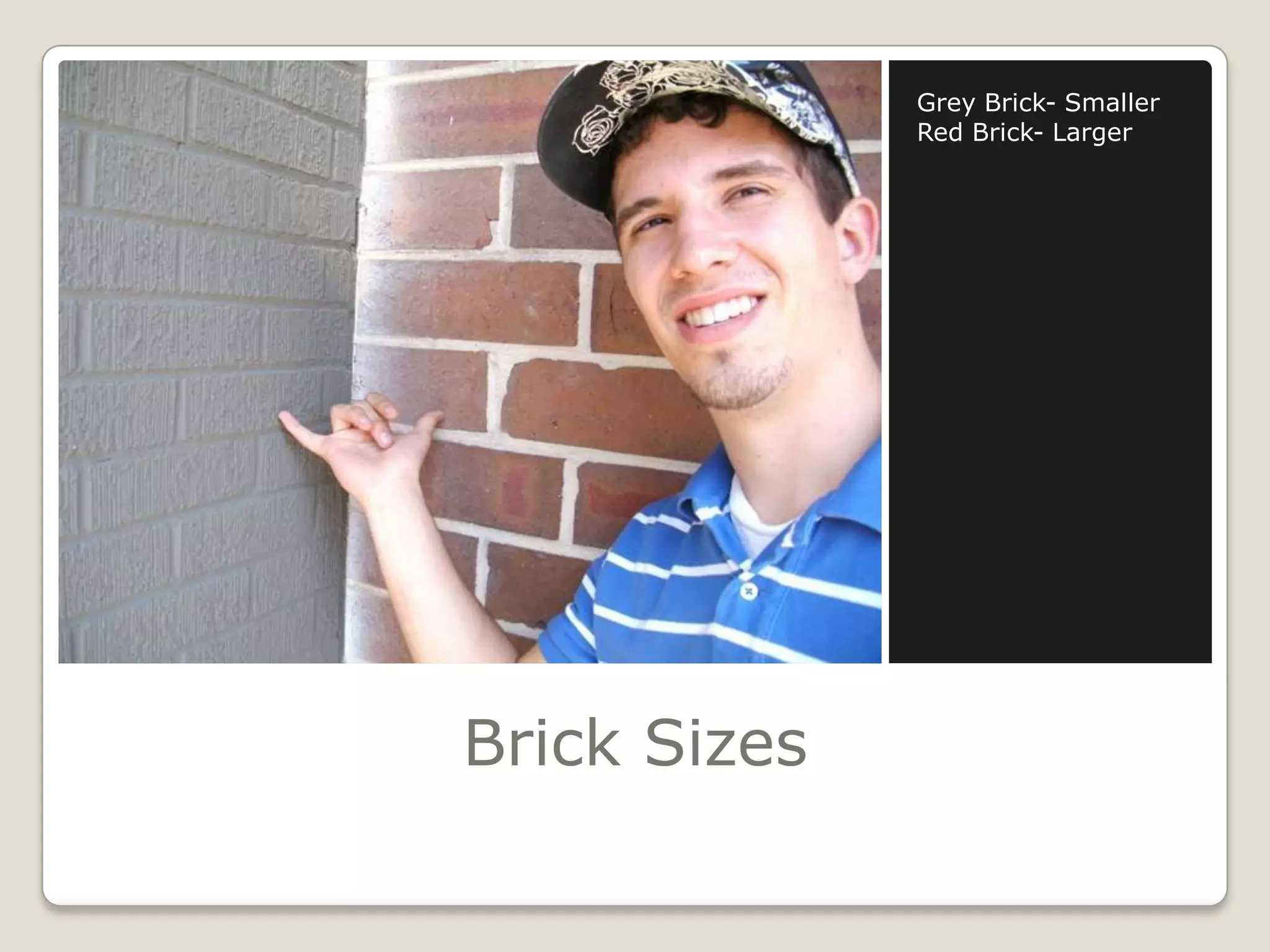
Brick SizesGrey Brick- SmallerRed Brick- Larger
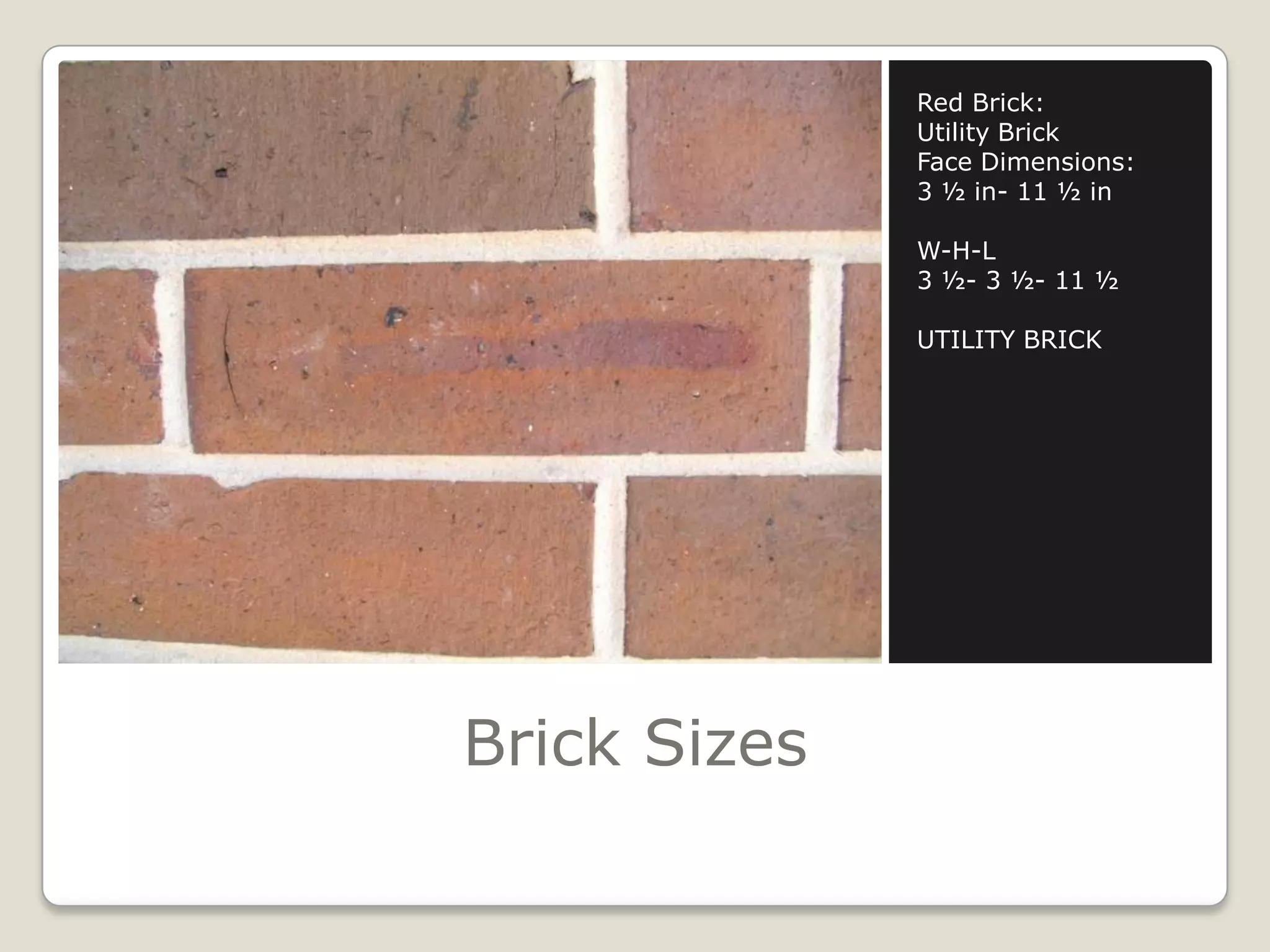
Brick SizesRed Brick:Utility BrickFace Dimensions:3 ½ in- 11 ½ inW-H-L3 ½- 3 ½- 11 ½UTILITY BRICK
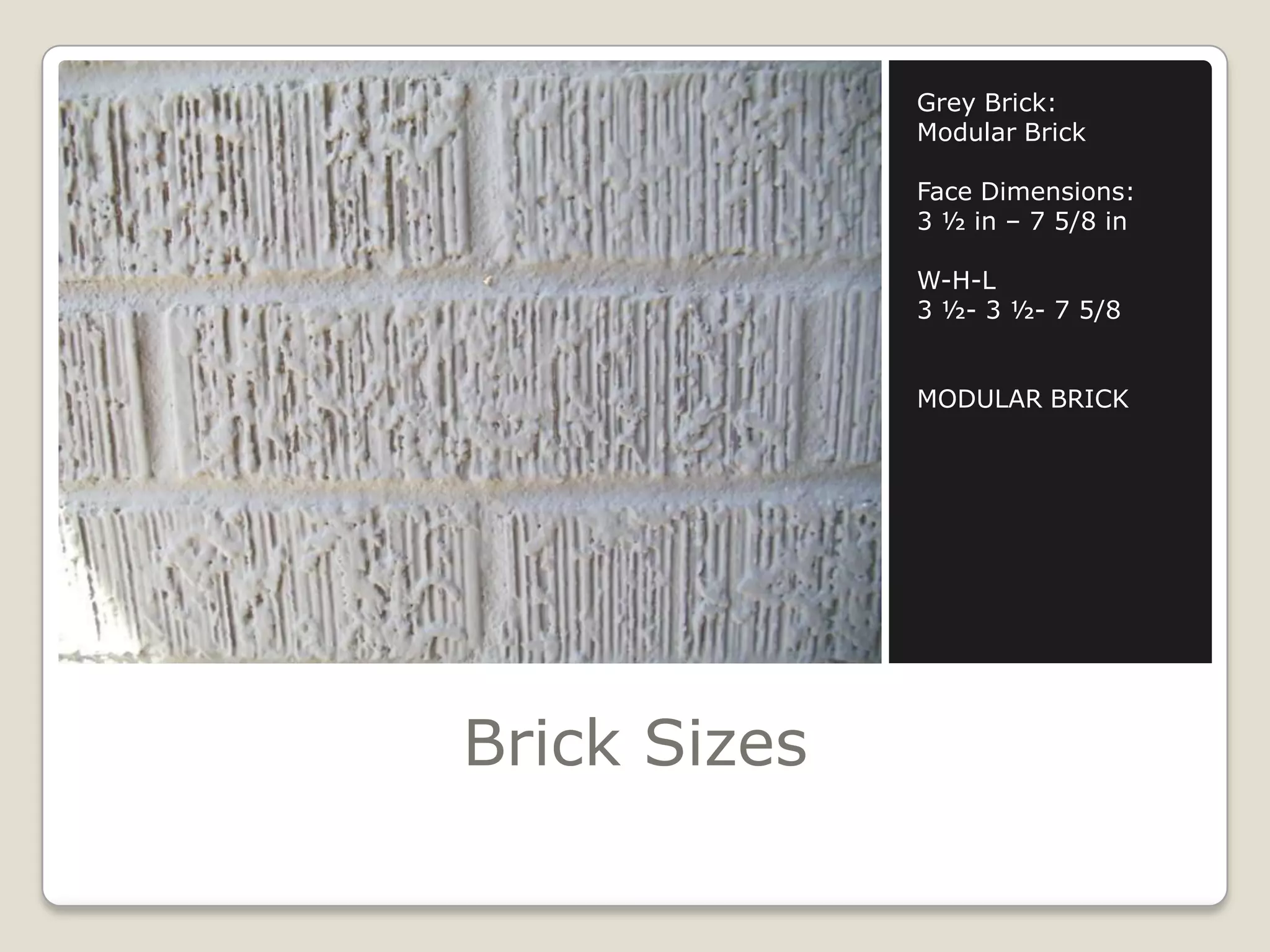
Brick SizesGrey Brick:Modular BrickFace Dimensions:3 ½ in – 7 5/8 inW-H-L3 ½- 3 ½- 7 5/8MODULAR BRICK
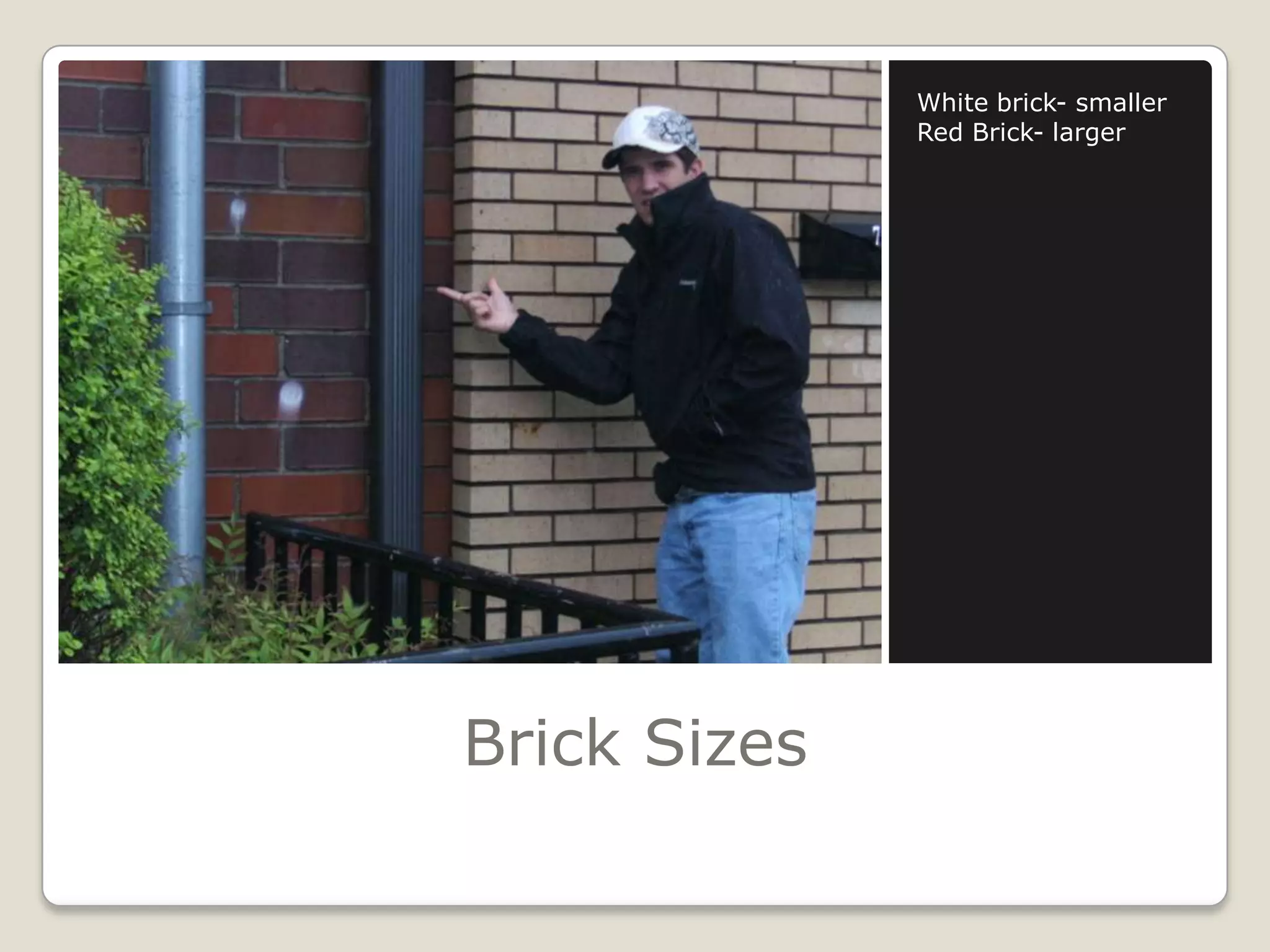
Brick SizesWhite brick- smallerRed Brick- larger
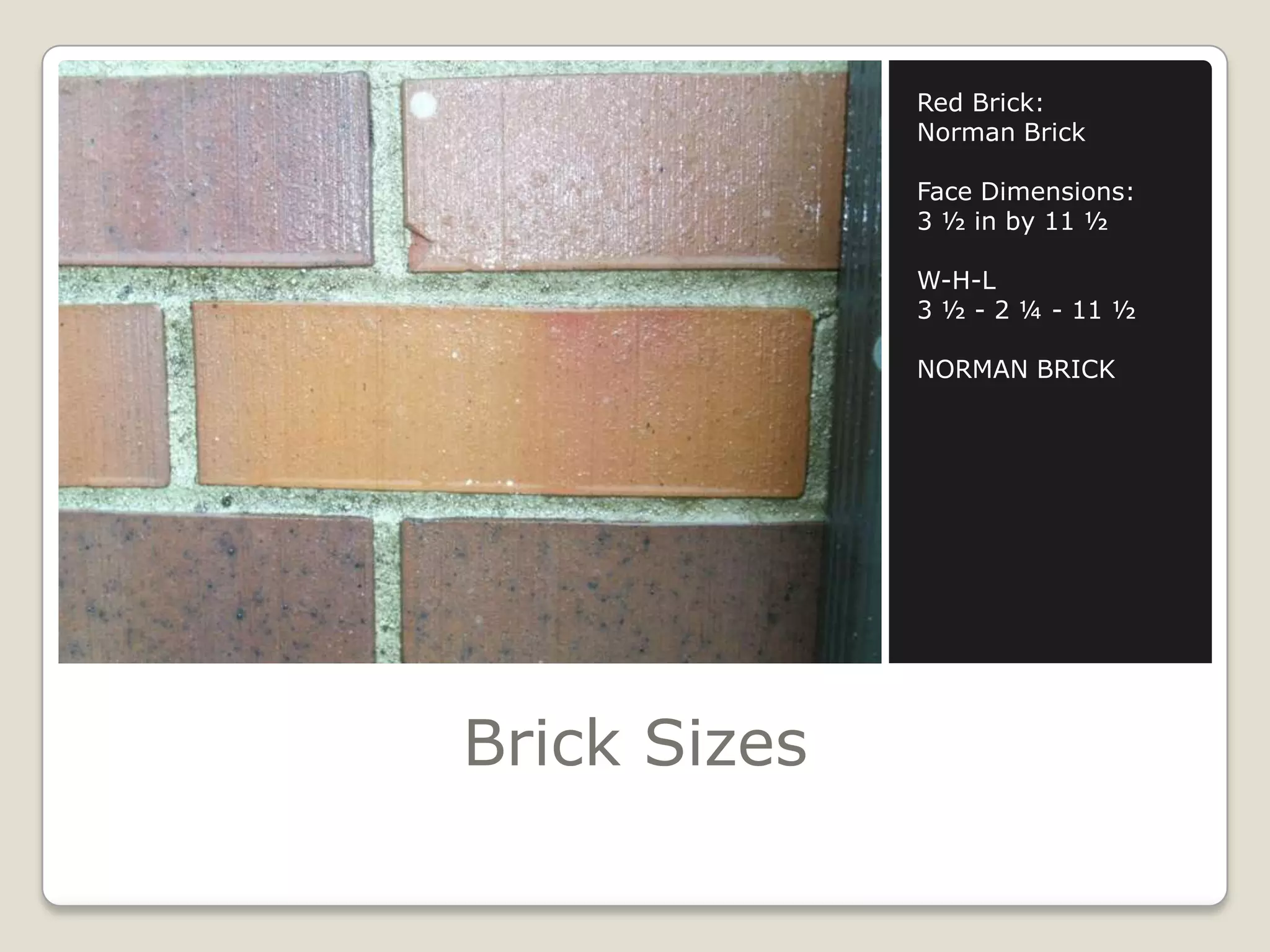
Brick SizesRed Brick:Norman BrickFace Dimensions:3 ½ in by 11 ½ W-H-L3 ½ - 2 ¼ - 11 ½ NORMAN BRICK
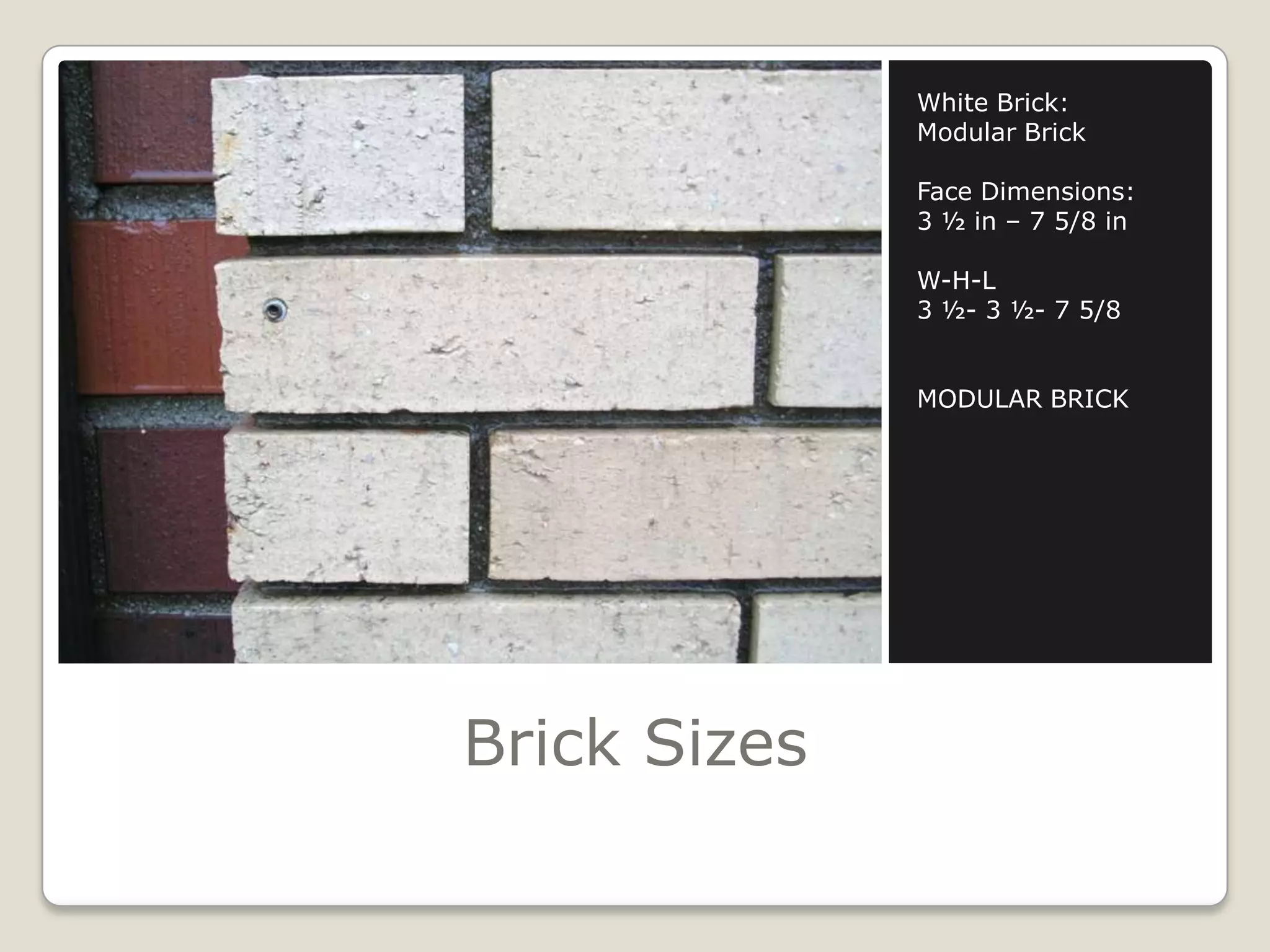
Brick SizesWhite Brick:Modular BrickFace Dimensions:3 ½ in – 7 5/8 inW-H-L3 ½- 3 ½- 7 5/8MODULAR BRICK
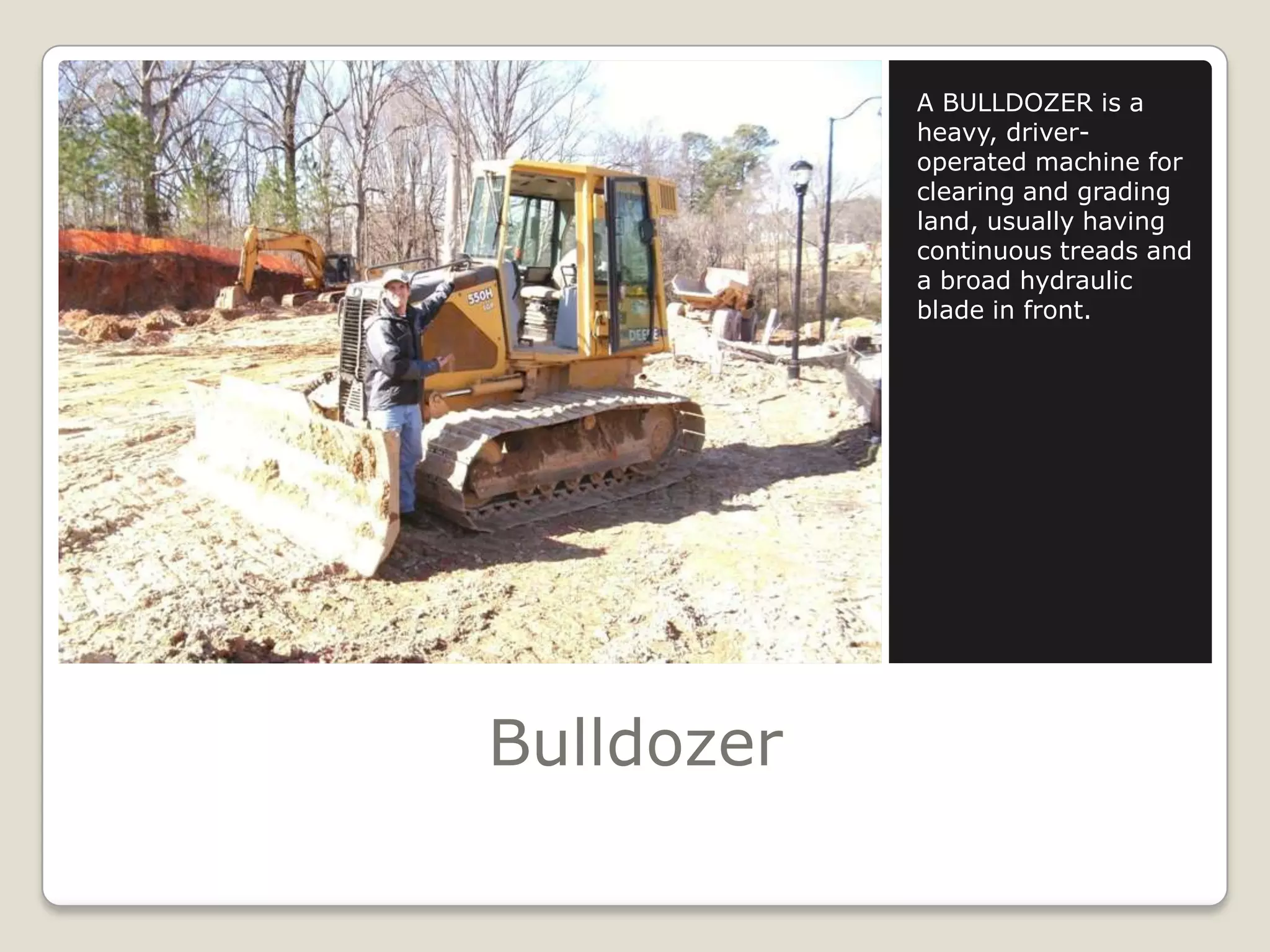
BulldozerA BULLDOZER is a heavy, driver-operated machine for clearing and grading land, usually having continuous treads and a broad hydraulic blade in front.
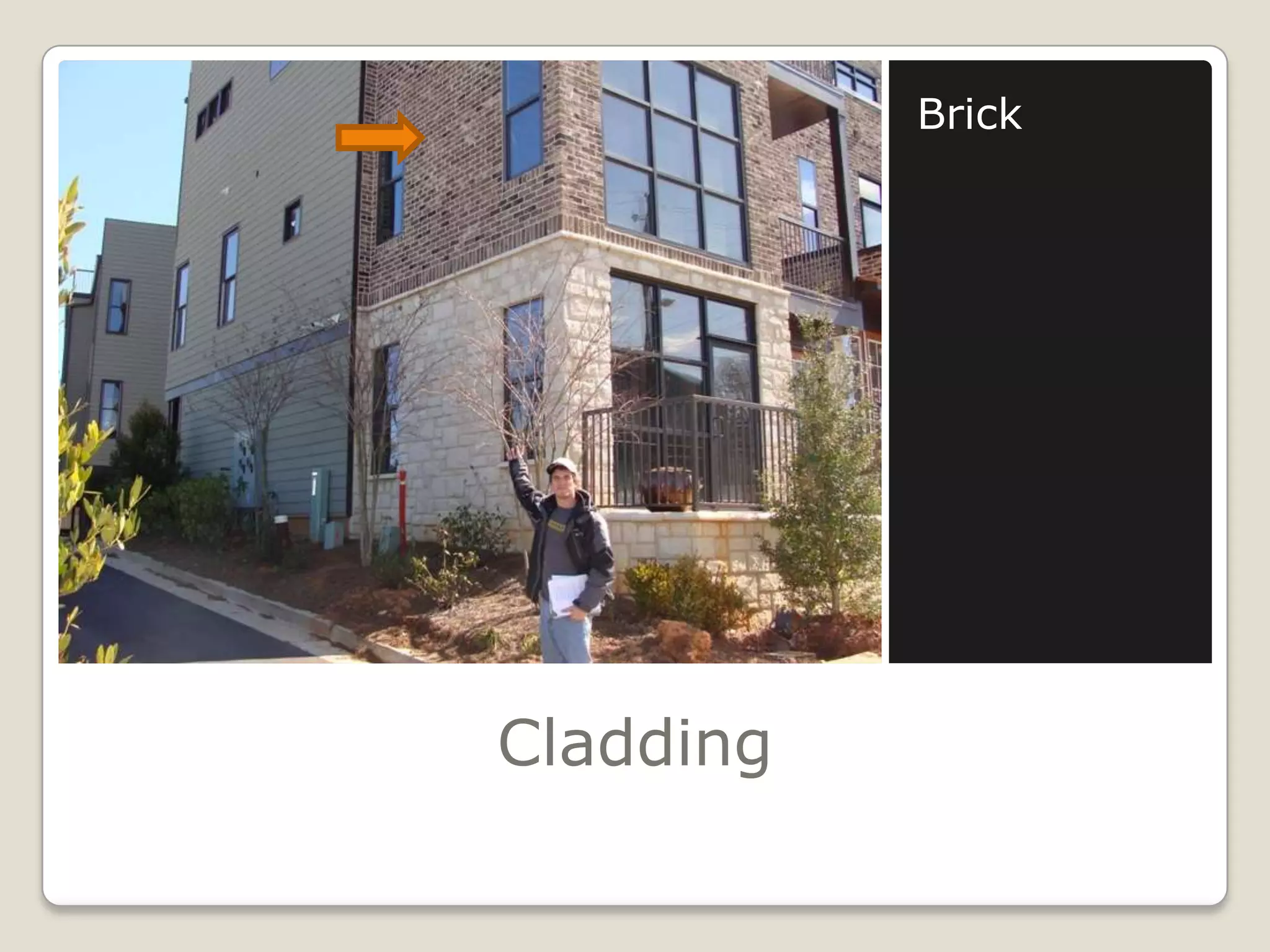
CladdingBrick
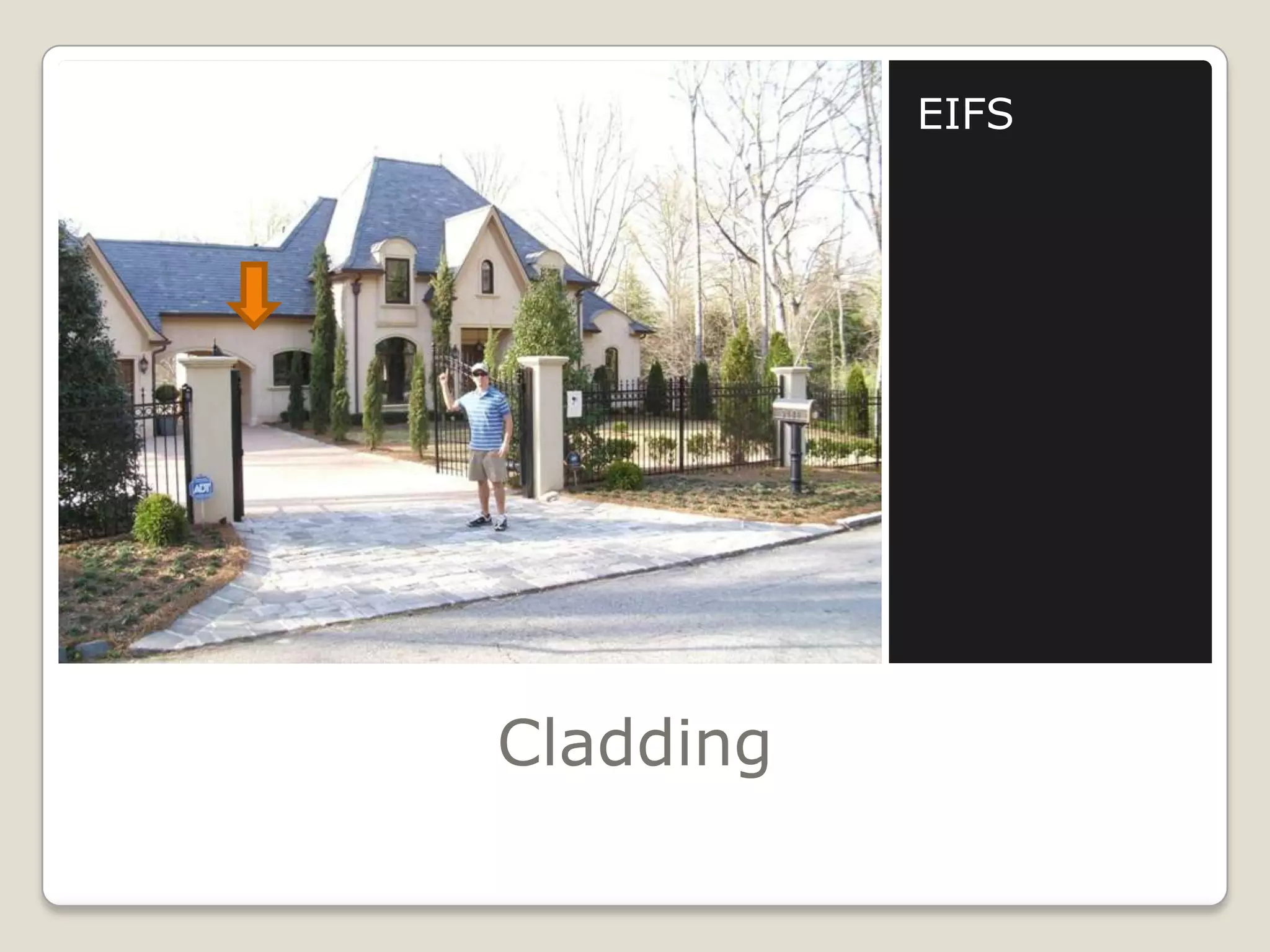
CladdingEIFS
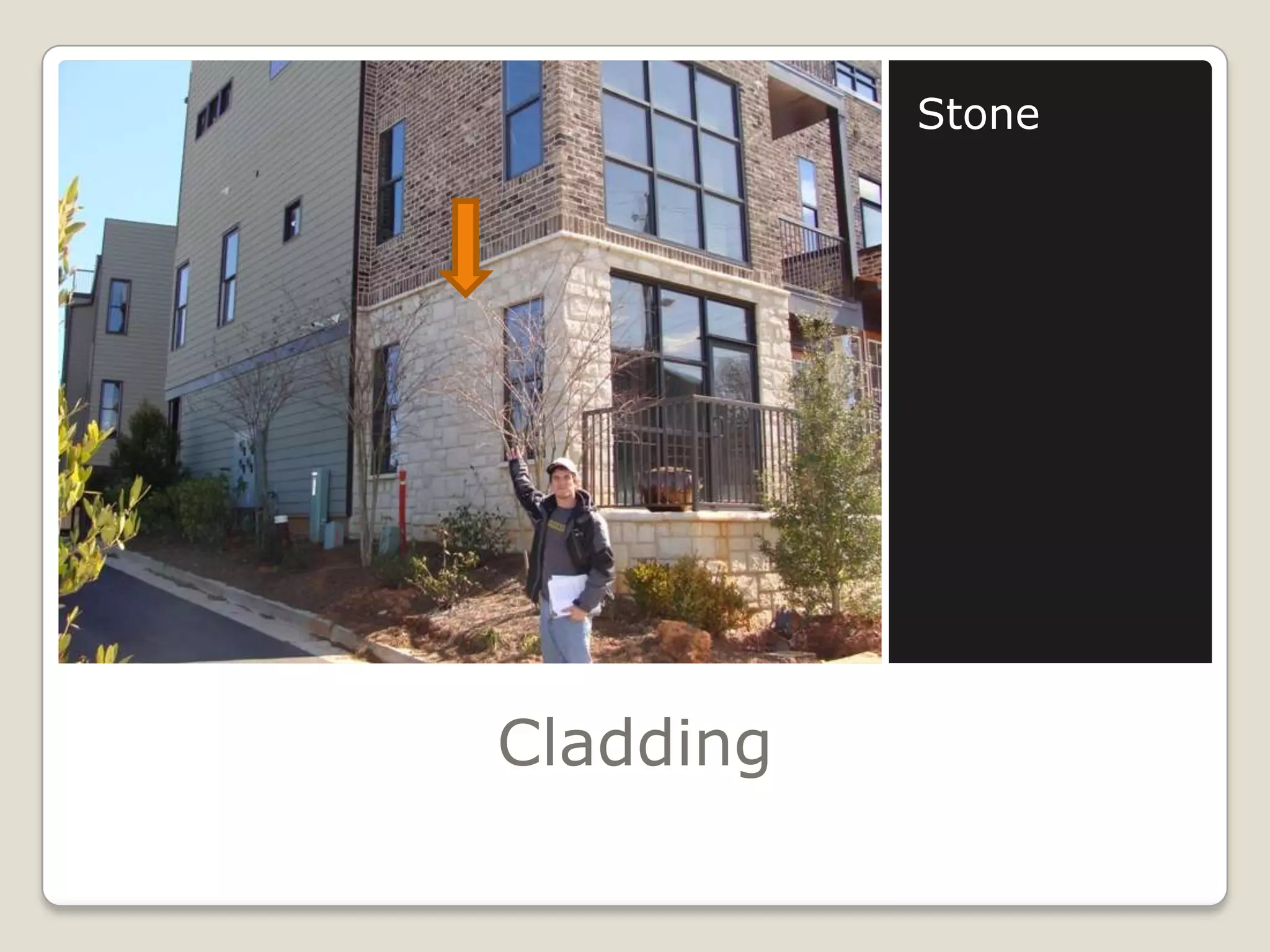
CladdingStone
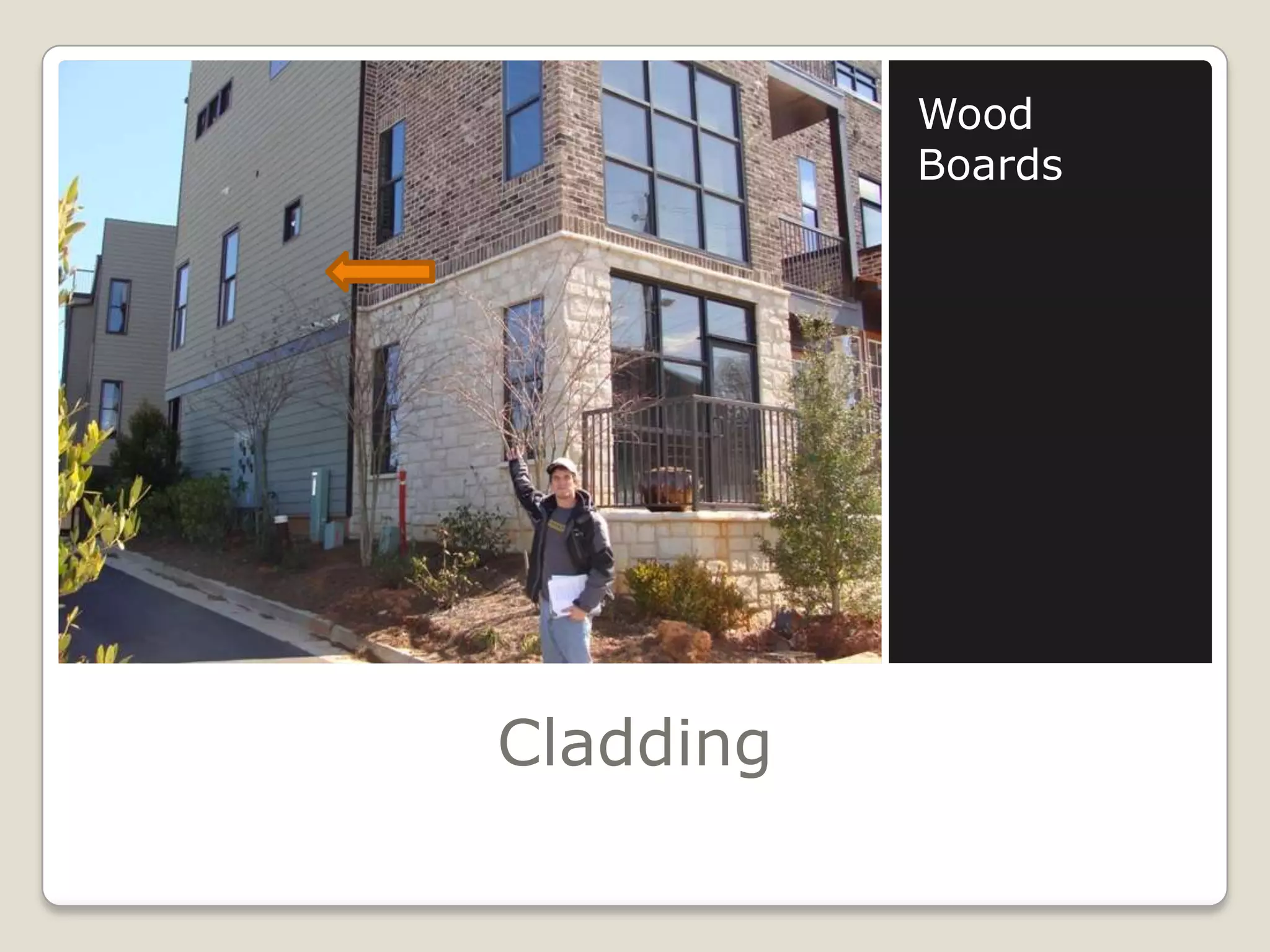
CladdingWood Boards
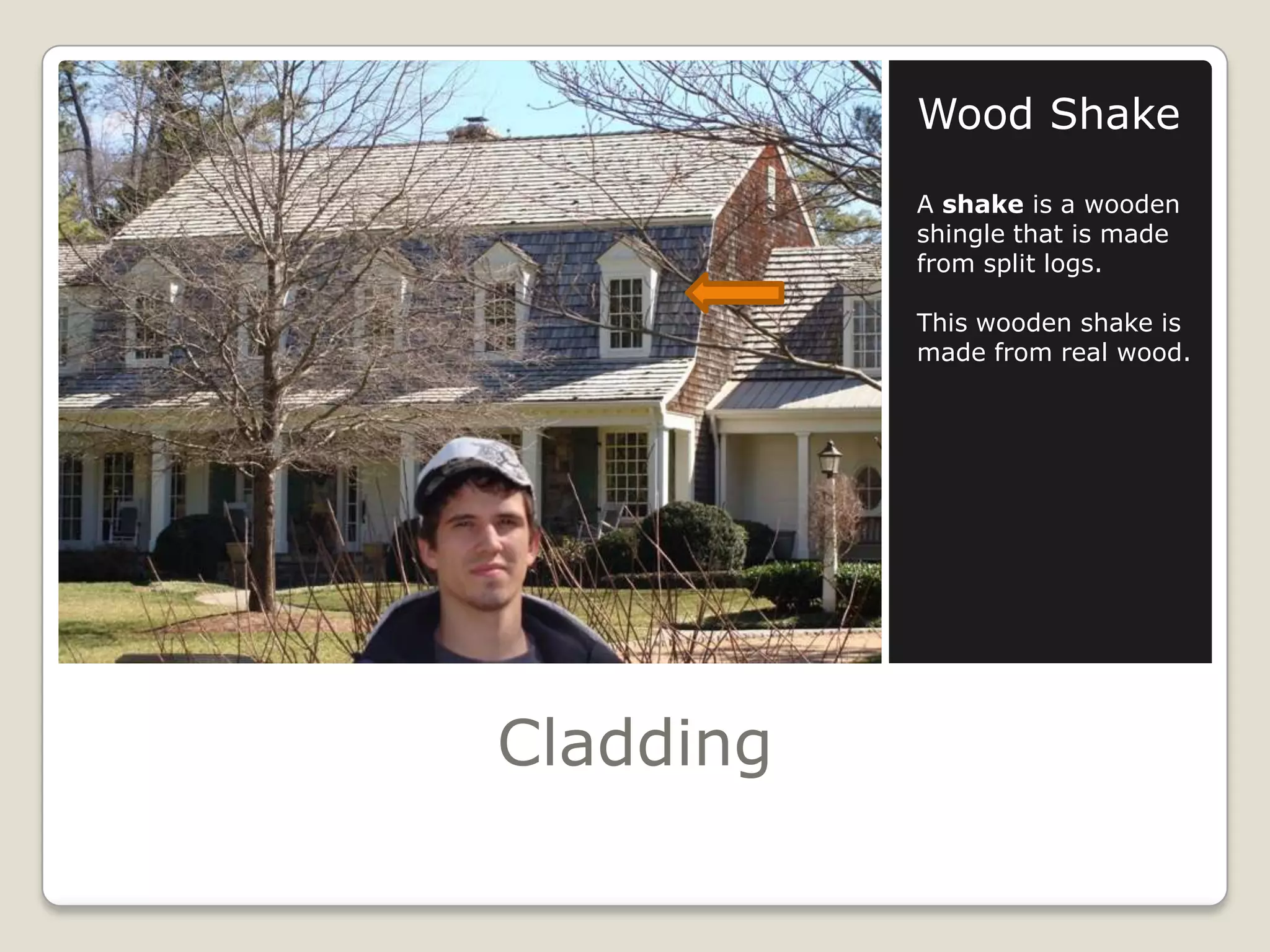
CladdingWood ShakeA shake is a wooden shingle that is made from split logs.This wooden shake is made from real wood.
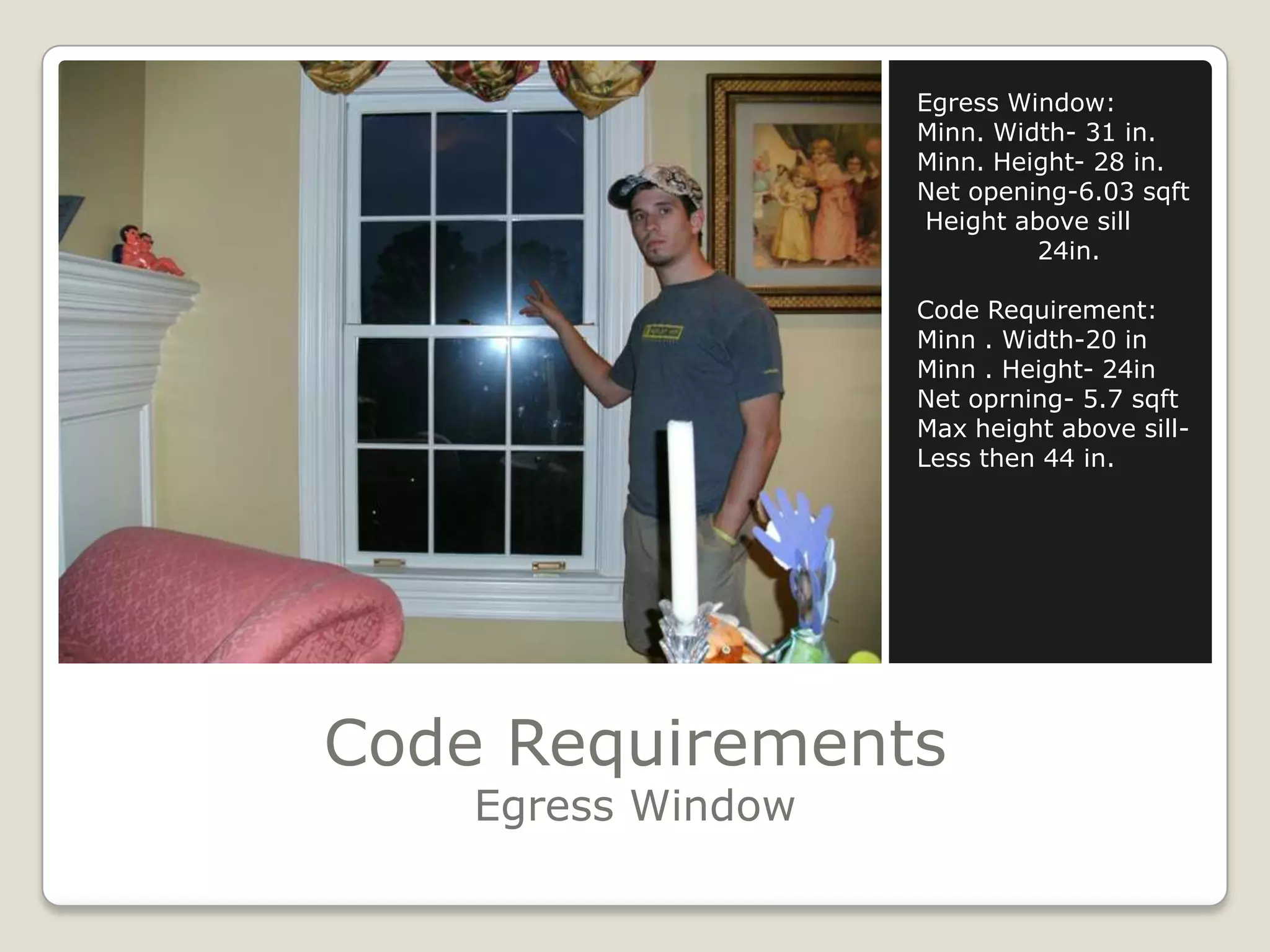
Code RequirementsEgress WindowEgress Window:Minn. Width- 31 in.Minn. Height- 28 in.Net opening-6.03 sqft Height above sill	24in.Code Requirement:Minn . Width-20 inMinn . Height- 24inNet oprning- 5.7 sqftMax height above sill-Less then 44 in.
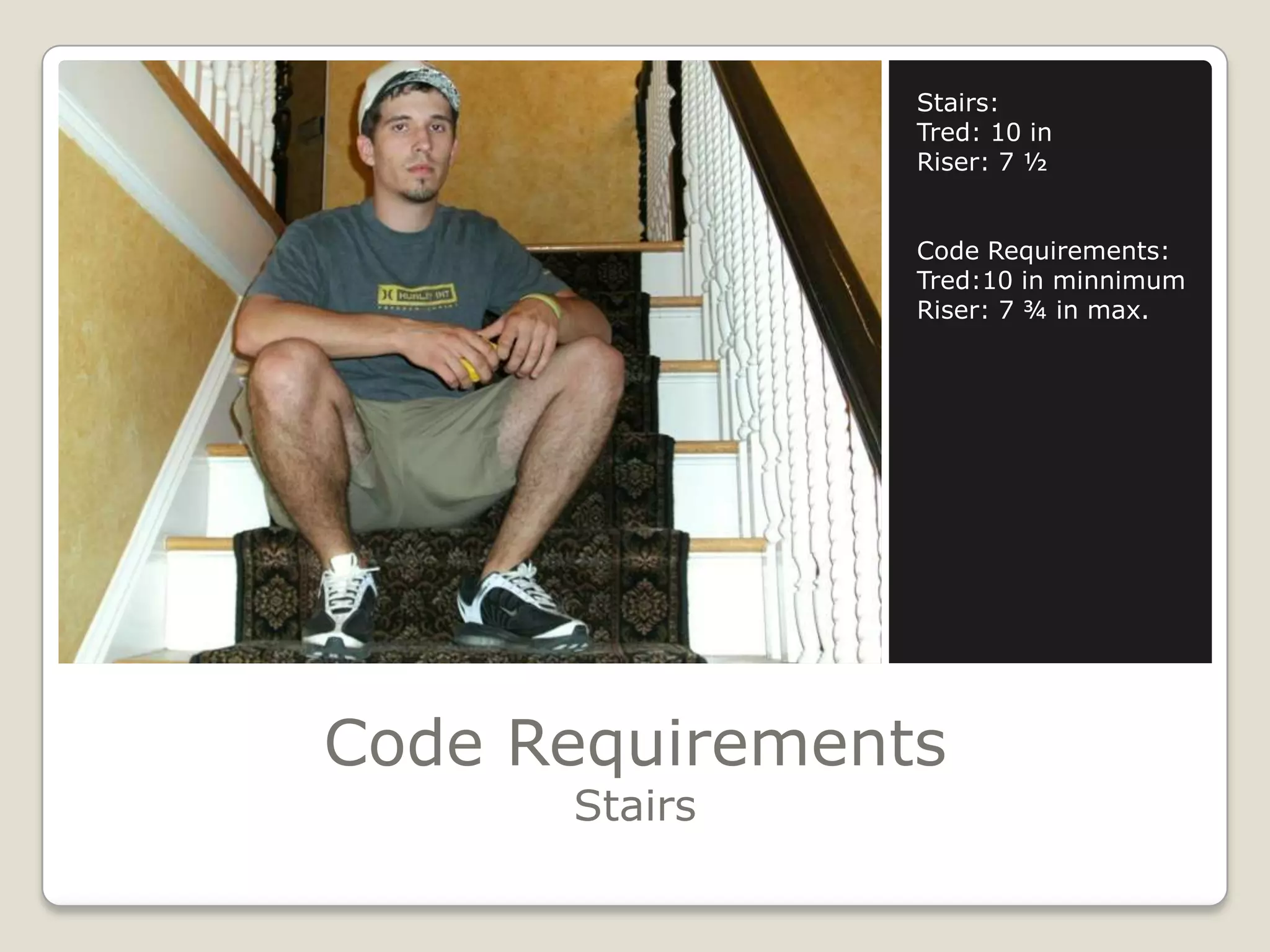
Code RequirementsStairsStairs:Tred: 10 inRiser: 7 ½Code Requirements:Tred:10 in minnimumRiser: 7 ¾ in max.
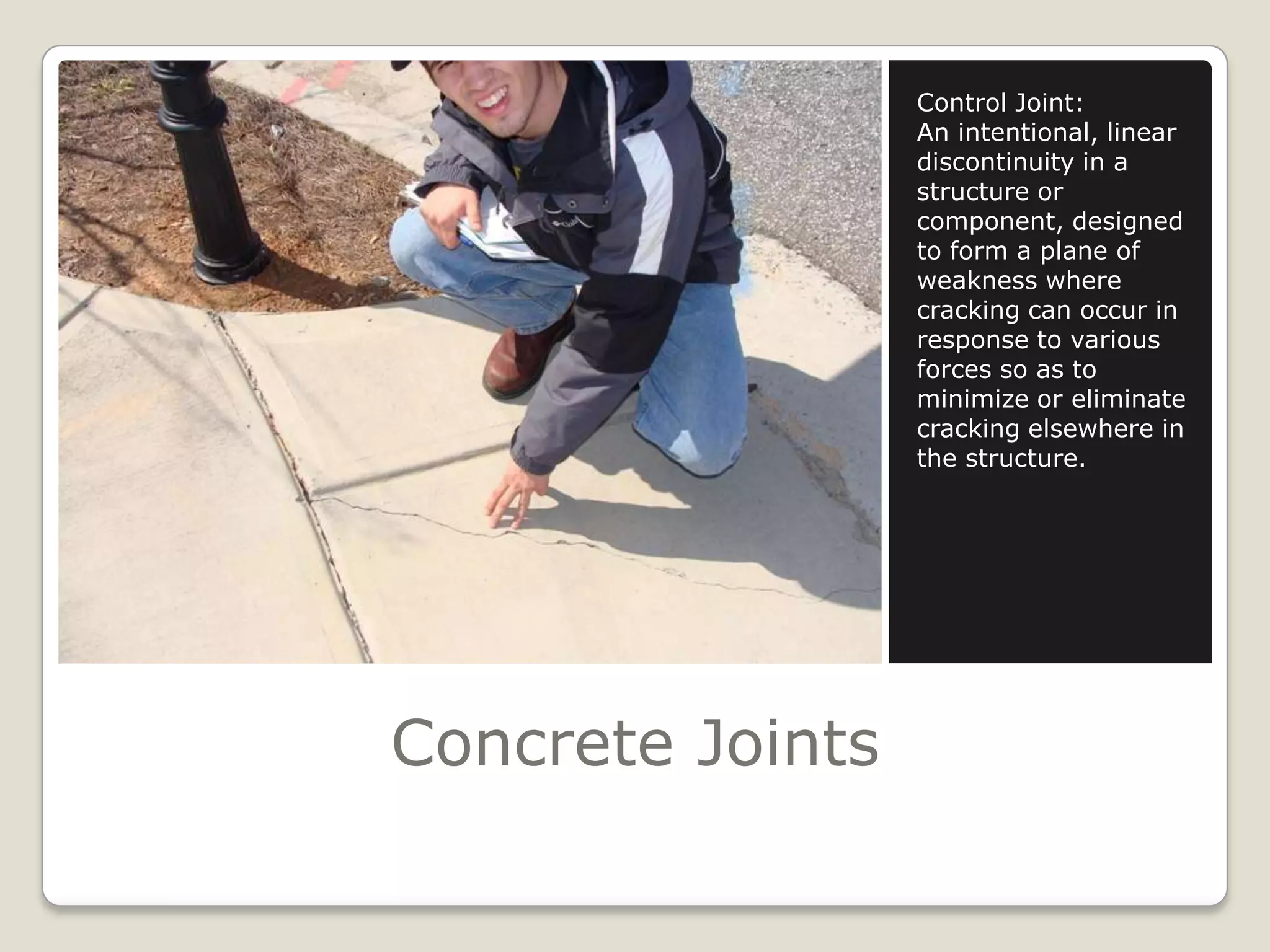
Concrete JointsControl Joint:An intentional, linear discontinuity in a structure or component, designed to form a plane of weakness where cracking can occur in response to various forces so as to minimize or eliminate cracking elsewhere in the structure.
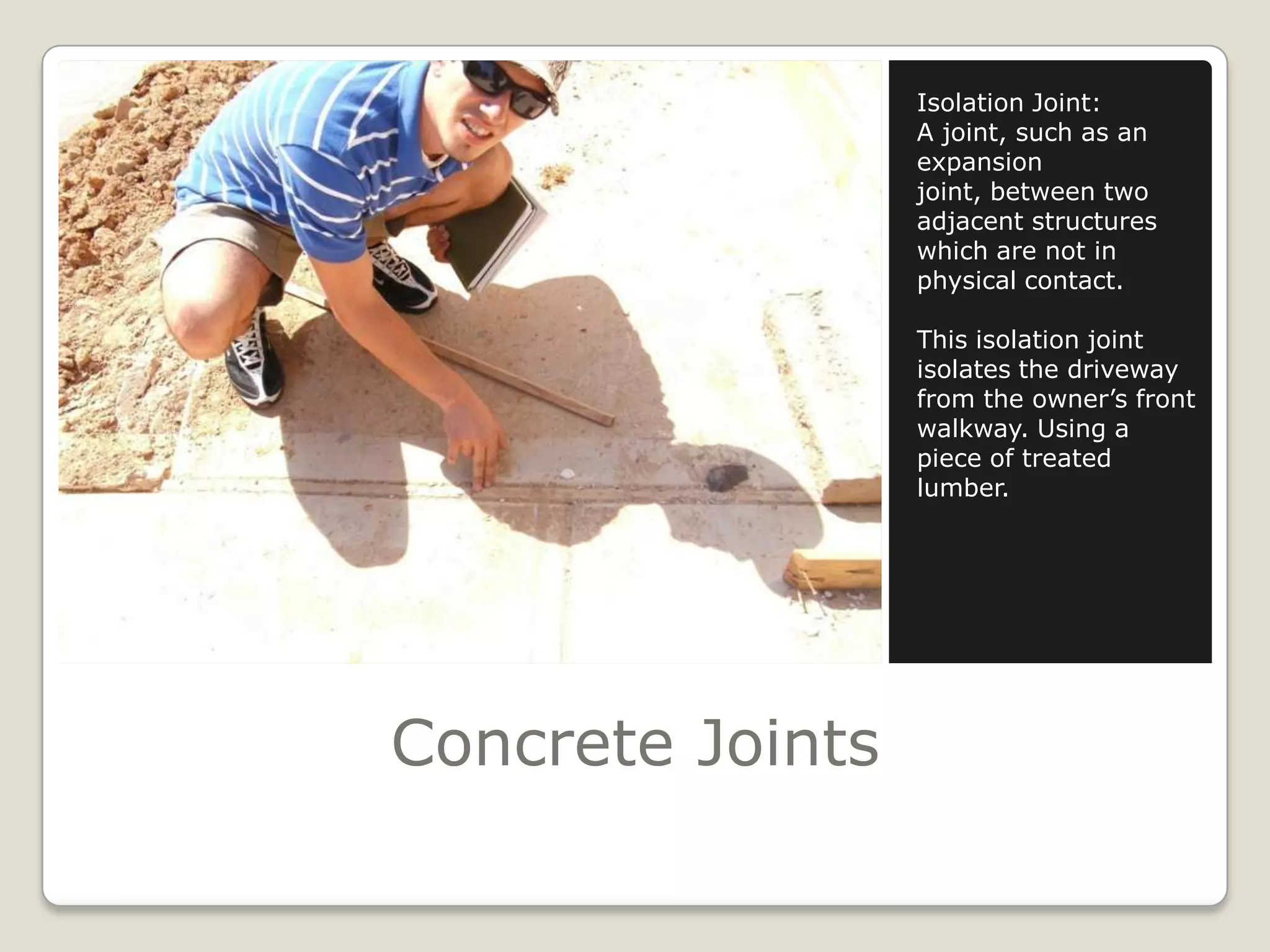
Concrete JointsIsolation Joint:A joint, such as an expansion joint, between two adjacent structures which are not in physical contact.This isolation joint isolates the driveway from the owner’s front walkway. Using a piece of treated lumber.
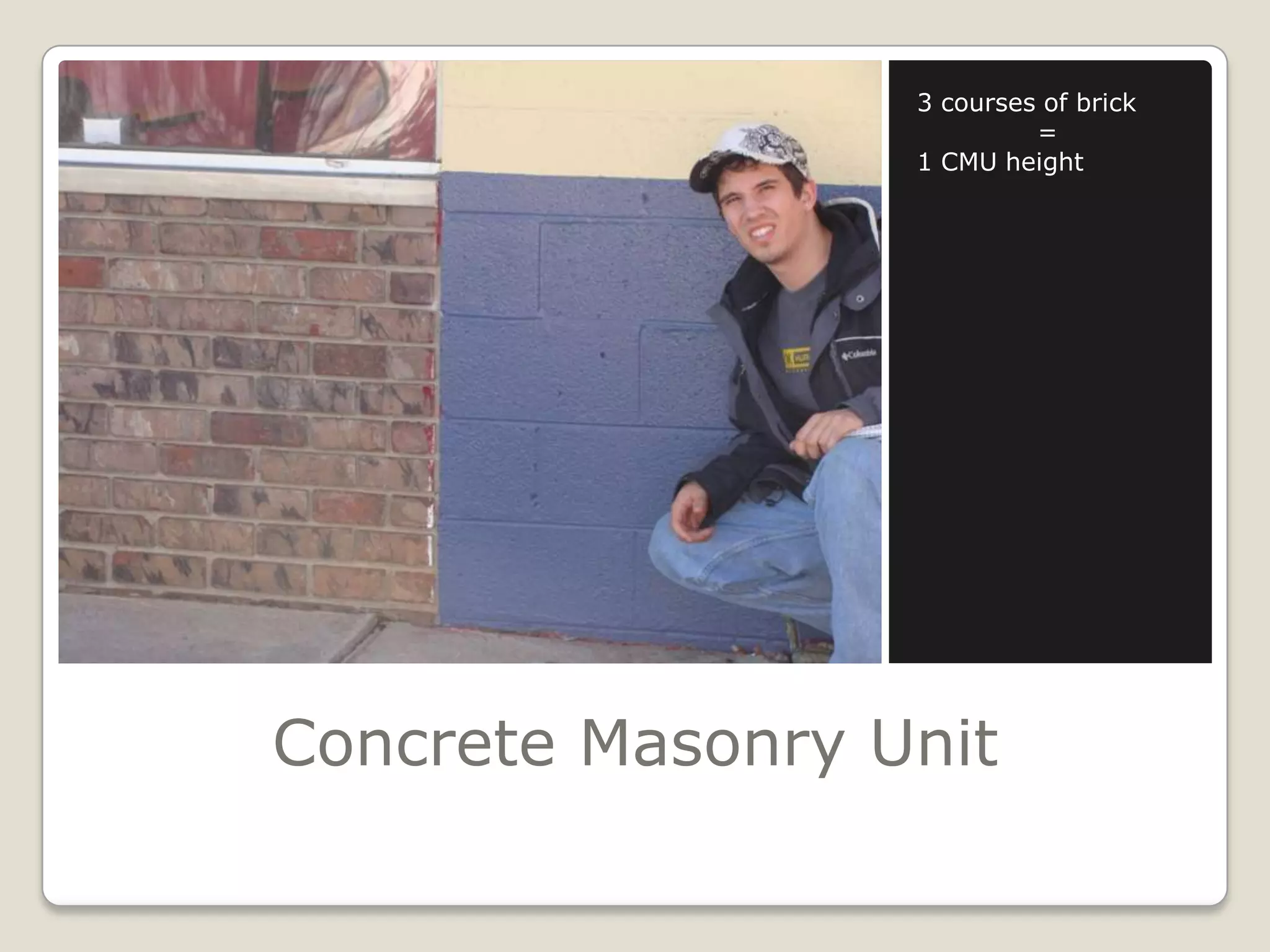
Concrete Masonry Unit3 courses of brick	=1 CMU height
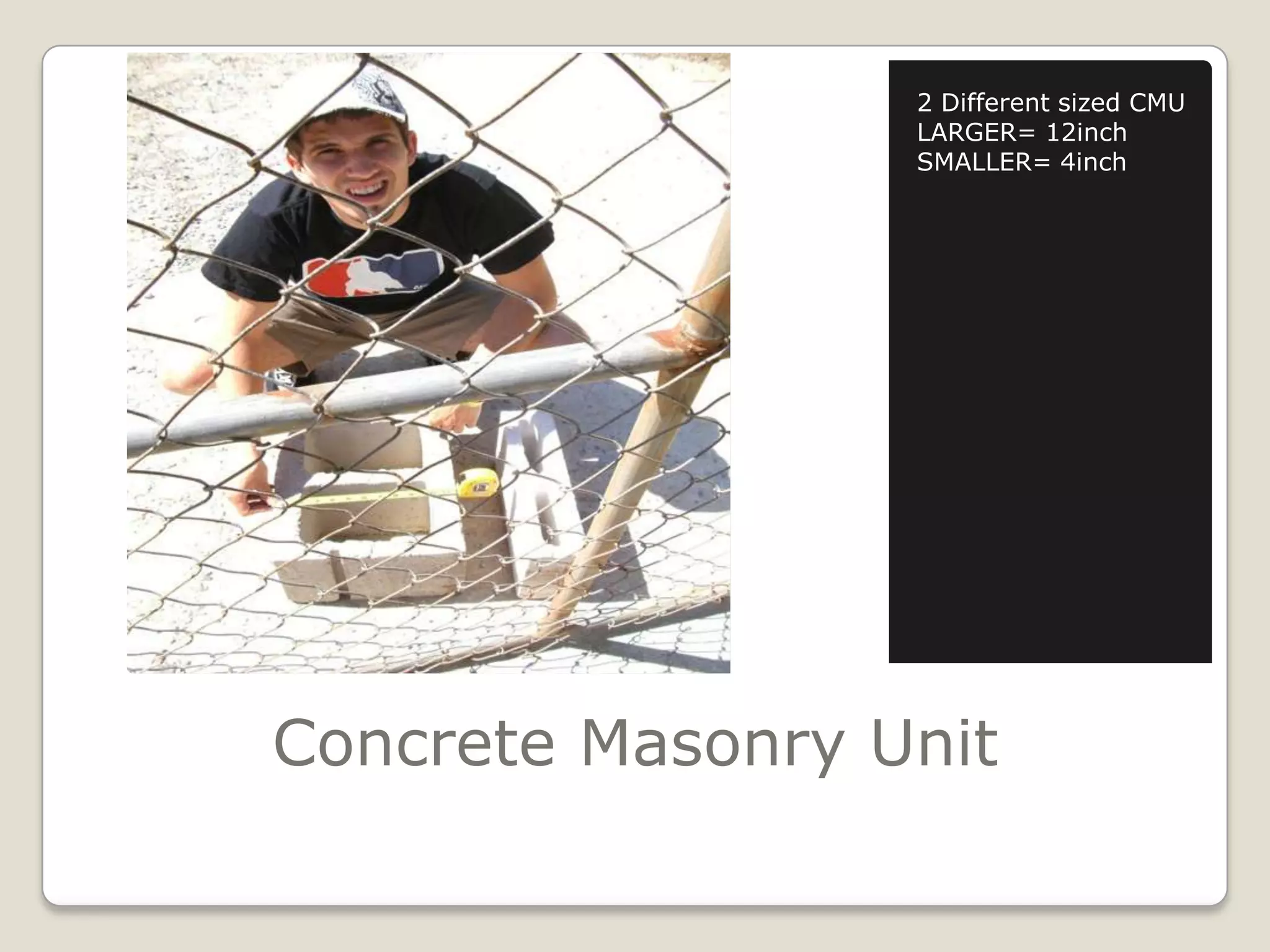
Concrete Masonry Unit2 Different sized CMULARGER= 12inchSMALLER= 4inch
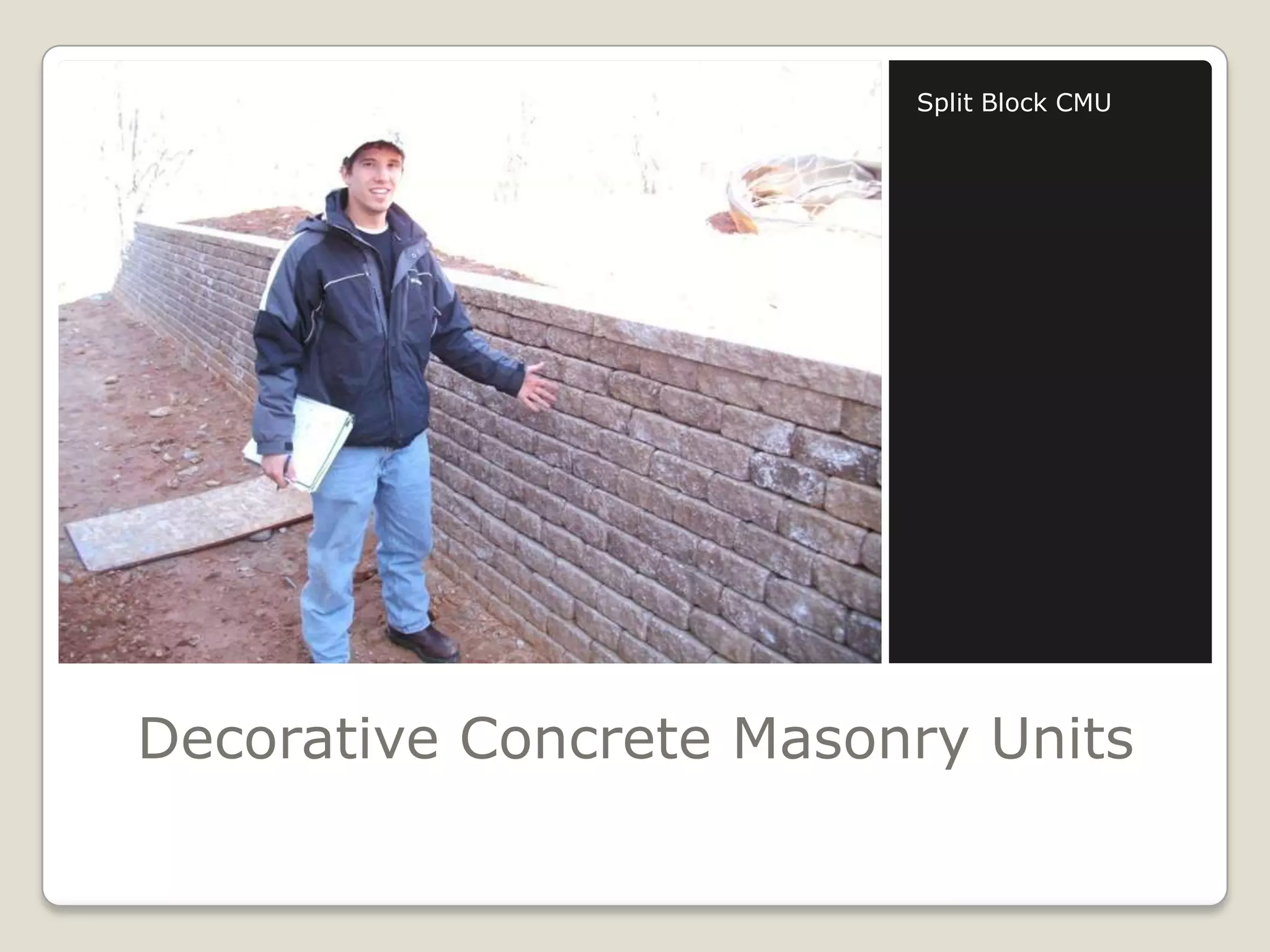
Decorative Concrete Masonry UnitsSplit Block CMU
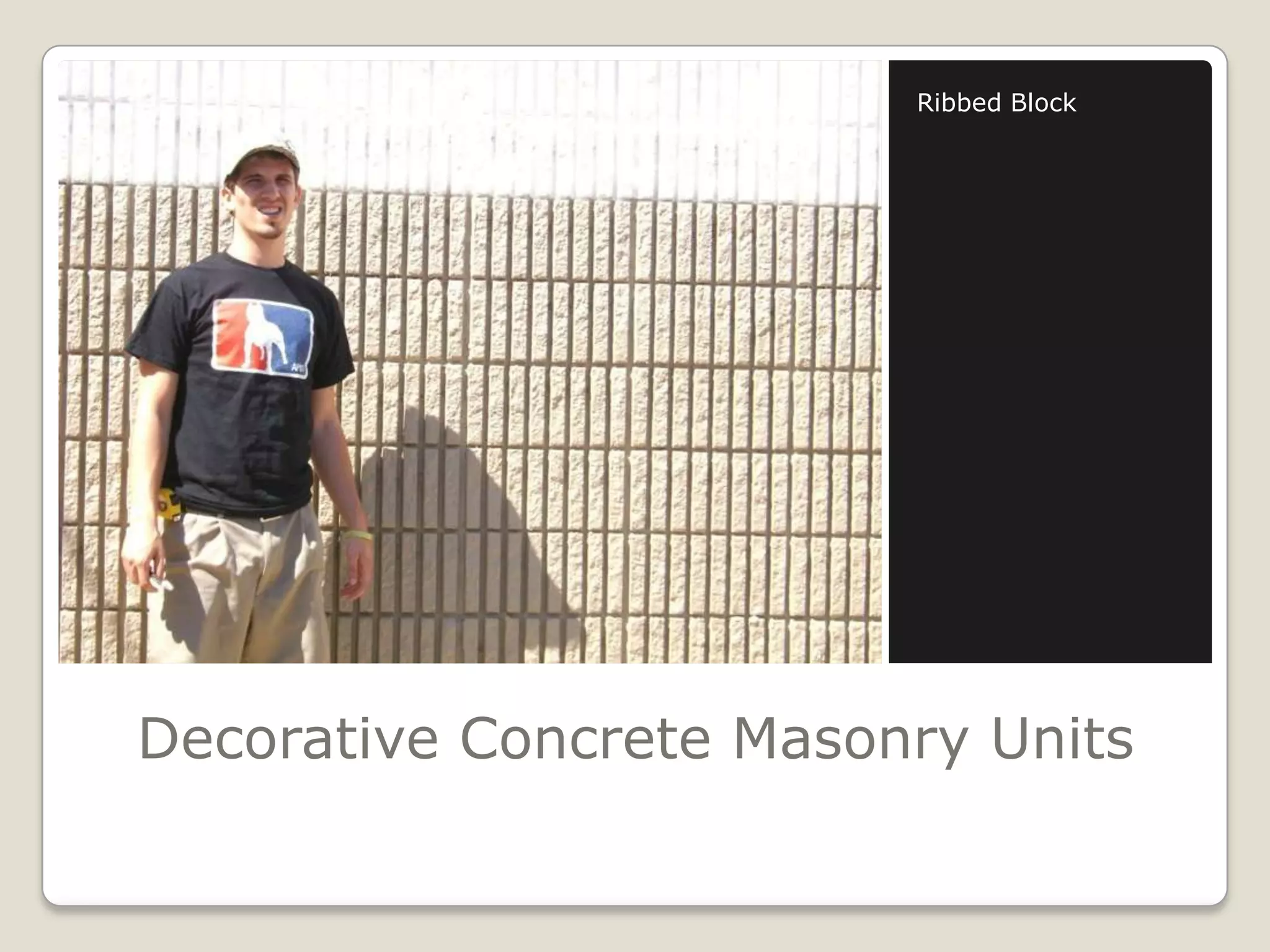
Decorative Concrete Masonry UnitsRibbed Block
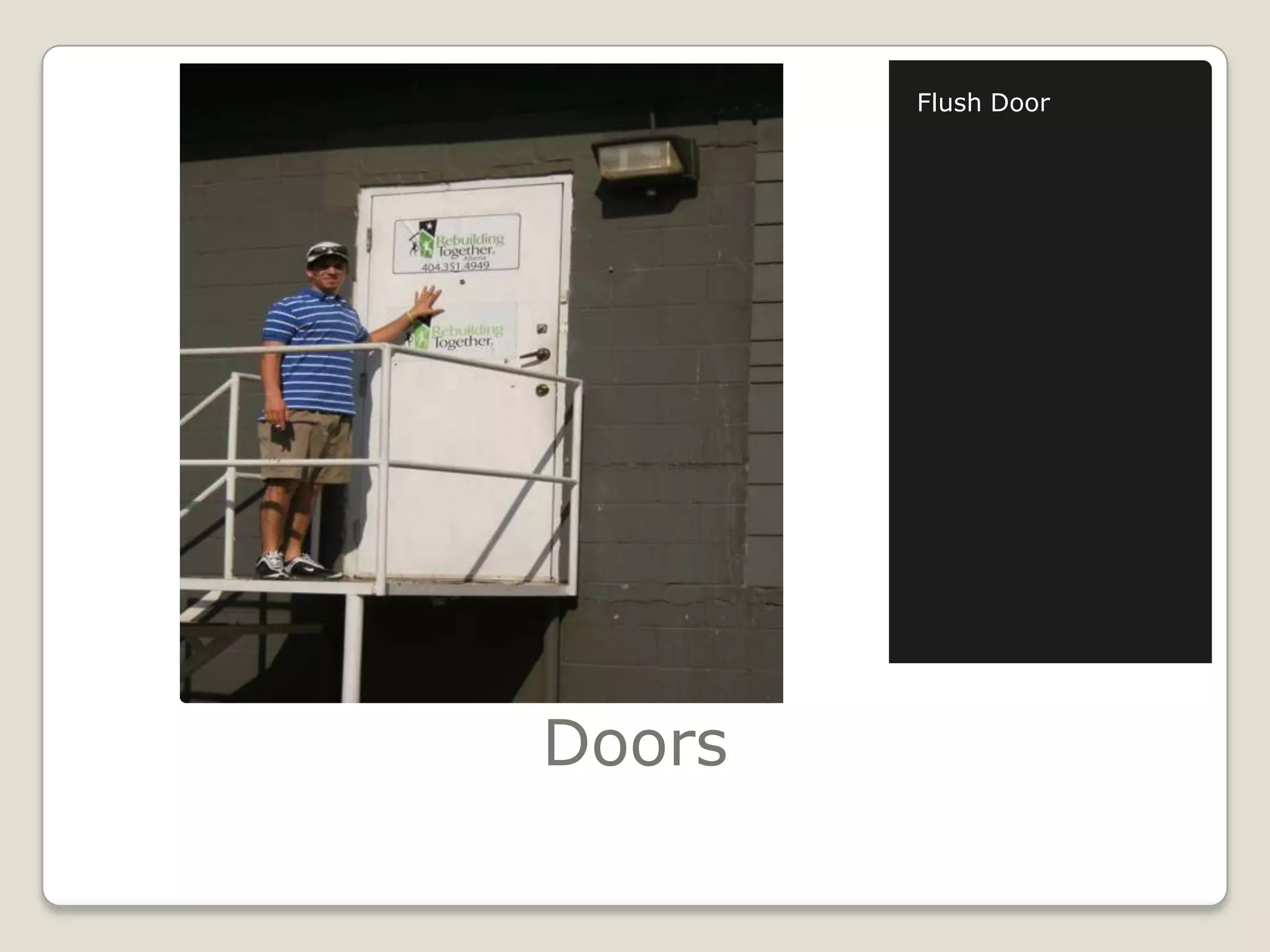
DoorsFlush Door
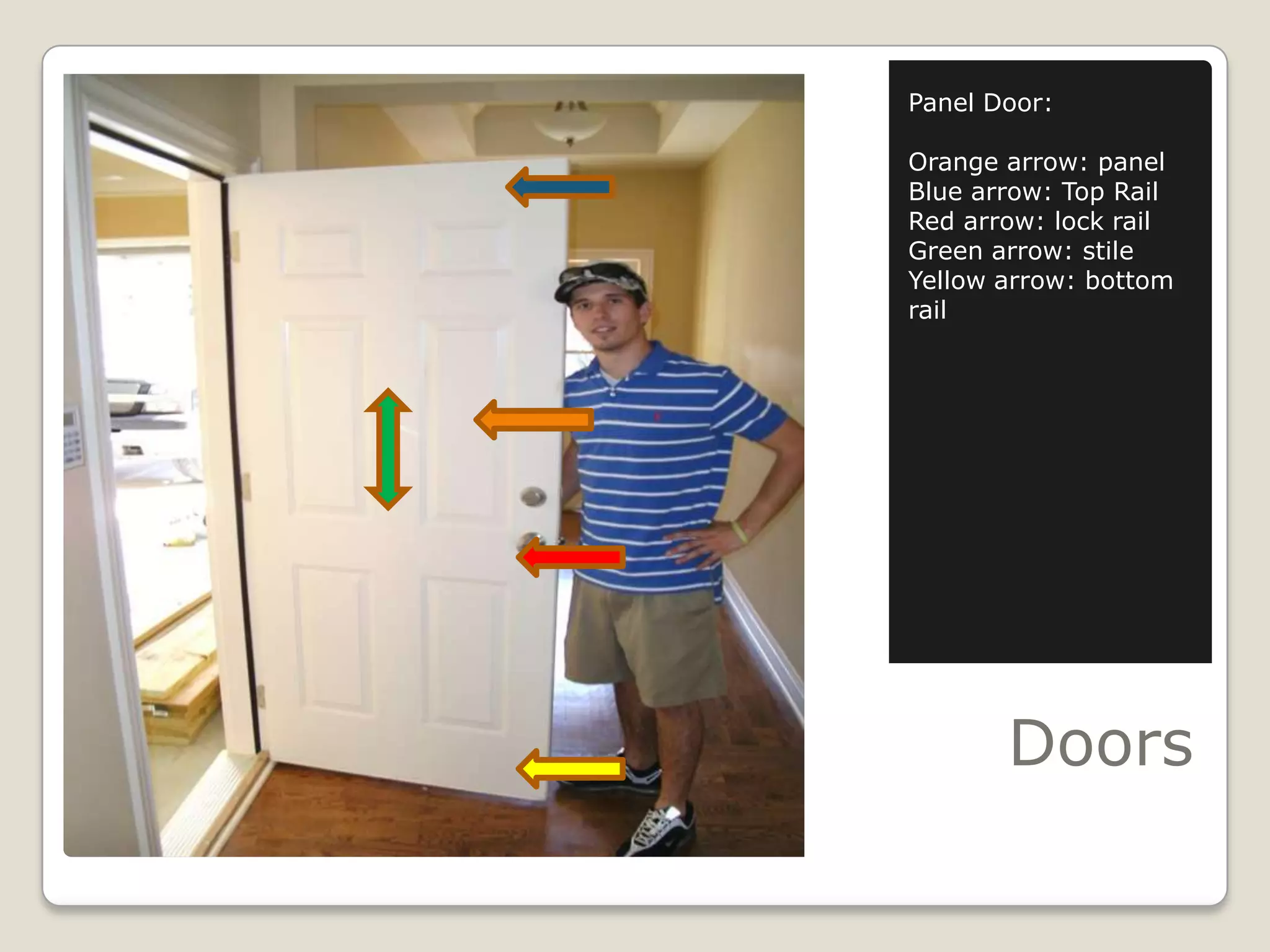
DoorsPanel Door:Orange arrow: panelBlue arrow: Top RailRed arrow: lock railGreen arrow: stileYellow arrow: bottom rail
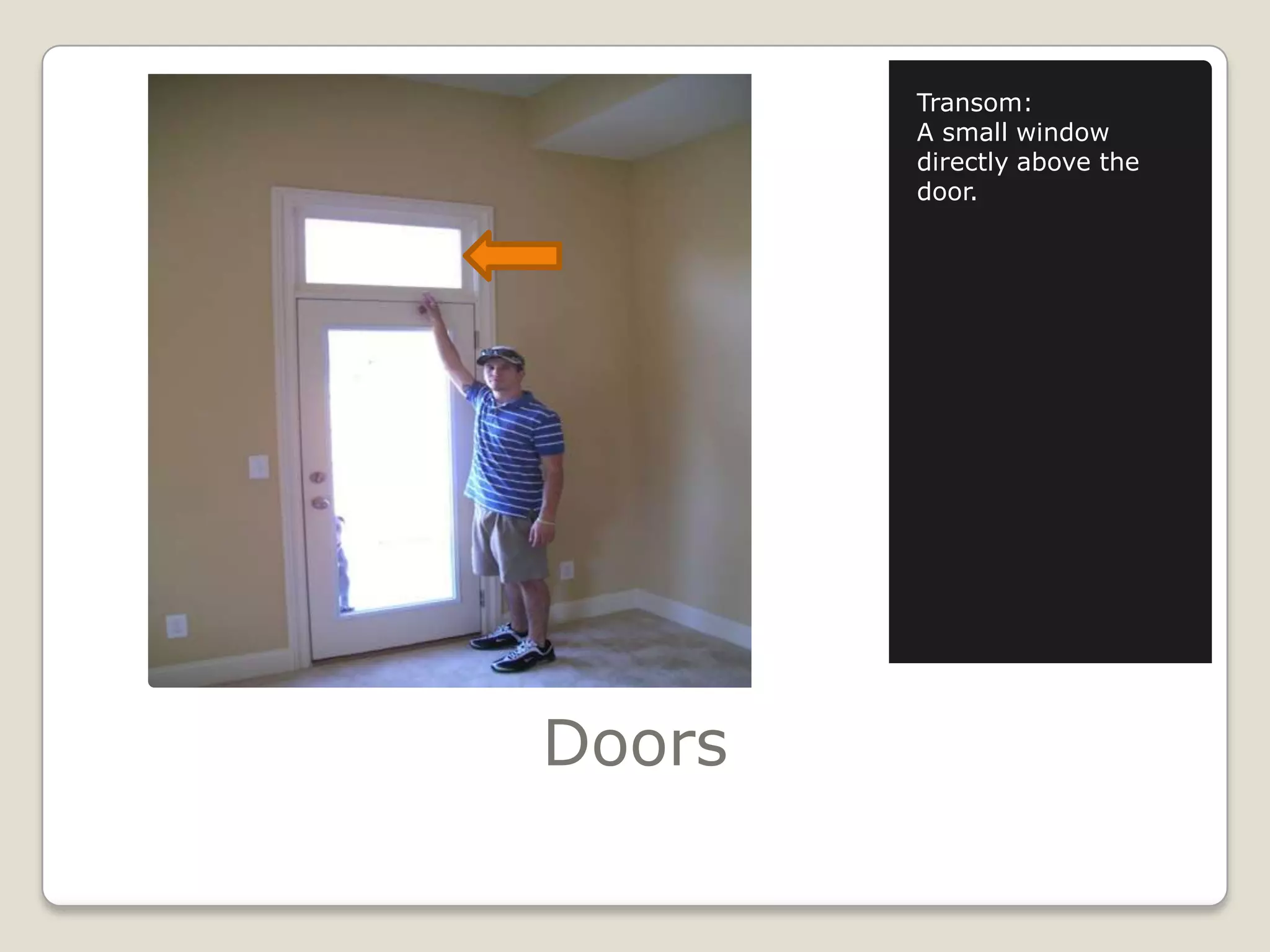
DoorsTransom:A small window directly above the door.
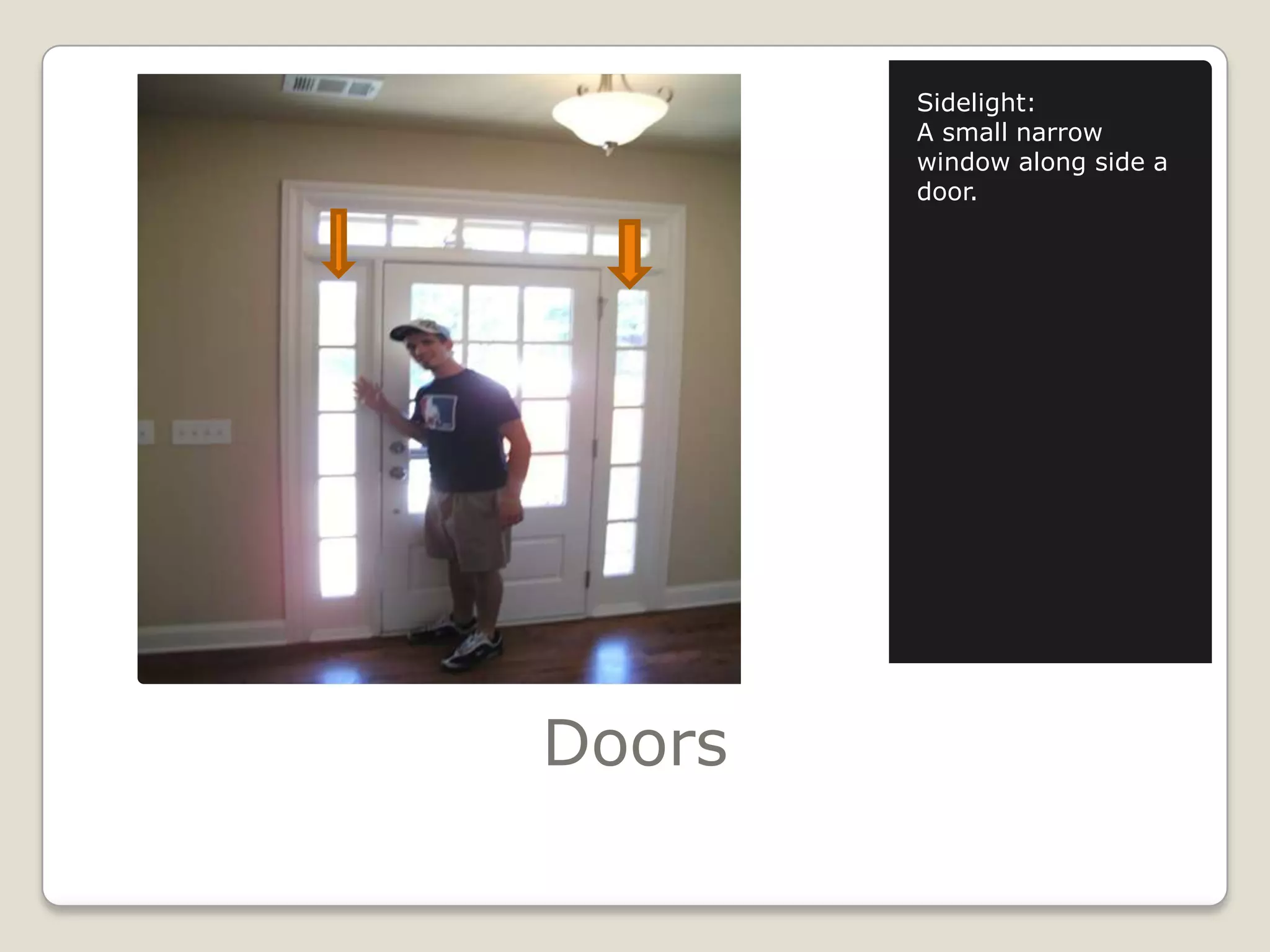
DoorsSidelight:A small narrow window along side a door.
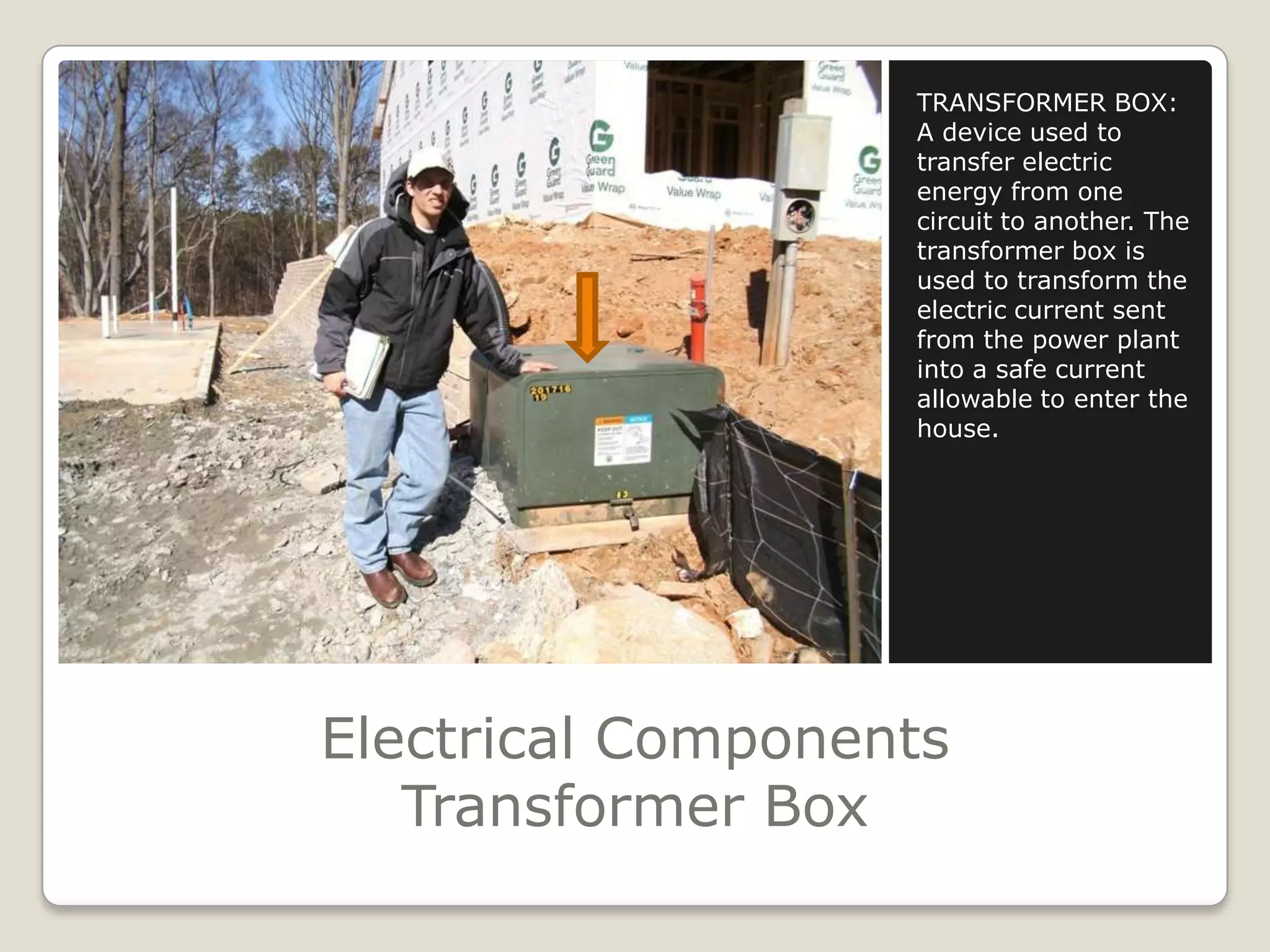
Electrical ComponentsTransformer BoxTRANSFORMER BOX:A device used to transfer electric energy from one circuit to another. The transformer box is used to transform the electric current sent from the power plant into a safe current allowable to enter the house.
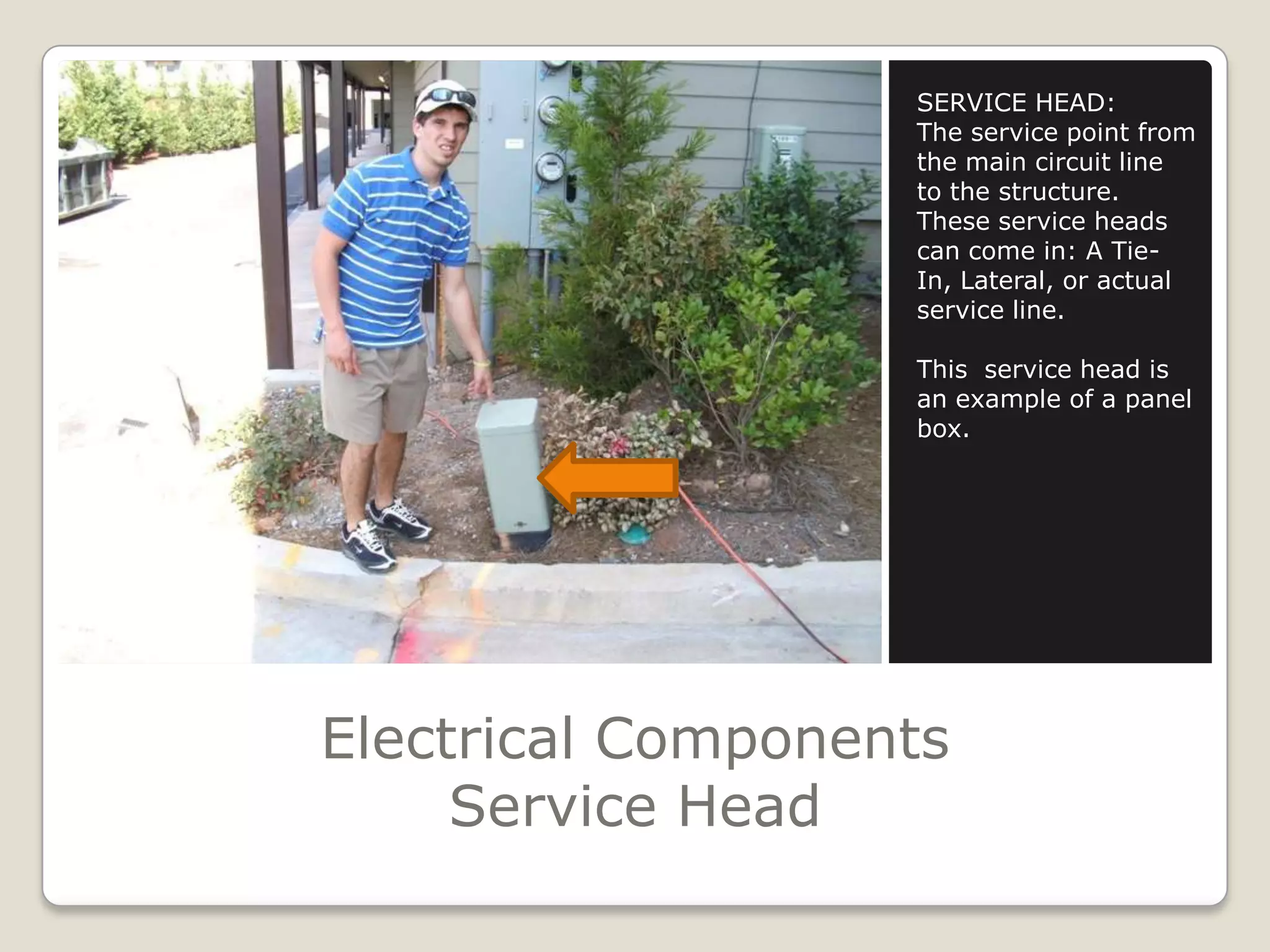
Electrical ComponentsService HeadSERVICE HEAD:The service point from the main circuit line to the structure. These service heads can come in: A Tie-In, Lateral, or actual service line.This  service head is an example of a panel box.
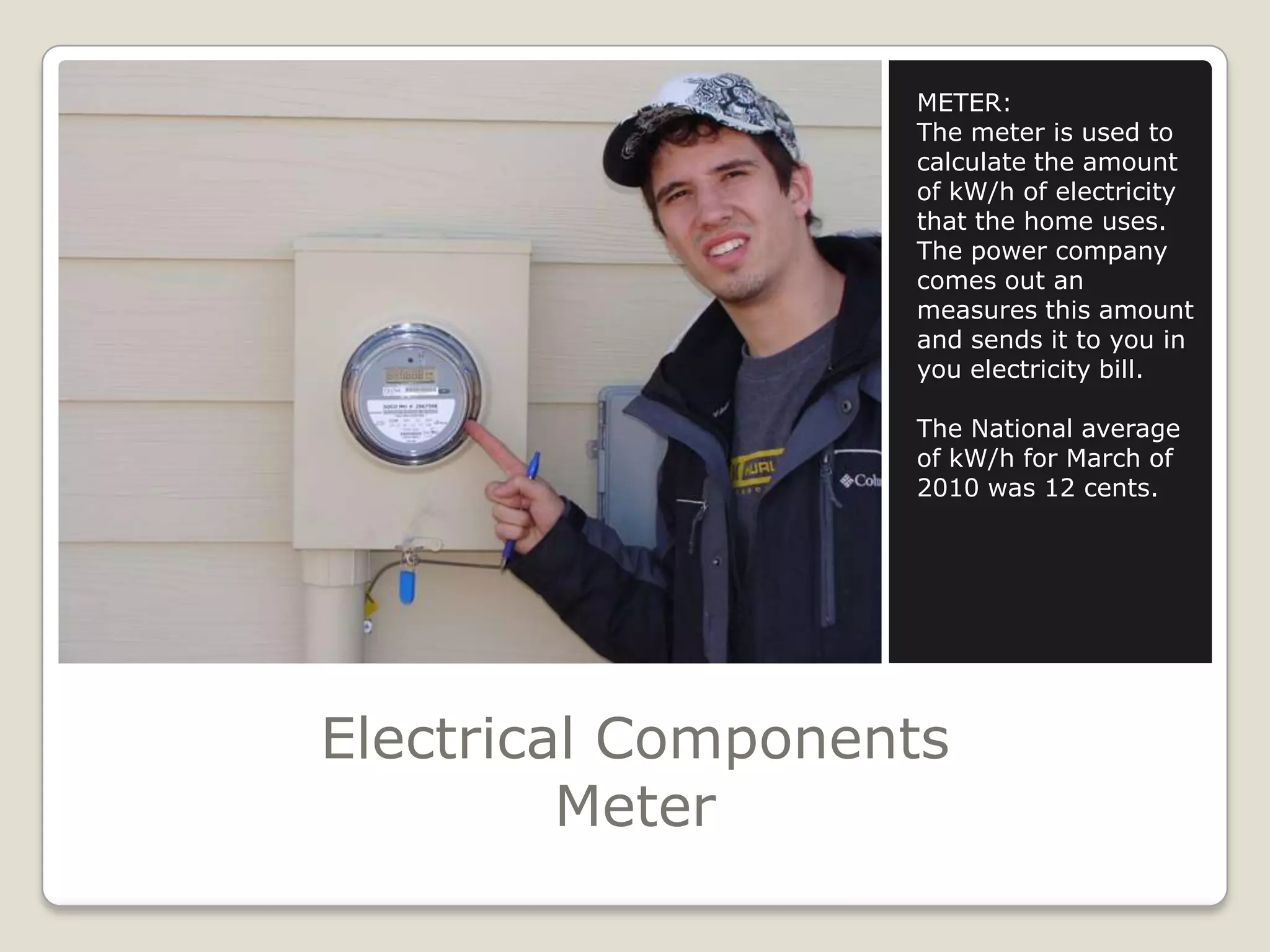
Electrical ComponentsMeterMETER:The meter is used to calculate the amount of kW/h of electricity that the home uses.The power company comes out an measures this amount and sends it to you in you electricity bill.The National average of kW/h for March of 2010 was 12 cents.
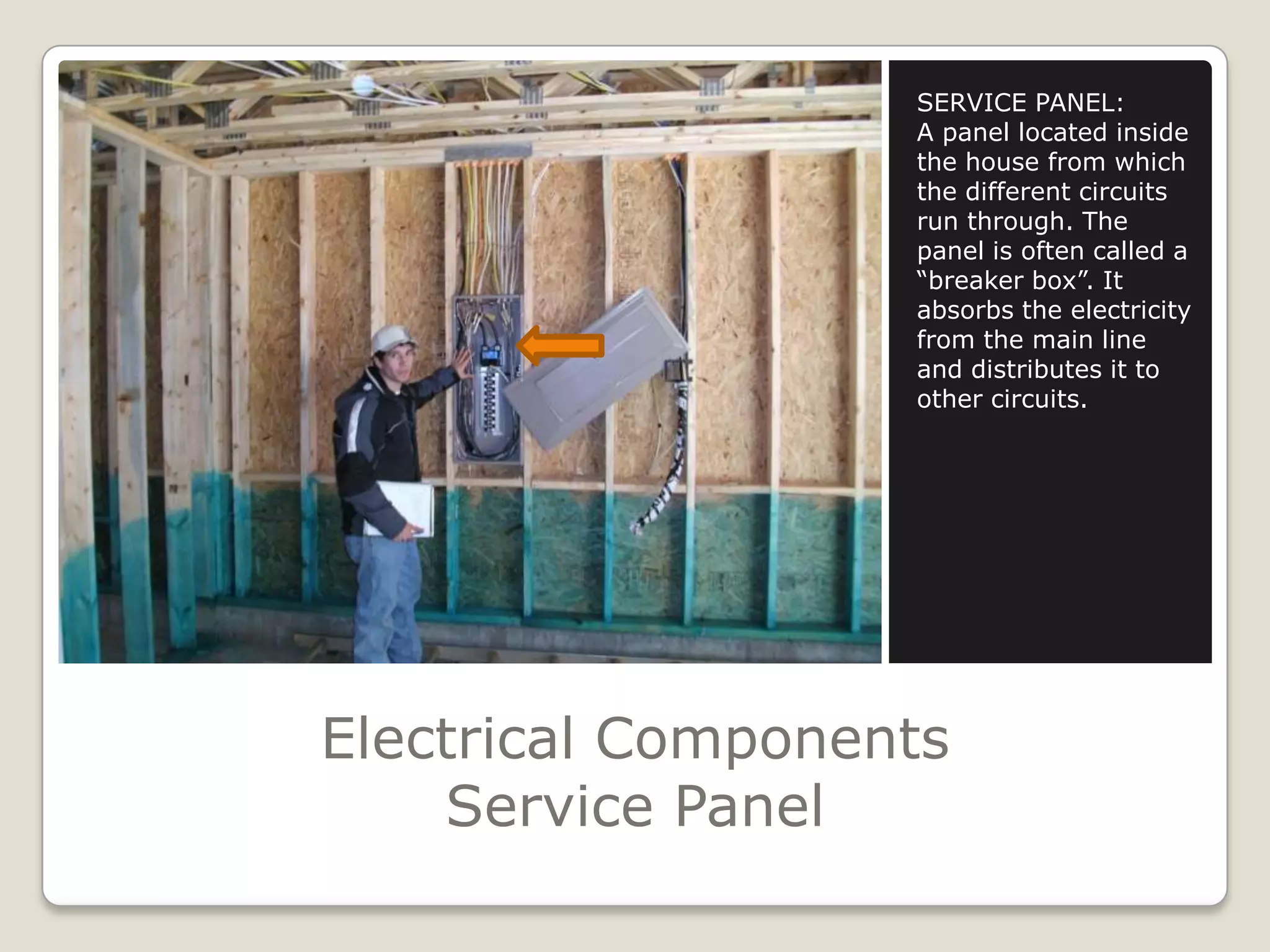
Electrical ComponentsService PanelSERVICE PANEL:A panel located inside the house from which the different circuits run through. The panel is often called a “breaker box”. It absorbs the electricity from the main line and distributes it to other circuits.
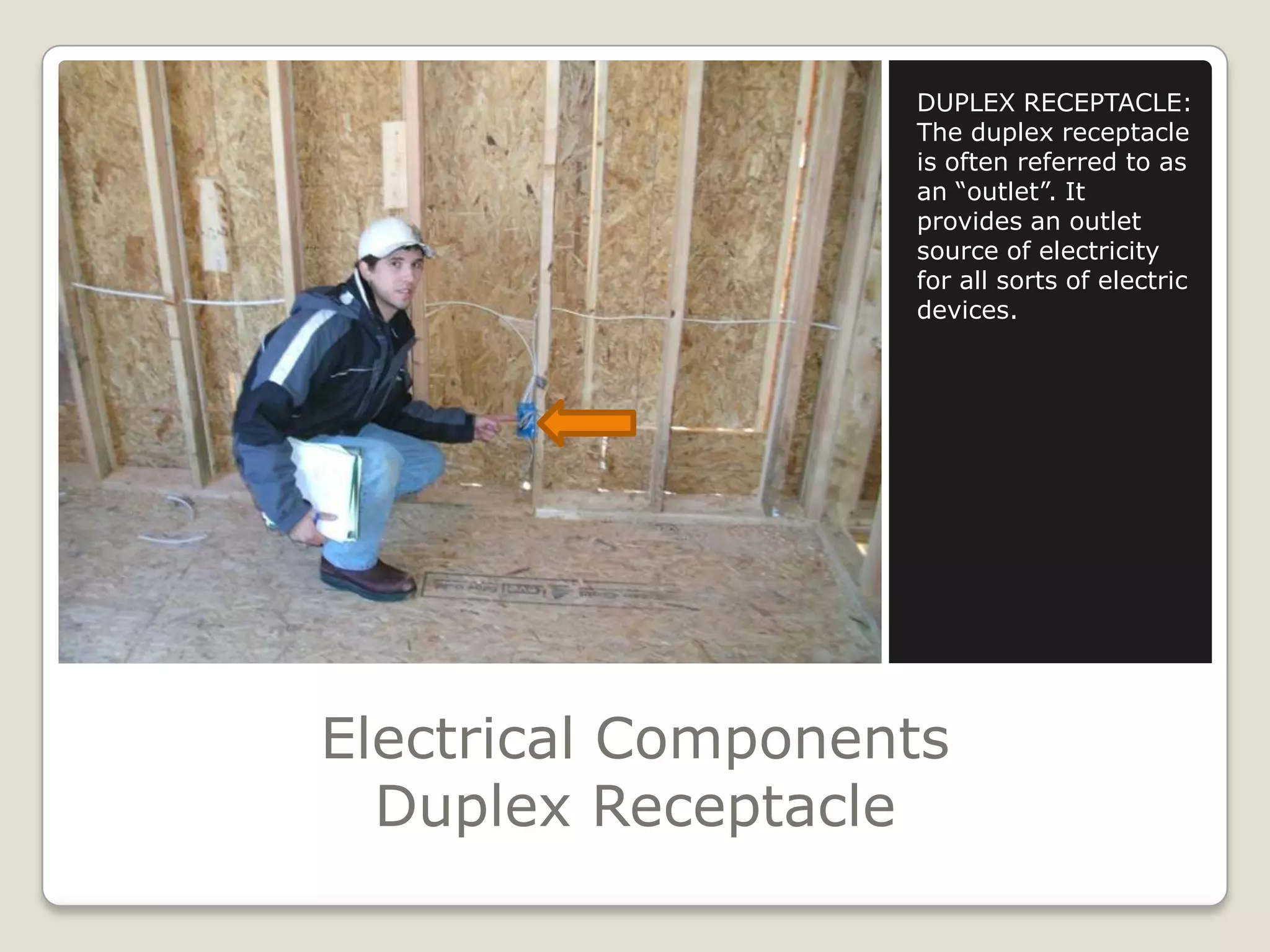
Electrical ComponentsDuplex ReceptacleDUPLEX RECEPTACLE:The duplex receptacle is often referred to as an “outlet”. It provides an outlet source of electricity for all sorts of electric devices.
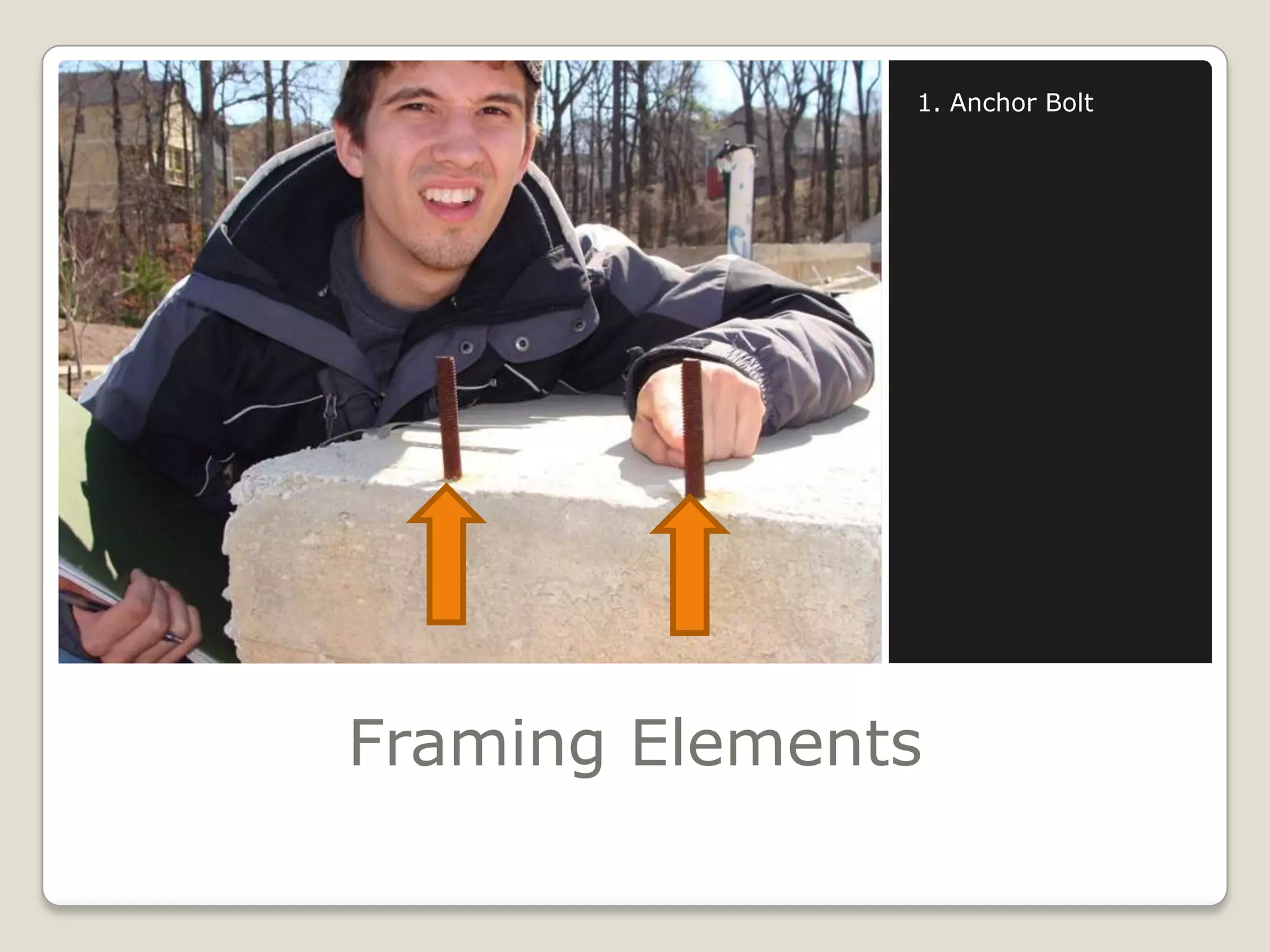
Framing Elements1. Anchor Bolt
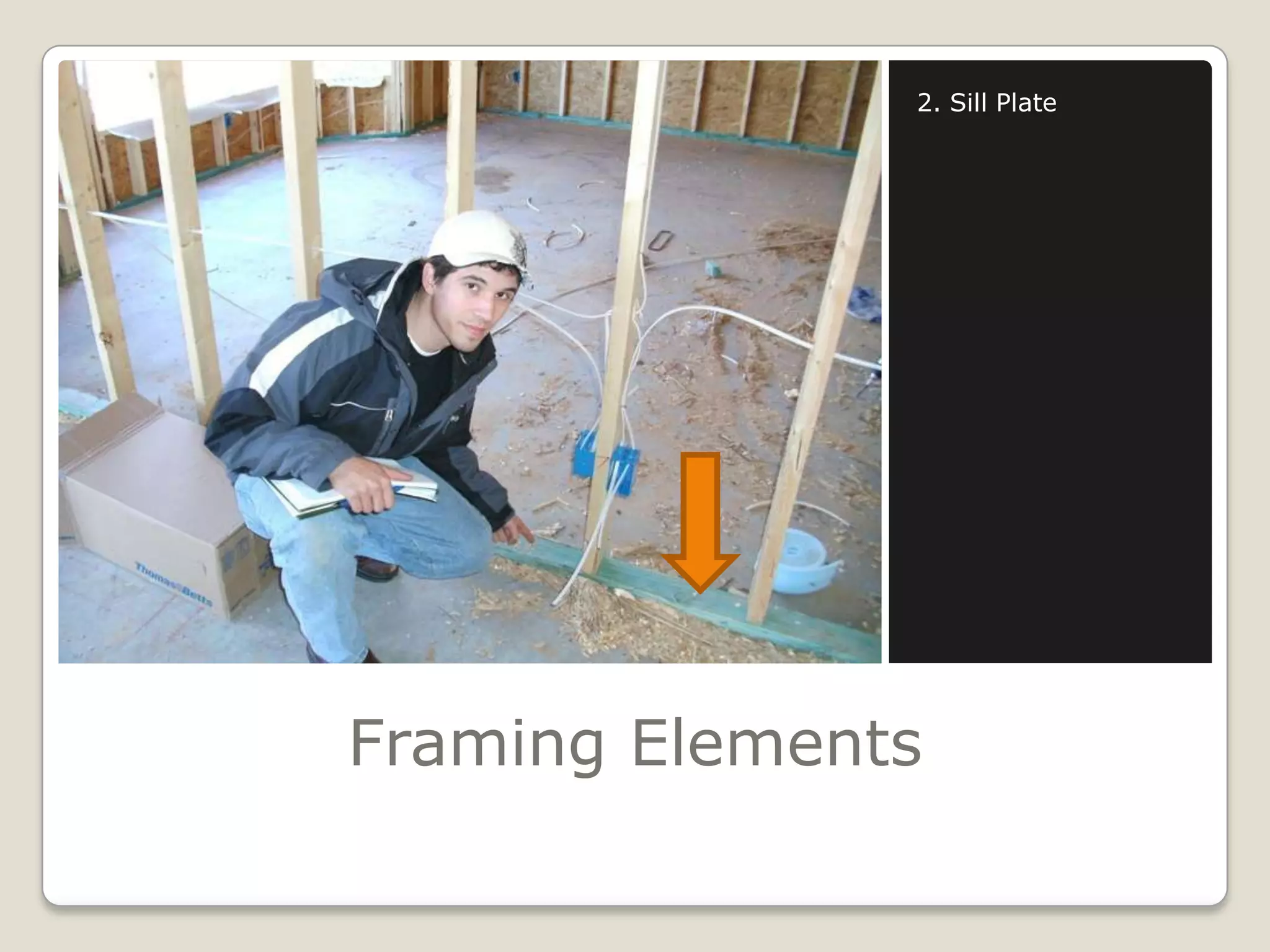
Framing Elements2. Sill Plate
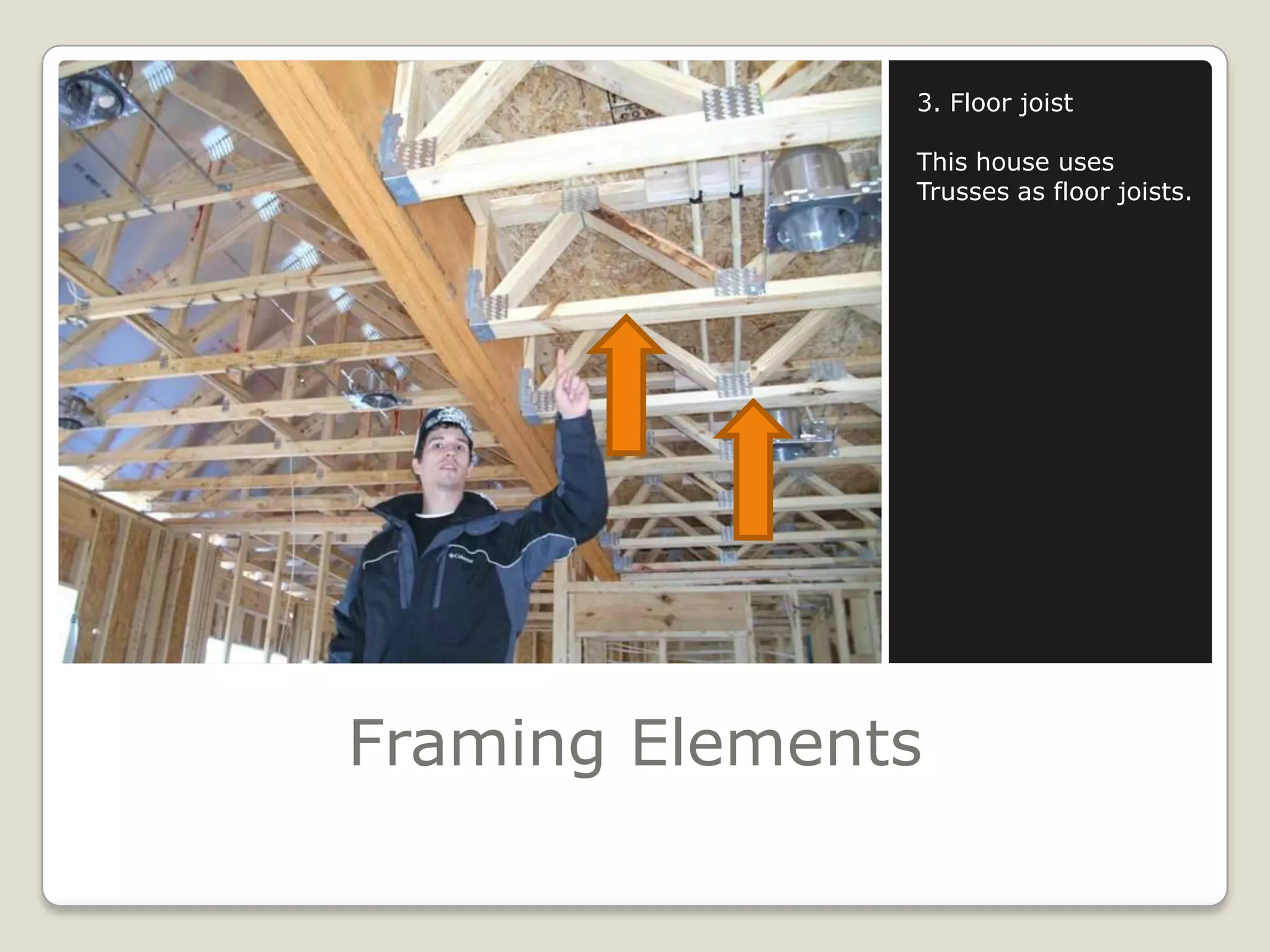
Framing Elements3. Floor joistThis house uses Trusses as floor joists.
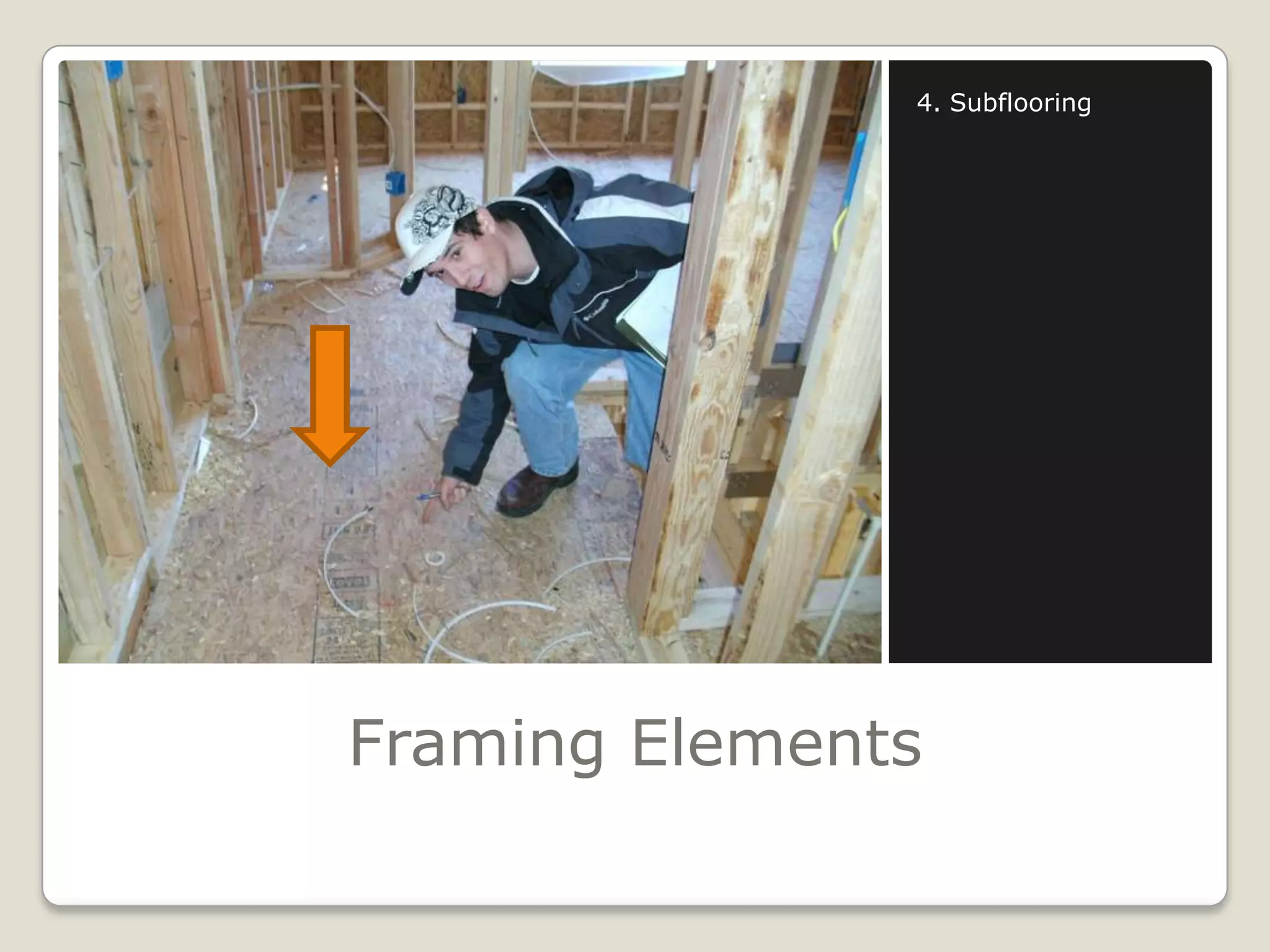
Framing Elements4. Subflooring
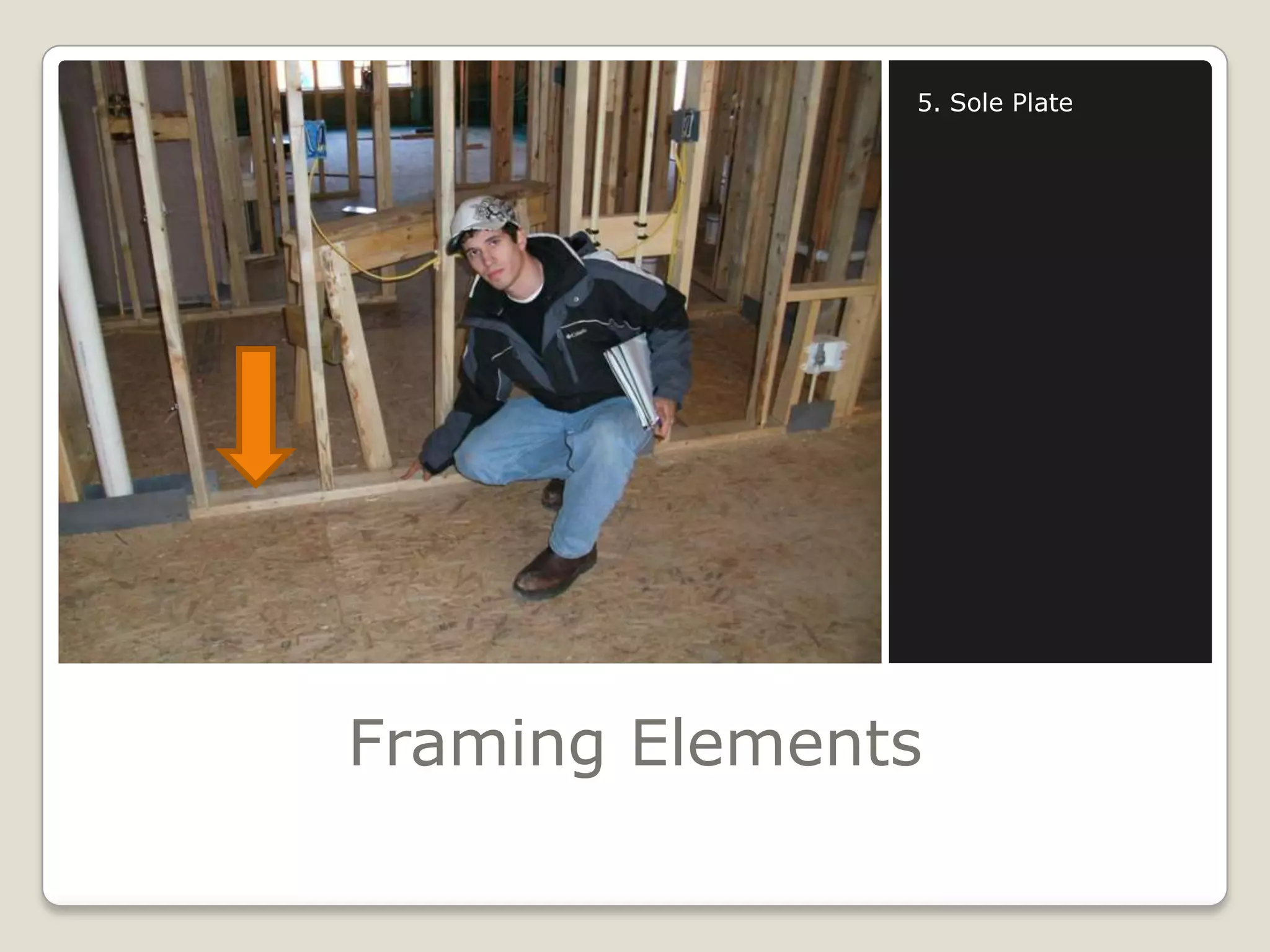
Framing Elements5. Sole Plate
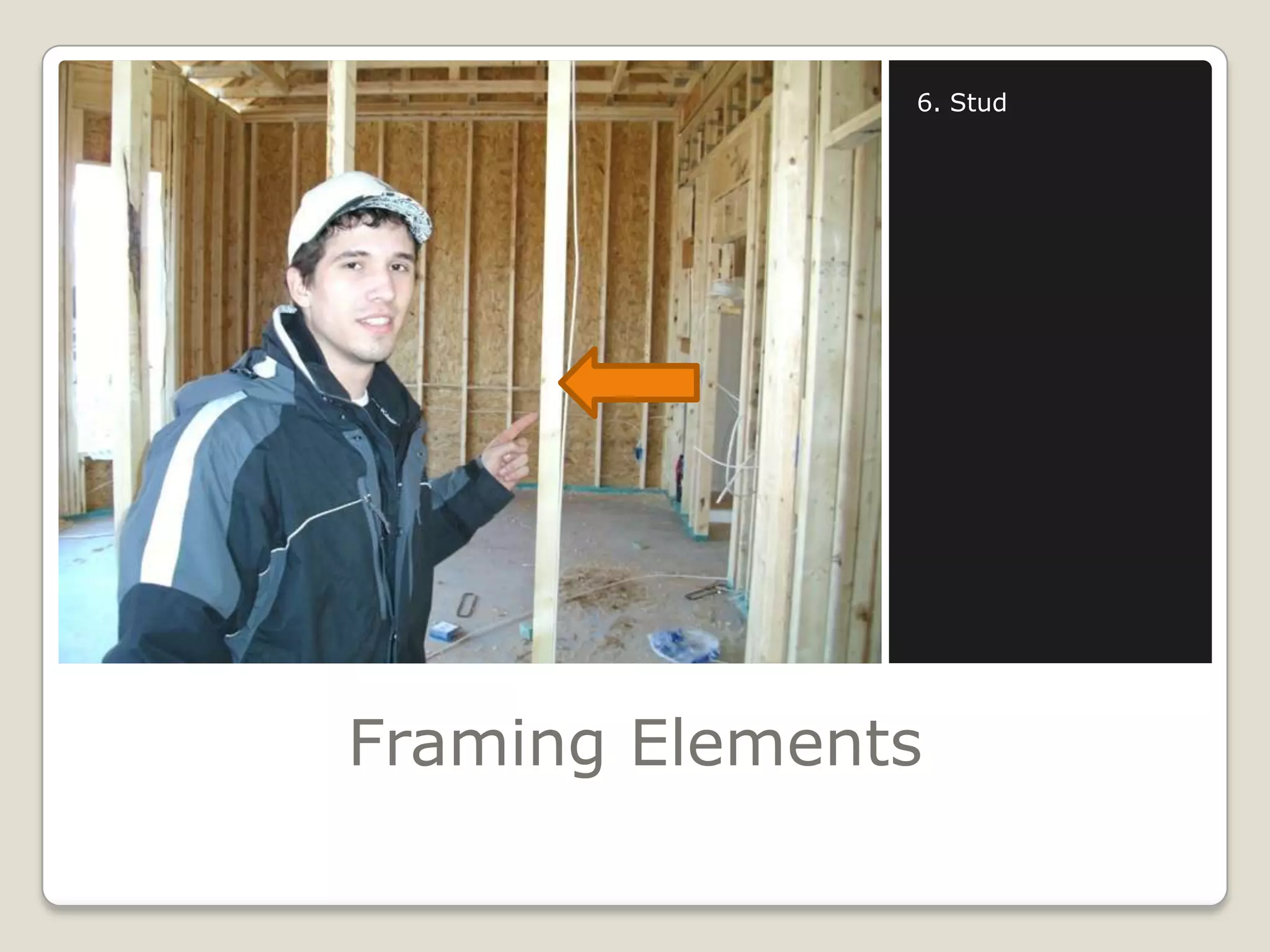
Framing Elements6. Stud
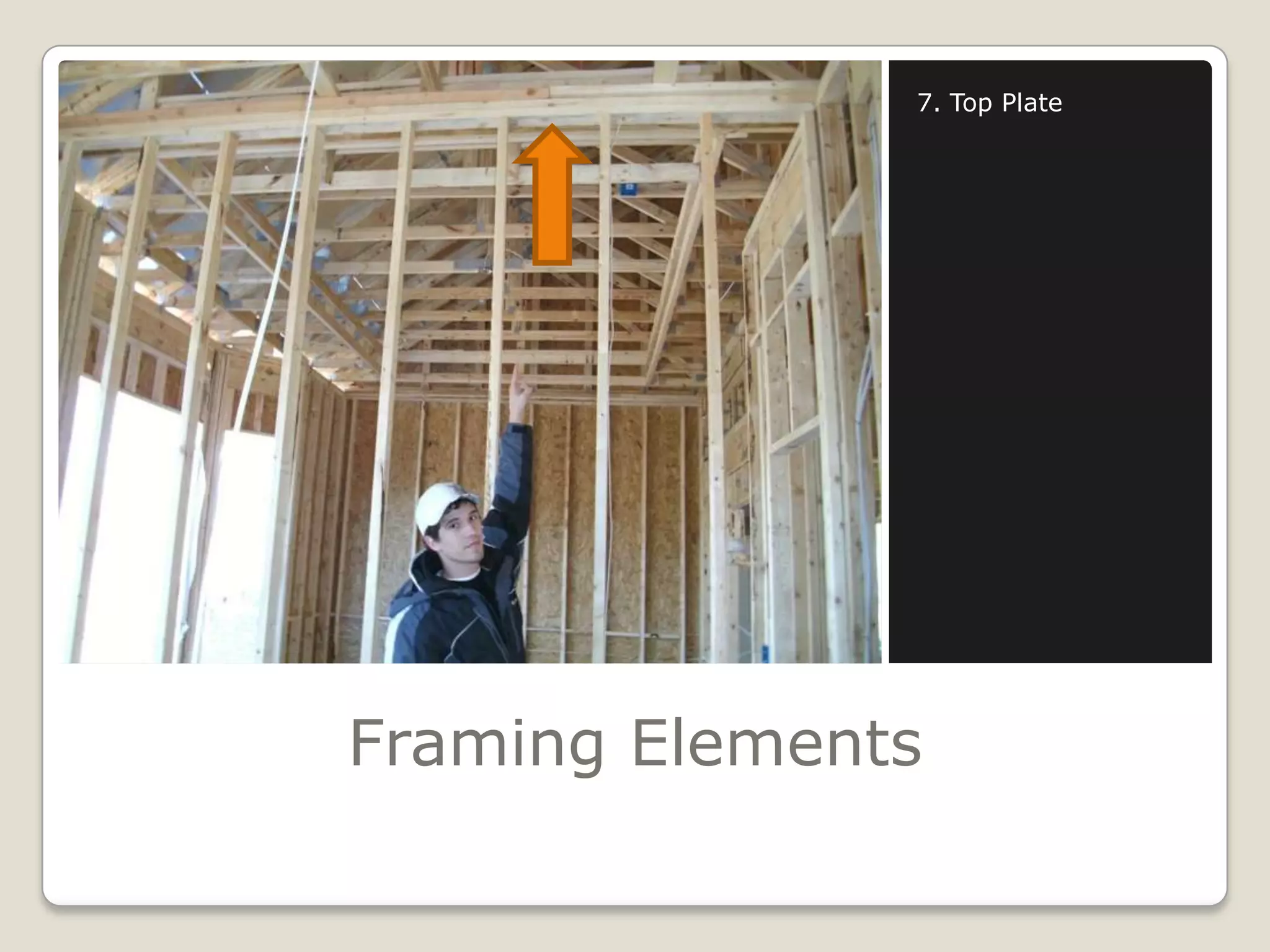
Framing Elements7. Top Plate
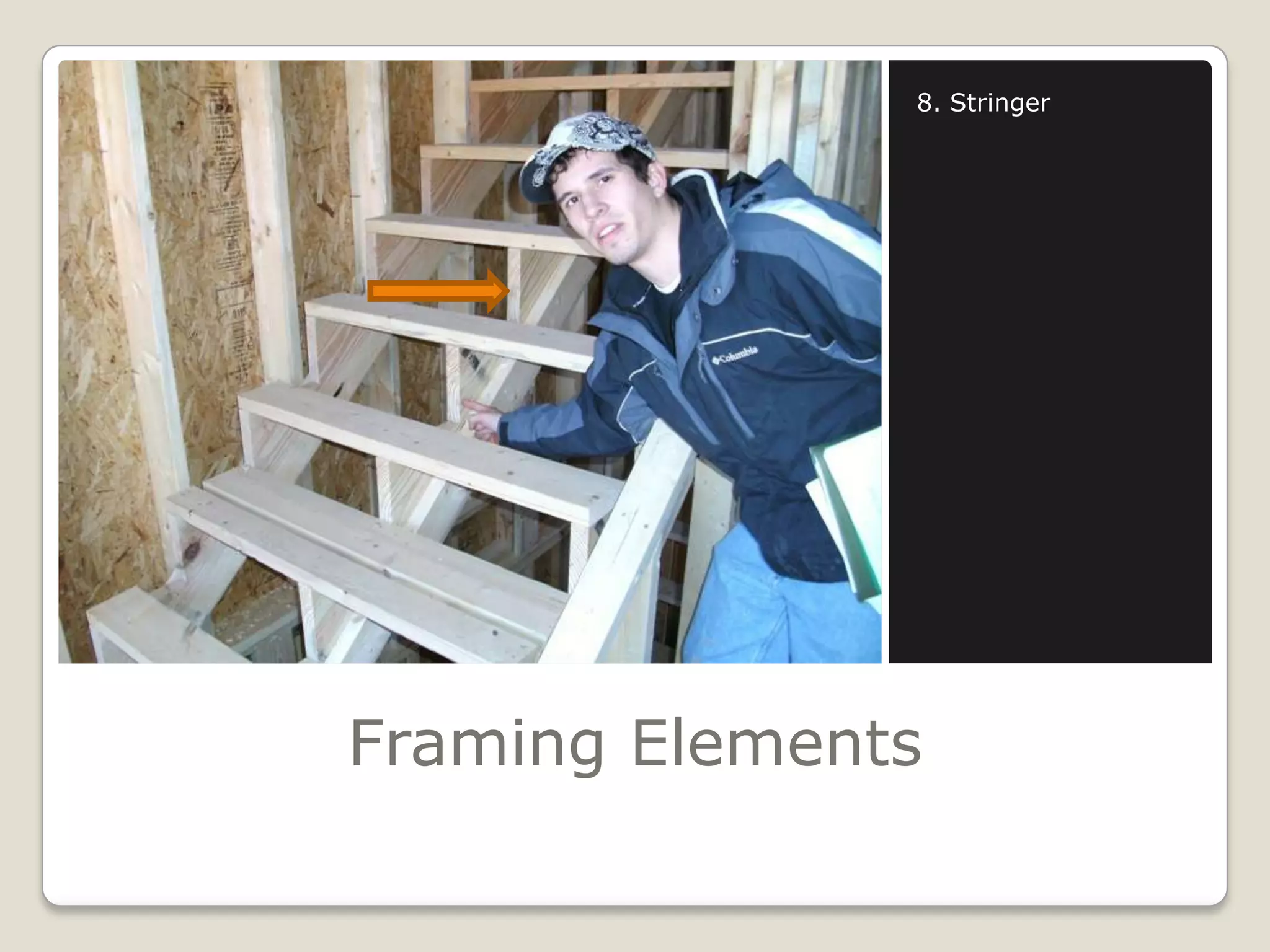
Framing Elements8. Stringer
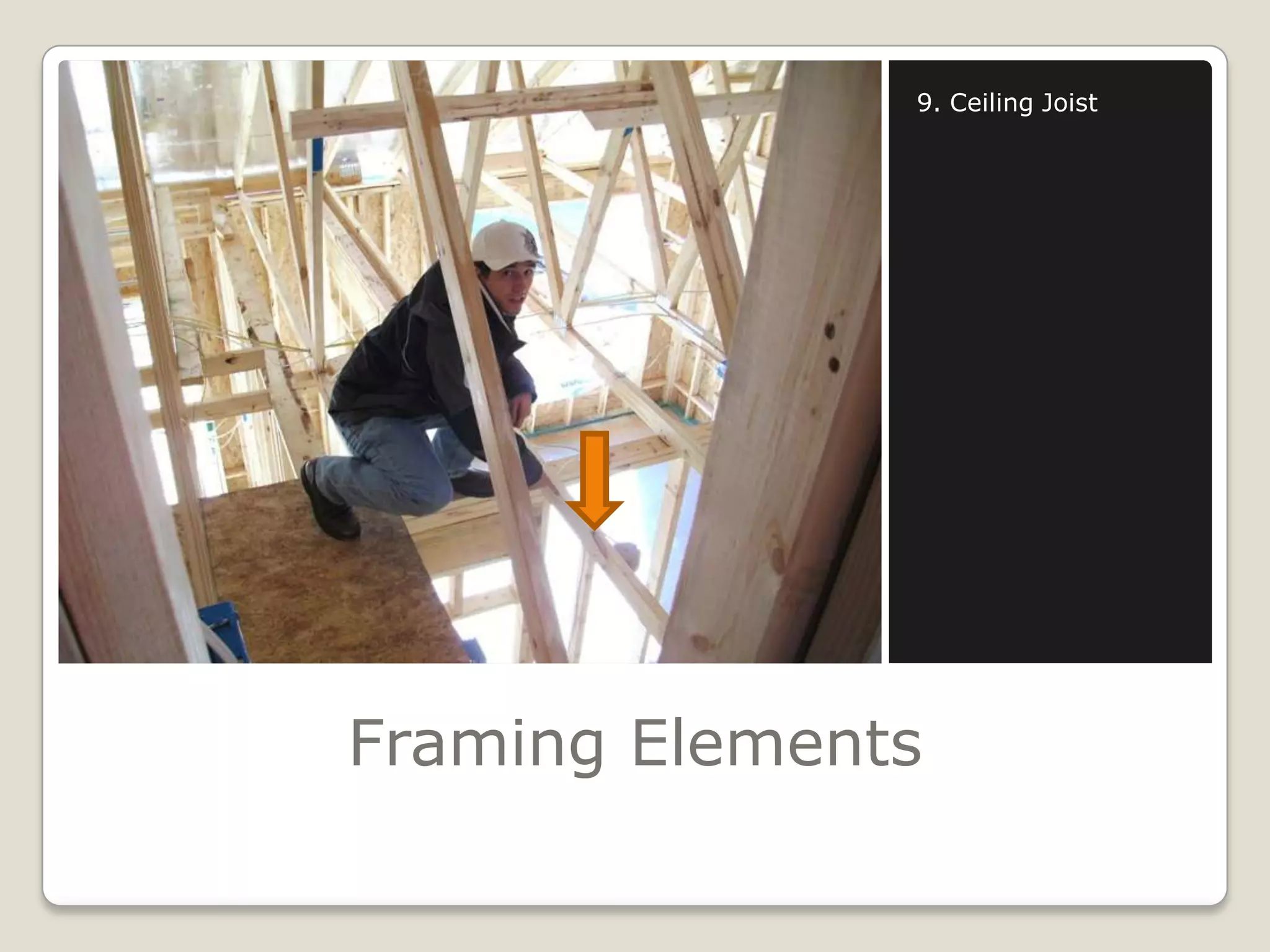
Framing Elements9. Ceiling Joist
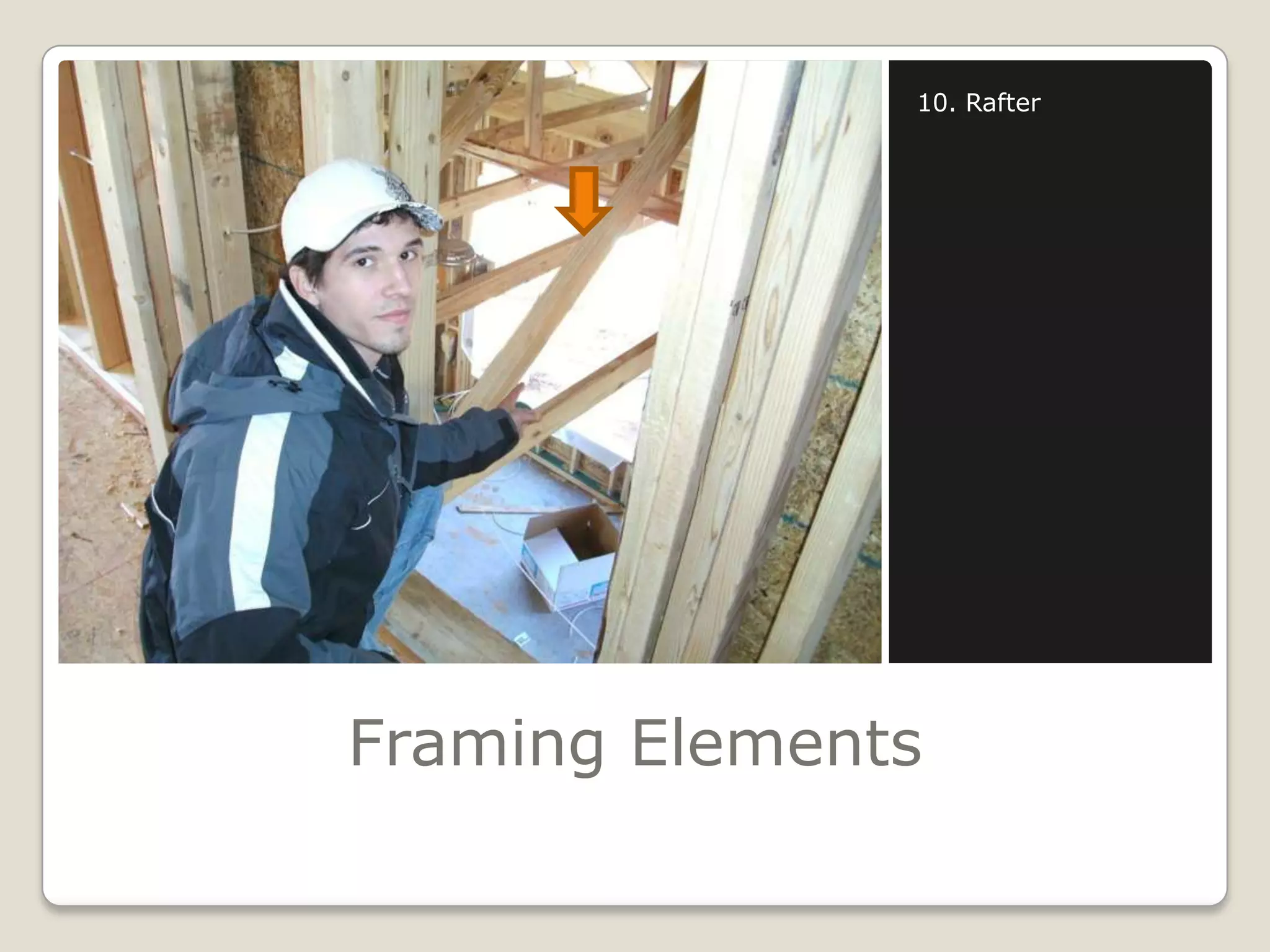
Framing Elements10. Rafter
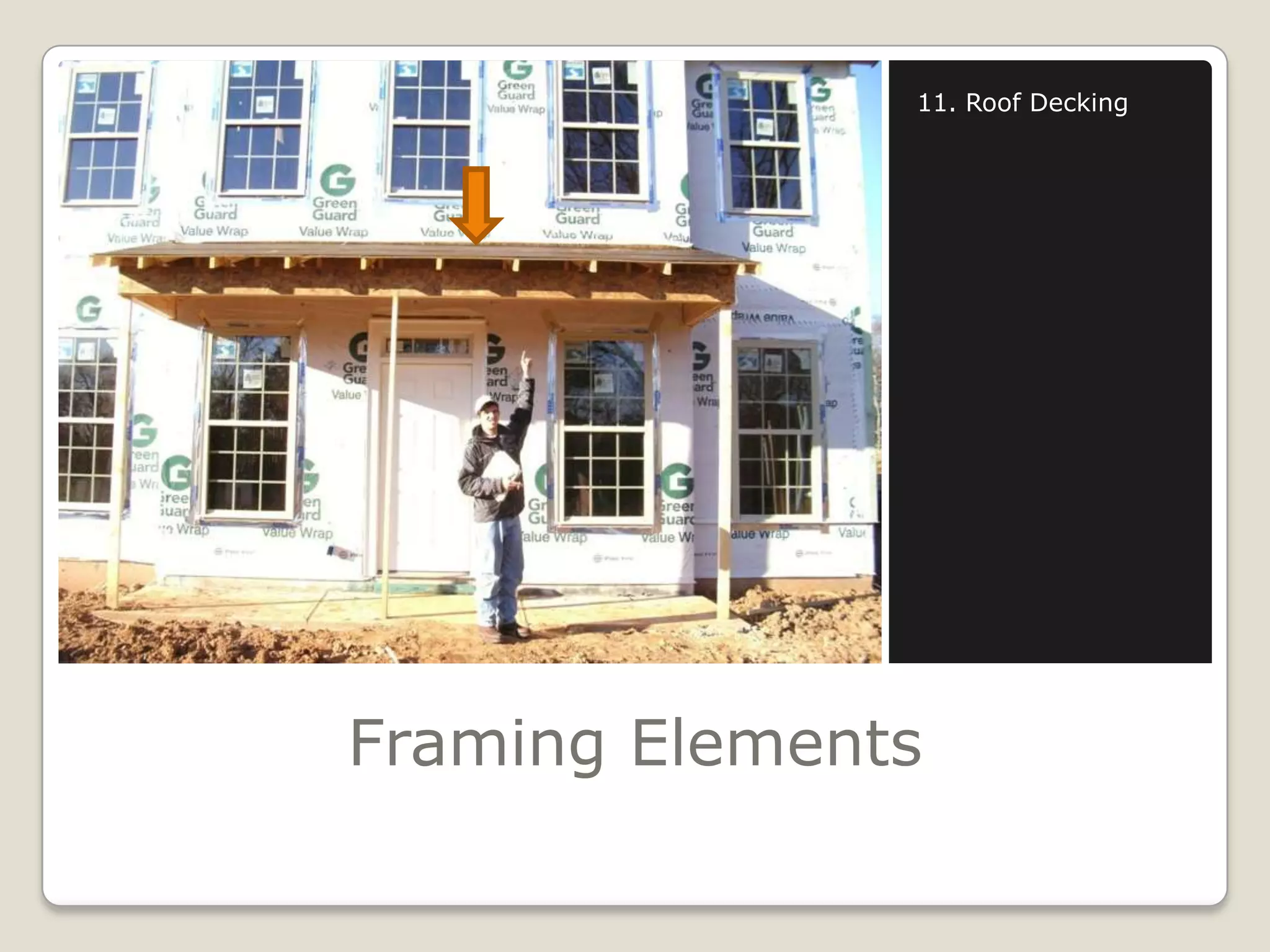
Framing Elements11. Roof Decking
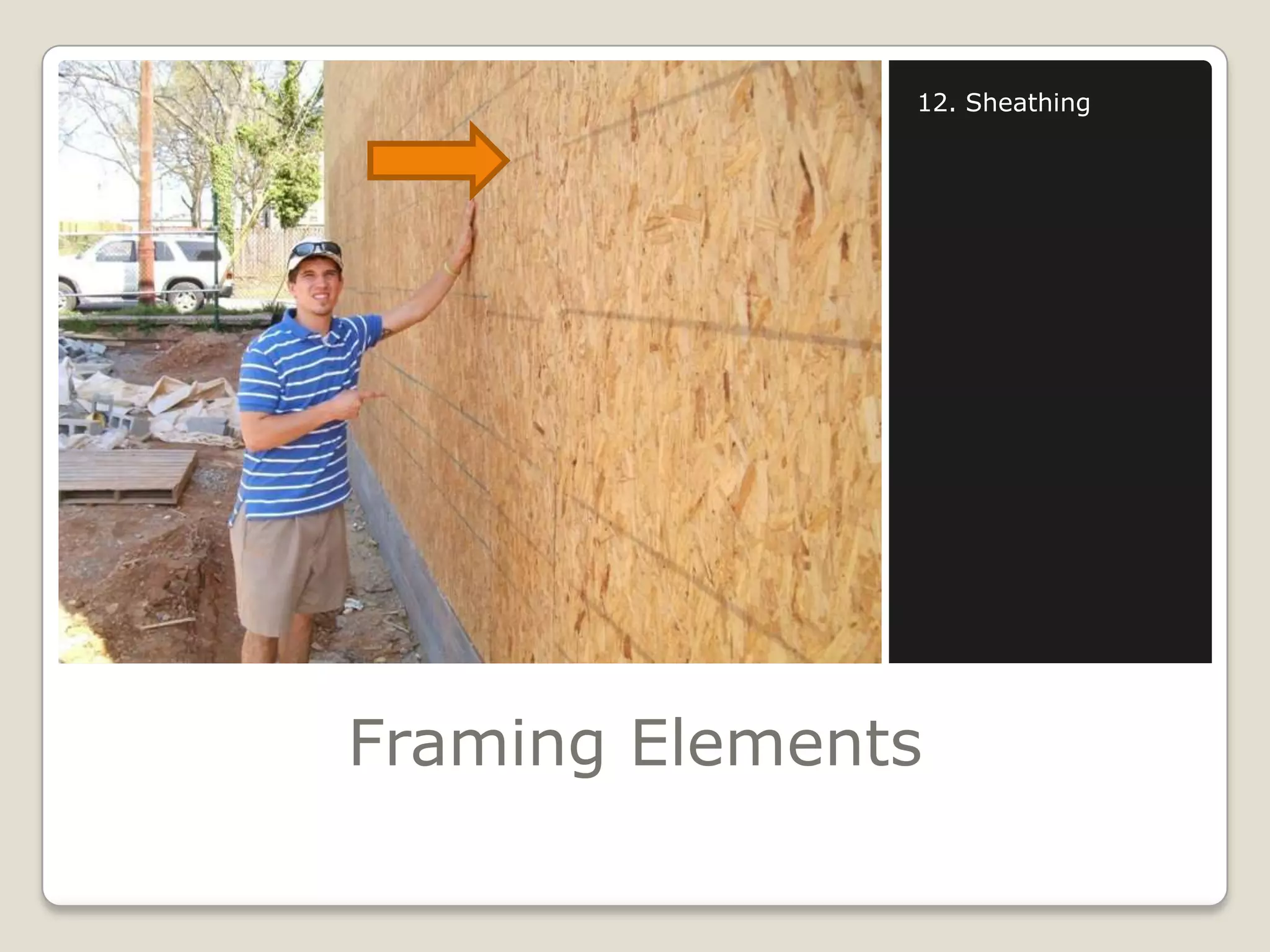
Framing Elements12. Sheathing
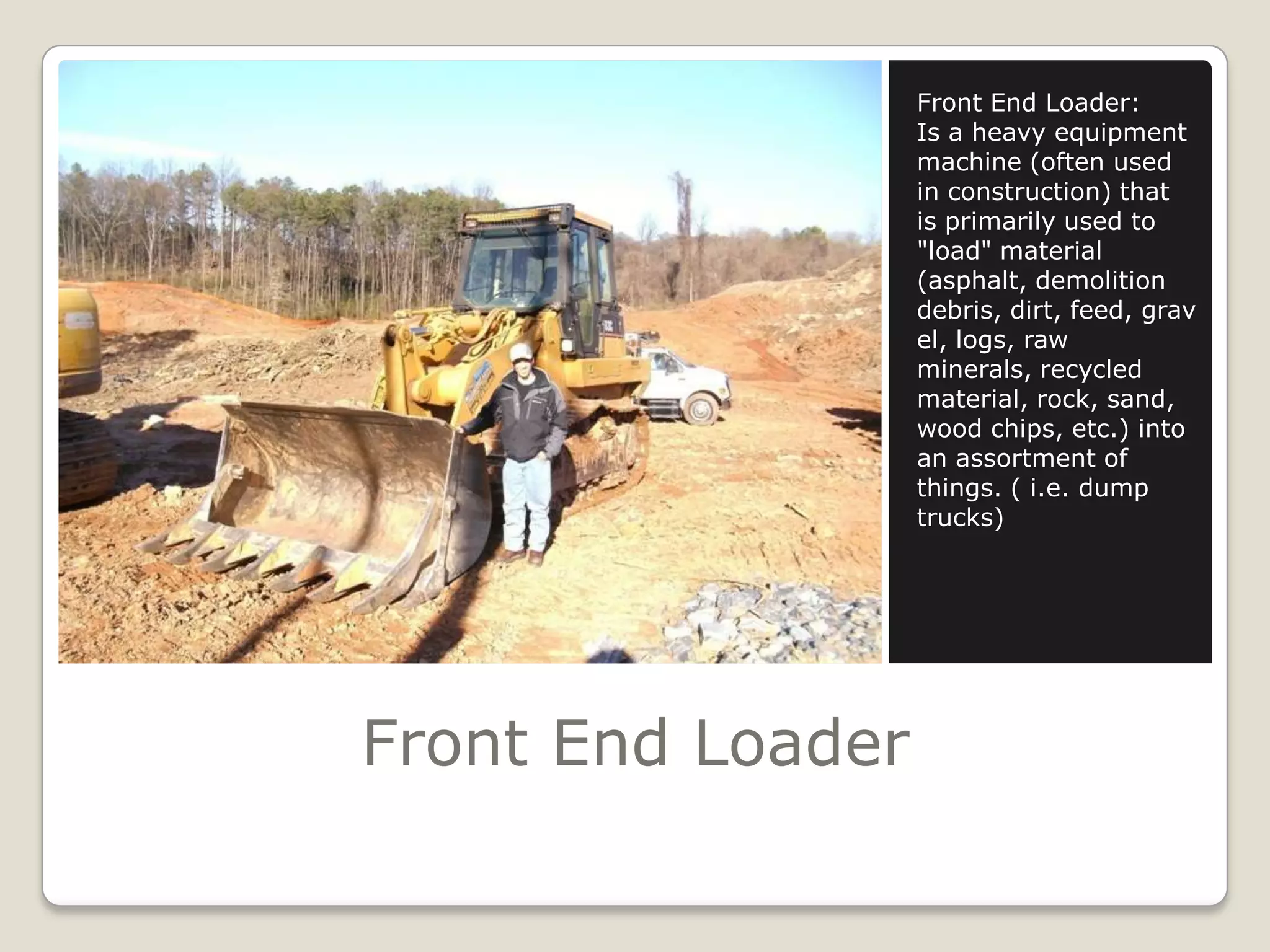
Front End LoaderFront End Loader:Is a heavy equipment machine (often used in construction) that is primarily used to "load" material (asphalt, demolition debris, dirt, feed, gravel, logs, raw minerals, recycled material, rock, sand, wood chips, etc.) into an assortment of things. ( i.e. dump trucks)
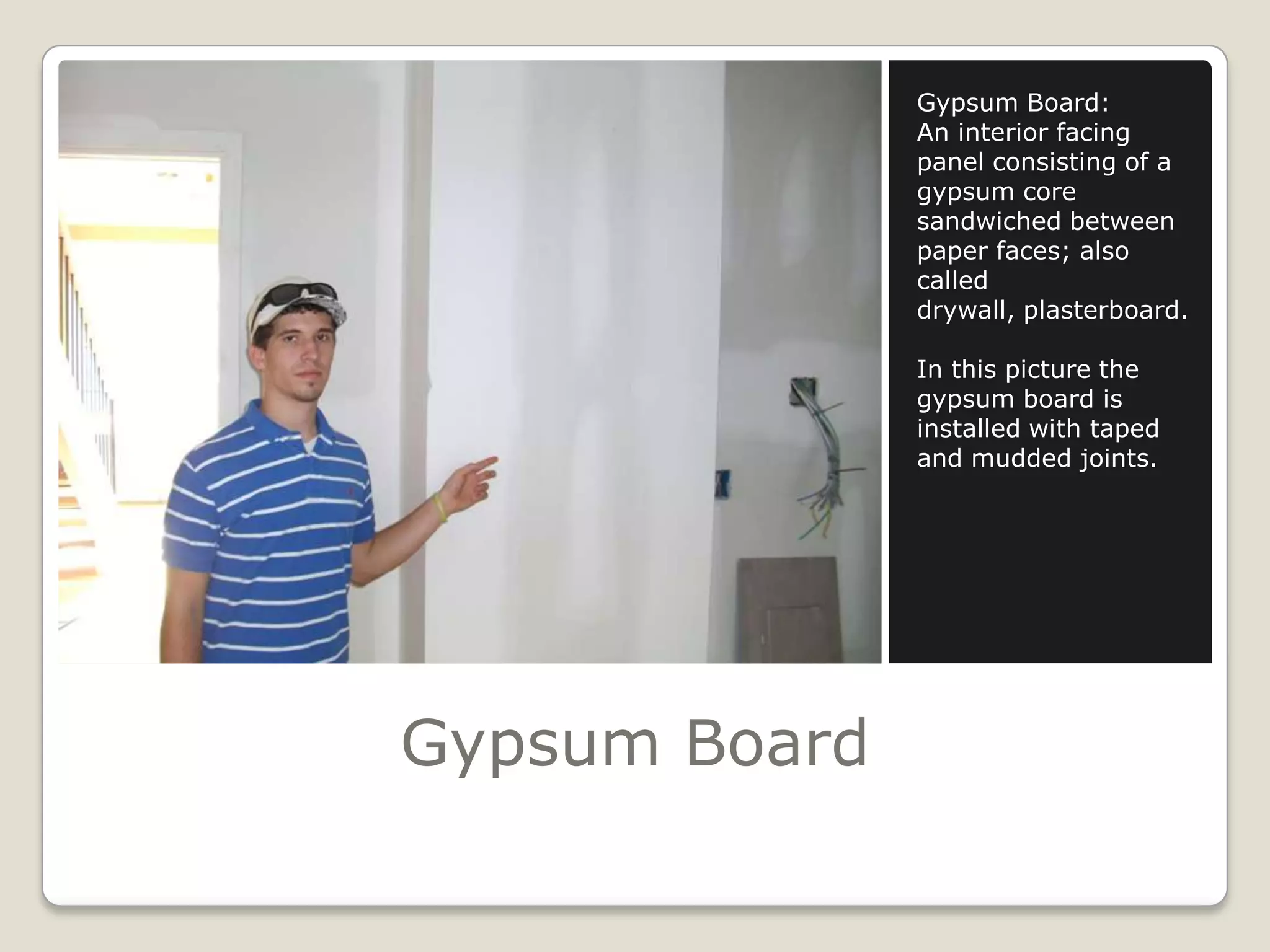
Gypsum BoardGypsum Board:An interior facing panel consisting of a gypsum core sandwiched between paper faces; also called drywall, plasterboard.In this picture the gypsum board is installed with taped and mudded joints.
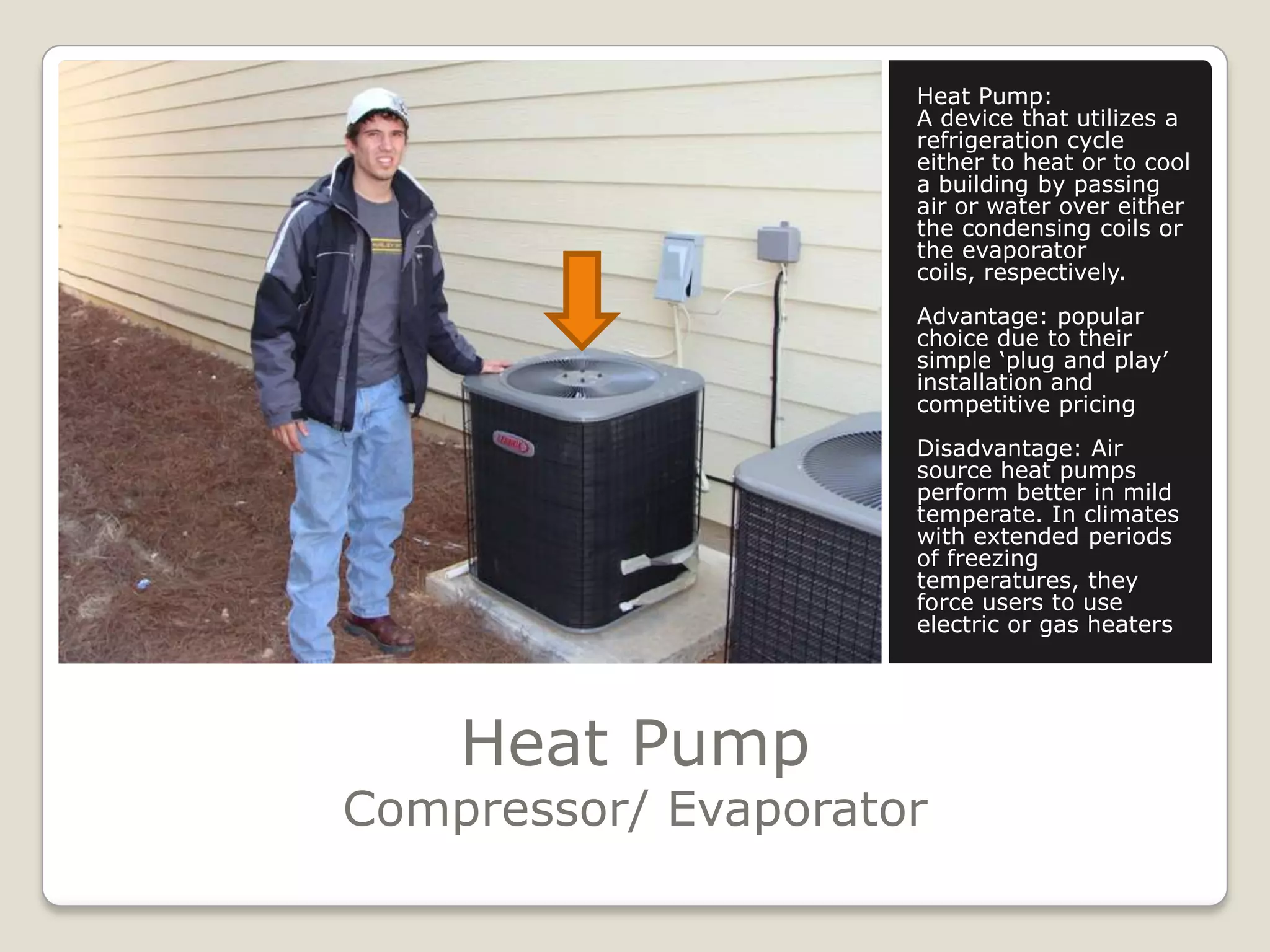
Heat PumpCompressor/ EvaporatorHeat Pump:A device that utilizes a refrigeration cycle either to heat or to cool a building by passing air or water over either the condensing coils or the evaporator coils, respectively.Advantage: popular choice due to their simple ‘plug and play’ installation and competitive pricingDisadvantage: Air source heat pumps perform better in mild temperate. In climates with extended periods of freezing temperatures, they force users to use electric or gas heaters
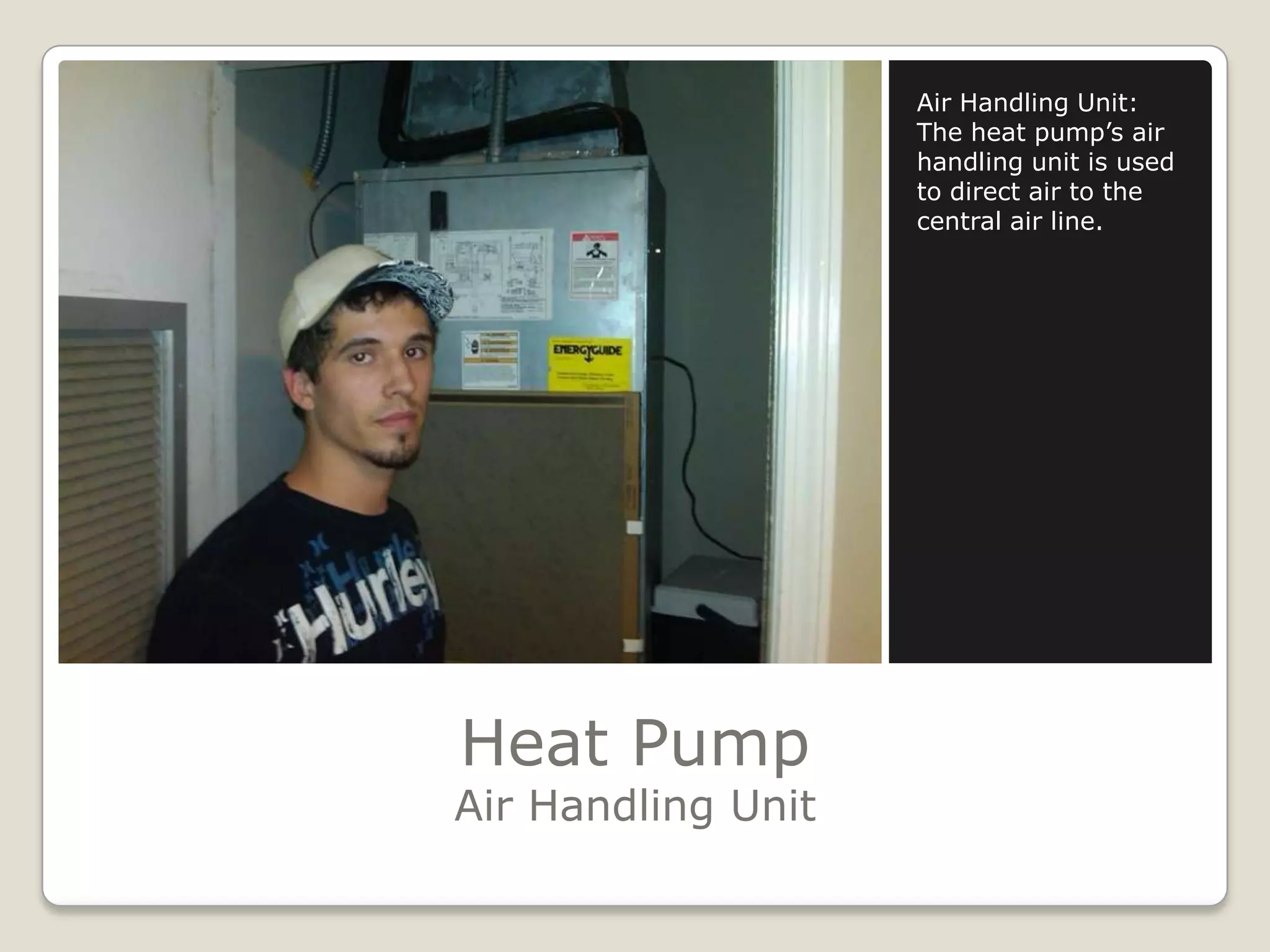
Heat PumpAir Handling UnitAir Handling Unit:The heat pump’s air handling unit is used to direct air to the central air line.
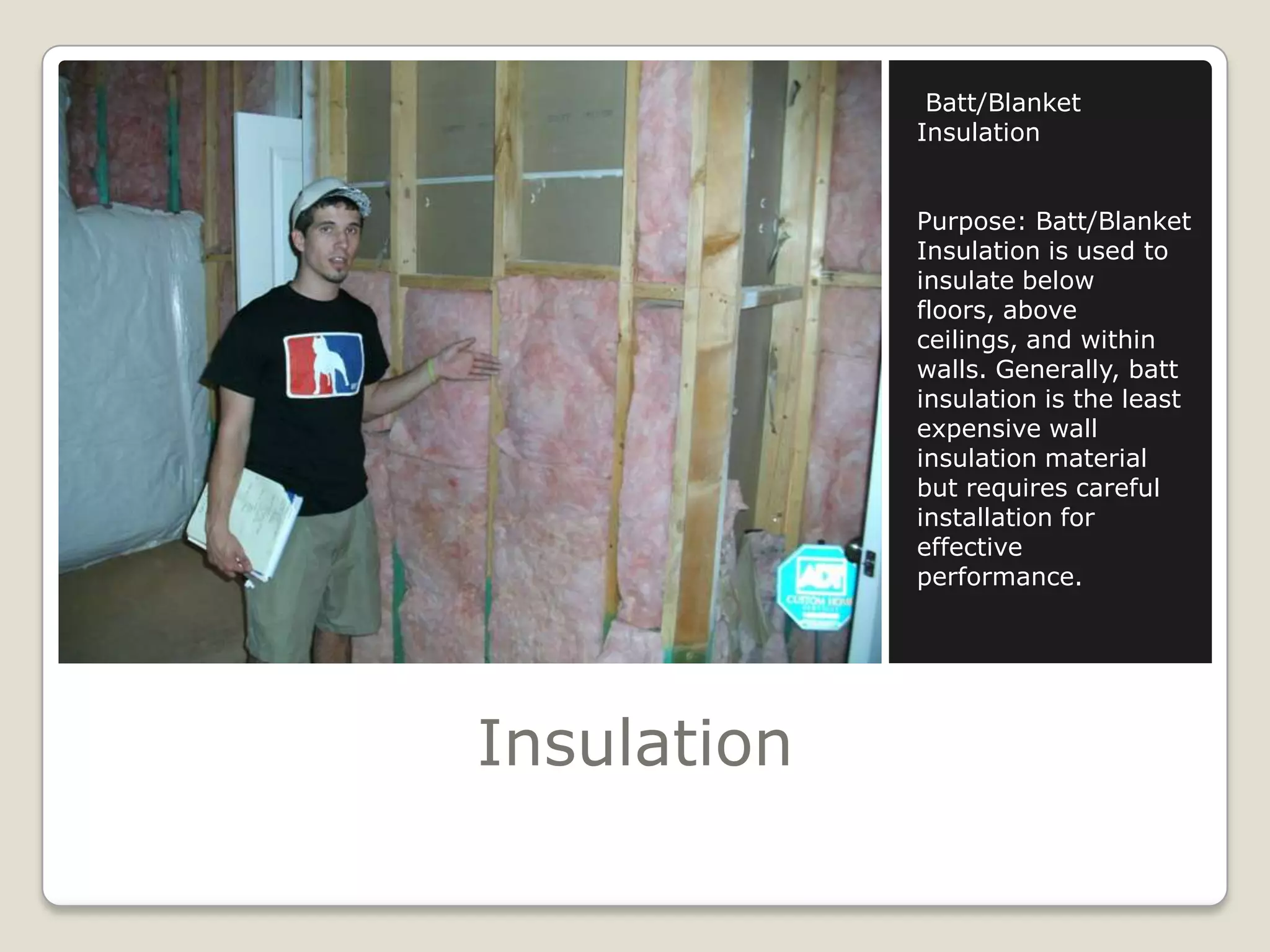
InsulationBatt/Blanket InsulationPurpose: Batt/Blanket Insulation is used to insulate below floors, above ceilings, and within walls. Generally, batt insulation is the least expensive wall insulation material but requires careful installation for effective performance.
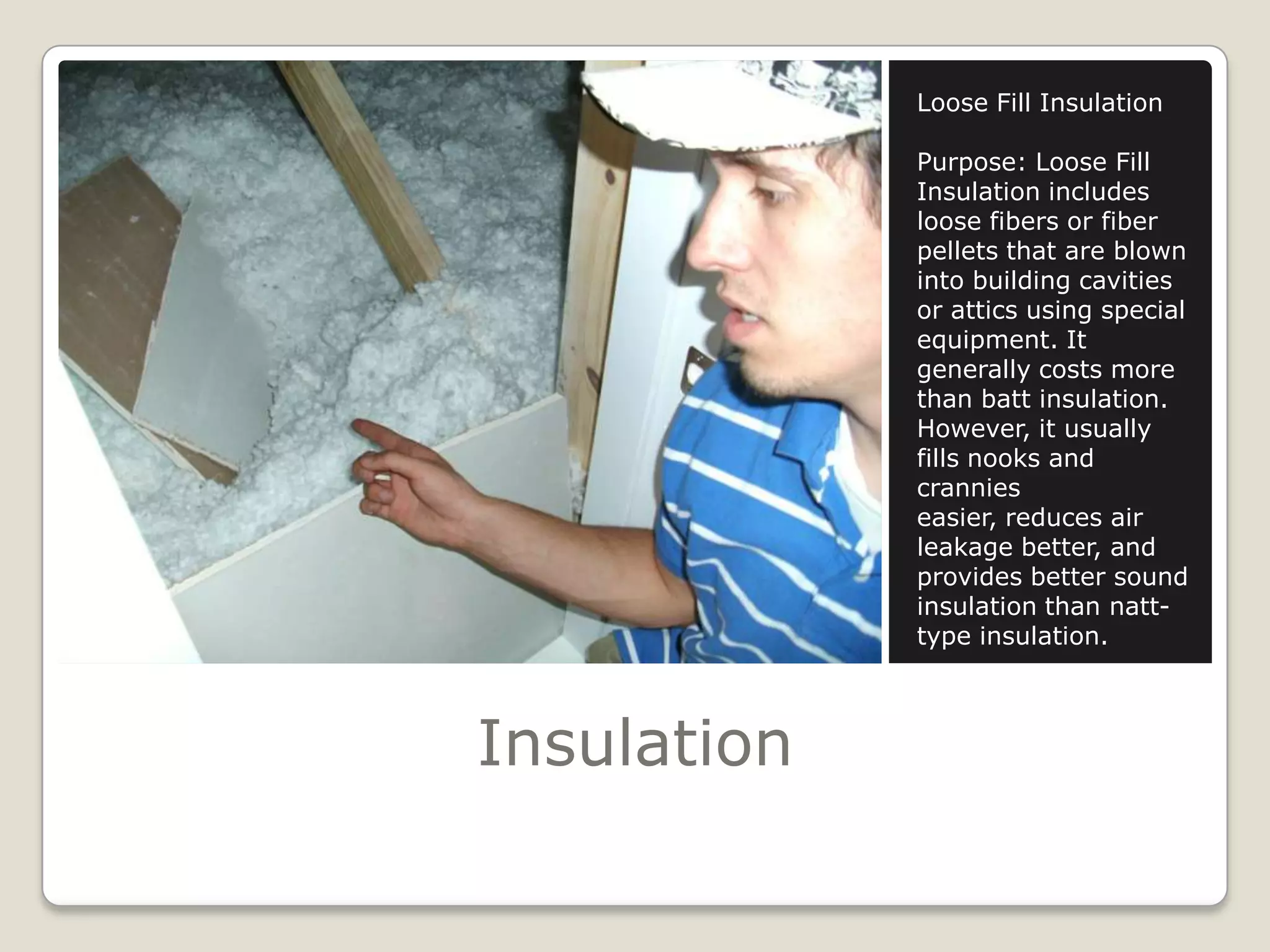
InsulationLoose Fill InsulationPurpose: Loose Fill Insulation includes loose fibers or fiber pellets that are blown into building cavities or attics using special equipment. It generally costs more than batt insulation. However, it usually fills nooks and crannies easier, reduces air leakage better, and provides better sound insulation than natt-type insulation.
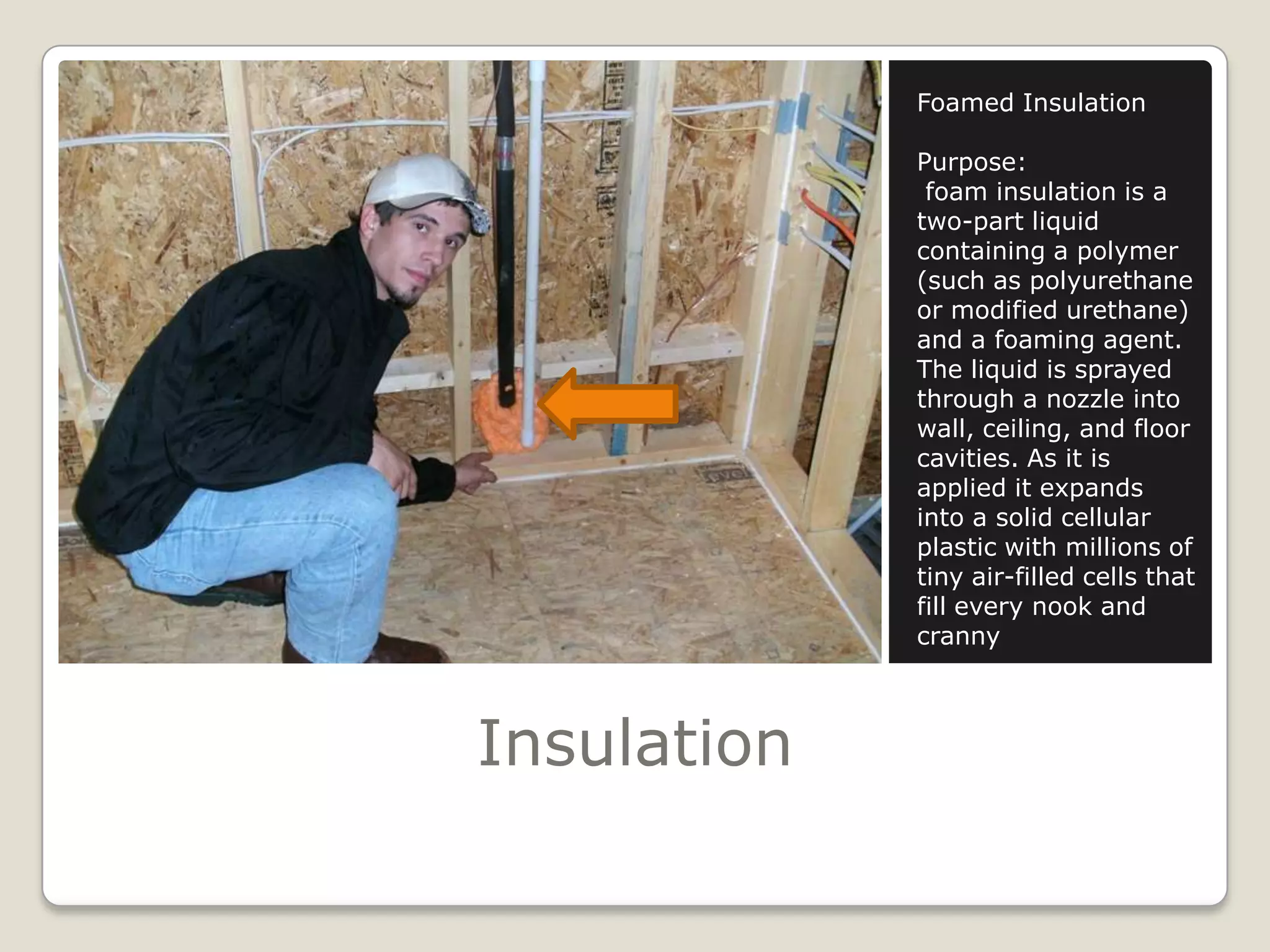
InsulationFoamed InsulationPurpose: foam insulation is a two-part liquid containing a polymer (such as polyurethane or modified urethane) and a foaming agent. The liquid is sprayed through a nozzle into wall, ceiling, and floor cavities. As it is applied it expands into a solid cellular plastic with millions of tiny air-filled cells that fill every nook and cranny
InsulationRigid Board InsulationPurpose:Rigid board insulation is commonly made from fiberglass, polystyrene, or polyurethane and comes in a variety of thicknesses with a high insulating value (approximately R-4 to R-8 per inch). This type of insulation is used for reproofing work on flat roofs, on basement walls and as perimeter insulation at concrete slab edges, and in cathedral ceilings.
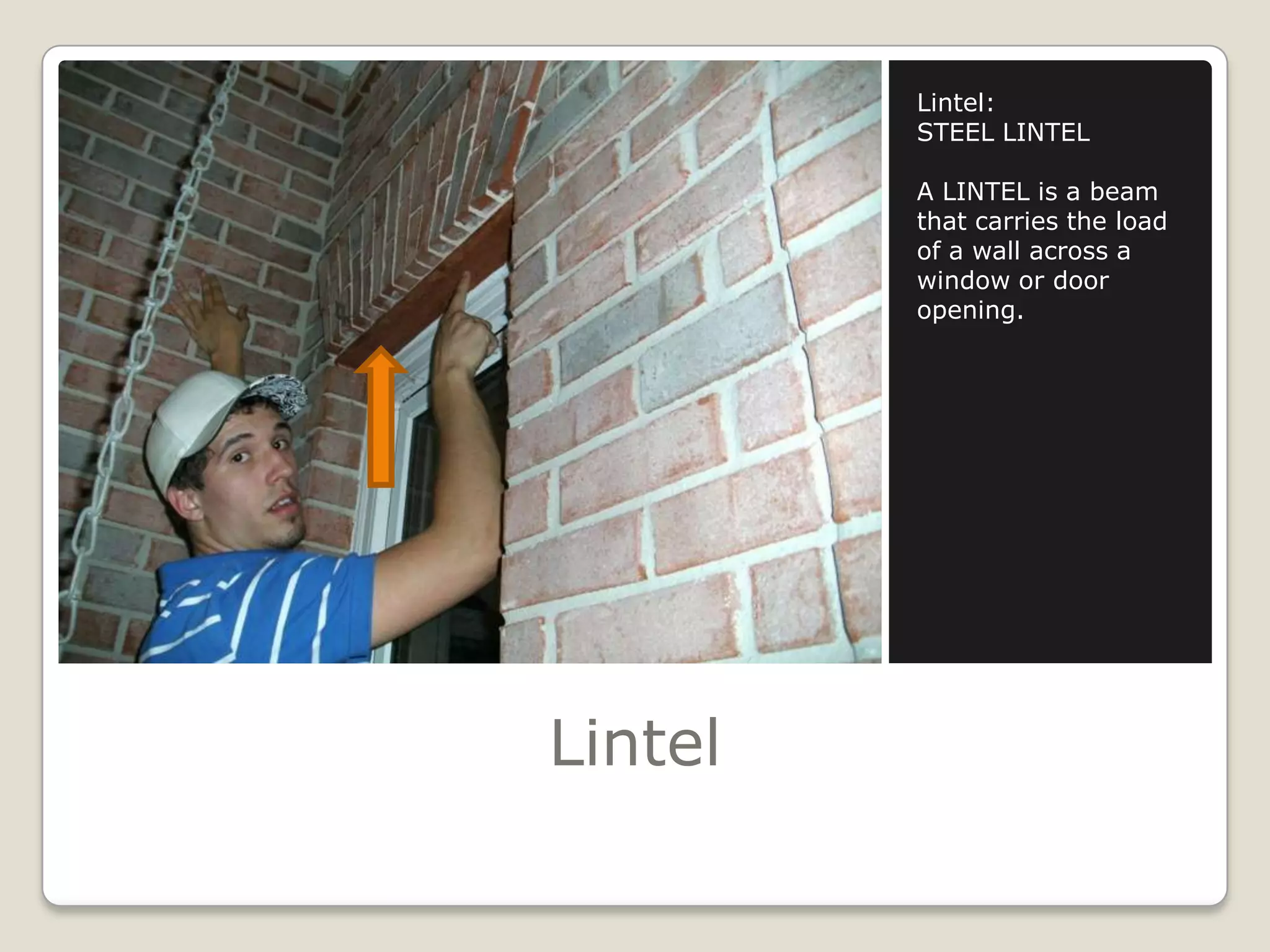
LintelLintel:STEEL LINTELA LINTEL is a beam that carries the load of a wall across a window or door opening.
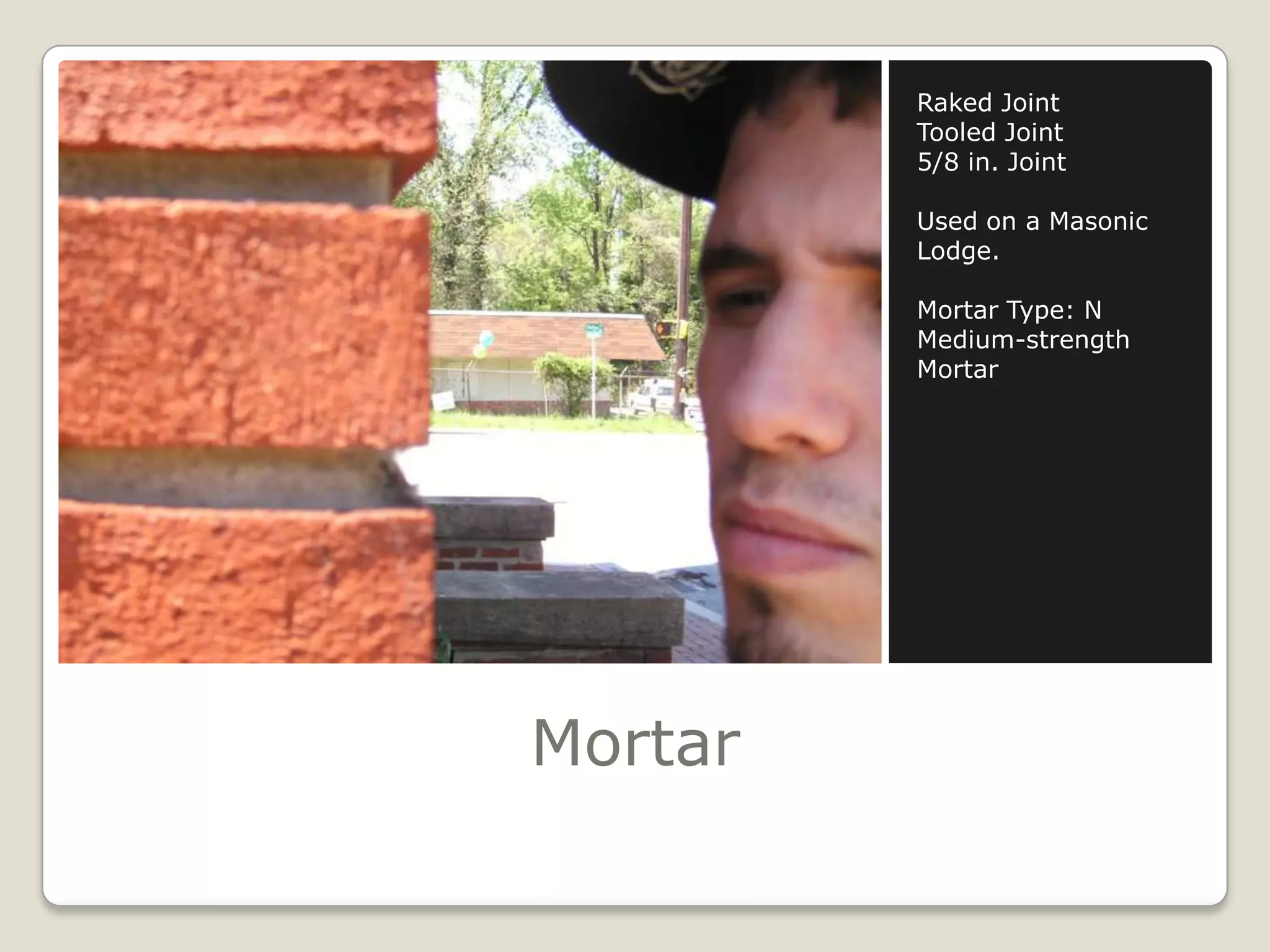
MortarRaked JointTooled Joint5/8 in. JointUsed on a Masonic Lodge.Mortar Type: NMedium-strength Mortar
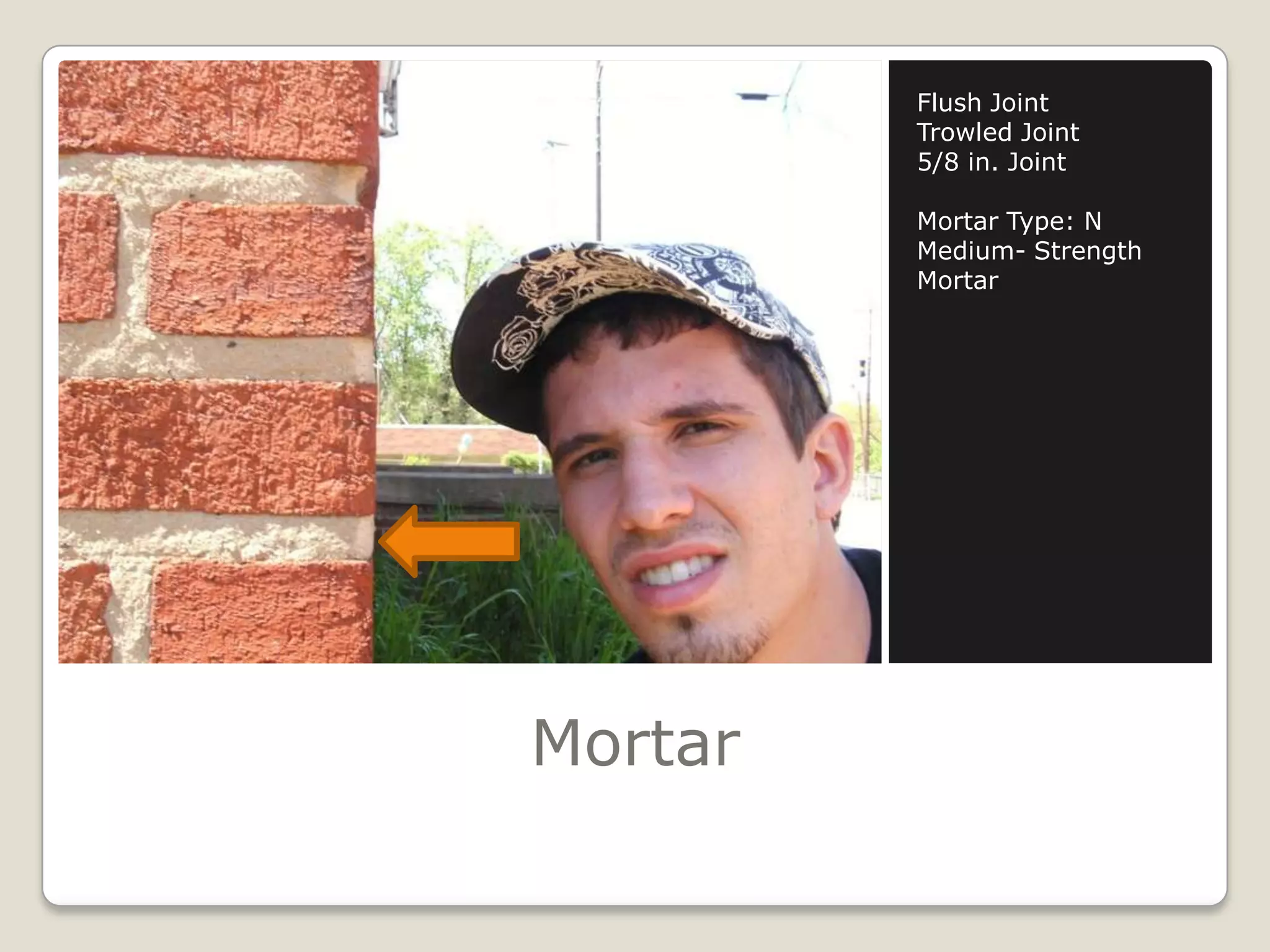
MortarFlush JointTrowled Joint5/8 in. JointMortar Type: NMedium- Strength Mortar
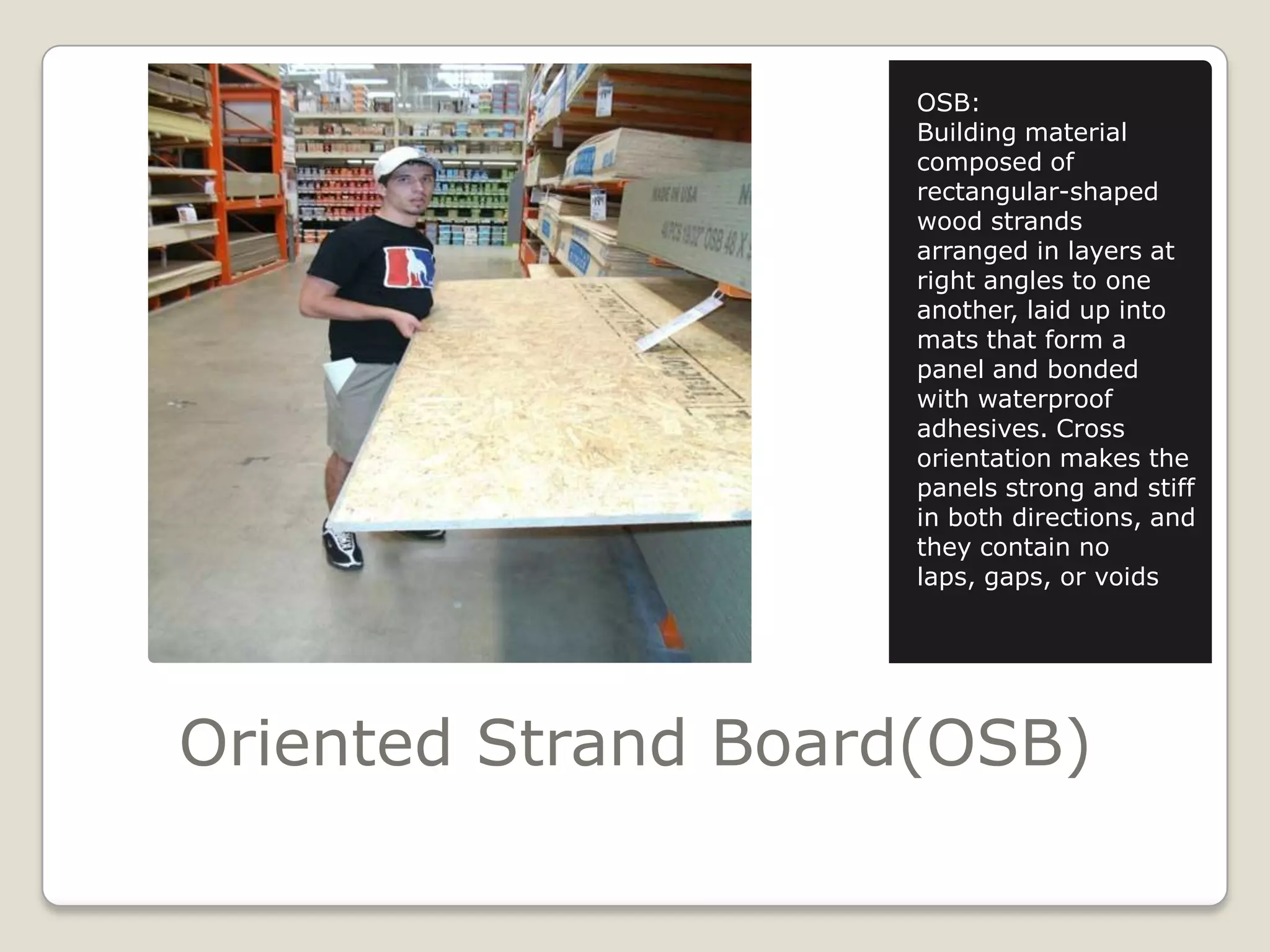
Oriented Strand Board(OSB)OSB:Building material composed of rectangular-shaped wood strands arranged in layers at right angles to one another, laid up into mats that form a panel and bonded with waterproof adhesives. Cross orientation makes the panels strong and stiff in both directions, and they contain no laps, gaps, or voids
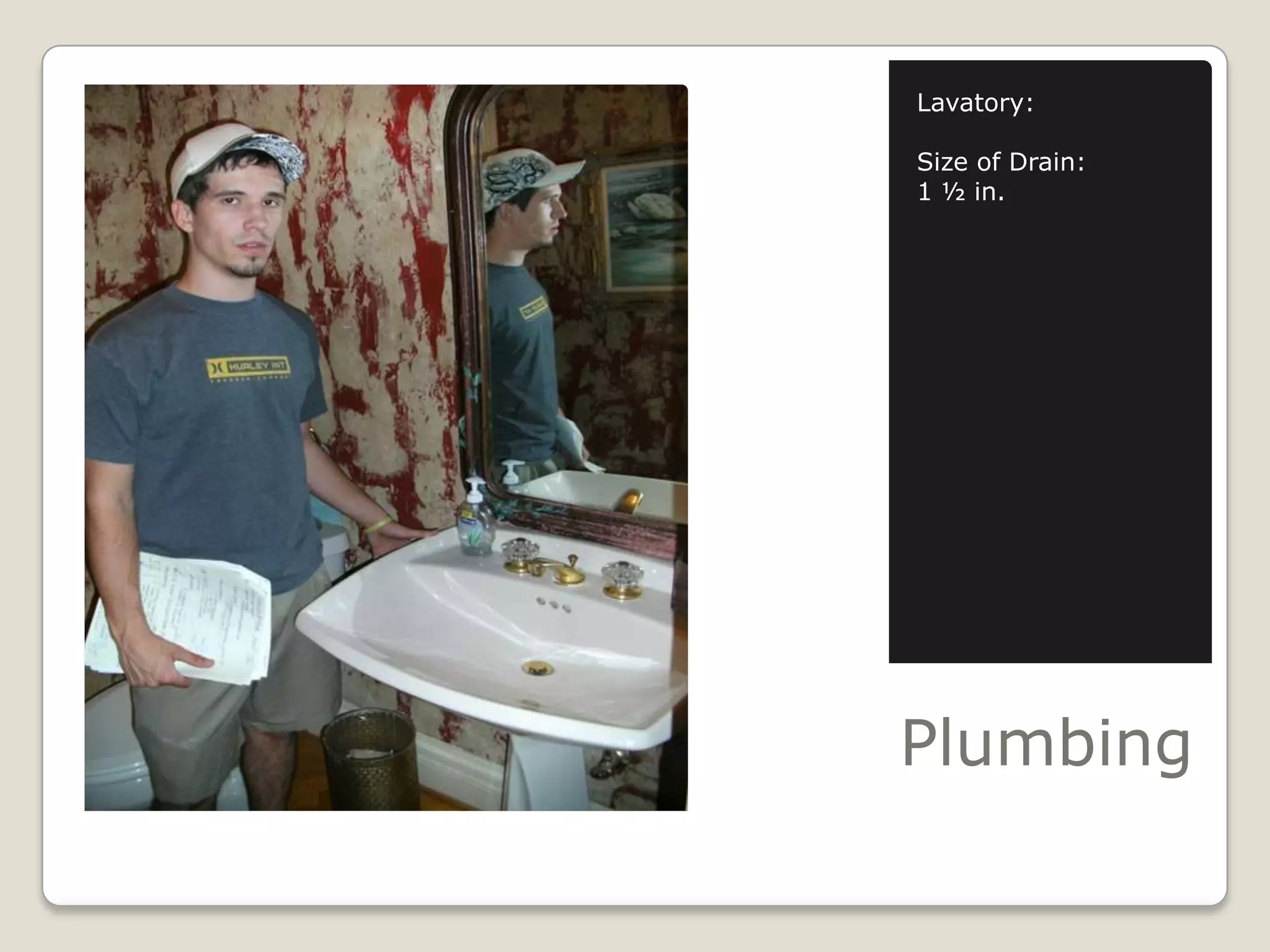
PlumbingLavatory:Size of Drain:1 ½ in.
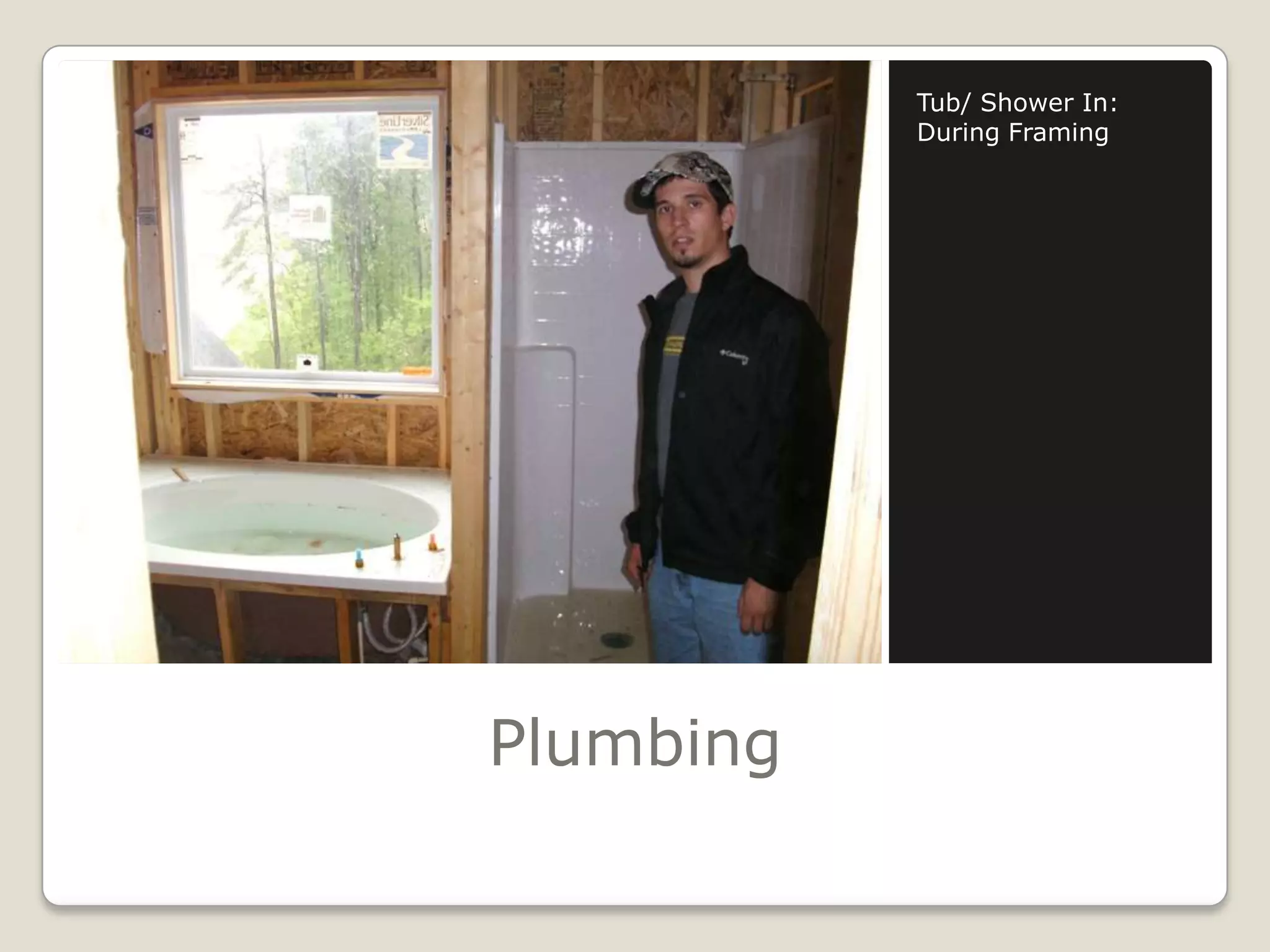
PlumbingTub/ Shower In: During Framing
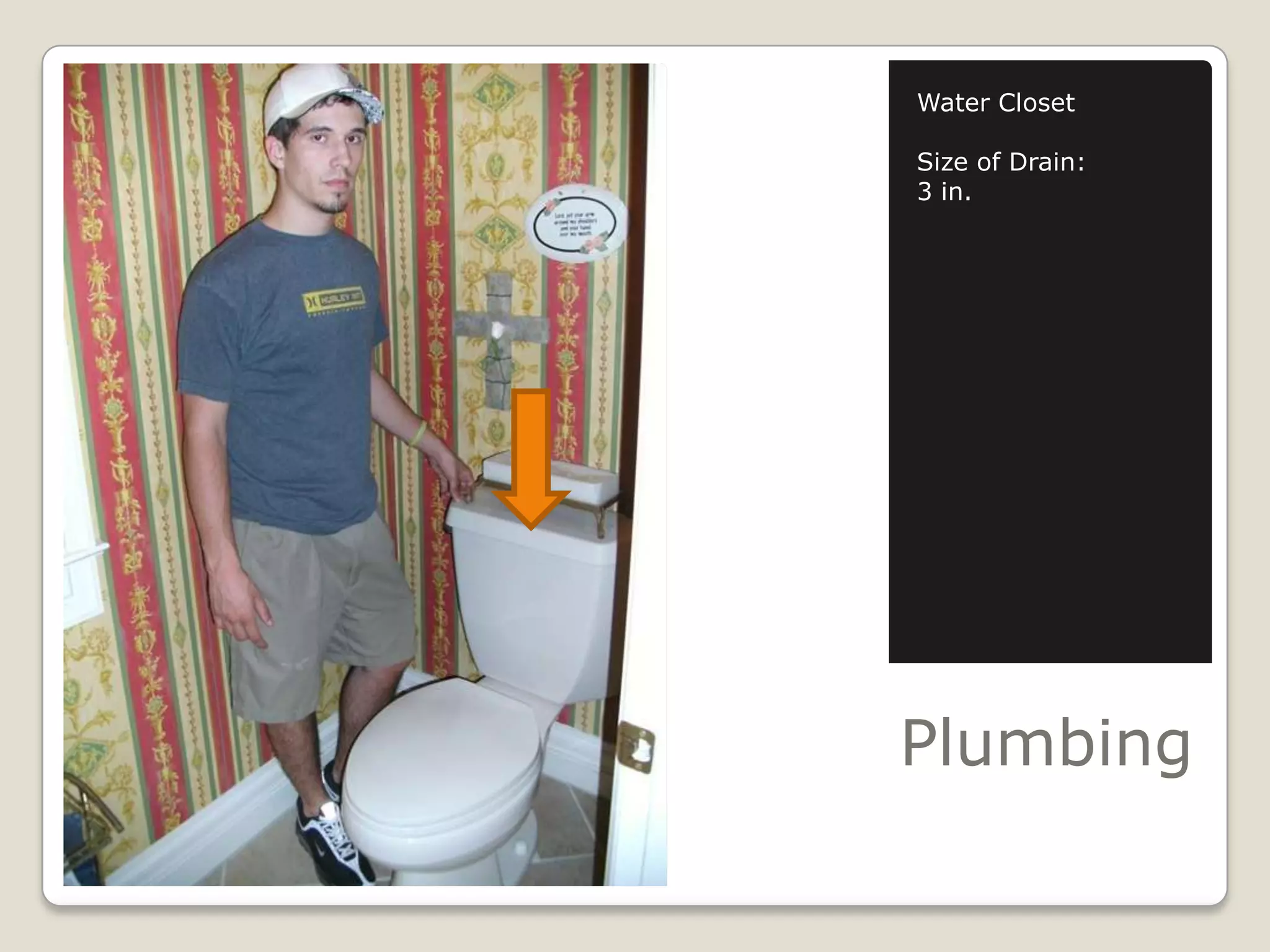
PlumbingWater ClosetSize of Drain:3 in.
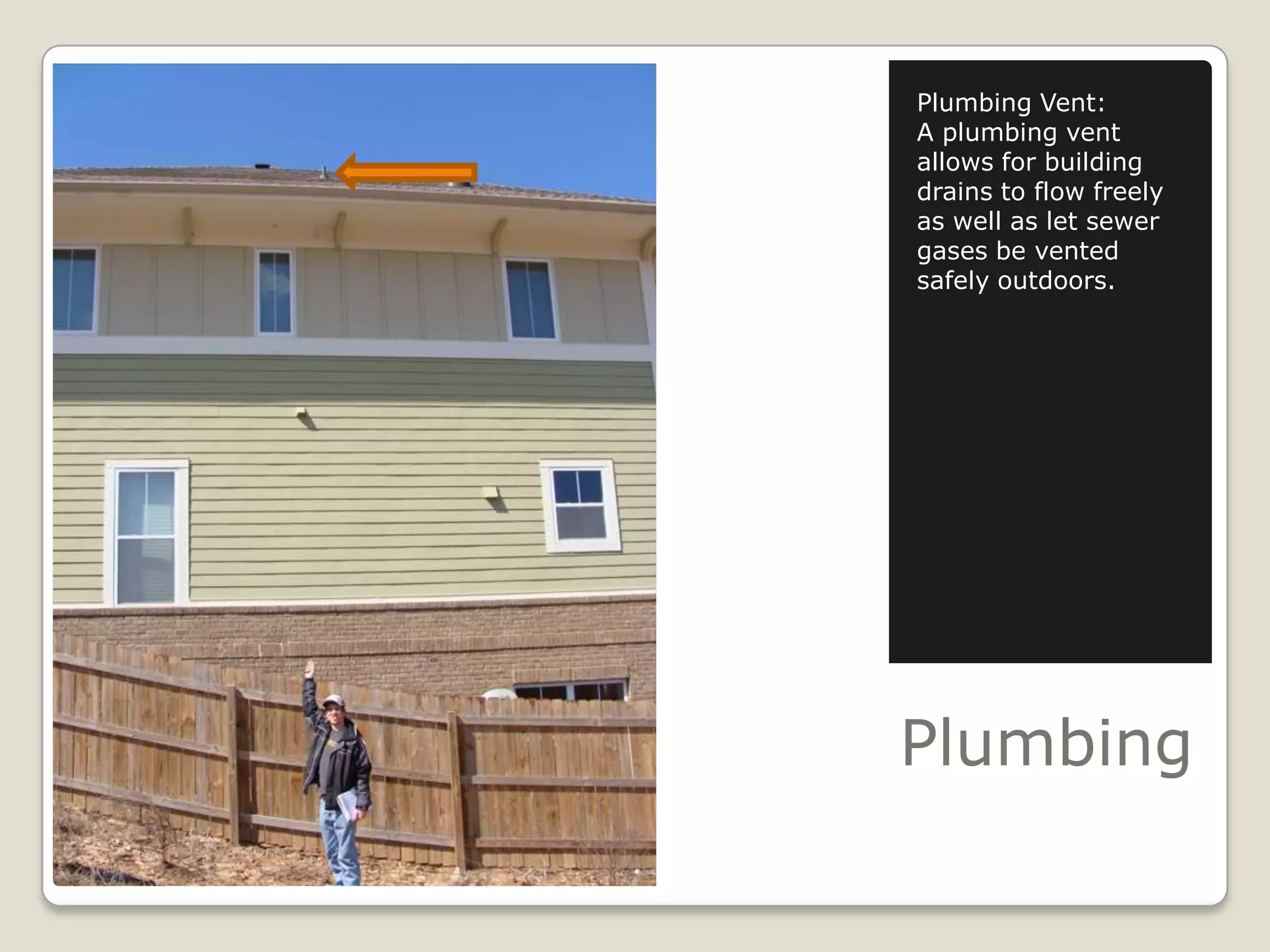
PlumbingPlumbing Vent:A plumbing vent allows for building drains to flow freely as well as let sewer gases be vented safely outdoors.
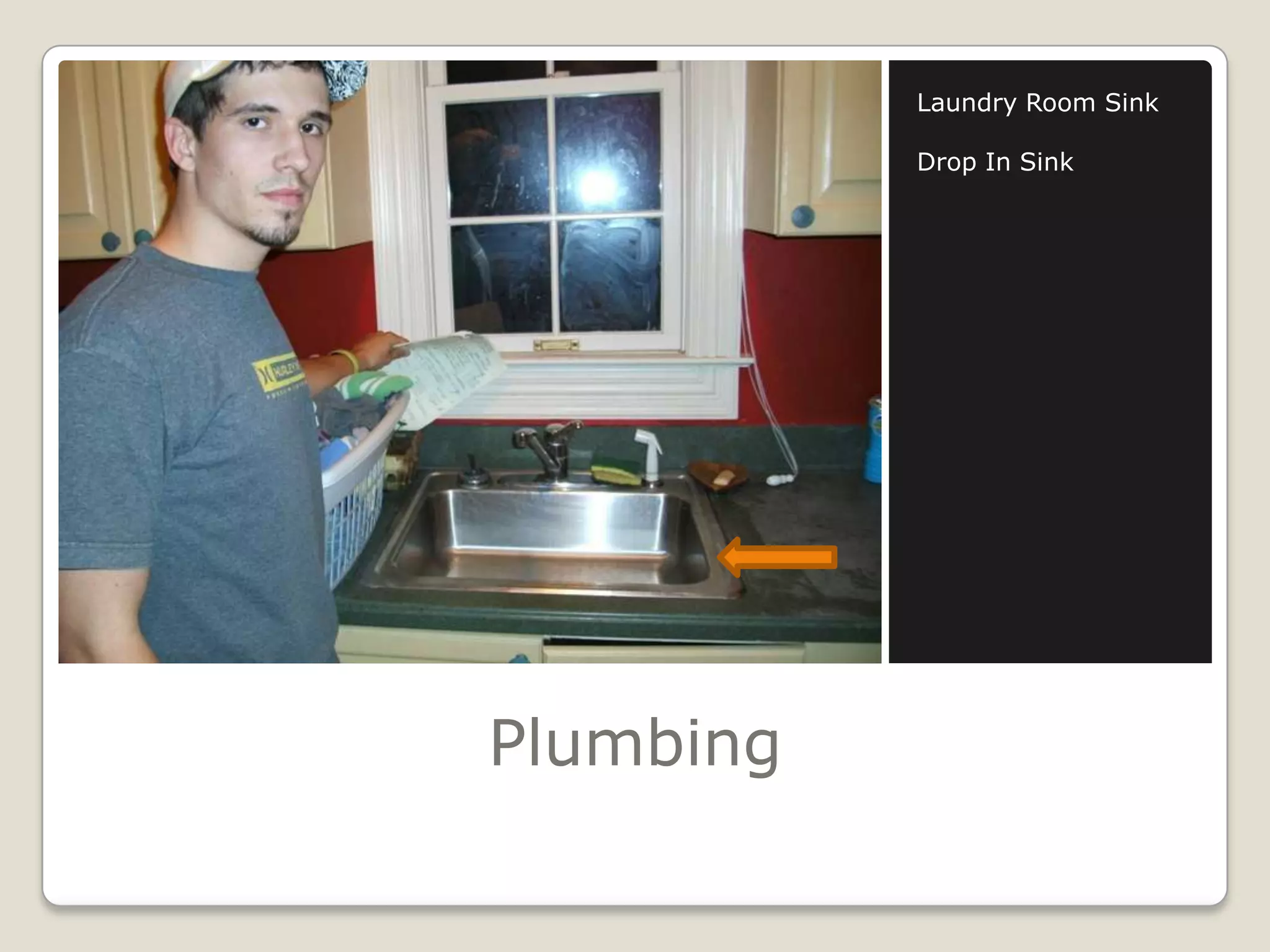
PlumbingLaundry Room SinkDrop In Sink
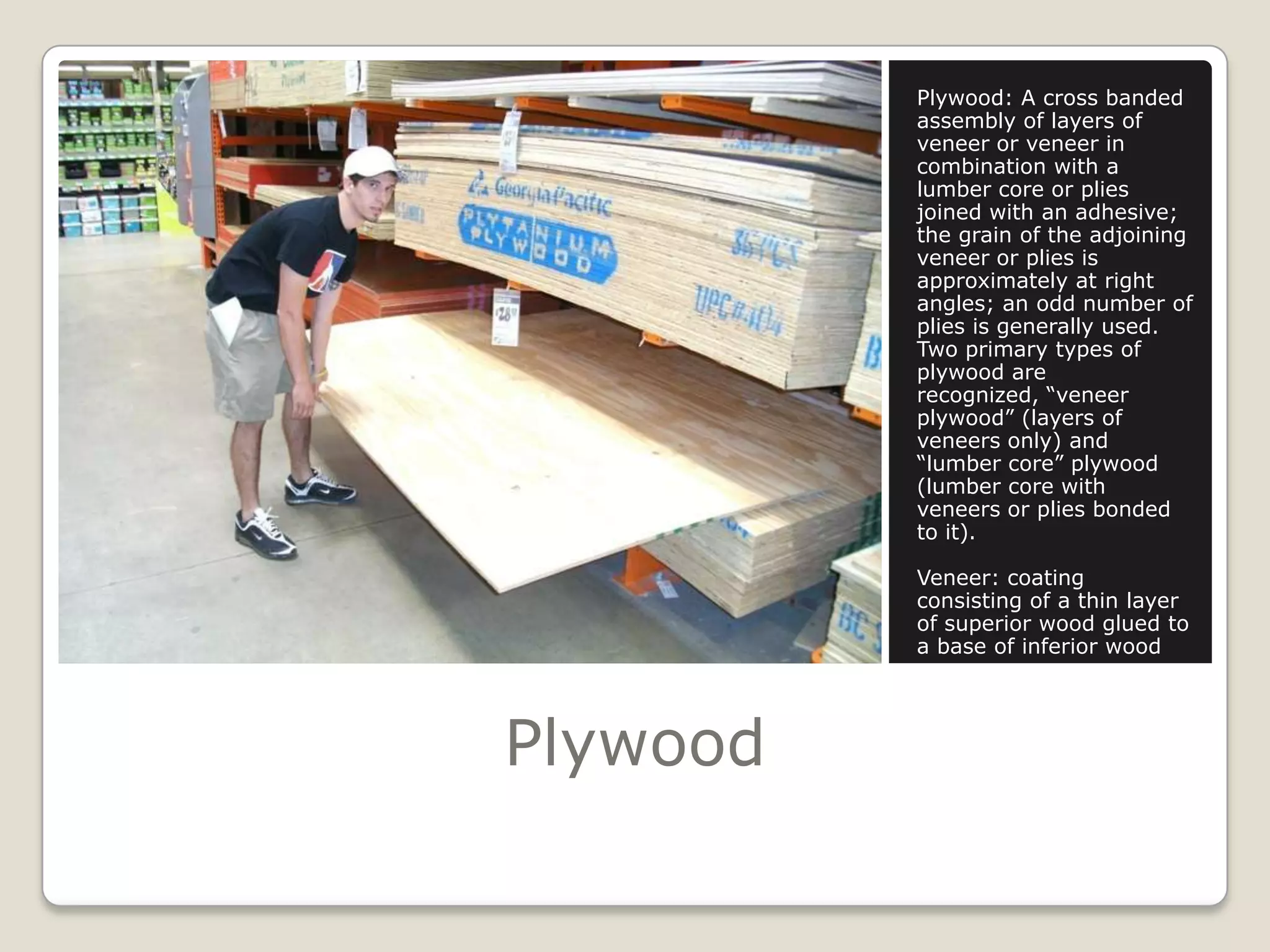
PlywoodPlywood: A cross banded assembly of layers of veneer or veneer in combination with a lumber core or plies joined with an adhesive; the grain of the adjoining veneer or plies is approximately at right angles; an odd number of plies is generally used. Two primary types of plywood are recognized, “veneer plywood” (layers of veneers only) and “lumber core” plywood (lumber core with veneers or plies bonded to it).Veneer: coating consisting of a thin layer of superior wood glued to a base of inferior wood
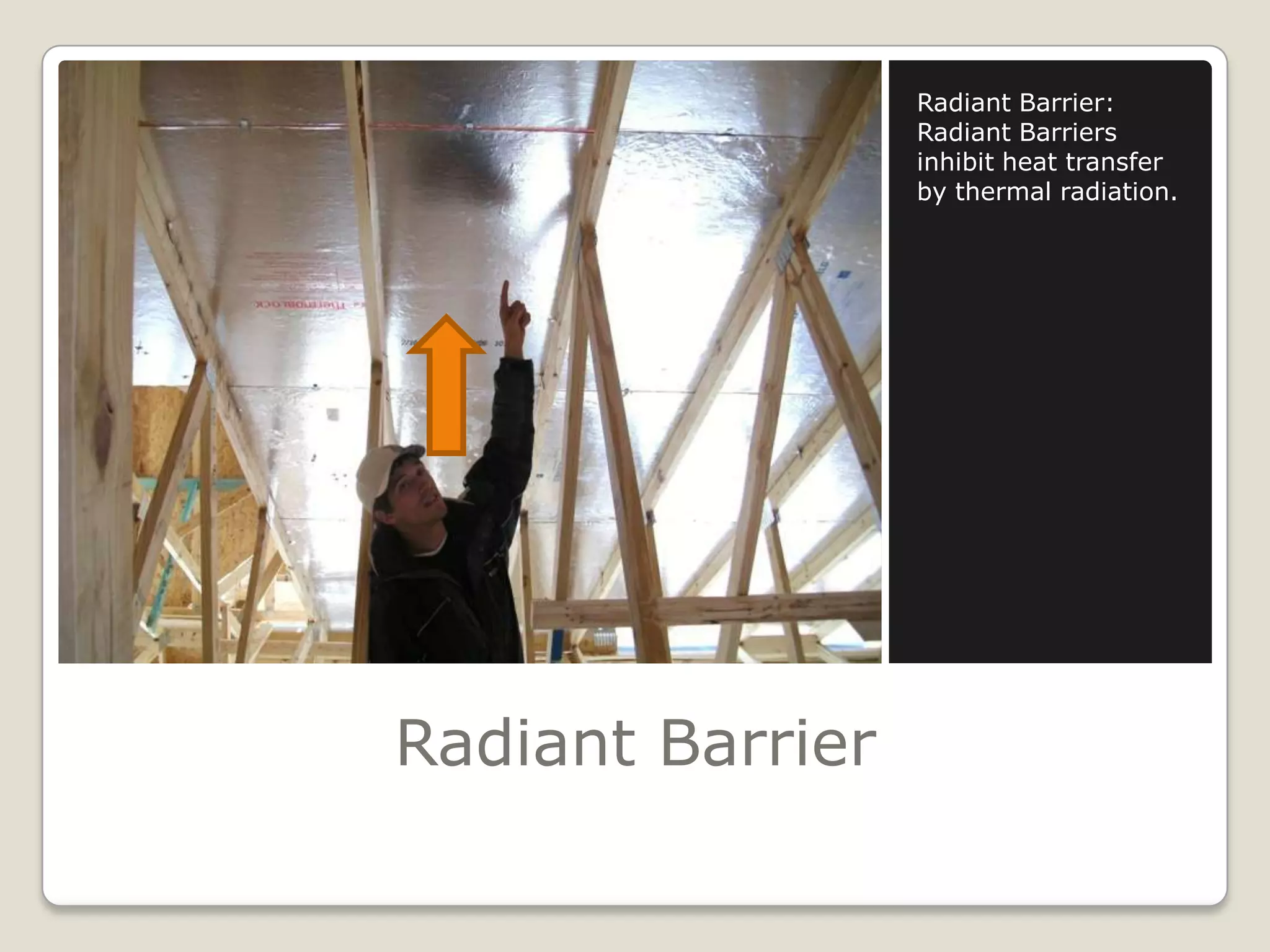
Radiant BarrierRadiant Barrier:Radiant Barriers inhibit heat transfer by thermal radiation.
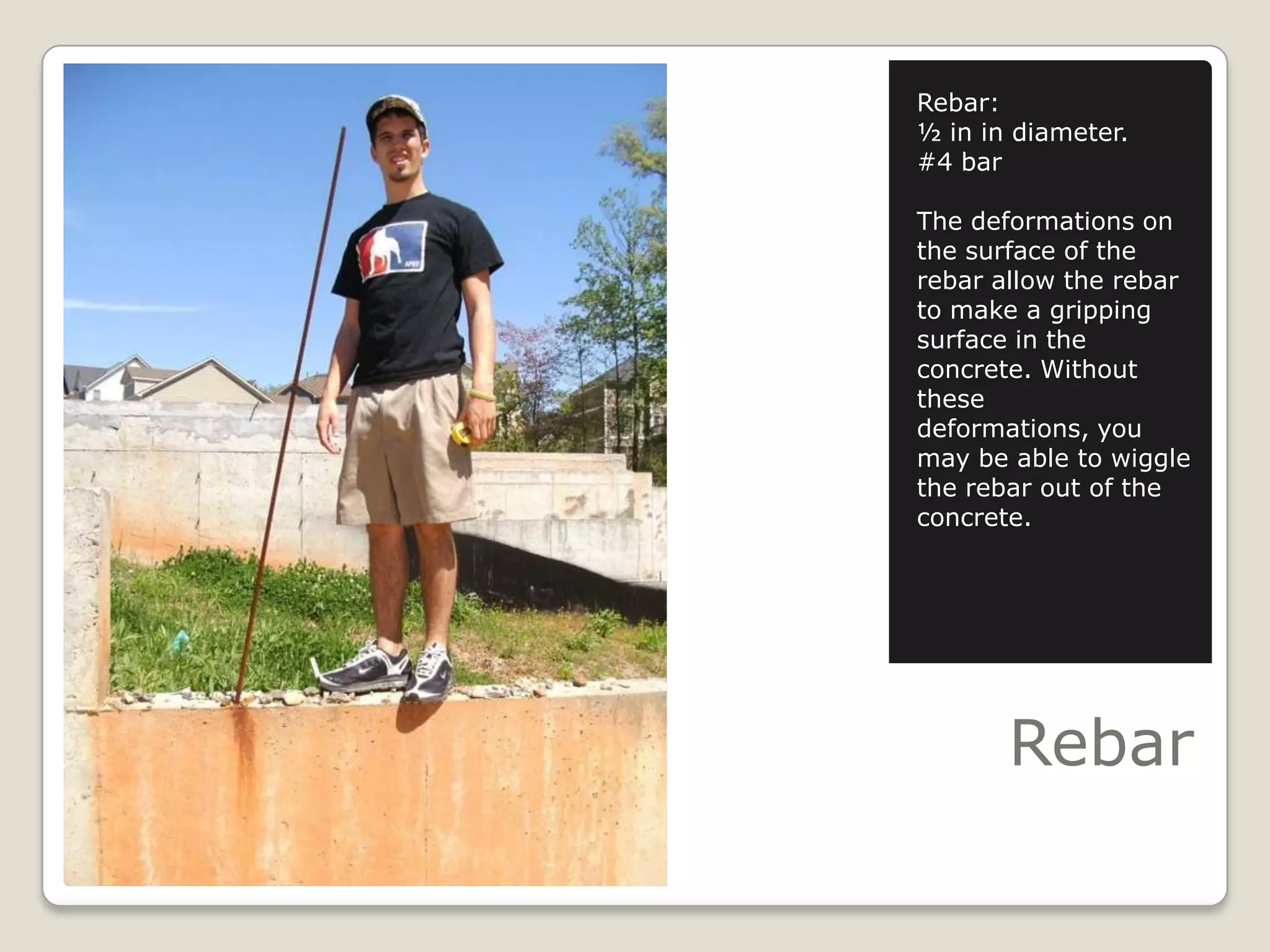
RebarRebar:½ in in diameter.#4 barThe deformations on the surface of the rebar allow the rebar to make a gripping surface in the concrete. Without these deformations, you may be able to wiggle the rebar out of the concrete.
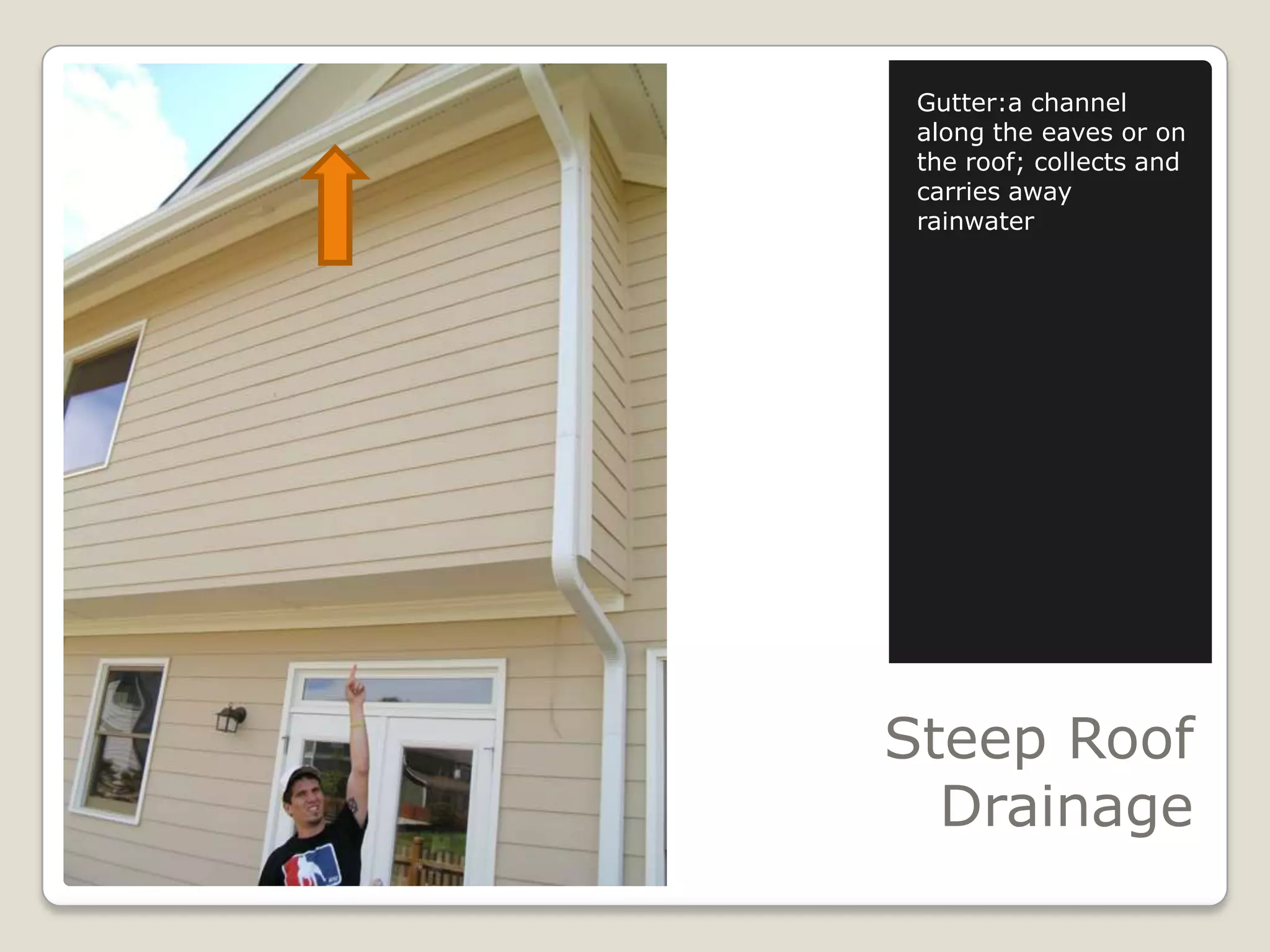
Steep Roof DrainageGutter:a channel along the eaves or on the roof; collects and carries away rainwater
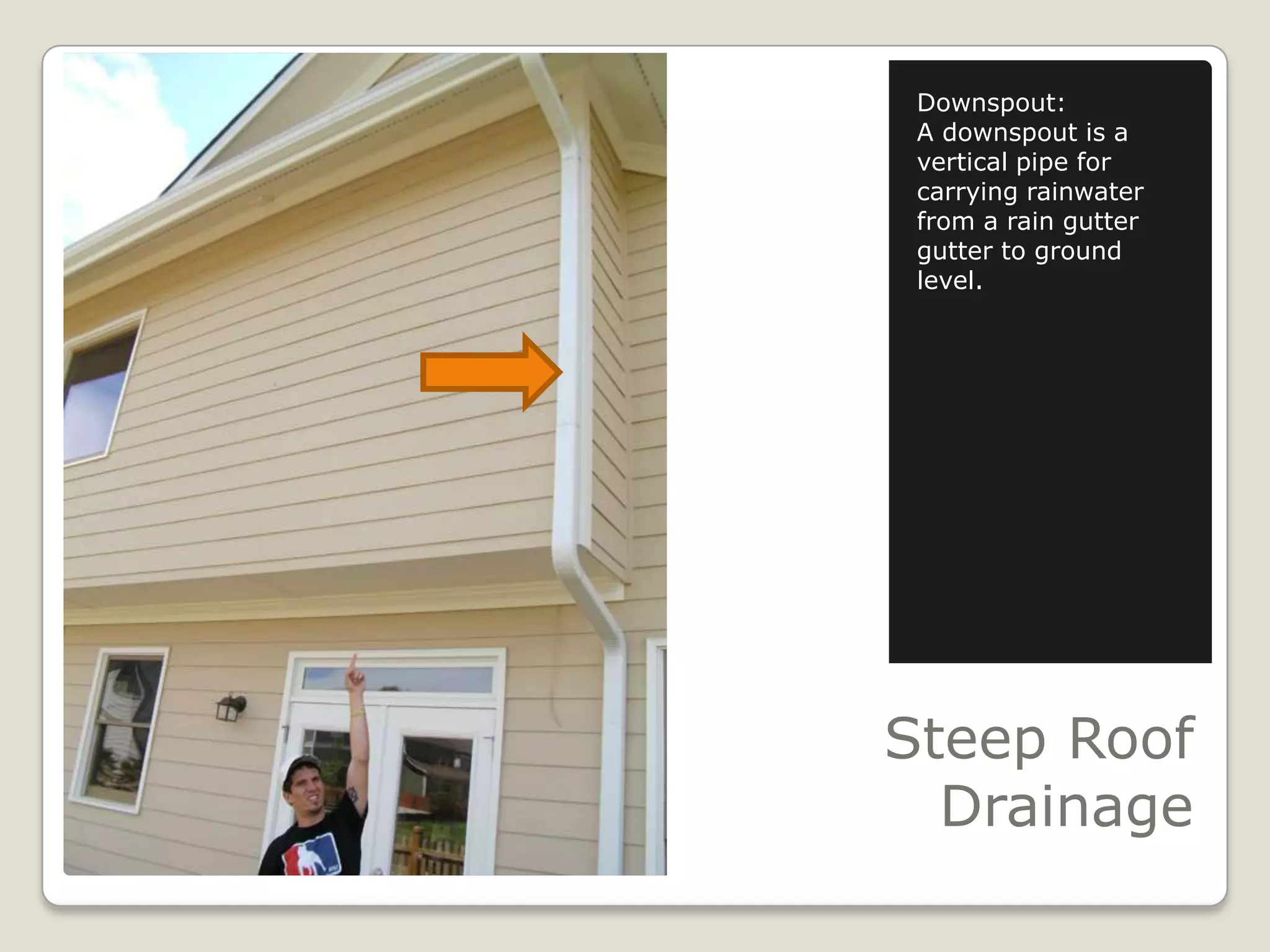
Steep RoofDrainageDownspout:A downspout is a vertical pipe for carrying rainwater from a rain gutter gutter to ground level.
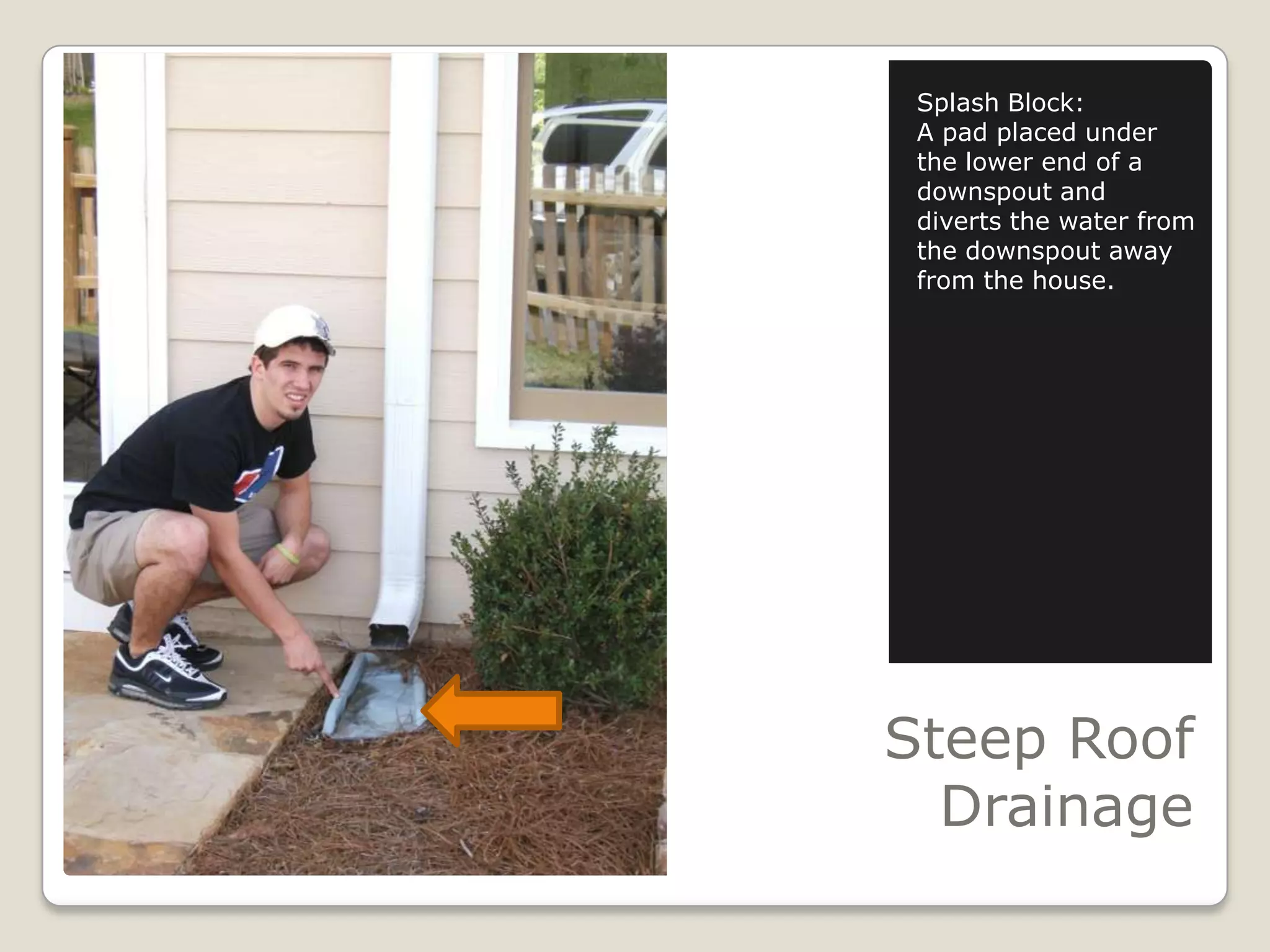
Steep Roof DrainageSplash Block:A pad placed under the lower end of a downspout and diverts the water from the downspout away from the house.
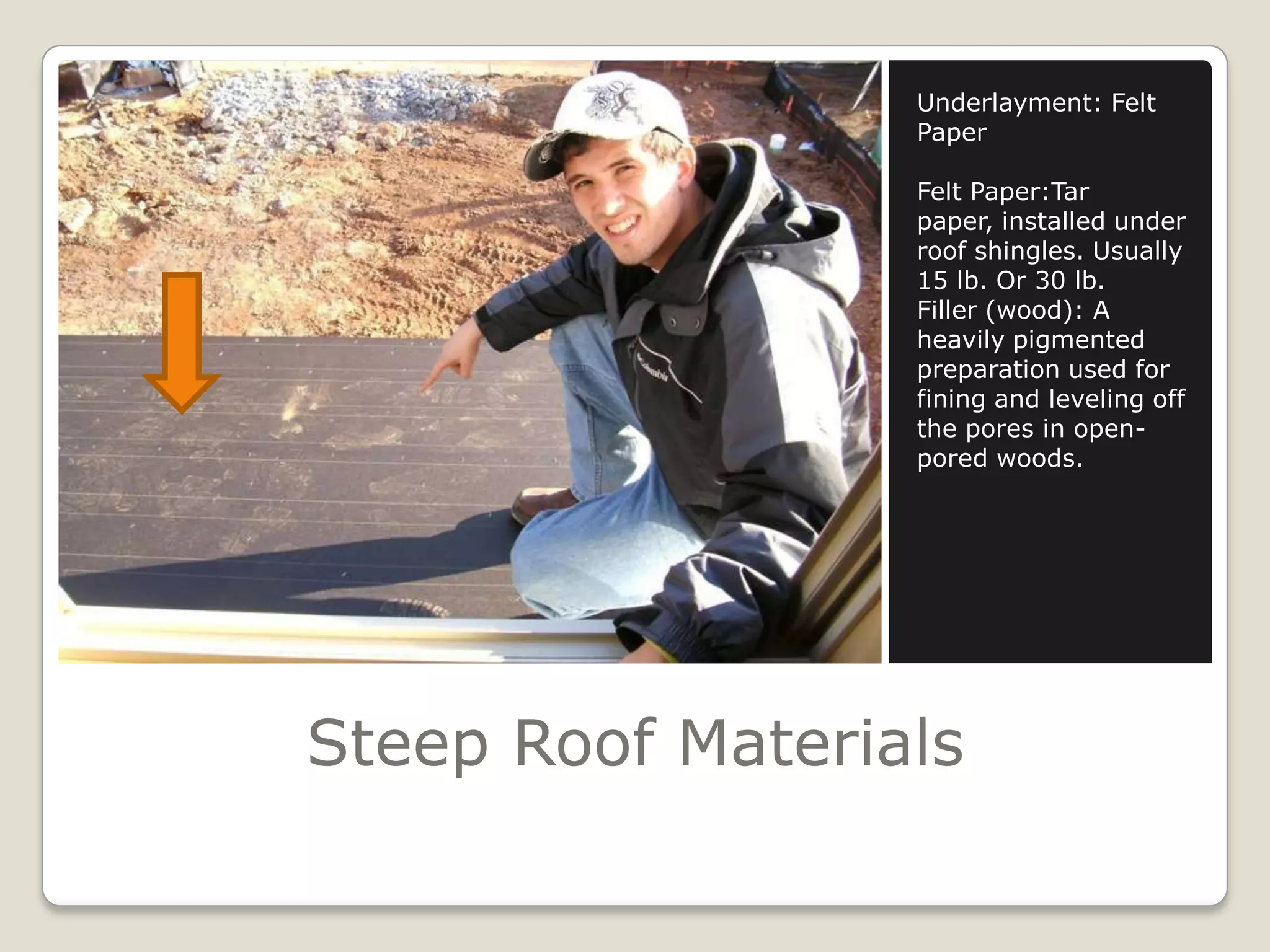
Steep Roof MaterialsUnderlayment: Felt PaperFelt Paper:Tar paper, installed under roof shingles. Usually 15 lb. Or 30 lb.Filler (wood): A heavily pigmented preparation used for fining and leveling off the pores in open-pored woods.
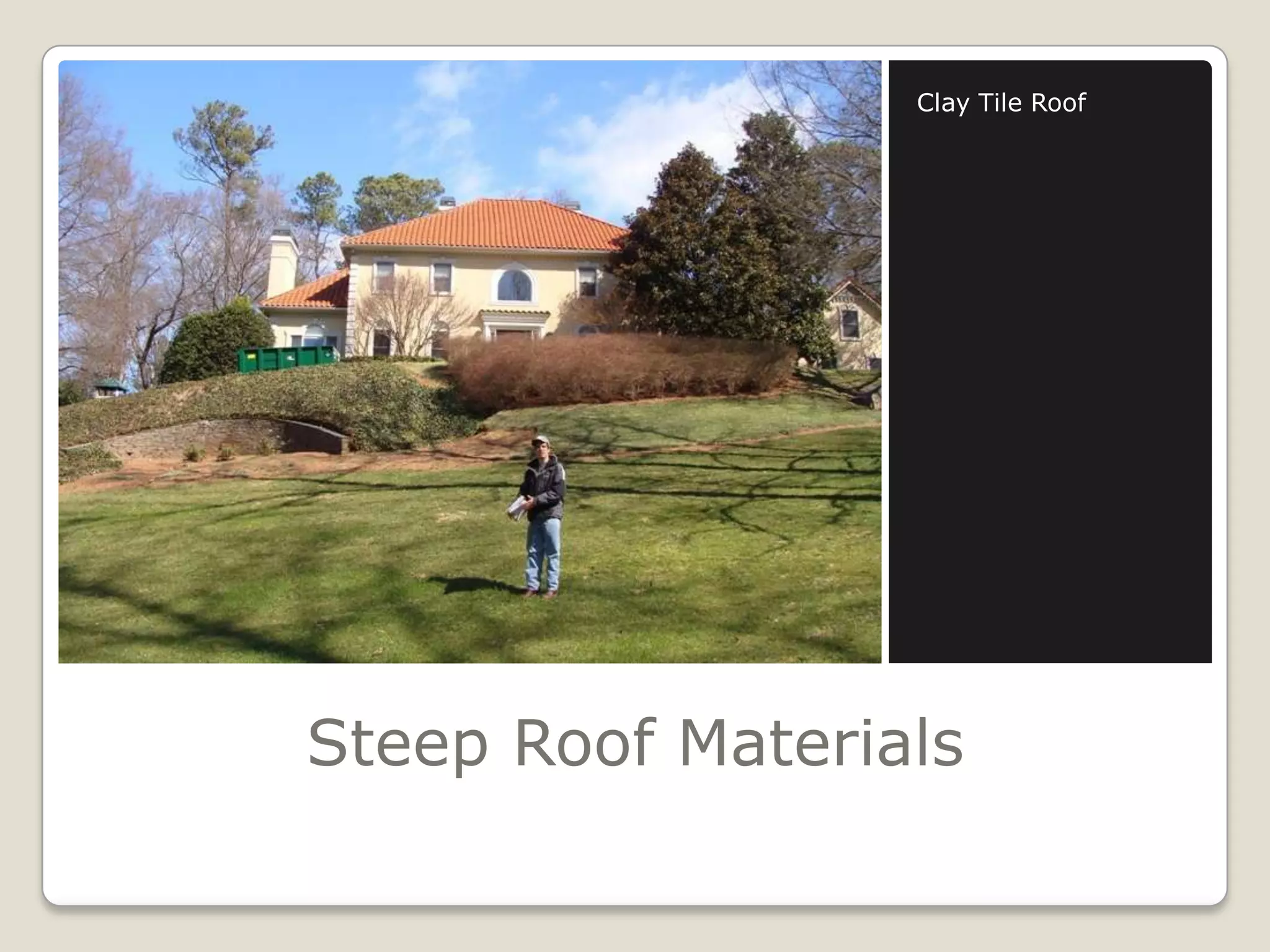
Steep Roof MaterialsClay Tile Roof
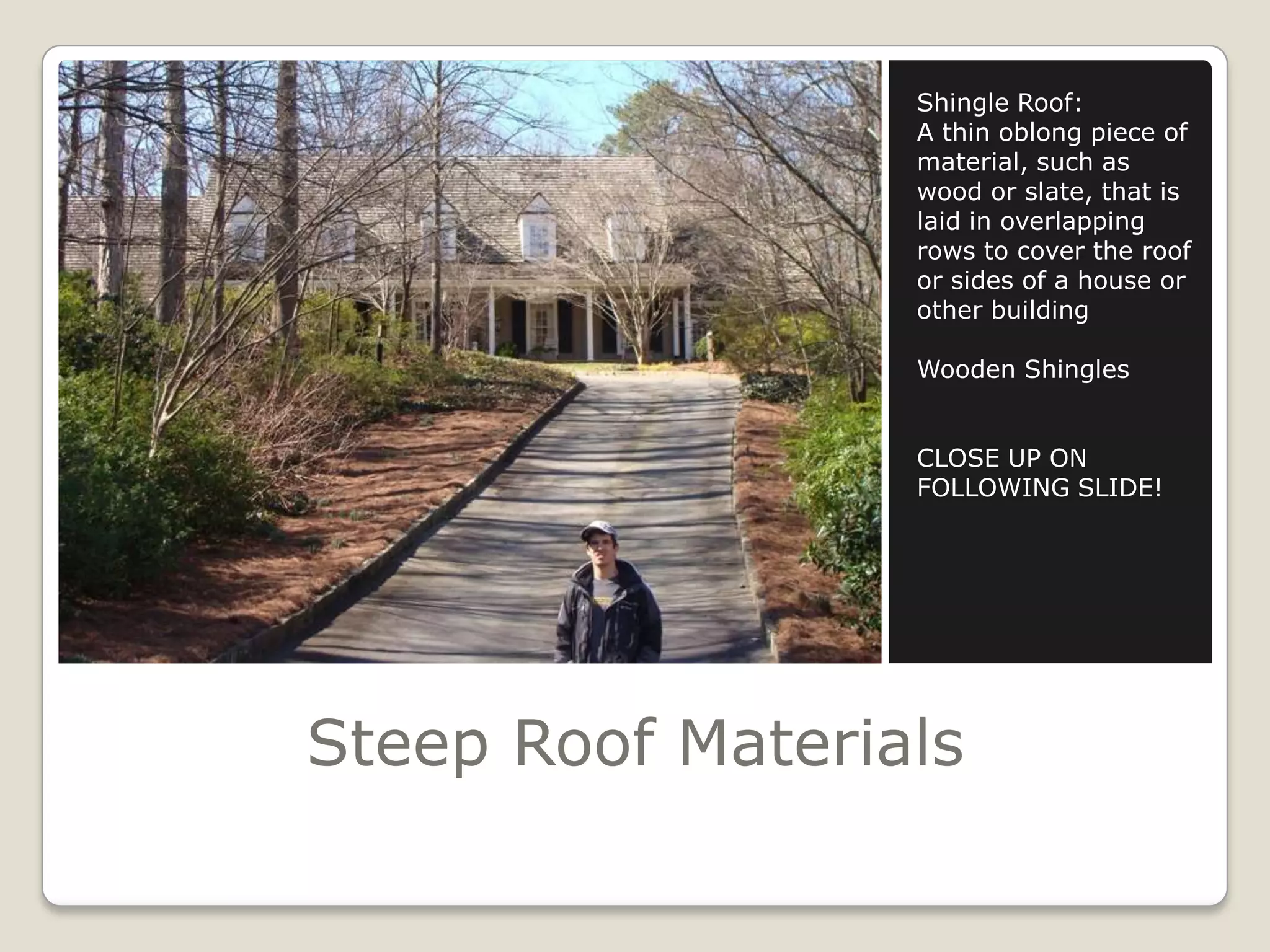
Steep Roof MaterialsShingle Roof:A thin oblong piece of material, such as wood or slate, that is laid in overlapping rows to cover the roof or sides of a house or other buildingWooden ShinglesCLOSE UP ON FOLLOWING SLIDE!
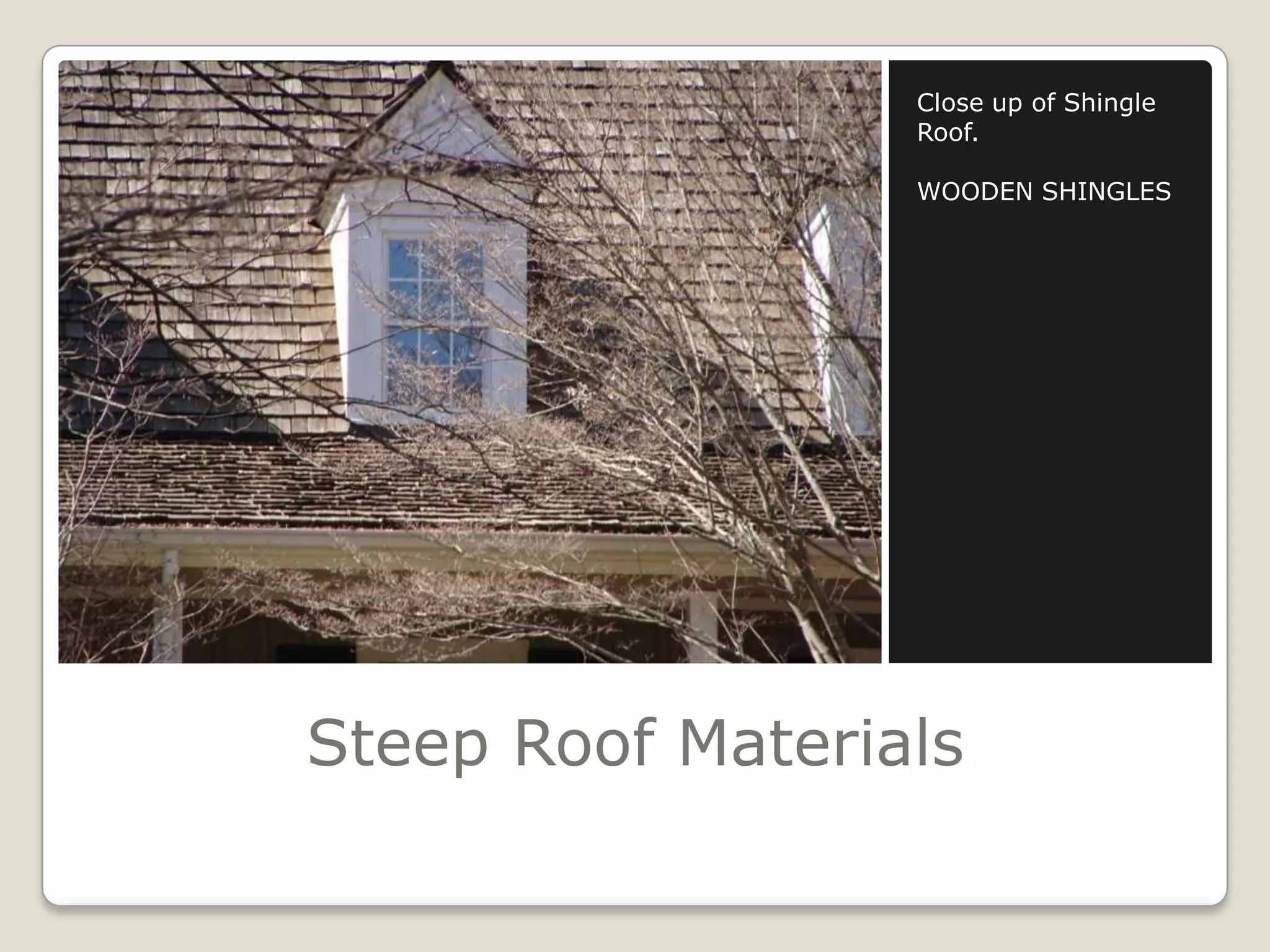
Steep Roof MaterialsClose up of Shingle Roof.WOODEN SHINGLES
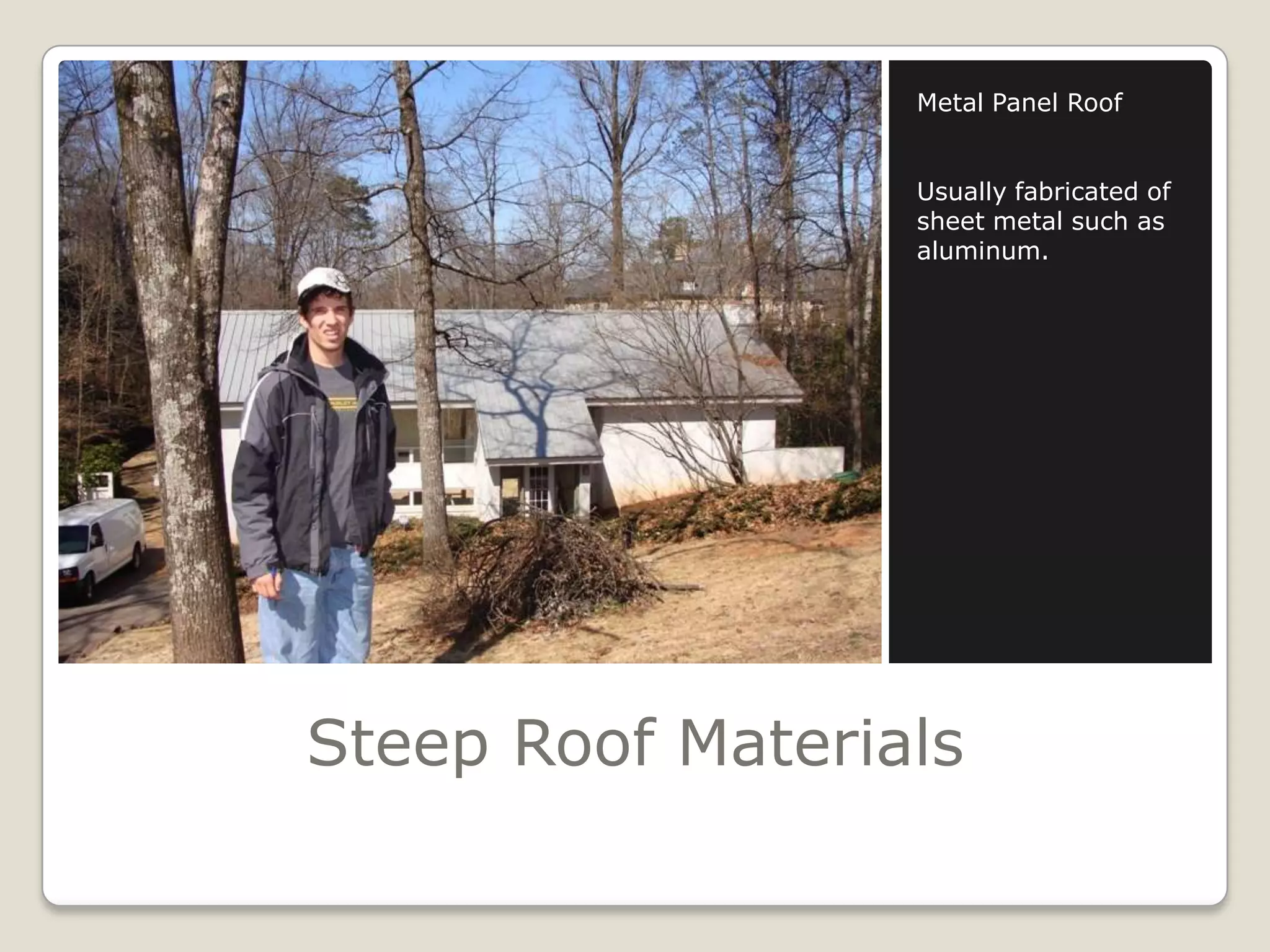
Steep Roof MaterialsMetal Panel RoofUsually fabricated of sheet metal such as aluminum.
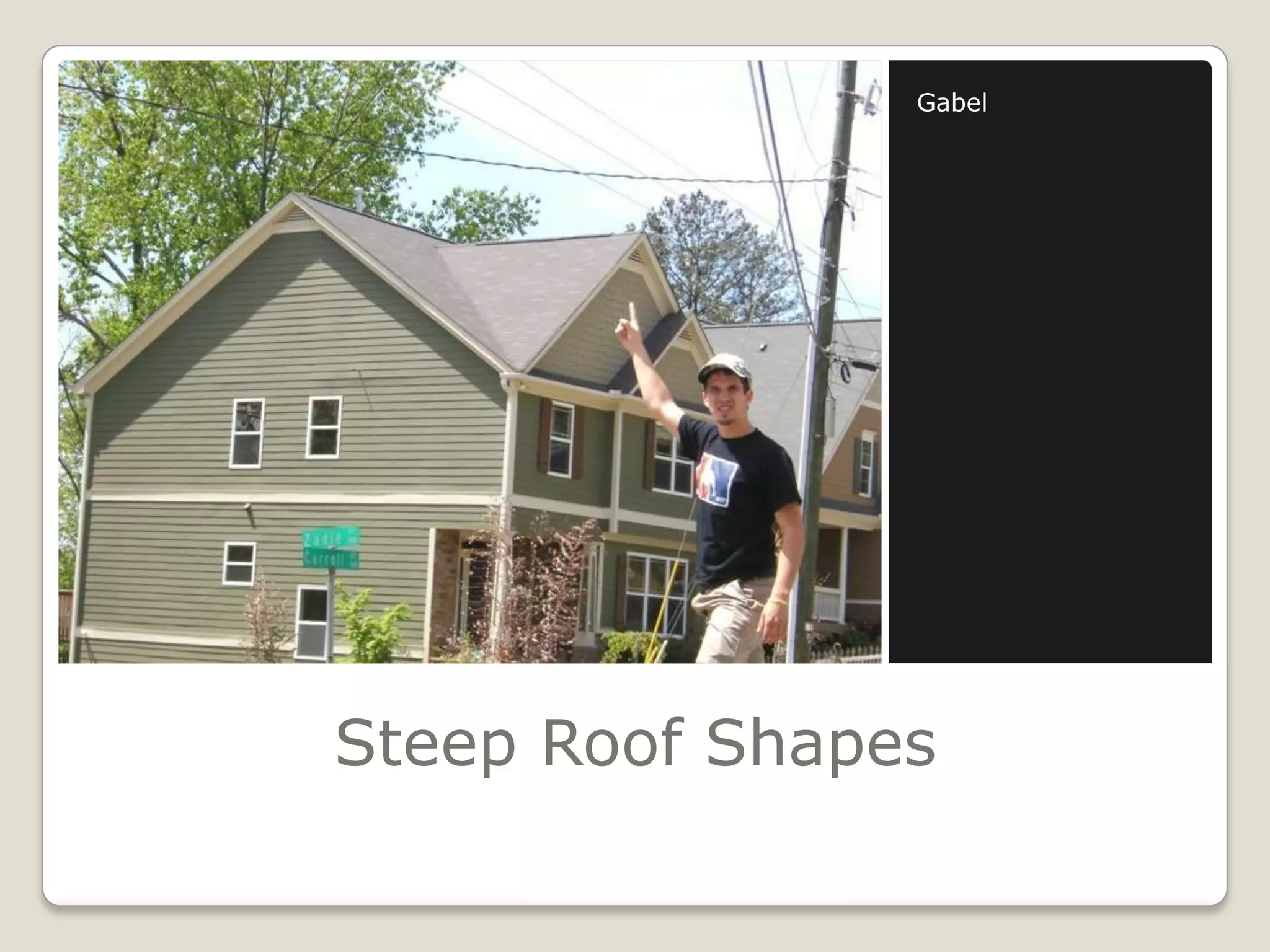
Steep Roof ShapesGabel
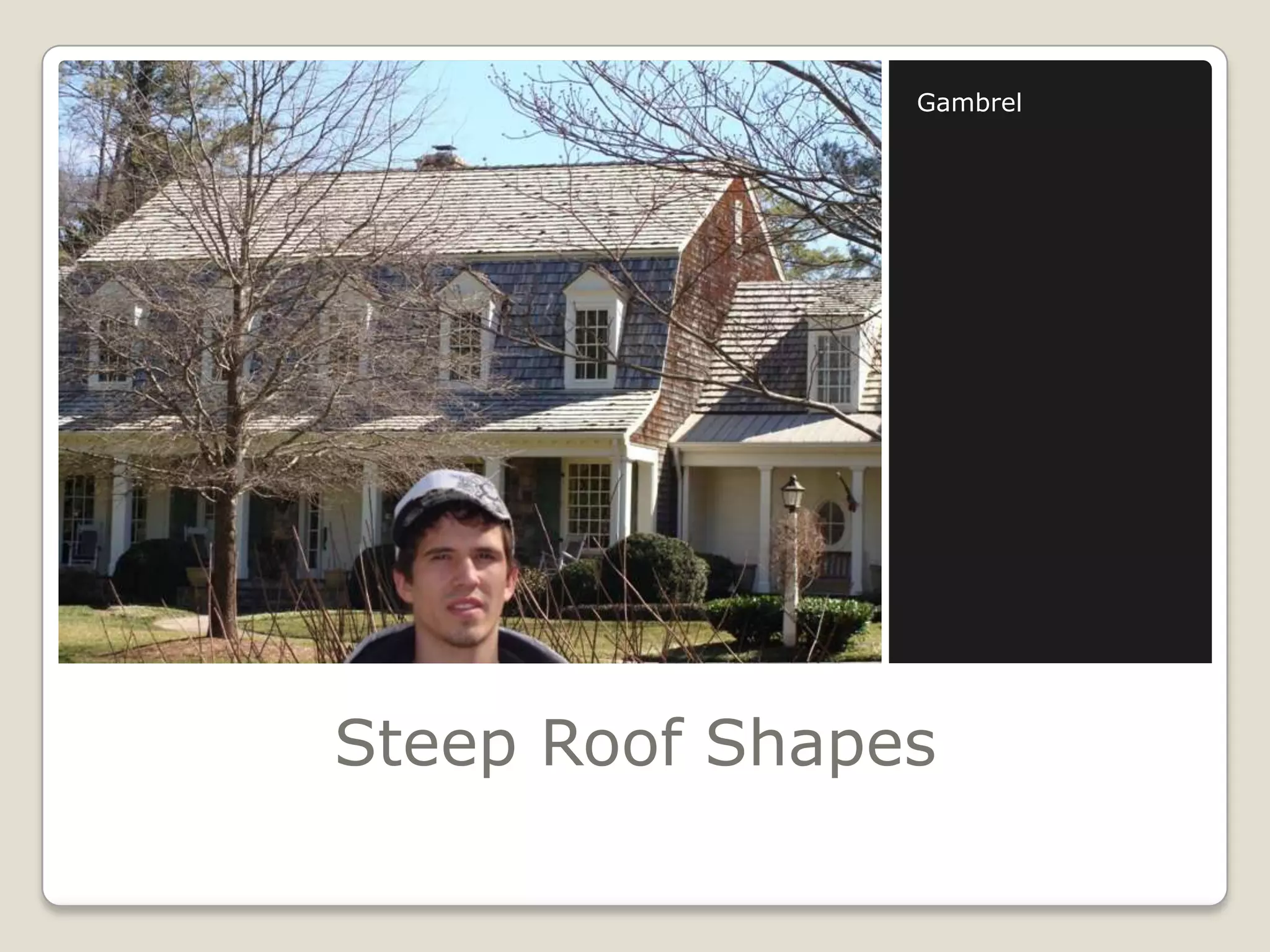
Steep Roof ShapesGambrel
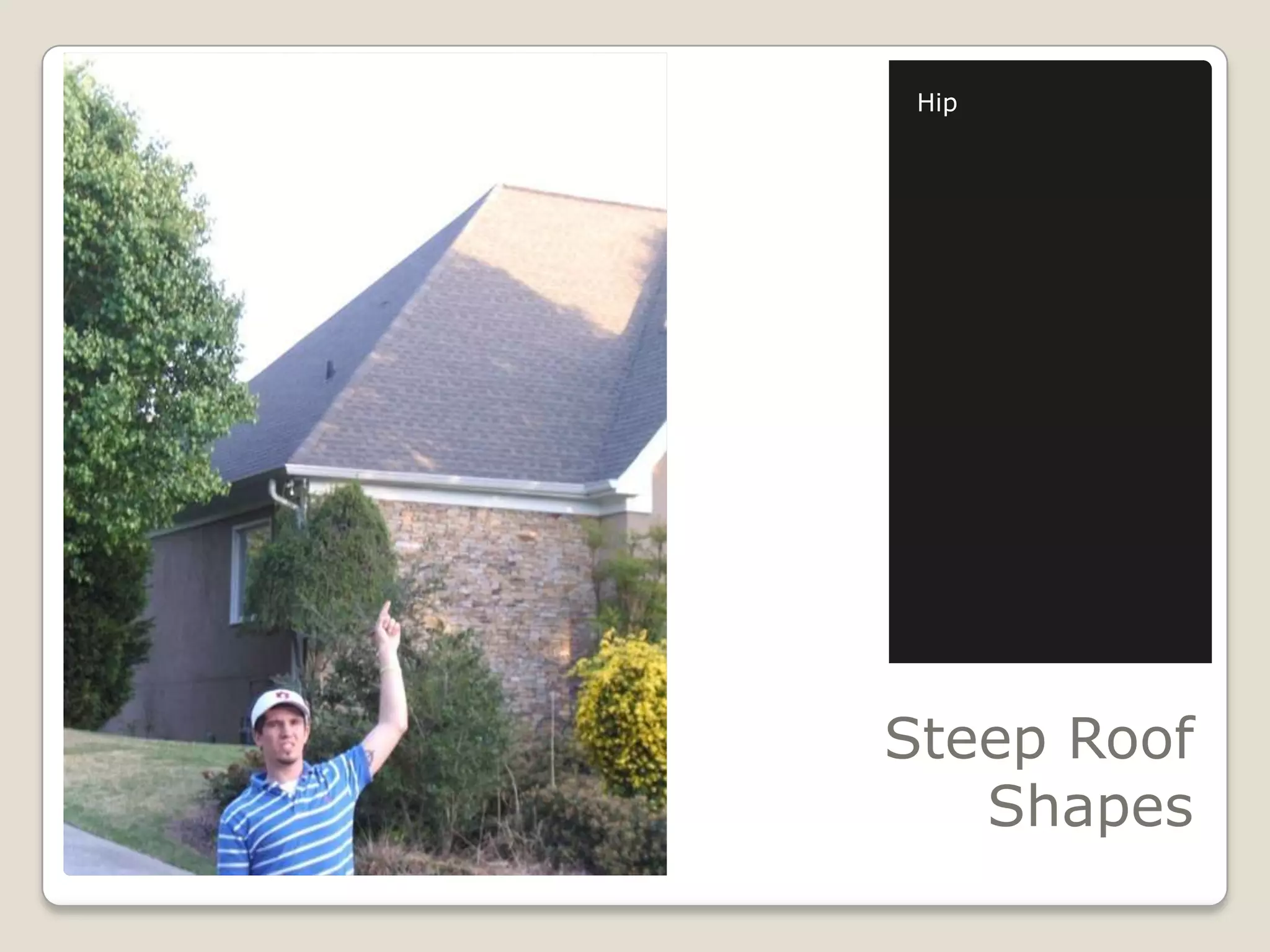
Steep Roof ShapesHip
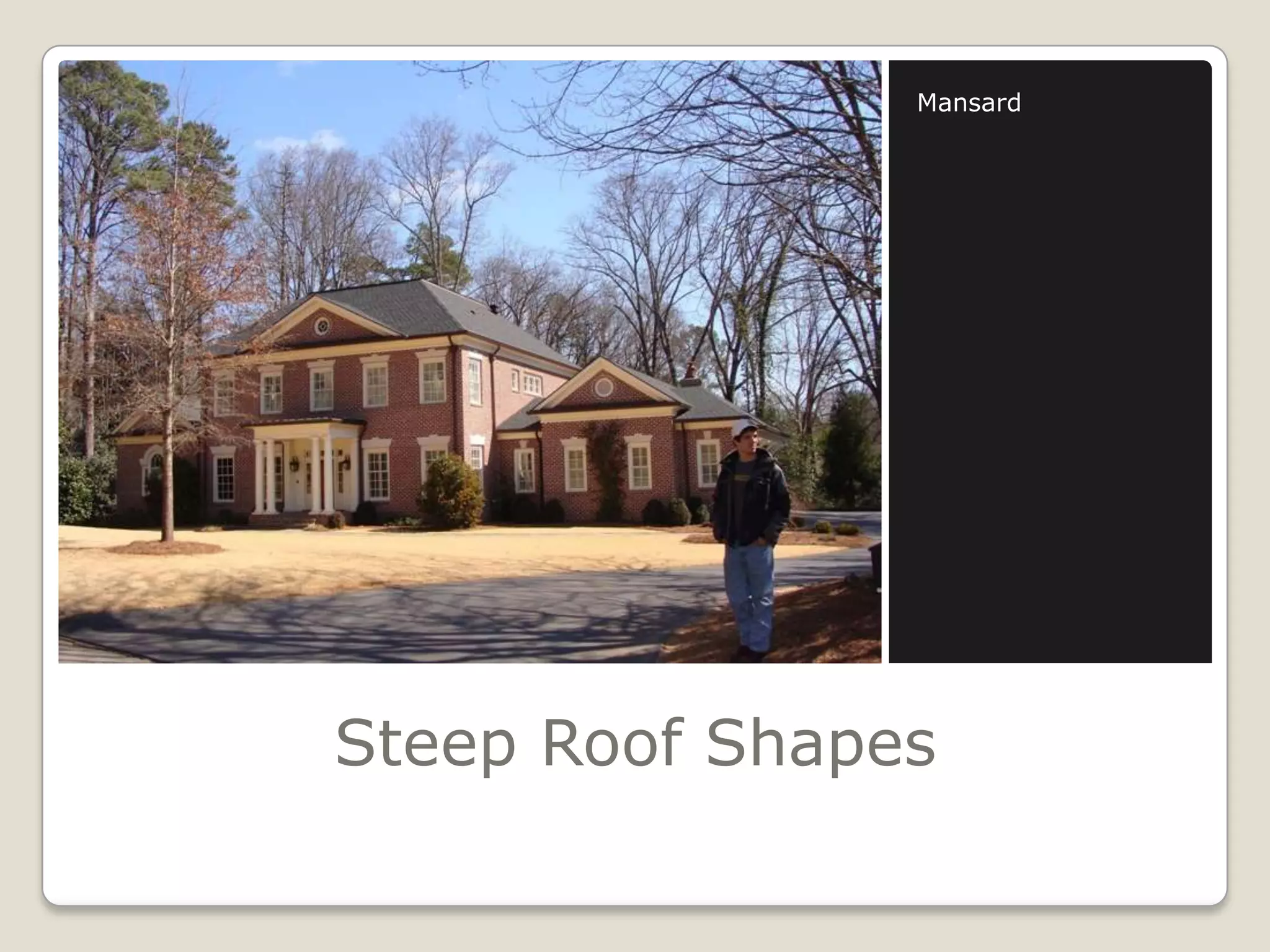
Steep Roof ShapesMansard
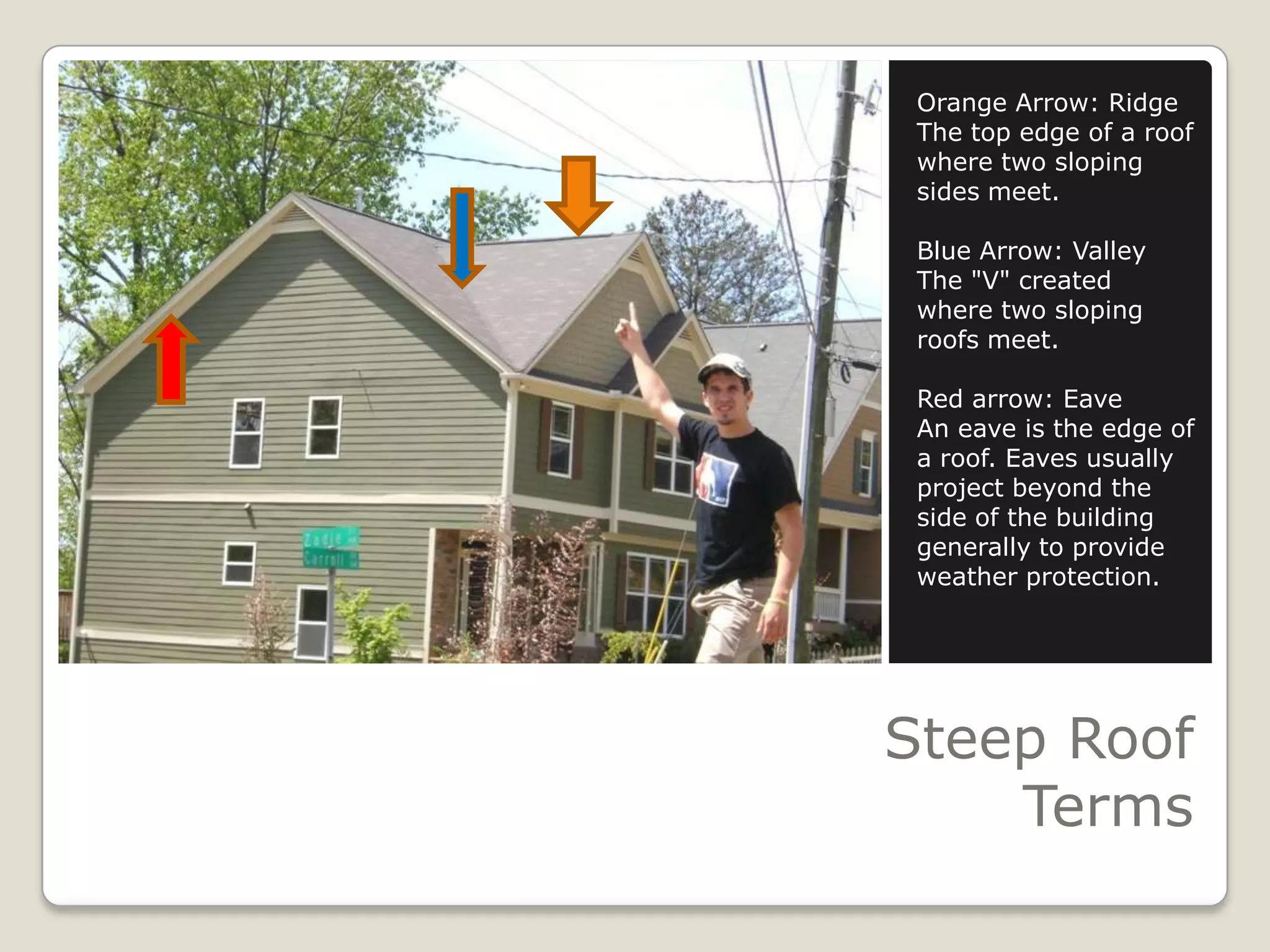
Steep RoofTermsOrange Arrow: RidgeThe top edge of a roof where two sloping sides meet.Blue Arrow: ValleyThe "V" created where two sloping roofs meet.Red arrow: EaveAn eave is the edge of a roof. Eaves usually project beyond the side of the building generally to provide weather protection.
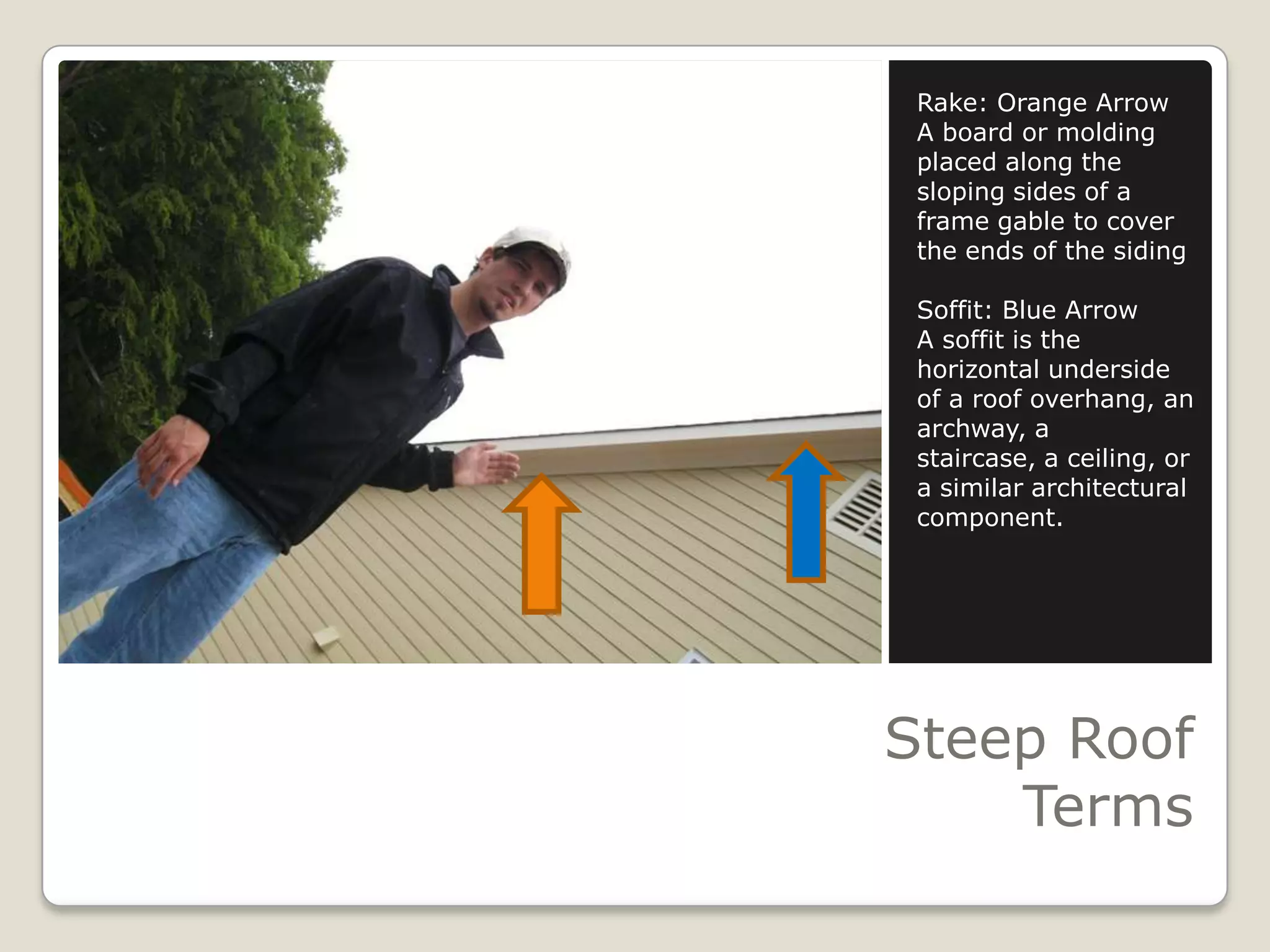
Steep Roof TermsRake: Orange ArrowA board or molding placed along the sloping sides of a frame gable to cover the ends of the sidingSoffit: Blue ArrowA soffit is the horizontal underside of a roof overhang, an archway, a staircase, a ceiling, or a similar architectural component.
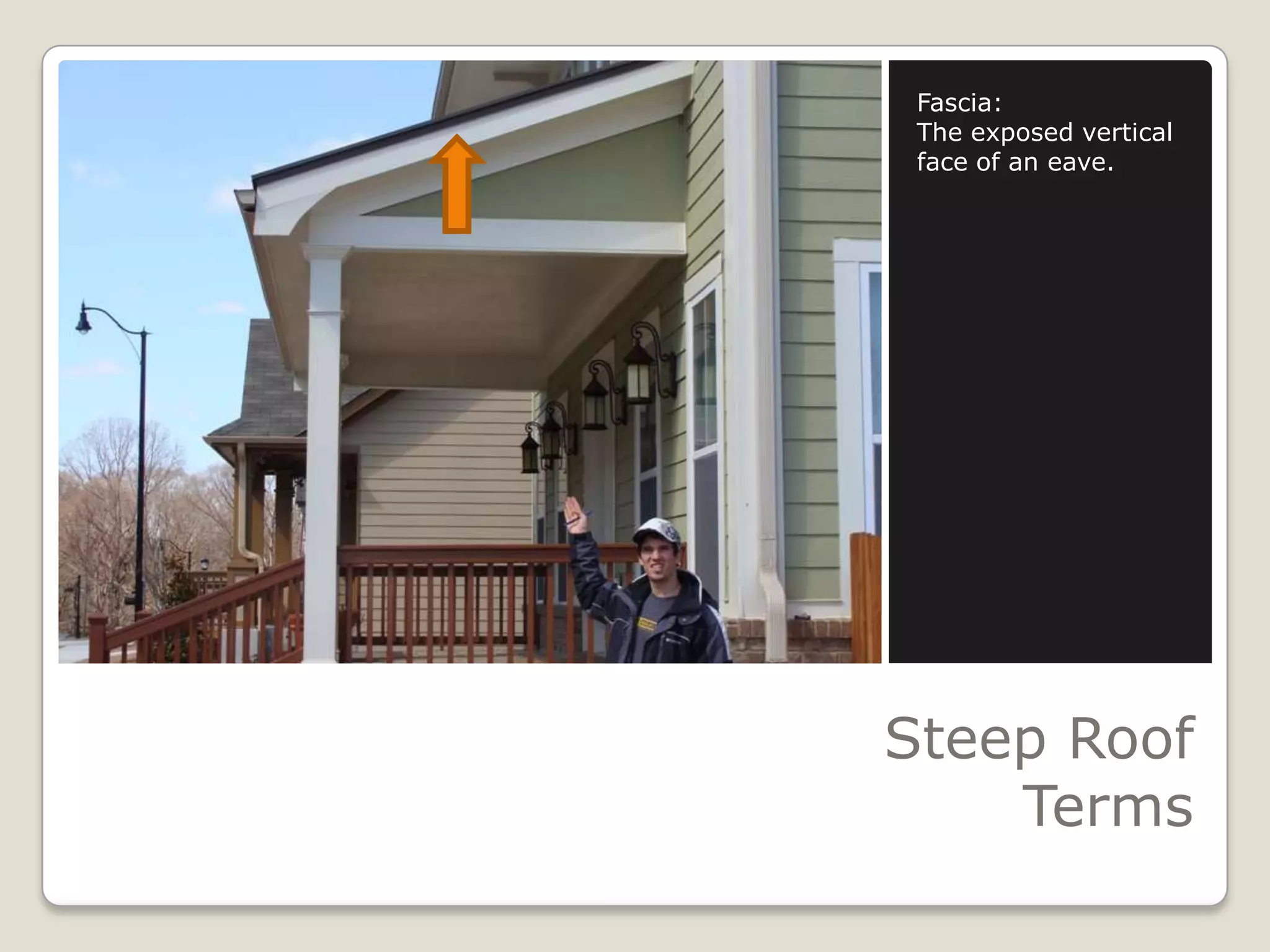
Steep Roof TermsFascia:The exposed vertical face of an eave.
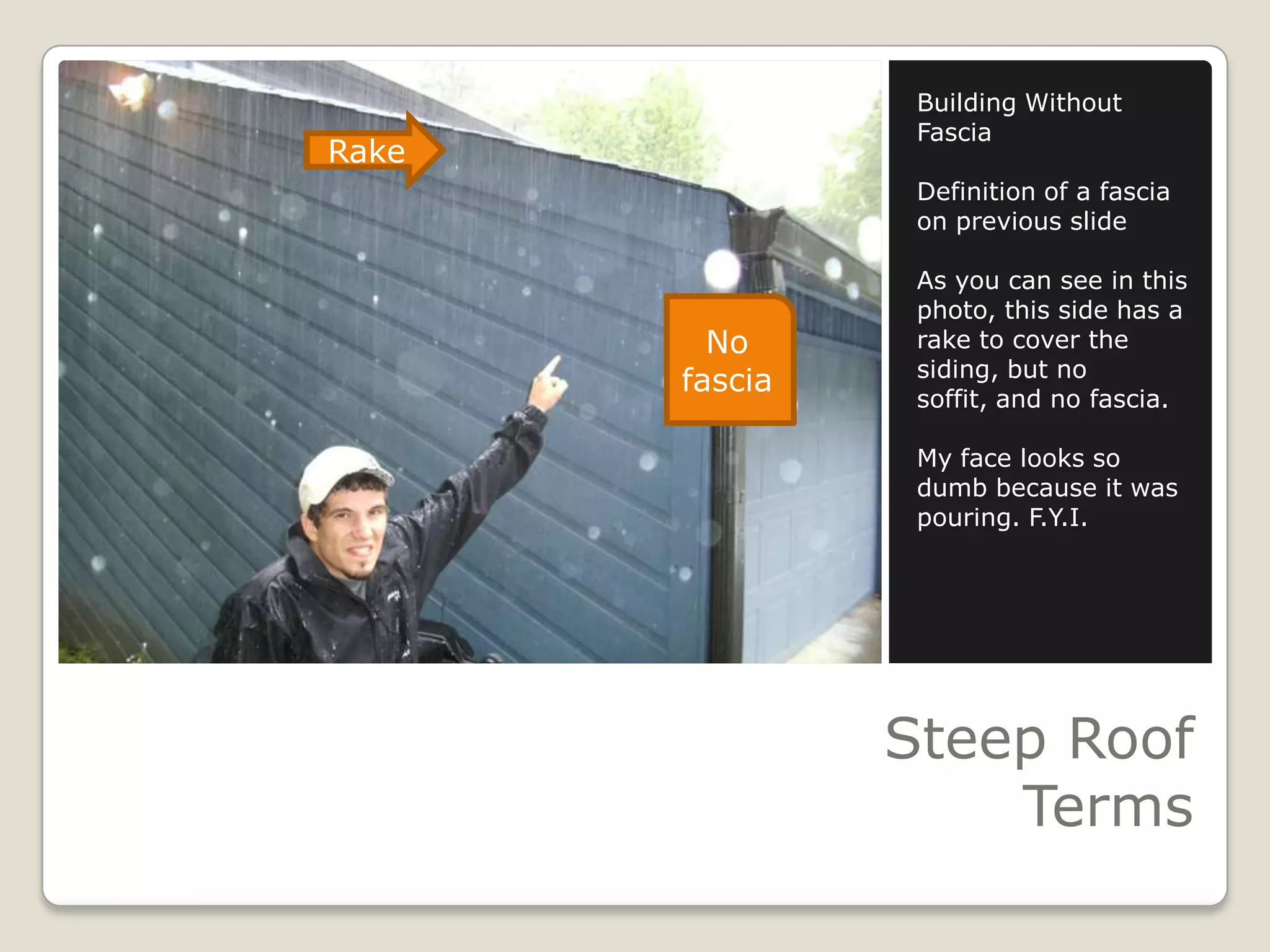
Steep Roof TermsBuilding Without FasciaDefinition of a fascia on previous slideAs you can see in this photo, this side has a rake to cover the siding, but no soffit, and no fascia.My face looks so dumb because it was pouring. F.Y.I.RakeNo fascia
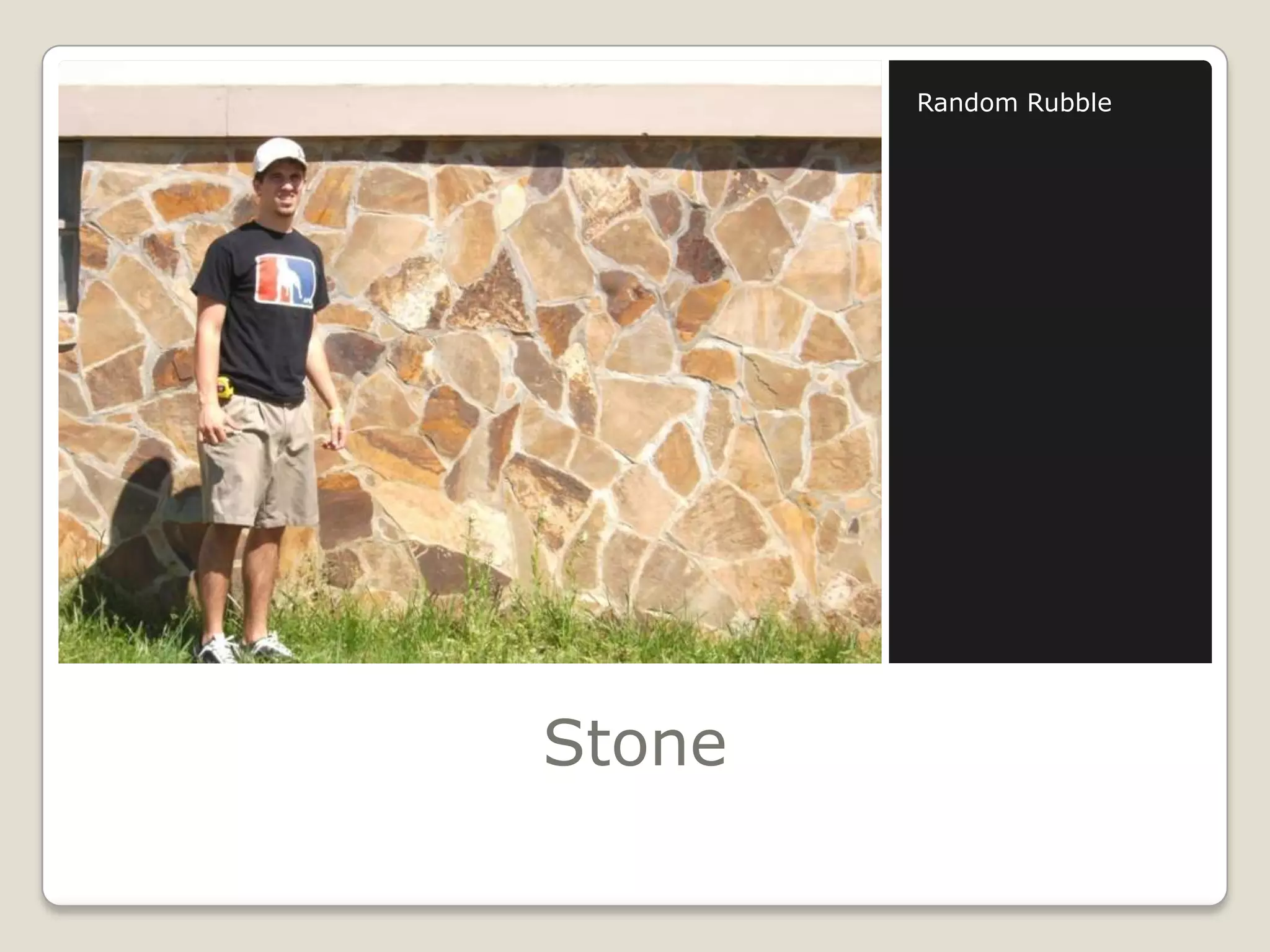
StoneRandom Rubble
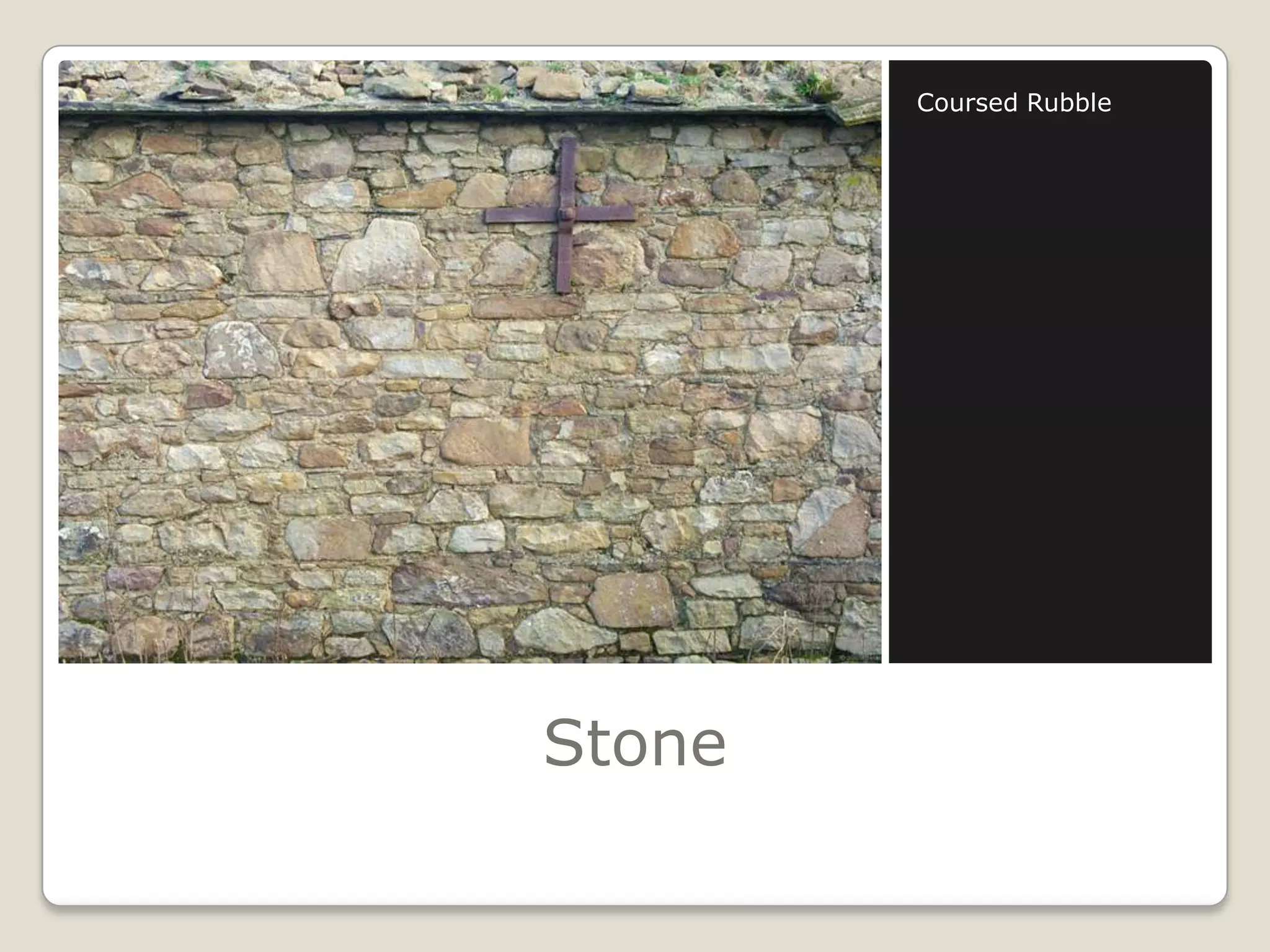
StoneCoursed Rubble
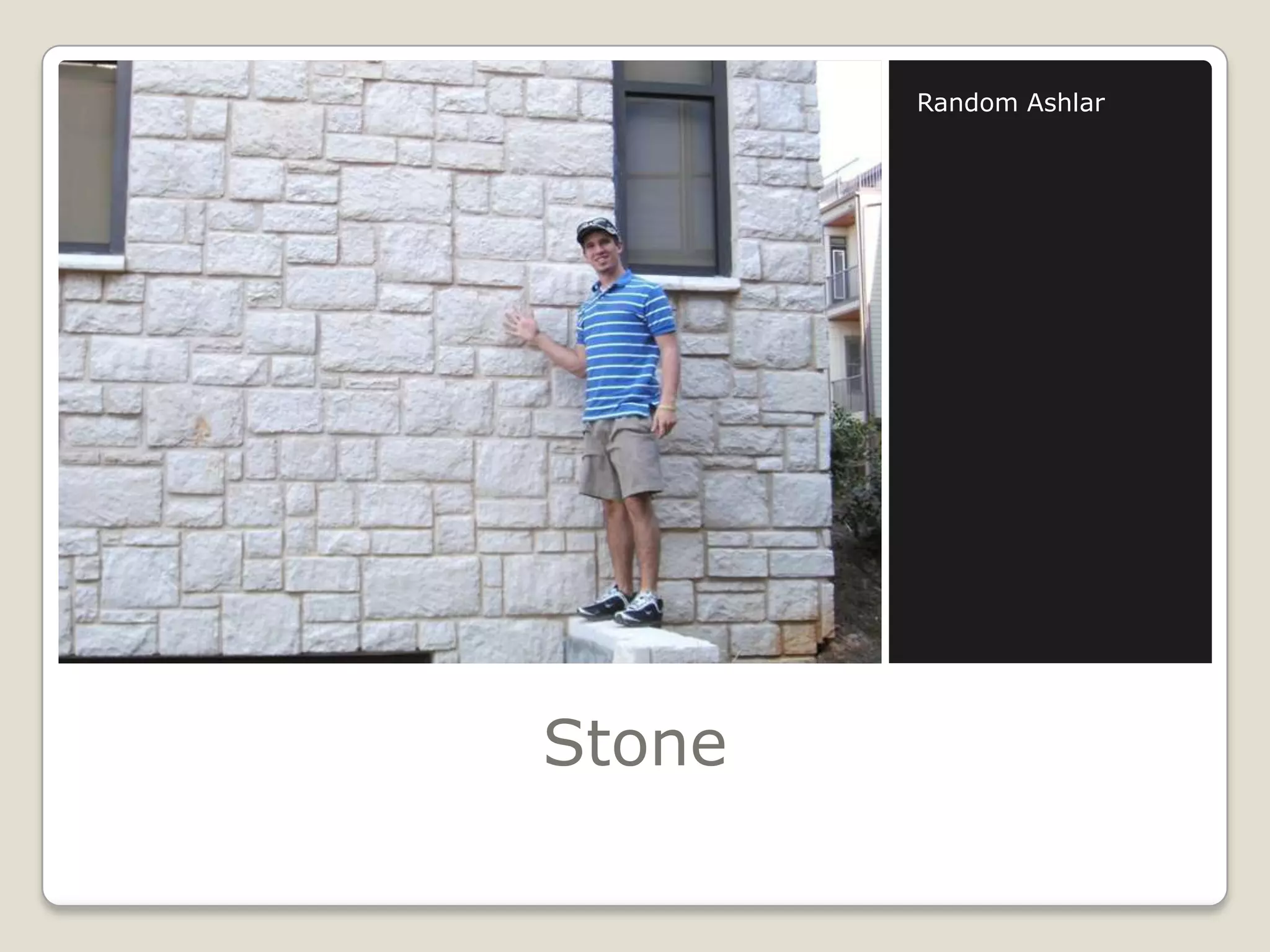
StoneRandom Ashlar
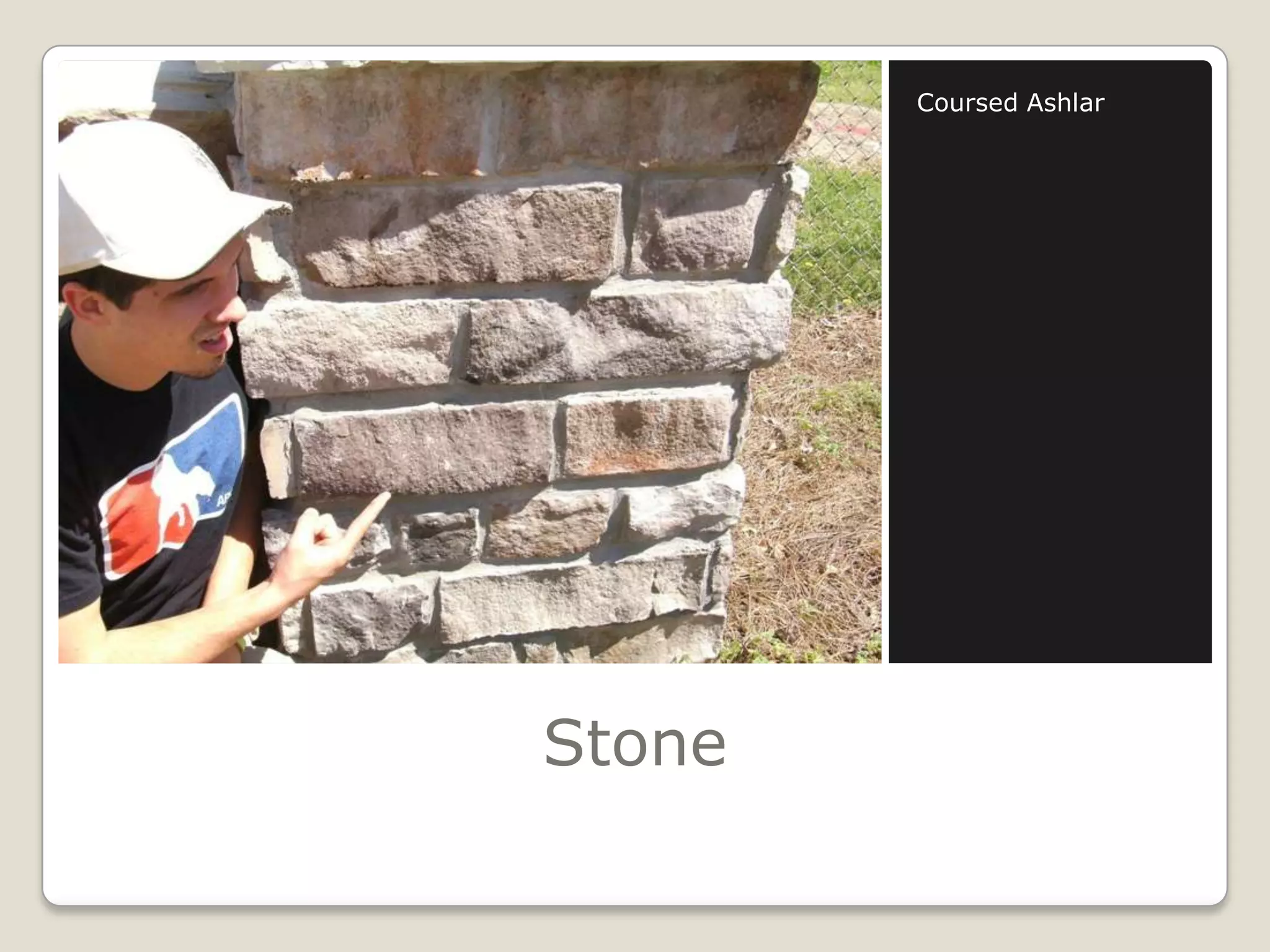
StoneCoursed Ashlar
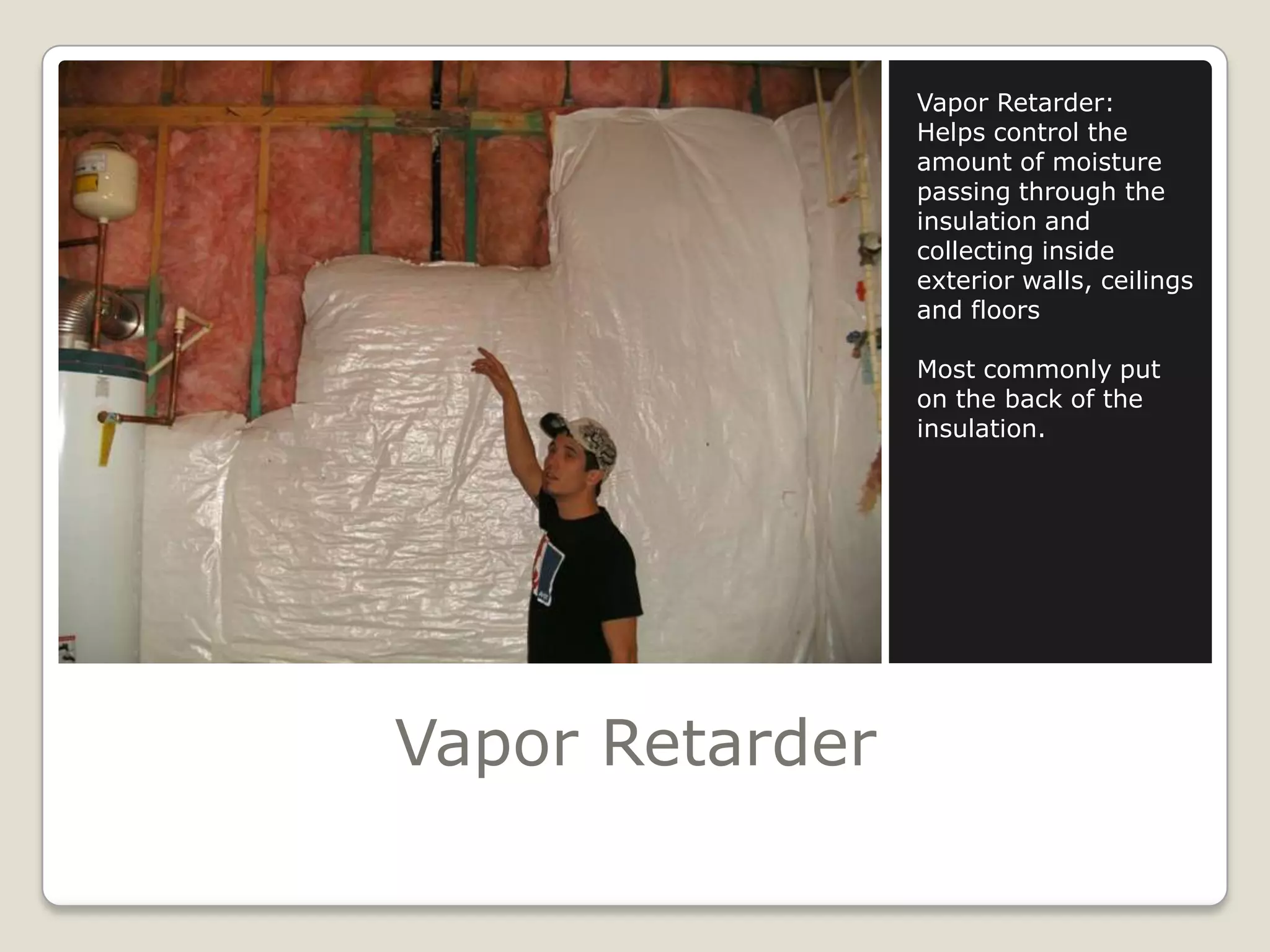
Vapor RetarderVapor Retarder:Helps control the amount of moisture passing through the insulation and collecting inside exterior walls, ceilings and floorsMost commonly put on the back of the insulation.
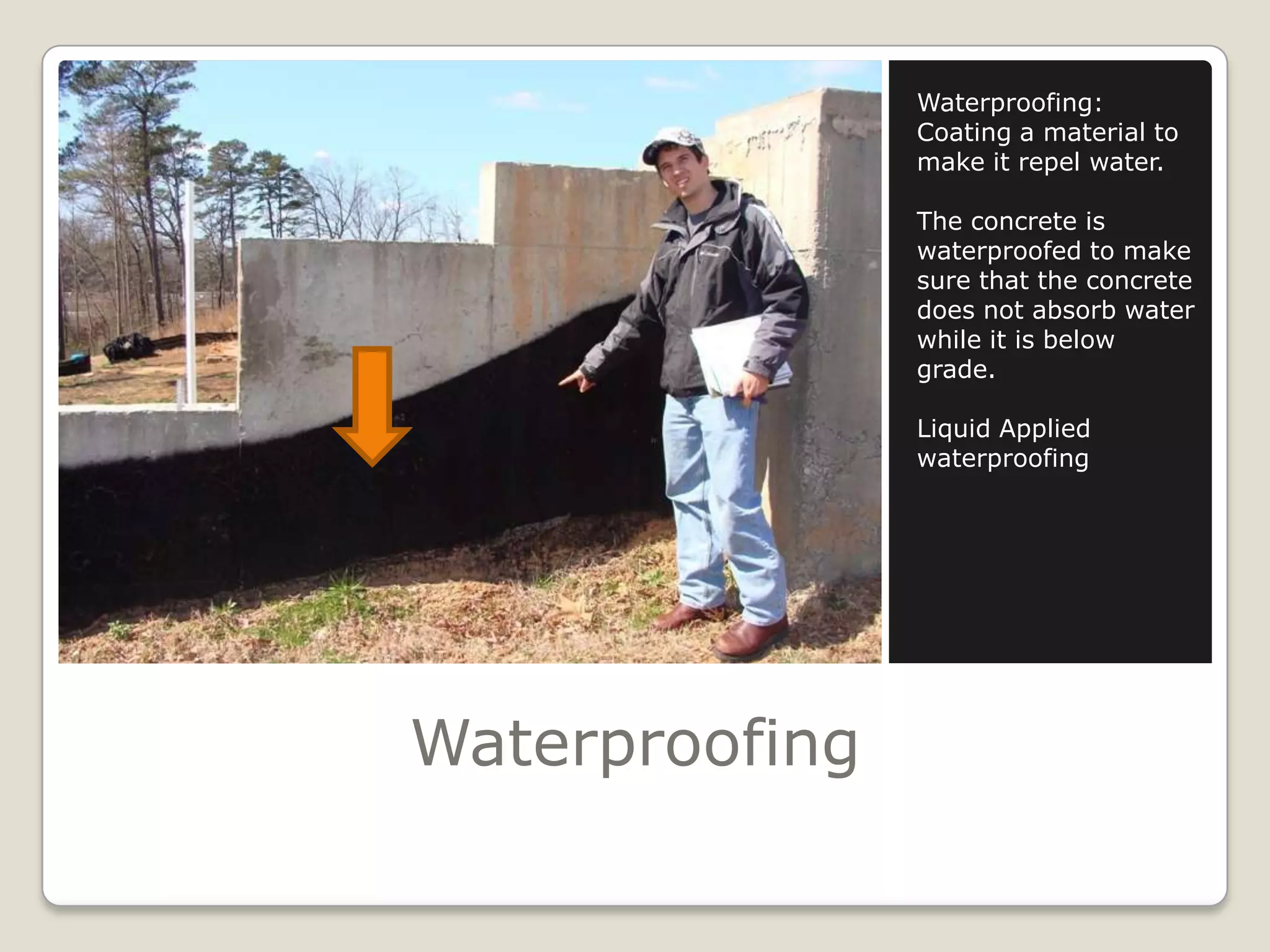
WaterproofingWaterproofing:Coating a material to make it repel water.The concrete is waterproofed to make sure that the concrete does not absorb water while it is below grade.Liquid Applied waterproofing
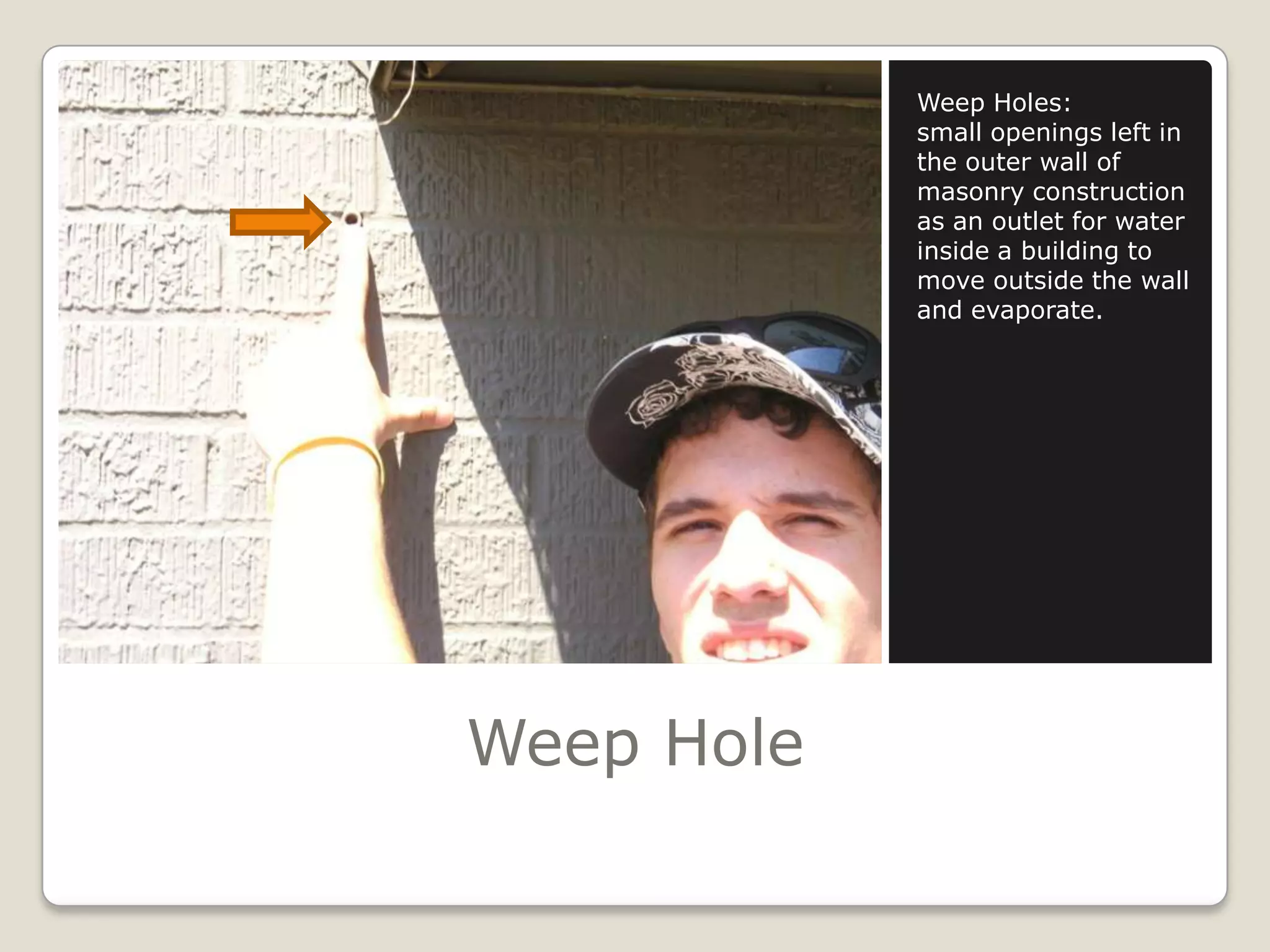
Weep HoleWeep Holes:small openings left in the outer wall of masonry construction as an outlet for water inside a building to move outside the wall and evaporate.
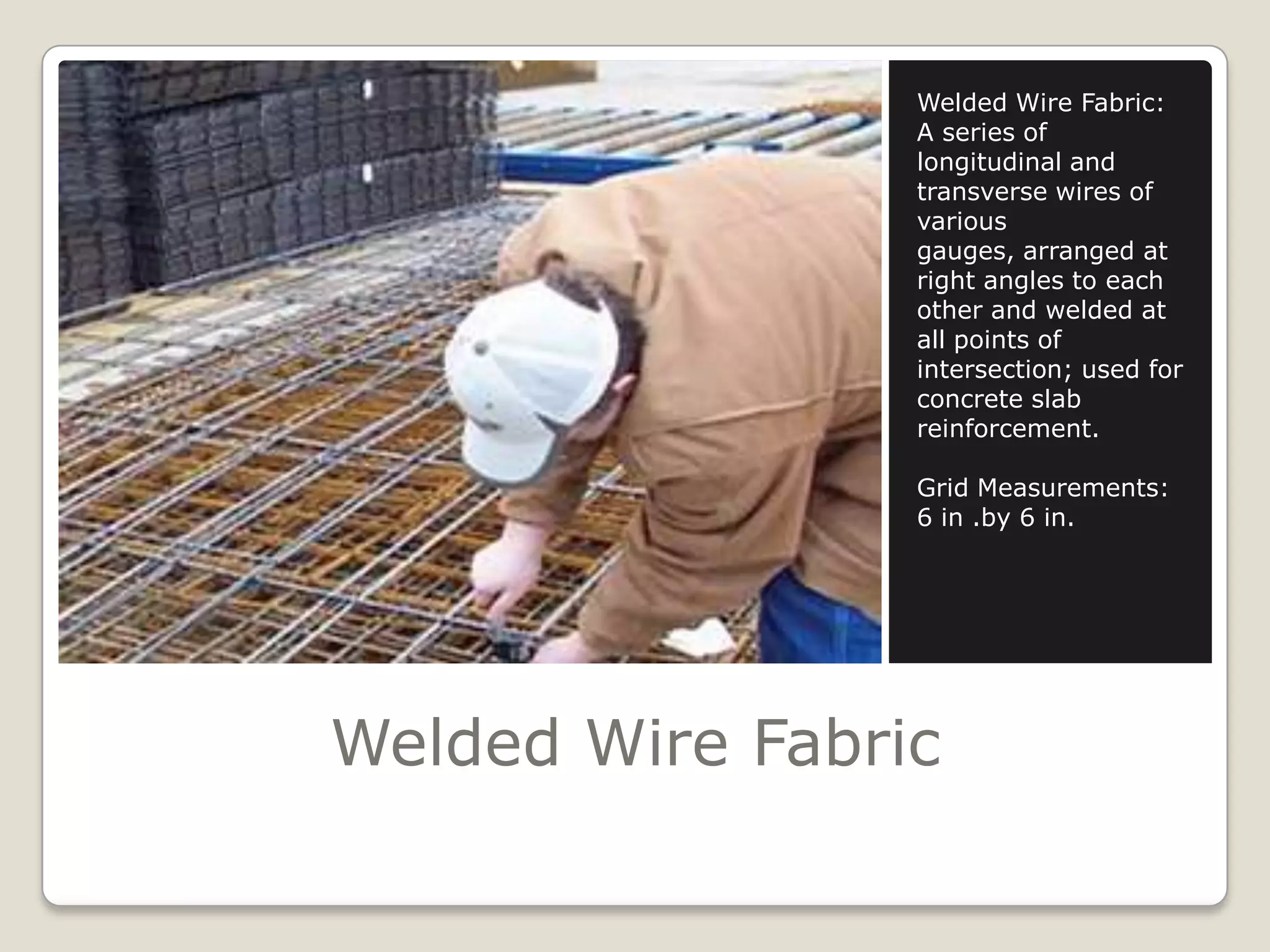
Welded Wire FabricWelded Wire Fabric:A series of longitudinal and transverse wires of various gauges, arranged at right angles to each other and welded at all points of intersection; used for concrete slab reinforcement.Grid Measurements:6 in .by 6 in.
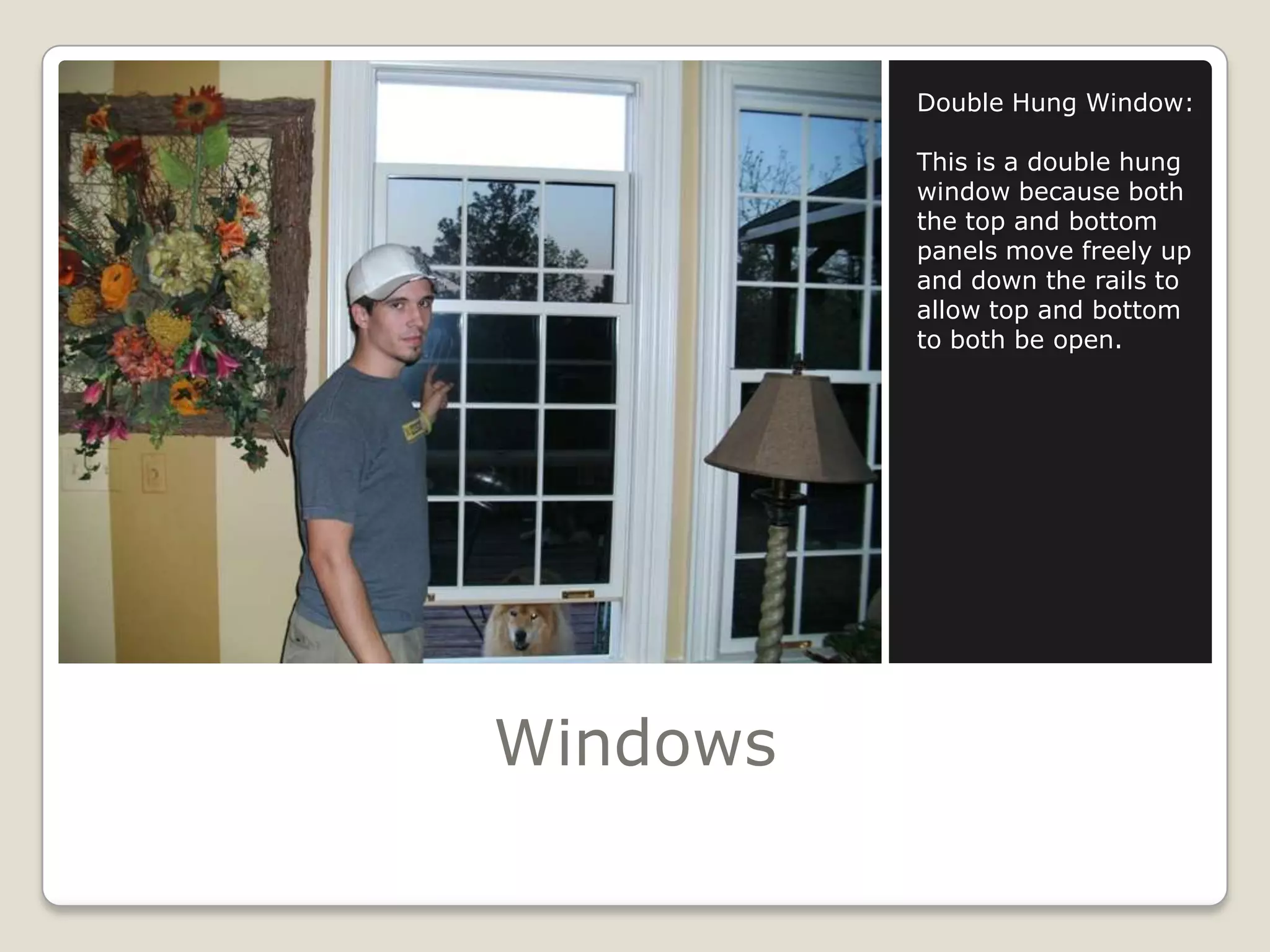
WindowsDouble Hung Window:This is a double hung window because both the top and bottom panels move freely up and down the rails to allow top and bottom to both be open.
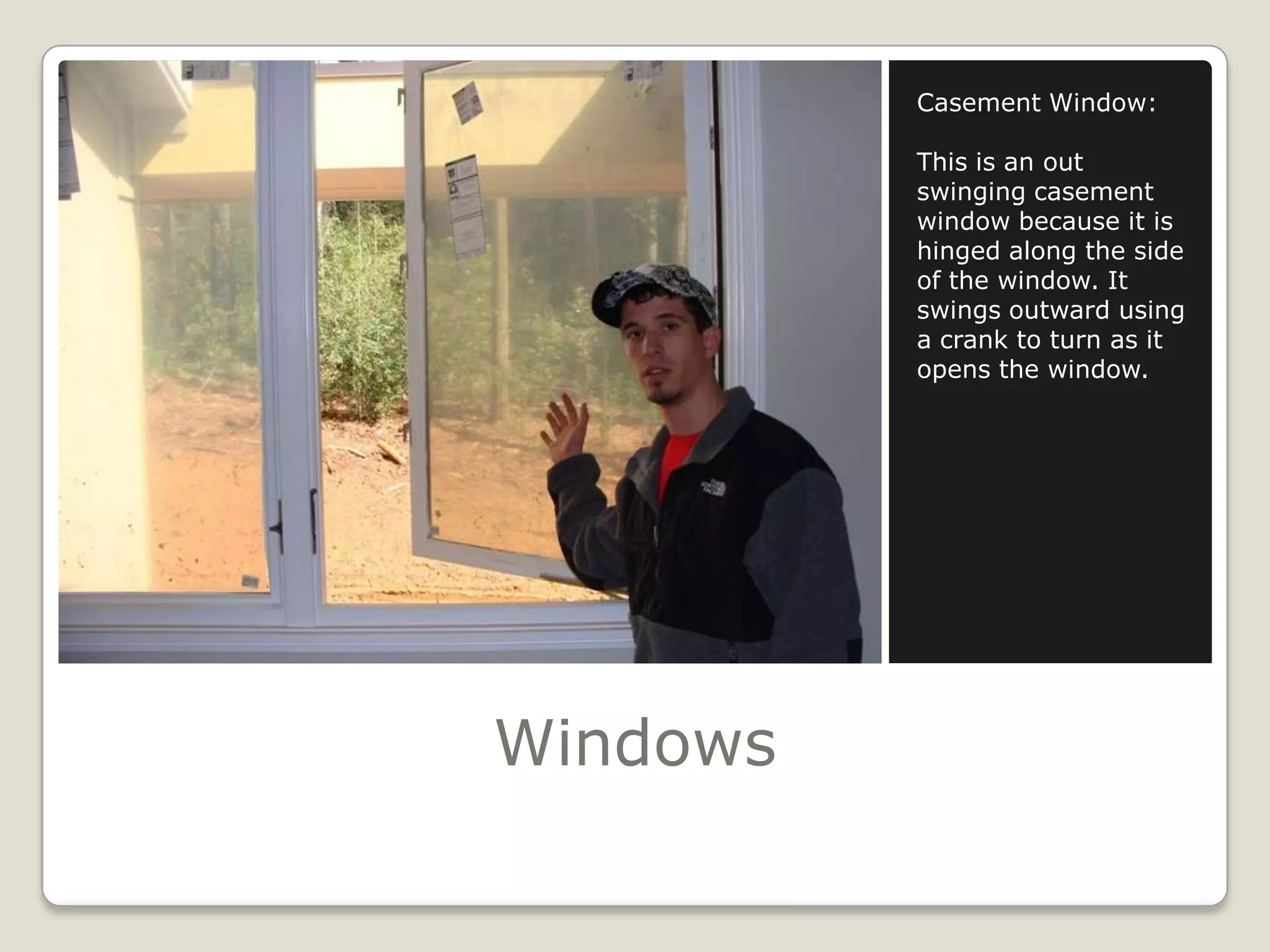
WindowsCasement Window:This is an out swinging casement window because it is hinged along the side of the window. It swings outward using a crank to turn as it opens the window.
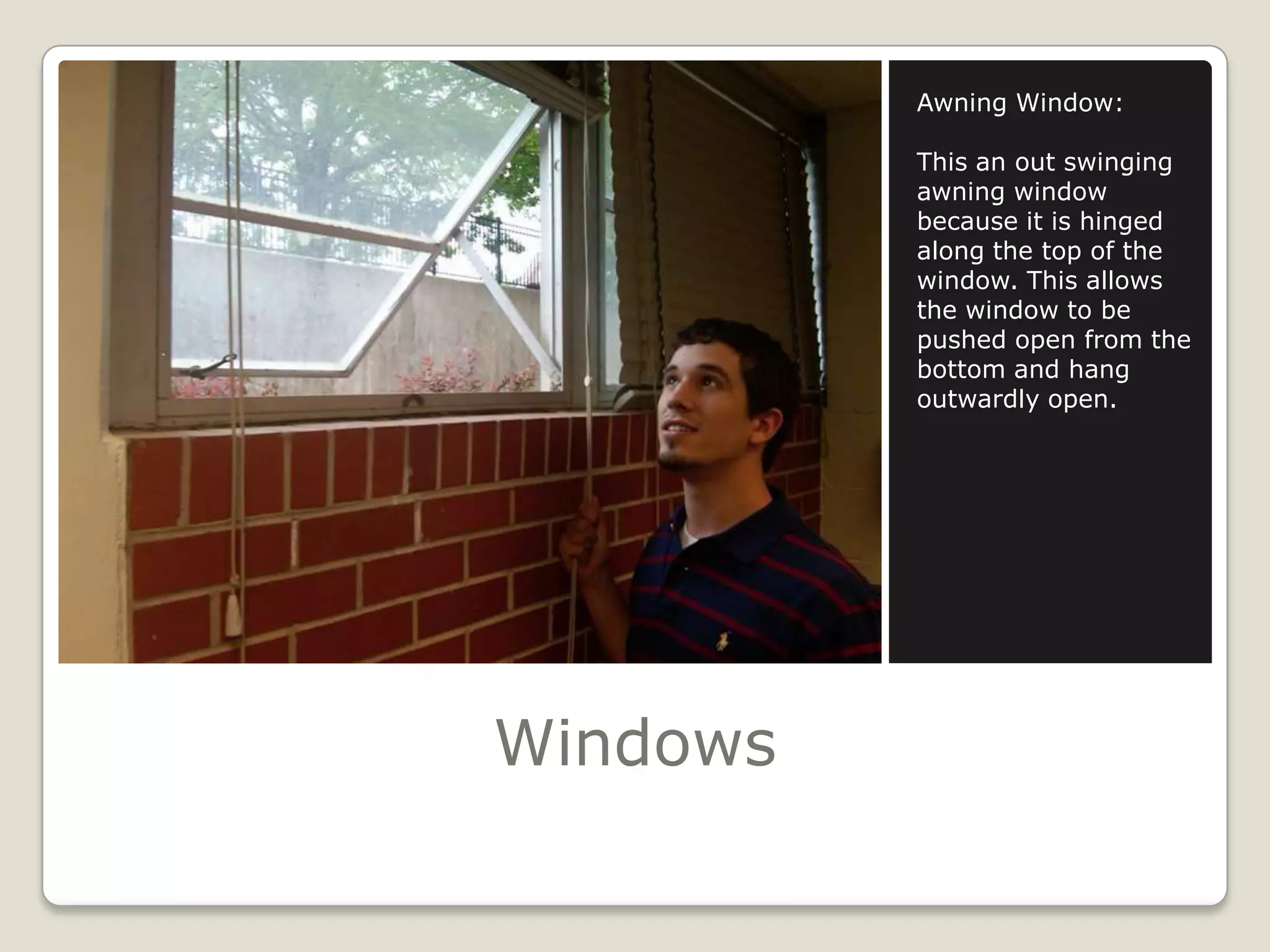
WindowsAwning Window:This an out swinging awning window because it is hinged along the top of the window. This allows the window to be pushed open from the bottom and hang outwardly open.

Visual dictionary for Sp10Joist