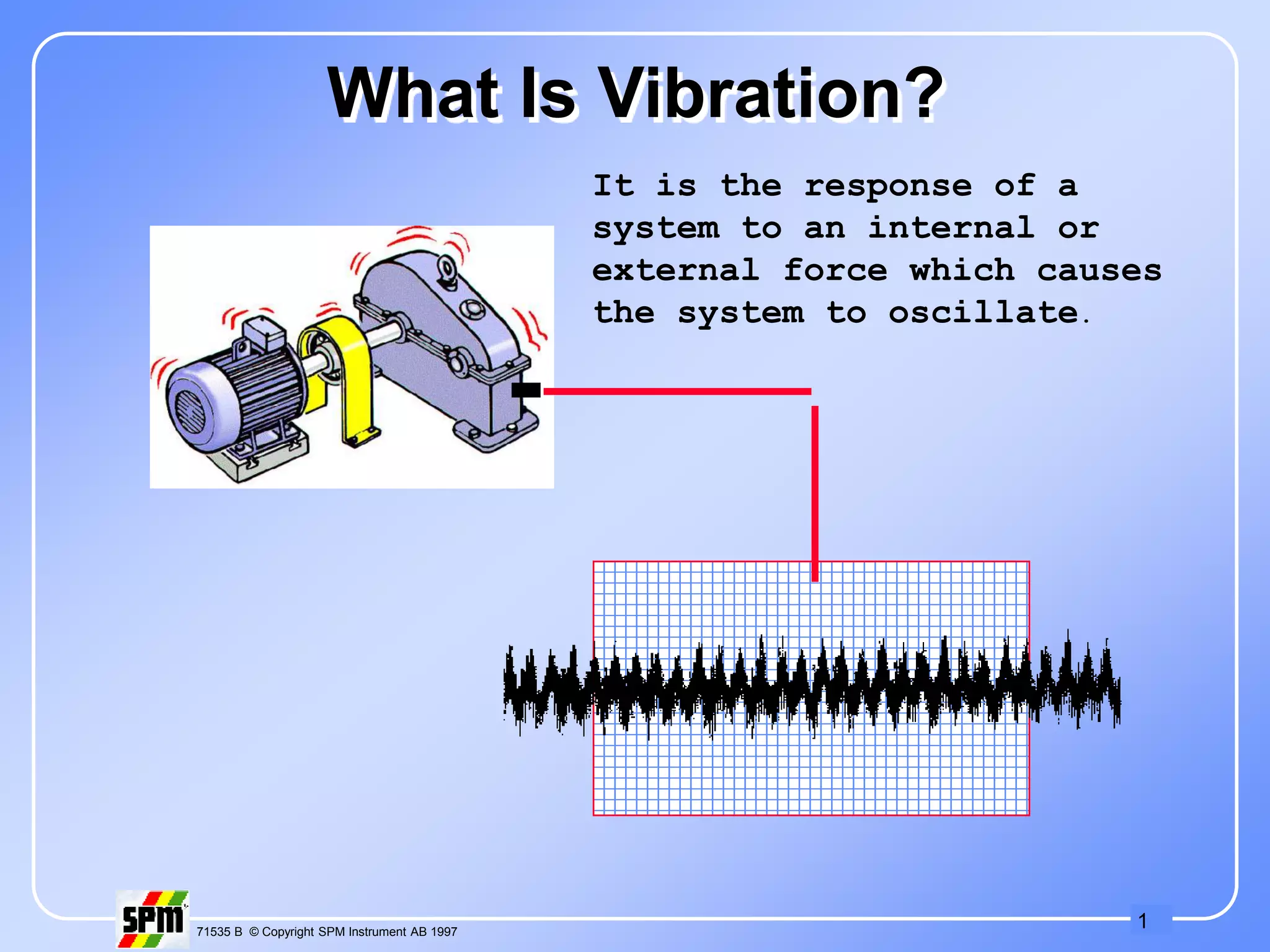
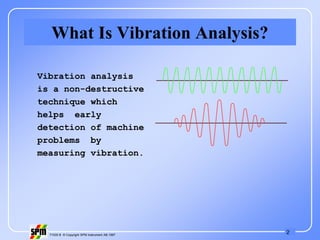
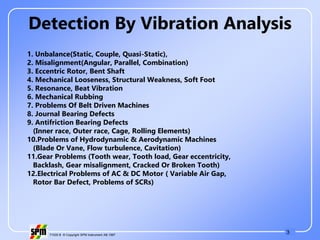
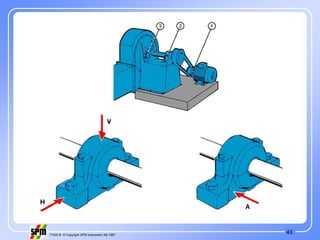
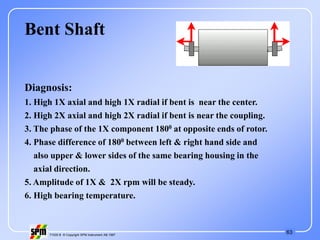
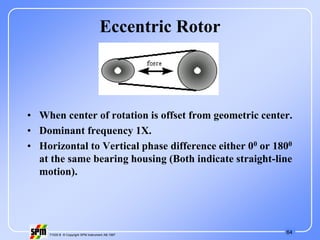
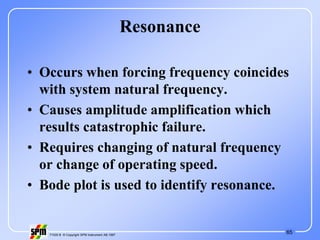
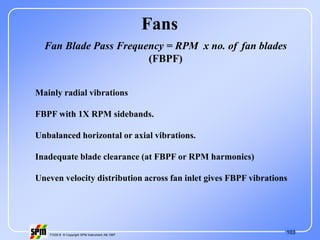
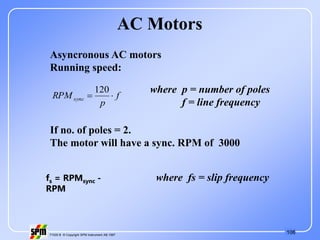
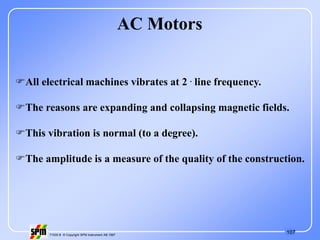
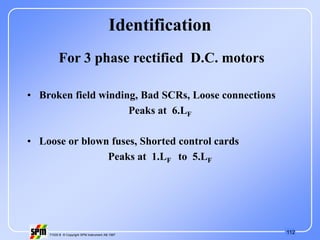
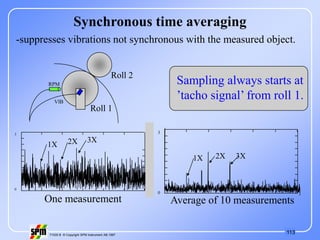
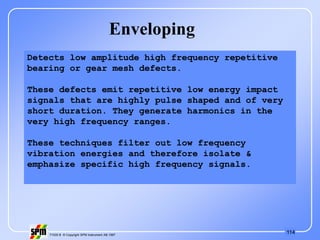
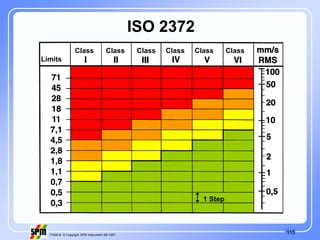
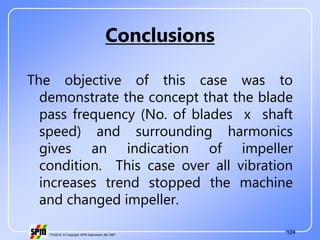
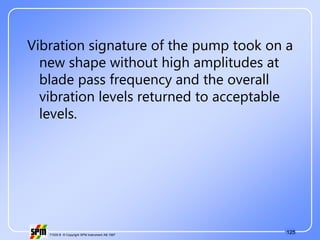
Vibration analysis is a non-destructive technique used to detect machine problems by measuring vibration. It can detect issues like unbalance, misalignment, bent shafts, bearing defects, and more. Vibration is measured by devices that detect displacement, velocity, or acceleration. Fast Fourier Transform (FFT) analysis breaks down vibration data into individual frequency components to help identify the source of issues. Manual vibration analysis involves examining FFT spectra and phase readings to diagnose specific faults based on indicators like dominant frequencies and amplitude readings.
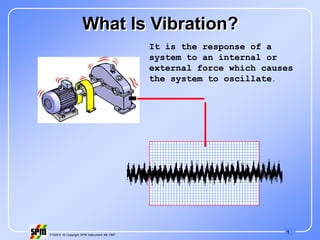
Vibration is the oscillation of a system to external/internal forces. Vibration analysis detects machine issues early using non-destructive measurements.
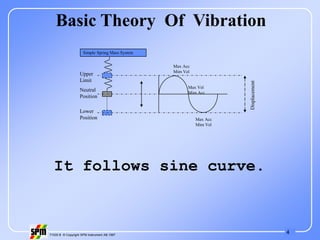
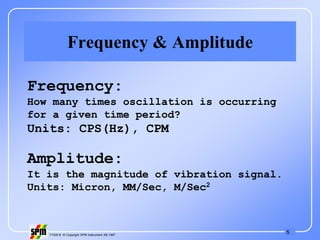
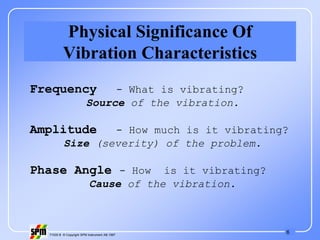
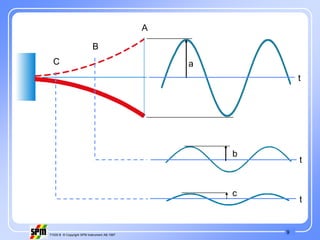
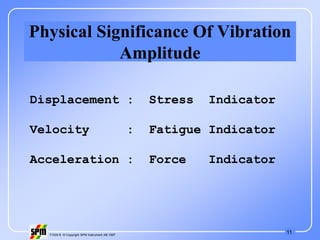
Discusses spring-mass systems, frequency, amplitude and the physical significance of vibration characteristics in diagnostics.
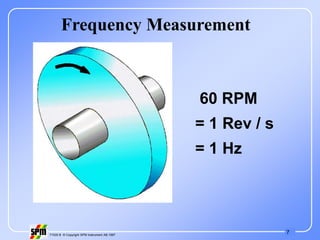
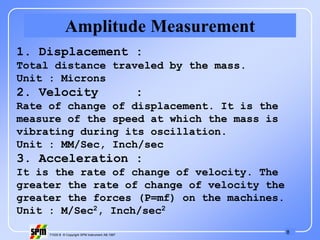
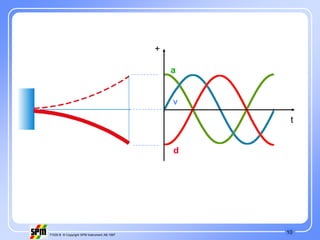
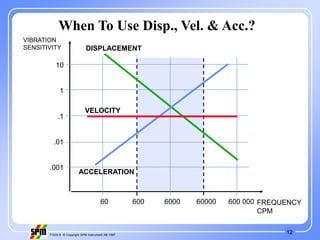
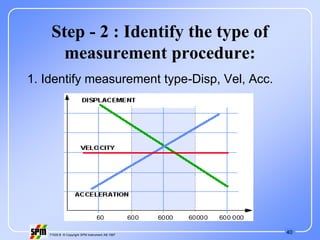
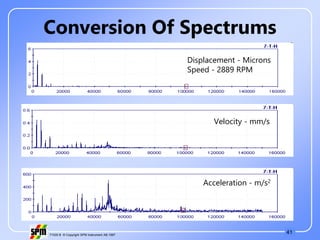
Explains frequency measurement, amplitude measurement (displacement, velocity, acceleration) and what they indicate regarding machine condition.
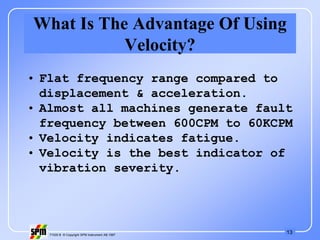
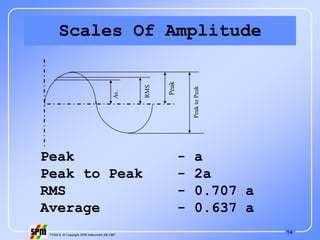
Describes advantage of velocity measurement in vibration analysis and scales of amplitude (Peak, RMS, Average) relevant for analysis.
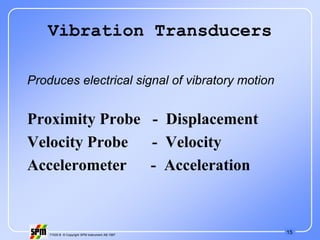
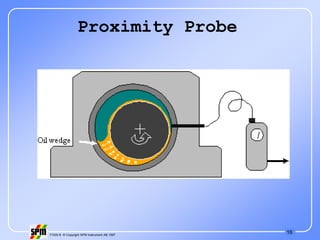
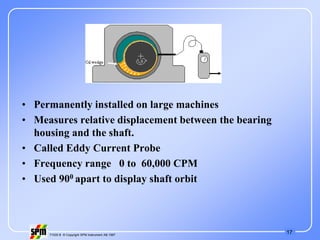
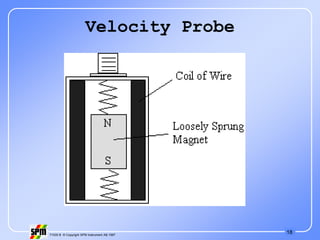
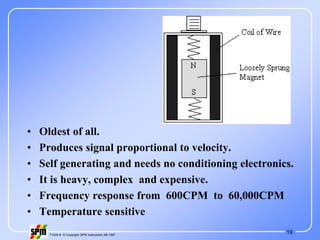
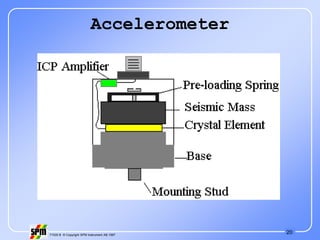
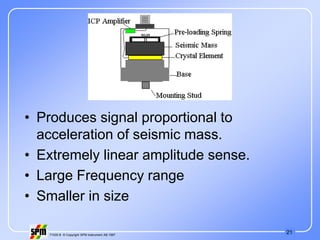
Overview of vibration transducers: proximity probes for displacement, velocity probes for speed, and accelerometers for acceleration measurement.
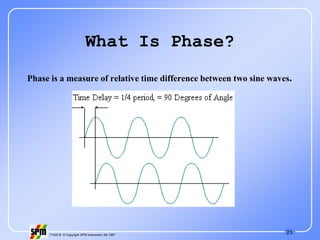
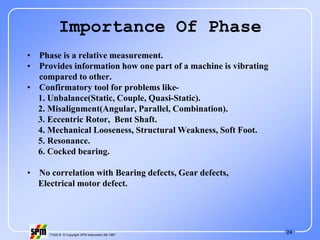
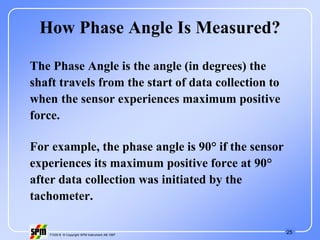
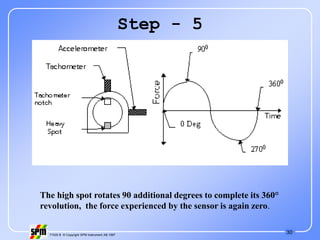
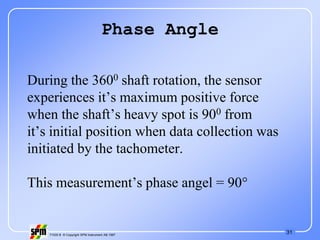
Defines phase and its importance to detect misalignment, unbalance, structural issues in machinery by measuring time differences between waveforms.
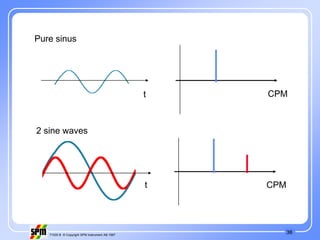
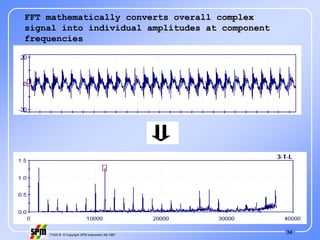
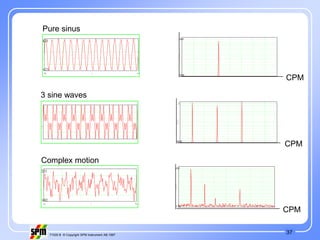
Defines Fast Fourier Transform (FFT) and techniques used to analyze vibration signals, guiding the identification of potential defects.
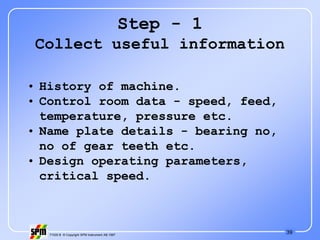
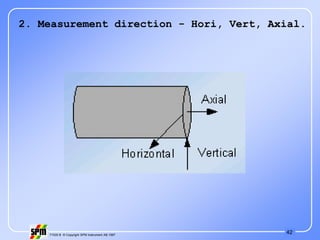
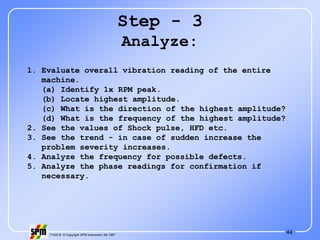
Lists detailed steps for conducting manual vibration analysis including machine history, measurement type and analysis of overall machine condition.
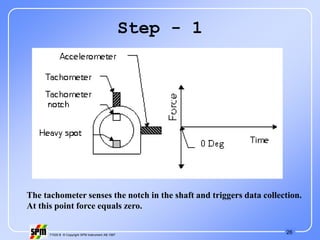
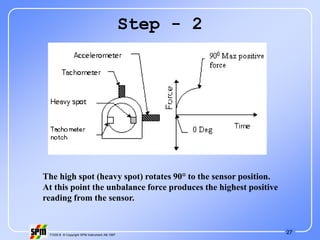
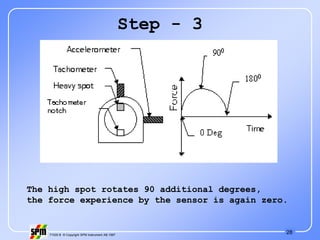
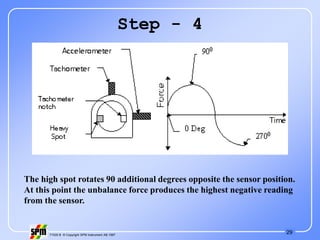
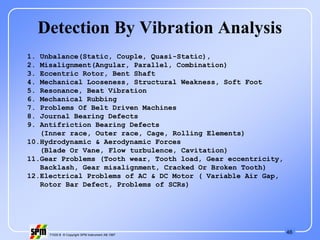
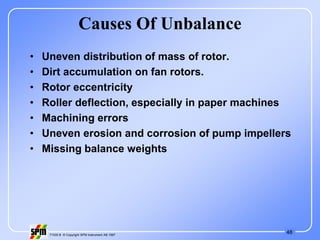
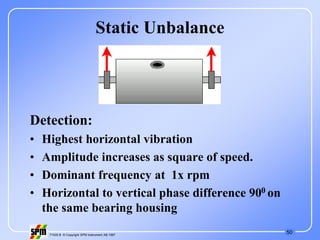
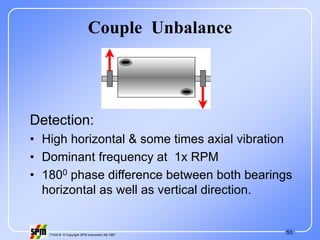
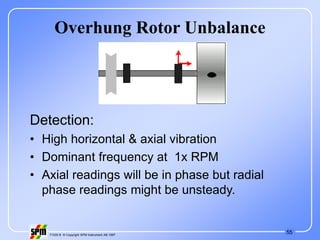
Explanation of unbalance causes, types and methods of detection, including static and couple unbalance, and corrections.
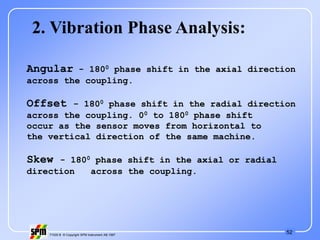
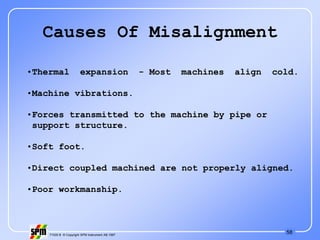
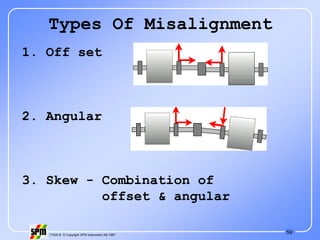
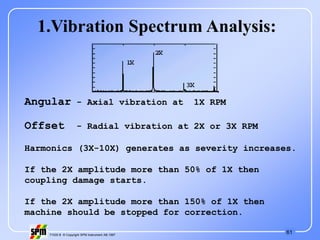
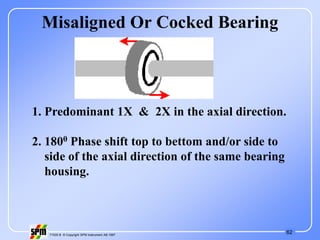
Outlines causes of misalignment, its diagnosis through vibration analysis, and corrective measures for maintaining machine alignment.
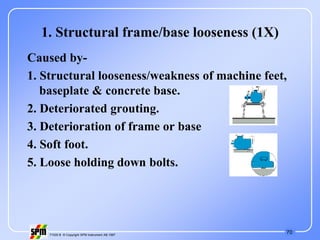
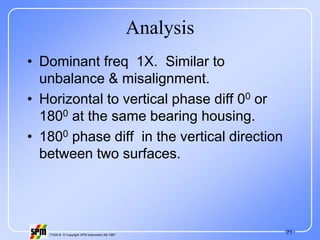
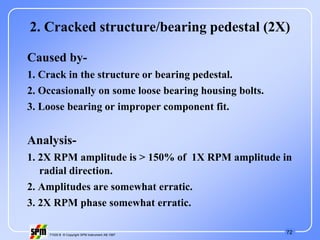
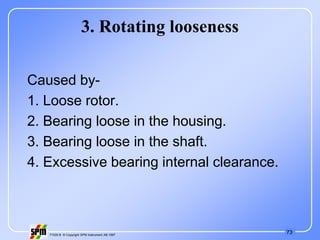
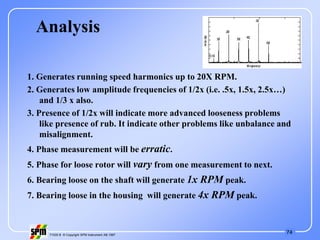
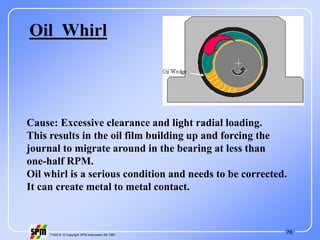
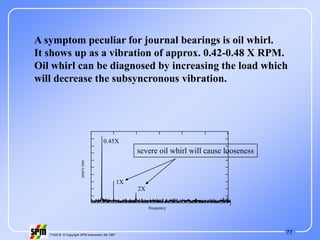
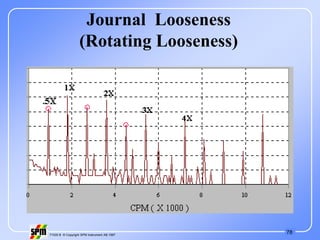
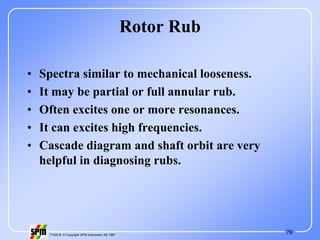
Discusses mechanical looseness, its types, causes, analysis methods and symptoms of significant mechanical failures.
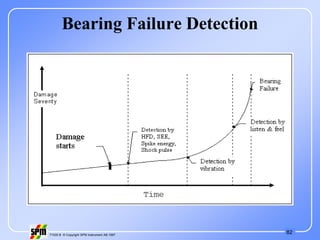
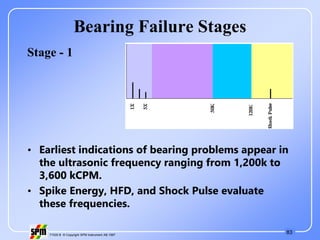
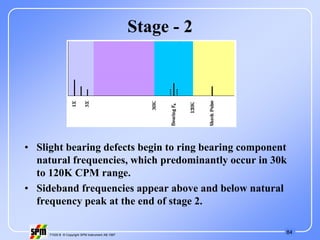
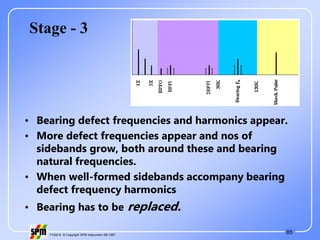
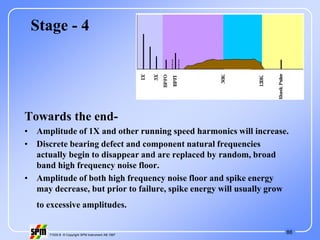
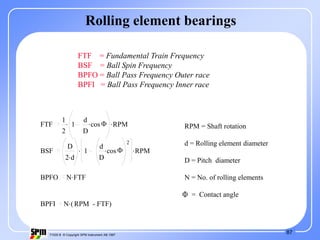
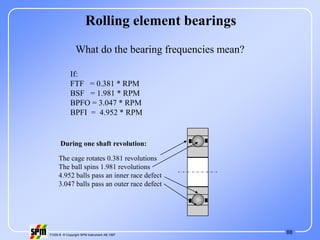
Reasons for bearing failure, stages of detection, analysis of vibration patterns and specific frequencies associated with rolling bearings.
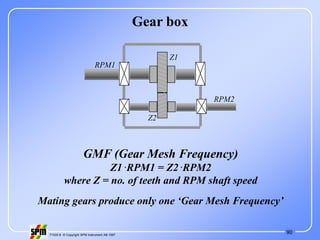
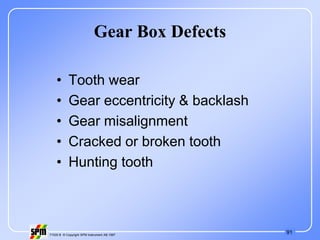
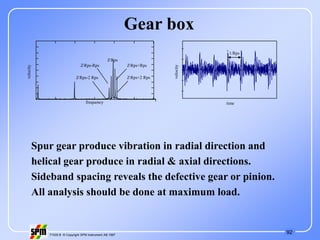
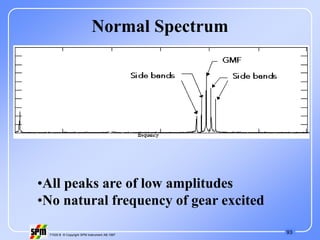
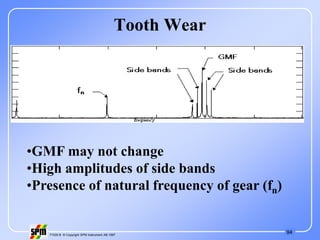
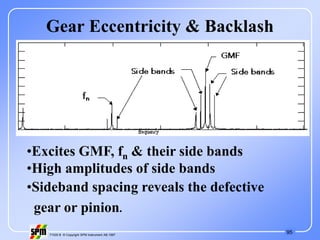
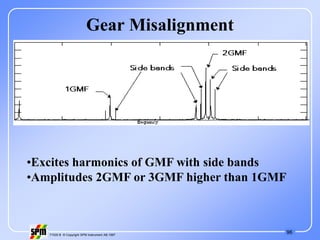
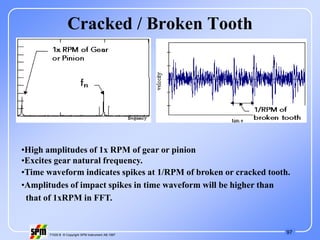
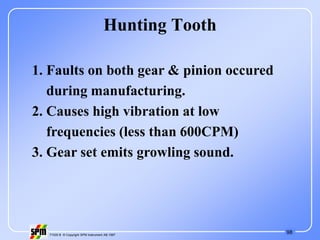
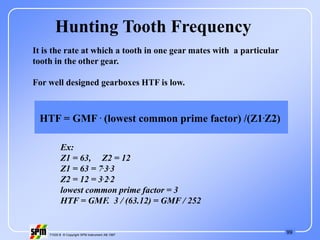
Explains gear box defects including tooth wear, misalignment and their associated vibration signatures and analysis techniques.
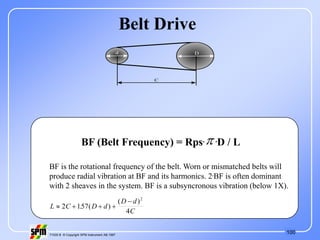
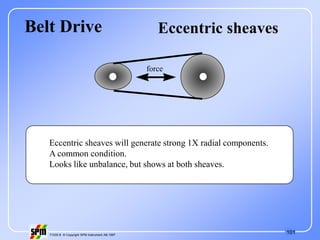
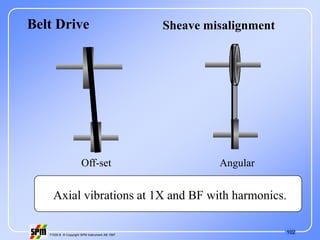
Discusses the impact of belt drive conditions on vibration signals, focusing on eccentric sheaves and vibrations during operations.

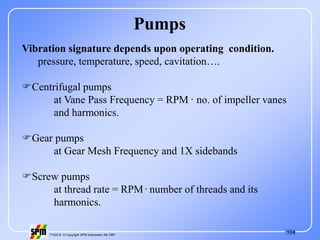
Examines vibration signatures in pumps, discusses case studies on pump impeller wear and the relationship of vibrations to maintenance activity.