C L A SS I F I C AT I O N
O F A N I M A L S :
V E R T E B R A T E S A N D
I N V E R T E B R A T E S
VERTEBRATES
• A vertebrate is an animal with a backbone or a spinal column, also called vertebrae.
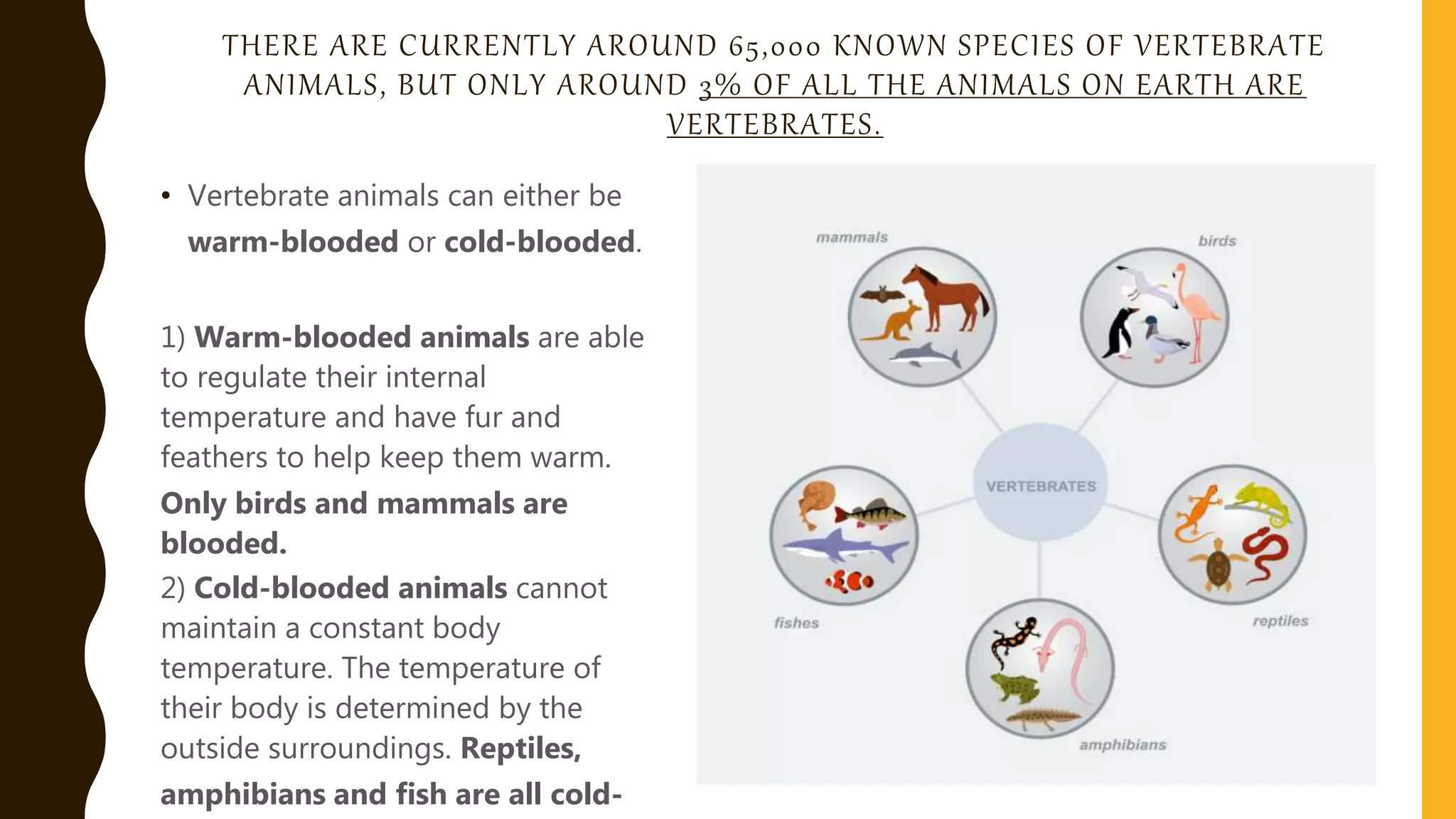
• There are five types of vertebrates: fishes, amphibians, reptiles, birds and mammals.
1. Fish are animals that live in the water. They have gills that allow them to breathe under
water. They are cold-blooded. Example: trout fish, shark, whale, lionfish.
2. Amphibians are cold-blooded animals. They have gills just like fish to breathe under
water when they hatch but later, they develop lungs and move to the dry land. Example:
frogs, toads, salamanders.
3. Reptiles are cold-blooded animals which lay eggs. Their skin is covered with hard and
dry scales. Example: alligators, crocodiles, snakes, lizards and turtles.
4. Birds are warm-blooded animals that have feathers, wings, and lay eggs. Many, but not
all, birds can fly. Example: hawk, eagle, pigeon, ostrich.
5. Mammals are warm blooded animals that give birth and nurse their young with milk and
and have fur or hair. Example: humans, dolphins, giraffes, horses.
THERE ARE CURRENTLY AROUND 65,000 KNOWN SPECIES OF VERTEBRATE
ANIMALS, BUT ONLY AROUND 3% OF ALL THE ANIMALS ON EARTH ARE
VERTEBRATES.
• Vertebrate animals can either be
warm-blooded or cold-blooded.
1) Warm-blooded animals are able
to regulate their internal
temperature and have fur and
feathers to help keep them warm.
Only birds and mammals are
blooded.
2) Cold-blooded animals cannot
maintain a constant body
temperature. The temperature of
their body is determined by the
outside surroundings. Reptiles,
amphibians and fish are all cold-
Fish
Birds
Mammals
Amphibians
Reptiles
INVERTEBRATES
• An invertebrate is an animal without a backbone or a spinal column, also
called vertebrae.
• Invertebrates can be classified into six groups: arthropods, mollusks,
echinoderms, annelids, poriferas and cnidarians.
1. Arthropods is the largest invertebrate group. All arthropods have an external skeleton called
called an exoskeleton. For example: crustaceans, myriapods, arachnids, insects.
2. Mollusks are another large group of invertebrates. There are three subgroups: gastropod,
bivalves, cephalopod. For example: octopus, snail, slug, oyster.
3. Echinoderms live at the bottom of the sea. They are covered by a hard, spiny skin. For
example: starfish.
4. Annelids have a long, soft body with moist skin. Many annelids are parasites and live inside
the bodies of other animals. For example: tapeworm, earthworm, leeches.
5. Poriferas live in water. They are the simplest invertebrates with no muscles, nervous or
circulatory system. For example: sponges.
6. Cnidarians live in the sea. They have a soft, jelly-like body with one opening. For example:
jellyfish.
97% OF ALL THE ANIMAL SPECIES ON
EARTH ARE INVERTEBRATES.
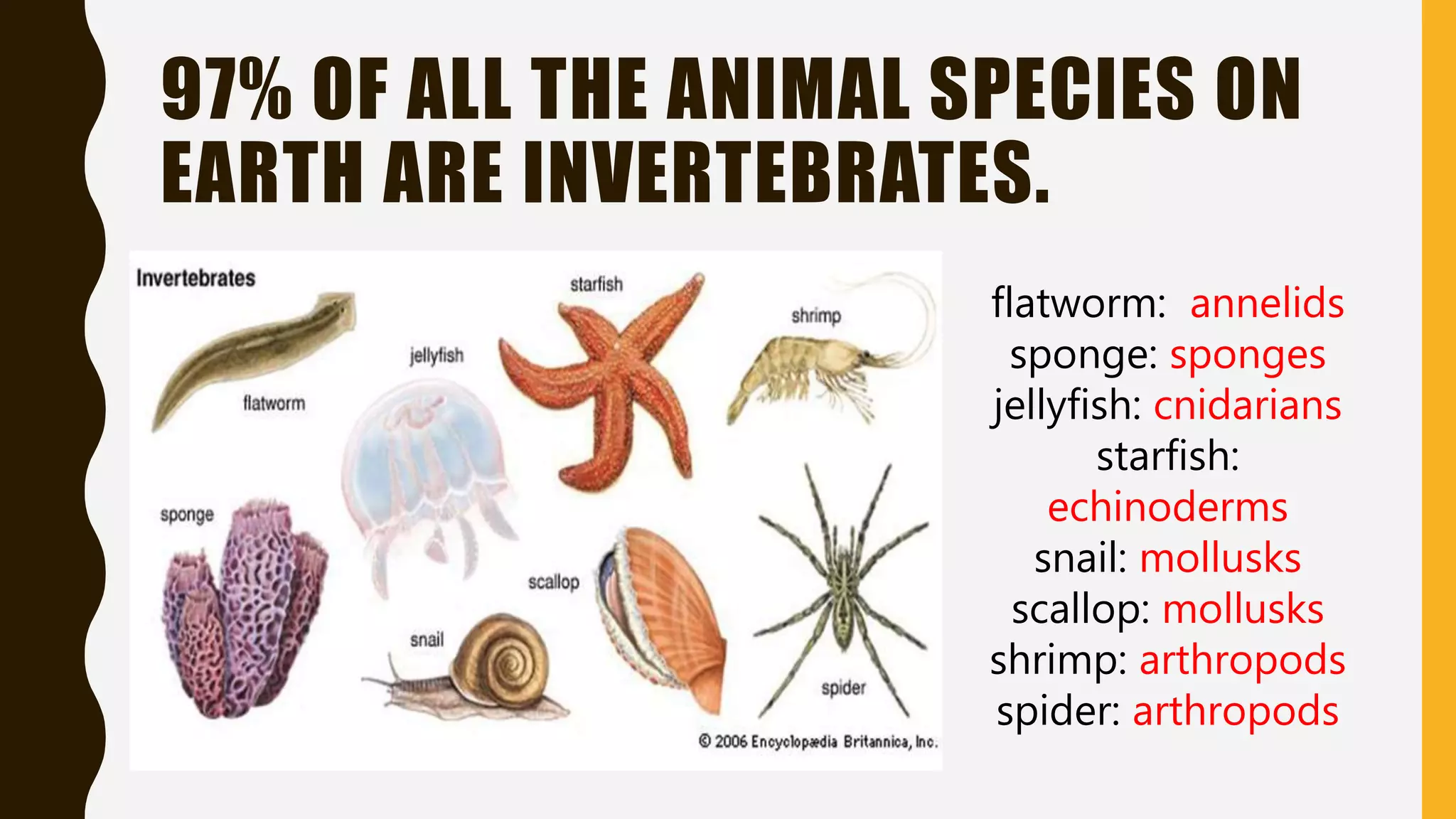
flatworm: annelids
sponge: sponges
jellyfish: cnidarians
starfish:
echinoderms
snail: mollusks
scallop: mollusks
shrimp: arthropods
spider: arthropods
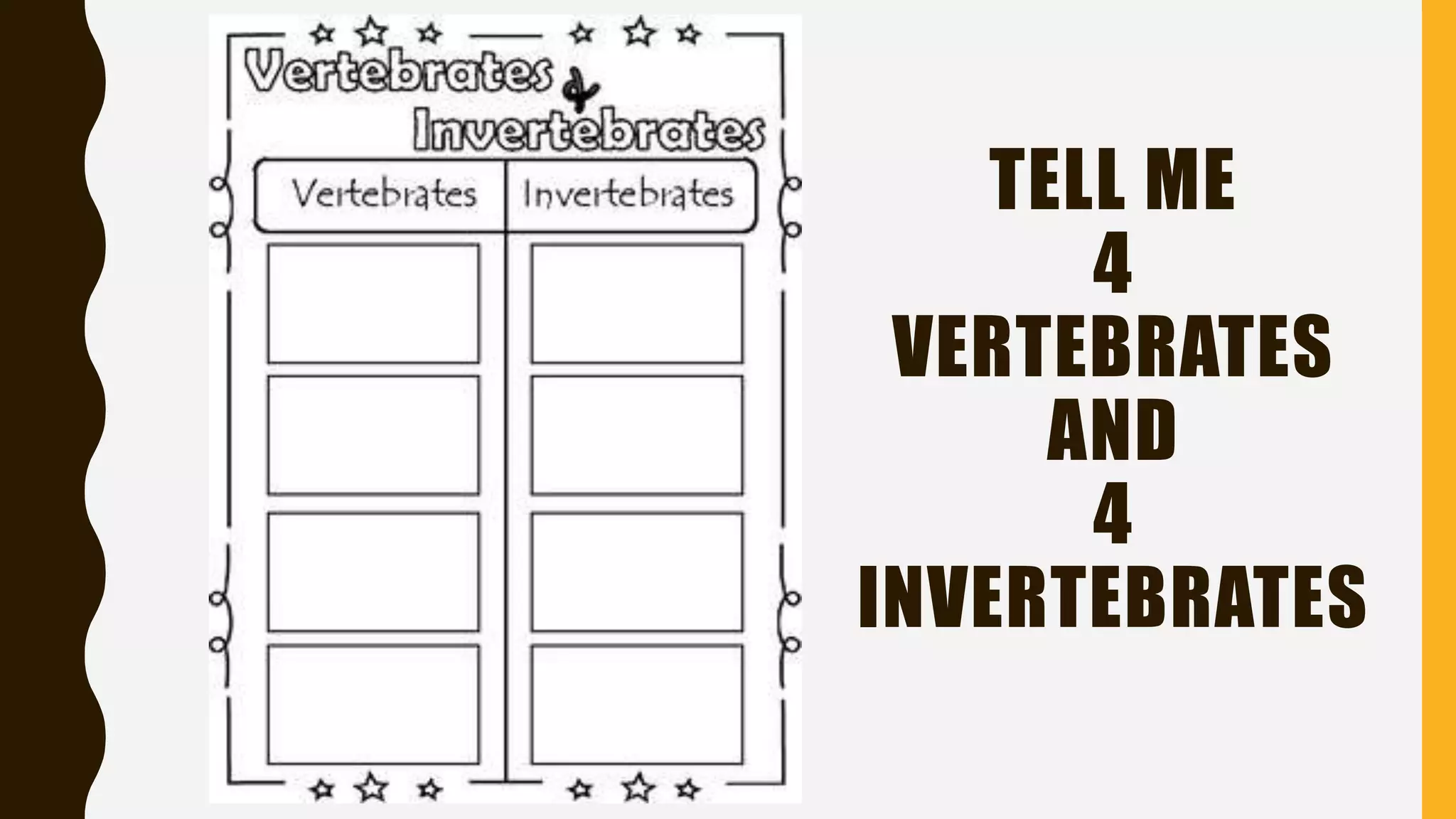
TELL ME
4
VERTEBRATES
AND
4
INVERTEBRATES
Vertebrates & invertebrates

Vertebrates & invertebrates

  • 2.
    C L ASS I F I C AT I O N O F A N I M A L S : V E R T E B R A T E S A N D I N V E R T E B R A T E S
  • 3.
    VERTEBRATES • A vertebrateis an animal with a backbone or a spinal column, also called vertebrae. • There are five types of vertebrates: fishes, amphibians, reptiles, birds and mammals. 1. Fish are animals that live in the water. They have gills that allow them to breathe under water. They are cold-blooded. Example: trout fish, shark, whale, lionfish. 2. Amphibians are cold-blooded animals. They have gills just like fish to breathe under water when they hatch but later, they develop lungs and move to the dry land. Example: frogs, toads, salamanders. 3. Reptiles are cold-blooded animals which lay eggs. Their skin is covered with hard and dry scales. Example: alligators, crocodiles, snakes, lizards and turtles. 4. Birds are warm-blooded animals that have feathers, wings, and lay eggs. Many, but not all, birds can fly. Example: hawk, eagle, pigeon, ostrich. 5. Mammals are warm blooded animals that give birth and nurse their young with milk and and have fur or hair. Example: humans, dolphins, giraffes, horses.
  • 4.
    THERE ARE CURRENTLYAROUND 65,000 KNOWN SPECIES OF VERTEBRATE ANIMALS, BUT ONLY AROUND 3% OF ALL THE ANIMALS ON EARTH ARE VERTEBRATES. • Vertebrate animals can either be warm-blooded or cold-blooded. 1) Warm-blooded animals are able to regulate their internal temperature and have fur and feathers to help keep them warm. Only birds and mammals are blooded. 2) Cold-blooded animals cannot maintain a constant body temperature. The temperature of their body is determined by the outside surroundings. Reptiles, amphibians and fish are all cold-
  • 5.
  • 6.
    INVERTEBRATES • An invertebrateis an animal without a backbone or a spinal column, also called vertebrae. • Invertebrates can be classified into six groups: arthropods, mollusks, echinoderms, annelids, poriferas and cnidarians. 1. Arthropods is the largest invertebrate group. All arthropods have an external skeleton called called an exoskeleton. For example: crustaceans, myriapods, arachnids, insects. 2. Mollusks are another large group of invertebrates. There are three subgroups: gastropod, bivalves, cephalopod. For example: octopus, snail, slug, oyster. 3. Echinoderms live at the bottom of the sea. They are covered by a hard, spiny skin. For example: starfish. 4. Annelids have a long, soft body with moist skin. Many annelids are parasites and live inside the bodies of other animals. For example: tapeworm, earthworm, leeches. 5. Poriferas live in water. They are the simplest invertebrates with no muscles, nervous or circulatory system. For example: sponges. 6. Cnidarians live in the sea. They have a soft, jelly-like body with one opening. For example: jellyfish.
  • 7.
    97% OF ALLTHE ANIMAL SPECIES ON EARTH ARE INVERTEBRATES. flatworm: annelids sponge: sponges jellyfish: cnidarians starfish: echinoderms snail: mollusks scallop: mollusks shrimp: arthropods spider: arthropods
  • 12.