The passive voice The Passive is not a tense.   The problem is that you need to know all the tenses… © 2009 by Elsa Maximiano
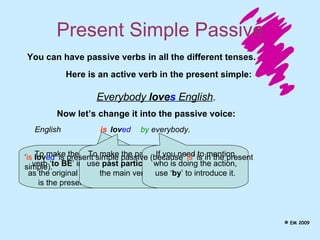
Present Simple Passive English  You can have passive verbs in all the different tenses. Here is an active verb in the present simple: Everybody  love s  English .  Now let’s change it into the passive voice: is lov ed by  everybody . To make the passive use the verb ‘ to BE ’ in the same tense as the original sentence – here it is the present simple tense To make the passive, use  past participle  of the main verb.  If you need to mention who is doing the action, use ‘ by ’ to introduce it. ‘ is   lov ed ’ is present simple passive (because ‘ is ’ is in the present simple).  © EM 2009
English teachers  are   lov ed   by everybody .  The verb ‘ to be’  is plural in this sentence to agree with ‘teachers’.  You don’t have to agree with that statement! You’re probably thinking: ‘ Some people  don’t  love  English teachers!’   So let’s make that passive! English teachers  are not  lov ed   Make the verb ‘ to BE ’ negative in the usual way.  by everybody. ‘ by …’ may not be necessary. If it’s not important, leave it out.
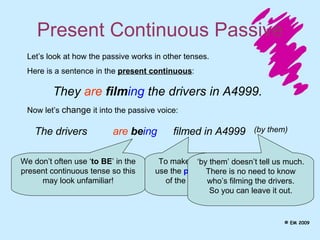
Present Continuous Passive The drivers Let’s look at how the passive works in other tenses.  Here is a sentence in the  present continuous : They  are   film ing  the drivers in A4999. Now let’s  change  it into the passive voice: are   be ing filmed in A4999 We don’t often use ‘ to BE ’ in the present continuous tense so this may look unfamiliar! To make the passive, use the  past participle  of the main verb.  ‘ by them’ doesn’t tell us much. There is no need to know who’s filming the drivers. So you can leave it out. (by them) © EM 2009
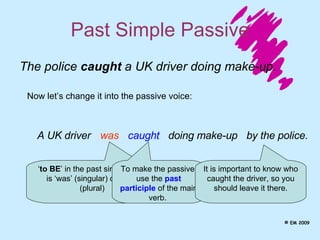
Past Simple Passive A UK driver The police  caught  a UK driver doing make-up. Now let’s change it into the passive voice: was caught  doing make-up ‘ to BE ’ in the past simple tense is ‘was’ (singular) or ‘were’ (plural)  To make the passive, use the  past participle  of the main verb.  It is important to know who caught the driver, so you should leave it there. by the police. © EM 2009
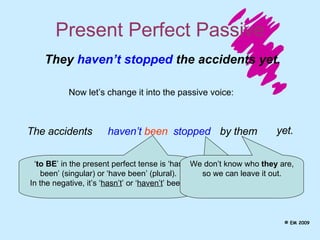
Present Perfect Passive The accidents They  haven’t stopped  the accidents yet. Now let’s change it into the passive voice: haven’t   been stopped ‘ to BE ’ in the present perfect tense is ‘has been’ (singular) or ‘have been’ (plural). In the negative, it’s ‘ hasn’t ’ or ‘ haven’t ’ been. To make the passive, use the  past participle  of the main verb.  by them yet. We don’t know who  they  are, so we can leave it out. © EM 2009
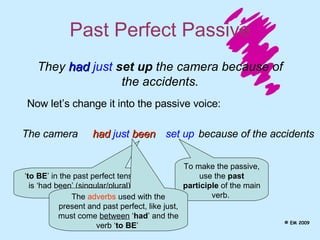
Past Perfect Passive They  had  just  set up  the camera because of the accidents. Now let’s change it into the passive voice: The camera had  just   been ‘ to BE ’ in the past perfect tense is ‘had been’ (singular/plural). To make the passive, use the  past participle  of the main verb.  set up The  adverbs  used with the present and past perfect, like just, must come  between  ‘ had ’ and the verb ‘ to BE ’  because of the accidents © EM 2009
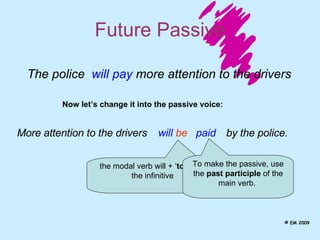
Future Passive The police  will pay  more attention to the drivers Now let’s change it into the passive voice: More attention to the drivers will  be paid the modal verb will + ‘ to BE ’ in the infinitive  To make the passive, use the  past participle  of the main verb.  by the police. © EM 2009
VERBS THAT ARE NOT PASSIVE DO NOT USE THESE VERBS IN PASSIVE:   NO : HE  WAS DIED .   IT  WAS HAPPENED . I  WAS STAYED . YES: HE  DIED . IT  HAPPENED . I  STAYED . © EM 2009 walk come go die stay sleep cry rain become occur appear happen arrive

Passive Voice

  • 1.
    The passive voiceThe Passive is not a tense. The problem is that you need to know all the tenses… © 2009 by Elsa Maximiano
  • 2.
    Present Simple PassiveEnglish You can have passive verbs in all the different tenses. Here is an active verb in the present simple: Everybody love s English . Now let’s change it into the passive voice: is lov ed by everybody . To make the passive use the verb ‘ to BE ’ in the same tense as the original sentence – here it is the present simple tense To make the passive, use past participle of the main verb. If you need to mention who is doing the action, use ‘ by ’ to introduce it. ‘ is lov ed ’ is present simple passive (because ‘ is ’ is in the present simple). © EM 2009
  • 3.
    English teachers are lov ed by everybody . The verb ‘ to be’ is plural in this sentence to agree with ‘teachers’. You don’t have to agree with that statement! You’re probably thinking: ‘ Some people don’t love English teachers!’ So let’s make that passive! English teachers are not lov ed Make the verb ‘ to BE ’ negative in the usual way. by everybody. ‘ by …’ may not be necessary. If it’s not important, leave it out.
  • 4.
    Present Continuous PassiveThe drivers Let’s look at how the passive works in other tenses. Here is a sentence in the present continuous : They are film ing the drivers in A4999. Now let’s change it into the passive voice: are be ing filmed in A4999 We don’t often use ‘ to BE ’ in the present continuous tense so this may look unfamiliar! To make the passive, use the past participle of the main verb. ‘ by them’ doesn’t tell us much. There is no need to know who’s filming the drivers. So you can leave it out. (by them) © EM 2009
  • 5.
    Past Simple PassiveA UK driver The police caught a UK driver doing make-up. Now let’s change it into the passive voice: was caught doing make-up ‘ to BE ’ in the past simple tense is ‘was’ (singular) or ‘were’ (plural) To make the passive, use the past participle of the main verb. It is important to know who caught the driver, so you should leave it there. by the police. © EM 2009
  • 6.
    Present Perfect PassiveThe accidents They haven’t stopped the accidents yet. Now let’s change it into the passive voice: haven’t been stopped ‘ to BE ’ in the present perfect tense is ‘has been’ (singular) or ‘have been’ (plural). In the negative, it’s ‘ hasn’t ’ or ‘ haven’t ’ been. To make the passive, use the past participle of the main verb. by them yet. We don’t know who they are, so we can leave it out. © EM 2009
  • 7.
    Past Perfect PassiveThey had just set up the camera because of the accidents. Now let’s change it into the passive voice: The camera had just been ‘ to BE ’ in the past perfect tense is ‘had been’ (singular/plural). To make the passive, use the past participle of the main verb. set up The adverbs used with the present and past perfect, like just, must come between ‘ had ’ and the verb ‘ to BE ’ because of the accidents © EM 2009
  • 8.
    Future Passive Thepolice will pay more attention to the drivers Now let’s change it into the passive voice: More attention to the drivers will be paid the modal verb will + ‘ to BE ’ in the infinitive To make the passive, use the past participle of the main verb. by the police. © EM 2009
  • 9.
    VERBS THAT ARENOT PASSIVE DO NOT USE THESE VERBS IN PASSIVE: NO : HE WAS DIED . IT WAS HAPPENED . I WAS STAYED . YES: HE DIED . IT HAPPENED . I STAYED . © EM 2009 walk come go die stay sleep cry rain become occur appear happen arrive