VERBAL & NON-VERBAL
COMMUNICATION
VERBAL COMMUNICATION
 Verbal communication means a communication that takes place by means of a
language or words.
 It includes the following contents.
1. Oral communication (Speaking & listening)
2. Written communication (writing & reading)
VERBAL COMMUNICATION
 Speaking: In order to send message in business, speaking plays a vital role.
 Writing: It is used when a complex message is sent.
 Listening: People in business spend more time in obtaining information then
transmitting it. Listening is the most important way to receive information.
 Reading: Reading involves understanding and interpreting the material.
NON-VERBAL COMMUNICATION
 The study of non-verbal communication examines how
messages are communicated through physical behavior and
vocal cues.
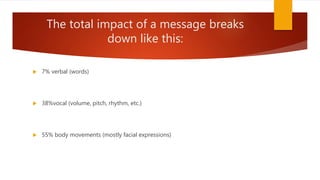
The total impact of a message breaks
down like this:
 7% verbal (words)
 38%vocal (volume, pitch, rhythm, etc.)
 55% body movements (mostly facial expressions)
Major areas of non-verbal behavior are:
 Eye contact
 Facial expressions
 Gestures
 Postures and body orientation
 Proximity
 Para linguistics
EYE CONTACT:
 The eyes can give clues to a person’s thoughts.
 When someone is excited, his pupils dilate to four times the normal size.
 An angry or negative mood causes the pupils to contract.
 Direct eye contact conveys interest, warmth, credibility and concern.
 Shifty eyes suggest dishonesty.
 Downward gaze may be a sign of submissiveness or inferiority.
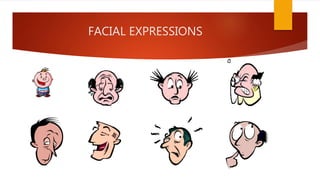
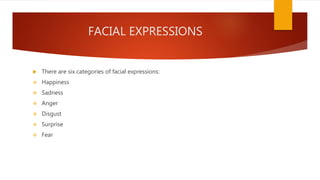
FACIAL EXPRESSIONS
FACIAL EXPRESSIONS
 There are six categories of facial expressions:
 Happiness
 Sadness
 Anger
 Disgust
 Surprise
 Fear
GESTURES
 Gestures communicate as effectively as words, sometimes even better.
 Gestures support the verbal communication.
 They sometimes detract from what you say
GESTURES
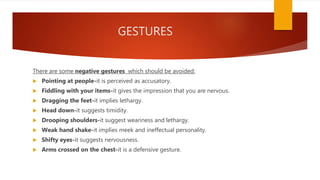
There are some negative gestures which should be avoided:
 Pointing at people-it is perceived as accusatory.
 Fiddling with your items-it gives the impression that you are nervous.
 Dragging the feet-it implies lethargy.
 Head down-it suggests timidity.
 Drooping shoulders-it suggest weariness and lethargy.
 Weak hand shake-it implies meek and ineffectual personality.
 Shifty eyes-it suggests nervousness.
 Arms crossed on the chest-it is a defensive gesture.
GESTURES
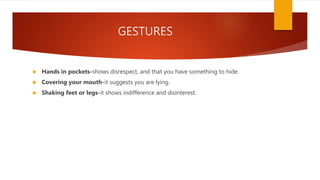
 Hands in pockets-shows disrespect, and that you have something to hide.
 Covering your mouth-it suggests you are lying.
 Shaking feet or legs-it shows indifference and disinterest.
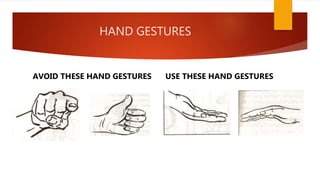
HAND GESTURES
AVOID THESE HAND GESTURES USE THESE HAND GESTURES
POSTURE
 Body posture can be open or closed.
 Interested people pay attention and lean forward.
 Leaning backwards demonstrate aloofness or rejection.
 A head held straight up signals a neutral attitude.
 A head down is negative and judgmental.
 A head tilted to the side indicates interest.
POSTURE
Some Negative Postures should be avoided:
 Rigid body posture-Anxious/Uptight.
 Hunched shoulders-Lacks interest/Feeling inferior.
 Crossed arms-Protecting the body/Negative thoughts.

Verbal & non verbal communication

  • 1.
  • 2.
    VERBAL COMMUNICATION  Verbalcommunication means a communication that takes place by means of a language or words.  It includes the following contents. 1. Oral communication (Speaking & listening) 2. Written communication (writing & reading)
  • 3.
    VERBAL COMMUNICATION  Speaking:In order to send message in business, speaking plays a vital role.  Writing: It is used when a complex message is sent.  Listening: People in business spend more time in obtaining information then transmitting it. Listening is the most important way to receive information.  Reading: Reading involves understanding and interpreting the material.
  • 4.
    NON-VERBAL COMMUNICATION  Thestudy of non-verbal communication examines how messages are communicated through physical behavior and vocal cues.
  • 5.
    The total impactof a message breaks down like this:  7% verbal (words)  38%vocal (volume, pitch, rhythm, etc.)  55% body movements (mostly facial expressions)
  • 6.
    Major areas ofnon-verbal behavior are:  Eye contact  Facial expressions  Gestures  Postures and body orientation  Proximity  Para linguistics
  • 7.
    EYE CONTACT:  Theeyes can give clues to a person’s thoughts.  When someone is excited, his pupils dilate to four times the normal size.  An angry or negative mood causes the pupils to contract.  Direct eye contact conveys interest, warmth, credibility and concern.  Shifty eyes suggest dishonesty.  Downward gaze may be a sign of submissiveness or inferiority.
  • 8.
  • 9.
    FACIAL EXPRESSIONS  Thereare six categories of facial expressions:  Happiness  Sadness  Anger  Disgust  Surprise  Fear
  • 10.
    GESTURES  Gestures communicateas effectively as words, sometimes even better.  Gestures support the verbal communication.  They sometimes detract from what you say
  • 11.
    GESTURES There are somenegative gestures which should be avoided:  Pointing at people-it is perceived as accusatory.  Fiddling with your items-it gives the impression that you are nervous.  Dragging the feet-it implies lethargy.  Head down-it suggests timidity.  Drooping shoulders-it suggest weariness and lethargy.  Weak hand shake-it implies meek and ineffectual personality.  Shifty eyes-it suggests nervousness.  Arms crossed on the chest-it is a defensive gesture.
  • 12.
    GESTURES  Hands inpockets-shows disrespect, and that you have something to hide.  Covering your mouth-it suggests you are lying.  Shaking feet or legs-it shows indifference and disinterest.
  • 13.
    HAND GESTURES AVOID THESEHAND GESTURES USE THESE HAND GESTURES
  • 14.
    POSTURE  Body posturecan be open or closed.  Interested people pay attention and lean forward.  Leaning backwards demonstrate aloofness or rejection.  A head held straight up signals a neutral attitude.  A head down is negative and judgmental.  A head tilted to the side indicates interest.
  • 15.
    POSTURE Some Negative Posturesshould be avoided:  Rigid body posture-Anxious/Uptight.  Hunched shoulders-Lacks interest/Feeling inferior.  Crossed arms-Protecting the body/Negative thoughts.