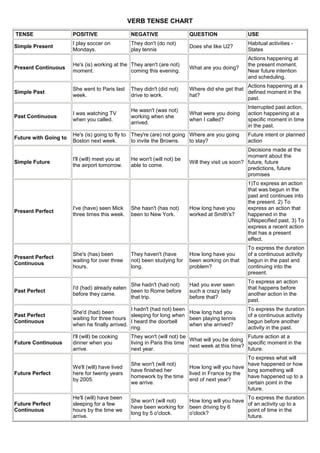
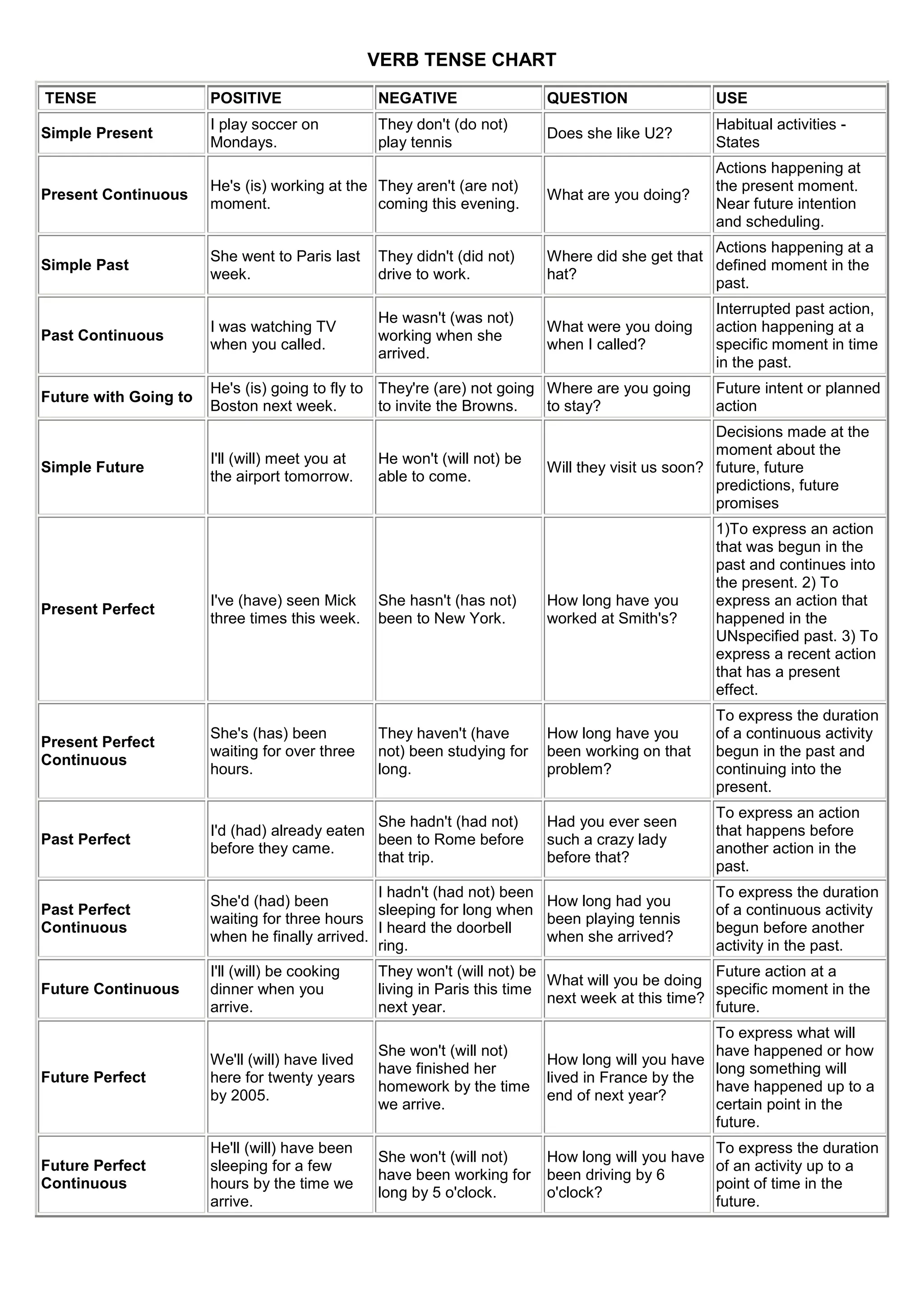
VERB TENSE CHART
TENSE

POSITIVE

NEGATIVE

QUESTION

USE

Simple Present

I play soccer on
Mondays.

They don't (do not)
play tennis

Does she like U2?

Habitual activities States

Present Continuous

He's (is) working at the They aren't (are not)
moment.
coming this evening.

What are you doing?

Actions happening at
the present moment.
Near future intention
and scheduling.

Simple Past

She went to Paris last
week.

They didn't (did not)
drive to work.

Actions happening at a
Where did she get that
defined moment in the
hat?
past.

Past Continuous

I was watching TV
when you called.

He wasn't (was not)
working when she
arrived.

What were you doing
when I called?

Interrupted past action,
action happening at a
specific moment in time
in the past.

Future with Going to

He's (is) going to fly to They're (are) not going Where are you going
Boston next week.
to invite the Browns.
to stay?

Future intent or planned
action

Simple Future

I'll (will) meet you at
the airport tomorrow.

He won't (will not) be
able to come.

Decisions made at the
moment about the
Will they visit us soon? future, future
predictions, future
promises

Present Perfect

I've (have) seen Mick
three times this week.

She hasn't (has not)
been to New York.

How long have you
worked at Smith's?

1)To express an action
that was begun in the
past and continues into
the present. 2) To
express an action that
happened in the
UNspecified past. 3) To
express a recent action
that has a present
effect.

Present Perfect
Continuous

She's (has) been
waiting for over three
hours.

They haven't (have
not) been studying for
long.

How long have you
been working on that
problem?

To express the duration
of a continuous activity
begun in the past and
continuing into the
present.

Past Perfect

She hadn't (had not)
I'd (had) already eaten
been to Rome before
before they came.
that trip.

Had you ever seen
such a crazy lady
before that?

To express an action
that happens before
another action in the
past.

Past Perfect
Continuous

I hadn't (had not) been
She'd (had) been
How long had you
sleeping for long when
waiting for three hours
been playing tennis
I heard the doorbell
when he finally arrived.
when she arrived?
ring.

Future Continuous

I'll (will) be cooking
dinner when you
arrive.

They won't (will not) be
Future action at a
What will you be doing
living in Paris this time
specific moment in the
next week at this time?
next year.
future.

Future Perfect

We'll (will) have lived
here for twenty years
by 2005.

She won't (will not)
have finished her
homework by the time
we arrive.

To express what will
have happened or how
How long will you have
long something will
lived in France by the
have happened up to a
end of next year?
certain point in the
future.

Future Perfect
Continuous

He'll (will) have been
sleeping for a few
hours by the time we
arrive.

She won't (will not)
have been working for
long by 5 o'clock.

To express the duration
How long will you have
of an activity up to a
been driving by 6
point of time in the
o'clock?
future.

To express the duration
of a continuous activity
begun before another
activity in the past.

Verb tense chart

  • 1.
    VERB TENSE CHART TENSE POSITIVE NEGATIVE QUESTION USE SimplePresent I play soccer on Mondays. They don't (do not) play tennis Does she like U2? Habitual activities States Present Continuous He's (is) working at the They aren't (are not) moment. coming this evening. What are you doing? Actions happening at the present moment. Near future intention and scheduling. Simple Past She went to Paris last week. They didn't (did not) drive to work. Actions happening at a Where did she get that defined moment in the hat? past. Past Continuous I was watching TV when you called. He wasn't (was not) working when she arrived. What were you doing when I called? Interrupted past action, action happening at a specific moment in time in the past. Future with Going to He's (is) going to fly to They're (are) not going Where are you going Boston next week. to invite the Browns. to stay? Future intent or planned action Simple Future I'll (will) meet you at the airport tomorrow. He won't (will not) be able to come. Decisions made at the moment about the Will they visit us soon? future, future predictions, future promises Present Perfect I've (have) seen Mick three times this week. She hasn't (has not) been to New York. How long have you worked at Smith's? 1)To express an action that was begun in the past and continues into the present. 2) To express an action that happened in the UNspecified past. 3) To express a recent action that has a present effect. Present Perfect Continuous She's (has) been waiting for over three hours. They haven't (have not) been studying for long. How long have you been working on that problem? To express the duration of a continuous activity begun in the past and continuing into the present. Past Perfect She hadn't (had not) I'd (had) already eaten been to Rome before before they came. that trip. Had you ever seen such a crazy lady before that? To express an action that happens before another action in the past. Past Perfect Continuous I hadn't (had not) been She'd (had) been How long had you sleeping for long when waiting for three hours been playing tennis I heard the doorbell when he finally arrived. when she arrived? ring. Future Continuous I'll (will) be cooking dinner when you arrive. They won't (will not) be Future action at a What will you be doing living in Paris this time specific moment in the next week at this time? next year. future. Future Perfect We'll (will) have lived here for twenty years by 2005. She won't (will not) have finished her homework by the time we arrive. To express what will have happened or how How long will you have long something will lived in France by the have happened up to a end of next year? certain point in the future. Future Perfect Continuous He'll (will) have been sleeping for a few hours by the time we arrive. She won't (will not) have been working for long by 5 o'clock. To express the duration How long will you have of an activity up to a been driving by 6 point of time in the o'clock? future. To express the duration of a continuous activity begun before another activity in the past.