December 2nd, 2020
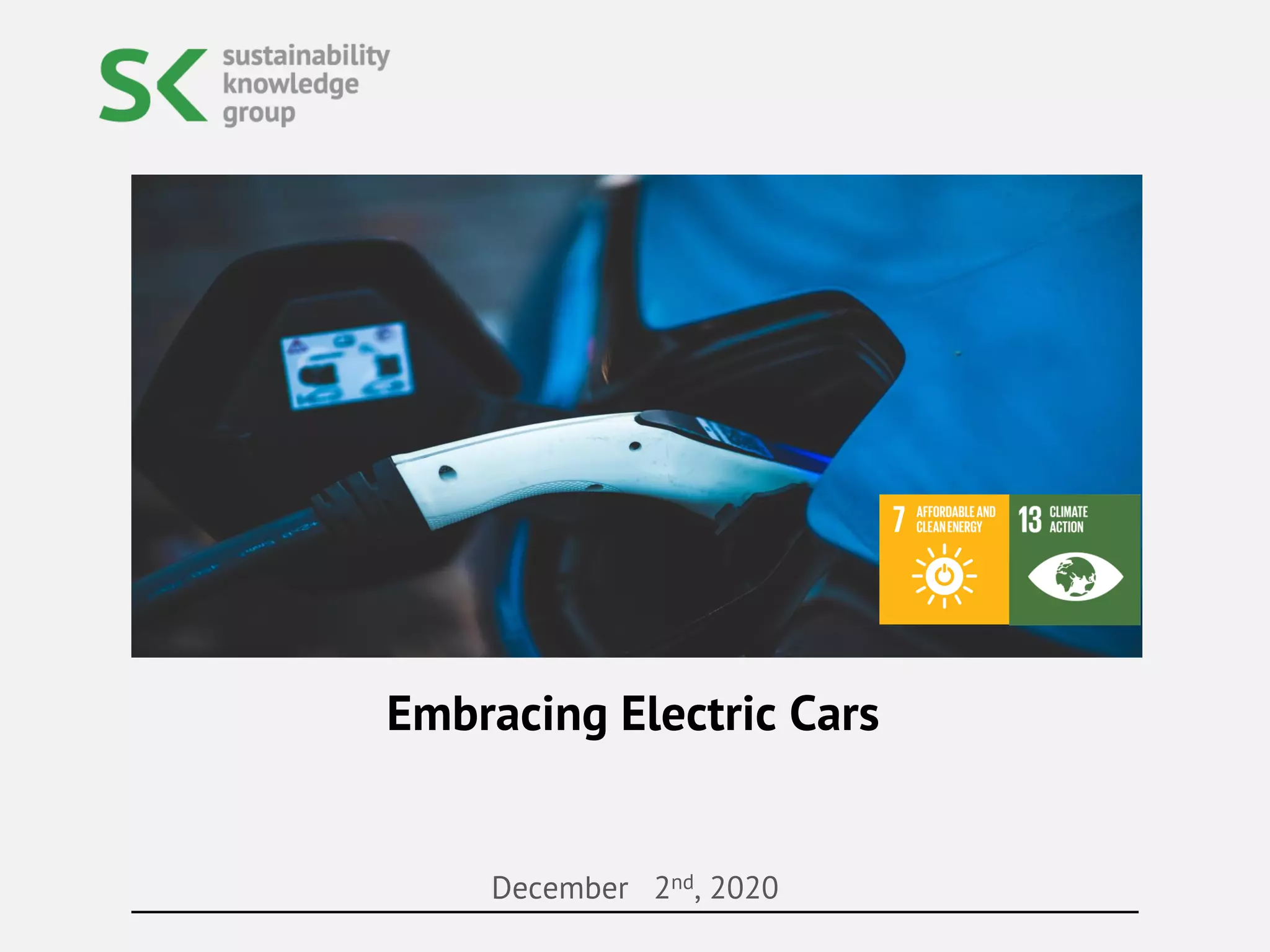
Embracing Electric Cars
About Sustainability Knowledge Group
Our Vision is
to make Sustainable Business a Choice for companies and
organizations around the world.
Sustainability Knowledge Group is a global advisory firm dedicated in creating value, through strategic
CSR and Sustainability solutions. We provide tailor made training, coaching and advisory services
grounded in international theory and successful application.
Sustainability Knowledge Group emphasizes in implementing methodologies that bring tangible results,
measurable impact and create better businesses.
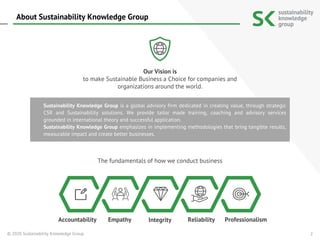
The fundamentals of how we conduct business
Reliability ProfessionalismEmpathyAccountability Integrity
2© 2020 Sustainability Knowledge Group
Services
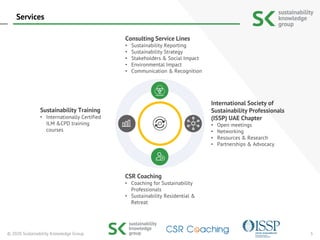
CSR Coaching
• Coaching for Sustainability
Professionals
• Sustainability Residential &
Retreat
Consulting Service Lines
• Sustainability Reporting
• Sustainability Strategy
• Stakeholders & Social Impact
• Environmental Impact
• Communication & Recognition
International Society of
Sustainability Professionals
(ISSP) UAE Chapter
• Open meetings
• Networking
• Resources & Research
• Partnerships & Advocacy
Sustainability Training
• Internationally Certified
ILM &CPD training
courses
3© 2020 Sustainability Knowledge Group
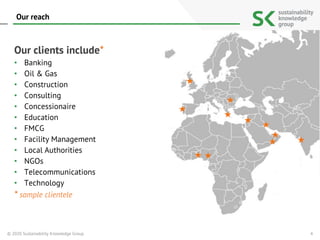
Our clients include*
• Banking
• Oil & Gas
• Construction
• Consulting
• Concessionaire
• Education
• FMCG
• Facility Management
• Local Authorities
• NGOs
• Telecommunications
• Technology
* sample clientele
Our reach
4© 2020 Sustainability Knowledge Group
Embracing Electric Cars
5
6
With the increase in environmental pollution and climate change, the need for
innovative solutions and technologies increases in a variety of industries, including
the automotive industry. In the past decade, the popularity and demand for electric
vehicles (EVs) have accelerated. China and Europe both hit sale records in market
share for EVs in 2019. In 2040, EVs are expected to account for more than half of the
cars sold (about 54%) in the world.
EVs are directly aligned with the United Nations’ global Sustainable Development
Goals (SDGs), especially SDG 7: Clean Energy and also pave the way for action on SDG
13: Climate Action for a low carbon future.
No diesel and gasoline vehicles after this date
Significantly, China and Europe are promoting national and local support plans for
EVs use. The Chinese government strongly supports EVs to achieve the goal of 5
million EVs on China’s roads by 2020.
The main policies of the Chinese central government to promote EVs include the
following:
•Zero emissions vehicle mandate: each Chinese vehicle manufacturer and importer is
required to make or import at least 10% EVs.
•Subsidies: the Chinese government provides subsidies to manufacturers of EVs. All
subsidies for the manufacture of plug-in EVs are scheduled to be eliminated in 2021.
•Tax exemptions: the Chinese government exempts EVs from consumption and sales
taxes.
© 2020 Sustainability Knowledge Group
Embracing Electric Cars
7
Procurement: the Chinese government also uses its procurement power to promote
EVs.
•New auto factory requirements: any new vehicle factory is required to include
capacity for the construction of EVs.
•Support for charging infrastructure: the Chinese central government promotes the
development of EV charging infrastructure as a matter of national policy. Its targets
include: 120,000 EV charging stations and 4.8 million EV charging posts by 2020.
Although China is the largest market for EVs in the world, the situation in Europe
looks positive. In 2019, the proportion of EVs on China’s roads was only 5.2%, while
56% of vehicles on Norway’s roads were electric.
Actions vary at the national and local levels to support the deployment of electric
vehicles across European countries. Most European countries have adopted:
•Financial incentives to bridge the cost gap between electric and conventional cars
•Programs to deploy charging infrastructure information campaigns to raise
awareness and increase visibility regarding available EVs and their benefits.
•National and local one-time purchase subsidies and annual national tax breaks on
vehicle registration and operation
•Discounts or exemptions on parking fees or parking permits, charging an EVs, road
tolls, and congestion charges
•Different local and national programs in place that support home and workplace
charging
© 2020 Sustainability Knowledge Group
Embracing Electric Cars
8
United Kingdom, France, Portugal, announced that they would ban the sale of new
diesel and gasoline powered cars by 2040, and switch to EVs to reduce carbon
emissions. A few days ago, the British government announced that in order to
accelerate the transition it will ban diesel and gasoline powered cars by 2030, joining
Sweden and Denmark, which will ban them also in 2030.
The British government will spend around £12 billion on the plan, including £1.3
billion to accelerate the deployment of charging points for EVs in homes, streets and
on highways. About £582 million will help people afford low-emission vehicles, and
nearly £500 million will be spent in the next four years developing and mass- scale
EV batteries.
Especially for EU counties, the European Directive 2014/94/EU on the deployment of
alternative fuels, urges Member States to implement charging points for electric
vehicles (at least one station per 10 EVs) and many countries have announced the
development of National Strategies for Electric Vehicles promoting innovative
solutions. However, there is still great divergence among national rules and
regulations.
Automakers
Automakers are accelerating plans to launch EVs as part of their climate
commitments and to meet policy requirements. Whereas the increasingly strict
regulations in some countries, which are limited to the use of EVs, will contribute to
© 2020 Sustainability Knowledge Group
Embracing Electric Cars
9
reducing the number of buyers of gasoline and diesel cars. In 2019, the EV industry
saw sales of more than 2.1 million vehicles globally, with an annual increase of 40%.
In addition to new EV makers such as Tesla Inc. and Rivian Automotive Inc.,
the world’s leading automakers also shift to the production of EVs. Ford Motor Co.,
General Motors Co. and Volkswagen AG focus on launching EVs and the total
investments announced by global manufacturers for North America between 2020
and 2025 is estimated at US$300 billion.
Challenges and concerns
EVs are still more expensive compared to other vehicles. It is estimated that the
average EV battery can currently cost approximately US $16,000, plus the EV
manufacturing costs about $10,000 more than gasoline cars. Although the switch to
electric cars is very ambitious, it is a huge and expensive undertaking. Countries need
to be financially prepared for such a rapid transformation, as it requires massive
investment in the required infrastructure for EVs. Further issues arise related to
subsidies, incentives and affordability. Despite the challenges, one thing is certain:
the electric vehicle came to stay.
© 2020 Sustainability Knowledge Group
Embracing Electric Cars
10© 2020 Sustainability Knowledge Group
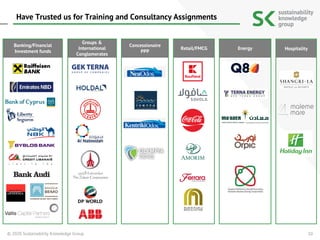
Have Trusted us for Training and Consultancy Assignments
Banking/Financial
Investment funds
Groups &
International
Conglomerates
Concessionaire
PPP
Retail/FMCG Energy Hospitality
11© 2020 Sustainability Knowledge Group
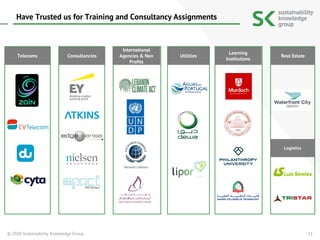
Have Trusted us for Training and Consultancy Assignments
Telecoms Consultancies
International
Agencies & Non
Profits
Utilities
Learning
Institutions
Real Estate
Logistics
United Kingdom
85 Great Portland Street,
First Floor, W1W 7LT,
London, UK
Cyprus
Vasili Michailidi 9,
CY-3026, Limassol, Cyprus
United Arab Emirates
Jumeirah Business Centre
(JBC), Jumeirah Lake
Towers (JLT), Dubai, UAE
Contact:
Email: contact@sustainabilityknowledgegroup.com
Tel.: +44 (0)20 32392990

Embracing electric cars

  • 1.
  • 2.
    About Sustainability KnowledgeGroup Our Vision is to make Sustainable Business a Choice for companies and organizations around the world. Sustainability Knowledge Group is a global advisory firm dedicated in creating value, through strategic CSR and Sustainability solutions. We provide tailor made training, coaching and advisory services grounded in international theory and successful application. Sustainability Knowledge Group emphasizes in implementing methodologies that bring tangible results, measurable impact and create better businesses. The fundamentals of how we conduct business Reliability ProfessionalismEmpathyAccountability Integrity 2© 2020 Sustainability Knowledge Group
  • 3.
    Services CSR Coaching • Coachingfor Sustainability Professionals • Sustainability Residential & Retreat Consulting Service Lines • Sustainability Reporting • Sustainability Strategy • Stakeholders & Social Impact • Environmental Impact • Communication & Recognition International Society of Sustainability Professionals (ISSP) UAE Chapter • Open meetings • Networking • Resources & Research • Partnerships & Advocacy Sustainability Training • Internationally Certified ILM &CPD training courses 3© 2020 Sustainability Knowledge Group
  • 4.
    Our clients include* •Banking • Oil & Gas • Construction • Consulting • Concessionaire • Education • FMCG • Facility Management • Local Authorities • NGOs • Telecommunications • Technology * sample clientele Our reach 4© 2020 Sustainability Knowledge Group
  • 5.
  • 6.
    6 With the increasein environmental pollution and climate change, the need for innovative solutions and technologies increases in a variety of industries, including the automotive industry. In the past decade, the popularity and demand for electric vehicles (EVs) have accelerated. China and Europe both hit sale records in market share for EVs in 2019. In 2040, EVs are expected to account for more than half of the cars sold (about 54%) in the world. EVs are directly aligned with the United Nations’ global Sustainable Development Goals (SDGs), especially SDG 7: Clean Energy and also pave the way for action on SDG 13: Climate Action for a low carbon future. No diesel and gasoline vehicles after this date Significantly, China and Europe are promoting national and local support plans for EVs use. The Chinese government strongly supports EVs to achieve the goal of 5 million EVs on China’s roads by 2020. The main policies of the Chinese central government to promote EVs include the following: •Zero emissions vehicle mandate: each Chinese vehicle manufacturer and importer is required to make or import at least 10% EVs. •Subsidies: the Chinese government provides subsidies to manufacturers of EVs. All subsidies for the manufacture of plug-in EVs are scheduled to be eliminated in 2021. •Tax exemptions: the Chinese government exempts EVs from consumption and sales taxes. © 2020 Sustainability Knowledge Group Embracing Electric Cars
  • 7.
    7 Procurement: the Chinesegovernment also uses its procurement power to promote EVs. •New auto factory requirements: any new vehicle factory is required to include capacity for the construction of EVs. •Support for charging infrastructure: the Chinese central government promotes the development of EV charging infrastructure as a matter of national policy. Its targets include: 120,000 EV charging stations and 4.8 million EV charging posts by 2020. Although China is the largest market for EVs in the world, the situation in Europe looks positive. In 2019, the proportion of EVs on China’s roads was only 5.2%, while 56% of vehicles on Norway’s roads were electric. Actions vary at the national and local levels to support the deployment of electric vehicles across European countries. Most European countries have adopted: •Financial incentives to bridge the cost gap between electric and conventional cars •Programs to deploy charging infrastructure information campaigns to raise awareness and increase visibility regarding available EVs and their benefits. •National and local one-time purchase subsidies and annual national tax breaks on vehicle registration and operation •Discounts or exemptions on parking fees or parking permits, charging an EVs, road tolls, and congestion charges •Different local and national programs in place that support home and workplace charging © 2020 Sustainability Knowledge Group Embracing Electric Cars
  • 8.
    8 United Kingdom, France,Portugal, announced that they would ban the sale of new diesel and gasoline powered cars by 2040, and switch to EVs to reduce carbon emissions. A few days ago, the British government announced that in order to accelerate the transition it will ban diesel and gasoline powered cars by 2030, joining Sweden and Denmark, which will ban them also in 2030. The British government will spend around £12 billion on the plan, including £1.3 billion to accelerate the deployment of charging points for EVs in homes, streets and on highways. About £582 million will help people afford low-emission vehicles, and nearly £500 million will be spent in the next four years developing and mass- scale EV batteries. Especially for EU counties, the European Directive 2014/94/EU on the deployment of alternative fuels, urges Member States to implement charging points for electric vehicles (at least one station per 10 EVs) and many countries have announced the development of National Strategies for Electric Vehicles promoting innovative solutions. However, there is still great divergence among national rules and regulations. Automakers Automakers are accelerating plans to launch EVs as part of their climate commitments and to meet policy requirements. Whereas the increasingly strict regulations in some countries, which are limited to the use of EVs, will contribute to © 2020 Sustainability Knowledge Group Embracing Electric Cars
  • 9.
    9 reducing the numberof buyers of gasoline and diesel cars. In 2019, the EV industry saw sales of more than 2.1 million vehicles globally, with an annual increase of 40%. In addition to new EV makers such as Tesla Inc. and Rivian Automotive Inc., the world’s leading automakers also shift to the production of EVs. Ford Motor Co., General Motors Co. and Volkswagen AG focus on launching EVs and the total investments announced by global manufacturers for North America between 2020 and 2025 is estimated at US$300 billion. Challenges and concerns EVs are still more expensive compared to other vehicles. It is estimated that the average EV battery can currently cost approximately US $16,000, plus the EV manufacturing costs about $10,000 more than gasoline cars. Although the switch to electric cars is very ambitious, it is a huge and expensive undertaking. Countries need to be financially prepared for such a rapid transformation, as it requires massive investment in the required infrastructure for EVs. Further issues arise related to subsidies, incentives and affordability. Despite the challenges, one thing is certain: the electric vehicle came to stay. © 2020 Sustainability Knowledge Group Embracing Electric Cars
  • 10.
    10© 2020 SustainabilityKnowledge Group Have Trusted us for Training and Consultancy Assignments Banking/Financial Investment funds Groups & International Conglomerates Concessionaire PPP Retail/FMCG Energy Hospitality
  • 11.
    11© 2020 SustainabilityKnowledge Group Have Trusted us for Training and Consultancy Assignments Telecoms Consultancies International Agencies & Non Profits Utilities Learning Institutions Real Estate Logistics
  • 12.
    United Kingdom 85 GreatPortland Street, First Floor, W1W 7LT, London, UK Cyprus Vasili Michailidi 9, CY-3026, Limassol, Cyprus United Arab Emirates Jumeirah Business Centre (JBC), Jumeirah Lake Towers (JLT), Dubai, UAE Contact: Email: contact@sustainabilityknowledgegroup.com Tel.: +44 (0)20 32392990