VECTOR BORNE DISEASES
Presentation by;
NITESH SINGH
ALINA KHIMBAJA
Supported by:
Dr. S K MADHUP
of
A biological association between an
arthropod (insect or arachnid ) and a
pathogen acquired by feeding on the blood
of the infected vertebrate host
On the basis of host we can classify vector borne
disease in following class;
1) Mosquitoes borne
2)Flies borne
3)Lice borne
4)Fleas borne
5)tick borne
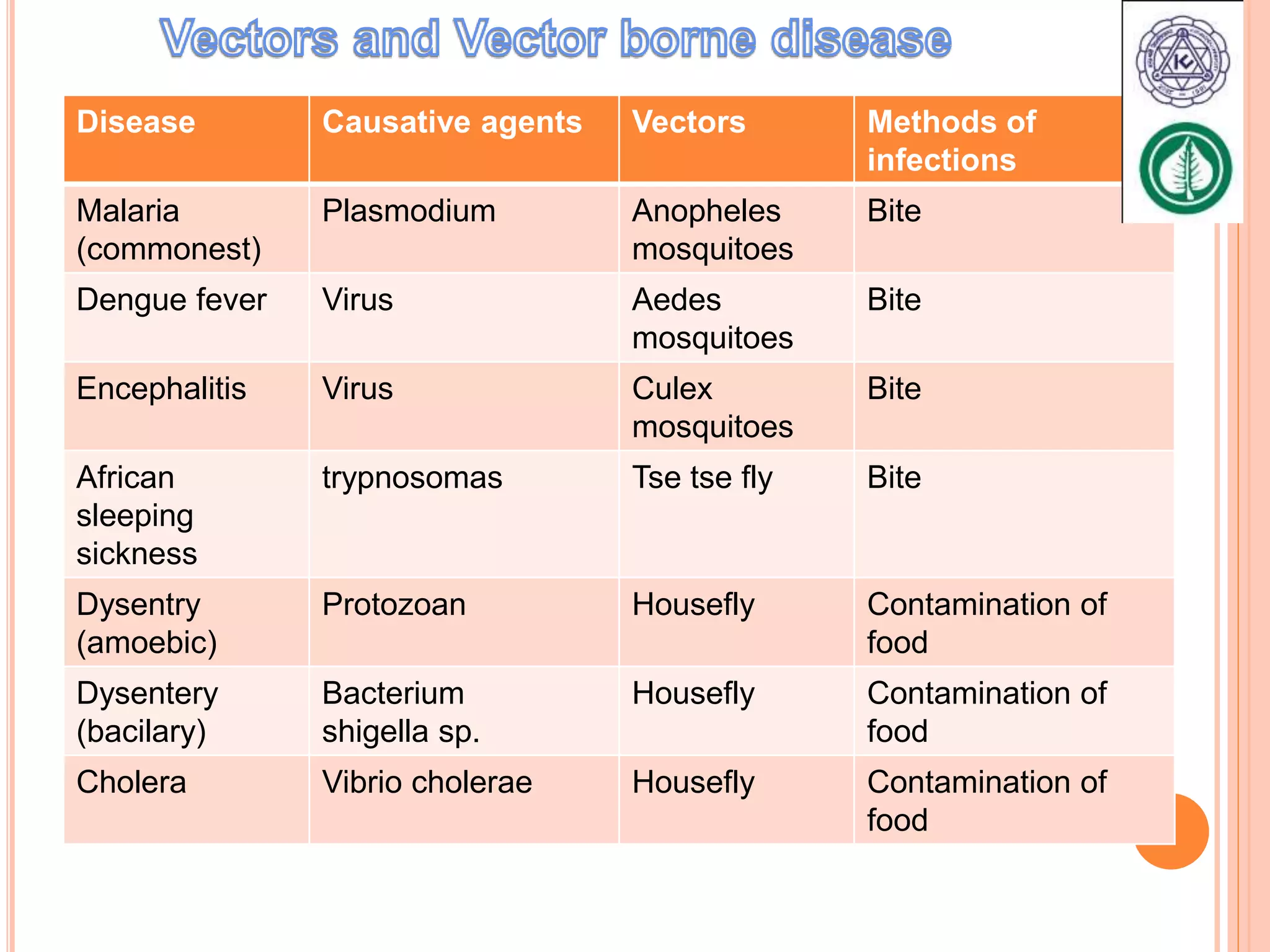
Disease Causative agents Vectors Methods of
infections
Malaria
(commonest)
Plasmodium Anopheles
mosquitoes
Bite
Dengue fever Virus Aedes
mosquitoes
Bite
Encephalitis Virus Culex
mosquitoes
Bite
African
sleeping
sickness
trypnosomas Tse tse fly Bite
Dysentry
(amoebic)
Protozoan Housefly Contamination of
food
Dysentery
(bacilary)
Bacterium
shigella sp.
Housefly Contamination of
food
Cholera Vibrio cholerae Housefly Contamination of
food
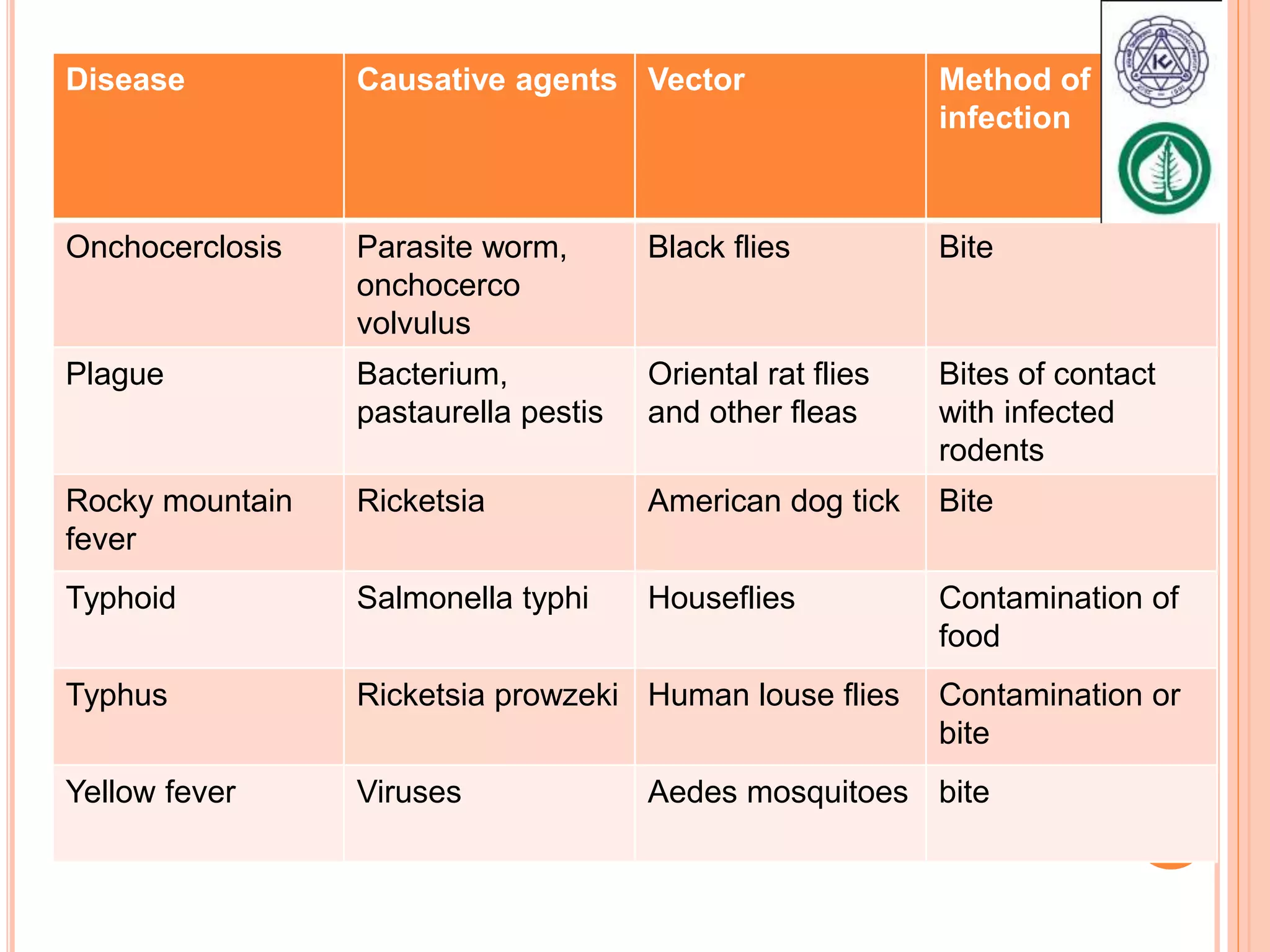
Disease Causative agents Vector Method of
infection
Onchocerclosis Parasite worm,
onchocerco
volvulus
Black flies Bite
Plague Bacterium,
pastaurella pestis
Oriental rat flies
and other fleas
Bites of contact
with infected
rodents
Rocky mountain
fever
Ricketsia American dog tick Bite
Typhoid Salmonella typhi Houseflies Contamination of
food
Typhus Ricketsia prowzeki Human louse flies Contamination or
bite
Yellow fever Viruses Aedes mosquitoes bite
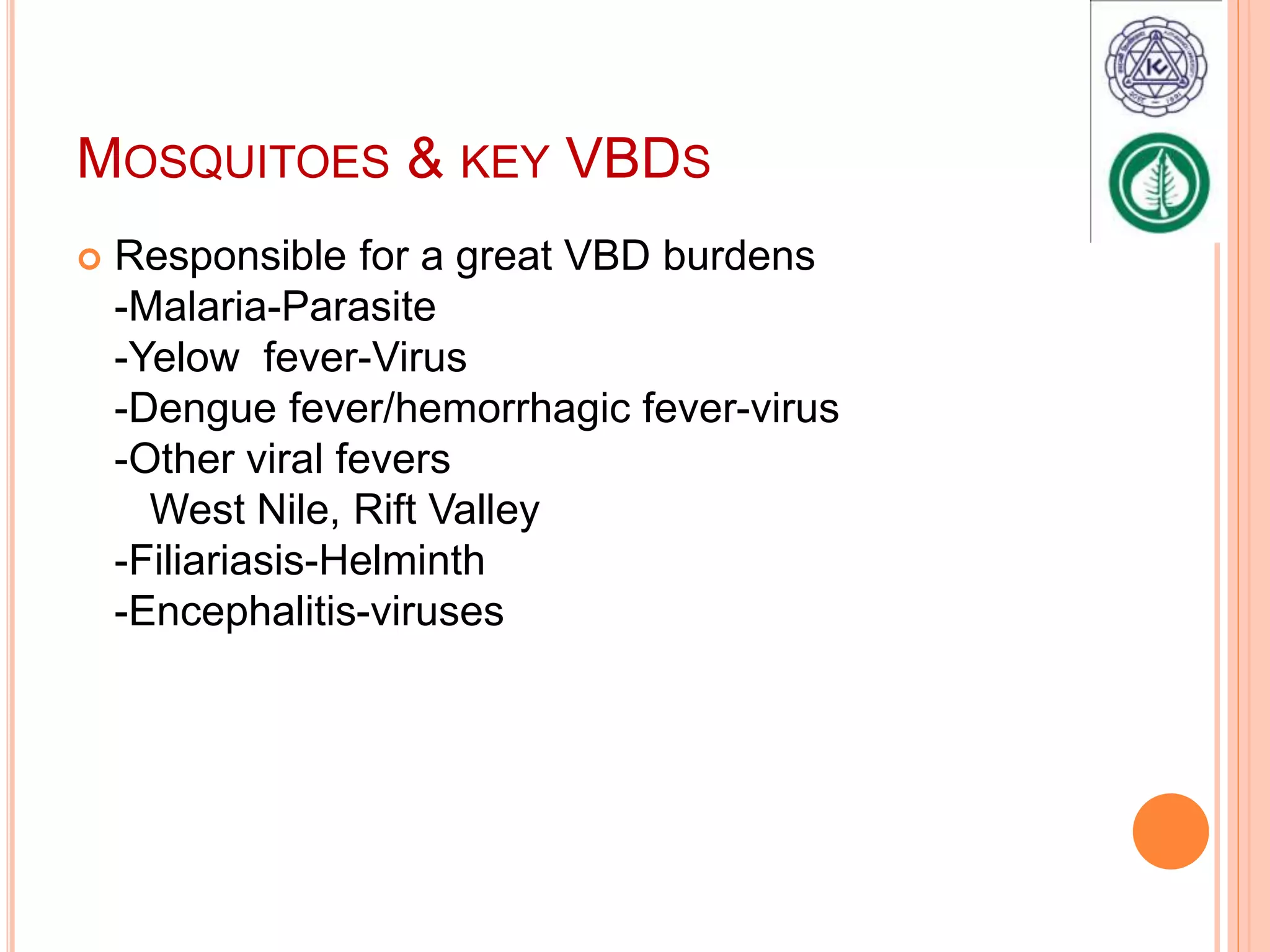
MOSQUITOES & KEY VBDS
 Responsible for a great VBD burdens
-Malaria-Parasite
-Yelow fever-Virus
-Dengue fever/hemorrhagic fever-virus
-Other viral fevers
West Nile, Rift Valley
-Filiariasis-Helminth
-Encephalitis-viruses
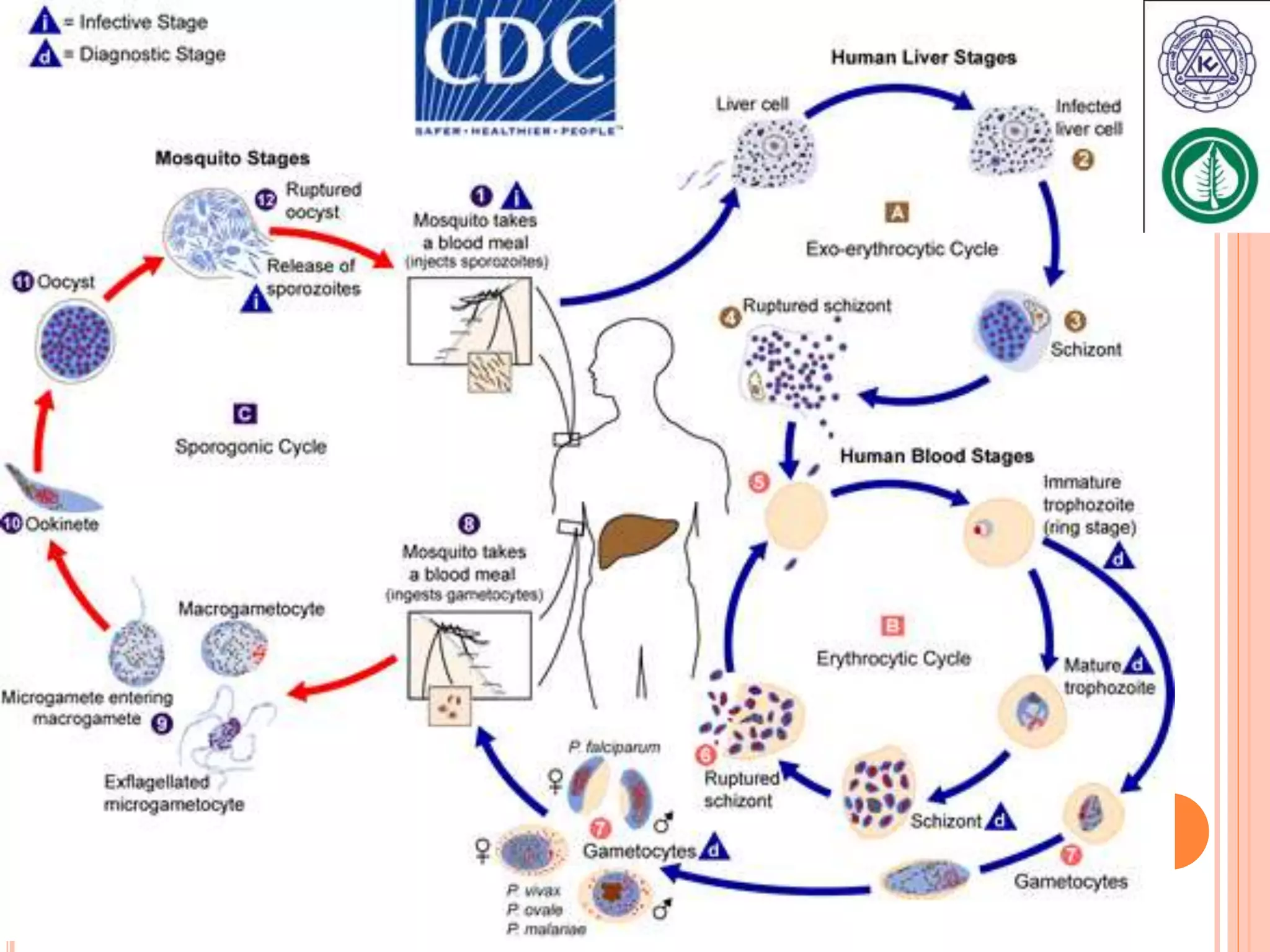
MALARIA;
 Causative agent:-
a) plasmodium vivax
b) plasmodium falciparum
c) plasmodium ovale
d) plasmodium malarie
 Primary host:man
 Secondary host: anopheles mosquito
 Most prevallent in south african countries, and tarai
region of Nepal
 Controll measure:
1) control of host
a)clean the surrounding
b)fishes gambusia
2) mosquito net
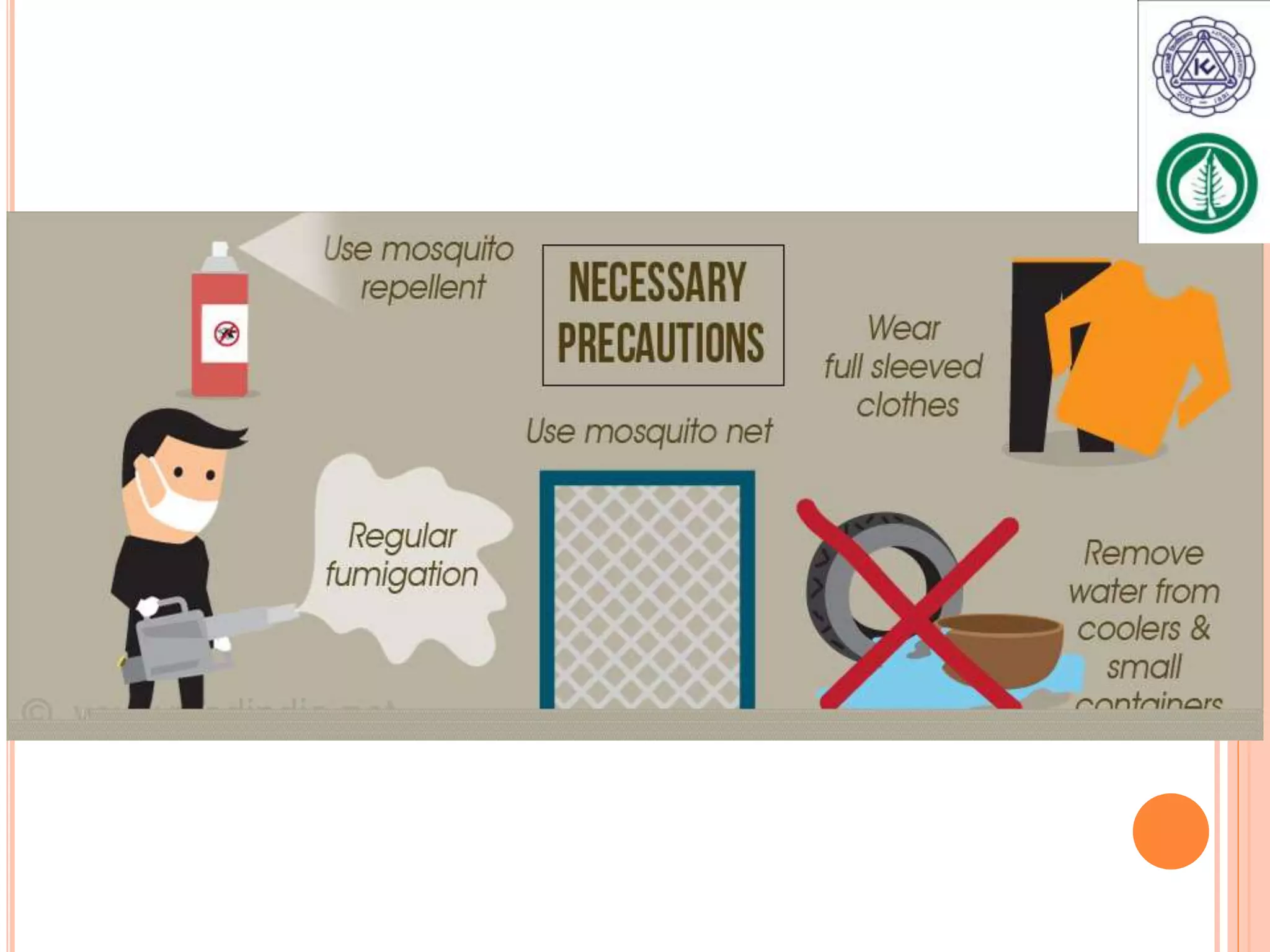
3) mosquito coils and other mosquito repellants
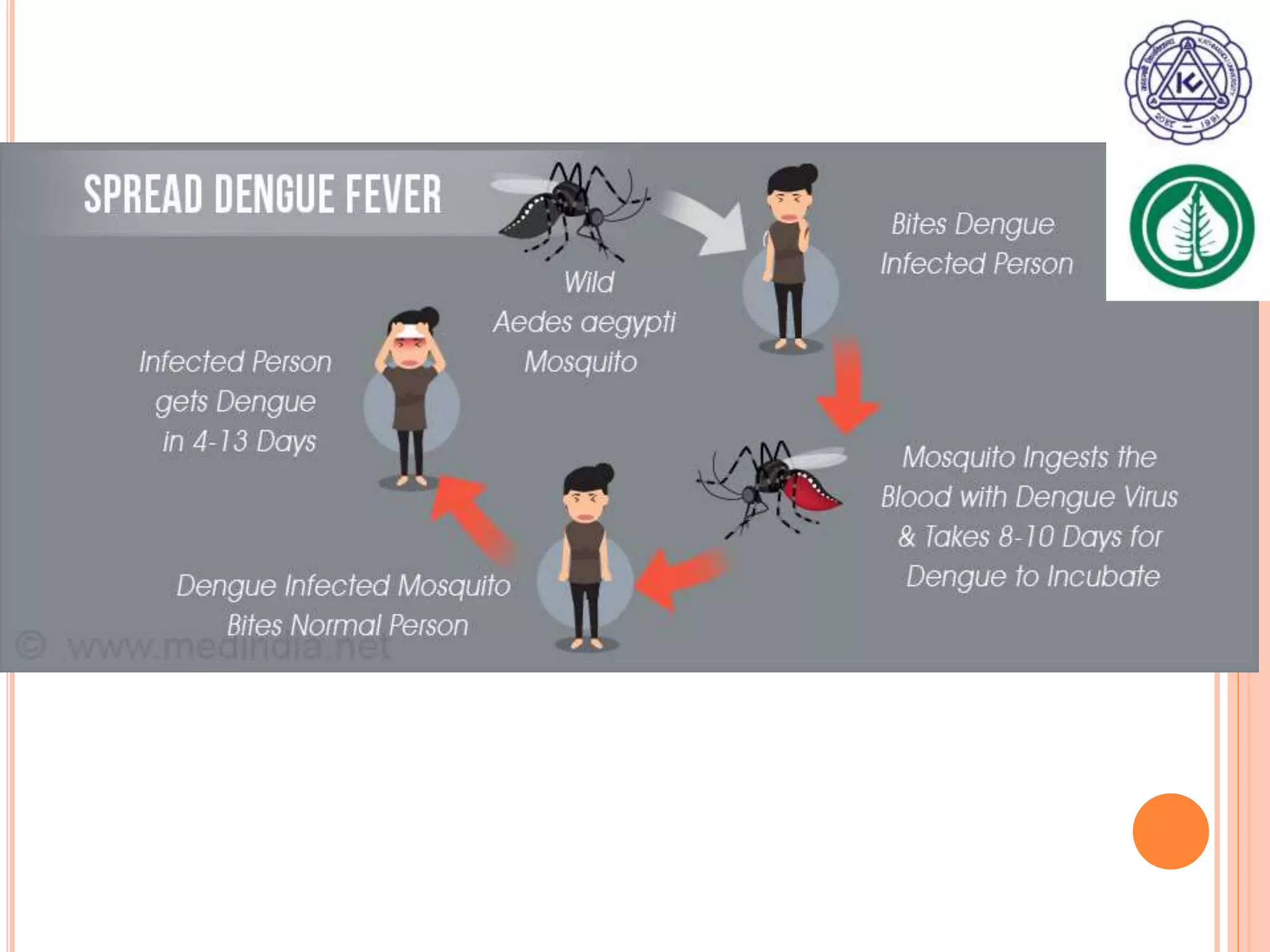
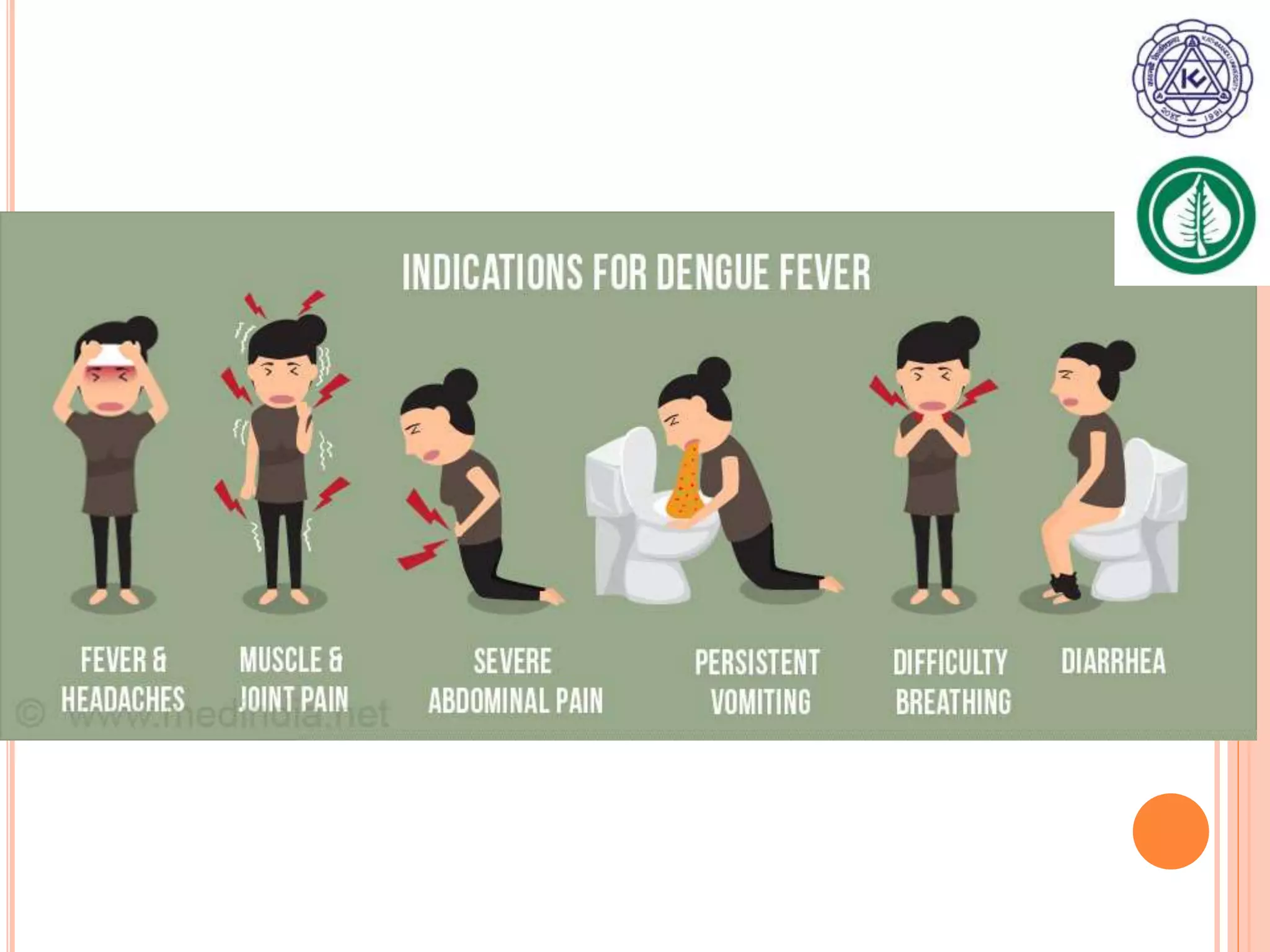
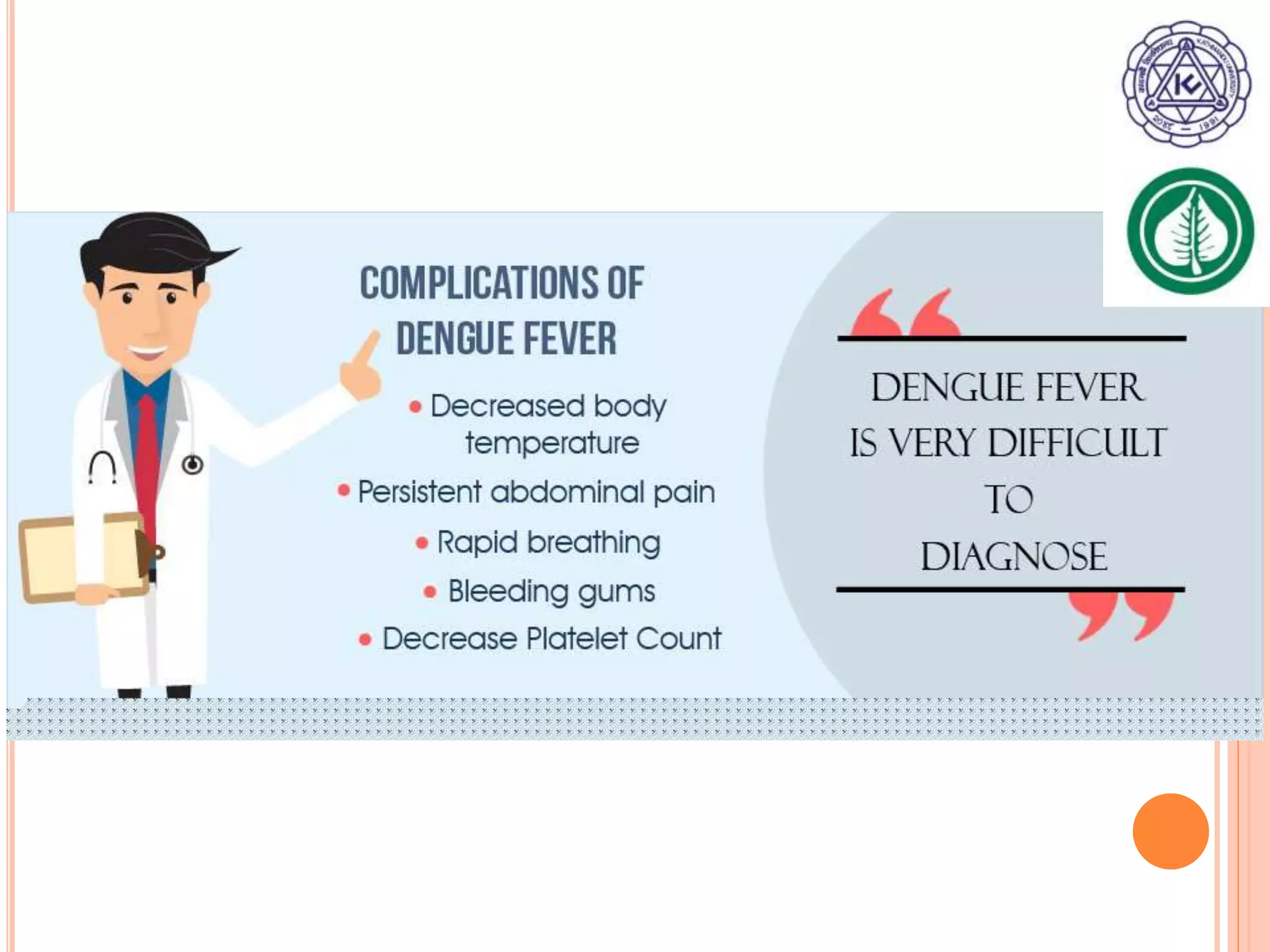
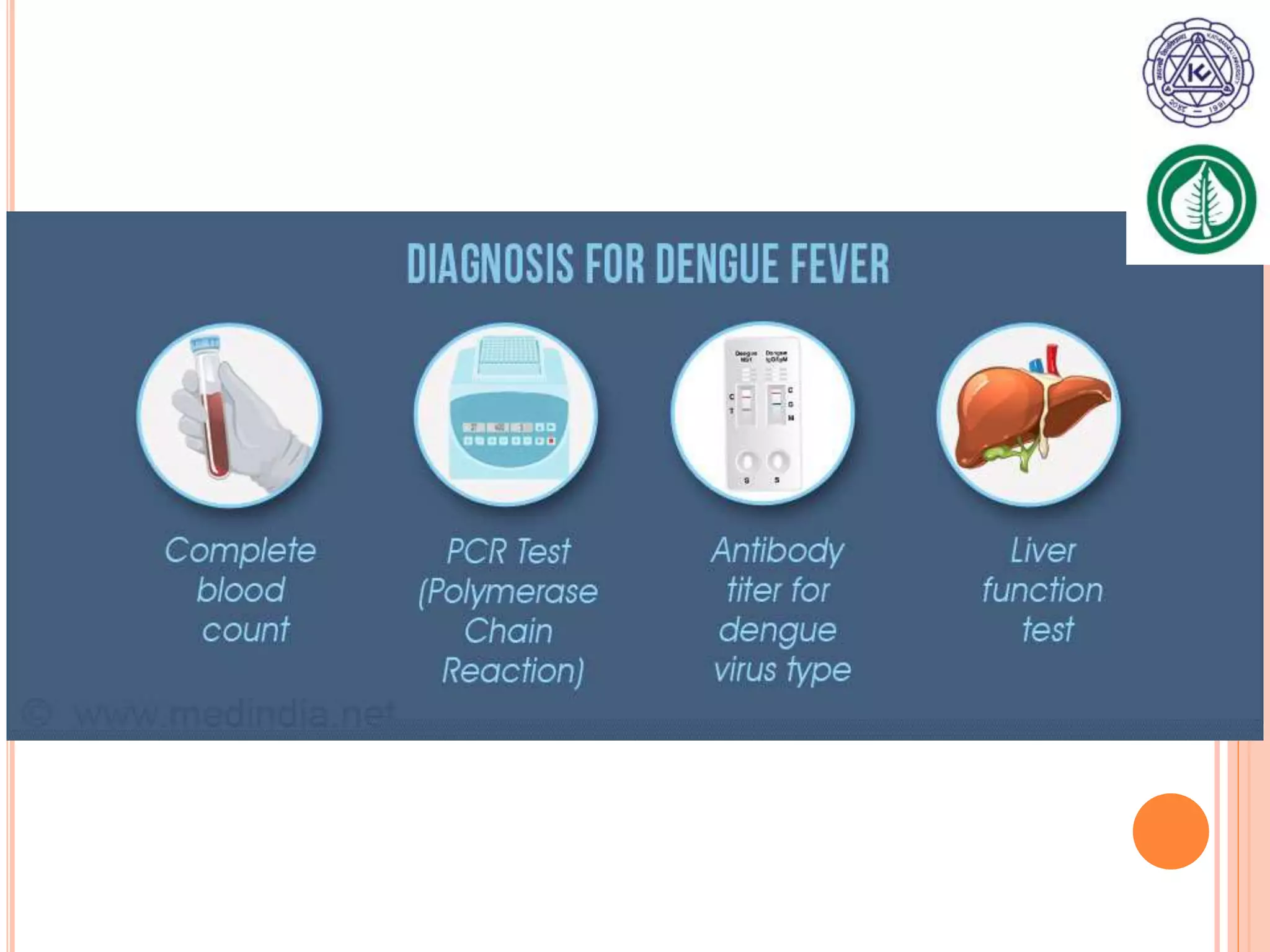
DENGUE FEVER
 Causative agent: dengue virus
•Hosts:
1)Primary host:
2)Secondary host:
•Infective stage:
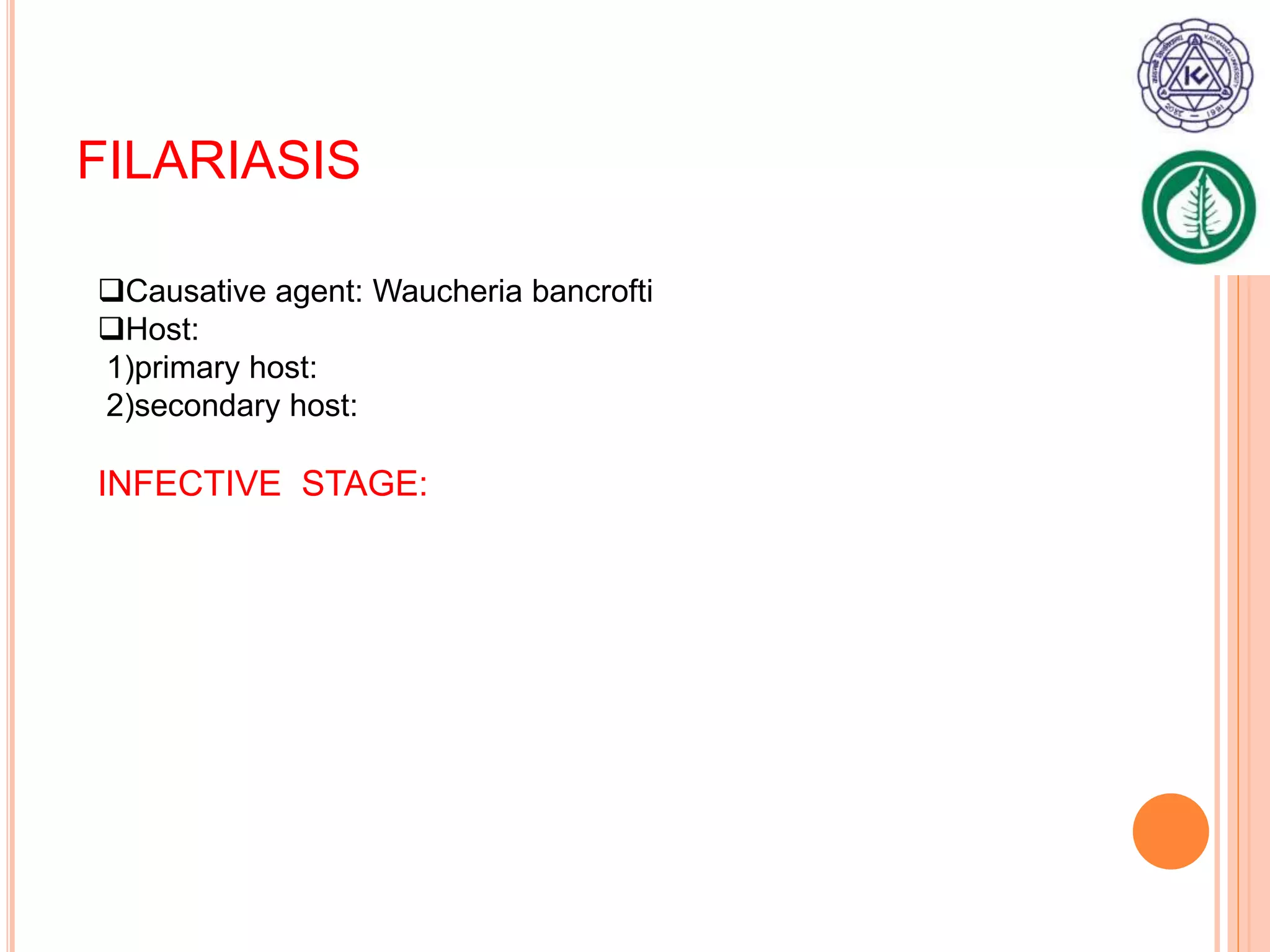
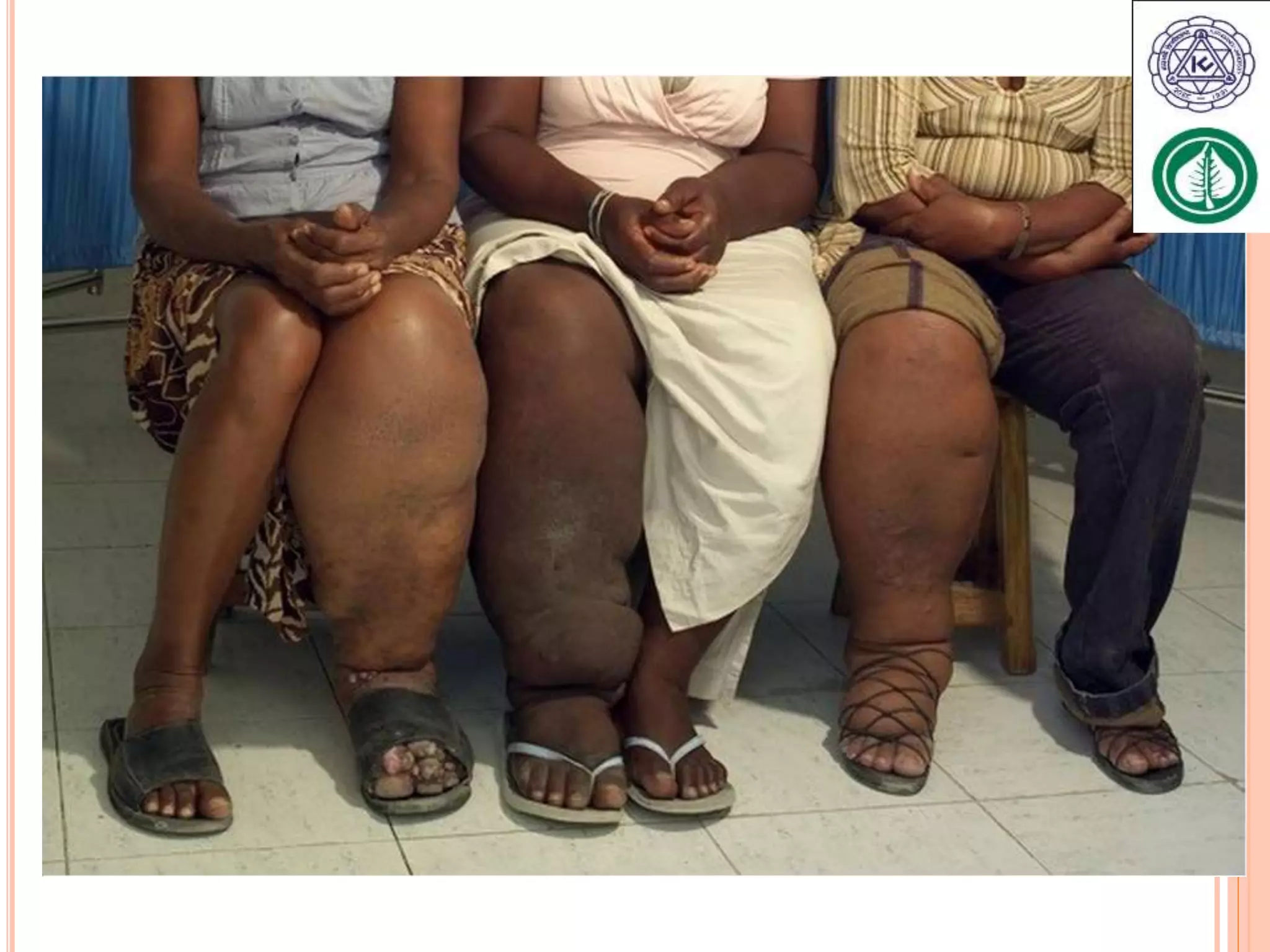
FILARIASIS
Causative agent: Waucheria bancrofti
Host:
1)primary host:
2)secondary host:
INFECTIVE STAGE:
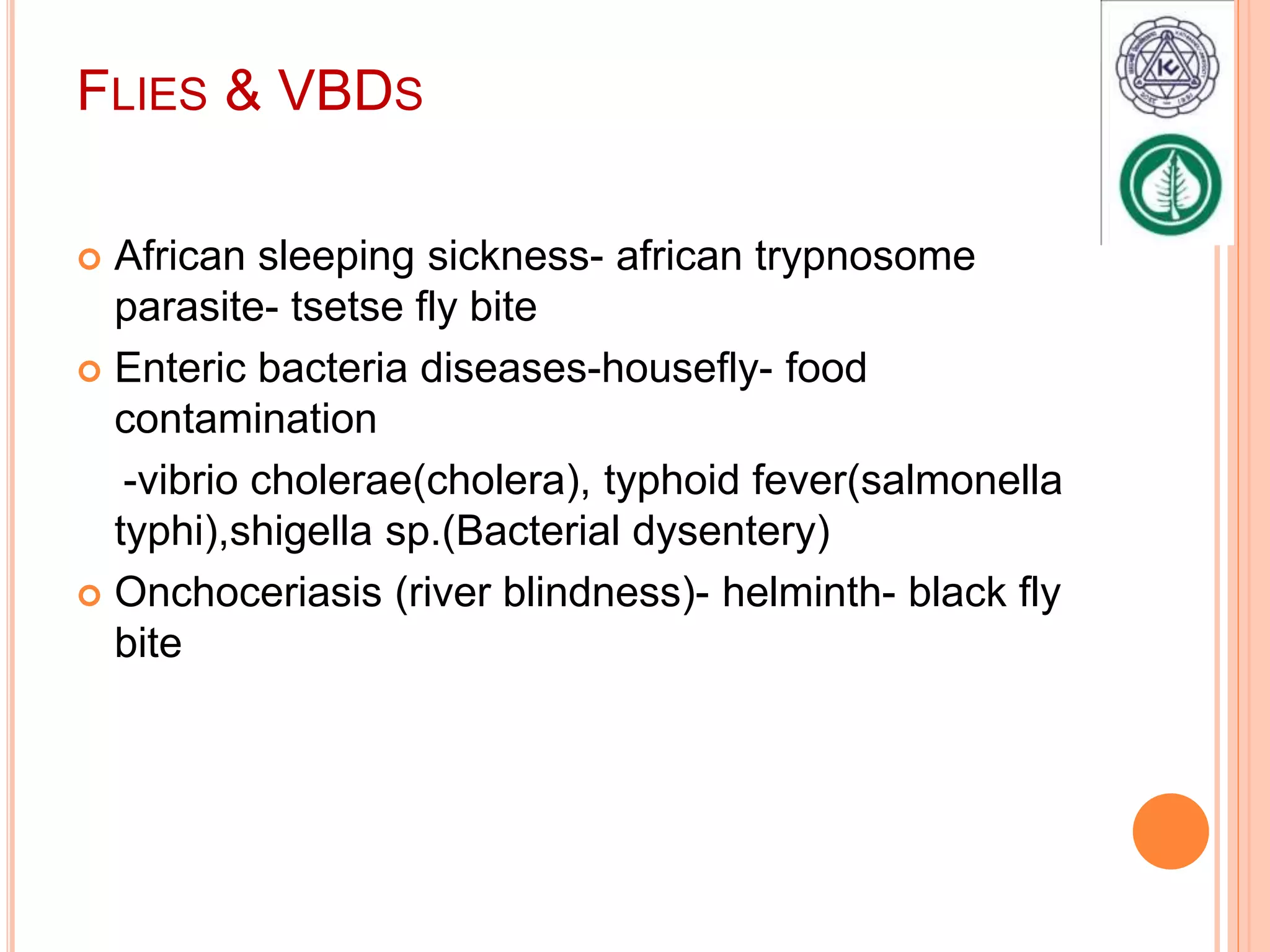
FLIES & VBDS
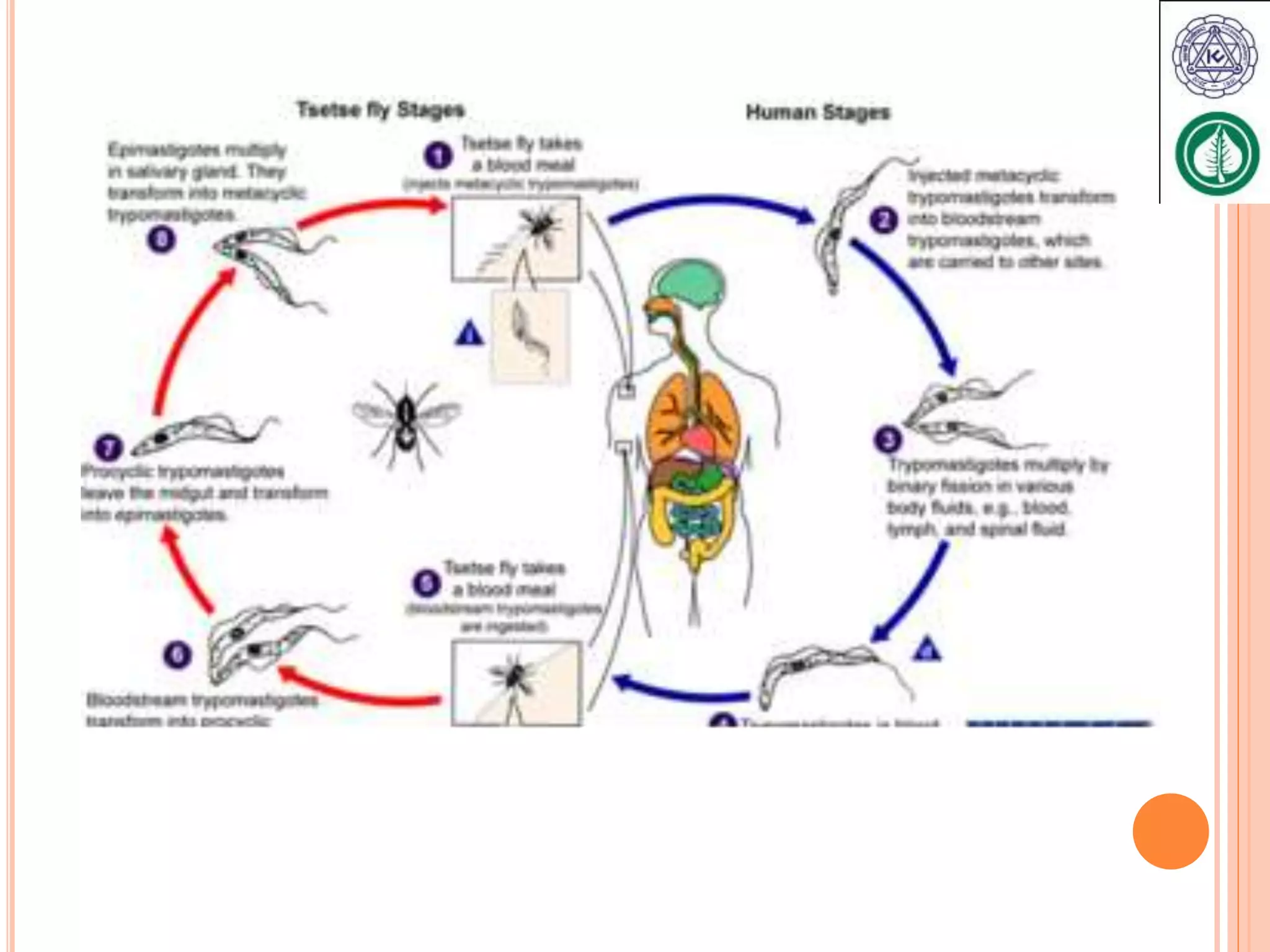
 African sleeping sickness- african trypnosome
parasite- tsetse fly bite
 Enteric bacteria diseases-housefly- food
contamination
-vibrio cholerae(cholera), typhoid fever(salmonella
typhi),shigella sp.(Bacterial dysentery)
 Onchoceriasis (river blindness)- helminth- black fly
bite
LICE & VBDS-TYPHUS FEVER
 Agent: ricketssia prowazeckii
 vector:body lice
Pediculus humanus corporis
 Associated with poor sanitation and lice
infestation(ectoparasite cariage)
-Transmitted by louse feces penetratingskin or inhaled in dust
 Controlled with insectidial body powder and
improved sanitation
 Other louse borne diseases
-Trench fever- Bartonella quintana
-Relapsing fever-borrelia recurrentensis
TRENCH FEVER
 Caused by: Bartonella quintana
 Used in world war I
 Transmitted by Pediculus humanus(Louse)
FLEAS & VBDS – PLAGUE
 Plague-pastaurella(now Yersinia) pestis(Gr. –ve bacterium)
 Fleas carried on rats and other rodents
-Zoonosis
-Rats bitten by fleas become infected and dies
-Rats then hop onto Humans , biting (taking a blood meal) and
infecting with P.pestis
 Bubonic plague:flea bite-infection- lymph node-swelling called
buboes-septicemia-fever bubonic plague-dark patches on skin-called
“black death”
 Pneumonc plague;secondary spread to lungs can result in
pneumonia and ability to spread via respiratory secretion and
droplets, resulting in person to person spread as “pneumonic plague”
 Concern as a bioterroism agent
YERSINA PESTIS
 Caused by gram –ve, non sporing,non motile,short
coccobacillus pasturella pestis
 Plaque
 Host: Rattus rattus (Rats)
 Treatment: antibiotics like
aminoglycosides,chloramphenicol,co-
trimoxazole,tetracyclin.
CONTROL:
 Control of the vector:
1)rats can be killed by rat poisons
2)Fleas by the libral application of insectisides to
run rat
3)Construction of rat proof dwelling houses
4)fumigation of ships and aircrafts
Yersina/pastaurella
plague
Bubonic plague
TICKS & VBDS
 Rocky mountain spotted fever- Rickettsia-tick bite
-causes systemic infection with fever, nausea,vomiting,muscle
pain,lack of appetite,severe headache;later ;rash,abdominal
pain,joint pain,diarrhea
 Lyme disease-spirochete bacterium- Borrelia burgdorferi-tick
bite leads systemic disease with fever,headache,fatigue and a
characteristic skin rashn called “Erythema migrans”
-Untreated, infection can spread to joints,the heart and the
nervous system; Neurological sequelae
 Erlichiosis-Ehrlichis chaffeenis- a bacterium
-Infection causes systemic illness with fever,headache,fatigue
and muscle aches
-also nausea,vomitting,cough,joint pains, confusion and
ocassionally rash.
 Q fever :coxiella burnetti-zoonotic
REFRENCES
 Journals
 Internet
- www.cdc.gov
- www.who.int
 library

Vector borne disease

  • 1.
    VECTOR BORNE DISEASES Presentationby; NITESH SINGH ALINA KHIMBAJA Supported by: Dr. S K MADHUP
  • 2.
    of A biological associationbetween an arthropod (insect or arachnid ) and a pathogen acquired by feeding on the blood of the infected vertebrate host
  • 3.
    On the basisof host we can classify vector borne disease in following class; 1) Mosquitoes borne 2)Flies borne 3)Lice borne 4)Fleas borne 5)tick borne
  • 4.
    Disease Causative agentsVectors Methods of infections Malaria (commonest) Plasmodium Anopheles mosquitoes Bite Dengue fever Virus Aedes mosquitoes Bite Encephalitis Virus Culex mosquitoes Bite African sleeping sickness trypnosomas Tse tse fly Bite Dysentry (amoebic) Protozoan Housefly Contamination of food Dysentery (bacilary) Bacterium shigella sp. Housefly Contamination of food Cholera Vibrio cholerae Housefly Contamination of food
  • 5.
    Disease Causative agentsVector Method of infection Onchocerclosis Parasite worm, onchocerco volvulus Black flies Bite Plague Bacterium, pastaurella pestis Oriental rat flies and other fleas Bites of contact with infected rodents Rocky mountain fever Ricketsia American dog tick Bite Typhoid Salmonella typhi Houseflies Contamination of food Typhus Ricketsia prowzeki Human louse flies Contamination or bite Yellow fever Viruses Aedes mosquitoes bite
  • 6.
    MOSQUITOES & KEYVBDS  Responsible for a great VBD burdens -Malaria-Parasite -Yelow fever-Virus -Dengue fever/hemorrhagic fever-virus -Other viral fevers West Nile, Rift Valley -Filiariasis-Helminth -Encephalitis-viruses
  • 7.
    MALARIA;  Causative agent:- a)plasmodium vivax b) plasmodium falciparum c) plasmodium ovale d) plasmodium malarie  Primary host:man  Secondary host: anopheles mosquito
  • 8.
     Most prevallentin south african countries, and tarai region of Nepal  Controll measure: 1) control of host a)clean the surrounding b)fishes gambusia 2) mosquito net 3) mosquito coils and other mosquito repellants
  • 10.
    DENGUE FEVER  Causativeagent: dengue virus •Hosts: 1)Primary host: 2)Secondary host: •Infective stage:
  • 16.
    FILARIASIS Causative agent: Waucheriabancrofti Host: 1)primary host: 2)secondary host: INFECTIVE STAGE:
  • 18.
    FLIES & VBDS African sleeping sickness- african trypnosome parasite- tsetse fly bite  Enteric bacteria diseases-housefly- food contamination -vibrio cholerae(cholera), typhoid fever(salmonella typhi),shigella sp.(Bacterial dysentery)  Onchoceriasis (river blindness)- helminth- black fly bite
  • 20.
    LICE & VBDS-TYPHUSFEVER  Agent: ricketssia prowazeckii  vector:body lice Pediculus humanus corporis  Associated with poor sanitation and lice infestation(ectoparasite cariage) -Transmitted by louse feces penetratingskin or inhaled in dust  Controlled with insectidial body powder and improved sanitation  Other louse borne diseases -Trench fever- Bartonella quintana -Relapsing fever-borrelia recurrentensis
  • 21.
    TRENCH FEVER  Causedby: Bartonella quintana  Used in world war I  Transmitted by Pediculus humanus(Louse)
  • 22.
    FLEAS & VBDS– PLAGUE  Plague-pastaurella(now Yersinia) pestis(Gr. –ve bacterium)  Fleas carried on rats and other rodents -Zoonosis -Rats bitten by fleas become infected and dies -Rats then hop onto Humans , biting (taking a blood meal) and infecting with P.pestis  Bubonic plague:flea bite-infection- lymph node-swelling called buboes-septicemia-fever bubonic plague-dark patches on skin-called “black death”  Pneumonc plague;secondary spread to lungs can result in pneumonia and ability to spread via respiratory secretion and droplets, resulting in person to person spread as “pneumonic plague”  Concern as a bioterroism agent
  • 23.
    YERSINA PESTIS  Causedby gram –ve, non sporing,non motile,short coccobacillus pasturella pestis  Plaque  Host: Rattus rattus (Rats)  Treatment: antibiotics like aminoglycosides,chloramphenicol,co- trimoxazole,tetracyclin.
  • 24.
    CONTROL:  Control ofthe vector: 1)rats can be killed by rat poisons 2)Fleas by the libral application of insectisides to run rat 3)Construction of rat proof dwelling houses 4)fumigation of ships and aircrafts
  • 25.
  • 26.
    TICKS & VBDS Rocky mountain spotted fever- Rickettsia-tick bite -causes systemic infection with fever, nausea,vomiting,muscle pain,lack of appetite,severe headache;later ;rash,abdominal pain,joint pain,diarrhea  Lyme disease-spirochete bacterium- Borrelia burgdorferi-tick bite leads systemic disease with fever,headache,fatigue and a characteristic skin rashn called “Erythema migrans” -Untreated, infection can spread to joints,the heart and the nervous system; Neurological sequelae  Erlichiosis-Ehrlichis chaffeenis- a bacterium -Infection causes systemic illness with fever,headache,fatigue and muscle aches -also nausea,vomitting,cough,joint pains, confusion and ocassionally rash.  Q fever :coxiella burnetti-zoonotic
  • 27.
    REFRENCES  Journals  Internet -www.cdc.gov - www.who.int  library