Vector Control Measures
Dr Anila Varghese
Junior Resident
Department of Community Medicine and Public Health
King George’s Medical University, UP
Lucknow
What is a VECTOR in Disease Epidemiology?
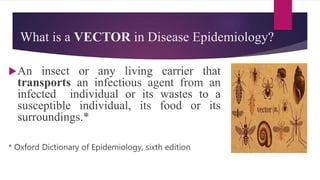
An insect or any living carrier that
transports an infectious agent from an
infected individual or its wastes to a
susceptible individual, its food or its
surroundings.*
* Oxford Dictionary of Epidemiology, sixth edition
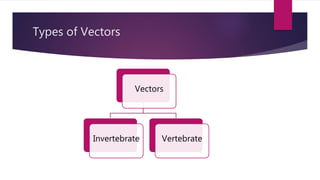
Types of Vectors
Vectors
Invertebrate Vertebrate
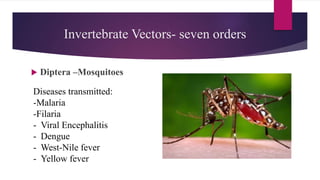
 Diptera –Mosquitoes
Diseases transmitted:
-Malaria
-Filaria
- Viral Encephalitis
- Dengue
- West-Nile fever
- Yellow fever
Invertebrate Vectors- seven orders
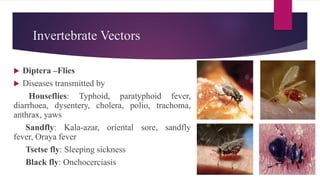
 Diptera –Flies
 Diseases transmitted by
Houseflies: Typhoid, paratyphoid fever,
diarrhoea, dysentery, cholera, polio, trachoma,
anthrax, yaws
Sandfly: Kala-azar, oriental sore, sandfly
fever, Oraya fever
Tsetse fly: Sleeping sickness
Black fly: Onchocerciasis
Invertebrate Vectors
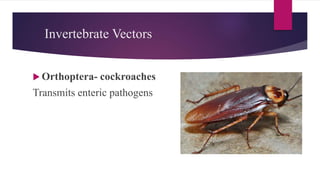
 Orthoptera- cockroaches
Transmits enteric pathogens
Invertebrate Vectors
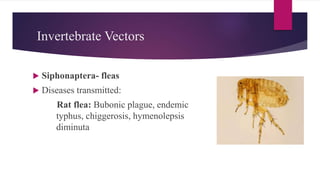
 Siphonaptera- fleas
 Diseases transmitted:
Rat flea: Bubonic plague, endemic
typhus, chiggerosis, hymenolepsis
diminuta
Invertebrate Vectors
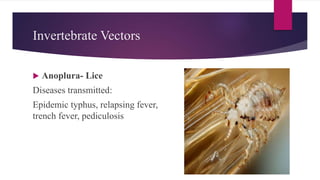
 Anoplura- Lice
Diseases transmitted:
Epidemic typhus, relapsing fever,
trench fever, pediculosis
Invertebrate Vectors
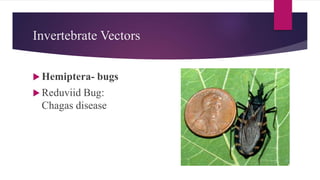
 Hemiptera- bugs
 Reduviid Bug:
Chagas disease
Invertebrate Vectors
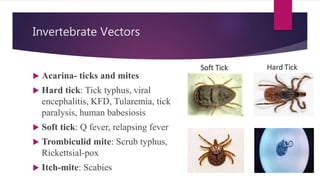
 Acarina- ticks and mites
 Hard tick: Tick typhus, viral
encephalitis, KFD, Tularemia, tick
paralysis, human babesiosis
 Soft tick: Q fever, relapsing fever
 Trombiculid mite: Scrub typhus,
Rickettsial-pox
 Itch-mite: Scabies
Invertebrate Vectors
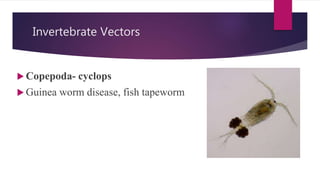
 Copepoda- cyclops
 Guinea worm disease, fish tapeworm
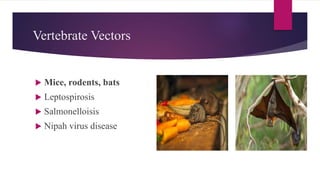
Vertebrate Vectors
 Mice, rodents, bats
 Leptospirosis
 Salmonelloisis
 Nipah virus disease
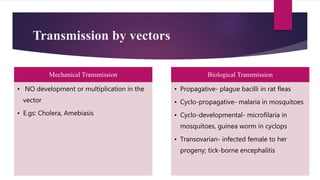
Transmission by vectors
Mechanical Transmission
• NO development or multiplication in the
vector
• E.gs: Cholera, Amebiasis
Biological Transmission
• Propagative- plague bacilli in rat fleas
• Cyclo-propagative- malaria in mosquitoes
• Cyclo-developmental- microfilaria in
mosquitoes, guinea worm in cyclops
• Transovarian- infected female to her
progeny; tick-borne encephalitis
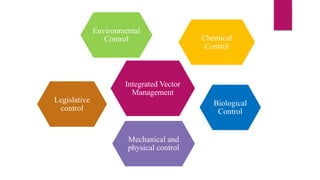
Integrated Vector
Management
Environmental
Control Chemical
Control
Biological
Control
Mechanical and
physical control
Legislative
control
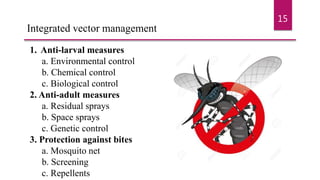
Integrated vector management
× 100 × 100
× 100 × 100
15
1. Anti-larval measures
a. Environmental control
b. Chemical control
c. Biological control
2. Anti-adult measures
a. Residual sprays
b. Space sprays
c. Genetic control
3. Protection against bites
a. Mosquito net
b. Screening
c. Repellents
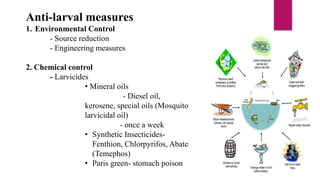
Anti-larval measures
1. Environmental Control
- Source reduction
- Engineering measures
2. Chemical control
- Larvicides
• Mineral oils
- Diesel oil,
kerosene, special oils (Mosquito
larvicidal oil)
- once a week
• Synthetic Insecticides-
Fenthion, Chlorpyrifos, Abate
(Temephos)
• Paris green- stomach poison
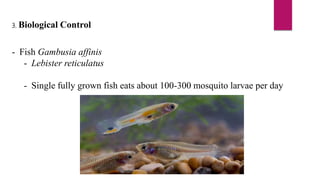
3. Biological Control
- Fish Gambusia affinis
- Lebister reticulatus
- Single fully grown fish eats about 100-300 mosquito larvae per day
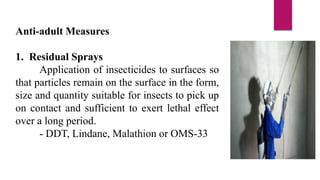
Anti-adult Measures
1. Residual Sprays
Application of insecticides to surfaces so
that particles remain on the surface in the form,
size and quantity suitable for insects to pick up
on contact and sufficient to exert lethal effect
over a long period.
- DDT, Lindane, Malathion or OMS-33
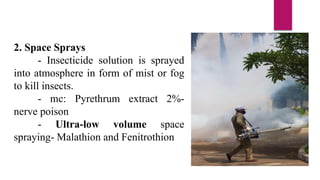
2. Space Sprays
- Insecticide solution is sprayed
into atmosphere in form of mist or fog
to kill insects.
- mc: Pyrethrum extract 2%-
nerve poison
- Ultra-low volume space
spraying- Malathion and Fenitrothion
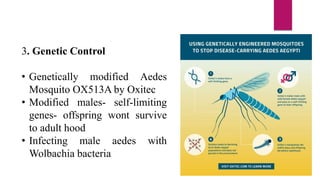
3. Genetic Control
• Genetically modified Aedes
Mosquito OX513A by Oxitec
• Modified males- self-limiting
genes- offspring wont survive
to adult hood
• Infecting male aedes with
Wolbachia bacteria
Protection against mosquito bites:
1. Mosquito nets: Size of openings should
not exceed 0.0475 inch in any diameter.
Number of holes in one
square inch is usually 150.
2. Screens: Copper or bronze mesh screens
with openings should not exceed 0.0475
inch.
3. Repellents: Dietyltoluamide (DEET)
Model civic byelaws
-Fine/punishment if breeding is detected
-Mumbai, Chandigarh, Delhi, Ahmedabad, Bengaluru,
Chennai, Goa, Kolkata.
Construction Regulation Acts
-For appropriate overhead/underground water tanks
-Mumbai
22
Legislative measures
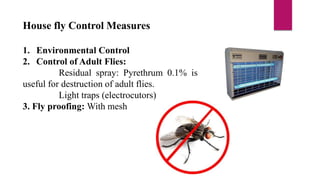
House fly Control Measures
1. Environmental Control
2. Control of Adult Flies:
Residual spray: Pyrethrum 0.1% is
useful for destruction of adult flies.
Light traps (electrocutors)
3. Fly proofing: With mesh
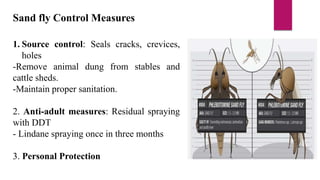
Sand fly Control Measures
1. Source control: Seals cracks, crevices,
holes
-Remove animal dung from stables and
cattle sheds.
-Maintain proper sanitation.
2. Anti-adult measures: Residual spraying
with DDT
- Lindane spraying once in three months
3. Personal Protection
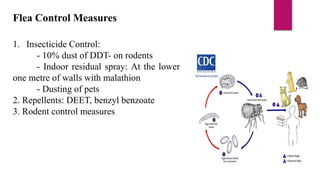
Flea Control Measures
1. Insecticide Control:
- 10% dust of DDT- on rodents
- Indoor residual spray: At the lower
one metre of walls with malathion
- Dusting of pets
2. Repellents: DEET, benzyl benzoate
3. Rodent control measures
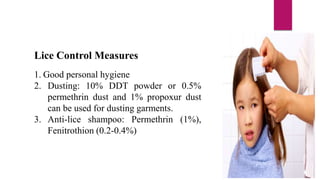
Lice Control Measures
1. Good personal hygiene
2. Dusting: 10% DDT powder or 0.5%
permethrin dust and 1% propoxur dust
can be used for dusting garments.
3. Anti-lice shampoo: Permethrin (1%),
Fenitrothion (0.2-0.4%)
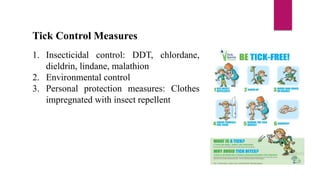
Tick Control Measures
1. Insecticidal control: DDT, chlordane,
dieldrin, lindane, malathion
2. Environmental control
3. Personal protection measures: Clothes
impregnated with insect repellent
Rodent Control Measures
1. Trapping
2. Rodenticides: Zinc phosphide, Barium
carbonate, Bromadiolone
THANK YOU

Vector control measures

  • 1.
    Vector Control Measures DrAnila Varghese Junior Resident Department of Community Medicine and Public Health King George’s Medical University, UP Lucknow
  • 2.
    What is aVECTOR in Disease Epidemiology? An insect or any living carrier that transports an infectious agent from an infected individual or its wastes to a susceptible individual, its food or its surroundings.* * Oxford Dictionary of Epidemiology, sixth edition
  • 3.
  • 4.
     Diptera –Mosquitoes Diseasestransmitted: -Malaria -Filaria - Viral Encephalitis - Dengue - West-Nile fever - Yellow fever Invertebrate Vectors- seven orders
  • 5.
     Diptera –Flies Diseases transmitted by Houseflies: Typhoid, paratyphoid fever, diarrhoea, dysentery, cholera, polio, trachoma, anthrax, yaws Sandfly: Kala-azar, oriental sore, sandfly fever, Oraya fever Tsetse fly: Sleeping sickness Black fly: Onchocerciasis Invertebrate Vectors
  • 6.
     Orthoptera- cockroaches Transmitsenteric pathogens Invertebrate Vectors
  • 7.
     Siphonaptera- fleas Diseases transmitted: Rat flea: Bubonic plague, endemic typhus, chiggerosis, hymenolepsis diminuta Invertebrate Vectors
  • 8.
     Anoplura- Lice Diseasestransmitted: Epidemic typhus, relapsing fever, trench fever, pediculosis Invertebrate Vectors
  • 9.
     Hemiptera- bugs Reduviid Bug: Chagas disease Invertebrate Vectors
  • 10.
    Invertebrate Vectors  Acarina-ticks and mites  Hard tick: Tick typhus, viral encephalitis, KFD, Tularemia, tick paralysis, human babesiosis  Soft tick: Q fever, relapsing fever  Trombiculid mite: Scrub typhus, Rickettsial-pox  Itch-mite: Scabies
  • 11.
    Invertebrate Vectors  Copepoda-cyclops  Guinea worm disease, fish tapeworm
  • 12.
    Vertebrate Vectors  Mice,rodents, bats  Leptospirosis  Salmonelloisis  Nipah virus disease
  • 13.
    Transmission by vectors MechanicalTransmission • NO development or multiplication in the vector • E.gs: Cholera, Amebiasis Biological Transmission • Propagative- plague bacilli in rat fleas • Cyclo-propagative- malaria in mosquitoes • Cyclo-developmental- microfilaria in mosquitoes, guinea worm in cyclops • Transovarian- infected female to her progeny; tick-borne encephalitis
  • 14.
  • 15.
    Integrated vector management ×100 × 100 × 100 × 100 15 1. Anti-larval measures a. Environmental control b. Chemical control c. Biological control 2. Anti-adult measures a. Residual sprays b. Space sprays c. Genetic control 3. Protection against bites a. Mosquito net b. Screening c. Repellents
  • 16.
    Anti-larval measures 1. EnvironmentalControl - Source reduction - Engineering measures 2. Chemical control - Larvicides • Mineral oils - Diesel oil, kerosene, special oils (Mosquito larvicidal oil) - once a week • Synthetic Insecticides- Fenthion, Chlorpyrifos, Abate (Temephos) • Paris green- stomach poison
  • 17.
    3. Biological Control -Fish Gambusia affinis - Lebister reticulatus - Single fully grown fish eats about 100-300 mosquito larvae per day
  • 18.
    Anti-adult Measures 1. ResidualSprays Application of insecticides to surfaces so that particles remain on the surface in the form, size and quantity suitable for insects to pick up on contact and sufficient to exert lethal effect over a long period. - DDT, Lindane, Malathion or OMS-33
  • 19.
    2. Space Sprays -Insecticide solution is sprayed into atmosphere in form of mist or fog to kill insects. - mc: Pyrethrum extract 2%- nerve poison - Ultra-low volume space spraying- Malathion and Fenitrothion
  • 20.
    3. Genetic Control •Genetically modified Aedes Mosquito OX513A by Oxitec • Modified males- self-limiting genes- offspring wont survive to adult hood • Infecting male aedes with Wolbachia bacteria
  • 21.
    Protection against mosquitobites: 1. Mosquito nets: Size of openings should not exceed 0.0475 inch in any diameter. Number of holes in one square inch is usually 150. 2. Screens: Copper or bronze mesh screens with openings should not exceed 0.0475 inch. 3. Repellents: Dietyltoluamide (DEET)
  • 22.
    Model civic byelaws -Fine/punishmentif breeding is detected -Mumbai, Chandigarh, Delhi, Ahmedabad, Bengaluru, Chennai, Goa, Kolkata. Construction Regulation Acts -For appropriate overhead/underground water tanks -Mumbai 22 Legislative measures
  • 23.
    House fly ControlMeasures 1. Environmental Control 2. Control of Adult Flies: Residual spray: Pyrethrum 0.1% is useful for destruction of adult flies. Light traps (electrocutors) 3. Fly proofing: With mesh
  • 24.
    Sand fly ControlMeasures 1. Source control: Seals cracks, crevices, holes -Remove animal dung from stables and cattle sheds. -Maintain proper sanitation. 2. Anti-adult measures: Residual spraying with DDT - Lindane spraying once in three months 3. Personal Protection
  • 25.
    Flea Control Measures 1.Insecticide Control: - 10% dust of DDT- on rodents - Indoor residual spray: At the lower one metre of walls with malathion - Dusting of pets 2. Repellents: DEET, benzyl benzoate 3. Rodent control measures
  • 26.
    Lice Control Measures 1.Good personal hygiene 2. Dusting: 10% DDT powder or 0.5% permethrin dust and 1% propoxur dust can be used for dusting garments. 3. Anti-lice shampoo: Permethrin (1%), Fenitrothion (0.2-0.4%)
  • 27.
    Tick Control Measures 1.Insecticidal control: DDT, chlordane, dieldrin, lindane, malathion 2. Environmental control 3. Personal protection measures: Clothes impregnated with insect repellent
  • 28.
    Rodent Control Measures 1.Trapping 2. Rodenticides: Zinc phosphide, Barium carbonate, Bromadiolone
  • 29.