Definition of VAT. 
Meaning of VAT. 
Necessity of VAT in INDIA. 
Advantages & 
Disadvantages of VAT.
Value Added Tax (VAT) is 
defined as, “ a general 
consumption tax assessed 
on the value added to 
goods and services”.
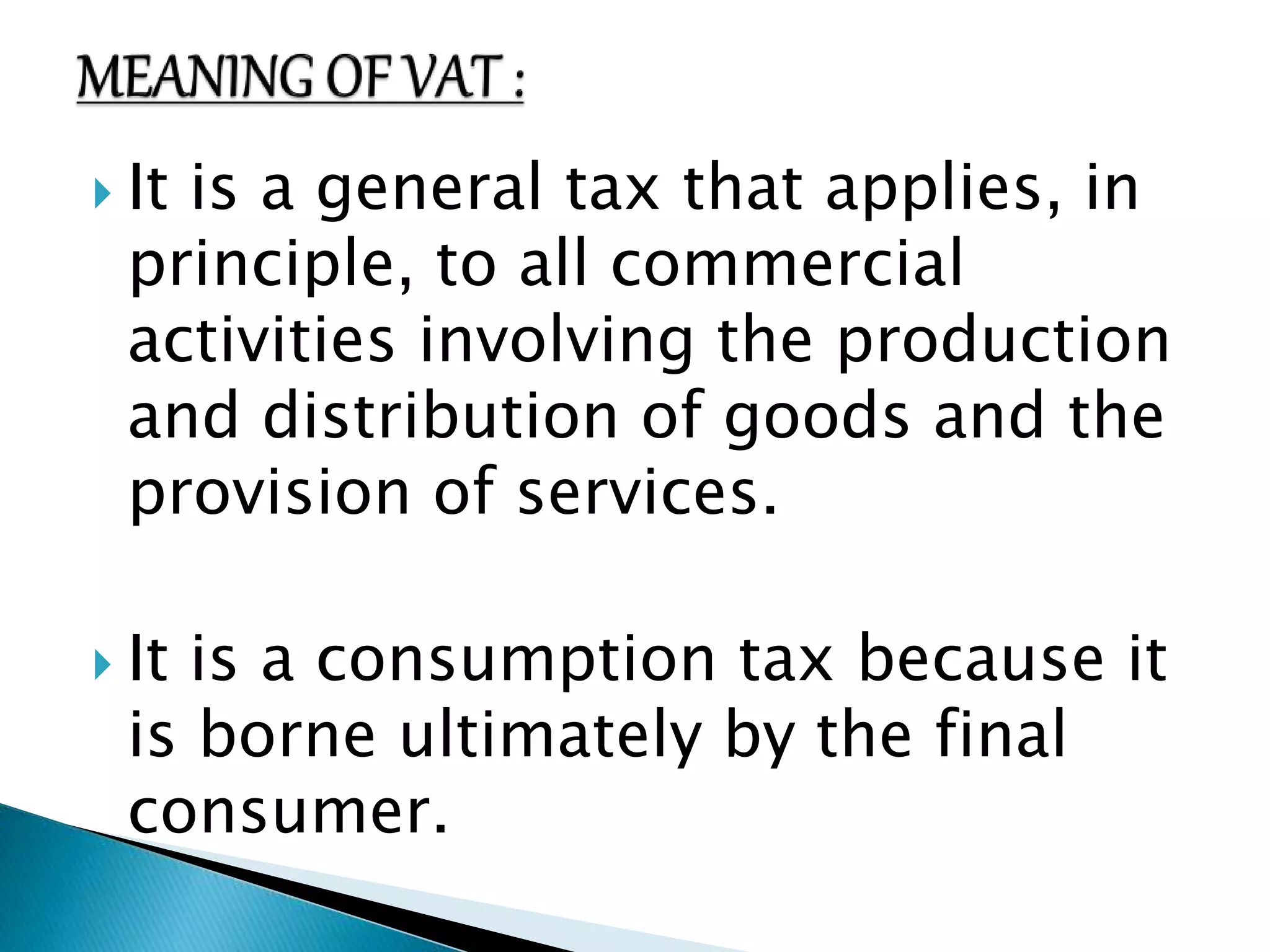
 It is a general tax that applies, in 
principle, to all commercial 
activities involving the production 
and distribution of goods and the 
provision of services. 
 It is a consumption tax because it 
is borne ultimately by the final 
consumer.
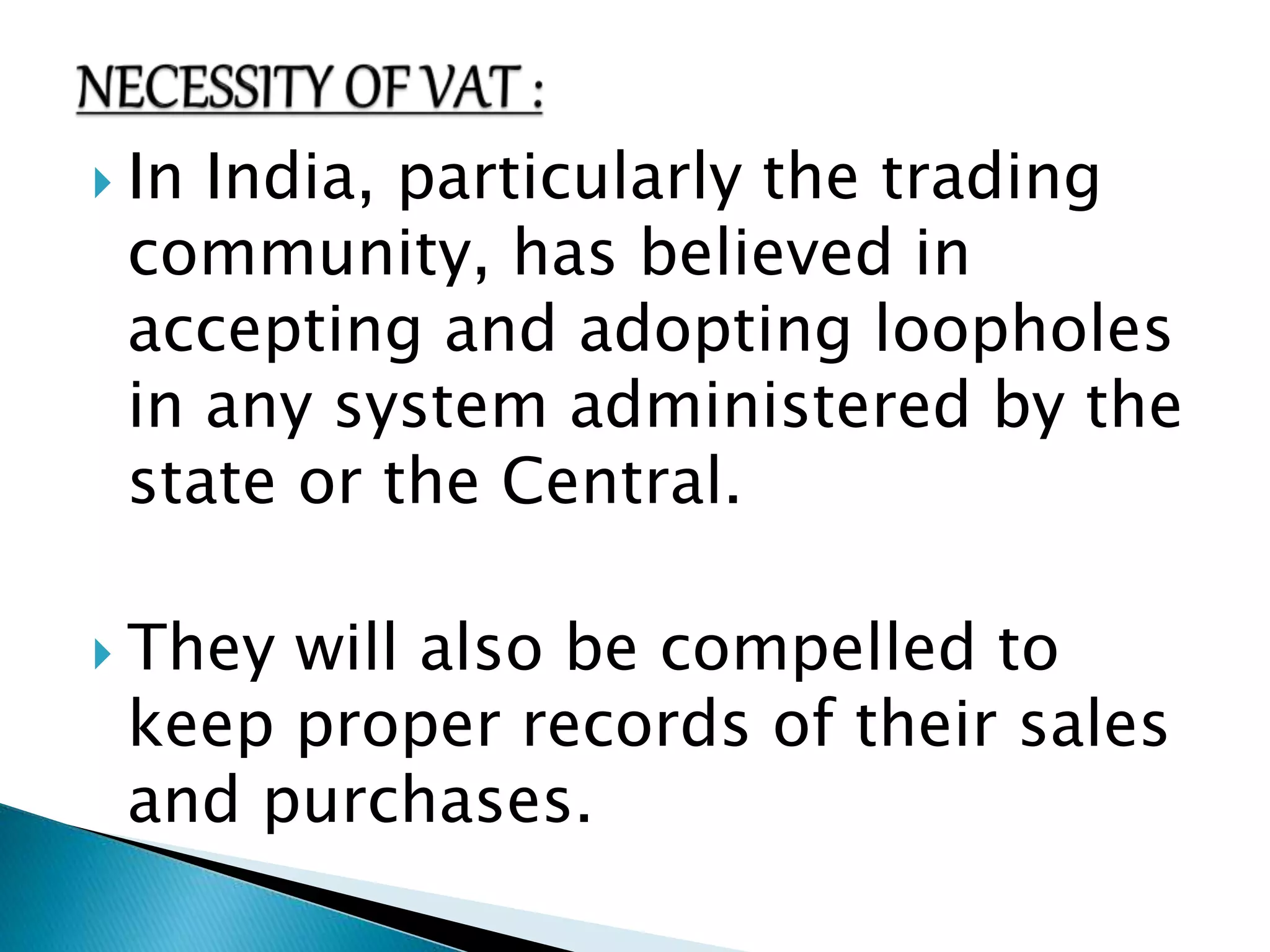
 In India, particularly the trading 
community, has believed in 
accepting and adopting loopholes 
in any system administered by the 
state or the Central. 
 They will also be compelled to 
keep proper records of their sales 
and purchases.
Under the VAT system, no 
exemptions will be given and a 
tax will be levied at each stage 
of manufacture of a product.
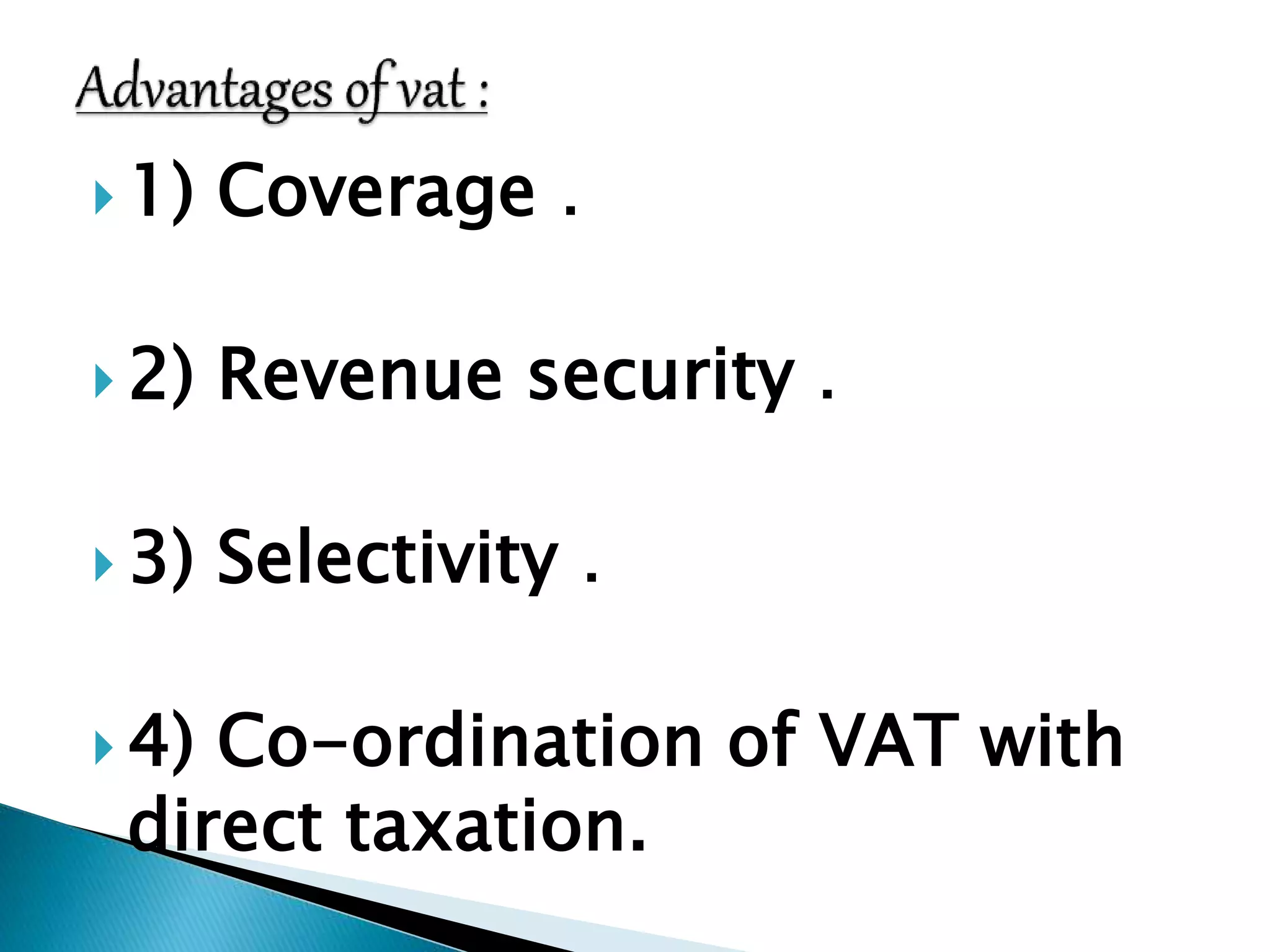
1) Coverage . 
2) Revenue security . 
3) Selectivity . 
4) Co-ordination of VAT with 
direct taxation.
 1) VAT is regressive . 
 2) VAT is too difficult to operate from 
the position of both the 
administration and business. 
 3. VAT is inflationary. 
 4. VAT favours the capital intensive 
firm.
THANK YOU

Vat

  • 2.
    Definition of VAT. Meaning of VAT. Necessity of VAT in INDIA. Advantages & Disadvantages of VAT.
  • 3.
    Value Added Tax(VAT) is defined as, “ a general consumption tax assessed on the value added to goods and services”.
  • 4.
     It isa general tax that applies, in principle, to all commercial activities involving the production and distribution of goods and the provision of services.  It is a consumption tax because it is borne ultimately by the final consumer.
  • 5.
     In India,particularly the trading community, has believed in accepting and adopting loopholes in any system administered by the state or the Central.  They will also be compelled to keep proper records of their sales and purchases.
  • 6.
    Under the VATsystem, no exemptions will be given and a tax will be levied at each stage of manufacture of a product.
  • 7.
    1) Coverage . 2) Revenue security . 3) Selectivity . 4) Co-ordination of VAT with direct taxation.
  • 8.
     1) VATis regressive .  2) VAT is too difficult to operate from the position of both the administration and business.  3. VAT is inflationary.  4. VAT favours the capital intensive firm.
  • 9.