Variations in mandibular permanent molars
Done by:
Randa Hamdy Ali ,Fatima Ahmed Fathy ,Fady Androwes
Shawky ,Ahmed Zainelabedin Eldessouki ,Abdulrahman
Mohamed Abdulhafiz
Semester Two
Under supervision of : A.Prof.Samah Kamel
TeamworkTopic
Introduction
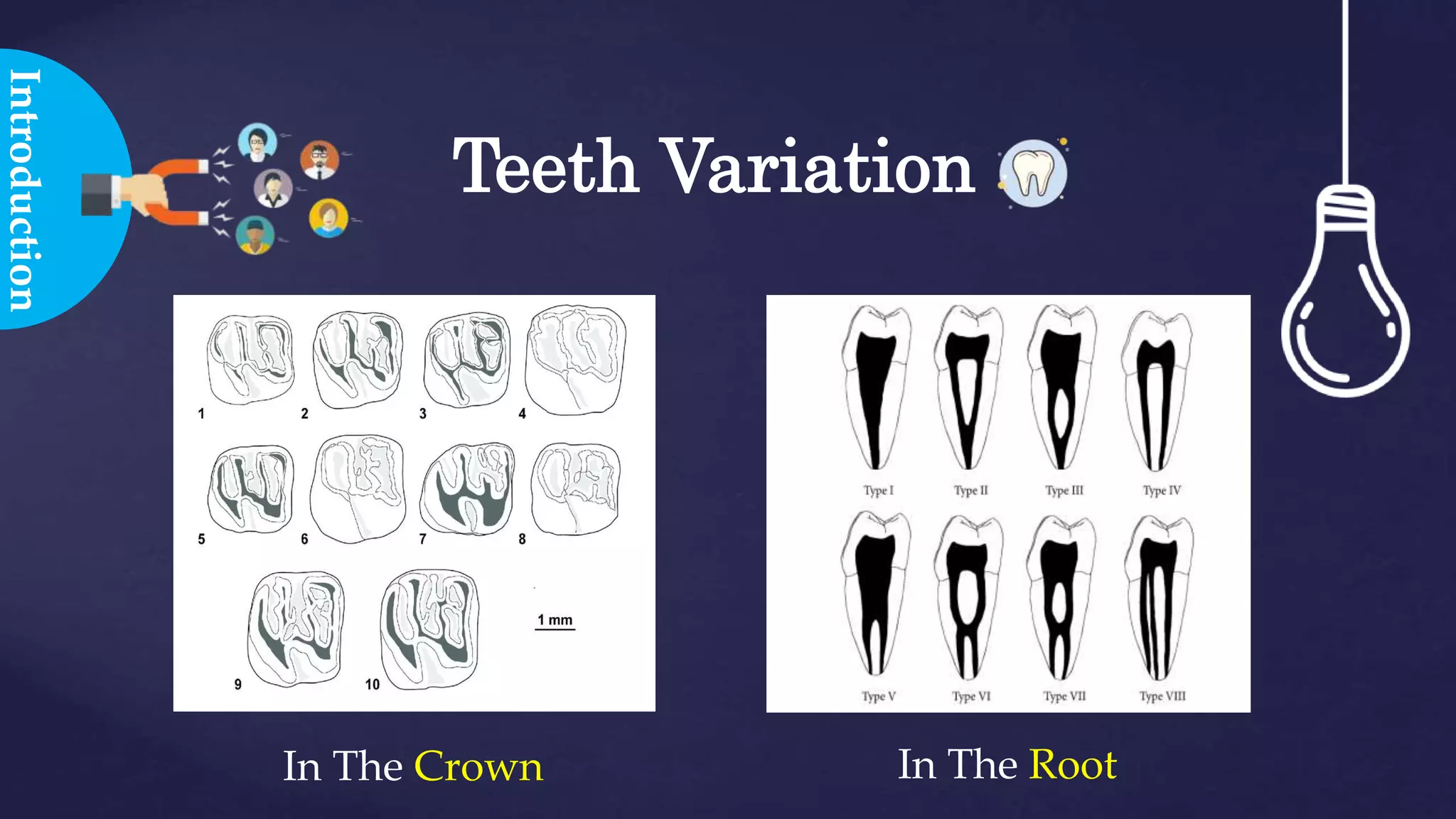
Teeth Variation
In The Crown In The Root
The lower permanent first molar1
Normally people have lower 6 with 5 cusps, 2 roots and 3 root canals.
Lower 6 can display several anatomical variations in root and crown.
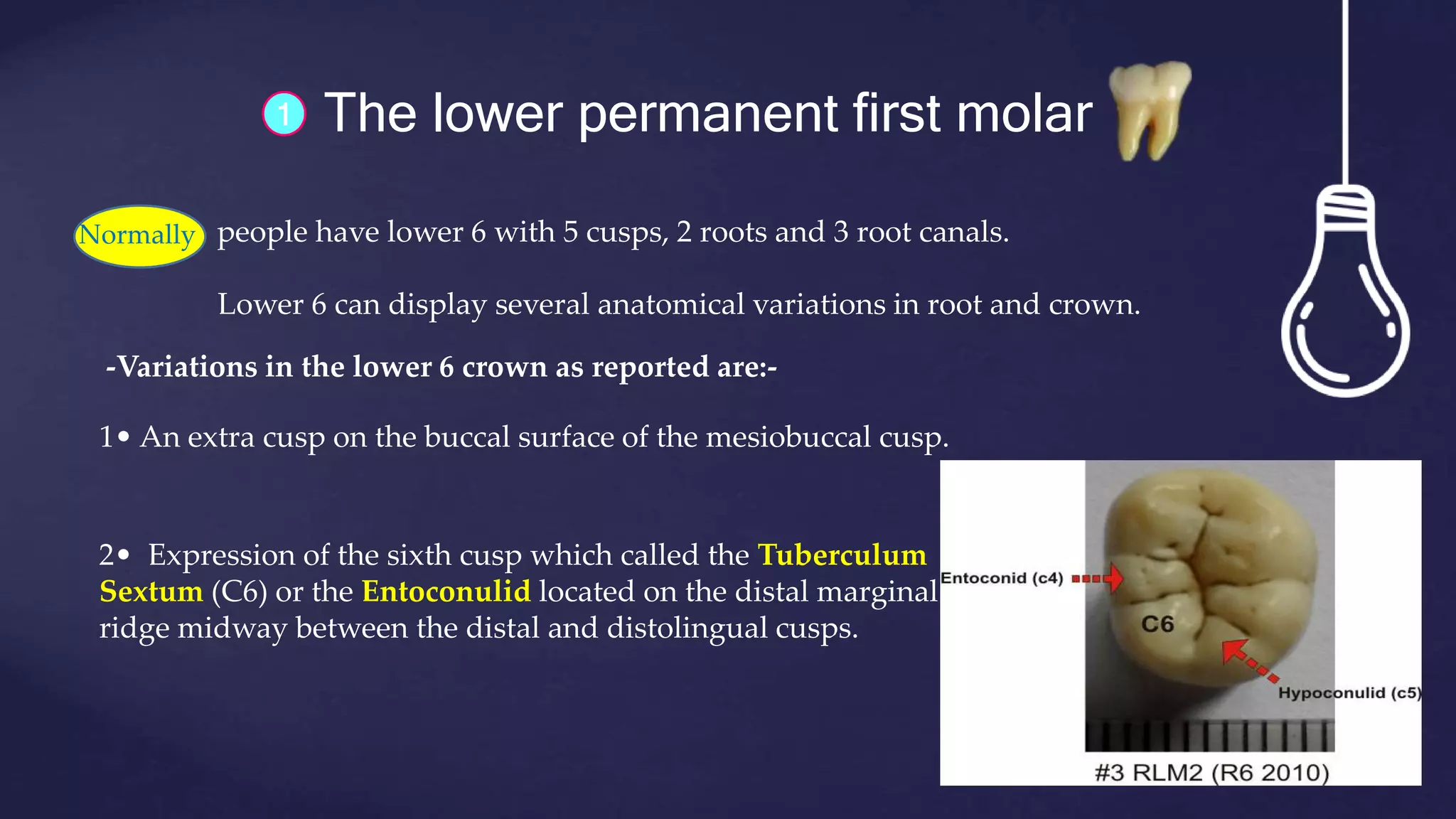
2• Expression of the sixth cusp which called the Tuberculum
Sextum (C6) or the Entoconulid located on the distal marginal
ridge midway between the distal and distolingual cusps.
-Variations in the lower 6 crown as reported are:-
1• An extra cusp on the buccal surface of the mesiobuccal cusp.
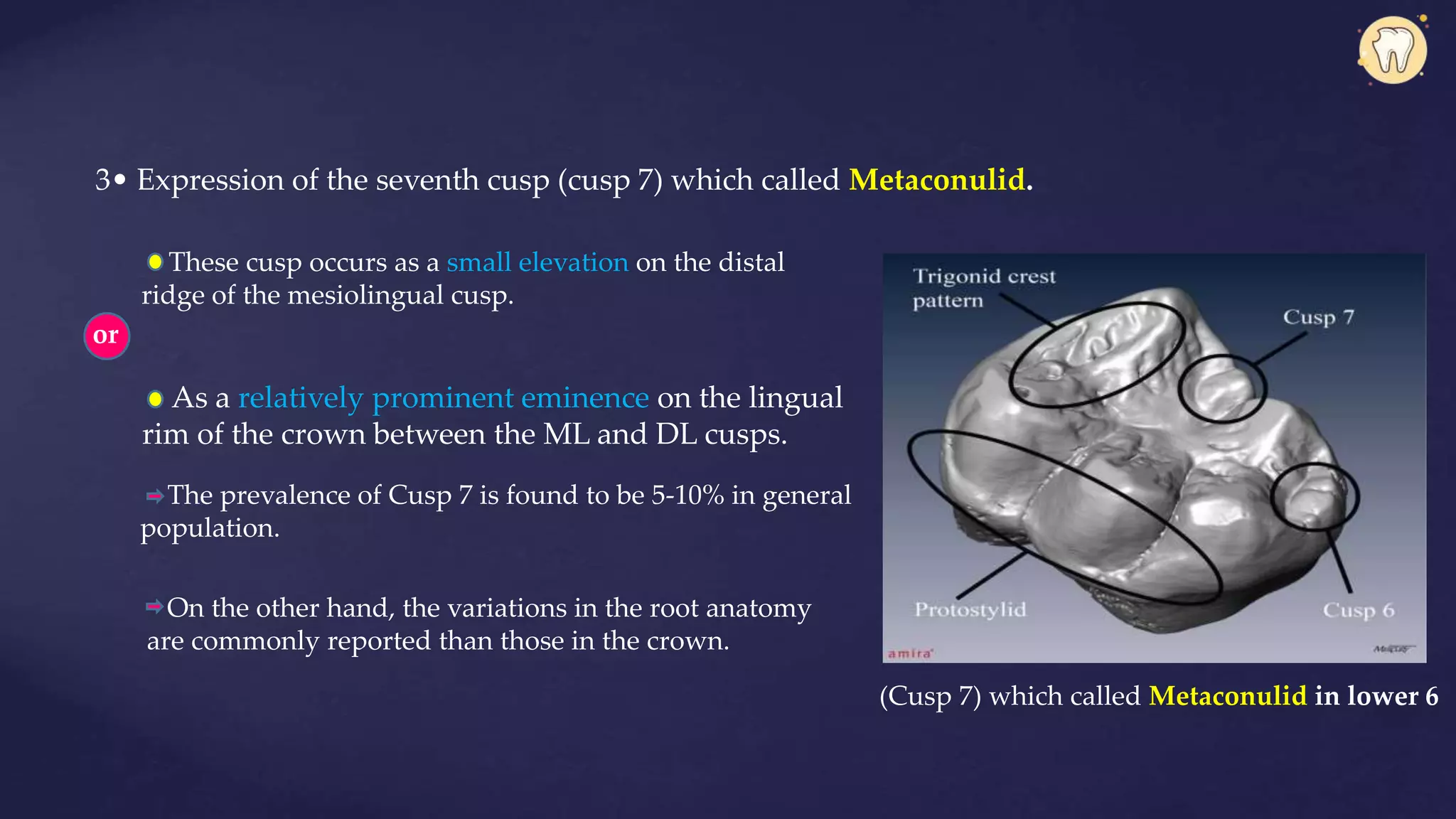
3• Expression of the seventh cusp (cusp 7) which called Metaconulid.
These cusp occurs as a small elevation on the distal
ridge of the mesiolingual cusp.
or
As a relatively prominent eminence on the lingual
rim of the crown between the ML and DL cusps.
The prevalence of Cusp 7 is found to be 5-10% in general
population.
On the other hand, the variations in the root anatomy
are commonly reported than those in the crown.
(Cusp 7) which called Metaconulid in lower 6
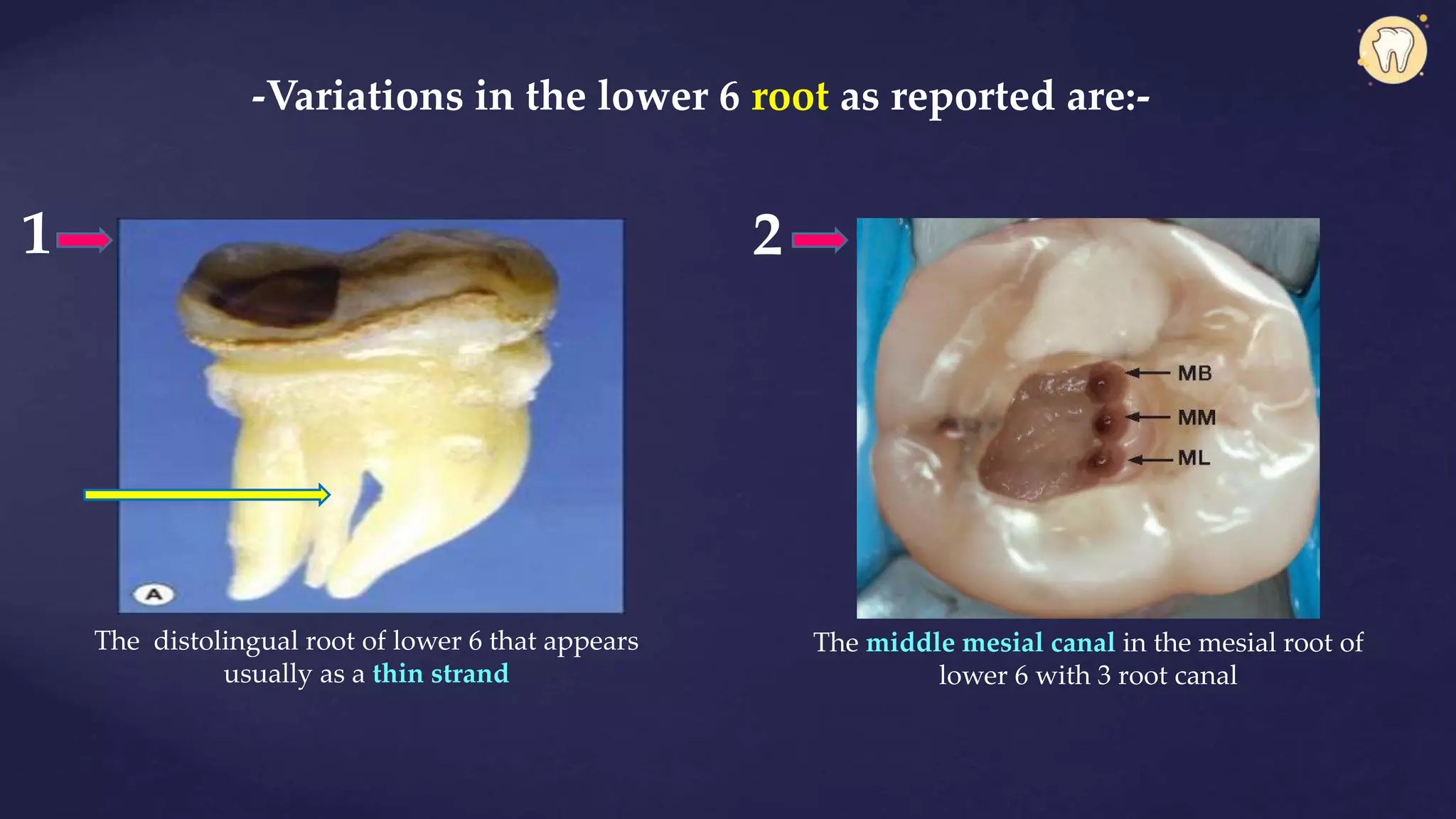
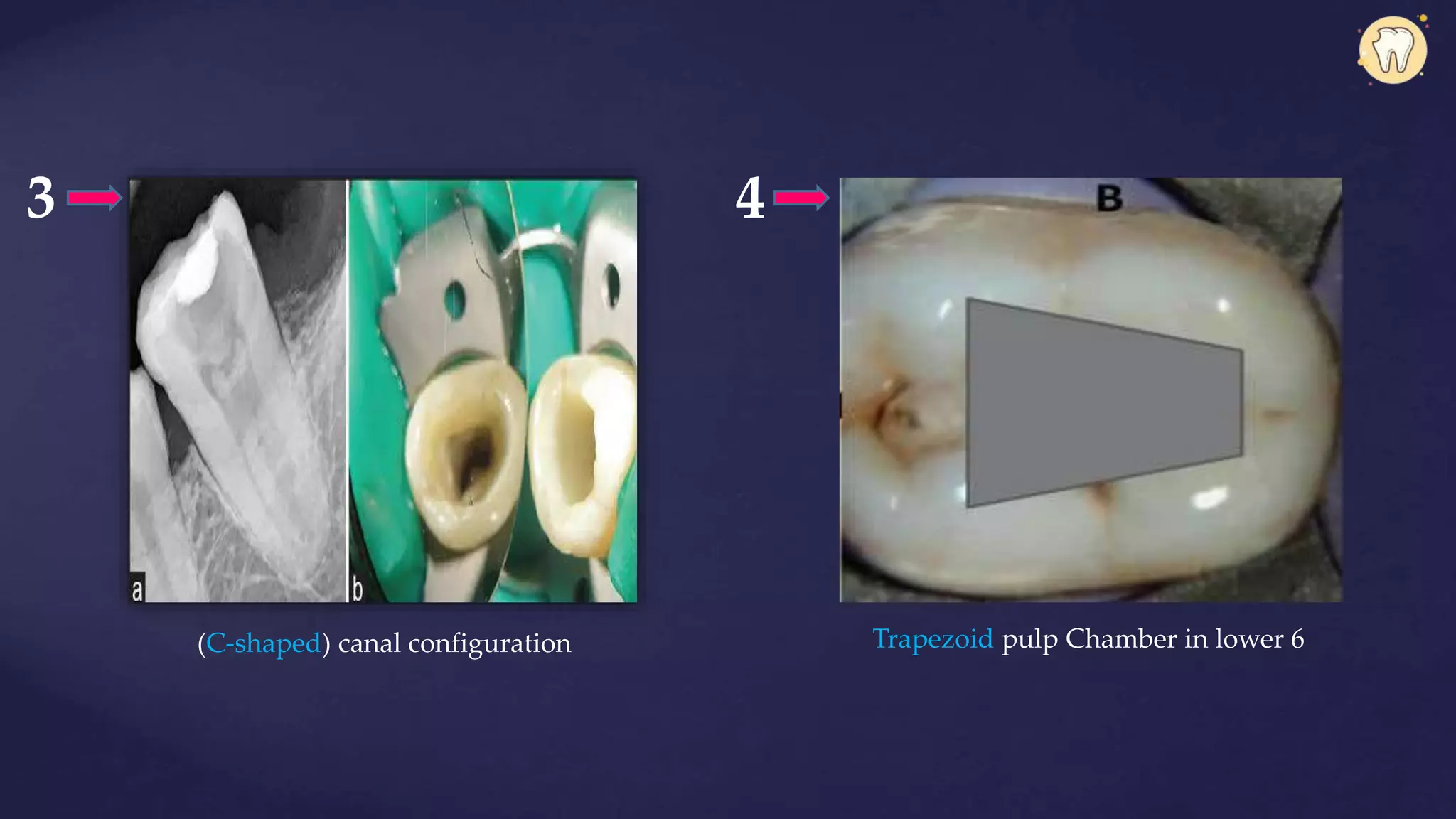
-Variations in the lower 6 root as reported are:-
The distolingual root of lower 6 that appears
usually as a thin strand
The middle mesial canal in the mesial root of
lower 6 with 3 root canal
1 2
3
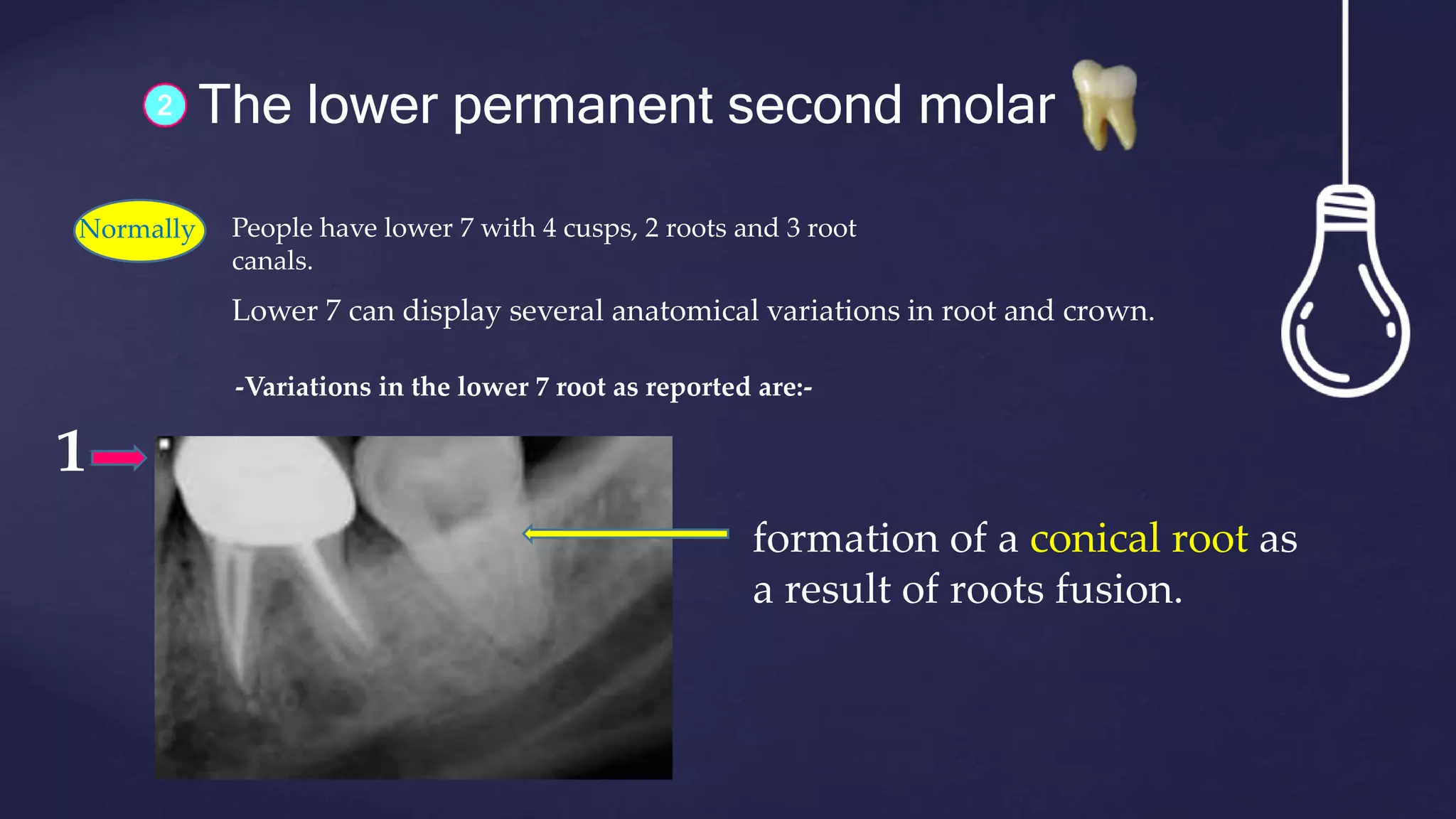
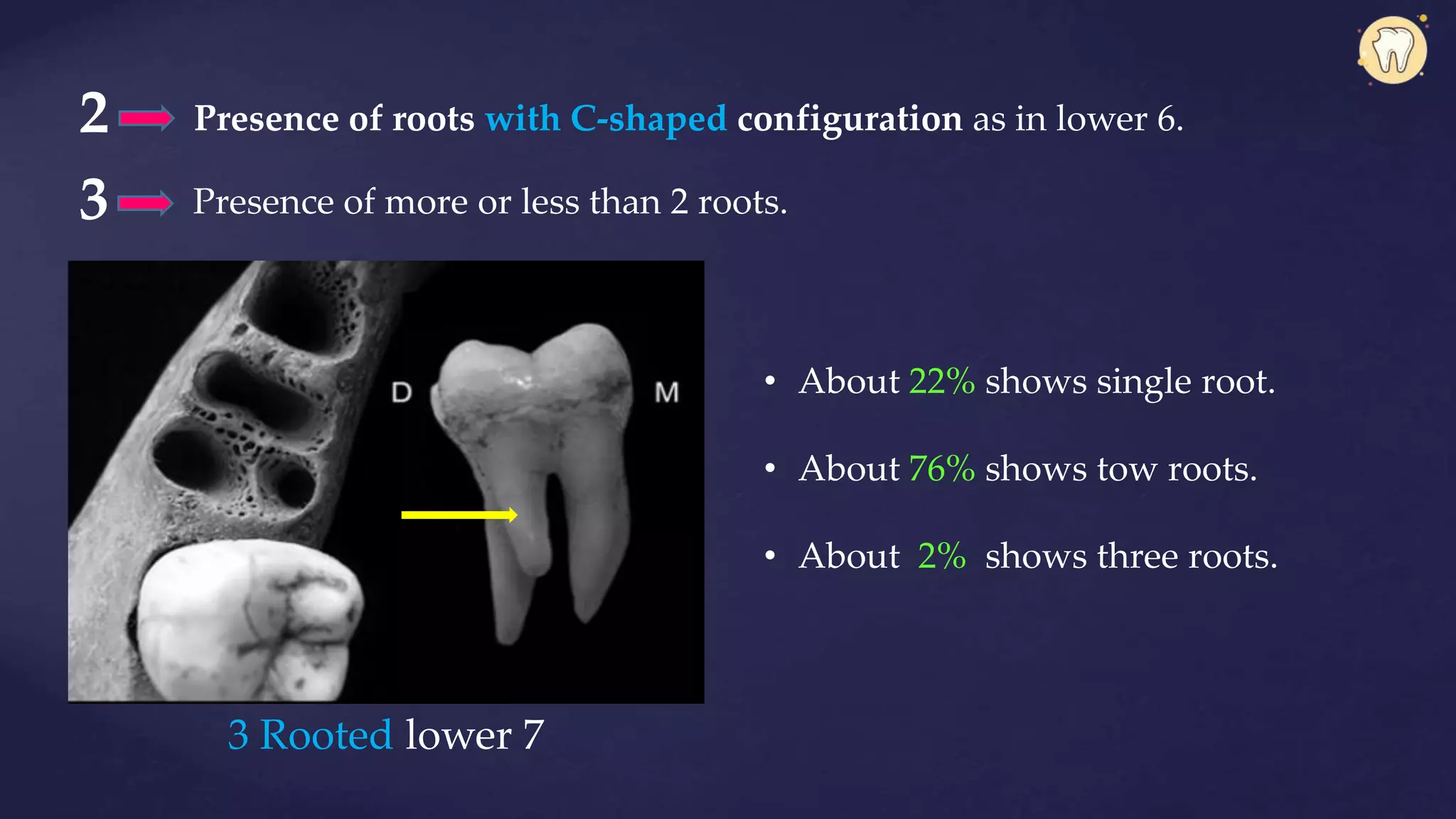
(C-shaped) canal configuration Trapezoid pulp Chamber in lower 6
4
2 The lower permanent second molar
Lower 7 can display several anatomical variations in root and crown.
Normally People have lower 7 with 4 cusps, 2 roots and 3 root
canals.
-Variations in the lower 7 root as reported are:-
formation of a conical root as
a result of roots fusion.
1
2 Presence of roots with C-shaped configuration as in lower 6.
Presence of more or less than 2 roots.3
3 Rooted lower 7
• About 22% shows single root.
• About 76% shows tow roots.
• About 2% shows three roots.
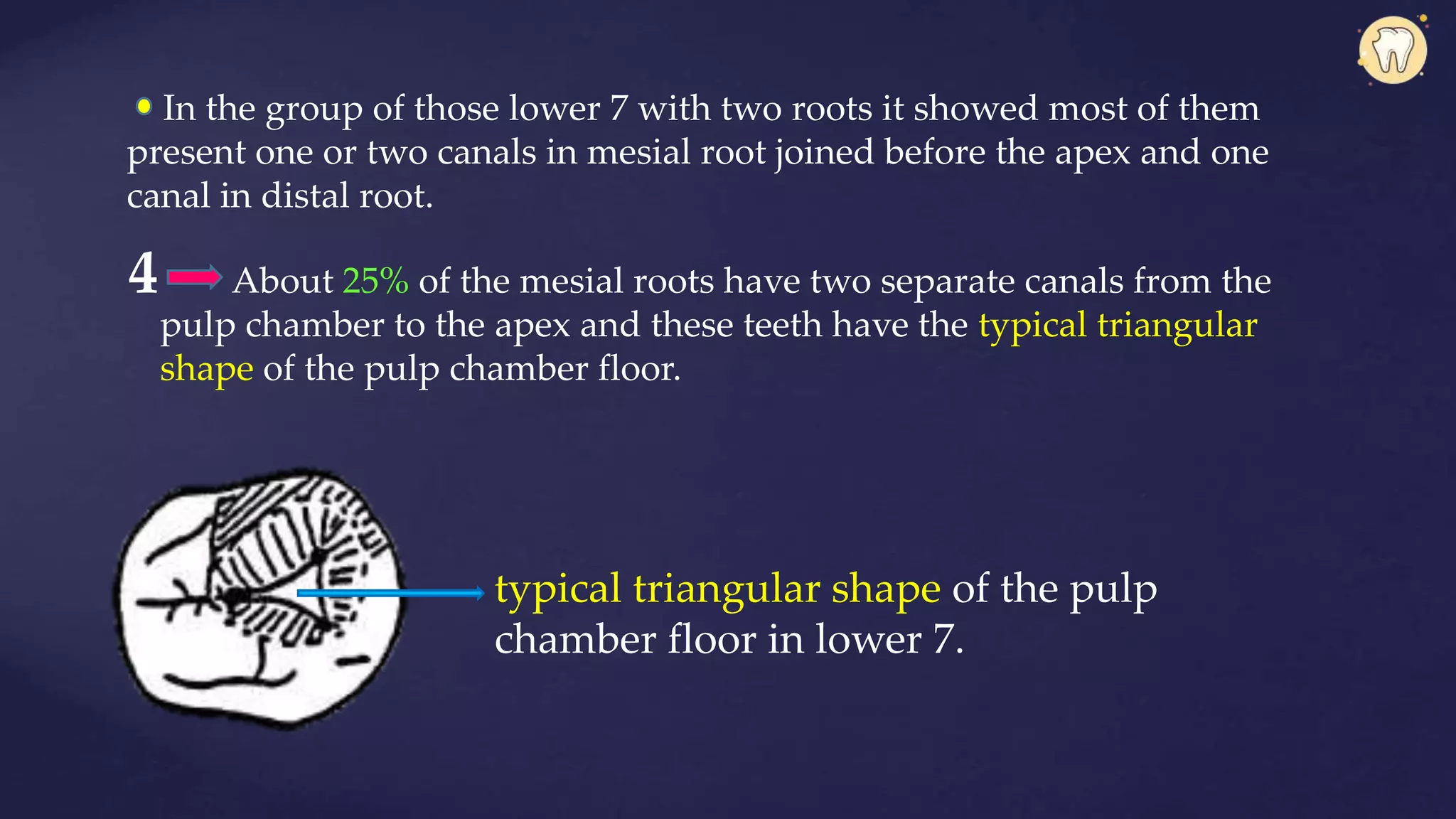
In the group of those lower 7 with two roots it showed most of them
present one or two canals in mesial root joined before the apex and one
canal in distal root.
4 About 25% of the mesial roots have two separate canals from the
pulp chamber to the apex and these teeth have the typical triangular
shape of the pulp chamber floor.
typical triangular shape of the pulp
chamber floor in lower 7.
The lower permanent third molar3
Normally The lower 8 is one of the most common teeth has no specific anatomy but
the predominant anatomy is having 4 or 5 cusps and 2 roots with 3 root
canals.
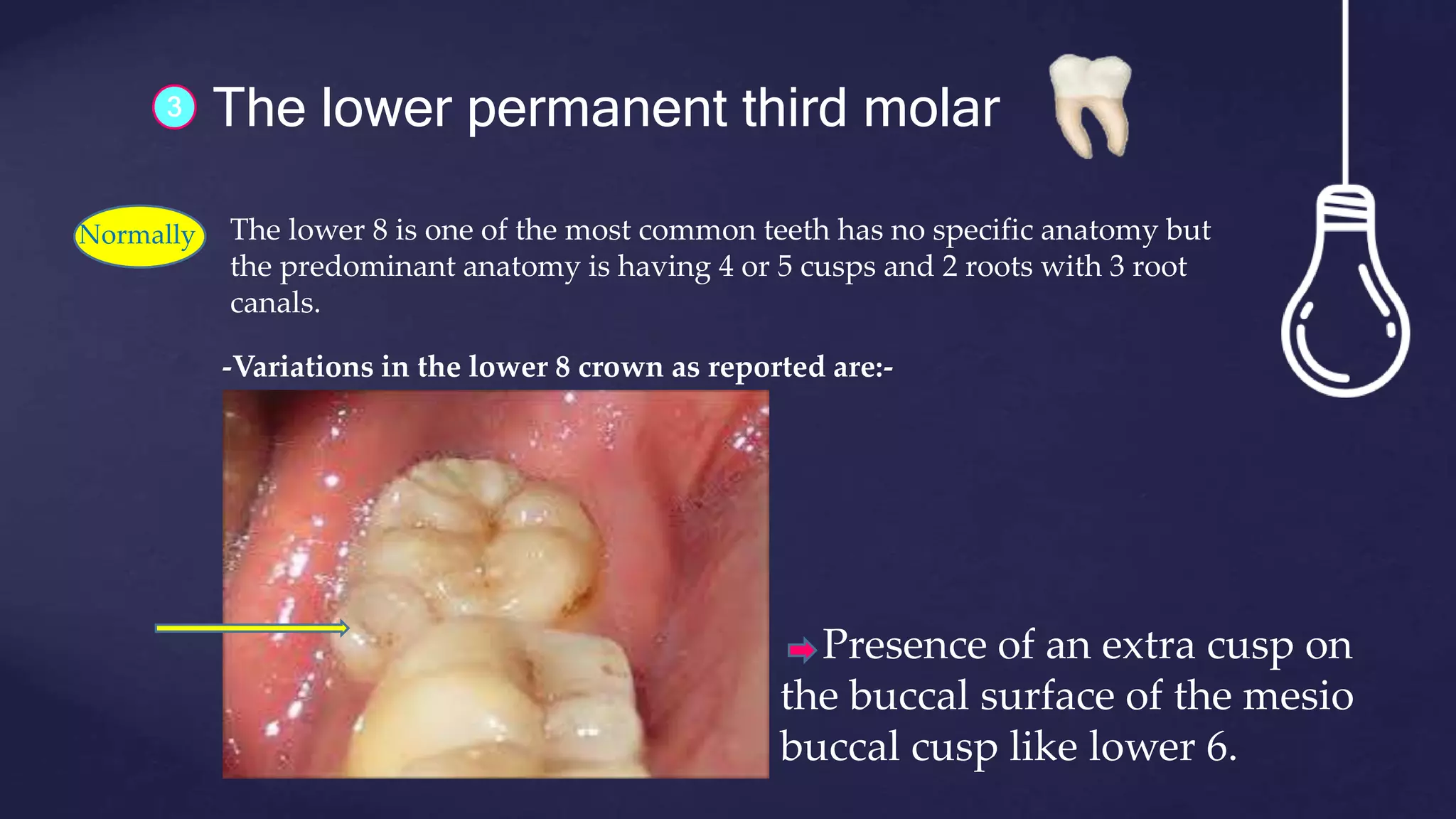
-Variations in the lower 8 crown as reported are:-
Presence of an extra cusp on
the buccal surface of the mesio
buccal cusp like lower 6.
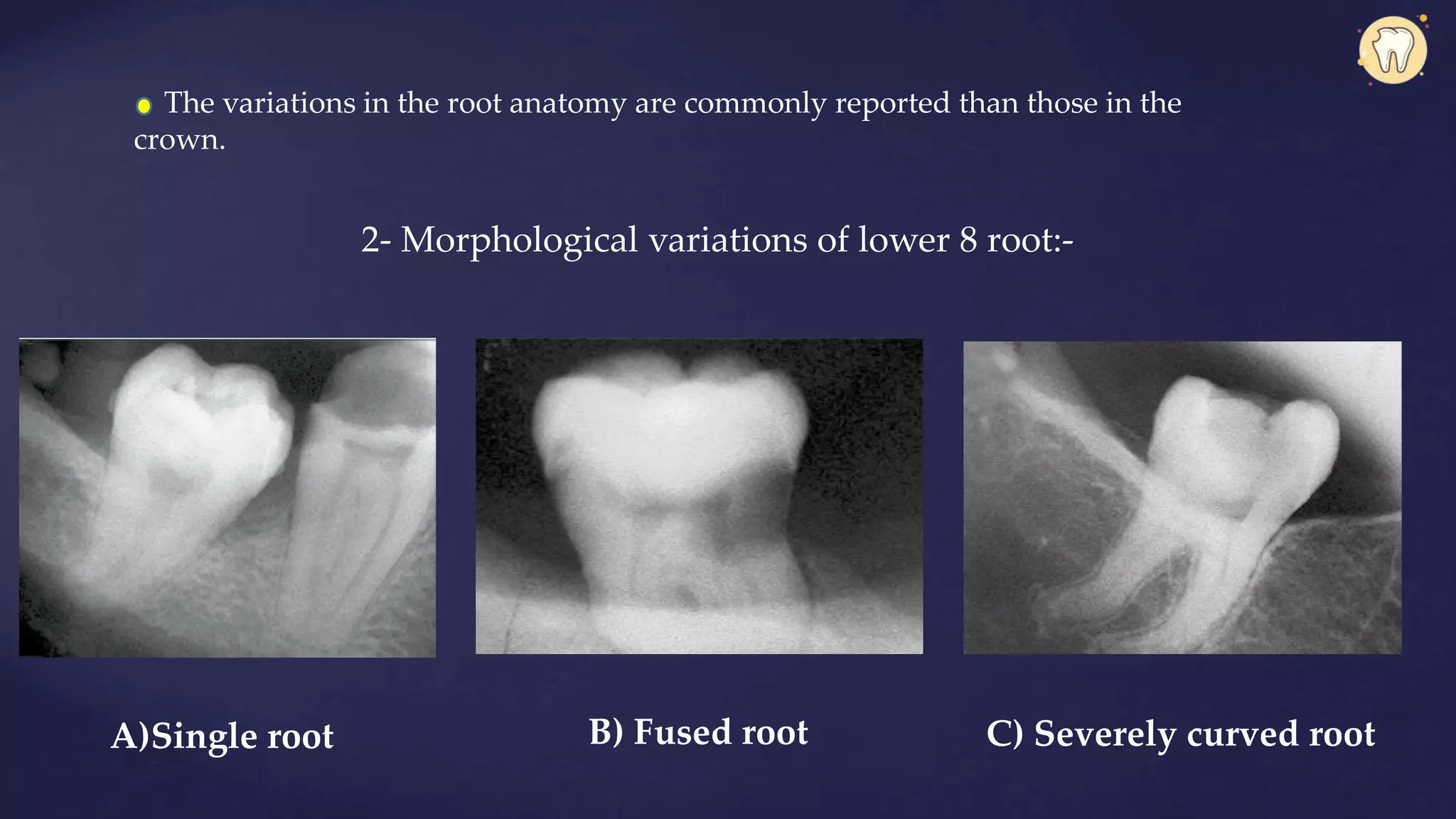
The variations in the root anatomy are commonly reported than those in the
crown.
2- Morphological variations of lower 8 root:-
A)Single root C) Severely curved rootB) Fused root
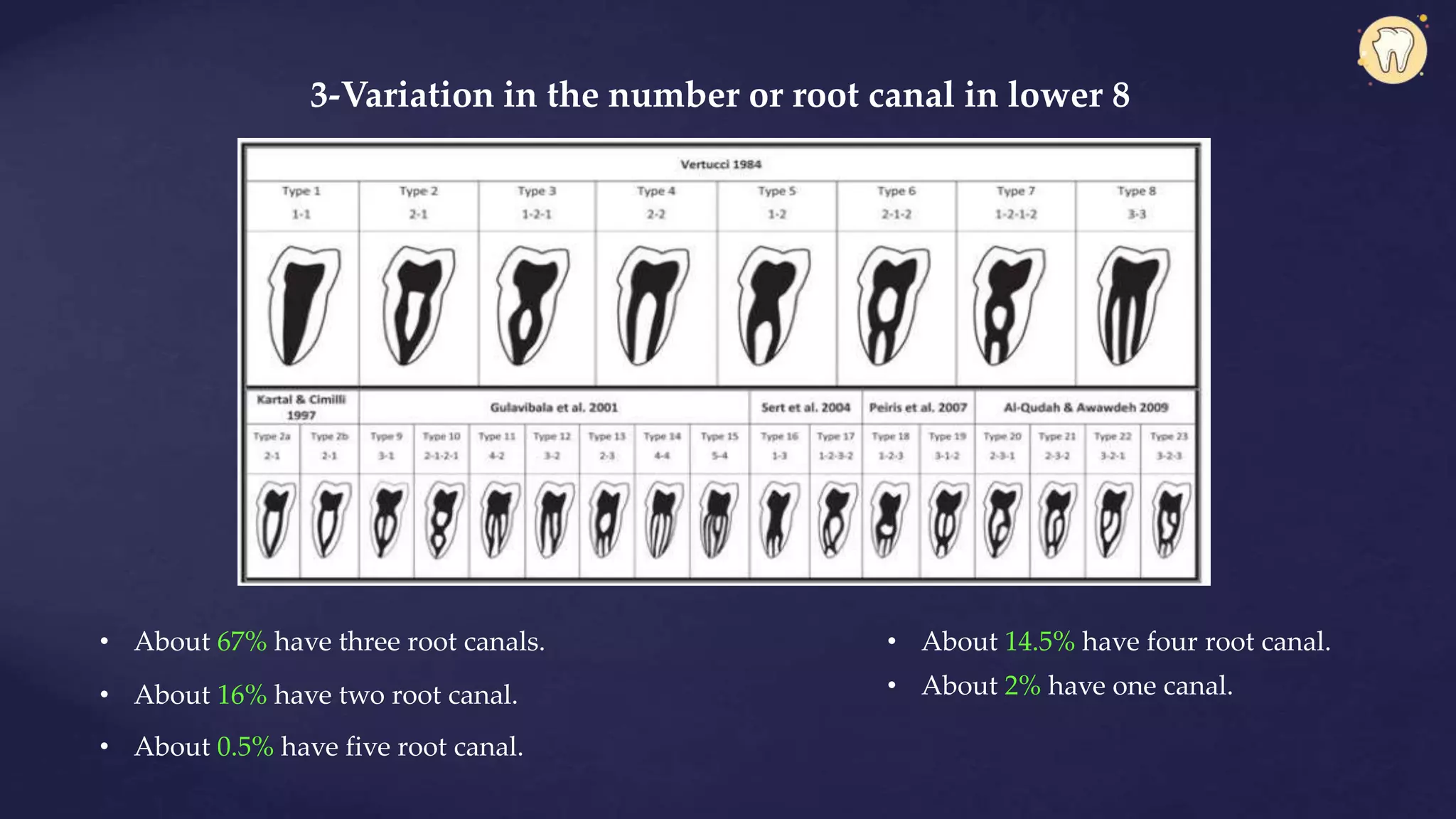
• About 0.5% have five root canal.
3-Variation in the number or root canal in lower 8
• About 67% have three root canals.
• About 16% have two root canal.
• About 14.5% have four root canal.
• About 2% have one canal.
Thanks
For listening
Variations in lower permanent molars

Variations in lower permanent molars

  • 1.
    Variations in mandibularpermanent molars Done by: Randa Hamdy Ali ,Fatima Ahmed Fathy ,Fady Androwes Shawky ,Ahmed Zainelabedin Eldessouki ,Abdulrahman Mohamed Abdulhafiz Semester Two Under supervision of : A.Prof.Samah Kamel TeamworkTopic
  • 2.
  • 3.
    The lower permanentfirst molar1 Normally people have lower 6 with 5 cusps, 2 roots and 3 root canals. Lower 6 can display several anatomical variations in root and crown. 2• Expression of the sixth cusp which called the Tuberculum Sextum (C6) or the Entoconulid located on the distal marginal ridge midway between the distal and distolingual cusps. -Variations in the lower 6 crown as reported are:- 1• An extra cusp on the buccal surface of the mesiobuccal cusp.
  • 4.
    3• Expression ofthe seventh cusp (cusp 7) which called Metaconulid. These cusp occurs as a small elevation on the distal ridge of the mesiolingual cusp. or As a relatively prominent eminence on the lingual rim of the crown between the ML and DL cusps. The prevalence of Cusp 7 is found to be 5-10% in general population. On the other hand, the variations in the root anatomy are commonly reported than those in the crown. (Cusp 7) which called Metaconulid in lower 6
  • 5.
    -Variations in thelower 6 root as reported are:- The distolingual root of lower 6 that appears usually as a thin strand The middle mesial canal in the mesial root of lower 6 with 3 root canal 1 2
  • 6.
    3 (C-shaped) canal configurationTrapezoid pulp Chamber in lower 6 4
  • 7.
    2 The lowerpermanent second molar Lower 7 can display several anatomical variations in root and crown. Normally People have lower 7 with 4 cusps, 2 roots and 3 root canals. -Variations in the lower 7 root as reported are:- formation of a conical root as a result of roots fusion. 1
  • 8.
    2 Presence ofroots with C-shaped configuration as in lower 6. Presence of more or less than 2 roots.3 3 Rooted lower 7 • About 22% shows single root. • About 76% shows tow roots. • About 2% shows three roots.
  • 9.
    In the groupof those lower 7 with two roots it showed most of them present one or two canals in mesial root joined before the apex and one canal in distal root. 4 About 25% of the mesial roots have two separate canals from the pulp chamber to the apex and these teeth have the typical triangular shape of the pulp chamber floor. typical triangular shape of the pulp chamber floor in lower 7.
  • 10.
    The lower permanentthird molar3 Normally The lower 8 is one of the most common teeth has no specific anatomy but the predominant anatomy is having 4 or 5 cusps and 2 roots with 3 root canals. -Variations in the lower 8 crown as reported are:- Presence of an extra cusp on the buccal surface of the mesio buccal cusp like lower 6.
  • 11.
    The variations inthe root anatomy are commonly reported than those in the crown. 2- Morphological variations of lower 8 root:- A)Single root C) Severely curved rootB) Fused root
  • 12.
    • About 0.5%have five root canal. 3-Variation in the number or root canal in lower 8 • About 67% have three root canals. • About 16% have two root canal. • About 14.5% have four root canal. • About 2% have one canal.
  • 13.