Variations
of
Maxillary
Molars
Esraa Hosam , Nadia Ebrahim ,Heba Essam , Youmna Lotfi, Tasnem Ahmed Elarabi
Semester 2
Under Supervision of : A.Prof Samah Kamel
- Dental anomalies are caused by complex multifactorial interactions between
1- Genetic
3-Polymorphisms
4-Systemic diseases
5-Dietary habits
6-Masticatory function
7- Environmental factors
Upper permanent first molar variation
❖ Variations may be either in the form of anomalous cusps or increased number of roots,
or both.
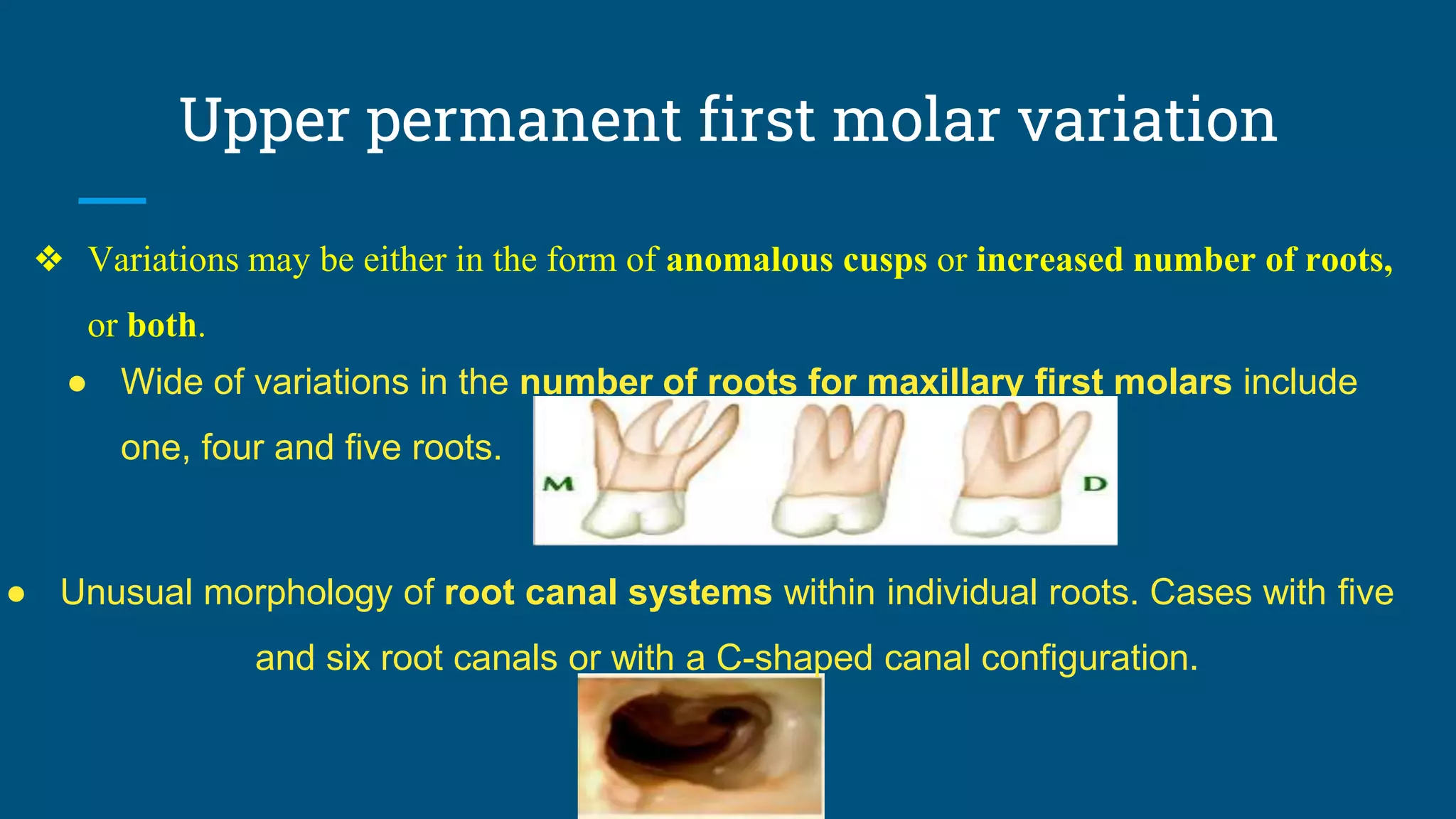
● Wide of variations in the number of roots for maxillary first molars include
one, four and five roots.
● Unusual morphology of root canal systems within individual roots. Cases with five
and six root canals or with a C-shaped canal configuration.
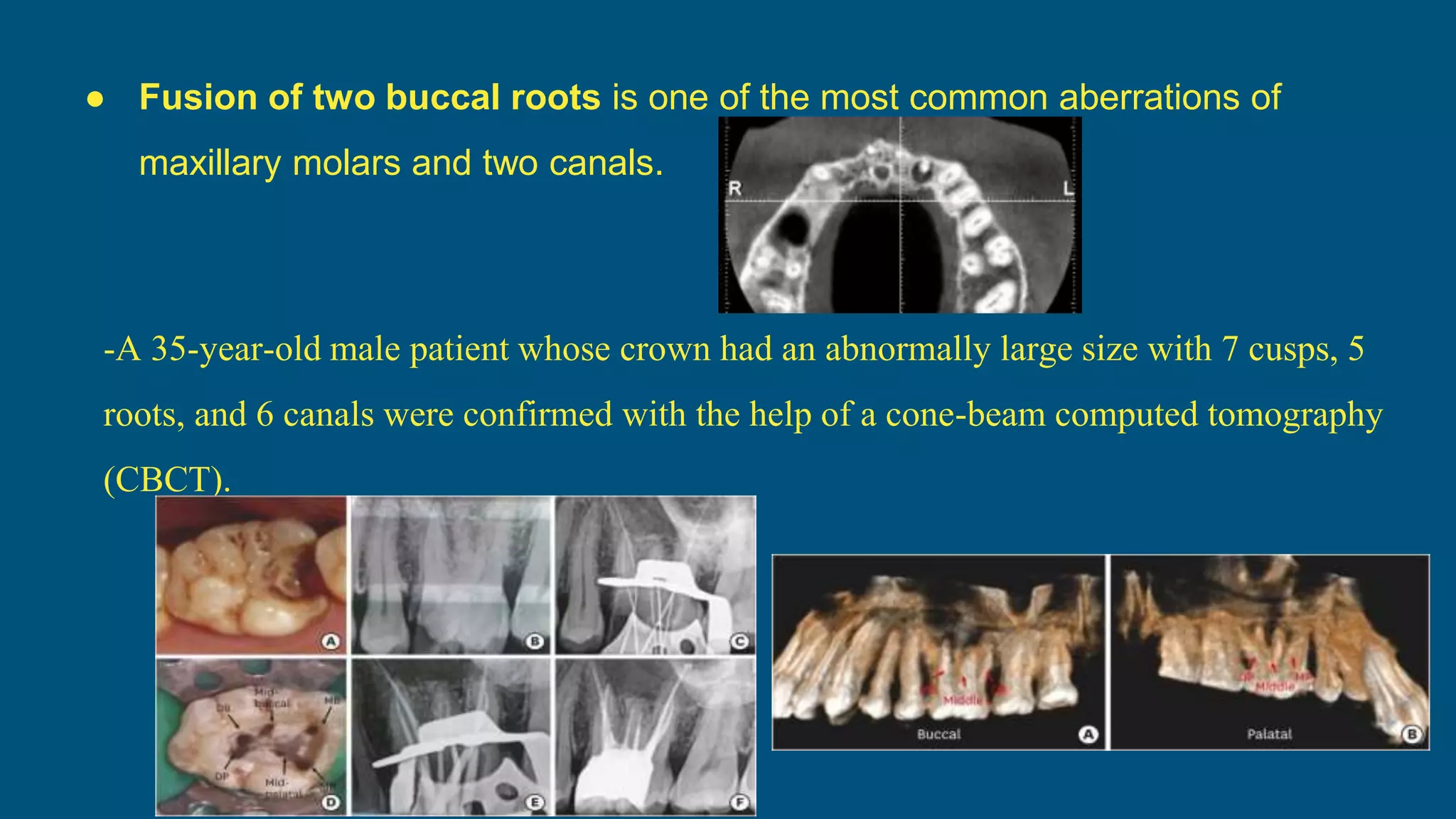
-A 35-year-old male patient whose crown had an abnormally large size with 7 cusps, 5
roots, and 6 canals were confirmed with the help of a cone-beam computed tomography
(CBCT).
● Fusion of two buccal roots is one of the most common aberrations of
maxillary molars and two canals.
● Three cusps on the occlusal
surface instead of four or five cusps
usually seen. These three cusp
maxillary first molars had a heart
shaped outline. The palatal cusp
nearly lies in the center of the
mesiobuccal and distobuccal cusp
thereby giving it a heart shape.
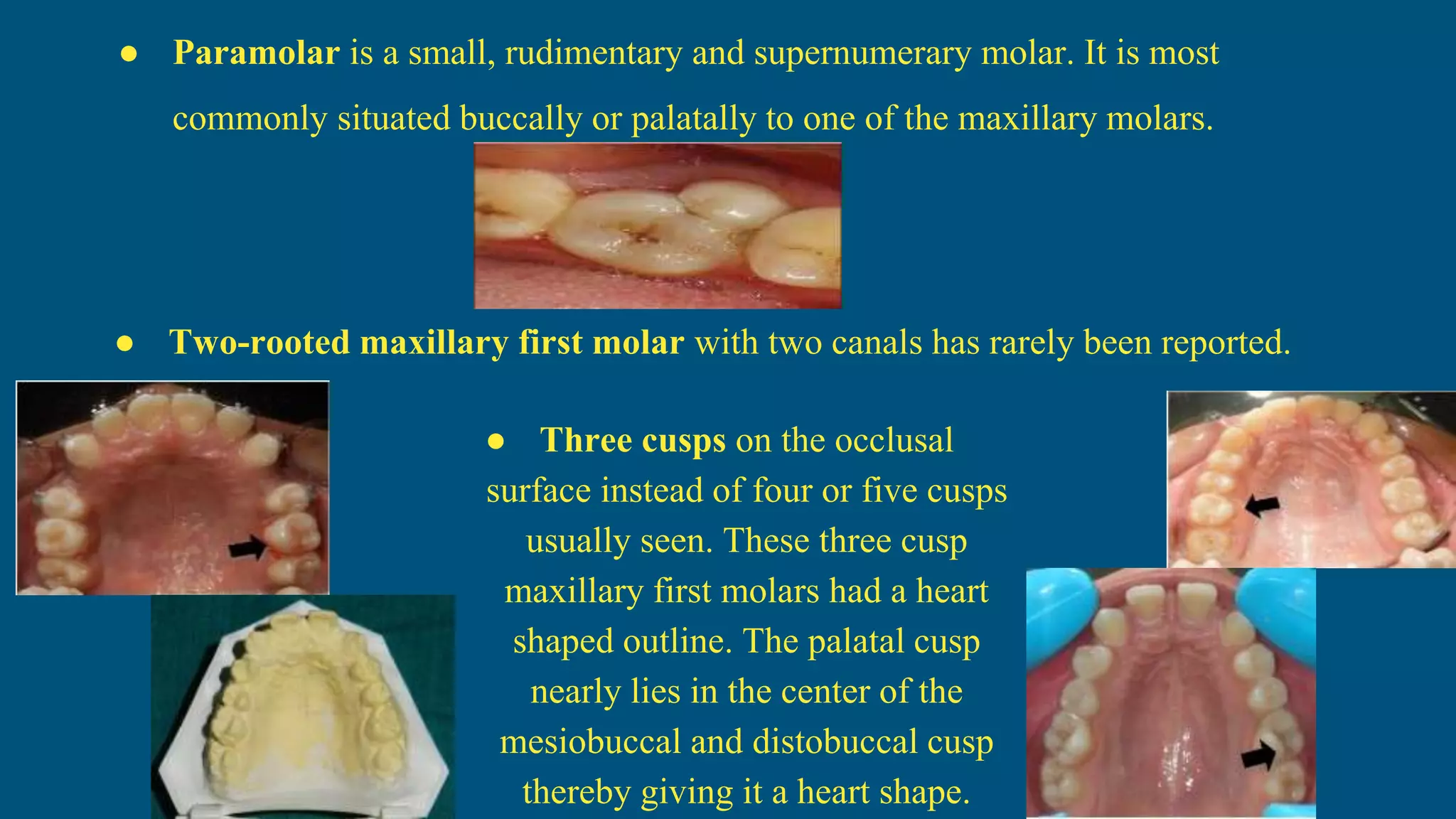
● Paramolar is a small, rudimentary and supernumerary molar. It is most
commonly situated buccally or palatally to one of the maxillary molars.
● Two-rooted maxillary first molar with two canals has rarely been reported.
Upper permanent second molar variation
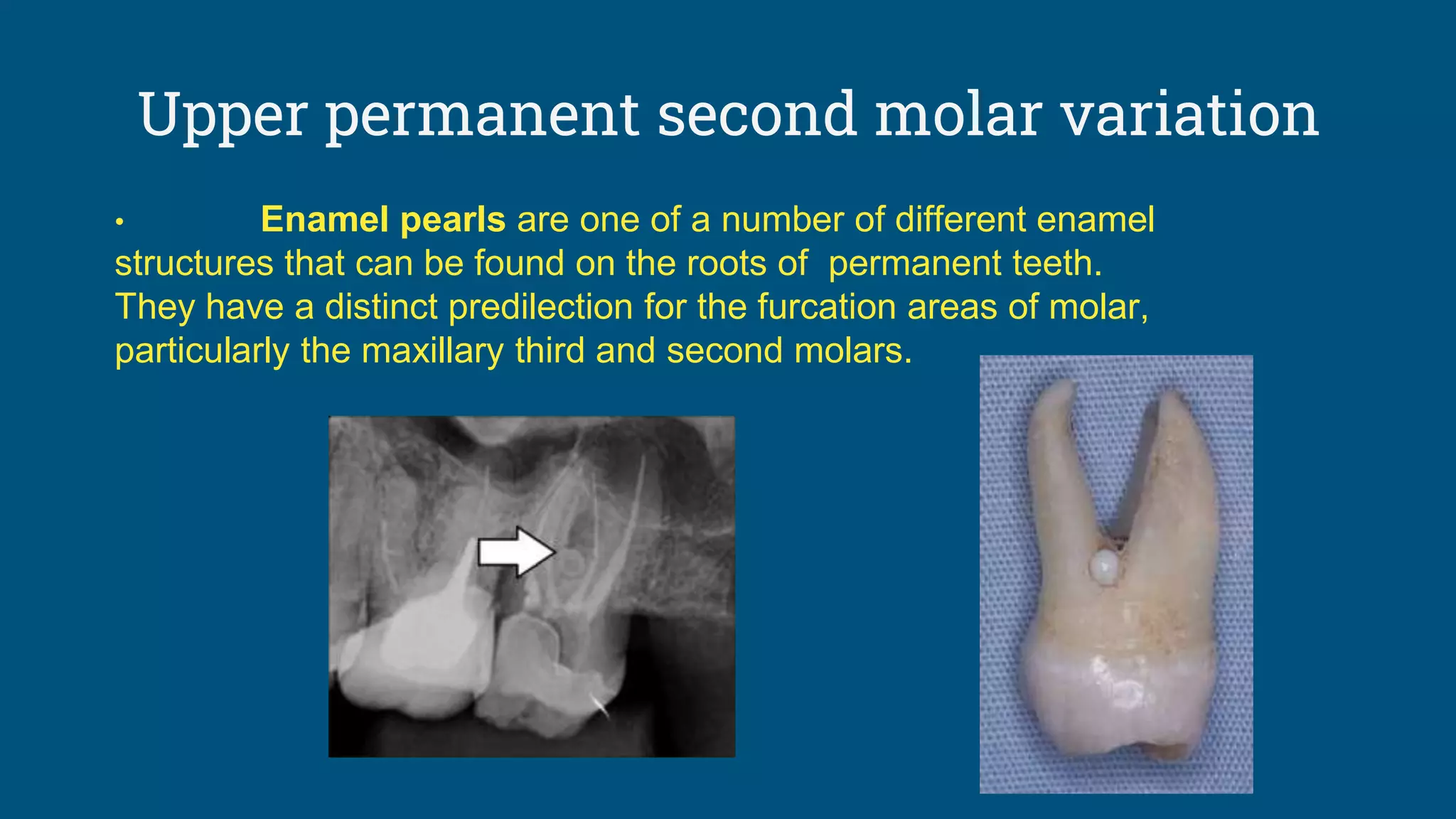
• Enamel pearls are one of a number of different enamel
structures that can be found on the roots of permanent teeth.
They have a distinct predilection for the furcation areas of molar,
particularly the maxillary third and second molars.
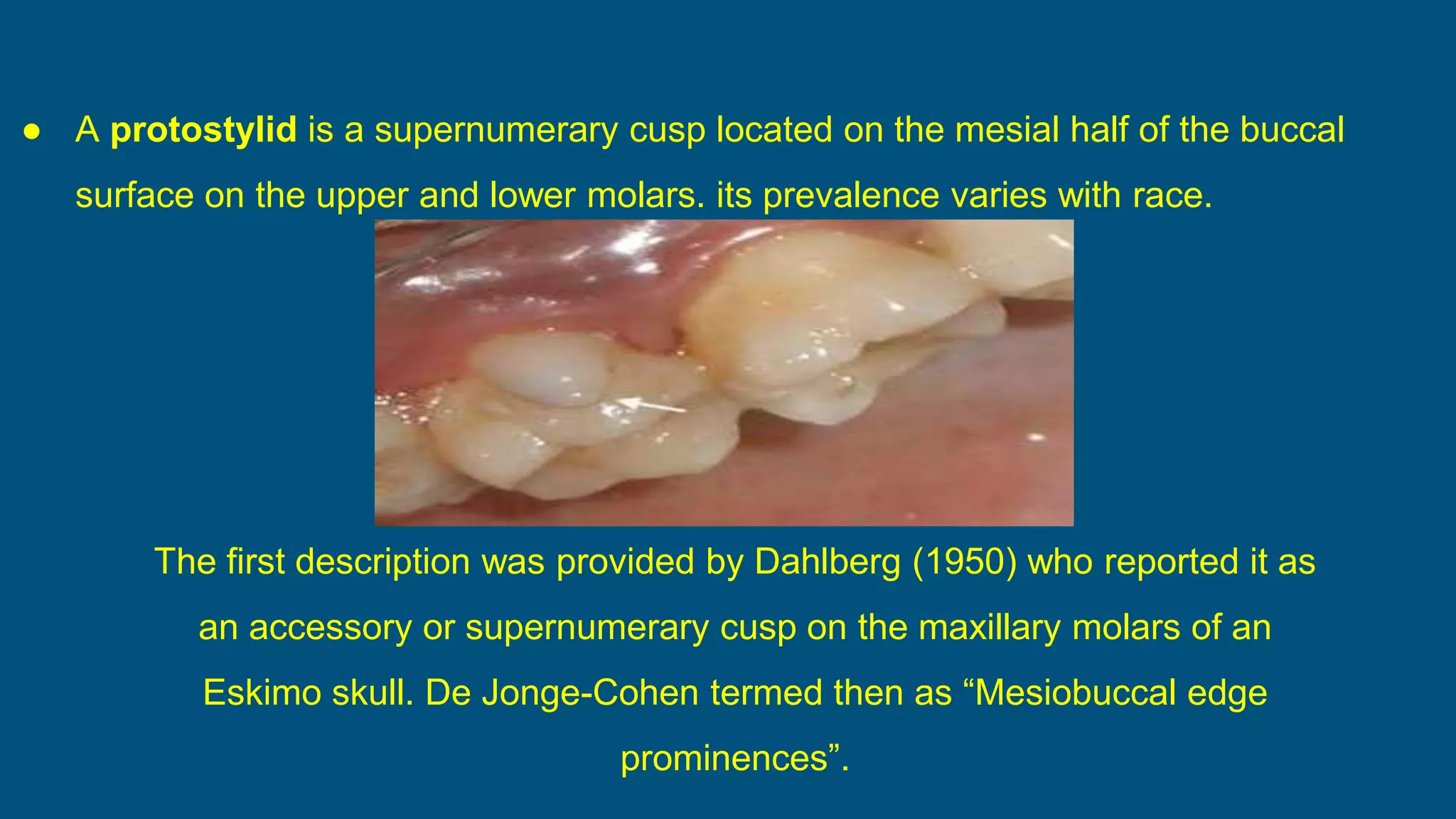
● A protostylid is a supernumerary cusp located on the mesial half of the buccal
surface on the upper and lower molars. its prevalence varies with race.
The first description was provided by Dahlberg (1950) who reported it as
an accessory or supernumerary cusp on the maxillary molars of an
Eskimo skull. De Jonge-Cohen termed then as “Mesiobuccal edge
prominences”.
Hypercementosis
● An increase in cementum deposition on a root surface
resulting in an abnormal root shape, frequently a bulbous tip
at the root apex which present on the maxillary roots.
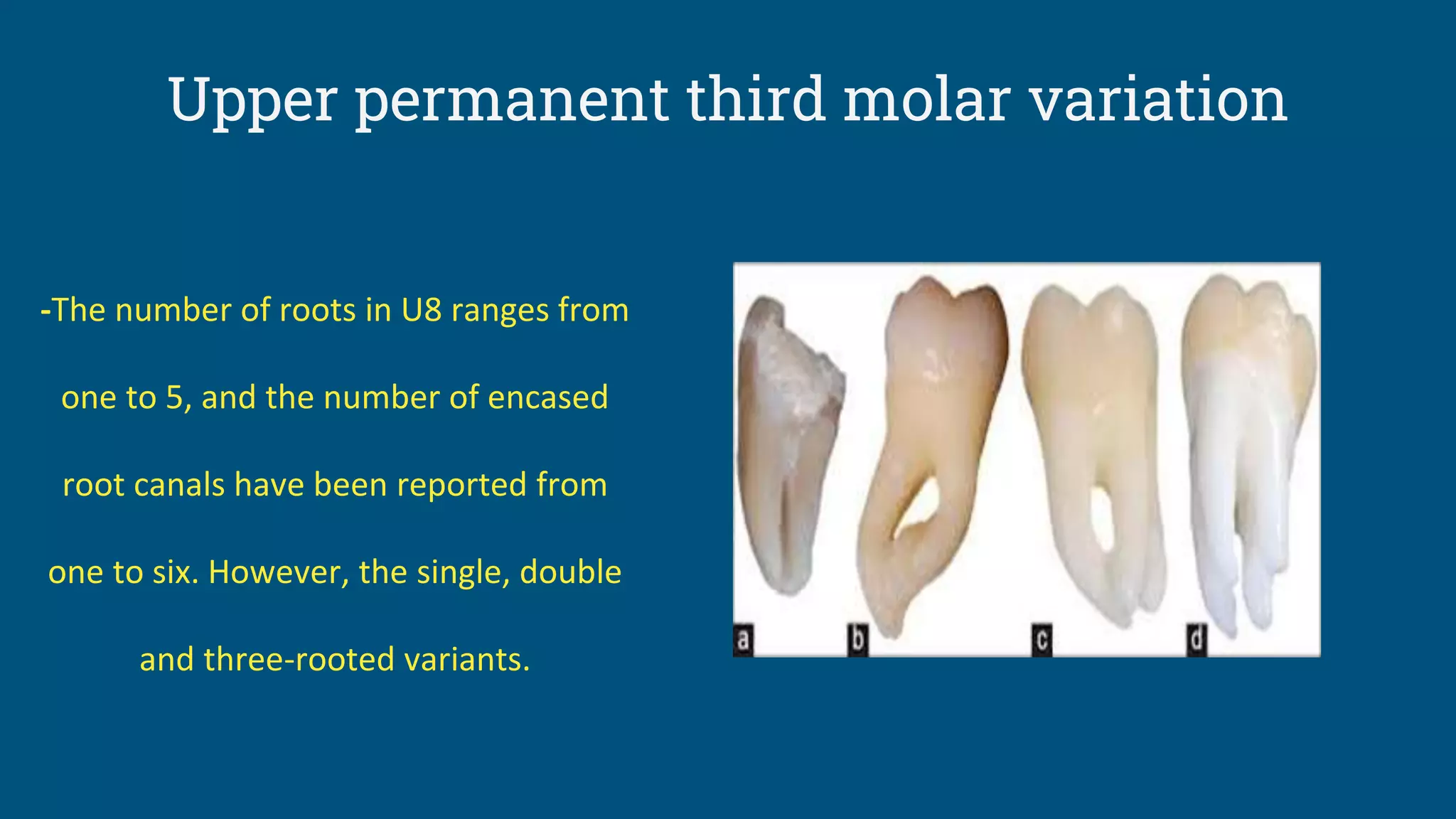
-The number of roots in U8 ranges from
one to 5, and the number of encased
root canals have been reported from
one to six. However, the single, double
and three-rooted variants.
Upper permanent third molar variation
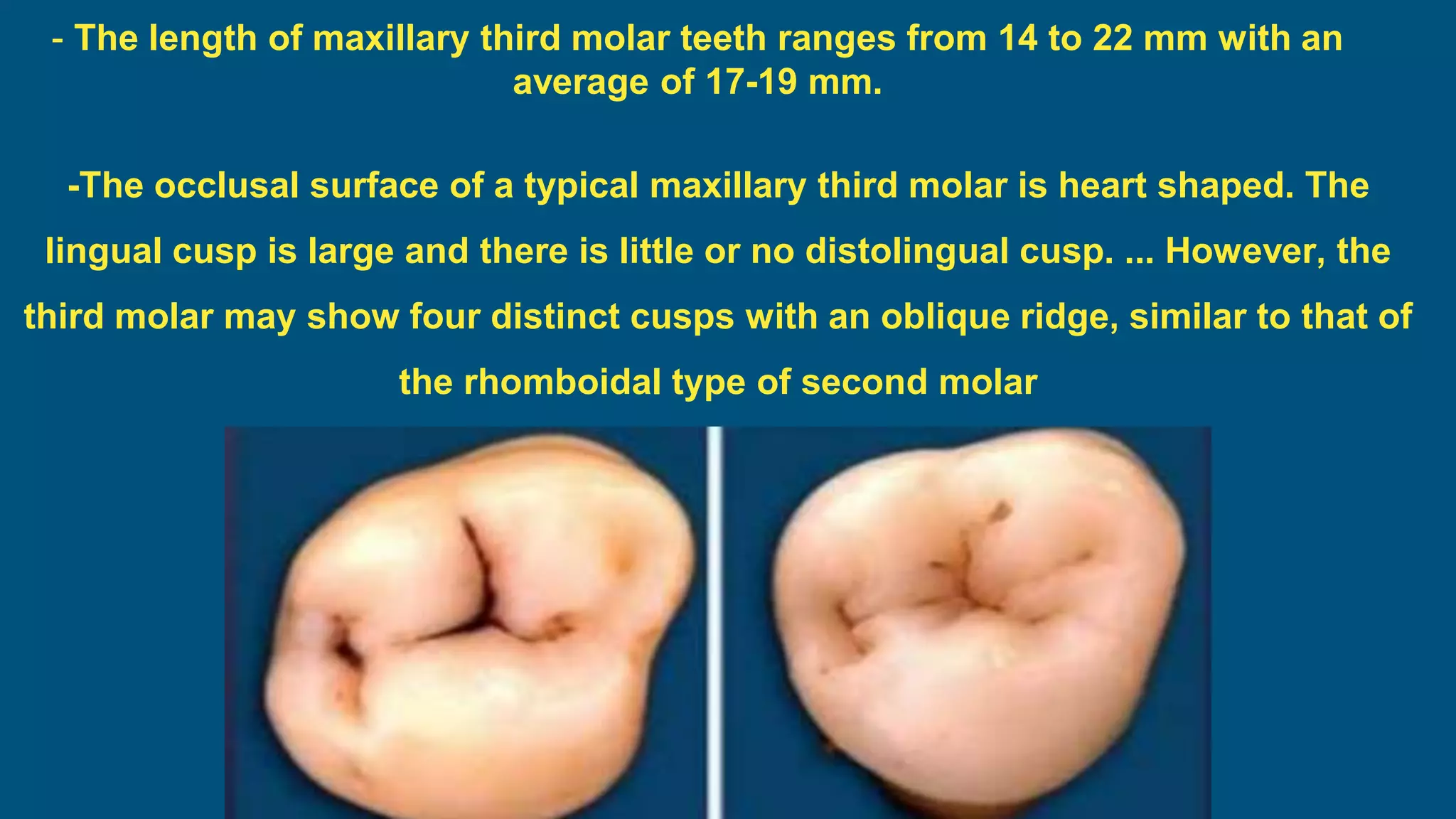
-The occlusal surface of a typical maxillary third molar is heart shaped. The
lingual cusp is large and there is little or no distolingual cusp. ... However, the
third molar may show four distinct cusps with an oblique ridge, similar to that of
the rhomboidal type of second molar
- The length of maxillary third molar teeth ranges from 14 to 22 mm with an
average of 17-19 mm.
References
https://www.ncbi.nlm.nih.gov/pmc/articles/PMC3570973/ Jan.2013
https://www.ncbi.nlm.nih.gov/pmc/articles/PMC6103547/ Aug.2018
https://www.ncbi.nlm.nih.gov/pmc/articles/PMC5072076/ 2016
https://www.ncbi.nlm.nih.gov › pmc 2012
https://www.ncbi.nlm.nih.gov 2013
https://www.sciencedirect.com › topics 2019
https://www.researchgate.net/publication/234023545_Management_of_third_molar
_teeth_from_an_endodontic_perspective#pf3 December 2012
Variations of maxillary permenant molars

Variations of maxillary permenant molars

  • 1.
    Variations of Maxillary Molars Esraa Hosam ,Nadia Ebrahim ,Heba Essam , Youmna Lotfi, Tasnem Ahmed Elarabi Semester 2 Under Supervision of : A.Prof Samah Kamel
  • 2.
    - Dental anomaliesare caused by complex multifactorial interactions between 1- Genetic 3-Polymorphisms 4-Systemic diseases 5-Dietary habits 6-Masticatory function 7- Environmental factors
  • 3.
    Upper permanent firstmolar variation ❖ Variations may be either in the form of anomalous cusps or increased number of roots, or both. ● Wide of variations in the number of roots for maxillary first molars include one, four and five roots. ● Unusual morphology of root canal systems within individual roots. Cases with five and six root canals or with a C-shaped canal configuration.
  • 4.
    -A 35-year-old malepatient whose crown had an abnormally large size with 7 cusps, 5 roots, and 6 canals were confirmed with the help of a cone-beam computed tomography (CBCT). ● Fusion of two buccal roots is one of the most common aberrations of maxillary molars and two canals.
  • 5.
    ● Three cuspson the occlusal surface instead of four or five cusps usually seen. These three cusp maxillary first molars had a heart shaped outline. The palatal cusp nearly lies in the center of the mesiobuccal and distobuccal cusp thereby giving it a heart shape. ● Paramolar is a small, rudimentary and supernumerary molar. It is most commonly situated buccally or palatally to one of the maxillary molars. ● Two-rooted maxillary first molar with two canals has rarely been reported.
  • 6.
    Upper permanent secondmolar variation • Enamel pearls are one of a number of different enamel structures that can be found on the roots of permanent teeth. They have a distinct predilection for the furcation areas of molar, particularly the maxillary third and second molars.
  • 7.
    ● A protostylidis a supernumerary cusp located on the mesial half of the buccal surface on the upper and lower molars. its prevalence varies with race. The first description was provided by Dahlberg (1950) who reported it as an accessory or supernumerary cusp on the maxillary molars of an Eskimo skull. De Jonge-Cohen termed then as “Mesiobuccal edge prominences”.
  • 8.
    Hypercementosis ● An increasein cementum deposition on a root surface resulting in an abnormal root shape, frequently a bulbous tip at the root apex which present on the maxillary roots.
  • 9.
    -The number ofroots in U8 ranges from one to 5, and the number of encased root canals have been reported from one to six. However, the single, double and three-rooted variants. Upper permanent third molar variation
  • 10.
    -The occlusal surfaceof a typical maxillary third molar is heart shaped. The lingual cusp is large and there is little or no distolingual cusp. ... However, the third molar may show four distinct cusps with an oblique ridge, similar to that of the rhomboidal type of second molar - The length of maxillary third molar teeth ranges from 14 to 22 mm with an average of 17-19 mm.
  • 11.
    References https://www.ncbi.nlm.nih.gov/pmc/articles/PMC3570973/ Jan.2013 https://www.ncbi.nlm.nih.gov/pmc/articles/PMC6103547/ Aug.2018 https://www.ncbi.nlm.nih.gov/pmc/articles/PMC5072076/2016 https://www.ncbi.nlm.nih.gov › pmc 2012 https://www.ncbi.nlm.nih.gov 2013 https://www.sciencedirect.com › topics 2019 https://www.researchgate.net/publication/234023545_Management_of_third_molar _teeth_from_an_endodontic_perspective#pf3 December 2012