Vacuum System 
Por: Stiven Pinzon
Vacuum Pressure 
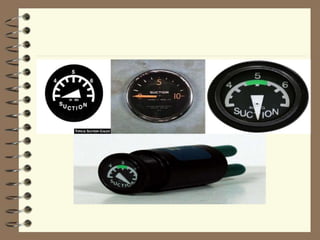
Gyro pressure gauge, vacuum gauge, or 
suction gauge are all terms for the same gauge 
used to monitor the vacuum developed in the 
system that actuates the air driven gyroscopic 
flight instruments.
In some aircraft, all the gyros are vacuum, 
pressure, or electrically operated. 
while the electrical system provides the power 
for the turn coordinator.
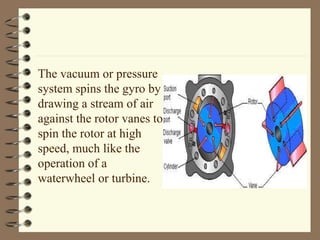
The vacuum or pressure 
system spins the gyro by 
drawing a stream of air 
against the rotor vanes to 
spin the rotor at high 
speed, much like the 
operation of a 
waterwheel or turbine.
The amount of vacuum or pressure required 
for instrument operation varies, but is usually 
between 4.5 “Hg and 5.5 “Hg.
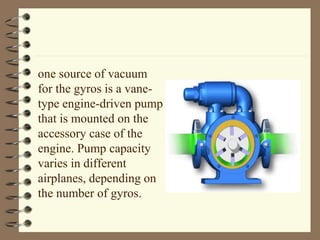
one source of vacuum 
for the gyros is a vane-type 
engine-driven pump 
that is mounted on the 
accessory case of the 
engine. Pump capacity 
varies in different 
airplanes, depending on 
the number of gyros.
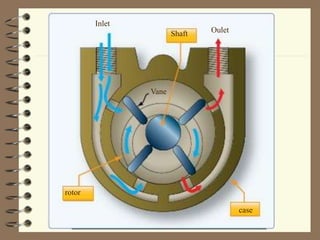
Shaft 
rotor 
case 
Vane 
Inlet 
Oulet
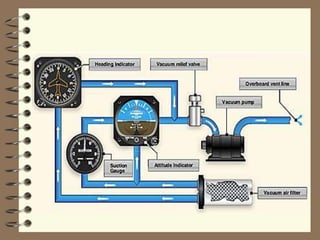
typical vacuum system consists of an engine-driven 
vacuum pump, relief valve, air filter, 
gauge, and tubing necessary to complete the 
connections. The gauge is mounted in the 
aircraft’s instrument panel and indicates the 
amount of pressure in the system (vacuum is 
measured in inches of mercury less than 
ambient pressure).
Operation 
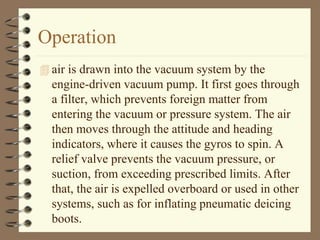
 air is drawn into the vacuum system by the 
engine-driven vacuum pump. It first goes through 
a filter, which prevents foreign matter from 
entering the vacuum or pressure system. The air 
then moves through the attitude and heading 
indicators, where it causes the gyros to spin. A 
relief valve prevents the vacuum pressure, or 
suction, from exceeding prescribed limits. After 
that, the air is expelled overboard or used in other 
systems, such as for inflating pneumatic deicing 
boots.
Important 
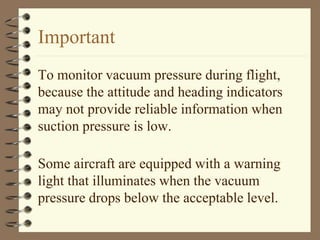
To monitor vacuum pressure during flight, 
because the attitude and heading indicators 
may not provide reliable information when 
suction pressure is low. 
Some aircraft are equipped with a warning 
light that illuminates when the vacuum 
pressure drops below the acceptable level.
Mal funcionamiento 
When the vacuum pressure drops below the 
normal operating range, the gyroscopic 
instruments may become unstable and 
inaccurate. Checking the instruments 
routinely is a good habit to develop.
Vacuum system
Vacuum system

Vacuum system

  • 1.
    Vacuum System Por:Stiven Pinzon
  • 2.
    Vacuum Pressure Gyropressure gauge, vacuum gauge, or suction gauge are all terms for the same gauge used to monitor the vacuum developed in the system that actuates the air driven gyroscopic flight instruments.
  • 3.
    In some aircraft,all the gyros are vacuum, pressure, or electrically operated. while the electrical system provides the power for the turn coordinator.
  • 4.
    The vacuum orpressure system spins the gyro by drawing a stream of air against the rotor vanes to spin the rotor at high speed, much like the operation of a waterwheel or turbine.
  • 5.
    The amount ofvacuum or pressure required for instrument operation varies, but is usually between 4.5 “Hg and 5.5 “Hg.
  • 6.
    one source ofvacuum for the gyros is a vane-type engine-driven pump that is mounted on the accessory case of the engine. Pump capacity varies in different airplanes, depending on the number of gyros.
  • 7.
    Shaft rotor case Vane Inlet Oulet
  • 8.
    typical vacuum systemconsists of an engine-driven vacuum pump, relief valve, air filter, gauge, and tubing necessary to complete the connections. The gauge is mounted in the aircraft’s instrument panel and indicates the amount of pressure in the system (vacuum is measured in inches of mercury less than ambient pressure).
  • 10.
    Operation  airis drawn into the vacuum system by the engine-driven vacuum pump. It first goes through a filter, which prevents foreign matter from entering the vacuum or pressure system. The air then moves through the attitude and heading indicators, where it causes the gyros to spin. A relief valve prevents the vacuum pressure, or suction, from exceeding prescribed limits. After that, the air is expelled overboard or used in other systems, such as for inflating pneumatic deicing boots.
  • 12.
    Important To monitorvacuum pressure during flight, because the attitude and heading indicators may not provide reliable information when suction pressure is low. Some aircraft are equipped with a warning light that illuminates when the vacuum pressure drops below the acceptable level.
  • 13.
    Mal funcionamiento Whenthe vacuum pressure drops below the normal operating range, the gyroscopic instruments may become unstable and inaccurate. Checking the instruments routinely is a good habit to develop.