UX Psychology
< 2nd Track : User experience psychology >
We will talk about,
• User Psychology.
• Designing Behaviors.
• The psychology of Usability.
User Psychology
The study of behaviors and mind.
Everything can happened in a user’s mind when they use the
design and few things after and few things before.
Why User Psychology?
Design and user interface is the practice of creating non-random
effect in people to solve problem.
&
Understanding your users psychology allows you to
answer many questions.
Psychology VS Culture
We born with same brain, we can feel same feelings of happiness
and sadness, Positive and negative feelings.
But
After we born we take this brain to different cultures,
environment and new habits.
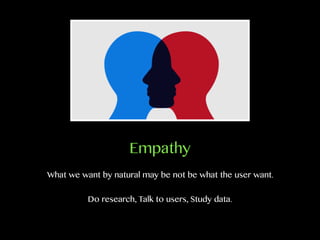
Empathy
What we want by natural may be not be what the user want.
Do research, Talk to users, Study data.
User Psychology
This things that makes you
Like, Share, Comment.
Conscious
Experience
Subconscious
Experience
Usually seems like just is,
it’s invisible.
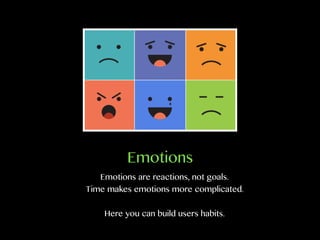
Emotions
Emotions are reactions, not goals.
Time makes emotions more complicated.
Here you can build users habits.
Designing Behaviors
You want user do something & users want to do something.
You as UXD should make it aligned perfectly.
We are not designing random artwork, we have intention.
Design with Intention
Designing Behaviors
Rewards is feeling and emotion not a thing,
The designer, can control the feedback. Which means you can train
your users by rewarding them for something you consider good,
and punish them for something you consider bad.
Feedback should be motivation and action.
Rewards & feedback
Designing Behaviors
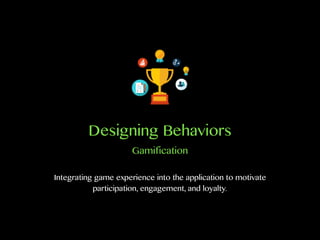
Integrating game experience into the application to motivate
participation, engagement, and loyalty.
Gamification
Designing Behaviors
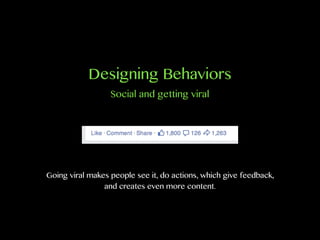
Going viral makes people see it, do actions, which give feedback,
and creates even more content.
Social and getting viral
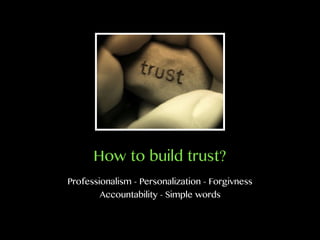
How to build trust?
Professionalism - Personalization - Forgivness
Accountability - Simple words
UX Psychology
</ 2nd Track : User experience psychology >

UX Psychology 2nd Track.

  • 1.
    UX Psychology < 2ndTrack : User experience psychology >
  • 2.
    We will talkabout, • User Psychology. • Designing Behaviors. • The psychology of Usability.
  • 3.
    User Psychology The studyof behaviors and mind. Everything can happened in a user’s mind when they use the design and few things after and few things before.
  • 4.
    Why User Psychology? Designand user interface is the practice of creating non-random effect in people to solve problem. & Understanding your users psychology allows you to answer many questions.
  • 5.
    Psychology VS Culture Weborn with same brain, we can feel same feelings of happiness and sadness, Positive and negative feelings. But After we born we take this brain to different cultures, environment and new habits.
  • 6.
    Empathy What we wantby natural may be not be what the user want. Do research, Talk to users, Study data.
  • 7.
    User Psychology This thingsthat makes you Like, Share, Comment. Conscious Experience Subconscious Experience Usually seems like just is, it’s invisible.
  • 8.
    Emotions Emotions are reactions,not goals. Time makes emotions more complicated. Here you can build users habits.
  • 9.
    Designing Behaviors You wantuser do something & users want to do something. You as UXD should make it aligned perfectly. We are not designing random artwork, we have intention. Design with Intention
  • 10.
    Designing Behaviors Rewards isfeeling and emotion not a thing, The designer, can control the feedback. Which means you can train your users by rewarding them for something you consider good, and punish them for something you consider bad. Feedback should be motivation and action. Rewards & feedback
  • 11.
    Designing Behaviors Integrating gameexperience into the application to motivate participation, engagement, and loyalty. Gamification
  • 12.
    Designing Behaviors Going viralmakes people see it, do actions, which give feedback, and creates even more content. Social and getting viral
  • 13.
    How to buildtrust? Professionalism - Personalization - Forgivness Accountability - Simple words
  • 14.
    UX Psychology </ 2ndTrack : User experience psychology >