




Brice Kosnik – CEO
buildpulse
Utilizing Analytics to Drive Change in
Buildings
Benefits of Analytics
buildpulse
Prioritizing Service
Improving Operational Efficiency
Reducing Complaints
Retaining Knowledge
Implementing Best Practices
Identifying & Fixing Issues
Changing Operational Practices
Driving Conversation with Stakeholders
Ways to use data
buildpulse
How we do it today.
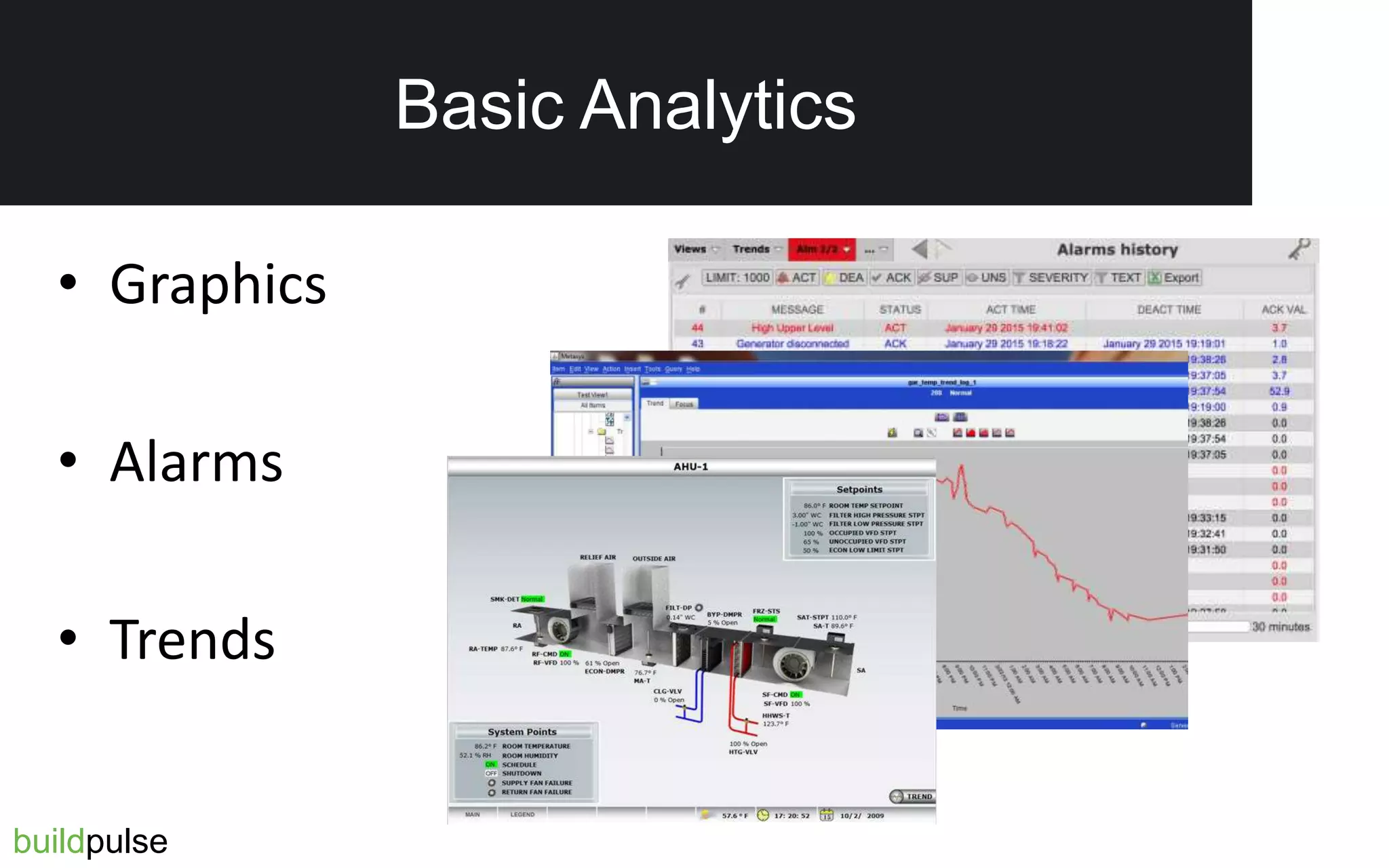
• Graphics
• Alarms
• Trends
buildpulse
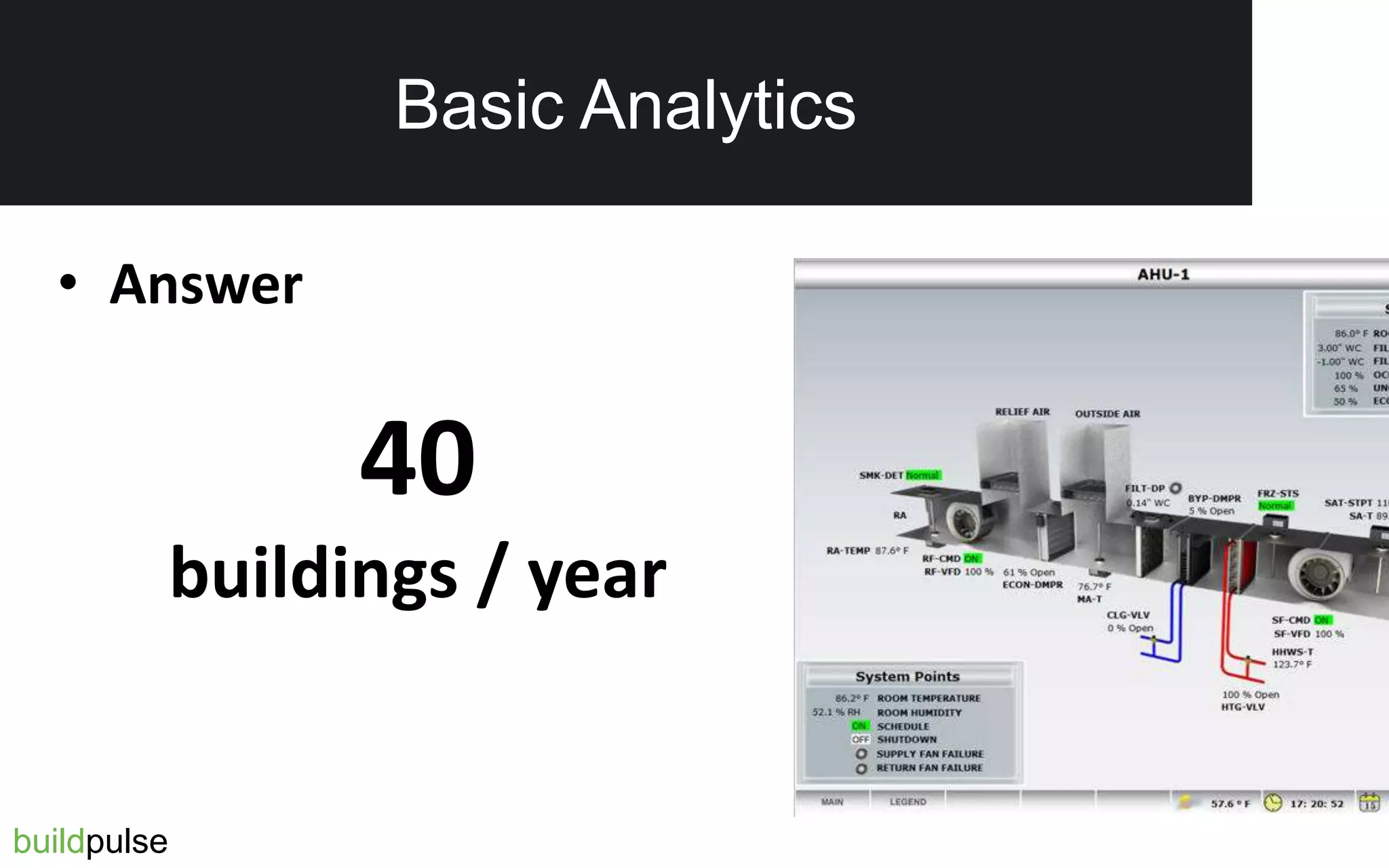
Basic Analytics
How long does it take to?
• Test Every Sensor, Valve,
Damper, & Relay
• 90 buildings
• 2 Dedicated Techs
buildpulse
Basic Analytics
buildpulse
Basic Analytics
• Answer
40
buildings / year
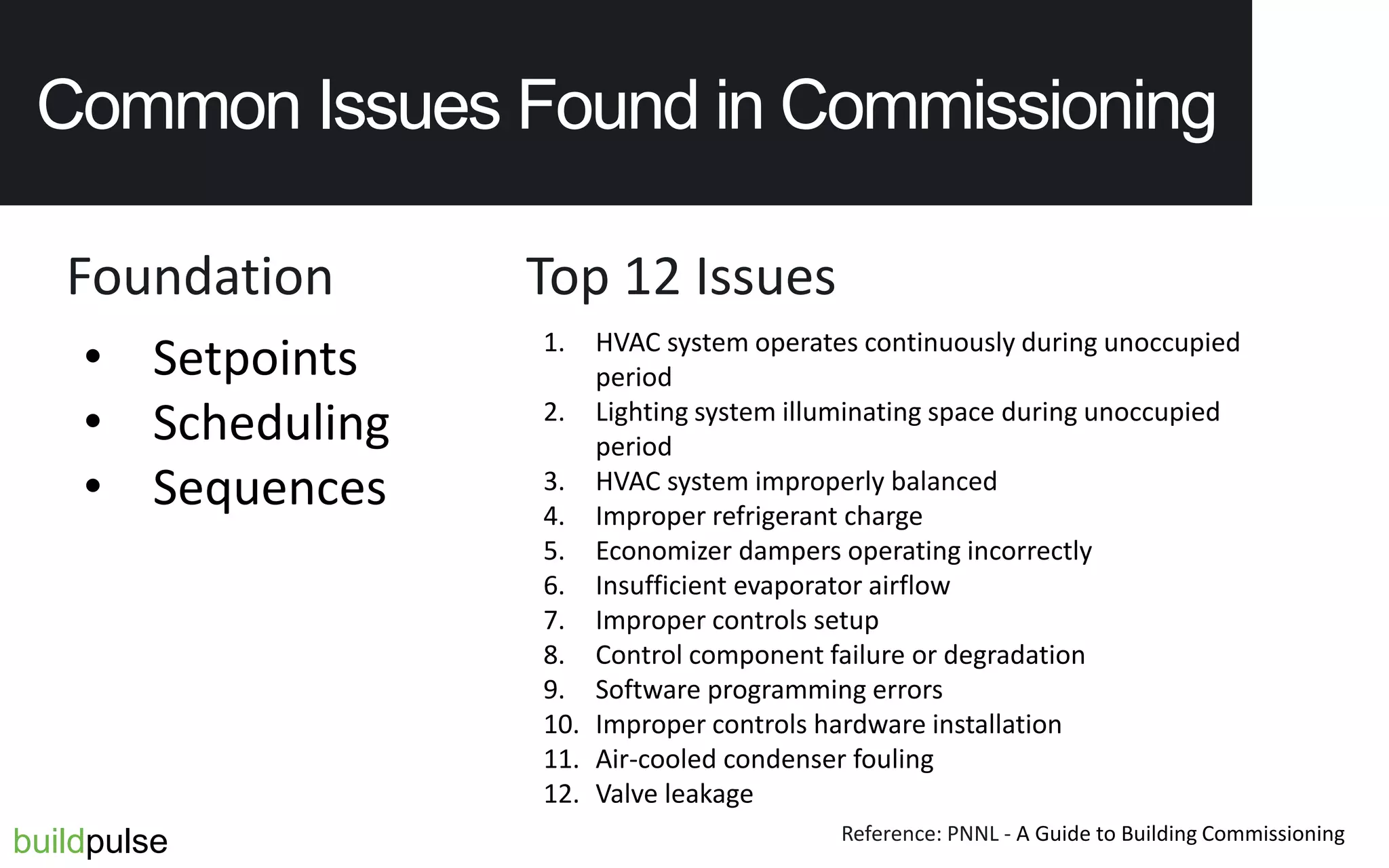
Common Issues Found in Commissioning
buildpulse
Top 12 Issues
1. HVAC system operates continuously during unoccupied
period
2. Lighting system illuminating space during unoccupied
period
3. HVAC system improperly balanced
4. Improper refrigerant charge
5. Economizer dampers operating incorrectly
6. Insufficient evaporator airflow
7. Improper controls setup
8. Control component failure or degradation
9. Software programming errors
10. Improper controls hardware installation
11. Air-cooled condenser fouling
12. Valve leakage
• Setpoints
• Scheduling
• Sequences
Reference: PNNL - A Guide to Building Commissioning
Foundation
Analytics automates the manual processes and audits
that we don’t have time for.
4 Man Years Or 5 Minutes
Its About Automation
buildpulse
Manual Inspection still requires verification
buildpulse
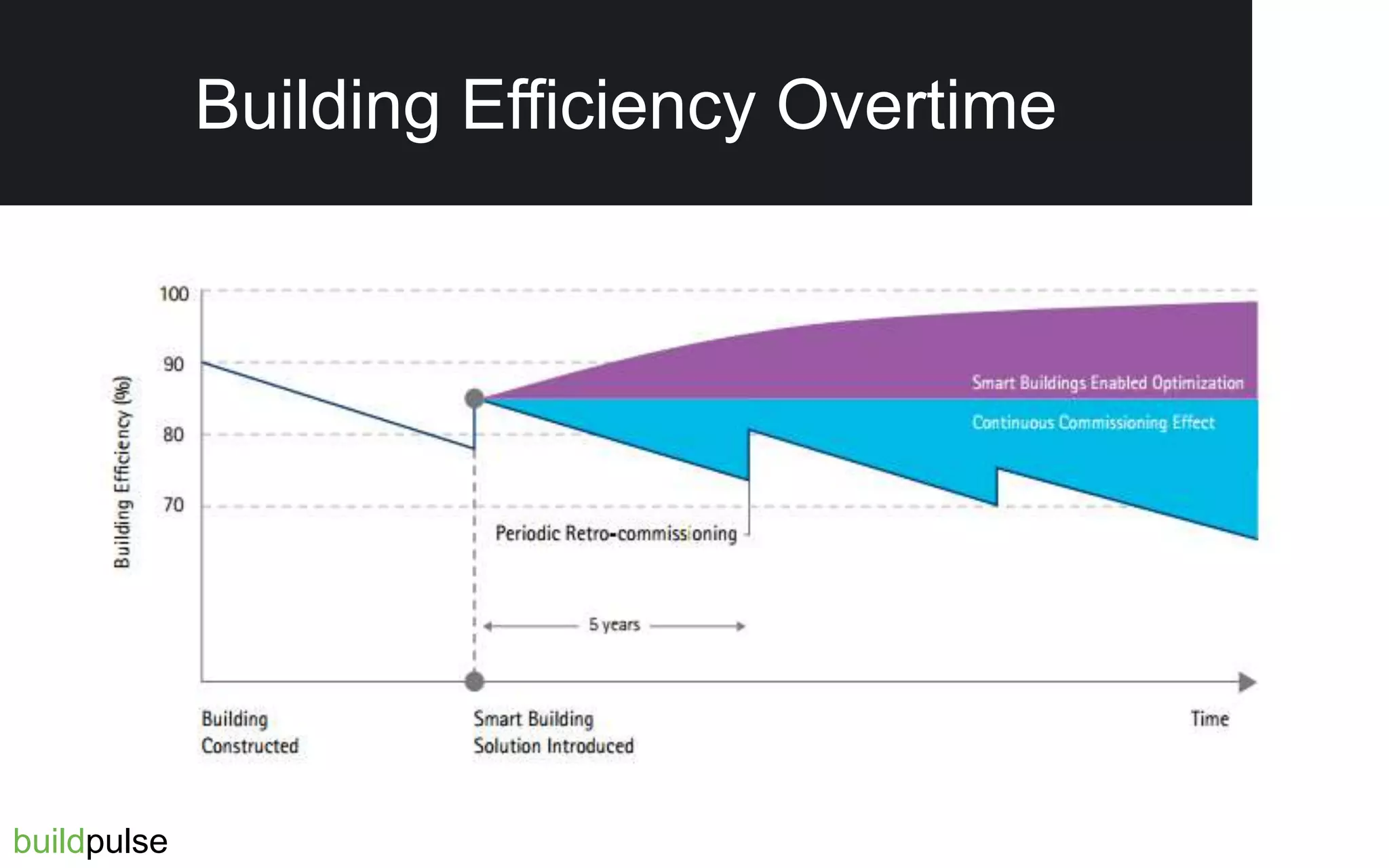
Building Efficiency Overtime
Energy Savings
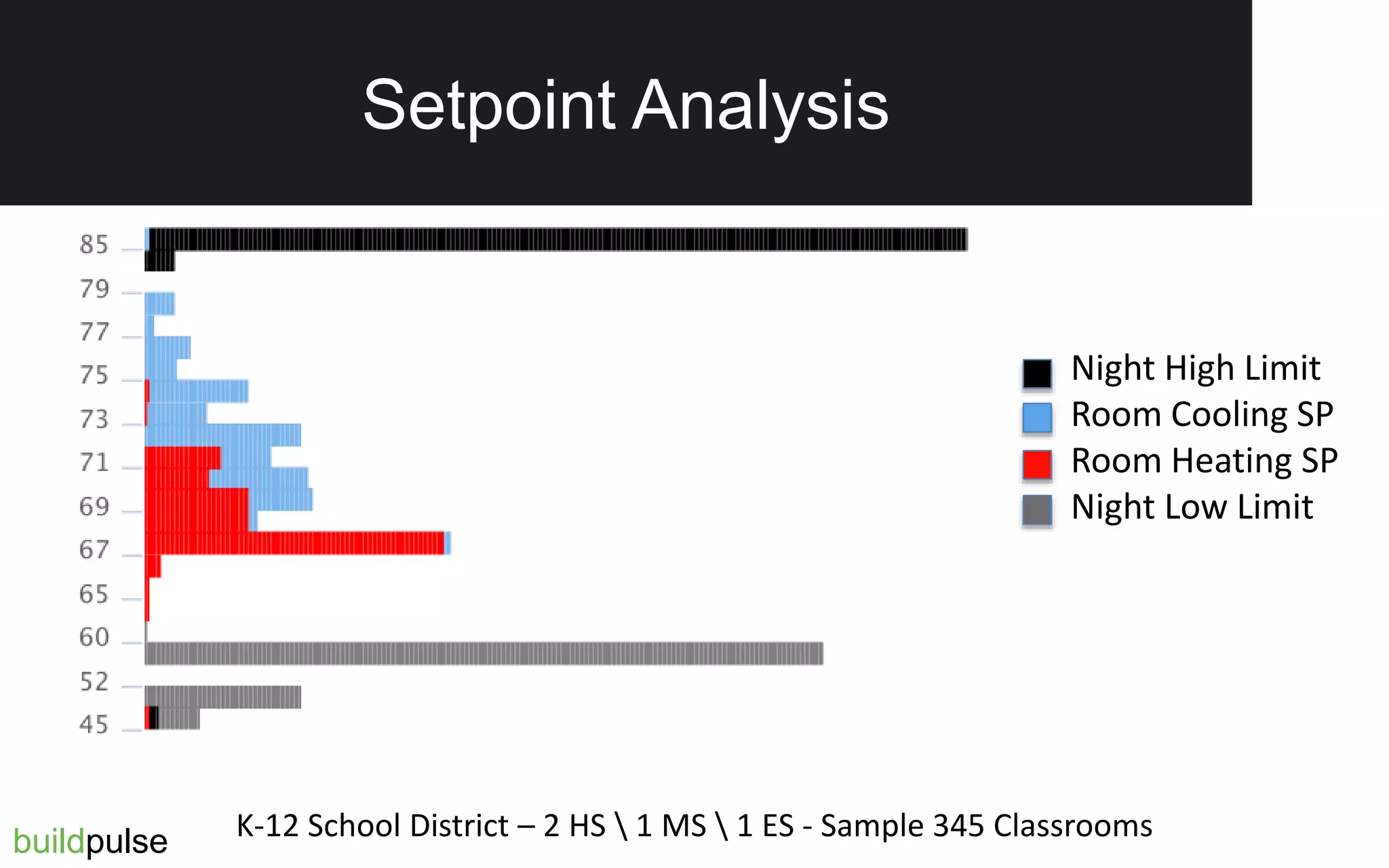
Setpoint Analysis
Night High Limit
Room Cooling SP
Room Heating SP
Night Low Limit
K-12 School District – 2 HS  1 MS  1 ES - Sample 345 Classroomsbuildpulse
Setpoint Analysis
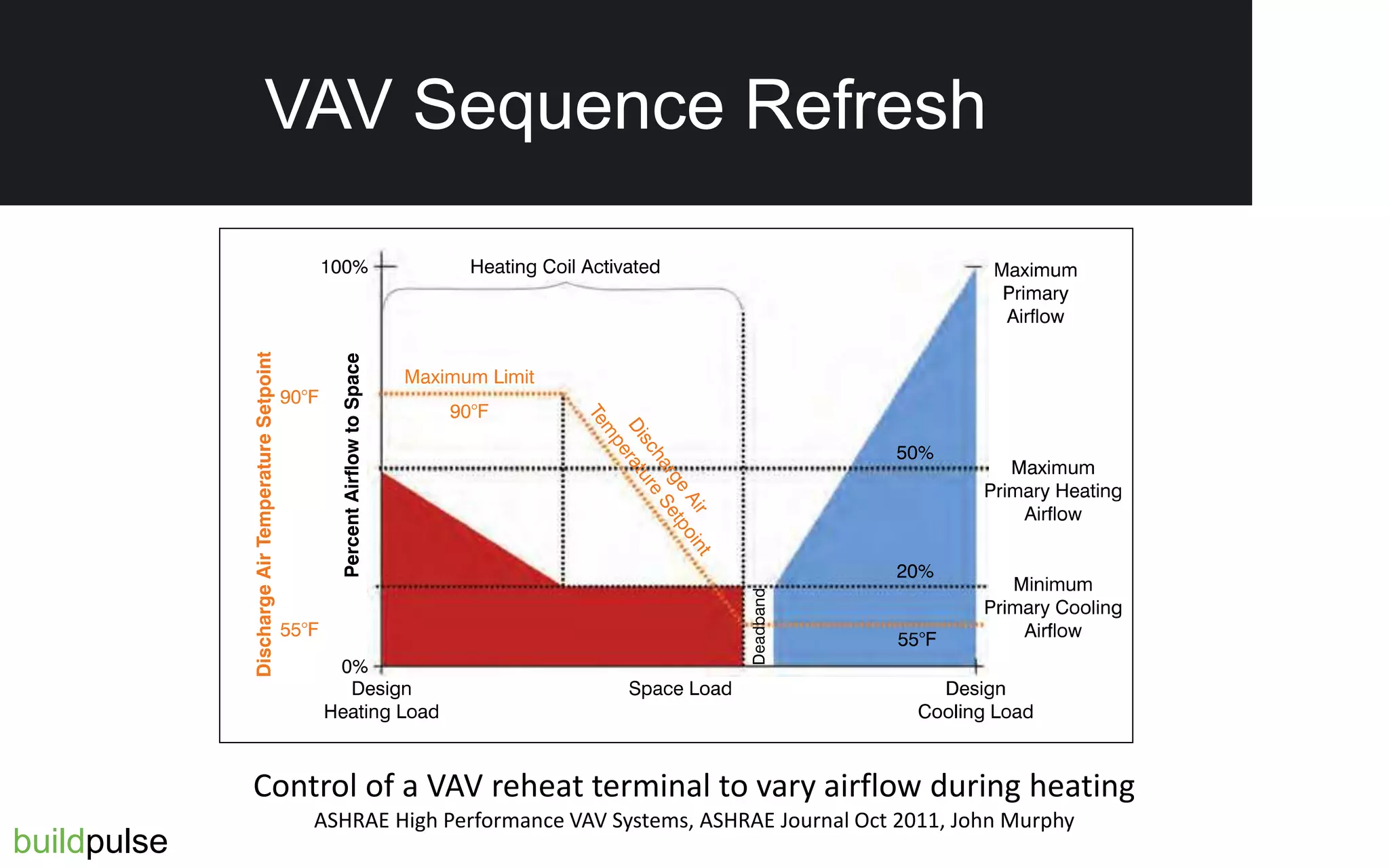
VAV Sequence Refresher
Control of a VAV reheat terminal to vary airflow during heating
ASHRAE High Performance VAV Systems, ASHRAE Journal Oct 2011, John Murphy
buildpulse
VAV Sequence Refresh
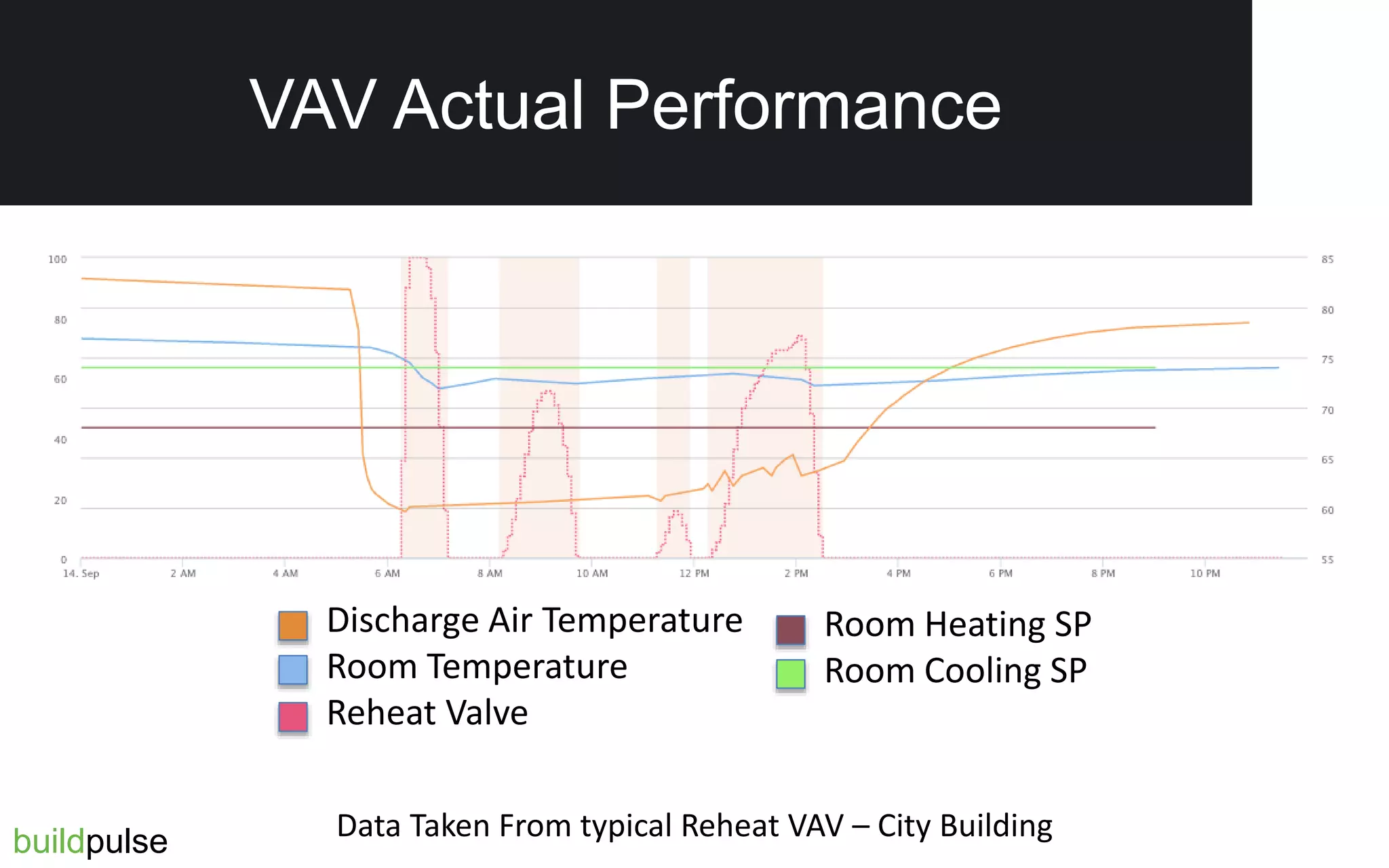
Actual VAV Performance
Data Taken From typical Reheat VAV – City Building
Discharge Air Temperature
Room Temperature
Reheat Valve
Room Heating SP
Room Cooling SP
buildpulse
VAV Actual Performance
Schedule to Actual Occupancy
Start up each Zone individually so that it reaches
Heating or Cooling Setpoints at Occupancy
Adjust Heating and Cooling Setpoints so that all
zones have 0 heating or cooling load at
UnOccupied.
buildpulse
Schedules Optimal Start / Stop
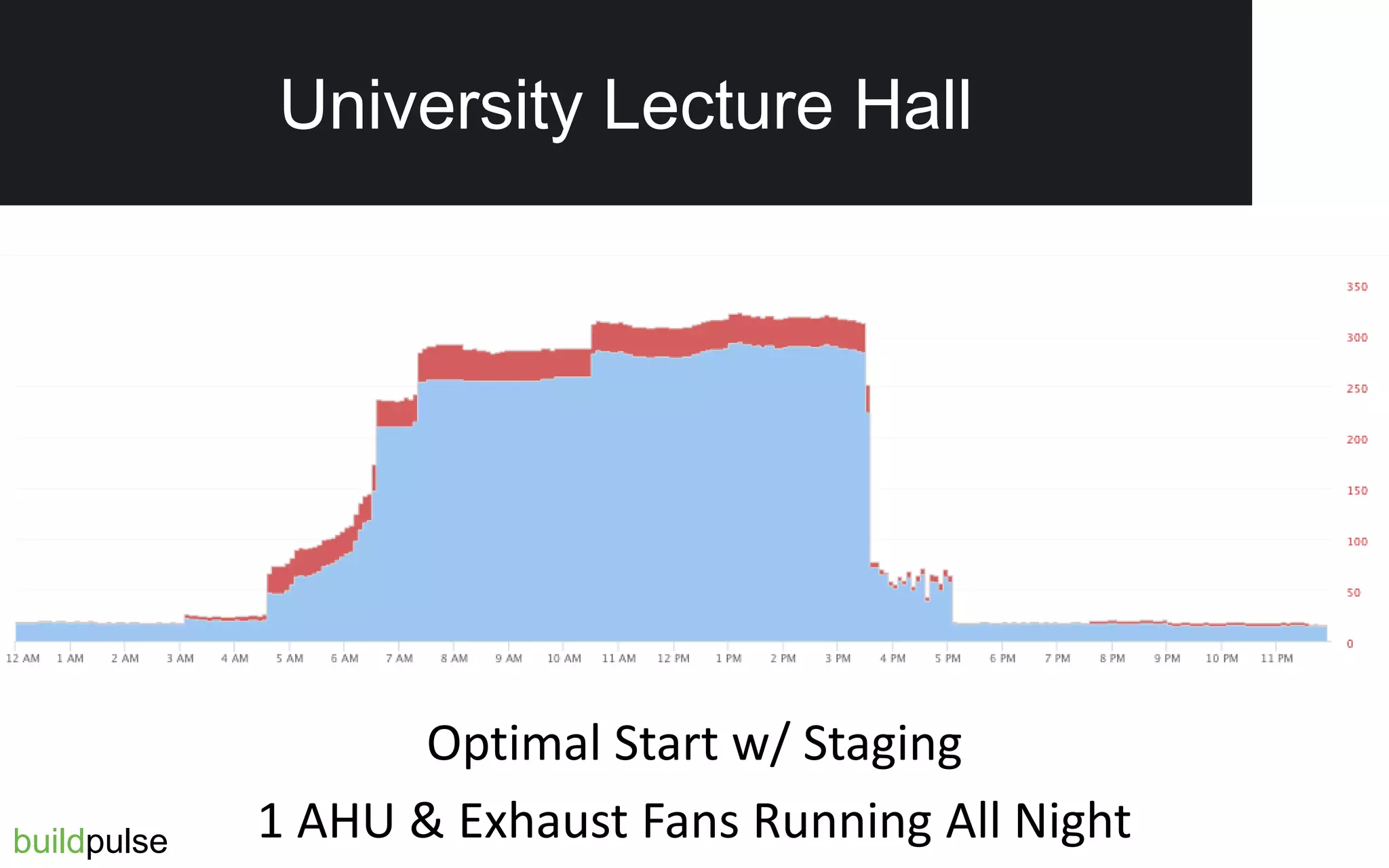
University Lecture Hall
Optimal Start w/ Staging
1 AHU & Exhaust Fans Running All Nightbuildpulse
University Lecture Hall
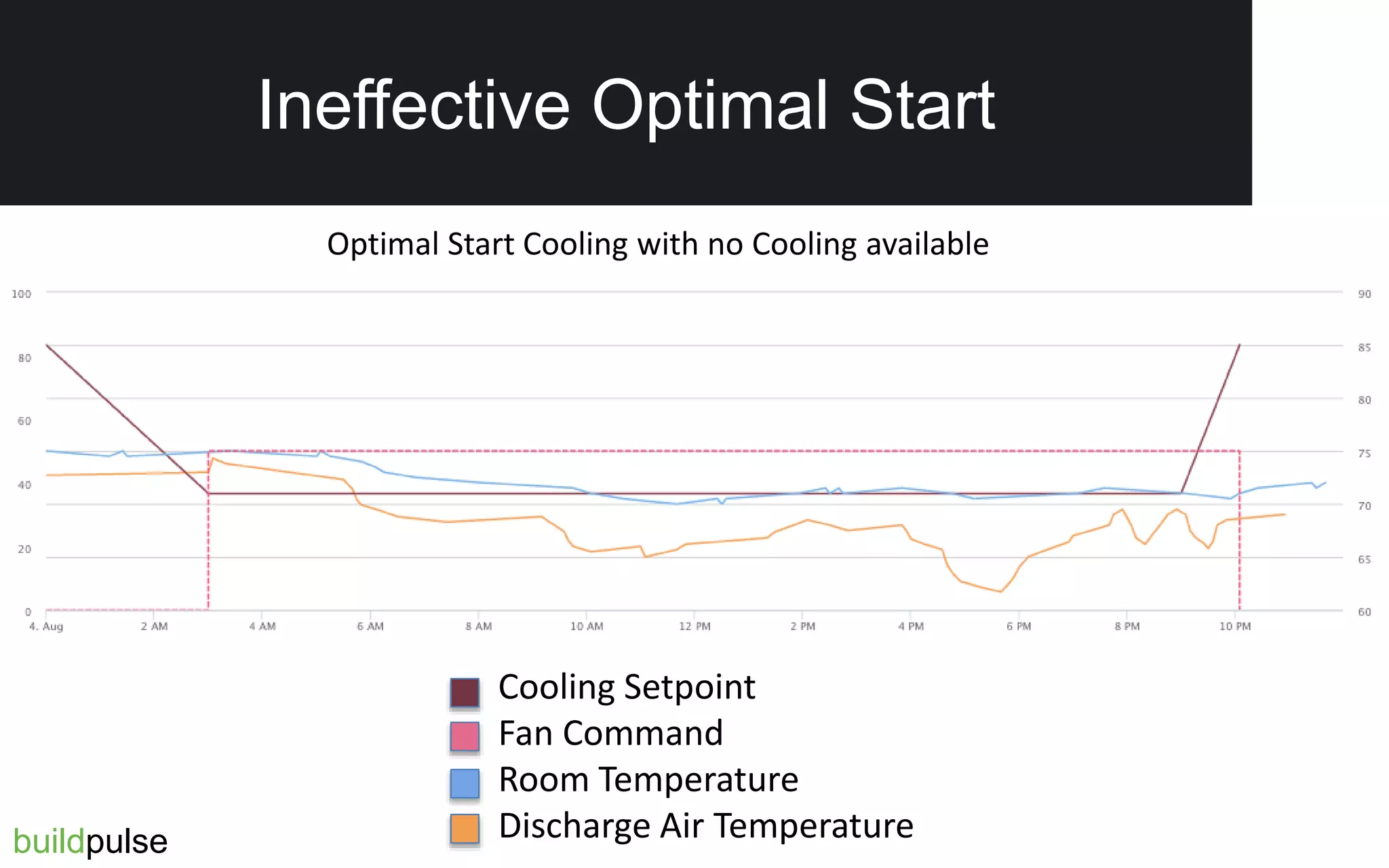
Ineffective Optimal Start
Cooling Setpoint
Fan Command
Room Temperature
Discharge Air Temperature
Optimal Start Cooling with no Cooling available
buildpulse
Ineffective Optimal Start
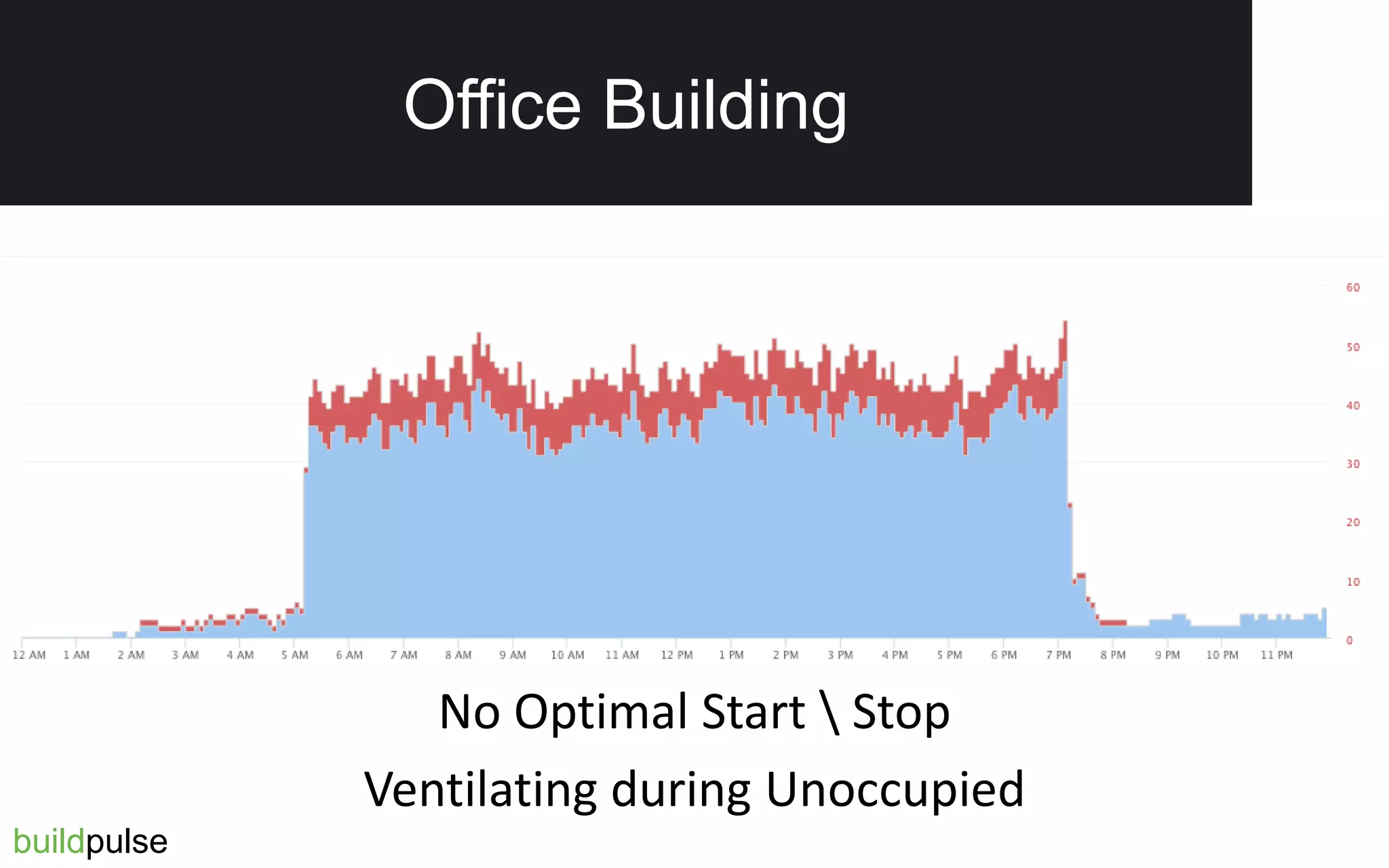
Office Building
No Optimal Start  Stop
Ventilating during Unoccupied
buildpulse
Office Building
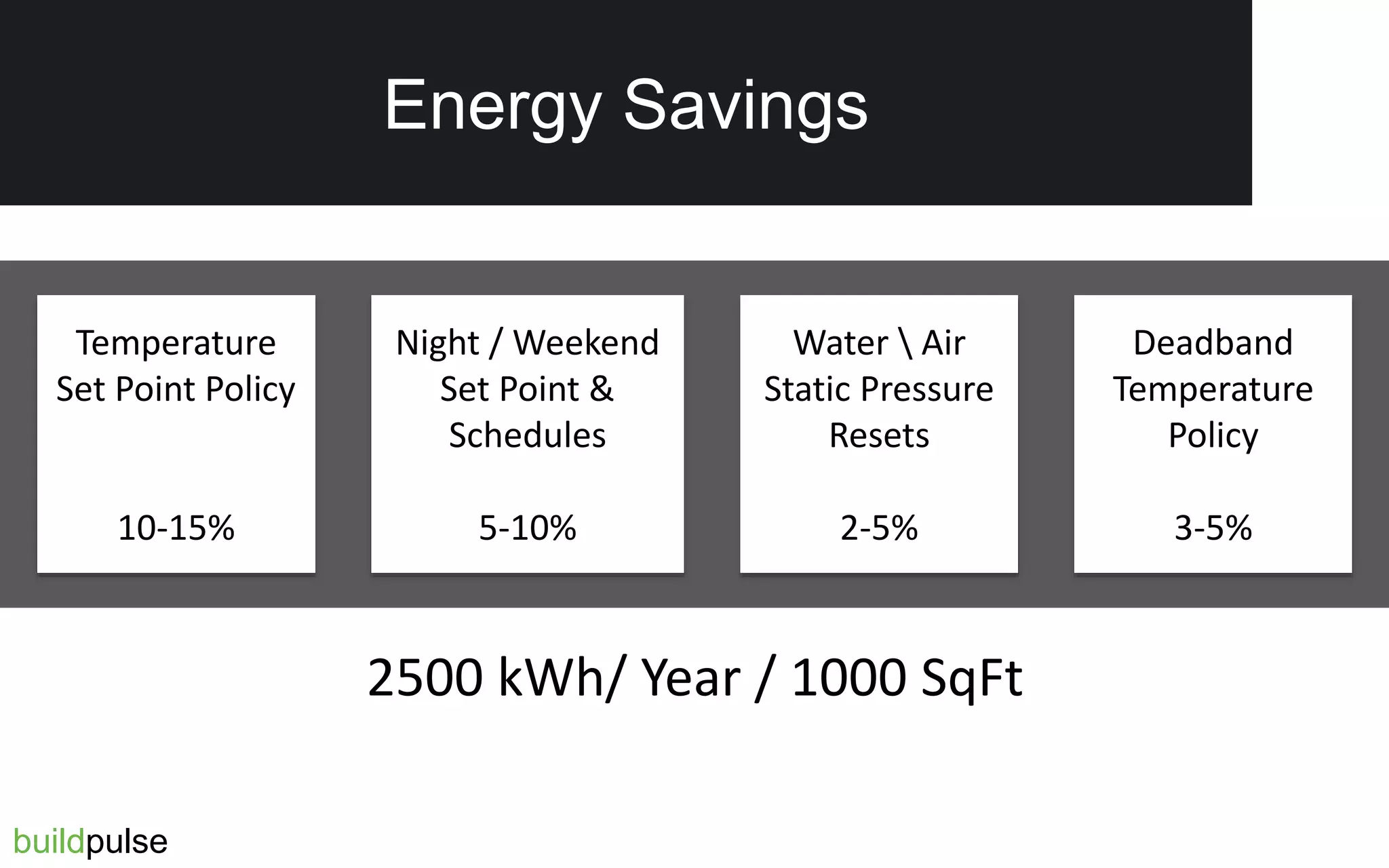
Temperature
Set Point Policy
10-15%
Deadband
Temperature
Policy
3-5%
Night / Weekend
Set Point &
Schedules
5-10%
Water  Air
Static Pressure
Resets
2-5%
2500 kWh/ Year / 1000 SqFt
buildpulse
Energy Savings
Other Examples
• Temperature Resets
• Pressure Resets
• 24 Hour Operation
• Chilled & Hot Water Plant operation
• Simultaneous heating and cooling
• Economizer Analysis
• High  Low Discharge Air Temperature
buildpulse
Other areas – most teams don’t get to.
Operational Improvements
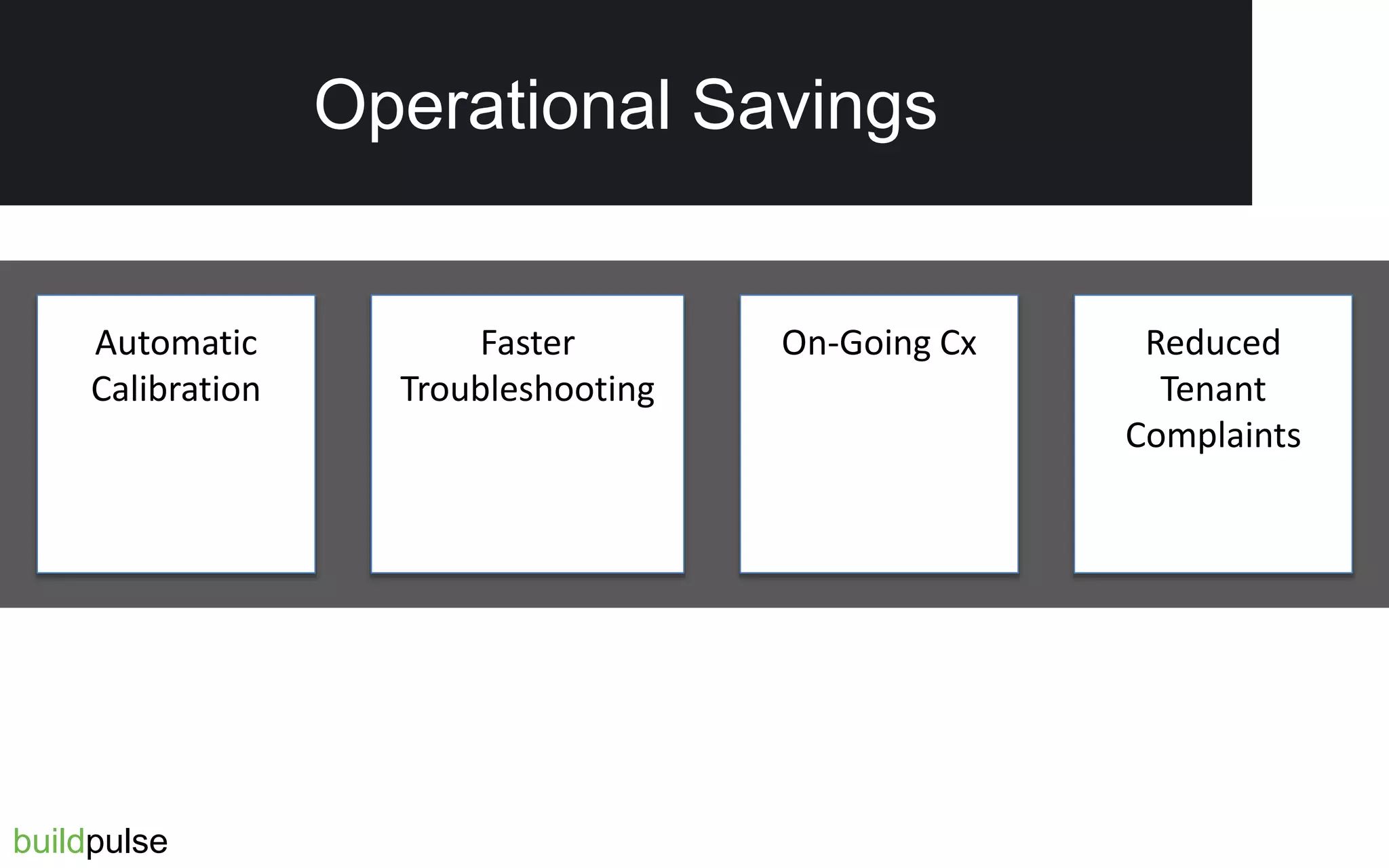
Operational Savings
Automatic
Calibration
Reduced
Tenant
Complaints
Faster
Troubleshooting
On-Going Cx
buildpulse
Operational Savings
Automatic Calibration
• Adjust Setpoints
• Predictive Weather controls
• Load Shedding
buildpulse
Automatic Calibration
Faster Troubleshooting
Should:
Provide Associated
Data, Problem &
Solution
Should Not:
Require you to dig
through data
buildpulse
Faster Trouble Shooting
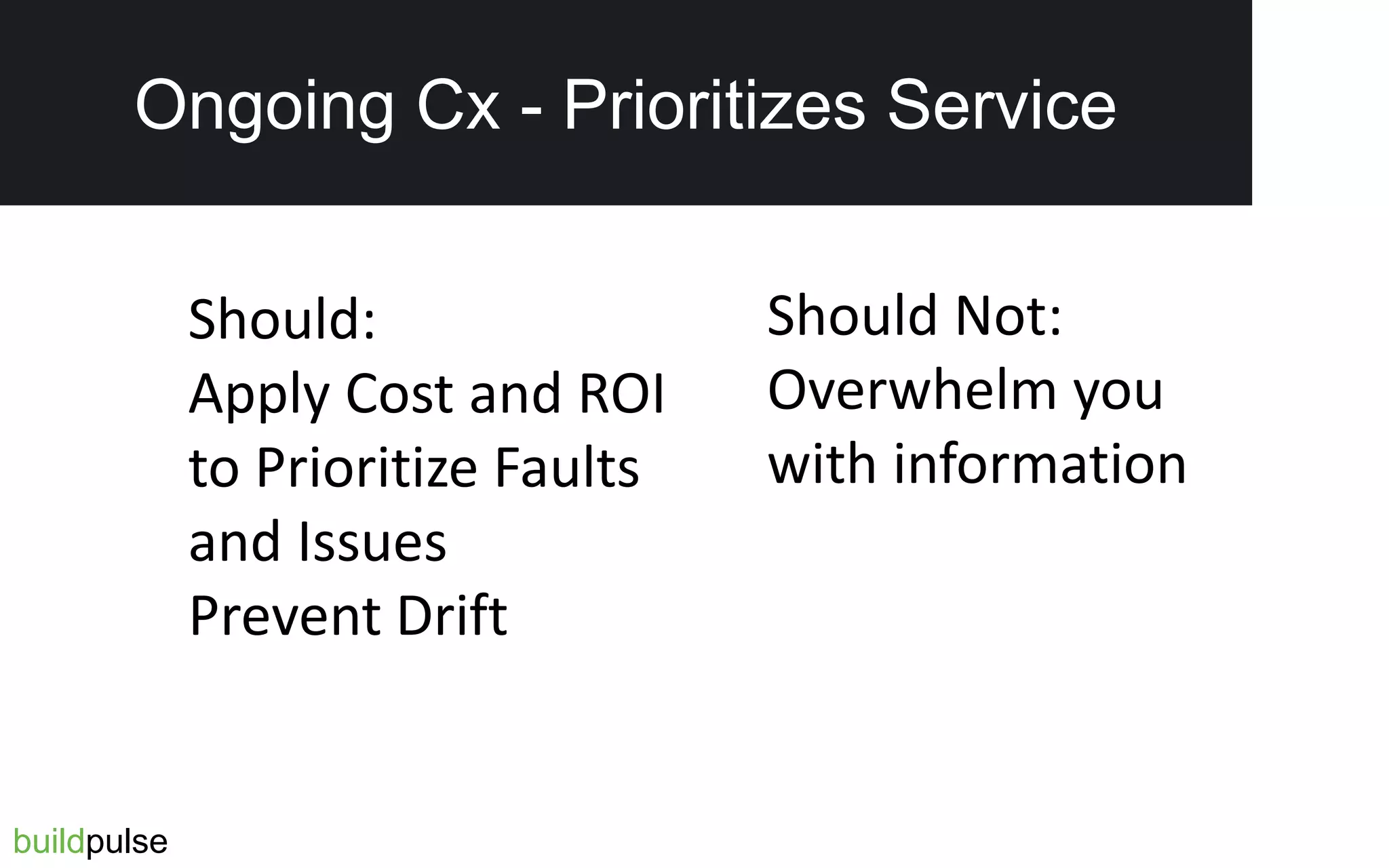
On-Going Cx  Prioritize Service
Should:
Apply Cost and ROI
to Prioritize Faults
and Issues
Prevent Drift
Should Not:
Overwhelm you
with information
buildpulse
Ongoing Cx - Prioritizes Service
Reduced Tenant Complaints
• Less Task Switching
• Proactive Service
buildpulse
Reduce Tennant complaints
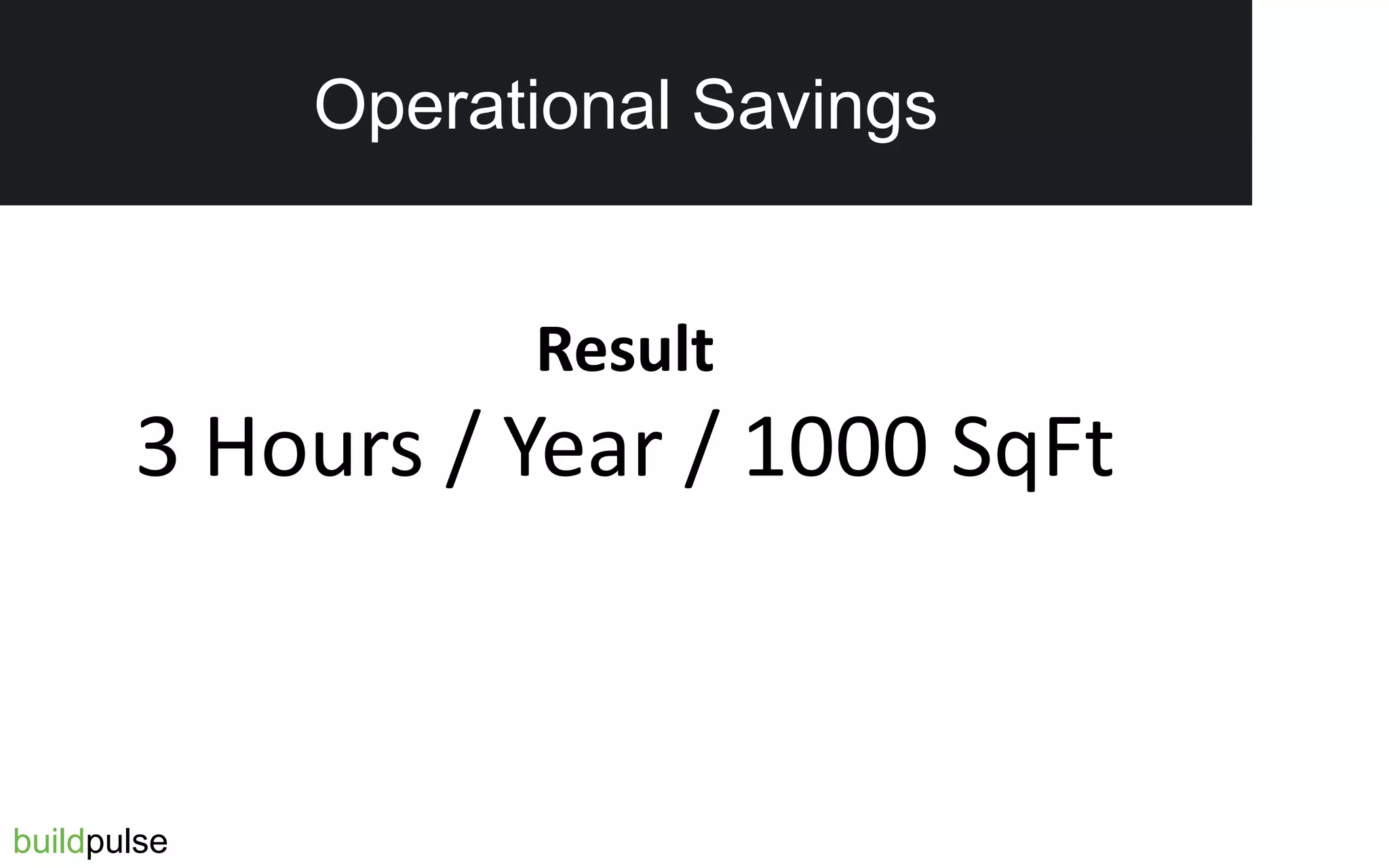
Operational Savings
Result
3 Hours / Year / 1000 SqFt
buildpulse
Operational Savings
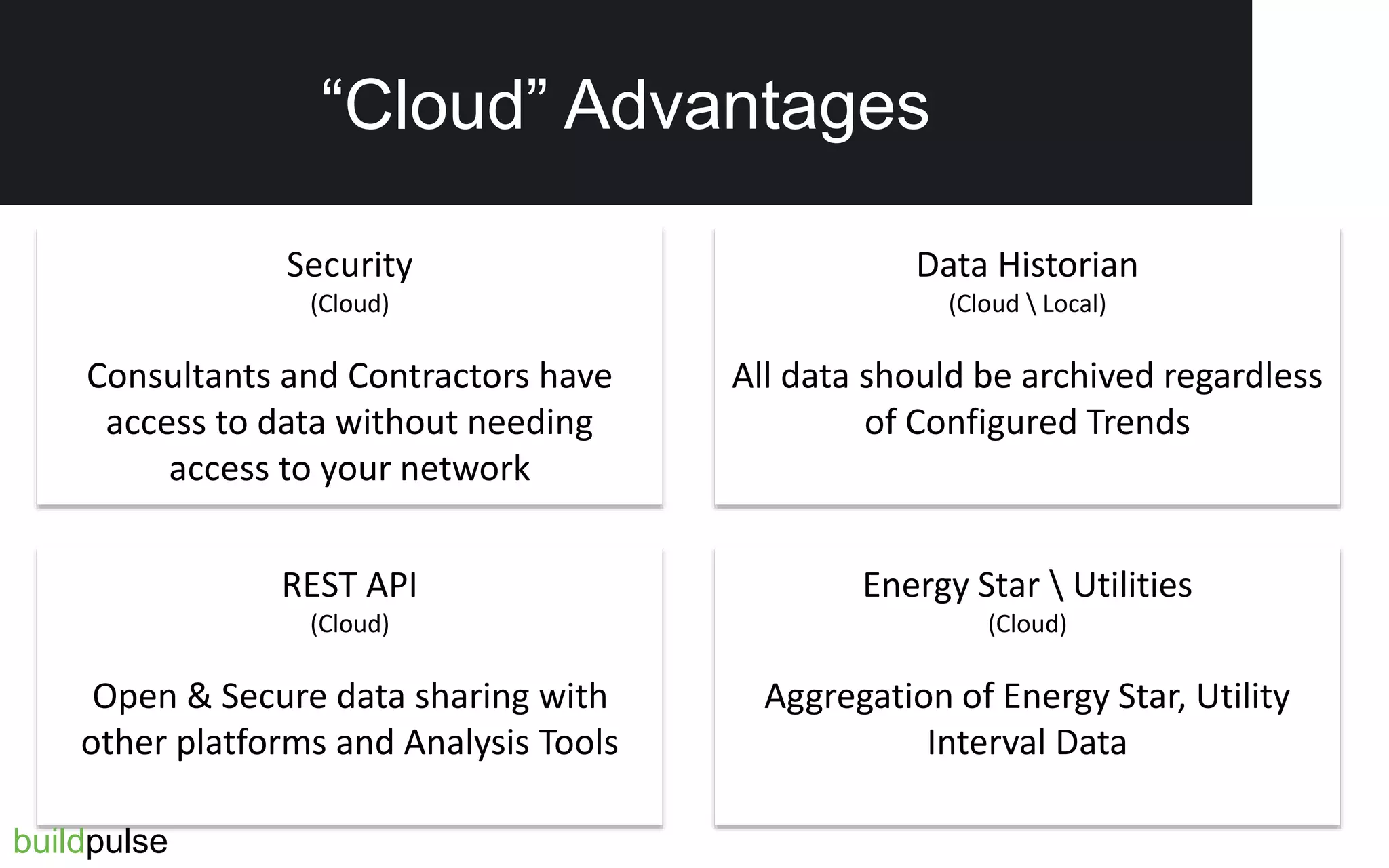
Security
Other Benefits
Security
(Cloud)
Consultants and Contractors have
access to data without needing
access to your network
Data Historian
(Cloud  Local)
All data should be archived regardless
of Configured Trends
REST API
(Cloud)
Open & Secure data sharing with
other platforms and Analysis Tools
Energy Star  Utilities
(Cloud)
Aggregation of Energy Star, Utility
Interval Data
buildpulse
“Cloud” Advantages
Driving Change
Reduced Tenant Complaints
1-3% utility savings per year for every degree
of deadband implemented.
Clear reporting of time series temperature
analysis, policy, and best practices, results in
positive and productive conversation.
buildpulse
Comfort
Reduced Tenant Complaints
buildpulse
Policy Conversations
Design & Operate, for “Off”
Shutting down equipment in swing seasons
can save a lot of energy. But it can be hard to
quantify and it will result is discomfort.
Analytics quantifies the savings and enables
the conversation to drive policy change.
Reduced Tenant Complaints
buildpulse
Habits and M&V
Did it get Fixed? Is it performing how we
thought it would?
Automate Verification
Reduced Tenant Complaints
buildpulse
Capture Knowledge
Facility Engineers know their building. How do
we prevent their knowledge from retiring with
them?
Enable low friction methods of capture,
alignment, and storage.
Brice Kosnik – CEO
buildpulse
available online
brice.kosnik@buildpulse.com
Utilizing Analytics to Drive Change in
Buildings
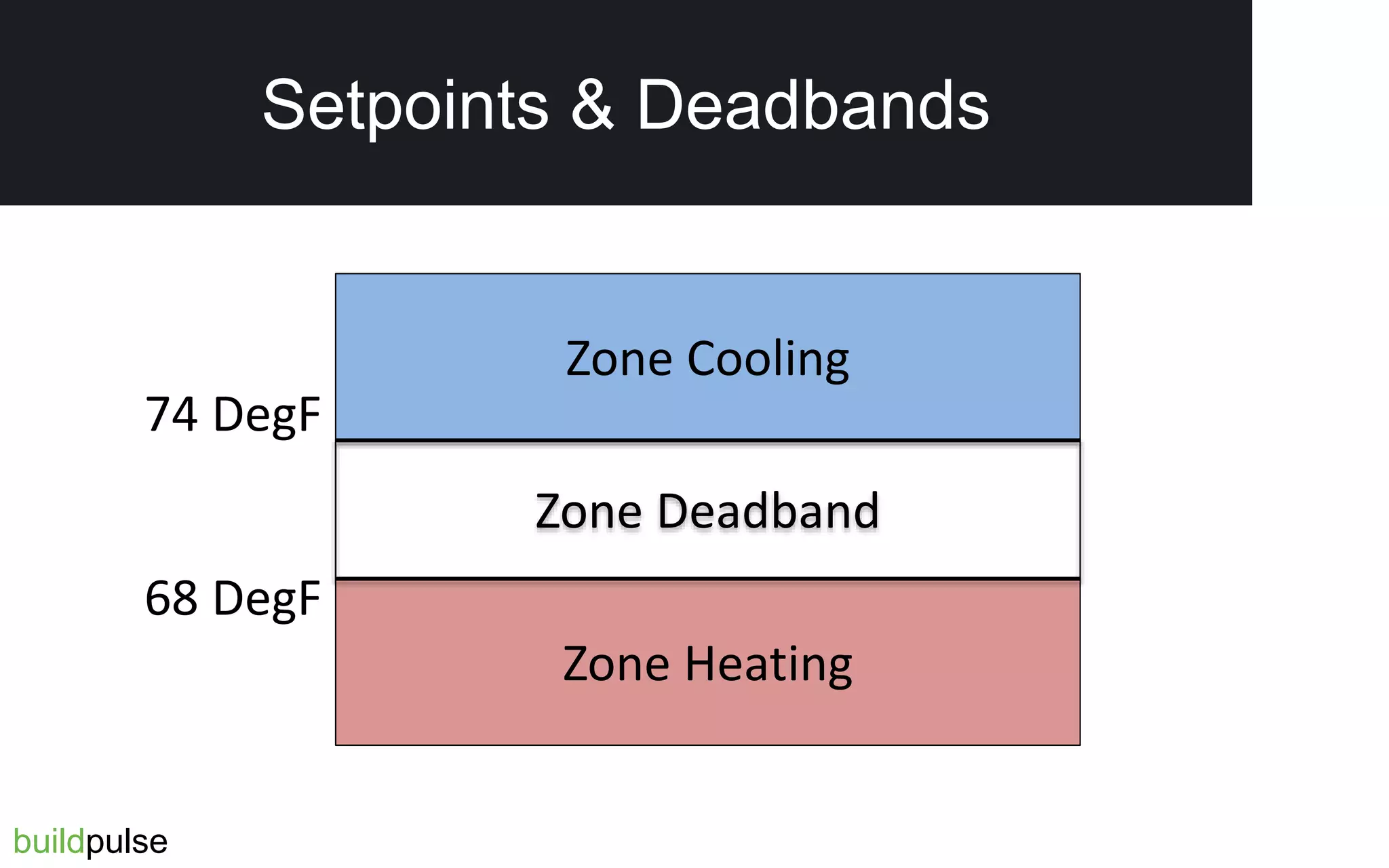
Zone Deadband
Setpoints & Deadbands
Zone Heating
Zone Cooling
74 DegF
68 DegF
buildpulse
Setpoints & Deadbands
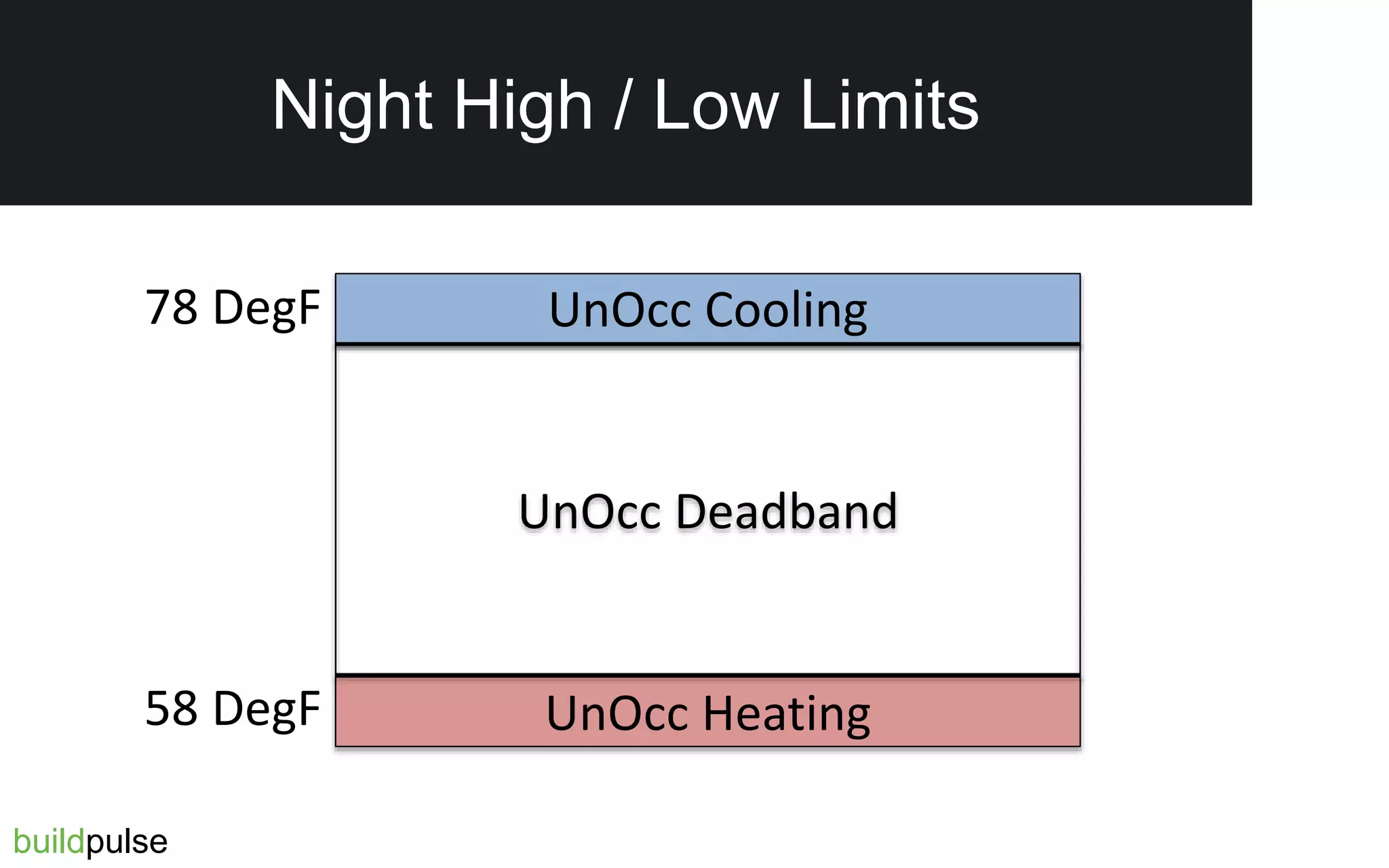
Night High  Low Limit
UnOcc Deadband
UnOcc Heating
UnOcc Cooling78 DegF
58 DegF
buildpulse
Night High / Low Limits

Utilizing Analytics to Drive Change in Buildings - Apem Sept 18 2015

  • 1.
    Brice Kosnik –CEO buildpulse Utilizing Analytics to Drive Change in Buildings
  • 2.
    Benefits of Analytics buildpulse PrioritizingService Improving Operational Efficiency Reducing Complaints Retaining Knowledge Implementing Best Practices
  • 3.
    Identifying & FixingIssues Changing Operational Practices Driving Conversation with Stakeholders Ways to use data buildpulse
  • 4.
    How we doit today.
  • 5.
    • Graphics • Alarms •Trends buildpulse Basic Analytics
  • 6.
    How long doesit take to? • Test Every Sensor, Valve, Damper, & Relay • 90 buildings • 2 Dedicated Techs buildpulse Basic Analytics
  • 7.
  • 8.
    Common Issues Foundin Commissioning buildpulse Top 12 Issues 1. HVAC system operates continuously during unoccupied period 2. Lighting system illuminating space during unoccupied period 3. HVAC system improperly balanced 4. Improper refrigerant charge 5. Economizer dampers operating incorrectly 6. Insufficient evaporator airflow 7. Improper controls setup 8. Control component failure or degradation 9. Software programming errors 10. Improper controls hardware installation 11. Air-cooled condenser fouling 12. Valve leakage • Setpoints • Scheduling • Sequences Reference: PNNL - A Guide to Building Commissioning Foundation
  • 9.
    Analytics automates themanual processes and audits that we don’t have time for. 4 Man Years Or 5 Minutes Its About Automation buildpulse Manual Inspection still requires verification
  • 10.
  • 11.
  • 12.
    Setpoint Analysis Night HighLimit Room Cooling SP Room Heating SP Night Low Limit K-12 School District – 2 HS 1 MS 1 ES - Sample 345 Classroomsbuildpulse Setpoint Analysis
  • 13.
    VAV Sequence Refresher Controlof a VAV reheat terminal to vary airflow during heating ASHRAE High Performance VAV Systems, ASHRAE Journal Oct 2011, John Murphy buildpulse VAV Sequence Refresh
  • 14.
    Actual VAV Performance DataTaken From typical Reheat VAV – City Building Discharge Air Temperature Room Temperature Reheat Valve Room Heating SP Room Cooling SP buildpulse VAV Actual Performance
  • 15.
    Schedule to ActualOccupancy Start up each Zone individually so that it reaches Heating or Cooling Setpoints at Occupancy Adjust Heating and Cooling Setpoints so that all zones have 0 heating or cooling load at UnOccupied. buildpulse Schedules Optimal Start / Stop
  • 16.
    University Lecture Hall OptimalStart w/ Staging 1 AHU & Exhaust Fans Running All Nightbuildpulse University Lecture Hall
  • 17.
    Ineffective Optimal Start CoolingSetpoint Fan Command Room Temperature Discharge Air Temperature Optimal Start Cooling with no Cooling available buildpulse Ineffective Optimal Start
  • 18.
    Office Building No OptimalStart Stop Ventilating during Unoccupied buildpulse Office Building
  • 19.
    Temperature Set Point Policy 10-15% Deadband Temperature Policy 3-5% Night/ Weekend Set Point & Schedules 5-10% Water Air Static Pressure Resets 2-5% 2500 kWh/ Year / 1000 SqFt buildpulse Energy Savings
  • 20.
    Other Examples • TemperatureResets • Pressure Resets • 24 Hour Operation • Chilled & Hot Water Plant operation • Simultaneous heating and cooling • Economizer Analysis • High Low Discharge Air Temperature buildpulse Other areas – most teams don’t get to.
  • 21.
  • 22.
  • 23.
    Automatic Calibration • AdjustSetpoints • Predictive Weather controls • Load Shedding buildpulse Automatic Calibration
  • 24.
    Faster Troubleshooting Should: Provide Associated Data,Problem & Solution Should Not: Require you to dig through data buildpulse Faster Trouble Shooting
  • 25.
    On-Going Cx Prioritize Service Should: Apply Cost and ROI to Prioritize Faults and Issues Prevent Drift Should Not: Overwhelm you with information buildpulse Ongoing Cx - Prioritizes Service
  • 26.
    Reduced Tenant Complaints •Less Task Switching • Proactive Service buildpulse Reduce Tennant complaints
  • 27.
    Operational Savings Result 3 Hours/ Year / 1000 SqFt buildpulse Operational Savings
  • 28.
  • 29.
    Other Benefits Security (Cloud) Consultants andContractors have access to data without needing access to your network Data Historian (Cloud Local) All data should be archived regardless of Configured Trends REST API (Cloud) Open & Secure data sharing with other platforms and Analysis Tools Energy Star Utilities (Cloud) Aggregation of Energy Star, Utility Interval Data buildpulse “Cloud” Advantages
  • 30.
  • 31.
    Reduced Tenant Complaints 1-3%utility savings per year for every degree of deadband implemented. Clear reporting of time series temperature analysis, policy, and best practices, results in positive and productive conversation. buildpulse Comfort
  • 32.
    Reduced Tenant Complaints buildpulse PolicyConversations Design & Operate, for “Off” Shutting down equipment in swing seasons can save a lot of energy. But it can be hard to quantify and it will result is discomfort. Analytics quantifies the savings and enables the conversation to drive policy change.
  • 33.
    Reduced Tenant Complaints buildpulse Habitsand M&V Did it get Fixed? Is it performing how we thought it would? Automate Verification
  • 34.
    Reduced Tenant Complaints buildpulse CaptureKnowledge Facility Engineers know their building. How do we prevent their knowledge from retiring with them? Enable low friction methods of capture, alignment, and storage.
  • 35.
    Brice Kosnik –CEO buildpulse available online brice.kosnik@buildpulse.com Utilizing Analytics to Drive Change in Buildings
  • 36.
    Zone Deadband Setpoints &Deadbands Zone Heating Zone Cooling 74 DegF 68 DegF buildpulse Setpoints & Deadbands
  • 37.
    Night High Low Limit UnOcc Deadband UnOcc Heating UnOcc Cooling78 DegF 58 DegF buildpulse Night High / Low Limits

Editor's Notes

  • #3 Prioritizing Service Improving Operational Efficiency Reducing Complaints Retaining Knowledge Implementing Best Practices
  • #9 Prioritizing Service Improving Operational Efficiency Reducing Complaints Retaining Knowledge Implementing Best Practices
  • #10 Prioritizing Service Improving Operational Efficiency Reducing Complaints Retaining Knowledge Implementing Best Practices