Critical Considerations
For Successful
TDM to IP Migration
Kevin Sumrell
Vice President of Utility and Public Safety Sales for Avtec, Inc.
A little housekeeping before we get
started….
Listen only mode
Q&A
Polls
Recording
About the Speaker
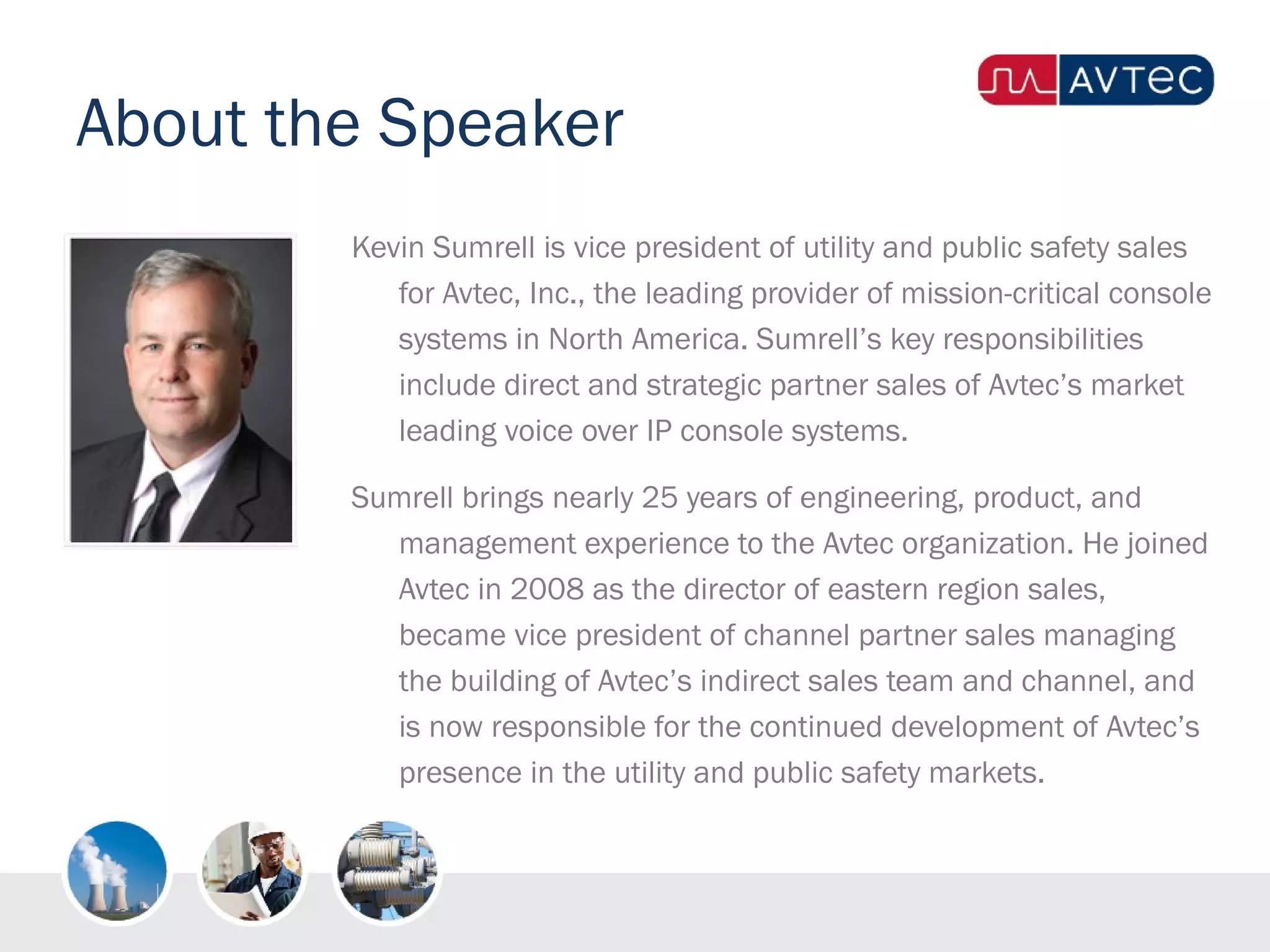
Kevin Sumrell is vice president of utility and public safety sales
for Avtec, Inc., the leading provider of mission-critical console
systems in North America. Sumrell’s key responsibilities
include direct and strategic partner sales of Avtec’s market
leading voice over IP console systems. 
Sumrell brings nearly 25 years of engineering, product, and
management experience to the Avtec organization. He joined
Avtec in 2008 as the director of eastern region sales,
became vice president of channel partner sales managing
the building of Avtec’s indirect sales team and channel, and
is now responsible for the continued development of Avtec’s
presence in the utility and public safety markets.
Todays Agenda:
• A comparison of TDM and IP.
• Decentralizing for disaster preparedness.
• Failover and redundancy.
• Network wide portability and login mobility.
•
What is Critical Infrastructure?
“Critical infrastructure is the backbone of our
nation's economy, security and health. We know
it as the power we use in our homes, the water
we drink, the transportation that moves us, and
the communication systems we rely on to stay in
touch with friends and family.”
What is Critical Infrastructure?
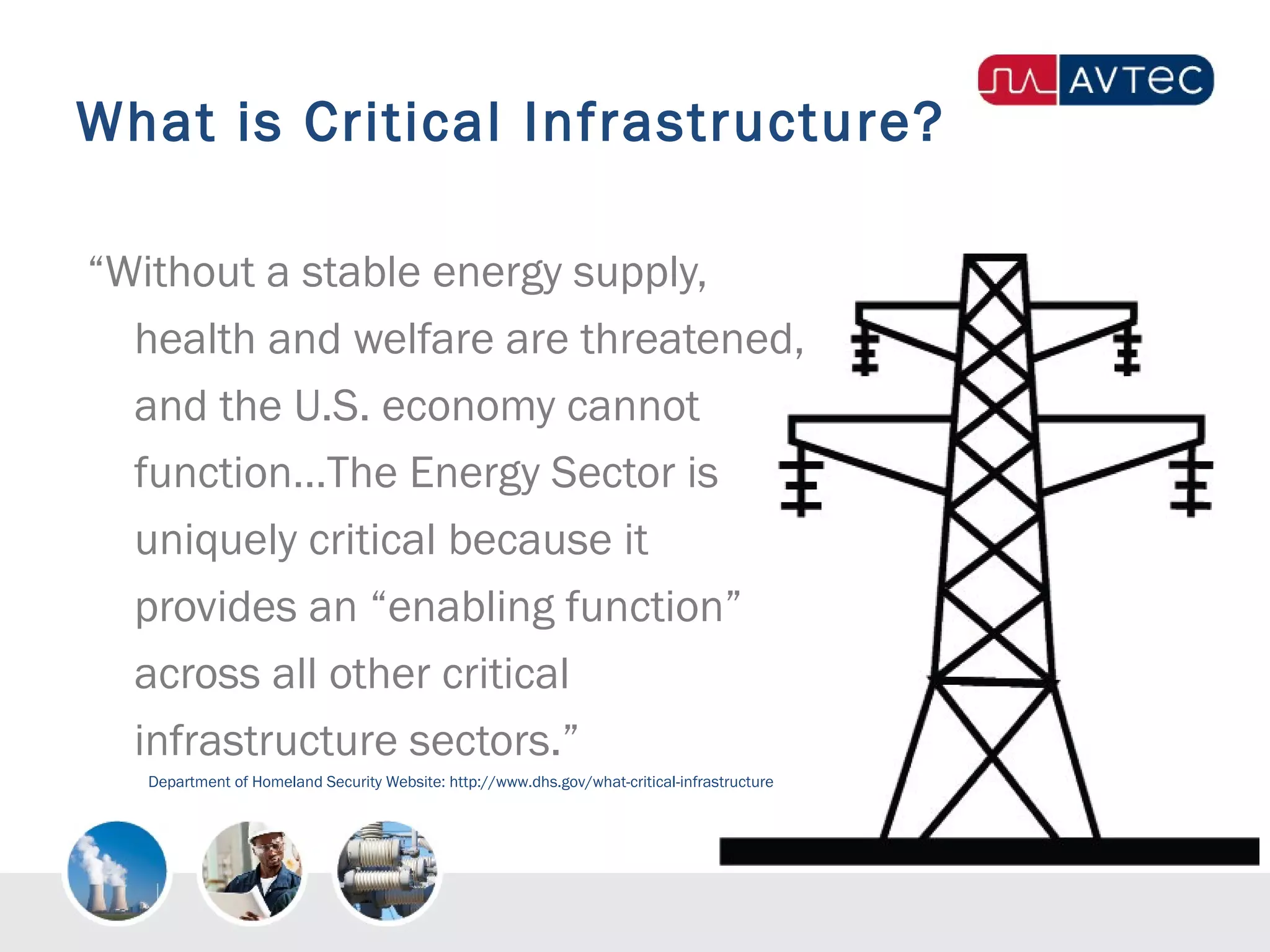
“Without a stable energy supply,
health and welfare are threatened,
and the U.S. economy cannot
function…The Energy Sector is
uniquely critical because it
provides an “enabling function”
across all other critical
infrastructure sectors.”
Department of Homeland Security Website: http://www.dhs.gov/what-critical-infrastructure
An Introduction to TDM
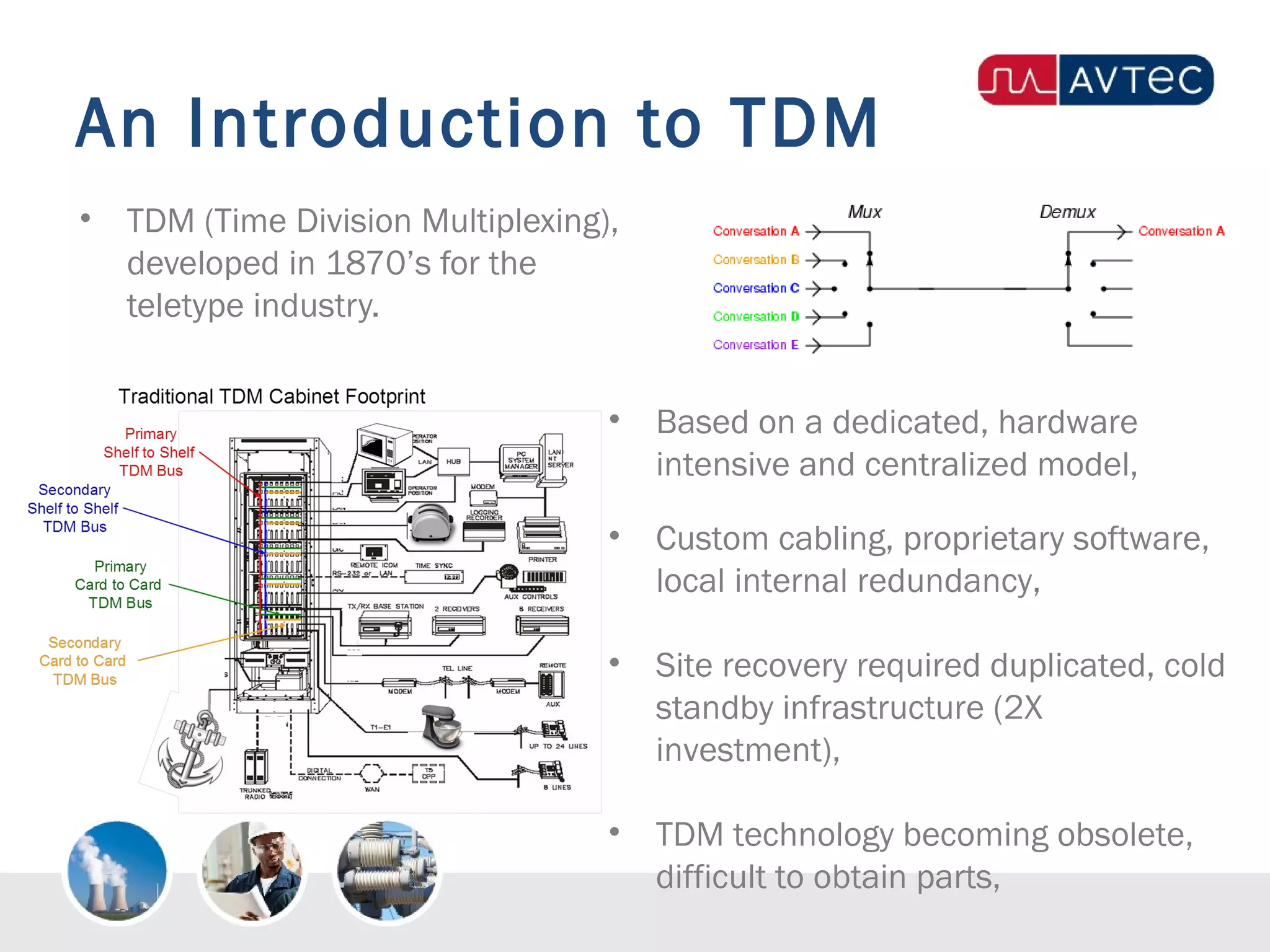
• TDM (Time Division Multiplexing),
developed in 1870’s for the
teletype industry.
• Based on a dedicated, hardware
intensive and centralized model,
• Custom cabling, proprietary software,
local internal redundancy,
• Site recovery required duplicated, cold
standby infrastructure (2X
investment),
• TDM technology becoming obsolete,
difficult to obtain parts,
Contrasting IP to TDM
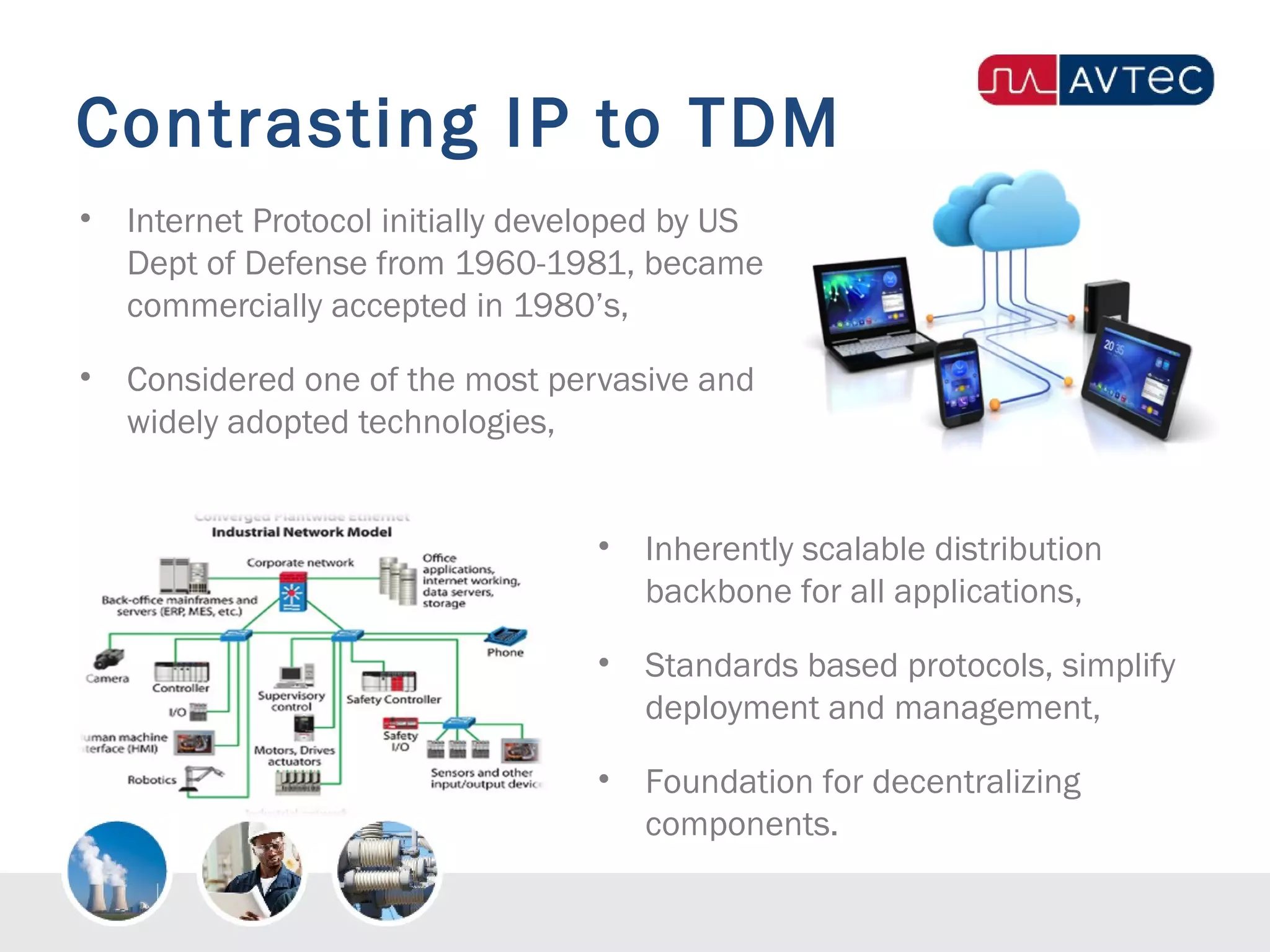
• Internet Protocol initially developed by US
Dept of Defense from 1960-1981, became
commercially accepted in 1980’s,
• Considered one of the most pervasive and
widely adopted technologies,
• Inherently scalable distribution
backbone for all applications,
• Standards based protocols, simplify
deployment and management,
• Foundation for decentralizing
components.
Common practices and
considerations for VoIP
• Private or Enterprise? Do you isolate critical traffic or leverage existing
network?
• Unicast and Multicast? Is the current infrastructure prepared to
support more complicated network requirements?
• Quality of Service vs. Bandwidth…do you have adequate capacity and
what’s the best method to manage priority, real time applications,
• End to end understanding…what do I need to do to make sure my
entire network is ready to support critical voice applications?
Poll Question #1
How would you describe the state of TDM to IP Migration in
your organization?
A. We know IP is coming, but are still evaluating options.
B. We have started to migrate.
C. We’re done.
D. Other
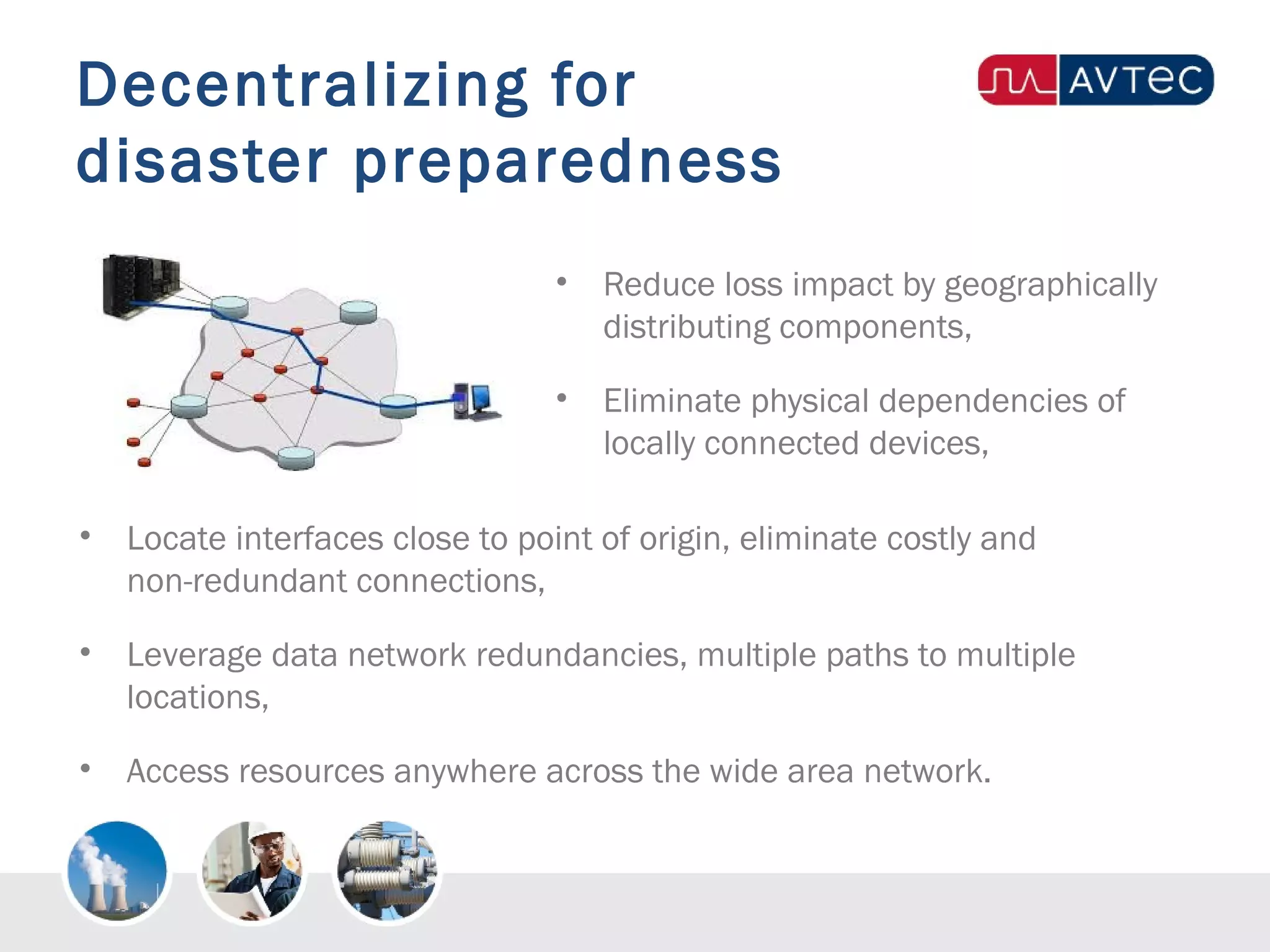
Decentralizing for
disaster preparedness
• Reduce loss impact by geographically
distributing components,
• Eliminate physical dependencies of
locally connected devices,
• Locate interfaces close to point of origin, eliminate costly and
non-redundant connections,
• Leverage data network redundancies, multiple paths to multiple
locations,
• Access resources anywhere across the wide area network.
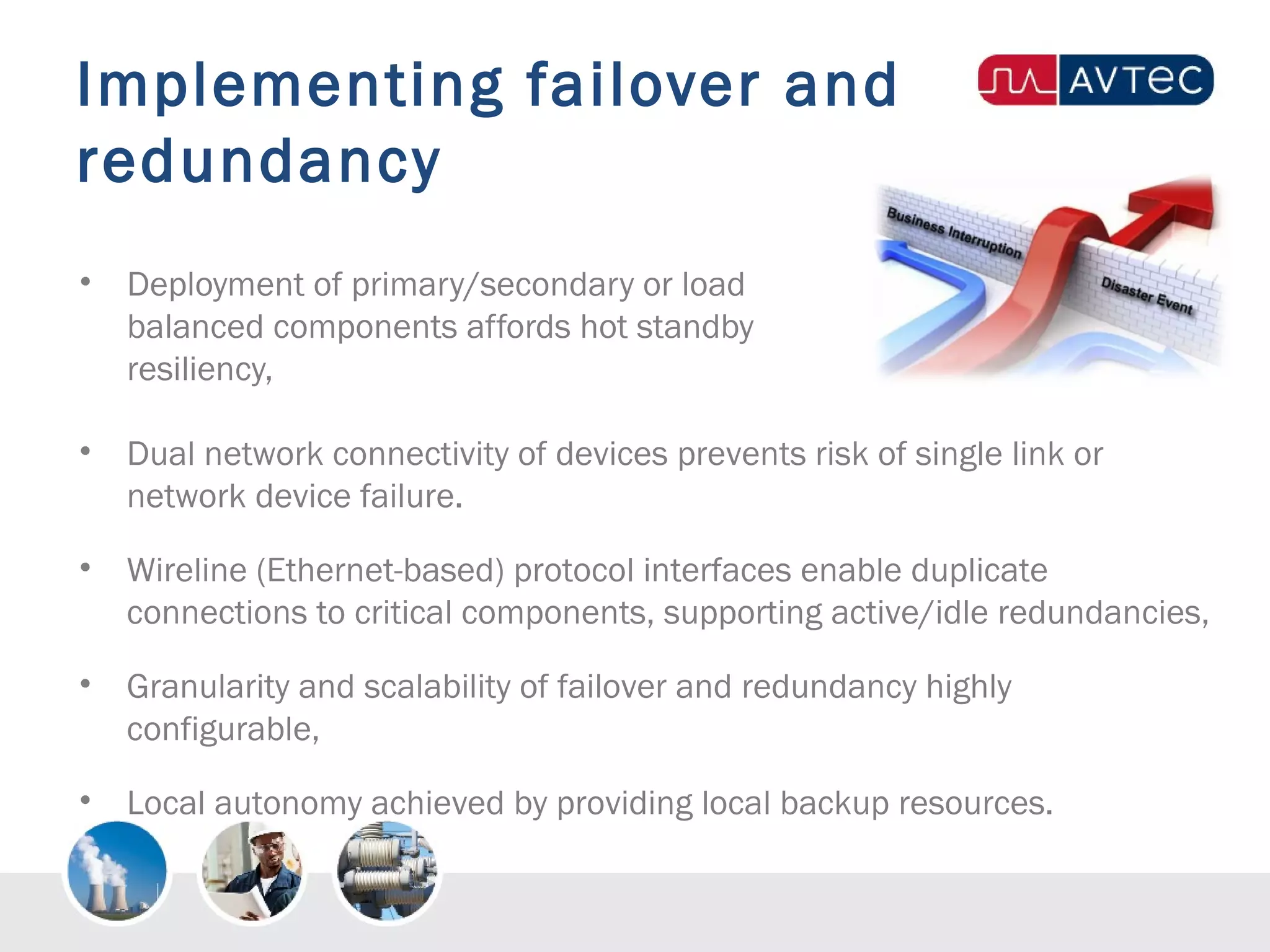
Implementing failover and
redundancy
• Deployment of primary/secondary or load
balanced components affords hot standby
resiliency,
• Dual network connectivity of devices prevents risk of single link or
network device failure.
• Wireline (Ethernet-based) protocol interfaces enable duplicate
connections to critical components, supporting active/idle redundancies,
• Granularity and scalability of failover and redundancy highly
configurable,
• Local autonomy achieved by providing local backup resources.
Network wide portability
and login mobility
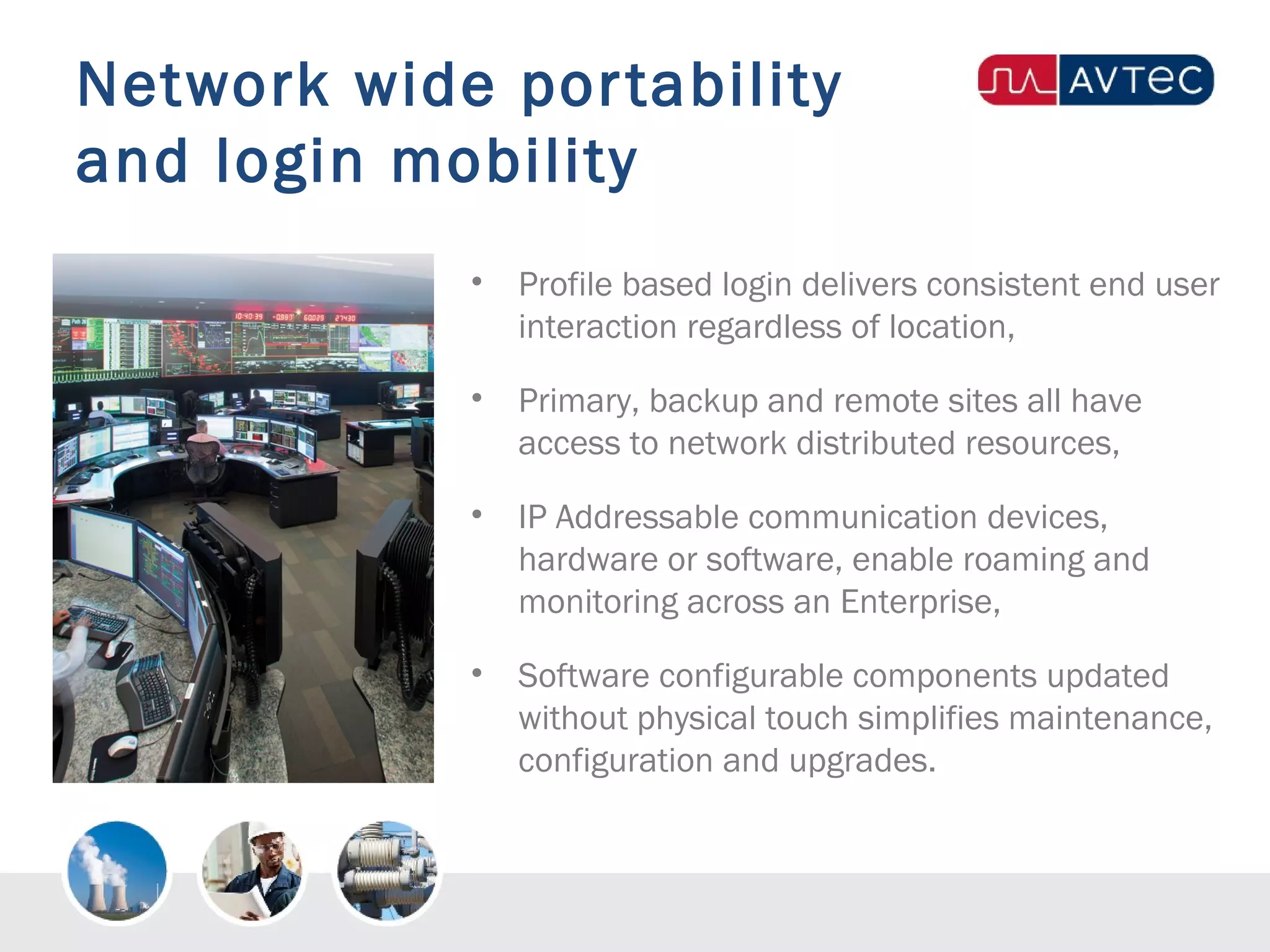
• Profile based login delivers consistent end user
interaction regardless of location,
• Primary, backup and remote sites all have
access to network distributed resources,
• IP Addressable communication devices,
hardware or software, enable roaming and
monitoring across an Enterprise,
• Software configurable components updated
without physical touch simplifies maintenance,
configuration and upgrades.
Interoperability, Integration
and Flexibility
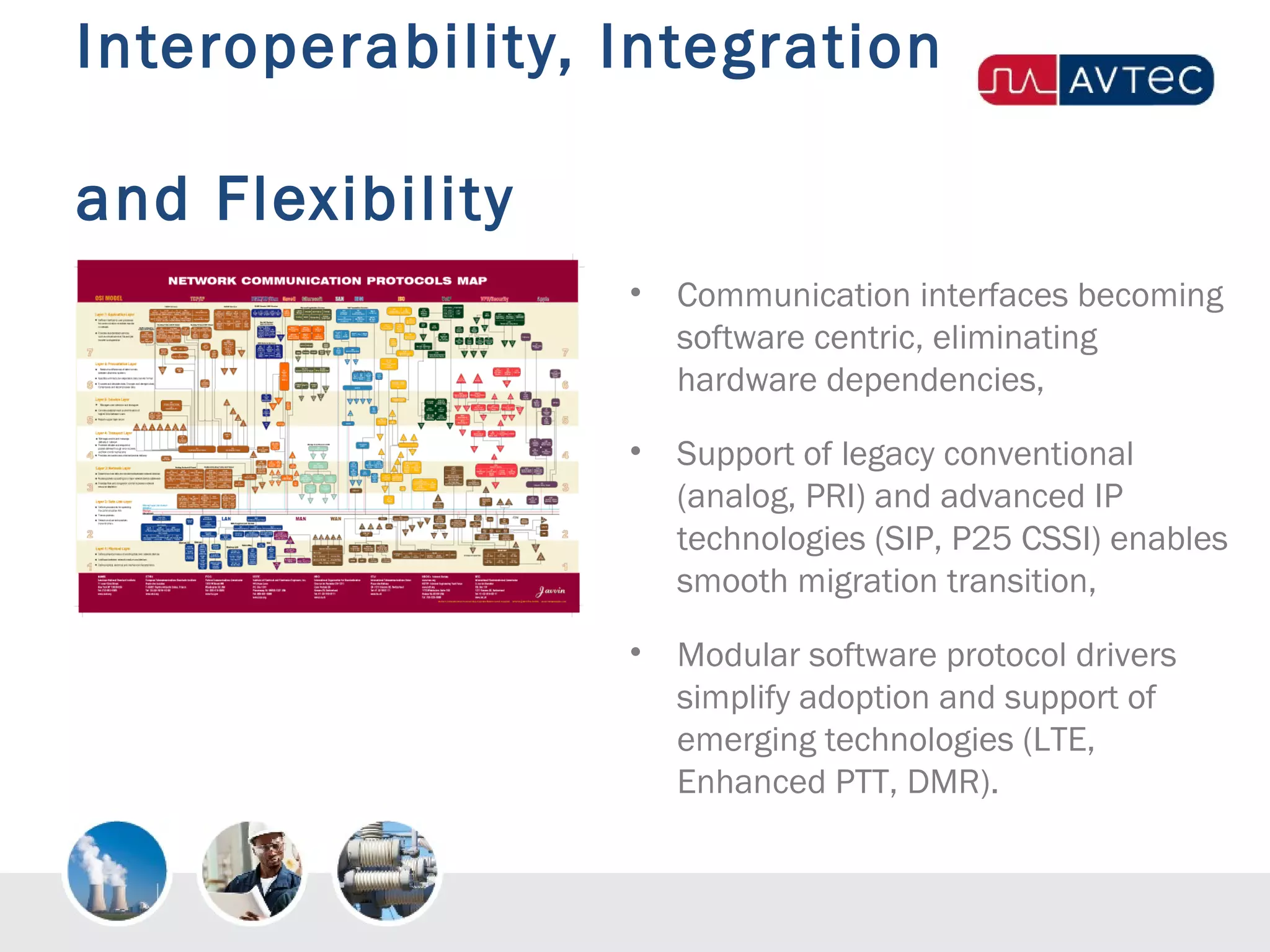
• Communication interfaces becoming
software centric, eliminating
hardware dependencies,
• Support of legacy conventional
(analog, PRI) and advanced IP
technologies (SIP, P25 CSSI) enables
smooth migration transition,
• Modular software protocol drivers
simplify adoption and support of
emerging technologies (LTE,
Enhanced PTT, DMR).
Interoperability, Integration
and Flexibility
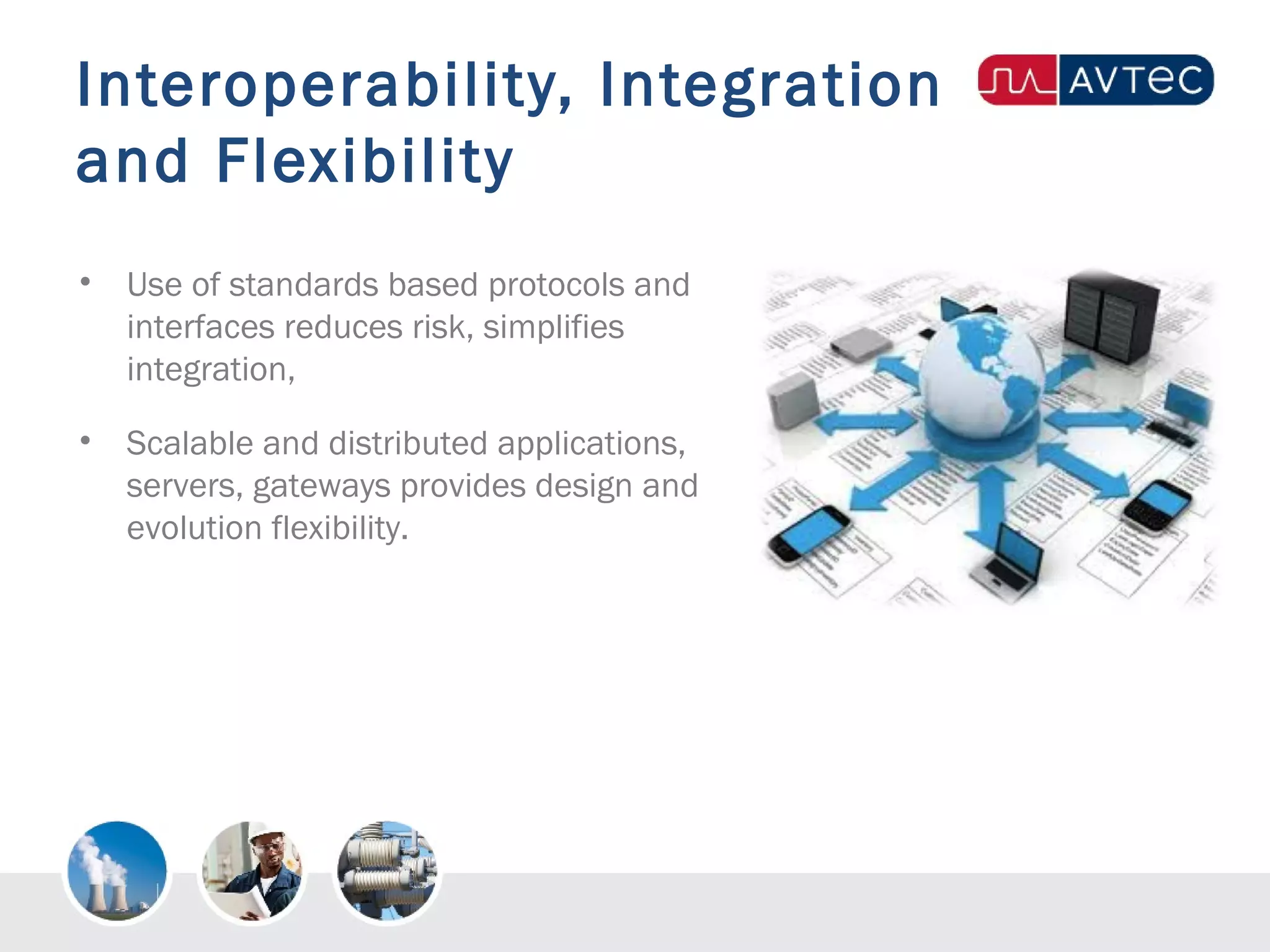
• Use of standards based protocols and
interfaces reduces risk, simplifies
integration,
• Scalable and distributed applications,
servers, gateways provides design and
evolution flexibility.
Poll Question #2
What do you see as the biggest obstacle to TDM-to-IP
Migration in your organization?
A.Time
B.Budget
C.Security concerns
D.Other
E.None, we’re already implementing
In Summary
• Energy delivery is critical to the welfare of the US
population and our economy
• Communications is a crucial component for managing
Utility infrastructure
• TDM technology is dated and obsolete, driving
communications to IP
• IP improves disaster preparedness by geo-diversifying
components
In Summary
• Varying levels of redundancy and increased failover
options provide improved resiliency
• Complete network wide access to IP resources, no
physical dependencies like TDM
• Flexibility to relocate, expand and/or change over time
• Backward and forward compatibility enabling easy
migration between technologies
Poll Question #3
Would you like to speak to a TDM-to-IP migration specialist?
A.Yes please! I have some questions.
B.No thanks. I’m good for the time being.
Questions?

Utilities: TDM to IP

  • 1.
    Critical Considerations For Successful TDMto IP Migration Kevin Sumrell Vice President of Utility and Public Safety Sales for Avtec, Inc.
  • 2.
    A little housekeepingbefore we get started…. Listen only mode Q&A Polls Recording
  • 3.
    About the Speaker KevinSumrell is vice president of utility and public safety sales for Avtec, Inc., the leading provider of mission-critical console systems in North America. Sumrell’s key responsibilities include direct and strategic partner sales of Avtec’s market leading voice over IP console systems.  Sumrell brings nearly 25 years of engineering, product, and management experience to the Avtec organization. He joined Avtec in 2008 as the director of eastern region sales, became vice president of channel partner sales managing the building of Avtec’s indirect sales team and channel, and is now responsible for the continued development of Avtec’s presence in the utility and public safety markets.
  • 4.
    Todays Agenda: • Acomparison of TDM and IP. • Decentralizing for disaster preparedness. • Failover and redundancy. • Network wide portability and login mobility. •
  • 5.
    What is CriticalInfrastructure? “Critical infrastructure is the backbone of our nation's economy, security and health. We know it as the power we use in our homes, the water we drink, the transportation that moves us, and the communication systems we rely on to stay in touch with friends and family.”
  • 6.
    What is CriticalInfrastructure? “Without a stable energy supply, health and welfare are threatened, and the U.S. economy cannot function…The Energy Sector is uniquely critical because it provides an “enabling function” across all other critical infrastructure sectors.” Department of Homeland Security Website: http://www.dhs.gov/what-critical-infrastructure
  • 7.
    An Introduction toTDM • TDM (Time Division Multiplexing), developed in 1870’s for the teletype industry. • Based on a dedicated, hardware intensive and centralized model, • Custom cabling, proprietary software, local internal redundancy, • Site recovery required duplicated, cold standby infrastructure (2X investment), • TDM technology becoming obsolete, difficult to obtain parts,
  • 8.
    Contrasting IP toTDM • Internet Protocol initially developed by US Dept of Defense from 1960-1981, became commercially accepted in 1980’s, • Considered one of the most pervasive and widely adopted technologies, • Inherently scalable distribution backbone for all applications, • Standards based protocols, simplify deployment and management, • Foundation for decentralizing components.
  • 9.
    Common practices and considerationsfor VoIP • Private or Enterprise? Do you isolate critical traffic or leverage existing network? • Unicast and Multicast? Is the current infrastructure prepared to support more complicated network requirements? • Quality of Service vs. Bandwidth…do you have adequate capacity and what’s the best method to manage priority, real time applications, • End to end understanding…what do I need to do to make sure my entire network is ready to support critical voice applications?
  • 10.
    Poll Question #1 Howwould you describe the state of TDM to IP Migration in your organization? A. We know IP is coming, but are still evaluating options. B. We have started to migrate. C. We’re done. D. Other
  • 11.
    Decentralizing for disaster preparedness •Reduce loss impact by geographically distributing components, • Eliminate physical dependencies of locally connected devices, • Locate interfaces close to point of origin, eliminate costly and non-redundant connections, • Leverage data network redundancies, multiple paths to multiple locations, • Access resources anywhere across the wide area network.
  • 12.
    Implementing failover and redundancy •Deployment of primary/secondary or load balanced components affords hot standby resiliency, • Dual network connectivity of devices prevents risk of single link or network device failure. • Wireline (Ethernet-based) protocol interfaces enable duplicate connections to critical components, supporting active/idle redundancies, • Granularity and scalability of failover and redundancy highly configurable, • Local autonomy achieved by providing local backup resources.
  • 13.
    Network wide portability andlogin mobility • Profile based login delivers consistent end user interaction regardless of location, • Primary, backup and remote sites all have access to network distributed resources, • IP Addressable communication devices, hardware or software, enable roaming and monitoring across an Enterprise, • Software configurable components updated without physical touch simplifies maintenance, configuration and upgrades.
  • 14.
    Interoperability, Integration and Flexibility •Communication interfaces becoming software centric, eliminating hardware dependencies, • Support of legacy conventional (analog, PRI) and advanced IP technologies (SIP, P25 CSSI) enables smooth migration transition, • Modular software protocol drivers simplify adoption and support of emerging technologies (LTE, Enhanced PTT, DMR).
  • 15.
    Interoperability, Integration and Flexibility •Use of standards based protocols and interfaces reduces risk, simplifies integration, • Scalable and distributed applications, servers, gateways provides design and evolution flexibility.
  • 16.
    Poll Question #2 Whatdo you see as the biggest obstacle to TDM-to-IP Migration in your organization? A.Time B.Budget C.Security concerns D.Other E.None, we’re already implementing
  • 17.
    In Summary • Energydelivery is critical to the welfare of the US population and our economy • Communications is a crucial component for managing Utility infrastructure • TDM technology is dated and obsolete, driving communications to IP • IP improves disaster preparedness by geo-diversifying components
  • 18.
    In Summary • Varyinglevels of redundancy and increased failover options provide improved resiliency • Complete network wide access to IP resources, no physical dependencies like TDM • Flexibility to relocate, expand and/or change over time • Backward and forward compatibility enabling easy migration between technologies
  • 19.
    Poll Question #3 Wouldyou like to speak to a TDM-to-IP migration specialist? A.Yes please! I have some questions. B.No thanks. I’m good for the time being.
  • 20.