DISEASE
DESCRIPTION
EPIDEMIOLOGY
PATHOGENESIS
CLINICALSIGNS
LESIONS
DIAGNOSIS
DIFFERENTIAL
DIAGNOSIS
TREATMENT
PREVENTION
ANDCONTROL
COLIC This term
means
abdominal
pain.
Consequentl
y used to
refer to
conditions of
widely
varying
eteologies
and severity.
Occurs
worldwide
and all
horses are
susceptible
.
1. Simple obstructrion
- obstruction of the
intestine, which can be
due to impacted food
material, stricture
formation, or foreign
bodies.
2. Strangulation
obstruction
- due to obstruction, the
blood vessels are affected
due to intussusceptions,
volvulus and
displacement of the
intestine through a hole
or hernia
3. Non-strangulating
infarction
- the blood supply is
occluded, without any
obstruction to ingesta
present within the
intestinal lumen. The
most common cause is
infection with strongylus
vulgaris larvae which
develops within the
mesenteric artery.
Pawing repeatedly
with the front
foot, looking back
at the front
region, curling the
upper lip and
arching the neck,
repeatedly raising
a rear leg or
kicking of the
abdomen, lying
down, rolling from
side to side,
sweating
stretching out as if
to urinate,
straining to
defecate,
distention of the
abdomen, loss of
appetite,
depression and
decreased number
of bowel
movements.
Excessively
stretched
intestinal wall,
intestinal
displacement,
ischemia, and
inflammation
of the
intestines.
Physical
examination,
peritoneal fluid
sampling,
ultrasonograph
y.
Intestinal
intussusception
, umbilical
hernia, ileus.
1.Pain relief- use
NSAIDs
2.Fluid therapy-
hypertonic saline
solution
3.Intestinal
lubricants and
laxatives- mineral
oildioctyl sodium
sulfosuccinate(DSS
)
1.Feed the
horse of what
it only needs.
2.Stick with a
certain
feeding
program.
3.Removal of
manure from
paddocks or
field.
4.Use of
dewormers.
Equine colic(digestive disease)

Equine colic(digestive disease)

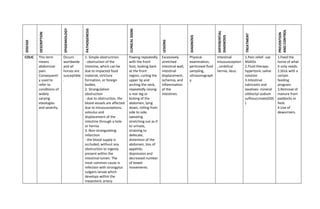
  • 1.
    DISEASE DESCRIPTION EPIDEMIOLOGY PATHOGENESIS CLINICALSIGNS LESIONS DIAGNOSIS DIFFERENTIAL DIAGNOSIS TREATMENT PREVENTION ANDCONTROL COLIC This term means abdominal pain. Consequentl yused to refer to conditions of widely varying eteologies and severity. Occurs worldwide and all horses are susceptible . 1. Simple obstructrion - obstruction of the intestine, which can be due to impacted food material, stricture formation, or foreign bodies. 2. Strangulation obstruction - due to obstruction, the blood vessels are affected due to intussusceptions, volvulus and displacement of the intestine through a hole or hernia 3. Non-strangulating infarction - the blood supply is occluded, without any obstruction to ingesta present within the intestinal lumen. The most common cause is infection with strongylus vulgaris larvae which develops within the mesenteric artery. Pawing repeatedly with the front foot, looking back at the front region, curling the upper lip and arching the neck, repeatedly raising a rear leg or kicking of the abdomen, lying down, rolling from side to side, sweating stretching out as if to urinate, straining to defecate, distention of the abdomen, loss of appetite, depression and decreased number of bowel movements. Excessively stretched intestinal wall, intestinal displacement, ischemia, and inflammation of the intestines. Physical examination, peritoneal fluid sampling, ultrasonograph y. Intestinal intussusception , umbilical hernia, ileus. 1.Pain relief- use NSAIDs 2.Fluid therapy- hypertonic saline solution 3.Intestinal lubricants and laxatives- mineral oildioctyl sodium sulfosuccinate(DSS ) 1.Feed the horse of what it only needs. 2.Stick with a certain feeding program. 3.Removal of manure from paddocks or field. 4.Use of dewormers.