Using Web 2.0 Principles to Become Librarian 2.0   NOTSL Spring 2007 Program - May 24th, 2007   Brian C. Gray  Case Western Reserve University  [email_address]
EXPECTATIONS FOR TODAY What is Web 2.0? Why should we care? Library 2.0 Benefits for users & us Or, how do we “play”
My Personal Interest in Web 2.0 RSS workshop & help with 3 blogs at KSL ALA Library 2.0 participant ALA LAMA Web Coordinator Blogs, RSS, Wiki, Communities Teach workshop for KSU SLIS Regular IM user Non-IT person that likes to “play”
Reasons Why We Must Care Competition to libraries Alternatives: marketing & communication New publishing practices User awareness Efficiency “Buzz” word right now Users are unaware of us  or  are creating alternatives to library resources
 
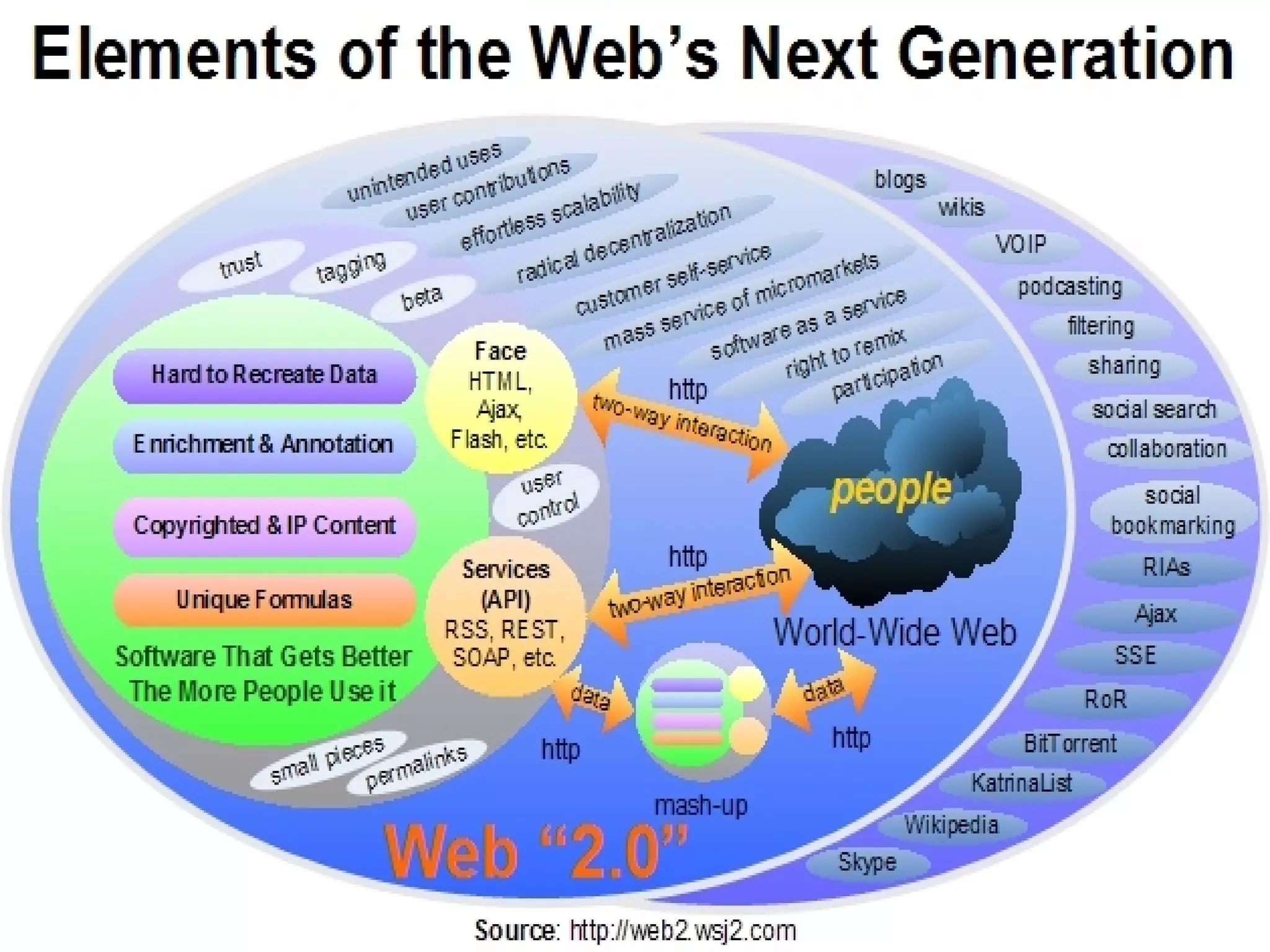
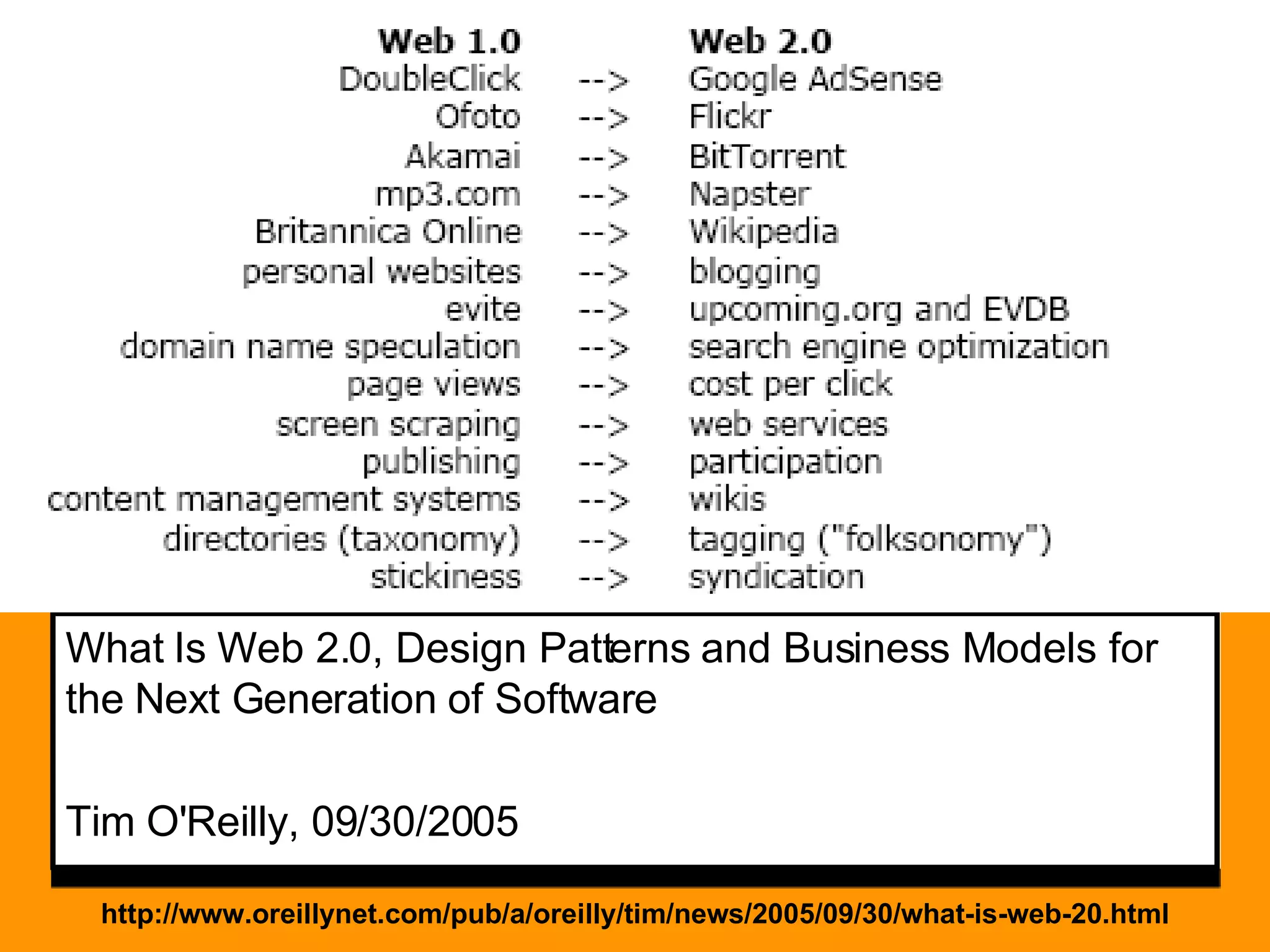
What Is Web 2.0, Design Patterns and Business Models for the Next Generation of Software Tim O'Reilly, 09/30/2005 http://www.oreillynet.com/pub/a/oreilly/tim/news/2005/09/30/what-is-web-20.html
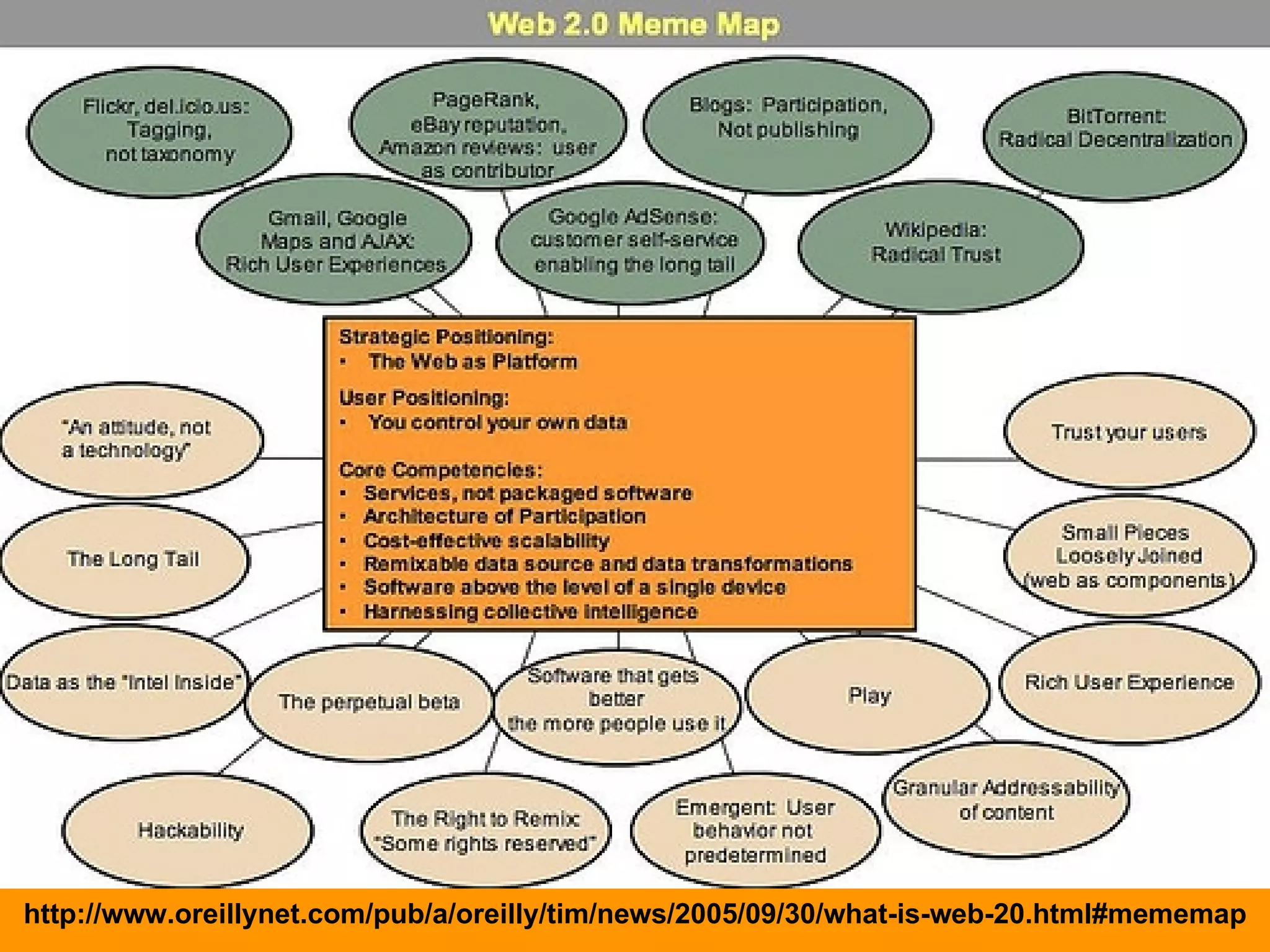
Coined by O'Reilly Media (2004) http://www.oreillynet.com/pub/a/oreilly/tim/news/2005/09/30/what-is-web-20.html#mememap
Key Concepts Collaboration & Sharing Ownership & Participation Creation Web-based rather than software based Data & Information Social Connections & Relationships Trust
More Concepts Enrichment Personal data/identity Decentralized User “tagged” or defined Experience Services Remixable Behavior
Library 2.0 Coined by Michael Casey on his blog LibraryCrunch Some major library contributors: Stephen Abram John Blyberg Michael E. Casey Jenny Levine Paul Miller Michael Stephens
Library 2.0 Concepts Delivery Constant & purposeful change Adaptation User designed &/or created Participation User feedback 2-way information exchange Reaching new users
Warnings (or My Thoughts) What do users want &/or expect? Investment in technology &/or time? What are users doing on their own? How can users contribute?
 
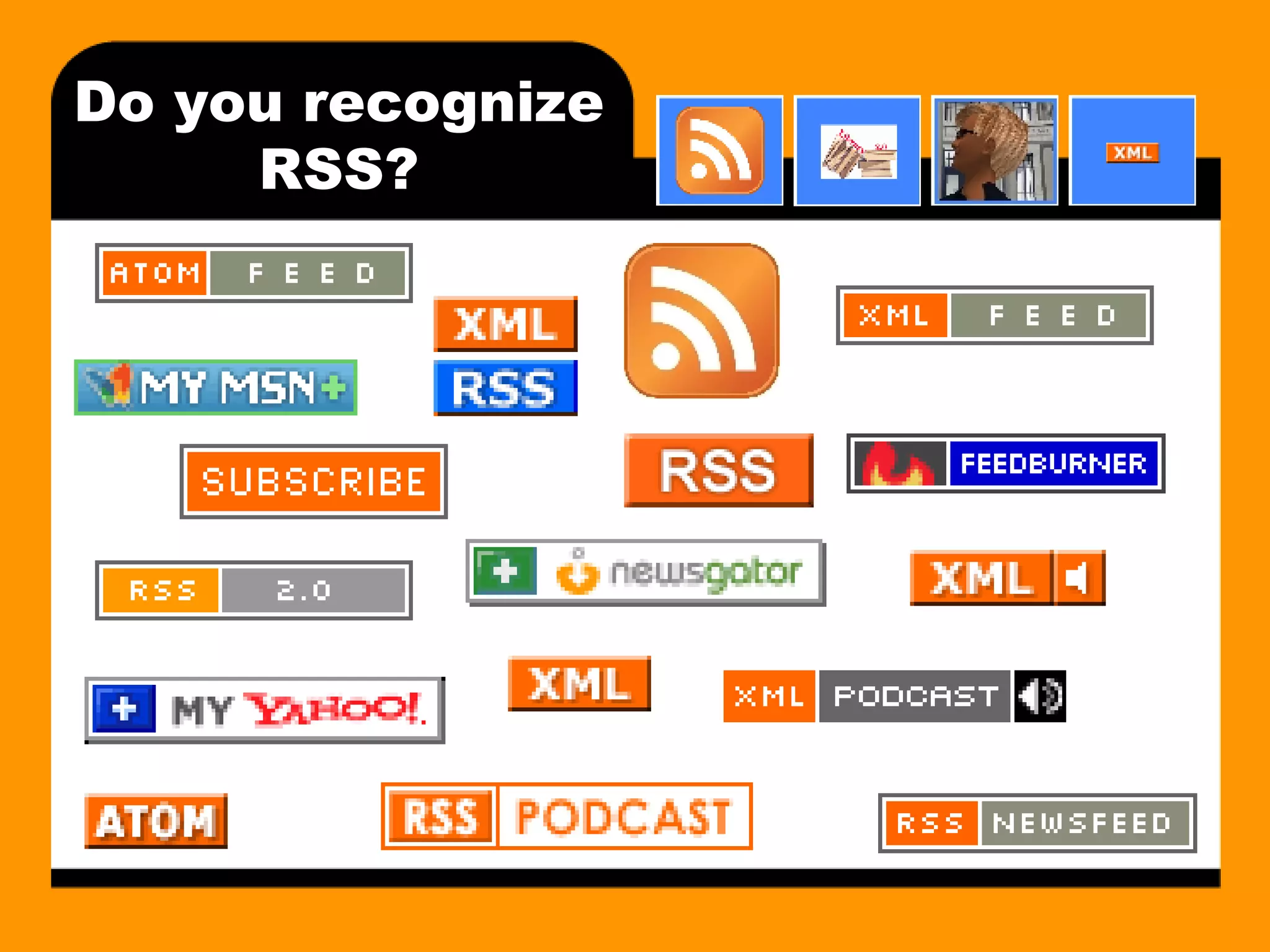
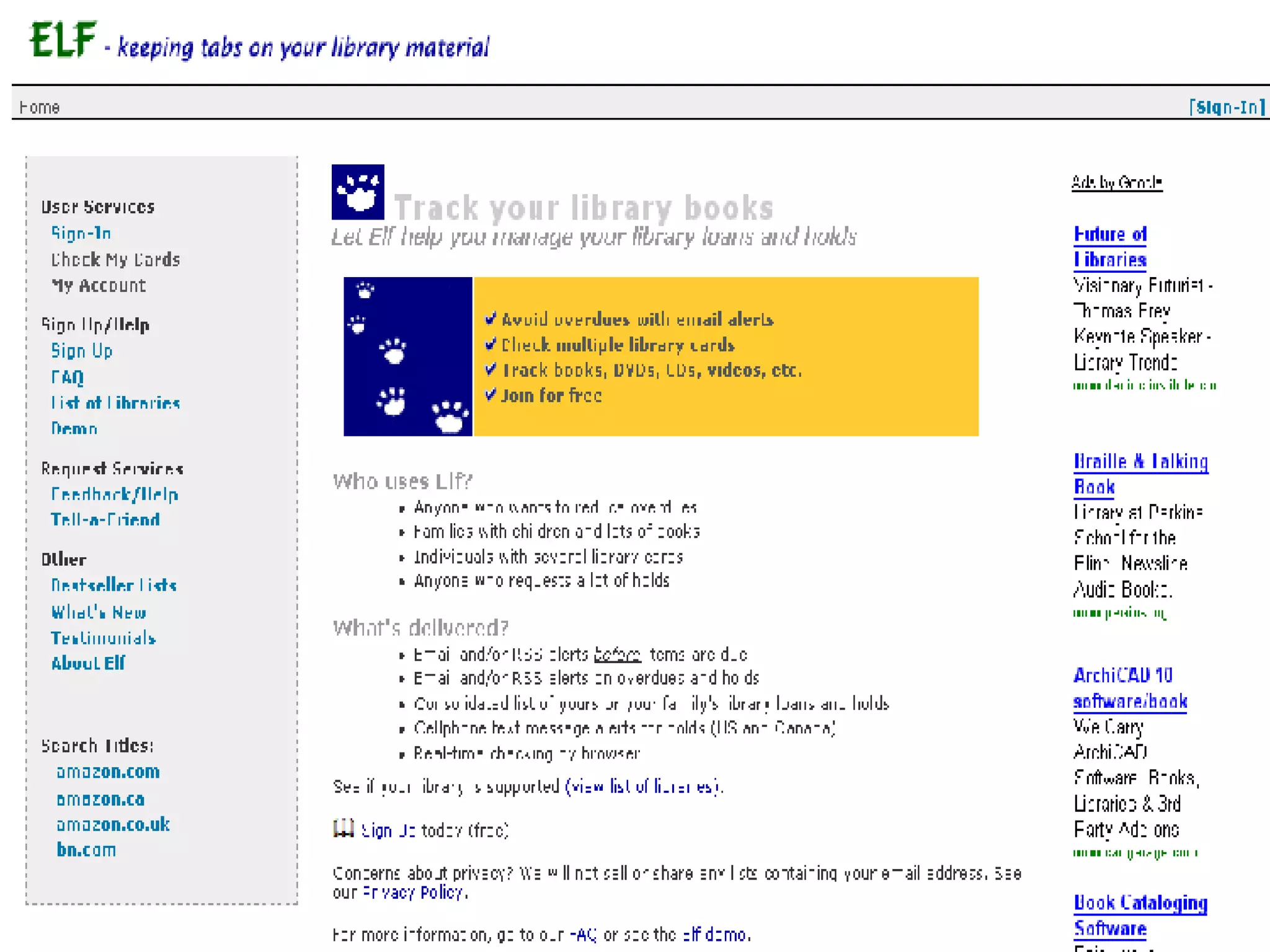
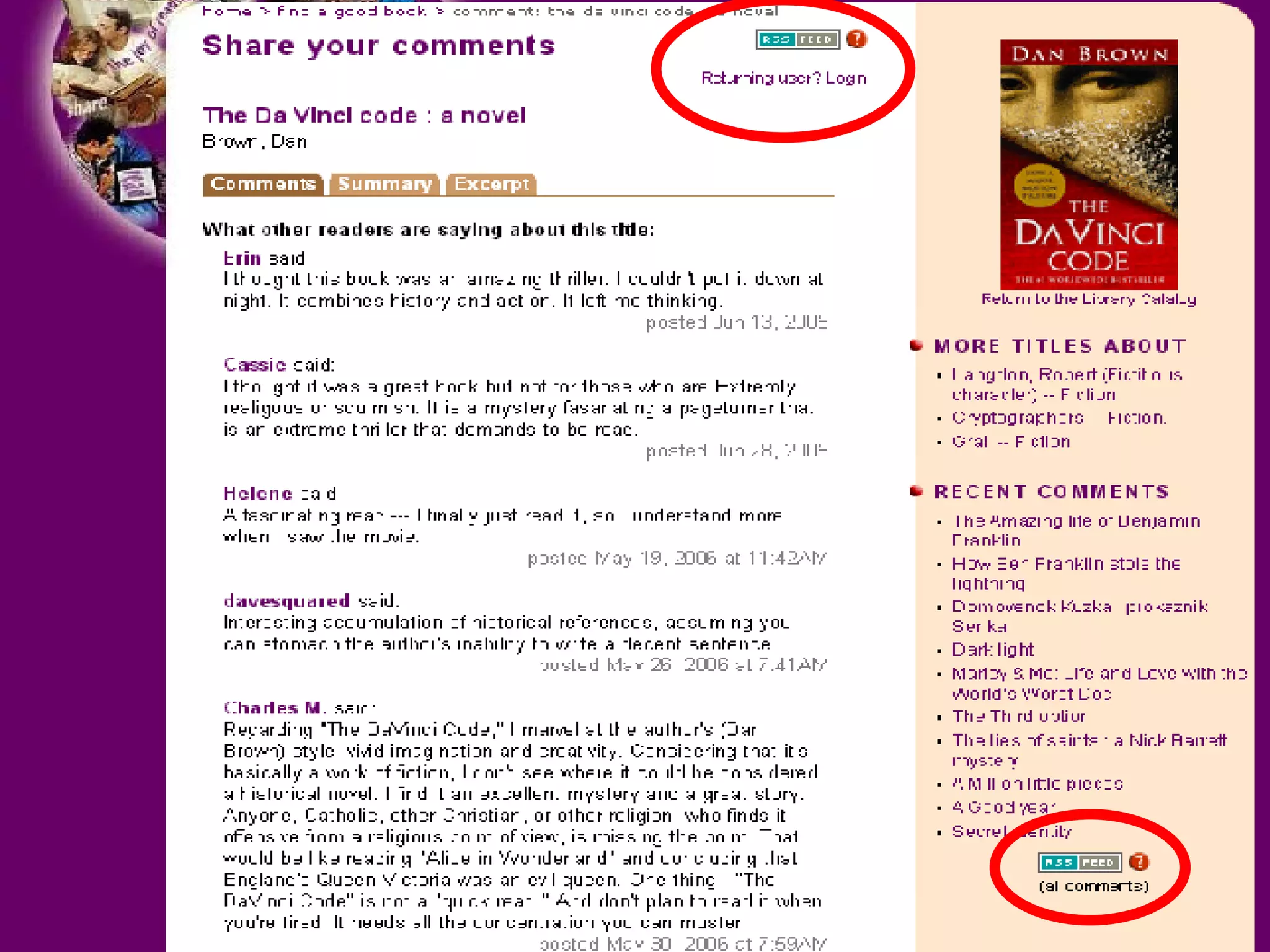
Do you recognize RSS?
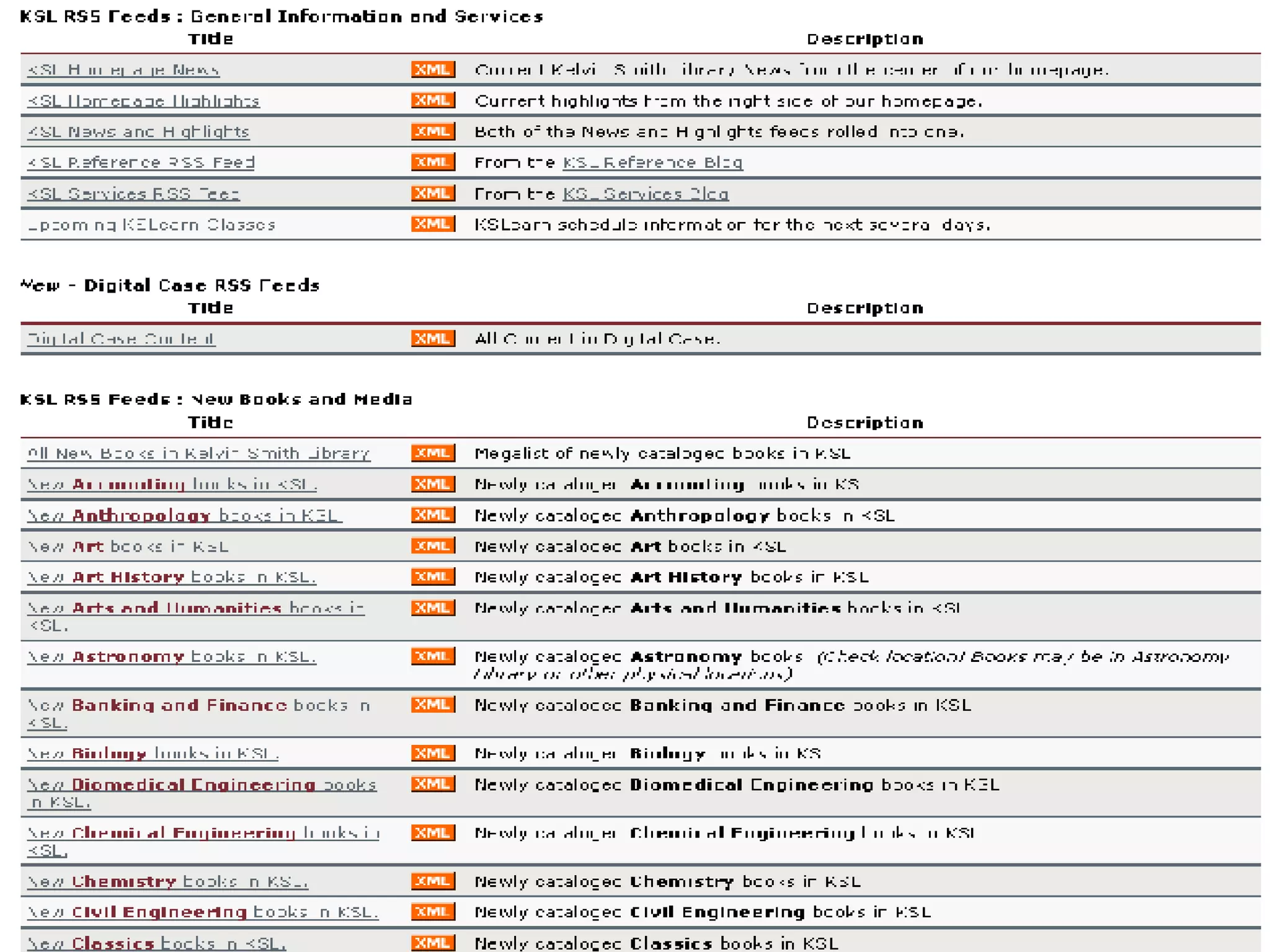
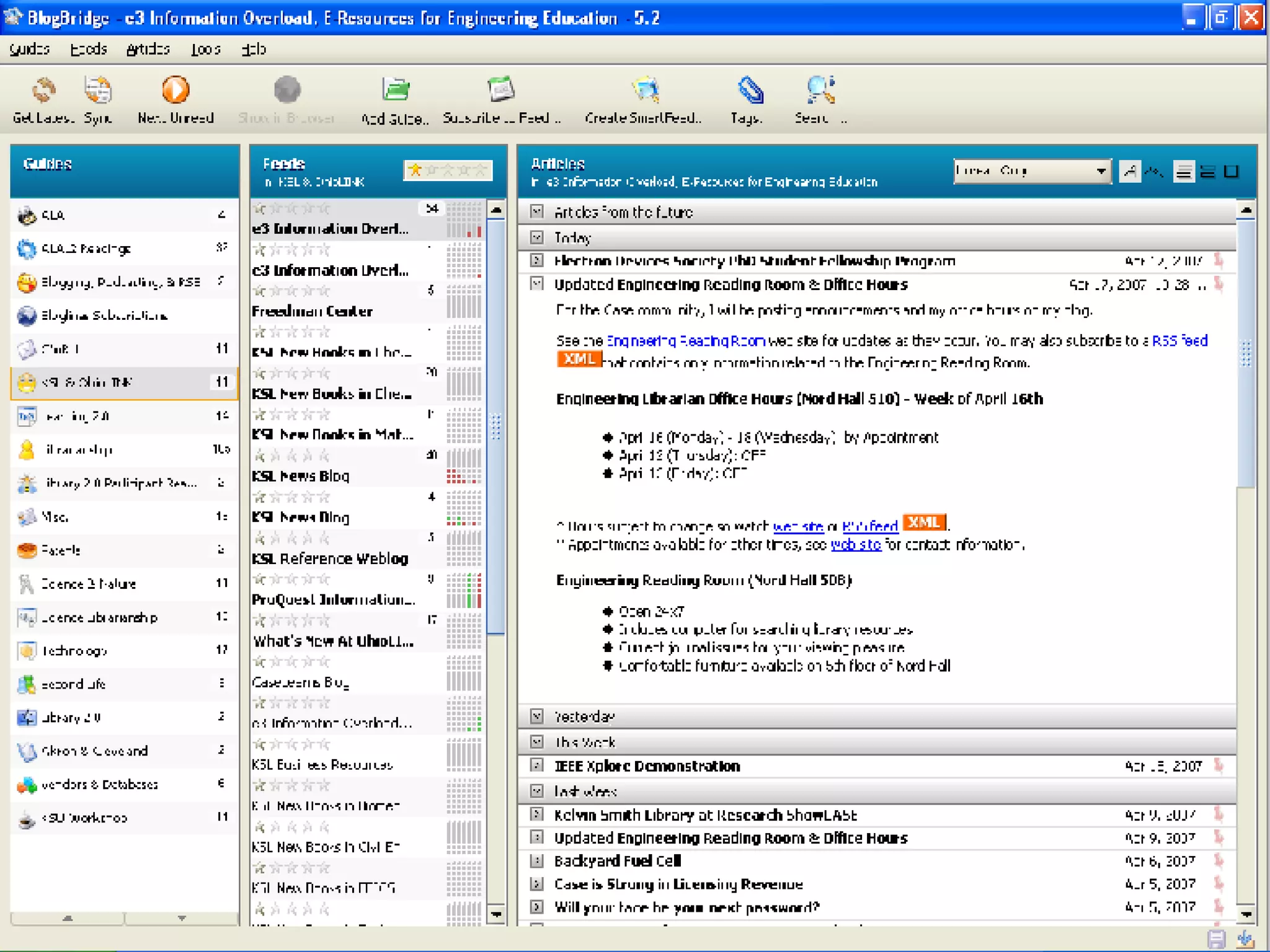
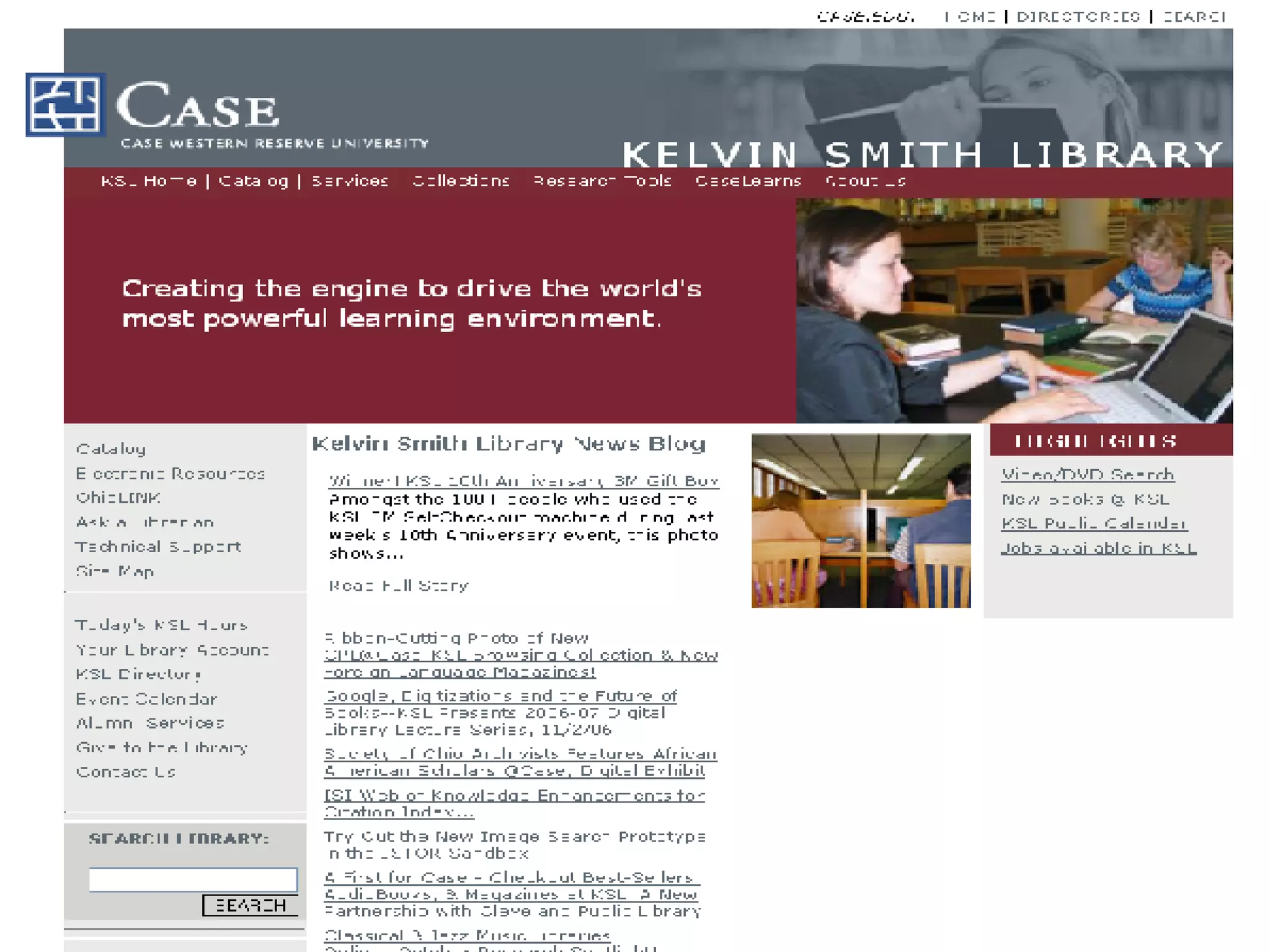
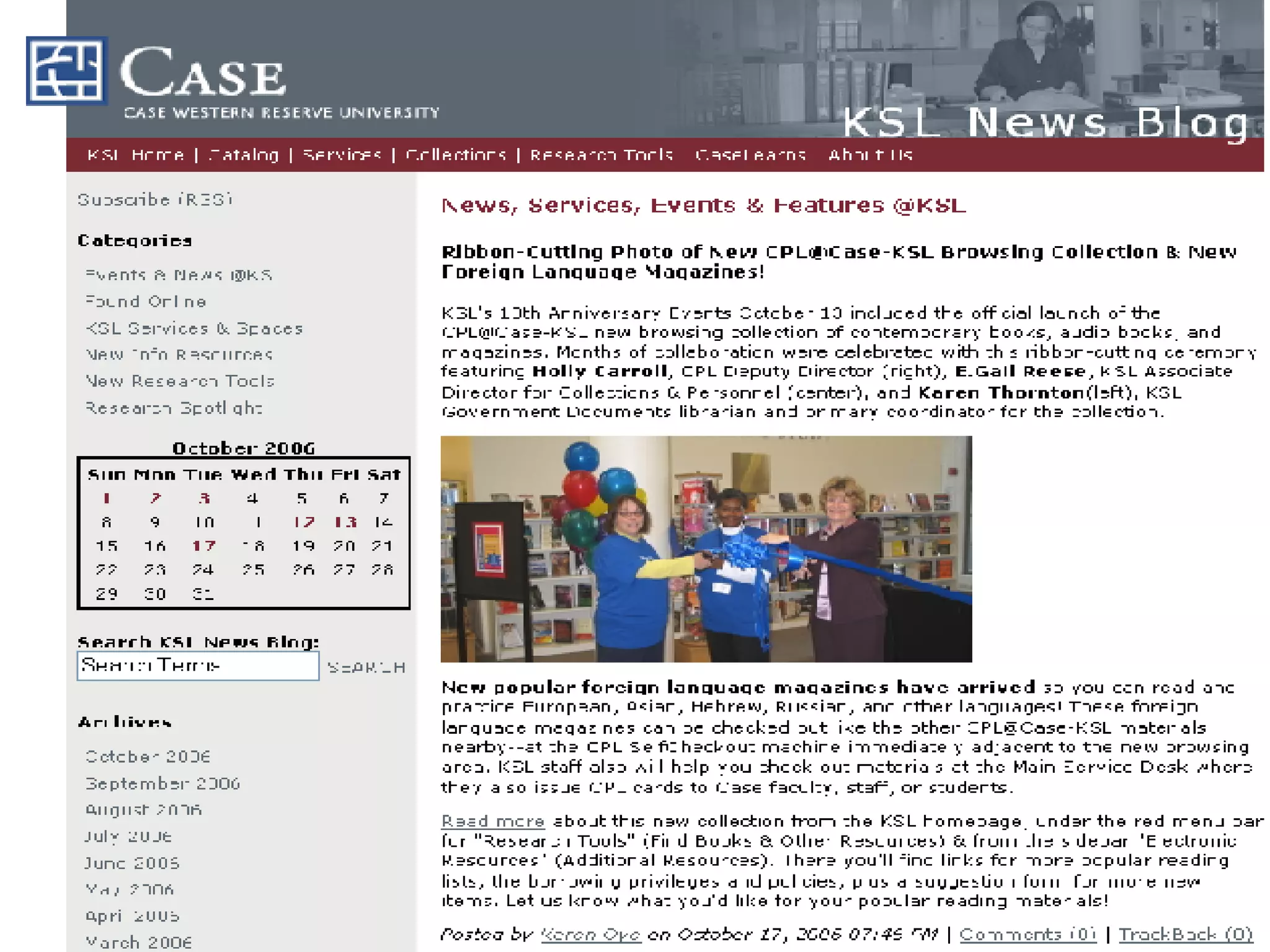
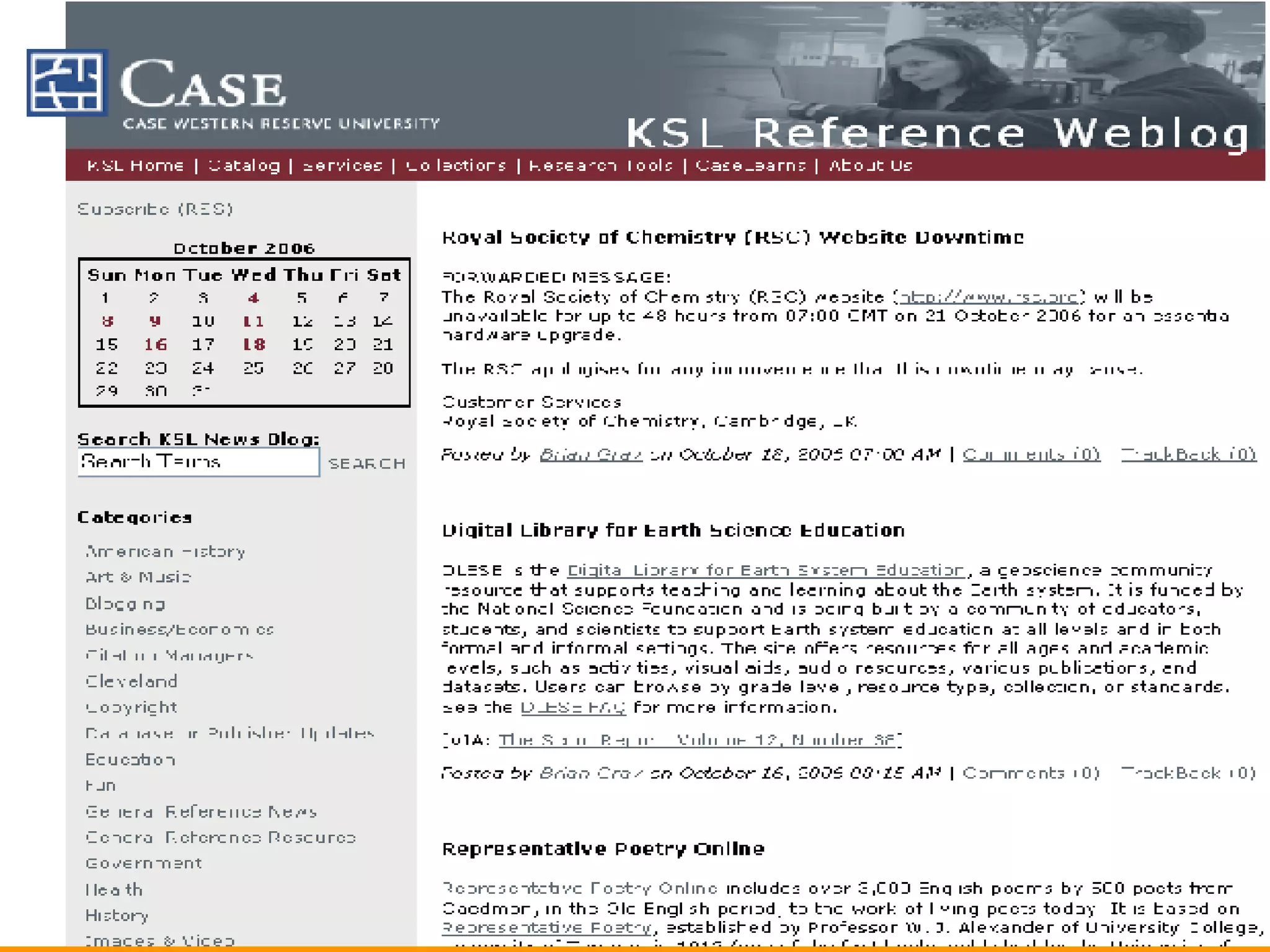
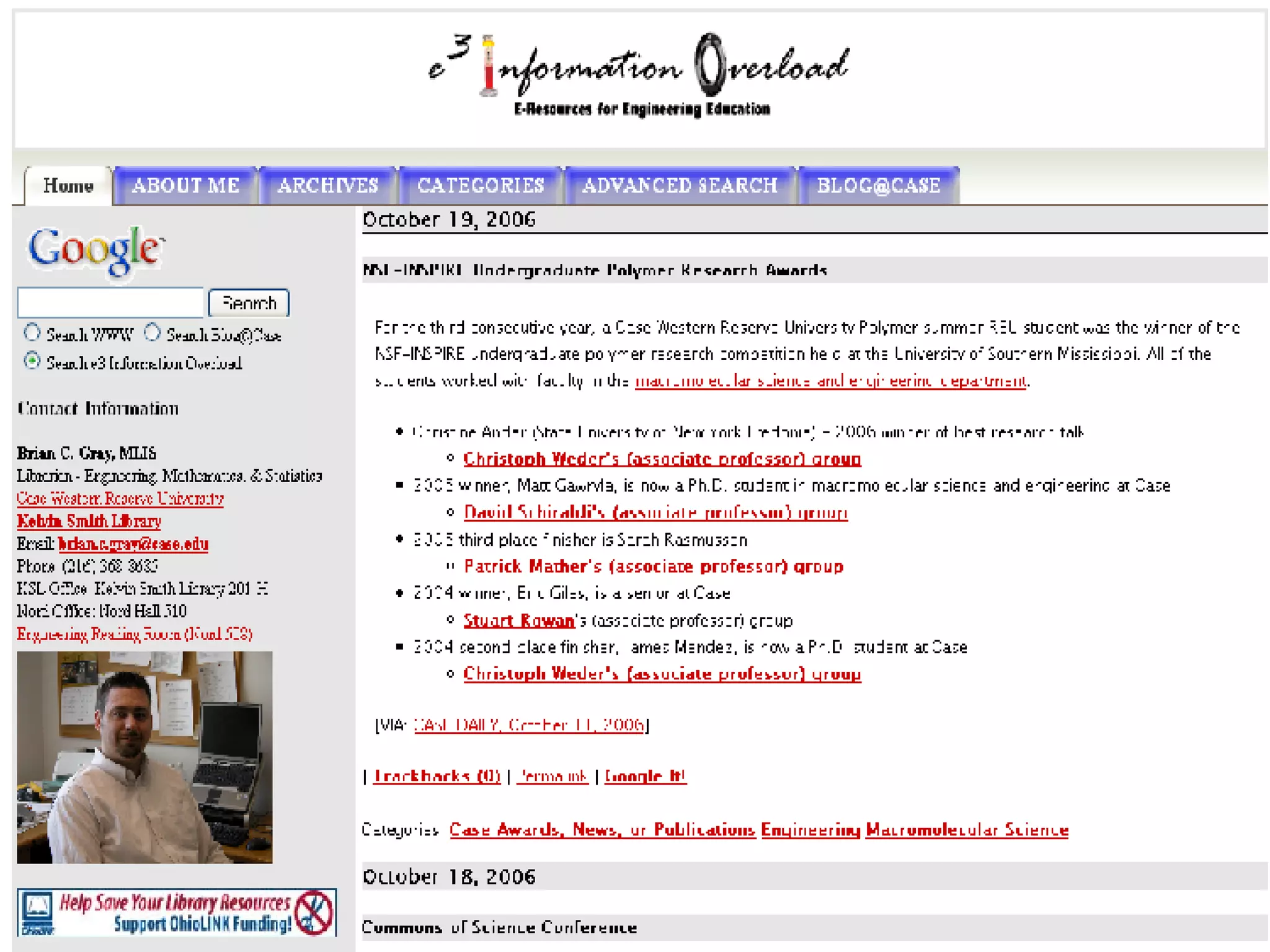
KSL RSS Feeds
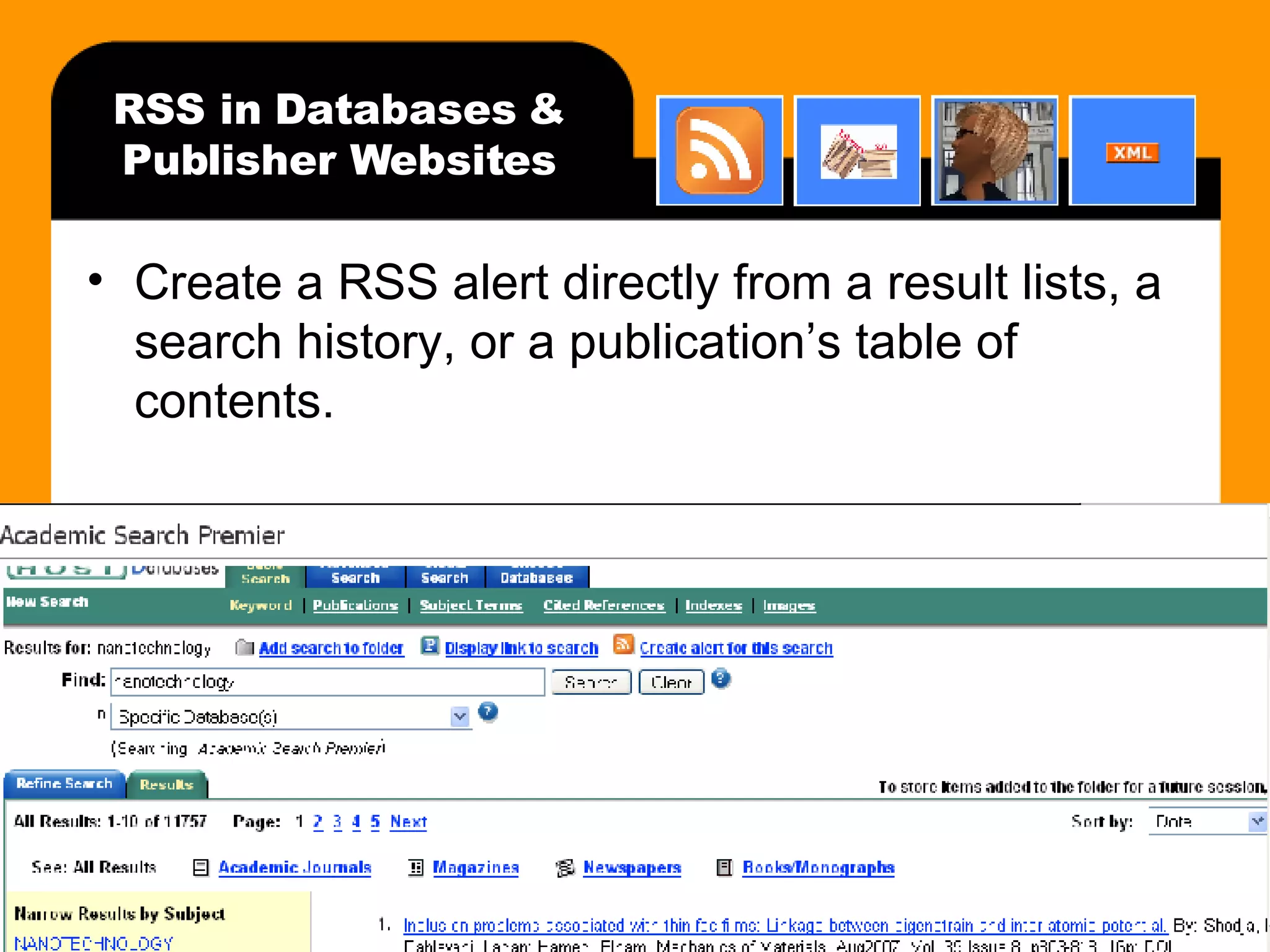
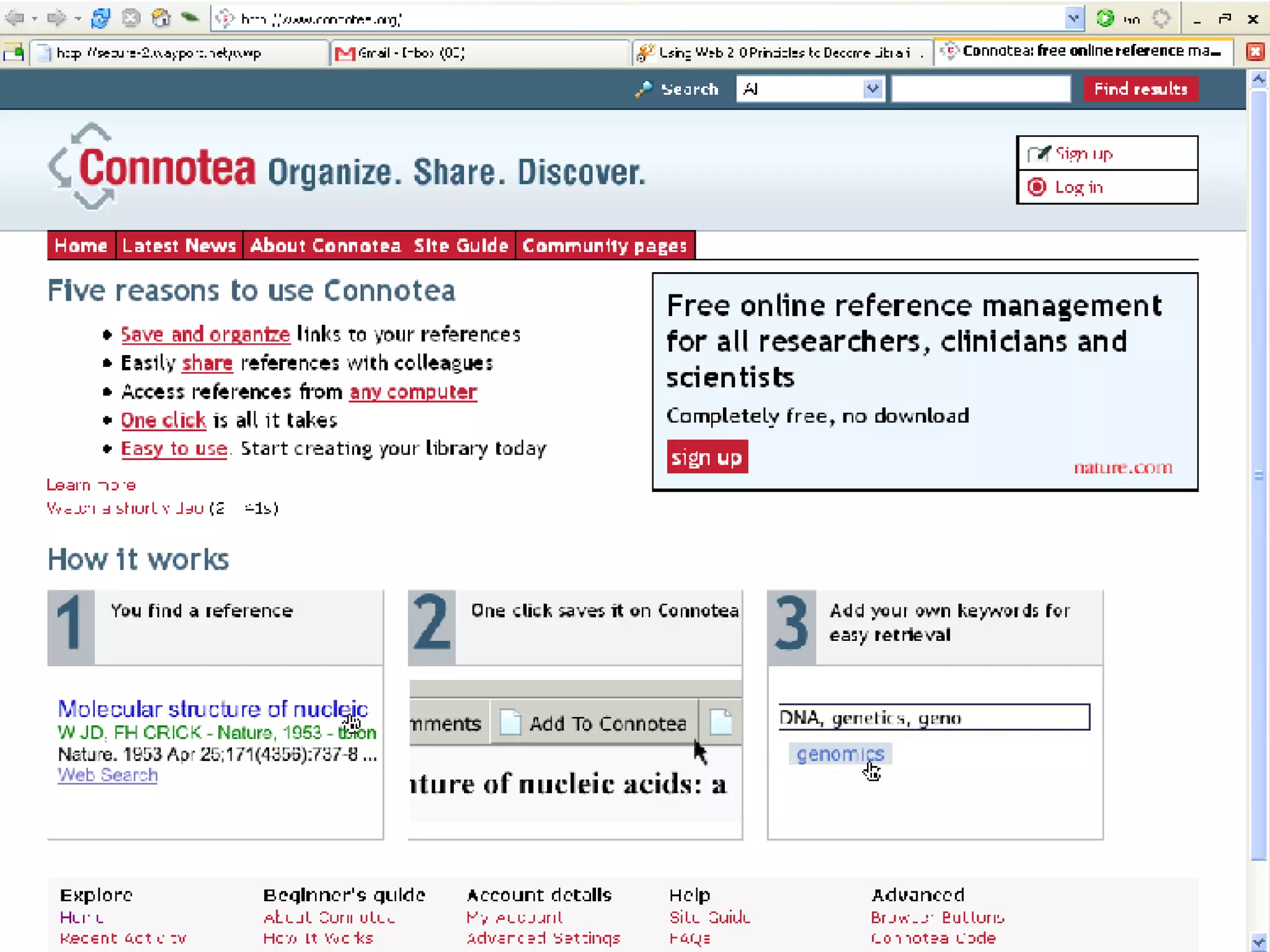
RSS in Databases & Publisher Websites Create a RSS alert directly from a result lists, a search history, or a publication’s table of contents.
RSS and OPML OPML can be shared so everyone has access to the same content Promote to instructors as a tool for creating reading lists Library recommended sites
 
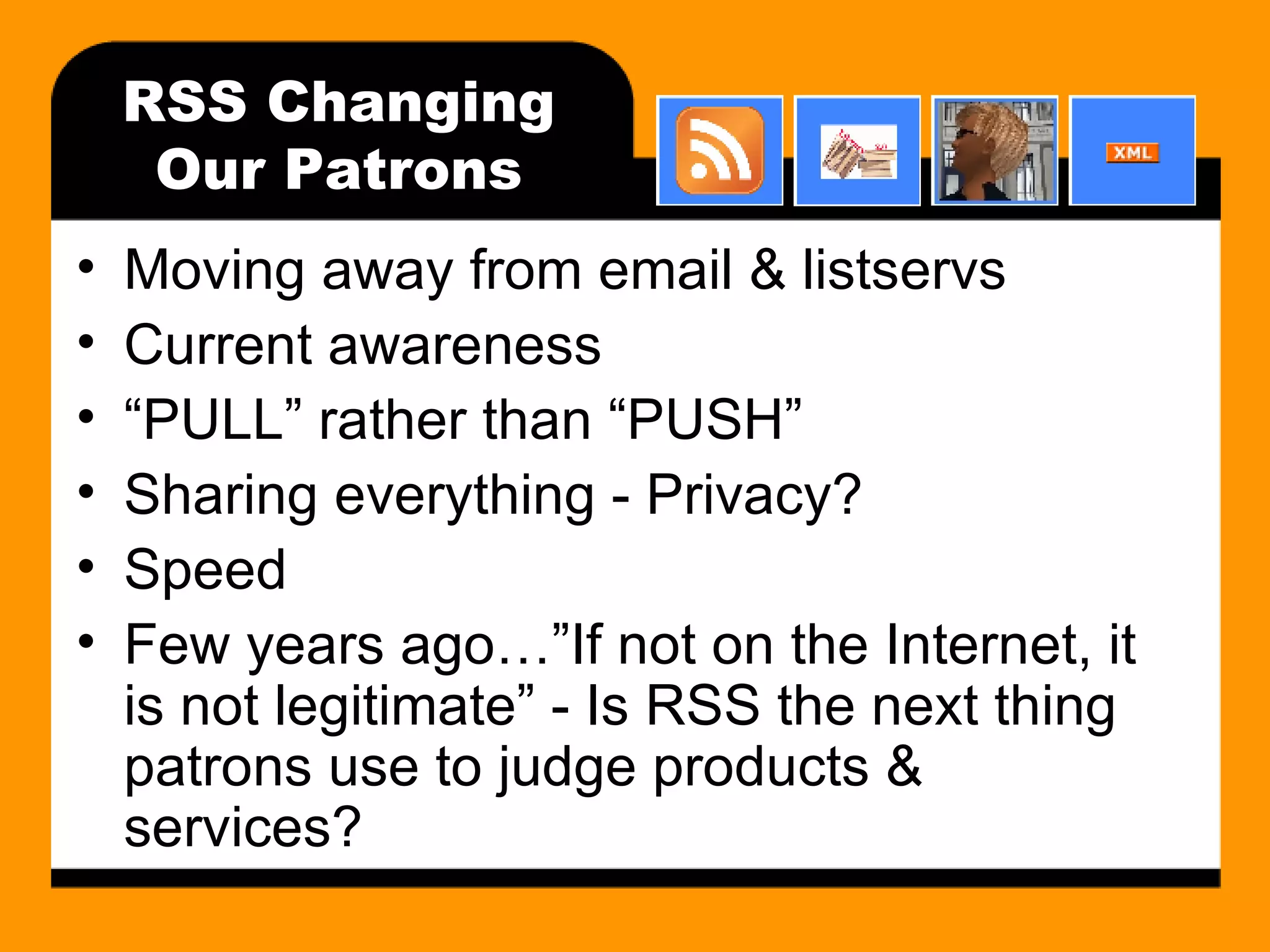
RSS Changing Our Patrons Moving away from email & listservs Current awareness “PULL” rather than “PUSH” Sharing everything - Privacy? Speed Few years ago…”If not on the Internet, it is not legitimate” - Is RSS the next thing patrons use to judge products & services?
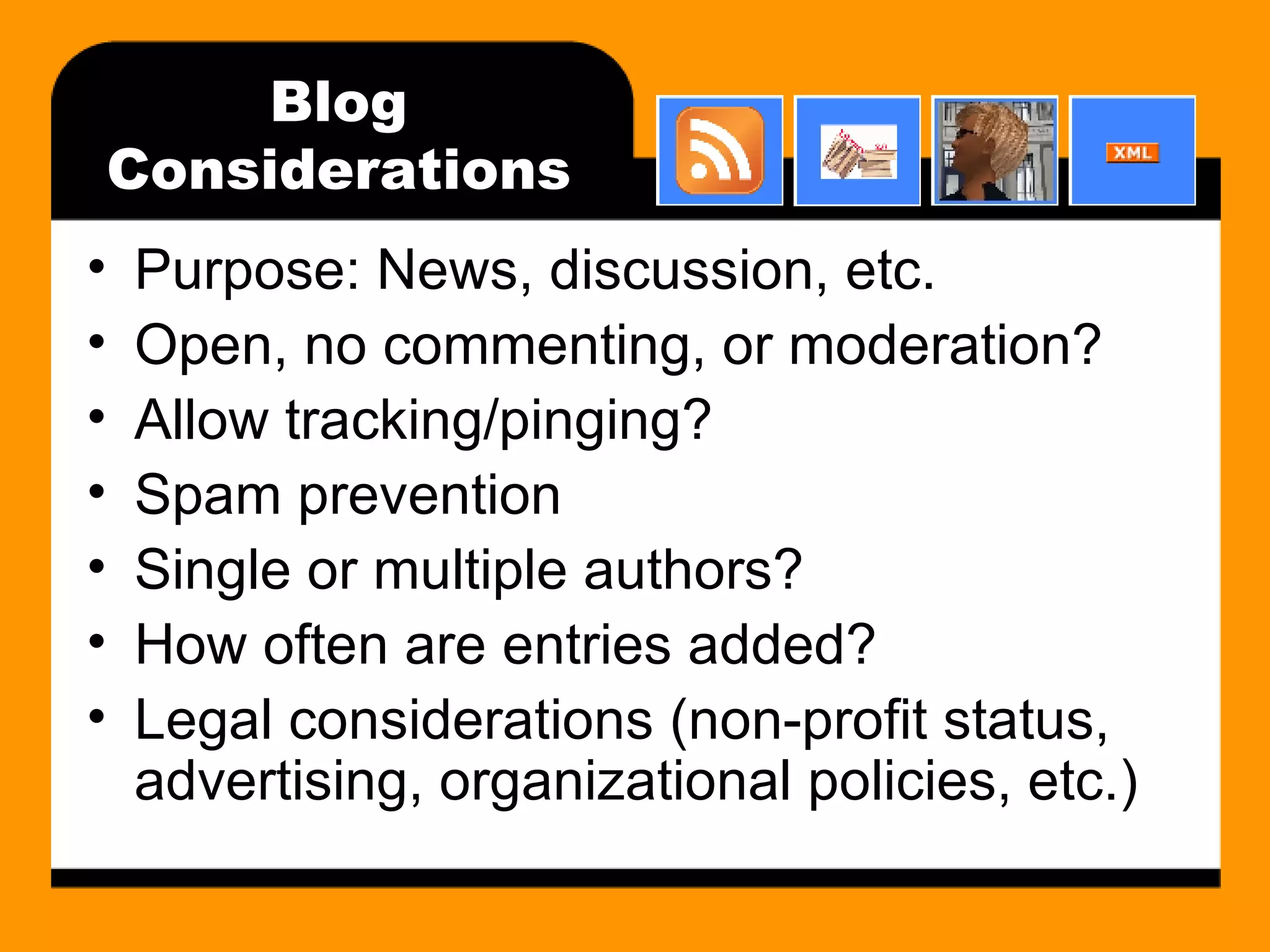
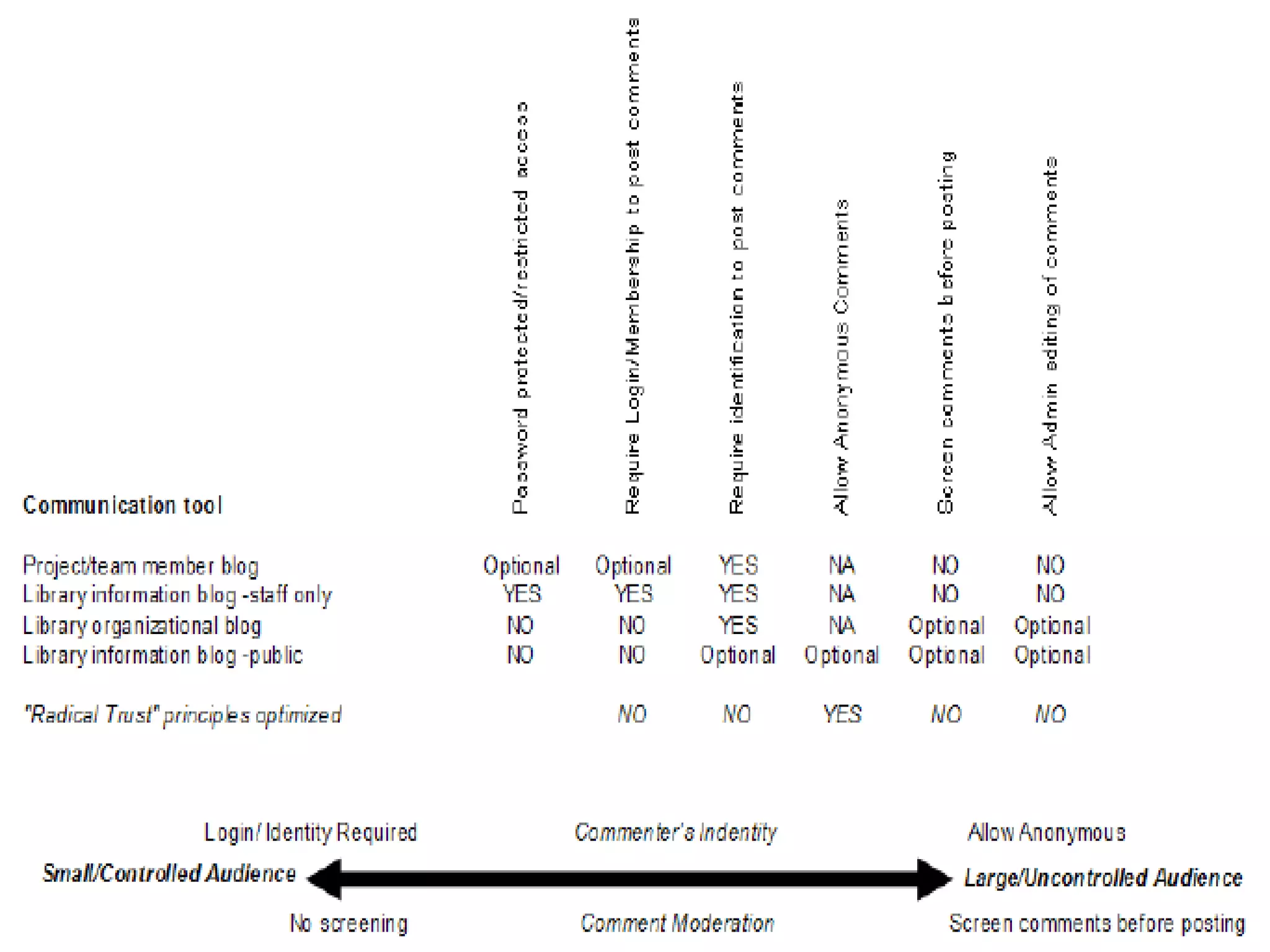
Blog Considerations Purpose: News, discussion, etc. Open, no commenting, or moderation? Allow tracking/pinging? Spam prevention Single or multiple authors? How often are entries added? Legal considerations (non-profit status, advertising, organizational policies, etc.)
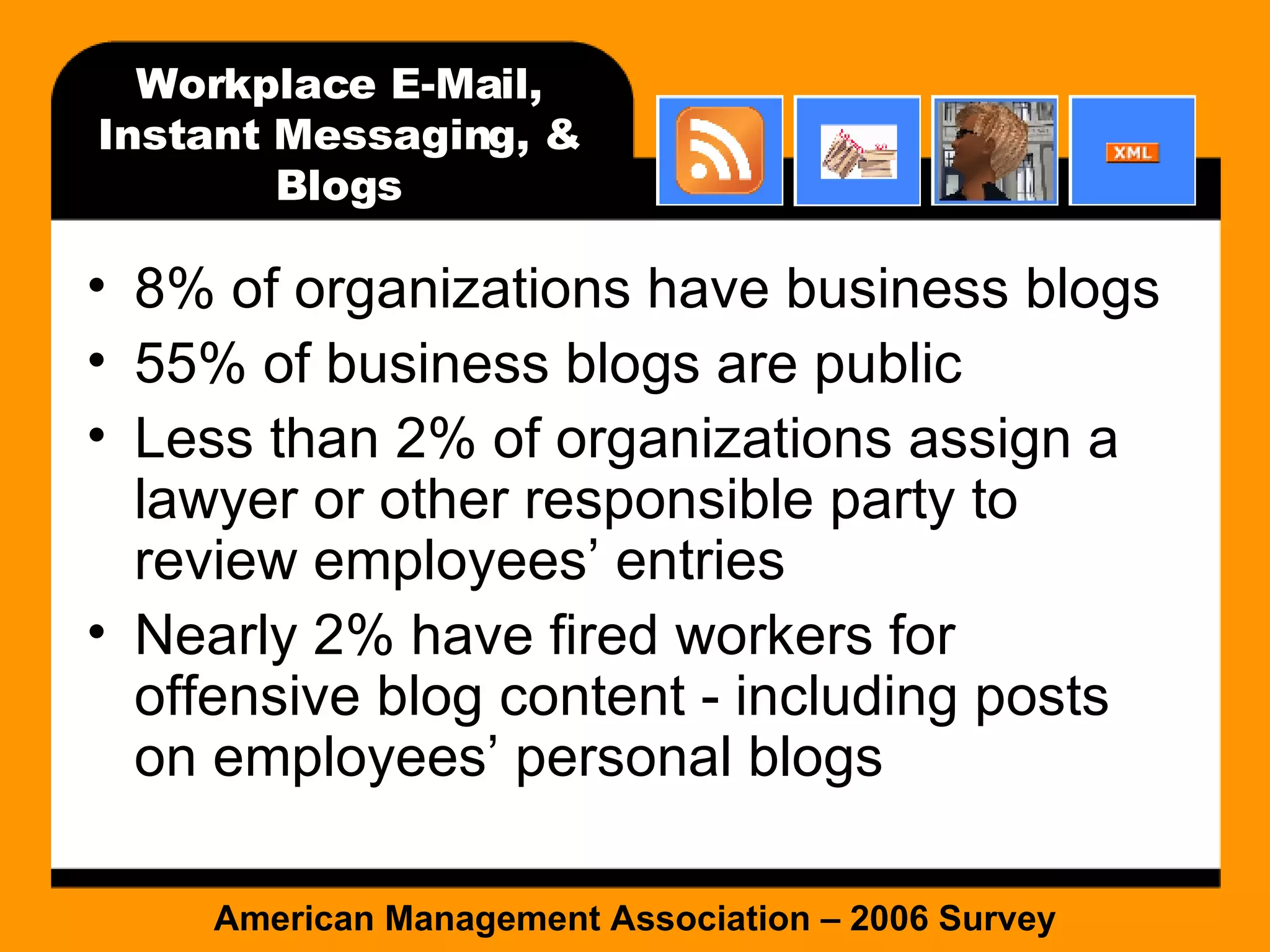
Workplace E-Mail, Instant Messaging, & Blogs 8% of organizations have business blogs 55% of business blogs are public Less than 2% of organizations assign a lawyer or other responsible party to review employees’ entries Nearly 2% have fired workers for offensive blog content - including posts on employees’ personal blogs American Management Association – 2006 Survey
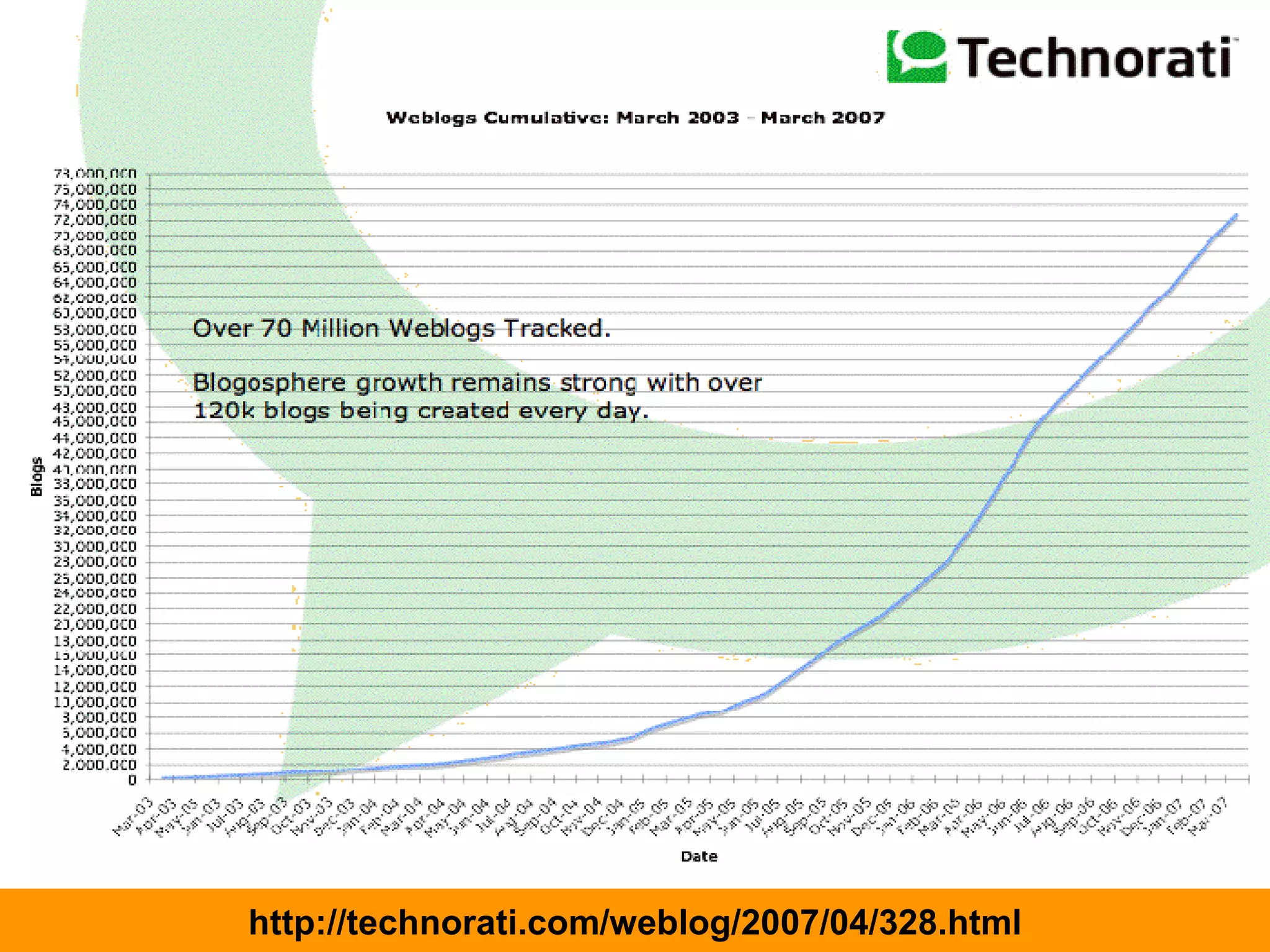
http://technorati.com/weblog/2007/04/328.html
 
 
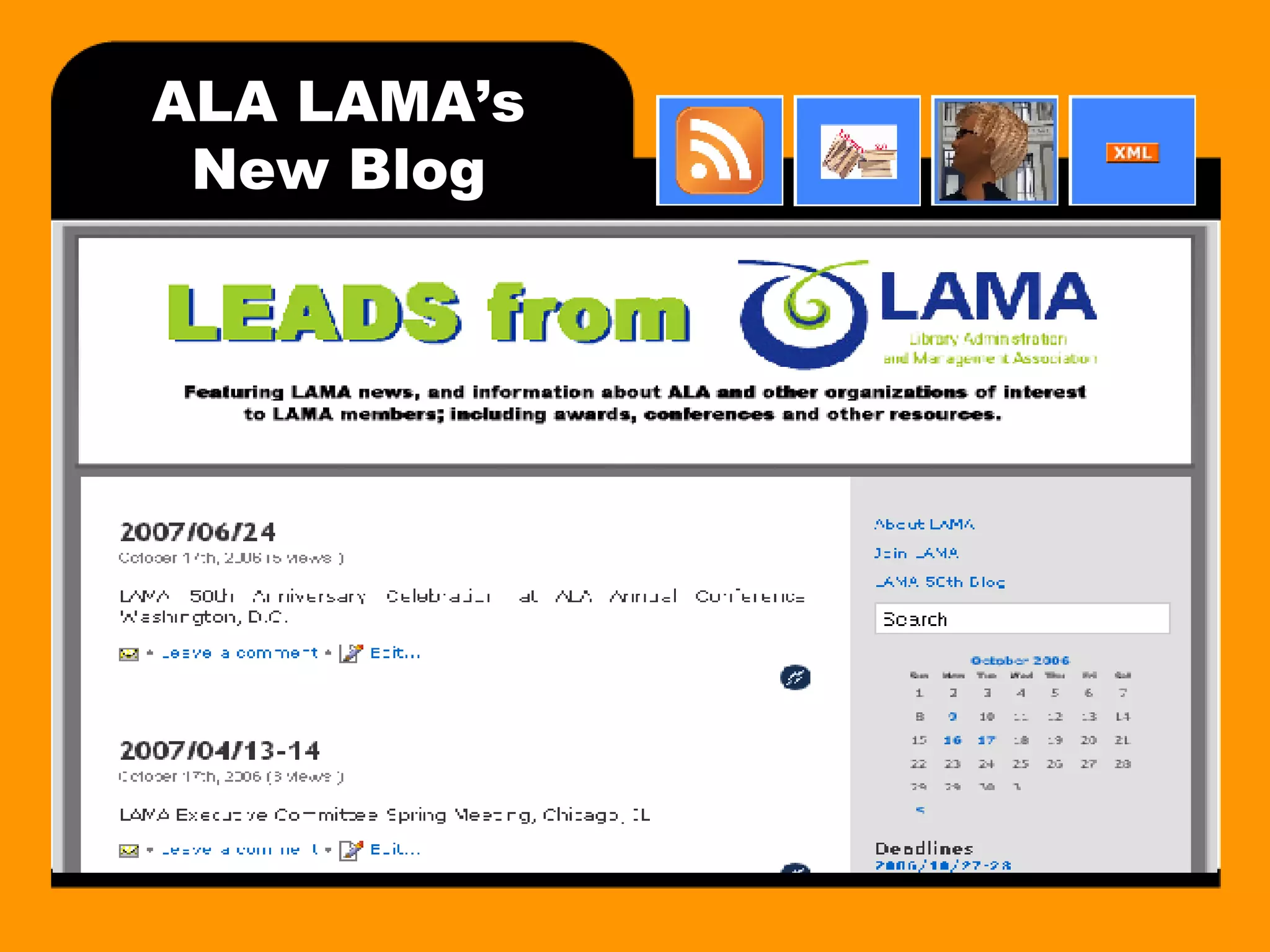
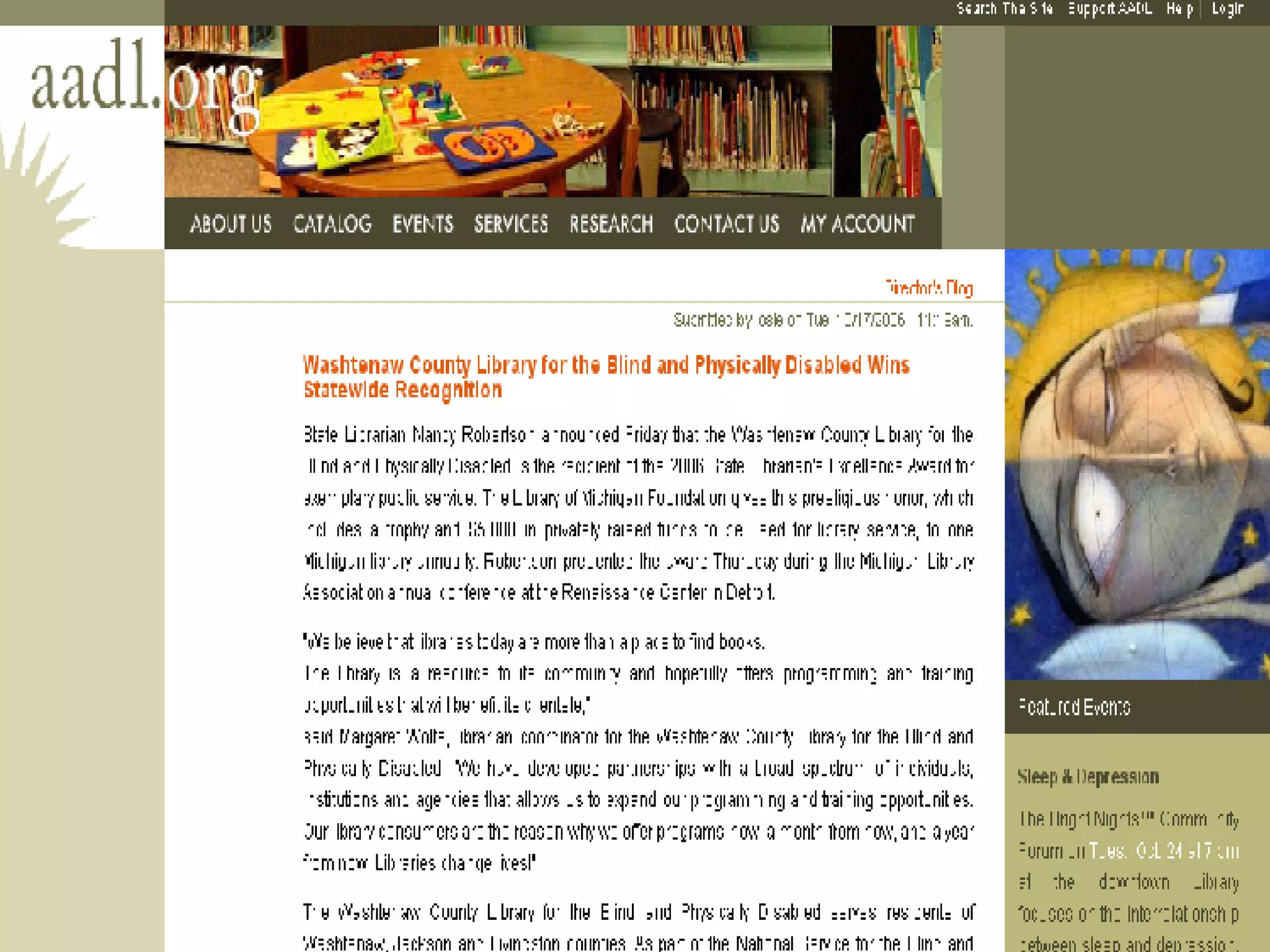
ALA LAMA’s New Blog


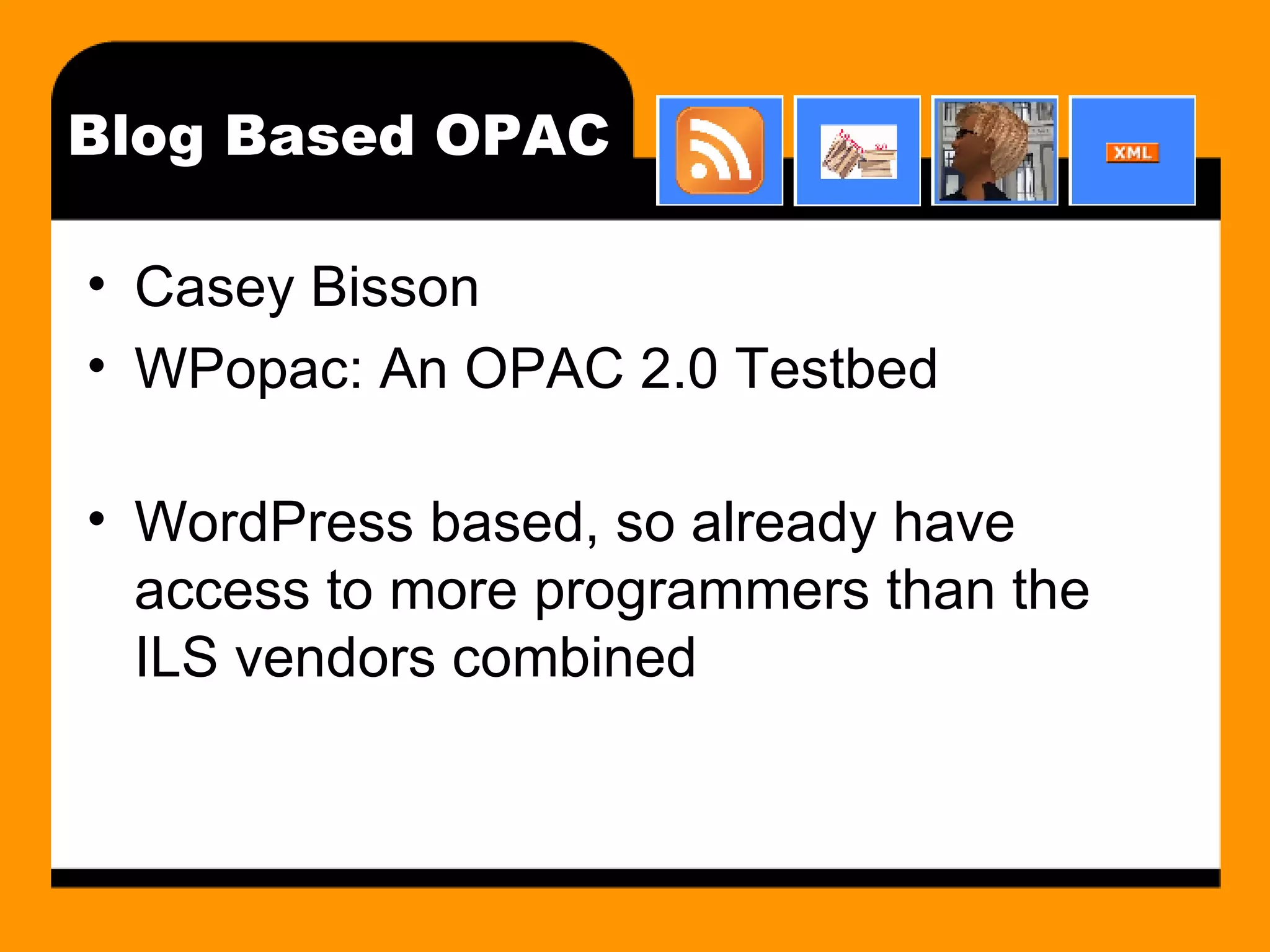
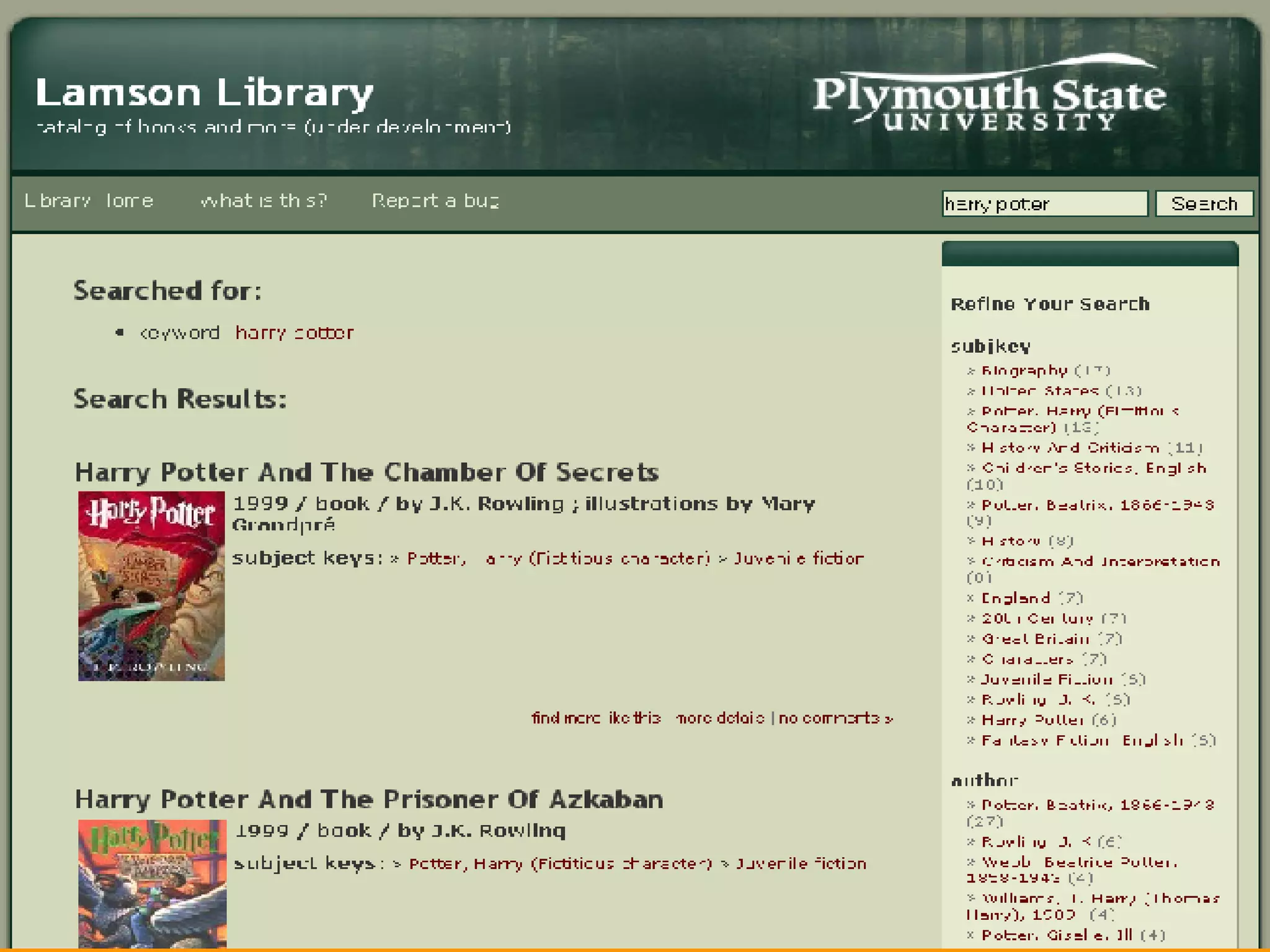
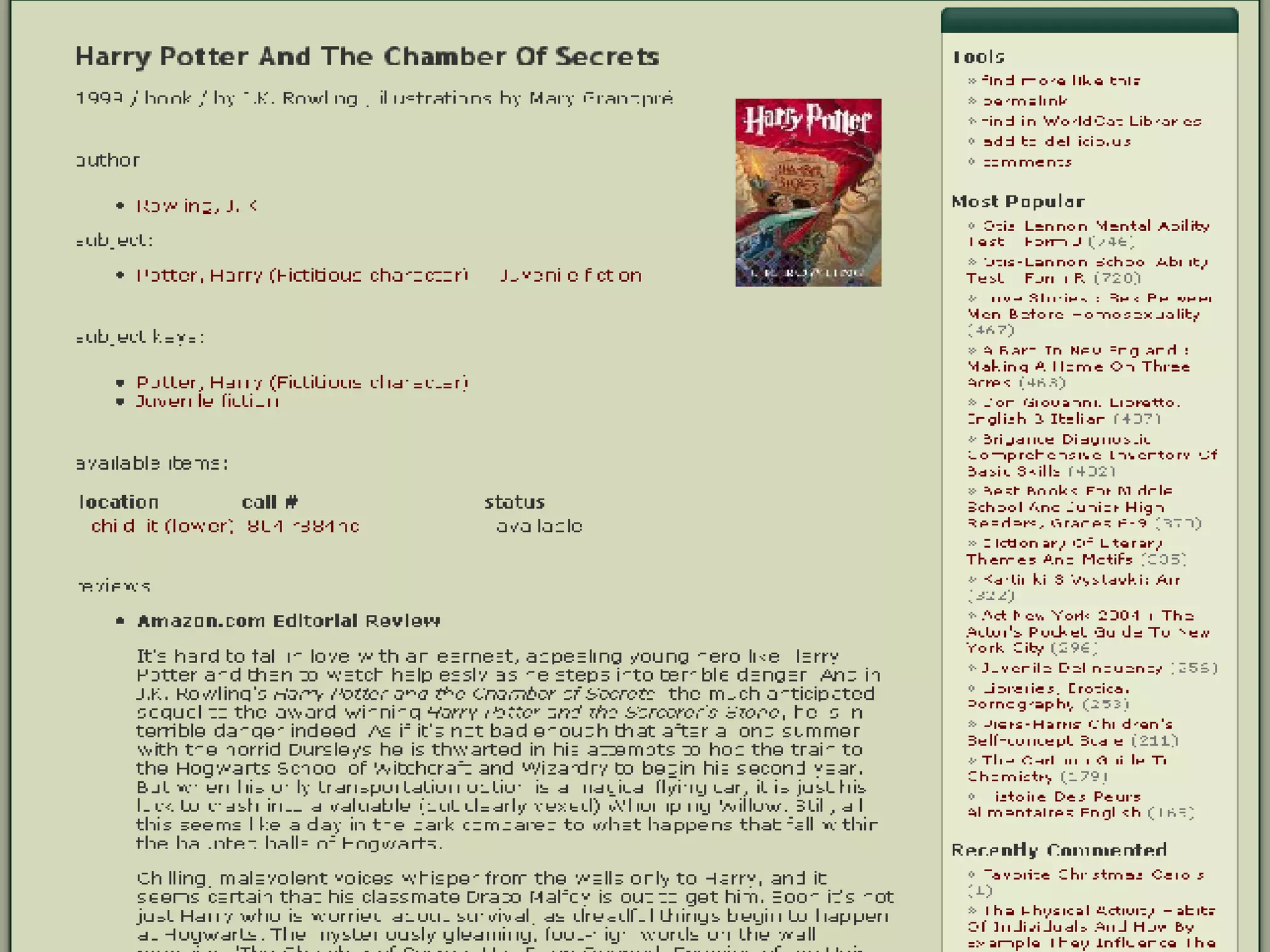
Blog Based OPAC Casey Bisson WPopac: An OPAC 2.0 Testbed  WordPress based, so already have access to more programmers than the ILS vendors combined
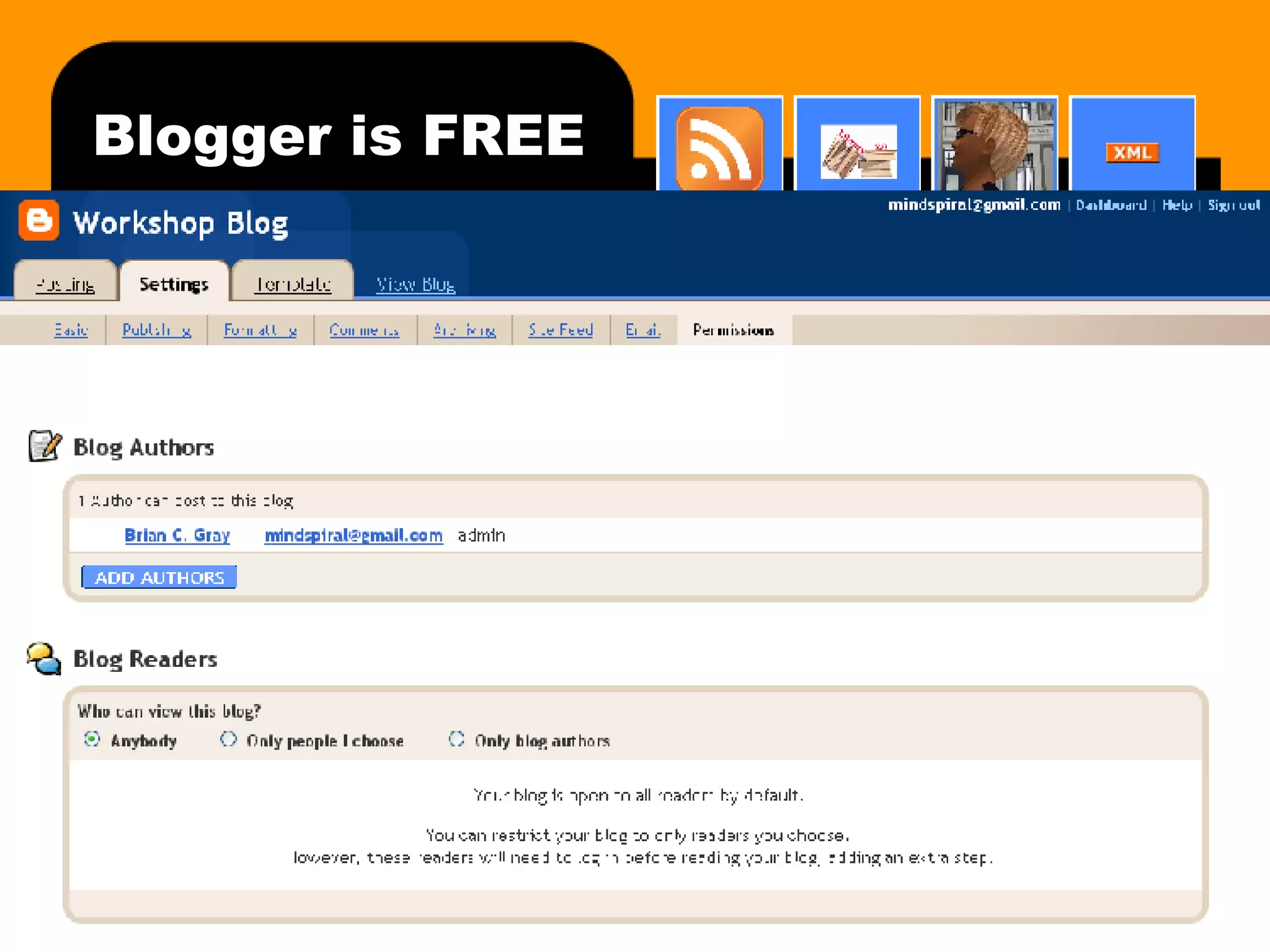
Blogger is FREE
 
 
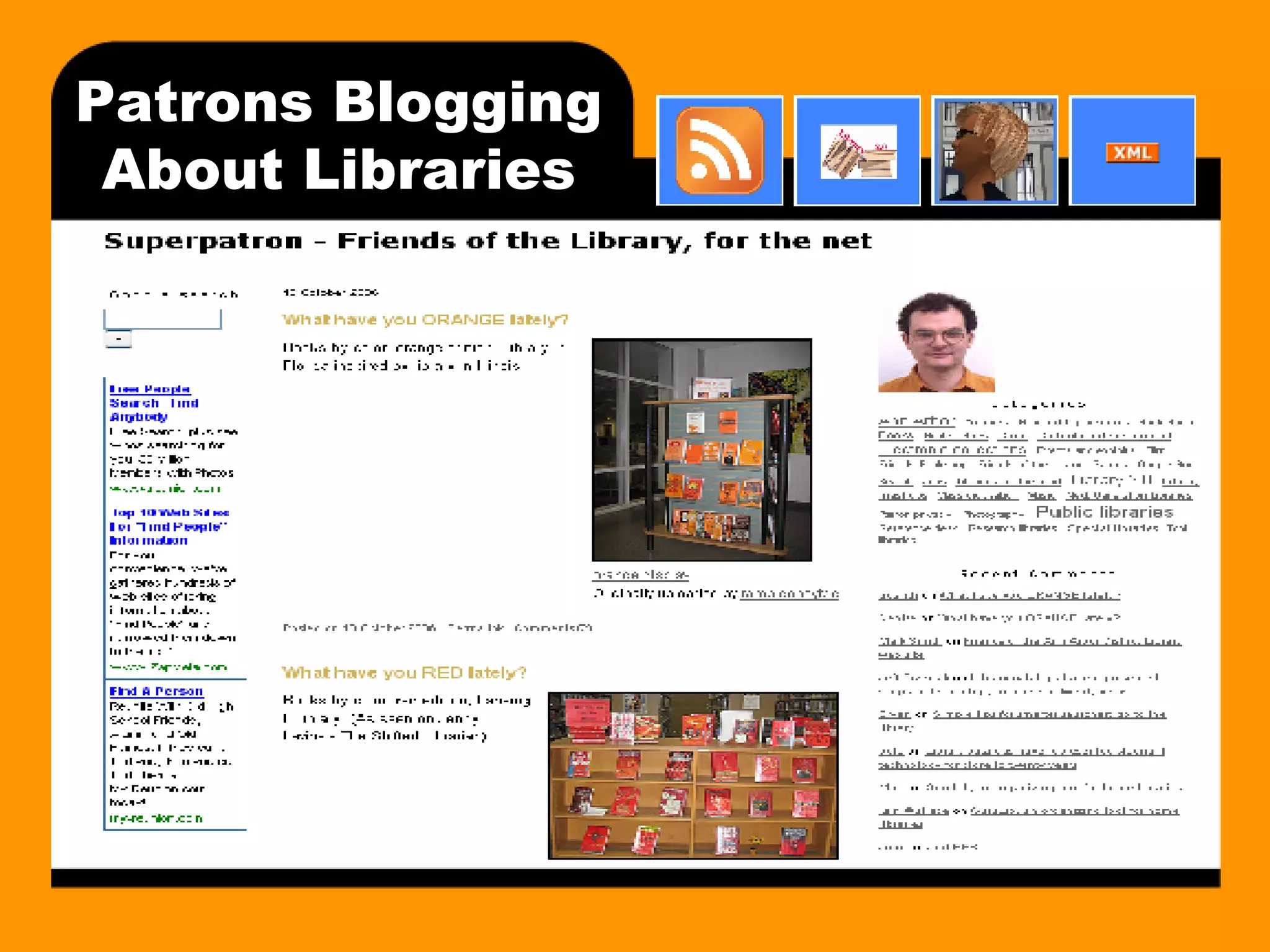
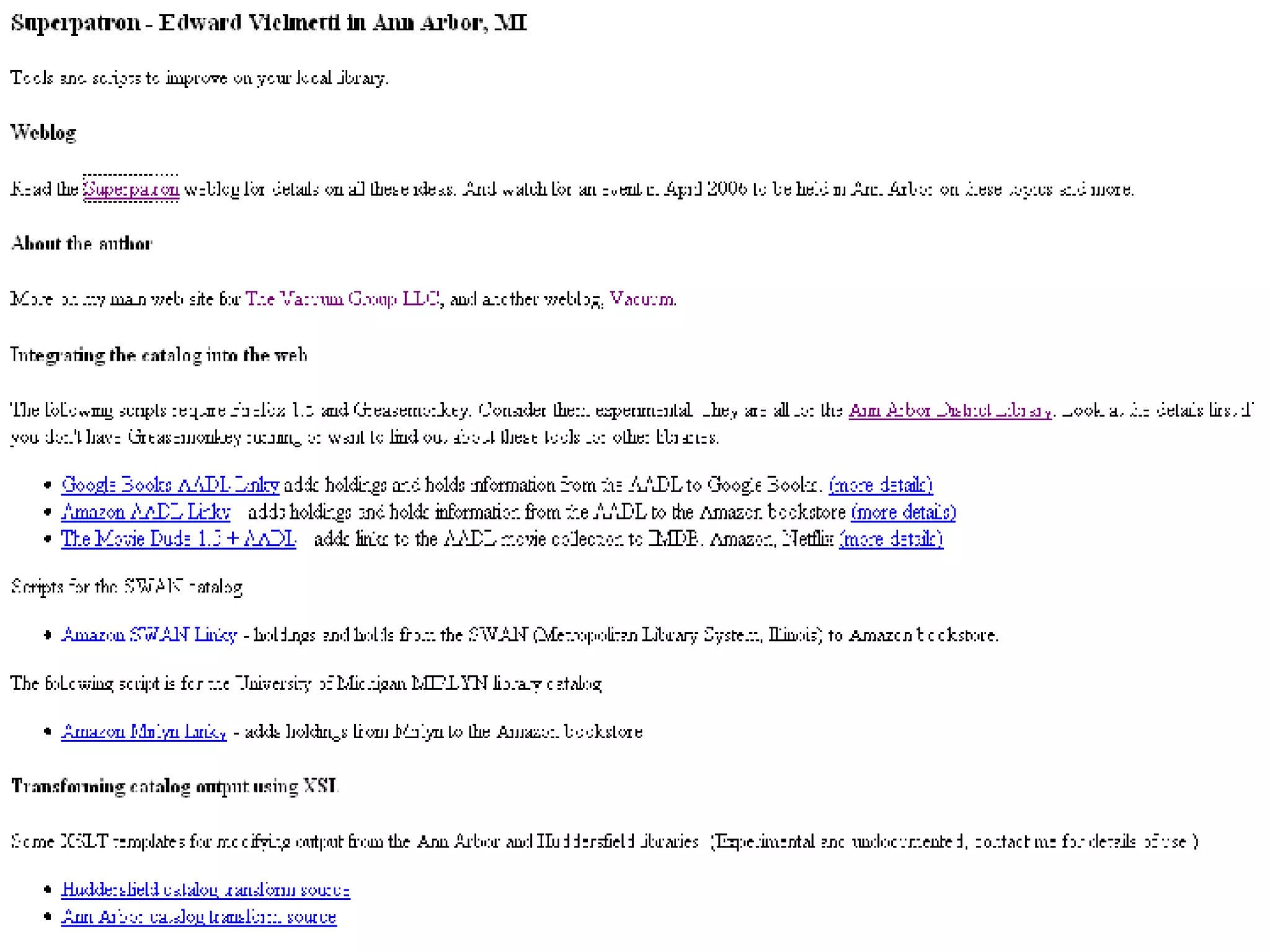
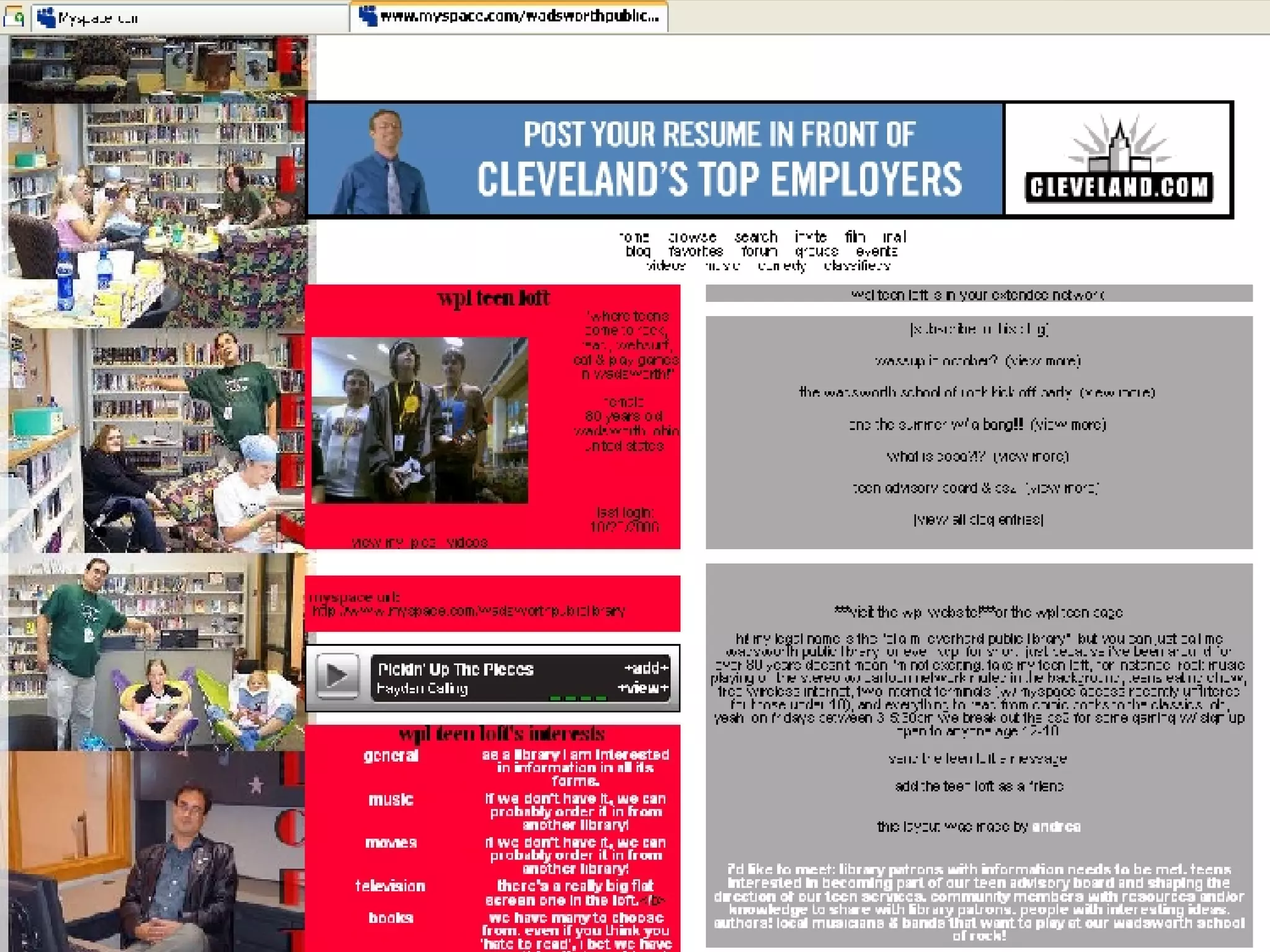
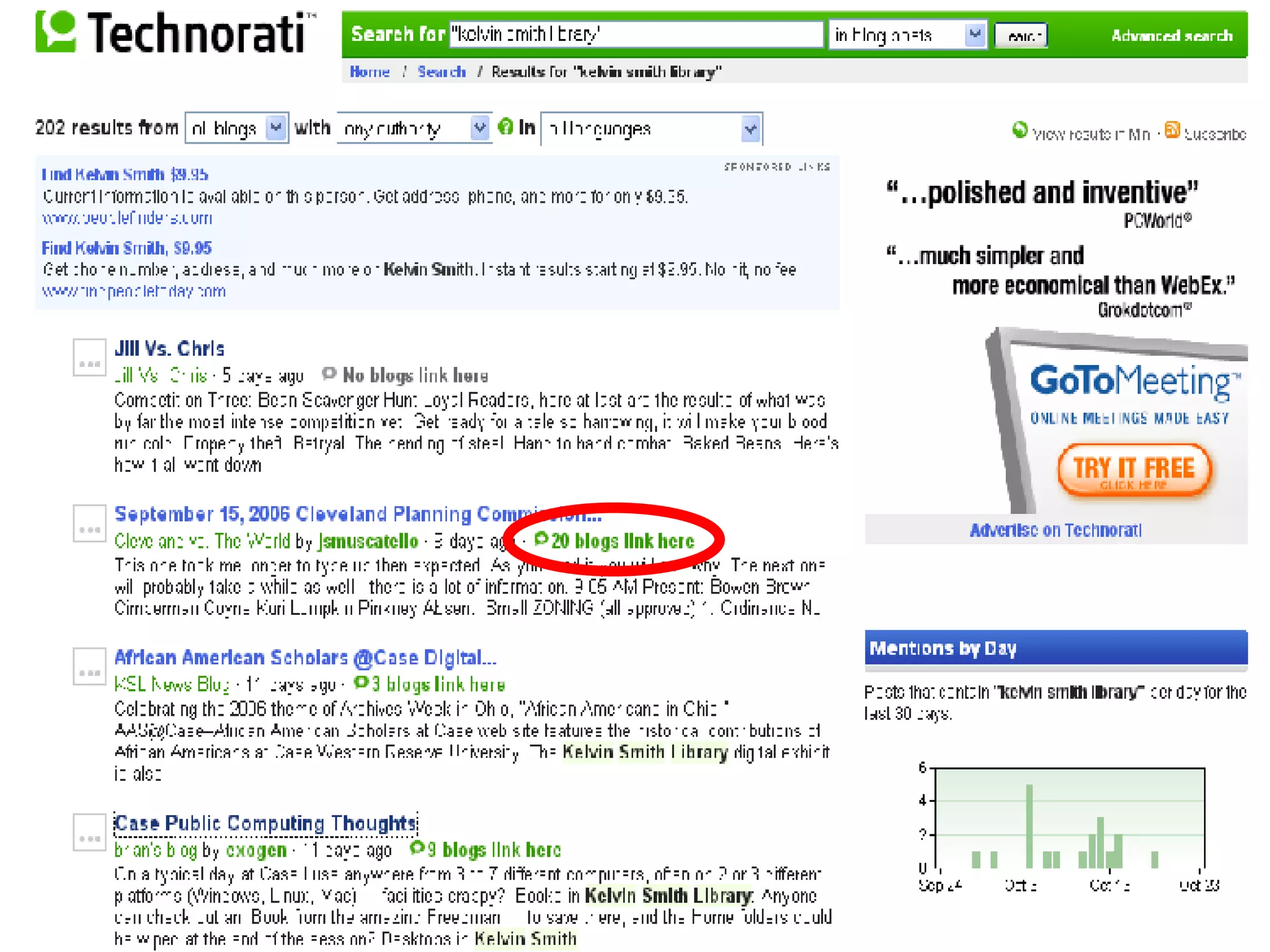
Patrons Blogging About Libraries


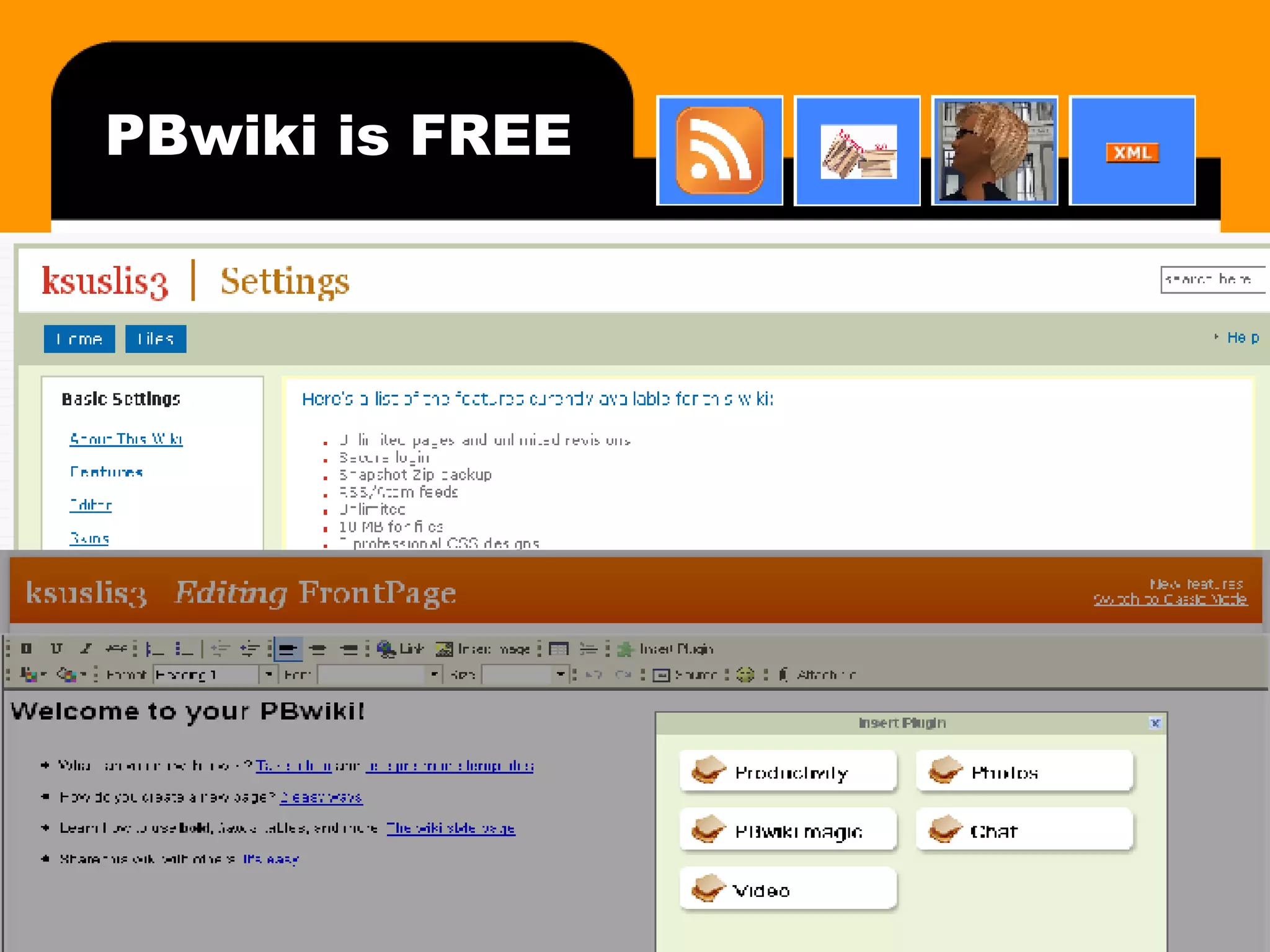
PBwiki is FREE
 
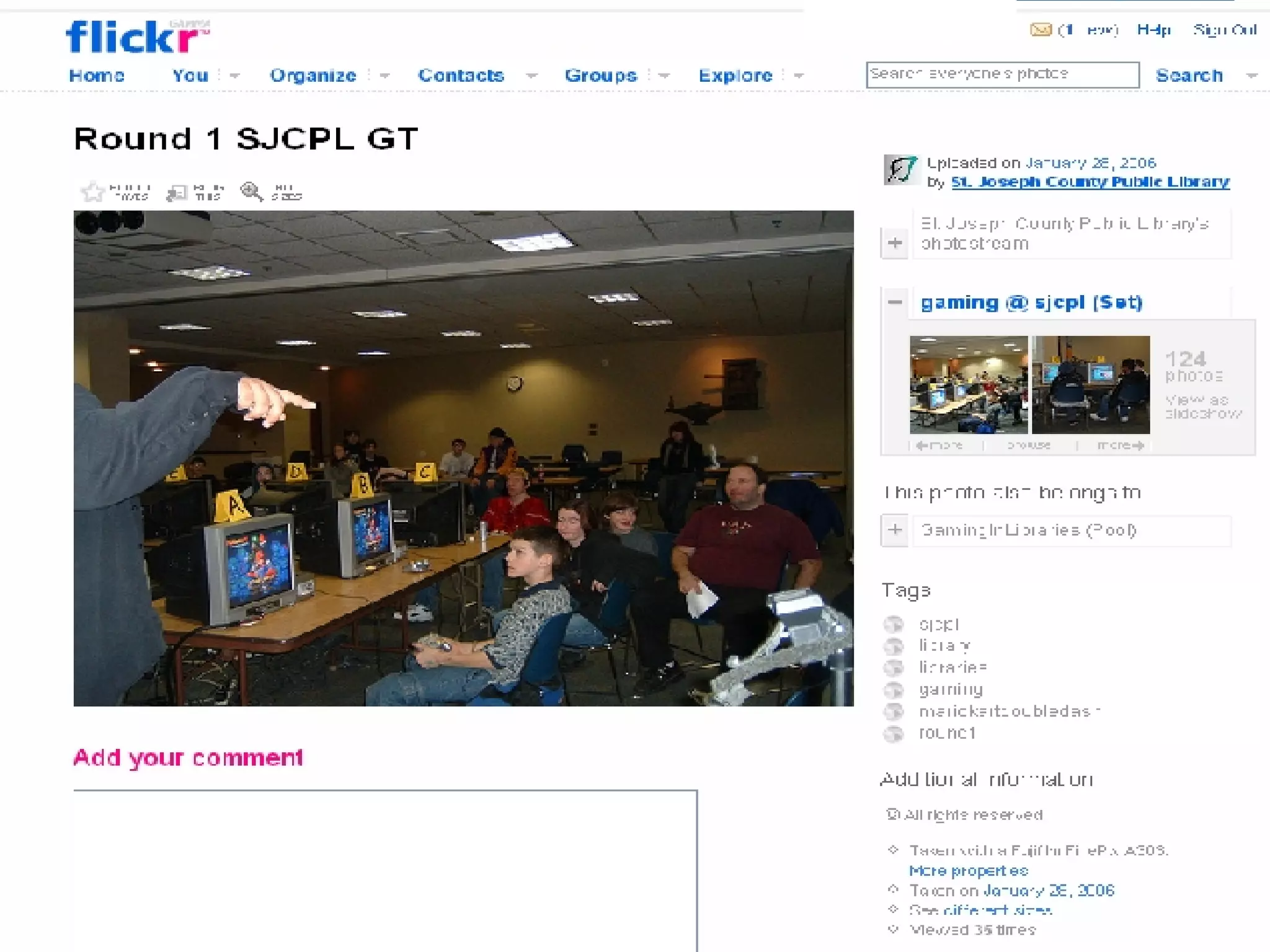
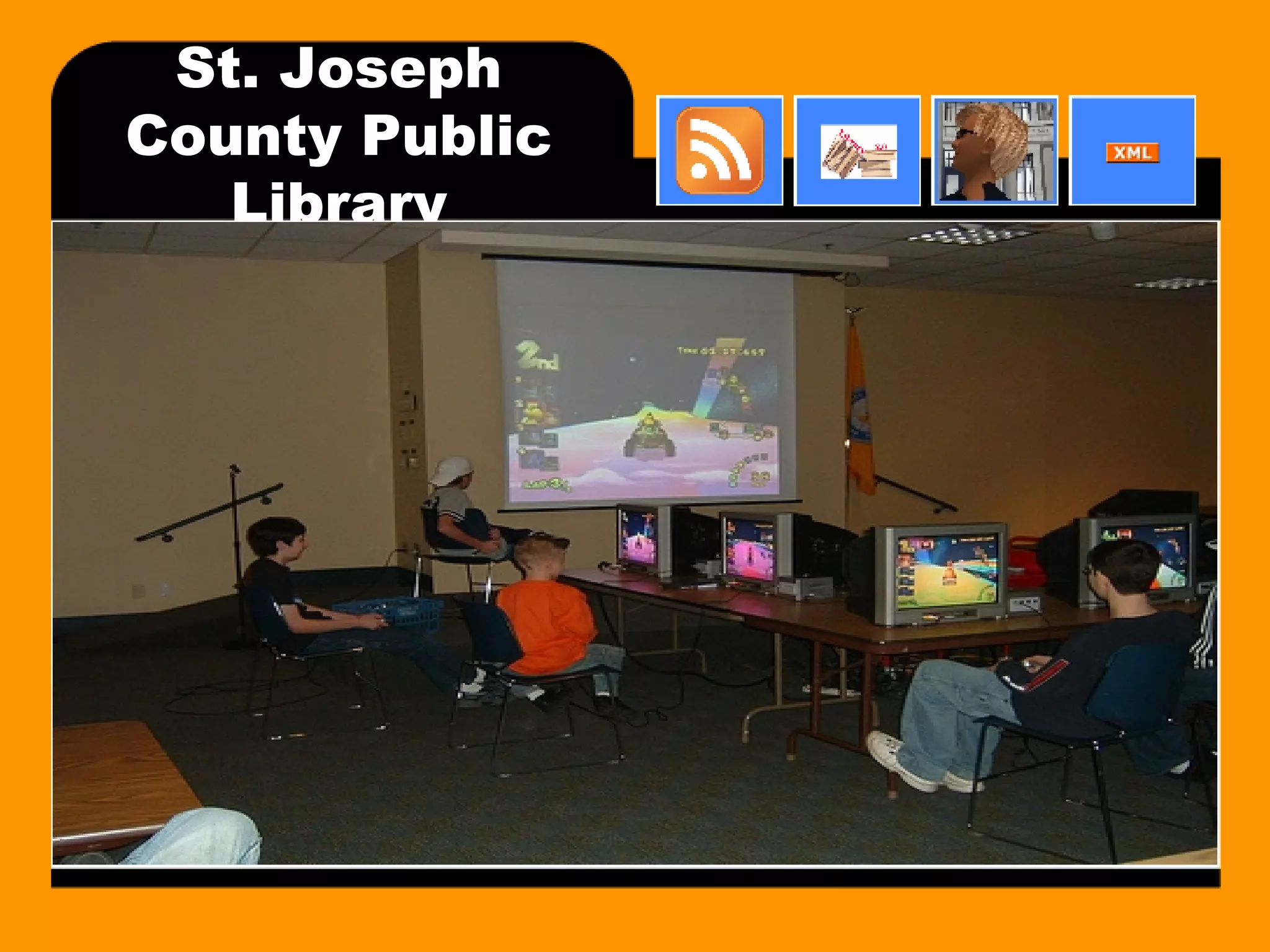
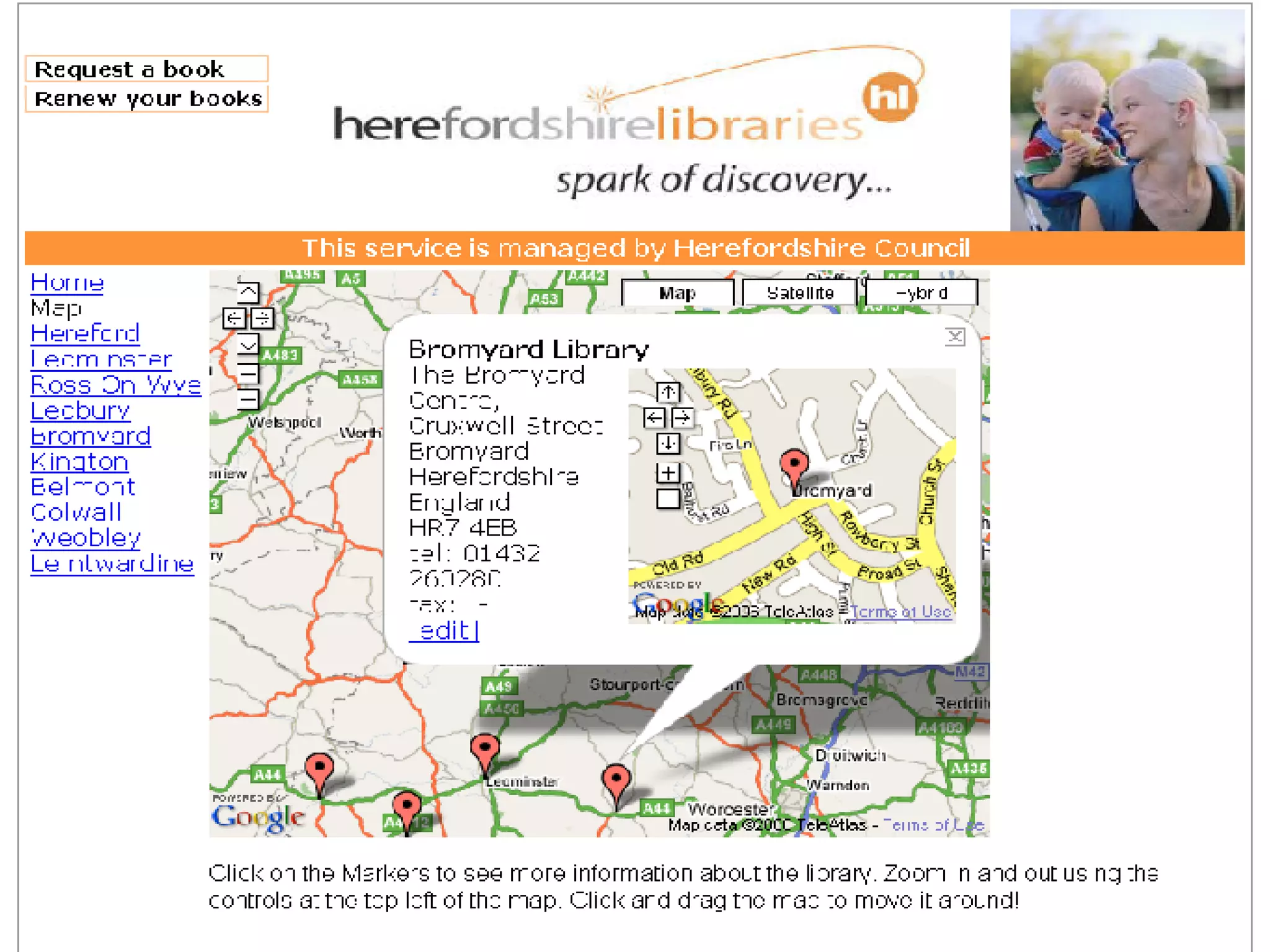
St. Joseph County Public Library


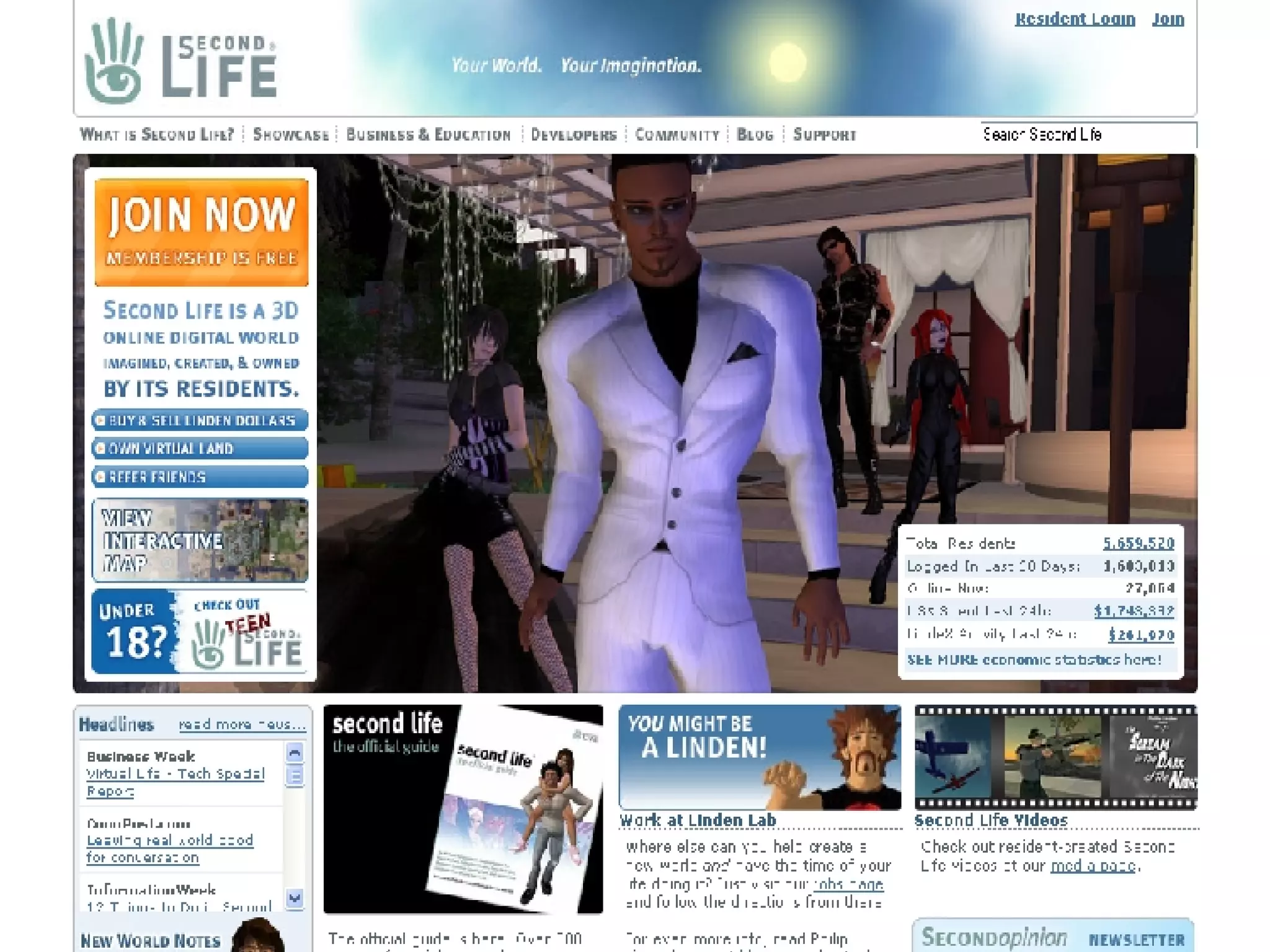
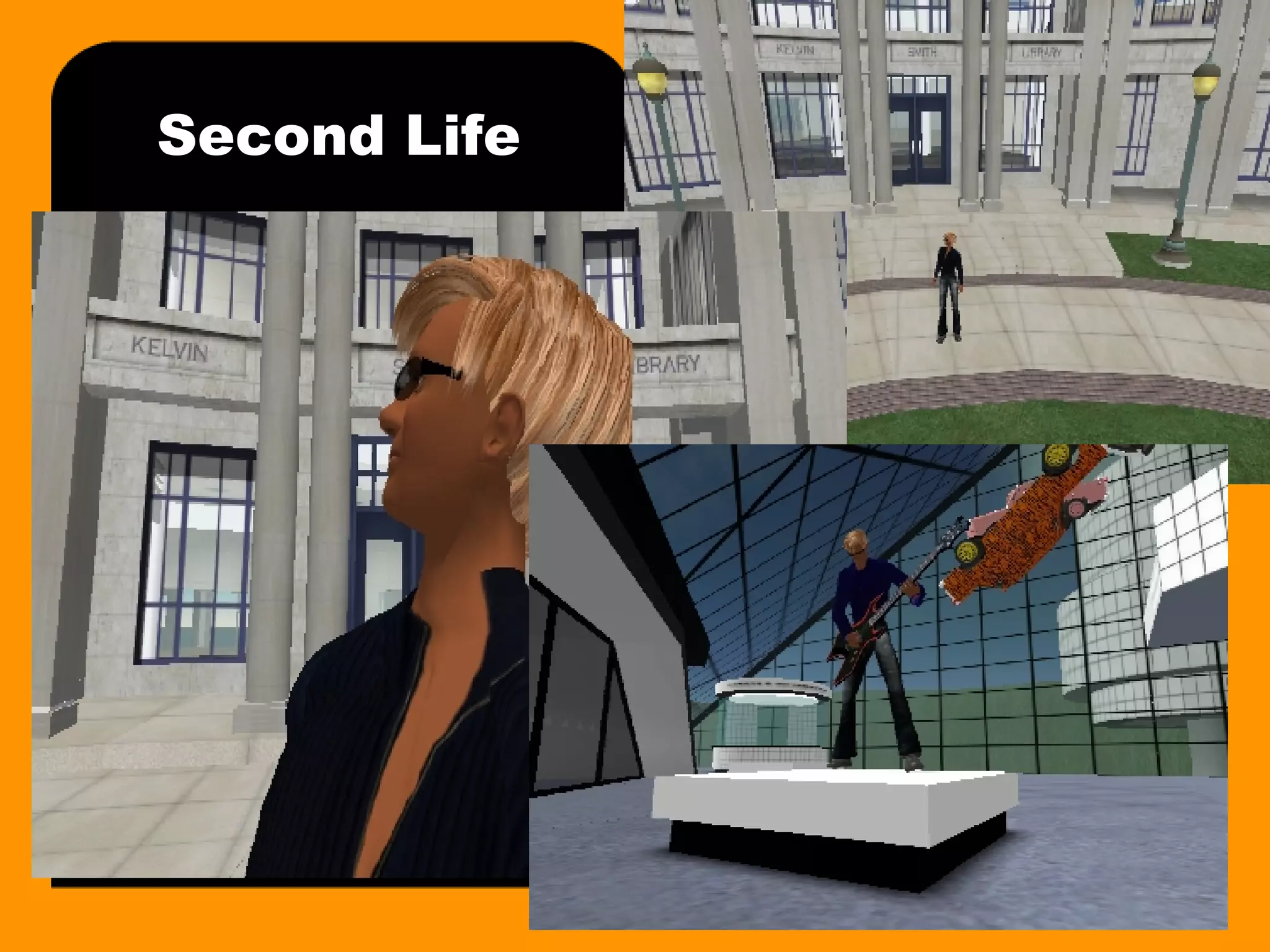
Second Life
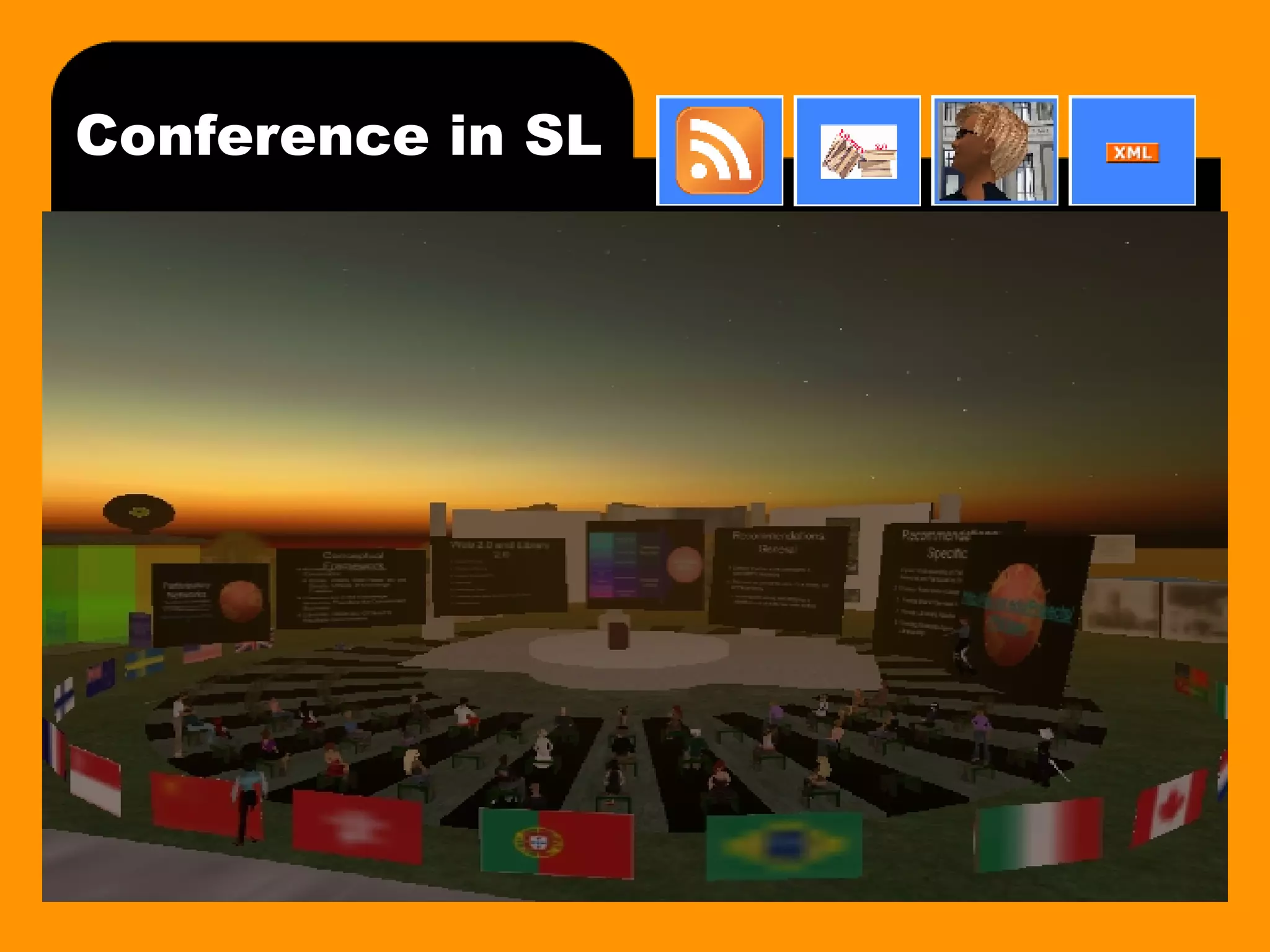
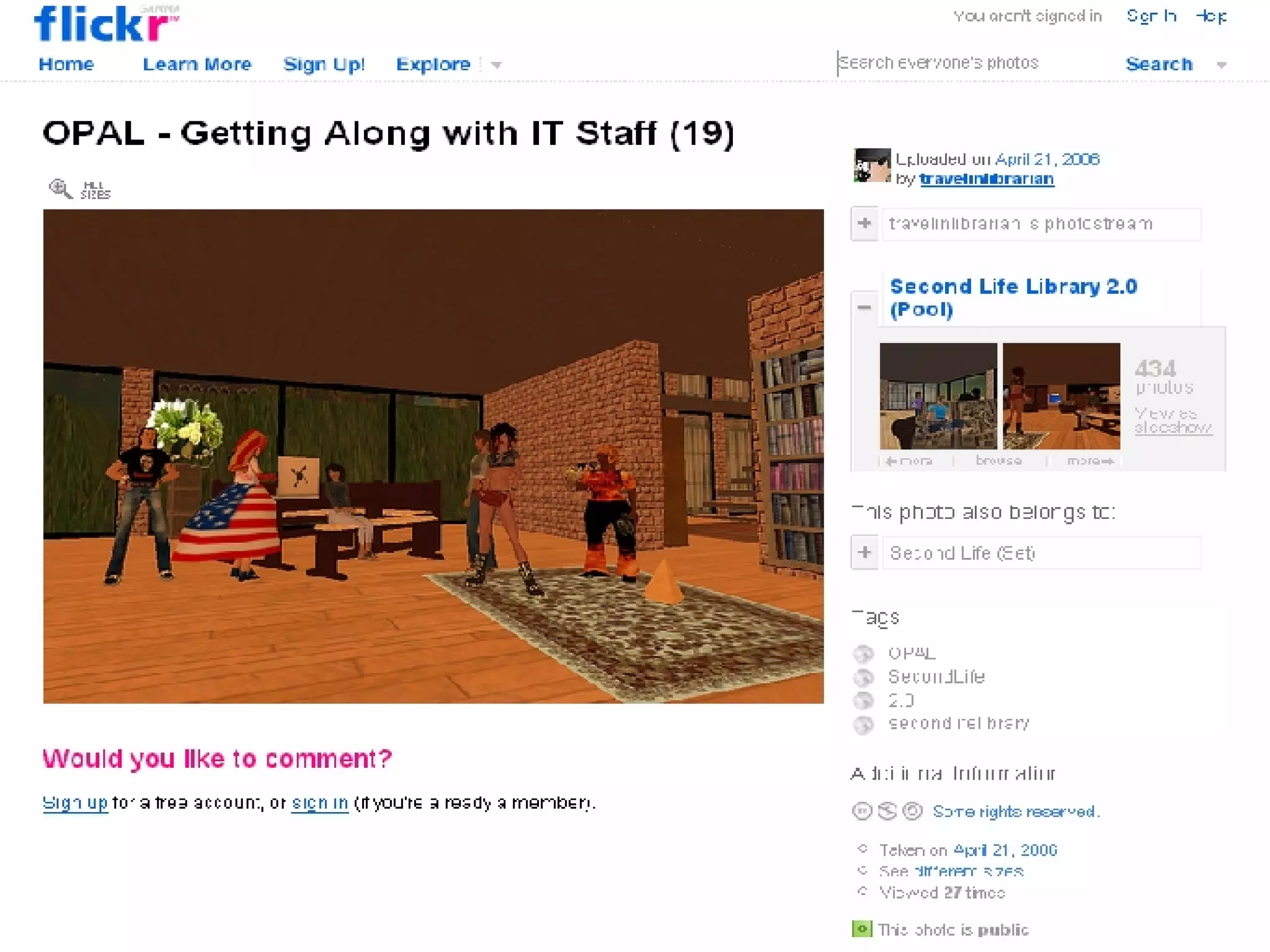
Conference in SL
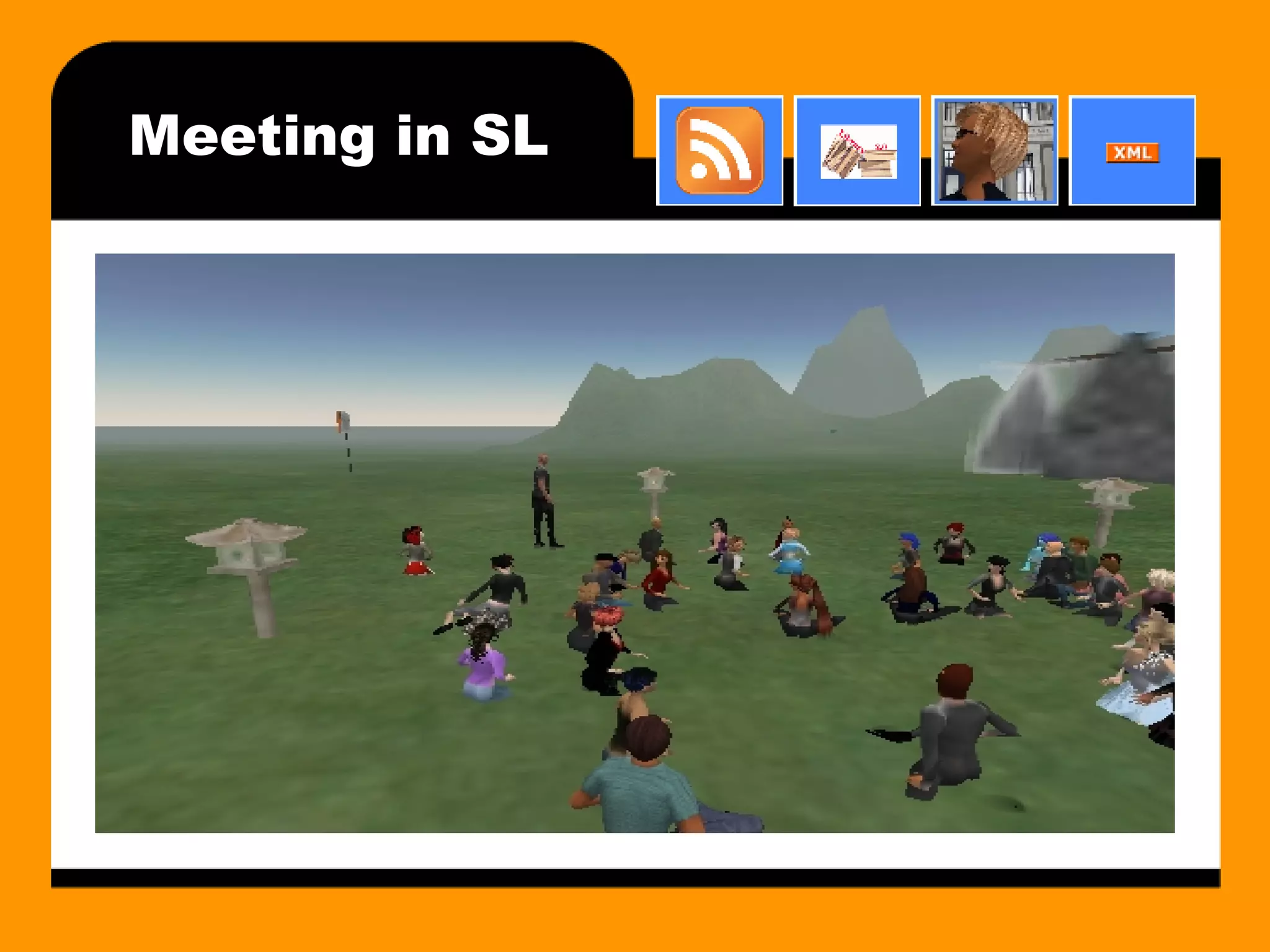
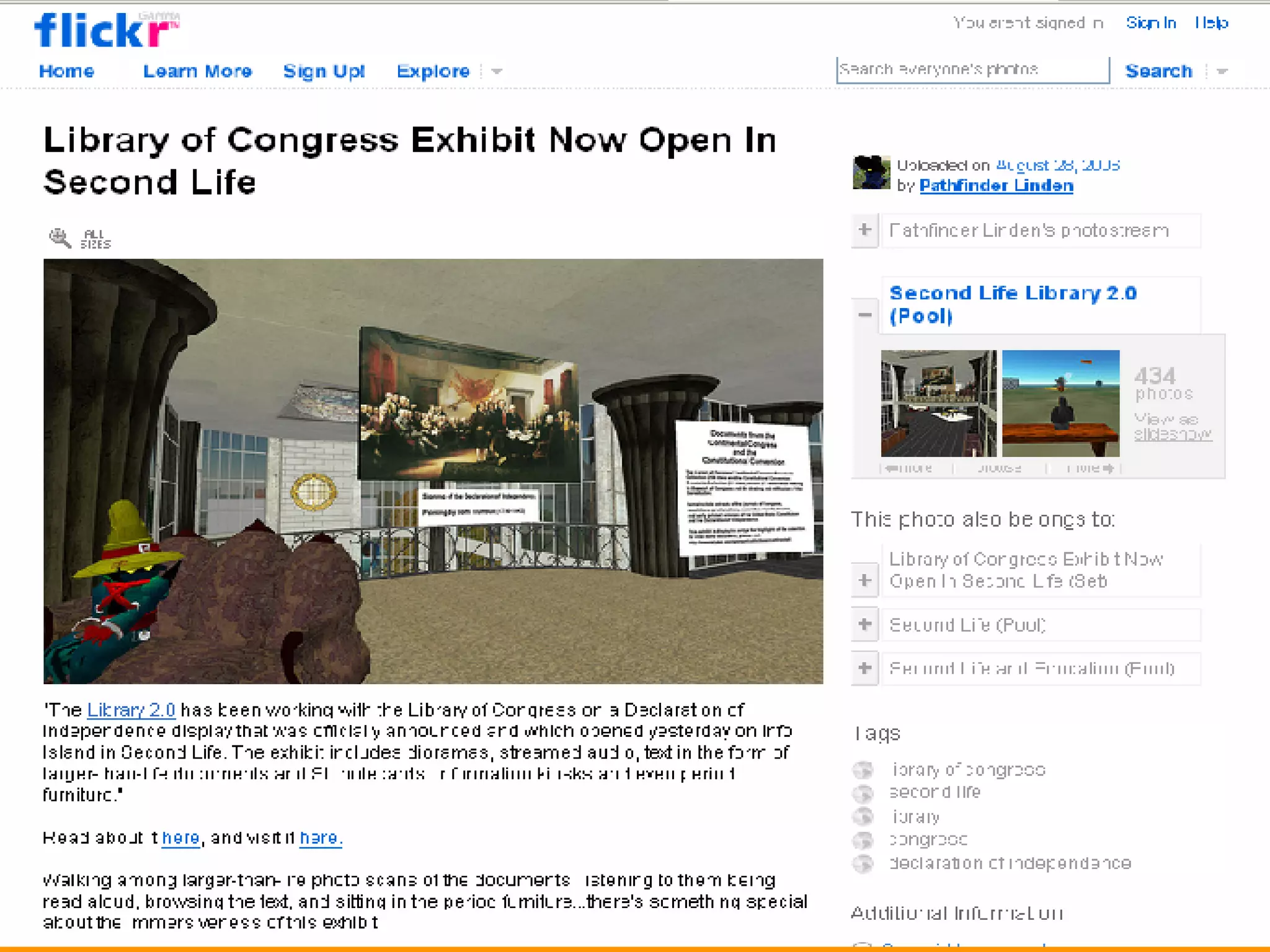
Meeting in SL


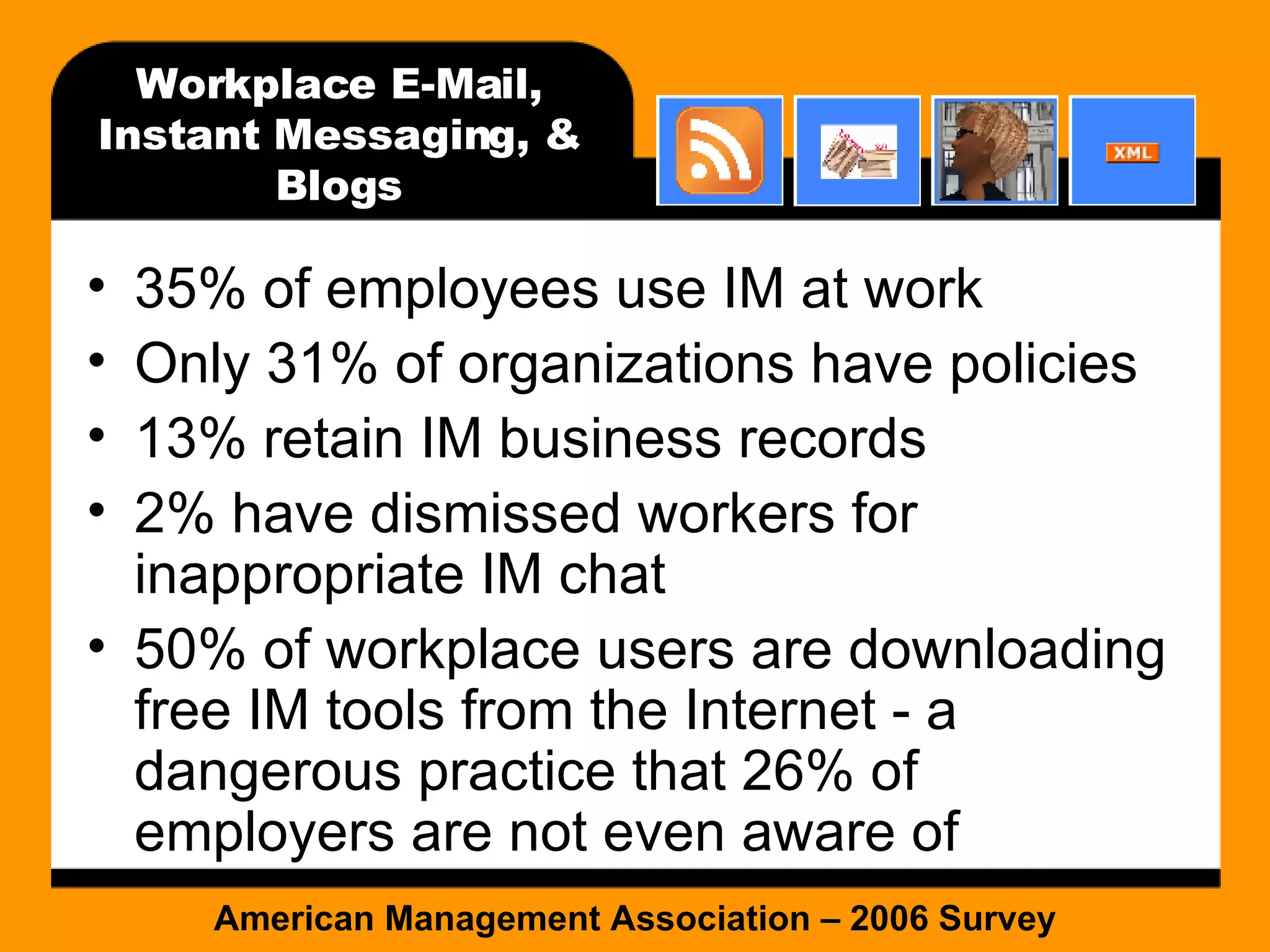
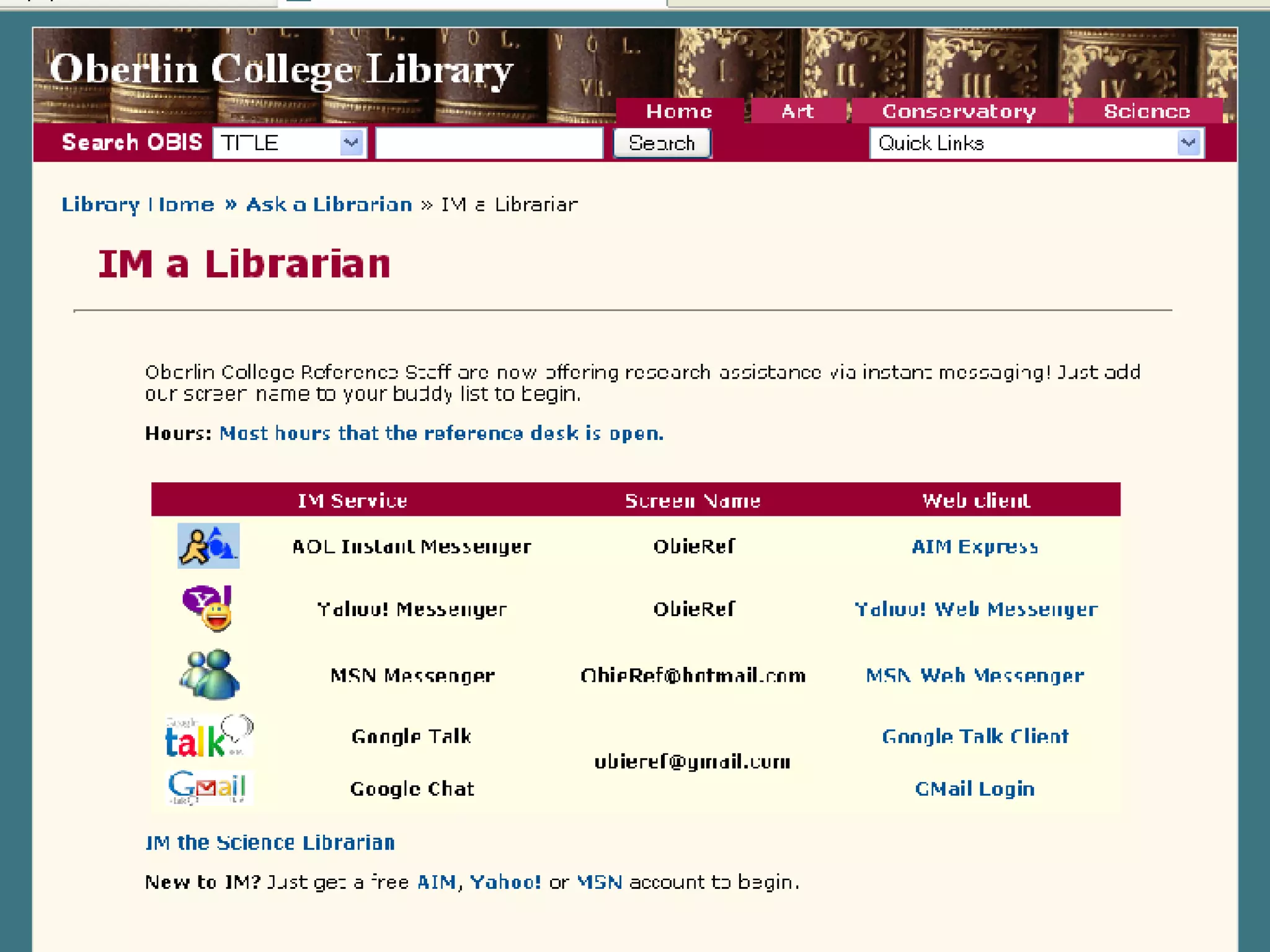
Workplace E-Mail, Instant Messaging, & Blogs 35% of employees use IM at work Only 31% of organizations have policies 13% retain IM business records 2% have dismissed workers for inappropriate IM chat 50% of workplace users are downloading free IM tools from the Internet - a dangerous practice that 26% of employers are not even aware of American Management Association – 2006 Survey
 
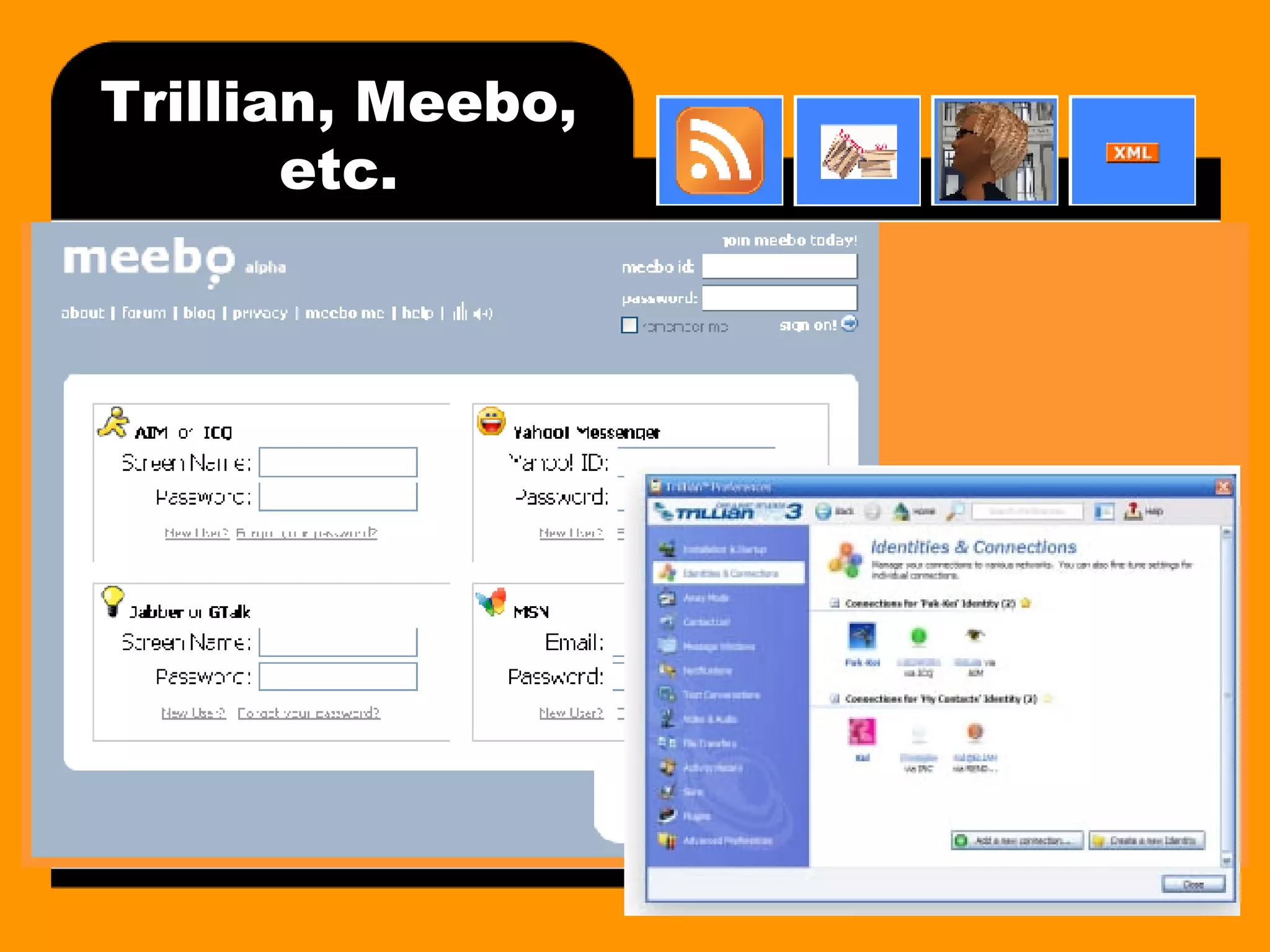
Trillian, Meebo, etc.


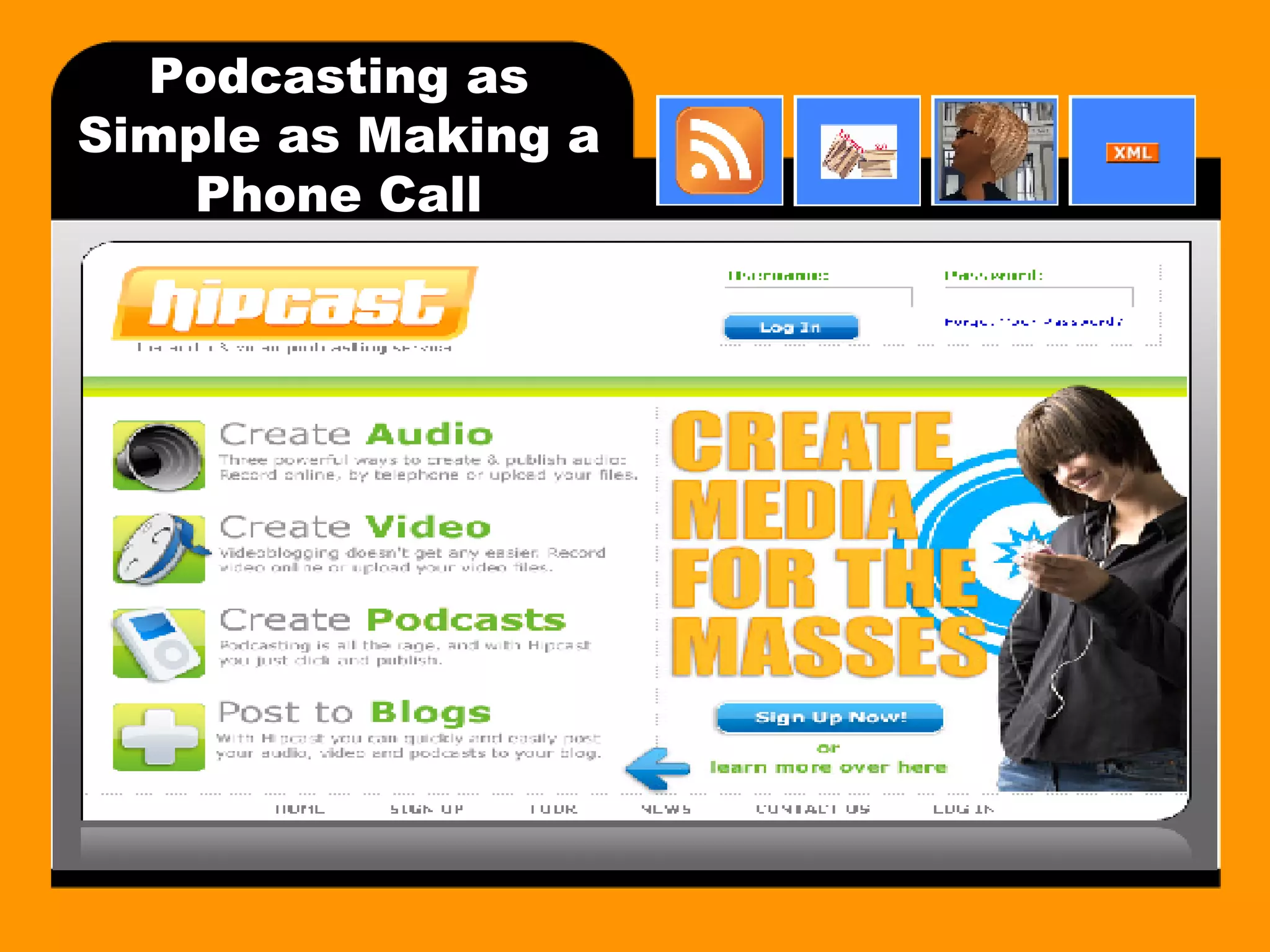
Podcasting as Simple as Making a Phone Call
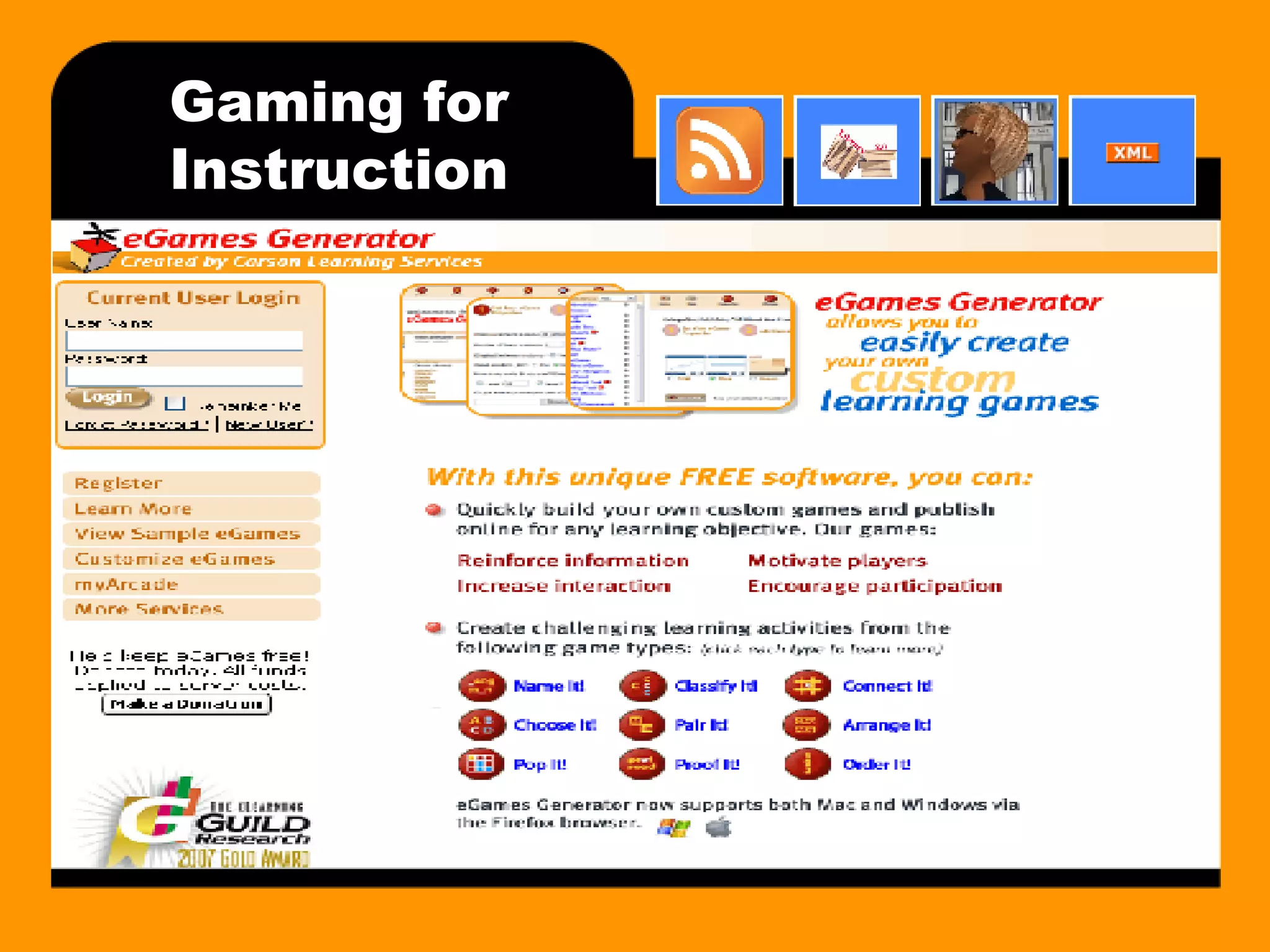
Gaming for Instruction
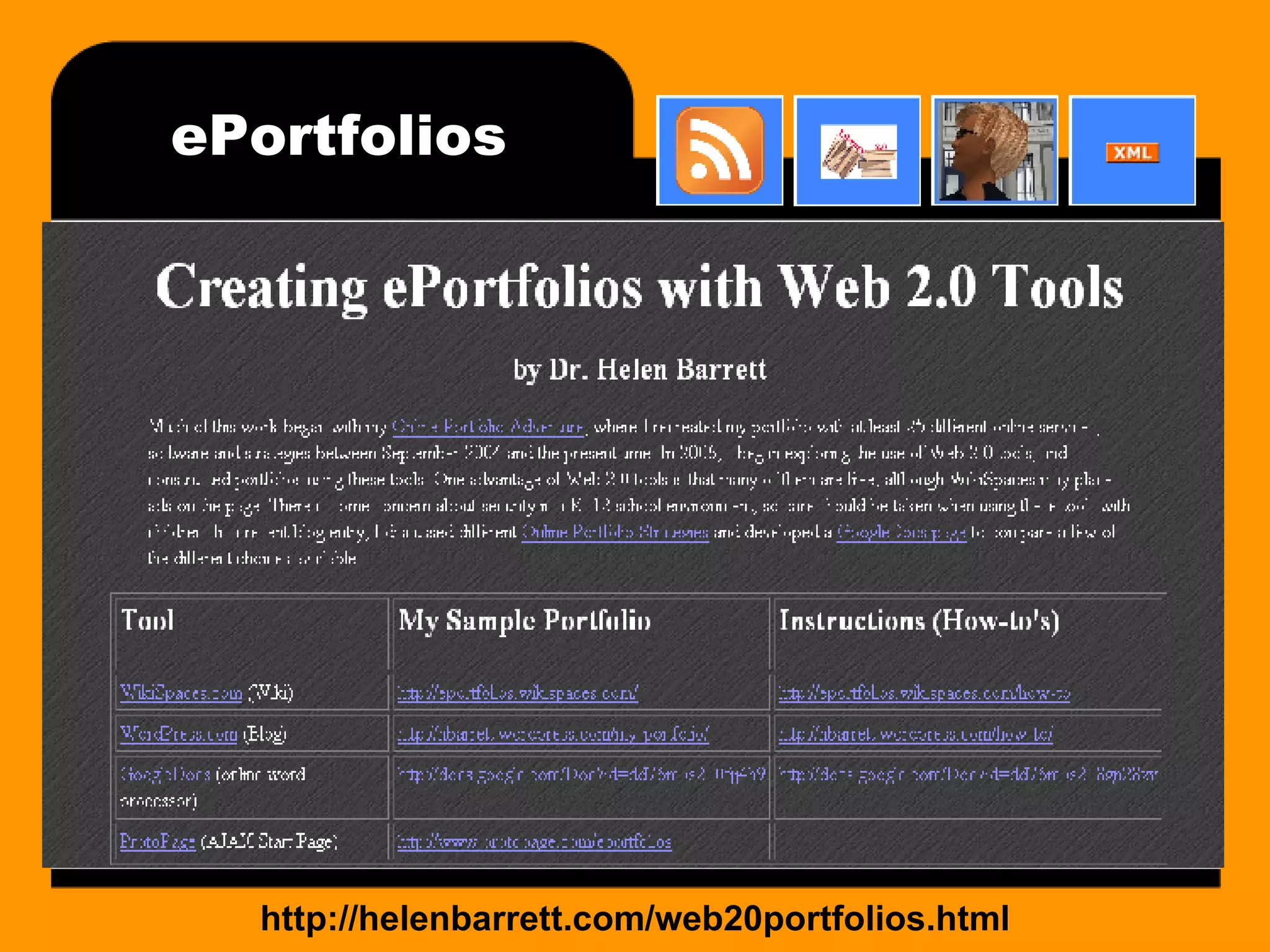
ePortfolios http://helenbarrett.com/web20portfolios.html
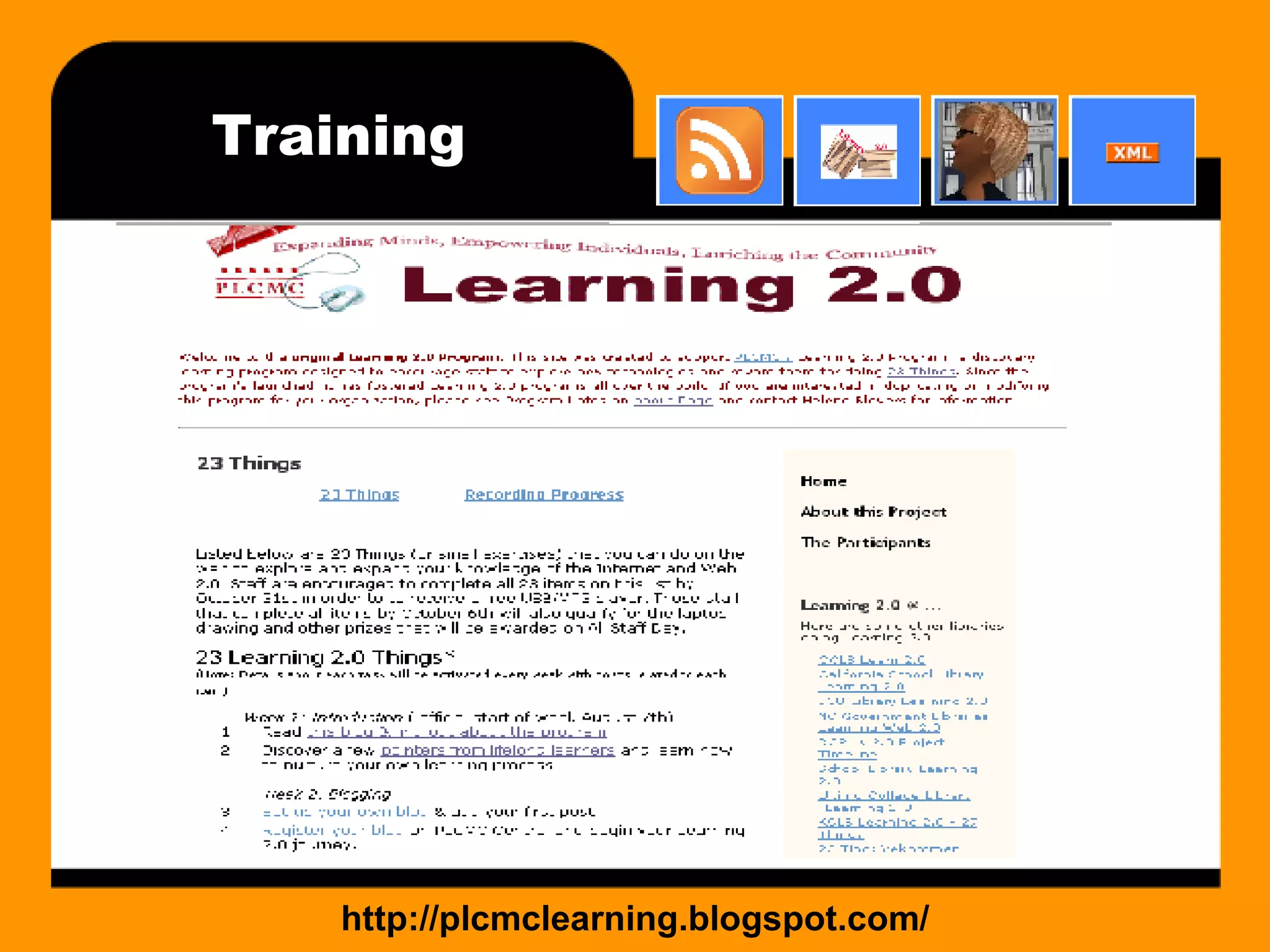
Training http://plcmclearning.blogspot.com/
User Impact Web 1.0 “surfing” Content within a specific space Web 2.0: Decentralized Granular Syndication Web as a “platform” ” Long Tail”
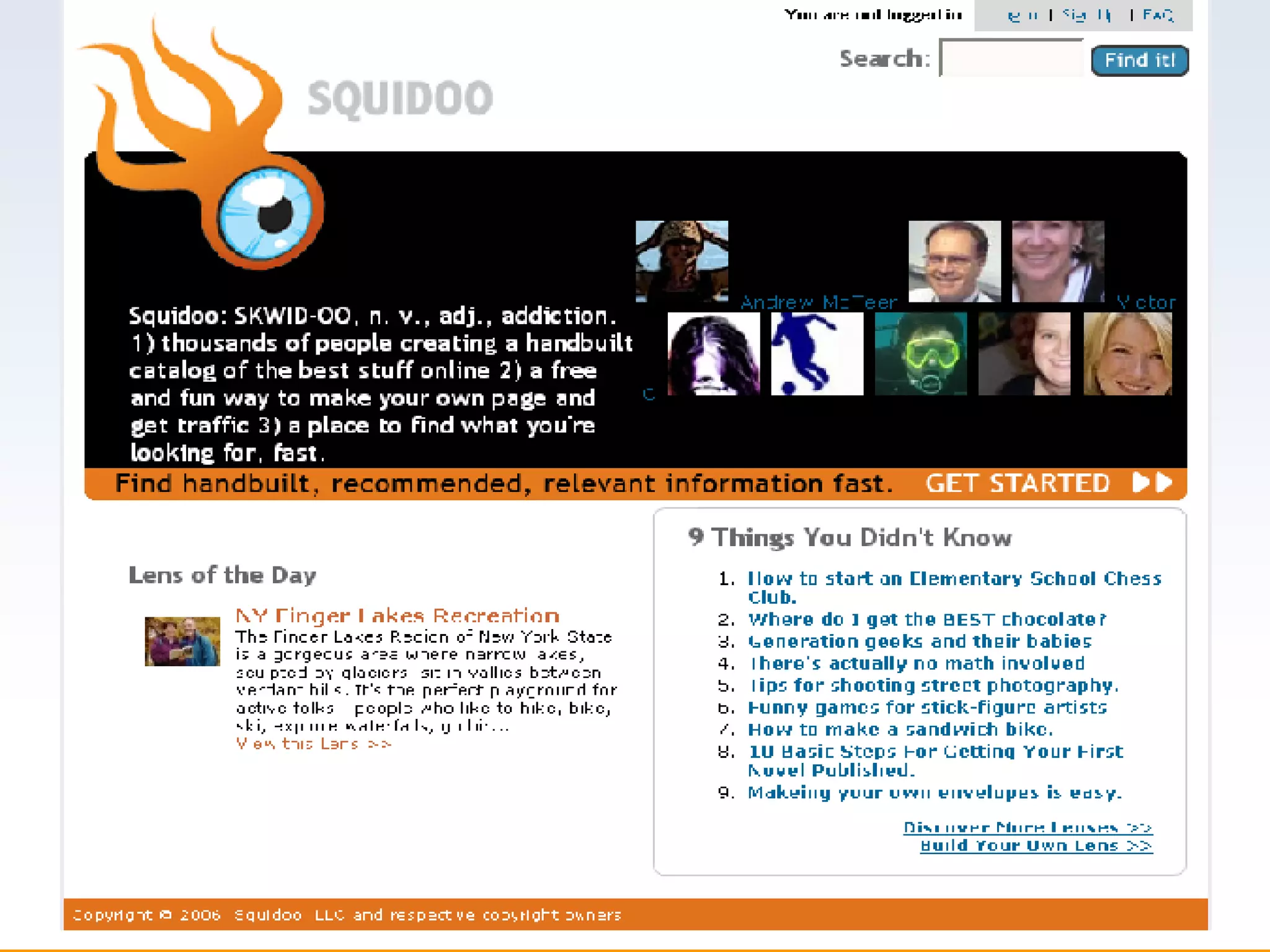
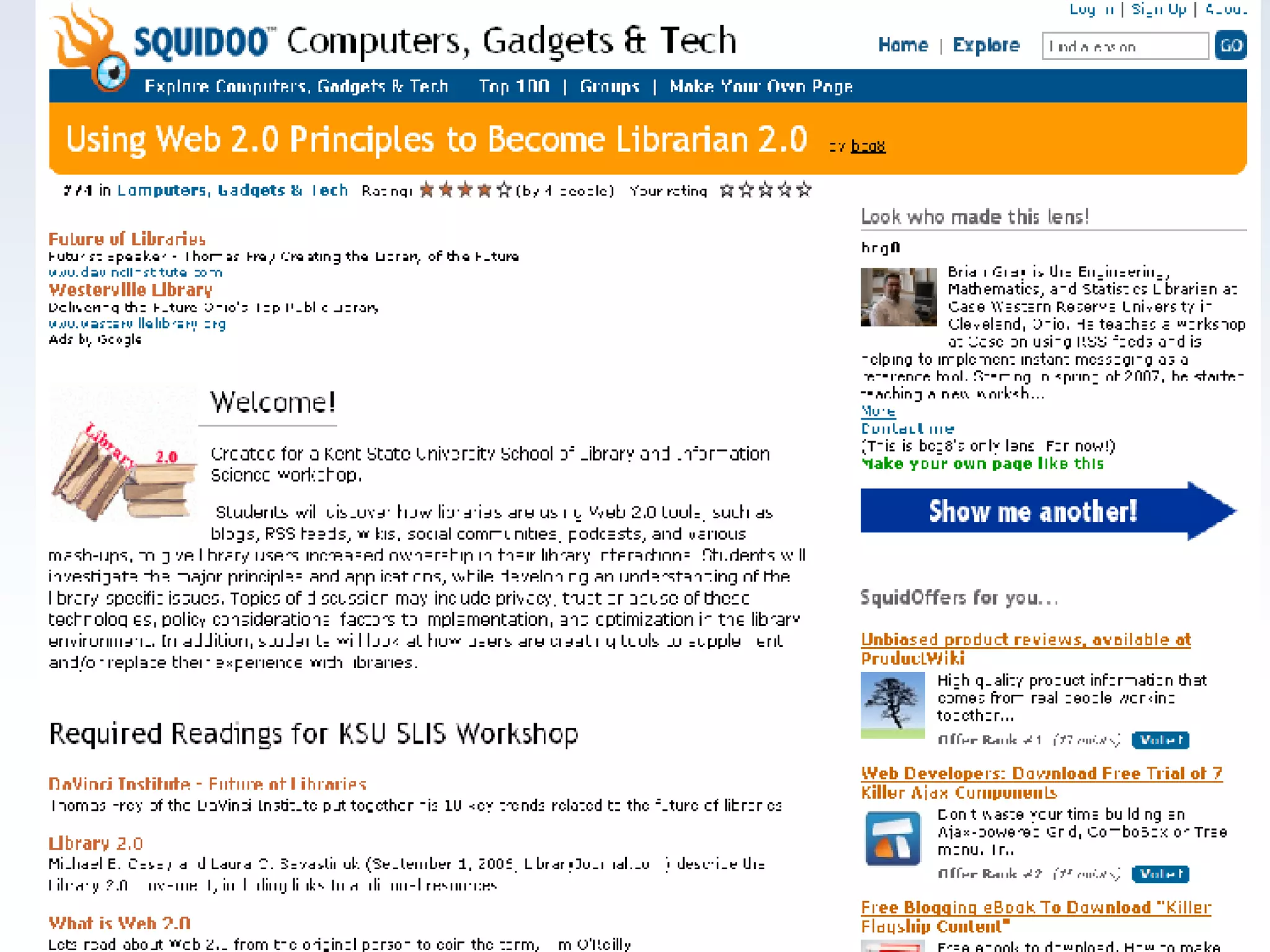
[email_address] http://blog.case.edu/bcg8/ http://briangray.alablog.org/ http://www.squidoo.com/library2point0/ http://www.slideshare.net/bcg8 THANK YOU! Brian C. Gray

Using Web 2.0 Principles to Become Librarian 2.0 (NOTSL MAY 2007)

  • 1.
    Using Web 2.0Principles to Become Librarian 2.0 NOTSL Spring 2007 Program - May 24th, 2007 Brian C. Gray Case Western Reserve University [email_address]
  • 2.
    EXPECTATIONS FOR TODAYWhat is Web 2.0? Why should we care? Library 2.0 Benefits for users & us Or, how do we “play”
  • 3.
    My Personal Interestin Web 2.0 RSS workshop & help with 3 blogs at KSL ALA Library 2.0 participant ALA LAMA Web Coordinator Blogs, RSS, Wiki, Communities Teach workshop for KSU SLIS Regular IM user Non-IT person that likes to “play”
  • 4.
    Reasons Why WeMust Care Competition to libraries Alternatives: marketing & communication New publishing practices User awareness Efficiency “Buzz” word right now Users are unaware of us or are creating alternatives to library resources
  • 5.
  • 6.
    What Is Web2.0, Design Patterns and Business Models for the Next Generation of Software Tim O'Reilly, 09/30/2005 http://www.oreillynet.com/pub/a/oreilly/tim/news/2005/09/30/what-is-web-20.html
  • 7.
    Coined by O'ReillyMedia (2004) http://www.oreillynet.com/pub/a/oreilly/tim/news/2005/09/30/what-is-web-20.html#mememap
  • 8.
    Key Concepts Collaboration& Sharing Ownership & Participation Creation Web-based rather than software based Data & Information Social Connections & Relationships Trust
  • 9.
    More Concepts EnrichmentPersonal data/identity Decentralized User “tagged” or defined Experience Services Remixable Behavior
  • 10.
    Library 2.0 Coinedby Michael Casey on his blog LibraryCrunch Some major library contributors: Stephen Abram John Blyberg Michael E. Casey Jenny Levine Paul Miller Michael Stephens
  • 11.
    Library 2.0 ConceptsDelivery Constant & purposeful change Adaptation User designed &/or created Participation User feedback 2-way information exchange Reaching new users
  • 12.
    Warnings (or MyThoughts) What do users want &/or expect? Investment in technology &/or time? What are users doing on their own? How can users contribute?
  • 13.
  • 14.
  • 15.
  • 16.
    RSS in Databases& Publisher Websites Create a RSS alert directly from a result lists, a search history, or a publication’s table of contents.
  • 17.
    RSS and OPMLOPML can be shared so everyone has access to the same content Promote to instructors as a tool for creating reading lists Library recommended sites
  • 18.
  • 19.
    RSS Changing OurPatrons Moving away from email & listservs Current awareness “PULL” rather than “PUSH” Sharing everything - Privacy? Speed Few years ago…”If not on the Internet, it is not legitimate” - Is RSS the next thing patrons use to judge products & services?
  • 20.
    Blog Considerations Purpose:News, discussion, etc. Open, no commenting, or moderation? Allow tracking/pinging? Spam prevention Single or multiple authors? How often are entries added? Legal considerations (non-profit status, advertising, organizational policies, etc.)
  • 21.
    Workplace E-Mail, InstantMessaging, & Blogs 8% of organizations have business blogs 55% of business blogs are public Less than 2% of organizations assign a lawyer or other responsible party to review employees’ entries Nearly 2% have fired workers for offensive blog content - including posts on employees’ personal blogs American Management Association – 2006 Survey
  • 22.
  • 23.
  • 24.
  • 25.
  • 26.
  • 27.
  • 28.
  • 29.
  • 30.
  • 31.
  • 32.
  • 33.
  • 34.
    Blog Based OPACCasey Bisson WPopac: An OPAC 2.0 Testbed WordPress based, so already have access to more programmers than the ILS vendors combined
  • 35.
  • 36.
  • 37.
  • 38.
  • 39.
  • 40.
  • 41.
  • 42.
  • 43.
  • 44.
  • 45.
  • 46.
    St. Joseph CountyPublic Library
  • 47.
  • 48.
  • 49.
  • 50.
  • 51.
  • 52.
  • 53.
  • 54.
  • 55.
  • 56.
  • 57.
  • 58.
  • 59.
  • 60.
  • 61.
  • 62.
  • 63.
  • 64.
  • 65.
  • 66.
  • 67.
  • 68.
    Workplace E-Mail, InstantMessaging, & Blogs 35% of employees use IM at work Only 31% of organizations have policies 13% retain IM business records 2% have dismissed workers for inappropriate IM chat 50% of workplace users are downloading free IM tools from the Internet - a dangerous practice that 26% of employers are not even aware of American Management Association – 2006 Survey
  • 69.
  • 70.
  • 71.
  • 72.
  • 73.
  • 74.
  • 75.
  • 76.
  • 77.
    Podcasting as Simpleas Making a Phone Call
  • 78.
  • 79.
  • 80.
  • 81.
    User Impact Web1.0 “surfing” Content within a specific space Web 2.0: Decentralized Granular Syndication Web as a “platform” ” Long Tail”
  • 82.
    [email_address] http://blog.case.edu/bcg8/ http://briangray.alablog.org/http://www.squidoo.com/library2point0/ http://www.slideshare.net/bcg8 THANK YOU! Brian C. Gray