Using Splunk/ELK for Auditing AWS/GCP/Azure
Security Posture
By Rod Soto and José Hernandez
$Whoami
José Hernandez
Principal Security Researcher at Splunk. He started his professional career at
Prolexic Technologies (now Akamai), fighting DDOS attacks against Fortune 100
companies perpetrated by “anonymous” and “lulzsec.” As a engineering
co-founder of Zenedge Inc. (acquired by Oracle Inc.), José helped build
technologies to fight bots and web-application attacks. He has also built security
operation centers and run a public threat-intelligence service.
Rod Soto
Principal Security Research Engineer at Splunk. Worked at Prolexic Technologies
(now Akamai), and Caspida. Cofounder of Hackmiami and Pacific Hackers
meetups and conferences. Creator of Kommand && KonTroll / NoQrtr-CTF.
Security in the Cloud...
● The cloud is prevalent and pervasive in all that we do.
● Cloud providers are not invulnerable and attacks against them affect our lives.
● As cloud adoption expands, there are an increasing number of new
technologies and unknowns.
● Cloud security is not an exact translation of inside-the-perimeter security.
● Every provider has its own set of technologies, features, and security items.
● While there are several cloud-security initiatives, it is still an ongoing effort.
● There are a range of emerging tools designed to assess the cloud. We chose
CS Suite because it helps analysts assess Azure, AWS, and GCP.
...Security in the Cloud
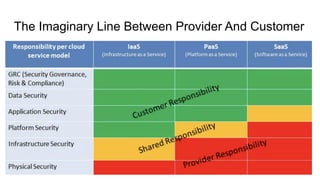
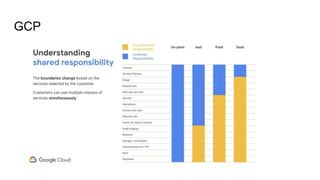
The Imaginary Line Between Provider And Customer
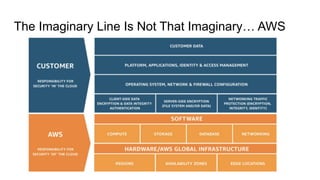
The Imaginary Line Is Not That Imaginary… AWS
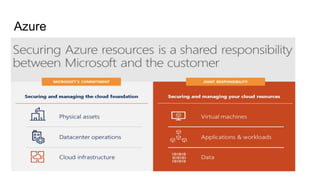
Azure
GCP
Cloud Attacks Highlights
● Sony (2011): 77M users
● ICloud (2014): The Fappening
● CloudHopper: (2014 - 2016 - )(IBM, Fujitsu, NTT Data, Tata, HP, DXC,
Dimension, CSC)
● Ashley Madison: (2015) / AFF (2015/2016)
● Equifax (2017): 143M customers
● HBO (2017): 1.5 TB of data stolen, including unreleased GoT
● Marriott (2018): 327M accounts
● Kubernetes: CVE-2018-1002105 (PrivEsc)
● Yup…2019 Capital One: 100M accounts
Main Cloud Attack Vectors CSA: "Treacherous 12"
1. Data breaches
2. Insufficient identity, credential, and access management
3. Insecure interfaces and application-programming
interfaces (APIs)
4. System vulnerabilities
5. Account hijacking
6. Malicious insiders
Main Cloud Attack Vectors CSA: Treacherous 12
7. Advanced persistent threats (APTs)
8. Data loss
9. Insufficient due diligence
10. Abuse and nefarious use of cloud services
11. Denial of Service (DoS)
12. Shared technology vulnerabilities
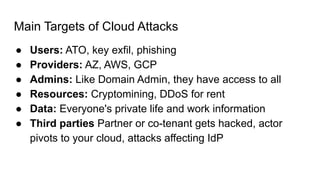
Main Targets of Cloud Attacks
● Users: ATO, key exfil, phishing
● Providers: AZ, AWS, GCP
● Admins: Like Domain Admin, they have access to all
● Resources: Cryptomining, DDoS for rent
● Data: Everyone's private life and work information
● Third parties Partner or co-tenant gets hacked, actor
pivots to your cloud, attacks affecting IdP
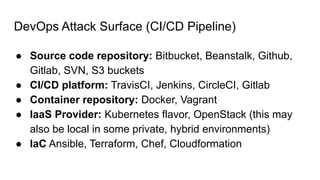
DevOps Attack Surface (CI/CD Pipeline)
● Source code repository: Bitbucket, Beanstalk, Github,
Gitlab, SVN, S3 buckets
● CI/CD platform: TravisCI, Jenkins, CircleCI, Gitlab
● Container repository: Docker, Vagrant
● IaaS Provider: Kubernetes flavor, OpenStack (this may
also be local in some private, hybrid environments)
● IaC Ansible, Terraform, Chef, Cloudformation
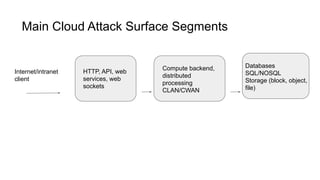
Main Cloud Attack Surface Segments
HTTP, API, web
services, web
sockets
Compute backend,
distributed
processing
CLAN/CWAN
Databases
SQL/NOSQL
Storage (block, object,
file)
Internet/intranet
client
Can We Create Common Criteria For Cloud Security?
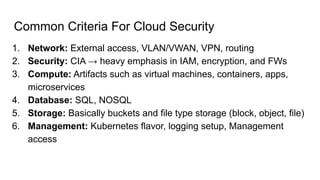
Common Criteria For Cloud Security
1. Network: External access, VLAN/VWAN, VPN, routing
2. Security: CIA → heavy emphasis in IAM, encryption, and FWs
3. Compute: Artifacts such as virtual machines, containers, apps,
microservices
4. Database: SQL, NOSQL
5. Storage: Basically buckets and file type storage (block, object, file)
6. Management: Kubernetes flavor, logging setup, Management
access
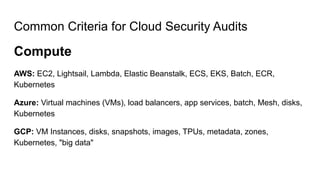
Common Criteria for Cloud Security Audits
Compute
AWS: EC2, Lightsail, Lambda, Elastic Beanstalk, ECS, EKS, Batch, ECR,
Kubernetes
Azure: Virtual machines (VMs), load balancers, app services, batch, Mesh, disks,
Kubernetes
GCP: VM Instances, disks, snapshots, images, TPUs, metadata, zones,
Kubernetes, "big data"
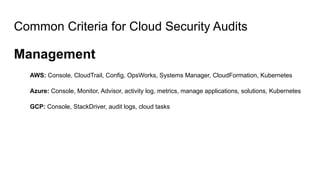
Common Criteria for Cloud Security Audits
Management
AWS: Console, CloudTrail, Config, OpsWorks, Systems Manager, CloudFormation, Kubernetes
Azure: Console, Monitor, Advisor, activity log, metrics, manage applications, solutions, Kubernetes
GCP: Console, StackDriver, audit logs, cloud tasks
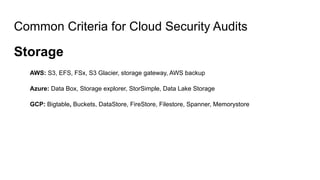
Common Criteria for Cloud Security Audits
Storage
AWS: S3, EFS, FSx, S3 Glacier, storage gateway, AWS backup
Azure: Data Box, Storage explorer, StorSimple, Data Lake Storage
GCP: Bigtable, Buckets, DataStore, FireStore, Filestore, Spanner, Memorystore
Common Criteria for Cloud Security Audits
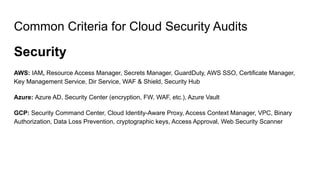
Security
AWS: IAM, Resource Access Manager, Secrets Manager, GuardDuty, AWS SSO, Certificate Manager,
Key Management Service, Dir Service, WAF & Shield, Security Hub
Azure: Azure AD, Security Center (encryption, FW, WAF, etc.), Azure Vault
GCP: Security Command Center, Cloud Identity-Aware Proxy, Access Context Manager, VPC, Binary
Authorization, Data Loss Prevention, cryptographic keys, Access Approval, Web Security Scanner
Common Criteria for Cloud Security Audits
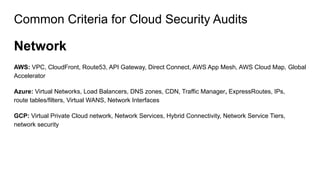
Network
AWS: VPC, CloudFront, Route53, API Gateway, Direct Connect, AWS App Mesh, AWS Cloud Map, Global
Accelerator
Azure: Virtual Networks, Load Balancers, DNS zones, CDN, Traffic Manager, ExpressRoutes, IPs,
route tables/filters, Virtual WANS, Network Interfaces
GCP: Virtual Private Cloud network, Network Services, Hybrid Connectivity, Network Service Tiers,
network security
Common Criteria for Cloud Security Audits
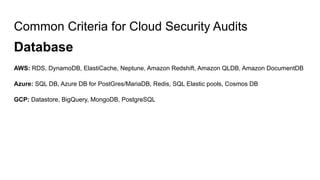
Database
AWS: RDS, DynamoDB, ElastiCache, Neptune, Amazon Redshift, Amazon QLDB, Amazon DocumentDB
Azure: SQL DB, Azure DB for PostGres/MariaDB, Redis, SQL Elastic pools, Cosmos DB
GCP: Datastore, BigQuery, MongoDB, PostgreSQL
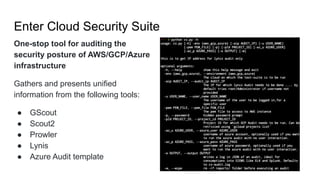
Enter Cloud Security Suite
One-stop tool for auditing the
security posture of AWS/GCP/Azure
infrastructure
Gathers and presents unified
information from the following tools:
● GScout
● Scout2
● Prowler
● Lynis
● Azure Audit template
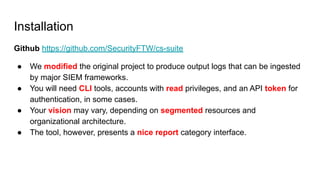
Installation
Github https://github.com/SecurityFTW/cs-suite
● We modified the original project to produce output logs that can be ingested
by major SIEM frameworks.
● You will need CLI tools, accounts with read privileges, and an API token for
authentication, in some cases.
● Your vision may vary, depending on segmented resources and
organizational architecture.
● The tool, however, presents a nice report category interface.
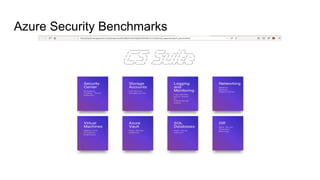
Azure Security Benchmarks
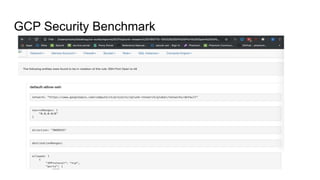
GCP Security Benchmark
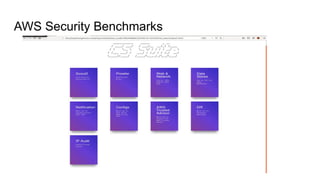
AWS Security Benchmarks
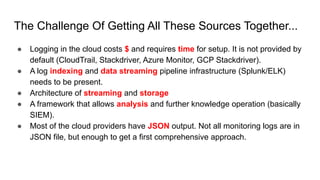
The Challenge Of Getting All These Sources Together...
● Logging in the cloud costs $ and requires time for setup. It is not provided by
default (CloudTrail, Stackdriver, Azure Monitor, GCP Stackdriver).
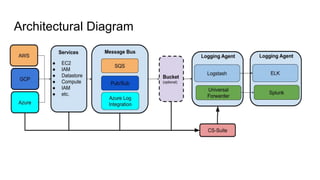
● A log indexing and data streaming pipeline infrastructure (Splunk/ELK)
needs to be present.
● Architecture of streaming and storage
● A framework that allows analysis and further knowledge operation (basically
SIEM).
● Most of the cloud providers have JSON output. Not all monitoring logs are in
JSON file, but enough to get a first comprehensive approach.
Architectural Diagram
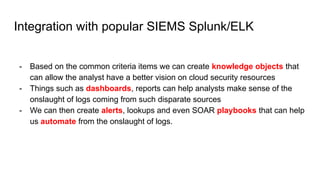
Integration with popular SIEMS Splunk/ELK
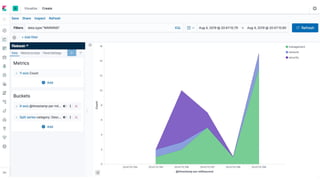
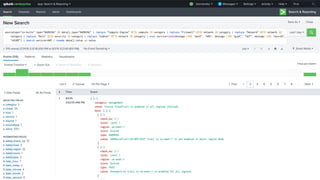
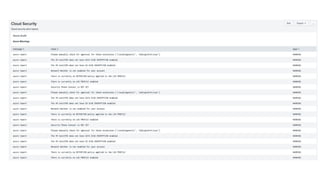
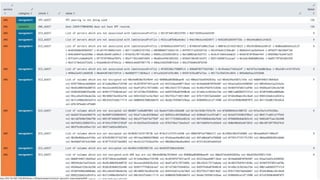
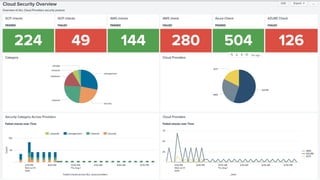
- Based on the common criteria items we can create knowledge objects that
can allow the analyst have a better vision on cloud security resources
- Things such as dashboards, reports can help analysts make sense of the
onslaught of logs coming from such disparate sources
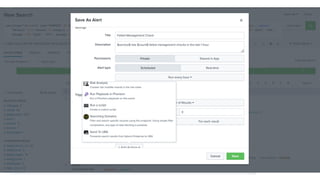
- We can then create alerts, lookups and even SOAR playbooks that can help
us automate from the onslaught of logs.
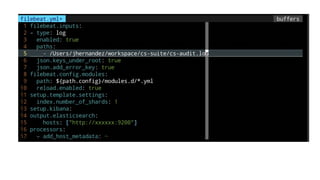
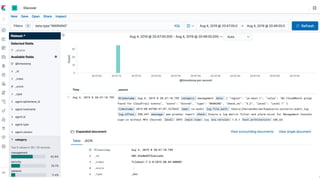
ELK
ELK
Logstash
Kibana slide
Splunk
SPLUNK
SPLUNK
SPLUNK
Splunk Alerts on Results
Q&A
Thank You!
Rod Soto @rodsoto rod@rodsoto.net
Jose Hernandez @d1vious josehelps.com

Using Splunk or ELK for Auditing AWS/GCP/Azure Security posture

  • 1.
    Using Splunk/ELK forAuditing AWS/GCP/Azure Security Posture By Rod Soto and José Hernandez
  • 2.
    $Whoami José Hernandez Principal SecurityResearcher at Splunk. He started his professional career at Prolexic Technologies (now Akamai), fighting DDOS attacks against Fortune 100 companies perpetrated by “anonymous” and “lulzsec.” As a engineering co-founder of Zenedge Inc. (acquired by Oracle Inc.), José helped build technologies to fight bots and web-application attacks. He has also built security operation centers and run a public threat-intelligence service. Rod Soto Principal Security Research Engineer at Splunk. Worked at Prolexic Technologies (now Akamai), and Caspida. Cofounder of Hackmiami and Pacific Hackers meetups and conferences. Creator of Kommand && KonTroll / NoQrtr-CTF.
  • 3.
    Security in theCloud... ● The cloud is prevalent and pervasive in all that we do. ● Cloud providers are not invulnerable and attacks against them affect our lives. ● As cloud adoption expands, there are an increasing number of new technologies and unknowns. ● Cloud security is not an exact translation of inside-the-perimeter security. ● Every provider has its own set of technologies, features, and security items. ● While there are several cloud-security initiatives, it is still an ongoing effort. ● There are a range of emerging tools designed to assess the cloud. We chose CS Suite because it helps analysts assess Azure, AWS, and GCP.
  • 4.
  • 5.
    The Imaginary LineBetween Provider And Customer
  • 6.
    The Imaginary LineIs Not That Imaginary… AWS
  • 7.
  • 8.
  • 9.
    Cloud Attacks Highlights ●Sony (2011): 77M users ● ICloud (2014): The Fappening ● CloudHopper: (2014 - 2016 - )(IBM, Fujitsu, NTT Data, Tata, HP, DXC, Dimension, CSC) ● Ashley Madison: (2015) / AFF (2015/2016) ● Equifax (2017): 143M customers ● HBO (2017): 1.5 TB of data stolen, including unreleased GoT ● Marriott (2018): 327M accounts ● Kubernetes: CVE-2018-1002105 (PrivEsc) ● Yup…2019 Capital One: 100M accounts
  • 10.
    Main Cloud AttackVectors CSA: "Treacherous 12" 1. Data breaches 2. Insufficient identity, credential, and access management 3. Insecure interfaces and application-programming interfaces (APIs) 4. System vulnerabilities 5. Account hijacking 6. Malicious insiders
  • 11.
    Main Cloud AttackVectors CSA: Treacherous 12 7. Advanced persistent threats (APTs) 8. Data loss 9. Insufficient due diligence 10. Abuse and nefarious use of cloud services 11. Denial of Service (DoS) 12. Shared technology vulnerabilities
  • 12.
    Main Targets ofCloud Attacks ● Users: ATO, key exfil, phishing ● Providers: AZ, AWS, GCP ● Admins: Like Domain Admin, they have access to all ● Resources: Cryptomining, DDoS for rent ● Data: Everyone's private life and work information ● Third parties Partner or co-tenant gets hacked, actor pivots to your cloud, attacks affecting IdP
  • 13.
    DevOps Attack Surface(CI/CD Pipeline) ● Source code repository: Bitbucket, Beanstalk, Github, Gitlab, SVN, S3 buckets ● CI/CD platform: TravisCI, Jenkins, CircleCI, Gitlab ● Container repository: Docker, Vagrant ● IaaS Provider: Kubernetes flavor, OpenStack (this may also be local in some private, hybrid environments) ● IaC Ansible, Terraform, Chef, Cloudformation
  • 14.
    Main Cloud AttackSurface Segments HTTP, API, web services, web sockets Compute backend, distributed processing CLAN/CWAN Databases SQL/NOSQL Storage (block, object, file) Internet/intranet client
  • 15.
    Can We CreateCommon Criteria For Cloud Security?
  • 16.
    Common Criteria ForCloud Security 1. Network: External access, VLAN/VWAN, VPN, routing 2. Security: CIA → heavy emphasis in IAM, encryption, and FWs 3. Compute: Artifacts such as virtual machines, containers, apps, microservices 4. Database: SQL, NOSQL 5. Storage: Basically buckets and file type storage (block, object, file) 6. Management: Kubernetes flavor, logging setup, Management access
  • 17.
    Common Criteria forCloud Security Audits Compute AWS: EC2, Lightsail, Lambda, Elastic Beanstalk, ECS, EKS, Batch, ECR, Kubernetes Azure: Virtual machines (VMs), load balancers, app services, batch, Mesh, disks, Kubernetes GCP: VM Instances, disks, snapshots, images, TPUs, metadata, zones, Kubernetes, "big data"
  • 18.
    Common Criteria forCloud Security Audits Management AWS: Console, CloudTrail, Config, OpsWorks, Systems Manager, CloudFormation, Kubernetes Azure: Console, Monitor, Advisor, activity log, metrics, manage applications, solutions, Kubernetes GCP: Console, StackDriver, audit logs, cloud tasks
  • 19.
    Common Criteria forCloud Security Audits Storage AWS: S3, EFS, FSx, S3 Glacier, storage gateway, AWS backup Azure: Data Box, Storage explorer, StorSimple, Data Lake Storage GCP: Bigtable, Buckets, DataStore, FireStore, Filestore, Spanner, Memorystore
  • 20.
    Common Criteria forCloud Security Audits Security AWS: IAM, Resource Access Manager, Secrets Manager, GuardDuty, AWS SSO, Certificate Manager, Key Management Service, Dir Service, WAF & Shield, Security Hub Azure: Azure AD, Security Center (encryption, FW, WAF, etc.), Azure Vault GCP: Security Command Center, Cloud Identity-Aware Proxy, Access Context Manager, VPC, Binary Authorization, Data Loss Prevention, cryptographic keys, Access Approval, Web Security Scanner
  • 21.
    Common Criteria forCloud Security Audits Network AWS: VPC, CloudFront, Route53, API Gateway, Direct Connect, AWS App Mesh, AWS Cloud Map, Global Accelerator Azure: Virtual Networks, Load Balancers, DNS zones, CDN, Traffic Manager, ExpressRoutes, IPs, route tables/filters, Virtual WANS, Network Interfaces GCP: Virtual Private Cloud network, Network Services, Hybrid Connectivity, Network Service Tiers, network security
  • 22.
    Common Criteria forCloud Security Audits Database AWS: RDS, DynamoDB, ElastiCache, Neptune, Amazon Redshift, Amazon QLDB, Amazon DocumentDB Azure: SQL DB, Azure DB for PostGres/MariaDB, Redis, SQL Elastic pools, Cosmos DB GCP: Datastore, BigQuery, MongoDB, PostgreSQL
  • 23.
    Enter Cloud SecuritySuite One-stop tool for auditing the security posture of AWS/GCP/Azure infrastructure Gathers and presents unified information from the following tools: ● GScout ● Scout2 ● Prowler ● Lynis ● Azure Audit template
  • 24.
    Installation Github https://github.com/SecurityFTW/cs-suite ● Wemodified the original project to produce output logs that can be ingested by major SIEM frameworks. ● You will need CLI tools, accounts with read privileges, and an API token for authentication, in some cases. ● Your vision may vary, depending on segmented resources and organizational architecture. ● The tool, however, presents a nice report category interface.
  • 25.
  • 26.
  • 27.
  • 28.
    The Challenge OfGetting All These Sources Together... ● Logging in the cloud costs $ and requires time for setup. It is not provided by default (CloudTrail, Stackdriver, Azure Monitor, GCP Stackdriver). ● A log indexing and data streaming pipeline infrastructure (Splunk/ELK) needs to be present. ● Architecture of streaming and storage ● A framework that allows analysis and further knowledge operation (basically SIEM). ● Most of the cloud providers have JSON output. Not all monitoring logs are in JSON file, but enough to get a first comprehensive approach.
  • 29.
  • 30.
    Integration with popularSIEMS Splunk/ELK - Based on the common criteria items we can create knowledge objects that can allow the analyst have a better vision on cloud security resources - Things such as dashboards, reports can help analysts make sense of the onslaught of logs coming from such disparate sources - We can then create alerts, lookups and even SOAR playbooks that can help us automate from the onslaught of logs.
  • 31.
  • 33.
  • 34.
  • 35.
  • 36.
  • 38.
  • 39.
  • 40.
  • 41.
    Q&A Thank You! Rod Soto@rodsoto rod@rodsoto.net Jose Hernandez @d1vious josehelps.com