

Using RealTime fMRI Based Neurofeedback
To Probe Default Network Regulation
R. Cameron Craddock, PhD
Director of Imaging, Child Mind Institute
Research Scientist, Nathan Kline Institute
February 25, 2016
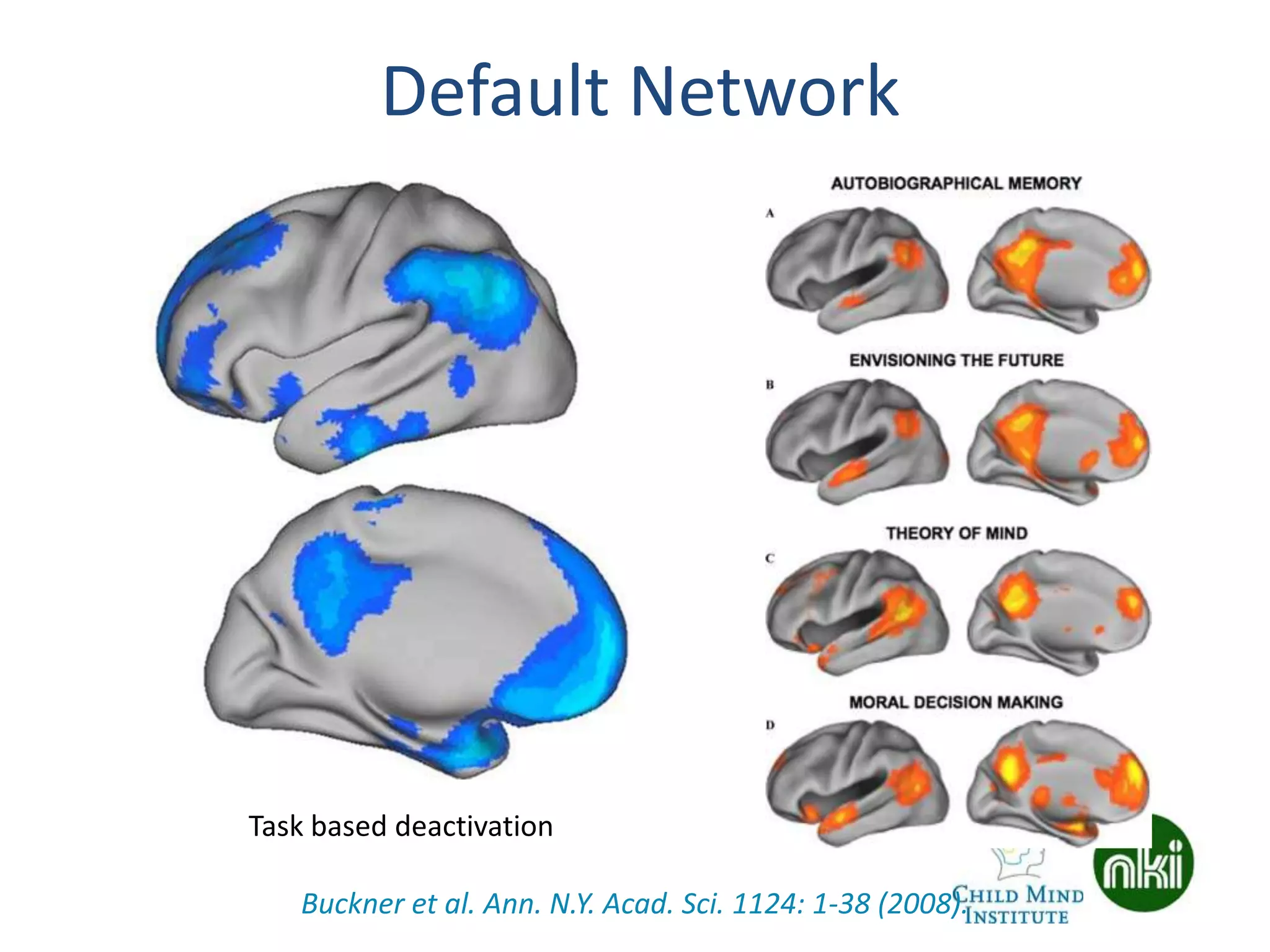
Default Network
Task based deactivation
Buckner et al. Ann. N.Y. Acad. Sci. 1124: 1-38 (2008).
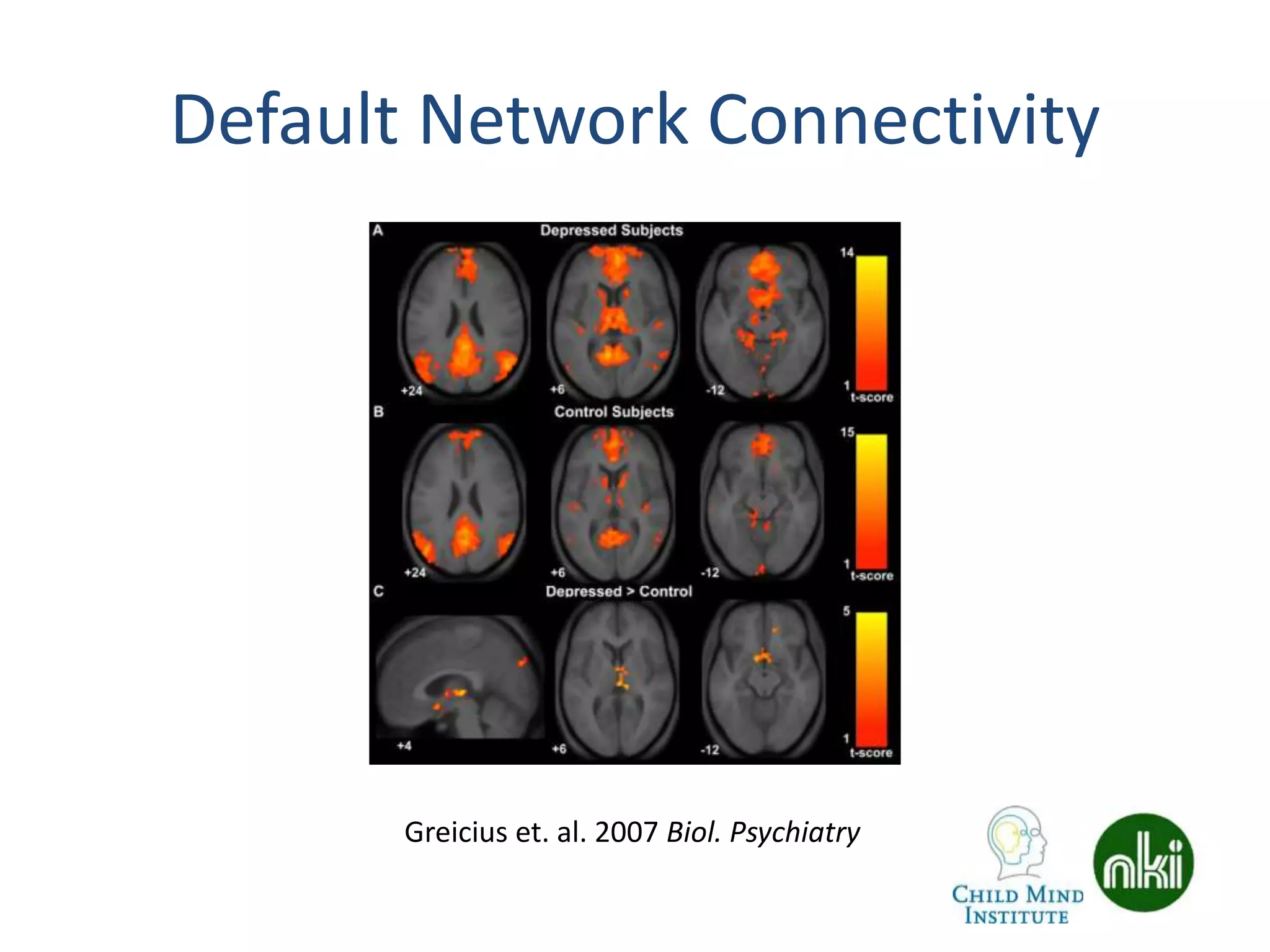
Default Network Connectivity
Greicius et. al. 2007 Biol. Psychiatry
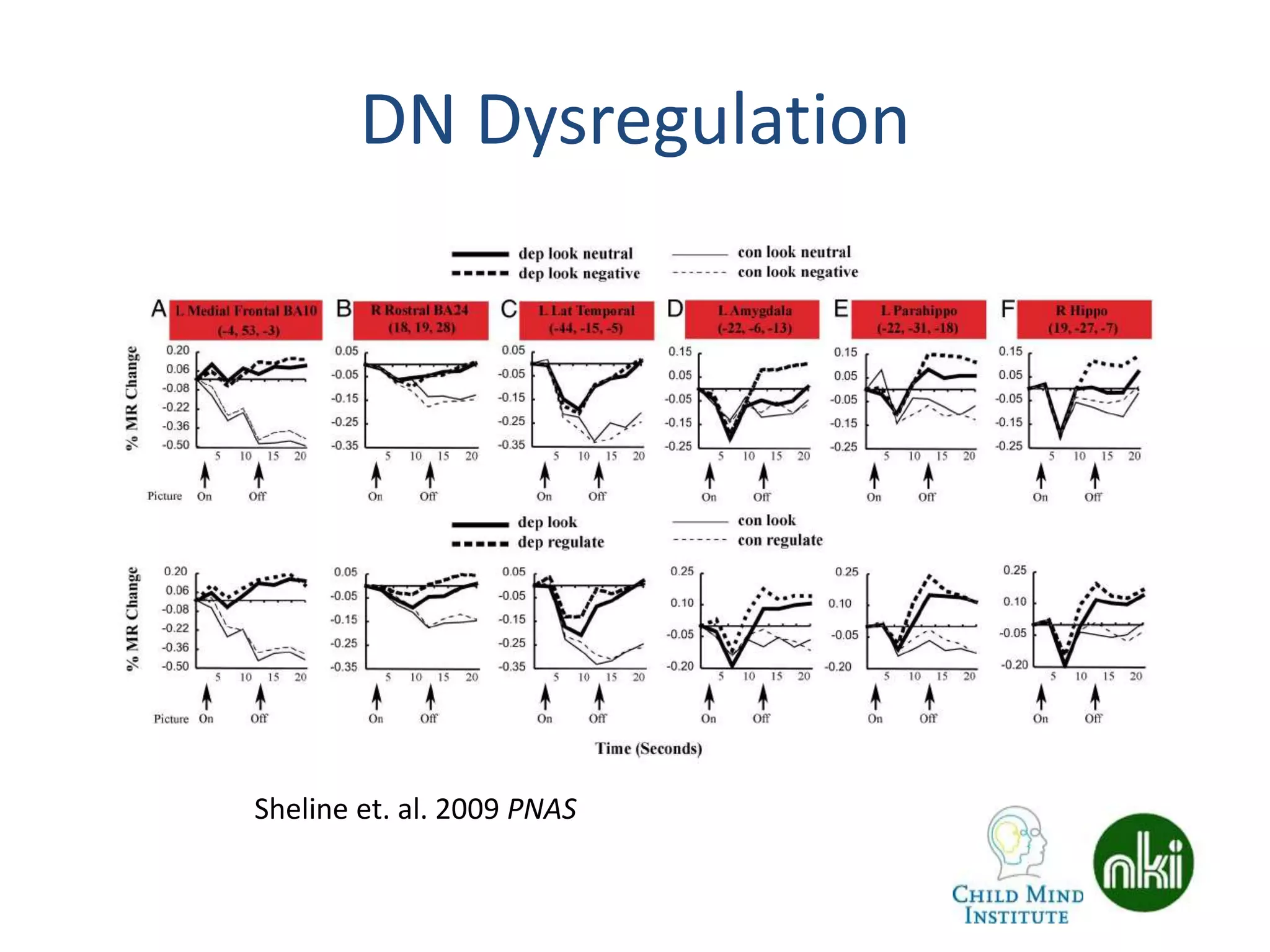
DN Dysregulation
Sheline et. al. 2009 PNAS
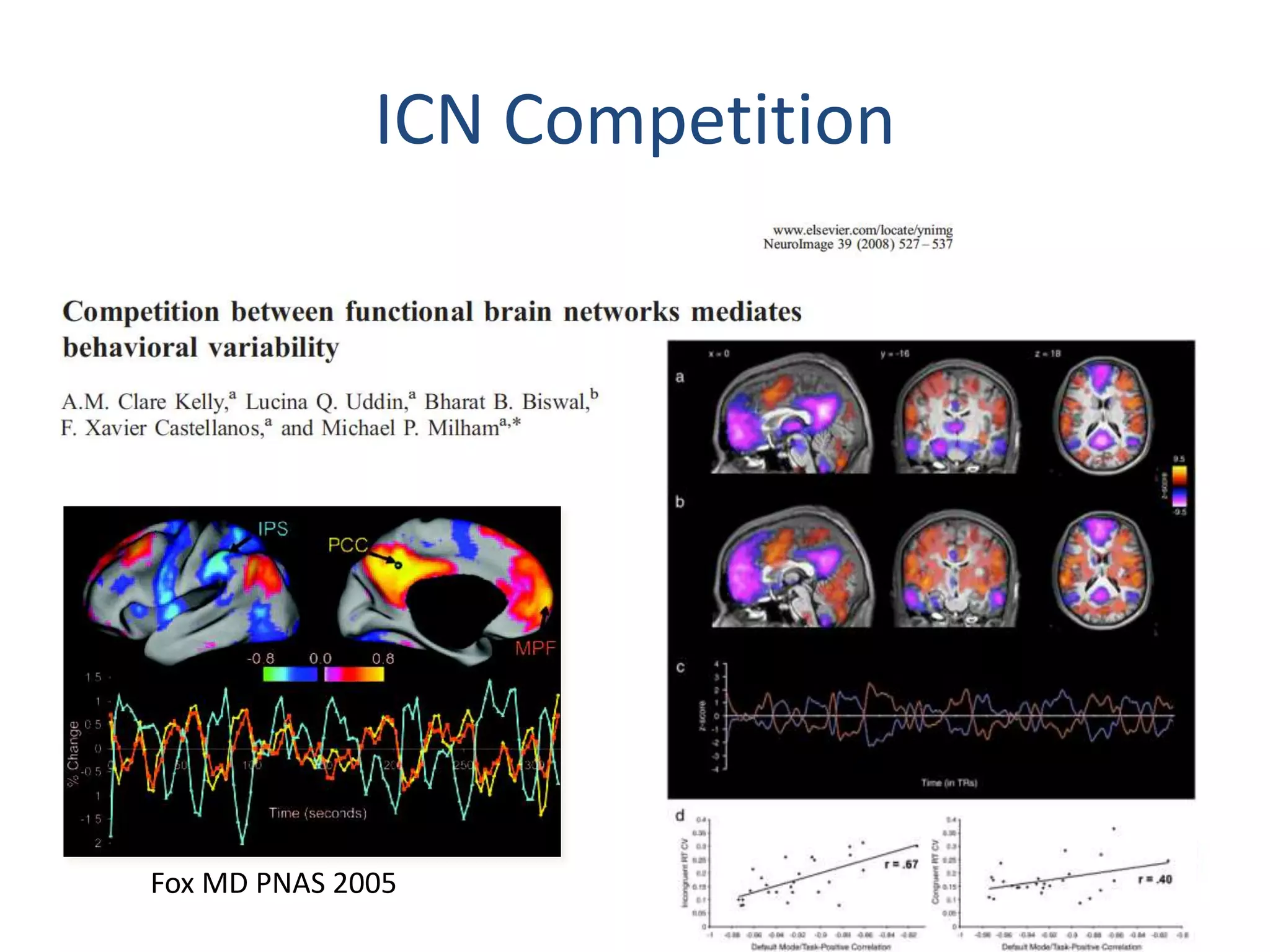
ICN Competition
Fox MD PNAS 2005
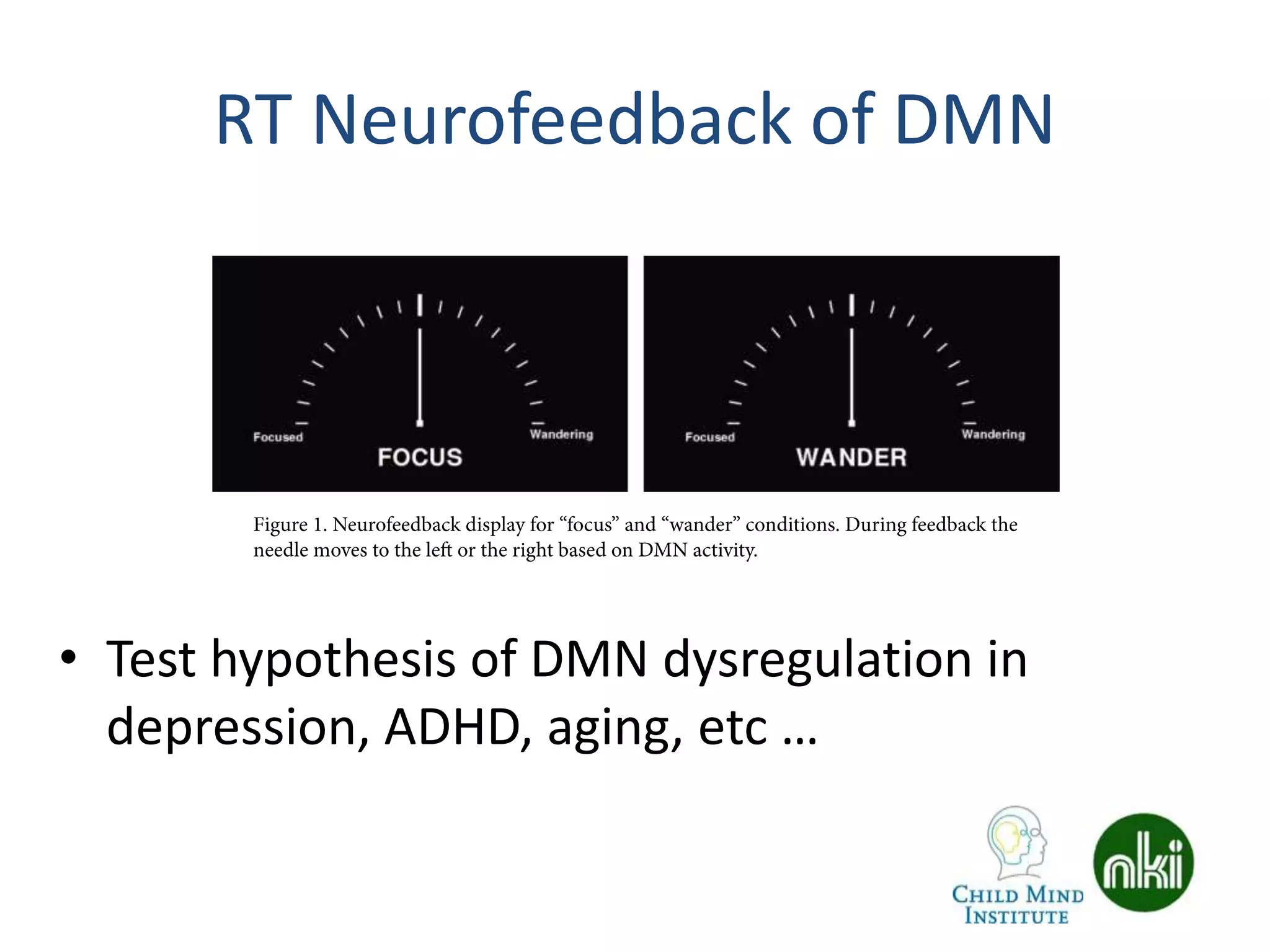
RT Neurofeedback of DMN
• Test hypothesis of DMN dysregulation in
depression, ADHD, aging, etc …
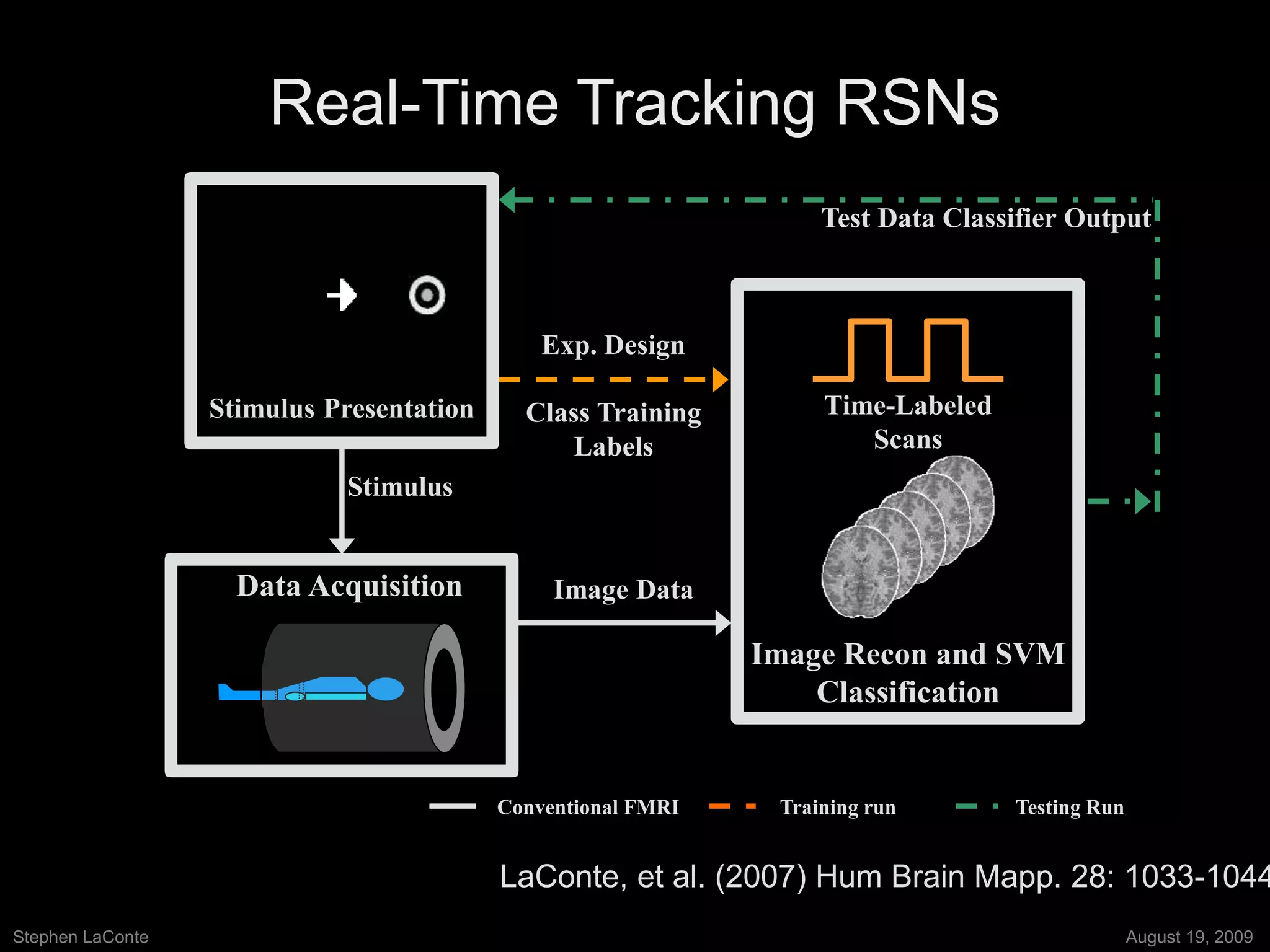
Exp. Design
Class Training
Labels
Training run
Time-Labeled
Scans
Image Recon and SVM
Classification
Image DataData Acquisition
Stimulus Presentation
Stimulus
Conventional FMRI
Test Data Classifier Output
Testing Run
Real-Time Tracking RSNs
LaConte, et al. (2007) Hum Brain Mapp. 28: 1033-1044
Stephen LaConte August 19, 2009
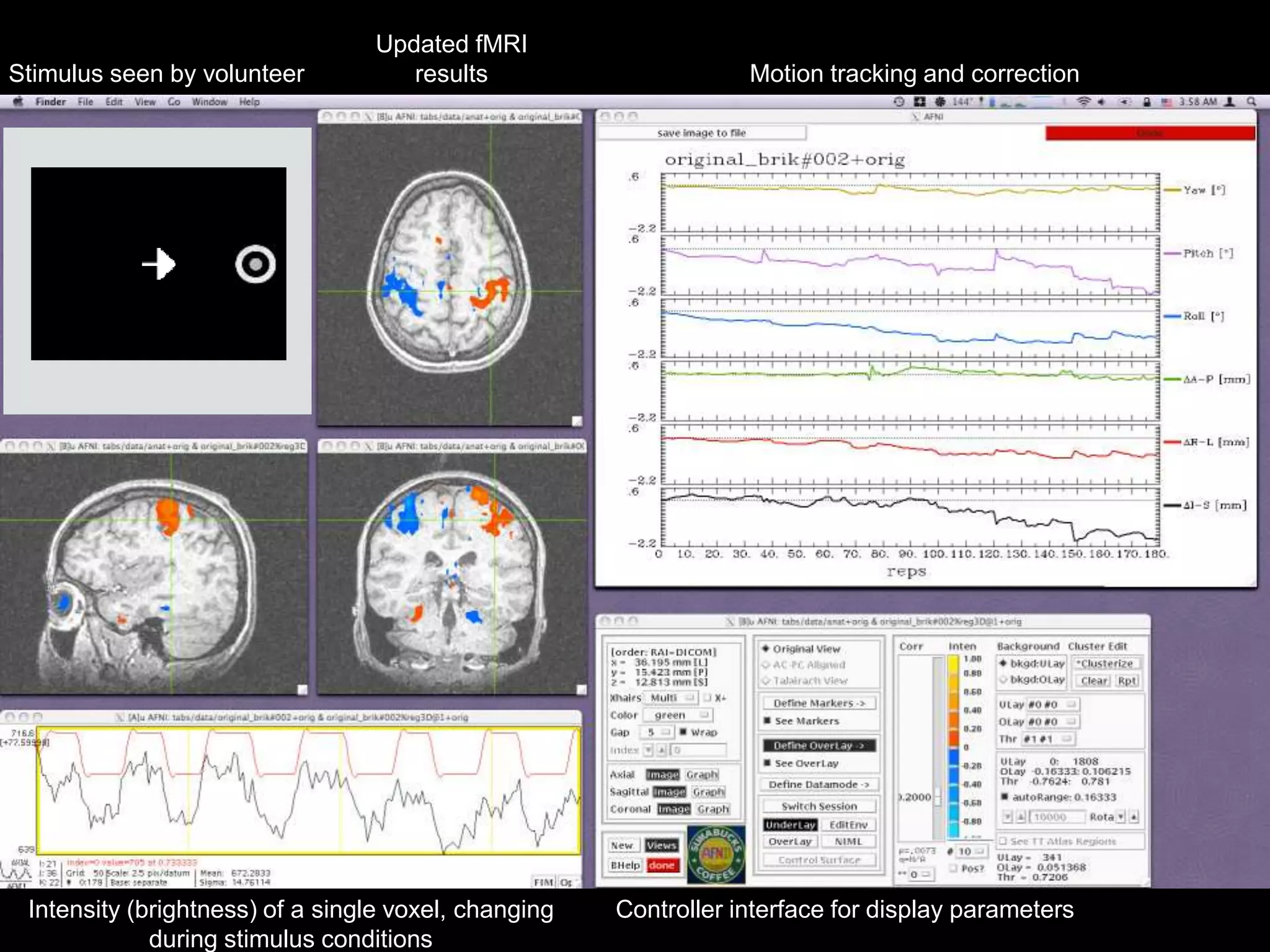
Stimulus seen by volunteer
Updated fMRI
results Motion tracking and correction
Intensity (brightness) of a single voxel, changing
during stimulus conditions
Controller interface for display parameters
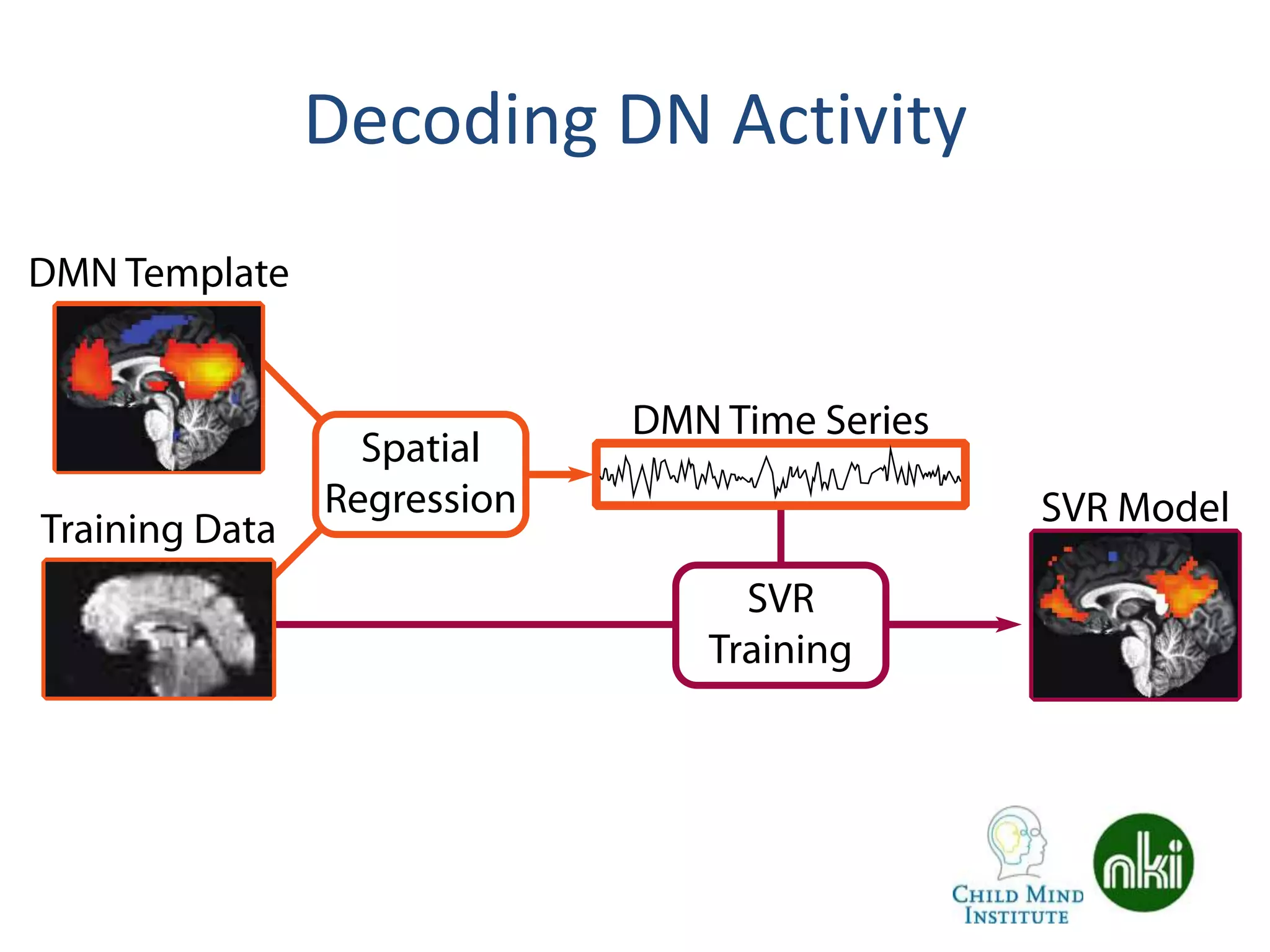
Decoding DN Activity
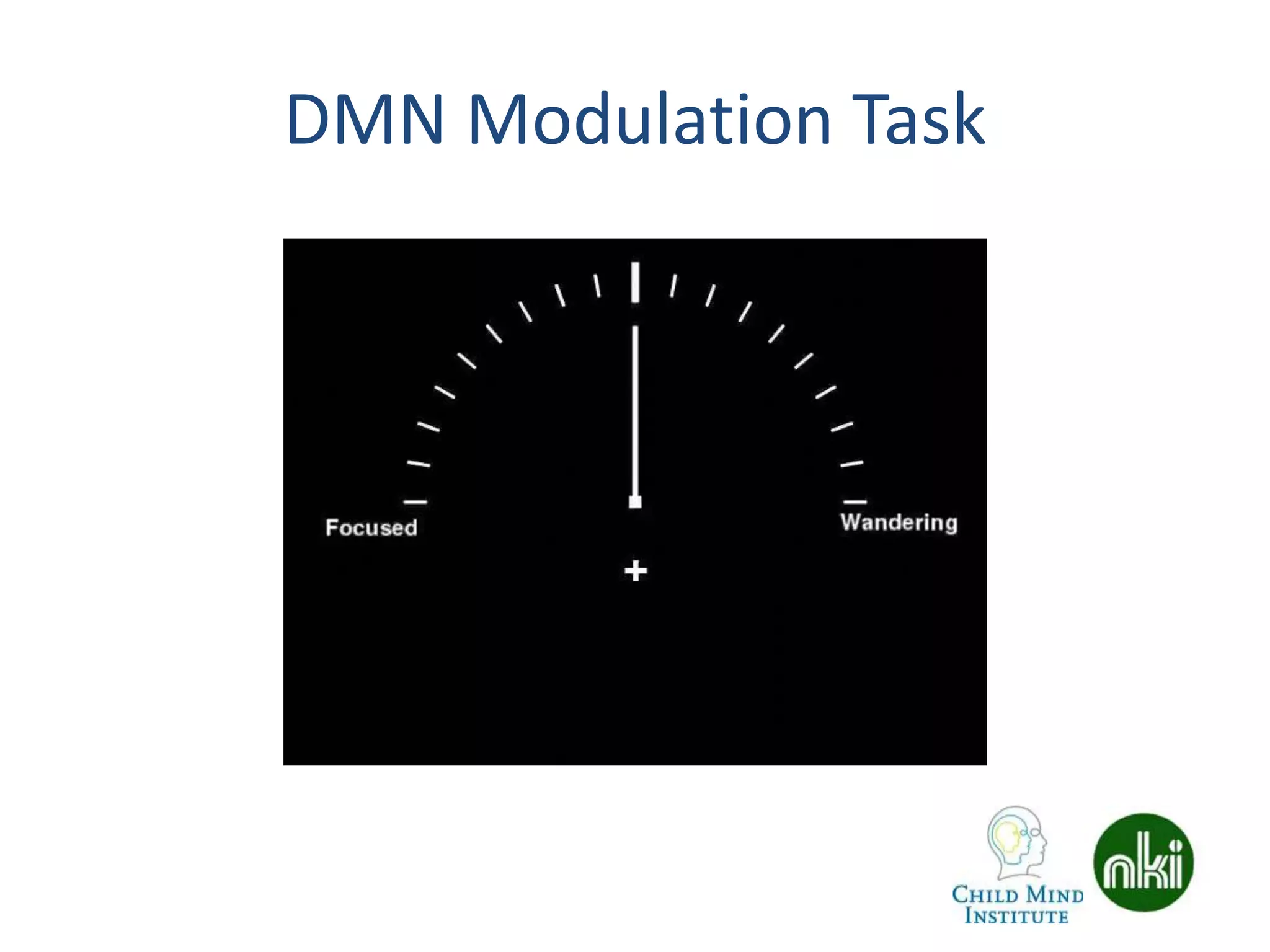
DMN Modulation Task
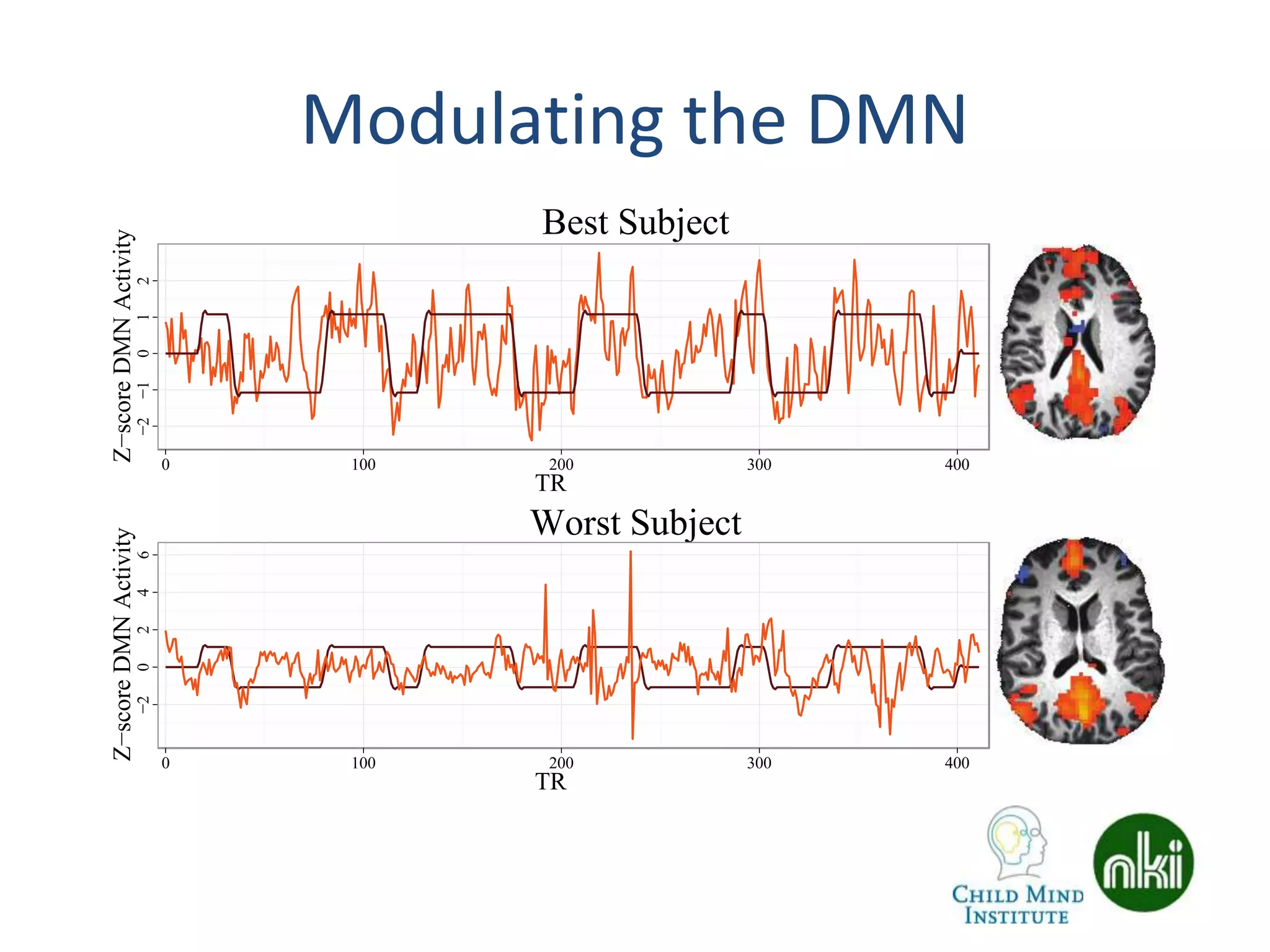
Modulating the DMN−2−1012
0 100 200 300 400
Best Subject
Worst Subject
TR
Z−scoreDMNActivity
−20246
0 100 200 300 400
TR
Z−scoreDMNActivity
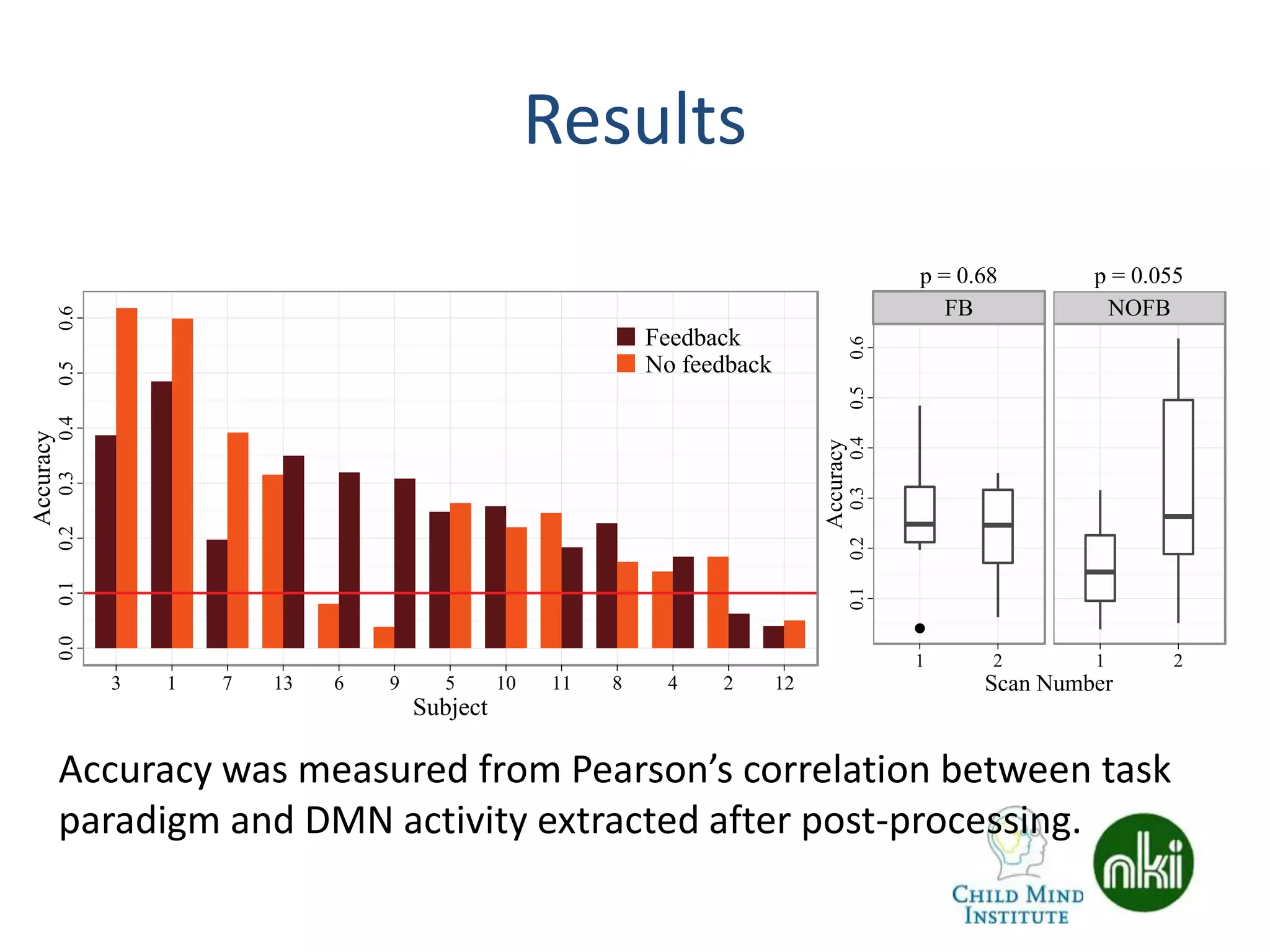
Results
0.00.10.20.30.40.50.6
3 1 7 13 6 9 5 10 11 8 4 2 12
Subject
Accuracy
Feedback
No feedback
FB NOFB
0.10.20.30.40.50.6
1 2 1 2
Scan Number
Accuracy
p = 0.055p = 0.68
Accuracy was measured from Pearson’s correlation between task
paradigm and DMN activity extracted after post-processing.
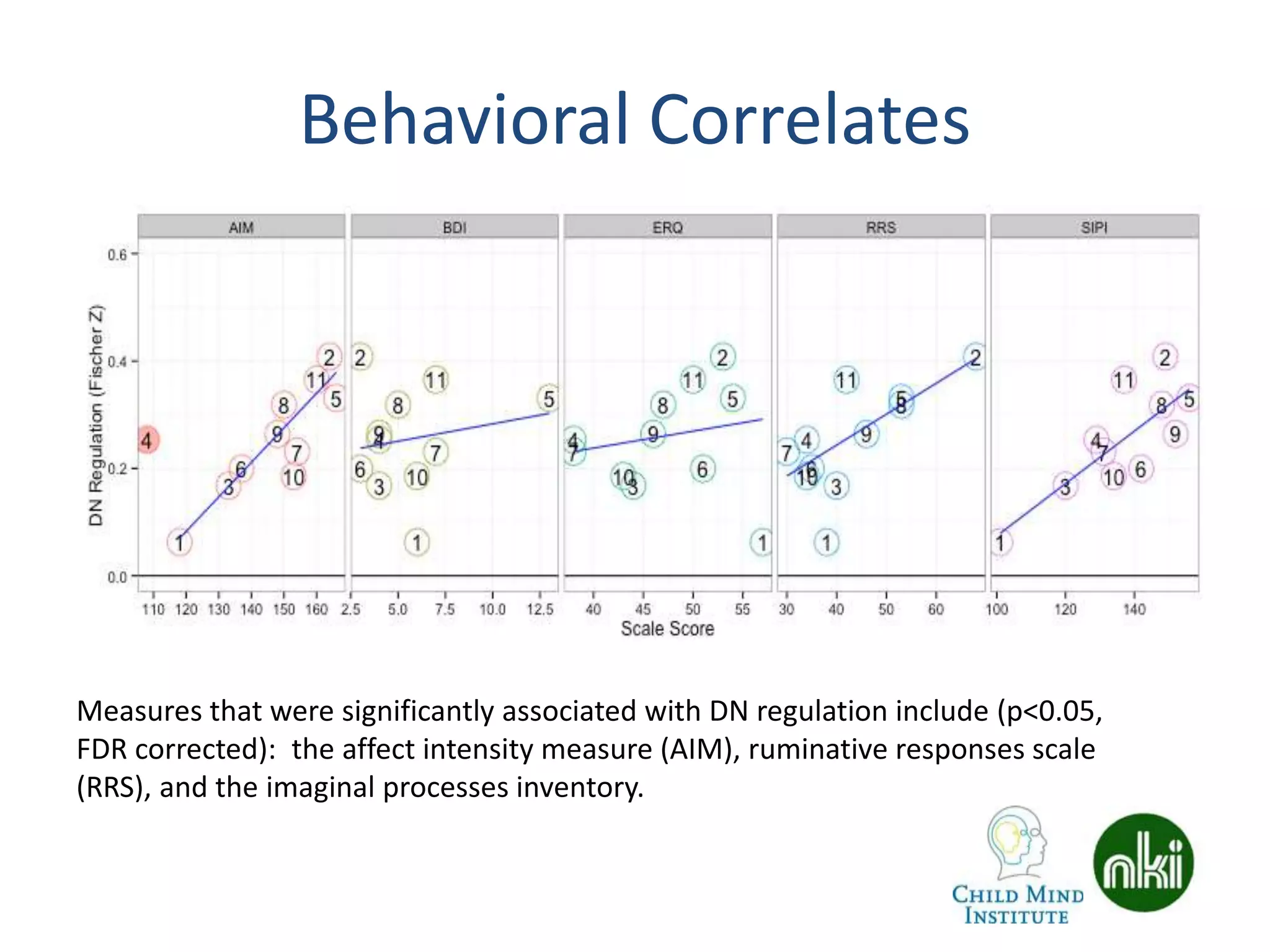
Behavioral Correlates
Measures that were significantly associated with DN regulation include (p<0.05,
FDR corrected): the affect intensity measure (AIM), ruminative responses scale
(RRS), and the imaginal processes inventory.
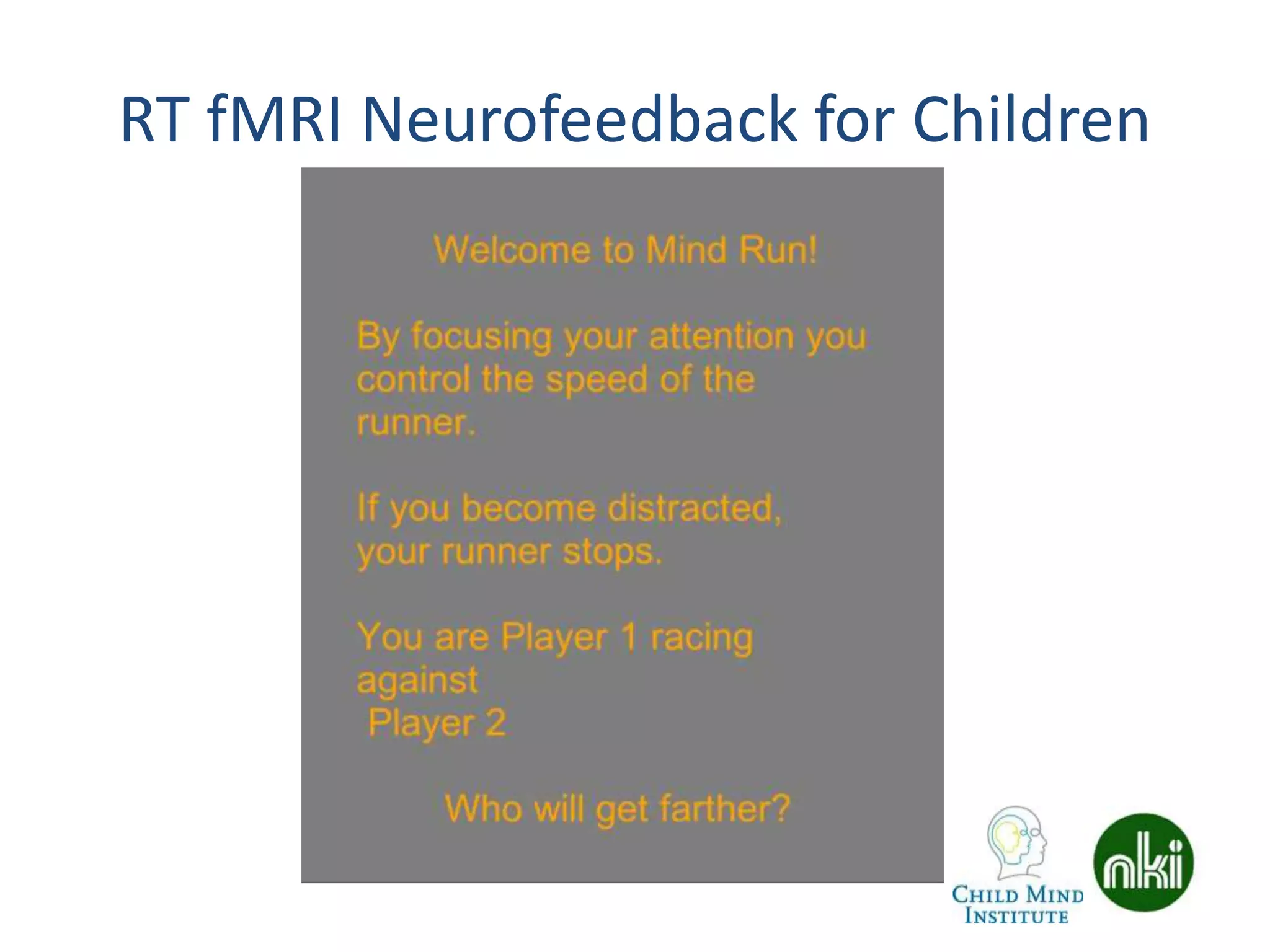
RT fMRI Neurofeedback for Children
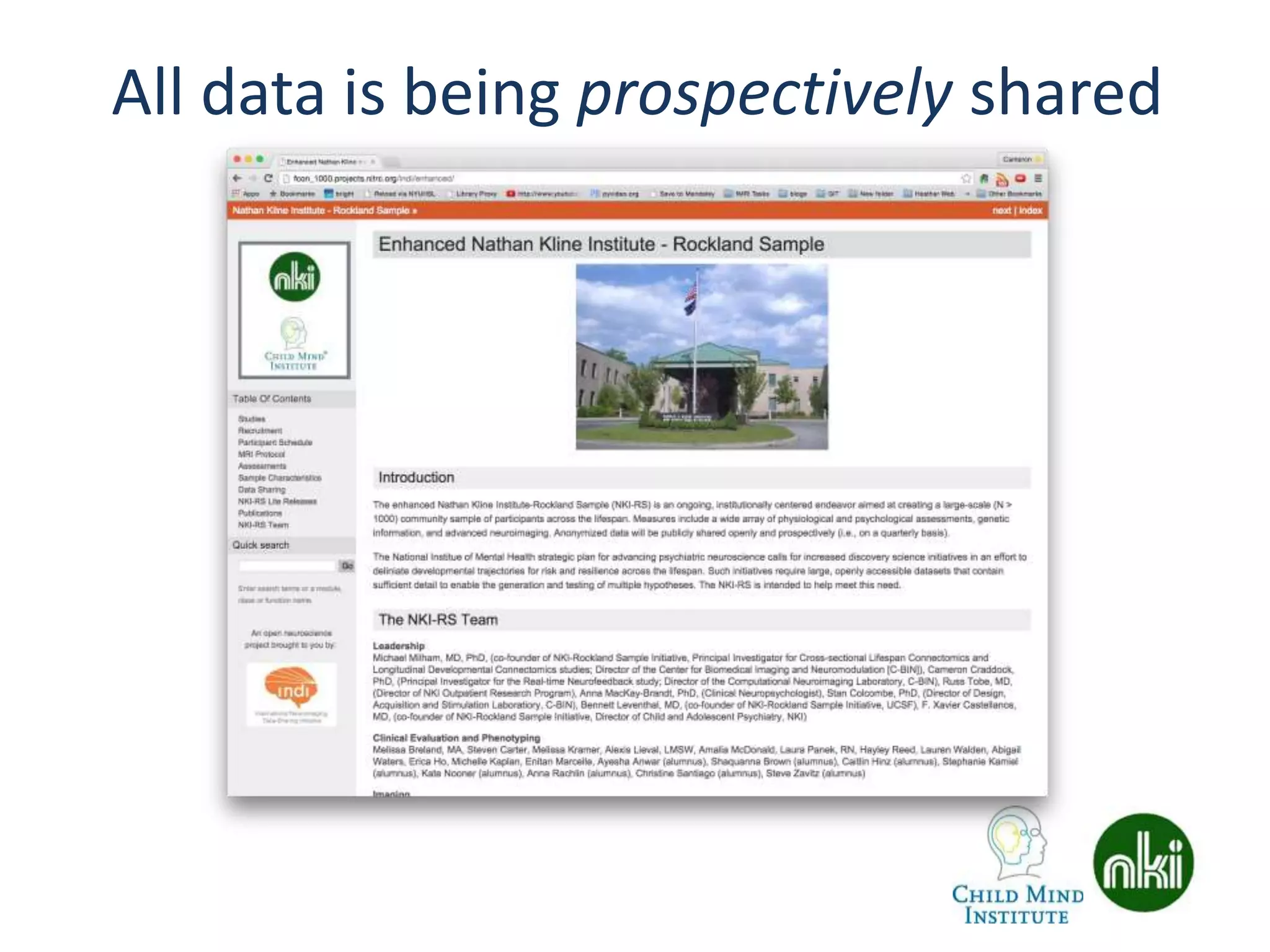
All data is being prospectively shared
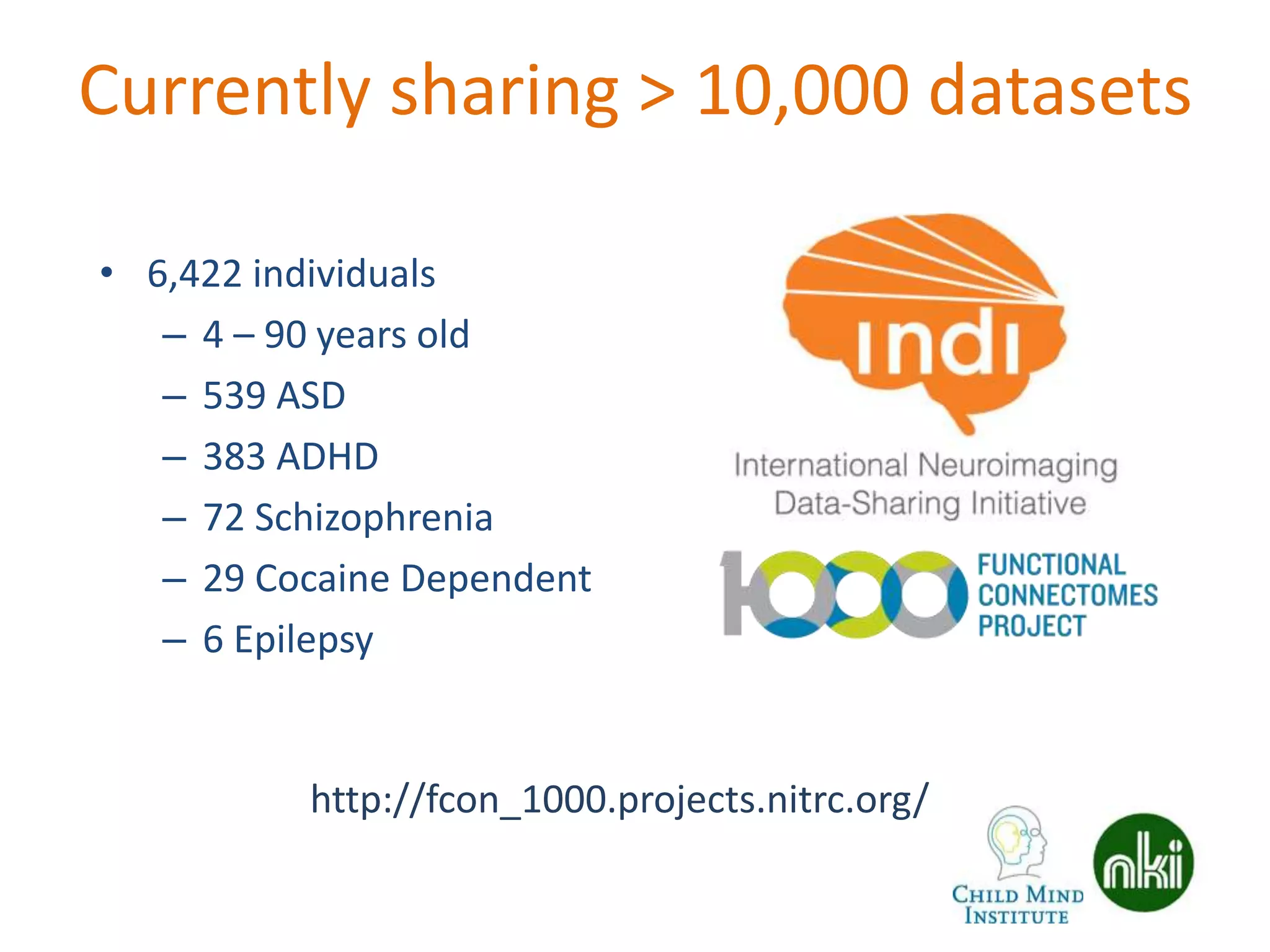
Currently sharing > 10,000 datasets
• 6,422 individuals
– 4 – 90 years old
– 539 ASD
– 383 ADHD
– 72 Schizophrenia
– 29 Cocaine Dependent
– 6 Epilepsy
http://fcon_1000.projects.nitrc.org/
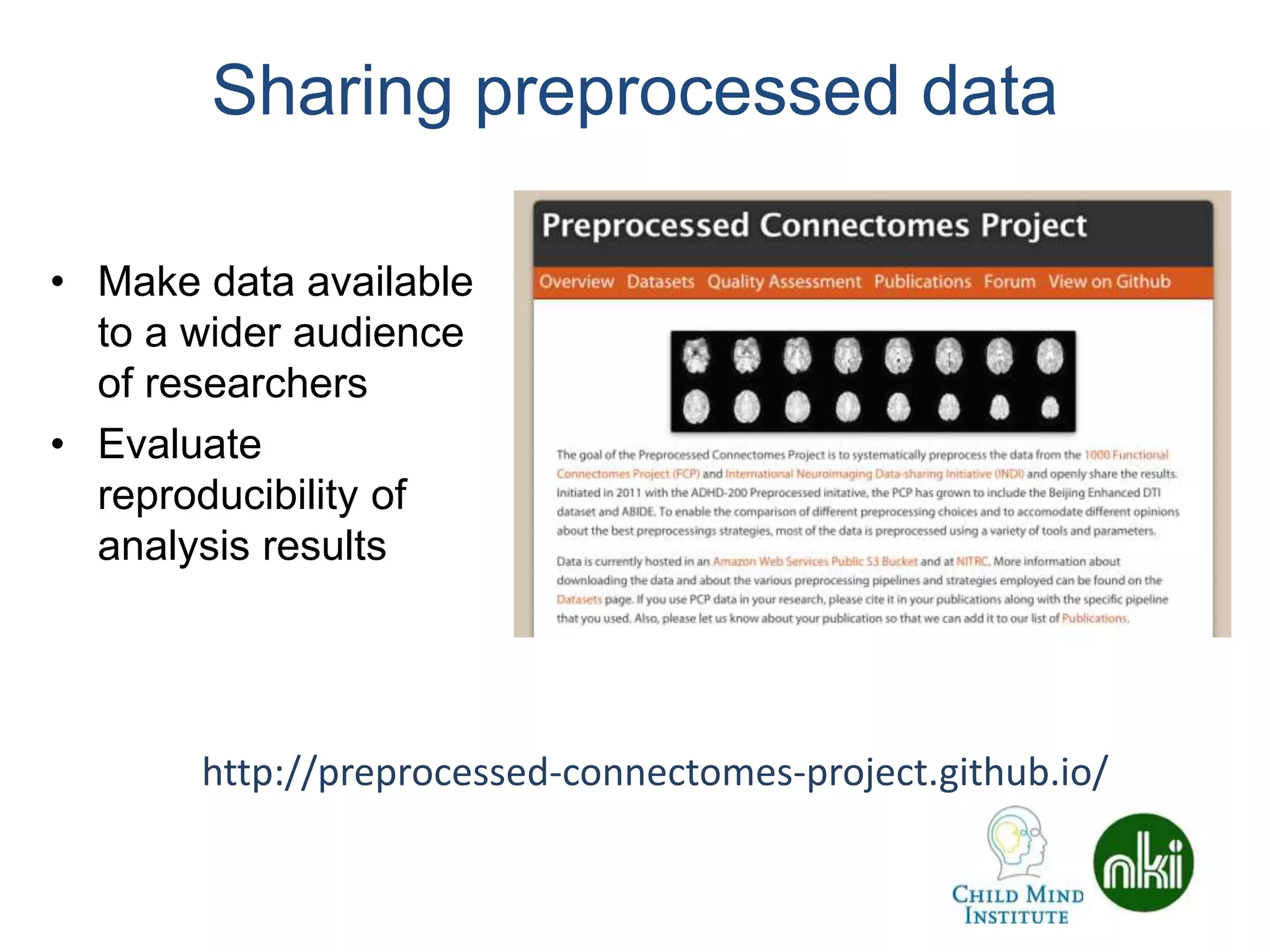
Sharing preprocessed data
• Make data available
to a wider audience
of researchers
• Evaluate
reproducibility of
analysis results
http://preprocessed-connectomes-project.github.io/
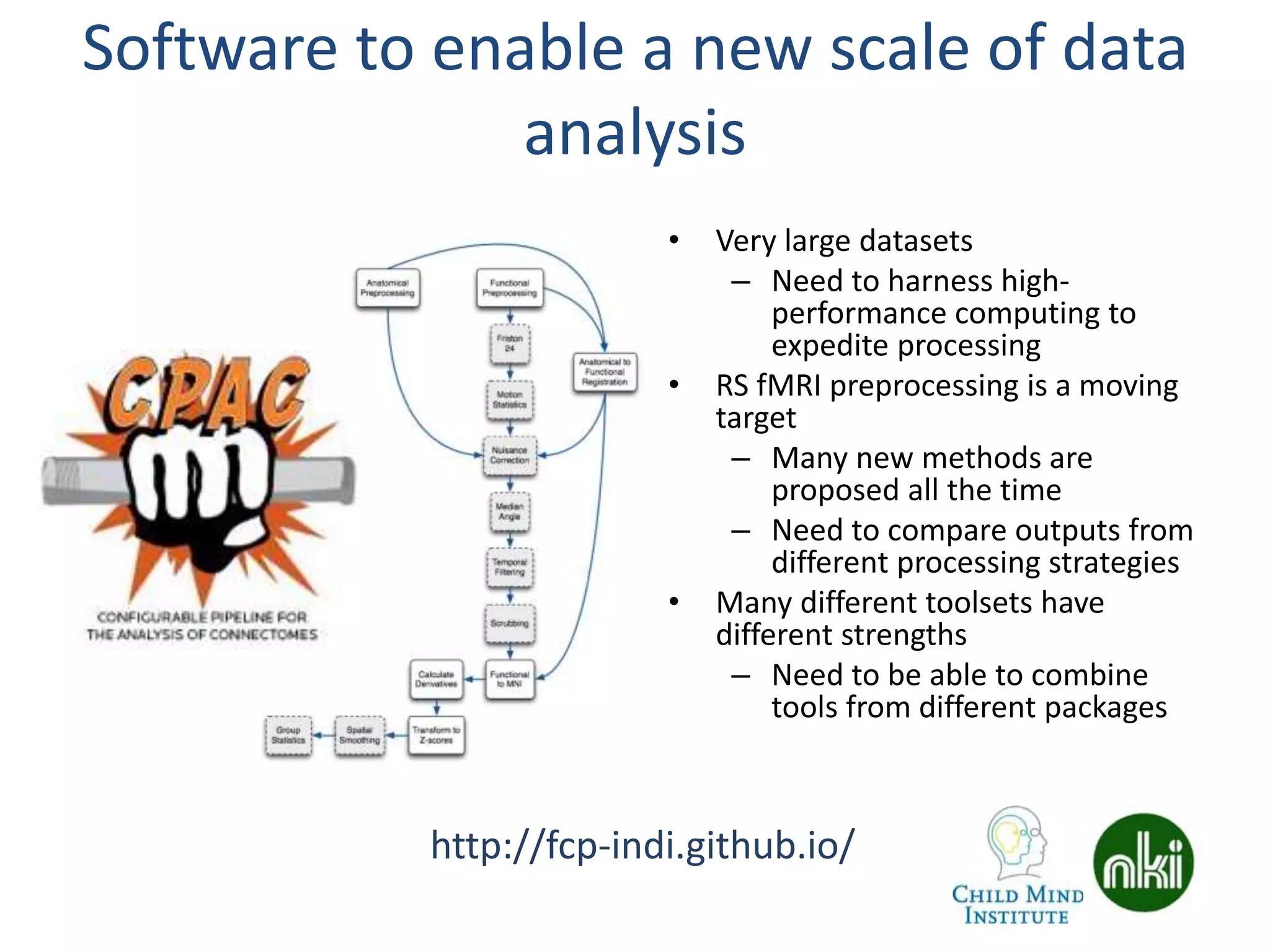
Software to enable a new scale of data
analysis
• Very large datasets
– Need to harness high-
performance computing to
expedite processing
• RS fMRI preprocessing is a moving
target
– Many new methods are
proposed all the time
– Need to compare outputs from
different processing strategies
• Many different toolsets have
different strengths
– Need to be able to combine
tools from different packages
http://fcp-indi.github.io/
Principles of Open Neuroscience
Data, tools and ideas should be openly shared
-The Neuro Bureau Manifesto
http://www.neurobureau.org
Acknowledgments
Child Mind Institute
Michael Milham, MD, PhD
Zarrar Shehzad
Nathan Kline Institute
Amalia McDonald
Stan Colcombe, PhD
Bennett Leventhal, MD
NYU – Child Study Center
Adriana DiMartino, MD
F. Xavier Castellanos, MD
VTCRI
Stephen LaConte, PhD
Pearl Chiu, PhD
Jonathan Lisinski, MS
Emory University
Helen Mayberg, MD
This work is funded by: A NARSAD Young
Investigator Award and NIMH R01MH101555
Using RealTime fMRI Based Neurofeedback to Probe Default Network Regulation

Using RealTime fMRI Based Neurofeedback to Probe Default Network Regulation

  • 2.
    Using RealTime fMRIBased Neurofeedback To Probe Default Network Regulation R. Cameron Craddock, PhD Director of Imaging, Child Mind Institute Research Scientist, Nathan Kline Institute February 25, 2016
  • 3.
    Default Network Task baseddeactivation Buckner et al. Ann. N.Y. Acad. Sci. 1124: 1-38 (2008).
  • 4.
    Default Network Connectivity Greiciuset. al. 2007 Biol. Psychiatry
  • 5.
  • 6.
  • 7.
    RT Neurofeedback ofDMN • Test hypothesis of DMN dysregulation in depression, ADHD, aging, etc …
  • 8.
    Exp. Design Class Training Labels Trainingrun Time-Labeled Scans Image Recon and SVM Classification Image DataData Acquisition Stimulus Presentation Stimulus Conventional FMRI Test Data Classifier Output Testing Run Real-Time Tracking RSNs LaConte, et al. (2007) Hum Brain Mapp. 28: 1033-1044 Stephen LaConte August 19, 2009
  • 9.
    Stimulus seen byvolunteer Updated fMRI results Motion tracking and correction Intensity (brightness) of a single voxel, changing during stimulus conditions Controller interface for display parameters
  • 10.
  • 11.
  • 12.
    Modulating the DMN−2−1012 0100 200 300 400 Best Subject Worst Subject TR Z−scoreDMNActivity −20246 0 100 200 300 400 TR Z−scoreDMNActivity
  • 13.
    Results 0.00.10.20.30.40.50.6 3 1 713 6 9 5 10 11 8 4 2 12 Subject Accuracy Feedback No feedback FB NOFB 0.10.20.30.40.50.6 1 2 1 2 Scan Number Accuracy p = 0.055p = 0.68 Accuracy was measured from Pearson’s correlation between task paradigm and DMN activity extracted after post-processing.
  • 14.
    Behavioral Correlates Measures thatwere significantly associated with DN regulation include (p<0.05, FDR corrected): the affect intensity measure (AIM), ruminative responses scale (RRS), and the imaginal processes inventory.
  • 15.
  • 16.
    All data isbeing prospectively shared
  • 17.
    Currently sharing >10,000 datasets • 6,422 individuals – 4 – 90 years old – 539 ASD – 383 ADHD – 72 Schizophrenia – 29 Cocaine Dependent – 6 Epilepsy http://fcon_1000.projects.nitrc.org/
  • 18.
    Sharing preprocessed data •Make data available to a wider audience of researchers • Evaluate reproducibility of analysis results http://preprocessed-connectomes-project.github.io/
  • 19.
    Software to enablea new scale of data analysis • Very large datasets – Need to harness high- performance computing to expedite processing • RS fMRI preprocessing is a moving target – Many new methods are proposed all the time – Need to compare outputs from different processing strategies • Many different toolsets have different strengths – Need to be able to combine tools from different packages http://fcp-indi.github.io/
  • 20.
    Principles of OpenNeuroscience Data, tools and ideas should be openly shared -The Neuro Bureau Manifesto http://www.neurobureau.org
  • 22.
    Acknowledgments Child Mind Institute MichaelMilham, MD, PhD Zarrar Shehzad Nathan Kline Institute Amalia McDonald Stan Colcombe, PhD Bennett Leventhal, MD NYU – Child Study Center Adriana DiMartino, MD F. Xavier Castellanos, MD VTCRI Stephen LaConte, PhD Pearl Chiu, PhD Jonathan Lisinski, MS Emory University Helen Mayberg, MD This work is funded by: A NARSAD Young Investigator Award and NIMH R01MH101555