Topic 3: Using
LinkedIn to find an
Internship or Job
Ever wondering where
and how you’ll get a job
after graduation?
LinkedIn is the place to start mapping
your career, whatever stage of
education you’re at.
Read on to find out why your ideal
internship or job might be so much
closer than you think.
If you’ve been following the series you’ll
already have some key learning under your
belt that’ll come in super useful here.
From Topic 1, you’ll know all about creating
a killer profile and how important listing
all your accomplishments
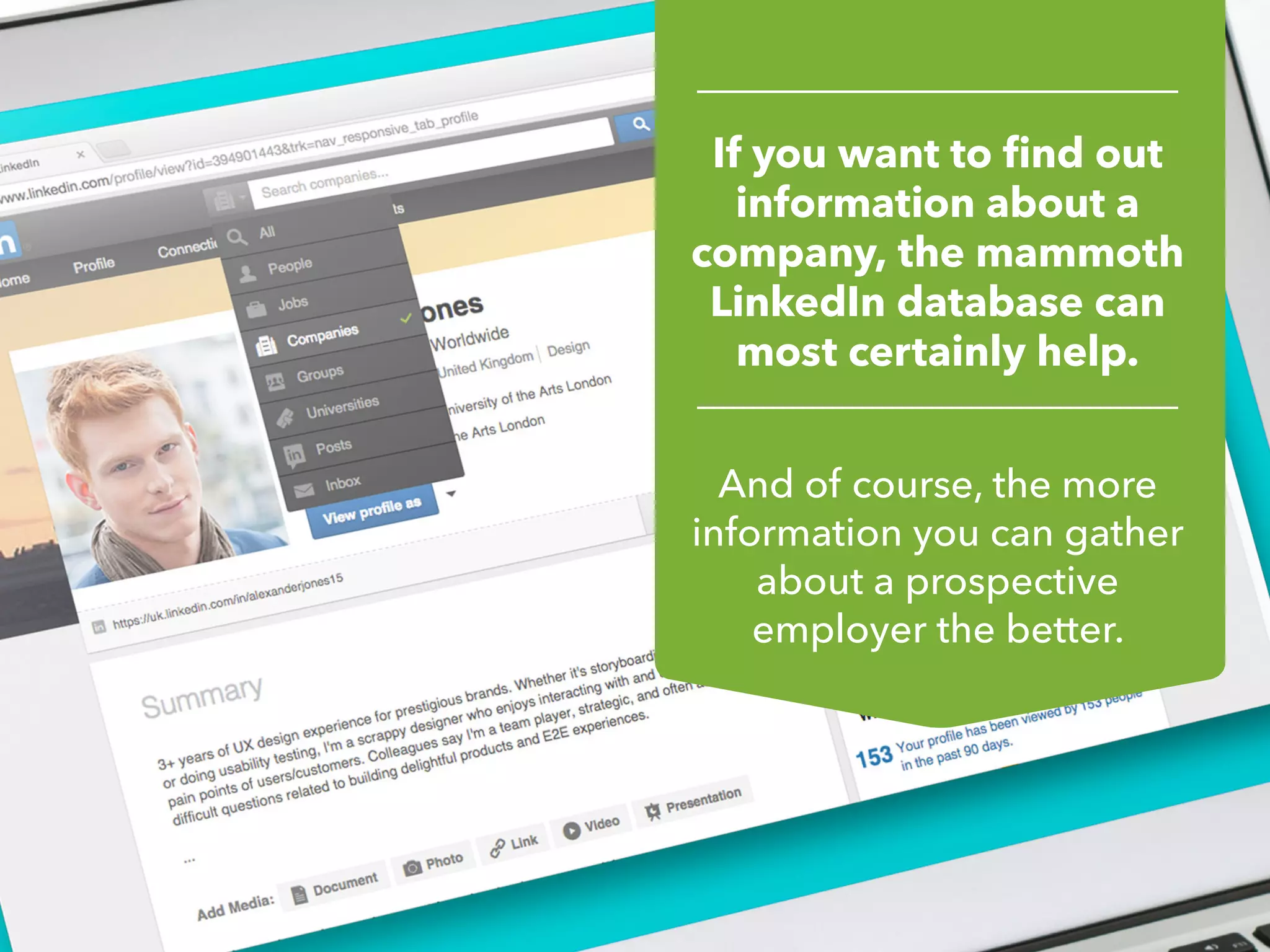
(academic, professional and personal)
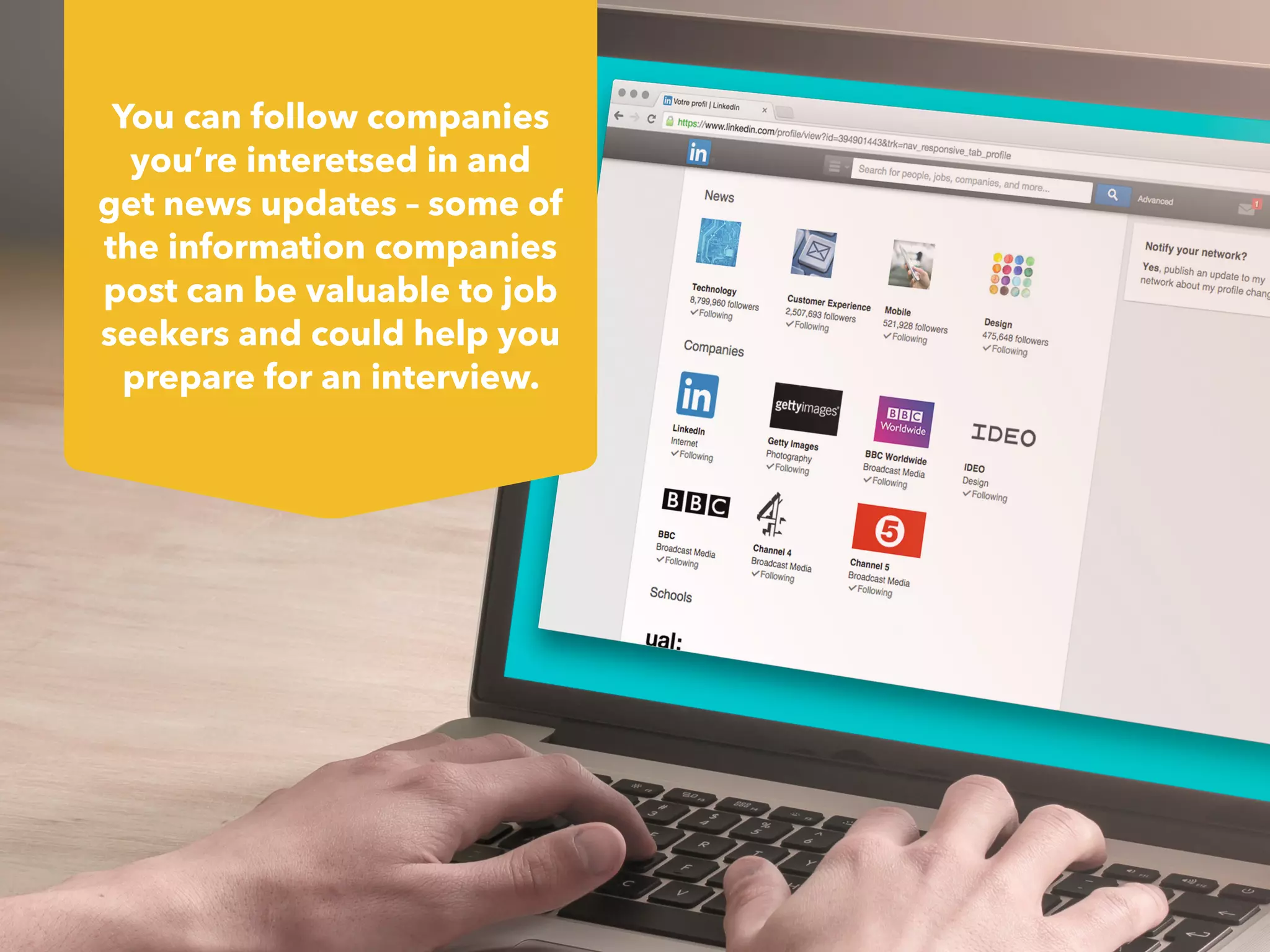
is to being found.
And, after Topic 2, you’ll be aware of how
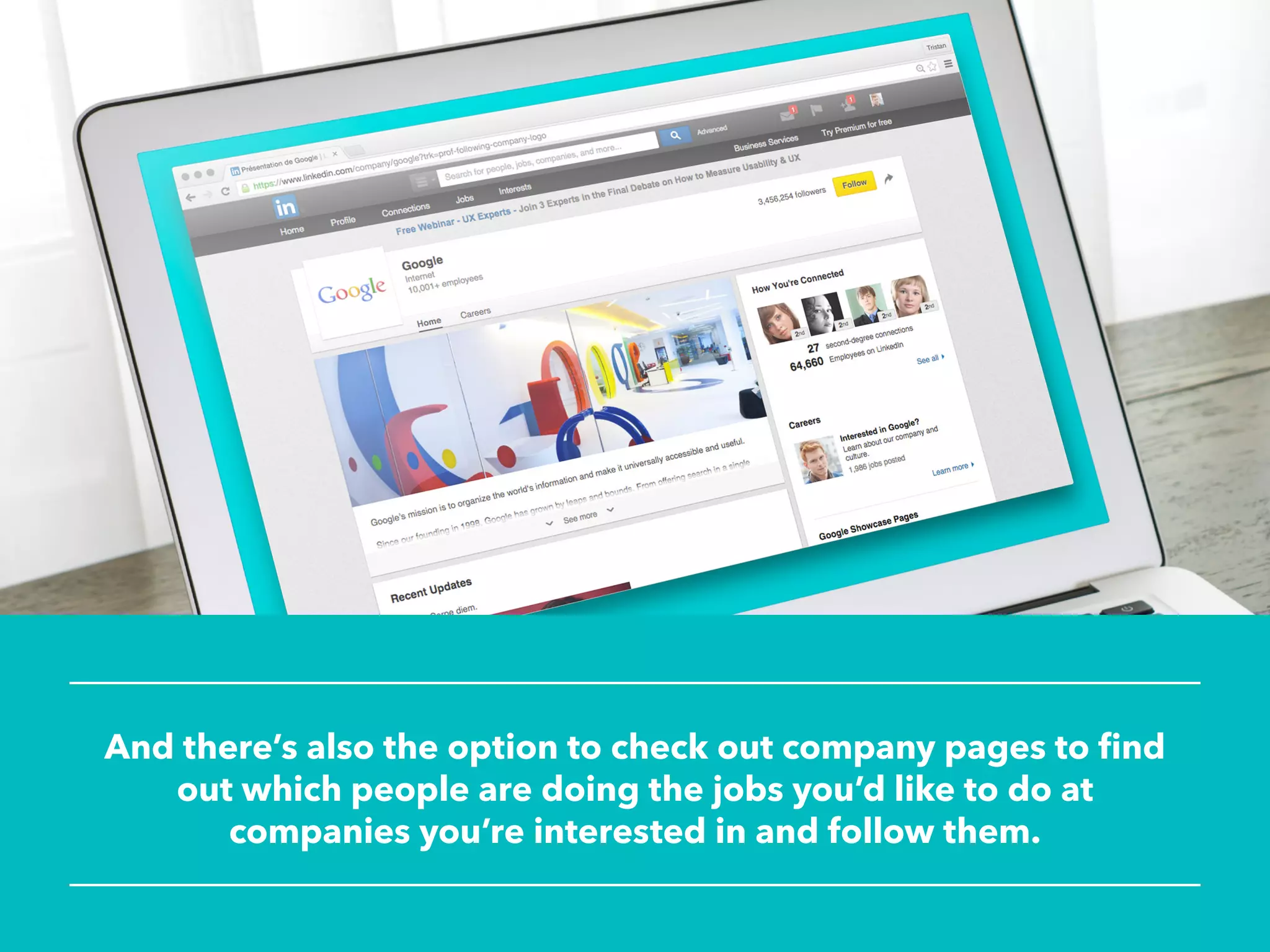
crucial relationships can be to career success.
The secret is to start with your immediate
network and see your connections grow –
based on who they know.
Here in Topic 3 we’re going to
look at how a few simple and
easy actions could help you get
your foot in the door of a great
company before graduation.
So – let’s get stuck in!
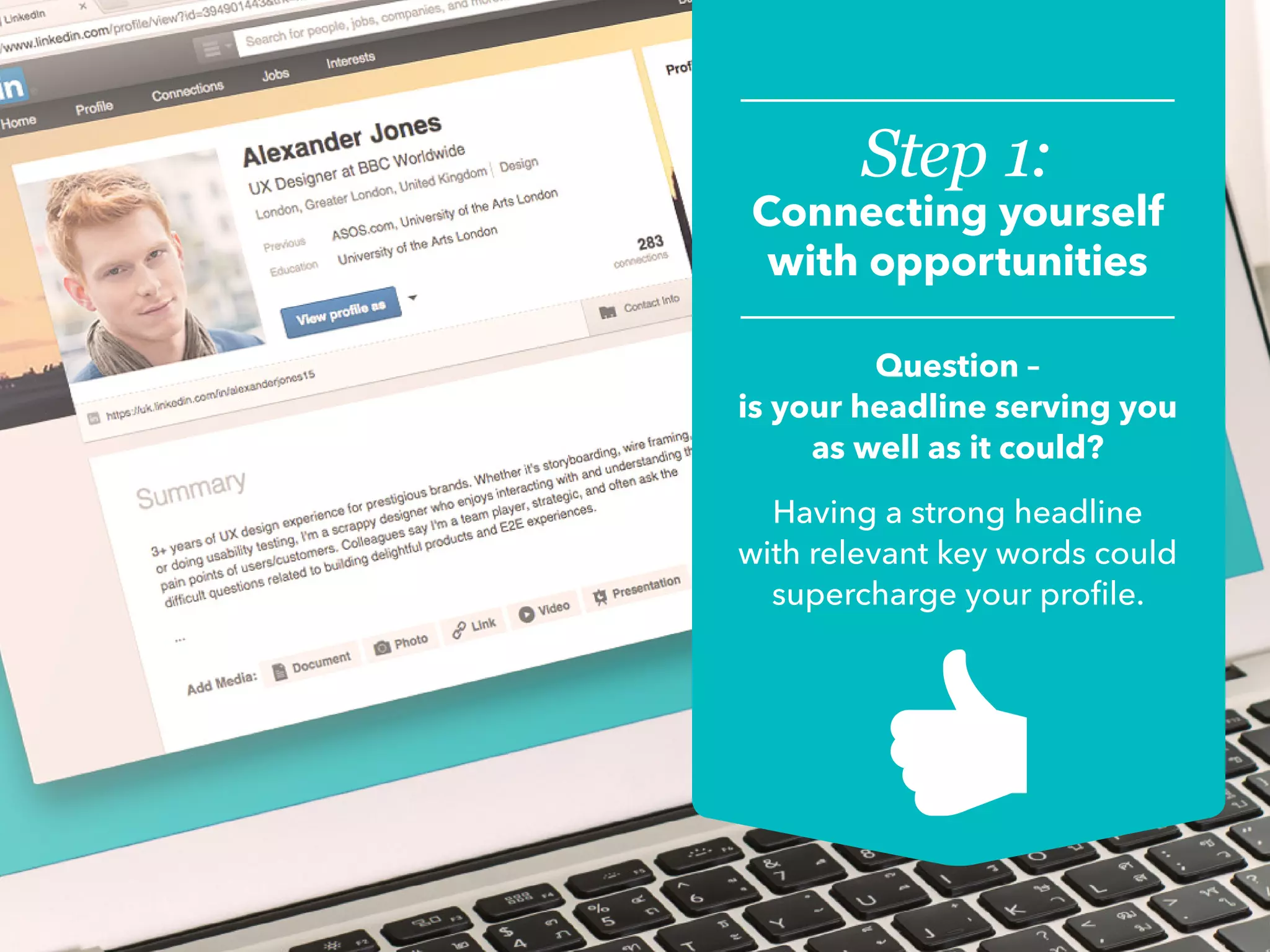
Step 1:
Connecting yourself
with opportunities
Question –
is your headline serving you
as well as it could?
Having a strong headline
with relevant key words could
supercharge your profile.
Once you’re satisfied your
headline is doing your profile
justice and helping you to be
found, it’s time to turn your
attention to your summary.
Have you included some key
words or phrases here that others
in your industry will recognise and
that will help you to be found
in searches?
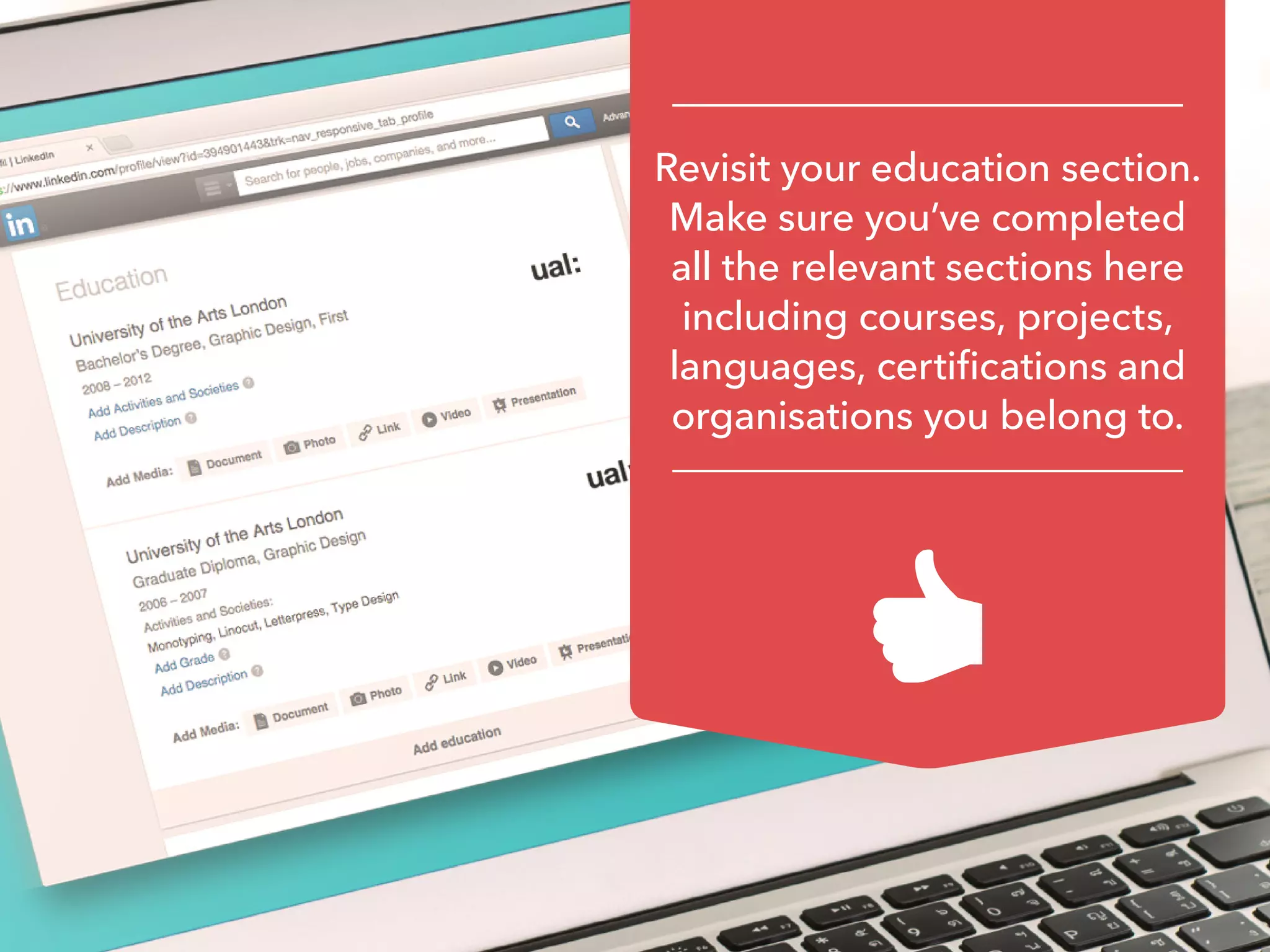
Revisit your education section.
Make sure you’ve completed
all the relevant sections here
including courses, projects,
languages, certifications and
organisations you belong to.
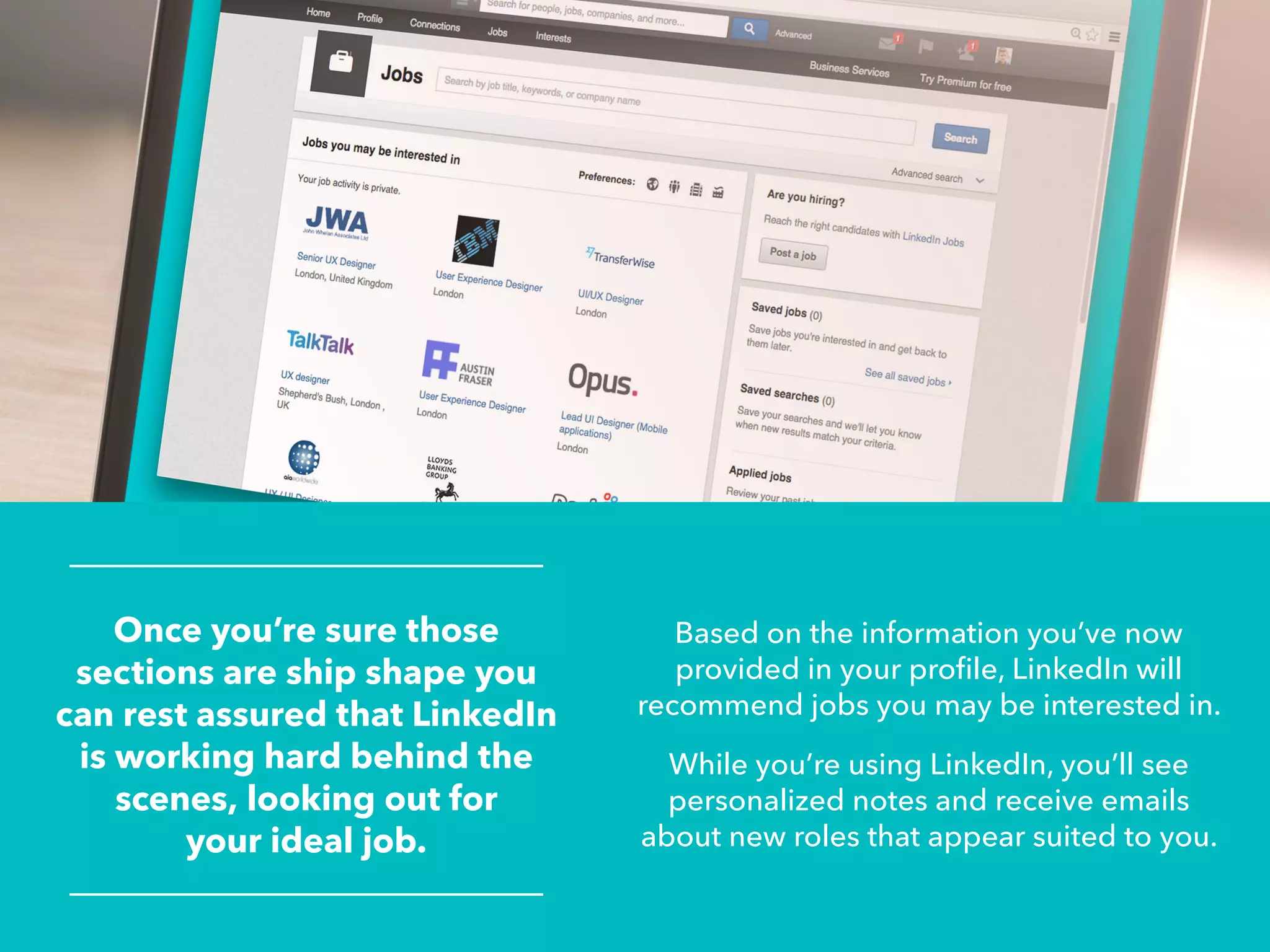
Once you’re sure those
sections are ship shape you
can rest assured that LinkedIn
is working hard behind the
scenes, looking out for
your ideal job.
Based on the information you’ve now
provided in your profile, LinkedIn will
recommend jobs you may be interested in.
While you’re using LinkedIn, you’ll see
personalized notes and receive emails
about new roles that appear suited to you.
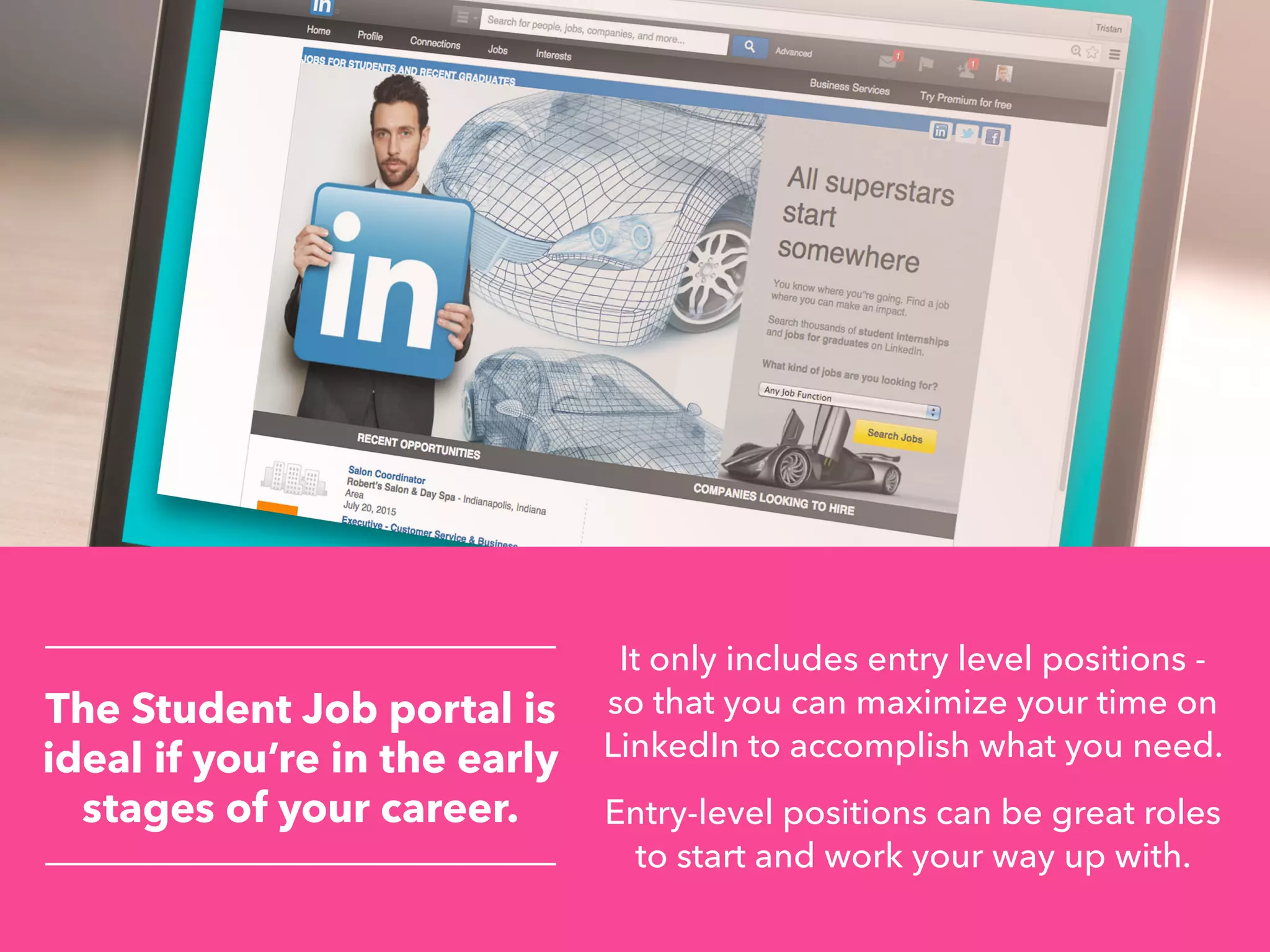
The Student Job portal is
ideal if you’re in the early
stages of your career.
It only includes entry level positions -
so that you can maximize your time on
LinkedIn to accomplish what you need.
Entry-level positions can be great roles
to start and work your way up with.
The next action in your job search is to start
harnessing the power of your network!
The people you know and who they know are invaluable.
Whether
it’s for advice,
interview practice, or an
introduction to a company, you
might be surprised at the support
your contacts are willing to give.
If they’ve ever had similar help before,
they might be happy to give back!
Step 2:
Get that internship or job
So you’re confident your profile is working as hard as
it can be for you, you’re using the student jobs portal
and harnessing the power of your network.
What next?
Research
is key to any
successful job search,
whether you’re a student
or not. Do the legwork and
you’ll reap the rewards.
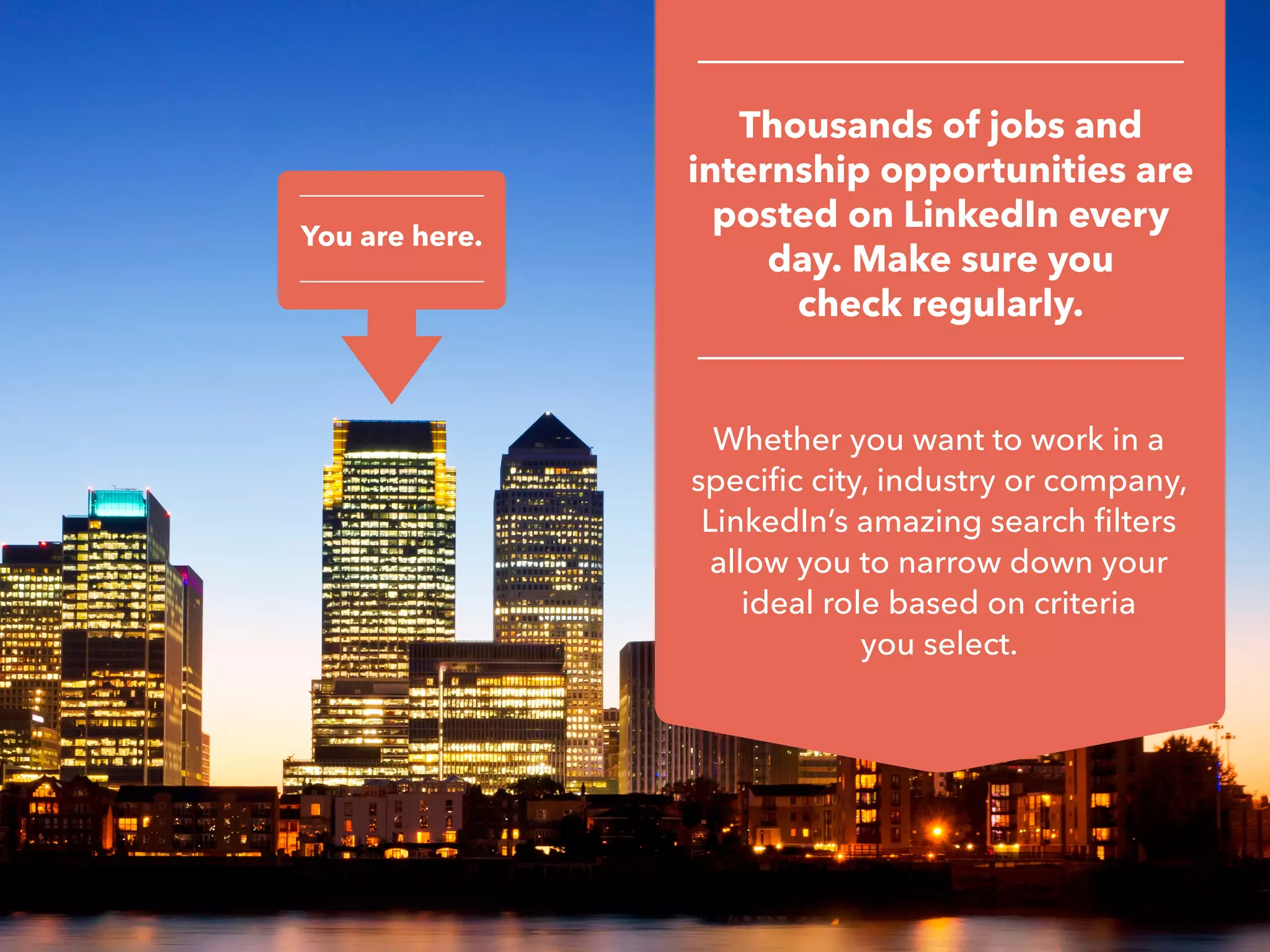
You are here.
Whether you want to work in a
specific city, industry or company,
LinkedIn’s amazing search filters
allow you to narrow down your
ideal role based on criteria
you select.
Thousands of jobs and
internship opportunities are
posted on LinkedIn every
day. Make sure you
check regularly.
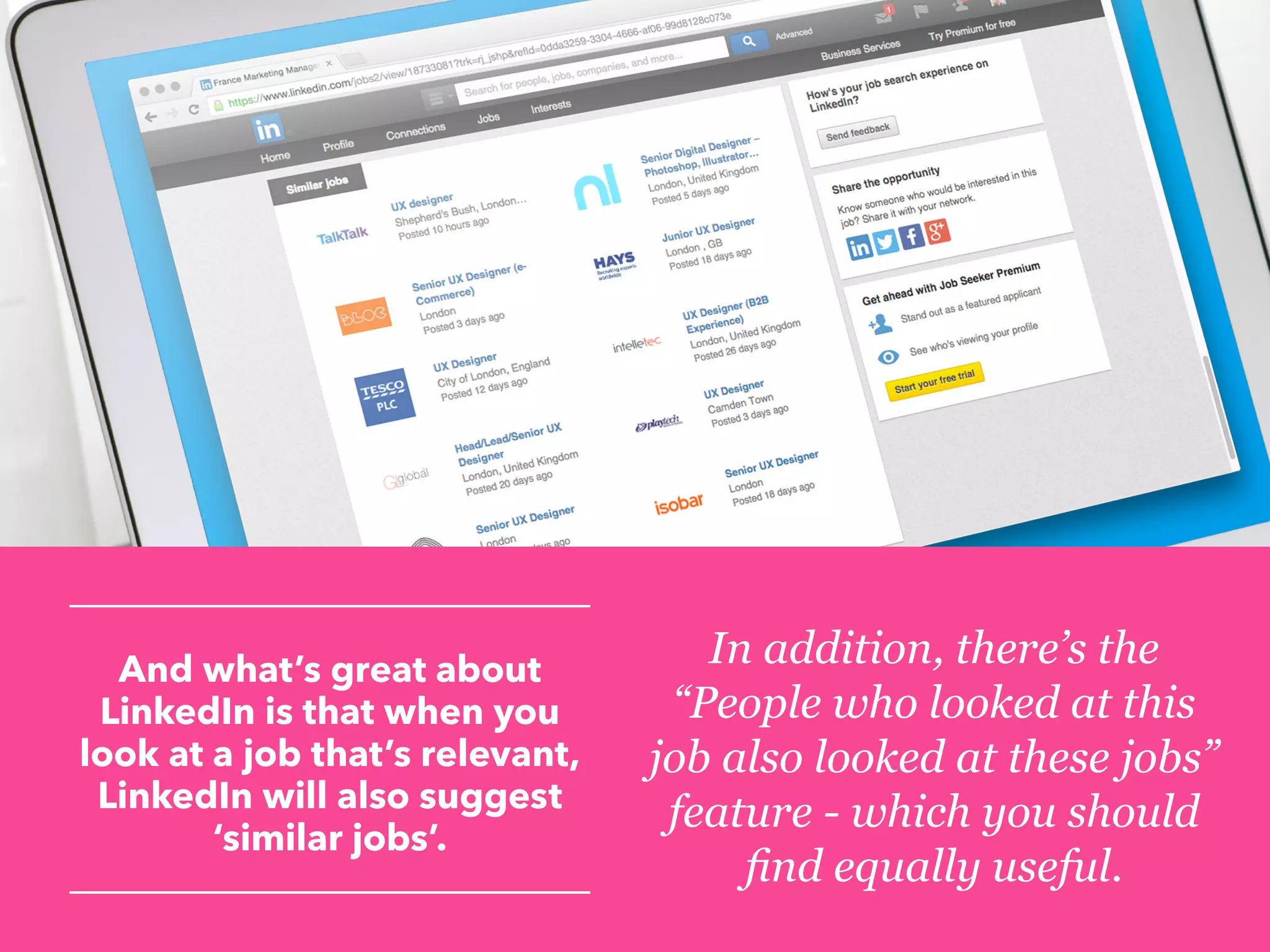
And what’s great about
LinkedIn is that when you
look at a job that’s relevant,
LinkedIn will also suggest
‘similar jobs’.
In addition, there’s the
“People who looked at this
job also looked at these jobs”
feature - which you should
find equally useful.
And of course, the more
information you can gather
about a prospective
employer the better.
If you want to find out
information about a
company, the mammoth
LinkedIn database can
most certainly help.
You can follow companies
you’re interetsed in and
get news updates – some of
the information companies
post can be valuable to job
seekers and could help you
prepare for an interview.
You might also want to
search to find out who you
know at companies
that are hiring.
Or, on a different track, find out if
there’s anyone in your network who
works at your ideal company or in your
ideal role. Why not ask for advice
or referrals?
Who knows - you might already have a
foot in the door at your dream job…
And there’s also the option to check out company pages to find
out which people are doing the jobs you’d like to do at
companies you’re interested in and follow them.
Now
let’s turn our
attention to recruiters.
Hundreds of thousands of
recruiters use LinkedIn every
day to find ideal candidates. Most
specialise in a particular field or
industry and have the power to
match you with your perfect job.
Why
not do your research
and reach out to a pool of
appropriate recruiters directly?
If the mountain won’t come
to you, you should go to
the mountain!
Whatever the industry you want to work in, LinkedIn’s community
has loads of advice. From job interview tips to writing cover
letters and learning presentation skills. Take advantage
of all the great information at your fingertips.
Managed to land that all-
important interview? Be
sure to check out who you’ll
be meeting on LinkedIn
beforehand. You may have
similar interests, hobbies or
connections in common.
When you meet, mentioning
a shared interest can be a
great ice breaker and can
help establish an immediate
connection.
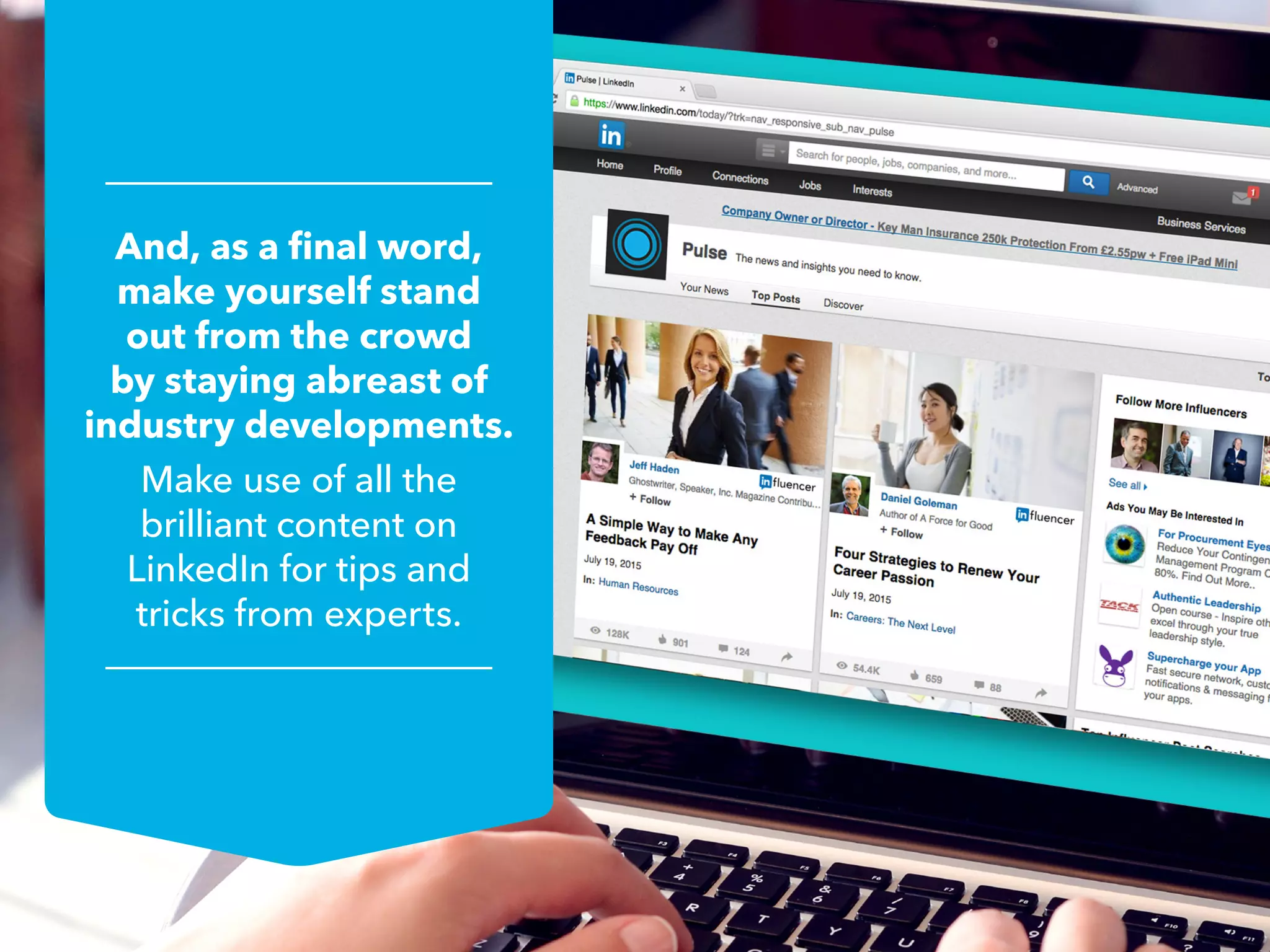
And, as a final word,
make yourself stand
out from the crowd
by staying abreast of
industry developments.
Make use of all the
brilliant content on
LinkedIn for tips and
tricks from experts.
So there you have it. Follow these simple tips and you’ll
land your ideal role in no time.
To recap:
Ensure your profile is optimised for
your skills
Find jobs you may be interested in
via search filters and the Student
Job Portal
	
Use your connections for advice
and to establish potential leads
Do your research at every stage of
the job-hunting process.
Good luck in your job search!

Using LinkedIn to Find an Internship or Job

  • 1.
    Topic 3: Using LinkedInto find an Internship or Job
  • 2.
    Ever wondering where andhow you’ll get a job after graduation? LinkedIn is the place to start mapping your career, whatever stage of education you’re at. Read on to find out why your ideal internship or job might be so much closer than you think.
  • 3.
    If you’ve beenfollowing the series you’ll already have some key learning under your belt that’ll come in super useful here.
  • 4.
    From Topic 1,you’ll know all about creating a killer profile and how important listing all your accomplishments (academic, professional and personal) is to being found.
  • 5.
    And, after Topic2, you’ll be aware of how crucial relationships can be to career success. The secret is to start with your immediate network and see your connections grow – based on who they know.
  • 6.
    Here in Topic3 we’re going to look at how a few simple and easy actions could help you get your foot in the door of a great company before graduation. So – let’s get stuck in!
  • 7.
    Step 1: Connecting yourself withopportunities Question – is your headline serving you as well as it could? Having a strong headline with relevant key words could supercharge your profile.
  • 8.
    Once you’re satisfiedyour headline is doing your profile justice and helping you to be found, it’s time to turn your attention to your summary. Have you included some key words or phrases here that others in your industry will recognise and that will help you to be found in searches?
  • 9.
    Revisit your educationsection. Make sure you’ve completed all the relevant sections here including courses, projects, languages, certifications and organisations you belong to.
  • 10.
    Once you’re surethose sections are ship shape you can rest assured that LinkedIn is working hard behind the scenes, looking out for your ideal job. Based on the information you’ve now provided in your profile, LinkedIn will recommend jobs you may be interested in. While you’re using LinkedIn, you’ll see personalized notes and receive emails about new roles that appear suited to you.
  • 11.
    The Student Jobportal is ideal if you’re in the early stages of your career. It only includes entry level positions - so that you can maximize your time on LinkedIn to accomplish what you need. Entry-level positions can be great roles to start and work your way up with.
  • 12.
    The next actionin your job search is to start harnessing the power of your network! The people you know and who they know are invaluable.
  • 13.
    Whether it’s for advice, interviewpractice, or an introduction to a company, you might be surprised at the support your contacts are willing to give. If they’ve ever had similar help before, they might be happy to give back!
  • 14.
    Step 2: Get thatinternship or job So you’re confident your profile is working as hard as it can be for you, you’re using the student jobs portal and harnessing the power of your network. What next?
  • 15.
    Research is key toany successful job search, whether you’re a student or not. Do the legwork and you’ll reap the rewards.
  • 16.
    You are here. Whetheryou want to work in a specific city, industry or company, LinkedIn’s amazing search filters allow you to narrow down your ideal role based on criteria you select. Thousands of jobs and internship opportunities are posted on LinkedIn every day. Make sure you check regularly.
  • 17.
    And what’s greatabout LinkedIn is that when you look at a job that’s relevant, LinkedIn will also suggest ‘similar jobs’. In addition, there’s the “People who looked at this job also looked at these jobs” feature - which you should find equally useful.
  • 18.
    And of course,the more information you can gather about a prospective employer the better. If you want to find out information about a company, the mammoth LinkedIn database can most certainly help.
  • 19.
    You can followcompanies you’re interetsed in and get news updates – some of the information companies post can be valuable to job seekers and could help you prepare for an interview.
  • 20.
    You might alsowant to search to find out who you know at companies that are hiring. Or, on a different track, find out if there’s anyone in your network who works at your ideal company or in your ideal role. Why not ask for advice or referrals? Who knows - you might already have a foot in the door at your dream job…
  • 21.
    And there’s alsothe option to check out company pages to find out which people are doing the jobs you’d like to do at companies you’re interested in and follow them.
  • 22.
    Now let’s turn our attentionto recruiters. Hundreds of thousands of recruiters use LinkedIn every day to find ideal candidates. Most specialise in a particular field or industry and have the power to match you with your perfect job.
  • 23.
    Why not do yourresearch and reach out to a pool of appropriate recruiters directly? If the mountain won’t come to you, you should go to the mountain!
  • 24.
    Whatever the industryyou want to work in, LinkedIn’s community has loads of advice. From job interview tips to writing cover letters and learning presentation skills. Take advantage of all the great information at your fingertips.
  • 25.
    Managed to landthat all- important interview? Be sure to check out who you’ll be meeting on LinkedIn beforehand. You may have similar interests, hobbies or connections in common. When you meet, mentioning a shared interest can be a great ice breaker and can help establish an immediate connection.
  • 26.
    And, as afinal word, make yourself stand out from the crowd by staying abreast of industry developments. Make use of all the brilliant content on LinkedIn for tips and tricks from experts.
  • 27.
    So there youhave it. Follow these simple tips and you’ll land your ideal role in no time. To recap: Ensure your profile is optimised for your skills Find jobs you may be interested in via search filters and the Student Job Portal Use your connections for advice and to establish potential leads Do your research at every stage of the job-hunting process. Good luck in your job search!