eLearn Center
Shaping learning. Rethinking teaching
Using learning analytics to support
applied research and innovation in
higher education
Julià Minguillón, Francesc Santanach, Christine Appel
1.  The UOC and the eLC
2.  UOC as a laboratory
3.  Learning Analytics
4.  Challenges
5.  The eLC datamart
6.  Benefits
7.  Current and future work
Index
3
UOC
•  Fully	
  online	
  university,	
  created	
  in	
  1994	
  
•  +50000	
  students	
  in	
  21	
  degrees,	
  +75	
  masters,	
  3	
  PhDs,	
  …	
  
•  Adult	
  learners,	
  family	
  and	
  work	
  loads,	
  no	
  Eme	
  to	
  “waste”	
  
•  Internet	
  is	
  our	
  physical	
  space	
  
eLC
•  Think	
  tank	
  for	
  applied	
  research	
  and	
  innovaEon	
  at	
  UOC	
  
•  SupporEng:	
  
•  EducaEonal	
  model	
  
•  Learning	
  resources	
  
•  Technology	
  (classroom)	
  
•  Teacher	
  training	
  
Using LA to support applied research and innovation in HE
4
UOC as a laboratory
•  Dynamic:	
  	
  
•  Under	
  permanent	
  evoluEon	
  (proprietary	
  virtual	
  campus)	
  
•  Technology-­‐driven	
  (mobile	
  devices,	
  social	
  networks,	
  …)	
  
•  StandardizaEon	
  
•  MulEdisciplinary	
  research:	
  A&H,	
  Social,	
  STEM,	
  Health	
  	
  
•  Improve	
  teaching	
  
•  TranslaEonal	
  
•  Flexible:	
  
•  Plenty	
  of	
  data	
  
•  Different	
  levels	
  of	
  analysis	
  
•  “Sand-­‐box”	
  environment	
  
Using LA to support applied research and innovation in HE
5
Learning Analytics
•  Defined	
  by	
  G.	
  Siemens	
  in	
  2010	
  as:	
  
”the	
  use	
  of	
  intelligent	
  data,	
  learner-­‐produced	
  data,	
  and	
  analysis	
  models	
  to	
  discover	
  
informaEon	
  and	
  social	
  connecEons	
  for	
  predicEng	
  and	
  advising	
  people's	
  learning”	
  
•  Rooted	
  in	
  previous	
  research	
  areas:	
  
•  EducaEonal	
  Data	
  Mining	
  
•  Intelligent	
  Tutoring	
  Systems	
  
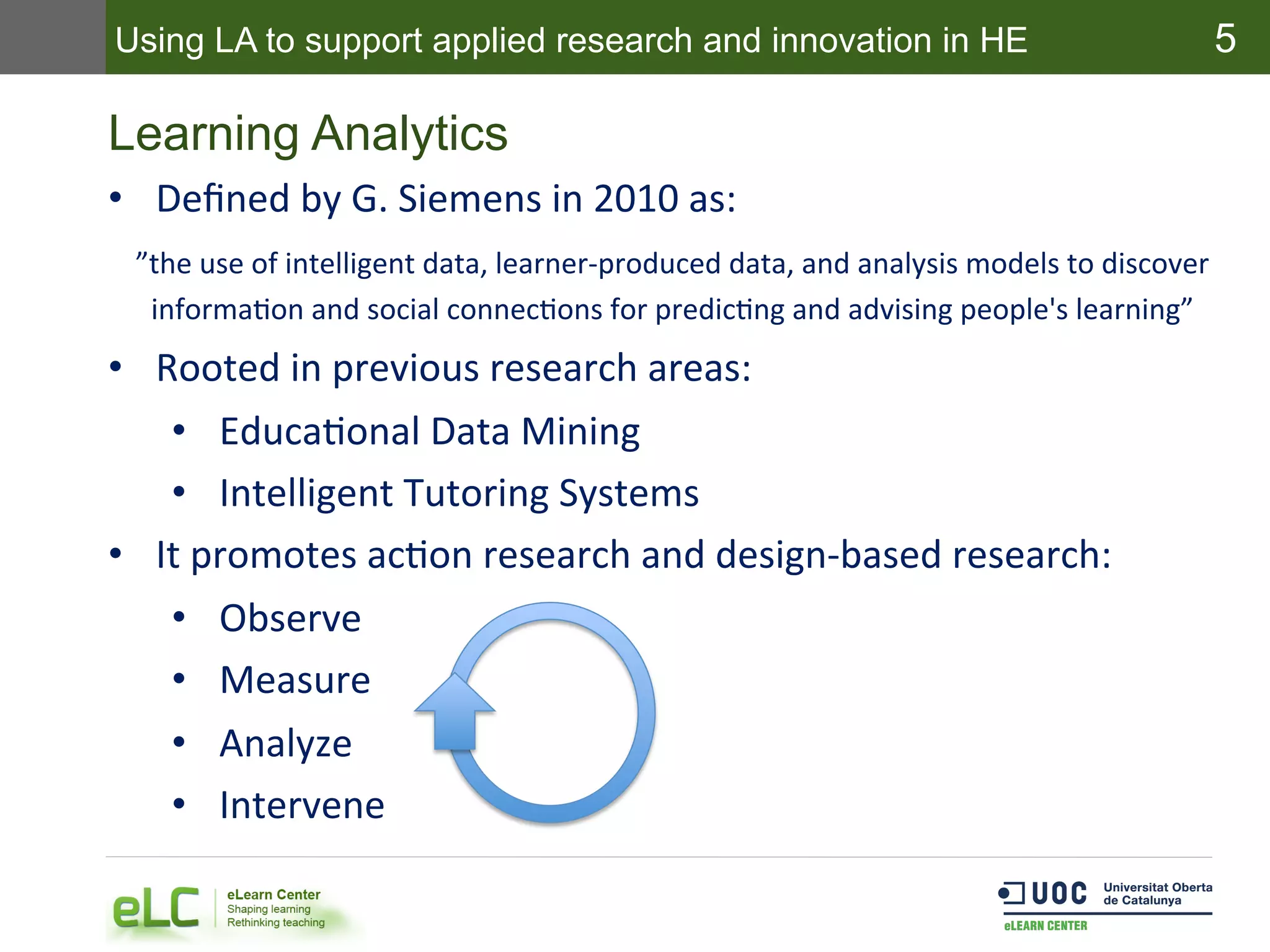
•  It	
  promotes	
  acEon	
  research	
  and	
  design-­‐based	
  research:	
  
•  Observe	
  
•  Measure	
  
•  Analyze	
  
•  Intervene	
  
Using LA to support applied research and innovation in HE
6
Institutional challenges
•  LA	
  can	
  (should!)	
  be	
  used	
  to:	
  
•  Know	
  what	
  	
  works	
  and	
  what	
  	
  does	
  not:	
  
•  Teachers’	
  and	
  managers’	
  perspecEve	
  
•  Face	
  complex	
  issues:	
  
•  Course	
  design	
  
•  Dropout	
  
•  Provide	
  teachers	
  with	
  beder	
  knowledge	
  about	
  learners’	
  
needs	
  and	
  behavior	
  
•  Provide	
  learners	
  with	
  personalized	
  support	
  and	
  improved	
  
feedback	
  
•  Ask	
  the	
  right	
  quesEons,	
  obtain	
  the	
  right	
  answers!	
  
Using LA to support applied research and innovation in HE
7
The eLC datamart (Learning Record Store)
•  Premises:	
  
•  Do	
  not	
  interfere	
  with	
  current	
  processes	
  and	
  informaEon	
  
systems	
  
•  Seamlessly	
  integrated	
  when	
  possible	
  (virtual	
  classroom)	
  
•  Become	
  a	
  unique	
  entry	
  point	
  for	
  e-­‐learning	
  researchers,	
  
pracEEoners	
  and	
  managers	
  
•  Take	
  care	
  of	
  related	
  issues:	
  
•  Ethics	
  committe	
  
•  Privacy	
  and	
  security	
  
•  Simple,	
  extendable	
  data	
  model	
  [U(D),	
  T,	
  S,	
  R,	
  X]	
  
•  “Cheap	
  and	
  cheerful”	
  
Using LA to support applied research and innovation in HE
8
Benefits
•  No	
  need	
  to	
  beg	
  for	
  data	
  among	
  different	
  units	
  and	
  IS	
  
•  Data	
  quality	
  (and	
  relevance)	
  is	
  assured	
  
•  Three	
  access	
  levels:	
  
•  Raw	
  data	
  from	
  the	
  LRS	
  
•  Indicators	
  
•  Dashboards	
  and	
  reporEng	
  
•  LA	
  is	
  part	
  of	
  all	
  internal	
  innovaEon	
  projects	
  and	
  research	
  
•  Support	
  for	
  decision	
  making:	
  
•  IdenEfying	
  new	
  trends:	
  learners’	
  profiles,	
  devices,	
  …	
  
•  From	
  quesEons	
  to	
  acEons	
  through	
  data	
  
•  Share	
  standardized	
  data	
  with	
  other	
  HE	
  insEtuEons	
  
Using LA to support applied research and innovation in HE
9
Current and future work
•  Fully	
  operaEonal	
  but	
  in	
  conEnuous	
  development	
  
•  Not	
  fully	
  exploited	
  yet:	
  
•  Raise	
  awareness	
  (what?):	
  
•  Best	
  pracEces,	
  publicaEons,	
  projects,	
  …	
  
•  Lack	
  of	
  data	
  analysis	
  culture	
  /	
  interest	
  (why?)	
  
•  Training	
  for	
  non-­‐technical	
  users	
  (how?)	
  
•  Gather	
  more	
  data,	
  develop	
  more	
  indicators	
  and	
  dashboards	
  
•  PosiEon	
  UOC	
  as	
  a	
  strong	
  player	
  in	
  LA	
  arena:	
  
•  Transferable	
  model	
  and	
  technology	
  
•  H2020	
  projects	
  related	
  to	
  e-­‐learning	
  and	
  LA	
  
•  PhD	
  and	
  PostDoc	
  posiEons	
  in	
  LA	
  available	
  
Using LA to support applied research and innovation in HE
jminguillona@uoc.edu / @jminguillona
elearncenter.uoc.edu
Thank you!
@eLC_UOC
elearncenter
Elearncenter
eLearnCenter


Using learning analytics to support applied research and innovation in higher education

  • 1.
    eLearn Center Shaping learning.Rethinking teaching Using learning analytics to support applied research and innovation in higher education Julià Minguillón, Francesc Santanach, Christine Appel
  • 2.
    1.  The UOCand the eLC 2.  UOC as a laboratory 3.  Learning Analytics 4.  Challenges 5.  The eLC datamart 6.  Benefits 7.  Current and future work Index
  • 3.
    3 UOC •  Fully  online  university,  created  in  1994   •  +50000  students  in  21  degrees,  +75  masters,  3  PhDs,  …   •  Adult  learners,  family  and  work  loads,  no  Eme  to  “waste”   •  Internet  is  our  physical  space   eLC •  Think  tank  for  applied  research  and  innovaEon  at  UOC   •  SupporEng:   •  EducaEonal  model   •  Learning  resources   •  Technology  (classroom)   •  Teacher  training   Using LA to support applied research and innovation in HE
  • 4.
    4 UOC as alaboratory •  Dynamic:     •  Under  permanent  evoluEon  (proprietary  virtual  campus)   •  Technology-­‐driven  (mobile  devices,  social  networks,  …)   •  StandardizaEon   •  MulEdisciplinary  research:  A&H,  Social,  STEM,  Health     •  Improve  teaching   •  TranslaEonal   •  Flexible:   •  Plenty  of  data   •  Different  levels  of  analysis   •  “Sand-­‐box”  environment   Using LA to support applied research and innovation in HE
  • 5.
    5 Learning Analytics •  Defined  by  G.  Siemens  in  2010  as:   ”the  use  of  intelligent  data,  learner-­‐produced  data,  and  analysis  models  to  discover   informaEon  and  social  connecEons  for  predicEng  and  advising  people's  learning”   •  Rooted  in  previous  research  areas:   •  EducaEonal  Data  Mining   •  Intelligent  Tutoring  Systems   •  It  promotes  acEon  research  and  design-­‐based  research:   •  Observe   •  Measure   •  Analyze   •  Intervene   Using LA to support applied research and innovation in HE
  • 6.
    6 Institutional challenges •  LA  can  (should!)  be  used  to:   •  Know  what    works  and  what    does  not:   •  Teachers’  and  managers’  perspecEve   •  Face  complex  issues:   •  Course  design   •  Dropout   •  Provide  teachers  with  beder  knowledge  about  learners’   needs  and  behavior   •  Provide  learners  with  personalized  support  and  improved   feedback   •  Ask  the  right  quesEons,  obtain  the  right  answers!   Using LA to support applied research and innovation in HE
  • 7.
    7 The eLC datamart(Learning Record Store) •  Premises:   •  Do  not  interfere  with  current  processes  and  informaEon   systems   •  Seamlessly  integrated  when  possible  (virtual  classroom)   •  Become  a  unique  entry  point  for  e-­‐learning  researchers,   pracEEoners  and  managers   •  Take  care  of  related  issues:   •  Ethics  committe   •  Privacy  and  security   •  Simple,  extendable  data  model  [U(D),  T,  S,  R,  X]   •  “Cheap  and  cheerful”   Using LA to support applied research and innovation in HE
  • 8.
    8 Benefits •  No  need  to  beg  for  data  among  different  units  and  IS   •  Data  quality  (and  relevance)  is  assured   •  Three  access  levels:   •  Raw  data  from  the  LRS   •  Indicators   •  Dashboards  and  reporEng   •  LA  is  part  of  all  internal  innovaEon  projects  and  research   •  Support  for  decision  making:   •  IdenEfying  new  trends:  learners’  profiles,  devices,  …   •  From  quesEons  to  acEons  through  data   •  Share  standardized  data  with  other  HE  insEtuEons   Using LA to support applied research and innovation in HE
  • 9.
    9 Current and futurework •  Fully  operaEonal  but  in  conEnuous  development   •  Not  fully  exploited  yet:   •  Raise  awareness  (what?):   •  Best  pracEces,  publicaEons,  projects,  …   •  Lack  of  data  analysis  culture  /  interest  (why?)   •  Training  for  non-­‐technical  users  (how?)   •  Gather  more  data,  develop  more  indicators  and  dashboards   •  PosiEon  UOC  as  a  strong  player  in  LA  arena:   •  Transferable  model  and  technology   •  H2020  projects  related  to  e-­‐learning  and  LA   •  PhD  and  PostDoc  posiEons  in  LA  available   Using LA to support applied research and innovation in HE
  • 10.
    jminguillona@uoc.edu / @jminguillona elearncenter.uoc.edu Thankyou! @eLC_UOC elearncenter Elearncenter eLearnCenter