COHORT
ANALYSIS
The Secret
Tool for
Unlocking
Your App's
Growth
As a mobile
marketer,
your #1 focus is
GROWTH
Too many mobile marketers
focus only on acquisition.
But who cares if you've got
thousands of new users,
if none of them stick
around?
You're wasting time and
money!
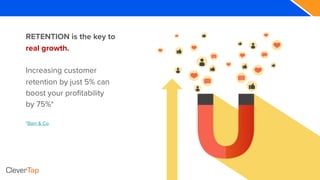
RETENTION is the key to
real growth.
Increasing customer
retention by just 5% can
boost your profitability
by 75%*
*Bain & Co.
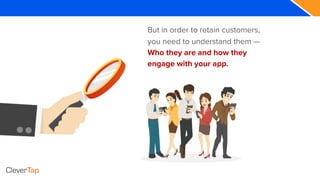
But in order to retain customers,
you need to understand them —
Who they are and how they
engage with your app.
That’s why you need
COHORT ANALYSIS
What is
COHORT
ANALYSIS?
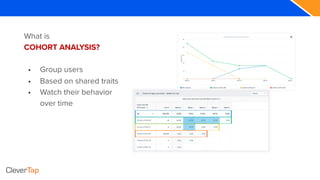
What is
COHORT ANALYSIS?
• Group users
• Based on shared traits
• Watch their behavior
over time
Cohort Analysis uses data to
show you why users fall in
love with your app — so you
can make it happen again &
again.
Sound complicated? It's not!
Start here…
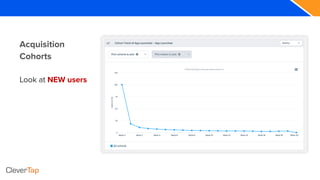
Acquisition
Cohorts
Look at NEW users
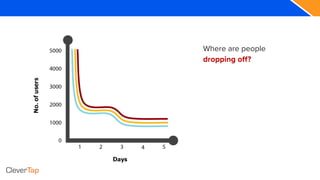
Where are people
dropping off?
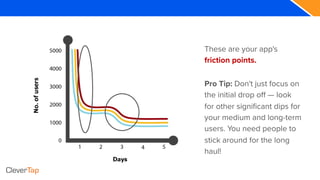
These are your app's
friction points.
Pro Tip: Don't just focus on
the initial drop off — look
for other significant dips for
your medium and long-term
users. You need people to
stick around for the long
haul!
Now that you've figured out
where you're losing users,
FIND OUT WHY.
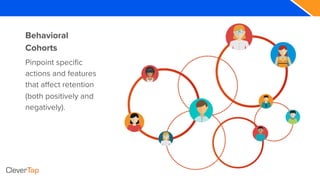
Behavioral
Cohorts
Pinpoint specific
actions and features
that affect retention
(both positively and
negatively).
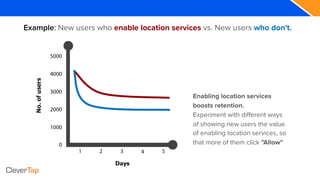
Example: New users who enable location services vs. New users who don't.
Enabling location services
boosts retention.
Experiment with different ways
of showing new users the value
of enabling location services, so
that more of them click "Allow"
What does this look like in real life?
We’ll use a
movie ticketing app
as an example
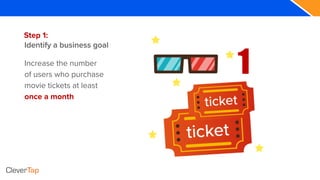
Step 1:
Identify a business goal
Increase the number
of users who purchase
movie tickets at least
once a month
1
Step 2:
Find a baseline
Look at all users who made a
purchase at least once a month
to find out where you stand
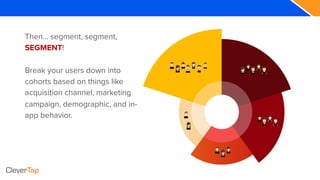
Then... segment, segment,
SEGMENT!
Break your users down into
cohorts based on things like
acquisition channel, marketing
campaign, demographic, and in-
app behavior.
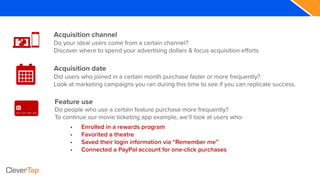
Acquisition date
Did users who joined in a certain month purchase faster or more frequently?
Look at marketing campaigns you ran during this time to see if you can replicate success.
Feature use
Do people who use a certain feature purchase more frequently?
To continue our movie ticketing app example, we’ll look at users who:
• Enrolled in a rewards program
• Favorited a theatre
• Saved their login information via “Remember me”
• Connected a PayPal account for one-click purchases
Acquisition channel
Do your ideal users come from a certain channel?
Discover where to spend your advertising dollars & focus acquisition efforts
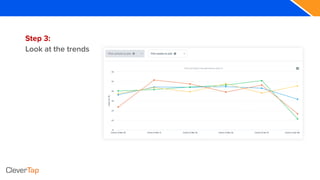
Step 3:
Look at the trends
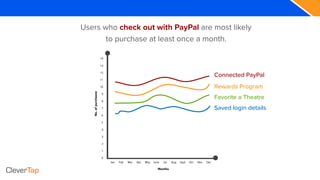
Users who check out with PayPal are most likely
to purchase at least once a month.
Connected PayPal
Rewards Program
Favorite a Theatre
Saved login details
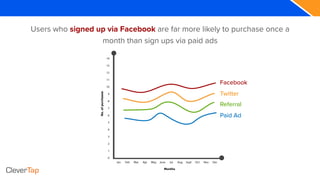
Users who signed up via Facebook are far more likely to purchase once a
month than sign ups via paid ads
Facebook
Twitter
Referral
Paid Ad
Step 4:
Mix and match segments to
find the golden combination
for growth
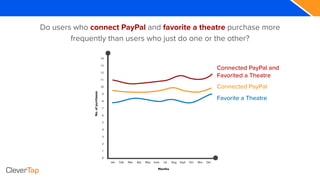
Do users who connect PayPal and favorite a theatre purchase more
frequently than users who just do one or the other?
Connected PayPal and
Favorited a Theatre
Connected PayPal
Favorite a Theatre
Step 5:
Experiment
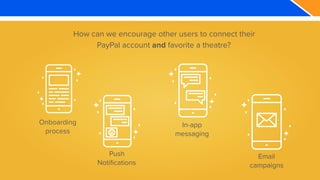
How can we encourage other users to connect their
PayPal account and favorite a theatre?
Onboarding
process
Push
Notifications
In-app
messaging
Email
campaigns
COHORT ANALYSIS
breaks down large, complicated
problems (how can we get more
users to purchase more frequently?)
into manageable, actionable tasks.
It helps you focus on areas that
you know will have a significant
impact on your business, and track
your progress in a meaningful way.
Want to learn more?
Read the full article
on using cohort analysis to
boost user retention for
more details and
strategies.
The Intelligent Mobile Marketing Platform
www.clevertap.com

Using Cohort Analysis to Boost Mobile App Retention

  • 1.
  • 2.
    As a mobile marketer, your#1 focus is GROWTH
  • 3.
    Too many mobilemarketers focus only on acquisition. But who cares if you've got thousands of new users, if none of them stick around? You're wasting time and money!
  • 4.
    RETENTION is thekey to real growth. Increasing customer retention by just 5% can boost your profitability by 75%* *Bain & Co.
  • 5.
    But in orderto retain customers, you need to understand them — Who they are and how they engage with your app.
  • 6.
    That’s why youneed COHORT ANALYSIS
  • 7.
  • 8.
    What is COHORT ANALYSIS? •Group users • Based on shared traits • Watch their behavior over time
  • 9.
    Cohort Analysis usesdata to show you why users fall in love with your app — so you can make it happen again & again.
  • 10.
  • 11.
  • 12.
  • 13.
  • 14.
    These are yourapp's friction points. Pro Tip: Don't just focus on the initial drop off — look for other significant dips for your medium and long-term users. You need people to stick around for the long haul!
  • 15.
    Now that you'vefigured out where you're losing users, FIND OUT WHY.
  • 16.
    Behavioral Cohorts Pinpoint specific actions andfeatures that affect retention (both positively and negatively).
  • 17.
    Example: New userswho enable location services vs. New users who don't. Enabling location services boosts retention. Experiment with different ways of showing new users the value of enabling location services, so that more of them click "Allow"
  • 18.
    What does thislook like in real life?
  • 19.
    We’ll use a movieticketing app as an example
  • 20.
    Step 1: Identify abusiness goal Increase the number of users who purchase movie tickets at least once a month 1
  • 21.
    Step 2: Find abaseline Look at all users who made a purchase at least once a month to find out where you stand
  • 22.
    Then... segment, segment, SEGMENT! Breakyour users down into cohorts based on things like acquisition channel, marketing campaign, demographic, and in- app behavior.
  • 23.
    Acquisition date Did userswho joined in a certain month purchase faster or more frequently? Look at marketing campaigns you ran during this time to see if you can replicate success. Feature use Do people who use a certain feature purchase more frequently? To continue our movie ticketing app example, we’ll look at users who: • Enrolled in a rewards program • Favorited a theatre • Saved their login information via “Remember me” • Connected a PayPal account for one-click purchases Acquisition channel Do your ideal users come from a certain channel? Discover where to spend your advertising dollars & focus acquisition efforts
  • 24.
    Step 3: Look atthe trends
  • 25.
    Users who checkout with PayPal are most likely to purchase at least once a month. Connected PayPal Rewards Program Favorite a Theatre Saved login details
  • 26.
    Users who signedup via Facebook are far more likely to purchase once a month than sign ups via paid ads Facebook Twitter Referral Paid Ad
  • 27.
    Step 4: Mix andmatch segments to find the golden combination for growth
  • 28.
    Do users whoconnect PayPal and favorite a theatre purchase more frequently than users who just do one or the other? Connected PayPal and Favorited a Theatre Connected PayPal Favorite a Theatre
  • 29.
  • 30.
    How can weencourage other users to connect their PayPal account and favorite a theatre? Onboarding process Push Notifications In-app messaging Email campaigns
  • 31.
    COHORT ANALYSIS breaks downlarge, complicated problems (how can we get more users to purchase more frequently?) into manageable, actionable tasks. It helps you focus on areas that you know will have a significant impact on your business, and track your progress in a meaningful way.
  • 32.
    Want to learnmore? Read the full article on using cohort analysis to boost user retention for more details and strategies.
  • 33.
    The Intelligent MobileMarketing Platform www.clevertap.com