Using ArcGIS to Prioritize
  Invasive Plant Control


Jean Fujikawa (Operations Planner / Analyst)
      Hawai‘i Pacific GIS Conference
               March 5, 2012
Agenda
• OISC overview
  – who we are
  – our target species
  – miconia model example
• Evaluating potential species for control
  using ArcGIS
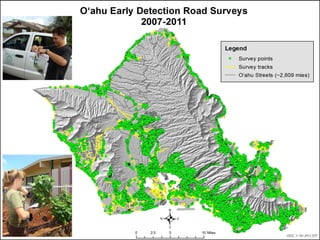
  – OED survey and evaluation
  – OISC delimiting surveys
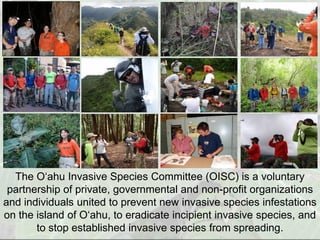
The O‘ahu Invasive Species Committee (OISC) is a voluntary
 partnership of private, governmental and non-profit organizations
and individuals united to prevent new invasive species infestations
on the island of O‘ahu, to eradicate incipient invasive species, and
       to stop established invasive species from spreading.
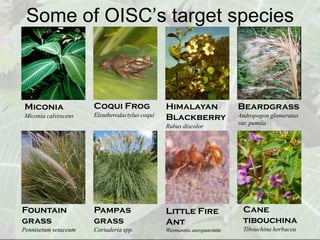
Some of OISC’s target species


Miconia               Coqui Frog                Himalayan                Beardgrass
Miconia calvescens    Eleutherodactylus coqui   Blackberry               Andropogon glomeratus
                                                                         var. pumila
                                                Rubus discolor


Fountain              Pampas                    Little Fire               Cane
grass                 grass                     Ant                       tibouchina
Pennisetum setaceum   Cortaderia spp.           Wasmannia auropunctata    Tibouchina herbacea
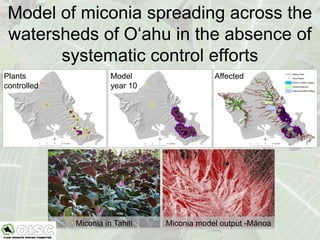
Model of miconia spreading across the
 watersheds of O‘ahu in the absence of
       systematic control efforts
Plants                 Model                 Affected
controlled             year 10


             Miconia in Tahiti   Miconia model output -Mānoa
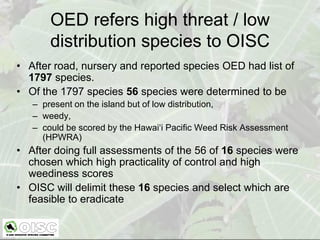
OED refers high threat / low
       distribution species to OISC
• After road, nursery and reported species OED had list of
  1797 species.
• Of the 1797 species 56 species were determined to be
   – present on the island but of low distribution,
   – weedy,
   – could be scored by the Hawai‘i Pacific Weed Risk Assessment
     (HPWRA)
• After doing full assessments of the 56 of 16 species were
  chosen which high practicality of control and high
  weediness scores
• OISC will delimit these 16 species and select which are
  feasible to eradicate
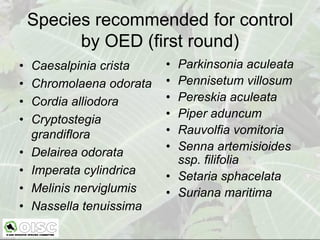
Species recommended for control
          by OED (first round)
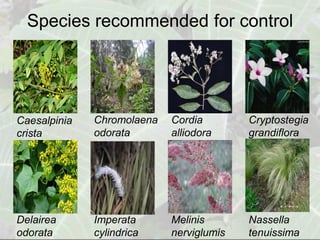
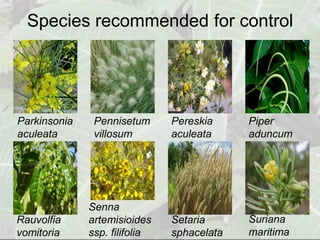
•   Caesalpinia crista    • Parkinsonia aculeata
•   Chromolaena odorata   • Pennisetum villosum
•   Cordia alliodora      • Pereskia aculeata
•   Cryptostegia          • Piper aduncum
    grandiflora           • Rauvolfia vomitoria
•   Delairea odorata      • Senna artemisioides
                            ssp. filifolia
•   Imperata cylindrica   • Setaria sphacelata
•   Melinis nerviglumis   • Suriana maritima
•   Nassella tenuissima
Species recommended for control


Caesalpinia   Chromolaena   Cordia        Cryptostegia
crista        odorata       alliodora     grandiflora


Delairea      Imperata      Melinis       Nassella
odorata       cylindrica    nerviglumis   tenuissima
Species recommended for control


Parkinsonia    Pennisetum      Pereskia     Piper
aculeata       villosum        aculeata     aduncum


              Senna
Rauvolfia     artemisioides    Setaria      Suriana
vomitoria     ssp. filifolia   sphacelata   maritima
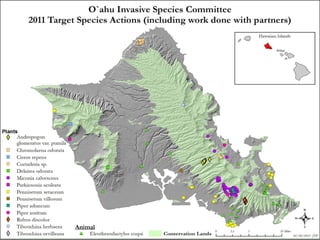
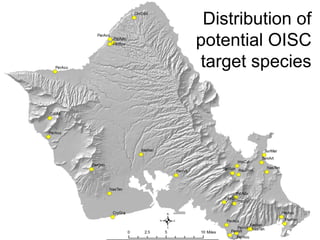
Distribution of
potential OISC
target species
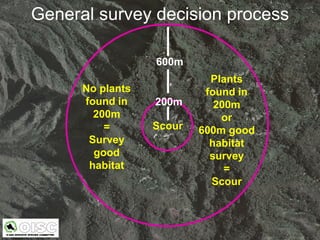
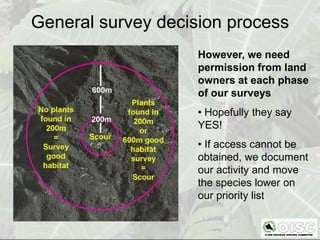
General survey decision process

                  600m
                            Plants
      No plants            found in
      found in    200m       200m
        200m                  or
          =       Scour   600m good
       Survey               habitat
        good                survey
       habitat                 =
                            Scour
General survey decision process
                    However, we need
                    permission from land
                    owners at each phase
                    of our surveys
                    • Hopefully they say
                    YES!
                    • If access cannot be
                    obtained, we document
                    our activity and move
                    the species lower on
                    our priority list
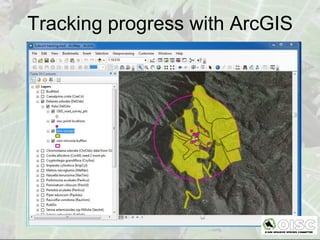
Tracking progress with ArcGIS
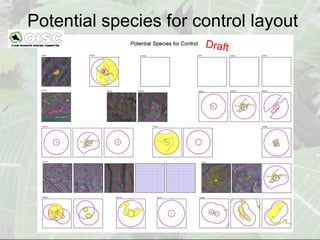
Potential species for control layout
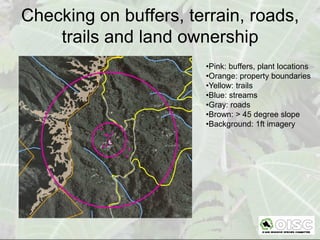
Checking on buffers, terrain, roads,
    trails and land ownership
                       •Pink: buffers, plant locations
                       •Orange: property boundaries
                       •Yellow: trails
                       •Blue: streams
                       •Gray: roads
                       •Brown: > 45 degree slope
                       •Background: 1ft imagery
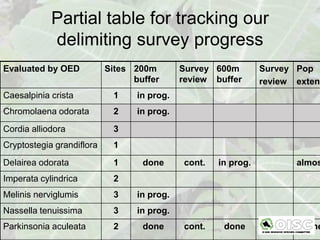
Partial table for tracking our
            delimiting survey progress
Evaluated by OED           Sites 200m        Survey 600m         Survey Pop
                                 buffer      review buffer       review extent
Caesalpinia crista          1     in prog.
Chromolaena odorata         2     in prog.
Cordia alliodora            3
Cryptostegia grandiflora    1
Delairea odorata            1      done       cont.   in prog.          almos
Imperata cylindrica         2
Melinis nerviglumis         3     in prog.
Nassella tenuissima         3     in prog.
Parkinsonia aculeata        2      done       cont.    done             define
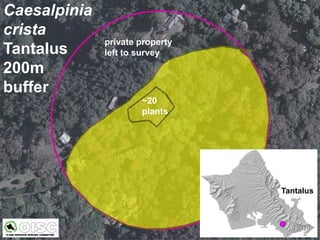
Caesalpinia
crista
              private property
Tantalus      left to survey
200m
buffer
                      ~20
                      plants


                                 Tantalus
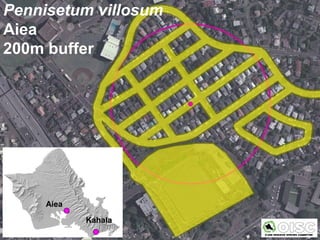
Pennisetum villosum
Aiea
200m buffer


     Aiea

            Kahala
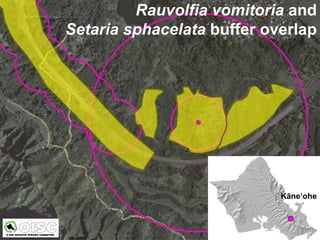
Rauvolfia vomitoria and
Setaria sphacelata buffer overlap


                            Kāne‘ohe
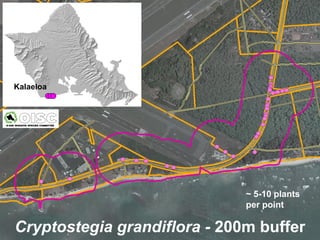
Kalaeloa


                              ~ 5-10 plants
                              per point

Cryptostegia grandiflora - 200m buffer
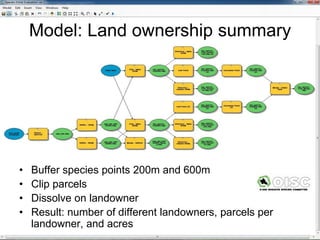
Model: Land ownership summary


•   Buffer species points 200m and 600m
•   Clip parcels
•   Dissolve on landowner
•   Result: number of different landowners, parcels per
    landowner, and acres
Summary
• Using ArcGIS throughout the evaluation process
• Standard format for dealing with each species at
  each site, however, each situation is unique
• Early detection will prevent "the next miconia"
  from happening
• If you’re are ever contacted by your local ISC for
  permission to survey and control on your
  property, please say YES!
Mahalo!
• Supervisor (Rachel Neville)
• Co-workers at OISC, OED
• All our volunteers, committee members, partners
  and funders for their continuing support


              Jean Fujikawa - jeanyf@hawaii.edu
                 OISC - http://www.oahuisc.org
    HWRA - http://www.botany.hawaii.edu/faculty/daehler/wra/

Hawaii Pacific GIS Conference 2012: Disaster Management and Emergency Response II - Using ArcGIS to Proritize Invasive Plant Control

  • 1.
    Using ArcGIS toPrioritize Invasive Plant Control Jean Fujikawa (Operations Planner / Analyst) Hawai‘i Pacific GIS Conference March 5, 2012
  • 2.
    Agenda • OISC overview – who we are – our target species – miconia model example • Evaluating potential species for control using ArcGIS – OED survey and evaluation – OISC delimiting surveys
  • 3.
    The O‘ahu InvasiveSpecies Committee (OISC) is a voluntary partnership of private, governmental and non-profit organizations and individuals united to prevent new invasive species infestations on the island of O‘ahu, to eradicate incipient invasive species, and to stop established invasive species from spreading.
  • 4.
    Some of OISC’starget species Miconia Coqui Frog Himalayan Beardgrass Miconia calvescens Eleutherodactylus coqui Blackberry Andropogon glomeratus var. pumila Rubus discolor Fountain Pampas Little Fire Cane grass grass Ant tibouchina Pennisetum setaceum Cortaderia spp. Wasmannia auropunctata Tibouchina herbacea
  • 6.
    Model of miconiaspreading across the watersheds of O‘ahu in the absence of systematic control efforts Plants Model Affected controlled year 10 Miconia in Tahiti Miconia model output -Mānoa
  • 8.
    OED refers highthreat / low distribution species to OISC • After road, nursery and reported species OED had list of 1797 species. • Of the 1797 species 56 species were determined to be – present on the island but of low distribution, – weedy, – could be scored by the Hawai‘i Pacific Weed Risk Assessment (HPWRA) • After doing full assessments of the 56 of 16 species were chosen which high practicality of control and high weediness scores • OISC will delimit these 16 species and select which are feasible to eradicate
  • 9.
    Species recommended forcontrol by OED (first round) • Caesalpinia crista • Parkinsonia aculeata • Chromolaena odorata • Pennisetum villosum • Cordia alliodora • Pereskia aculeata • Cryptostegia • Piper aduncum grandiflora • Rauvolfia vomitoria • Delairea odorata • Senna artemisioides ssp. filifolia • Imperata cylindrica • Setaria sphacelata • Melinis nerviglumis • Suriana maritima • Nassella tenuissima
  • 10.
    Species recommended forcontrol Caesalpinia Chromolaena Cordia Cryptostegia crista odorata alliodora grandiflora Delairea Imperata Melinis Nassella odorata cylindrica nerviglumis tenuissima
  • 11.
    Species recommended forcontrol Parkinsonia Pennisetum Pereskia Piper aculeata villosum aculeata aduncum Senna Rauvolfia artemisioides Setaria Suriana vomitoria ssp. filifolia sphacelata maritima
  • 12.
  • 13.
    General survey decisionprocess 600m Plants No plants found in found in 200m 200m 200m or = Scour 600m good Survey habitat good survey habitat = Scour
  • 14.
    General survey decisionprocess However, we need permission from land owners at each phase of our surveys • Hopefully they say YES! • If access cannot be obtained, we document our activity and move the species lower on our priority list
  • 15.
  • 16.
    Potential species forcontrol layout
  • 17.
    Checking on buffers,terrain, roads, trails and land ownership •Pink: buffers, plant locations •Orange: property boundaries •Yellow: trails •Blue: streams •Gray: roads •Brown: > 45 degree slope •Background: 1ft imagery
  • 18.
    Partial table fortracking our delimiting survey progress Evaluated by OED Sites 200m Survey 600m Survey Pop buffer review buffer review extent Caesalpinia crista 1 in prog. Chromolaena odorata 2 in prog. Cordia alliodora 3 Cryptostegia grandiflora 1 Delairea odorata 1 done cont. in prog. almos Imperata cylindrica 2 Melinis nerviglumis 3 in prog. Nassella tenuissima 3 in prog. Parkinsonia aculeata 2 done cont. done define
  • 19.
    Caesalpinia crista private property Tantalus left to survey 200m buffer ~20 plants Tantalus
  • 20.
  • 21.
    Rauvolfia vomitoria and Setariasphacelata buffer overlap Kāne‘ohe
  • 22.
    Kalaeloa ~ 5-10 plants per point Cryptostegia grandiflora - 200m buffer
  • 23.
    Model: Land ownershipsummary • Buffer species points 200m and 600m • Clip parcels • Dissolve on landowner • Result: number of different landowners, parcels per landowner, and acres
  • 24.
    Summary • Using ArcGISthroughout the evaluation process • Standard format for dealing with each species at each site, however, each situation is unique • Early detection will prevent "the next miconia" from happening • If you’re are ever contacted by your local ISC for permission to survey and control on your property, please say YES!
  • 25.
    Mahalo! • Supervisor (RachelNeville) • Co-workers at OISC, OED • All our volunteers, committee members, partners and funders for their continuing support Jean Fujikawa - jeanyf@hawaii.edu OISC - http://www.oahuisc.org HWRA - http://www.botany.hawaii.edu/faculty/daehler/wra/