5 Things Every Western
Gardener Should Know Before
   Planting Native Plants

        Madeline Mazurski
      Montana Native Landscapes


      Kathy Settevendemie
     Blackfoot Native Plants Nursery
What is a ‘native’ plant?
• A plant species that occurs naturally in a
  particular region, ecosystem, and/or habitat
  without direct or indirect human intervention
• A species that evolved over time with its biotic
  community
• A species that has not been genetically altered
Cultivars
• A cultivar is a plant or group of plants selected for
  desirable characteristics that can be maintained by
  propagation.
• A cultivar is given a cultivar name, which consists of the
  scientific Latin botanical name followed by a cultivar
  epithet. The cultivar epithet is usually in a vernacular
  language. For example, the full cultivar name of the
  Amber Wheels Blanket Flower is Gaillardia aristata
  'Amber Wheels’.
  The 'Amber Wheels‘ part of the name is the cultivar
  epithet which, according to the Rules of the Cultivated
  Plant Code, is bounded by single quotation marks.
• Created by selection, hybridization or genetic
  engineering.
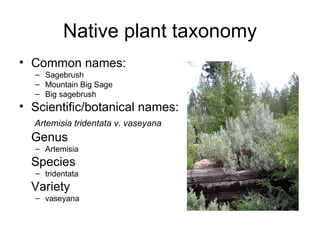
Native plant taxonomy
• Common names:
  – Sagebrush
  – Mountain Big Sage
  – Big sagebrush
• Scientific/botanical names:
  Artemisia tridentata v. vaseyana
  Genus
  – Artemisia
  Species
  – tridentata
  Variety
  – vaseyana
Local Provenance
• “Native plants with local provenance
 (place of origin) will be genetically better
 suited to your local growing conditions
 than one that is indigenous to another part
 of the country with very different growing
 conditions.”   -Wasowski
Why use native plants?
•   Lower maintenance
•   Water conservation
•   Sustainability
•   Lower your carbon footprint
•   Minimize environmental effects of herbicides and
    pesticides
•   Decline in pollinators
•   Preserving sense of place
•   Concern about invasive species
•   Have a role in preserving species
•   Part of natural ecosystems
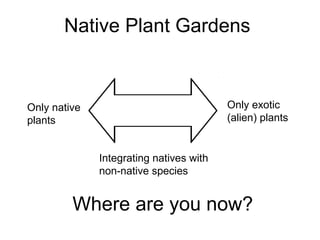
Native Plant Gardens


Only native                              Only exotic
plants                                   (alien) plants


              Integrating natives with
              non-native species


         Where are you now?
Where Does That Plant Grow
 and Why Does It Matter?
Where Does That Plant Grow?
         Sun & Shade
       Moisture & Dryness
       Timing of Moisture
               Soil
            Elevation
             Aspect
           Exposure
              Slope
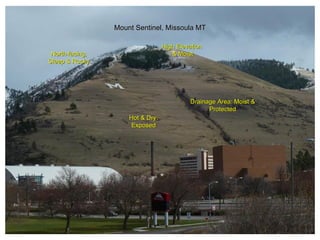
Mount Sentinel, Missoula MT

                                  High Elevation
 North-facing,                       & Moist
Steep & Rocky


                                           Drainage Area: Moist &
                                                 Protected
                     Hot & Dry:
                      Exposed
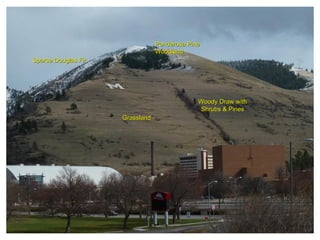
Ponderosa Pine
                                 Woodland
Sparse Douglas Fir


                                              Woody Draw with
                                              Shrubs & Pines
                     Grassland
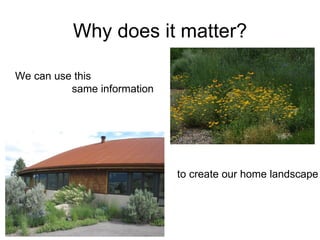
Why does it matter?

We can use this
          same information


                             to create our home landscape
The Home Landscape
     Sun & Shade
   Moisture & Dryness
   Timing of Moisture
           Soil
        Elevation
         Aspect
       Exposure
          Slope
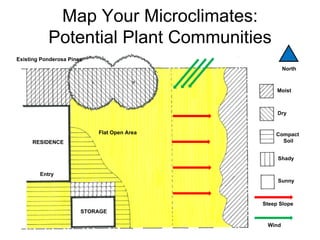
Map Your Microclimates:
           Potential Plant Communities
Existing Ponderosa Pines
                                                    North


                                                 Moist


                                                 Dry


                           Flat Open Area       Compact
     RESIDENCE                                    Soil


                                                 Shady

        Entry
                                                 Sunny


                                            Steep Slope
                       STORAGE

                                             Wind
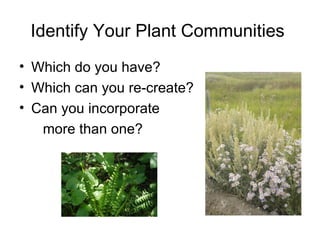
Identify Your Plant Communities
• Which do you have?
• Which can you re-create?
• Can you incorporate
   more than one?
Where To From Here?
         Design your garden!


Why Design?
Design Process

Site Assessment:       Needs Assessment:
   Possible Plant       What You Want & Need
   Communities             In Your Garden
& Other Site Factors


              Garden Design
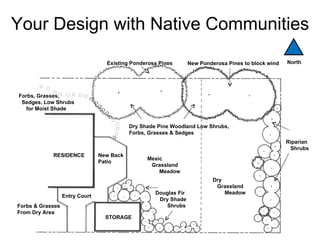
Your Design with Native Communities
                                  Existing Ponderosa Pines        New Ponderosa Pines to block wind   North


Forbs, Grasses,
 Sedges, Low Shrubs
  for Moist Shade


                                           Dry Shade Pine Woodland Low Shrubs,
                                           Forbs, Grasses & Sedges
                                                                                                      Riparian
                                                                                                       Shrubs
            RESIDENCE           New Back
                                                 Mesic
                                Patio
                                                  Grassland
                                                     Meadow
                                                                           Dry
                                                                            Grassland
                                                    Douglas Fir                Meadow
                  Entry Court
                                                     Dry Shade
Forbs & Grasses                                         Shrubs
From Dry Area
                                  STORAGE
Example of Plant Community in
     Missoula area - Grassland
• Grasses: Idaho Fescue, Bluebunch Wheatgrass,
  Prairie Junegrass, One-spike Oatgrass…

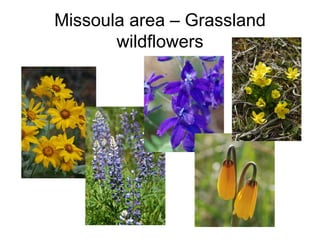
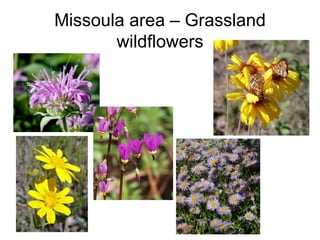
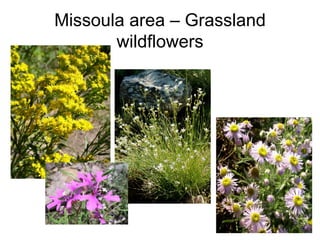
• Wildflowers: Arrowleaf Balsamroot, Silky Lupine,
  Little Larkspur, Yellow Bells, Sagebrush
  Buttercup, Wild Bergamot, Showy Fleabane,
  Shaggy Fleabane, Clarkia, Blanket Flower, Twin
  Arnica, Goldenrod, Shooting Star, Mountain
  Sandwort…
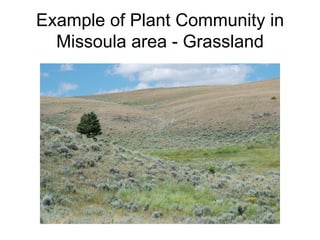
Example of Plant Community in
  Missoula area - Grassland
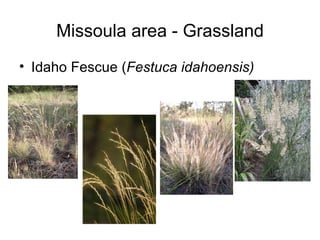
Missoula area - Grassland
• Idaho Fescue (Festuca idahoensis)
Missoula area – Grassland
       wildflowers
Missoula area – Grassland
       wildflowers
Missoula area – Grassland
       wildflowers
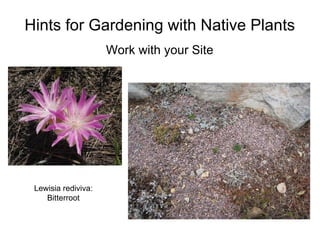
Hints for Gardening with Native Plants
                     Work with your Site


 Lewisia rediviva:
    Bitterroot
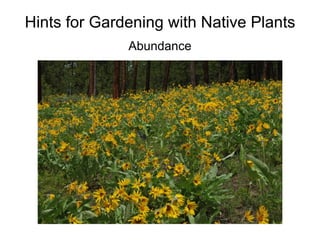
Hints for Gardening with Native Plants
              Abundance
Hints for Gardening with Native Plants
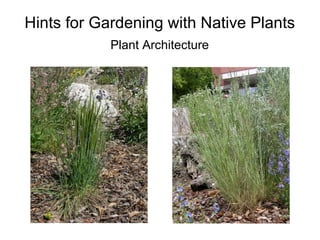
            Plant Architecture
Hints for Gardening with Native Plants
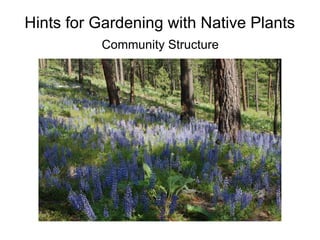
          Community Structure
Hints for Gardening with Native Plants
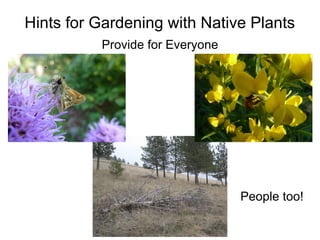
          Provide for Everyone


                                 People too!
Hints for Gardening with Native Plants
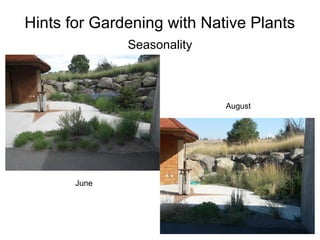
              Seasonality


                            August


       June
Hints for Gardening with Native Plants
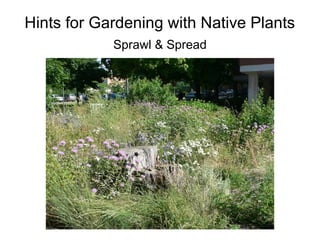
            Sprawl & Spread
Hints for Gardening with Native Plants
                           Regulations

 “In situations involving parcels of land that are maintained and
 designated or designed as natural parks/gardens, the owners may
 request exemption from the Director of Public Works or designated
 representative. The exemption will be in the form of a Managed
 Natural Garden/Park Agreement. The purpose is to recognize that
 private owners may have managed naturalized, less water
 intensive gardens and lawns. It shall be the duty of such persons to
 maintain their property so that it shall not be considered a fire
 hazard, a public safety visibility hazard at street or alley
 intersections, a public health hazard or a public/private nuisance.
 Parcels of land designated or designed as natural parks/gardens
 may lose the designation of exempt, under this ordinance, if the
 property is not managed as stated in the management agreement.”
Hints for Gardening with Native Plants
                Maintenance


  EVERY
      GARDEN
               NEEDS
                      MAINTENANCE!

  (But it can be less with native plants)

4.17.2012. 5 things every western gardener should know before

  • 1.
    5 Things EveryWestern Gardener Should Know Before Planting Native Plants Madeline Mazurski Montana Native Landscapes Kathy Settevendemie Blackfoot Native Plants Nursery
  • 2.
    What is a‘native’ plant? • A plant species that occurs naturally in a particular region, ecosystem, and/or habitat without direct or indirect human intervention • A species that evolved over time with its biotic community • A species that has not been genetically altered
  • 3.
    Cultivars • A cultivaris a plant or group of plants selected for desirable characteristics that can be maintained by propagation. • A cultivar is given a cultivar name, which consists of the scientific Latin botanical name followed by a cultivar epithet. The cultivar epithet is usually in a vernacular language. For example, the full cultivar name of the Amber Wheels Blanket Flower is Gaillardia aristata 'Amber Wheels’. The 'Amber Wheels‘ part of the name is the cultivar epithet which, according to the Rules of the Cultivated Plant Code, is bounded by single quotation marks. • Created by selection, hybridization or genetic engineering.
  • 4.
    Native plant taxonomy •Common names: – Sagebrush – Mountain Big Sage – Big sagebrush • Scientific/botanical names: Artemisia tridentata v. vaseyana Genus – Artemisia Species – tridentata Variety – vaseyana
  • 5.
    Local Provenance • “Nativeplants with local provenance (place of origin) will be genetically better suited to your local growing conditions than one that is indigenous to another part of the country with very different growing conditions.” -Wasowski
  • 6.
    Why use nativeplants? • Lower maintenance • Water conservation • Sustainability • Lower your carbon footprint • Minimize environmental effects of herbicides and pesticides • Decline in pollinators • Preserving sense of place • Concern about invasive species • Have a role in preserving species • Part of natural ecosystems
  • 7.
    Native Plant Gardens Onlynative Only exotic plants (alien) plants Integrating natives with non-native species Where are you now?
  • 8.
    Where Does ThatPlant Grow and Why Does It Matter?
  • 9.
    Where Does ThatPlant Grow? Sun & Shade Moisture & Dryness Timing of Moisture Soil Elevation Aspect Exposure Slope
  • 10.
    Mount Sentinel, MissoulaMT High Elevation North-facing, & Moist Steep & Rocky Drainage Area: Moist & Protected Hot & Dry: Exposed
  • 11.
    Ponderosa Pine Woodland Sparse Douglas Fir Woody Draw with Shrubs & Pines Grassland
  • 12.
    Why does itmatter? We can use this same information to create our home landscape
  • 13.
    The Home Landscape Sun & Shade Moisture & Dryness Timing of Moisture Soil Elevation Aspect Exposure Slope
  • 14.
    Map Your Microclimates: Potential Plant Communities Existing Ponderosa Pines North Moist Dry Flat Open Area Compact RESIDENCE Soil Shady Entry Sunny Steep Slope STORAGE Wind
  • 15.
    Identify Your PlantCommunities • Which do you have? • Which can you re-create? • Can you incorporate more than one?
  • 16.
    Where To FromHere? Design your garden! Why Design?
  • 17.
    Design Process Site Assessment: Needs Assessment: Possible Plant What You Want & Need Communities In Your Garden & Other Site Factors Garden Design
  • 18.
    Your Design withNative Communities Existing Ponderosa Pines New Ponderosa Pines to block wind North Forbs, Grasses, Sedges, Low Shrubs for Moist Shade Dry Shade Pine Woodland Low Shrubs, Forbs, Grasses & Sedges Riparian Shrubs RESIDENCE New Back Mesic Patio Grassland Meadow Dry Grassland Douglas Fir Meadow Entry Court Dry Shade Forbs & Grasses Shrubs From Dry Area STORAGE
  • 19.
    Example of PlantCommunity in Missoula area - Grassland • Grasses: Idaho Fescue, Bluebunch Wheatgrass, Prairie Junegrass, One-spike Oatgrass… • Wildflowers: Arrowleaf Balsamroot, Silky Lupine, Little Larkspur, Yellow Bells, Sagebrush Buttercup, Wild Bergamot, Showy Fleabane, Shaggy Fleabane, Clarkia, Blanket Flower, Twin Arnica, Goldenrod, Shooting Star, Mountain Sandwort…
  • 20.
    Example of PlantCommunity in Missoula area - Grassland
  • 21.
    Missoula area -Grassland • Idaho Fescue (Festuca idahoensis)
  • 22.
    Missoula area –Grassland wildflowers
  • 23.
    Missoula area –Grassland wildflowers
  • 24.
    Missoula area –Grassland wildflowers
  • 25.
    Hints for Gardeningwith Native Plants Work with your Site Lewisia rediviva: Bitterroot
  • 26.
    Hints for Gardeningwith Native Plants Abundance
  • 27.
    Hints for Gardeningwith Native Plants Plant Architecture
  • 28.
    Hints for Gardeningwith Native Plants Community Structure
  • 29.
    Hints for Gardeningwith Native Plants Provide for Everyone People too!
  • 30.
    Hints for Gardeningwith Native Plants Seasonality August June
  • 31.
    Hints for Gardeningwith Native Plants Sprawl & Spread
  • 32.
    Hints for Gardeningwith Native Plants Regulations “In situations involving parcels of land that are maintained and designated or designed as natural parks/gardens, the owners may request exemption from the Director of Public Works or designated representative. The exemption will be in the form of a Managed Natural Garden/Park Agreement. The purpose is to recognize that private owners may have managed naturalized, less water intensive gardens and lawns. It shall be the duty of such persons to maintain their property so that it shall not be considered a fire hazard, a public safety visibility hazard at street or alley intersections, a public health hazard or a public/private nuisance. Parcels of land designated or designed as natural parks/gardens may lose the designation of exempt, under this ordinance, if the property is not managed as stated in the management agreement.”
  • 33.
    Hints for Gardeningwith Native Plants Maintenance EVERY GARDEN NEEDS MAINTENANCE! (But it can be less with native plants)