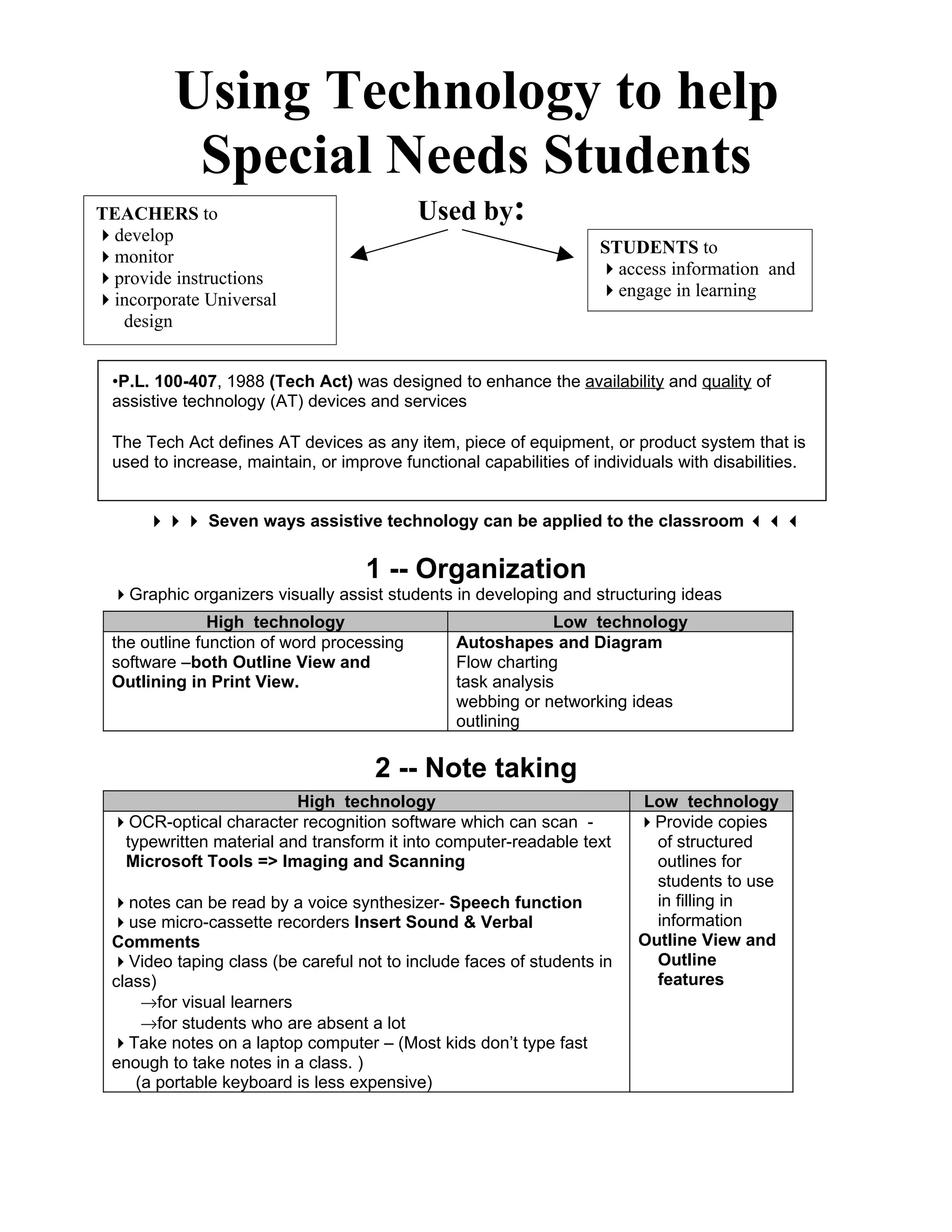
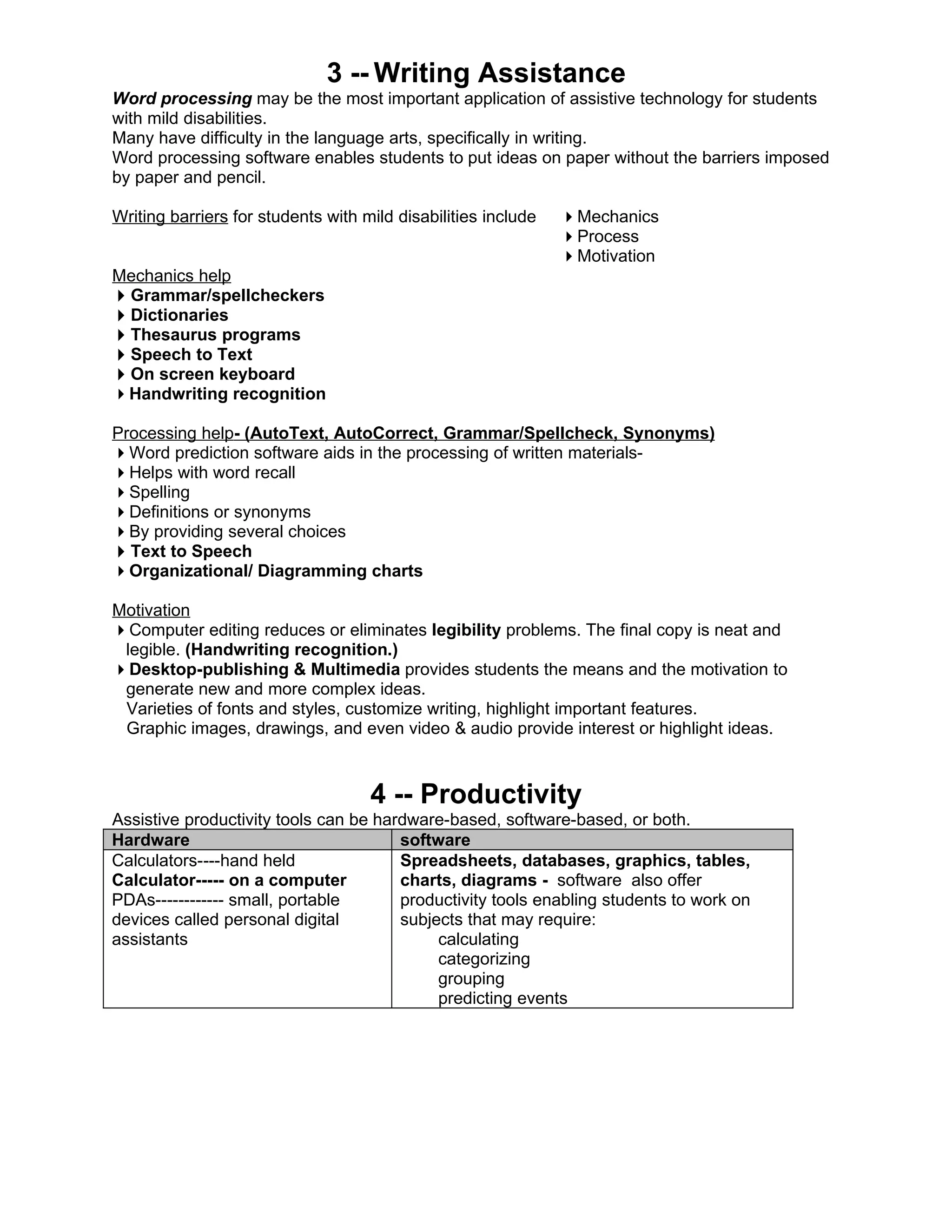
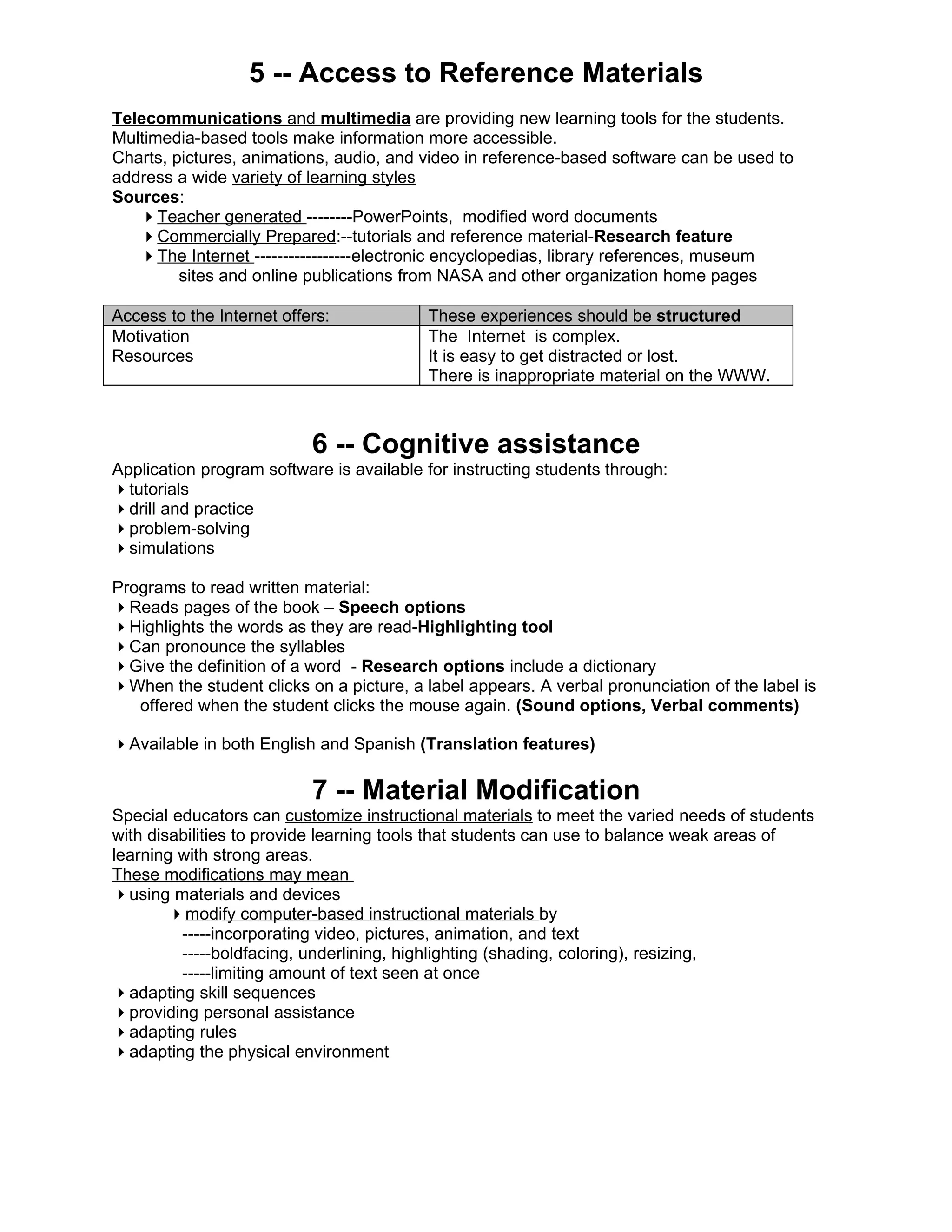
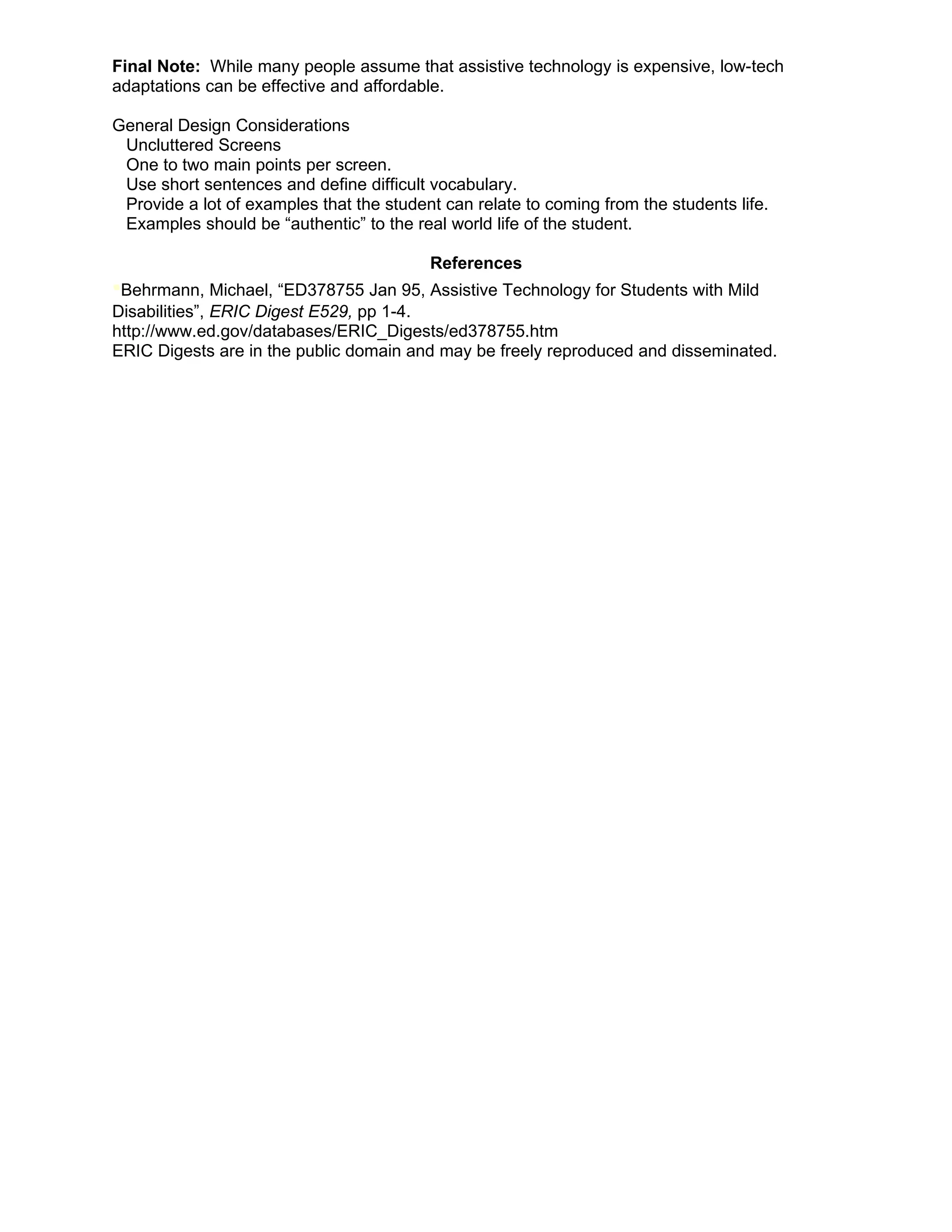
This document discusses how assistive technology can help special needs students in 7 key ways: 1) organization, 2) note-taking, 3) writing assistance, 4) productivity, 5) access to reference materials, 6) cognitive assistance, and 7) material modification. It provides examples of both high-tech and low-tech tools that can aid students with disabilities in areas like structuring ideas, taking notes, writing, calculating, finding information, reading materials, and customizing instruction. The document emphasizes that while some assistive technology can be expensive, low-cost adaptations can also be effective.