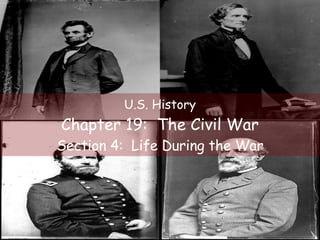
U.S. History Chapter 19:  The Civil War Section 4:  Life During the War
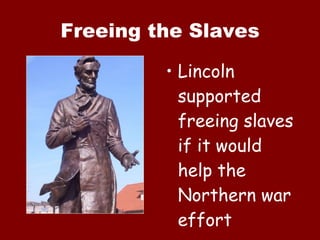
Freeing the Slaves Lincoln supported freeing slaves if it would help the Northern war effort
Freeing the Slaves Problems: Northern prejudice Slaves considered property No constitutional power to end slavery
Freeing the Slaves Military order Emancipation Proclamation —declared slaves free in those areas controlled by the Confederacy
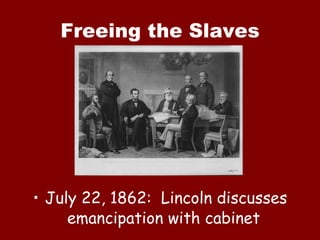
Freeing the Slaves July 22, 1862:  Lincoln discusses emancipation with cabinet
Freeing the Slaves Advised to wait Announced after victory at Antietam Issued September 22, 1863
Freeing the Slaves 100 days to lay down arms Effective January 1, 1863 Encouraged slaves to escape to Union lines
 
African Americans & the War Union navy permitted African American to volunteer Calls to allow African Americans in Union Army Practical reason:  need for soldiers
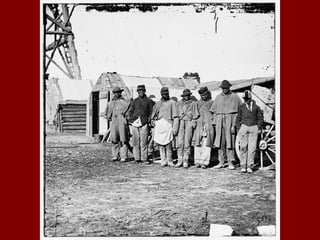
African Americans & the War July 1862:  Congress allows African Americans to serve as laborers 1862:  War Department allows contrabands to join Union Army Contrabands —escaped slaves
 
 
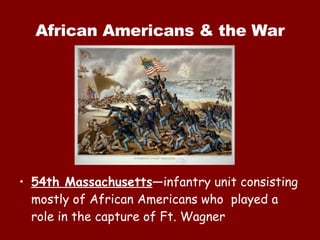
African Americans & the War 54th Massachusetts —infantry unit consisting mostly of African Americans who  played a role in the capture of Ft. Wagner
 
African Americans & the War 180,000 served in Union army Less pay Served under white officers Danger from Confederates
Problems in the North Problems Emancipation Length of war Casualties
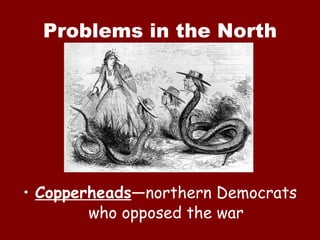
Problems in the North Copperheads —northern Democrats who opposed the war
Problems in the North Other problems: March 1863:  enactment of draft Suspension of  habeas corpus
Problems in the North Habeas corpus —constitutional protection against unlawful imprisonment
Southern Struggles Naval blockade cut off supplies Prices shot up Draft law (exclusions)
Life on the Home Front Young & old worked in factories & farms Southern women ran farms and plantations Women played role in providing medical care
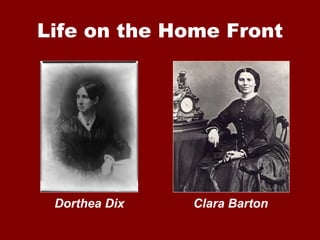
Life on the Home Front Dorthea Dix Clara Barton
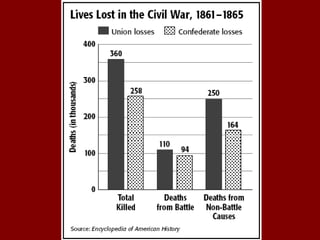
Life on the Home Front Uncomfortable, unhealthy camps Twice as many soldiers died from disease
 

US History Ch 19.3

  • 1.
    U.S. History Chapter19: The Civil War Section 4: Life During the War
  • 2.
    Freeing the SlavesLincoln supported freeing slaves if it would help the Northern war effort
  • 3.
    Freeing the SlavesProblems: Northern prejudice Slaves considered property No constitutional power to end slavery
  • 4.
    Freeing the SlavesMilitary order Emancipation Proclamation —declared slaves free in those areas controlled by the Confederacy
  • 5.
    Freeing the SlavesJuly 22, 1862: Lincoln discusses emancipation with cabinet
  • 6.
    Freeing the SlavesAdvised to wait Announced after victory at Antietam Issued September 22, 1863
  • 7.
    Freeing the Slaves100 days to lay down arms Effective January 1, 1863 Encouraged slaves to escape to Union lines
  • 8.
  • 9.
    African Americans &the War Union navy permitted African American to volunteer Calls to allow African Americans in Union Army Practical reason: need for soldiers
  • 10.
    African Americans &the War July 1862: Congress allows African Americans to serve as laborers 1862: War Department allows contrabands to join Union Army Contrabands —escaped slaves
  • 11.
  • 12.
  • 13.
    African Americans &the War 54th Massachusetts —infantry unit consisting mostly of African Americans who played a role in the capture of Ft. Wagner
  • 14.
  • 15.
    African Americans &the War 180,000 served in Union army Less pay Served under white officers Danger from Confederates
  • 16.
    Problems in theNorth Problems Emancipation Length of war Casualties
  • 17.
    Problems in theNorth Copperheads —northern Democrats who opposed the war
  • 18.
    Problems in theNorth Other problems: March 1863: enactment of draft Suspension of habeas corpus
  • 19.
    Problems in theNorth Habeas corpus —constitutional protection against unlawful imprisonment
  • 20.
    Southern Struggles Navalblockade cut off supplies Prices shot up Draft law (exclusions)
  • 21.
    Life on theHome Front Young & old worked in factories & farms Southern women ran farms and plantations Women played role in providing medical care
  • 22.
    Life on theHome Front Dorthea Dix Clara Barton
  • 23.
    Life on theHome Front Uncomfortable, unhealthy camps Twice as many soldiers died from disease
  • 24.