DR.QURATULAIN MUGHAL
(DPT)
ISRA UNIVERSITY,KARACHI
1
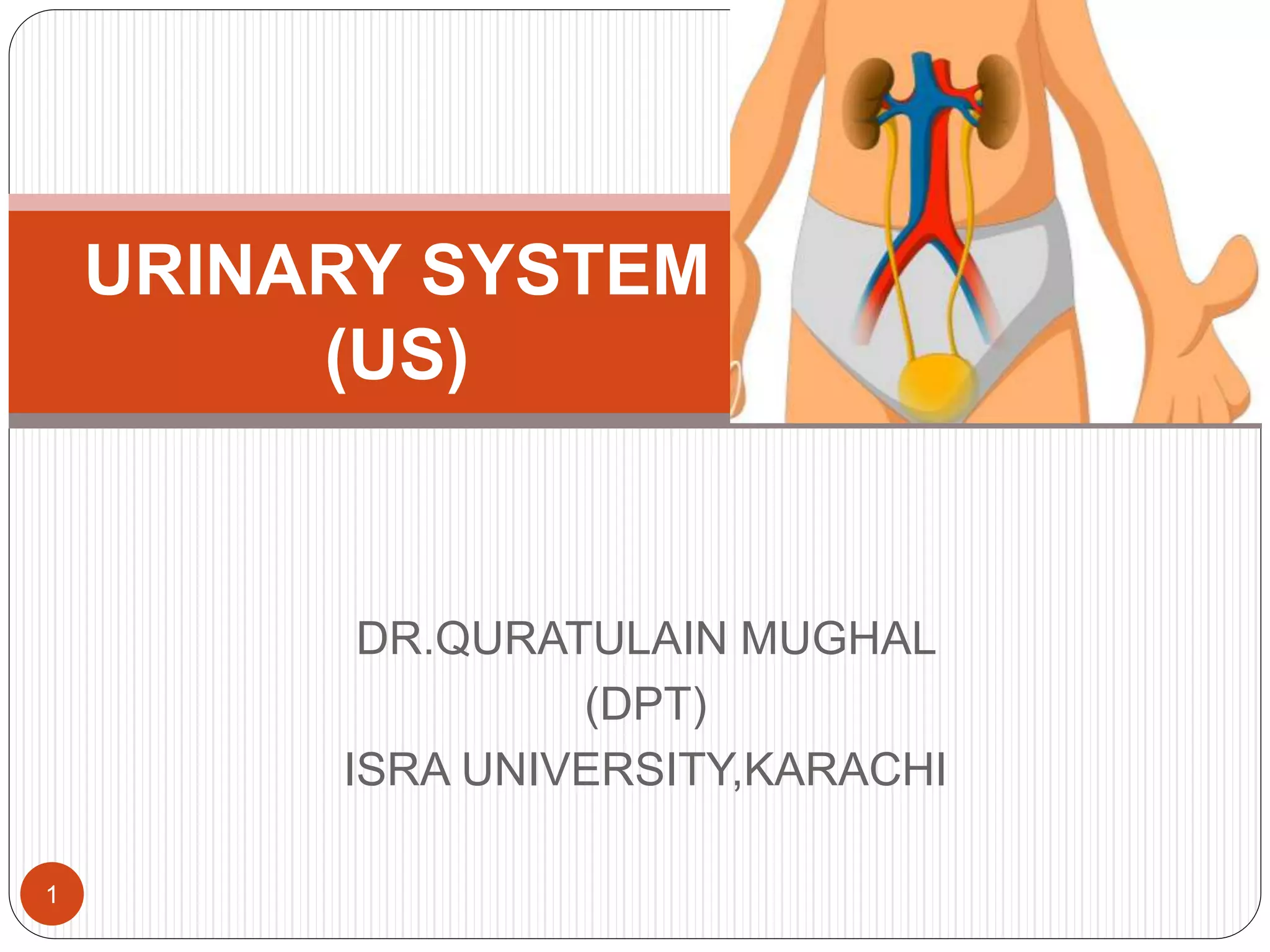
URINARY SYSTEM
(US)
CONTENTS
2
1. Frequency
2. Urgency
3. Incontinence
1. FREQUENCY
3
 Pollakiuria is the scientific terminology for urinary
frequency.
DEFINITION:
“The normal number of times”.
 It varies according to the age of the person.
 Among young children urinating 8 to 14 times
each day is typical.
 This decreases to 6 to 12 times per day for older
children.
 And to 4 to 6 times per day among teenagers.
CAUSES
4
 Frequent urination is a classic sign of urinary tract
infection, where inflammation reduces the
bladder's capacity to hold urine.
Other common causes are:
 Diabetes mellitus causing increased urine
production (polyuria)
 Prostate problems, causing disturbance along the
urinary tract.
 Pregnancy
2. URGENCY
5
 Is a sudden, compelling urge to urinate.
 It tends to increase with age.
 Urinary urgency often occurs as a result of
irritation and/or inflammation of the bladder wall
(urothelium).
3. INCONTINENCE
6
 Also known as involuntary urination.
 Is any leakage of urine.
 It is a common and distressing problem, which
may have a large impact on quality of life.
 It is twice as common in women as in men.
 RISK FACTORS: Pregnancy, childbirth, and
menopause.
TYPES OF INCONTINENCE
7
1. URGE INCONTINENCE: due to an overactive
bladder.
2. STRESS INCONTINENCE: due to poor closure
of the bladder.
3. OVERFLOW INCONTINENCE: due to either
poor bladder contraction or blockage of the
urethra.
4. FUNCTIONAL INCONTINENCE: due to
medications or health problems making it
difficult to reach the bathroom.
CAUSES
8
 Polyuria (excessive urine production)
 Enlarged prostate.
 Disorders like multiple sclerosis, spina
bifida, Parkinson's disease, strokes and spinal
cord injury can all interfere with nerve function of
the bladder.
9

Urinary system (us) examination

  • 1.
  • 2.
  • 3.
    1. FREQUENCY 3  Pollakiuriais the scientific terminology for urinary frequency. DEFINITION: “The normal number of times”.  It varies according to the age of the person.  Among young children urinating 8 to 14 times each day is typical.  This decreases to 6 to 12 times per day for older children.  And to 4 to 6 times per day among teenagers.
  • 4.
    CAUSES 4  Frequent urinationis a classic sign of urinary tract infection, where inflammation reduces the bladder's capacity to hold urine. Other common causes are:  Diabetes mellitus causing increased urine production (polyuria)  Prostate problems, causing disturbance along the urinary tract.  Pregnancy
  • 5.
    2. URGENCY 5  Isa sudden, compelling urge to urinate.  It tends to increase with age.  Urinary urgency often occurs as a result of irritation and/or inflammation of the bladder wall (urothelium).
  • 6.
    3. INCONTINENCE 6  Alsoknown as involuntary urination.  Is any leakage of urine.  It is a common and distressing problem, which may have a large impact on quality of life.  It is twice as common in women as in men.  RISK FACTORS: Pregnancy, childbirth, and menopause.
  • 7.
    TYPES OF INCONTINENCE 7 1.URGE INCONTINENCE: due to an overactive bladder. 2. STRESS INCONTINENCE: due to poor closure of the bladder. 3. OVERFLOW INCONTINENCE: due to either poor bladder contraction or blockage of the urethra. 4. FUNCTIONAL INCONTINENCE: due to medications or health problems making it difficult to reach the bathroom.
  • 8.
    CAUSES 8  Polyuria (excessiveurine production)  Enlarged prostate.  Disorders like multiple sclerosis, spina bifida, Parkinson's disease, strokes and spinal cord injury can all interfere with nerve function of the bladder.
  • 9.