Universal Design and Education
What is Universal Design?
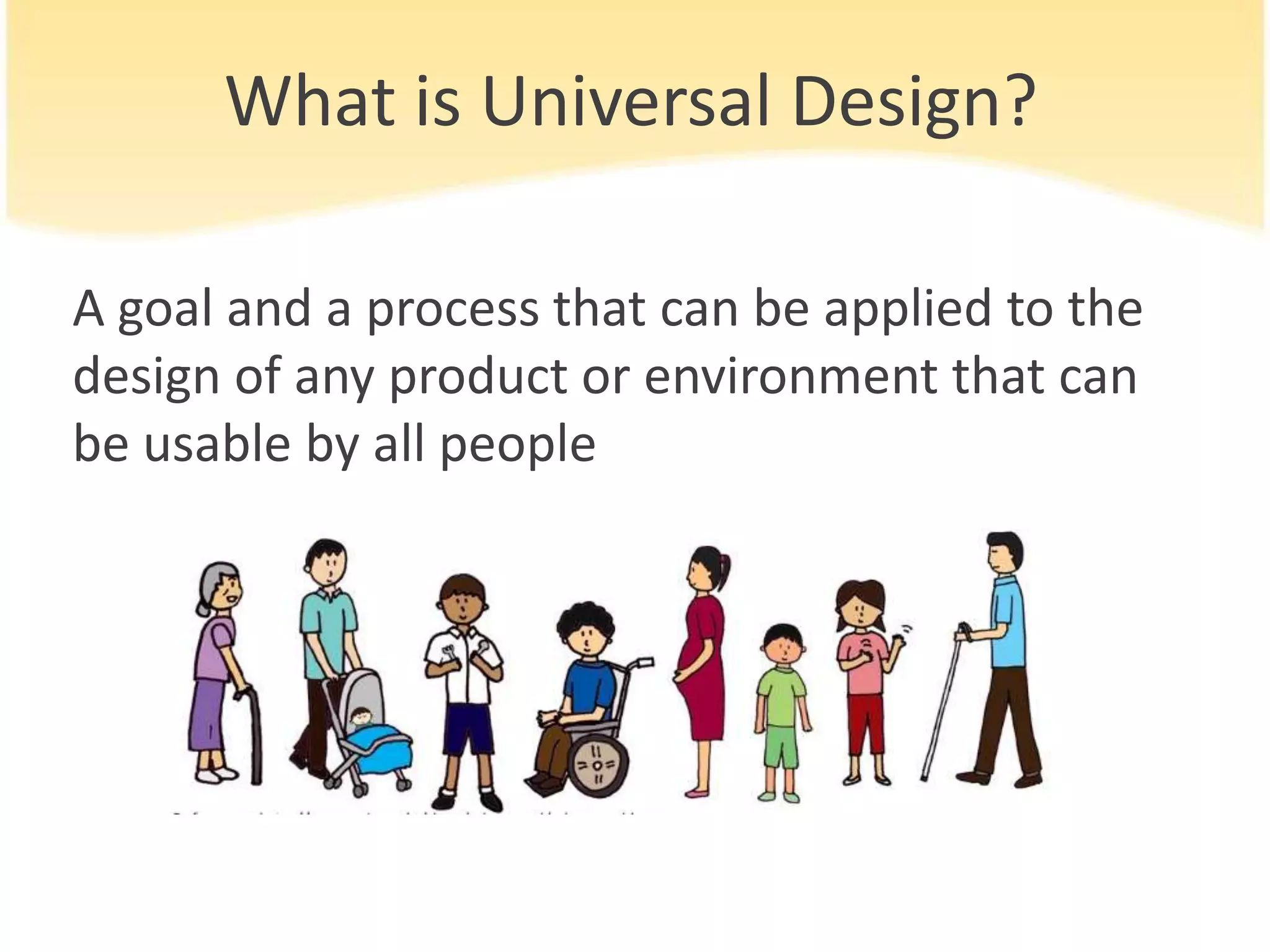
A goal and a process that can be applied to the
design of any product or environment that can
be usable by all people
The Process of Universal
Design
• The process includes identifying
the application, defining the
universe, involving the
consumers, adopting standards
and applying them, planning for
accommodations, training and
support and evaluation
• http://www.youtube.com/watch?v
=6rh6WfSm9CE
What are the principles of Universal
Design?
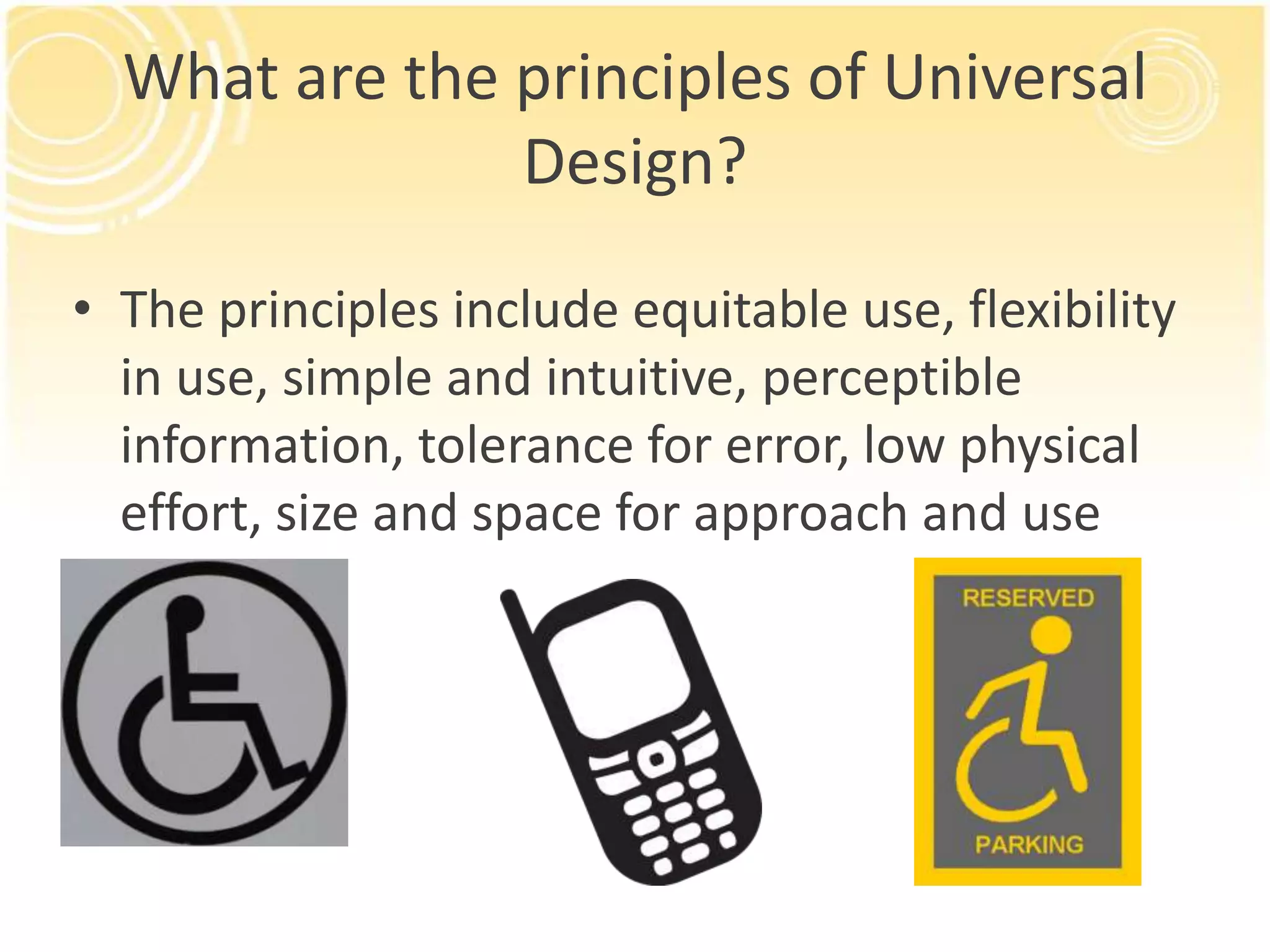
• The principles include equitable use, flexibility
in use, simple and intuitive, perceptible
information, tolerance for error, low physical
effort, size and space for approach and use
How can Universal Design be used in
Education?
• Universal design can be used and thought of
as Universal Design of Instruction
• The goal of UDI is to maximize the learning of
students with a wide range of characteristics
and ways that they learn by applying UD
principles to all aspects of instruction
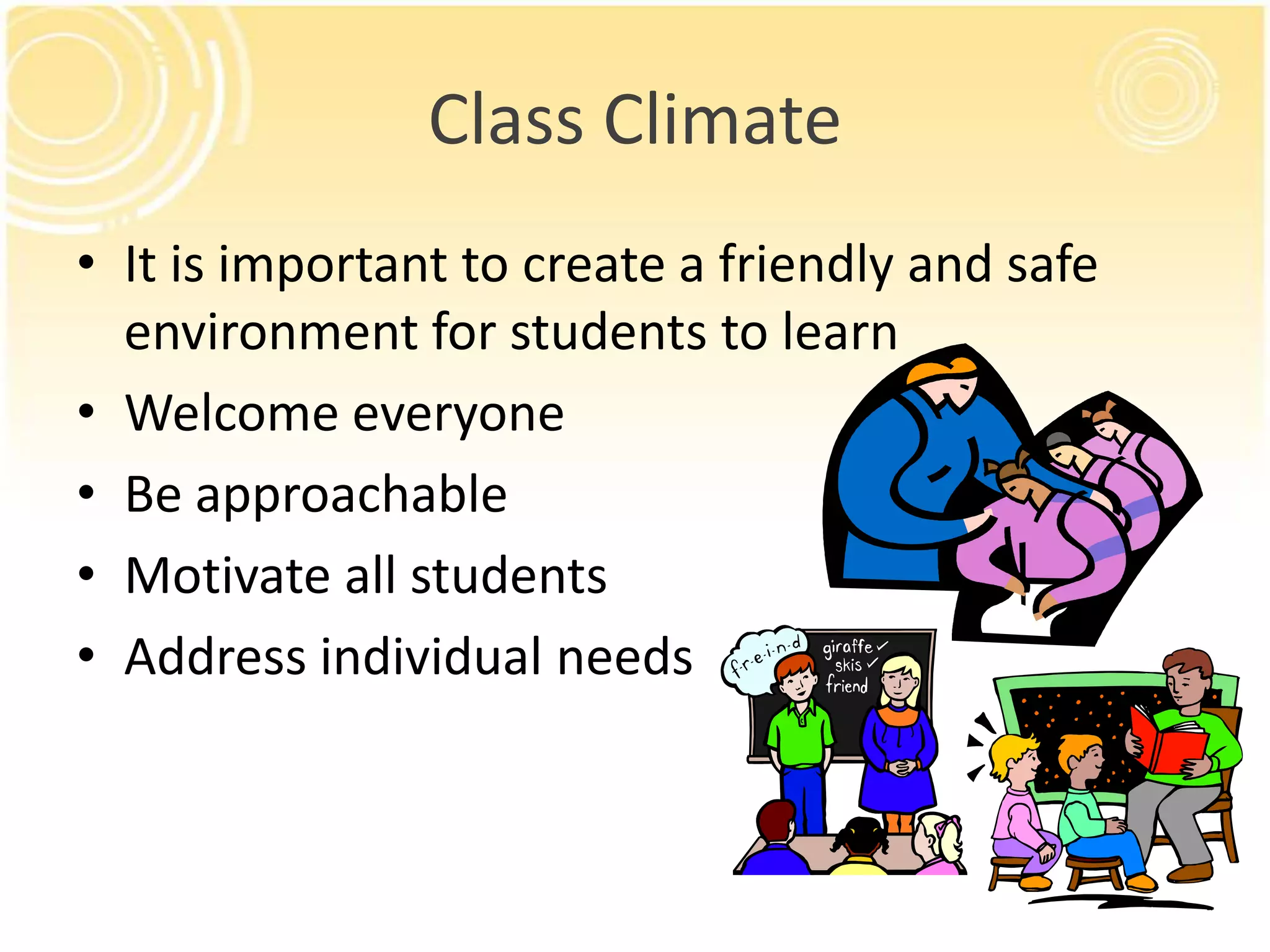
Class Climate
• It is important to create a friendly and safe
environment for students to learn
• Welcome everyone
• Be approachable
• Motivate all students
• Address individual needs
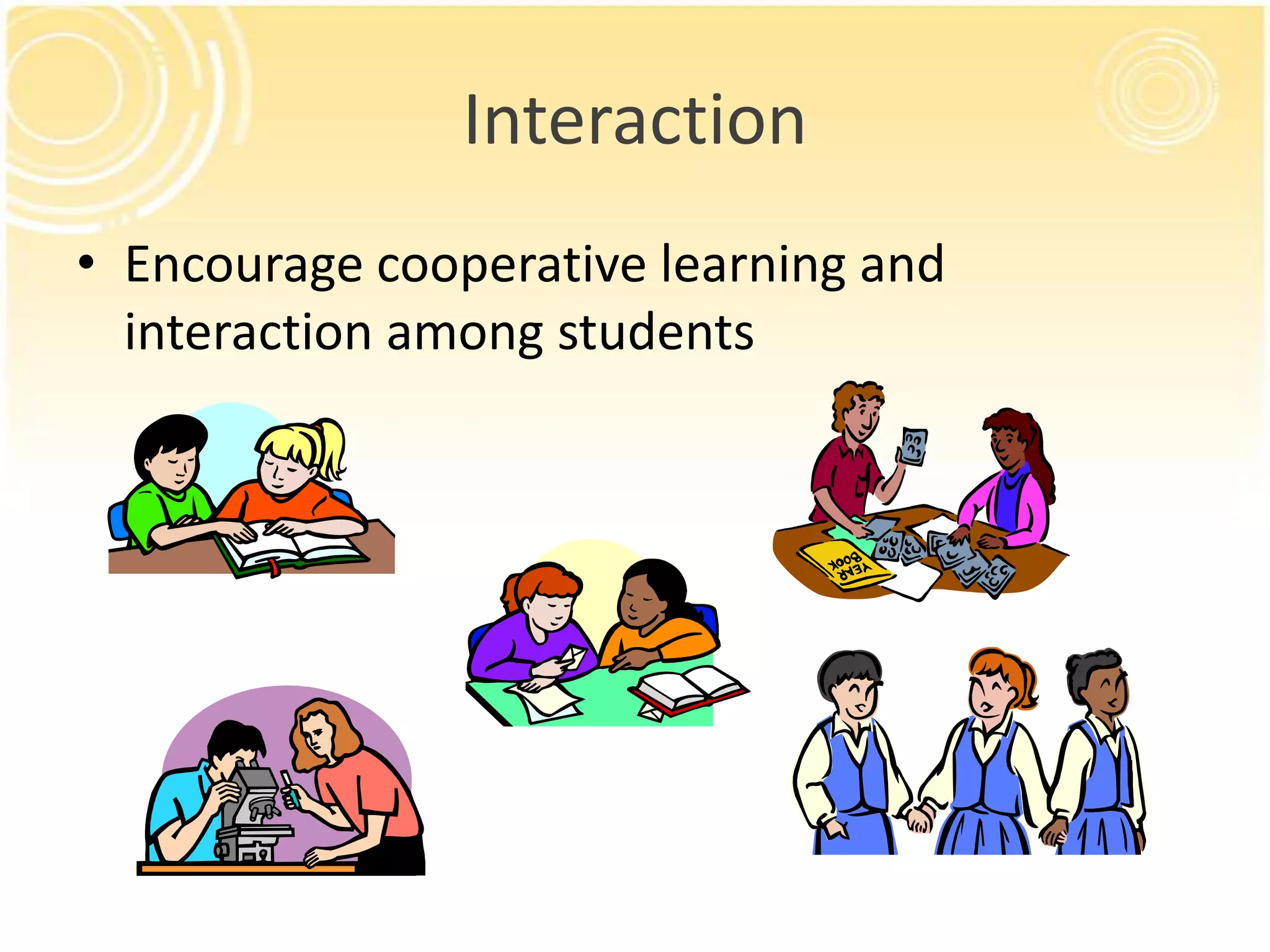
Interaction
• Encourage cooperative learning and
interaction among students
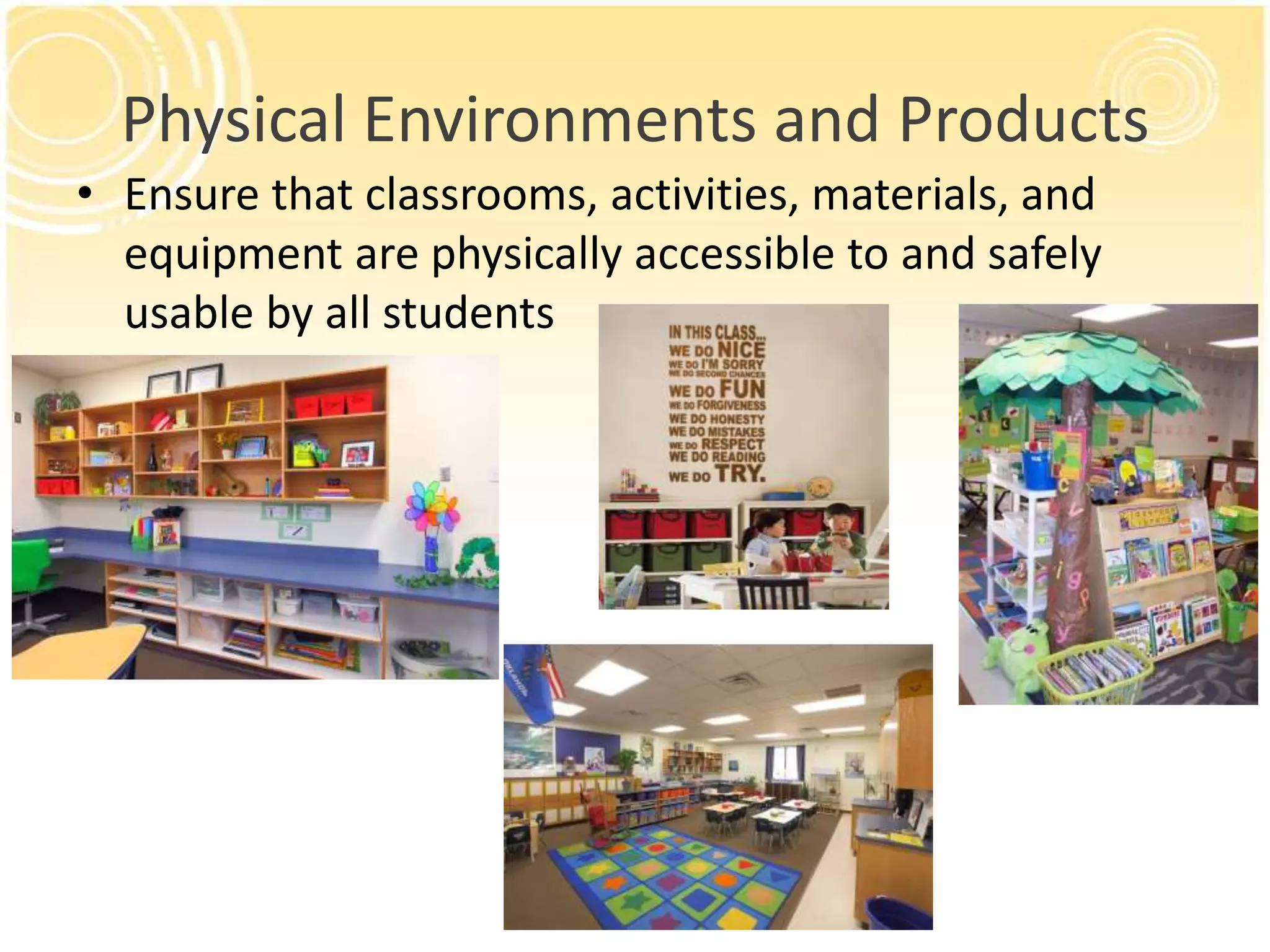
Physical Environments and Products
• Ensure that classrooms, activities, materials, and
equipment are physically accessible to and safely
usable by all students
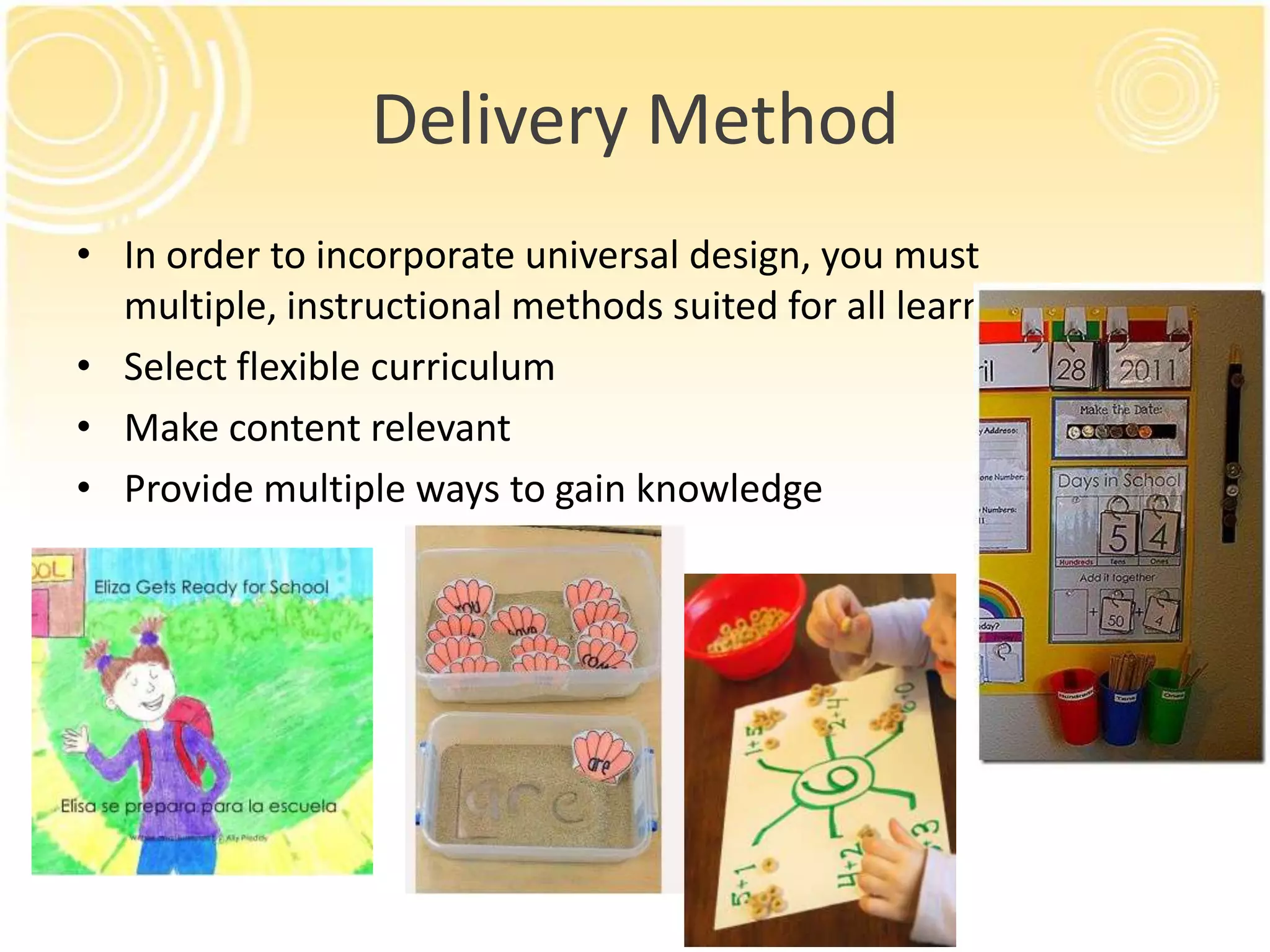
Delivery Method
• In order to incorporate universal design, you must
multiple, instructional methods suited for all learners
• Select flexible curriculum
• Make content relevant
• Provide multiple ways to gain knowledge
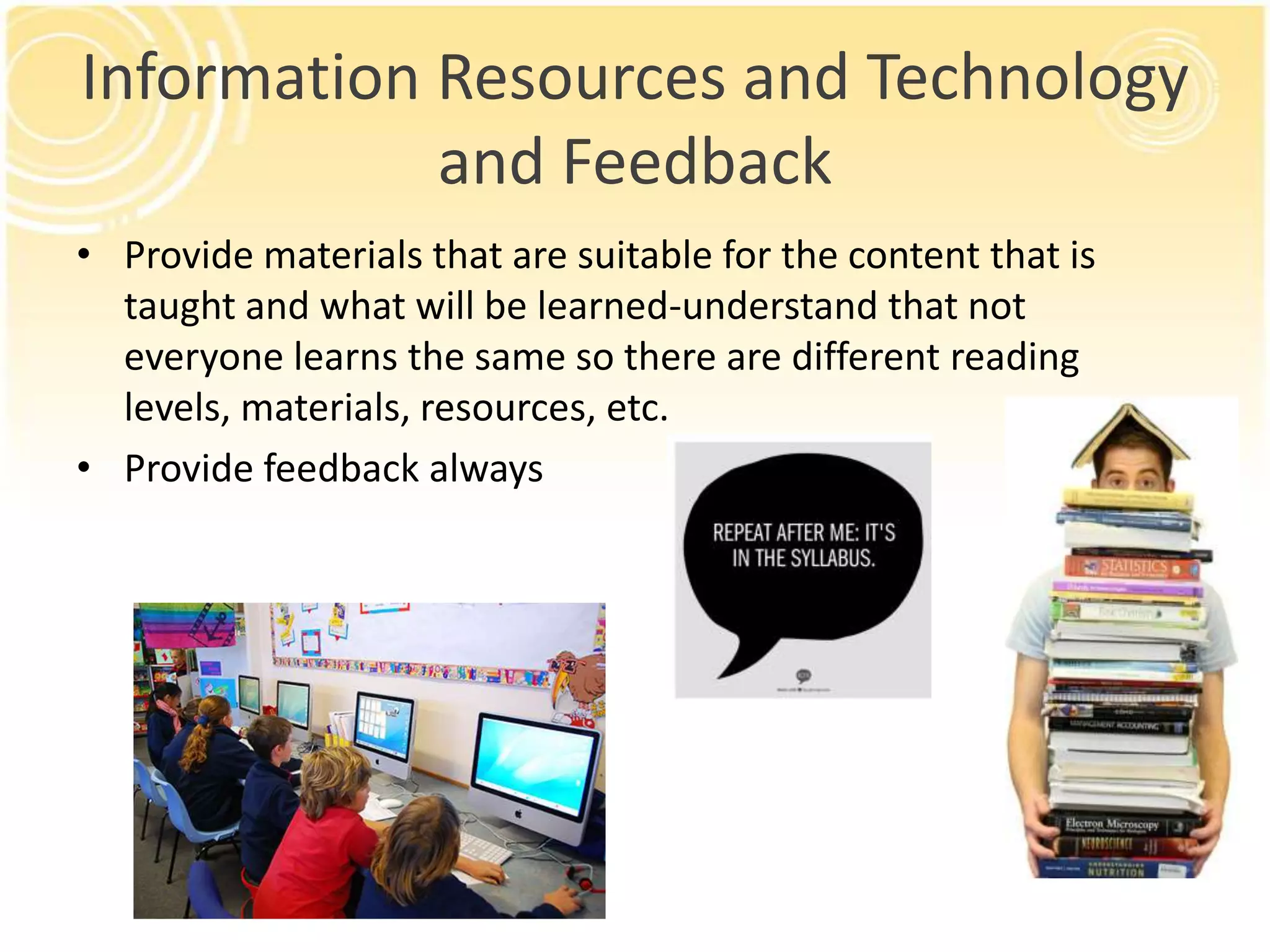
Information Resources and Technology
and Feedback
• Provide materials that are suitable for the content that is
taught and what will be learned-understand that not
everyone learns the same so there are different reading
levels, materials, resources, etc.
• Provide feedback always
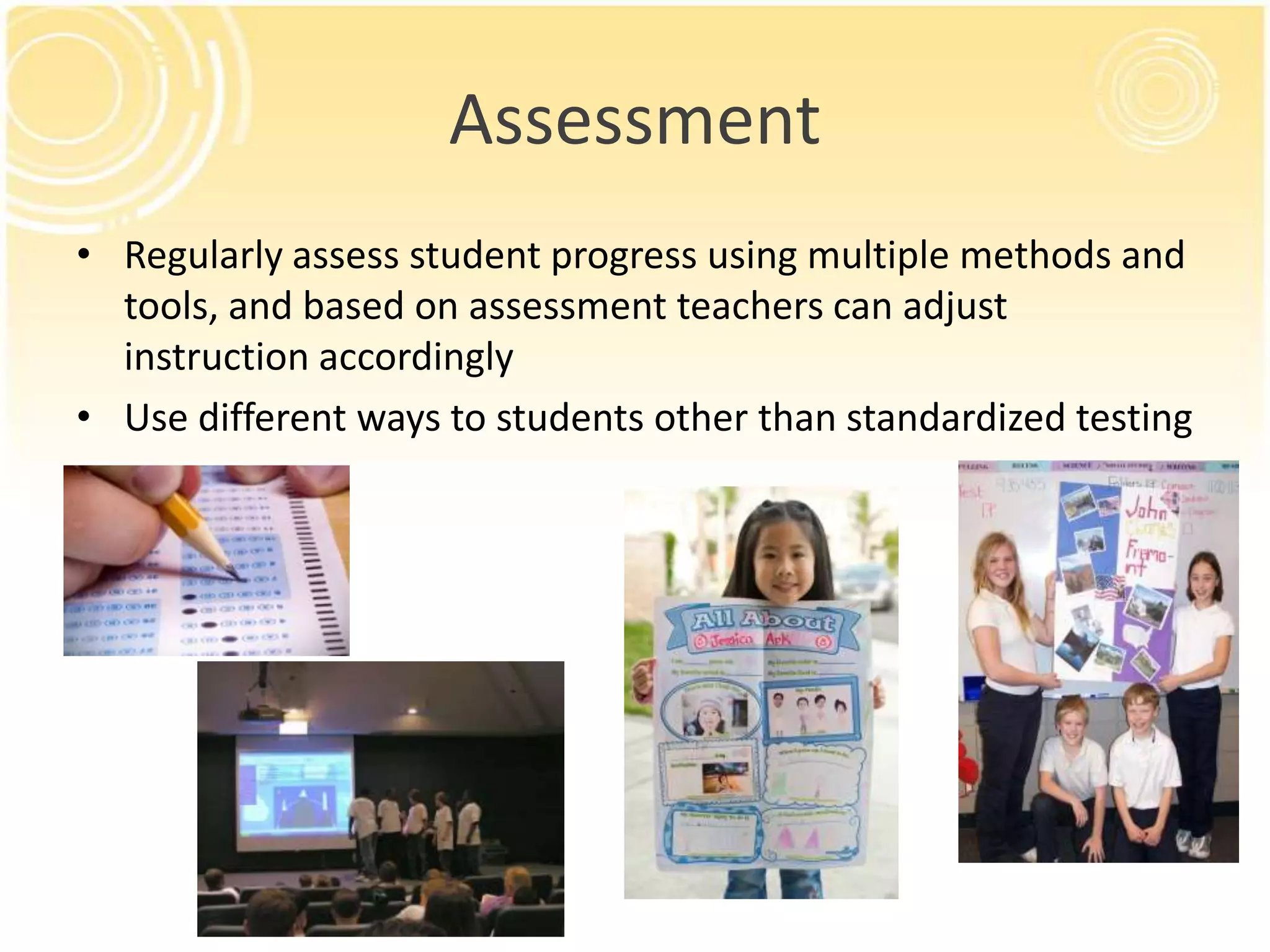
Assessment
• Regularly assess student progress using multiple methods and
tools, and based on assessment teachers can adjust
instruction accordingly
• Use different ways to students other than standardized testing
Accommodation
• Plan for accommodations for students whose
needs are not met by the instructional design
• A great example of this accommodating lesson
plans for an ELL (English Language Learner) so
that they can gain the same kind of learning as
native speakers of the language
All of these are examples of
Intructional Design in Education and
UDI practices
Sources used:
• Youtube
• Pinterest
• http://www.washington.edu/doit/Brochures/Acade
mics/equal_access_udi.html
• http://www.washington.edu/doit/Brochures/Acade
mics/instruction.html
• http://www.washington.edu/doit/Brochures/Progra
ms/ud.html
• http://www.washington.edu/doit/CUDE/inst_sec.ht
ml

Universal design and education

  • 1.
  • 2.
    What is UniversalDesign? A goal and a process that can be applied to the design of any product or environment that can be usable by all people
  • 3.
    The Process ofUniversal Design • The process includes identifying the application, defining the universe, involving the consumers, adopting standards and applying them, planning for accommodations, training and support and evaluation • http://www.youtube.com/watch?v =6rh6WfSm9CE
  • 4.
    What are theprinciples of Universal Design? • The principles include equitable use, flexibility in use, simple and intuitive, perceptible information, tolerance for error, low physical effort, size and space for approach and use
  • 5.
    How can UniversalDesign be used in Education? • Universal design can be used and thought of as Universal Design of Instruction • The goal of UDI is to maximize the learning of students with a wide range of characteristics and ways that they learn by applying UD principles to all aspects of instruction
  • 6.
    Class Climate • Itis important to create a friendly and safe environment for students to learn • Welcome everyone • Be approachable • Motivate all students • Address individual needs
  • 7.
    Interaction • Encourage cooperativelearning and interaction among students
  • 8.
    Physical Environments andProducts • Ensure that classrooms, activities, materials, and equipment are physically accessible to and safely usable by all students
  • 9.
    Delivery Method • Inorder to incorporate universal design, you must multiple, instructional methods suited for all learners • Select flexible curriculum • Make content relevant • Provide multiple ways to gain knowledge
  • 10.
    Information Resources andTechnology and Feedback • Provide materials that are suitable for the content that is taught and what will be learned-understand that not everyone learns the same so there are different reading levels, materials, resources, etc. • Provide feedback always
  • 11.
    Assessment • Regularly assessstudent progress using multiple methods and tools, and based on assessment teachers can adjust instruction accordingly • Use different ways to students other than standardized testing
  • 12.
    Accommodation • Plan foraccommodations for students whose needs are not met by the instructional design • A great example of this accommodating lesson plans for an ELL (English Language Learner) so that they can gain the same kind of learning as native speakers of the language
  • 13.
    All of theseare examples of Intructional Design in Education and UDI practices
  • 14.
    Sources used: • Youtube •Pinterest • http://www.washington.edu/doit/Brochures/Acade mics/equal_access_udi.html • http://www.washington.edu/doit/Brochures/Acade mics/instruction.html • http://www.washington.edu/doit/Brochures/Progra ms/ud.html • http://www.washington.edu/doit/CUDE/inst_sec.ht ml