Teaching Diverse 
Students with 
Assistive 
Technology 
Kristina Scales 
9/30/2014
• By definition, differentiated instruction is, “purposefully 
designing instruction to accommodate the known needs 
of one’s students and providing them with different 
content, strategies, and means of demonstrating the 
desired learning goals” (Cennamo, Ross, and Ertmer, 
2013). 
What is Differentiated 
Instruction?
• By definition, universal design for learning is, “an 
approach to instruction in which teachers remove barriers 
to learning by providing flexibility in materials, methods, 
and assessments” (Cennamo, Ross, and Ertmer, 2013). 
What is Universal Design 
for Learning?
• By definition assistive technology is, “any item, piece of 
equipment, or product system used to maintain, or 
improve functional capabilities of individuals with 
disabilities” (Cennamo, Ross, and Ertmer, 2013). 
What is Assistive 
Technology?
• Any student that has a circumstance that poses a barrier to 
their learning can use assistive technology. Most often, 
these students have an Individualized Education Plan 
(IEP) which legalizes the use of an assistive technology 
to remove the barrier of the learning process. 
Who uses Assistive 
Technology?
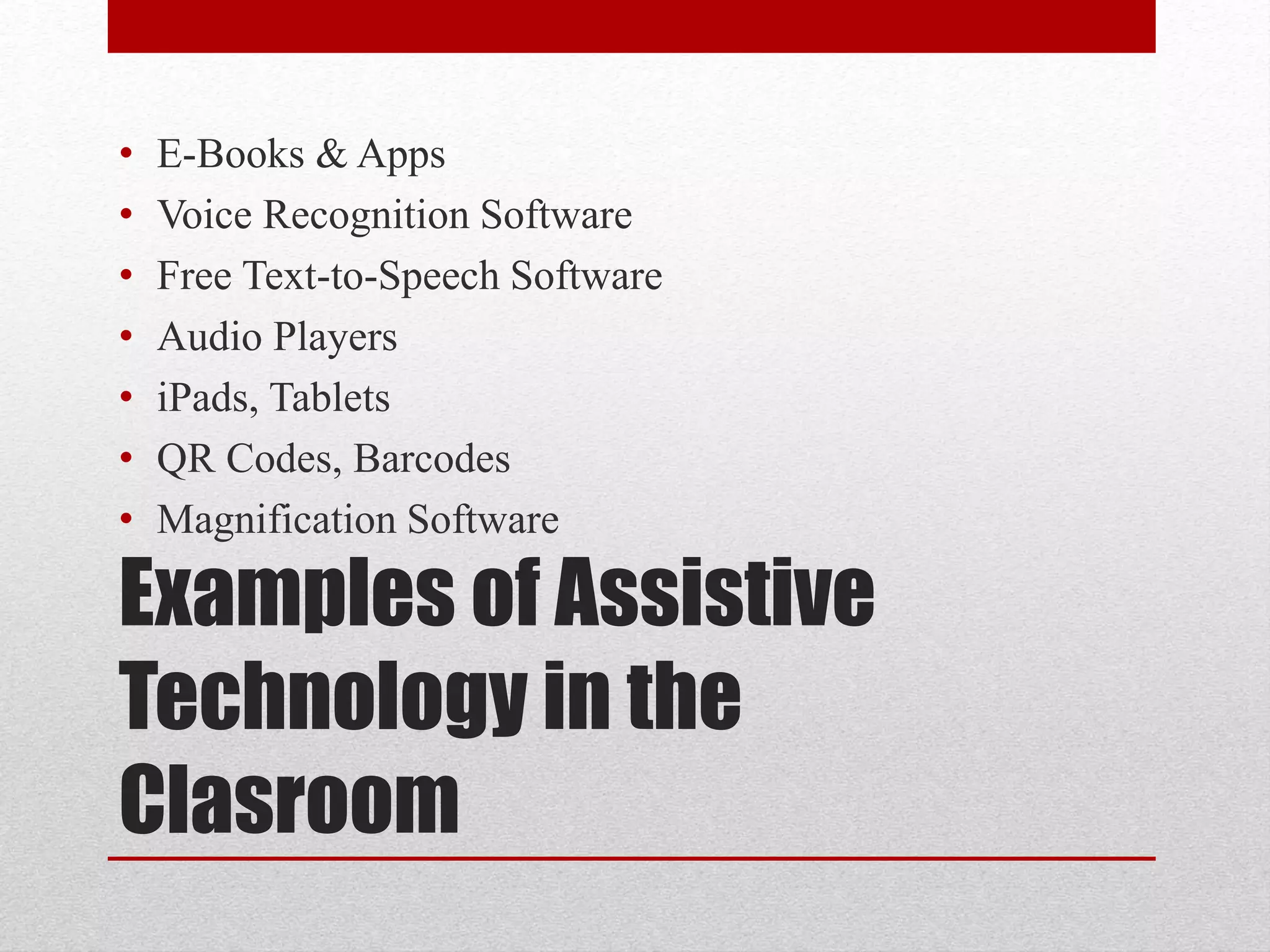
• E-Books & Apps 
• Voice Recognition Software 
• Free Text-to-Speech Software 
• Audio Players 
• iPads, Tablets 
• QR Codes, Barcodes 
• Magnification Software 
Examples of Assistive 
Technology in the 
Clasroom
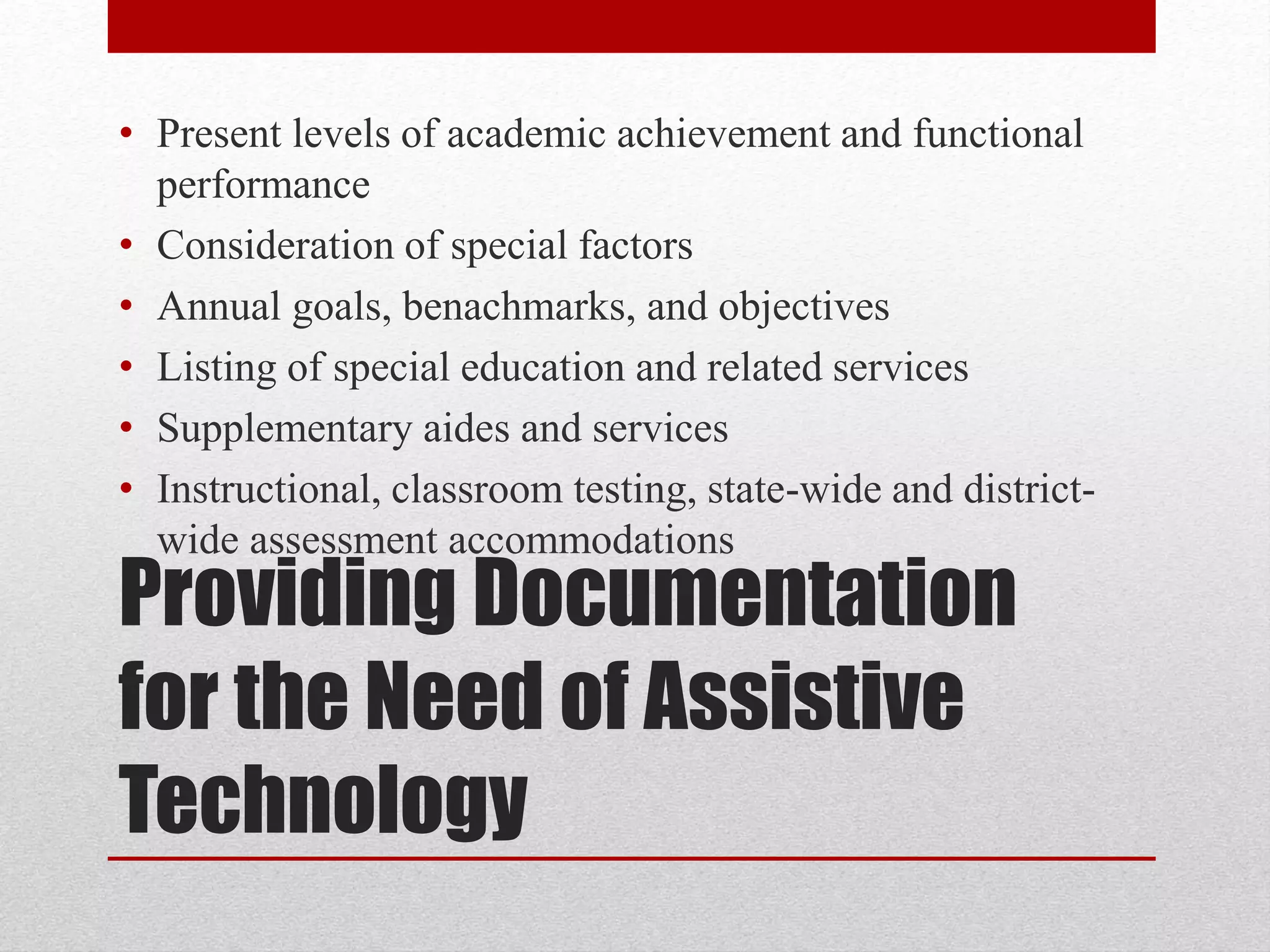
• Present levels of academic achievement and functional 
performance 
• Consideration of special factors 
• Annual goals, benachmarks, and objectives 
• Listing of special education and related services 
• Supplementary aides and services 
• Instructional, classroom testing, state-wide and district-wide 
assessment accommodations 
Providing Documentation 
for the Need of Assistive 
Technology
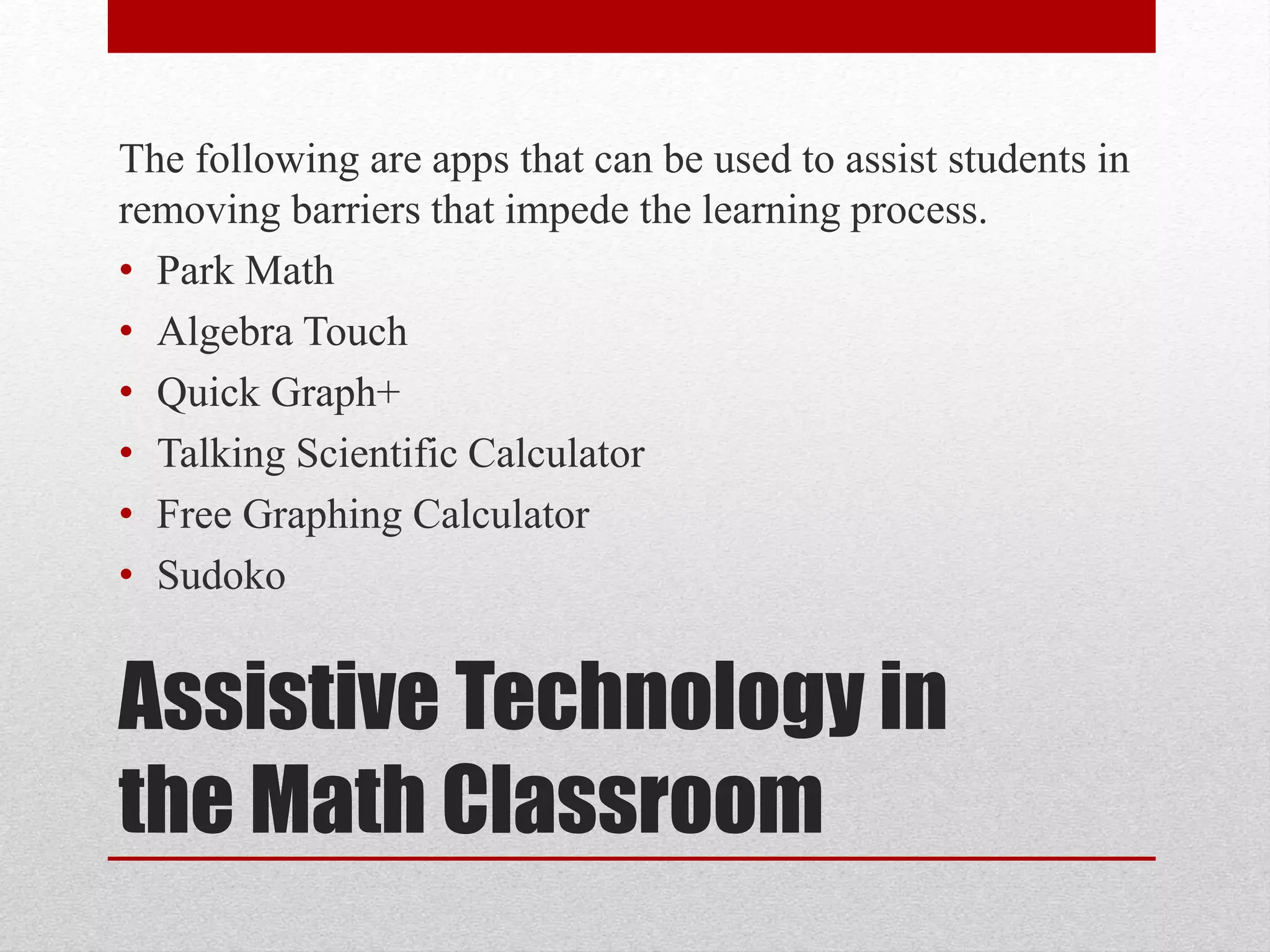
The following are apps that can be used to assist students in 
removing barriers that impede the learning process. 
• Park Math 
• Algebra Touch 
• Quick Graph+ 
• Talking Scientific Calculator 
• Free Graphing Calculator 
• Sudoko 
Assistive Technology in 
the Math Classroom
• http://www.turningpointtechnology.com/Manipulatives/M 
ath.asp 
• http://www.greatschools.org/special-education/assistive-technology/ 
949-math-tools.gs 
• http://www.edb.utexas.edu/atlab/Labinventory/Classroom 
/classroom-ld-math.php 
• http://cehd.gmu.edu/assets/docs/kihd/AIMVA/2011/Math 
AssistiveTechnologyChart.pdf 
Additional Resources for 
Assistive Technology in 
the Math Classroom
• Apps for Students | Dyscalculia & Math Difficulties. (n.d.). National 
Center for Learning Disabilities. Retrieved September 30, 2014, from 
http://www.ncld.org/students-disabilities/assistive-technology-education/ 
apps-students-ld-dyscalculia-math-difficulties 
• AT Examples - Assistive Technology for Education. (n.d.). Assistive 
Technology For Education LLC. Retrieved September 30, 2014, from 
http://assistivetechnologyforeducation.com/examples-of-assistive-technology/ 
• Cennamo, K. S., Ross, J.D., & Ertmer, P.A. (2013). Technology 
integration for meaningful classroom use: A standards-based approach. 
(2nd ed.) Wadsworth,Cengage Learning, Belmont, CA. 
• Documenting Need for Assistive Technology. (n.d.). Documenting Need 
for Assistive Technology. Retrieved September 30, 2014, from 
http://www.gpat.org/Georgia-Project-for-Assistive- 
Technology/Pages/Documenting-Need-for-Assistive-Technology.aspx 
• Ramp Up to Access: Assistive Technology. (n.d.). Ramp Up to Access: 
Assistive Technology. Retrieved September 30, 2014, from 
http://uts.cc.utexas.edu/~wilbur/access/assist 
References

M4 Assistive Technology Activity

  • 1.
    Teaching Diverse Studentswith Assistive Technology Kristina Scales 9/30/2014
  • 2.
    • By definition,differentiated instruction is, “purposefully designing instruction to accommodate the known needs of one’s students and providing them with different content, strategies, and means of demonstrating the desired learning goals” (Cennamo, Ross, and Ertmer, 2013). What is Differentiated Instruction?
  • 3.
    • By definition,universal design for learning is, “an approach to instruction in which teachers remove barriers to learning by providing flexibility in materials, methods, and assessments” (Cennamo, Ross, and Ertmer, 2013). What is Universal Design for Learning?
  • 4.
    • By definitionassistive technology is, “any item, piece of equipment, or product system used to maintain, or improve functional capabilities of individuals with disabilities” (Cennamo, Ross, and Ertmer, 2013). What is Assistive Technology?
  • 5.
    • Any studentthat has a circumstance that poses a barrier to their learning can use assistive technology. Most often, these students have an Individualized Education Plan (IEP) which legalizes the use of an assistive technology to remove the barrier of the learning process. Who uses Assistive Technology?
  • 6.
    • E-Books &Apps • Voice Recognition Software • Free Text-to-Speech Software • Audio Players • iPads, Tablets • QR Codes, Barcodes • Magnification Software Examples of Assistive Technology in the Clasroom
  • 7.
    • Present levelsof academic achievement and functional performance • Consideration of special factors • Annual goals, benachmarks, and objectives • Listing of special education and related services • Supplementary aides and services • Instructional, classroom testing, state-wide and district-wide assessment accommodations Providing Documentation for the Need of Assistive Technology
  • 8.
    The following areapps that can be used to assist students in removing barriers that impede the learning process. • Park Math • Algebra Touch • Quick Graph+ • Talking Scientific Calculator • Free Graphing Calculator • Sudoko Assistive Technology in the Math Classroom
  • 9.
    • http://www.turningpointtechnology.com/Manipulatives/M ath.asp • http://www.greatschools.org/special-education/assistive-technology/ 949-math-tools.gs • http://www.edb.utexas.edu/atlab/Labinventory/Classroom /classroom-ld-math.php • http://cehd.gmu.edu/assets/docs/kihd/AIMVA/2011/Math AssistiveTechnologyChart.pdf Additional Resources for Assistive Technology in the Math Classroom
  • 10.
    • Apps forStudents | Dyscalculia & Math Difficulties. (n.d.). National Center for Learning Disabilities. Retrieved September 30, 2014, from http://www.ncld.org/students-disabilities/assistive-technology-education/ apps-students-ld-dyscalculia-math-difficulties • AT Examples - Assistive Technology for Education. (n.d.). Assistive Technology For Education LLC. Retrieved September 30, 2014, from http://assistivetechnologyforeducation.com/examples-of-assistive-technology/ • Cennamo, K. S., Ross, J.D., & Ertmer, P.A. (2013). Technology integration for meaningful classroom use: A standards-based approach. (2nd ed.) Wadsworth,Cengage Learning, Belmont, CA. • Documenting Need for Assistive Technology. (n.d.). Documenting Need for Assistive Technology. Retrieved September 30, 2014, from http://www.gpat.org/Georgia-Project-for-Assistive- Technology/Pages/Documenting-Need-for-Assistive-Technology.aspx • Ramp Up to Access: Assistive Technology. (n.d.). Ramp Up to Access: Assistive Technology. Retrieved September 30, 2014, from http://uts.cc.utexas.edu/~wilbur/access/assist References