Lesson- 17
 The main objective of UNO is “ to reaffirm
faith in fundamental human rights”.
 UNO established- Commission on Human
rights in 1946
 Leadership given by Eleanor Roosevelt-
Widow of Franklim Roosevelt.
 Objective-
 Define human rights
 10th Dec Human Rights Day.
Human rights is the freedom which should
be available to all persons, irrespective of
their religion, caste, sex, nationality or any
of them.
The Rights are:
• Right to freedom
•Right to equality
•Right to life
•Right to education
 Consists of a preamble.
 30 articles.
 Legally binding human rights agreement:
 The International Covenant on civil and
political rights.
 The international covenant on
economic, social and cultural rights.
 1968- First international conference on
Human Rights in Tehran.
 Emphasized the link between the civil and
political , economic, social and cultural rights.
 1968 declared as the International Year of Human
Rights.
 In June- 1993-Veinna
 Objective- Importance of Right to
Education.
 Programme of action adopted by 171 states.
 Emphasized the rights of the following
categories:
 indigenous workers
 refugees
 stateless persons
 children
 physically and mentally disabled.
 detainees
 Migrant workers.
 Civil rights
 right to life, liberty and security.
 equal before law
 right to recognition
 Freedom of movement and residence
within the borders of one’s state.
 right to freedom of thought and
religion.
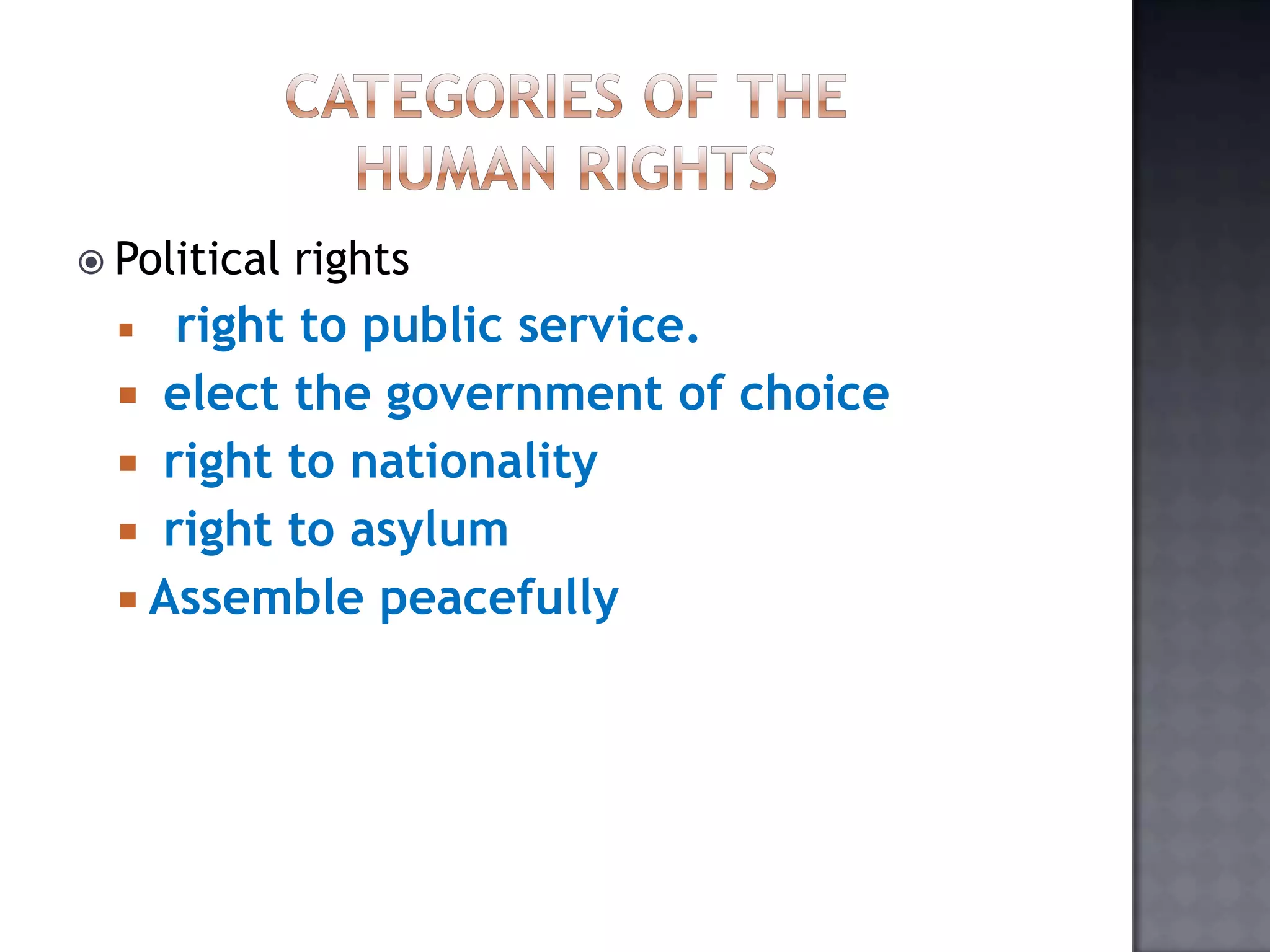
 Political rights
 right to public service.
 elect the government of choice
 right to nationality
 right to asylum
 Assemble peacefully
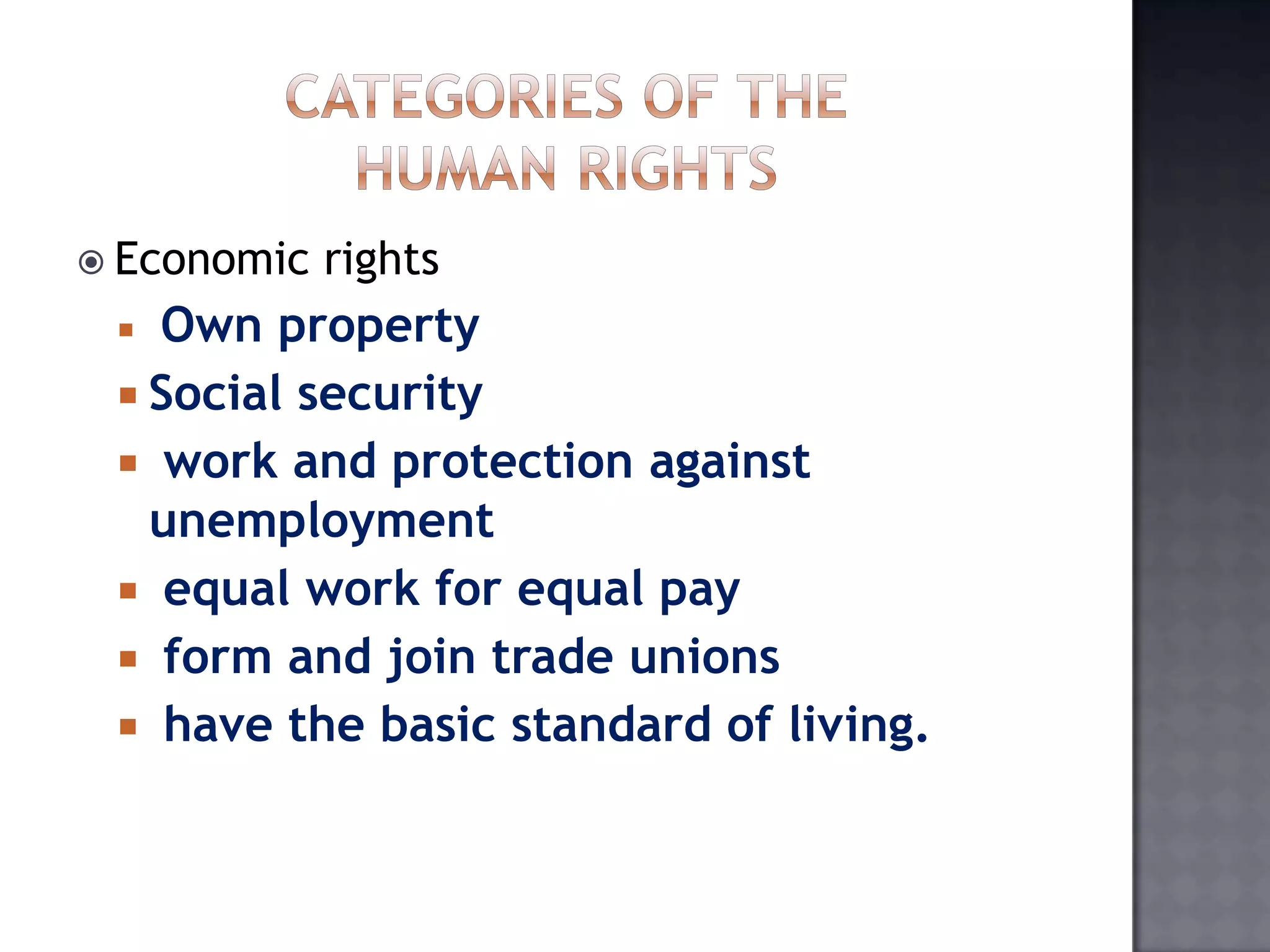
 Economic rights
 Own property
 Social security
 work and protection against
unemployment
 equal work for equal pay
 form and join trade unions
 have the basic standard of living.
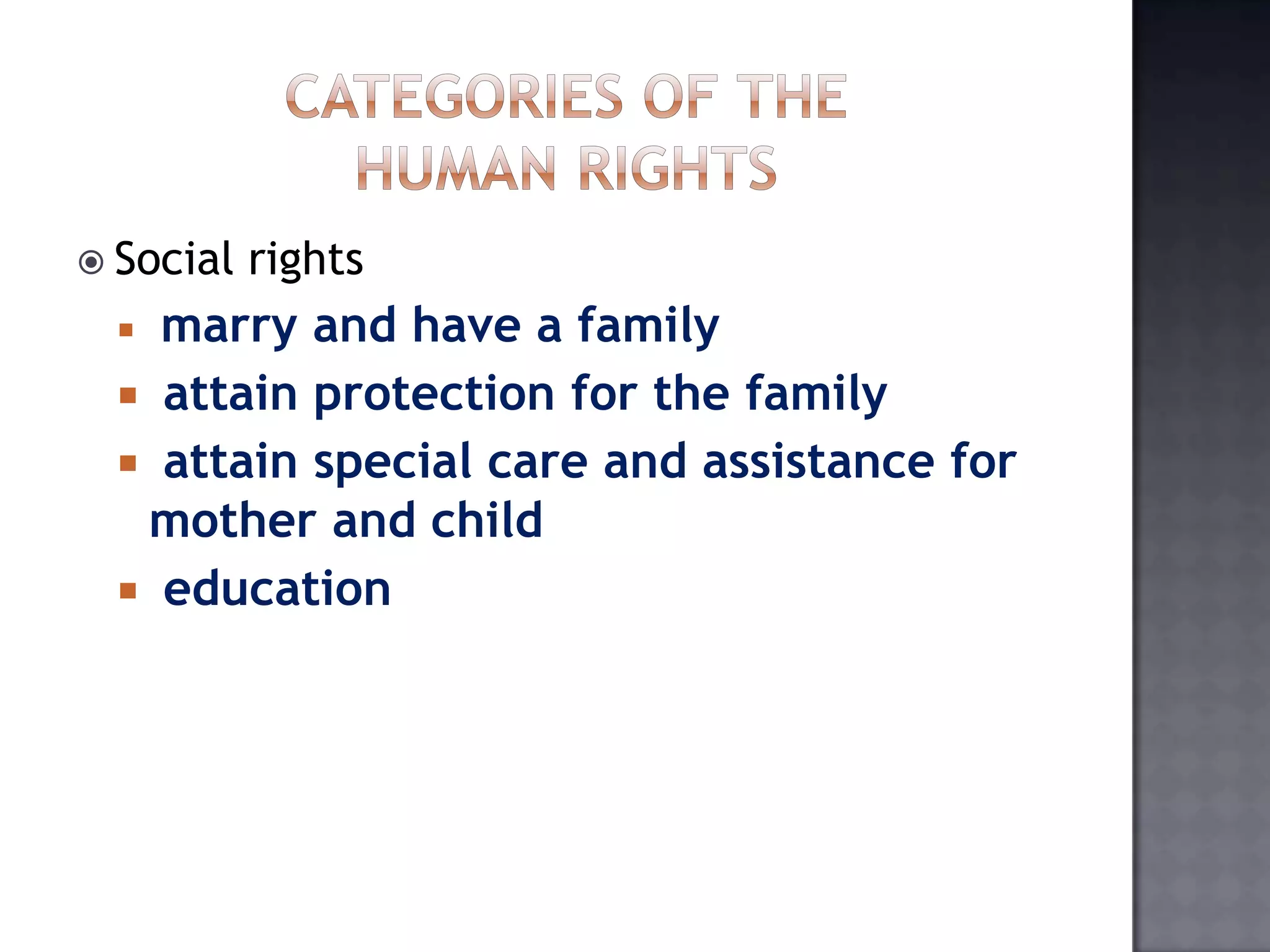
 Social rights
 marry and have a family
 attain protection for the family
 attain special care and assistance for
mother and child
 education
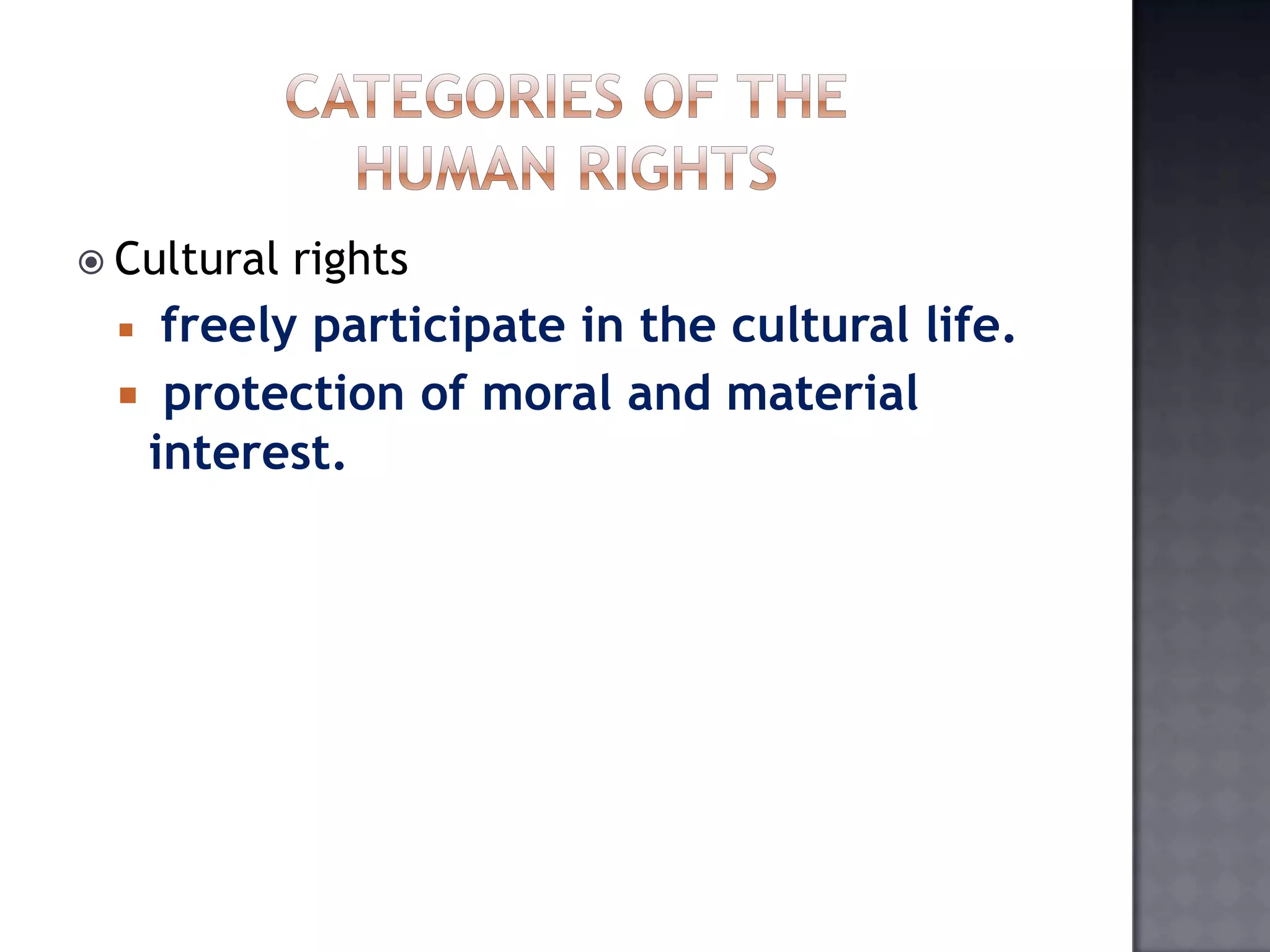
 Cultural rights
 freely participate in the cultural life.
 protection of moral and material
interest.
Article 1- All human beings are
born free and equal in dignity
and rights. They are endowed
with reasons and conscience
and should act towards one
another in a spirit of
brotherhood.
Article 2. Everyone is entitled
to all the rights and freedoms
set forth in this
Declaration, without distinction
of any kind, such as race, color
, gender, language, religion
, political or opinion, national or
social origin, property, birth and
other status
 Born free
 equal dignity
 promote harmony
 state cannot discriminate
 special provision for the advancement of
weaker sections of the society,
 Applies to all countries.
 Declaration of Common Standard for all
Nations.
 The universal nature of Human Rights
 Impact on constitutions.
 Impact on UNO- violation threat to
international peace.
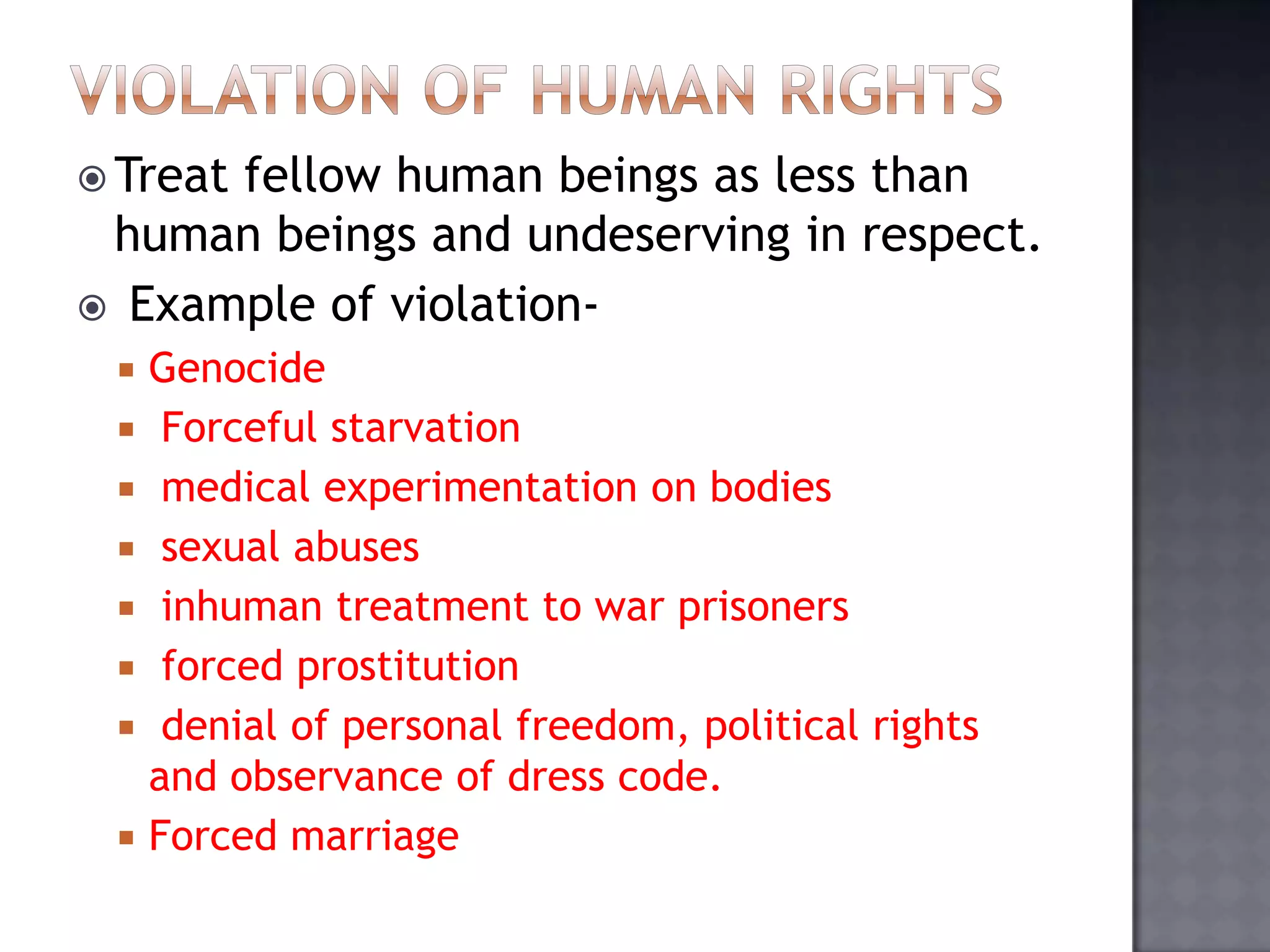
 Treat fellow human beings as less than
human beings and undeserving in respect.
 Example of violation-
 Genocide
 Forceful starvation
 medical experimentation on bodies
 sexual abuses
 inhuman treatment to war prisoners
 forced prostitution
 denial of personal freedom, political rights
and observance of dress code.
 Forced marriage
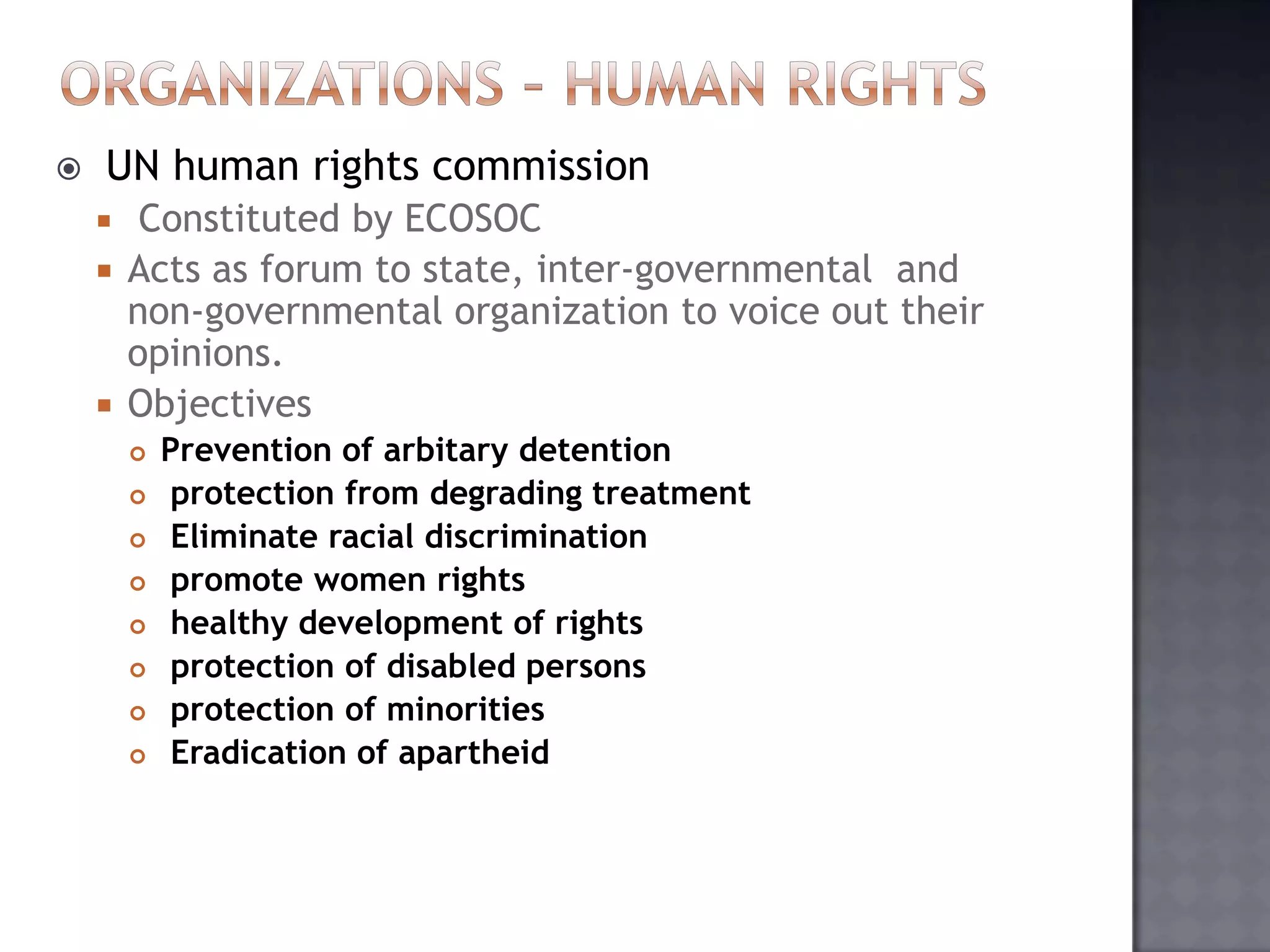
 UN human rights commission
 Constituted by ECOSOC
 Acts as forum to state, inter-governmental and
non-governmental organization to voice out their
opinions.
 Objectives
 Prevention of arbitary detention
 protection from degrading treatment
 Eliminate racial discrimination
 promote women rights
 healthy development of rights
 protection of disabled persons
 protection of minorities
 Eradication of apartheid
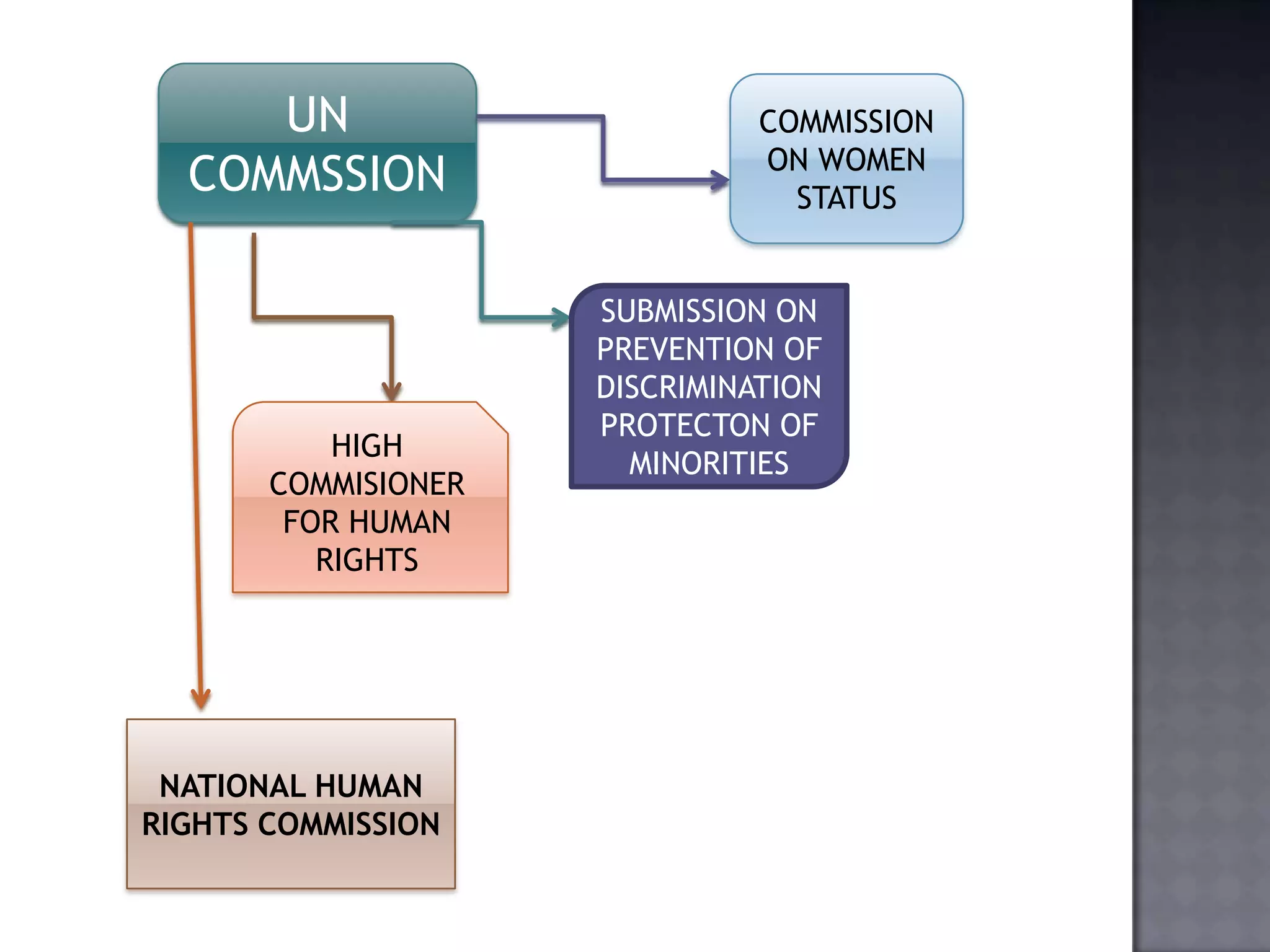
UN
COMMSSION
SUBMISSION ON
PREVENTION OF
DISCRIMINATION
PROTECTON OF
MINORITIES
HIGH
COMMISIONER
FOR HUMAN
RIGHTS
COMMISSION
ON WOMEN
STATUS
NATIONAL HUMAN
RIGHTS COMMISSION
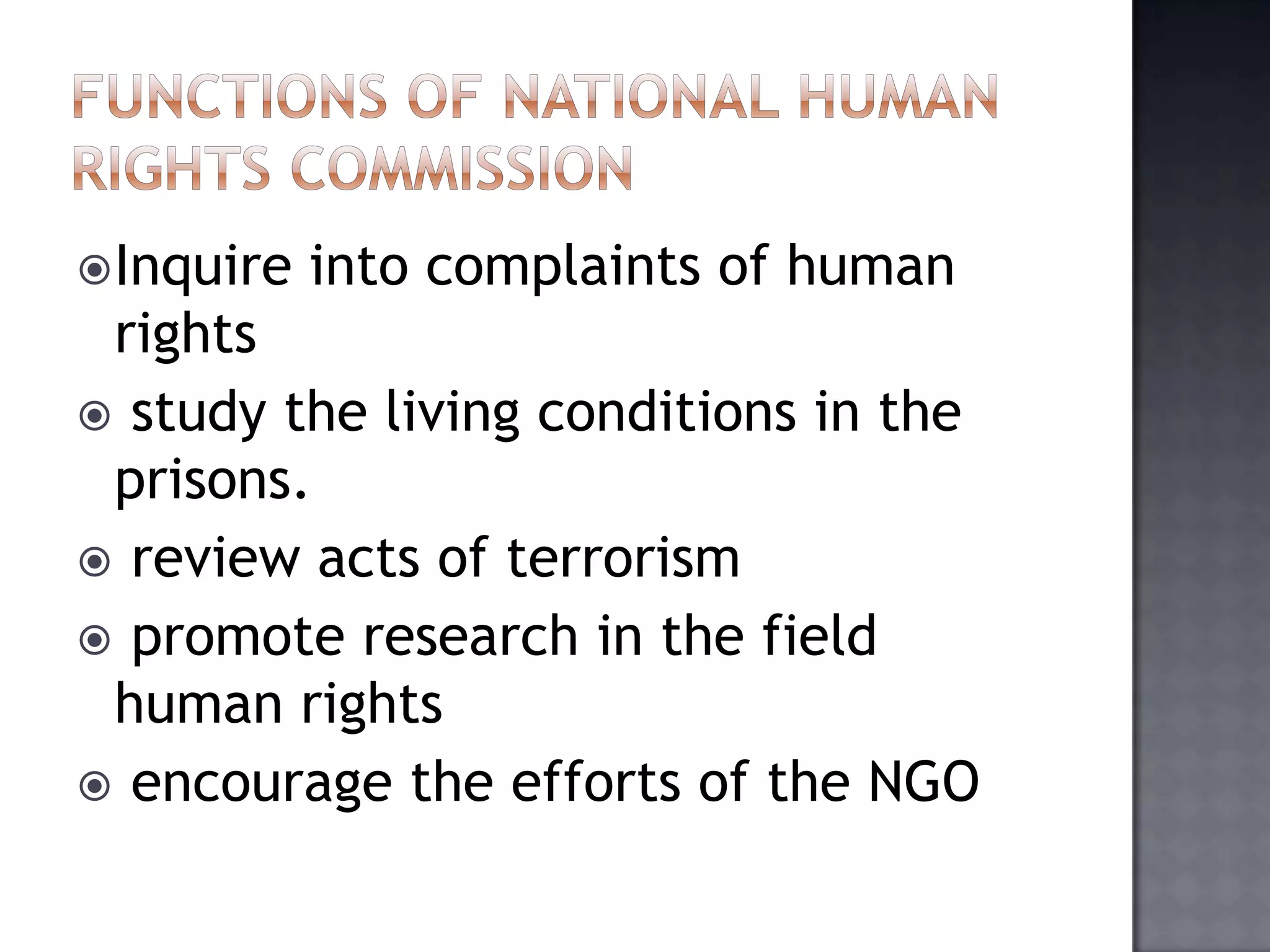
Inquire into complaints of human
rights
 study the living conditions in the
prisons.
 review acts of terrorism
 promote research in the field
human rights
 encourage the efforts of the NGO
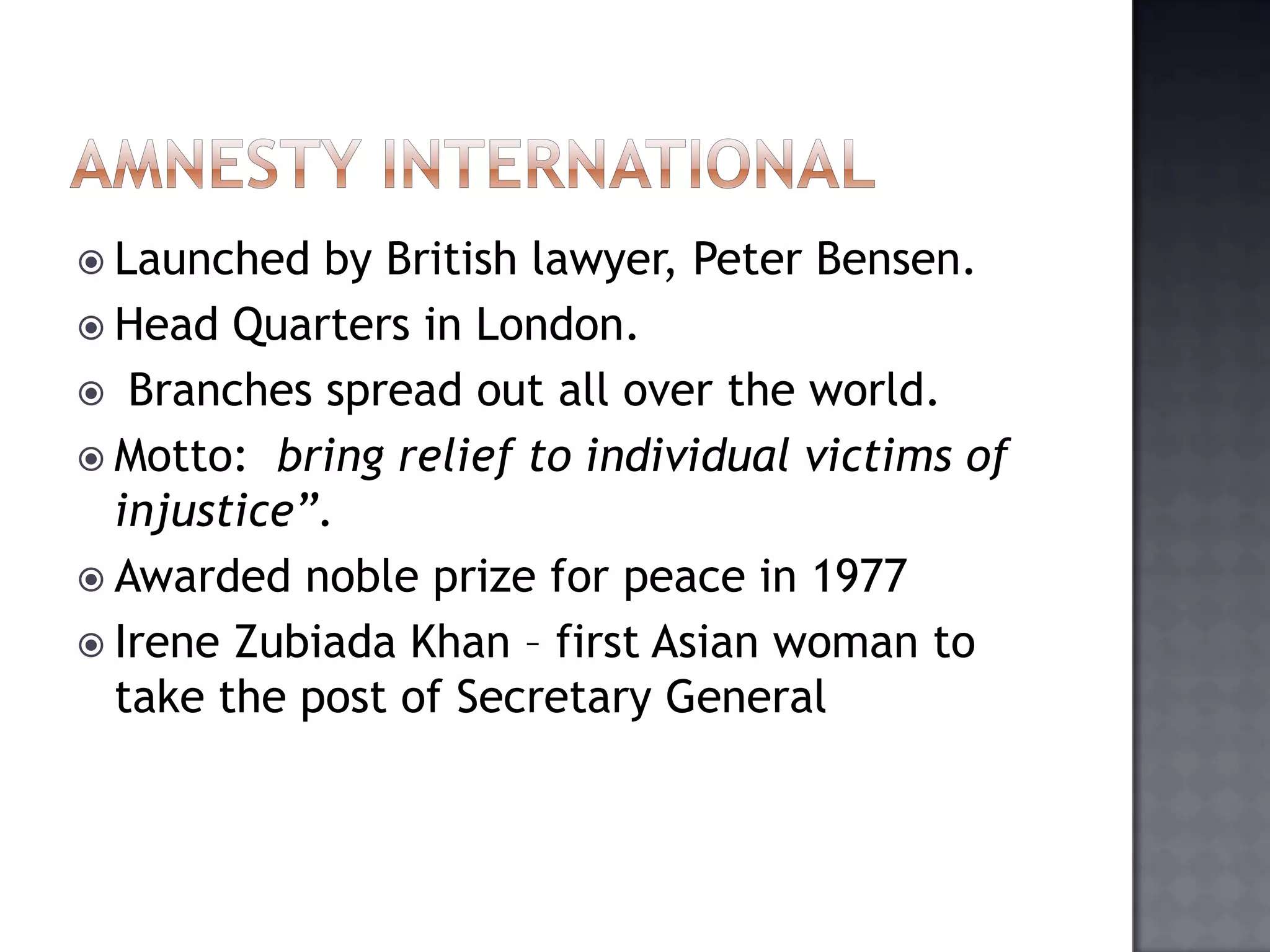
 Launched by British lawyer, Peter Bensen.
 Head Quarters in London.
 Branches spread out all over the world.
 Motto: bring relief to individual victims of
injustice”.
 Awarded noble prize for peace in 1977
 Irene Zubiada Khan – first Asian woman to
take the post of Secretary General
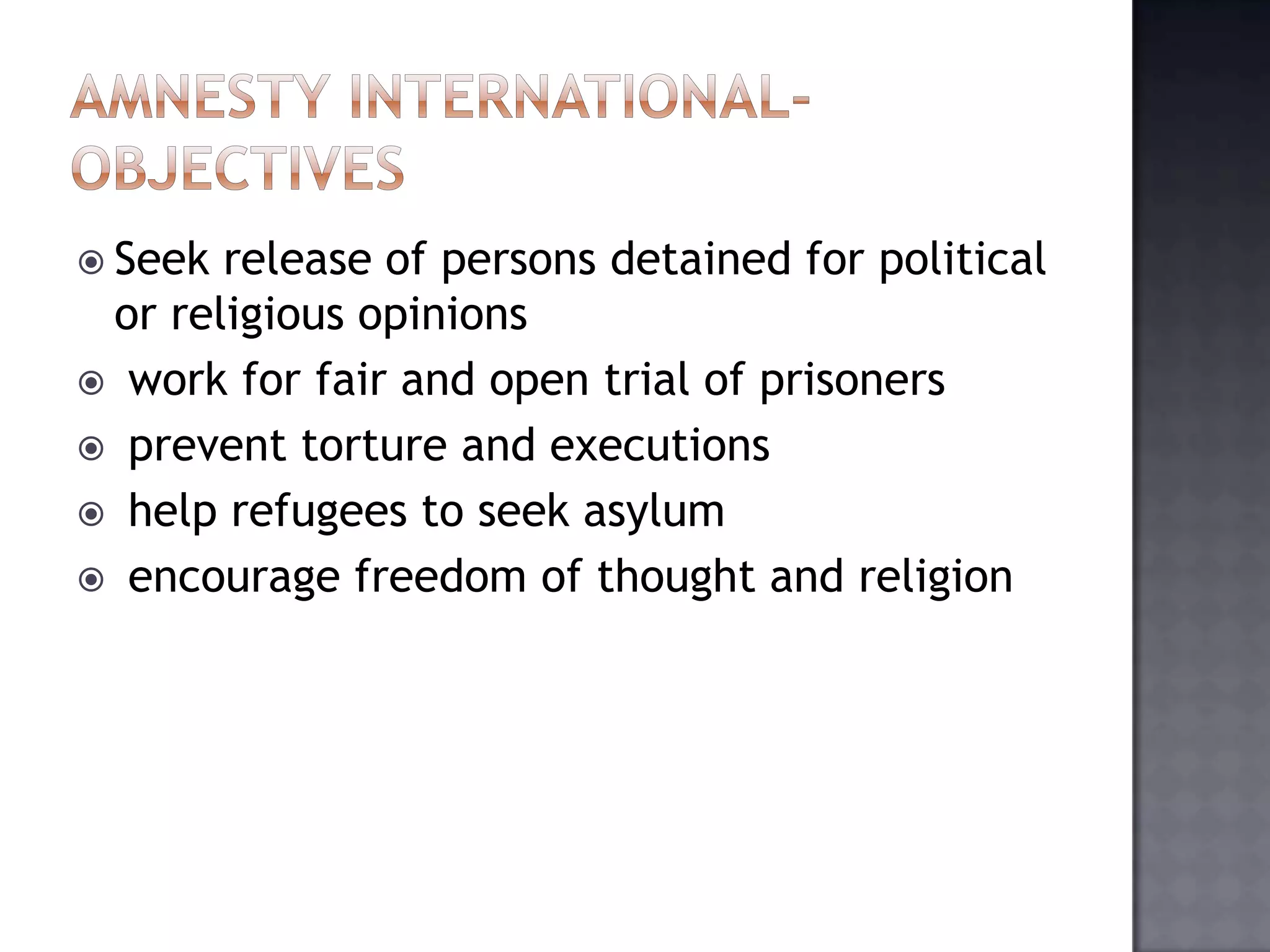
 Seek release of persons detained for political
or religious opinions
 work for fair and open trial of prisoners
 prevent torture and executions
 help refugees to seek asylum
 encourage freedom of thought and religion
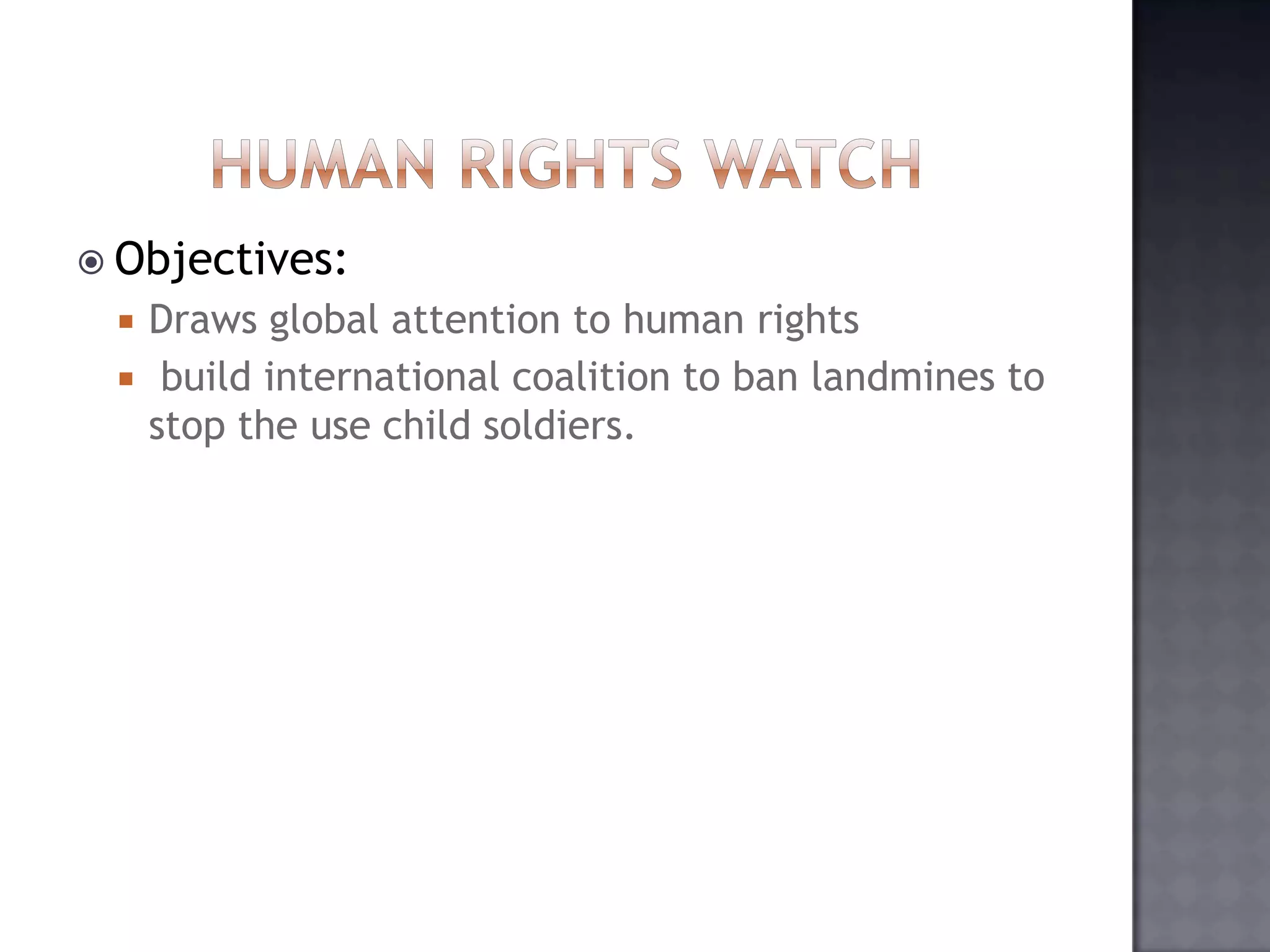
 Objectives:
 Draws global attention to human rights
 build international coalition to ban landmines to
stop the use child soldiers.
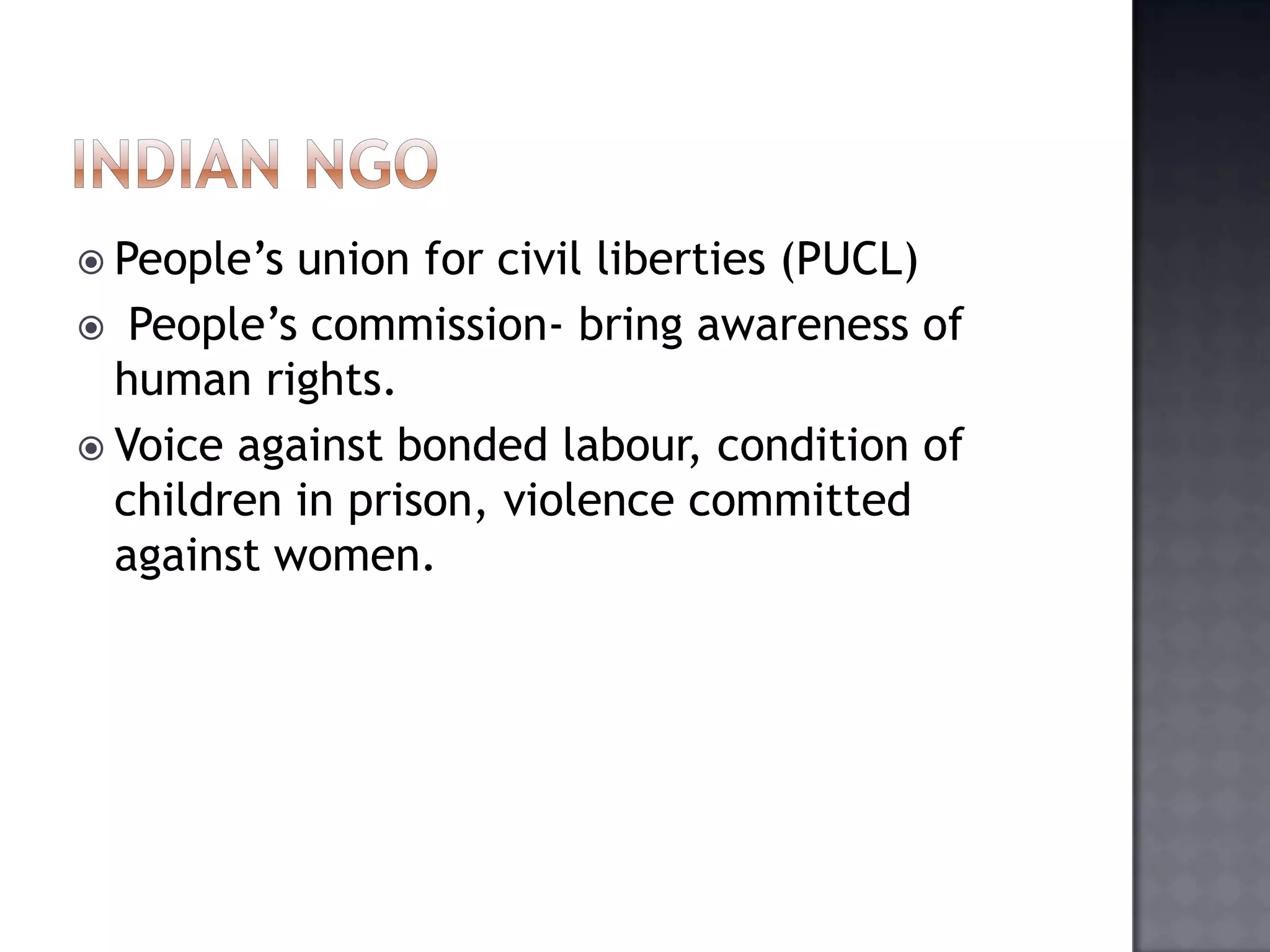
 People’s union for civil liberties (PUCL)
 People’s commission- bring awareness of
human rights.
 Voice against bonded labour, condition of
children in prison, violence committed
against women.

Universal declaration of rights

  • 1.
  • 3.
     The mainobjective of UNO is “ to reaffirm faith in fundamental human rights”.  UNO established- Commission on Human rights in 1946  Leadership given by Eleanor Roosevelt- Widow of Franklim Roosevelt.  Objective-  Define human rights  10th Dec Human Rights Day.
  • 4.
    Human rights isthe freedom which should be available to all persons, irrespective of their religion, caste, sex, nationality or any of them. The Rights are: • Right to freedom •Right to equality •Right to life •Right to education
  • 5.
     Consists ofa preamble.  30 articles.  Legally binding human rights agreement:  The International Covenant on civil and political rights.  The international covenant on economic, social and cultural rights.
  • 6.
     1968- Firstinternational conference on Human Rights in Tehran.  Emphasized the link between the civil and political , economic, social and cultural rights.  1968 declared as the International Year of Human Rights.
  • 7.
     In June-1993-Veinna  Objective- Importance of Right to Education.  Programme of action adopted by 171 states.  Emphasized the rights of the following categories:  indigenous workers  refugees  stateless persons  children  physically and mentally disabled.  detainees  Migrant workers.
  • 8.
     Civil rights right to life, liberty and security.  equal before law  right to recognition  Freedom of movement and residence within the borders of one’s state.  right to freedom of thought and religion.
  • 9.
     Political rights right to public service.  elect the government of choice  right to nationality  right to asylum  Assemble peacefully
  • 10.
     Economic rights Own property  Social security  work and protection against unemployment  equal work for equal pay  form and join trade unions  have the basic standard of living.
  • 11.
     Social rights marry and have a family  attain protection for the family  attain special care and assistance for mother and child  education
  • 12.
     Cultural rights freely participate in the cultural life.  protection of moral and material interest.
  • 13.
    Article 1- Allhuman beings are born free and equal in dignity and rights. They are endowed with reasons and conscience and should act towards one another in a spirit of brotherhood.
  • 14.
    Article 2. Everyoneis entitled to all the rights and freedoms set forth in this Declaration, without distinction of any kind, such as race, color , gender, language, religion , political or opinion, national or social origin, property, birth and other status
  • 15.
     Born free equal dignity  promote harmony  state cannot discriminate  special provision for the advancement of weaker sections of the society,  Applies to all countries.
  • 16.
     Declaration ofCommon Standard for all Nations.  The universal nature of Human Rights  Impact on constitutions.  Impact on UNO- violation threat to international peace.
  • 17.
     Treat fellowhuman beings as less than human beings and undeserving in respect.  Example of violation-  Genocide  Forceful starvation  medical experimentation on bodies  sexual abuses  inhuman treatment to war prisoners  forced prostitution  denial of personal freedom, political rights and observance of dress code.  Forced marriage
  • 18.
     UN humanrights commission  Constituted by ECOSOC  Acts as forum to state, inter-governmental and non-governmental organization to voice out their opinions.  Objectives  Prevention of arbitary detention  protection from degrading treatment  Eliminate racial discrimination  promote women rights  healthy development of rights  protection of disabled persons  protection of minorities  Eradication of apartheid
  • 19.
    UN COMMSSION SUBMISSION ON PREVENTION OF DISCRIMINATION PROTECTONOF MINORITIES HIGH COMMISIONER FOR HUMAN RIGHTS COMMISSION ON WOMEN STATUS NATIONAL HUMAN RIGHTS COMMISSION
  • 20.
    Inquire into complaintsof human rights  study the living conditions in the prisons.  review acts of terrorism  promote research in the field human rights  encourage the efforts of the NGO
  • 21.
     Launched byBritish lawyer, Peter Bensen.  Head Quarters in London.  Branches spread out all over the world.  Motto: bring relief to individual victims of injustice”.  Awarded noble prize for peace in 1977  Irene Zubiada Khan – first Asian woman to take the post of Secretary General
  • 22.
     Seek releaseof persons detained for political or religious opinions  work for fair and open trial of prisoners  prevent torture and executions  help refugees to seek asylum  encourage freedom of thought and religion
  • 23.
     Objectives:  Drawsglobal attention to human rights  build international coalition to ban landmines to stop the use child soldiers.
  • 24.
     People’s unionfor civil liberties (PUCL)  People’s commission- bring awareness of human rights.  Voice against bonded labour, condition of children in prison, violence committed against women.