




Presented By: A Daisy Evangeline
Group Work
Each day, we interact with groups, in
one form or in another.
we are born into and dwell in a group
(family)
we learn in groups (classrooms),
we work in group (office, project teams),
we interact with friends, and
we also spend much in leisure groups.
We learn, work, and play in groups.
Introduction
The Oxford English Dictionary
defines group as “a number of
persons or things regarded as
forming a unit, on account of any
kind of mutual or common relation,
or classified together on account of
a common degree of similarity.”
DEFINITIONS
The sociological perspective
A group can be defined as
two or more humans that
interact with one another,
accept expectations and
obligations as members of
the group, as well as share a
common identity.
DEFINITIONS
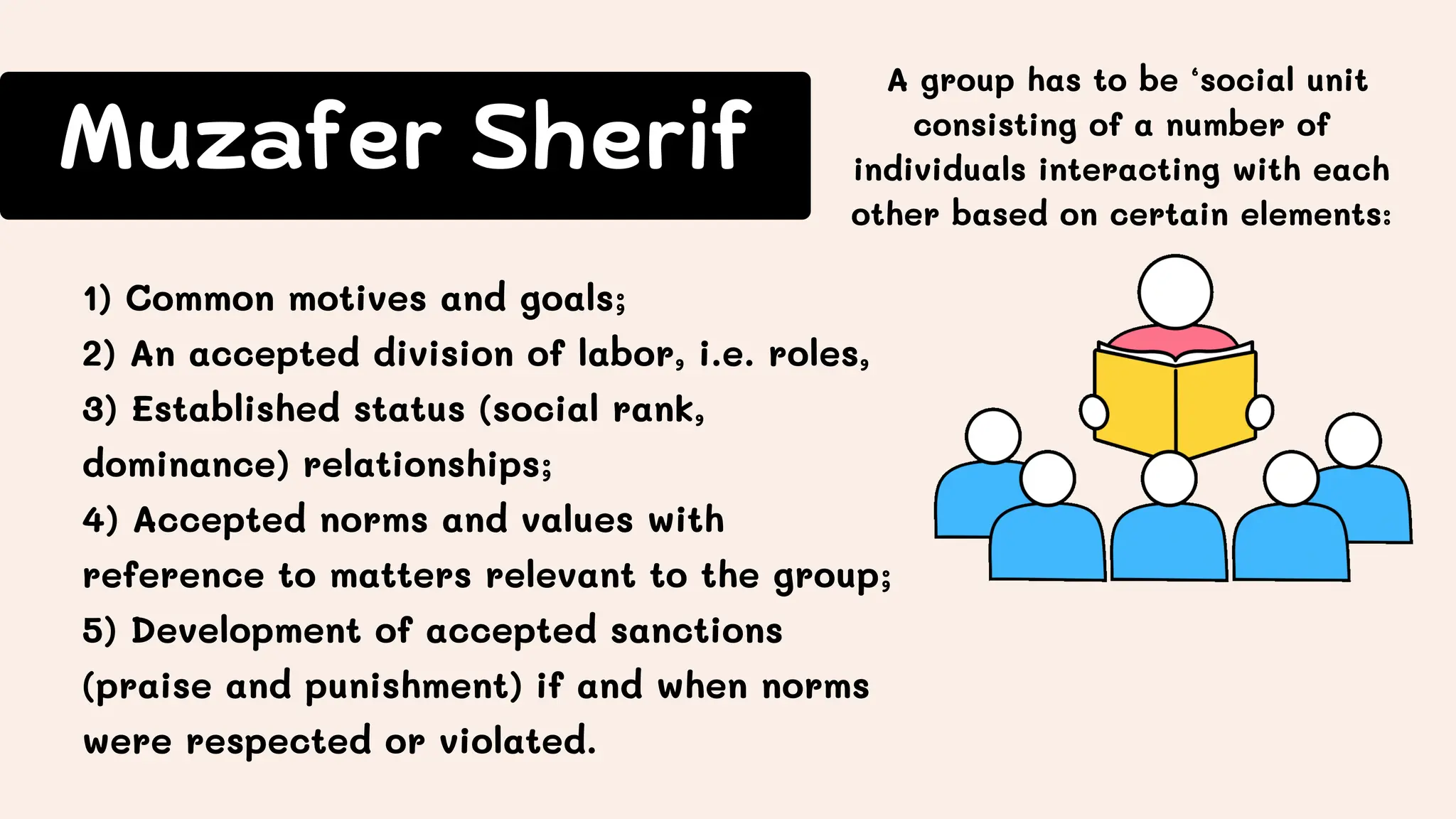
A group has to be ‘social unit
consisting of a number of
individuals interacting with each
other based on certain elements:
1) Common motives and goals;
2) An accepted division of labor, i.e. roles,
3) Established status (social rank,
dominance) relationships;
4) Accepted norms and values with
reference to matters relevant to the group;
5) Development of accepted sanctions
(praise and punishment) if and when norms
were respected or violated.
Muzafer Sherif
Criteria
to call a
group,
Group
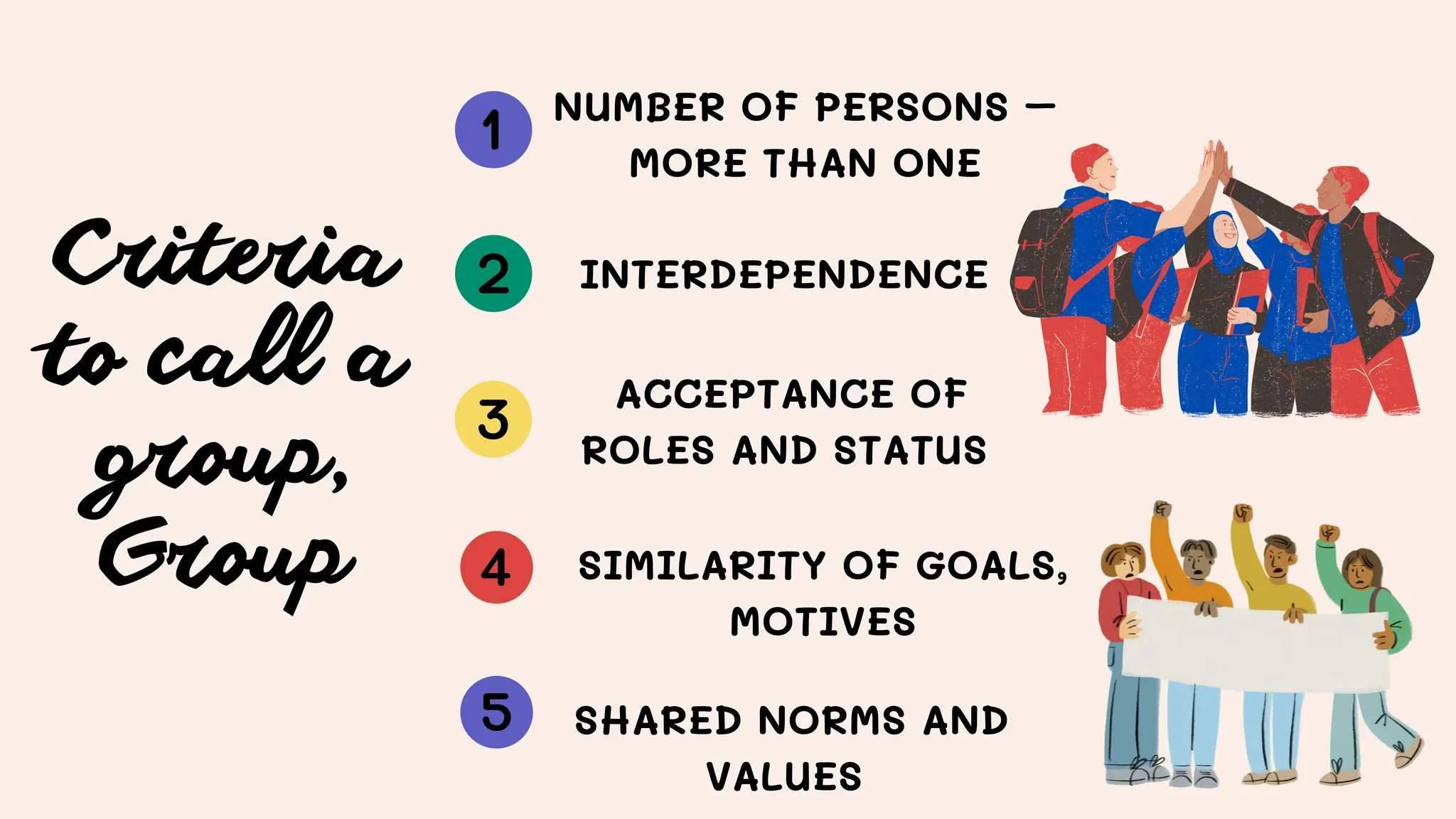
NUMBER OF PERSONS –
MORE THAN ONE
ACCEPTANCE OF
ROLES AND STATUS
SHARED NORMS AND
VALUES
SIMILARITY OF GOALS,
MOTIVES
INTERDEPENDENCE
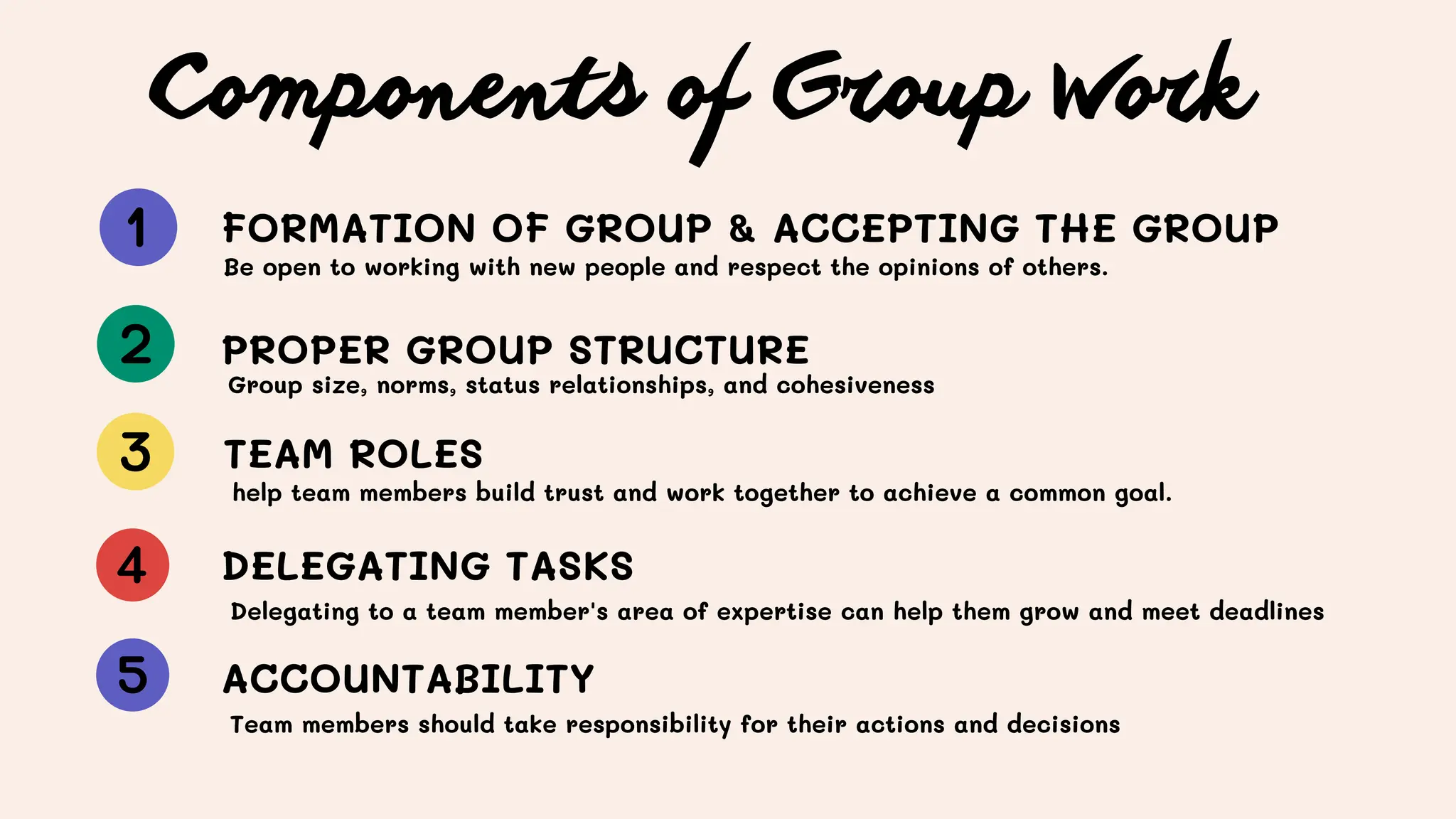
Components of Group Work
FORMATION OF GROUP & ACCEPTING THE GROUP
TEAM ROLES
ACCOUNTABILITY
DELEGATING TASKS
PROPER GROUP STRUCTURE
Group size, norms, status relationships, and cohesiveness
help team members build trust and work together to achieve a common goal.
Delegating to a team member's area of expertise can help them grow and meet deadlines
Team members should take responsibility for their actions and decisions
Be open to working with new people and respect the opinions of others.
PRINCIPLES
OF
GROUP
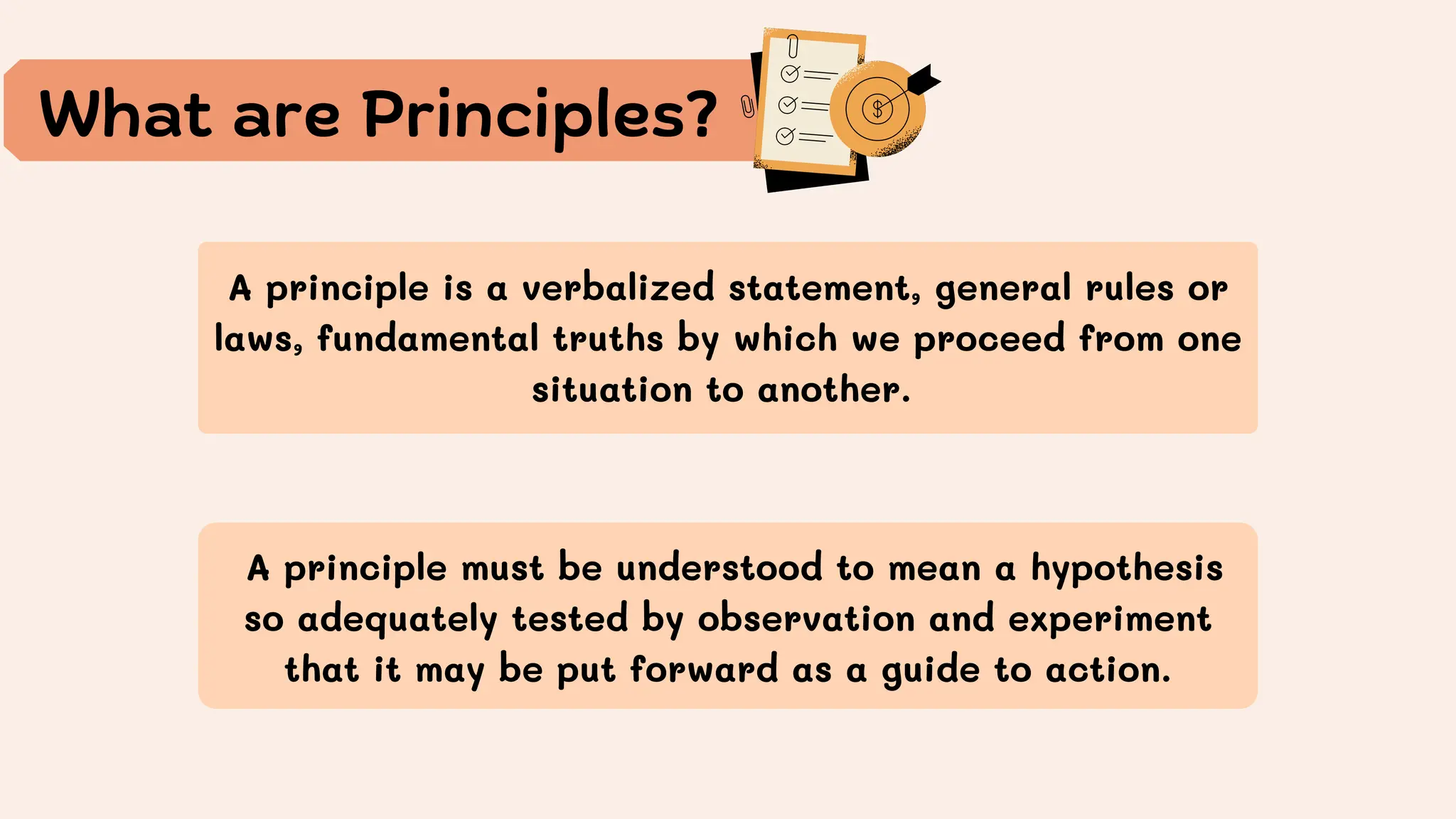
A principle must be understood to mean a hypothesis
so adequately tested by observation and experiment
that it may be put forward as a guide to action.
What are Principles?
A principle is a verbalized statement, general rules or
laws, fundamental truths by which we proceed from one
situation to another.
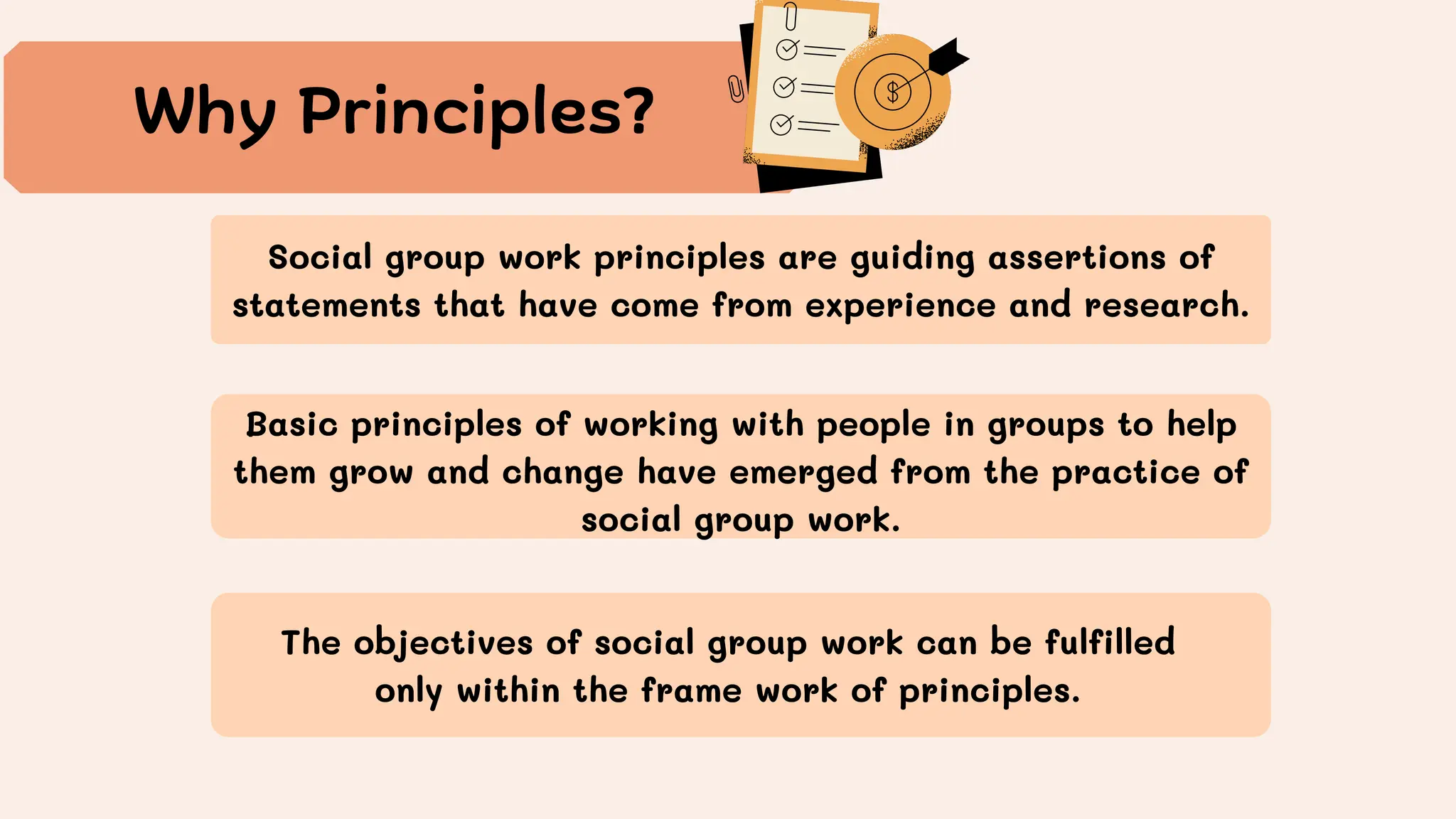
Basic principles of working with people in groups to help
them grow and change have emerged from the practice of
social group work.
Why Principles?
Social group work principles are guiding assertions of
statements that have come from experience and research.
The objectives of social group work can be fulfilled
only within the frame work of principles.
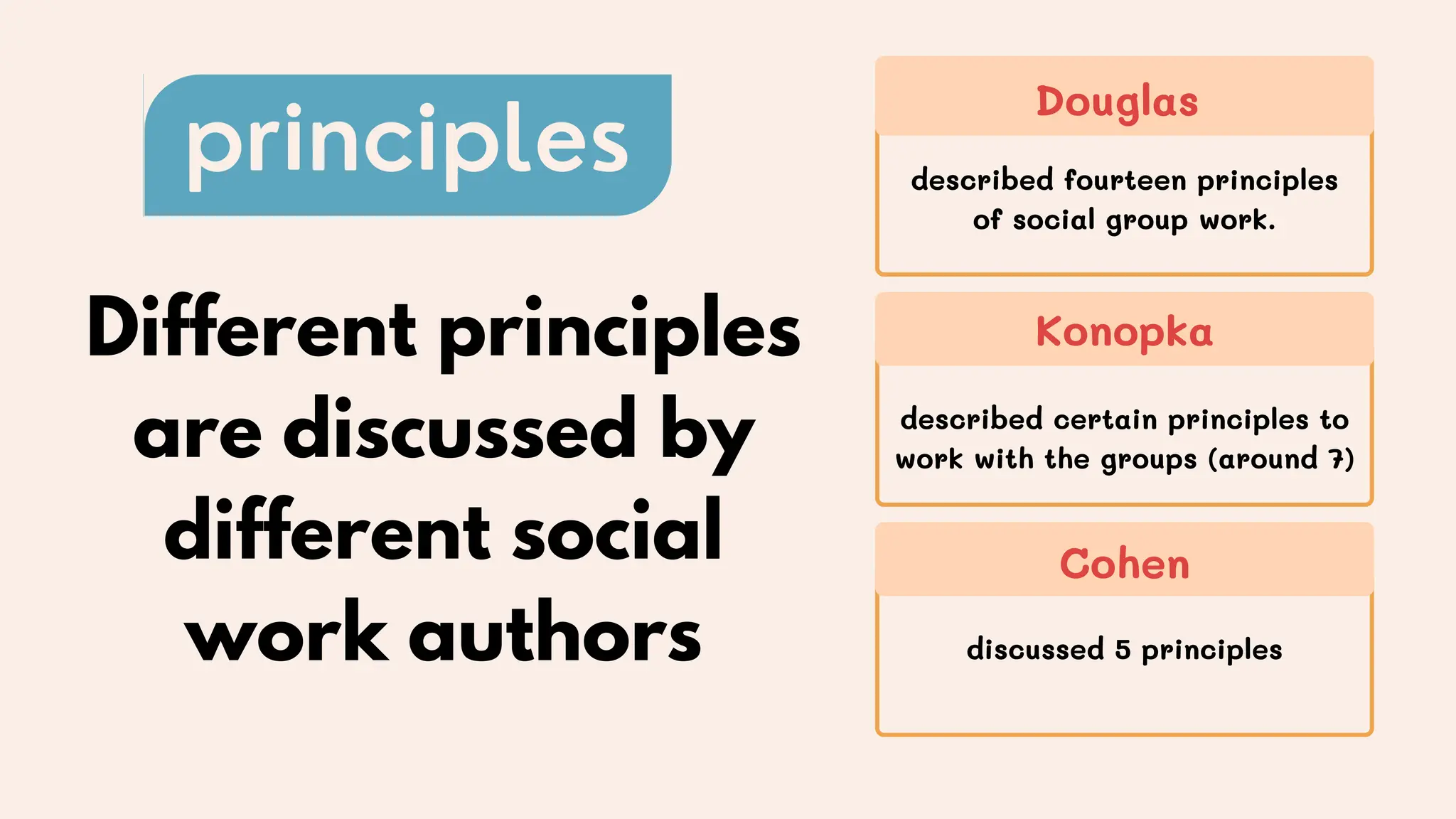
Different principles
are discussed by
different social
work authors
described fourteen principles
of social group work.
Douglas
described certain principles to
work with the groups (around 7)
Konopka
discussed 5 principles
Cohen
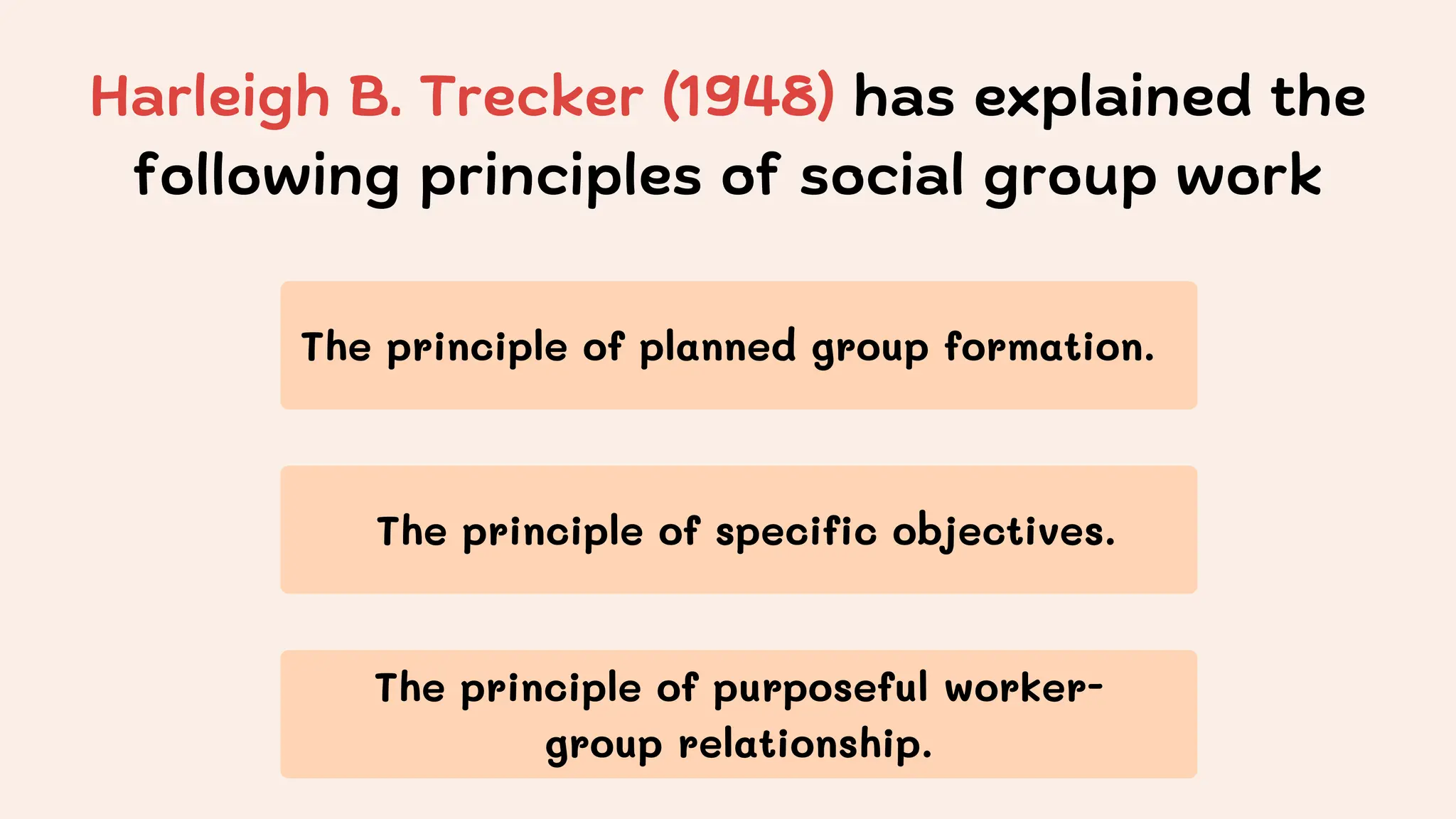
Harleigh B. Trecker (1948) has explained the
following principles of social group work
The principle of planned group formation.
The principle of specific objectives.
The principle of purposeful worker-
group relationship.
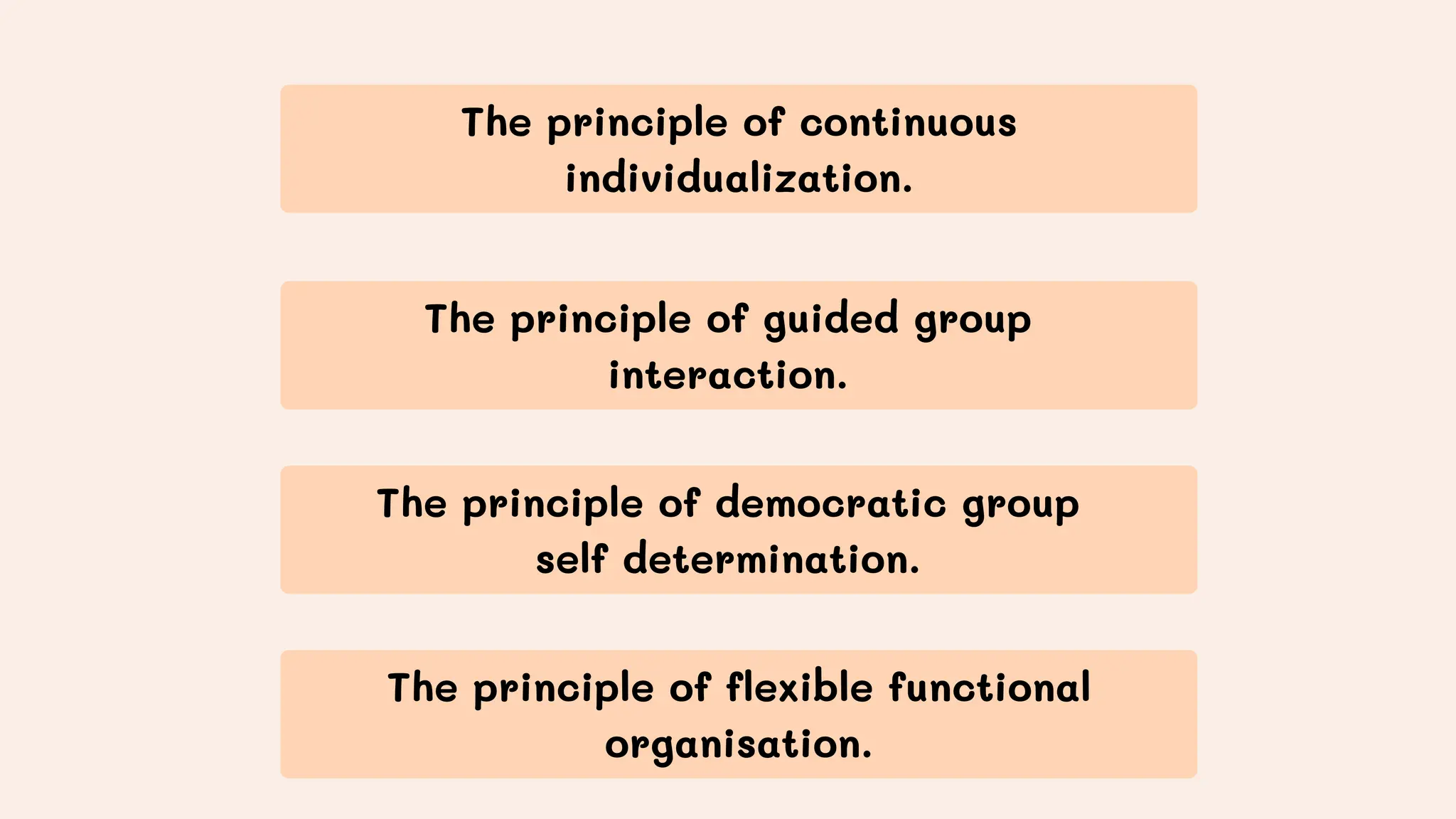
The principle of guided group
interaction.
The principle of democratic group
self determination.
The principle of flexible functional
organisation.
The principle of continuous
individualization.
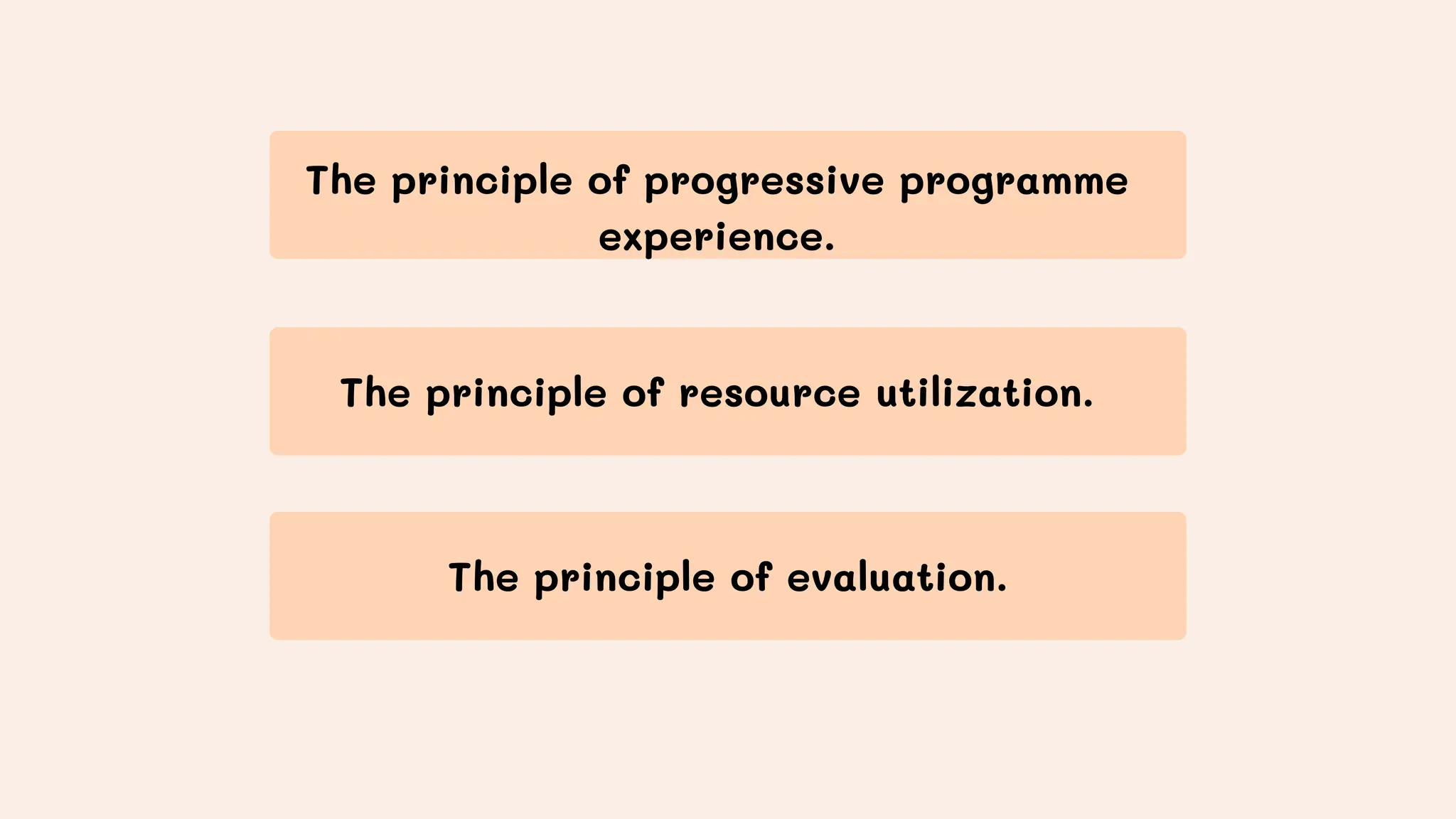
The principle of resource utilization.
The principle of evaluation.
The principle of progressive programme
experience.
The principle of planned group formation
Social Group Work process
uses group as a medium for
providing services to the
individual.
Formation of a group is a
prerequisite for a group
worker.
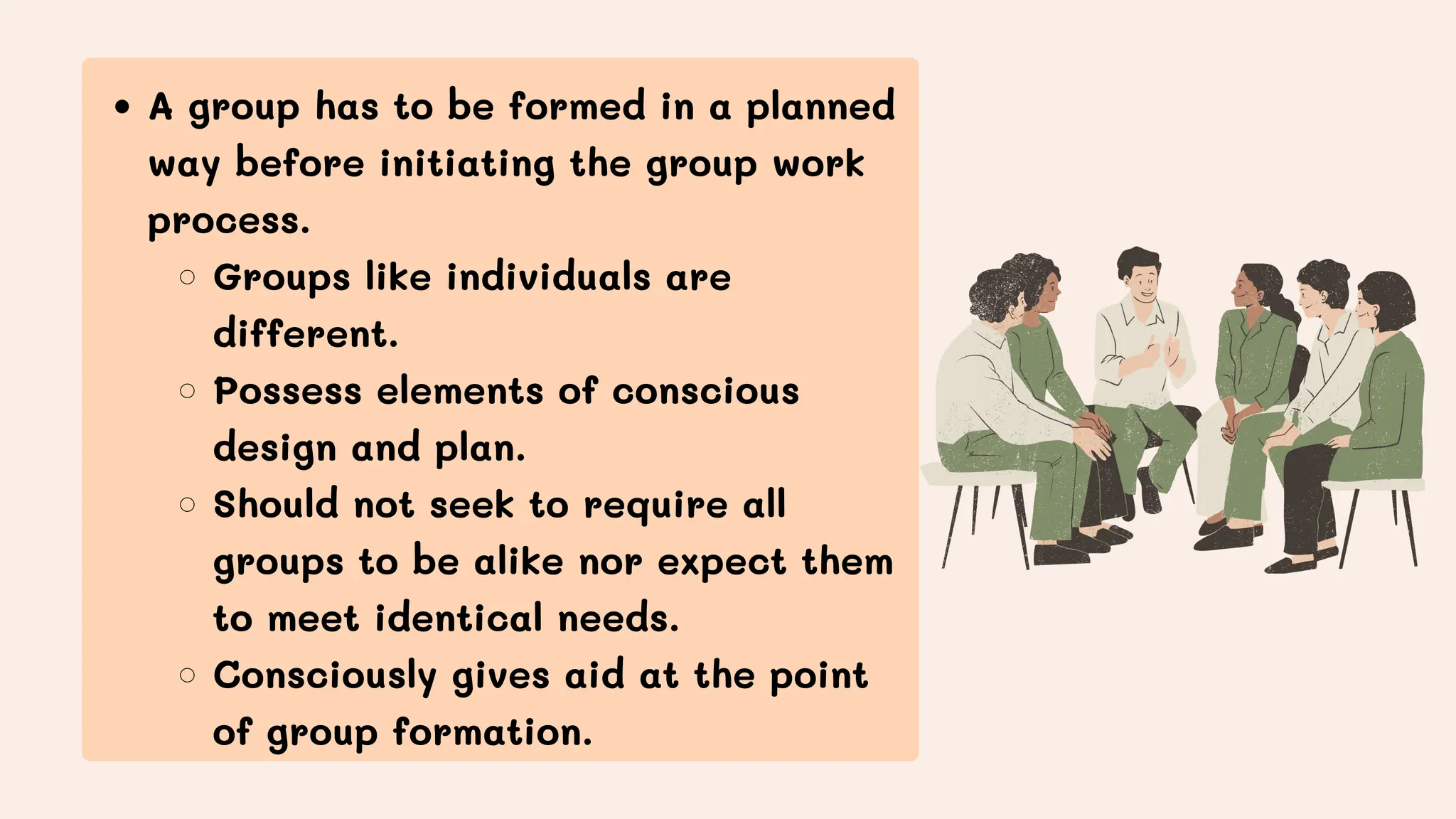
A group has to be formed in a planned
way before initiating the group work
process.
Groups like individuals are
different.
Possess elements of conscious
design and plan.
Should not seek to require all
groups to be alike nor expect them
to meet identical needs.
Consciously gives aid at the point
of group formation.
The Principle of Specific Group Objectives
Group Objective,
formulated by the worker
should be in harmony with
group wishes and
capacities and in keeping
with agency function.
They are to assist individuals
To grow and change;
Supplement emotional and
social nourishment;
Promote democratic
participation and
Remedy individual and
social disorganization.
The Principle of Purposeful Worker Group
Relationship
A consciously purposeful
relationship must be
established on mutual
acceptance.
Necessary to create an
effective working relationship
with a group before the
worker can be of any help.
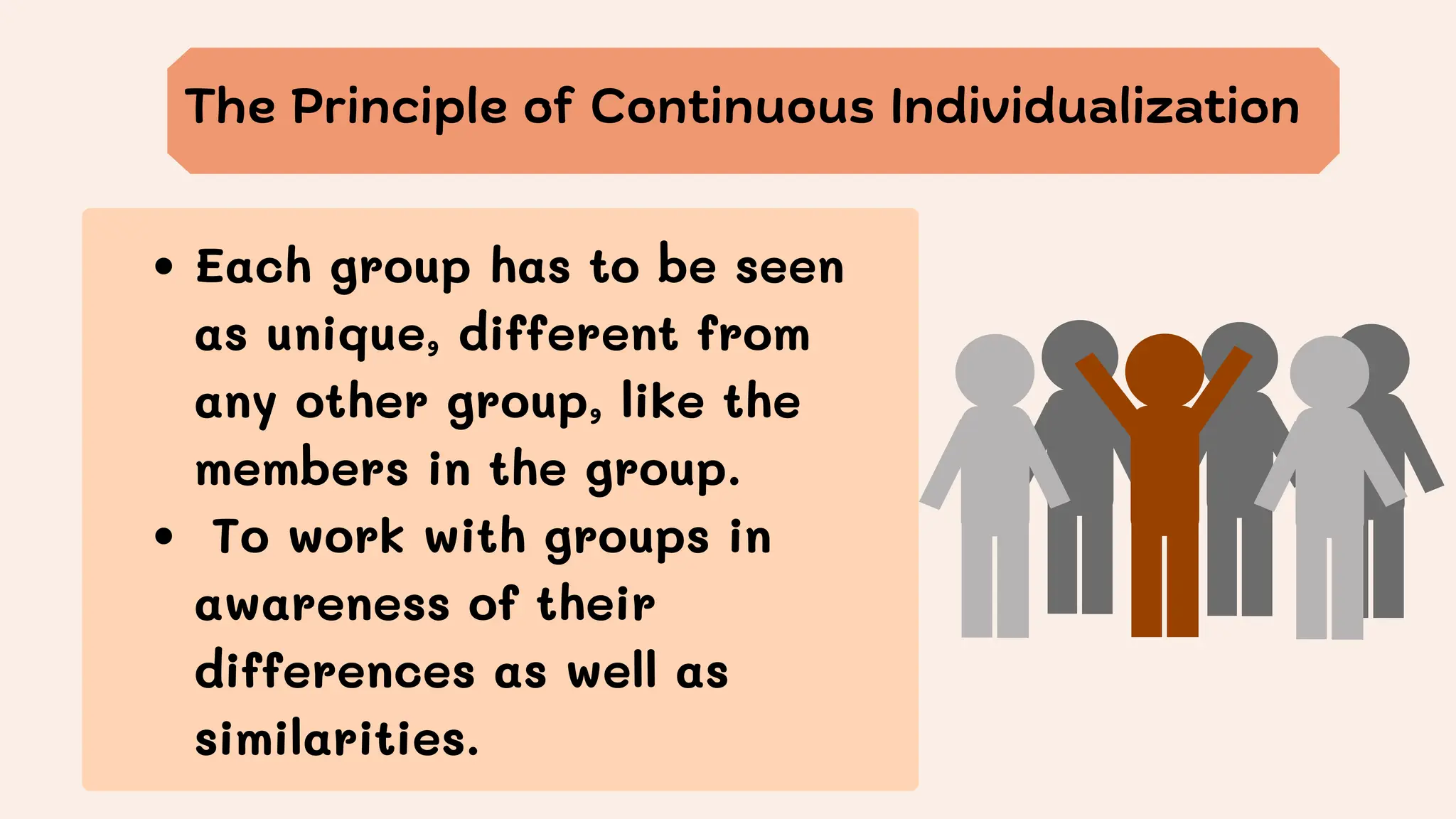
Each group has to be seen
as unique, different from
any other group, like the
members in the group.
To work with groups in
awareness of their
differences as well as
similarities.
The Principle of Continuous Individualization
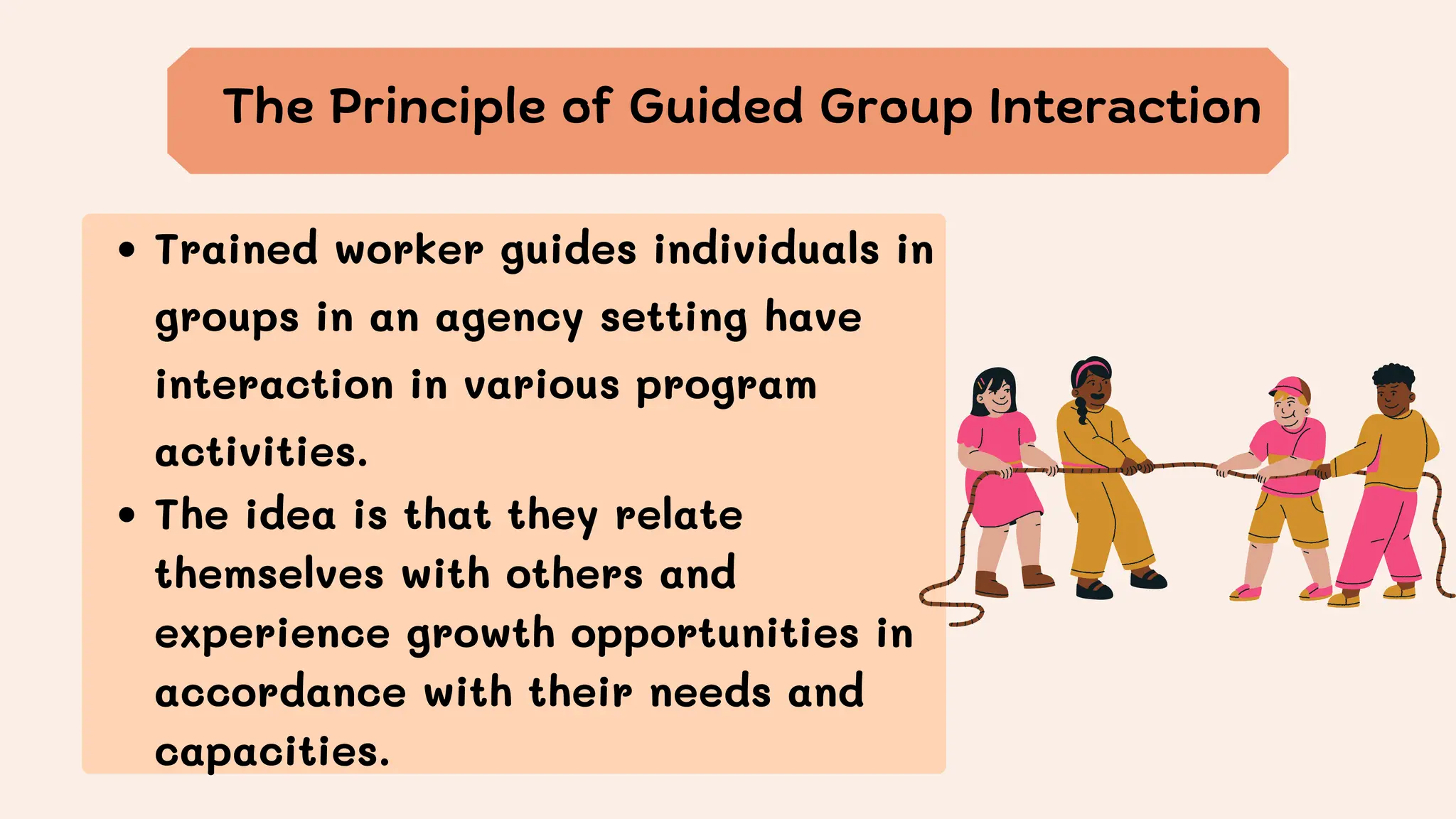
Trained worker guides individuals in
groups in an agency setting have
interaction in various program
activities.
The idea is that they relate
themselves with others and
experience growth opportunities in
accordance with their needs and
capacities.
The Principle of Guided Group Interaction
The Principle of Democratic Group Self-
Determination
The Principle of self-
determination is a core
value of the social work
philosophy and has to be
practiced, irrespective of
the method of working.
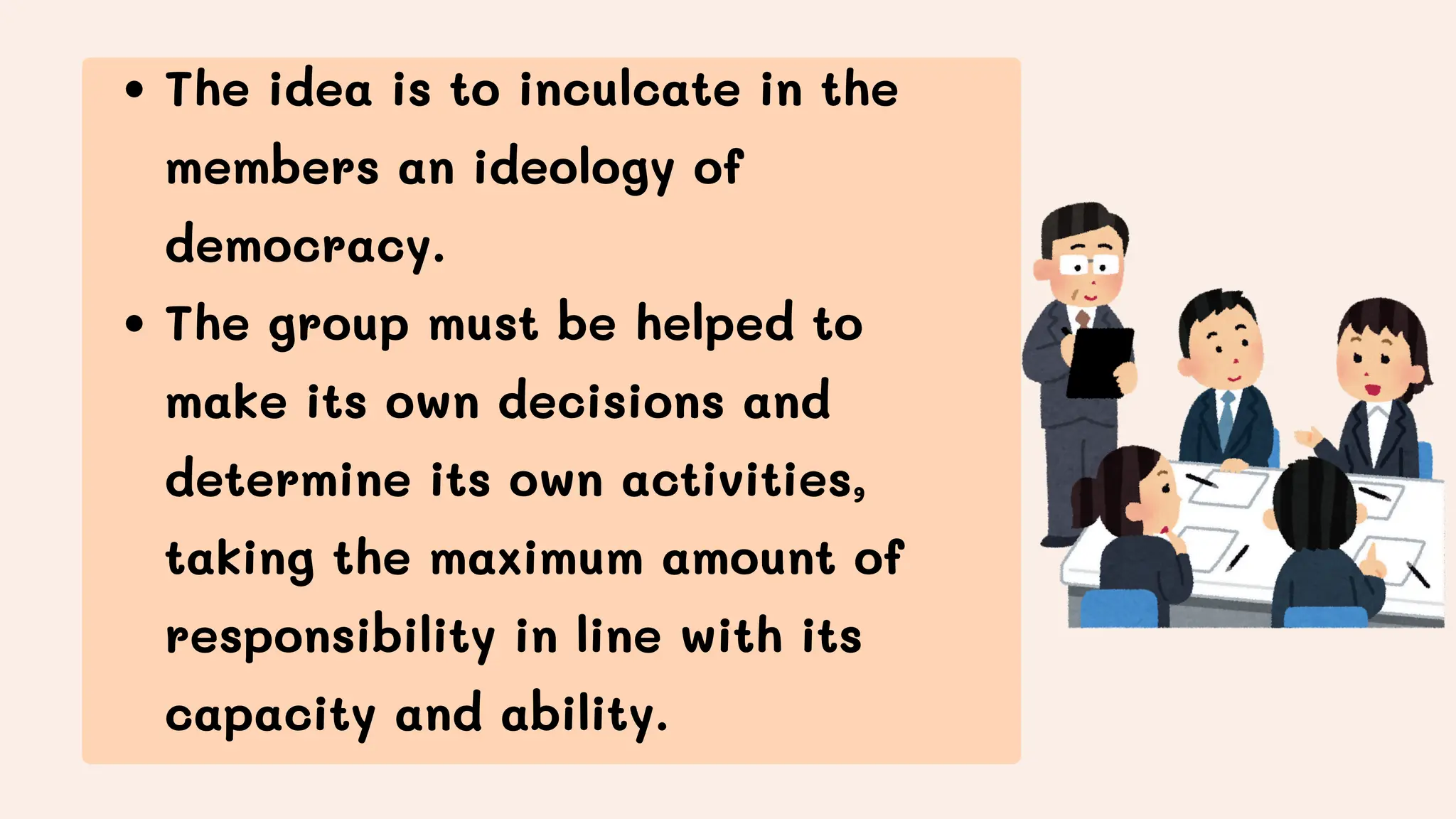
The idea is to inculcate in the
members an ideology of
democracy.
The group must be helped to
make its own decisions and
determine its own activities,
taking the maximum amount of
responsibility in line with its
capacity and ability.
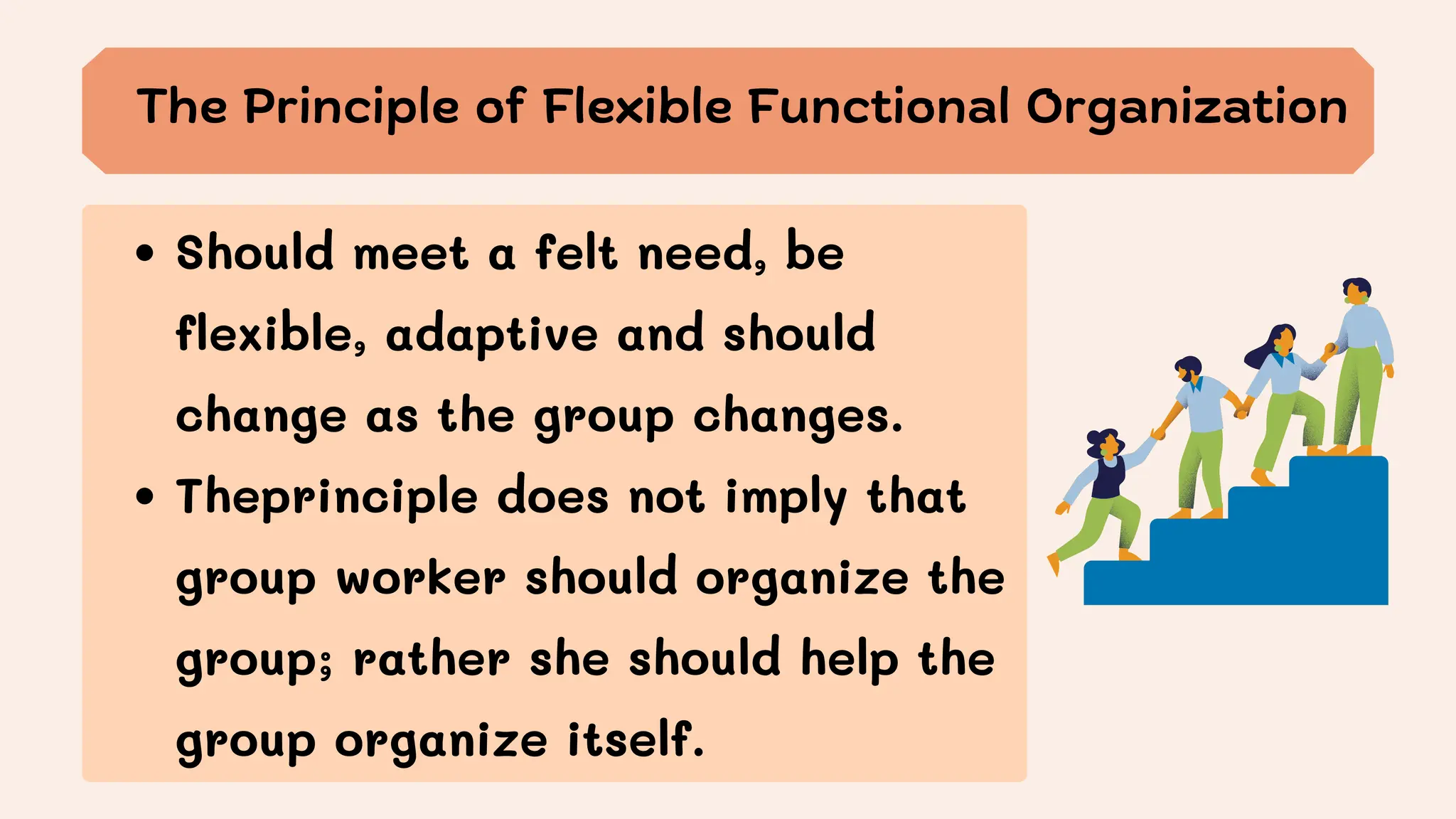
The Principle of Flexible Functional Organization
Should meet a felt need, be
flexible, adaptive and should
change as the group changes.
Theprinciple does not imply that
group worker should organize the
group; rather she should help the
group organize itself.
The Principle of Progressive Program
Experiences
Program in Social Group Work does
not only mean the activities or
events but is a broad concept that
includes the entire range of
individual and group relationships,
interactions and experiences
deliberately planned and carried
out with the help of the group
worker to achieve the group goals.
This principle guides the
group worker to utilize the
available resources to
enrich the content of the
group experience for
individuals and group as a
whole.
The Principle of Resource Utilization
Social Group Worker should possess
knowledge about the resources
available in the group, agency and
the community.
S/he should use her/his skill in
locating and then acquainting the
group with the various resources
which can be utilized by the group
for different programs.
Continuous evaluation of process
and programs in terms of
outcomes by the worker, agency
and the members is not only
desirable, but essential.
Carefully maintained records can
facilitate proper monitoring and
evaluation.
The Principle of Evaluation
Summary
Group Work
Principles of Group
Work
Reference
https://egyankosh.ac.in/bitstream/123456789/50430/1/Block-1.pdf
http://www.ignou.ac.in/upload/bswe-02-block1-unit-9-small%20size.pdf
Thank You

Unit IV: Group Work- Definition and Principles

  • 1.
    Presented By: ADaisy Evangeline Group Work
  • 2.
    Each day, weinteract with groups, in one form or in another. we are born into and dwell in a group (family) we learn in groups (classrooms), we work in group (office, project teams), we interact with friends, and we also spend much in leisure groups. We learn, work, and play in groups. Introduction
  • 3.
    The Oxford EnglishDictionary defines group as “a number of persons or things regarded as forming a unit, on account of any kind of mutual or common relation, or classified together on account of a common degree of similarity.” DEFINITIONS
  • 4.
    The sociological perspective Agroup can be defined as two or more humans that interact with one another, accept expectations and obligations as members of the group, as well as share a common identity. DEFINITIONS
  • 5.
    A group hasto be ‘social unit consisting of a number of individuals interacting with each other based on certain elements: 1) Common motives and goals; 2) An accepted division of labor, i.e. roles, 3) Established status (social rank, dominance) relationships; 4) Accepted norms and values with reference to matters relevant to the group; 5) Development of accepted sanctions (praise and punishment) if and when norms were respected or violated. Muzafer Sherif
  • 6.
    Criteria to call a group, Group NUMBEROF PERSONS – MORE THAN ONE ACCEPTANCE OF ROLES AND STATUS SHARED NORMS AND VALUES SIMILARITY OF GOALS, MOTIVES INTERDEPENDENCE
  • 7.
    Components of GroupWork FORMATION OF GROUP & ACCEPTING THE GROUP TEAM ROLES ACCOUNTABILITY DELEGATING TASKS PROPER GROUP STRUCTURE Group size, norms, status relationships, and cohesiveness help team members build trust and work together to achieve a common goal. Delegating to a team member's area of expertise can help them grow and meet deadlines Team members should take responsibility for their actions and decisions Be open to working with new people and respect the opinions of others.
  • 8.
  • 9.
    A principle mustbe understood to mean a hypothesis so adequately tested by observation and experiment that it may be put forward as a guide to action. What are Principles? A principle is a verbalized statement, general rules or laws, fundamental truths by which we proceed from one situation to another.
  • 10.
    Basic principles ofworking with people in groups to help them grow and change have emerged from the practice of social group work. Why Principles? Social group work principles are guiding assertions of statements that have come from experience and research. The objectives of social group work can be fulfilled only within the frame work of principles.
  • 11.
    Different principles are discussedby different social work authors described fourteen principles of social group work. Douglas described certain principles to work with the groups (around 7) Konopka discussed 5 principles Cohen
  • 12.
    Harleigh B. Trecker(1948) has explained the following principles of social group work The principle of planned group formation. The principle of specific objectives. The principle of purposeful worker- group relationship.
  • 13.
    The principle ofguided group interaction. The principle of democratic group self determination. The principle of flexible functional organisation. The principle of continuous individualization.
  • 14.
    The principle ofresource utilization. The principle of evaluation. The principle of progressive programme experience.
  • 15.
    The principle ofplanned group formation Social Group Work process uses group as a medium for providing services to the individual. Formation of a group is a prerequisite for a group worker.
  • 16.
    A group hasto be formed in a planned way before initiating the group work process. Groups like individuals are different. Possess elements of conscious design and plan. Should not seek to require all groups to be alike nor expect them to meet identical needs. Consciously gives aid at the point of group formation.
  • 17.
    The Principle ofSpecific Group Objectives Group Objective, formulated by the worker should be in harmony with group wishes and capacities and in keeping with agency function.
  • 18.
    They are toassist individuals To grow and change; Supplement emotional and social nourishment; Promote democratic participation and Remedy individual and social disorganization.
  • 19.
    The Principle ofPurposeful Worker Group Relationship A consciously purposeful relationship must be established on mutual acceptance. Necessary to create an effective working relationship with a group before the worker can be of any help.
  • 20.
    Each group hasto be seen as unique, different from any other group, like the members in the group. To work with groups in awareness of their differences as well as similarities. The Principle of Continuous Individualization
  • 21.
    Trained worker guidesindividuals in groups in an agency setting have interaction in various program activities. The idea is that they relate themselves with others and experience growth opportunities in accordance with their needs and capacities. The Principle of Guided Group Interaction
  • 22.
    The Principle ofDemocratic Group Self- Determination The Principle of self- determination is a core value of the social work philosophy and has to be practiced, irrespective of the method of working.
  • 23.
    The idea isto inculcate in the members an ideology of democracy. The group must be helped to make its own decisions and determine its own activities, taking the maximum amount of responsibility in line with its capacity and ability.
  • 24.
    The Principle ofFlexible Functional Organization Should meet a felt need, be flexible, adaptive and should change as the group changes. Theprinciple does not imply that group worker should organize the group; rather she should help the group organize itself.
  • 25.
    The Principle ofProgressive Program Experiences Program in Social Group Work does not only mean the activities or events but is a broad concept that includes the entire range of individual and group relationships, interactions and experiences deliberately planned and carried out with the help of the group worker to achieve the group goals.
  • 26.
    This principle guidesthe group worker to utilize the available resources to enrich the content of the group experience for individuals and group as a whole. The Principle of Resource Utilization
  • 27.
    Social Group Workershould possess knowledge about the resources available in the group, agency and the community. S/he should use her/his skill in locating and then acquainting the group with the various resources which can be utilized by the group for different programs.
  • 28.
    Continuous evaluation ofprocess and programs in terms of outcomes by the worker, agency and the members is not only desirable, but essential. Carefully maintained records can facilitate proper monitoring and evaluation. The Principle of Evaluation
  • 29.
  • 30.
  • 31.