Unit 2: Our Body 
 The human body is an amazing machine. It consists of 
many parts and systems that work together to carry out 
our body functions. 
 Our body is divided into three main parts: head, trunk 
and limbs. 
 Our upper limbs are our arms and our lower limbs 
are our legs. 
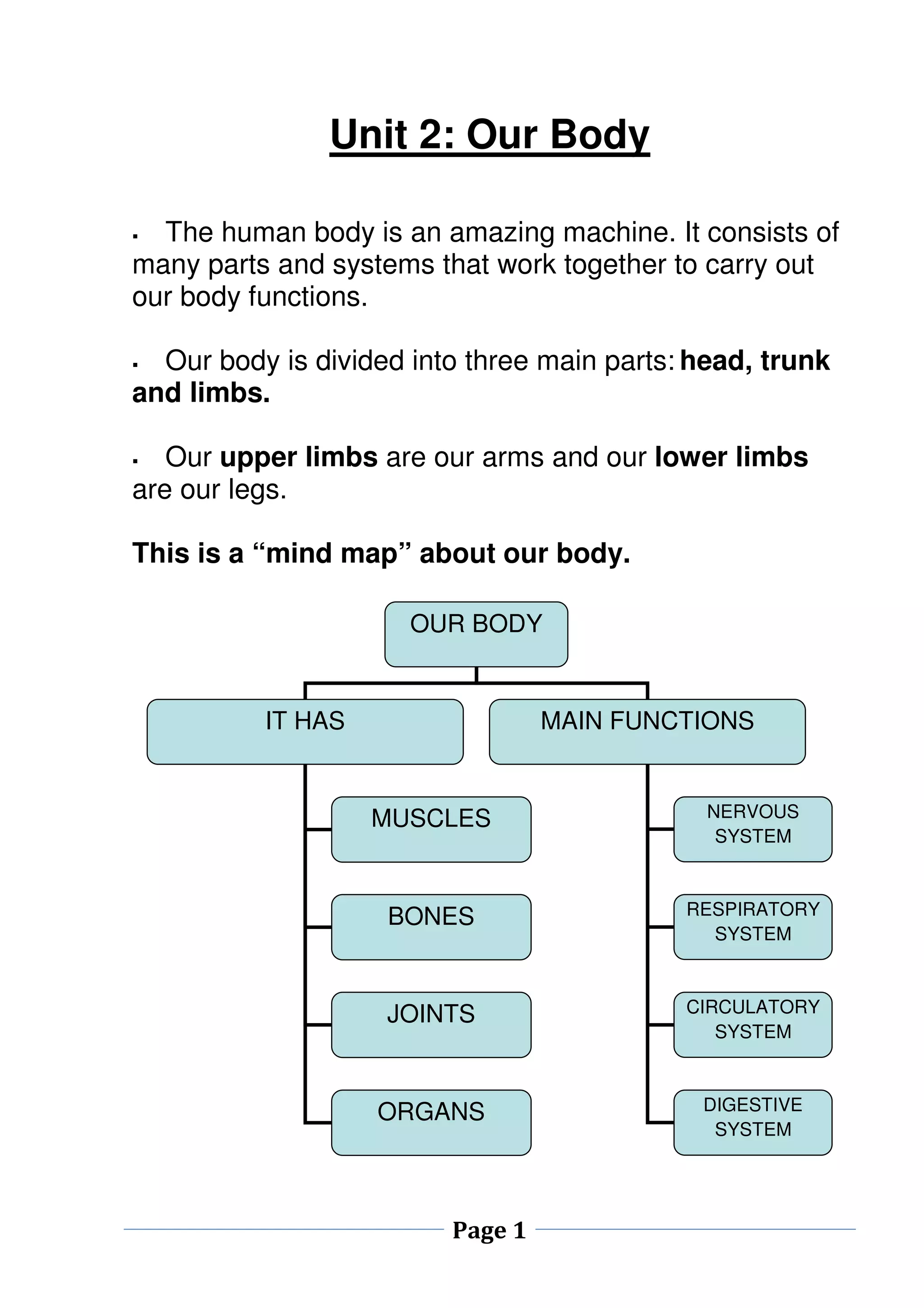
This is a “mind map” about our body. 
OUR BODY 
IT HAS MAIN FUNCTIONS 
MUSCLES 
BONES 
JOINTS 
ORGANS 
Page 1 
NERVOUS 
SYSTEM 
RESPIRATORY 
SYSTEM 
CIRCULATORY 
SYSTEM 
DIGESTIVE 
SYSTEM
1. Make groups with your classmates and copy in a wide 
card board the “mind map” of above. You will need 
scissors and glue to stick your work on the wall. 
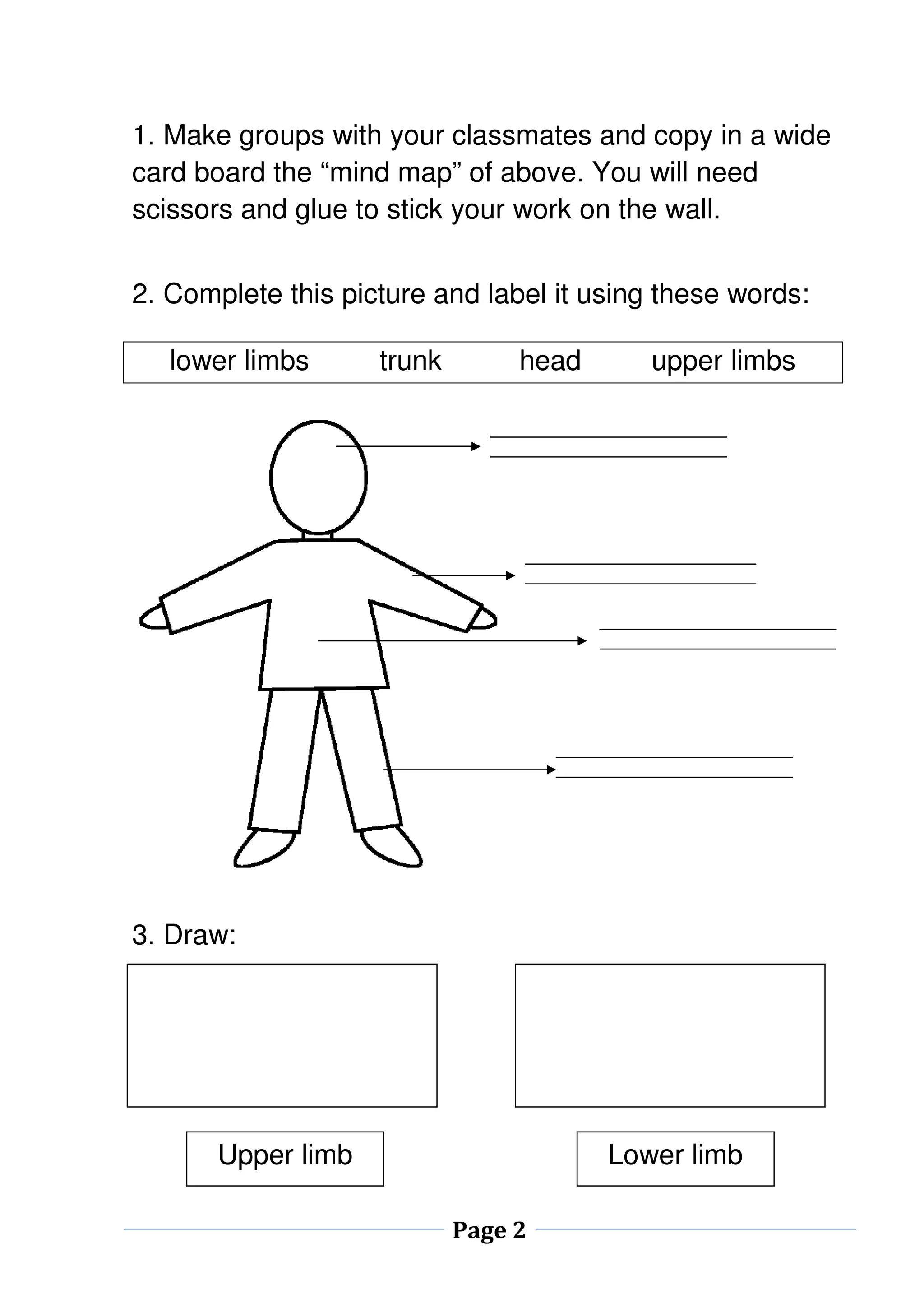
2. Complete this picture and label it using these words: 
lower limbs trunk head upper limbs 
Page 2 
3. Draw: 
Upper limb Lower limb
BONES 
• Bones are the hard parts of our body. 
• They hold our body and protect the inside organs. 
• All our bones form our skeleton. 
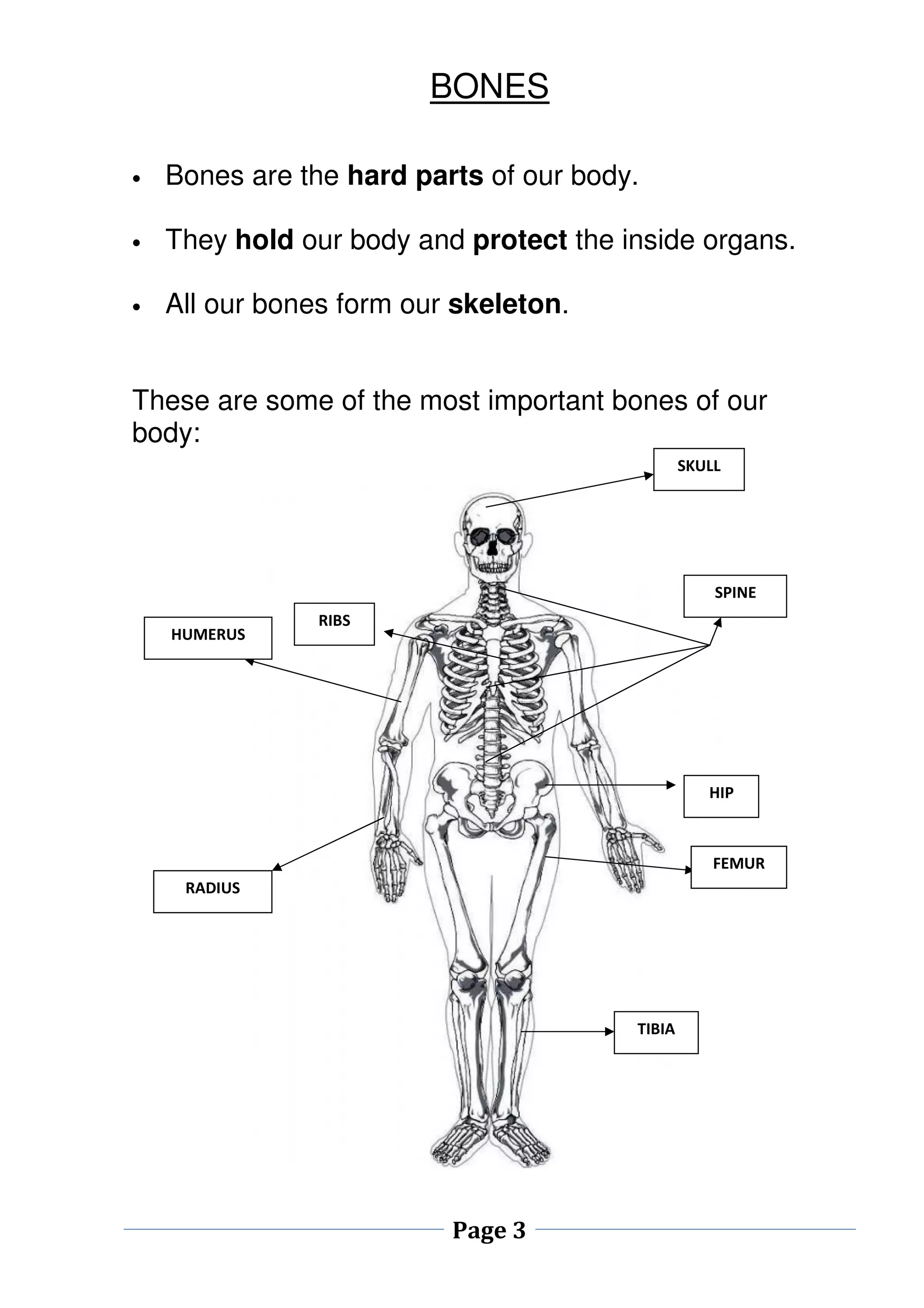
These are some of the most important bones of our 
body: 
Page 3 
SKULL 
SPINE 
RIBS 
HUMERUS 
RADIUS 
HIP 
FEMUR 
TIBIA
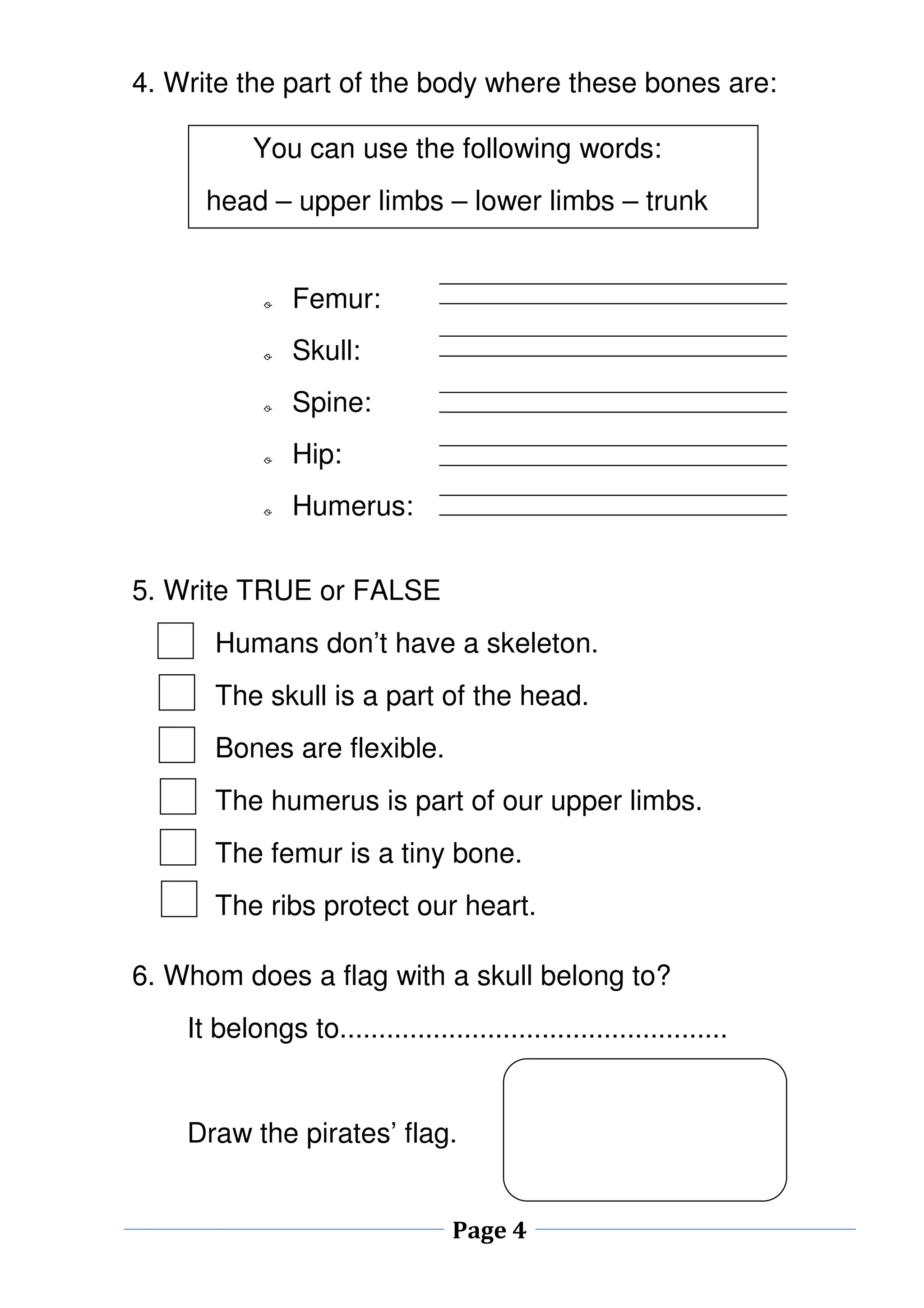
4. Write the part of the body where these bones are: 
You can use the following words: 
head – upper limbs – lower limbs – trunk 
Page 4 
o Femur: 
o Skull: 
o Spine: 
o Hip: 
o Humerus: 
5. Write TRUE or FALSE 
Humans don’t have a skeleton. 
The skull is a part of the head. 
Bones are flexible. 
The humerus is part of our upper limbs. 
The femur is a tiny bone. 
The ribs protect our heart. 
6. Whom does a flag with a skull belong to? 
It belongs to.................................................. 
Draw the pirates’ flag.
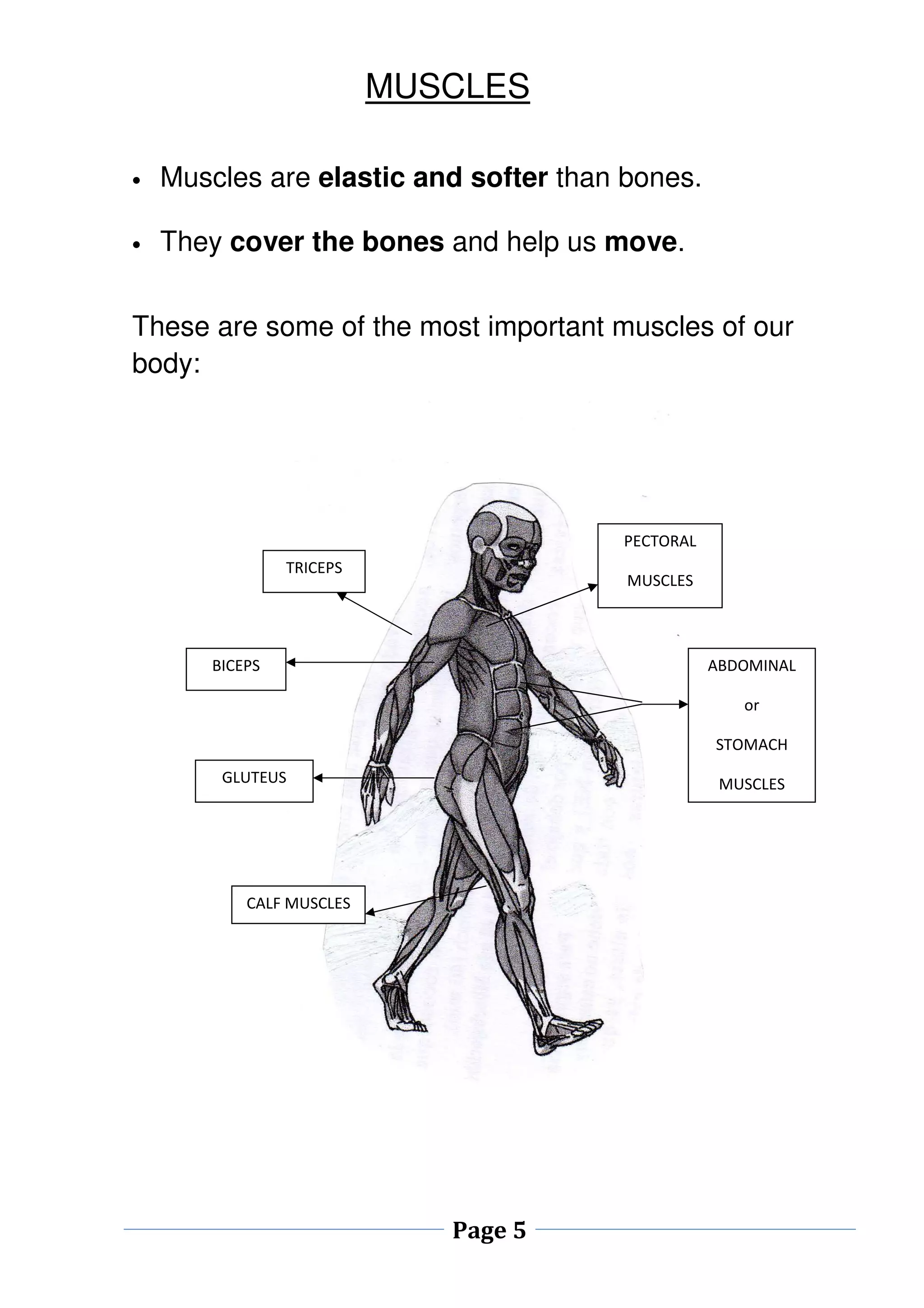
MUSCLES 
• Muscles are elastic and softer than bones. 
• They cover the bones and help us move. 
These are some of the most important muscles of our 
body: 
Page 5 
TRICEPS 
BICEPS 
PECTORAL 
MUSCLES 
ABDOMINAL 
or 
STOMACH 
MUSCLES 
GLUTEUS 
CALF MUSCLES
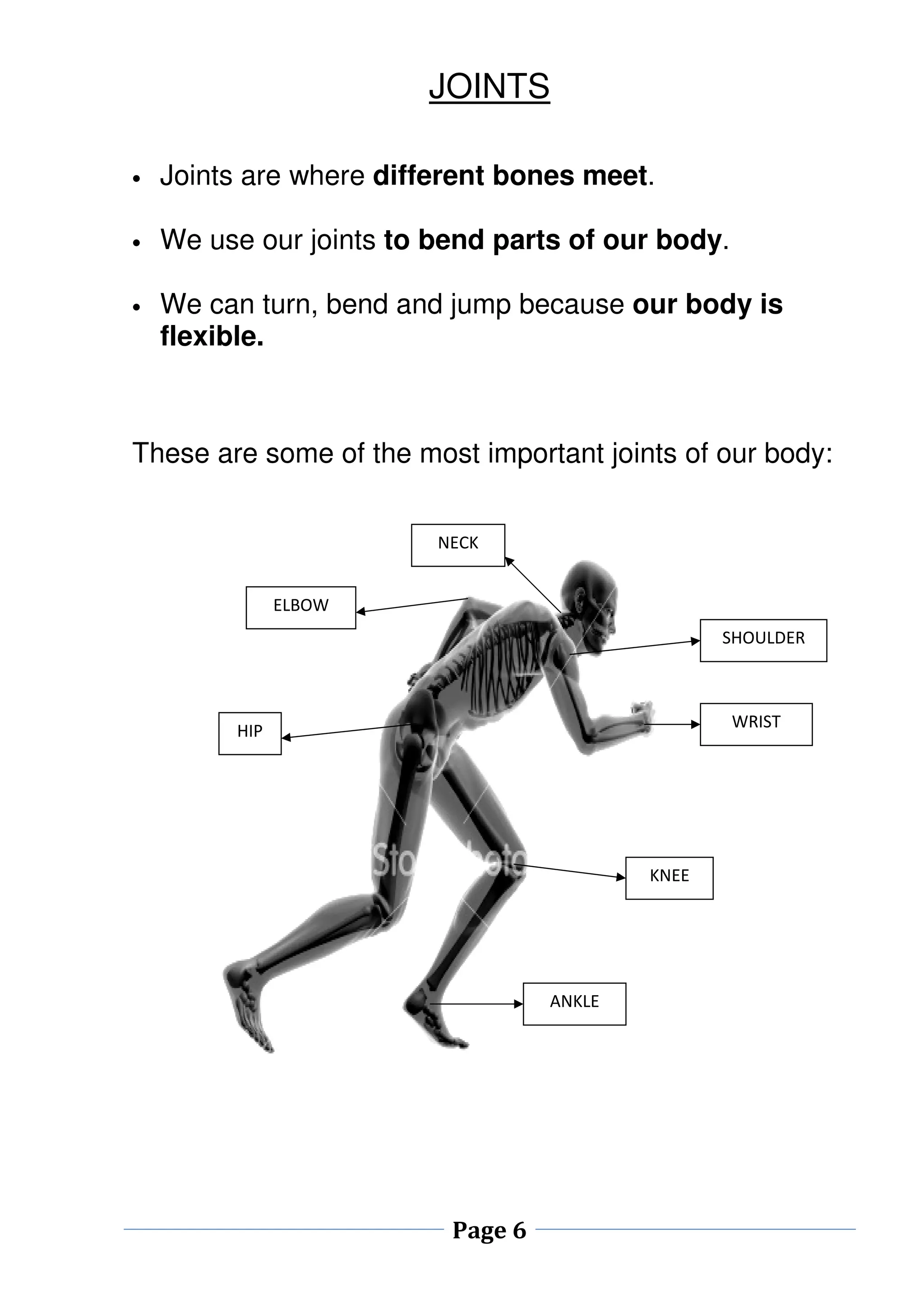
JOINTS 
• Joints are where different bones meet. 
• We use our joints to bend parts of our body. 
• We can turn, bend and jump because our body is 
Page 6 
flexible. 
These are some of the most important joints of our body: 
NECK 
ELBOW 
HIP 
SHOULDER 
WRIST 
KNEE 
ANKLE
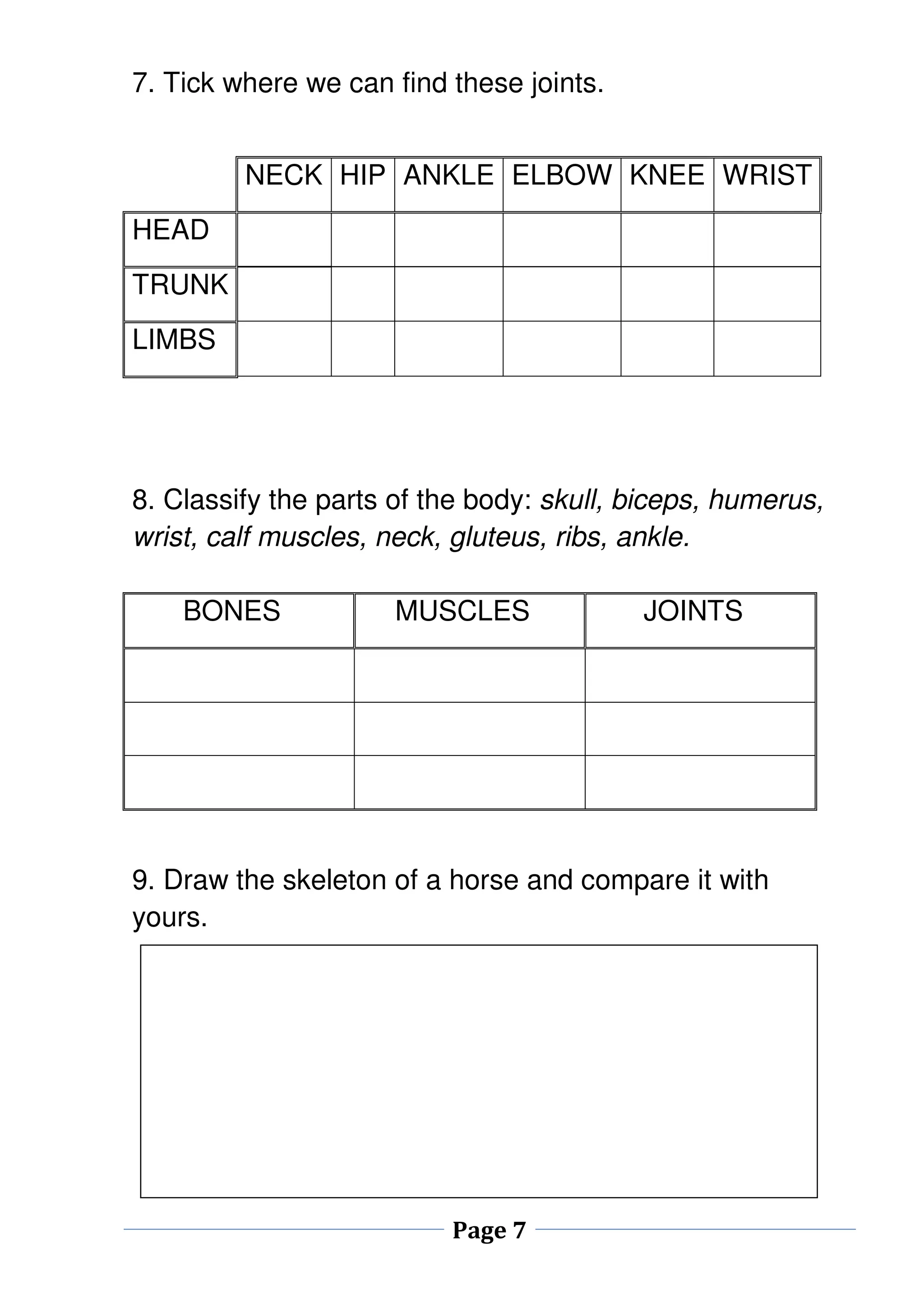
7. Tick where we can find these joints. 
NECK HIP ANKLE ELBOW KNEE WRIST 
8. Classify the parts of the body: skull, biceps, humerus, 
wrist, calf muscles, neck, gluteus, ribs, ankle. 
9. Draw the skeleton of a horse and compare it with 
yours. 
Page 7 
HEAD 
TRUNK 
LIMBS 
BONES MUSCLES JOINTS
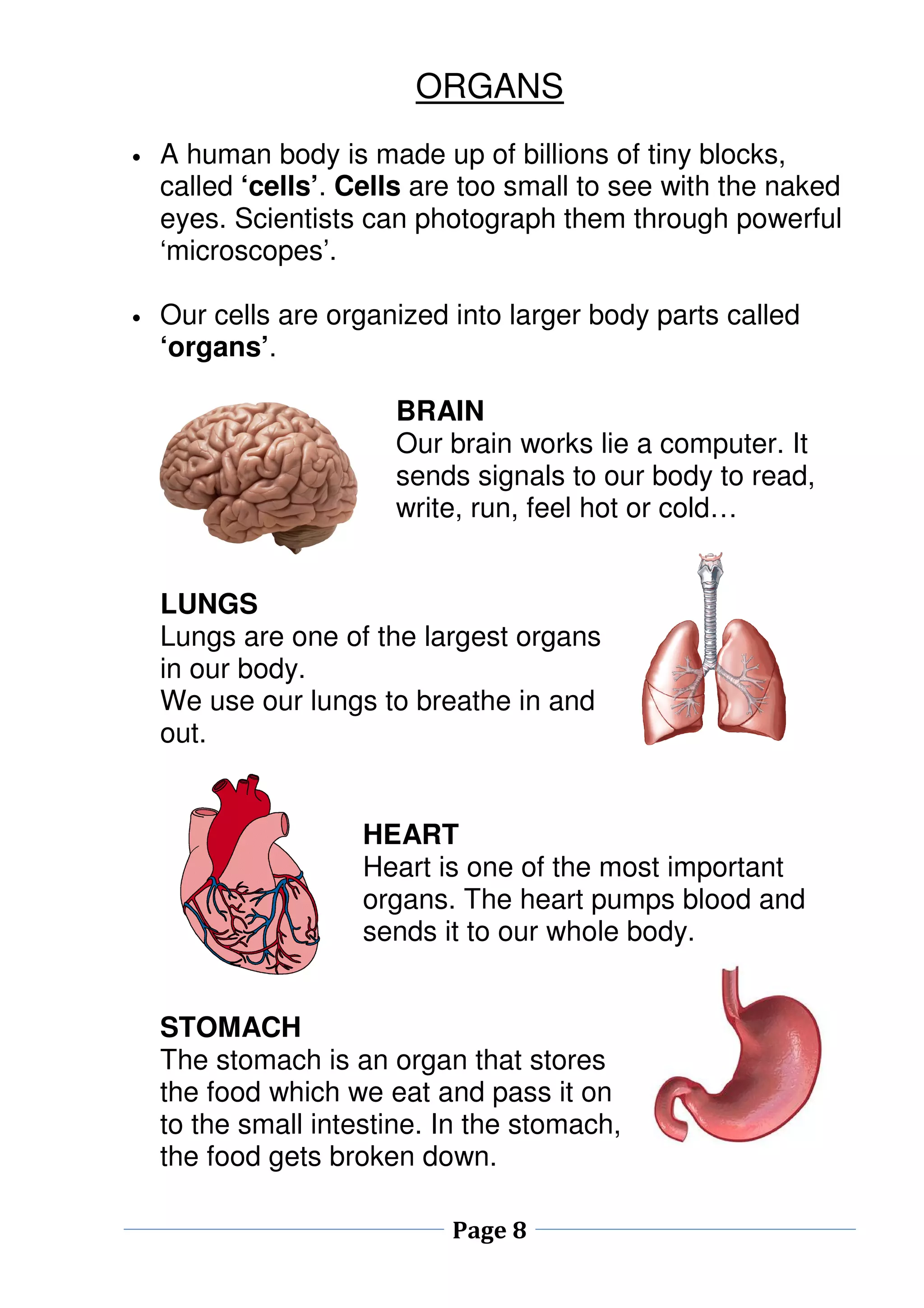
ORGANS 
• A human body is made up of billions of tiny blocks, 
called ‘cells’. Cells are too small to see with the naked 
eyes. Scientists can photograph them through powerful 
‘microscopes’. 
• Our cells are organized into larger body parts called 
Page 8 
‘organs’. 
BRAIN 
Our brain works lie a computer. It 
sends signals to our body to read, 
write, run, feel hot or cold… 
LUNGS 
Lungs are one of the largest organs 
in our body. 
We use our lungs to breathe in and 
out. 
HEART 
Heart is one of the most important 
organs. The heart pumps blood and 
sends it to our whole body. 
STOMACH 
The stomach is an organ that stores 
the food which we eat and pass it on 
to the small intestine. In the stomach, 
the food gets broken down.
FUNCTIONS 
Page 9 
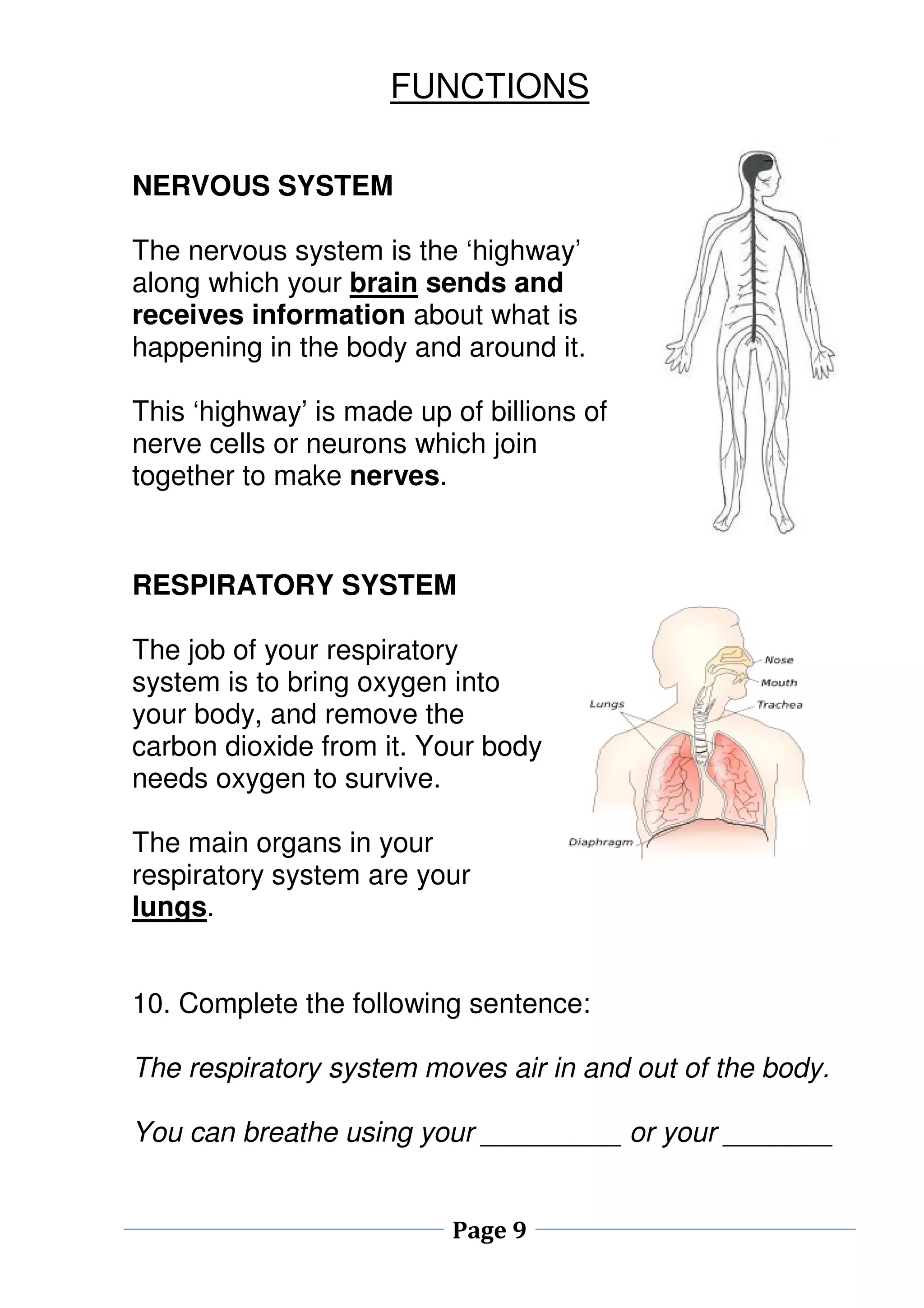
NERVOUS SYSTEM 
The nervous system is the ‘highway’ 
along which your brain sends and 
receives information about what is 
happening in the body and around it. 
This ‘highway’ is made up of billions of 
nerve cells or neurons which join 
together to make nerves. 
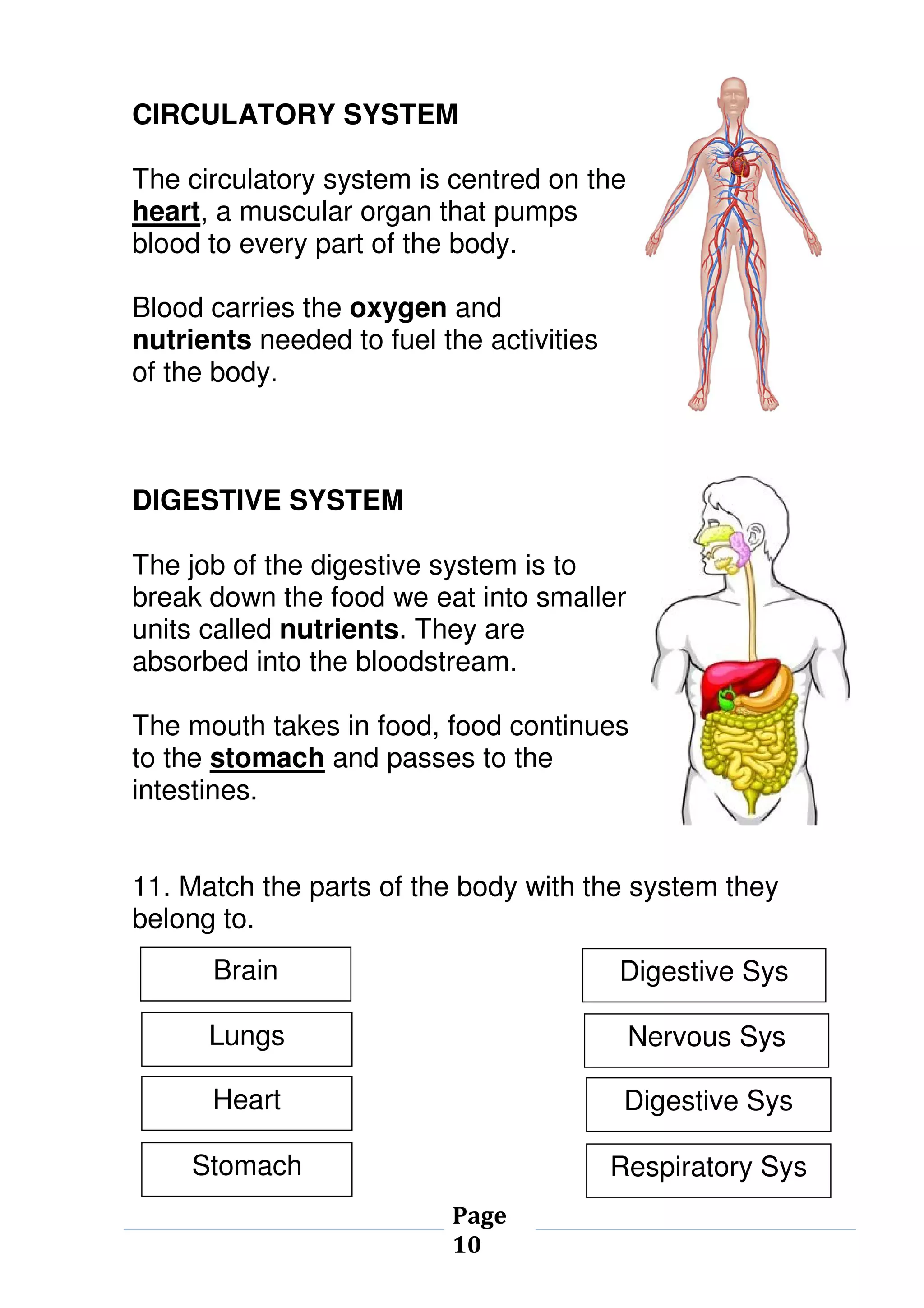
RESPIRATORY SYSTEM 
The job of your respiratory 
system is to bring oxygen into 
your body, and remove the 
carbon dioxide from it. Your body 
needs oxygen to survive. 
The main organs in your 
respiratory system are your 
lungs. 
10. Complete the following sentence: 
The respiratory system moves air in and out of the body. 
You can breathe using your _________ or your _______
CIRCULATORY SYSTEM 
The circulatory system is centred on the 
heart, a muscular organ that pumps 
blood to every part of the body. 
Blood carries the oxygen and 
nutrients needed to fuel the activities 
of the body. 
Page 
10 
DIGESTIVE SYSTEM 
The job of the digestive system is to 
break down the food we eat into smaller 
units called nutrients. They are 
absorbed into the bloodstream. 
The mouth takes in food, food continues 
to the stomach and passes to the 
intestines. 
11. Match the parts of the body with the system they 
belong to. 
Brain 
Lungs 
Heart 
Stomach 
Digestive Sys 
Nervous Sys 
Digestive Sys 
Respiratory Sys

Unit 2 our body

  • 1.
    Unit 2: OurBody The human body is an amazing machine. It consists of many parts and systems that work together to carry out our body functions. Our body is divided into three main parts: head, trunk and limbs. Our upper limbs are our arms and our lower limbs are our legs. This is a “mind map” about our body. OUR BODY IT HAS MAIN FUNCTIONS MUSCLES BONES JOINTS ORGANS Page 1 NERVOUS SYSTEM RESPIRATORY SYSTEM CIRCULATORY SYSTEM DIGESTIVE SYSTEM
  • 2.
    1. Make groupswith your classmates and copy in a wide card board the “mind map” of above. You will need scissors and glue to stick your work on the wall. 2. Complete this picture and label it using these words: lower limbs trunk head upper limbs Page 2 3. Draw: Upper limb Lower limb
  • 3.
    BONES • Bonesare the hard parts of our body. • They hold our body and protect the inside organs. • All our bones form our skeleton. These are some of the most important bones of our body: Page 3 SKULL SPINE RIBS HUMERUS RADIUS HIP FEMUR TIBIA
  • 4.
    4. Write thepart of the body where these bones are: You can use the following words: head – upper limbs – lower limbs – trunk Page 4 o Femur: o Skull: o Spine: o Hip: o Humerus: 5. Write TRUE or FALSE Humans don’t have a skeleton. The skull is a part of the head. Bones are flexible. The humerus is part of our upper limbs. The femur is a tiny bone. The ribs protect our heart. 6. Whom does a flag with a skull belong to? It belongs to.................................................. Draw the pirates’ flag.
  • 5.
    MUSCLES • Musclesare elastic and softer than bones. • They cover the bones and help us move. These are some of the most important muscles of our body: Page 5 TRICEPS BICEPS PECTORAL MUSCLES ABDOMINAL or STOMACH MUSCLES GLUTEUS CALF MUSCLES
  • 6.
    JOINTS • Jointsare where different bones meet. • We use our joints to bend parts of our body. • We can turn, bend and jump because our body is Page 6 flexible. These are some of the most important joints of our body: NECK ELBOW HIP SHOULDER WRIST KNEE ANKLE
  • 7.
    7. Tick wherewe can find these joints. NECK HIP ANKLE ELBOW KNEE WRIST 8. Classify the parts of the body: skull, biceps, humerus, wrist, calf muscles, neck, gluteus, ribs, ankle. 9. Draw the skeleton of a horse and compare it with yours. Page 7 HEAD TRUNK LIMBS BONES MUSCLES JOINTS
  • 8.
    ORGANS • Ahuman body is made up of billions of tiny blocks, called ‘cells’. Cells are too small to see with the naked eyes. Scientists can photograph them through powerful ‘microscopes’. • Our cells are organized into larger body parts called Page 8 ‘organs’. BRAIN Our brain works lie a computer. It sends signals to our body to read, write, run, feel hot or cold… LUNGS Lungs are one of the largest organs in our body. We use our lungs to breathe in and out. HEART Heart is one of the most important organs. The heart pumps blood and sends it to our whole body. STOMACH The stomach is an organ that stores the food which we eat and pass it on to the small intestine. In the stomach, the food gets broken down.
  • 9.
    FUNCTIONS Page 9 NERVOUS SYSTEM The nervous system is the ‘highway’ along which your brain sends and receives information about what is happening in the body and around it. This ‘highway’ is made up of billions of nerve cells or neurons which join together to make nerves. RESPIRATORY SYSTEM The job of your respiratory system is to bring oxygen into your body, and remove the carbon dioxide from it. Your body needs oxygen to survive. The main organs in your respiratory system are your lungs. 10. Complete the following sentence: The respiratory system moves air in and out of the body. You can breathe using your _________ or your _______
  • 10.
    CIRCULATORY SYSTEM Thecirculatory system is centred on the heart, a muscular organ that pumps blood to every part of the body. Blood carries the oxygen and nutrients needed to fuel the activities of the body. Page 10 DIGESTIVE SYSTEM The job of the digestive system is to break down the food we eat into smaller units called nutrients. They are absorbed into the bloodstream. The mouth takes in food, food continues to the stomach and passes to the intestines. 11. Match the parts of the body with the system they belong to. Brain Lungs Heart Stomach Digestive Sys Nervous Sys Digestive Sys Respiratory Sys