 I. Booking and Initial Appearance
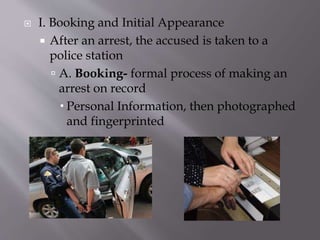
 After an arrest, the accused is taken to a
police station
 A. Booking- formal process of making an
arrest on record
 Personal Information, then photographed
and fingerprinted
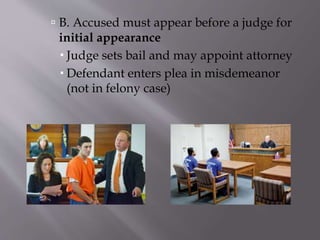
 B. Accused must appear before a judge for
initial appearance
 Judge sets bail and may appoint attorney
 Defendant enters plea in misdemeanor
(not in felony case)
 II. Bail and Pretrial Release
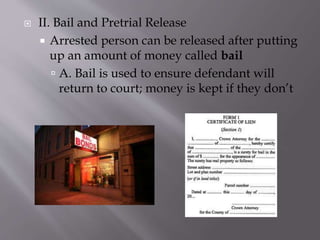
 Arrested person can be released after putting
up an amount of money called bail
 A. Bail is used to ensure defendant will
return to court; money is kept if they don’t
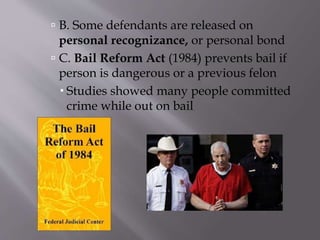
 B. Some defendants are released on
personal recognizance, or personal bond
 C. Bail Reform Act (1984) prevents bail if
person is dangerous or a previous felon
 Studies showed many people committed
crime while out on bail
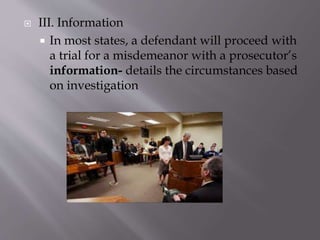
 III. Information
 In most states, a defendant will proceed with
a trial for a misdemeanor with a prosecutor’s
information- details the circumstances based
on investigation
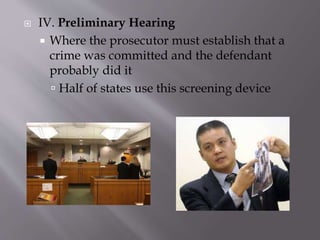
 IV. Preliminary Hearing
 Where the prosecutor must establish that a
crime was committed and the defendant
probably did it
 Half of states use this screening device
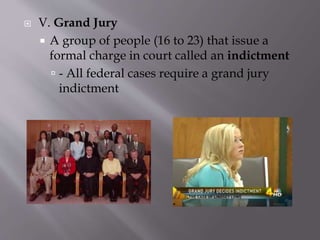
 V. Grand Jury
 A group of people (16 to 23) that issue a
formal charge in court called an indictment
 - All federal cases require a grand jury
indictment
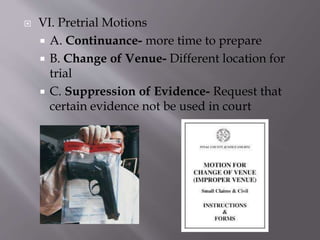
 VI. Pretrial Motions
 A. Continuance- more time to prepare
 B. Change of Venue- Different location for
trial
 C. Suppression of Evidence- Request that
certain evidence not be used in court
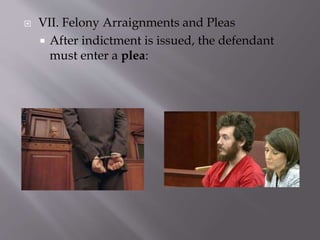
 VII. Felony Arraignments and Pleas
 After indictment is issued, the defendant
must enter a plea:
 1. Guilty- Judge sets date for sentencing
 2. Not Guilty- Judge sets date for trial and
asks defendant if they want a judge or jury
 3. Nolo Contendere (No contest)-
Defendant does not admit guilt but does
not contest the charges
 - Goes right to sentencing
 - Same as guilty, but it cannot be used as
evidence later in a civil trial

Unit 10 notes 1

  • 2.
     I. Bookingand Initial Appearance  After an arrest, the accused is taken to a police station  A. Booking- formal process of making an arrest on record  Personal Information, then photographed and fingerprinted
  • 3.
     B. Accusedmust appear before a judge for initial appearance  Judge sets bail and may appoint attorney  Defendant enters plea in misdemeanor (not in felony case)
  • 4.
     II. Bailand Pretrial Release  Arrested person can be released after putting up an amount of money called bail  A. Bail is used to ensure defendant will return to court; money is kept if they don’t
  • 5.
     B. Somedefendants are released on personal recognizance, or personal bond  C. Bail Reform Act (1984) prevents bail if person is dangerous or a previous felon  Studies showed many people committed crime while out on bail
  • 6.
     III. Information In most states, a defendant will proceed with a trial for a misdemeanor with a prosecutor’s information- details the circumstances based on investigation
  • 7.
     IV. PreliminaryHearing  Where the prosecutor must establish that a crime was committed and the defendant probably did it  Half of states use this screening device
  • 8.
     V. GrandJury  A group of people (16 to 23) that issue a formal charge in court called an indictment  - All federal cases require a grand jury indictment
  • 9.
     VI. PretrialMotions  A. Continuance- more time to prepare  B. Change of Venue- Different location for trial  C. Suppression of Evidence- Request that certain evidence not be used in court
  • 10.
     VII. FelonyArraignments and Pleas  After indictment is issued, the defendant must enter a plea:
  • 11.
     1. Guilty-Judge sets date for sentencing  2. Not Guilty- Judge sets date for trial and asks defendant if they want a judge or jury  3. Nolo Contendere (No contest)- Defendant does not admit guilt but does not contest the charges  - Goes right to sentencing  - Same as guilty, but it cannot be used as evidence later in a civil trial