Cycle 14thAmendment
4th Amendment“The right of the people to be secure in their persons, houses, papers and effects, against unreasonable searches and seizures, shall not be violated, and no warrants shall issue, but upon probable cause, supported by oath or affirmation, and particularly describing the place to be searched and the persons or things to be seized (Fourth Amendment US Const.; California Const., article 1, § 13.)
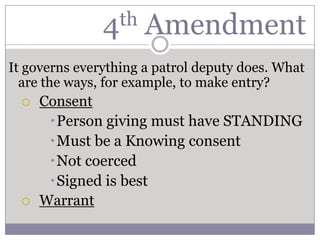
4th AmendmentIt governs everything a patrol deputy does. What are the ways, for example, to make entry?ConsentPerson giving must have STANDING
Must be a Knowing consent
Not coerced
Signed is bestWarrant
4th AmendmentExigent CircumstancesCommunity Caretaker
Life saving
Preserve evidenceParole / ProbationMust have knowledge of conditions prior to search4th Amendment.Authority, to give that consent. The search must be within the scope of the consent. YOU SHOULD ALWAYS ASK FOR CONSENT TO SEARCH EVEN WHEN YOU HAVE OTHER AUTHORITY FOR THE SEARCH. A signed consent form is best.
4th AmendmentA suspect may withdraw his consent at any time during the search. When this occurs, you must immediately stop your search.A search incident to an arrest is permissible only if it takes place at the same place and at essentially the same time as the arrest.
ArrestARREST-COVERED IN CPC CHAPTER 5 SECTIONS 833 THRU 853.9834.  An arrest is taking a person into custody, in a case and in the manner authorized by law. An arrest may be made by a peace officer or by a private person.
Arrest835.  An arrest is made by an actual restraint of the person, or by submission to the custody of an officer. The person arrested may be subjected to such restraint as is reasonable for his arrest and detention.
ArrestFor a felony, you may arrest a person (1) with a warrant or (2) without a warrant if you have probable cause to believe he committed a felony, regardless of whether or not it was committed in your presence.

4th amendment

  • 1.
  • 2.
    4th Amendment“The rightof the people to be secure in their persons, houses, papers and effects, against unreasonable searches and seizures, shall not be violated, and no warrants shall issue, but upon probable cause, supported by oath or affirmation, and particularly describing the place to be searched and the persons or things to be seized (Fourth Amendment US Const.; California Const., article 1, § 13.)
  • 3.
    4th AmendmentIt governseverything a patrol deputy does. What are the ways, for example, to make entry?ConsentPerson giving must have STANDING
  • 4.
    Must be aKnowing consent
  • 5.
  • 6.
  • 7.
  • 8.
  • 9.
    Preserve evidenceParole /ProbationMust have knowledge of conditions prior to search4th Amendment.Authority, to give that consent. The search must be within the scope of the consent. YOU SHOULD ALWAYS ASK FOR CONSENT TO SEARCH EVEN WHEN YOU HAVE OTHER AUTHORITY FOR THE SEARCH. A signed consent form is best.
  • 10.
    4th AmendmentA suspectmay withdraw his consent at any time during the search. When this occurs, you must immediately stop your search.A search incident to an arrest is permissible only if it takes place at the same place and at essentially the same time as the arrest.
  • 11.
    ArrestARREST-COVERED IN CPCCHAPTER 5 SECTIONS 833 THRU 853.9834. An arrest is taking a person into custody, in a case and in the manner authorized by law. An arrest may be made by a peace officer or by a private person.
  • 12.
    Arrest835. Anarrest is made by an actual restraint of the person, or by submission to the custody of an officer. The person arrested may be subjected to such restraint as is reasonable for his arrest and detention.
  • 13.
    ArrestFor a felony,you may arrest a person (1) with a warrant or (2) without a warrant if you have probable cause to believe he committed a felony, regardless of whether or not it was committed in your presence.