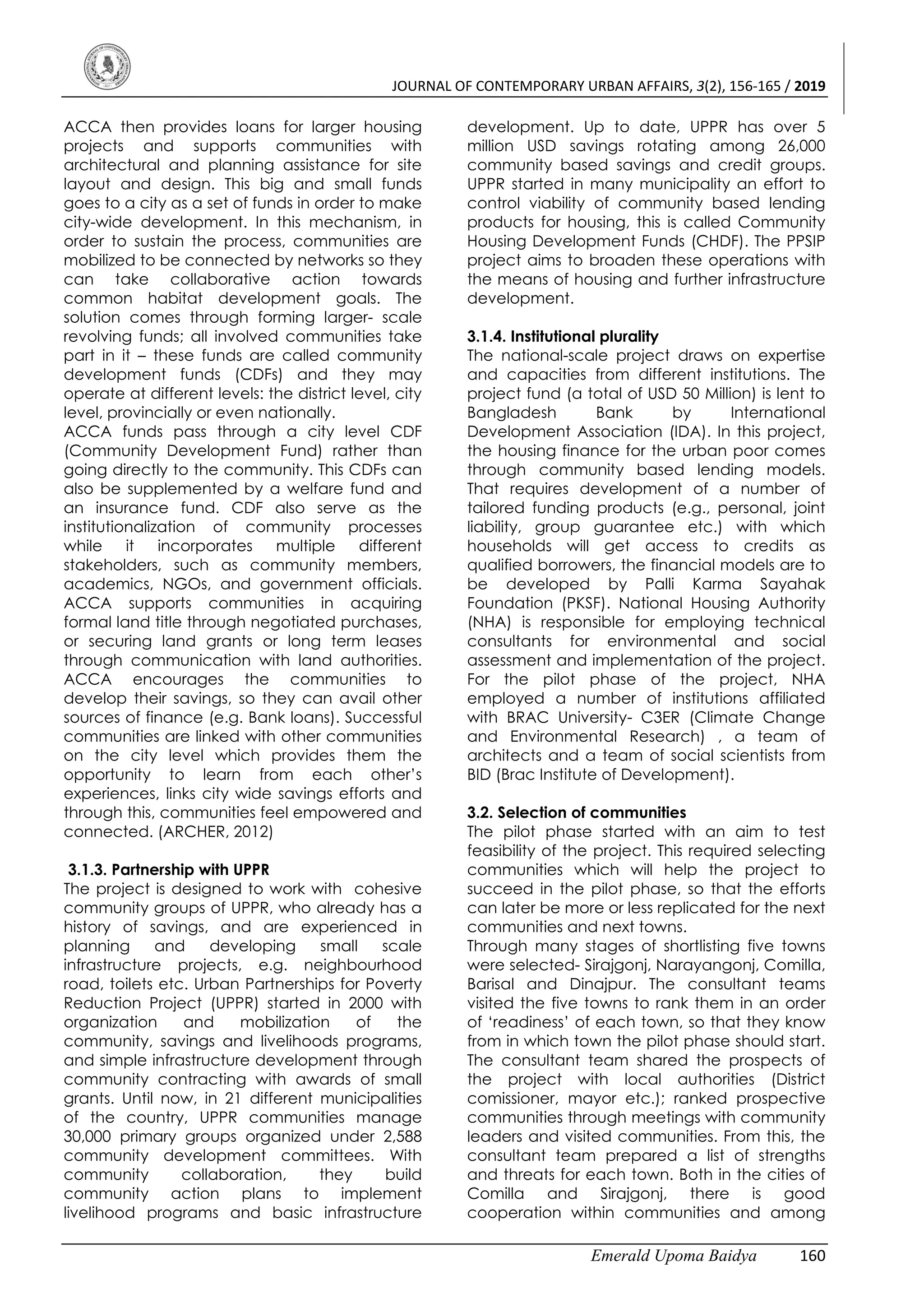
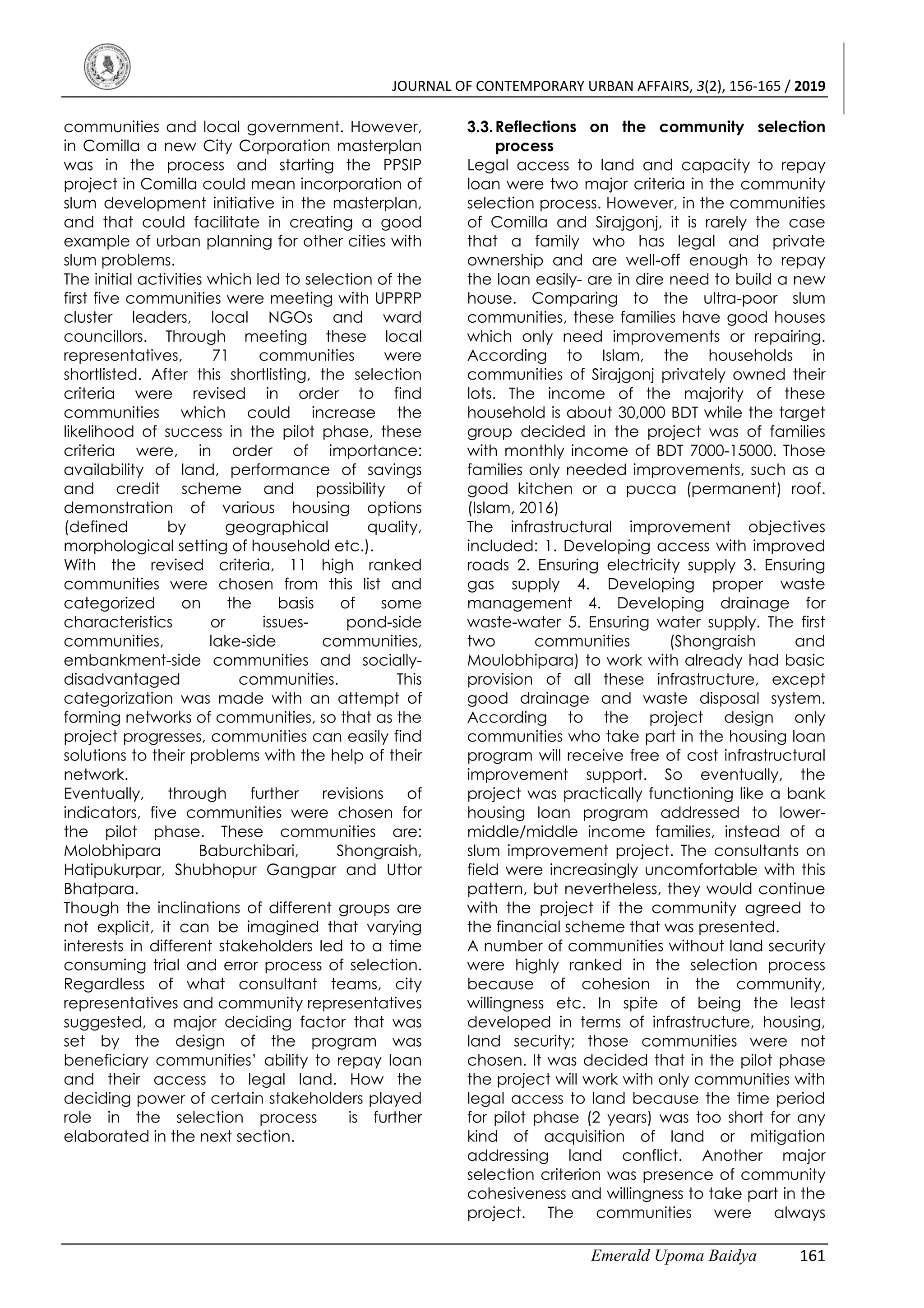
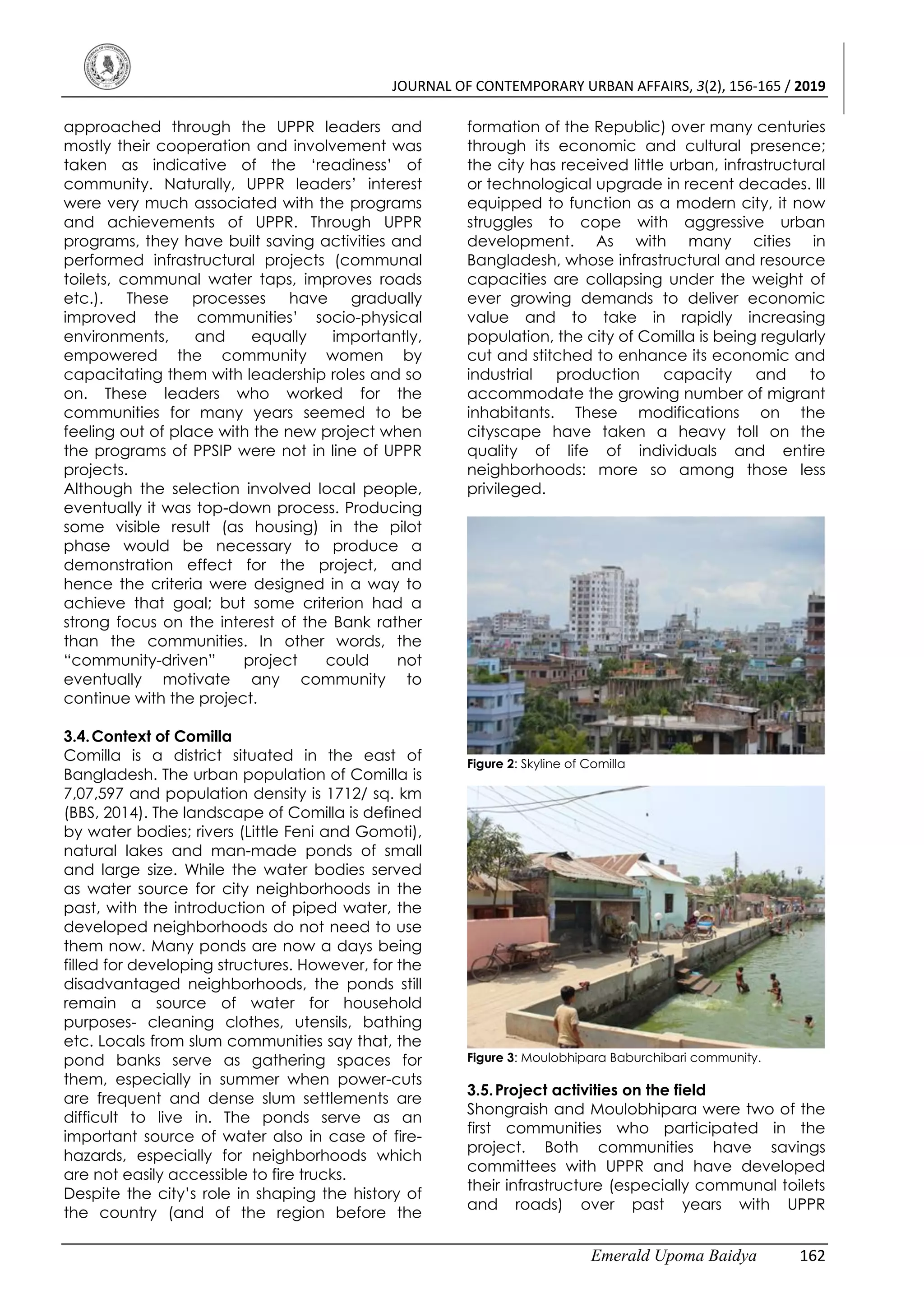
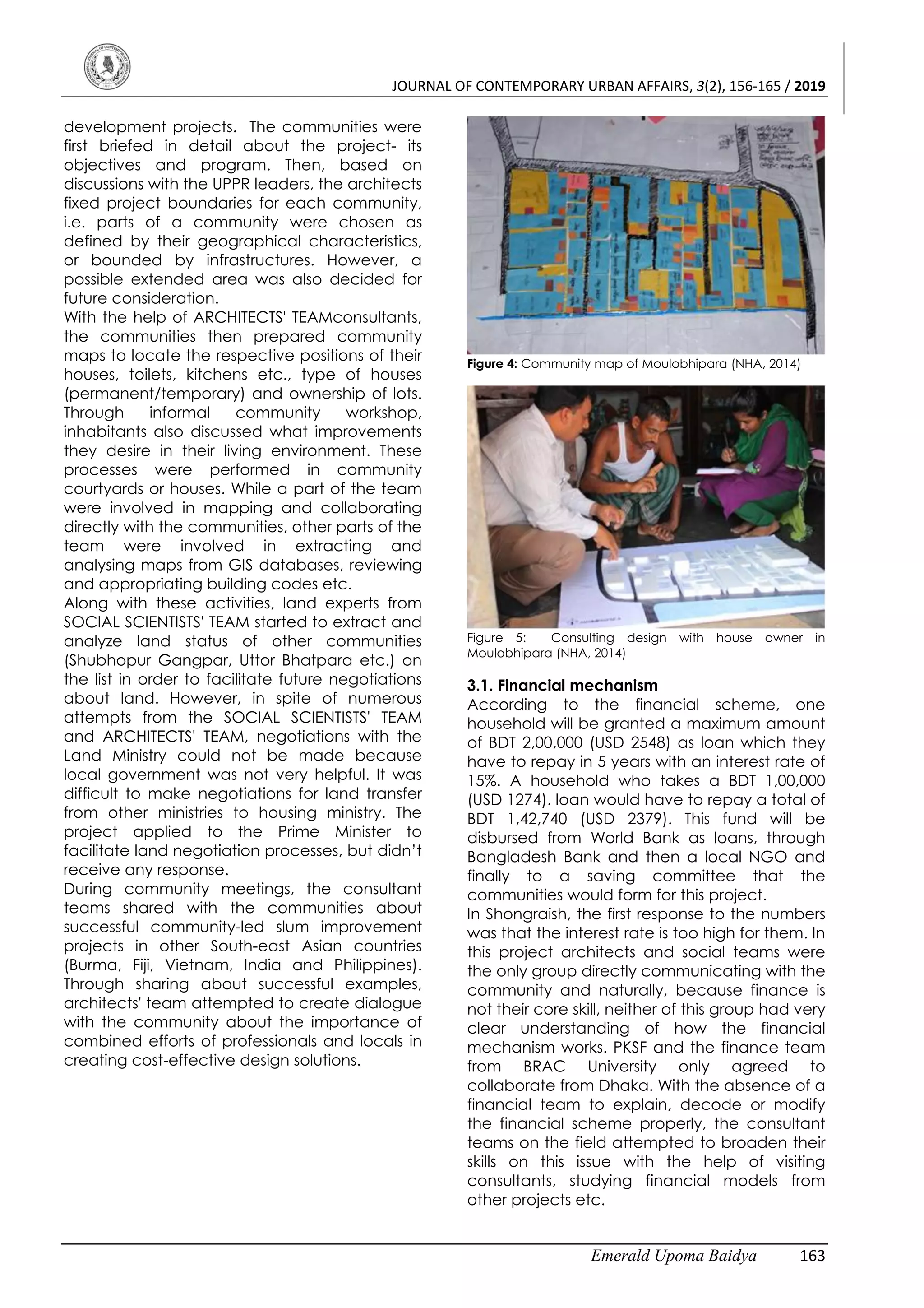
The article examines the challenges of community development projects in Bangladesh, specifically highlighting how rigid institutional frameworks can inhibit genuine participation from beneficiaries. Through insights from the Pro-Poor Slum Integration Project (PPSIP), it argues that established power hierarchies often lead to outcomes that serve institutional interests rather than community needs. The study emphasizes the importance of flexible, inclusive approaches to truly empower disadvantaged groups and foster effective participatory processes.