Understanding and Working with
Agile Culture

@MichaelSahota
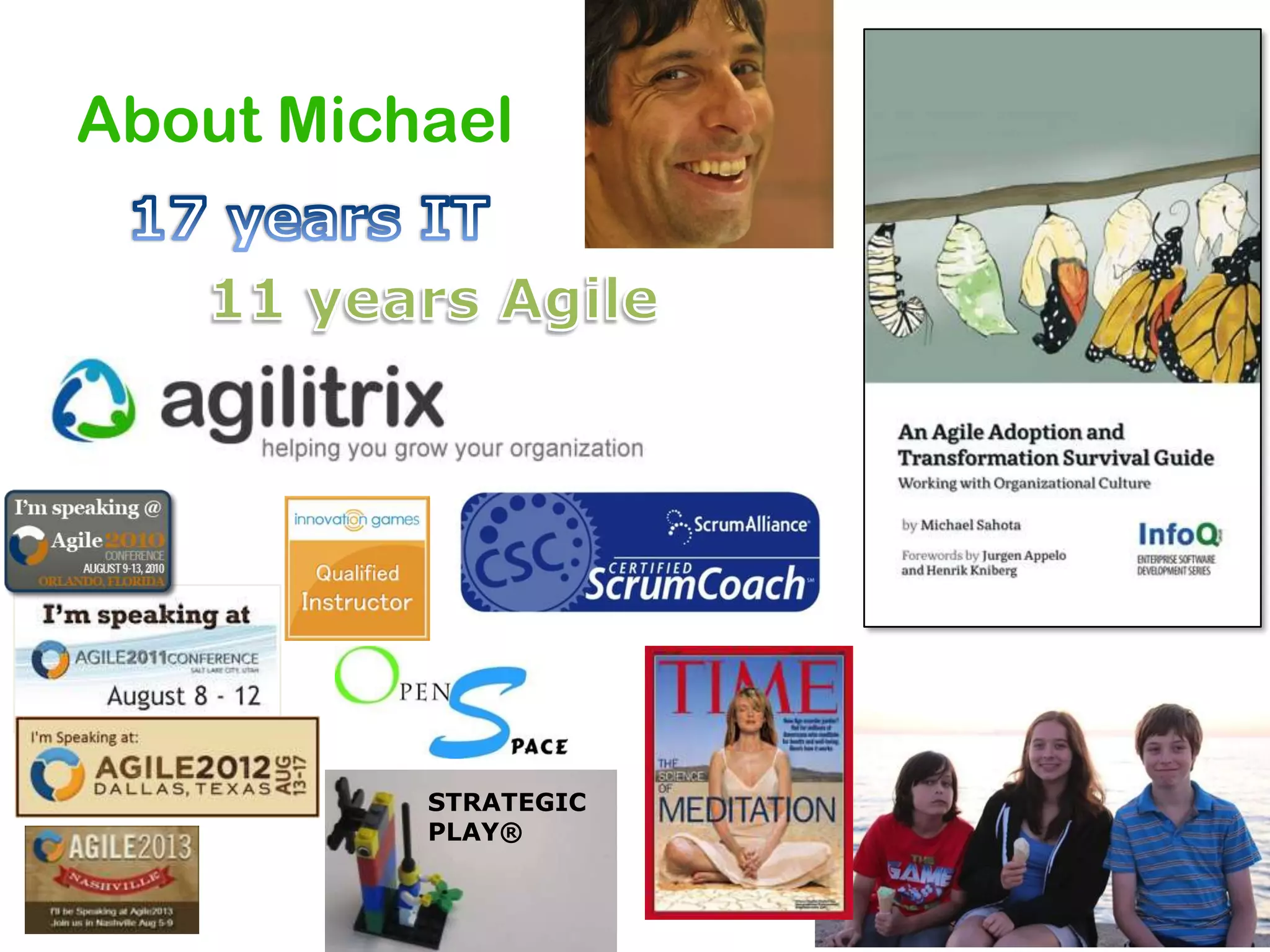
About Michael

STRATEGIC
PLAY®
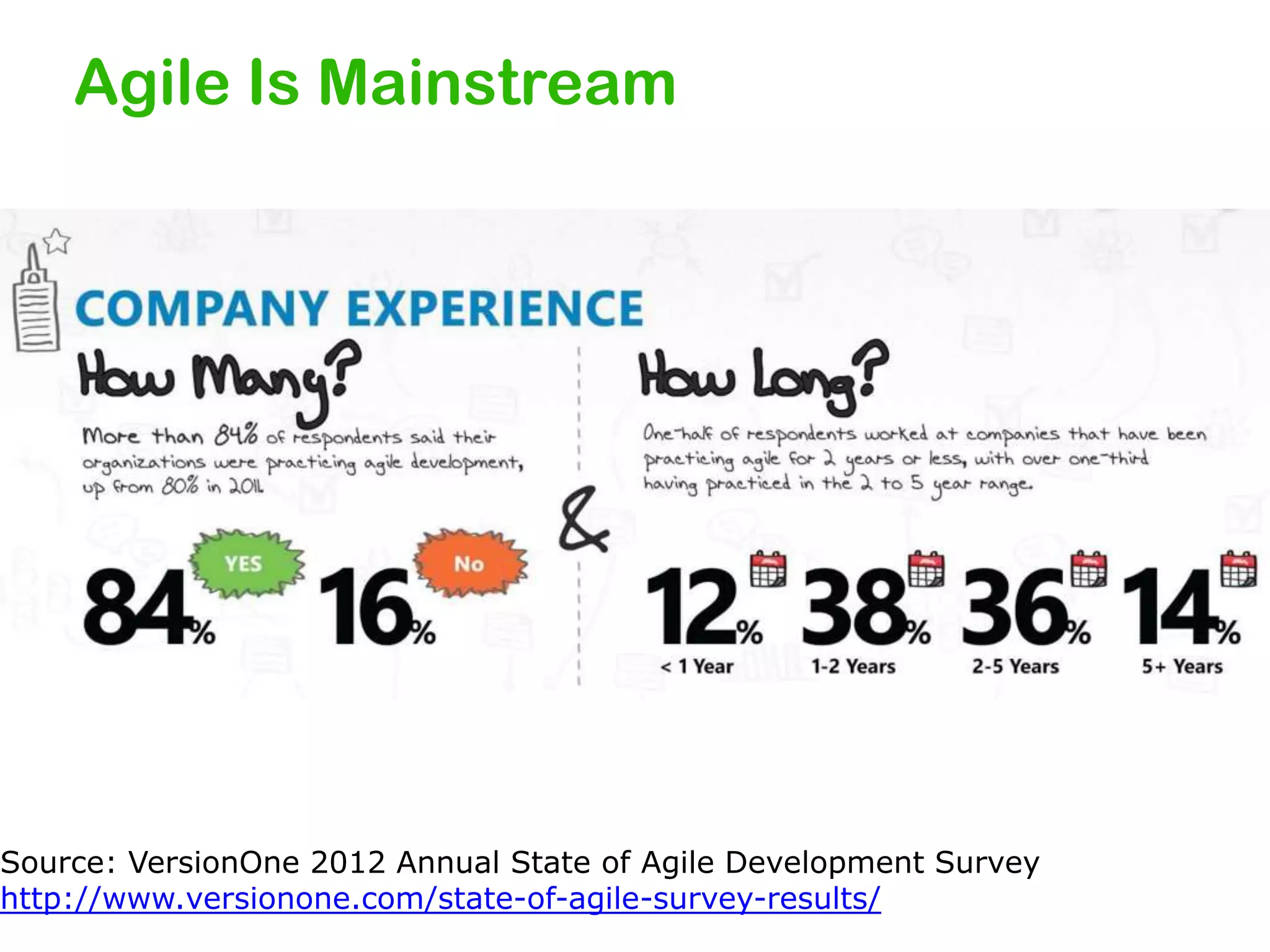
Agile Is Mainstream

Source: VersionOne 2012 Annual State of Agile Development Survey
http://www.versionone.com/state-of-agile-survey-results/
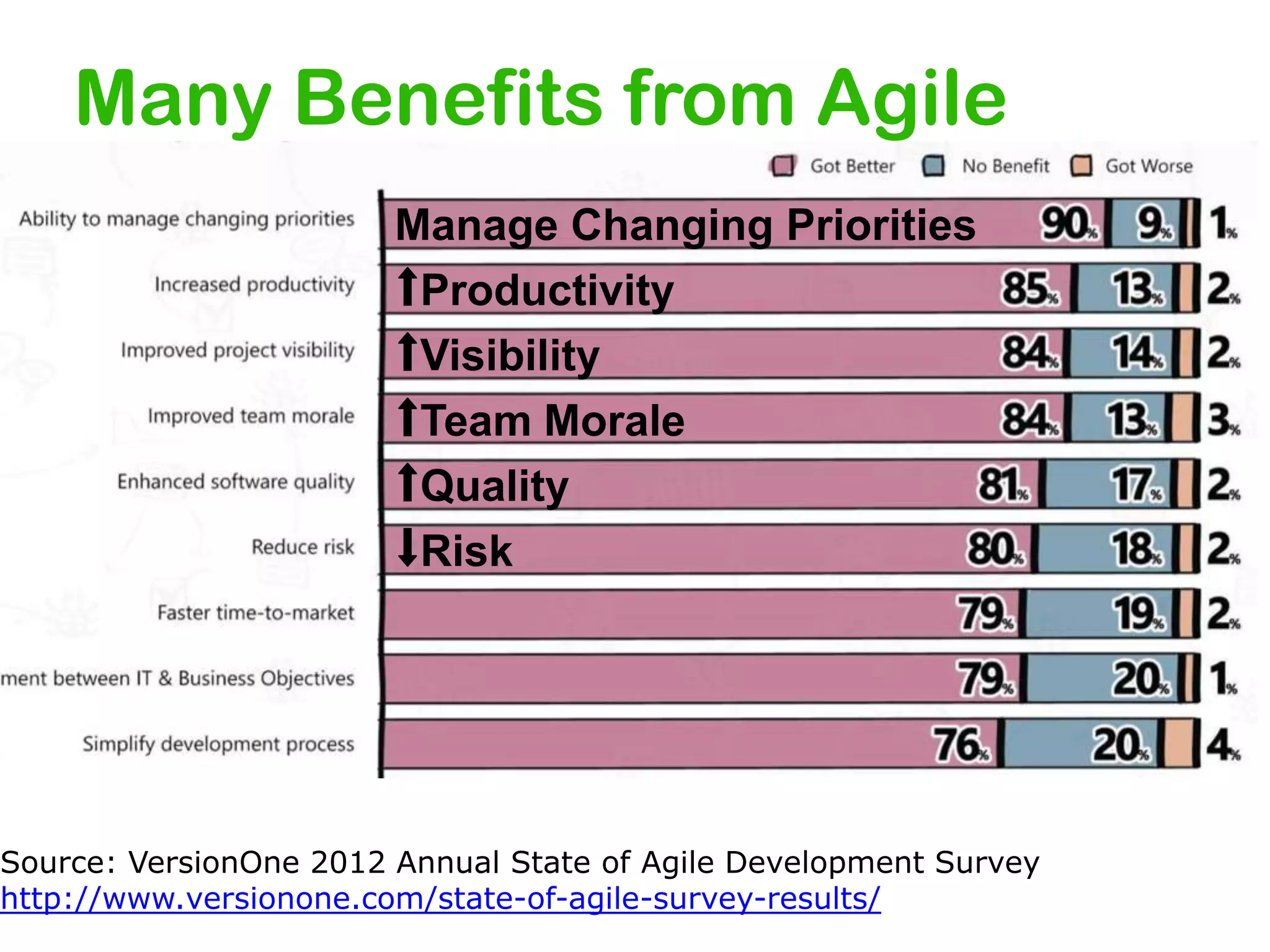
Many Benefits from Agile
Manage Changing Priorities
⬆Productivity
⬆Visibility
⬆Team Morale
⬆Quality
⬇Risk

Source: VersionOne 2012 Annual State of Agile Development Survey
http://www.versionone.com/state-of-agile-survey-results/
Agile is not a Silver Bullet

CC Photo by http://www.flickr.com/photos/eschipul/
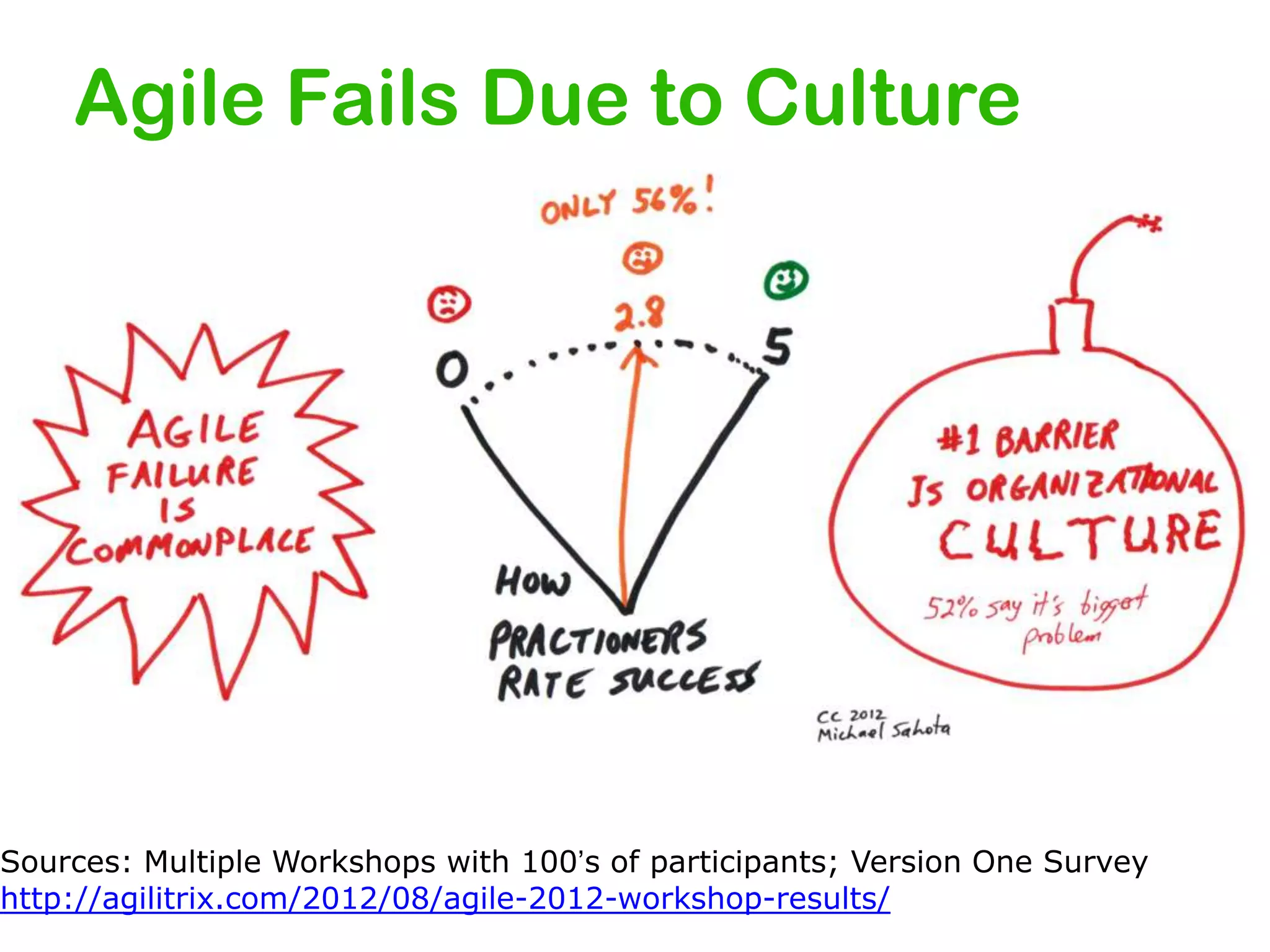
Agile Fails Due to Culture

Sources: Multiple Workshops with 100’s of participants; Version One Survey
http://agilitrix.com/2012/08/agile-2012-workshop-results/
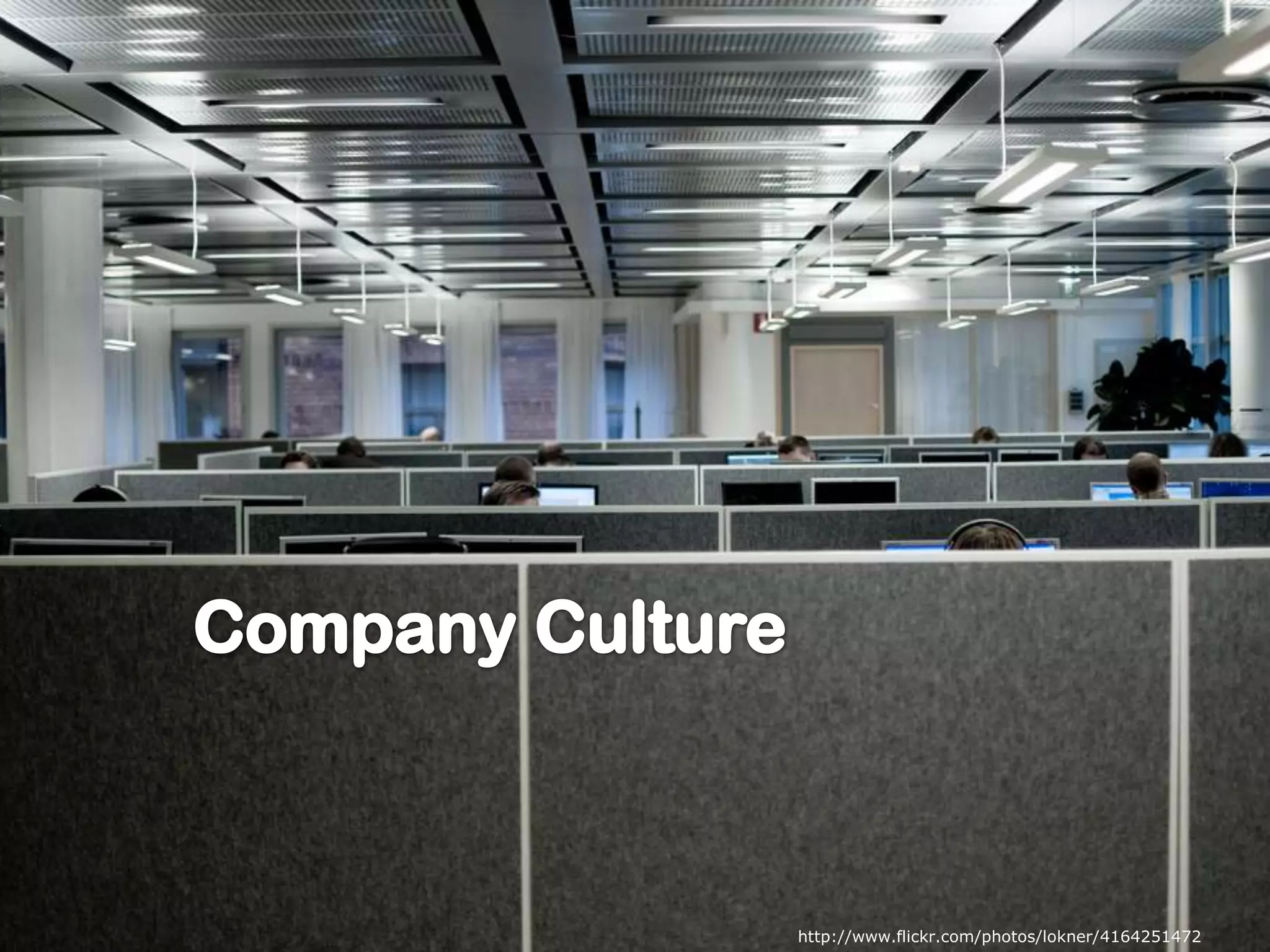
http://www.flickr.com/photos/lokner/4164251472
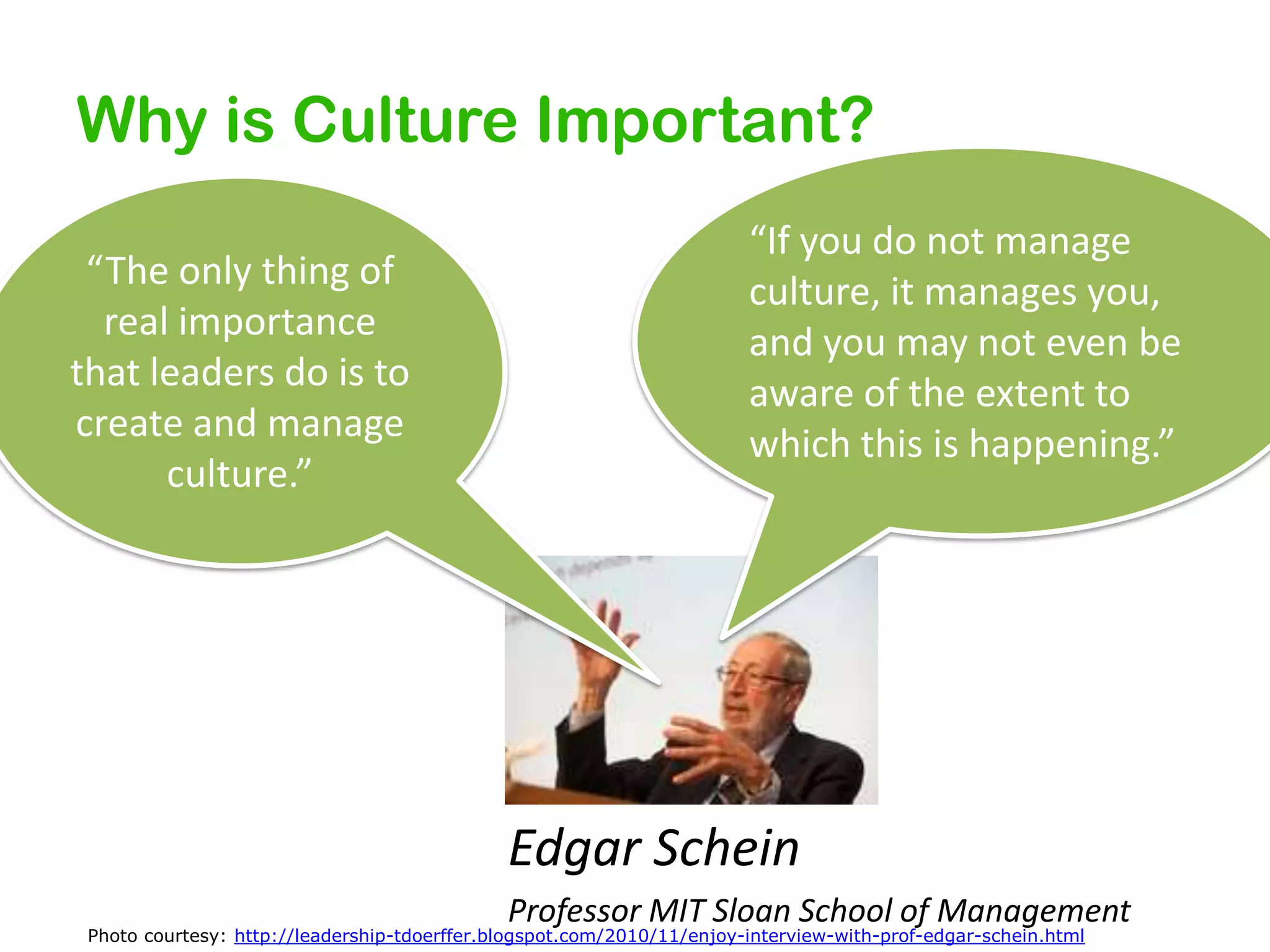
Why is Culture Important?
“The only thing of
real importance
that leaders do is to
create and manage
culture.”

“If you do not manage
culture, it manages you,
and you may not even be
aware of the extent to
which this is happening.”

Edgar Schein
Professor MIT Sloan School of Management

Photo courtesy: http://leadership-tdoerffer.blogspot.com/2010/11/enjoy-interview-with-prof-edgar-schein.html
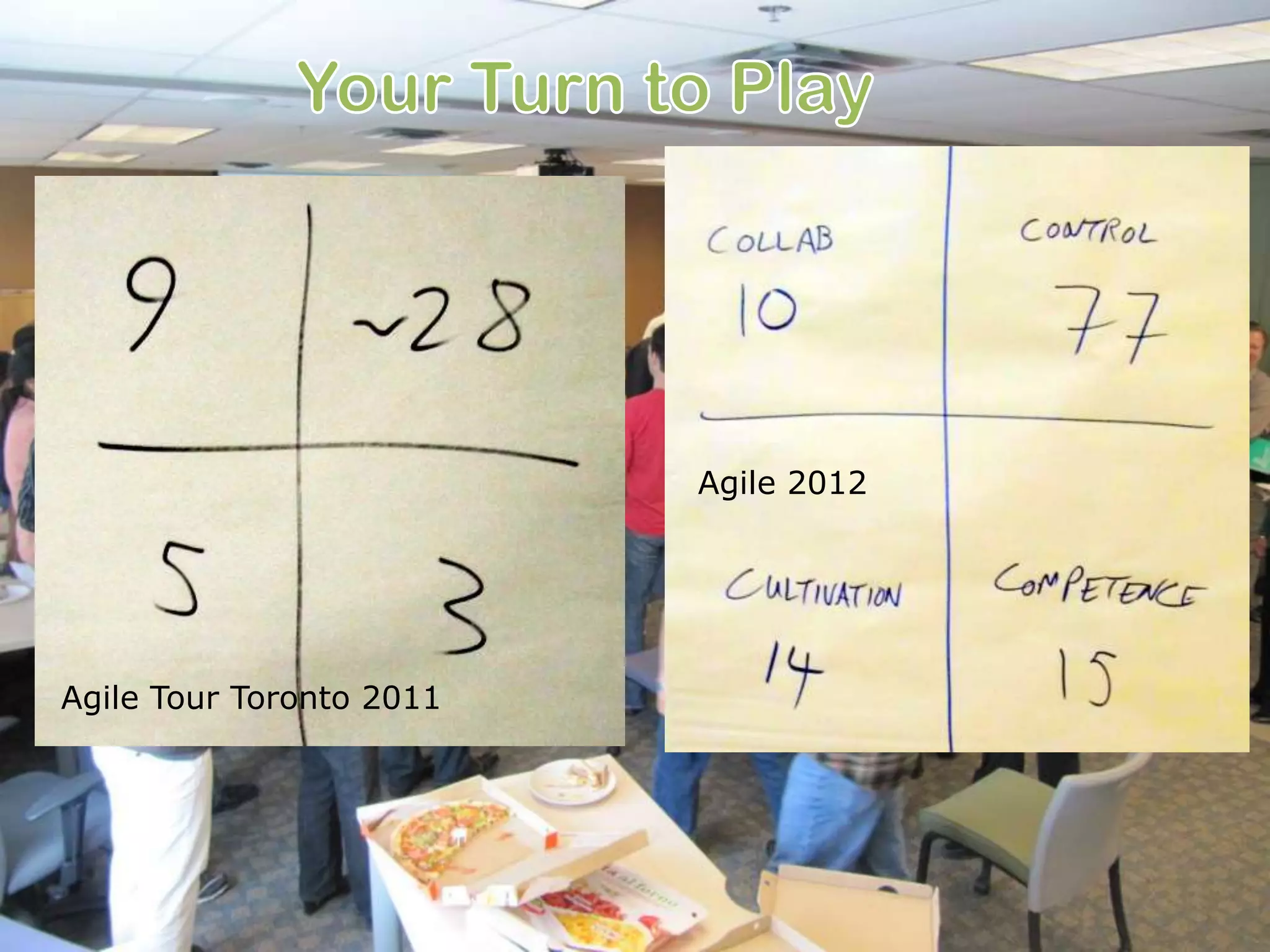
Agile 2012

Agile Tour Toronto 2011
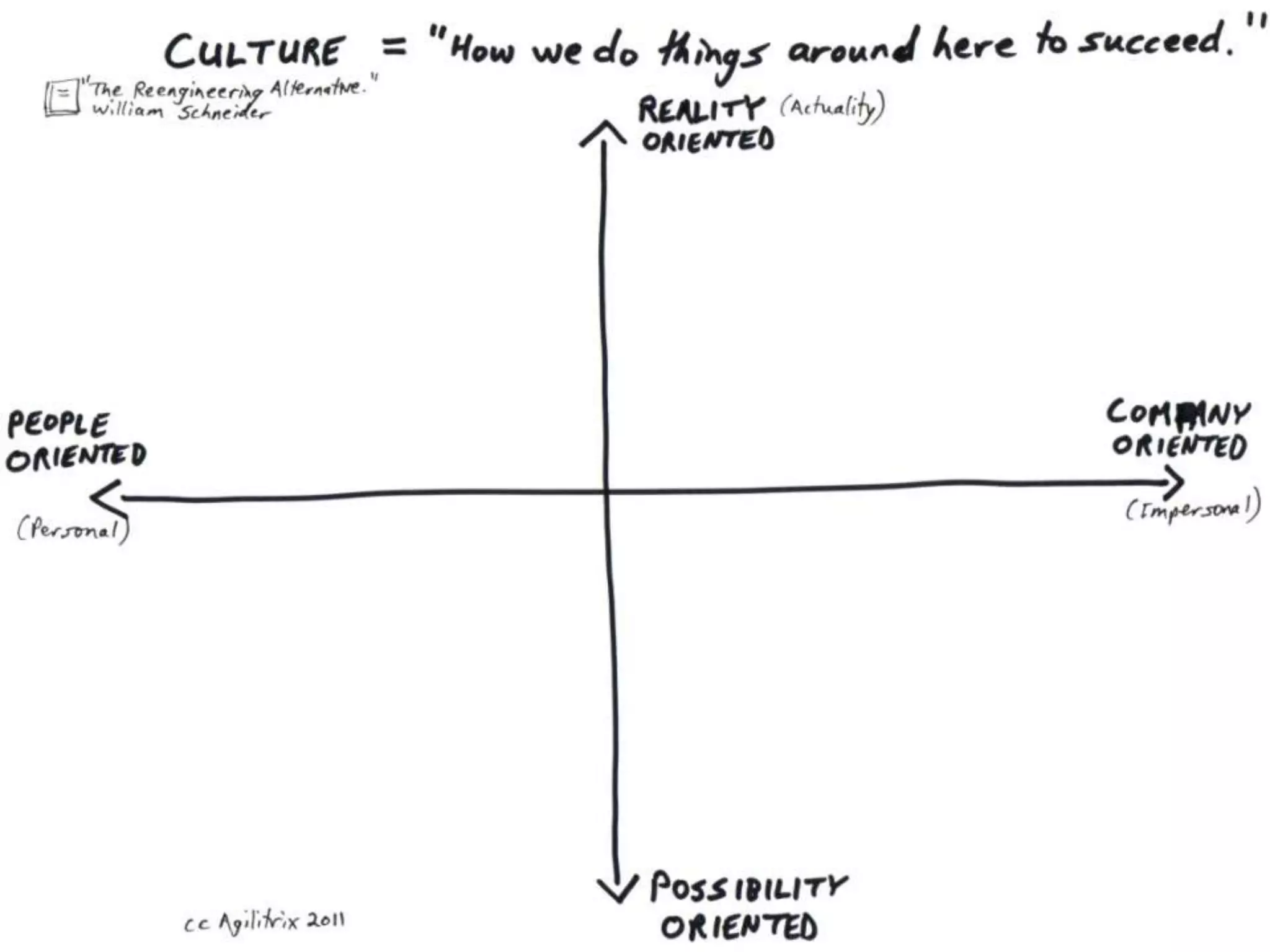
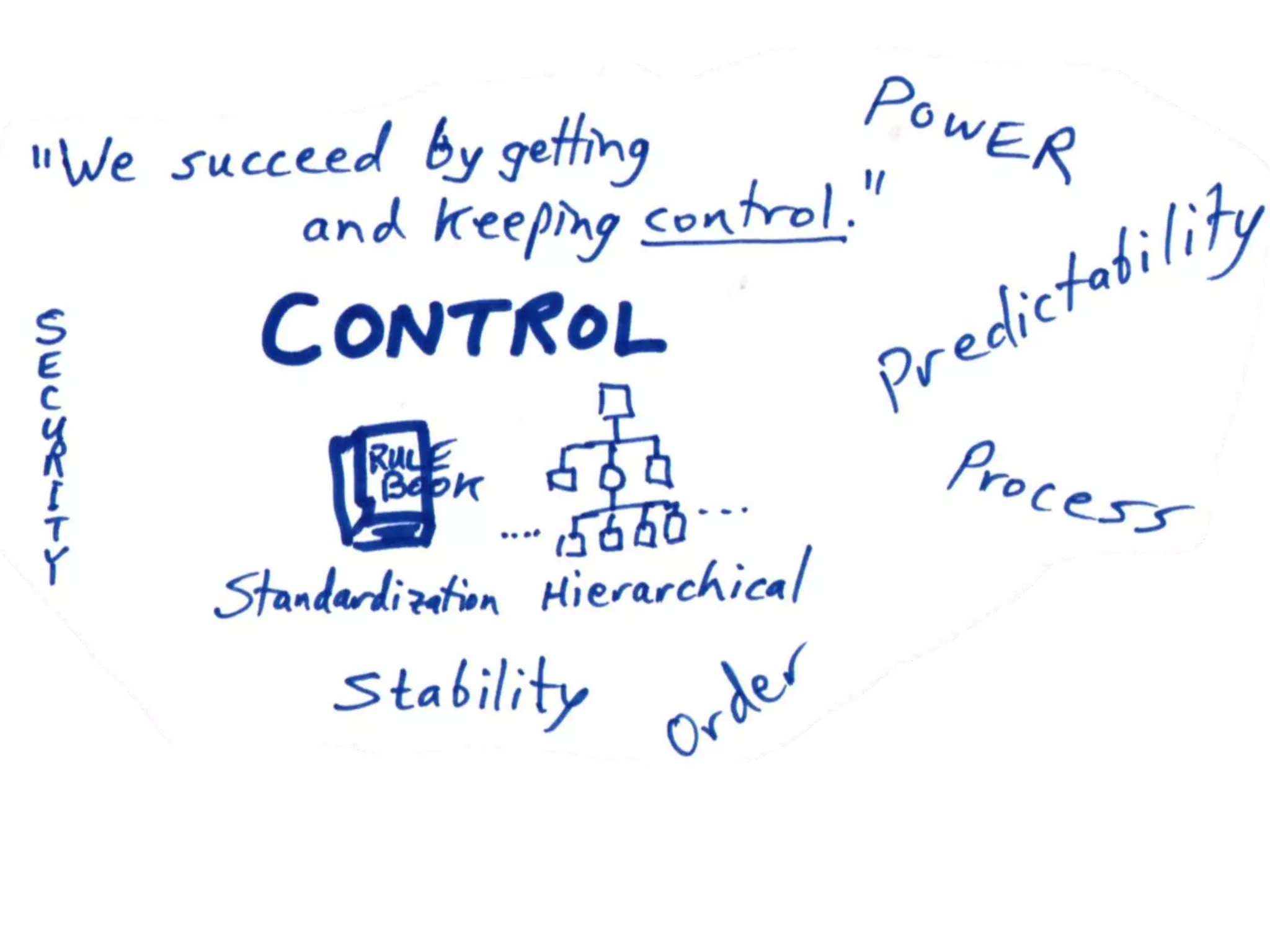
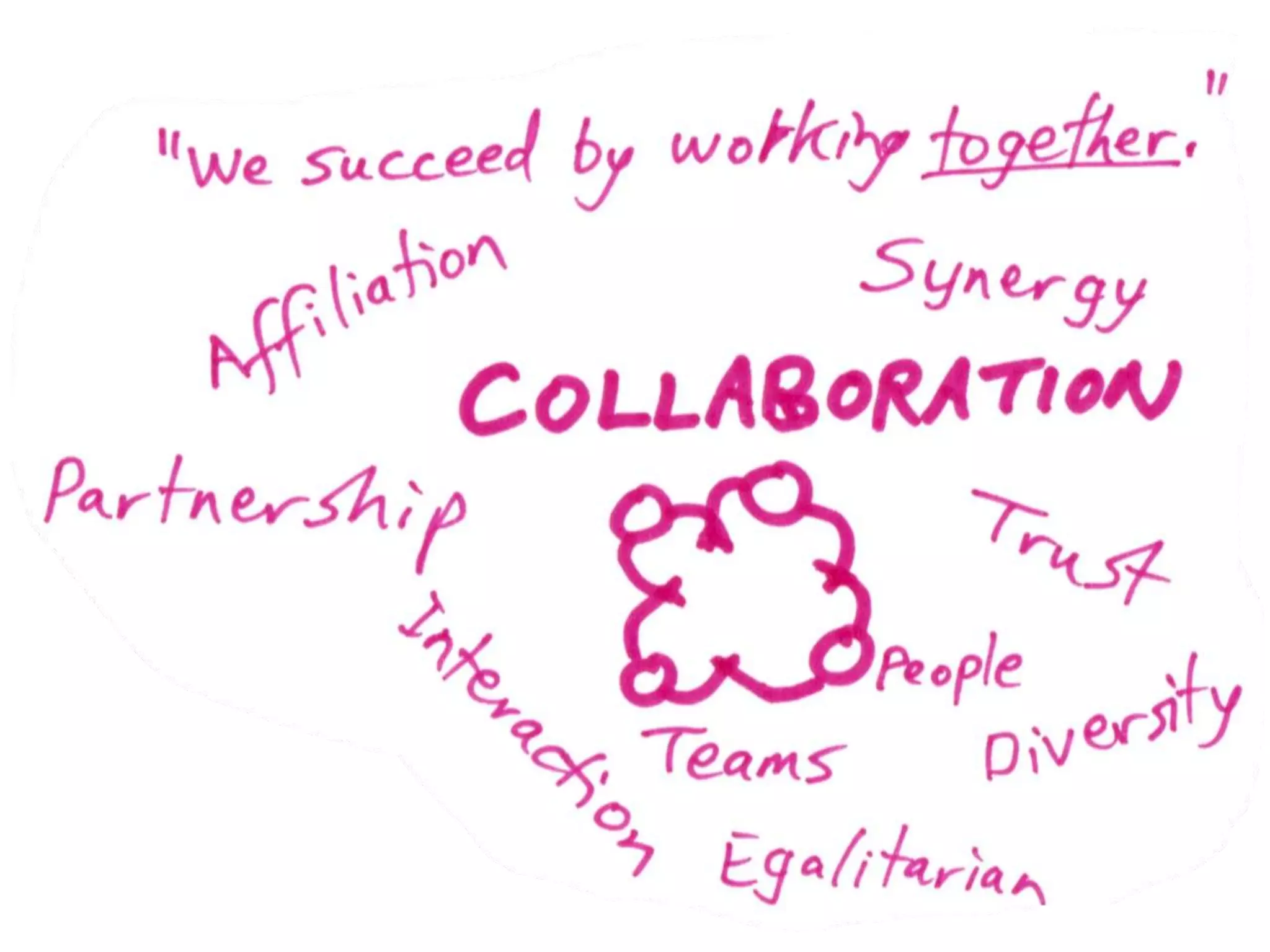
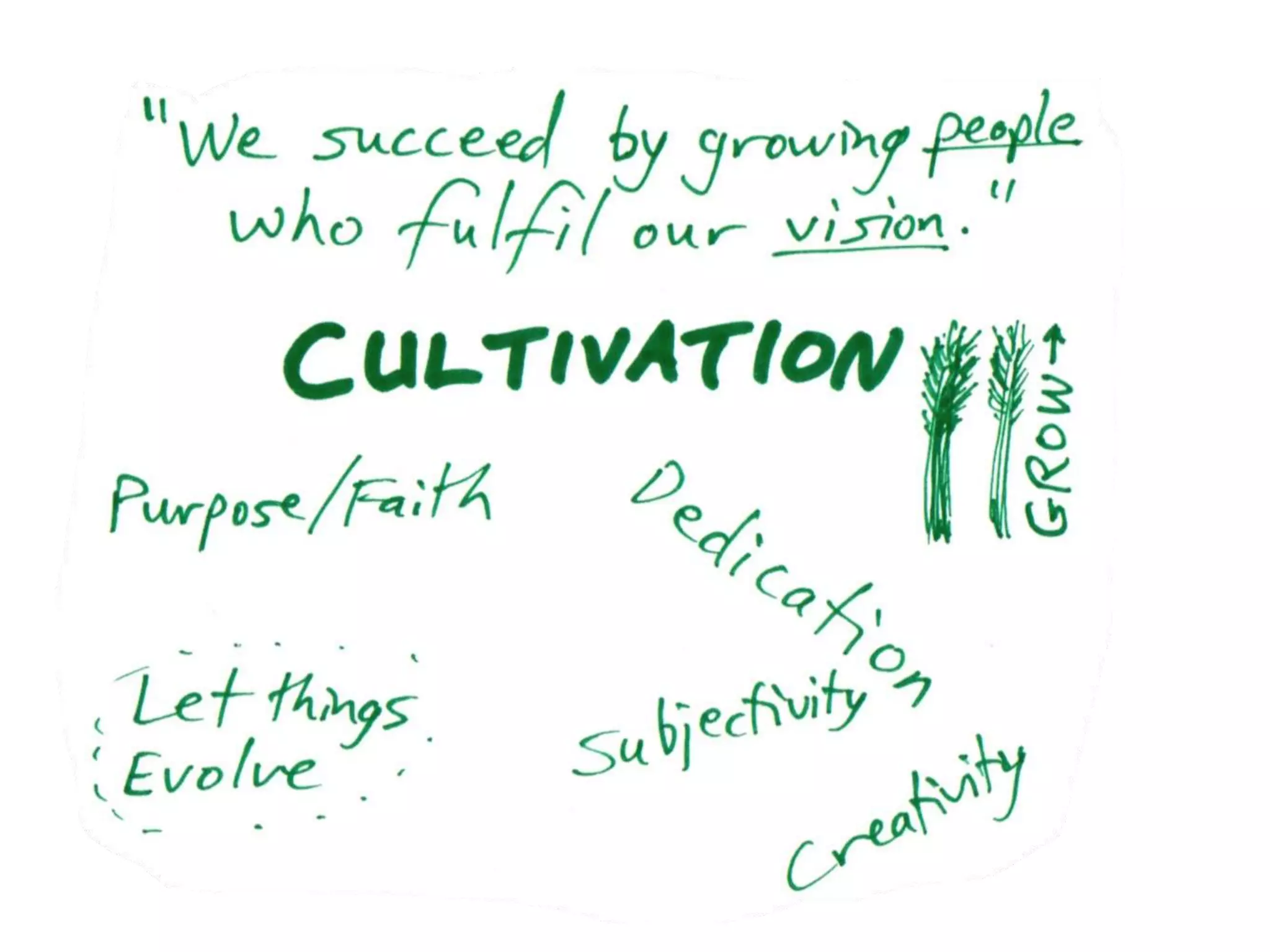
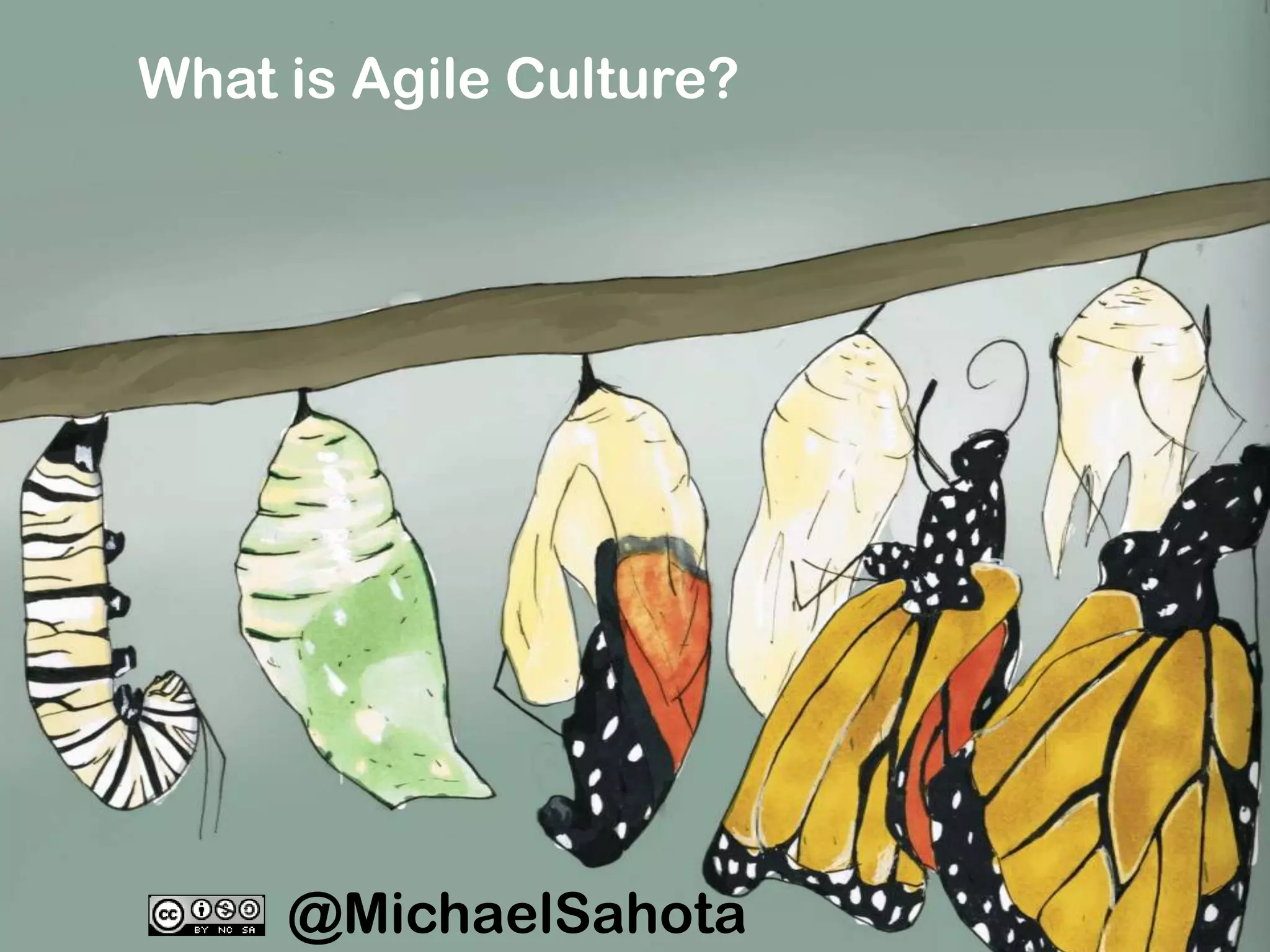
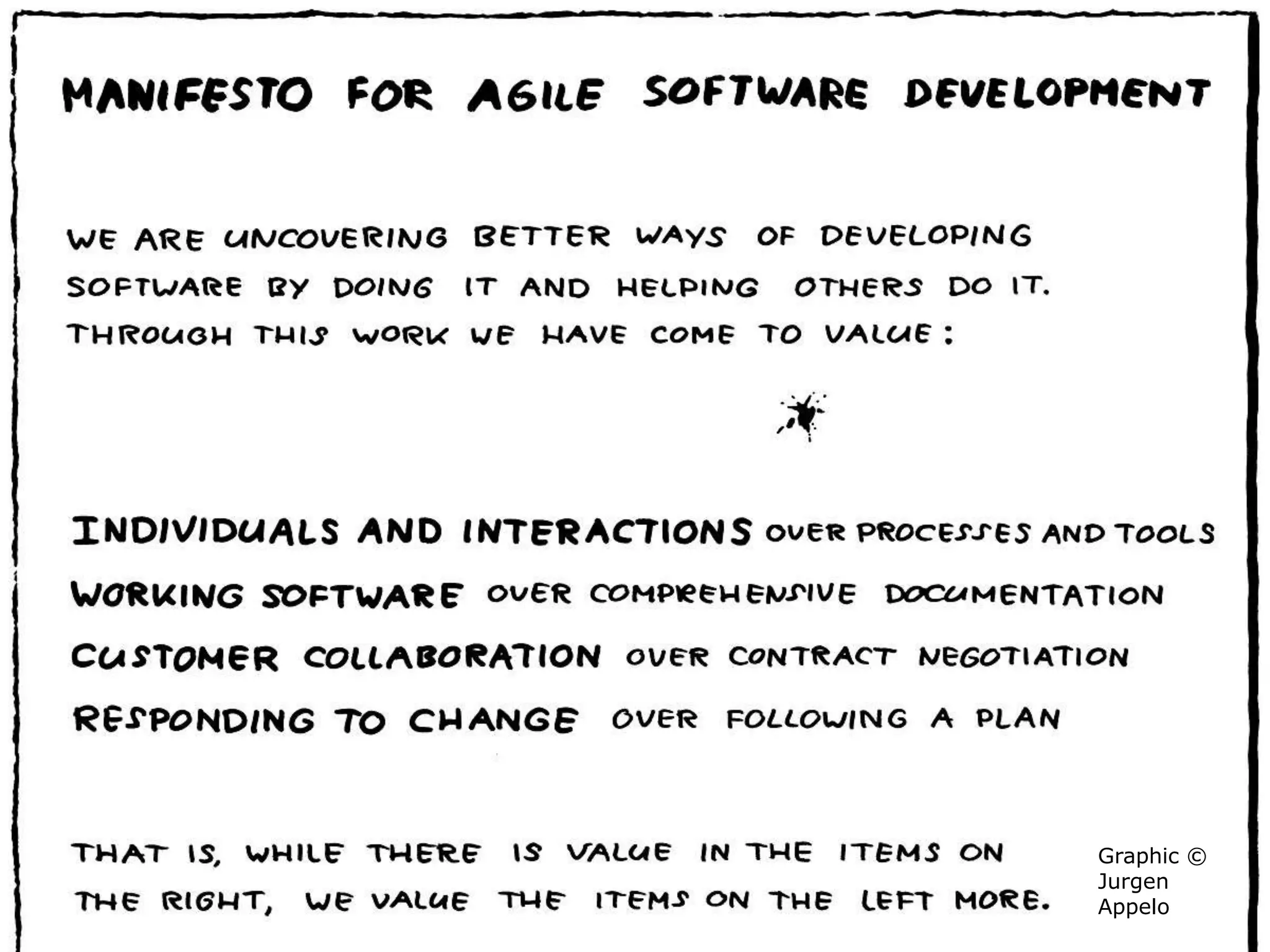
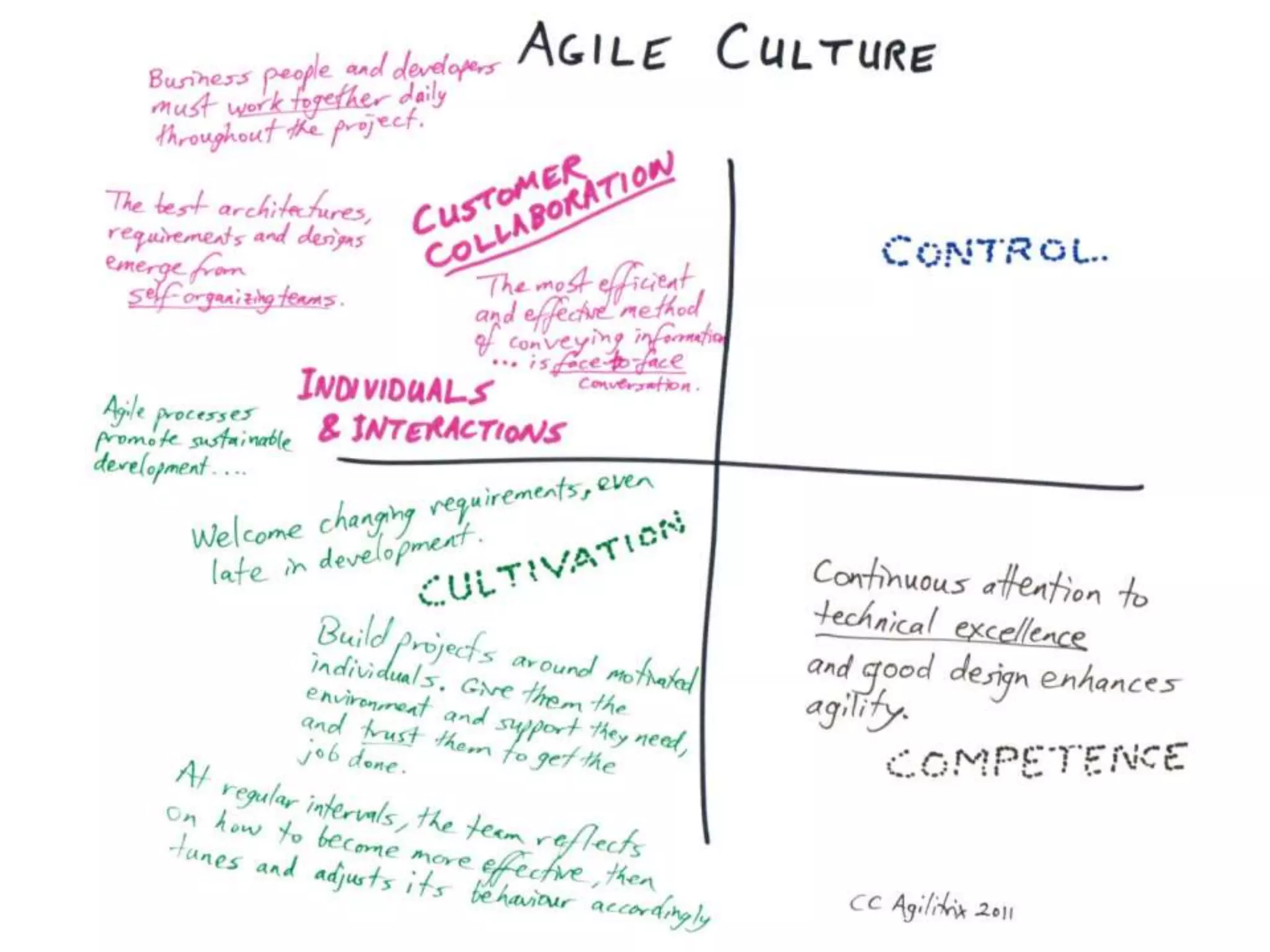
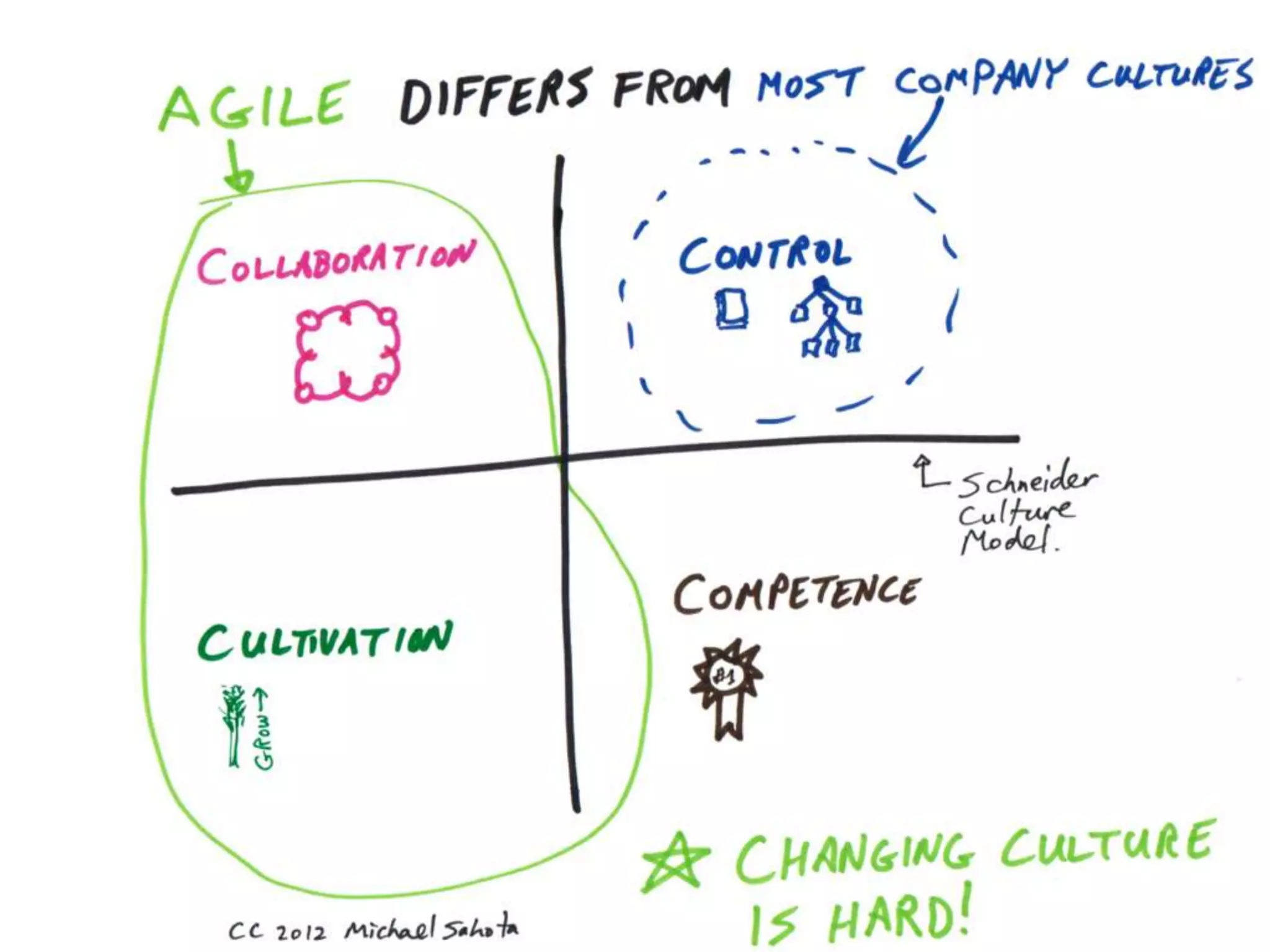
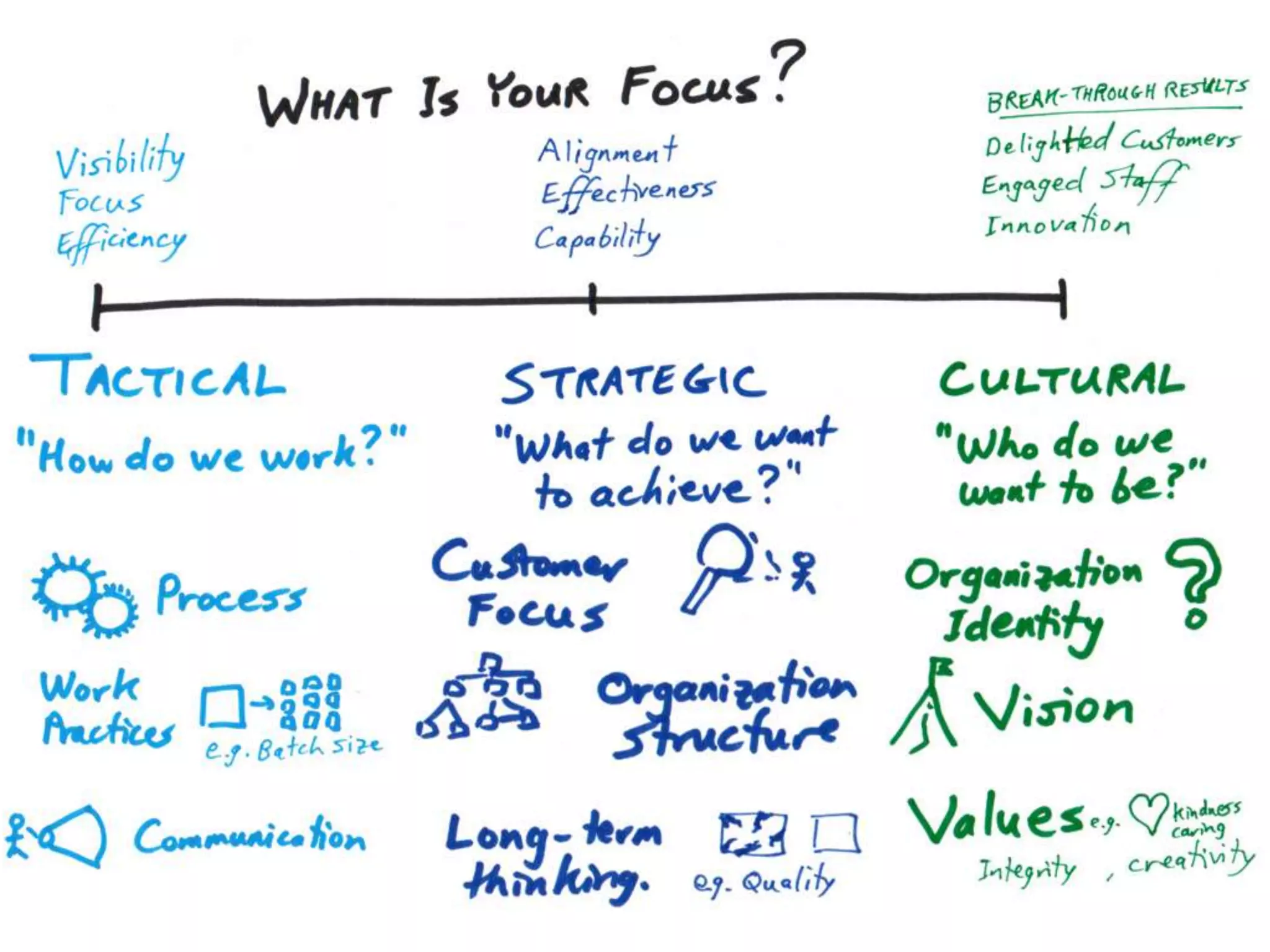
What is Agile Culture?

@MichaelSahota
Graphic ©
Jurgen
Appelo
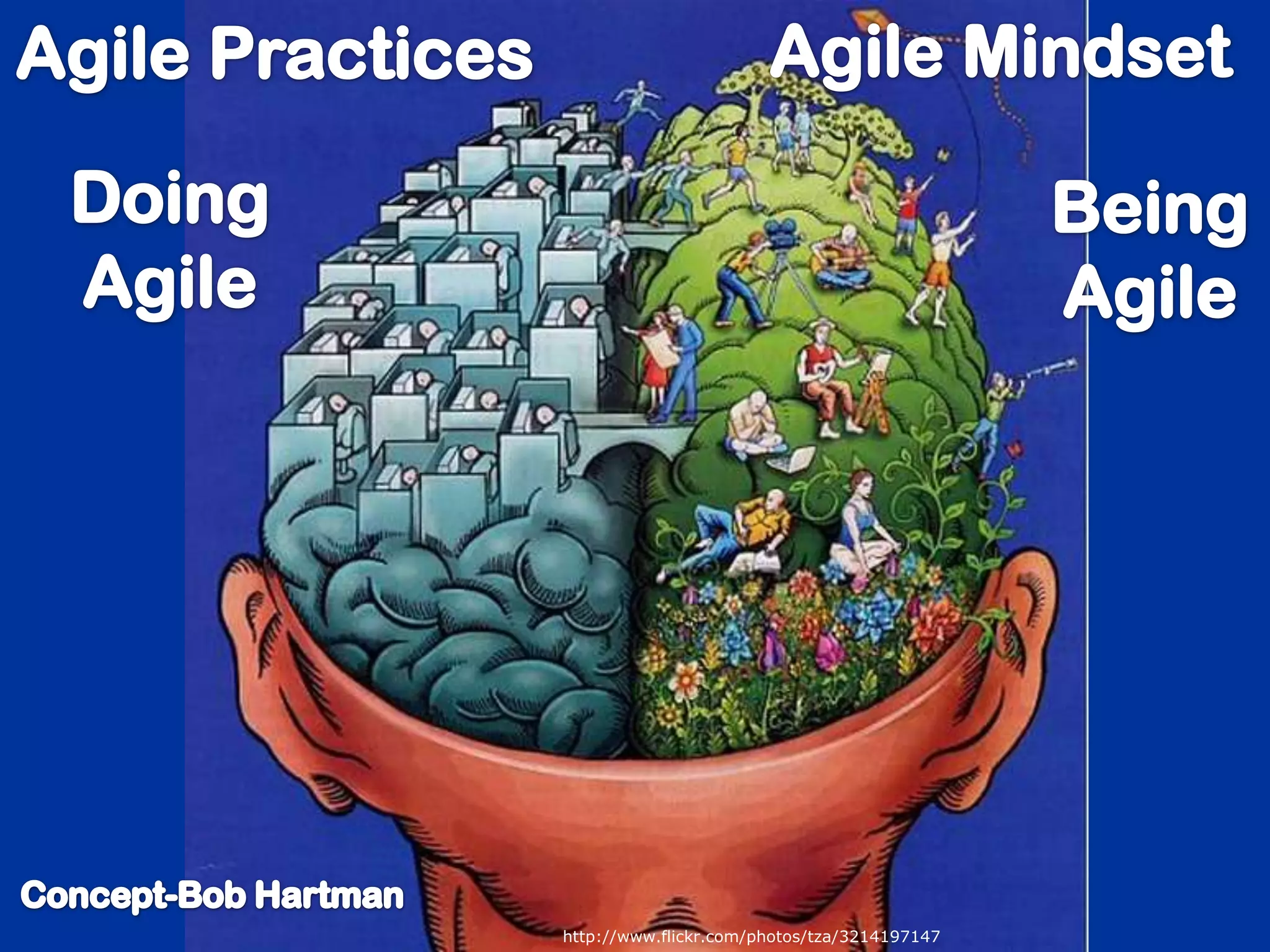
http://www.flickr.com/photos/tza/3214197147
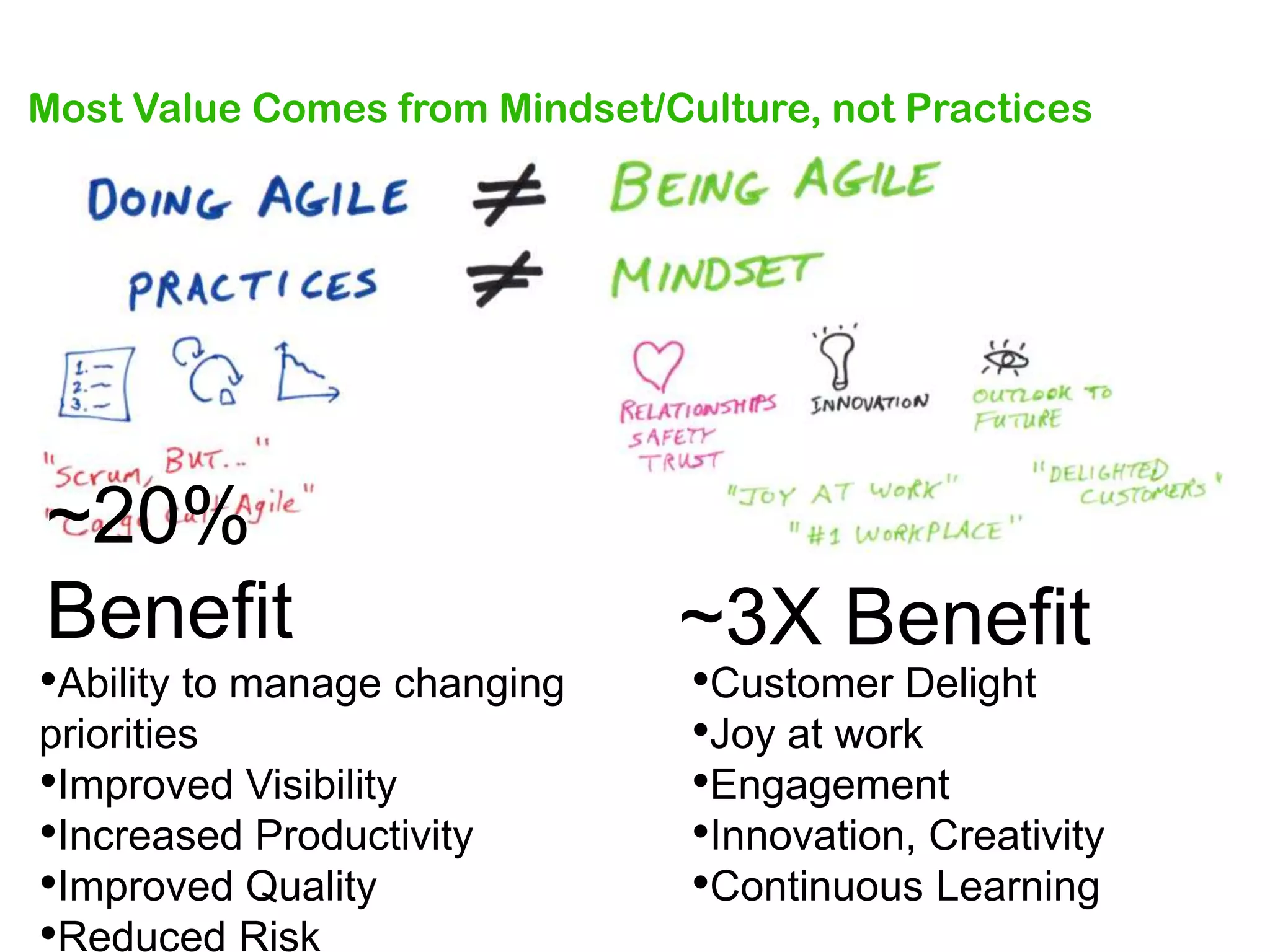
Most Value Comes from Mindset/Culture, not Practices
~20%
Benefit

•Ability to manage changing
priorities
•Improved Visibility
•Increased Productivity
•Improved Quality
•Reduced Risk

~3X Benefit

•Customer Delight
•Joy at work
•Engagement
•Innovation, Creativity
•Continuous Learning
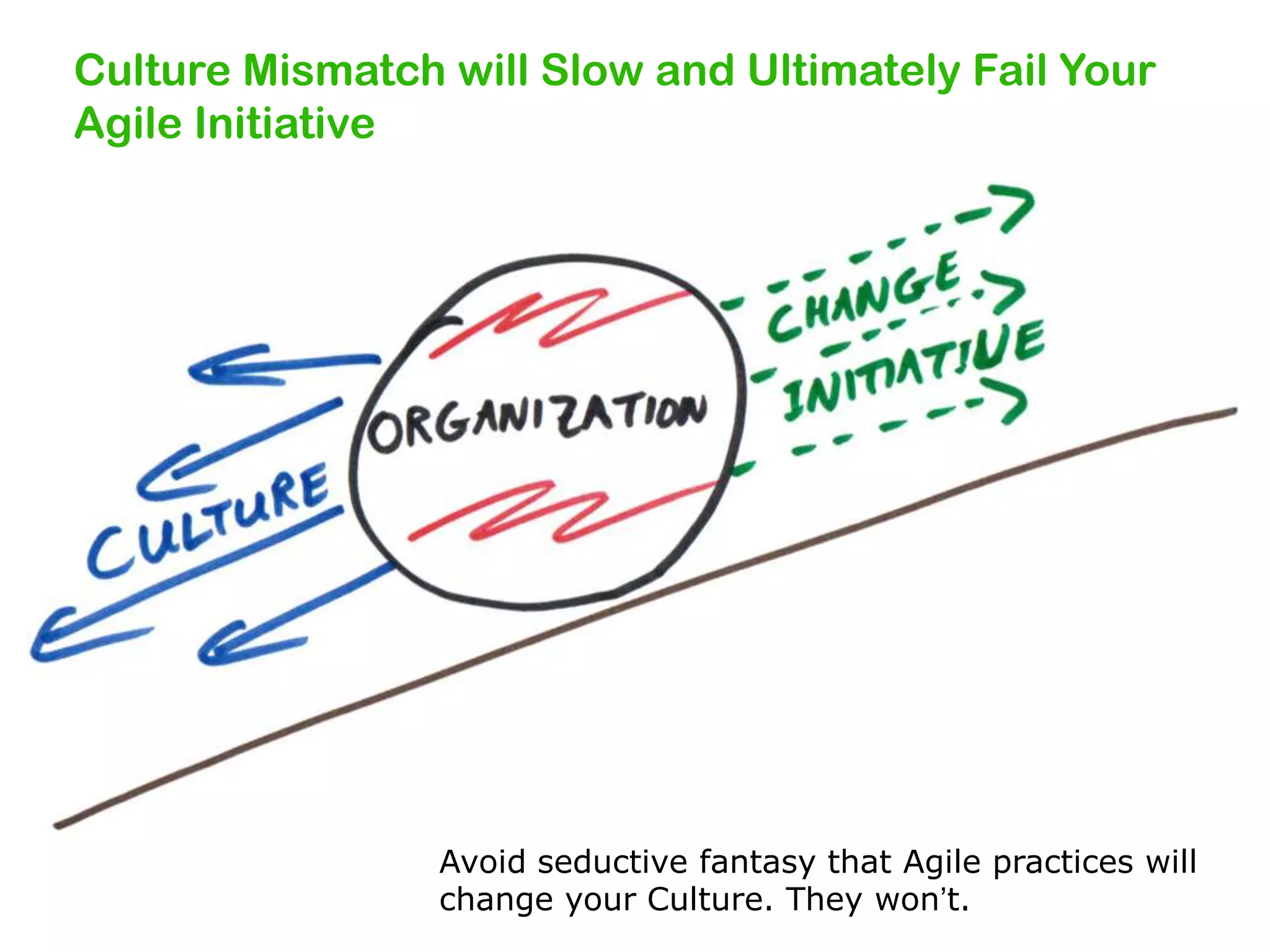
Culture Mismatch will Slow and Ultimately Fail Your
Agile Initiative

Avoid seductive fantasy that Agile practices will
change your Culture. They won’t.
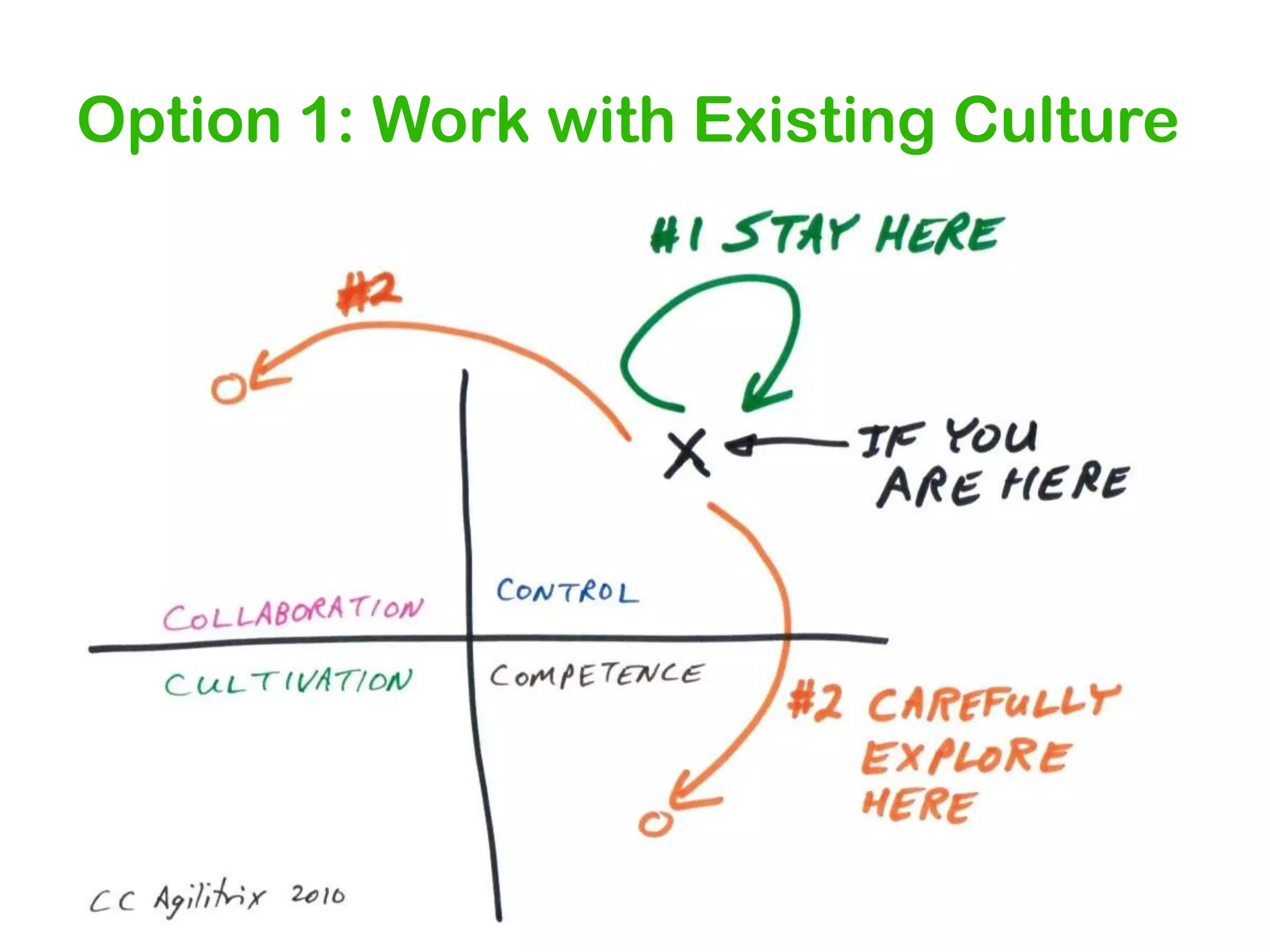
Option 1: Work with Existing Culture
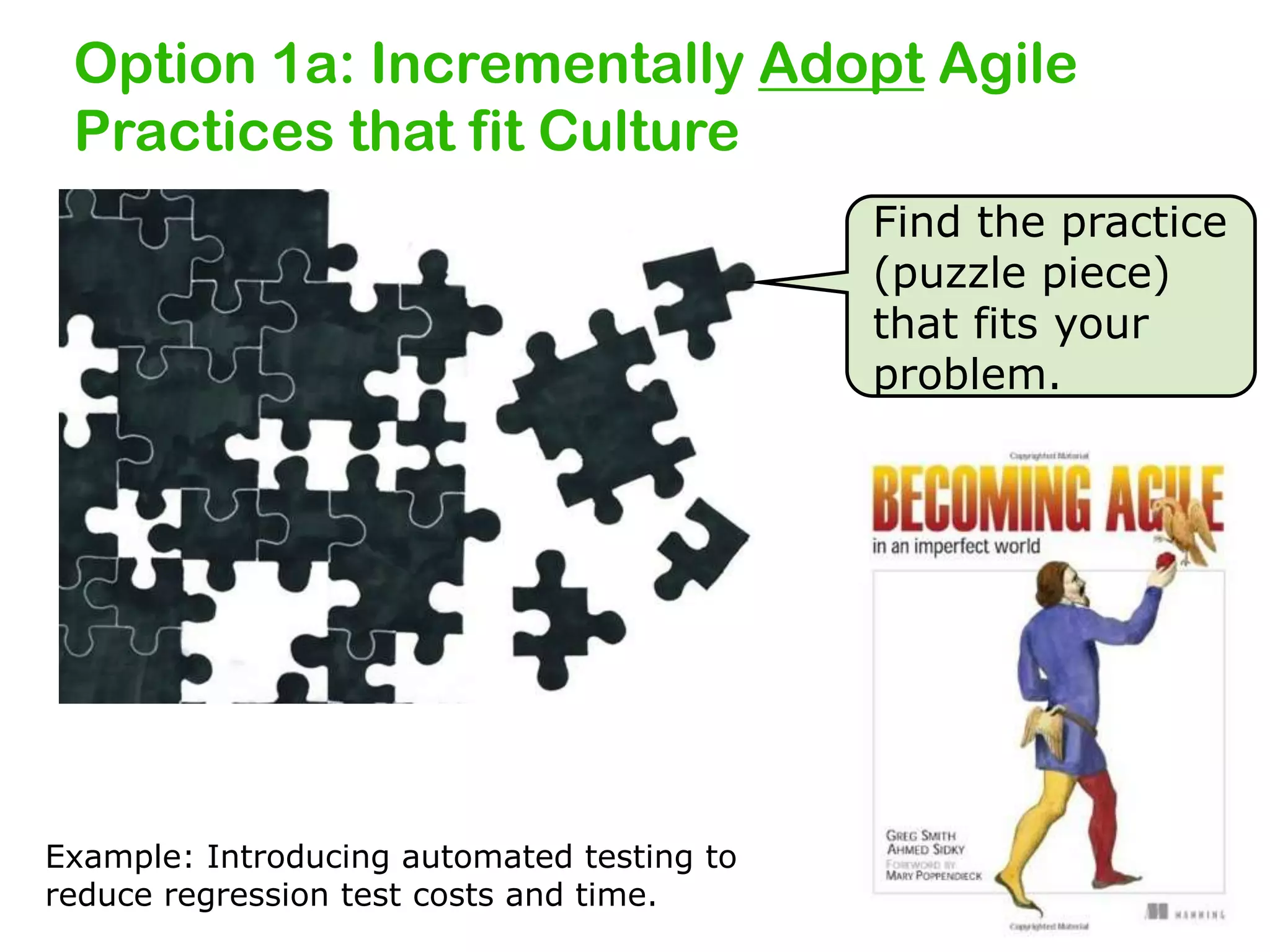
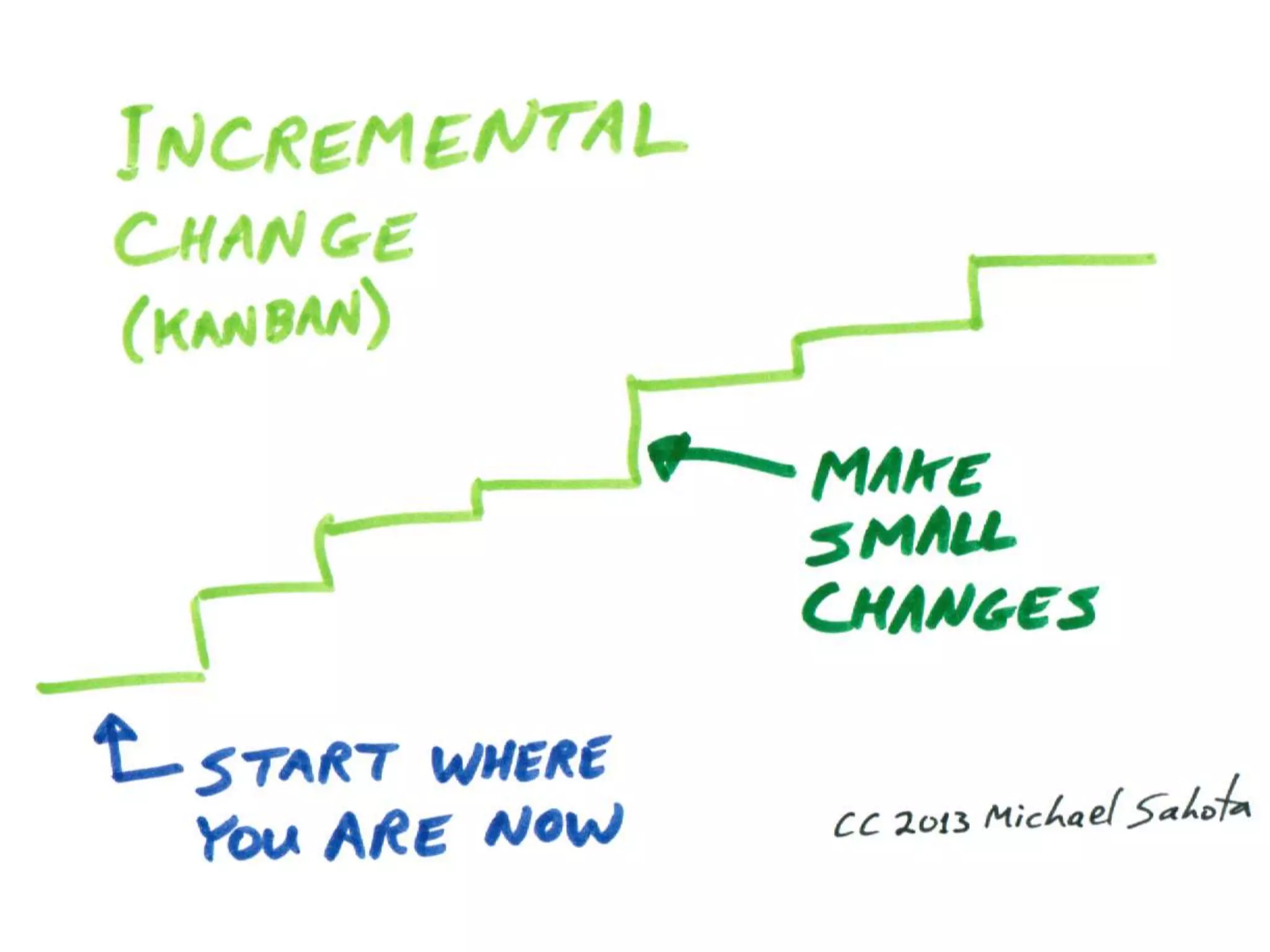
Option 1a: Incrementally Adopt Agile
Practices that fit Culture
Find the practice
(puzzle piece)
that fits your
problem.

Example: Introducing automated testing to
reduce regression test costs and time.
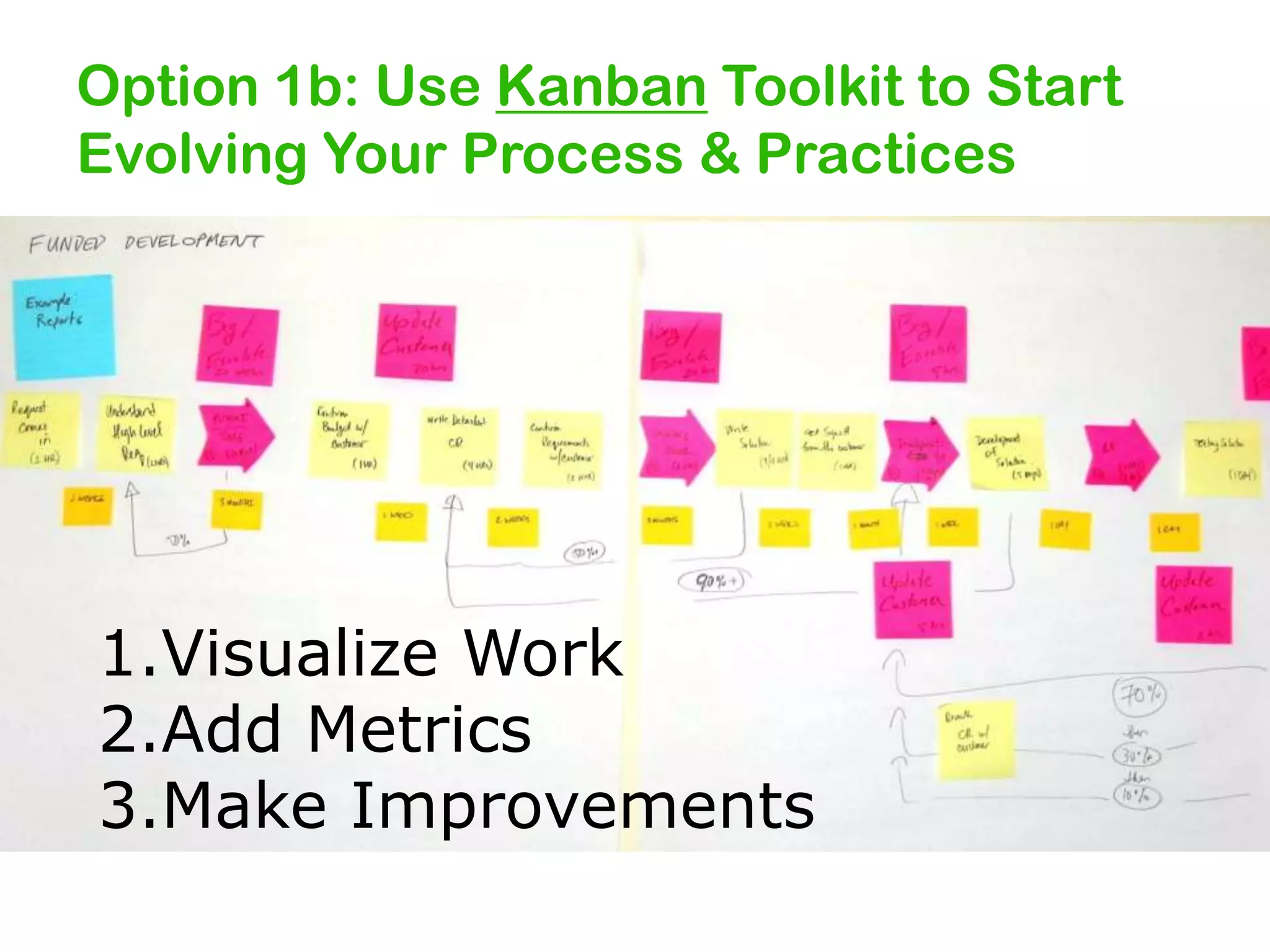
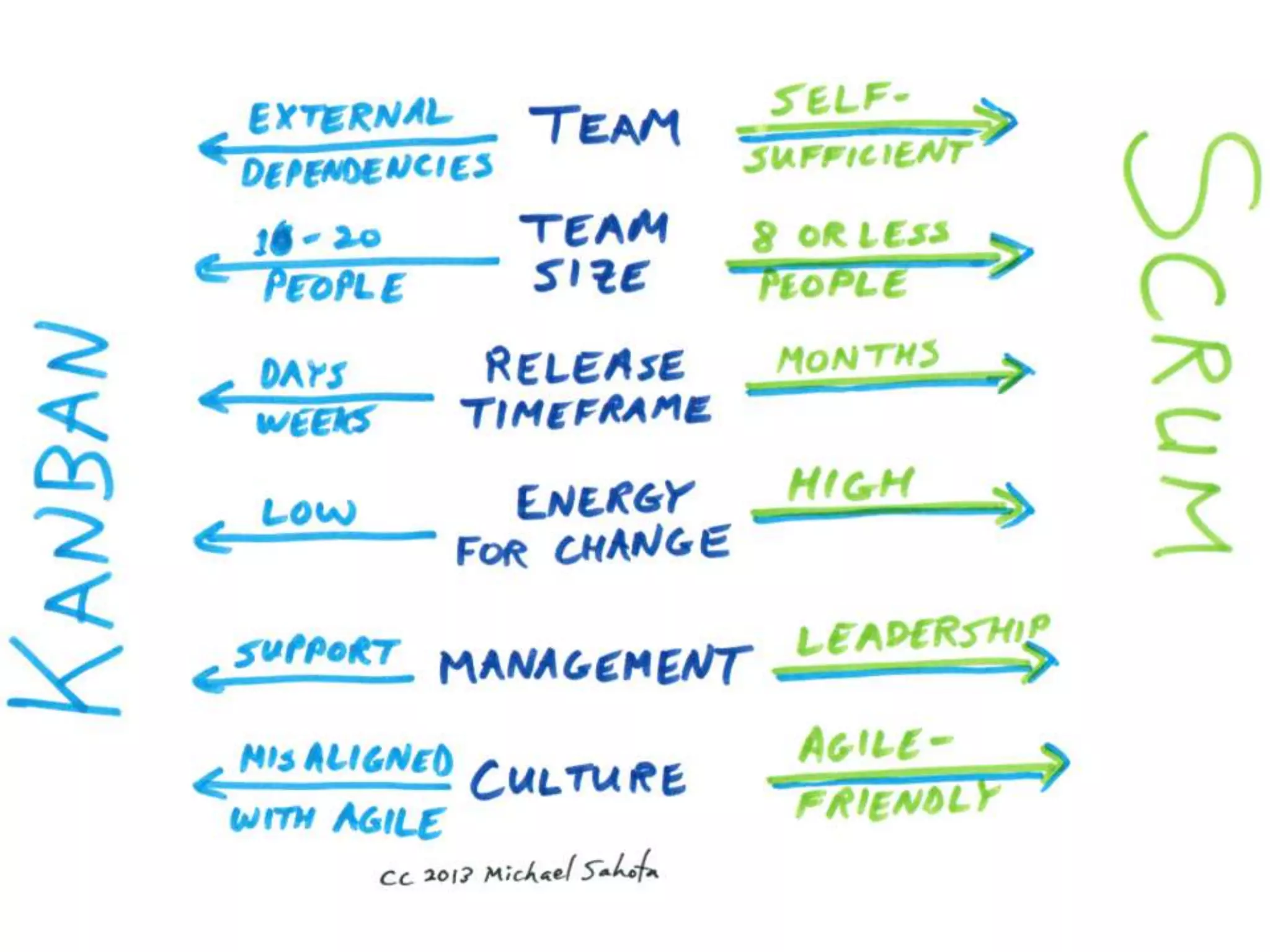
Option 1b: Use Kanban Toolkit to Start
Evolving Your Process & Practices

1.Visualize Work
2.Add Metrics
3.Make Improvements
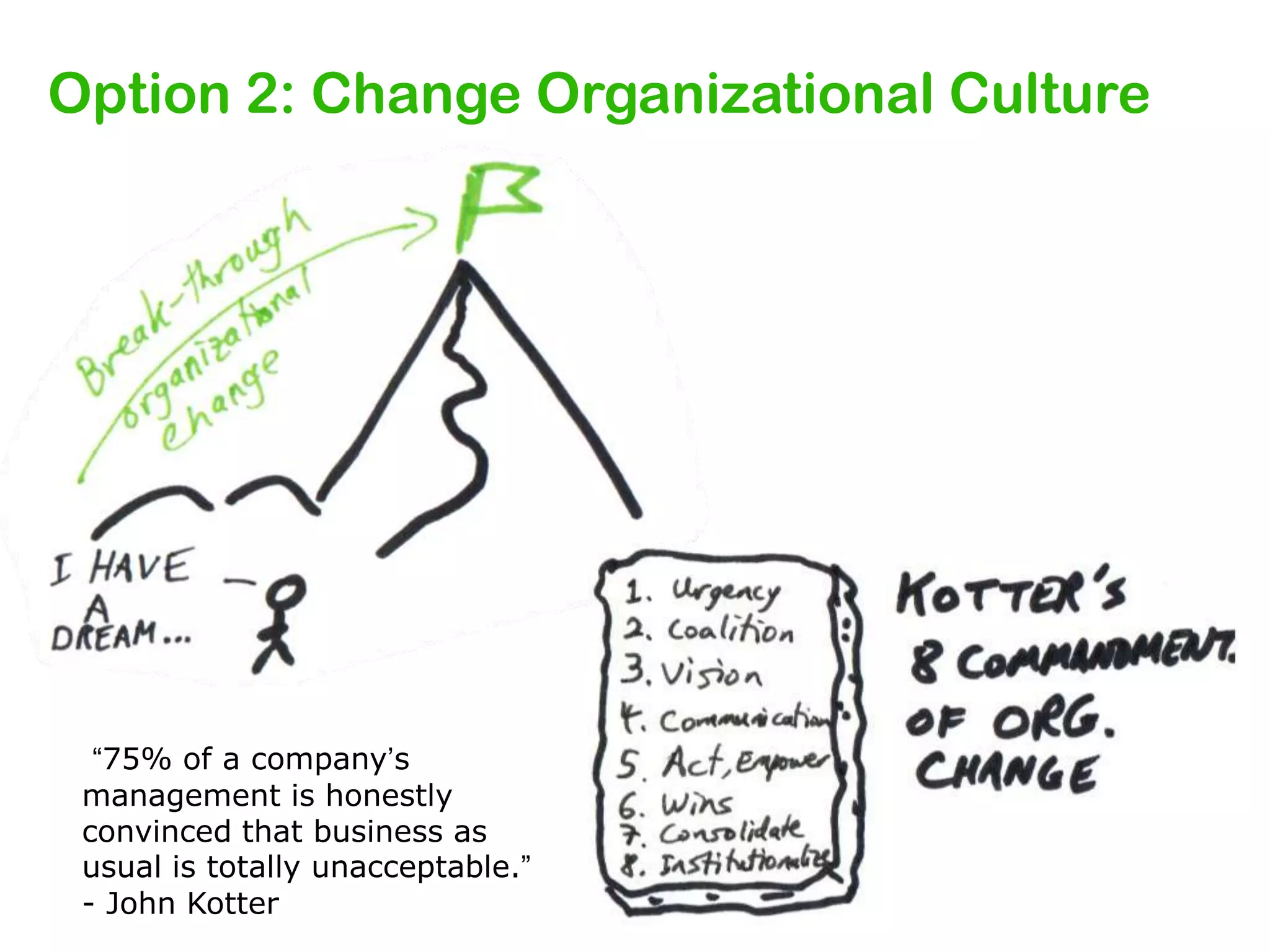
Option 2: Change Organizational Culture

“75% of a company’s
management is honestly
convinced that business as
usual is totally unacceptable.”
- John Kotter
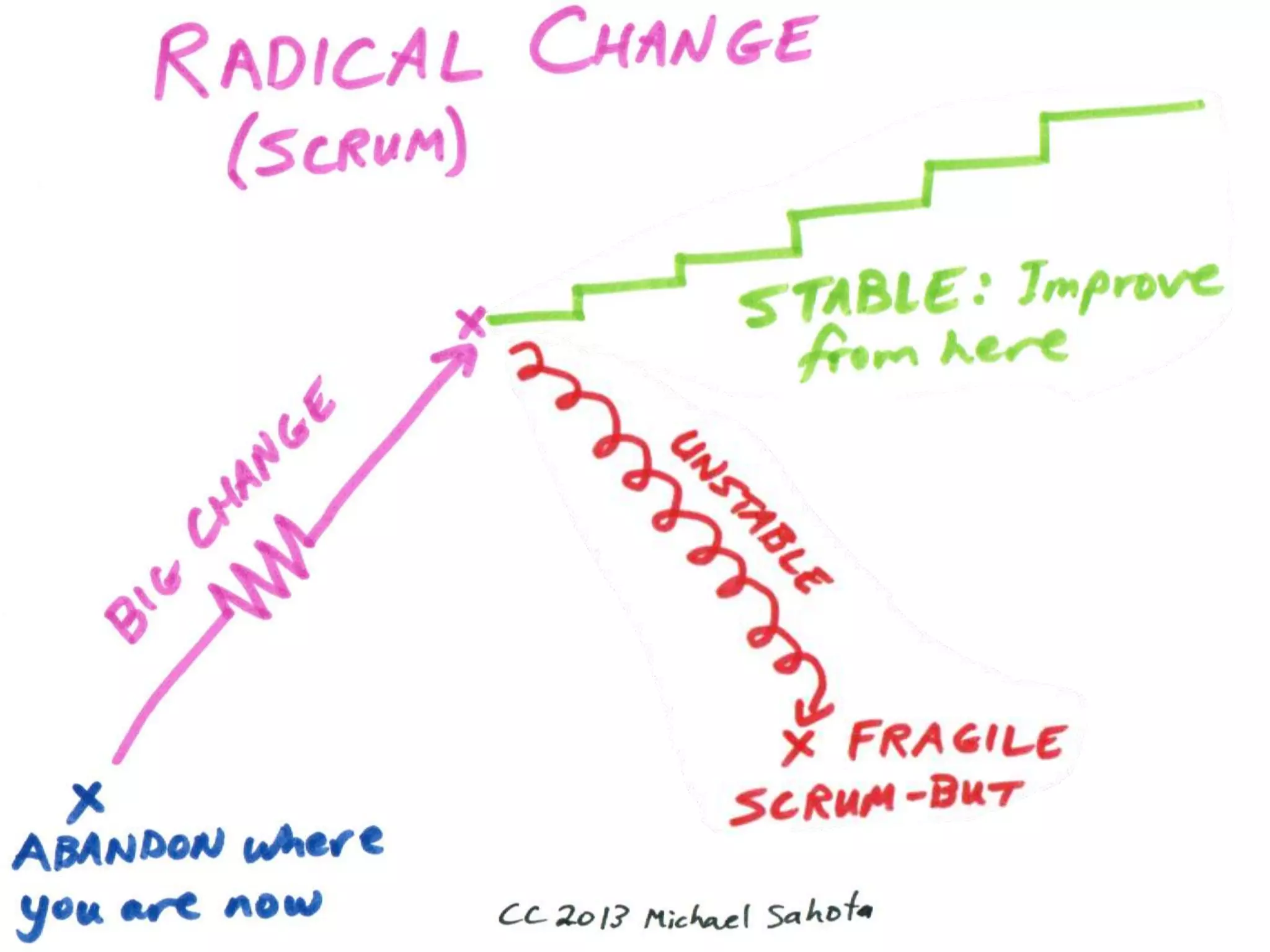
Scrum
• Throw out your existing process
• Start with Scrum Framework
• Add in elements needed to fit your
environment (e.g. UX, Regulatory)
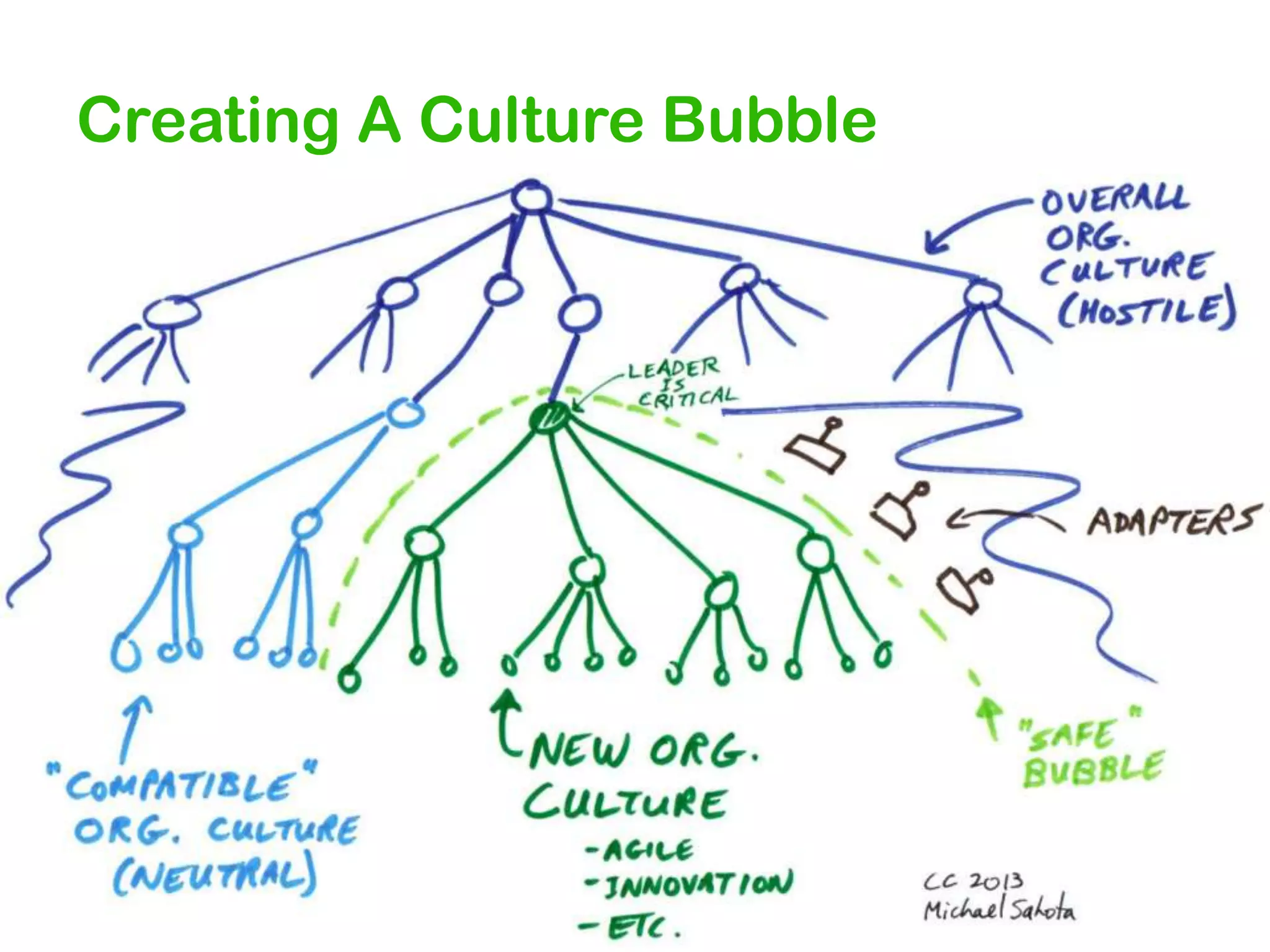
Creating A Culture Bubble
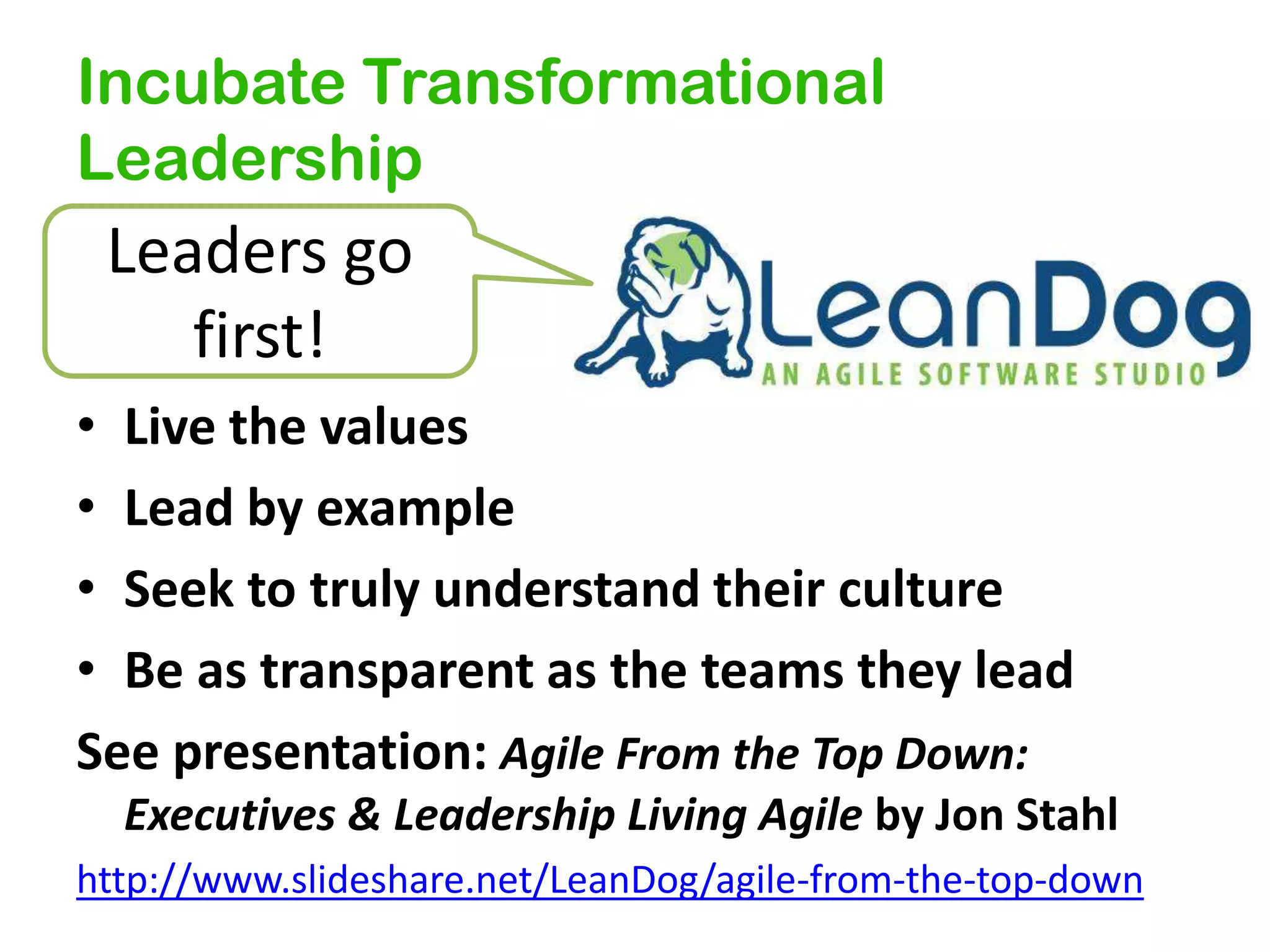
Incubate Transformational
Leadership

Leaders go
first!
• Live the values
• Lead by example
• Seek to truly understand their culture
• Be as transparent as the teams they lead
See presentation: Agile From the Top Down:
Executives & Leadership Living Agile by Jon Stahl
http://www.slideshare.net/LeanDog/agile-from-the-top-down
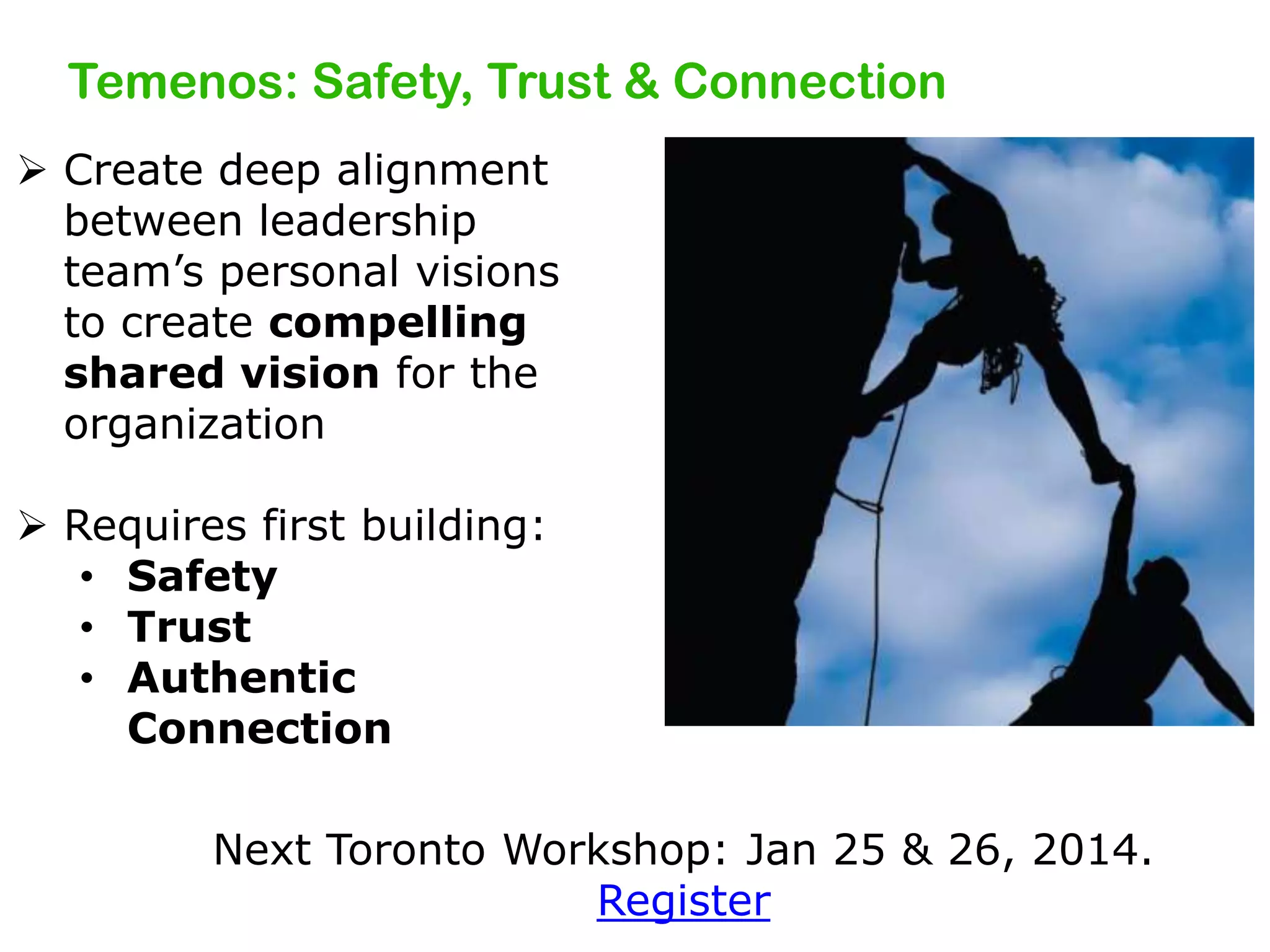
Temenos: Safety, Trust & Connection
 Create deep alignment
between leadership
team’s personal visions
to create compelling
shared vision for the
organization
 Requires first building:
• Safety
• Trust
• Authentic
Connection
Next Toronto Workshop: Jan 25 & 26, 2014.
Register
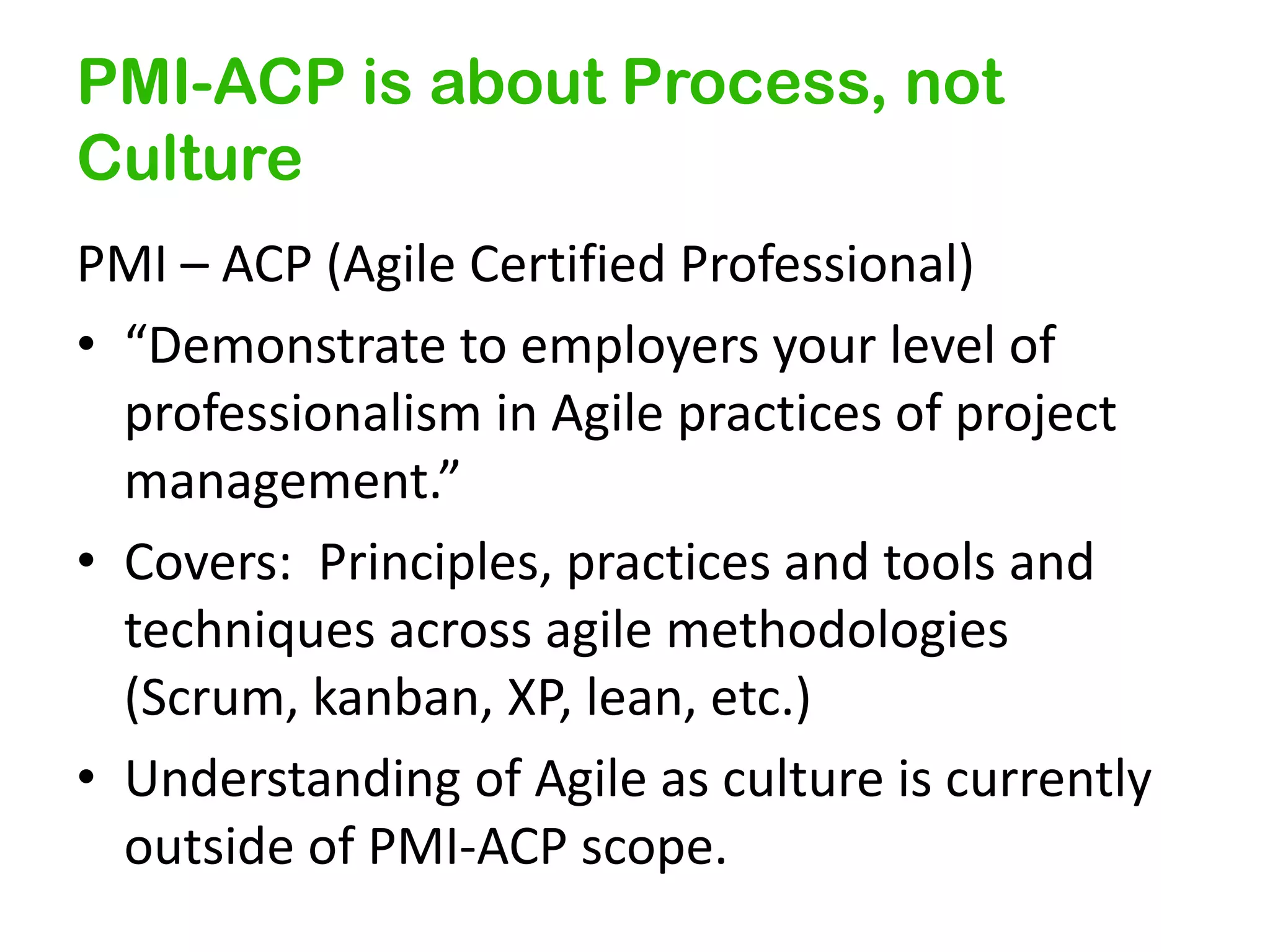
PMI-ACP is about Process, not
Culture
PMI – ACP (Agile Certified Professional)
• “Demonstrate to employers your level of
professionalism in Agile practices of project
management.”
• Covers: Principles, practices and tools and
techniques across agile methodologies
(Scrum, kanban, XP, lean, etc.)
• Understanding of Agile as culture is currently
outside of PMI-ACP scope.
Get Help with Agile Practices to Avoid
Wasting Time & Effort

One of about 50 coaches worldwide
that know how to help organization
succeed with Agile*.
* About half of my work is with Kanban
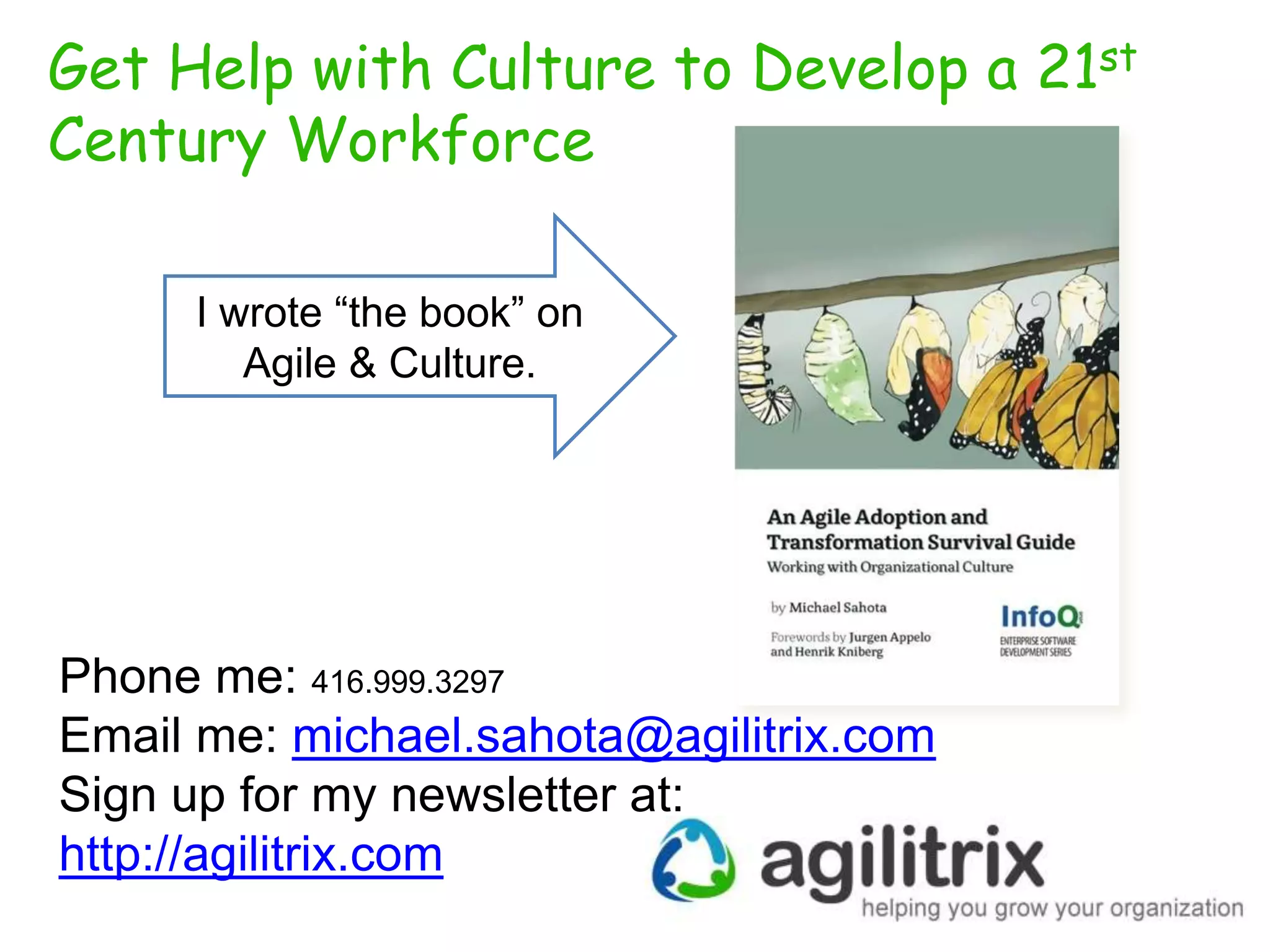
Get Help with Culture to Develop a 21st
Century Workforce
I wrote “the book” on
Agile & Culture.

Phone me: 416.999.3297
Email me: michael.sahota@agilitrix.com
Sign up for my newsletter at:
http://agilitrix.com

Understanding and Working with Agile Culture - PMI-SOC

  • 1.
    Understanding and Workingwith Agile Culture @MichaelSahota
  • 2.
  • 3.
    Agile Is Mainstream Source:VersionOne 2012 Annual State of Agile Development Survey http://www.versionone.com/state-of-agile-survey-results/
  • 4.
    Many Benefits fromAgile Manage Changing Priorities ⬆Productivity ⬆Visibility ⬆Team Morale ⬆Quality ⬇Risk Source: VersionOne 2012 Annual State of Agile Development Survey http://www.versionone.com/state-of-agile-survey-results/
  • 5.
    Agile is nota Silver Bullet CC Photo by http://www.flickr.com/photos/eschipul/
  • 6.
    Agile Fails Dueto Culture Sources: Multiple Workshops with 100’s of participants; Version One Survey http://agilitrix.com/2012/08/agile-2012-workshop-results/
  • 7.
  • 8.
    Why is CultureImportant? “The only thing of real importance that leaders do is to create and manage culture.” “If you do not manage culture, it manages you, and you may not even be aware of the extent to which this is happening.” Edgar Schein Professor MIT Sloan School of Management Photo courtesy: http://leadership-tdoerffer.blogspot.com/2010/11/enjoy-interview-with-prof-edgar-schein.html
  • 15.
  • 16.
    What is AgileCulture? @MichaelSahota
  • 17.
  • 20.
  • 21.
    Most Value Comesfrom Mindset/Culture, not Practices ~20% Benefit •Ability to manage changing priorities •Improved Visibility •Increased Productivity •Improved Quality •Reduced Risk ~3X Benefit •Customer Delight •Joy at work •Engagement •Innovation, Creativity •Continuous Learning
  • 22.
    Culture Mismatch willSlow and Ultimately Fail Your Agile Initiative Avoid seductive fantasy that Agile practices will change your Culture. They won’t.
  • 23.
    Option 1: Workwith Existing Culture
  • 24.
    Option 1a: IncrementallyAdopt Agile Practices that fit Culture Find the practice (puzzle piece) that fits your problem. Example: Introducing automated testing to reduce regression test costs and time.
  • 25.
    Option 1b: UseKanban Toolkit to Start Evolving Your Process & Practices 1.Visualize Work 2.Add Metrics 3.Make Improvements
  • 27.
    Option 2: ChangeOrganizational Culture “75% of a company’s management is honestly convinced that business as usual is totally unacceptable.” - John Kotter
  • 29.
    Scrum • Throw outyour existing process • Start with Scrum Framework • Add in elements needed to fit your environment (e.g. UX, Regulatory)
  • 31.
  • 32.
    Incubate Transformational Leadership Leaders go first! •Live the values • Lead by example • Seek to truly understand their culture • Be as transparent as the teams they lead See presentation: Agile From the Top Down: Executives & Leadership Living Agile by Jon Stahl http://www.slideshare.net/LeanDog/agile-from-the-top-down
  • 33.
    Temenos: Safety, Trust& Connection  Create deep alignment between leadership team’s personal visions to create compelling shared vision for the organization  Requires first building: • Safety • Trust • Authentic Connection Next Toronto Workshop: Jan 25 & 26, 2014. Register
  • 35.
    PMI-ACP is aboutProcess, not Culture PMI – ACP (Agile Certified Professional) • “Demonstrate to employers your level of professionalism in Agile practices of project management.” • Covers: Principles, practices and tools and techniques across agile methodologies (Scrum, kanban, XP, lean, etc.) • Understanding of Agile as culture is currently outside of PMI-ACP scope.
  • 37.
    Get Help withAgile Practices to Avoid Wasting Time & Effort One of about 50 coaches worldwide that know how to help organization succeed with Agile*. * About half of my work is with Kanban
  • 38.
    Get Help withCulture to Develop a 21st Century Workforce I wrote “the book” on Agile & Culture. Phone me: 416.999.3297 Email me: michael.sahota@agilitrix.com Sign up for my newsletter at: http://agilitrix.com