Saturday, January 25, 2025
MALNUTRITON
Saturday, January 25, 2025
OUTLINES
Briefing On Types Of Malnutrition
Historical Background Of SAM
Epidemiology & Etiology Of SAM
Pathophysiology & Proposed Mechanism Of SAM
Systemic Affection Of SAM
ABENEZER FOR BLEN , FOREVER
Saturday, January 25, 2025
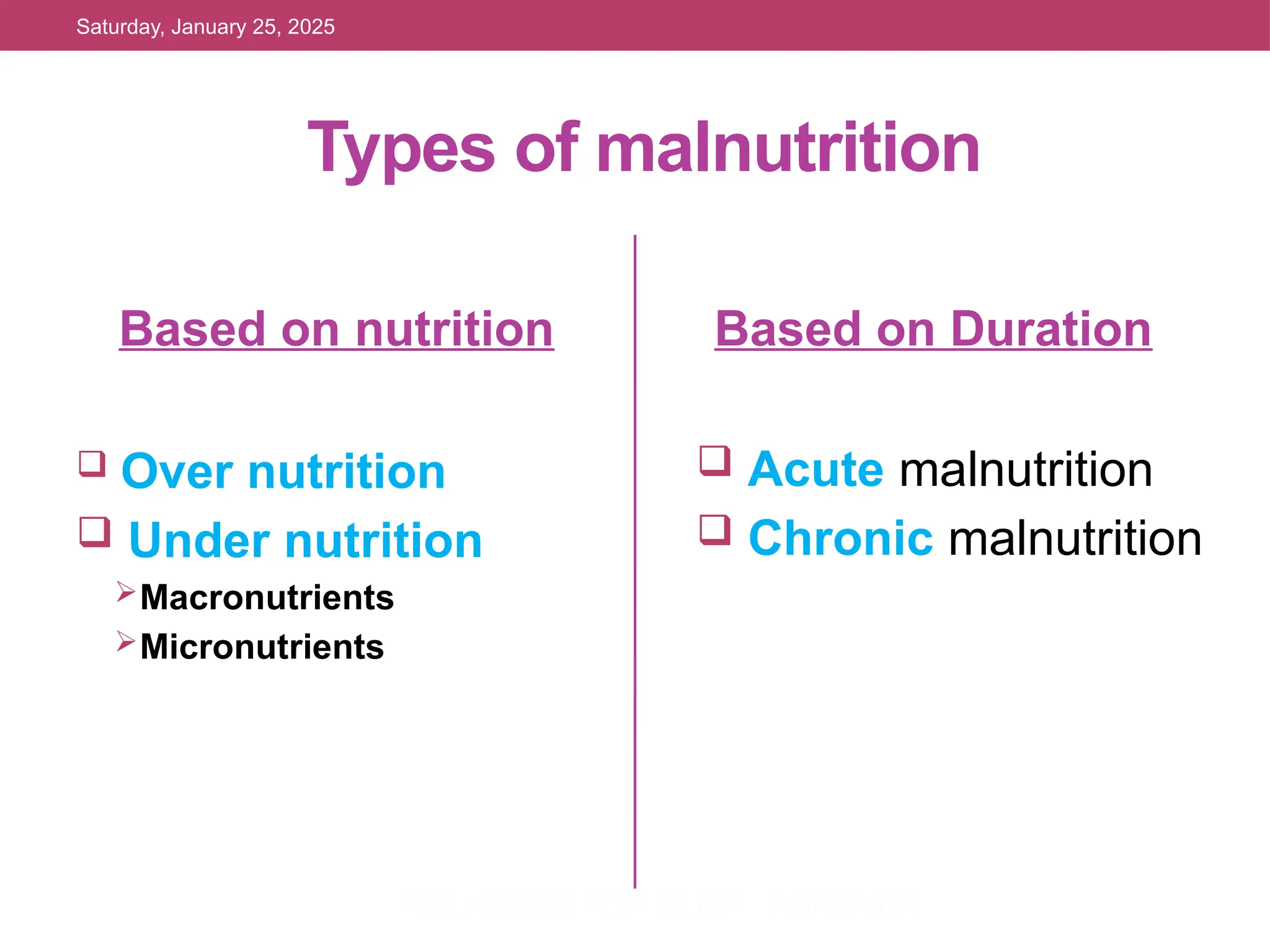
Types of malnutrition
Based on nutrition
 Over nutrition
 Under nutrition
Macronutrients
Micronutrients
Based on Duration
 Acute malnutrition
 Chronic malnutrition
ABENEZER FOR BLEN , FOREVER
Saturday, January 25, 2025
Types of malnutrition
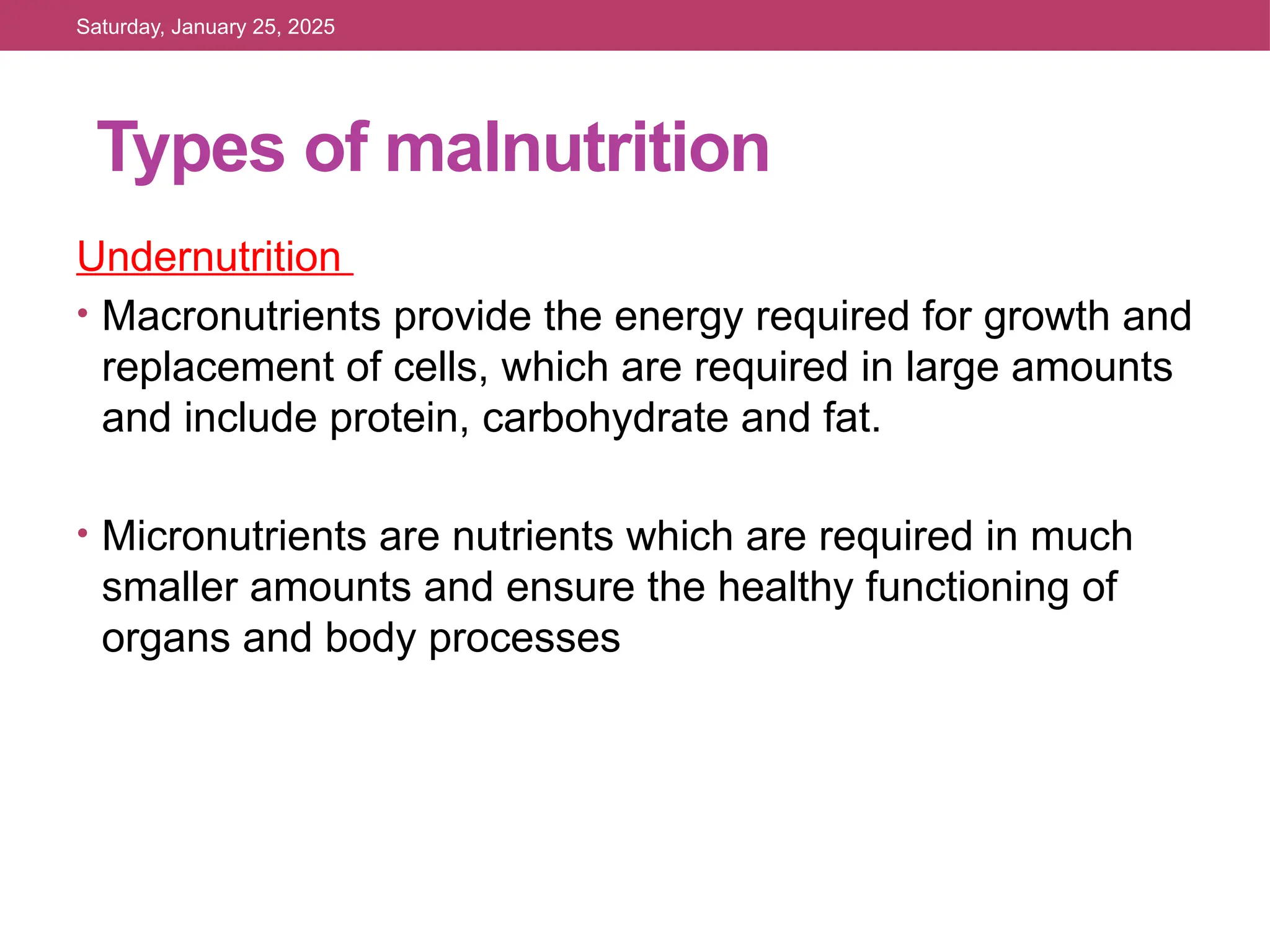
Undernutrition
• Macronutrients provide the energy required for growth and
replacement of cells, which are required in large amounts
and include protein, carbohydrate and fat.
• Micronutrients are nutrients which are required in much
smaller amounts and ensure the healthy functioning of
organs and body processes
Saturday, January 25, 2025
Based on the Origin
Primary malnutrition
• Cause:-Inadequate food intake
• Onset:- usually Gradual
• Clinical Xics:- Protein &/or Energy deficit predominates
Secondary malnutrition
• Cause
• Other diseases that lead to low food ingestion,
• Inadequate nutrient absorption or utilization,
• Increased nutritional requirements, and/or
• Increased nutrient losses.
• Onset:- relatively fast
• Clinical xics:- specific to vitamin, mineral, or disease
ABENEZER FOR BLEN , FOREVER
Saturday, January 25, 2025
Malnutrition ….
1. Wasting;- Acute
• WFH
• MUAC
2. Stunting;- Chronic
Reversible
Irreversible
3. Under Wt;- composite indicator,
Not specific
 Acute malnutrition present as;-
 SEVERE
 MODERATE
Saturday, January 25, 2025
Malnutrition ….
• Wasting [a measure of thinness defined by Weight- For-Height (WFH) or
Mid Upper Arm Circumference (MUAC) measurements] is characterized
by rapid weigh loss usually due to illness and/or reduced food intake.
• Wasting can be reversed, however it is of particular concern during
emergency situations because it can quickly lead to excess morbidity
and mortality
Stunting can be reversed through ‘catch up growth’ until 2 years of age;
after which it is irreversible.
Acute malnutrition leads to changes in
• Cellular composition,
• Tissue and organ functions
Saturday, January 25, 2025
Factors Causing Malnutrition
A. Biologic Factors
 Maternal malnutrition
• Before, during pregnancy or after pregnancy
 Infectious diseases
• N.B:- as precipitating factors
• Eg:- Diarrheal disease, measles, IP ,..etc
• Result in negative protein and energy balance
 Diets
• low concentrations of proteins and energy,
• over diluted milk formulas or bulky vegetable foods
Saturday, January 25, 2025
• Maternal malnutrition before and/or during pregnancy is
more likely to produce an underweight newborn baby.
• Intrauterine malnutrition can be compounded after birth by
insufficient food to satisfy the infant's needs for catch-up
growth, resulting in PEM.
• A recent study demonstrated that low birth weight was a
predictor of wasting in Africa, Asia, and Latin America .
Saturday, January 25, 2025
• Infectious diseases are major contributing and
precipitating factors in PEM.
• Diarrheal disease, measles, acquired immunodeficiency
syndrome (AIDS), tuberculosis and other infections
frequently result in negative protein and energy balance
resulting from anorexia (reduced food intake), vomiting,
decreased absorption (increased nutrient losses), and
catabolic processes (increased requirements and
metabolic losses).
• Intestinal parasites have little or no effect unless the
infection is extensive and causes anemia or diarrhea.
Saturday, January 25, 2025
• Diets with low concentrations of proteins and energy, as
occur with overdiluted milk formulas or bulky vegetable
foods that have low nutrient densities, can lead to PEM in
young children whose gastric capacity does not allow the
ingestion of large amounts of food and in elderly persons
with anorexia or difficulty in eating without assistance.
• Diets poor in protein and rich in carbohydrates are
particularly likely to produce kwashiorkor.
Saturday, January 25, 2025
B. Age of the Host
All age groups
More among infants & young children
• Dependent age groups for food
• Susceptible for infections
Under 1yr  Marasmus
After 18 months  Kwashiorkor
Older children copes better  mild Malnutrition
Saturday, January 25, 2025
C. Social and Economic Factors:-
 Poverty
• low food availability
 Ignorance,
• poor infant- and child-rearing practices,
• misconceptions of use of certain foods,
 Practice And Duration Of Breast-feeding,
• Longer period of breast feeding
• Inappropriate/ inadequate weaning
 Social problems such as
• child abuse,
• maternal deprivation, &
• Abandonment to the elderly,
• alcoholism, and drug addiction
 Cultural and social practices that impose
• Food taboos,
• migration from traditional rural settings to urban slums .
Saturday, January 25, 2025
• Poverty that results in low food availability, overcrowded and
unsanitary living conditions, and improper child care is a frequent
cause of PEM.
• Ignorance, by itself or associated with poverty, leads to poor
infant- and child-rearing practices, misconceptions about the use of
certain foods, inadequate feeding conducts during illnesses, and
improper food distribution among family members.
• A decline in the practice and duration of breast-feeding, combined
within adequate weaning practices when breast milk is withdrawn
or when it can no longer provide sufficient dietary energy and
protein to the infant, is associated with growing rates of infantile
PEM.
Saturday, January 25, 2025
• Social problems such as child abuse, maternal deprivation,
abandonment of the elderly, alcoholism, and drug addiction can
result in PEM.
• Cultural and social practices that impose food taboos, some food
and diet fads, particularly popular among adolescents and women,
and the migration from traditional rural settings to urban slums can
also contribute to, or precipitate, the appearance of PEM.
Saturday, January 25, 2025
D. Environmental Factors
 Overcrowded and/or unsanitary living conditions
 Agricultural patterns,
 Droughts, & floods,
 Wars, & forced migrations
Saturday, January 25, 2025
• Overcrowded and/or unsanitary living conditions lead to
frequent infections.
• This is an important cause of PEM, especially among
weanlings who develop severe or frequent episodes of
diarrhea.
• Agricultural patterns, droughts, floods, wars, and forced
migrations lead to cyclic, sudden, or prolonged food
scarcities and can cause PEM among whole populations.
• Postharvest losses of food resulting from bad storage
conditions and inadequate food distribution systems
contribute to PEM, even after periods of agricultural plenty
Saturday, January 25, 2025
PATHOPHYSIOLOGY AND ADAPTIVE
RESPONSES
PEM / SAM :-Series of metabolic & behavioral adjustments
 PEM develops
 Slowly  Marasmus/ Non- edematous SAM,
• better adapted
• less fragile metabolic equilibrium
 More rapid  Kwashiorkor/ Edematous SAM
• Lesser Adaptation
N:B;- Different proposed mechanism of SAM,
 BUT One proposed mechanism can not clearly explaining all phenomena
going on in SAM / PEM patient.
Saturday, January 25, 2025
Mechanism Of Energy Mobilization
 Decrease in energy intake
• Decrease in energy expenditure,( lesser activity)
• Decompensated decrease in energy expenditure,
• Body fat is mobilized,
• A decrease in adiposity and weight loss.
• Muscle protein catabolism  Lean body wt
• As the cumulative Energy Deficit becomes more severe,
 Subcutaneous fat is markedly reduced, and
 Protein catabolism leads to muscular wasting.
 Visceral protein is preserved longer, (esp. Marasmic)
Saturday, January 25, 2025
As a result
In Marasmus,
Alterations in body composition lead
• Initially to increased basal metabolic rate
• Later decreases as an adaptive mechanism
In Kwashiorkor,
The severe dietary protein deficit
Earlier visceral depletion of amino acids that affects
 Visceral cell function and
 Reduces oxygen consumption;
 Basal energy expenditure decreases
 Blood glucose remains normal   expense gluconeogenic amino acids
Saturday, January 25, 2025
Protein Breakdown & Synthesis
 Poor protein intake
• Reduces protein synthesis
• Adaptations lead to
the sparing of body protein and
the preservation of essential protein-dependent functions.
• In some, enzymatic changes that favor
Muscle protein breakdown and
Liver protein synthesis, as well as
Energy mobilization from fat depots .
• In others
Visceral protein is lost in the early development
The loss of visceral protein then increases, and
Finally death imminent
Marasmic
Kwashiorkor
Saturday, January 25, 2025
How does edema occurs?
 Under normal conditions, about
75% of the free amino acids entering the body pool from
• Dietary and
• Tissue proteins,
25% are broken down for other metabolic purposes.
 Protein intake is reduced,
Increase to 90 to 95% recycled for synthesis and
Decrease in amino acid catabolism.
• markedly reduces urea synthesis and urinary nitrogen excretion.
 Decrease in total nitrogen or amino acid turnover
Recycled or Reused for protein
synthesis
Saturday, January 25, 2025
Adaptation mechanism Conti….
1. The half-lives of several proteins increase.
• Intially :- Rate of albumin synthesis decreases,
• Later:- rate of breakdown falls, Albumin Half-life increases.
2. A shift of albumin:- Extravascular pool to the intravascular pool
• To maintan adequate levels of circulating albumin in the face of reduced synthesis.
 Adaptive mechanisms Fail, (*Sever protein deficit*)
• Decreased Concentration of serum proteins,(*esp. albumin).
• Reduction in intravascular oncotic pressure
• Outflow of water into the extravascular space
EDEMA
Saturday, January 25, 2025
Endocrine Changes
• Hormones are important in the adaptive
metabolic processes.
1. The decreased food intake,
• Reduce plasma concentrations of Glucose
and Free Amino Acids, in turn,
Reduce insulin secretion and
Increase glucagon and epinephrine release;
The latter further reduces insulin secretion;
Saturday, January 25, 2025
Endocrine…..conti….
2. The low plasma amino acid levels, seen
mainly in kwashiorkor,
 Stimulate the secretion of Human Growth Hormone
 Reduce somatomedin activity;
 A further increase in Growth hormone levels
because of the absence of feedback inhibition;
 Increased levels of Growth Hormone and Epinephrine
influence the reduction of urea synthesis,
thereby favoring amino acid recycling
Saturday, January 25, 2025
Conti….
3. The stress induced by the low food intake, amplified
by Fever, Dehydration, and other manifestations of the
Infections also
 Stimulates Epinephrine release and Corticosteroid
secretion, more in marasmus
greater severity in energy deficit that characterizes marasmus;
 Resistance to the peripheral action of insulin
increases, probably from
the increase in plasma free fatty acid concentration
resulting from the lipolytic activity of growth hormone,
glucocorticoids, and epinephrine;
Saturday, January 25, 2025
Conti……
4. A decrease in the activity of 5-monodeiodinase
• Reduces the production of 3,5,3- tri iodothyronine
with a concomitant increase in the inactive reverse
triiodothyronine;
• Thyroxine levels are also reduced, possibly by a
decrease in iodine uptake by the thyroid;
• The reduction in active thyroid hormone levels
decreases thermogenesis and oxygen consumption,
leading to energy conservation.
Saturday, January 25, 2025
• The secretion of hormones involved in nonvital growth-
related functions, such as gonadotropins, decreases;
• the functional capacities of the hypothalamic-pituitary axis
and adrenal medulla are preserved, thus allowing
endocrine and metabolic responses to stress conditions.
• Some investigators have postulated that the evolution of
PEM into either kwashiorkor or marasmus may be partly
related to differences in adrenocortical response, whereby
the better response will preserve visceral proteins more
efficiently and lead to the better-adapted syndrome of
marasmus
Saturday, January 25, 2025
• Differences in adrenocortical response
Protien –Calorie
deficency
Muscle protien
Mobilzed
Plasma amino
acid
Maintained
Lipoprotien
synthesis
normal
Plasma free
fatty acid
normal
No fat deposit in
liver
Optimal
increase in
plasma cortisol
Growth
hormone
response
inhibited
Sever
growth
retardation
Adequate
response of
adrenal cortex
In Marasmus
Saturday, January 25, 2025
• In Kwashikor
Protein – calorie deficiency
Inadequate response of
adrenal cortex
Fatty infiltration of liver
Protein
synthesis
decreased
Lipoprotein
synthesis
Plasma free fatty
acids raised
Plasma growth
hormone raised
Plasma amino acid low
Saturday, January 25, 2025
Endocrine adaptive functions in severe PEM related to
energy and protein metabolism
Saturday, January 25, 2025
Fig. 2: Pathophysiology of PEM. Photo by: Lianne Friesen and Nicholas Woolridge.
L. John Hoffer CMAJ 2001;165:1345-1349
©2001 by Canadian Medical Association
Saturday, January 25, 2025
SYSTEMIC AFFECTION OF
SAM
Saturday, January 25, 2025
I. Hematology and Oxygen
Transport
The Reduction in Hemoglobin concentration and Red cell mass
almost always in PEM ,
“An Adaptive phenomenon”;-
 Reduction in tissue oxygen needs, b/c of
• reduction in lean body mass and
• lowered physical activity
 Decrease in dietary amino acids results in
• reduced hematopoietic activity,
• N.B:- Improvement with dietary treatment,
Rise in oxygen demands calling for accelerated hematopoiesis.
If iron, folic acid, and vitamin B12 are not in sufficient amounts,
• “Functional anemia” with tissue hypoxia will develop.
Saturday, January 25, 2025
• The severely malnourished patient may have relatively
high body iron stores (35) and retains the ability to
produce erythropoietin and reticulocytes in response to
acute hypoxia (36,37).
• Nevertheless, these patients are prone to develop
functional, severe anemia if there is a superimposed
dietary deficiency of iron or folic acid, or chronic blood
loss, as in hookworm infection.
Saturday, January 25, 2025
II. Cardiovascular & Renal functions
 Cardiac output, heart rate, and blood pressure decrease.
 Central circulation takes precedence over peripheral circulation.
 In severe PEM, Peripheral circulatory failure comparable to Hypovolemic shock
 Cardiovascular reflexes are altered, leading to
Postural hypotension and Diminished venous return.
 Hemodynamic compensation occurs primarily from
Tachycardia, rather than from Increased stroke volume.
 Reduces Renal plasma flow and Glomerular Filtration Rates ,
Decreased cardiac output
N.B:- But water clearance and the ability to concentrate and acidify urine
appear unimpaired
Saturday, January 25, 2025
III. Immune System
The major defects seen in severe PEM
seem to involve
•T-lymphocytes and
•Complement system.
Saturday, January 25, 2025
 T-lymphocytes
 A marked depletion of lymphocytes as
 Thymus  Atrophy
 Spleen Loss of the germinal
center
 Lymph Nodes Reduction in size
 Tonsil
….Impaired cell mediated immunity
 Alteration in monokine metabolism,
particularly decreased activity of Interleukin -1,  
low proliferation of T cells in SAM.
Saturday, January 25, 2025
The Complement System
 Marked reduction in:-
 The production of several complement components,
 The functional activity of the complement system both
 Classic Pathways
 Alternative pathways, and
 The Opsonic activity of serum
• High susceptibility of SAM patients to gram-negative** bacterial
sepsis.
 Phagocytosis, chemotaxis, and intracellular
killing
 are also impaired, partly because of
the defects in opsonic and complement functional activities.
Decreased energy
Saturday, January 25, 2025
The B-lymphocyte:-
 Relatively normal
 Circulating levels of B cells and Immunoglobulin
 Area of B-lymphocyte in Spleen and lymph nodes ,
 Example:- response to TT & DPT  Normal
 N.B:- But defects in antibody production, such as
“secretory immunoglobulin A”.
 Monokines & Cytokines
 decreased,
 Poor febrile response
 Low leukocyte count
Saturday, January 25, 2025
• This local immunity is independent of systemic immunity.
In children suffering from severe PEM, secretory IgA
levels in duodenal fluid, saliva, tears and nasal secretions
are significantly low on admission and return to normal
within a few weeks of nutritional rehabilitation.
• Secretory antibody responses to measles and polio virus
vaccines also are significantly reduced in PEM. Alterations
in the local immunity can account for the increased
incidence of mucosal infections seen in malnourished
children
Saturday, January 25, 2025
• Monokines and cytokines are peptide/glycoprotein
mediators of the body's response to injury.
• They are synthesized primarily by activated monocytic
and phagocytic cells lining the liver and spleen.
• These peptides activate neighboring tissue in a paracrine
fashion and also enter the circulation to exert more distant
effects.
• The most extensively characterized monokines are
interleukin-1 and cachectin or tumor necrosis factor.
Saturday, January 25, 2025
• Macrophages from children with severe edematous PEM
have decreased activity of interleukin-1 (44).
• In addition to the immunologic alterations mentioned
previously, this may contribute to the poor febrile
response and low leukocyte count in infections (46).
• Conversely, serum levels of tumor necrosis factor seem to
be increased in severe malnutrition (47).
• This change could be associated with the anorexia and
the muscle wasting and lipid abnormalities of PEM.
Saturday, January 25, 2025
IV. Electrolytes
Total body potassium
 Decreases Level of K+
Reduction in muscle proteins and
Alteration in intracellular potassium.
 Low insulin action and
 Low intracellular energy substrates
 Reduce the availability of ATP
Affects cellular exchange of Na+ and K+,
 Loss of Intracellular K+
 Increased intracellular Na+
Saturday, January 25, 2025
 Water accompanies the sodium influx,
intracellular over hydration may occur.
But decreased total body water  loss of lean body
 Alterations in cell electrolytes and energy
sources explains partly,
The increased fatigability and
The reduced strength of skeletal muscle
Saturday, January 25, 2025
Gastrointestinal Functions
Mal-absorption
In KWASHIORKOR
Reducing the total absorption surface.
 The villi are shortened and
 The Crypt : Villus ratio is increased.
The epithelial cells & the brush border loses its fine organization and
becomes atrophic.
The marked atrophy of intestinal mucosa plus
 Atrophy exocrine pancreas,
 Depletion of enzyme activities and
 Decreased concentration of conjugated bile salts in the upper jejunum
 In MARASMIC
The mucosal appearance somewhat normal
But the mitotic index is significantly lower than in kwashiorkor
Saturday, January 25, 2025
GI conti…….
 Malnourished persons, are prone to diarrhea because of
Irregular intestinal motility and
Gastrointestinal bacterial overgrowth
Atrophy of intestinal mucosa.
 Diarrhea aggravates the malabsorption and can further
impair nutritional status.
 To permit nutritional recovery:-
• The ingestion of nutrients in high therapeutic amounts usually allows
for their uptake in sufficient quantity
Saturday, January 25, 2025
Nervous System and Cognitive Functions
 Severe PEM at an early age may have decreased
 Brain growth, & Nerve myelination,
 Neurotransmitter production, and velocity of nervous
conduction.
 The long-term functional implications on cognition – not clear, but
Studies indicated that
 “Malnutrition at 3 years of age was associated with poorer cognition at
that age and at 11 years, and children with severe malnutrition at age
3 had a 15-point deficit in IQ test at age 11 as to their control”.
• Liu J, Raine A, Venables PH et al. Arch Pediatr Adolesc Med 2003;157:593 – 600
Another study from South Africa followed up 20 children who were
grossly undernourished in infancy, until they were 15-18 years old.
• All the children scored low on full scale and verbal quotient (IQ test).
Saturday, January 25, 2025
Conti….
 The influence of SAM on Behavior & Cognitive
functions depends on
• Severity, & Timing,
• Duration of nutritional deprivation,
• Quality of nutritional rehabilitation,
• Emotional, and psychosocial support, and
• Degree of care and affective stimulation provided by family
members and caretakers.
Saturday, January 25, 2025
MRI in kwash
After nutritional
therapy
Before nutritional
therapy
Saturday, January 25, 2025
Age 0- 6 month
Sign Classify Treat
1. WFL < -3 Z Score, and
• Presence of complications
Or
• Edema of both feet
Complicated Severe
Acute Malnutrition
• In-patient
management
( CARE PLAN C )
2. WFL < -3 Z score, and
• No complications
Or/And
• No edema of both feet
Uncomplicated
severe
acute malnutrition
• Counsel on breast
feeding and care.
• Orphans other
option of feeding
( CARE PLAN B )
3. WFL >= - 3 Z to <= - 2 Z
score
And
• No edema of both feet
Moderate Acute
Malnutrition
4. WFL >= -2 Z score
And
• No edema of both feet
No Acute
Malnutrition
• Congratulate
• Counsel on feeding
( CARE PLAN A)
Saturday, January 25, 2025
Age6-59month
Signs Classify Treat
1. WFL/H < -3Z score
OR
• MUAC <11.5 cm**
OR
• Edema of both feet (+, ++),
PLUS
a. Any one of the medical
complications , or
b. Failed Appetite test
Complicated
Severe Acute
Malnutrition
• Admit for in-patient
management
(CARE PLAN C-Inpatient)
2. +++ Edema,
OR
• WFL/H < -3Z with edema
(Marasmic Kwashiorkor ),
OR
• MUAC <11.5 cm with
edema
• Manage in OTP
OR
• Manage as in-patient if
OTP service is not
available
(CARE PLAN C outpatient)
Saturday, January 25, 2025
Conti..
Signs Classify Treat
4. WFL/H ≥ -3Z to < -2Z score
OR
• MUAC 11.5 cm to <12.5
cm
AND
• No edema of both feet
Moderate
Acute
Malnutrition
• Admit to SFP, if available
(Supplementary Feeding
Program),
• Counsel on infant and
child feeding/care
(CARE PLAN B)
5. If WFL/H ≥ -2Z score
OR
• MUAC ≥ 12.5 cm
AND
• No edema of both feet
No Acute
Malnutrition
Congratulate and
Counsel the mother on infant
and child feeding/care
(CARE PLAN A)
Saturday, January 25, 2025
Children 5 to 18 years of age
1. BMI for age <-3SD
OR
 Edema of both feet with no
other cause (+, ++), PLUS
• Any one of the medical
complications , or
• Failed Appetite test
OR
 (+++) Edema,
Complicated
Severe Acute
Malnutrition
Admit for
in-patient
management
(CARE PLAN C-
Inpatient)
2. BMI for age <-3SD
OR
 Edema of both feet with no
other cause (+, ++)
AND
 No medical complication AND
pass appetite test
Uncomplicated
Severe Acute
Malnutrition
Manage in OTP
using the OTP
protocol or
• manage as in-
patient if OTP
service is not
available
(CARE PLAN C-
outpatient)
Saturday, January 25, 2025
APPETITE TEST
1. WHY DO APPETIT TEST ?
• The only SERIOUS sign of Severe Metabolic
Malnutrition is a reduction in appetite.
2. HOW TO DO THE APPETITE TEST ?
• Never force feed
3. RESULT OF THE APPETITE TEST ?
1. Failed  IPT
2. Passes  OPT
• “Carer’s choice”
The Minimum Amount
Saturday, January 25, 2025
APPETITE TEST
1. Malnutrition changes the way infections and other diseases express
the major complications lead to a loss of appetite.
2. Even though the definition and identification of the severely
malnourished is by anthropometric measurements, there is not a
perfect correlation between anthropometric and metabolic.
• It is mainly metabolic malnutrition that causes death.
• A poor appetite means that the child has a significant infection or
a major metabolic abnormality such as
• Liver dysfunction,
• Electrolyte imbalance,
• Cell membrane damage , or
• Damaged biochemical pathways.
• These are the patients at immediate risk of death.
Saturday, January 25, 2025
HYPOGLYCEMIA
 Defined:- < 54mg/dl ( < 3mmol/L)
 Signs
Eyelid retraction when asleep
Drowsiness
 In contrast
Sweating
Pallor
 Often the only sign infection
Not common sign
Saturday, January 25, 2025
Skin
A. Grade I (Mild dermatosis):-
• discoloration or few rough patches of skin.
B. Grade II (moderate ):-
• multiple patches on arm and/ or legs
C. Grade III ( sever):-
• flaking skin, fissures /opening in the skin
• “Crazy pavement dermatosis”
• “Flaky paints Dermatosis”
Saturday, January 25, 2025
Management of Heart failure
 Diagnosis:
i. Physical deterioration with weight gain,
 Note: if the expanded circulation is due to mobilization of edema fluid from
the tissues to vascular space, then HF do not present with wt. gain.
ii. Sudden increase in liver size, tenderness of the liver,
iii. Increased respiratory rate, ‘grunting’ breathing, crepitation in
lungs,
iv. Prominent superficial and neck veins,
v. Increased edema or reappearance of edema,
vi. Cyanosis
Saturday, January 25, 2025
Hypothermia
Definied as:-
Rectal temperature < 35.50
C or
Axiliary temperature < 35 0
C
 No enough calories to warm the body.
 Possible Signs of serious systemic infection
Saturday, January 25, 2025
Recognition of Dehydration
 In Non-Edematous
History
1. Significant recent fluid loss
• Diarrhea looking like water, not just ‘loose’ stools,
• A ppearing with sudden onset in the last hours or days)
2. Clear history of a recent change in the child’s appearance,
• Lethargy/ Drowsiness
3. The mother claims recent sunkening of the eyes, since the
diarrhea or vomiting started
4. Thirsty :- Observe if child reaches out when offered ReSoMal
Saturday, January 25, 2025
Recognition of Dehydration conti……
In Edematous SAM:-
• Are over-hydrated,
• But they are frequently hypovolemic due to dilation of blood
vessels with low cardiac output.
 Diagnosis of DHN in edematous malnutrition
1. If the child has definite watery diarrhea and
2. Deteriorating clinically with Excessive weight loss
 >2% of the body weight per day,
The child is dehydrated!!
Saturday, January 25, 2025
Shock in SAM
 Signs of shock in SAM
 If he/she is
Lethargic or Unconscious
Cold hands plus either
1. Slow capillary refill (>3 seconds), or
2. Weak, or absent radial or femoral pulses, and
3. Fast pulse
2- 12 month >=160
12- 59 month > = 140 bpm
4. Absence of signs of heart failure in an edematous child
Saturday, January 25, 2025
Management Of Septic shock
DIAGNOSIS OF SEPTIC SHOCK:-
1. A fast weak pulse, with
2. Cold peripheries.
3. Disturbed consciousness
4. Absence of signs of heart failure, AND
5. Failure to improve after the first hour of IV fluids for
management of shock in dehydration
Saturday, January 25, 2025
Other Complication
• Common sites of infection due to lack of immunity
• Ear infection
• Urinary infection
• Pneumonia
Eye disorders:-
Corneal clouding & ulceration
All SAM with eye disorder signs need vitamin A
Corneal ulcer
Abdominal distension
Due to electrolyte abnormality
Saturday, January 25, 2025
Thank you

4Severe acute malnutrition complications

  • 1.
    Saturday, January 25,2025 MALNUTRITON
  • 2.
    Saturday, January 25,2025 OUTLINES Briefing On Types Of Malnutrition Historical Background Of SAM Epidemiology & Etiology Of SAM Pathophysiology & Proposed Mechanism Of SAM Systemic Affection Of SAM ABENEZER FOR BLEN , FOREVER
  • 3.
    Saturday, January 25,2025 Types of malnutrition Based on nutrition  Over nutrition  Under nutrition Macronutrients Micronutrients Based on Duration  Acute malnutrition  Chronic malnutrition ABENEZER FOR BLEN , FOREVER
  • 4.
    Saturday, January 25,2025 Types of malnutrition Undernutrition • Macronutrients provide the energy required for growth and replacement of cells, which are required in large amounts and include protein, carbohydrate and fat. • Micronutrients are nutrients which are required in much smaller amounts and ensure the healthy functioning of organs and body processes
  • 5.
    Saturday, January 25,2025 Based on the Origin Primary malnutrition • Cause:-Inadequate food intake • Onset:- usually Gradual • Clinical Xics:- Protein &/or Energy deficit predominates Secondary malnutrition • Cause • Other diseases that lead to low food ingestion, • Inadequate nutrient absorption or utilization, • Increased nutritional requirements, and/or • Increased nutrient losses. • Onset:- relatively fast • Clinical xics:- specific to vitamin, mineral, or disease ABENEZER FOR BLEN , FOREVER
  • 6.
    Saturday, January 25,2025 Malnutrition …. 1. Wasting;- Acute • WFH • MUAC 2. Stunting;- Chronic Reversible Irreversible 3. Under Wt;- composite indicator, Not specific  Acute malnutrition present as;-  SEVERE  MODERATE
  • 7.
    Saturday, January 25,2025 Malnutrition …. • Wasting [a measure of thinness defined by Weight- For-Height (WFH) or Mid Upper Arm Circumference (MUAC) measurements] is characterized by rapid weigh loss usually due to illness and/or reduced food intake. • Wasting can be reversed, however it is of particular concern during emergency situations because it can quickly lead to excess morbidity and mortality Stunting can be reversed through ‘catch up growth’ until 2 years of age; after which it is irreversible. Acute malnutrition leads to changes in • Cellular composition, • Tissue and organ functions
  • 8.
    Saturday, January 25,2025 Factors Causing Malnutrition A. Biologic Factors  Maternal malnutrition • Before, during pregnancy or after pregnancy  Infectious diseases • N.B:- as precipitating factors • Eg:- Diarrheal disease, measles, IP ,..etc • Result in negative protein and energy balance  Diets • low concentrations of proteins and energy, • over diluted milk formulas or bulky vegetable foods
  • 9.
    Saturday, January 25,2025 • Maternal malnutrition before and/or during pregnancy is more likely to produce an underweight newborn baby. • Intrauterine malnutrition can be compounded after birth by insufficient food to satisfy the infant's needs for catch-up growth, resulting in PEM. • A recent study demonstrated that low birth weight was a predictor of wasting in Africa, Asia, and Latin America .
  • 10.
    Saturday, January 25,2025 • Infectious diseases are major contributing and precipitating factors in PEM. • Diarrheal disease, measles, acquired immunodeficiency syndrome (AIDS), tuberculosis and other infections frequently result in negative protein and energy balance resulting from anorexia (reduced food intake), vomiting, decreased absorption (increased nutrient losses), and catabolic processes (increased requirements and metabolic losses). • Intestinal parasites have little or no effect unless the infection is extensive and causes anemia or diarrhea.
  • 11.
    Saturday, January 25,2025 • Diets with low concentrations of proteins and energy, as occur with overdiluted milk formulas or bulky vegetable foods that have low nutrient densities, can lead to PEM in young children whose gastric capacity does not allow the ingestion of large amounts of food and in elderly persons with anorexia or difficulty in eating without assistance. • Diets poor in protein and rich in carbohydrates are particularly likely to produce kwashiorkor.
  • 12.
    Saturday, January 25,2025 B. Age of the Host All age groups More among infants & young children • Dependent age groups for food • Susceptible for infections Under 1yr  Marasmus After 18 months  Kwashiorkor Older children copes better  mild Malnutrition
  • 13.
    Saturday, January 25,2025 C. Social and Economic Factors:-  Poverty • low food availability  Ignorance, • poor infant- and child-rearing practices, • misconceptions of use of certain foods,  Practice And Duration Of Breast-feeding, • Longer period of breast feeding • Inappropriate/ inadequate weaning  Social problems such as • child abuse, • maternal deprivation, & • Abandonment to the elderly, • alcoholism, and drug addiction  Cultural and social practices that impose • Food taboos, • migration from traditional rural settings to urban slums .
  • 14.
    Saturday, January 25,2025 • Poverty that results in low food availability, overcrowded and unsanitary living conditions, and improper child care is a frequent cause of PEM. • Ignorance, by itself or associated with poverty, leads to poor infant- and child-rearing practices, misconceptions about the use of certain foods, inadequate feeding conducts during illnesses, and improper food distribution among family members. • A decline in the practice and duration of breast-feeding, combined within adequate weaning practices when breast milk is withdrawn or when it can no longer provide sufficient dietary energy and protein to the infant, is associated with growing rates of infantile PEM.
  • 15.
    Saturday, January 25,2025 • Social problems such as child abuse, maternal deprivation, abandonment of the elderly, alcoholism, and drug addiction can result in PEM. • Cultural and social practices that impose food taboos, some food and diet fads, particularly popular among adolescents and women, and the migration from traditional rural settings to urban slums can also contribute to, or precipitate, the appearance of PEM.
  • 16.
    Saturday, January 25,2025 D. Environmental Factors  Overcrowded and/or unsanitary living conditions  Agricultural patterns,  Droughts, & floods,  Wars, & forced migrations
  • 17.
    Saturday, January 25,2025 • Overcrowded and/or unsanitary living conditions lead to frequent infections. • This is an important cause of PEM, especially among weanlings who develop severe or frequent episodes of diarrhea. • Agricultural patterns, droughts, floods, wars, and forced migrations lead to cyclic, sudden, or prolonged food scarcities and can cause PEM among whole populations. • Postharvest losses of food resulting from bad storage conditions and inadequate food distribution systems contribute to PEM, even after periods of agricultural plenty
  • 18.
    Saturday, January 25,2025 PATHOPHYSIOLOGY AND ADAPTIVE RESPONSES PEM / SAM :-Series of metabolic & behavioral adjustments  PEM develops  Slowly  Marasmus/ Non- edematous SAM, • better adapted • less fragile metabolic equilibrium  More rapid  Kwashiorkor/ Edematous SAM • Lesser Adaptation N:B;- Different proposed mechanism of SAM,  BUT One proposed mechanism can not clearly explaining all phenomena going on in SAM / PEM patient.
  • 19.
    Saturday, January 25,2025 Mechanism Of Energy Mobilization  Decrease in energy intake • Decrease in energy expenditure,( lesser activity) • Decompensated decrease in energy expenditure, • Body fat is mobilized, • A decrease in adiposity and weight loss. • Muscle protein catabolism  Lean body wt • As the cumulative Energy Deficit becomes more severe,  Subcutaneous fat is markedly reduced, and  Protein catabolism leads to muscular wasting.  Visceral protein is preserved longer, (esp. Marasmic)
  • 20.
    Saturday, January 25,2025 As a result In Marasmus, Alterations in body composition lead • Initially to increased basal metabolic rate • Later decreases as an adaptive mechanism In Kwashiorkor, The severe dietary protein deficit Earlier visceral depletion of amino acids that affects  Visceral cell function and  Reduces oxygen consumption;  Basal energy expenditure decreases  Blood glucose remains normal   expense gluconeogenic amino acids
  • 21.
    Saturday, January 25,2025 Protein Breakdown & Synthesis  Poor protein intake • Reduces protein synthesis • Adaptations lead to the sparing of body protein and the preservation of essential protein-dependent functions. • In some, enzymatic changes that favor Muscle protein breakdown and Liver protein synthesis, as well as Energy mobilization from fat depots . • In others Visceral protein is lost in the early development The loss of visceral protein then increases, and Finally death imminent Marasmic Kwashiorkor
  • 22.
    Saturday, January 25,2025 How does edema occurs?  Under normal conditions, about 75% of the free amino acids entering the body pool from • Dietary and • Tissue proteins, 25% are broken down for other metabolic purposes.  Protein intake is reduced, Increase to 90 to 95% recycled for synthesis and Decrease in amino acid catabolism. • markedly reduces urea synthesis and urinary nitrogen excretion.  Decrease in total nitrogen or amino acid turnover Recycled or Reused for protein synthesis
  • 23.
    Saturday, January 25,2025 Adaptation mechanism Conti…. 1. The half-lives of several proteins increase. • Intially :- Rate of albumin synthesis decreases, • Later:- rate of breakdown falls, Albumin Half-life increases. 2. A shift of albumin:- Extravascular pool to the intravascular pool • To maintan adequate levels of circulating albumin in the face of reduced synthesis.  Adaptive mechanisms Fail, (*Sever protein deficit*) • Decreased Concentration of serum proteins,(*esp. albumin). • Reduction in intravascular oncotic pressure • Outflow of water into the extravascular space EDEMA
  • 24.
    Saturday, January 25,2025 Endocrine Changes • Hormones are important in the adaptive metabolic processes. 1. The decreased food intake, • Reduce plasma concentrations of Glucose and Free Amino Acids, in turn, Reduce insulin secretion and Increase glucagon and epinephrine release; The latter further reduces insulin secretion;
  • 25.
    Saturday, January 25,2025 Endocrine…..conti…. 2. The low plasma amino acid levels, seen mainly in kwashiorkor,  Stimulate the secretion of Human Growth Hormone  Reduce somatomedin activity;  A further increase in Growth hormone levels because of the absence of feedback inhibition;  Increased levels of Growth Hormone and Epinephrine influence the reduction of urea synthesis, thereby favoring amino acid recycling
  • 26.
    Saturday, January 25,2025 Conti…. 3. The stress induced by the low food intake, amplified by Fever, Dehydration, and other manifestations of the Infections also  Stimulates Epinephrine release and Corticosteroid secretion, more in marasmus greater severity in energy deficit that characterizes marasmus;  Resistance to the peripheral action of insulin increases, probably from the increase in plasma free fatty acid concentration resulting from the lipolytic activity of growth hormone, glucocorticoids, and epinephrine;
  • 27.
    Saturday, January 25,2025 Conti…… 4. A decrease in the activity of 5-monodeiodinase • Reduces the production of 3,5,3- tri iodothyronine with a concomitant increase in the inactive reverse triiodothyronine; • Thyroxine levels are also reduced, possibly by a decrease in iodine uptake by the thyroid; • The reduction in active thyroid hormone levels decreases thermogenesis and oxygen consumption, leading to energy conservation.
  • 28.
    Saturday, January 25,2025 • The secretion of hormones involved in nonvital growth- related functions, such as gonadotropins, decreases; • the functional capacities of the hypothalamic-pituitary axis and adrenal medulla are preserved, thus allowing endocrine and metabolic responses to stress conditions. • Some investigators have postulated that the evolution of PEM into either kwashiorkor or marasmus may be partly related to differences in adrenocortical response, whereby the better response will preserve visceral proteins more efficiently and lead to the better-adapted syndrome of marasmus
  • 29.
    Saturday, January 25,2025 • Differences in adrenocortical response Protien –Calorie deficency Muscle protien Mobilzed Plasma amino acid Maintained Lipoprotien synthesis normal Plasma free fatty acid normal No fat deposit in liver Optimal increase in plasma cortisol Growth hormone response inhibited Sever growth retardation Adequate response of adrenal cortex In Marasmus
  • 30.
    Saturday, January 25,2025 • In Kwashikor Protein – calorie deficiency Inadequate response of adrenal cortex Fatty infiltration of liver Protein synthesis decreased Lipoprotein synthesis Plasma free fatty acids raised Plasma growth hormone raised Plasma amino acid low
  • 31.
    Saturday, January 25,2025 Endocrine adaptive functions in severe PEM related to energy and protein metabolism
  • 32.
    Saturday, January 25,2025 Fig. 2: Pathophysiology of PEM. Photo by: Lianne Friesen and Nicholas Woolridge. L. John Hoffer CMAJ 2001;165:1345-1349 ©2001 by Canadian Medical Association
  • 33.
    Saturday, January 25,2025 SYSTEMIC AFFECTION OF SAM
  • 34.
    Saturday, January 25,2025 I. Hematology and Oxygen Transport The Reduction in Hemoglobin concentration and Red cell mass almost always in PEM , “An Adaptive phenomenon”;-  Reduction in tissue oxygen needs, b/c of • reduction in lean body mass and • lowered physical activity  Decrease in dietary amino acids results in • reduced hematopoietic activity, • N.B:- Improvement with dietary treatment, Rise in oxygen demands calling for accelerated hematopoiesis. If iron, folic acid, and vitamin B12 are not in sufficient amounts, • “Functional anemia” with tissue hypoxia will develop.
  • 35.
  • 36.
    Saturday, January 25,2025 • The severely malnourished patient may have relatively high body iron stores (35) and retains the ability to produce erythropoietin and reticulocytes in response to acute hypoxia (36,37). • Nevertheless, these patients are prone to develop functional, severe anemia if there is a superimposed dietary deficiency of iron or folic acid, or chronic blood loss, as in hookworm infection.
  • 37.
    Saturday, January 25,2025 II. Cardiovascular & Renal functions  Cardiac output, heart rate, and blood pressure decrease.  Central circulation takes precedence over peripheral circulation.  In severe PEM, Peripheral circulatory failure comparable to Hypovolemic shock  Cardiovascular reflexes are altered, leading to Postural hypotension and Diminished venous return.  Hemodynamic compensation occurs primarily from Tachycardia, rather than from Increased stroke volume.  Reduces Renal plasma flow and Glomerular Filtration Rates , Decreased cardiac output N.B:- But water clearance and the ability to concentrate and acidify urine appear unimpaired
  • 38.
    Saturday, January 25,2025 III. Immune System The major defects seen in severe PEM seem to involve •T-lymphocytes and •Complement system.
  • 39.
    Saturday, January 25,2025  T-lymphocytes  A marked depletion of lymphocytes as  Thymus  Atrophy  Spleen Loss of the germinal center  Lymph Nodes Reduction in size  Tonsil ….Impaired cell mediated immunity  Alteration in monokine metabolism, particularly decreased activity of Interleukin -1,   low proliferation of T cells in SAM.
  • 40.
    Saturday, January 25,2025 The Complement System  Marked reduction in:-  The production of several complement components,  The functional activity of the complement system both  Classic Pathways  Alternative pathways, and  The Opsonic activity of serum • High susceptibility of SAM patients to gram-negative** bacterial sepsis.  Phagocytosis, chemotaxis, and intracellular killing  are also impaired, partly because of the defects in opsonic and complement functional activities. Decreased energy
  • 41.
    Saturday, January 25,2025 The B-lymphocyte:-  Relatively normal  Circulating levels of B cells and Immunoglobulin  Area of B-lymphocyte in Spleen and lymph nodes ,  Example:- response to TT & DPT  Normal  N.B:- But defects in antibody production, such as “secretory immunoglobulin A”.  Monokines & Cytokines  decreased,  Poor febrile response  Low leukocyte count
  • 42.
    Saturday, January 25,2025 • This local immunity is independent of systemic immunity. In children suffering from severe PEM, secretory IgA levels in duodenal fluid, saliva, tears and nasal secretions are significantly low on admission and return to normal within a few weeks of nutritional rehabilitation. • Secretory antibody responses to measles and polio virus vaccines also are significantly reduced in PEM. Alterations in the local immunity can account for the increased incidence of mucosal infections seen in malnourished children
  • 43.
    Saturday, January 25,2025 • Monokines and cytokines are peptide/glycoprotein mediators of the body's response to injury. • They are synthesized primarily by activated monocytic and phagocytic cells lining the liver and spleen. • These peptides activate neighboring tissue in a paracrine fashion and also enter the circulation to exert more distant effects. • The most extensively characterized monokines are interleukin-1 and cachectin or tumor necrosis factor.
  • 44.
    Saturday, January 25,2025 • Macrophages from children with severe edematous PEM have decreased activity of interleukin-1 (44). • In addition to the immunologic alterations mentioned previously, this may contribute to the poor febrile response and low leukocyte count in infections (46). • Conversely, serum levels of tumor necrosis factor seem to be increased in severe malnutrition (47). • This change could be associated with the anorexia and the muscle wasting and lipid abnormalities of PEM.
  • 45.
    Saturday, January 25,2025 IV. Electrolytes Total body potassium  Decreases Level of K+ Reduction in muscle proteins and Alteration in intracellular potassium.  Low insulin action and  Low intracellular energy substrates  Reduce the availability of ATP Affects cellular exchange of Na+ and K+,  Loss of Intracellular K+  Increased intracellular Na+
  • 46.
    Saturday, January 25,2025  Water accompanies the sodium influx, intracellular over hydration may occur. But decreased total body water  loss of lean body  Alterations in cell electrolytes and energy sources explains partly, The increased fatigability and The reduced strength of skeletal muscle
  • 47.
    Saturday, January 25,2025 Gastrointestinal Functions Mal-absorption In KWASHIORKOR Reducing the total absorption surface.  The villi are shortened and  The Crypt : Villus ratio is increased. The epithelial cells & the brush border loses its fine organization and becomes atrophic. The marked atrophy of intestinal mucosa plus  Atrophy exocrine pancreas,  Depletion of enzyme activities and  Decreased concentration of conjugated bile salts in the upper jejunum  In MARASMIC The mucosal appearance somewhat normal But the mitotic index is significantly lower than in kwashiorkor
  • 48.
    Saturday, January 25,2025 GI conti…….  Malnourished persons, are prone to diarrhea because of Irregular intestinal motility and Gastrointestinal bacterial overgrowth Atrophy of intestinal mucosa.  Diarrhea aggravates the malabsorption and can further impair nutritional status.  To permit nutritional recovery:- • The ingestion of nutrients in high therapeutic amounts usually allows for their uptake in sufficient quantity
  • 49.
    Saturday, January 25,2025 Nervous System and Cognitive Functions  Severe PEM at an early age may have decreased  Brain growth, & Nerve myelination,  Neurotransmitter production, and velocity of nervous conduction.  The long-term functional implications on cognition – not clear, but Studies indicated that  “Malnutrition at 3 years of age was associated with poorer cognition at that age and at 11 years, and children with severe malnutrition at age 3 had a 15-point deficit in IQ test at age 11 as to their control”. • Liu J, Raine A, Venables PH et al. Arch Pediatr Adolesc Med 2003;157:593 – 600 Another study from South Africa followed up 20 children who were grossly undernourished in infancy, until they were 15-18 years old. • All the children scored low on full scale and verbal quotient (IQ test).
  • 50.
    Saturday, January 25,2025 Conti….  The influence of SAM on Behavior & Cognitive functions depends on • Severity, & Timing, • Duration of nutritional deprivation, • Quality of nutritional rehabilitation, • Emotional, and psychosocial support, and • Degree of care and affective stimulation provided by family members and caretakers.
  • 51.
    Saturday, January 25,2025 MRI in kwash After nutritional therapy Before nutritional therapy
  • 52.
    Saturday, January 25,2025 Age 0- 6 month Sign Classify Treat 1. WFL < -3 Z Score, and • Presence of complications Or • Edema of both feet Complicated Severe Acute Malnutrition • In-patient management ( CARE PLAN C ) 2. WFL < -3 Z score, and • No complications Or/And • No edema of both feet Uncomplicated severe acute malnutrition • Counsel on breast feeding and care. • Orphans other option of feeding ( CARE PLAN B ) 3. WFL >= - 3 Z to <= - 2 Z score And • No edema of both feet Moderate Acute Malnutrition 4. WFL >= -2 Z score And • No edema of both feet No Acute Malnutrition • Congratulate • Counsel on feeding ( CARE PLAN A)
  • 53.
    Saturday, January 25,2025 Age6-59month Signs Classify Treat 1. WFL/H < -3Z score OR • MUAC <11.5 cm** OR • Edema of both feet (+, ++), PLUS a. Any one of the medical complications , or b. Failed Appetite test Complicated Severe Acute Malnutrition • Admit for in-patient management (CARE PLAN C-Inpatient) 2. +++ Edema, OR • WFL/H < -3Z with edema (Marasmic Kwashiorkor ), OR • MUAC <11.5 cm with edema • Manage in OTP OR • Manage as in-patient if OTP service is not available (CARE PLAN C outpatient)
  • 54.
    Saturday, January 25,2025 Conti.. Signs Classify Treat 4. WFL/H ≥ -3Z to < -2Z score OR • MUAC 11.5 cm to <12.5 cm AND • No edema of both feet Moderate Acute Malnutrition • Admit to SFP, if available (Supplementary Feeding Program), • Counsel on infant and child feeding/care (CARE PLAN B) 5. If WFL/H ≥ -2Z score OR • MUAC ≥ 12.5 cm AND • No edema of both feet No Acute Malnutrition Congratulate and Counsel the mother on infant and child feeding/care (CARE PLAN A)
  • 55.
    Saturday, January 25,2025 Children 5 to 18 years of age 1. BMI for age <-3SD OR  Edema of both feet with no other cause (+, ++), PLUS • Any one of the medical complications , or • Failed Appetite test OR  (+++) Edema, Complicated Severe Acute Malnutrition Admit for in-patient management (CARE PLAN C- Inpatient) 2. BMI for age <-3SD OR  Edema of both feet with no other cause (+, ++) AND  No medical complication AND pass appetite test Uncomplicated Severe Acute Malnutrition Manage in OTP using the OTP protocol or • manage as in- patient if OTP service is not available (CARE PLAN C- outpatient)
  • 56.
    Saturday, January 25,2025 APPETITE TEST 1. WHY DO APPETIT TEST ? • The only SERIOUS sign of Severe Metabolic Malnutrition is a reduction in appetite. 2. HOW TO DO THE APPETITE TEST ? • Never force feed 3. RESULT OF THE APPETITE TEST ? 1. Failed  IPT 2. Passes  OPT • “Carer’s choice” The Minimum Amount
  • 57.
    Saturday, January 25,2025 APPETITE TEST 1. Malnutrition changes the way infections and other diseases express the major complications lead to a loss of appetite. 2. Even though the definition and identification of the severely malnourished is by anthropometric measurements, there is not a perfect correlation between anthropometric and metabolic. • It is mainly metabolic malnutrition that causes death. • A poor appetite means that the child has a significant infection or a major metabolic abnormality such as • Liver dysfunction, • Electrolyte imbalance, • Cell membrane damage , or • Damaged biochemical pathways. • These are the patients at immediate risk of death.
  • 58.
    Saturday, January 25,2025 HYPOGLYCEMIA  Defined:- < 54mg/dl ( < 3mmol/L)  Signs Eyelid retraction when asleep Drowsiness  In contrast Sweating Pallor  Often the only sign infection Not common sign
  • 59.
    Saturday, January 25,2025 Skin A. Grade I (Mild dermatosis):- • discoloration or few rough patches of skin. B. Grade II (moderate ):- • multiple patches on arm and/ or legs C. Grade III ( sever):- • flaking skin, fissures /opening in the skin • “Crazy pavement dermatosis” • “Flaky paints Dermatosis”
  • 60.
    Saturday, January 25,2025 Management of Heart failure  Diagnosis: i. Physical deterioration with weight gain,  Note: if the expanded circulation is due to mobilization of edema fluid from the tissues to vascular space, then HF do not present with wt. gain. ii. Sudden increase in liver size, tenderness of the liver, iii. Increased respiratory rate, ‘grunting’ breathing, crepitation in lungs, iv. Prominent superficial and neck veins, v. Increased edema or reappearance of edema, vi. Cyanosis
  • 61.
    Saturday, January 25,2025 Hypothermia Definied as:- Rectal temperature < 35.50 C or Axiliary temperature < 35 0 C  No enough calories to warm the body.  Possible Signs of serious systemic infection
  • 62.
    Saturday, January 25,2025 Recognition of Dehydration  In Non-Edematous History 1. Significant recent fluid loss • Diarrhea looking like water, not just ‘loose’ stools, • A ppearing with sudden onset in the last hours or days) 2. Clear history of a recent change in the child’s appearance, • Lethargy/ Drowsiness 3. The mother claims recent sunkening of the eyes, since the diarrhea or vomiting started 4. Thirsty :- Observe if child reaches out when offered ReSoMal
  • 63.
    Saturday, January 25,2025 Recognition of Dehydration conti…… In Edematous SAM:- • Are over-hydrated, • But they are frequently hypovolemic due to dilation of blood vessels with low cardiac output.  Diagnosis of DHN in edematous malnutrition 1. If the child has definite watery diarrhea and 2. Deteriorating clinically with Excessive weight loss  >2% of the body weight per day, The child is dehydrated!!
  • 64.
    Saturday, January 25,2025 Shock in SAM  Signs of shock in SAM  If he/she is Lethargic or Unconscious Cold hands plus either 1. Slow capillary refill (>3 seconds), or 2. Weak, or absent radial or femoral pulses, and 3. Fast pulse 2- 12 month >=160 12- 59 month > = 140 bpm 4. Absence of signs of heart failure in an edematous child
  • 65.
    Saturday, January 25,2025 Management Of Septic shock DIAGNOSIS OF SEPTIC SHOCK:- 1. A fast weak pulse, with 2. Cold peripheries. 3. Disturbed consciousness 4. Absence of signs of heart failure, AND 5. Failure to improve after the first hour of IV fluids for management of shock in dehydration
  • 66.
    Saturday, January 25,2025 Other Complication • Common sites of infection due to lack of immunity • Ear infection • Urinary infection • Pneumonia Eye disorders:- Corneal clouding & ulceration All SAM with eye disorder signs need vitamin A Corneal ulcer Abdominal distension Due to electrolyte abnormality
  • 67.
    Saturday, January 25,2025 Thank you

Editor's Notes

  • #16 .
  • #19 decrease in energy intake is quickly followed by a decrease in energy expenditure, accounting for shorter periods of play and physical activity in children and for longer rest periods and less physical work in adults. When the decrease in energy expenditure cannot compensate for the insufficient intake, body fat is mobilized, with a decrease in adiposity and weight loss (28). Lean body mass diminishes at a slower rate, mainly as a consequence of muscle protein catabolism with increased efflux of amino acids, primarily alanine, that contribute to the energy sources. As the cumulative energy deficit becomes more severe, subcutaneous fat is markedly reduced, and protein catabolism leads to muscular wasting. Visceral protein is preserved longer, especially in the marasmic patients.
  • #21 The gradual inevitable loss of body protein primarily from skeletal muscle
  • #32 Fig. 2: Pathophysiology of PEM. Photo by: Lianne Friesen and Nicholas Woolridge
  • #34 N.B:-administration of hematinics to a severely malnourished patient will not induce a hematopoietic response until dietary treatment produces an increase in lean body mass.