1.2 A “ Lesson”  in Universal  Design for Learning Susie Blackstien-Adler Kim Antonius Bridges Canada
Professional team with extensive experience in the fields of Education, AAC and Technology Experts in Educational and Assistive Technology  Quality products Professional development founded on best practices  Dedicated to the principles of UDL and DI  About Us
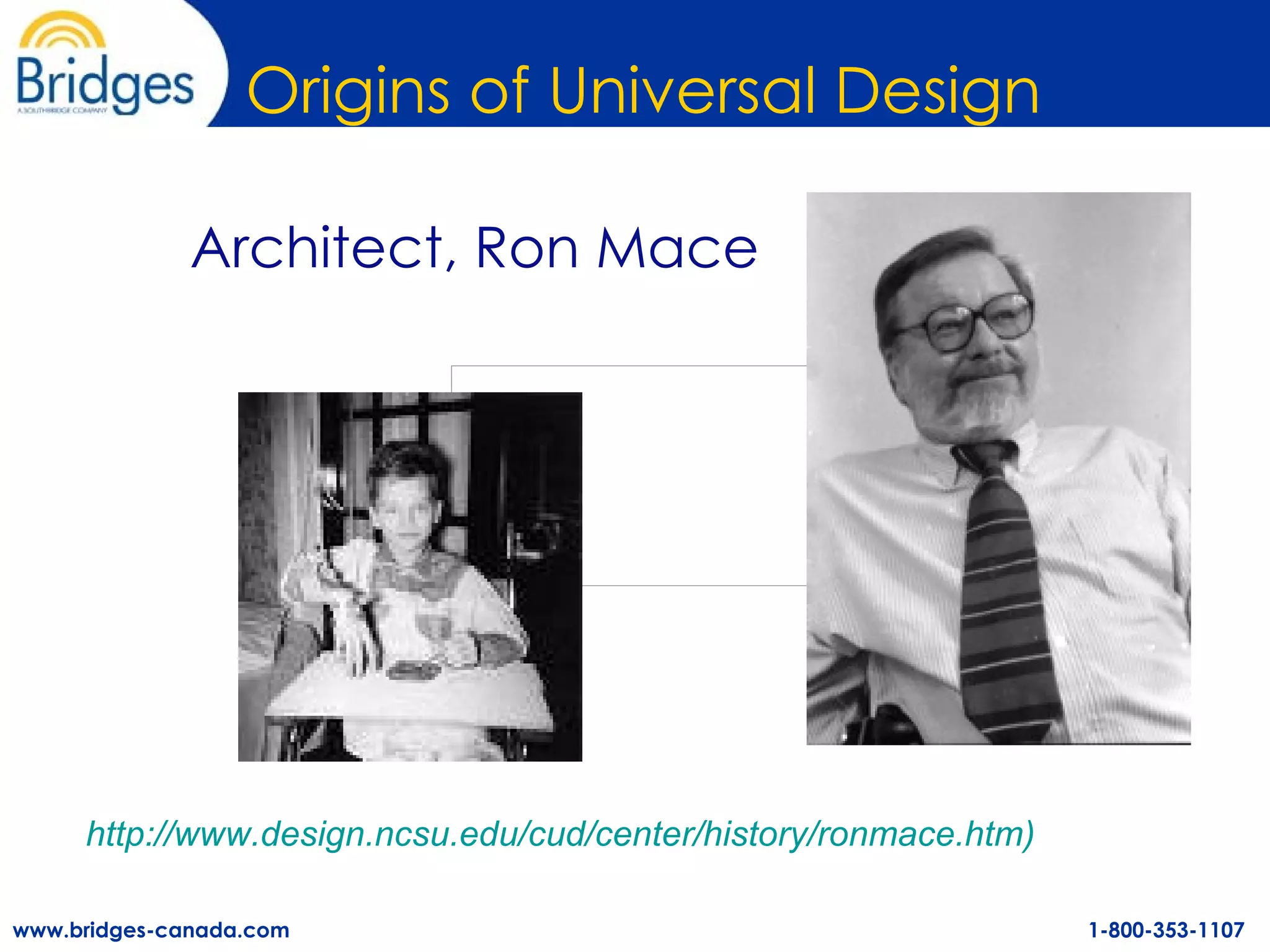
Origins of Universal Design Architect, Ron Mace http://www.design.ncsu.edu/cud/center/history/ronmace.htm)
Universal Design Principals Equitable use Flexibility in use Simple and intuitive Perceptible information Tolerance for error Low physical effort Size and space for approach and use Consider the needs of the broadest possible range of users from the beginning… One size does not fit all…alternatives are the  Key!
Universal Design for Learning Defined by  CAST  Centre for Applied Special Technology Based on principles of  Universal Design Taps into science about  brain networks Framework for  designing curriculum  that enables all individuals to gain knowledge, skills, and enthusiasm for learning.  Focus  is on goals, materials, methods and assessment not on fixing the learner Flexibility and alternatives
Universal Design for Learning “ barriers to learning are not, in fact, inherent in the capacities of learners, but instead arise in learners' interactions with inflexible educational goals, materials, methods, and assessments.”  David Rose, Teaching Every Student in the Digital Age , p. vi
The Science behind UDL
Brain Research: Networks WHAT HOW WHY Affective http://www.bbc.co.uk/science/humanbody/body/interactives/organs/brainmap/
3 Key Principles of UDL Multiple means of  engagement   Affective network (why) Multiple means of  representation   Recognition network (what)   Multiple means of  expression   Strategic network (how)
Translating Theory into Practice  Support background knowledge  Multiple examples  Multi-media and formats  Highlight critical features Recognition Network Multiple Means of Representation
Translating Theory into Practice  Flexible models of skilled performance  Opportunities to practice with supports  Ongoing, relevant feedback  Flexible opportunities for demonstrating skill Strategic Network Multiple Means of Expression
Translating Theory into Practice  Individual preferences, values and experience determine how we perceive at any moment in time  Choice of content and tools  Adjustable levels of challenge  Choice of rewards  Choice of context Affective Network Multiple Means of Engagement
Class Profiles: Jeffrey grade 6 student, a talented hockey player, interested  in all sports, but likes hockey most difficulty with writing, has creative ideas, but has difficulty synthesizing these ideas, organizing them and producing writing that is longer than one paragraph able to read at grade level, and can answer explicit questions about the text, but also has difficulty synthesizing information and articulating a summary about the text good speller, fast typist, reads at grade level but prefers to watch videos than to read in his spare time
Class Profiles: Catherine grade 6 student, very sociable and has lots of friends in the class enjoys small group projects, often able to take an organizational role no difficulty with academic level of the classroom and concepts being taught, but struggles with reading understands the text when read to her, but has difficulty with decoding writing suffers due to poor spelling and fine motor difficulties; prefers to scribe than write very self –conscious about her challenges with reading and writing
Class Profiles: Paul grade 6 student, very shy; a few friends in the class, who share his interest in video games and technology able to fix most gliches in classroom technology used for instruction difficulty with reading, vocabulary is below grade level, struggles with social studies and science texts, needs explanation of the vocabulary and text early writing level, lacking in paragraph structure, transitions, etc.  enjoys math , excels with operations, but difficulty with word problems
Class Learning Profile Jeffrey - Likes sports, especially hockey Catherine – enjoys collaborative work Jeffrey – likes video games and other technology Paul – enjoys math Catherine – self conscious about her reading and writing difficulties Paul – very shy Catherine – able to organize small group projects Affect (Learning “why”) Jeffrey – difficulty with writing, organizing ideas, synthesizing material, difficulty summarizing orally or in writing Catherine – fine motor difficulties, poor spelling Paul – simple language demonstrated in writing Jeffrey – good speller, fast typist Catherine – good verbal communication skills Paul – good operational computer knowledge Strategy (Learning “how”) Jeffrey - likes watching videos Paul – enjoys working with numbers Catherine – difficulty with decoding Paul – weak vocabulary knowledge Jeffrey – good reading skills, creative ideas, good speller Catherine – extensive knowledge about concepts being introduced, good listening comprehension Paul – picks up on patterns with number operations Recognition (Learning “what”) Students—Preferences/Interests Students— Weaknesses Students— Strengths NETWORK
Lesson Plan: Key UDL Principles  Flexible Goals Flexible Methods Choice of content and tools Flexible Assessment
Original Lesson Plan Objectives: Students will list words to describe the Arctic and Antarctic regions; research and answer questions about the polar regions; illustrate maps with things they have learned about the polar regions; interview people about their impressions of the Arctic and Antarctic; illustrate maps to show people's impressions of these two regions; discuss the interview results with the class; and write paragraphs explaining why it's important to know about the polar regions and detailing their differences.
Original Lesson Plan Materials Required: Computer with Internet access Blank Xpeditions outline maps of the world (basic mode, without borders), two for each student Writing and drawing materials   Suggested Student Assessment: Have students write paragraphs answering the question "Why do you think it is important to understand the characteristics of the polar regions and the differences between the two? Provide at least two reasons."
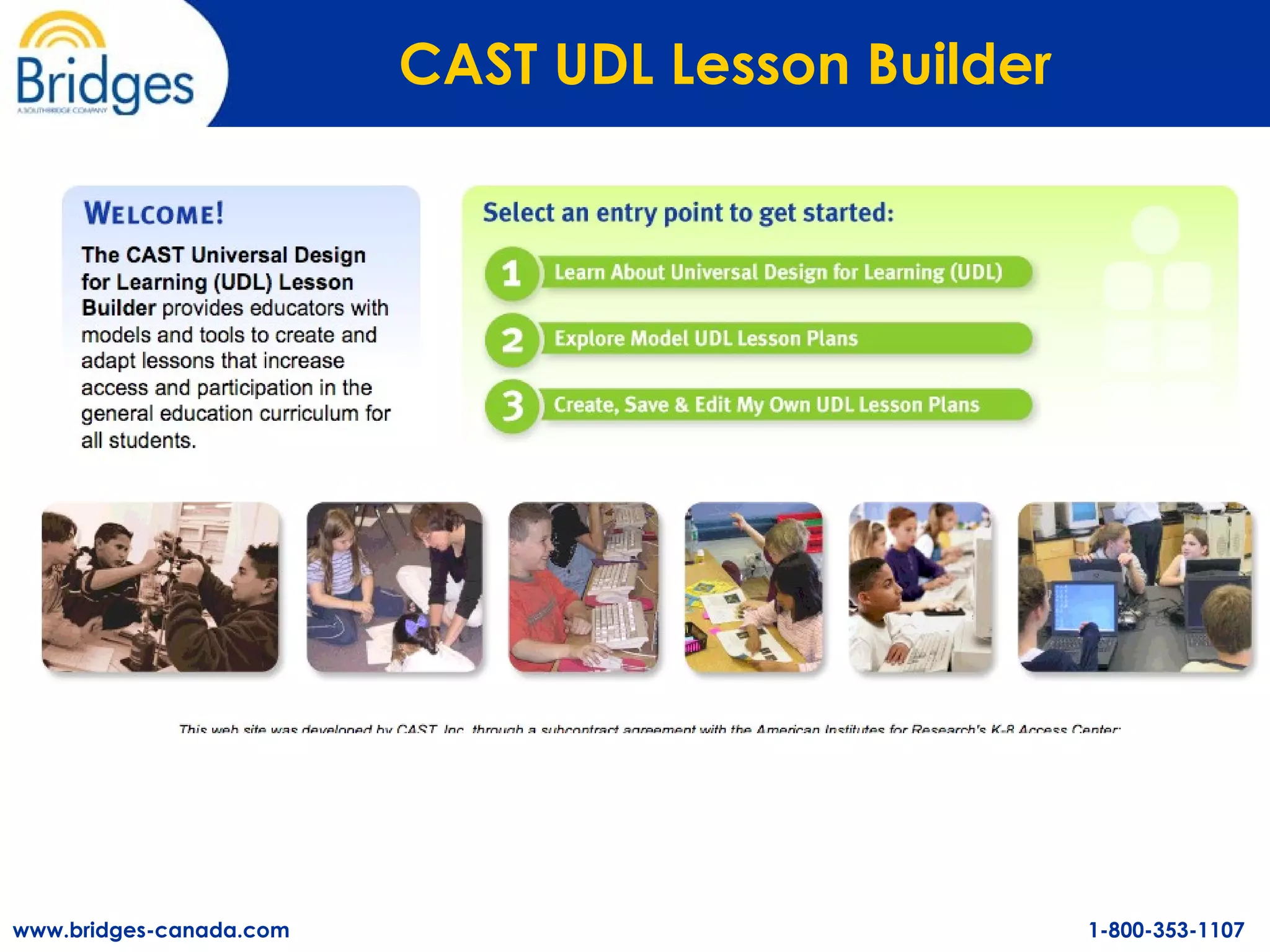
UDL Lesson Plan: Overview Title : Characteristics of the Polar Regions: Arctic and Antarctica Author : Susie Blackstien-Adler Subject : Geography Grade : 6-8 Duration : 3 days Unit   Description : This unit will provide students with an opportunity to learn about the polar regions.  They will choose a polar region to research, use a variety of resources to complete the research, share their research in a format that meets their style of expression and compare the 2 regions after all students have shared their research.  CAST UDL Lesson Builder  www.cast.org
CAST UDL Lesson Builder
UDL Lesson Plan: Goals   Unit Goals:  Students will learn about the landscape and climate and their impact on the polar regions. They will research both the Arctic and Antarctica and compare/contrast the 2 regions.   Lesson 1 Goals (day 1):  Students will apply research skills to demonstrate new ideas and facts about one of the polar regions Lesson 2 Goals (days 2-3):  Develop and share a persuasive argument that focuses on one of the selected regions Compare and contrast the 2 regions CAST UDL Lesson Builder  www.cast.org
UDL Lesson Plan: Methods Set the stage for exploration and learning with goals in mind Complete the  K  and  W  part of the KWL chart Structure learning Identify what they already know Tap into the affective network Video, webcams, high-quality graphics, video Use concept mapping tools  Smart ideas, Inspiration, Kurzweil Anticipatory Set: Brainstorm Associations with Polar Regions Steps Technology Connections
UDL Lesson Plan: Methods   Outline research resources/tools that they can use Books, videos, internet, expert opinion Recognition network/strategic network/affective network Preview Resources Reading Leveled text, text-to-speech tools, narrated books and vocabulary supports Organization  Referencing, book-marking and note-taking tools Steps Technology Connections
UDL Lesson Plan: Methods   Example of a range of possibilities for a finished product Brochures, slide-shows, video clips, posters, essays Outline options for sharing what was learned Written, oral , visual Preview Resources Product Development Resources Multi-media tools that allow for screen capture/recording, slide shows Word processors with text to speech  Vocabulary and spelling supports such as word prediction and word banks
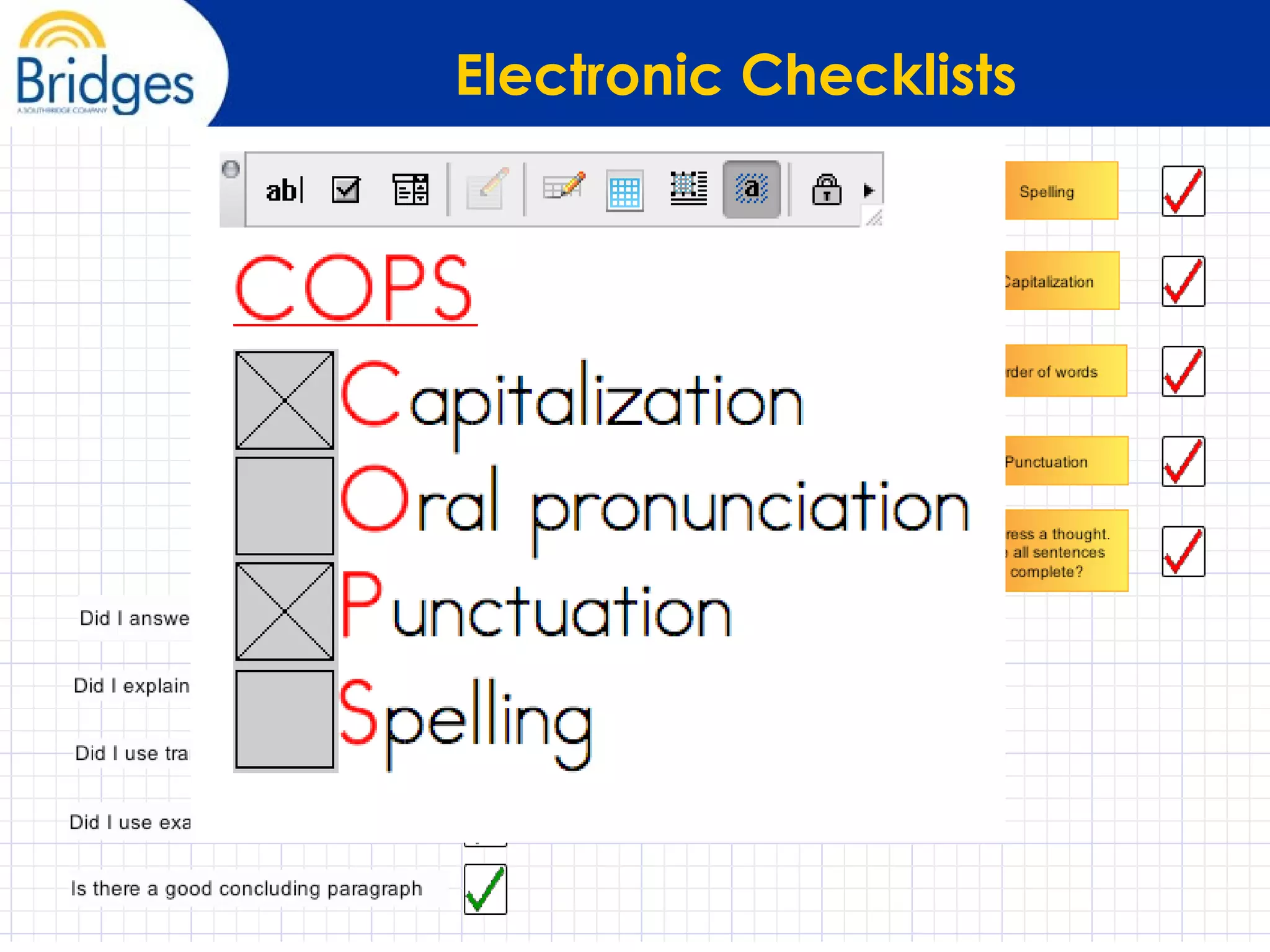
UDL Lesson Plan: Methods   Demonstrate various ways to research & collect information Work with individual students/groups to model the various components of the lesson Provide reviewing and monitoring checklists   Provide Guided Practice Product Development Resources Checklists  Electronic checklists notes or prompts   Methods: Provide Guided Practice
UDL Lesson Plan: Methods   Provide students with time to complete their research and product to share.  Provide access to resources and models of finished products throughout.  Promote peer and expect feedback throughout the process.   Provide Independent Practice
Think About Group Work Allowing students to choose a role that suits their strengths can be a powerful way to get them participating!  Fact checker Scribe Designer  Presenter Timeliner (like a project manager)
UDL Lesson Plan: Assessment   Formative and Ongoing Assessment Informal observation during small group work Check in with teacher between the steps of research and assembling final product   Summative/End of the Lesson Assessment Presentation of final product Upon completion of the summaries, have individuals share their comparisons in the format of a large group Venn diagram
Electronic Checklists
Communicate Webwide

Udl Trld 09

  • 1.
    1.2 A “Lesson” in Universal Design for Learning Susie Blackstien-Adler Kim Antonius Bridges Canada
  • 2.
    Professional team withextensive experience in the fields of Education, AAC and Technology Experts in Educational and Assistive Technology Quality products Professional development founded on best practices Dedicated to the principles of UDL and DI About Us
  • 3.
    Origins of UniversalDesign Architect, Ron Mace http://www.design.ncsu.edu/cud/center/history/ronmace.htm)
  • 4.
    Universal Design PrincipalsEquitable use Flexibility in use Simple and intuitive Perceptible information Tolerance for error Low physical effort Size and space for approach and use Consider the needs of the broadest possible range of users from the beginning… One size does not fit all…alternatives are the Key!
  • 5.
    Universal Design forLearning Defined by CAST Centre for Applied Special Technology Based on principles of Universal Design Taps into science about brain networks Framework for designing curriculum that enables all individuals to gain knowledge, skills, and enthusiasm for learning. Focus is on goals, materials, methods and assessment not on fixing the learner Flexibility and alternatives
  • 6.
    Universal Design forLearning “ barriers to learning are not, in fact, inherent in the capacities of learners, but instead arise in learners' interactions with inflexible educational goals, materials, methods, and assessments.” David Rose, Teaching Every Student in the Digital Age , p. vi
  • 7.
  • 8.
    Brain Research: NetworksWHAT HOW WHY Affective http://www.bbc.co.uk/science/humanbody/body/interactives/organs/brainmap/
  • 9.
    3 Key Principlesof UDL Multiple means of engagement Affective network (why) Multiple means of representation Recognition network (what) Multiple means of expression Strategic network (how)
  • 10.
    Translating Theory intoPractice  Support background knowledge  Multiple examples  Multi-media and formats  Highlight critical features Recognition Network Multiple Means of Representation
  • 11.
    Translating Theory intoPractice  Flexible models of skilled performance  Opportunities to practice with supports  Ongoing, relevant feedback  Flexible opportunities for demonstrating skill Strategic Network Multiple Means of Expression
  • 12.
    Translating Theory intoPractice  Individual preferences, values and experience determine how we perceive at any moment in time  Choice of content and tools  Adjustable levels of challenge  Choice of rewards  Choice of context Affective Network Multiple Means of Engagement
  • 13.
    Class Profiles: Jeffreygrade 6 student, a talented hockey player, interested in all sports, but likes hockey most difficulty with writing, has creative ideas, but has difficulty synthesizing these ideas, organizing them and producing writing that is longer than one paragraph able to read at grade level, and can answer explicit questions about the text, but also has difficulty synthesizing information and articulating a summary about the text good speller, fast typist, reads at grade level but prefers to watch videos than to read in his spare time
  • 14.
    Class Profiles: Catherinegrade 6 student, very sociable and has lots of friends in the class enjoys small group projects, often able to take an organizational role no difficulty with academic level of the classroom and concepts being taught, but struggles with reading understands the text when read to her, but has difficulty with decoding writing suffers due to poor spelling and fine motor difficulties; prefers to scribe than write very self –conscious about her challenges with reading and writing
  • 15.
    Class Profiles: Paulgrade 6 student, very shy; a few friends in the class, who share his interest in video games and technology able to fix most gliches in classroom technology used for instruction difficulty with reading, vocabulary is below grade level, struggles with social studies and science texts, needs explanation of the vocabulary and text early writing level, lacking in paragraph structure, transitions, etc. enjoys math , excels with operations, but difficulty with word problems
  • 16.
    Class Learning ProfileJeffrey - Likes sports, especially hockey Catherine – enjoys collaborative work Jeffrey – likes video games and other technology Paul – enjoys math Catherine – self conscious about her reading and writing difficulties Paul – very shy Catherine – able to organize small group projects Affect (Learning “why”) Jeffrey – difficulty with writing, organizing ideas, synthesizing material, difficulty summarizing orally or in writing Catherine – fine motor difficulties, poor spelling Paul – simple language demonstrated in writing Jeffrey – good speller, fast typist Catherine – good verbal communication skills Paul – good operational computer knowledge Strategy (Learning “how”) Jeffrey - likes watching videos Paul – enjoys working with numbers Catherine – difficulty with decoding Paul – weak vocabulary knowledge Jeffrey – good reading skills, creative ideas, good speller Catherine – extensive knowledge about concepts being introduced, good listening comprehension Paul – picks up on patterns with number operations Recognition (Learning “what”) Students—Preferences/Interests Students— Weaknesses Students— Strengths NETWORK
  • 17.
    Lesson Plan: KeyUDL Principles Flexible Goals Flexible Methods Choice of content and tools Flexible Assessment
  • 18.
    Original Lesson PlanObjectives: Students will list words to describe the Arctic and Antarctic regions; research and answer questions about the polar regions; illustrate maps with things they have learned about the polar regions; interview people about their impressions of the Arctic and Antarctic; illustrate maps to show people's impressions of these two regions; discuss the interview results with the class; and write paragraphs explaining why it's important to know about the polar regions and detailing their differences.
  • 19.
    Original Lesson PlanMaterials Required: Computer with Internet access Blank Xpeditions outline maps of the world (basic mode, without borders), two for each student Writing and drawing materials Suggested Student Assessment: Have students write paragraphs answering the question "Why do you think it is important to understand the characteristics of the polar regions and the differences between the two? Provide at least two reasons."
  • 20.
    UDL Lesson Plan:Overview Title : Characteristics of the Polar Regions: Arctic and Antarctica Author : Susie Blackstien-Adler Subject : Geography Grade : 6-8 Duration : 3 days Unit Description : This unit will provide students with an opportunity to learn about the polar regions. They will choose a polar region to research, use a variety of resources to complete the research, share their research in a format that meets their style of expression and compare the 2 regions after all students have shared their research. CAST UDL Lesson Builder www.cast.org
  • 21.
  • 22.
    UDL Lesson Plan:Goals Unit Goals: Students will learn about the landscape and climate and their impact on the polar regions. They will research both the Arctic and Antarctica and compare/contrast the 2 regions. Lesson 1 Goals (day 1): Students will apply research skills to demonstrate new ideas and facts about one of the polar regions Lesson 2 Goals (days 2-3): Develop and share a persuasive argument that focuses on one of the selected regions Compare and contrast the 2 regions CAST UDL Lesson Builder www.cast.org
  • 23.
    UDL Lesson Plan:Methods Set the stage for exploration and learning with goals in mind Complete the K and W part of the KWL chart Structure learning Identify what they already know Tap into the affective network Video, webcams, high-quality graphics, video Use concept mapping tools Smart ideas, Inspiration, Kurzweil Anticipatory Set: Brainstorm Associations with Polar Regions Steps Technology Connections
  • 24.
    UDL Lesson Plan:Methods Outline research resources/tools that they can use Books, videos, internet, expert opinion Recognition network/strategic network/affective network Preview Resources Reading Leveled text, text-to-speech tools, narrated books and vocabulary supports Organization Referencing, book-marking and note-taking tools Steps Technology Connections
  • 25.
    UDL Lesson Plan:Methods Example of a range of possibilities for a finished product Brochures, slide-shows, video clips, posters, essays Outline options for sharing what was learned Written, oral , visual Preview Resources Product Development Resources Multi-media tools that allow for screen capture/recording, slide shows Word processors with text to speech Vocabulary and spelling supports such as word prediction and word banks
  • 26.
    UDL Lesson Plan:Methods Demonstrate various ways to research & collect information Work with individual students/groups to model the various components of the lesson Provide reviewing and monitoring checklists Provide Guided Practice Product Development Resources Checklists Electronic checklists notes or prompts Methods: Provide Guided Practice
  • 27.
    UDL Lesson Plan:Methods Provide students with time to complete their research and product to share. Provide access to resources and models of finished products throughout. Promote peer and expect feedback throughout the process. Provide Independent Practice
  • 28.
    Think About GroupWork Allowing students to choose a role that suits their strengths can be a powerful way to get them participating! Fact checker Scribe Designer Presenter Timeliner (like a project manager)
  • 29.
    UDL Lesson Plan:Assessment Formative and Ongoing Assessment Informal observation during small group work Check in with teacher between the steps of research and assembling final product Summative/End of the Lesson Assessment Presentation of final product Upon completion of the summaries, have individuals share their comparisons in the format of a large group Venn diagram
  • 30.
  • 31.