M.M FATHIMA NASEELA
EU/IS/08/MS/40
MGT306303:30:43
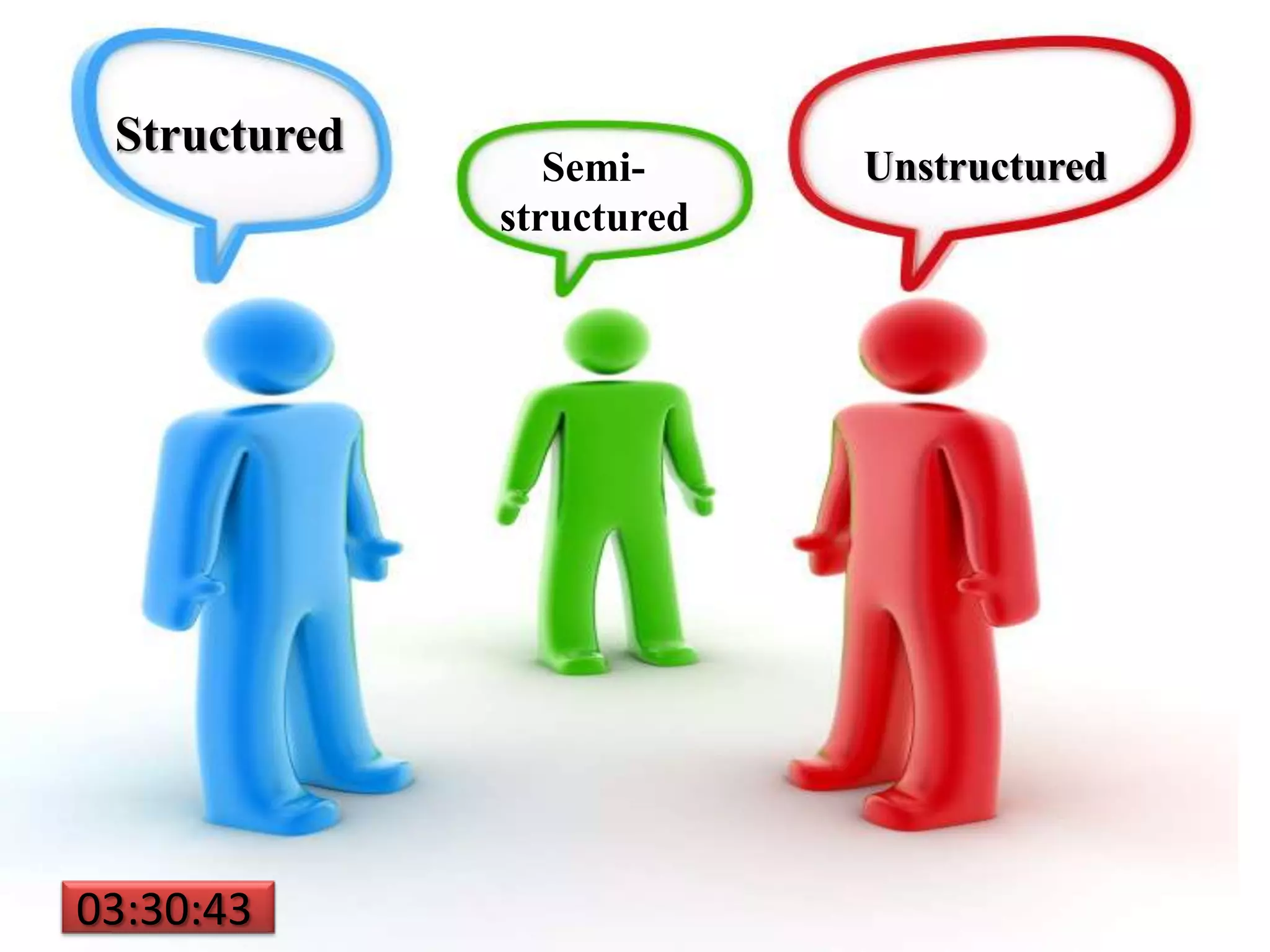
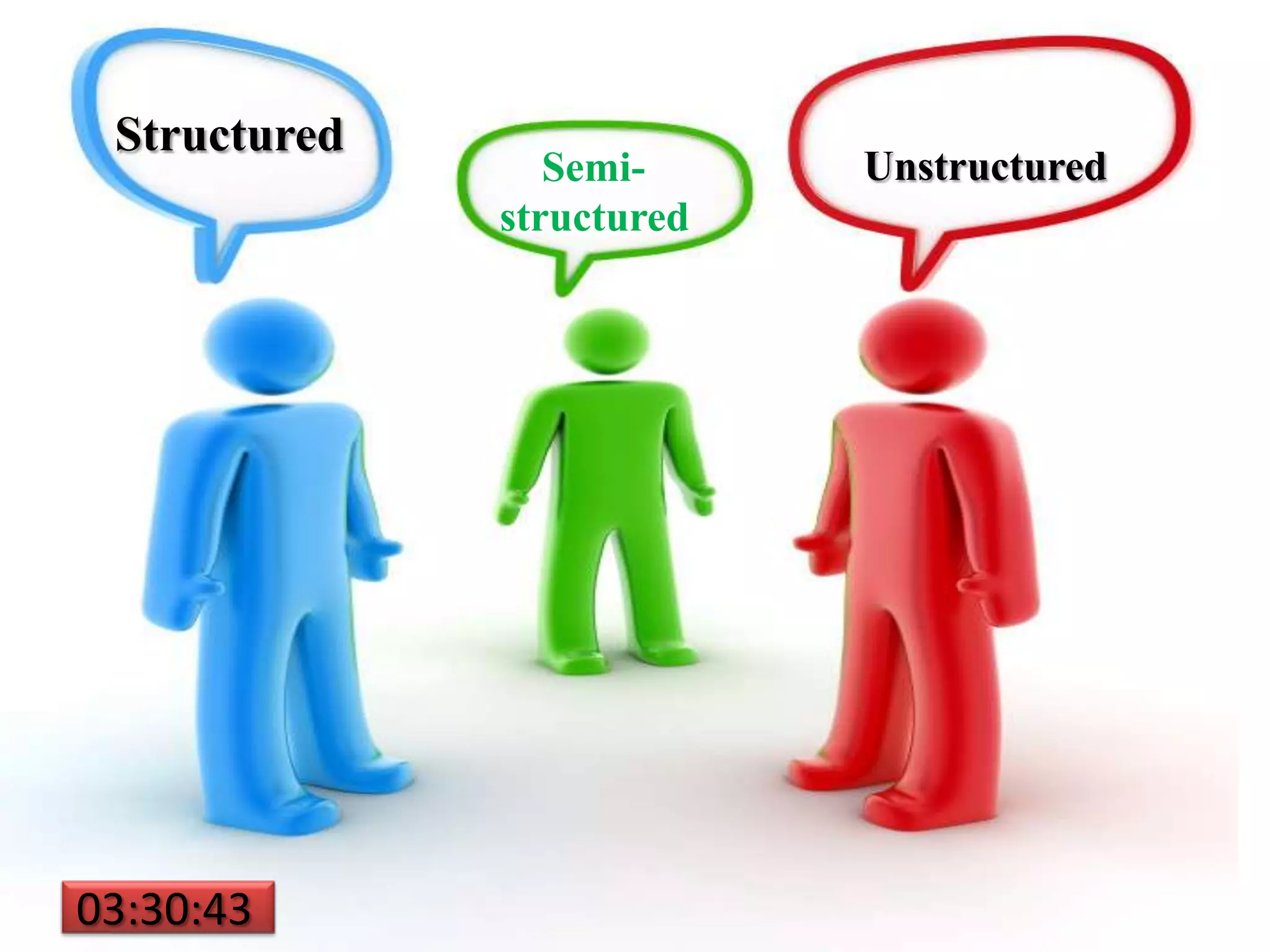
Structured
Semi-
structured
Unstructured
03:30:43
Structured Interviews
Quantitative Approach
Definition
Interviewer gives a set of predetermined questions to the
interviewees
Aim
Measures facts, attitudes, knowledge, behavior
Finding accurate information without influences from
the researcher
 to ensure that each interviewee is presented with exactly the
same questions in the same order.
03:30:43
Relationship between interviewer and interviewee
Minimize interaction
No distractions
No flexibility
strict control over interview
Close ended question
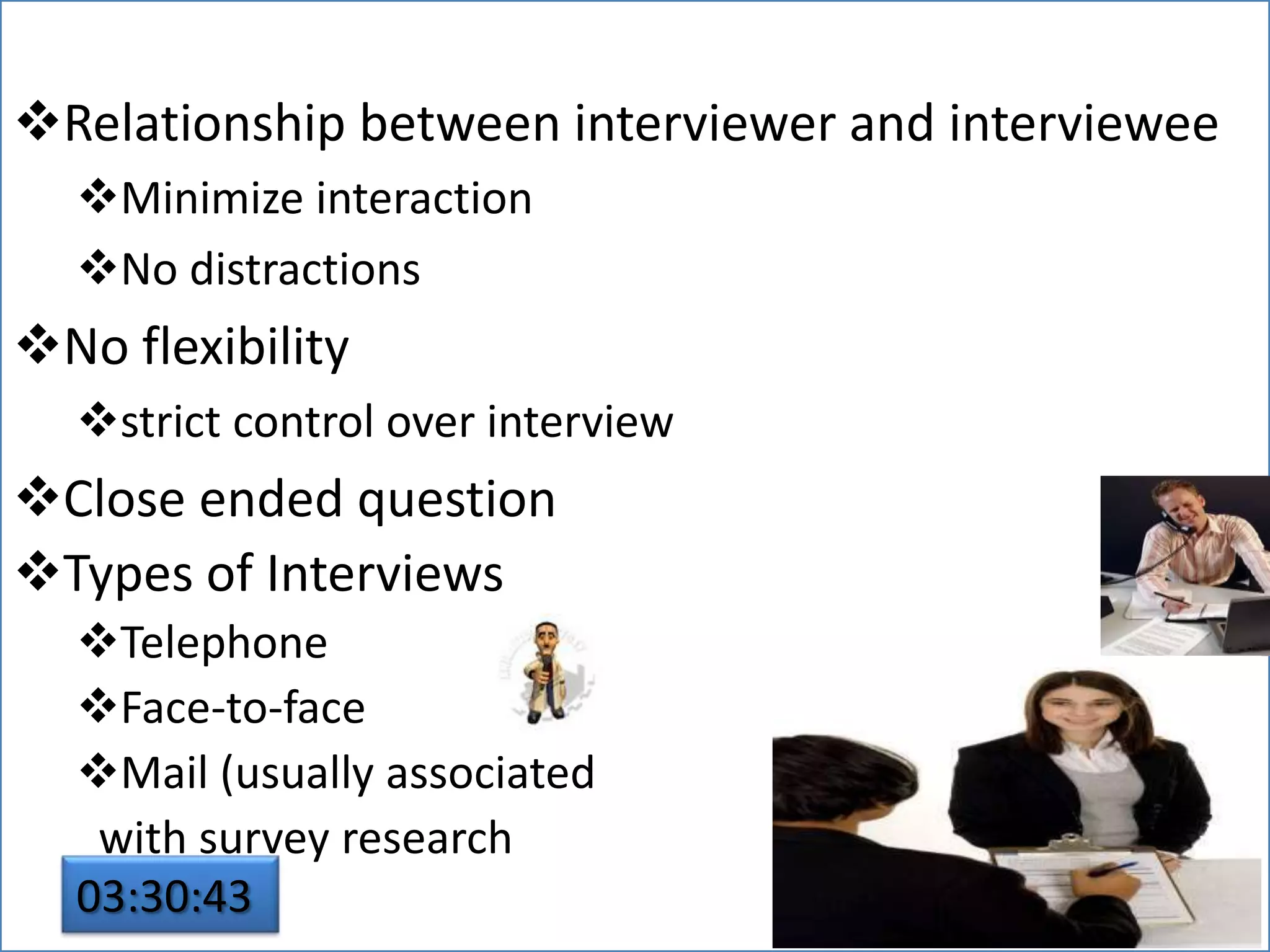
Types of Interviews
Telephone
Face-to-face
Mail (usually associated
with survey research
03:30:43
Strengths and weaknesses of structured
interviews
Strengths
Control
Reliability
Speed
Efficient use of
time
Weaknesses
Limit freedom to talk
Miss what
interviewees
think is important
Does not allow
complexity of
answers03:30:43
Structured
Semi-
structured
Unstructured
03:30:43
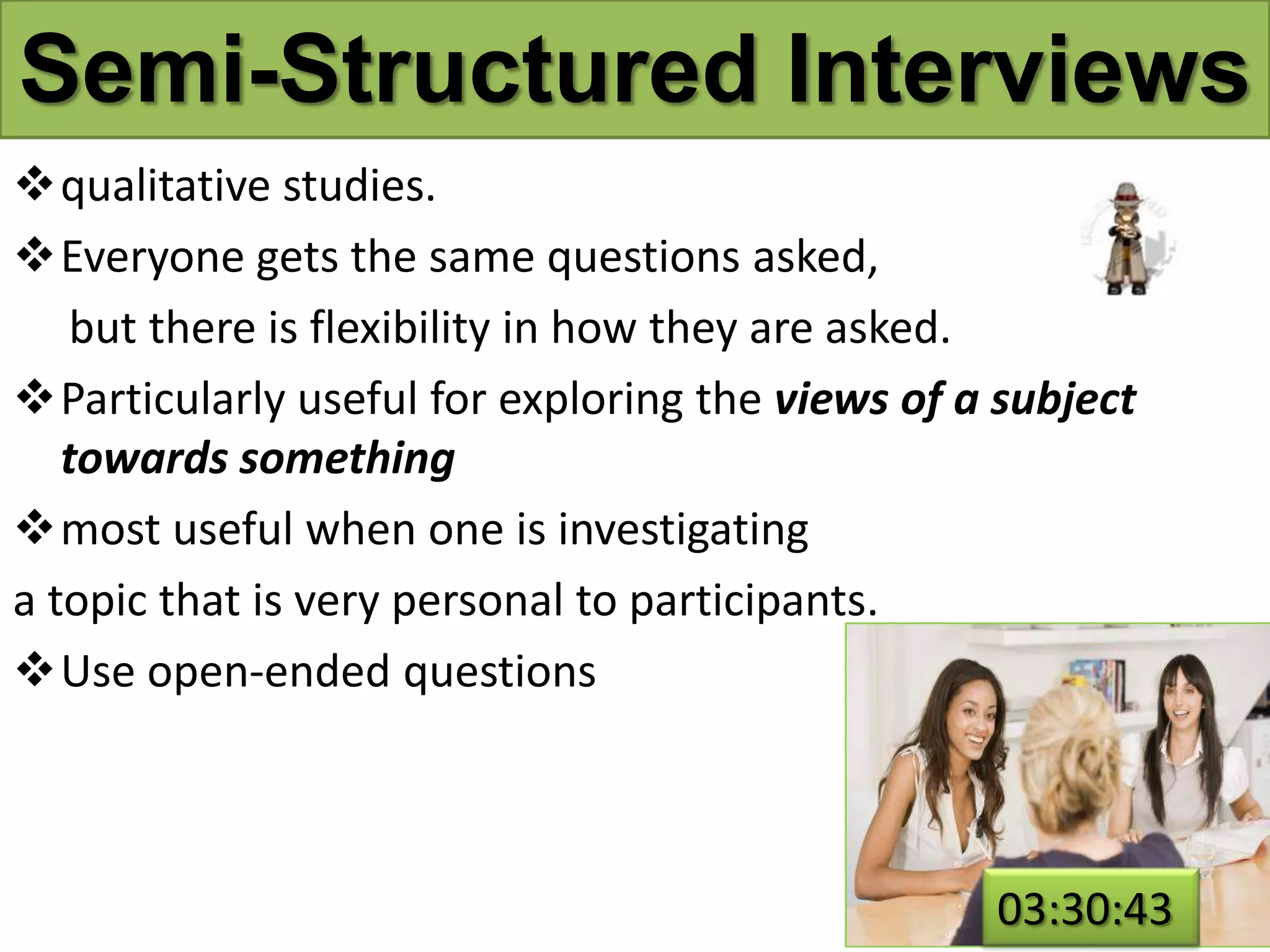
Semi-Structured Interviews
qualitative studies.
Everyone gets the same questions asked,
but there is flexibility in how they are asked.
Particularly useful for exploring the views of a subject
towards something
most useful when one is investigating
a topic that is very personal to participants.
Use open-ended questions
03:30:43
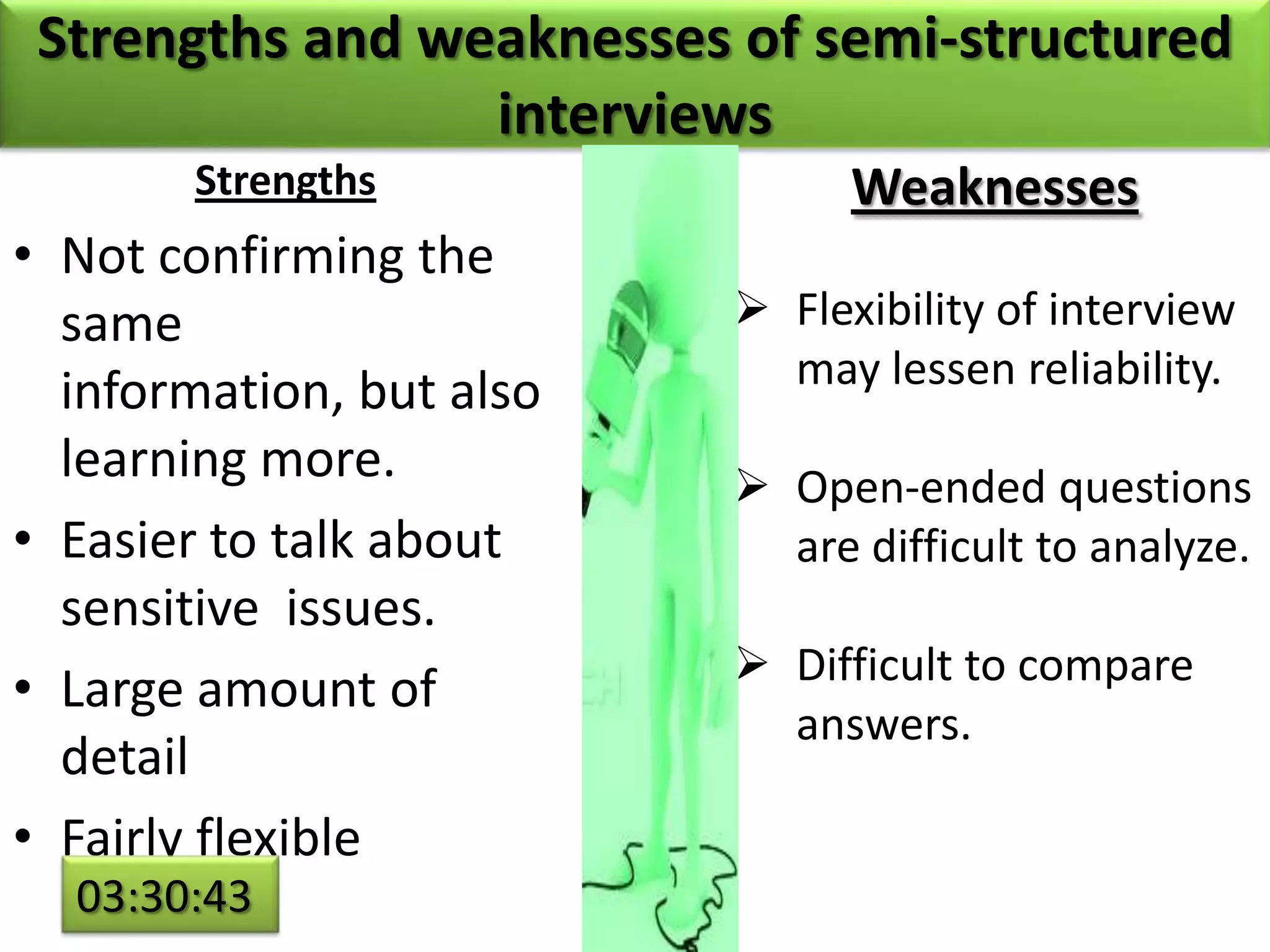
Strengths and weaknesses of semi-structured
interviews
Strengths
• Not confirming the
same
information, but also
learning more.
• Easier to talk about
sensitive issues.
• Large amount of
detail
• Fairly flexible
03:30:43
Weaknesses
 Flexibility of interview
may lessen reliability.
 Open-ended questions
are difficult to analyze.
 Difficult to compare
answers.
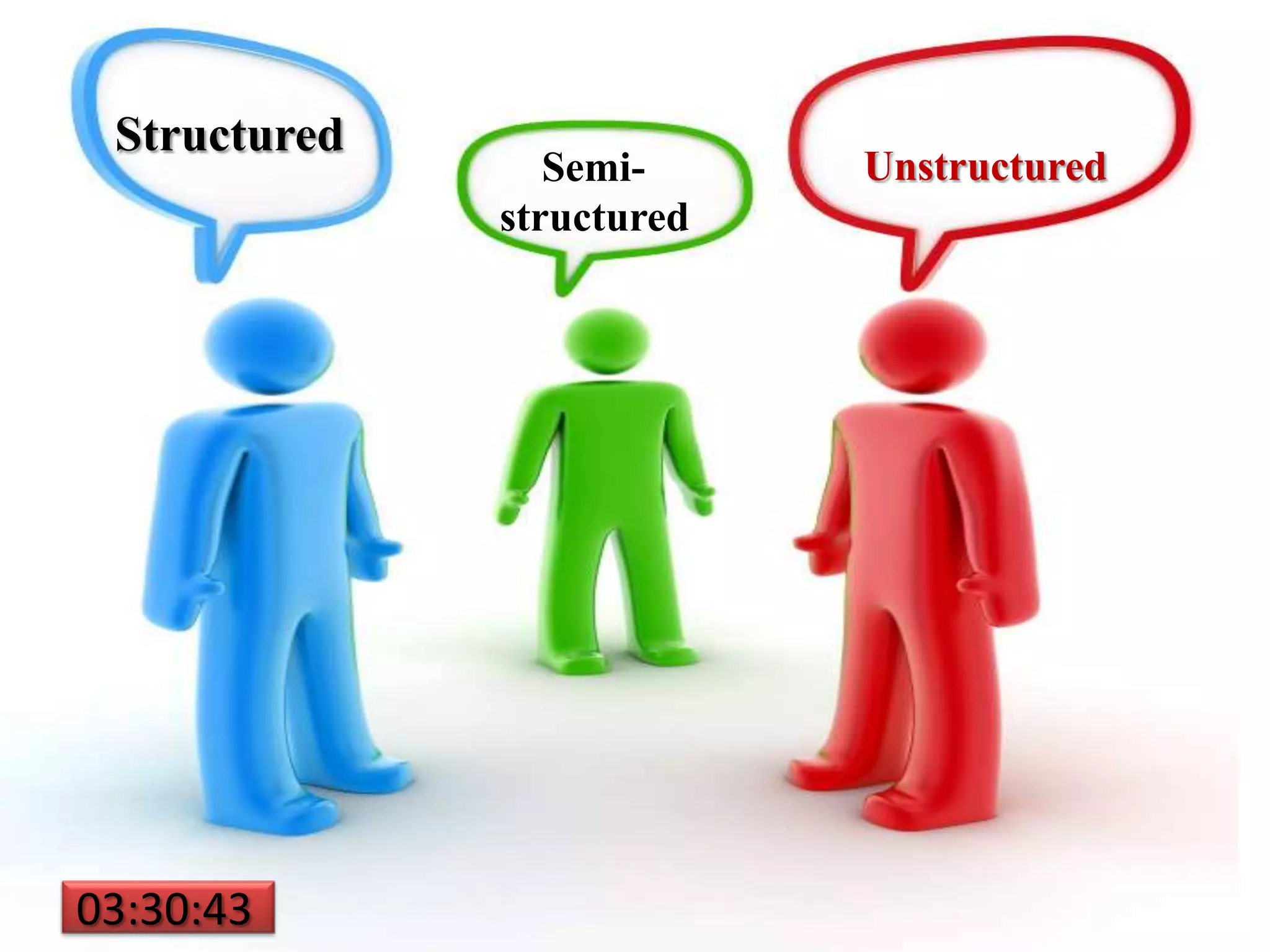
Structured
Semi-
structured
Unstructured
03:30:43
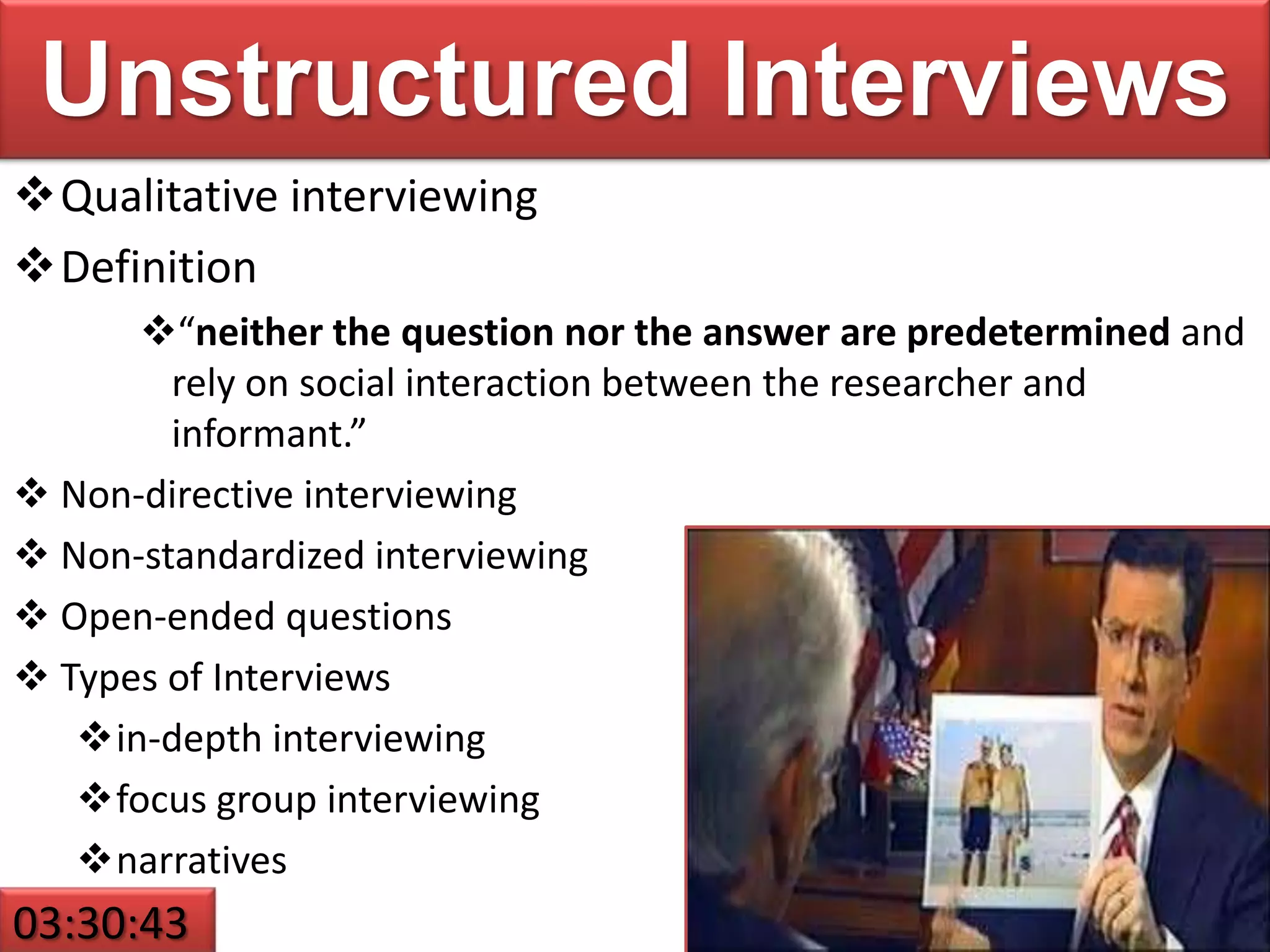
Unstructured Interviews
Qualitative interviewing
Definition
“neither the question nor the answer are predetermined and
rely on social interaction between the researcher and
informant.”
 Non-directive interviewing
 Non-standardized interviewing
 Open-ended questions
 Types of Interviews
in-depth interviewing
focus group interviewing
narratives
03:30:43
Strengths and weaknesses of unstructured
interviews
Strengths
Rich data
extremely flexible
Provides highly
detailed and valid
data
It is more like a
conversation and
the interviewee is
relaxed.
Weaknesses
People say and do
different things in
different situations
Time consuming
Attention not focused
on a given issue
Very little factual
information provided
03:30:43
03:30:43

Types of interviews

Editor's Notes

  • #4 1) Quantitative studies focus on phenomena that are quantifiable (can be counted) and are typically represented as statistics (numbers or percentages).