(According to their mode of action)
Dr.Amandeep Sharma,
Assistant Professor,
Department of Agad Tantra,
Desh Bhagat Ayurvedic College & Hospital,
Desh Bhagat University,
Mandi Gobindgarh.
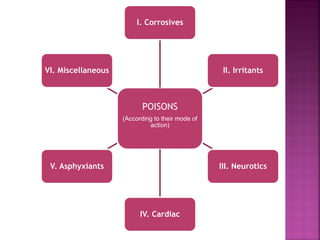
POISONS
(According to their mode of
action)
I. Corrosives
II. Irritants
III. Neurotics
IV. Cardiac
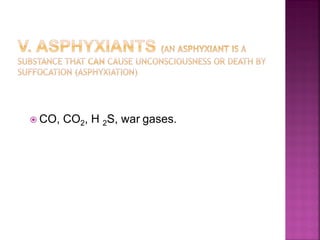
V. Asphyxiants
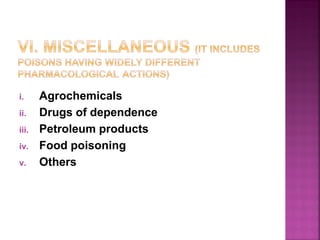
VI. Miscellaneous
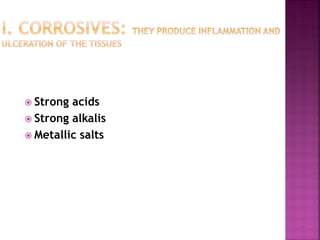
 Strong acids
 Strong alkalis
 Metallic salts
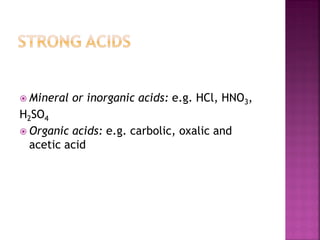
 Mineral or inorganic acids: e.g. HCl, HNO3,
H2SO4
 Organic acids: e.g. carbolic, oxalic and
acetic acid
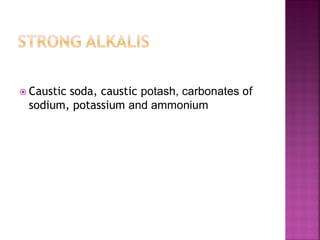
 Caustic soda, caustic potash, carbonates of
sodium, potassium and ammonium
 Zinc chloride,
 Ferric chloride or AgNO3
 Inorganic
 Organic
 Mechanical
 Metallic, e.g. arsenic, antimony, copper,
lead, mercury, zinc
 Non-metallic, e.g. phosphorus, chlorine,
iodine, CCl 4
• Vegetative, e.g. rati, castor, croton,
calotropis
• Animal, e.g. snakes, cantharides, scorpions,
spiders
 Powdered glass, hair, diamond dust, needles
 Cerebral
 Spinal
 Peripheral
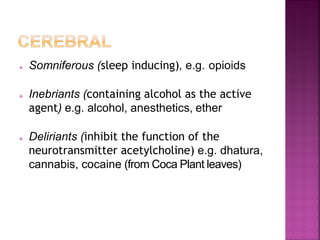
 Somniferous (sleep inducing), e.g. opioids
 Inebriants (containing alcohol as the active
agent) e.g. alcohol, anesthetics, ether
 Deliriants (inhibit the function of the
neurotransmitter acetylcholine) e.g. dhatura,
cannabis, cocaine (from Coca Plant leaves)
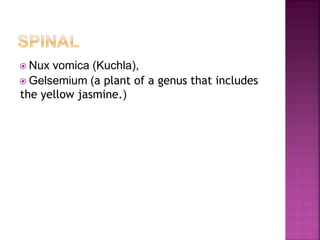
 Nux vomica (Kuchla),
 Gelsemium (a plant of a genus that includes
the yellow jasmine.)
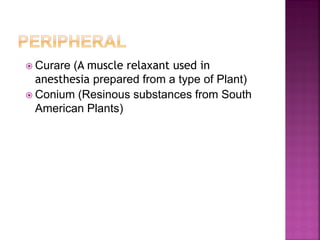
 Curare (A muscle relaxant used in
anesthesia prepared from a type of Plant)
 Conium (Resinous substances from South
American Plants)
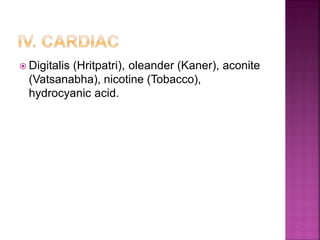
 Digitalis (Hritpatri), oleander (Kaner), aconite
(Vatsanabha), nicotine (Tobacco),
hydrocyanic acid.
 CO, CO2, H 2S, war gases.
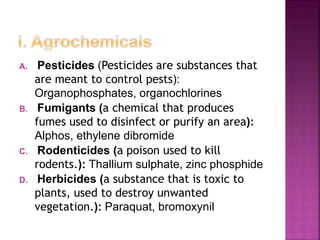
i. Agrochemicals
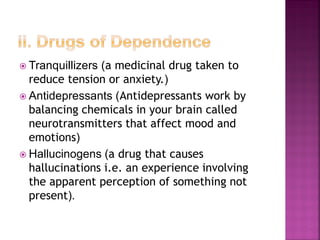
ii. Drugs of dependence
iii. Petroleum products
iv. Food poisoning
v. Others
A. Pesticides (Pesticides are substances that
are meant to control pests):
Organophosphates, organochlorines
B. Fumigants (a chemical that produces
fumes used to disinfect or purify an area):
Alphos, ethylene dibromide
C. Rodenticides (a poison used to kill
rodents.): Thallium sulphate, zinc phosphide
D. Herbicides (a substance that is toxic to
plants, used to destroy unwanted
vegetation.): Paraquat, bromoxynil
 Tranquillizers (a medicinal drug taken to
reduce tension or anxiety.)
 Antidepressants (Antidepressants work by
balancing chemicals in your brain called
neurotransmitters that affect mood and
emotions)
 Hallucinogens (a drug that causes
hallucinations i.e. an experience involving
the apparent perception of something not
present).
 Kerosene
 Petrol,
 Naphtha (is a flammable liquid hydrocarbon
mixture)
 Bacterial- Caused by presence of pathogenic
bacteria in the food (e.g. Botulism-is a rare and
potentially fatal illness caused by a toxin produced
by the bacterium Clostridium botulinum)
 Chemical- Caused by chemicals such as antibiotics
or pesticides in the food.
 Analgesics (an agent producing diminished
sensation to pain without loss of
consciousness)
 Antipyretics (Antipyretic is medication used
to lower body temperature when a fever is
present.)
Thanks

Classification of Poisons

  • 1.
    (According to theirmode of action) Dr.Amandeep Sharma, Assistant Professor, Department of Agad Tantra, Desh Bhagat Ayurvedic College & Hospital, Desh Bhagat University, Mandi Gobindgarh.
  • 2.
    POISONS (According to theirmode of action) I. Corrosives II. Irritants III. Neurotics IV. Cardiac V. Asphyxiants VI. Miscellaneous
  • 3.
     Strong acids Strong alkalis  Metallic salts
  • 4.
     Mineral orinorganic acids: e.g. HCl, HNO3, H2SO4  Organic acids: e.g. carbolic, oxalic and acetic acid
  • 5.
     Caustic soda,caustic potash, carbonates of sodium, potassium and ammonium
  • 6.
     Zinc chloride, Ferric chloride or AgNO3
  • 7.
  • 8.
     Metallic, e.g.arsenic, antimony, copper, lead, mercury, zinc  Non-metallic, e.g. phosphorus, chlorine, iodine, CCl 4
  • 9.
    • Vegetative, e.g.rati, castor, croton, calotropis • Animal, e.g. snakes, cantharides, scorpions, spiders
  • 10.
     Powdered glass,hair, diamond dust, needles
  • 11.
  • 12.
     Somniferous (sleepinducing), e.g. opioids  Inebriants (containing alcohol as the active agent) e.g. alcohol, anesthetics, ether  Deliriants (inhibit the function of the neurotransmitter acetylcholine) e.g. dhatura, cannabis, cocaine (from Coca Plant leaves)
  • 13.
     Nux vomica(Kuchla),  Gelsemium (a plant of a genus that includes the yellow jasmine.)
  • 14.
     Curare (Amuscle relaxant used in anesthesia prepared from a type of Plant)  Conium (Resinous substances from South American Plants)
  • 15.
     Digitalis (Hritpatri),oleander (Kaner), aconite (Vatsanabha), nicotine (Tobacco), hydrocyanic acid.
  • 16.
     CO, CO2,H 2S, war gases.
  • 17.
    i. Agrochemicals ii. Drugsof dependence iii. Petroleum products iv. Food poisoning v. Others
  • 18.
    A. Pesticides (Pesticidesare substances that are meant to control pests): Organophosphates, organochlorines B. Fumigants (a chemical that produces fumes used to disinfect or purify an area): Alphos, ethylene dibromide C. Rodenticides (a poison used to kill rodents.): Thallium sulphate, zinc phosphide D. Herbicides (a substance that is toxic to plants, used to destroy unwanted vegetation.): Paraquat, bromoxynil
  • 19.
     Tranquillizers (amedicinal drug taken to reduce tension or anxiety.)  Antidepressants (Antidepressants work by balancing chemicals in your brain called neurotransmitters that affect mood and emotions)  Hallucinogens (a drug that causes hallucinations i.e. an experience involving the apparent perception of something not present).
  • 20.
     Kerosene  Petrol, Naphtha (is a flammable liquid hydrocarbon mixture)
  • 21.
     Bacterial- Causedby presence of pathogenic bacteria in the food (e.g. Botulism-is a rare and potentially fatal illness caused by a toxin produced by the bacterium Clostridium botulinum)  Chemical- Caused by chemicals such as antibiotics or pesticides in the food.
  • 22.
     Analgesics (anagent producing diminished sensation to pain without loss of consciousness)  Antipyretics (Antipyretic is medication used to lower body temperature when a fever is present.)
  • 23.