Group Members
 Naeem Ahmed
 M.Shahbaz
 M.Sammar Sultan
 Anam Farooq
 Mehwish Fatima
 Tehreem Zahra
 Kinat Fatima
 Tayyaba
 Humaira Shaheen
Size
 In most spiders, the female is significantly larger than the
male often more than double.
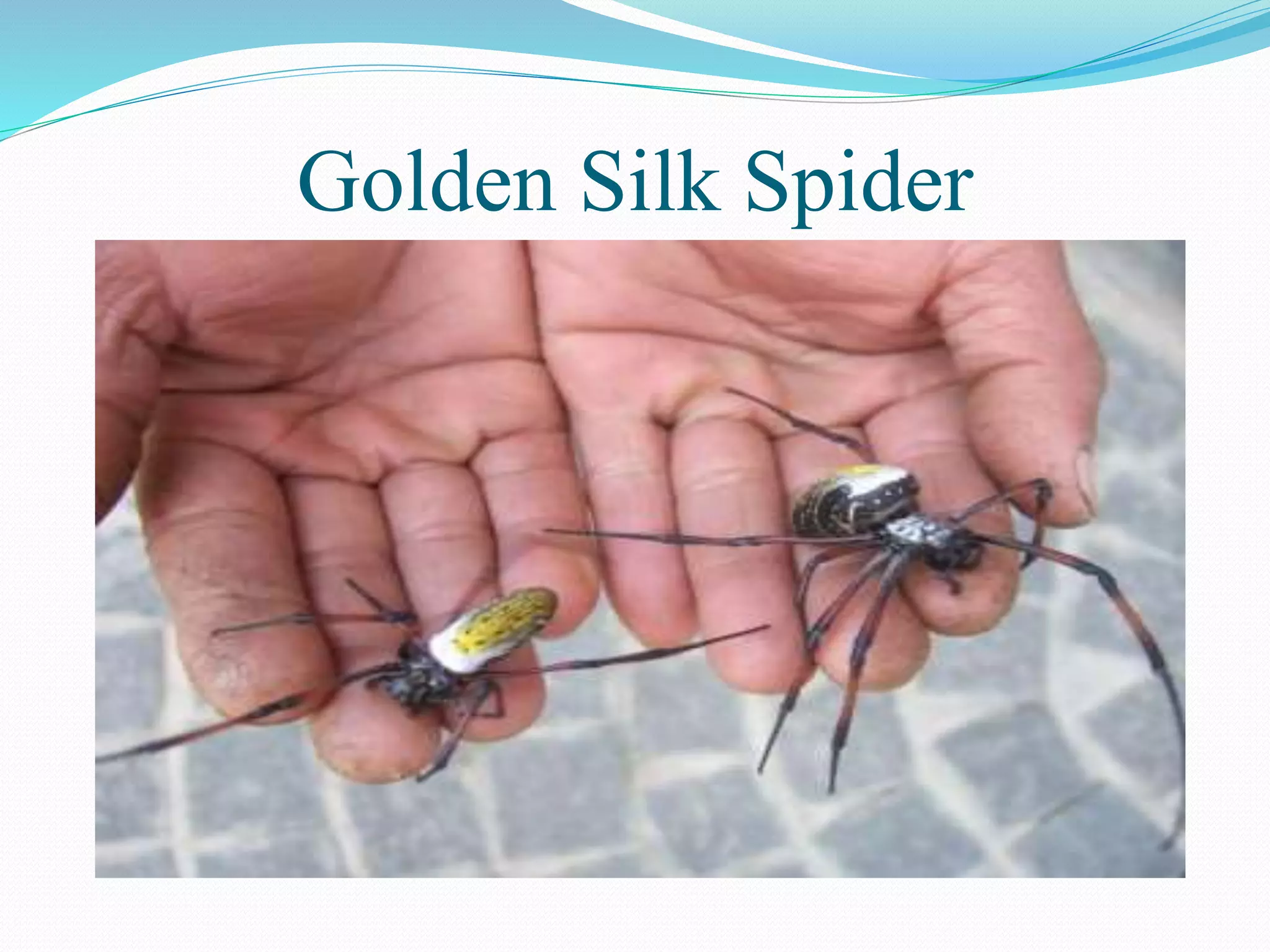
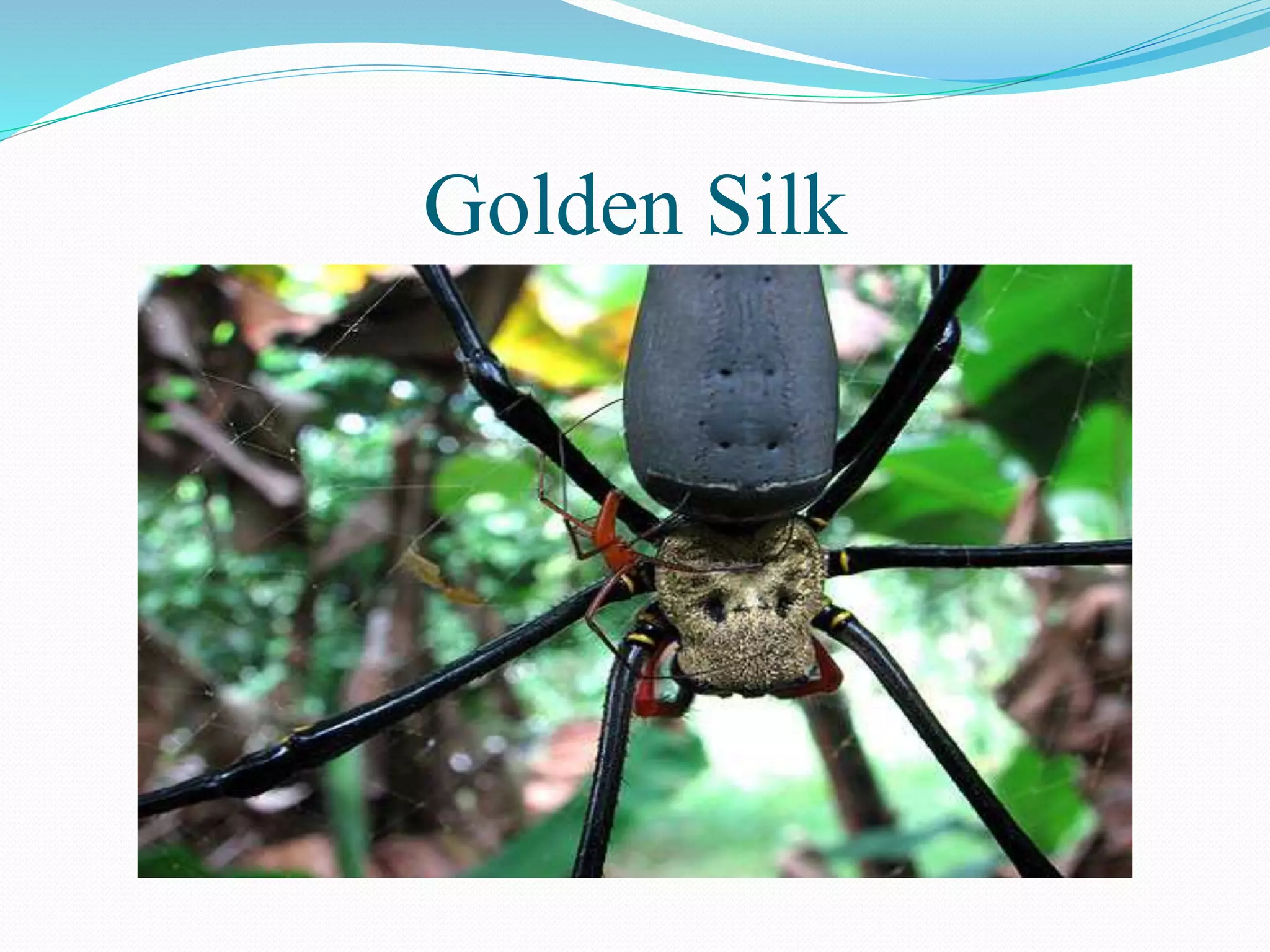
 Using the example of the golden silk spider, the female
isn't only more colorful.
 She's six times longer than the male.The female is 3
inches long compared to the male at a half-inch at most.
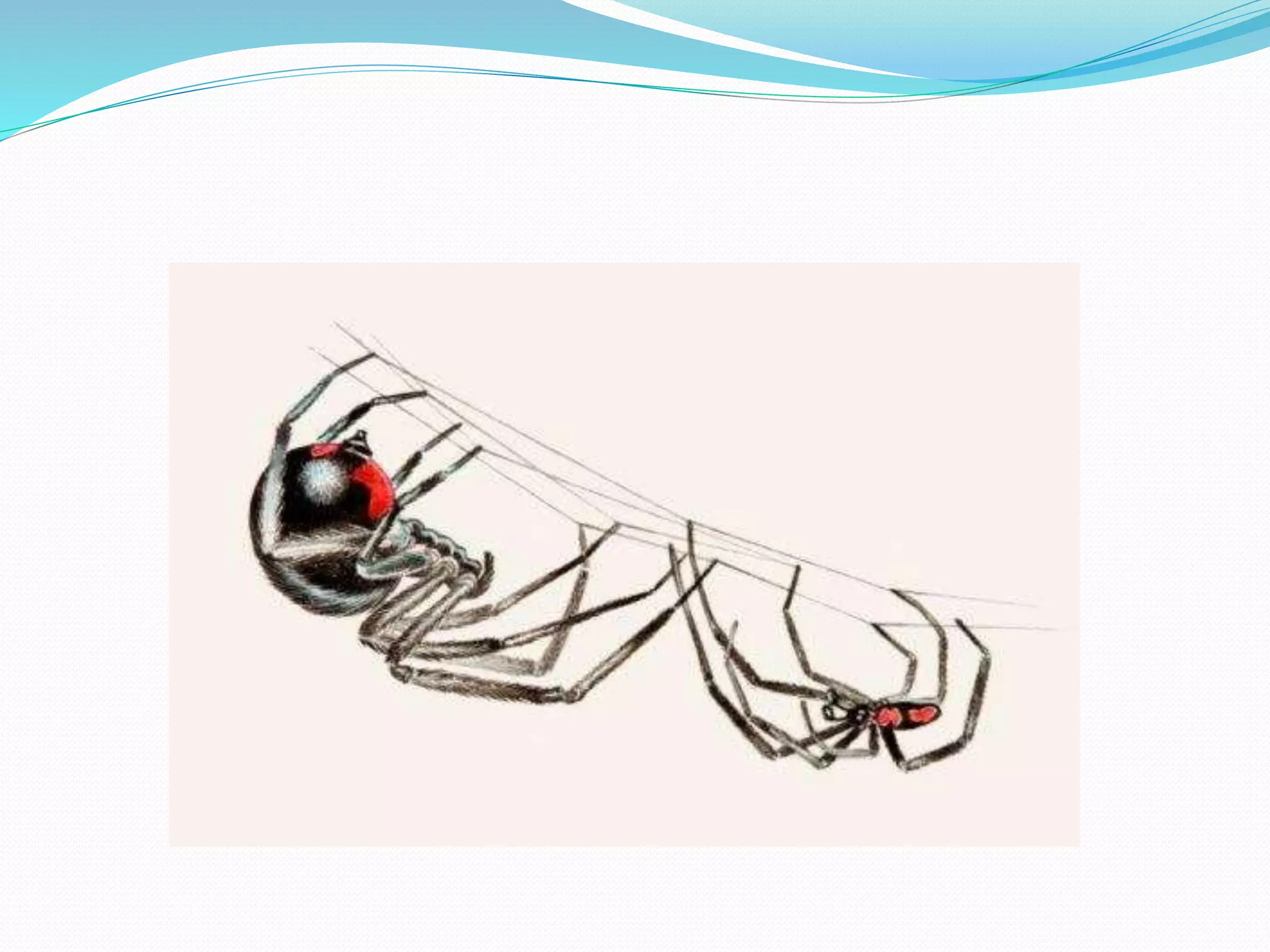
 In the black widow, the female typically reaches about
1/2-inches long while the male is approximately 1/4
inches.
Golden Silk Spider
Black Widow
Colors
 In some species, coloration can quickly tell you the difference
between a male and female.
 A common example is the black widow. The female is the one
most commonly thought of: black, globular body with long,
outstretched legs and the tell-tale red hourglass. The male is
lighter in color and has a reddish-orange stripe down his back
with colorful streaks of yellow and brown radiating across his
abdomen.
 The golden silk spider is another example: the female has a
yellow-spotted silver carapace covering her orange to tan body;
the male is simply dark brown and not easily noticed in the
landscape.
Black Widow
Golden Silk
Pedipalps
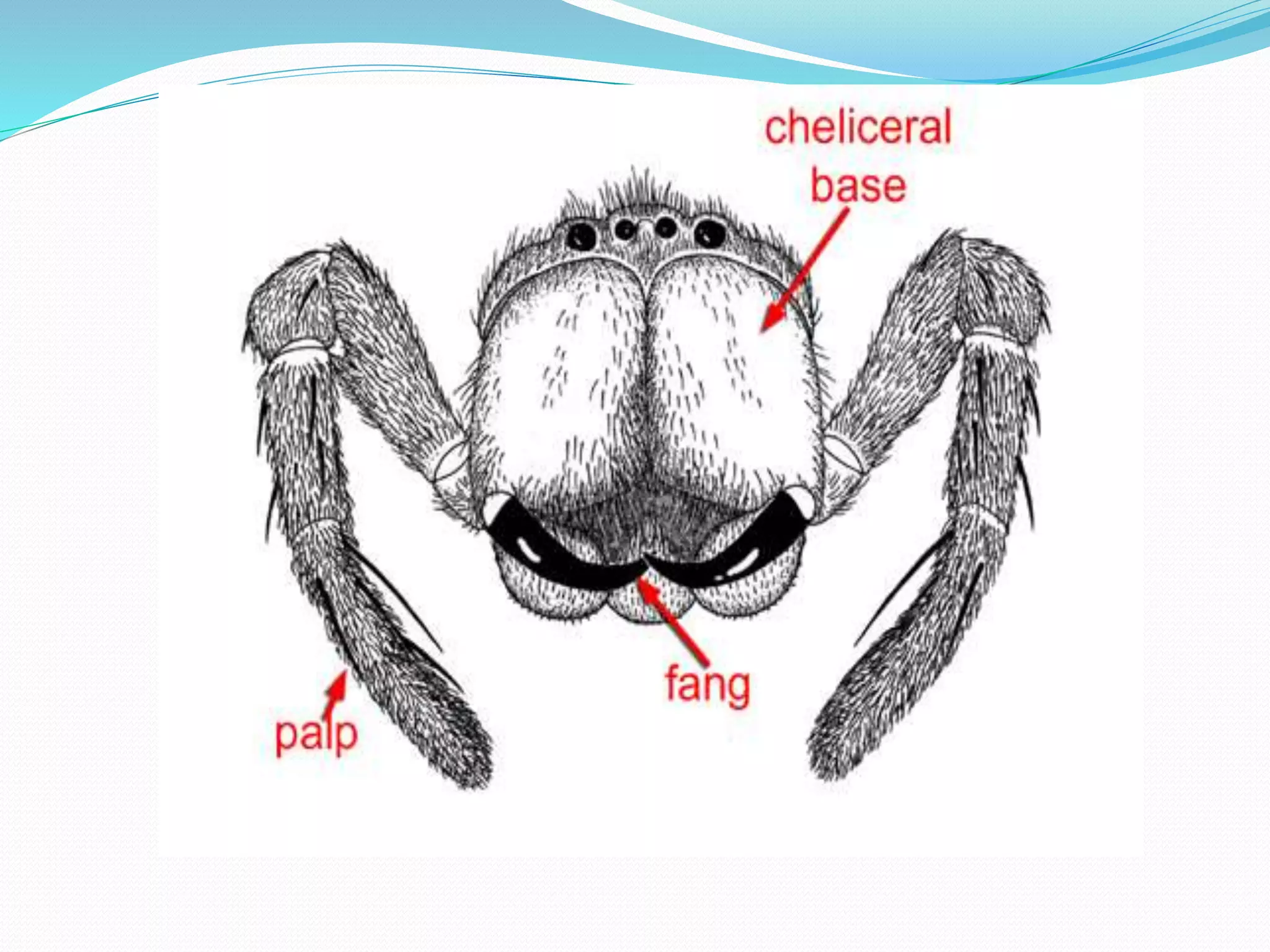
 The pedipalps are two mouth parts located between the
chelicerae, or jaws and the first pair of legs.They're jointed
and look like a smaller, additional pair of legs.
 Spiders use their palps as an insect uses its antennae; the
palps sometimes aid in web-building or capturing prey.
 The male spider has an enlarged pair of pedipalps,
sometimes resembling a pair of arms with boxing gloves on.
 In many species, you can easily identify a male because of
his enlarged, rounded pedipalps, which he uses to transfer
sperm to the female during mating.
Venom
 In venomous spiders, females tend to have larger venom
sacs than males.
 In some species, adult males don't have functional
venom sacs at all.
 Females need more venom to protect their nests, which
is why they've developed large sacs. It is speculated that
because many females don't leave their webs, they need
more venom to subdue larger prey.
 Male spiders hunt while roaming and have more of a
choice on what to eat.
Abdomen Size
 Males and females of the same spider species often look
totally different.
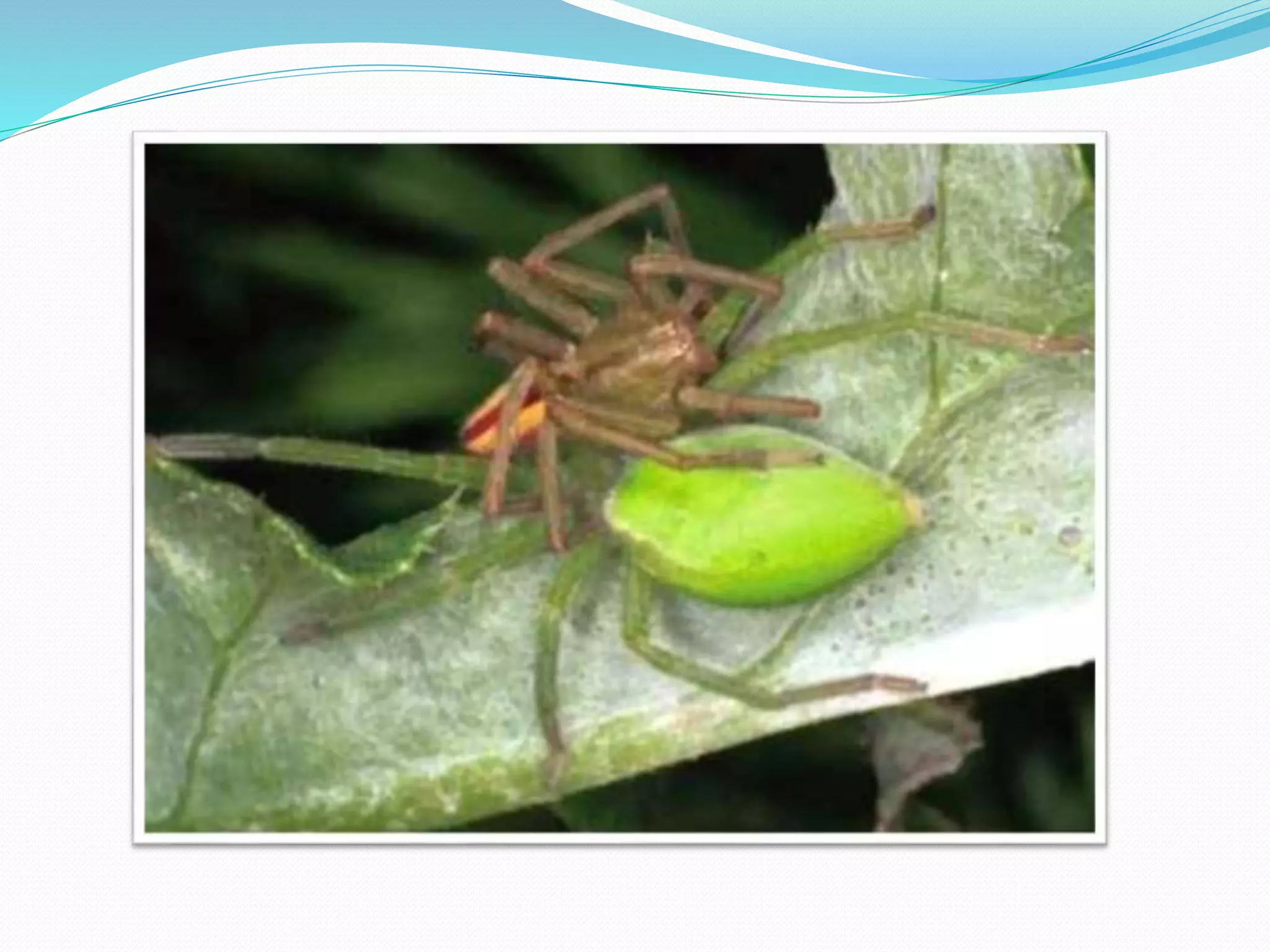
 A tiny male golden orb spider (follow the yellow arrow)
climbs on a giant female. Below is a female (green) and
male (brown) of the crab spider species Micrommata
virescens.
Pheromones
 In most species, the female makes it easier on the males
by "advertising" herself with pheromones, communicative
chemicals.
 Many female ground spiders will secrete a pheromone on
their dragline, the silk thread they leave trailing behind
them.
 When males of the same species come across the dragline,
they smell the pheromone with the chemical sensors on
their front legs and follow the dragline to the female
Life Cycle
 Tarantulas may live for years; most
species take two to five years to reach adulthood, but some
species may take up to ten years to reach full maturity.
 Upon reaching adulthood, males typically
have but a 1 to 1.5 year period left to live and will
immediately go in search of a female with which to mate.
 Male tarantulas rarely moult again once they reach
adulthood. The oldest spider, according to
Guinness World Records, lived to be 49 years
old.
 Females will continue to moult after
reaching maturity. Female specimens have been
known to reach 30 to 40 years of
age, and have survived on water alone for up to 2
years. Grammostola rosea spiders are renowned for
going for long periods without eating.
Epigastric Furrow
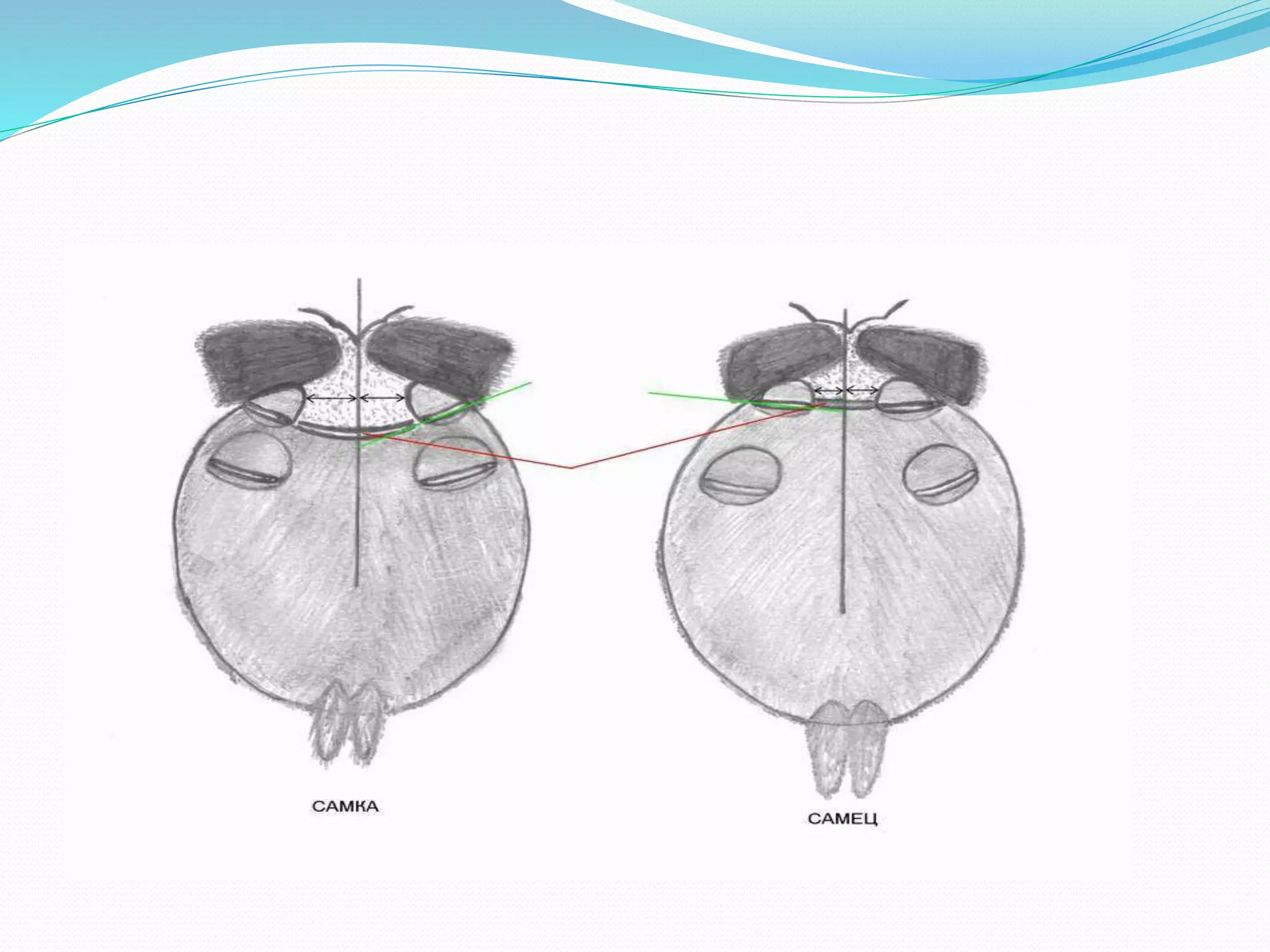
 Female more curved in contrast with male
 Male practically presents itself direct line, going
between internal corners of book lungs.
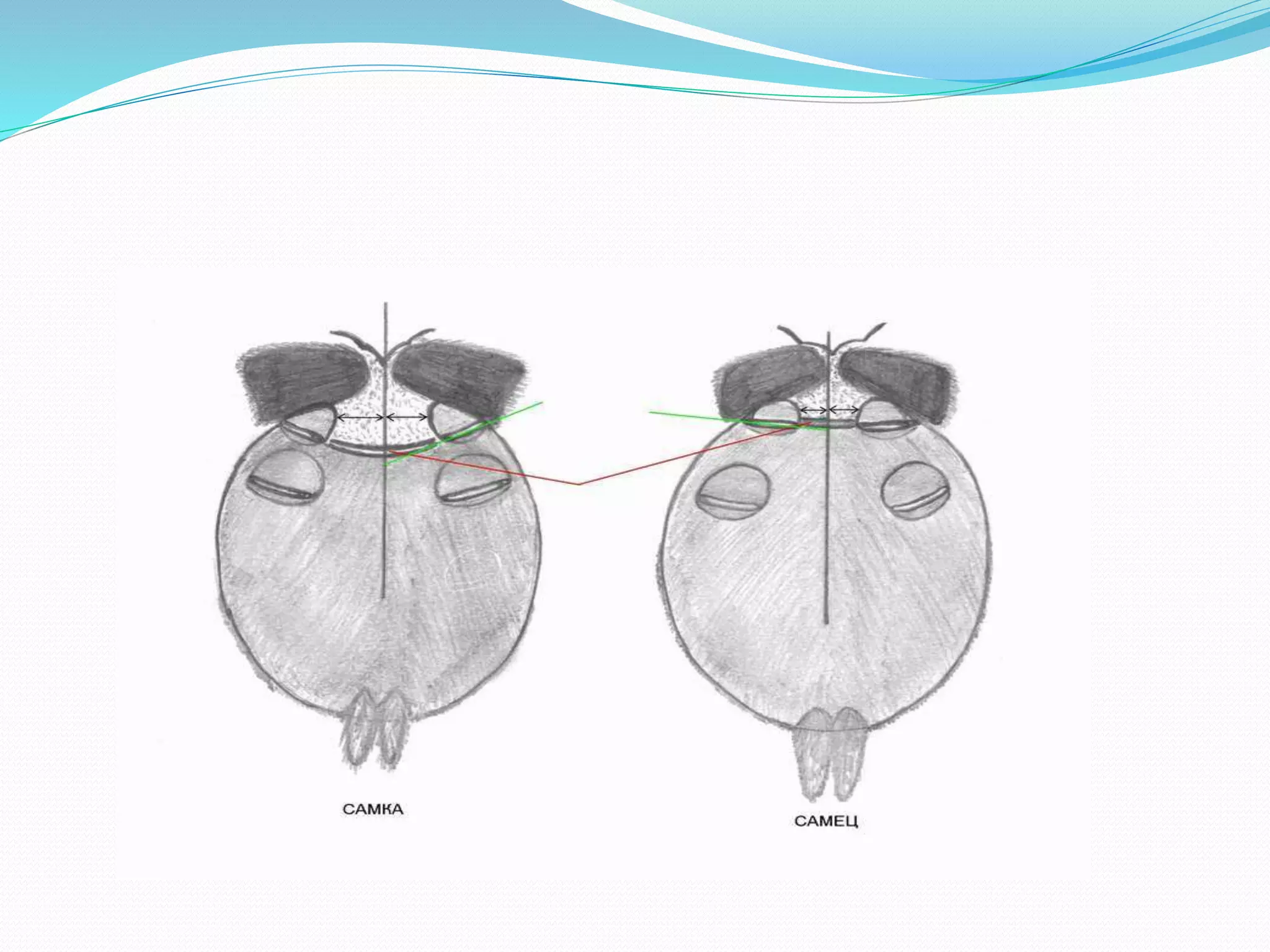
Distance between anterior pair of
booklungs
 Female wider apart one from another.
 Male closer located to one another in contrast with
female.
Angle formed lower edge of book
lung to medium line of body of
tarantula
 Female booklungs more detour from horizontal line
than at males, angle would be not less 20 degrees.
 Male booklungs are situated more horizontally than
in males, angle would be nearly 5 degrees.
Chelicerae
 Chelicerae of female massive, broader and more
robust, than beside males. Chelicerae of male more
broad and fine.
 Male chelicerae are thinner and less broad. Female
chelicerae tend to be more bulbous, or swollen; male
chelicerae appear slimmer and uniform.
Body Marks
 Different spiders have different body marks on the
base of their gender.
 E.g. Black widow spider
 Female has a distinct red hourglass shape.
 Male has lighter streaks on its body.
Epigynum
fusilla or spinnerets
 fusilla or spinnerets that are found only on male
spiders, called epiandrous fusillae. According to the
Reaserchers, nearly all male spiders, including all
tarantulas, have this extra set of silk spinning glands
and fusillae or spinnerets. If only we could find them
on a spider, we could at last determine, conclusively
and through Science, whether the spider was male or
not male (i.e., female).
 In different sources is described also some other ways
of determination of sex:
 and thorax, correlations of proportions of length of
legs to body etc.
 But all of these, regrettably, are not although any
reliable, and so will not be discussed here.
Thank You

Presentation4

  • 3.
    Group Members  NaeemAhmed  M.Shahbaz  M.Sammar Sultan  Anam Farooq  Mehwish Fatima  Tehreem Zahra  Kinat Fatima  Tayyaba  Humaira Shaheen
  • 4.
    Size  In mostspiders, the female is significantly larger than the male often more than double.  Using the example of the golden silk spider, the female isn't only more colorful.  She's six times longer than the male.The female is 3 inches long compared to the male at a half-inch at most.  In the black widow, the female typically reaches about 1/2-inches long while the male is approximately 1/4 inches.
  • 5.
  • 6.
  • 7.
    Colors  In somespecies, coloration can quickly tell you the difference between a male and female.  A common example is the black widow. The female is the one most commonly thought of: black, globular body with long, outstretched legs and the tell-tale red hourglass. The male is lighter in color and has a reddish-orange stripe down his back with colorful streaks of yellow and brown radiating across his abdomen.  The golden silk spider is another example: the female has a yellow-spotted silver carapace covering her orange to tan body; the male is simply dark brown and not easily noticed in the landscape.
  • 8.
  • 9.
  • 10.
    Pedipalps  The pedipalpsare two mouth parts located between the chelicerae, or jaws and the first pair of legs.They're jointed and look like a smaller, additional pair of legs.  Spiders use their palps as an insect uses its antennae; the palps sometimes aid in web-building or capturing prey.  The male spider has an enlarged pair of pedipalps, sometimes resembling a pair of arms with boxing gloves on.  In many species, you can easily identify a male because of his enlarged, rounded pedipalps, which he uses to transfer sperm to the female during mating.
  • 12.
    Venom  In venomousspiders, females tend to have larger venom sacs than males.  In some species, adult males don't have functional venom sacs at all.  Females need more venom to protect their nests, which is why they've developed large sacs. It is speculated that because many females don't leave their webs, they need more venom to subdue larger prey.  Male spiders hunt while roaming and have more of a choice on what to eat.
  • 14.
    Abdomen Size  Malesand females of the same spider species often look totally different.  A tiny male golden orb spider (follow the yellow arrow) climbs on a giant female. Below is a female (green) and male (brown) of the crab spider species Micrommata virescens.
  • 16.
    Pheromones  In mostspecies, the female makes it easier on the males by "advertising" herself with pheromones, communicative chemicals.  Many female ground spiders will secrete a pheromone on their dragline, the silk thread they leave trailing behind them.  When males of the same species come across the dragline, they smell the pheromone with the chemical sensors on their front legs and follow the dragline to the female
  • 18.
    Life Cycle  Tarantulasmay live for years; most species take two to five years to reach adulthood, but some species may take up to ten years to reach full maturity.  Upon reaching adulthood, males typically have but a 1 to 1.5 year period left to live and will immediately go in search of a female with which to mate.  Male tarantulas rarely moult again once they reach adulthood. The oldest spider, according to Guinness World Records, lived to be 49 years old.
  • 19.
     Females willcontinue to moult after reaching maturity. Female specimens have been known to reach 30 to 40 years of age, and have survived on water alone for up to 2 years. Grammostola rosea spiders are renowned for going for long periods without eating.
  • 21.
    Epigastric Furrow  Femalemore curved in contrast with male  Male practically presents itself direct line, going between internal corners of book lungs.
  • 23.
    Distance between anteriorpair of booklungs  Female wider apart one from another.  Male closer located to one another in contrast with female.
  • 25.
    Angle formed loweredge of book lung to medium line of body of tarantula  Female booklungs more detour from horizontal line than at males, angle would be not less 20 degrees.  Male booklungs are situated more horizontally than in males, angle would be nearly 5 degrees.
  • 27.
    Chelicerae  Chelicerae offemale massive, broader and more robust, than beside males. Chelicerae of male more broad and fine.  Male chelicerae are thinner and less broad. Female chelicerae tend to be more bulbous, or swollen; male chelicerae appear slimmer and uniform.
  • 29.
    Body Marks  Differentspiders have different body marks on the base of their gender.  E.g. Black widow spider  Female has a distinct red hourglass shape.  Male has lighter streaks on its body.
  • 31.
  • 32.
    fusilla or spinnerets fusilla or spinnerets that are found only on male spiders, called epiandrous fusillae. According to the Reaserchers, nearly all male spiders, including all tarantulas, have this extra set of silk spinning glands and fusillae or spinnerets. If only we could find them on a spider, we could at last determine, conclusively and through Science, whether the spider was male or not male (i.e., female).
  • 33.
     In differentsources is described also some other ways of determination of sex:  and thorax, correlations of proportions of length of legs to body etc.  But all of these, regrettably, are not although any reliable, and so will not be discussed here.
  • 34.