Types of Cell membranes
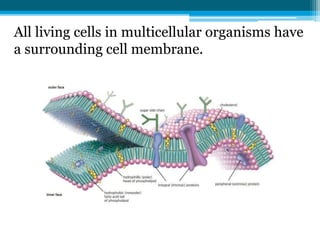
All living cells in multicellular organisms have
a surrounding cell membrane.
• The structure and function of cells are critically
dependent on membranes.
• They separate the interior of the cell from its
environment and
• define the internal compartments of eukaryotic
cells.
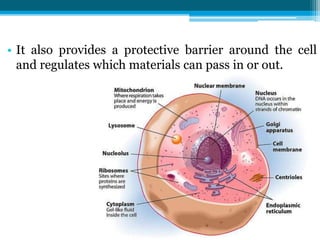
• It also provides a protective barrier around the cell
and regulates which materials can pass in or out.
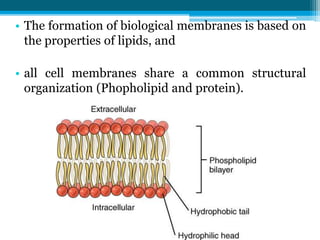
• The formation of biological membranes is based on
the properties of lipids, and
• all cell membranes share a common structural
organization (Phopholipid and protein).
• The fundamental building blocks of all cell
membranes are phospholipids,
• Consisting of two hydrophobic fatty acid chains
linked to a phosphate-containing hydrophilic head
group.
• Lipids constitute approximately 50% of the mass of
most cell membranes, although this proportion
varies depending on the type of membrane.
• Example :-
 Plasma membranes - approximately 50% lipid and
50% protein.
 The inner membrane of mitochondria - about 75% of
protein.
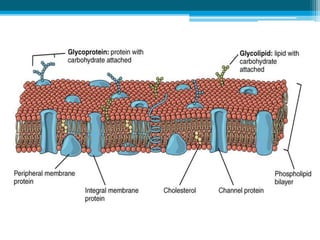
• The lipid bilayer is peppered throughout with
various proteins.
• Two different types of proteins commonly
associated with the cell membrane are the
integral proteins and peripheral protein.
• An integral protein is a protein that is
embedded in the membrane.
• A channel protein is an example of an integral
protein selectively allows particular materials,
such as certain ions, to pass into or out of the
cell.
• Another important group of integral proteins are
cell recognition proteins, which serve to mark a
cell’s identity so that it can be recognized by
other cells.
• Peripheral proteins are typically found on the
inner or outer surface of the lipid bilayer but can
also be attached to the internal or external
surface of an integral protein.
• Membranes can be classified as impermeable,
permeable, semipermeable or selectively
permeable.
• An impermeable membrane is one through which
no substance can pass.
• Semipermeable membranes are those which only
let solvents, such as water, pass through them.
• Permeable membranes are those which let
solvents and solutes, such as ions and
molecules, to pass through them.
• There are also selectively permeable
membranes.
• The cell membrane is a selectively permeable
membrane.
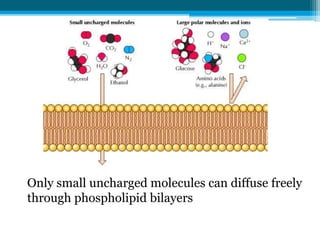
Only small uncharged molecules can diffuse freely
through phospholipid bilayers
• Although ions and most polar molecules cannot
diffuse across a lipid bilayer, many such
molecules (such as glucose) are able to cross cell
membranes.
• These molecules pass across membranes via the
action of specific transmembrane proteins,
which act as transporters.
• Such transport proteins determine the selective
permeability of cell membranes and thus play a
critical role in membrane function.
• All substances that move through the membrane
do so by one of two general methods, which are
categorized based on whether or not energy is
required.
• Passive transport is the movement of substances
across the membrane without the expenditure of
cellular energy.
• In contrast, active transport is the movement of
substances across the membrane using energy from
adenosine triphosphate (ATP).
Passive Transport
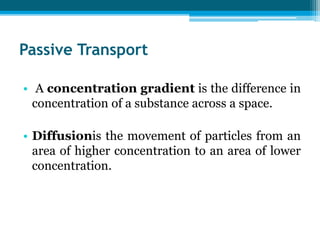
• A concentration gradient is the difference in
concentration of a substance across a space.
• Diffusionis the movement of particles from an
area of higher concentration to an area of lower
concentration.
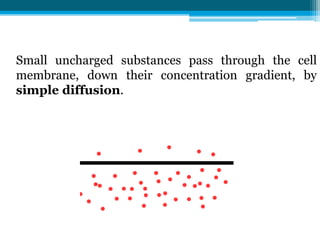
Small uncharged substances pass through the cell
membrane, down their concentration gradient, by
simple diffusion.
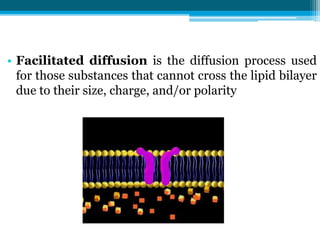
• Facilitated diffusion is the diffusion process used
for those substances that cannot cross the lipid bilayer
due to their size, charge, and/or polarity
Active Transport
• During active transport, ATP is required to move
a substance across a membrane, often with the
help of protein carriers, and usually against its
concentration gradient.
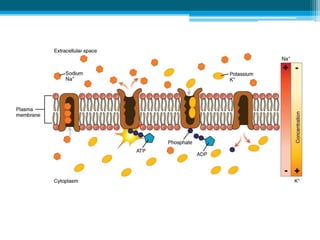
• One of the most common types of active transport
involves proteins that serve as pumps.
• Energy from ATP is required for these membrane
proteins to transport substances across the
membrane against concentration gradients
• Active transport pumps can also work together
with other active or passive transport systems to
move substances across the membrane.
• Eg -- sodium-potassium pump maintains a high
concentration of sodium ions outside of the cell.
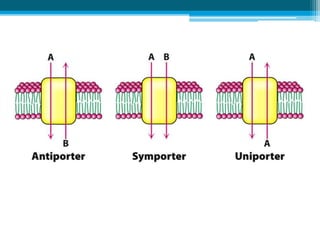
• Symporters are secondary active transporters
that move two substances in the same direction.
• For example, the sodium-glucose symporter uses
sodium ions to “pull” glucose molecules into the
cell.
• Conversely, antiporters are secondary active
transport systems that transport substances in
opposite directions.
• Eg -- sodium-hydrogen ion antiporter uses the
energy from the inward flood of sodium ions to
move hydrogen ions (H+) out of the cell.
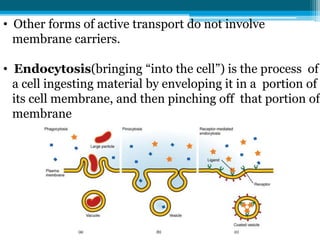
• Other forms of active transport do not involve
membrane carriers.
• Endocytosis(bringing “into the cell”) is the process of
a cell ingesting material by enveloping it in a portion of
its cell membrane, and then pinching off that portion of
membrane
Summary
• Plasma membrane contains Cholestrol, Glycoproteins and
Antigens.
• Phospholipids are amphipathic (double-charged) molecules
composed of one glycerol molecule, one phosphate group,
and two fatty acid units.
• The phospholipid can easily adapt to its environment.
• Structure of phospholipids can be affected by the salinity
and pH of the cell’s surrounding environment.
• Maintain shape of the cell.
• Act as a semi-permeable membrane.
• Imporatnt in cell recognition and communication.
• Maintains internal environment.

Types of Cell membranes

  • 1.
    Types of Cellmembranes
  • 2.
    All living cellsin multicellular organisms have a surrounding cell membrane.
  • 3.
    • The structureand function of cells are critically dependent on membranes. • They separate the interior of the cell from its environment and • define the internal compartments of eukaryotic cells.
  • 4.
    • It alsoprovides a protective barrier around the cell and regulates which materials can pass in or out.
  • 5.
    • The formationof biological membranes is based on the properties of lipids, and • all cell membranes share a common structural organization (Phopholipid and protein).
  • 6.
    • The fundamentalbuilding blocks of all cell membranes are phospholipids, • Consisting of two hydrophobic fatty acid chains linked to a phosphate-containing hydrophilic head group.
  • 7.
    • Lipids constituteapproximately 50% of the mass of most cell membranes, although this proportion varies depending on the type of membrane. • Example :-  Plasma membranes - approximately 50% lipid and 50% protein.  The inner membrane of mitochondria - about 75% of protein.
  • 8.
    • The lipidbilayer is peppered throughout with various proteins. • Two different types of proteins commonly associated with the cell membrane are the integral proteins and peripheral protein. • An integral protein is a protein that is embedded in the membrane.
  • 10.
    • A channelprotein is an example of an integral protein selectively allows particular materials, such as certain ions, to pass into or out of the cell.
  • 11.
    • Another importantgroup of integral proteins are cell recognition proteins, which serve to mark a cell’s identity so that it can be recognized by other cells. • Peripheral proteins are typically found on the inner or outer surface of the lipid bilayer but can also be attached to the internal or external surface of an integral protein.
  • 12.
    • Membranes canbe classified as impermeable, permeable, semipermeable or selectively permeable. • An impermeable membrane is one through which no substance can pass. • Semipermeable membranes are those which only let solvents, such as water, pass through them.
  • 13.
    • Permeable membranesare those which let solvents and solutes, such as ions and molecules, to pass through them. • There are also selectively permeable membranes. • The cell membrane is a selectively permeable membrane.
  • 14.
    Only small unchargedmolecules can diffuse freely through phospholipid bilayers
  • 15.
    • Although ionsand most polar molecules cannot diffuse across a lipid bilayer, many such molecules (such as glucose) are able to cross cell membranes. • These molecules pass across membranes via the action of specific transmembrane proteins, which act as transporters.
  • 16.
    • Such transportproteins determine the selective permeability of cell membranes and thus play a critical role in membrane function. • All substances that move through the membrane do so by one of two general methods, which are categorized based on whether or not energy is required.
  • 17.
    • Passive transportis the movement of substances across the membrane without the expenditure of cellular energy. • In contrast, active transport is the movement of substances across the membrane using energy from adenosine triphosphate (ATP).
  • 18.
    Passive Transport • Aconcentration gradient is the difference in concentration of a substance across a space. • Diffusionis the movement of particles from an area of higher concentration to an area of lower concentration.
  • 19.
    Small uncharged substancespass through the cell membrane, down their concentration gradient, by simple diffusion.
  • 20.
    • Facilitated diffusionis the diffusion process used for those substances that cannot cross the lipid bilayer due to their size, charge, and/or polarity
  • 21.
    Active Transport • Duringactive transport, ATP is required to move a substance across a membrane, often with the help of protein carriers, and usually against its concentration gradient.
  • 22.
    • One ofthe most common types of active transport involves proteins that serve as pumps. • Energy from ATP is required for these membrane proteins to transport substances across the membrane against concentration gradients
  • 24.
    • Active transportpumps can also work together with other active or passive transport systems to move substances across the membrane. • Eg -- sodium-potassium pump maintains a high concentration of sodium ions outside of the cell.
  • 26.
    • Symporters aresecondary active transporters that move two substances in the same direction. • For example, the sodium-glucose symporter uses sodium ions to “pull” glucose molecules into the cell.
  • 27.
    • Conversely, antiportersare secondary active transport systems that transport substances in opposite directions. • Eg -- sodium-hydrogen ion antiporter uses the energy from the inward flood of sodium ions to move hydrogen ions (H+) out of the cell.
  • 28.
    • Other formsof active transport do not involve membrane carriers. • Endocytosis(bringing “into the cell”) is the process of a cell ingesting material by enveloping it in a portion of its cell membrane, and then pinching off that portion of membrane
  • 29.
    Summary • Plasma membranecontains Cholestrol, Glycoproteins and Antigens. • Phospholipids are amphipathic (double-charged) molecules composed of one glycerol molecule, one phosphate group, and two fatty acid units. • The phospholipid can easily adapt to its environment. • Structure of phospholipids can be affected by the salinity and pH of the cell’s surrounding environment.
  • 30.
    • Maintain shapeof the cell. • Act as a semi-permeable membrane. • Imporatnt in cell recognition and communication. • Maintains internal environment.